The Norwegian architect company, Snøhetta, founded in 1987 by a group of building and landscape architects, embraced their two fields and created cohesion between buildings and landscapes.
The best way to have an overview of their many prestigious projects and philosophy is to visit Danish Architecture Center in Copenhagen these days.
King Abdulaziz Center for World Culture
Snøhetta wants design to be alive. Whether it is on paper or in wood or water, it is alive, diverse and difficult to capture.
From the beginning, Snøhetta was based on the collective, and contrary to many other architecture firms, it is not named after its founder. The name is inspired by the location of the apartment where Snøhetta was founded. It was located upstairs from a bar called Dovrehallen in Oslo, and since Dovre is a mountain range in Norway where the tallest mountain is named Snøhetta, it was an easy choice.
Bibliotecha Alexandria
The exhibition focuses on the large drawing table, which is always the center stage in all architectural companies. In a bird’s perspective you may experience several large photographs of activities by this piece of furniture,
The exhibition, ‘Snøhetta – World Architecture’, lasts through 27 September and center on how human nature interacts with a range of conditions – cultural, social, economic and environmental – in the world around us, and how this thinking drives Snøhetta’s work.
Maggie’s Center, Aberdeen
Snøhetta is known primarily for building the Oslo Opera House, which is quite characteristic for their work. It connects architecture with the landscape and nature that surrounds it and it is democratic in its expression, having opened up the opera house to a new audience who come here to spend time on the big roof overlooking the fiord.
All their projects are signed ‘Snøhetta’ only. No work is signed by a star architect; they embrace a collective social democratic, sympathetic model.
Norwegian Wild Reindeer Center Pavillion
Snøhetta is worth getting to know for many important buildings and projects. The exhibition is an opportunity to meet the talented people, see some of their crazy projects and experience the alternative thinking that have gained them worldwide fame and acclaim.
You are invited to view models from the initial stage to finish, together with the architects’ working tools in a creative chaos. There is also a separate room where children as well as adults can make their own models.
San Francisco Museum
Snøhetta won everyone’s hearts with the Opera House in Oslo and since then, Snøhetta has been one of most prominent international architecture firms.
But what sets them apart from other architects? According to Snøhetta themselves, the difference is that they often find their inspiration in the landscape and social aspects. But how do they transform this into beautiful and innovative architecture?
Ocean Space Center, Norway
“The background for this exhibition is quite simple: Snøhetta is one of the best architecture firms in the world right now. We witness this in their incredible architecture and in the special energy and atmosphere that characterize their office. We are therefore very excited to invite visitors into Snøhetta’s world for a rather intimate encounter with the people and the unique, human, generous, inclusive approach that results in such fantastic work. We hope that visitors will become part of the ‘office’, ask the architects questions and offer ideas and input,” says Martin Winther, Head of Communication, Danish Architecture Centre.
Snøhetta – Founded in 1987 in Oslo.
– Their most prestigious projects are the Library in Alexandria, Oslo Opera and 9/11 Museum in New York.
– The architect company consists of 150 employees and have offices in several countries, e. g. Oslo, Copenhagen, New York and Cairo.
Earlier exhibitions:
– Architecture – Landscape – Interior (National Museum, Stockholm, 2009)
– A House to Die In (Institute of Cintempry Art (ICA), London, 2012.
Portrait of a Norwegian Architect Company, compiled by Tor Kjolberg
Feature image (on top): Oslo Opera by Snøhetta, Norway. Photo: Visit Oslo
Rudi Carlsen of Porsgrunn, Norway, was seventeen years old when he joined his military service with the signature from him mom. The following year he started working as a part time sales representative, before planning to pick up on his studying again.
Instead he started selling memberships at a car rescue company in Oslo. He quickly became one of the company’s best salesmen, selling a still standing record with 69 memberships in four hours. From there he moved forward.
Today, at age thirty seven, Carlsen is among the best mobile application system (DIY platform) creators in the world.
After his part time telemarketing job, he started his first company as an independent agent selling cell phones on the streets of Trondheim, Norway. Starting the day with a rucksack and six phones that combined network operation subscriptions and a daily sales goal, he also knocked on doors if sales goal were not reached by 4pm. Soon he learned to put in long hours, often working 12 hours per day. Once again he proved his success, advancing to assistant sales manager.
”It was so cold in the snowy winter sometimes, that you felt as happy coming in as getting the sale’s itself,” says Rudi.
At age twenty one, Carlsen bought his first suit for a negotiating meeting for a distribution position at one of the largest cellular phone companies in Scandinavia (Telia Norge, that later become Enitel ASA in Norway).
“I have always looked a couple of years older than I am, and I remember that I was so afraid that they would get the knowledge about my real age. This was the time before it was accepted to be so young in IT entrepreneurship, the start of what we later have known as the dot.com period,” says Carlsen, at that time drinking coffee just to blend in with the adult business people.
He landed the agreement, his first private limited company was established, and his first customer was the Bank of Norway in Trondheim. The management of his company couldn’t believe that he was able to obtain an order for such a big client, but selling came natural for Carlsen!
From then on it seemed as if only the sky was the limit. Sales went from 10 million NOK to 20, then 40 and then a lot more. Suddenly his small team of 2-3 had grown to 70 commission based agents in Norway alone. It’s estimated that he sold telecom agreements to businesses at an annual value of over 380 million NOK (US$ 50 mill). At that time, the company he worked for was listed on the stock exchange in Oslo (Enitel ASA).
Those were glorious days, but also days of hard work and extremeliy long working hours.
At the tipping point of dot.com he was offered to sell his company to a leading telecom operator, but turned down the request even before the final negotiations started. “Work was really not work, but pure fun, and who want to sell a good time” says Carlsen.
During a much needed week break at the Delano Hotel in Miami, Carlsen was informed by phone that his only client and partner, Enitel ASA, was unlisted from the stock exchange, and not long after that, they went into bankruptcy. His own company lost a fortune through loss of huge outstanding commission income.
So the Danish telecommunications operator Tele Danmark, a wholesale company, engaged Carlsen’s company to work for them. Sales turned out to be so great that the company could not cope with the orders, and so the game was over, also for Carlsen’s distribution company.
“I had put all my money and energy into saving my company, and gambled on a second change that did not work out. But shit happens and you need to move on. The wake-up call was very real when I realized I didn’t even had cash for fuel.”
This was a rough period within telecom and IT, when the dot.com crash caused that most staff moved to other industries. Carlsen, however, stayed in the telecom industry.
But what should he do? He still had a dream and decided to start something new again. As a former wrestler he knew all about wrestling counter moves. That’s what he had to do, in business this time, do some counter moves, not to be lying flat on the mat.
He did some small startups which he sold very fast. Freedom became more important than money, and soon he left for Thailand with no luggage, to be a backpacker.
“I could have saved a lot more money and been in a position not having to work today,” says Rudi Carlsen, “but then I would not have had such a rich life. One old classmate told me that in our first classmate book, my future job dream was to become a tourist. In that respect I am in periods living an interesting life as a digital nomad. In my adult life my long term mission is to become a VC, working with early stage companies. In many ways that may be compared to traveling into the unknown.”
This was the time when the IP-market dawned. ”I started my own IP telecom operatio to sell IP-ISDN converters for PBX’s to businesses,” he says. “Once again I sold more than could be delivered as everything was new. I was five years too early. People questioned if what I was doing was legal.” Today IP-phone technology is highly accepted and you have free call services from apps like WhatsApp, Facebook, Apple Facetime etc. My company was later merged into a larger telecom organization in Scandinavia.
He had moved to Cyprus and was working a lot from London when he was head-hunted by a band width supplier to set up a distribution company for them. He asked himself if he wanted to do this again and decided that he would, one final time, while cooperating with three of his former top sales people. They were totaling 40 people within one year and had once again a leading role in distribution.
After two years his agents were merged into the telecom provider. Carlsen had had enough of PowerPoint meetings and staff calls 24/7.
“When one of my youngest son’s first words was ADSL, you know you have reached this point,” he says.
When I asked Rudi what his recipe for success has been, he emphasized tree issues: “Sell to the business market, and have an optimal sales system in place – that’s the engine. I have used more or less the same sales system all my life.” Also the ability to improvise, things rarely turns out the way you planned in a start-up, so stay calm, focus on your goals and push forward”.
Now the calendar tells us it’s 2010, and we enter the time of “applications”. Rudi sensed the new market and started to google possibilities.
“We wanted computers to do the sales this time,” Carlsen says. After some googling he found that Ukraine was the leading offshore tech nation in the world, and contacted a systems developing company. After two week’s negotiations, almost drowning in vodka and champagne, a contract was signed.
So what is Appsmakerstore? As the cost of building mobile applications is way too high for most businesses, Appsmakerstore has built a do it yourself system, so that non-coders easily can build their own app from their website with drag and drop.
Their new website and platform, the first one, was launched on November 28, 2010 and soon after he established his own office in Dnepropetrovsk, Ukraine. Facebook was then released, and the application was positively reviewed by both the mainstream media as well as in something new, called “social media”. Their target was 5,000 users, but soon they had more than 30,000.
Not long after they had several partners in Asia. Rudi felt he now was independent and as long as he had his MAC with internet, he could work from anywhere in the world. He could do some jogging in the morning sun at Limassol before office hours started in Oslo, have a break and continue working again when the market opened in the US. When the market in Asia developed so quickly, he decided to move to Singapore to be closer to the action, alone with his second and youngest son from mom number two, Julian, who at that time was three plus.
“The first two months we were living with friends and stayed at hotels. The toughest part was to build the Appsmakerstore and at the same time being a good father. My son had to adapt to the local language and stay at a kindergarten on the other side of the world.” says Carlsen.
The Daily Herald wrote about the application, “The new product will help revolutionize the mobile application market by simplifying the creation and approval process and allowing all individual and business access to creating mobile apps. This is a technology that allows users create and publish their application in a matter of a few clicks online.”
At Reuters, analysts reached out to over 35 app development software companies with an identifiable track record of successfully meeting clients’ app development needs. The research findings were based on an algorithm of factors that include the breadth of software features, client reviews, and market presence. Appmakerstore was listed with seven other market players.
“These software tools vary in customer and industry focus with certain tools fitting specific purposes better than others. However, these products and the support teams behind them have all demonstrated a commitment to meeting their client’s’ development objectives,” explained Ryan Stevens, Lead App Development Software Analyst at Clutch. “The biggest hurdle an app development software faces is striking the balance between ease of use and ensuring that the tool will meet the customer’s functional needs.”
Today Rudi Carlsen’s company, AppsMakerStore, is one of the top five application makers in the world.
“It is all about having a good product and volume,” says Rudi Carlsen. “This is the new information age, adapted to the mobile market; good for tourists as well as people on the move and business purposes. I have a lot of ideas for future applications and build outs. Our system is user friendly, and we now have about 550,000 users all over the world, six franchise partners and many white labels using our technology. The cool thing with Appsmakerstore is that you always need to develop and pay close attention, making the job very interesting.”
Carlsen adds, “But then again, people buy from people. So building Appsmakerstore for the fifth year now, I realize that I need to put on my sales hat more often again, attracting hungry sales people inside our company to push our revenue goals up as the product is ready and developed. So in a way, I guess, I am back to what lead me here in the first place – building great sales numbers!”
World-class Norwegian App Maker, text and photos (except b/w) Tor Kjolberg
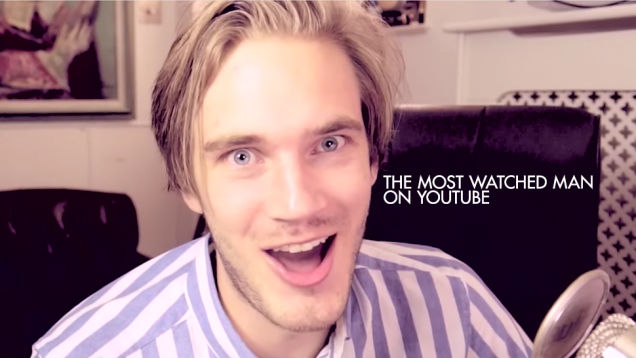
If you say «Felix Kjellberg» most people would say: Who? However, if you say “Pewdiepie” a lot of teenagers would scream: Where?
Felix Kjellberg’s video game commentary channel has earned more than 35 million subscribers and has become the world’s biggest You Tube channel, bigger than Smosh, Hola Soy German, Rihanna and Jenna Marbles.
His internet show, Let’s Play, focuses on horror and action video games. Felix started his You Tube channel in 2009. At that time he called himself “Pewdie”; “Pew” after the sound of shooting down a laser weapon and “die” as the result of the shooting. Once he forgot the log in code to his account and had to make a new one, and so he added “pie” as in “cutiepie”. In the beginning he was gaming “Minecraft” but didn’t dare to comment anything.
In 2014, however, he was voted Most Popular Gaming Web Star at the Teen Choice Awards.
“I still remember when I had 23 subscribers,” he says, “and I thought: Yes! If I have one new subscriber every day, I am happy. One day I had three new subscribers and I thought, Hell Yah! But it was too slow, I wanted more.”
Before he dropped out of Chalmers University of Technology to pursue a career as an internet personality he used his internet popularity to raise funds for such charities as the World Wildlife Foundation and St. Jude Children Research Hospital.
When he was reviewing horror games like “Amnesia” he had switched on his microphone and his horror screams echoed on the internet. Kjellberg had found a niche, which enticed viewers, a world in which he could let his creativity flow.
In 2011 he began a relationship with Marzia Bisogin and later moved to Italy to share a home with her. The couple shares two pugs.
“I studied economy,” says Felix, “but the only reason was that I had high marks, not really because I wanted. My dream was to make films for YouTube. I don’t know what I thought when I dropped out of Chalmers, but I felt relieved.”
He won a Most Popular Social Show web personality award that fellow internet star Jenna Marbles also was nominated for.
When he received the prize “King of the Web” he donated the money to WWF and a tiger project. He invites regularly children from the project Min Stora Dag (My Great Day).
When he had reached ten million followers in 2013, he participated in a promotion together with the organization Charity Water, which supplies water to people in developing countries. He collected 2.8 million Norwegian kroner (210,000 USD), of which 11,000 was given by Kjellberg.
“The difference between me and a celebrity actor is that I have fans, who really care and listen to me. I have many young viewers, and it feels good to teach them how to support others.”
In 2015 he announced that he’d be publishing a self-help book, Family Life.
Felix Kjellberg Born 1889 in Guthenborg, Sweden
Known as “Pewdiepie”
More than 28 million subscribers on YouTube
Lives with Marzia Biscogning, aka “Cutiepie”
Lives in Brighton, England
Studied economy at Chalmars University of Technology
Awarded “Most Popular Social Show”, “Sweden Social Star Award”, #Gaming” and “King of the Web” (2012)
“King of the Web” Is From Sweden, written by Tor Kjolberg
Kjetil Fallan has edited a refreshing book called Scandinavian Design: Alternative histories. The book presents a radically new assessment, a corrective to the persistent mythologies and reductive accounts of Scandinavian design.
Scandinavian design is still seen as democratic, functional and simple, its products exemplifying the same characteristics now as they have done since the 1950s. But both the essence and the history of Scandinavian design are much more complex than this.
Scandinavian Design: Alternative Histories brings together case studies from the early twentieth century to today. Drawn from fields as diverse as transport, engineering, packaging, photography, law, interiors, and corporate identity, these studies tell new or unfamiliar stories about the production, mediation and consumption of design. An alternative history is created, one much more alive to national and regional differences and to types of product.
The book introduces new histories of design in Scandinavia and, as the subtitle points out, offers alternatives to the well-known histories we have read earlier. This history of Scandinavian design is described as a “cleverly crafted concept, which has led to a disturbingly narrow understanding of Nordic design culture”, meaning characterizations such as “’humane’, ‘democratic’, ‘organic’ and ‘blond’.”
Scandinavian Design analyses a century of design culture from Denmark, Finland, Norway and Sweden and, in so doing, presents a sophisticated introduction to Scandinavian design.
The case studies presented of diverse topics such as the changes of copyright legislation in Denmark, the design process of reverse wending machines in Norway, the Cooperative Union’s consumer policy and its “non-branded” products in Sweden, or design students’ political activity in the 1970s Finland have not been part of the earlier narratives on the history of Scandinavian design available in English. According to Fallan, such themes have been ‘marginalized’ in the previous accounts.
Thus the book opens a wider field of ‘Nordic design culture’ beyond the narrow conceptions of Scandinavian design and its history to its international readers.
Kjetil Fallan is associate professor of Design History at the University of Oslo. He is the editor of the Journal of Design History.
Scandinavian Historical Redesign, written by Admin.
One 19th-century development in Scandinavia was that Swedish, Danish and Norwegian historians could at last get together for a chat without coming to blows, and in this spirit Swedish and Danish university students took advantage of the atrocious winter of 1828, when the Sound again froze over, to walk across the ice, meet in the middle and improvise odes to Scandinavia solidarity.
If this was the reminiscent of Magnus Barelegs and company at Konghelle, the dream was again upset by events in Norway, where the union with Sweden was in trouble. Norway strengthened its border fortifications, and Sweden had its army on alert before a compromise was worked out.
Flags of Sweden and Norway in 1899, after the removal of the union mark from the Norwegian merchant flag. Plate published by the foreign ministry of the united kingdoms to announce the recent change. Note the dark blue color and the correct proportions of the union mark in Swedish flags.(Source: Wikipedia)
The union dissolved in 1905, following a plebiscite that voted overwhelmingly in favor of Norwegian independence.
Norway opted for a monarchy rather than a republic, and went shopping for a new king. Scandinavia braced itself for the 20th century.
Norwegian illustrators Lars Huse and Harald Johnsen Vøyle say they love the smell of coffee in the morning, not to mention the taste of freshly brewed coffee. Together they have created what has been described as ‘the first quasi-encyclopedia of third-wave coffee’.
The book soon became a contemporary classic, an art-book and conversational guide about coffee, specialty coffee and coffee culture. The quirky illustrated book guides you to that geeky coffee conversation that you always wanted to partake in. The book was awarded with a diploma in Open Category in the competition Årets Vakreste Bøker 2013, (This Year’s Most Beautiful Books 2013″ by Grafill, the Norwegian organization for visual communication. The jury described it ‘a small and personal book about coffee with a nice simplicity and a striking idea. Very thin paper with elaborate illustrations, peculiar with its simple format and expression. Tuned down, and almost works as an anti-coffee table book.”
The book is Risograph-printed in London by Ditto Press on 100% recycled paper and bound with copper staples.
The authors love all the passion of people who try to make good coffee without just pushing a button of a fully automatic coffee machine, and both are people who try to express themselves creatively.
Huse says that “the book is Aesthetically quite simple, classic contemporary, with subtlety in line and production”
If you want to improve your coffee skills, learn something about the little brown beans or just want to have a look at lovely illustrations I recommend you to get your own copy of this book.
Lars K. Huse (photo on top) is a young illustrator, artist and coffee-supergeek from Oslo, Norway, currently based in London. Part of the Cupofill collective, Lars does many a thing, always with a focus on the conceptual. Some of these things are: Live-illustration performances, murals, exhibitions, t-shirts and other products in addition to work for clients. Lars is all about taste.
The World Airport Awards have four Scandinavian airports on their World’s Top 100 Airports for 2015. Voted for by airline customers around the world during the 9-month survey period, these are the most prestigious accolades for the airport industry, and a global benchmark of airport excellence widely known as the Passengers ChoiceAwards.
Operating since 1999, the World Airport Survey is held in high esteem for clarity of process and principles of independence. No outside sponsorship, payment or external influence is applied to any part of the Survey, making it a most respected global airport customer study providing the core voting data for the Awards.
The 2015 World Airport Awards are based on 13.02 million survey questionnaires completed by 112 different nationalities of airline customers during the survey period from May 2014 to January 2015. The survey covered 550 airports worldwide. This established, industry survey is Independent and evaluates traveler experiences across different airport service and product key performance indicators – from check-in, arrivals, transfers, shopping, security and immigration through to departure at the gate.
Copenhagen Airport was ranked no. 16 on the list (up one position from last year).
Copenhagen Airport – Københavns Lufthavn, Kastrup – is the major airport for both Copenhagen, Denmark and Malmö, Sweden.
Oslo Airport no. 49 (up two positions from last year).
Oslo Airport (OSL) is located at Gardermoen, 47 km north of Oslo. OSL is Norway’s largest airport, with direct routes to more than 140 domestic and international destinations, as well as over 80 charter destinations.
Stockholm Airport no.61 (up four positions from last year).
Stockholm Arlanda Airport (ARN) is located about 45 kilometers north of Stockholm, the capital of Sweden.
Billund Airport, Denmark no. 68 (down six positions from last year).
Billund is small and fairly unassuming little city in Jutland, Denmark, and it might not seem like the most exciting place to visit… but you’ll soon realize that this place was quite literally built for fun! Home to Legoland theme park, Lalandia Billund (a huge water park and amusement park), and the LEGO factory (which opens regularly for tours), Billund is pretty much a kid-heaven, right here on earth.
Norway is a beautiful country. Why not see more of it from a train window? The views are among the most spectacular in the world, and prices are quite reasonable too.
The national train company is called NSB. The prices are dependent on the route and what time of the day you want to go. Look for “Minipris” at their website. If you order at least one week before your departure, you have a better choice, since the cheaper seats are limited. You may, however, obtain tickets up to one day before departure.
It’s easy, just click on your starting and destination points, find your dates on the calendar and check the prices. The website will automatically show you the lowest fares. The Minipris tickets cannot be purchased on the train – that’s why they are cheaper.
Let’s say you want to go from Oslo to Bergen, a scenic seven hour journey. The price for one adult person (checked on 18 June 2015) will be approximately NOK 500 (US$ 67). You’ll see the Minipris in the right column.
If you just want to sit in your armchair and go from Bergen to Oslo on a seven hour journey, you may watch the popular television show “The Bergen Route minute by minute” made by the Norwegian Broadcasting Corporation (NRK) last year.
You can pay for your ticket online with your credit card and then get a reservation number per e-mail. When you are at the station, go to the automatic ticket machine and type the number, and it will print out your ticket. You may even choose English as your preferred language.
Where to go? There are a lot of epic mountains, fjords, lakes and impressing waterfalls between the cities. The mountain village area Finse, between Bergen and Oslo in Ulvik municipality sits at an elevation of 1,222 meters (4,009 ft) above sea level, making it the highest station on the entire Norwegian railway system, and is probably worth a stop-over.
Whether you’re arriving at the Oslo Airport or Rygge Airport you may go by NSB without extra charge. A friend of mine arrived at Rygge last month at six o’clock in the morning. His train was scheduled at 10 am. He asked nicely if he could go with a train to Oslo before his actual departure, which was accepted with a smile. He then had several hours to walk around Oslo before his departure to Bergen. “Norwegians are very nice!” he told me later.
The city of Copenhagen has been named the most innovative city in Europe by Fast Company Magazine, and Denmark remains one of the world’s 10 most innovative countries.
How can a capital in the Northern region foster climate friendly developments, which have bbecome ideals for the rest of the world?
A biking population
Copenhagen is the second most bike friendly city in the world. Nearly 40 percent of Copenhagen’s commutes are on bike, and the public transportation system is well developed. The organization Gobike is developing new ideas – and make them a reality – and hereby making a greener and more liveable city.
Collaboration across political party lines At CRCResearch they claim there are three factors critical to Copenhagen’s success:
1. Significant efforts have been made to collaborate across party lines and government departments.
2. Long-term vision.
3. Priorities and initiative based on facts and sound science.
Copenhagen has also been hailed to be one of the best cities to do business in Europe.
Copenhagen Science City
Open Data Portal and climate targets Copenhagen has its own unique website sharing several sets of data for free, from traffic and road works information to how to create new business opportunities.
In 2013, a corporate team from Cisco visited Copenhagen, and in 2014 Cisco entered into a partnership with the municipalities of Copenhagen, Albertslund and Frederikssund, to research and develop digital infrastructure for the future, the Internet of Everything. The goal is to strengthen services for citizens while supporting Copenhagen’s climate targets.
Transition to low carbon economy
Entrepreneurs are invited to share their ideas on a website called Vores omstilling (Our transition). It’s a crowdsourced platform to encourage citizens, companies and the public sector to share their projects.
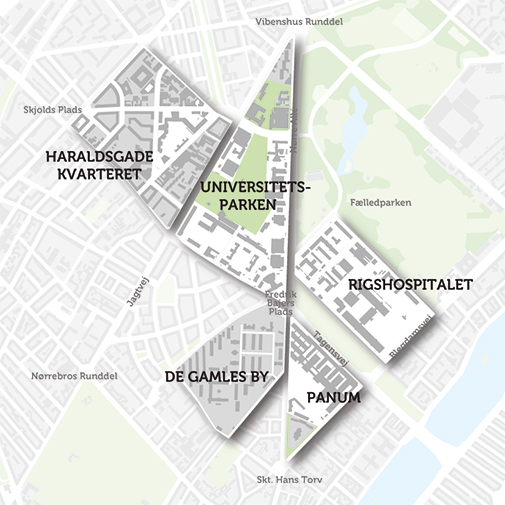
The image below is from the 8 Houd or the Big House, a large mixed-use development built in the shape of a figure 8 on the southern perimeter of the new suburb of Ørestad in Copenhagen.
A unique public-private partnership called the State of Green is the official green brand for Denmark. Here everybody can find places to improve, test and demonstrate their technologies or systems by exploring the facilities and organizations relating to their themes.
Widespread collaboration Copenhagen is also looking to reduce consumption and promote collaborative consumption. At the online shop Resecond women can swap nice dresses for a monthly fee of DKK 139 (US$ 20) you have admission to a walk-in closet with quality dresses. You may then swap as many dresses as you like. Jepti is an online portal where citizens can rent, lease or borrow anything from household items and tools to cars.
Financing in Denmark Copenhagen is still not a financial haven for entrepreneurs, and many have to seek financing from abroad. However, Michael Eis has founded a crowdfounding platform, boomerang.dk, where entrepreneurs, artists and organizations may fund their smart ideas with support from individuals. Today there is also a crowdfunding association, Dansk Crowdfunding Forening.
Number Eight, Orrestaden, Copenhagen
Want to adopt Copenhagen’s solutions? Copenhagen won the European Green Capital Award 2014 ahead of 17 other European cities. The experts were impressed by the efforts in Copenhagen to get more people to bike, and to be carbon neutral by 2025. The city want to share their experiences with the rest of the world. “Come and see, and come and share with us,” said Casper Harboe, Programme Manager of Sharing Copenhagen.”
Innovation in Copenhagen, compiled by Tor Kjolberg
There are so many alternatives, both in summer and winter, so you might having trouble choosing the right camping site in Norway. You may prefer to try your luck fishing in the countless rivers, lakes and fjords, or perhaps your family prefers an amusement park or zoo. If you are seeking a place to relax and stress down, Norway is the right destination. Here are the four best camping sites in Norway 2015 according to NHO Travel.
NHO Travel (Reiseliv) is a member organization consisting of hotels and other accommodation, restaurants, catering and other food service businesses. Members also include campsites, family amusement parks, alpine facilities and other attractions. NHO Travel’s members make their living offering experiences ranging from lodging to rafting: in short, anything in the area of tourism.
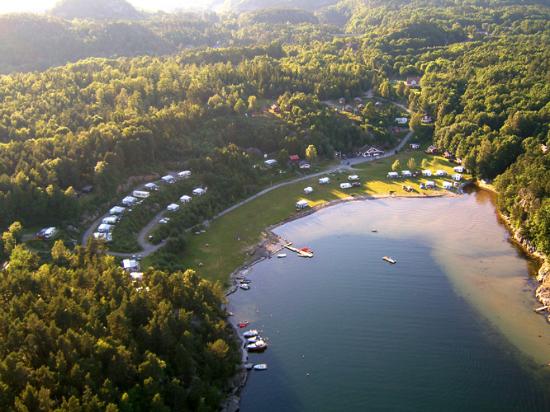
Experience the best camping-sites in Norway this year.
Kristiansand feriesenter, Dvergnestangen. Open all year for rental of cabins, apartments and campsites with capacity to 250 tents or trailers.
You may enjoy One Ocean Dive Center, Kristiansand Zoo and amusement park, Agder Nature Museum and botanical garden. Why not a boat trip to Ny Hellesund in Søgne or picturesque Lillesand? If you travel to Evje you may experience forest and mountains and the Evje stone museum. Try canoeing in the waters of Birkenes and Iveland. Experience the nearby forests and mountains , travel to Evje. Visit the Evje Mineral Park. The Kristiansand Region holds a lot.
Moysand Family Camping, Grimstad Moysand Family Camping (Established 1929) is surrounded by beautiful nature, nice walking areas and has a wonderful beach. Nearby, only 10 minutes away, you’ll also find Grimstad Golf Course for those interested.
Moysand rents out motorboats and rowing boats, and there’s a playground and trampoline for kids.
Three 5-star cabins can be rented on a weekly basis. Short distance to Kristiansand (see above).
Sølvgarden Hotell & Holiday center, Setesdalen.
Established in 2007, Søllvgarden is surrounded by waterfalls and mountains, where you can unwind in serene surroundings, enjoy the magnificent scenery and experience Norwegian culture and traditions. Sølvgarden is in the centre of the village of Rysstad, close to the River Otra, where you can go fishing, swimming and canoeing.
Short distance to Lysefjorden and Stavanger, alpine skiing and mountain climbing.
Hallingdal Holiday Park, Ål Established in 2013. The only campsite in Scandinavia admitted member of Leading Campingsites Europe (2015). You may rent one of the17 high standard camping cabins, or there are – 180 comfortable sites for trailers and mobile homes, 10 large luxurious trailers for rent, tent sites and main building with restaurant.
Four Best Camping Sites in Norway, compiled by Admin