The band 9 grader nord (9 degrees north) from Bergen creates music that is a fusion of Tamil and Indian rhythms, containing elements of guitar inspired by the youth’s upbringing in Norway. This is progressive, ethnic music from Norway.
From Bergen, Norway, this band, formed in 2017, draws inspiration from a wide array of musical styles, including Carnatic music, baila, and Tamil folk music.
The band comprises sisters Mira and Dipha Thiruchelvam, Jakob Sisselson Hamre, and Jakob Sønnesyn. In its 10 years, the band has garnered an immense following in Norway. Their inspiration ranges from Tyagaraja’s Pancharatna Krithis to AR Rahman, Linkin Park, AC/DC, and Green Day. Thanks to the internet, the band’s rhythms have now made their way to the ears of South Asian listeners, who have been showering immense praise on them.
The band comprises sisters Mira and Dipha Thiruchelvam, Jakob Sisselson Hamre, and Jakob Sønnesyn. Photo: Gaffa
If I were to summarize the style of the band, it contains energetic flute playing, big vocals, catchy drums, and lively engagement. For Mira and Dipha, the commitment is deeply personal. Their parents fled the civil war in Sri Lanka in the 1980s, igniting a lifelong dedication to preserving their Tamil identity.
‘9 degrees north’ are the coordinates for Jaffna, where the sisters’ parents hail from. Dipha and Mira grew up in Bergen, the second-largest city in Norway. They learned to play the flute from their father, who is passionate about the instrument.
Dipha Thiruchelvan started a flute duo together with her sister while still in middle school. Photo: Mela.
“It has been a goal in itself to challenge Norwegians with foreign tones and add some more diversity to the music scene,” says Dipha Thiruchelvan, who, together with her sister, started a flute duo while still in middle school.
What sets the band apart is its spirited, rebellious, and self-assured stage presence, as 9 Grader Nord employs a diverse range of instruments, such as the bamboo flute and cajon, to craft a distinct and magnetic sound. Since their formation, the band has graced countless festivals, club stages, and television shows, tantalizing audiences with their electrifying performances.
“In high school, I developed a keen interest in composing music. I began producing music after receiving my first music software as a birthday gift,” says Mira, and adds, “The only thing missing was a band. I asked Jakob Sisselson Hamre (percussionist) if he would play with us. He agreed and brought along his friend Jakob Sønnesyn, who plays the bass guitar. Dipha was the last band member, naturally.”
The sisters admire Jakob and Jakob, two incredibly talented Norwegian musicians. “It’s not easy for two Norwegians to understand all these foreign, often complicated notes,” says Mira.
9 Grader Nord has ventured into exciting collaborations and projects. Photo: Red Bull.
9 Grader Nord has ventured into exciting collaborations and projects. They have worked with the Norwegian Broadcasting Orchestra, interpreting the works of renowned artist Edvard Munch, and embarked on school tours throughout Norway, engaging and inspiring young minds with their music.
In 2019, Mira Thiruchelvam, the band’s producer and composer, received a prestigious award in Norway for their first album, JAFFNA.
In recent years, the diaspora movement has gained more prominence in the West. This inspired the sisters to delve deeper into the more vulnerable themes, for instance, their upbringing. Therefore, the second album is named Yalpanam, the uncolonized Tamil name for Jaffna.
One of the sisters’ biggest dreams is to perform at venues where Tamils are in the majority.
The cafés and restaurants in Hakaniemi Market Hall are a good place to sit down for a tasty breakfast or lunch and listen to the surrounding chatter. The latest attraction is the dinner restaurant Kirsikka. Read on and learn more about the renovated food hall in Helsinki.
Originally, Hakaniemi Hall was renowned for its seafood, but it is now a place for Finns to come together, socialize, and enjoy shopping. The Hall has around 70 shops spread over two floors, the first with food and the second with specialty shops – including a second-hand bookstore, a shoe repair store, and a textile handicrafts store.
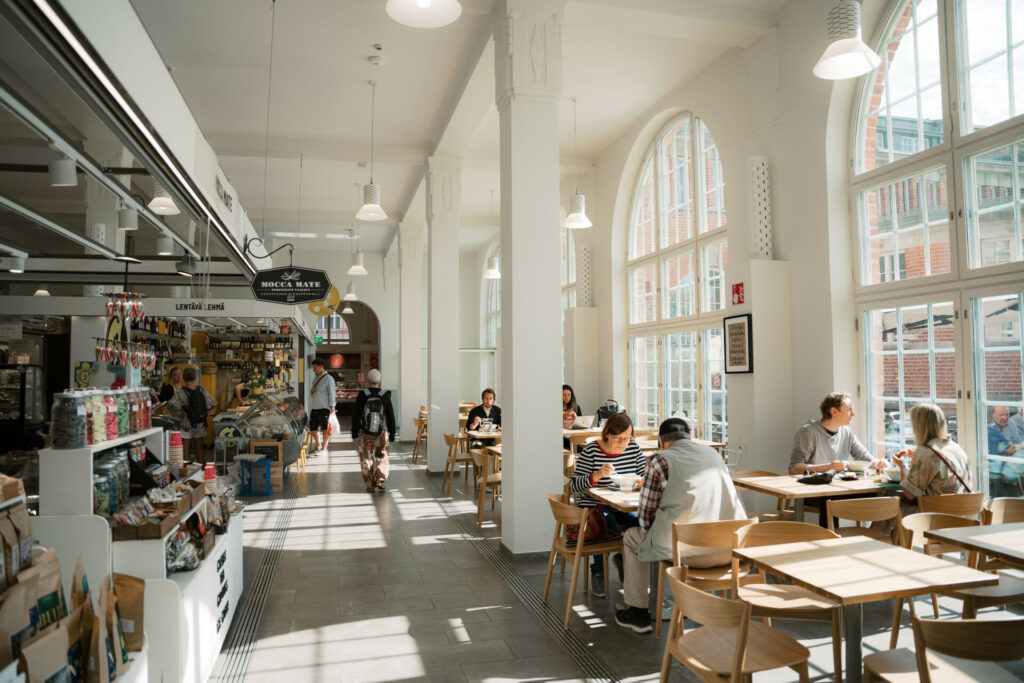
Hakaniemi Market Hall has six cafeterias with all kinds of food, including an inexpensive traditional Finnish lunch.
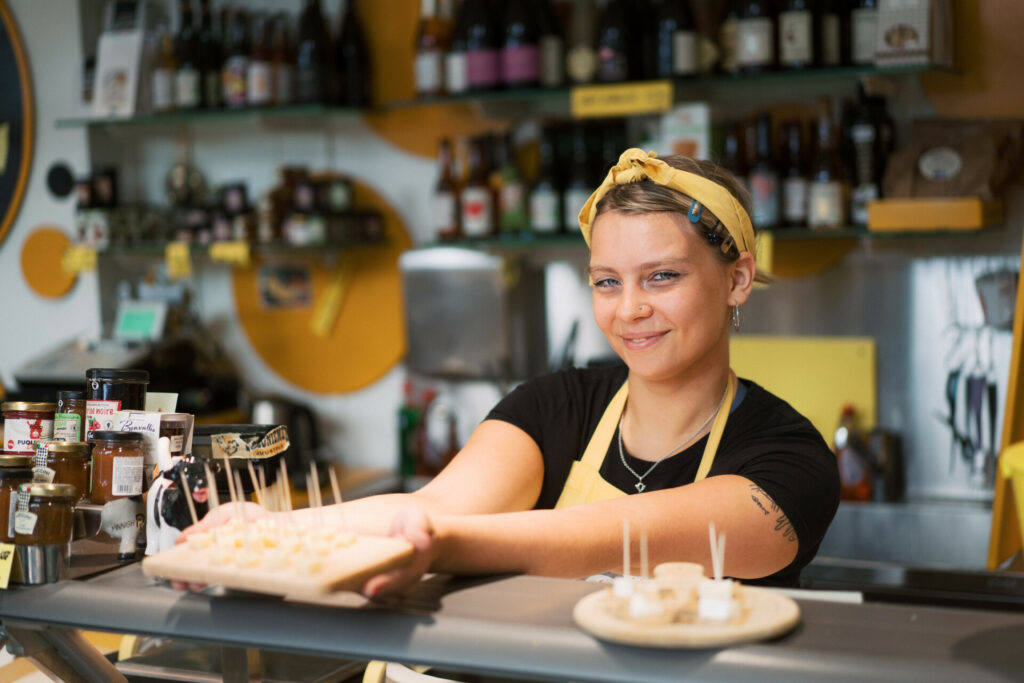
From cheese and smoked fish, the Hakaniemi Market Hall is the perfect place to stock up on supplies – and to linger in cozy restaurants.
Hakaniemi Market Hall is often called Helsinki’s most authentic market hall. In addition to the shops, it has six cafeterias with all kinds of food, including an inexpensive traditional Finnish lunch. Anchored by the old brick market hall, the Square is spacious, and it has access to water. As with most seafood markets, it is difficult to avoid the pungent smell of fish, but the market itself is clean and well-kept.
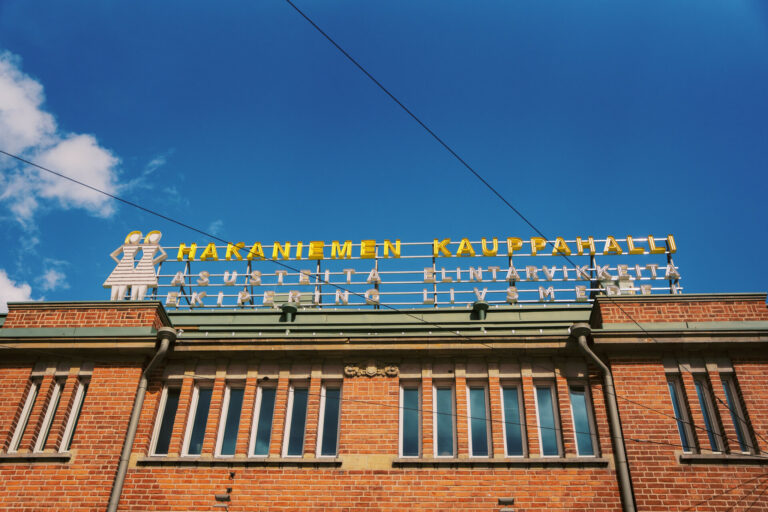
First opened in 1914, Hakaniemi Market Hall is located in a two-story brick building on Market Square, a former working-class district in Helsinki.
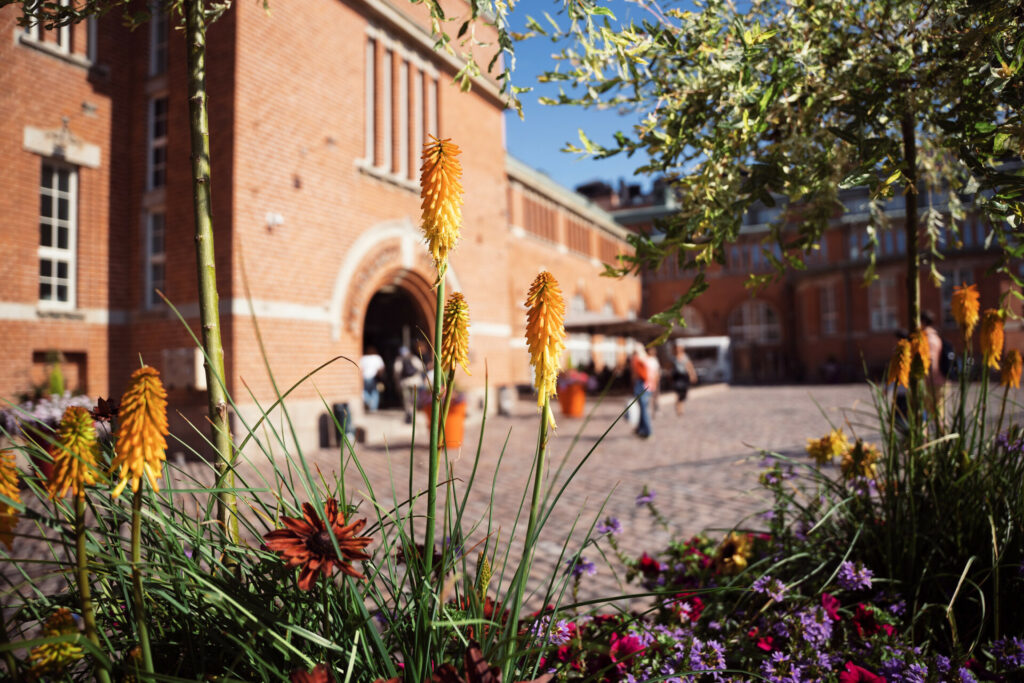
First opened in 1914, Hakaniemi Market Hall is located in a two-story brick building on Market Square, a former working-class district in Helsinki. It is one of three remaining old central market halls in the capital city, and is the liveliest of the group. The Square serves as the center of the surrounding Kallio neighborhood, and during the summer it hosts a daily outdoor market.
Renovated Food Hall in Helsinki, reported by Tor Kjolberg
According to a new book, news from the United States has shaped discussions in newspaper columns, dinner parties, and in the Storting (Norwegian Parliament) for as long as we have had a democracy.Norwegians Have Been Engrossed in American Politics Since the 19th Century.
The close bond between the USA and Norway has a long history. Even in the 19th century, the average Norwegian followed American politics closely.
Norwegians are concerned about what is happening in the USA
In 2020, for example, several thousand people gathered in front of Løvebakken (in front of the Parliament building) to support the American Black Lives Matter movement. Last year, Norwegian media published over 1,300 articles in the lead-up to the US presidential election. And commentators from all sides of the political spectrum regularly warn that we are “importing” American debates to Norway.
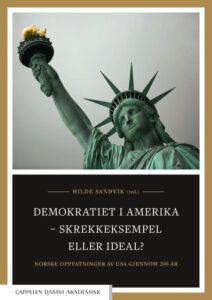
“Democracy in America – a horror story or an ideal?” is published In Norwegian only.
But the Norwegian fascination with America is far from a new phenomenon, says UiO historian Hilde Sandvik, who has edited the recently published book “Democracy in America – a horror story or an ideal?” (in Norwegian only).
In it, the authors analyze the historical coverage of the USA in Norwegian newspapers and magazines from the 19th century to the post-war period. They demonstrate how news from the other side of the Atlantic influenced social debate and political decisions at a time when Norway’s democracy and institutions were being established.
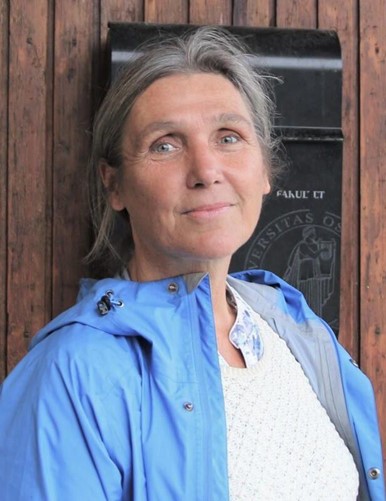
Hilde Sandvik, professor at the Department of Archaeology, Conservation and History at the University of Oslo.
“What struck me is how knowledgeable Norwegians – from ordinary farmers to high-ranking civil servants – were about current political issues related to the United States,” she says, and elaborates:
“Norwegian media covered American politics thoroughly, and Norwegians engaged in American injustice, while drawing inspiration from organizational and trade union life in America,” she explains.
The book is based on an interdisciplinary research project that examines how American politics has been perceived and discussed in Norway in recent centuries.
Where did Norwegians get their news about America from? Instead of today’s foreign correspondents, newspapers in the 19th century had to rely on immigrant letters, reports from traveling Norwegians and sailors, or by directly cutting from Norwegian-American newspapers printed in the United States.
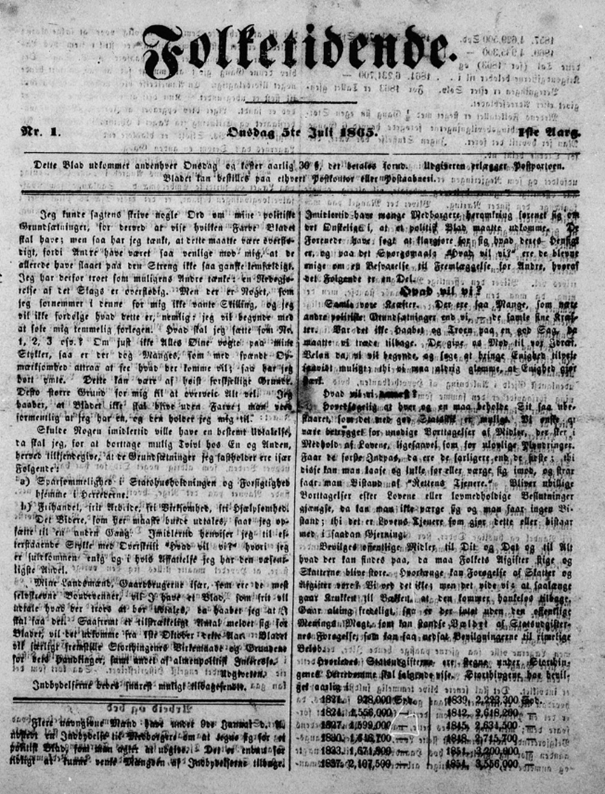
The cover of the first issue of Folketidende, published on July 5, 1865. Sandvik and his research colleagues have reviewed numerous similar newspapers in their work to document Norwegian coverage of American news. Image: National Library.
“Norwegian emigrants were a newspaper-pressing people. At its peak, over 300 Norwegian newspapers were published in the United States,” Sandvik says.
A significant contributor was Ole Munch Ræder, who in 1846 crossed the Atlantic on behalf of the Storting to study the jury system in the United States. Sandvik describes him as a kind of Norwegian Tocqueville, who investigated and reported back home on various social and political conditions in the United States.
“Democracy in America – Horror Story or Ideal”? is the result of several years of interdisciplinary research on the links between Norwegian and American democracy.
Ræder was particularly concerned with slavery, and many of his letters about the brutality of slavery were published in Den Norske Rigstidende, which most Norwegian civil servants read.
Norwegians are concerned about what is happening in the USA. Photo: National Library.
“Norwegians had long been against slavery, but Ræder’s descriptions aroused a completely different commitment. Many went from a general “it’s awful with slavery” attitude to a more explicit disbelief at how brutality was accepted in America. Ræder reacted strongly to how normalized the entire system was, especially the treatment of slaves who disobeyed or tried to escape,” says Sandvik.
Although there was never a protest march against American slavery in front of the Storting, the coverage still affected the attitudes of Norwegians.
“The injustice hit Norwegians deeply. When “Uncle Tom’s Cabin” was published a few years later, we have reports of people sitting in reading groups – the reading circles of the time – and crying,” Sandvik continues.
As for Ræder’s original assignment to study the jury system, he was not listened to the same extent. Although he argued convincingly for the jury system’s positive aspects, interspersed with some critical observations, it was not until 1887 that juries were introduced into Norwegian courtrooms.
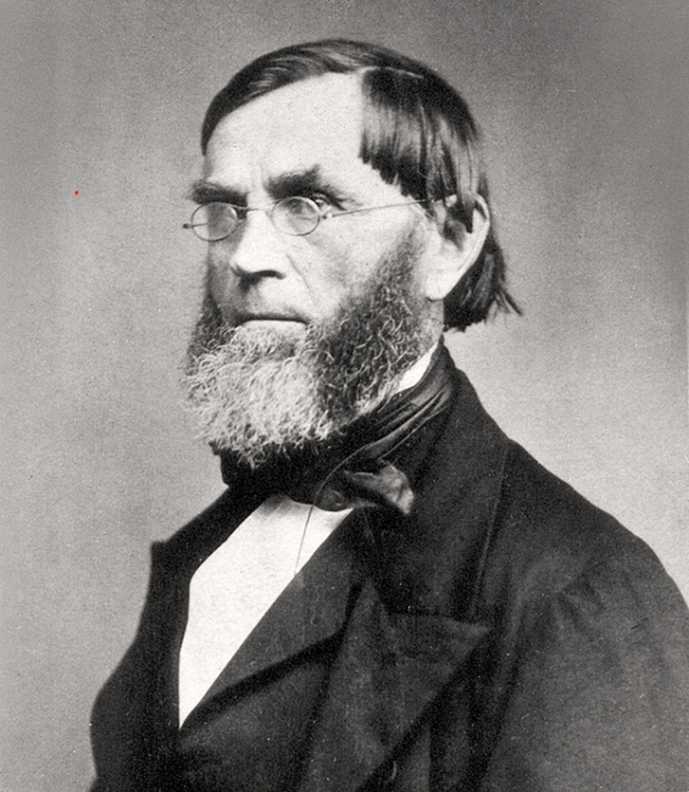
Søren Jaabæk led the organization Bondevennene and published the magazine Folketidende, which he filled with news from the USA. Image: Norwegian Biographical Encyclopedia.
Farmer’s newspaper filled with American news
Mandal, 1865: farmer, national politician, and member of parliament Søren Jaabæk founded the magazine Folketidende as a weekly magazine for the organization Bondevennene. Within a few years, Folketidende became a nationwide newspaper. And since farmers at that time constituted a far larger proportion of Norway’s population, the magazine had a larger reach than its circulation of around 3,500 would suggest.
“We estimate that each newspaper at that time was divided into up to ten households, so the actual readership was far higher than the circulation figure,” says Sandvik.
Jaabæk had a keen interest in foreign affairs, with a particular fondness for news from the United States. He wrote many of the stories himself, supplemented by letters from Norwegian emigrants and outright sniping from Norwegian-American newspapers.
As Ræder, he wrote very critically about slavery, but he also devoted a lot of space to the conditions of indigenous peoples in the United States.
Image: Søren Jaabæk led the organization Bondevennene and published the magazine Folketidende, which he filled with news from the USA. Image: Norwegian Biographical Encyclopedia.
Sandvik finds a Folketidende section that shows how Jaabæk’s newspaper was both sympathetic and detailed in its descriptions of American indigenous people.
There, Jaabæk quotes an American general named Harral Harvey who criticizes how indigenous people-or the “Indians” – were treated by American authorities in connection with conflicts on the prairie:
“[Harvey] only knew of 2 cases in which the Indians had broken treaties, and then they were excused, because the provisions were so outdated that they had forgotten them, and those who had concluded them were dead when the Government decided to complete these provisions”.
And further:
“The general thought [the Indian troubles] was due to rogue agents and bootleggers, and thought the bootleggers should be hanged or shot.”
However, these quotes must be read with a pinch of salt, warns Sandvik:
“I have not been able to find out who this General Harvey was,” she says.
Fought for US-inspired spousal law
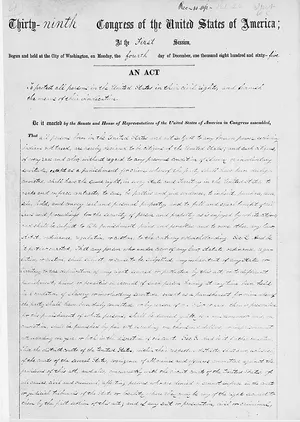
The first page of a manuscript copy of the Civil Rights Act of 1866, the first federal civil rights bill in U.S. history. Photo: Britannica.
One of Jaabæk’s major concerns was the relationship between property and marriage, particularly how Norwegian men could take out loans and act as creditors on behalf of the entire household without their wives’ consent. This could often lead to ruin for the whole family.
Therefore, Jaabæk argued in Folketidende that Norway should change its debt laws based on the American “Homestead Exemption” laws, which limit creditors’ ability to seize houses and property.
With a resolution from the Friends of the Farmers, such a bill was presented to the Storting in 1868. However, the Storting voted this down, and a new, similar proposal in 1871 was also rejected.
“But Jaabæk initiated a process that ultimately led to a new Spouses Act in 1888, which increased women’s authority over the economy. The legislation directly refers to the injustice of men being able to provide bail without their spouse’s consent,” explains Sandvik.
American women’s struggle for inspiration
The inspiration from the United States was also evident in the interwar period, especially in the struggle for equality in the 1910s and 1920s. At that time, LO and the Labor Party advocated the so-called ‘housewife policy’ in response to high unemployment in Norway: Married women were to be dismissed to make room for men in the workforce, so that they could support their families. Women’s opportunities to participate in professional life were downgraded.
At that time, the United States had an active professional women’s movement targeting highly educated women in the workforce, including doctors, lawyers, dentists, and others. And the Norwegian women’s movement, including through the magazine Nylænde, had close ties to the American one.
100 years of women’s right to vote. Photo: Norsk folkemuseum.
In the late 1920s, delegations from the American women’s movement visited Norway. They helped establish Norway’s first women’s professional organization, the Norwegian Federation of Professional Women, founded in 1931, based on the American model. This gave Norway a stronger movement that fought for absolute equality in professional life.
Sandvik states that the professional women’s movement in Norway quickly established itself as a powerful and effective political organization.
“The Norwegian Federation of Professional Women gained such a high international reputation that within a few years, they had their representatives in the League of Nations.”
Trawling through newspaper archives
For Sandvik and her colleagues, newspaper archives have been the most important source for documenting the historical relationship Norwegians have had with American politics. In their work, they have thoroughly reviewed both physical and digital archives on both sides of the Atlantic.
“Much of the research on Norwegians’ perception of America has been based on letters from emigrants. These provide a picture, but they are primarily written for family and focus on what one would write to family about. That is why we have worked extensively with newspapers, which have a different target audience. There, we find more about major political themes such as justice and corruption.
Simen Dalehavn Faaberg. Photo: UiO
This article, Norwegians Have Been Engrossed in American Politics Since the 19th Century, is written by Simen Dalehavn Faaberg, based on the book “Democracy in America – horror example or ideal?” published by Cappelen Damm. In addition to Hilde Sandvik, the book is written by Eirinn Larsen, Terje Mikael Hasle Joranger, Terje Rasmussen, Odd Arvid Storsveen, Steinar A. Sæther, Eirik Wig Sundvall, Byron Rom-Jensen, Maren Rath, Ola Mestad, Mikael Lyngaas, and Victoria C. Austveg.
This article was published in Norwegian on 25 June 2025.
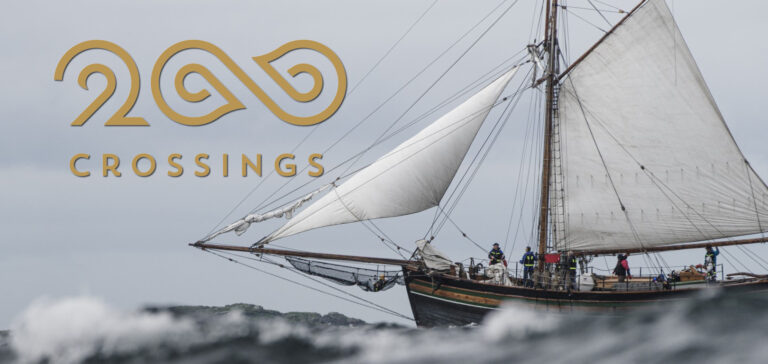
The ship Restauration set sail for the United States from Stavanger, Norway, on July 4, 1825, with 52 Norwegians aboard. “Crossings 200” commemorates 200 years of Norwegian migration to the United States.
Vesterheim, the National Norwegian-American Museum and Folk Art School, explores the diversity of American immigration through the lens of the Norwegian-American experience, showcasing the best in historic and contemporary Norwegian folk arts. This national treasure boasts a world-class collection of 33,000 artifacts and a Heritage Park comprising 12 landmark buildings, as well as a Folk Art School located in scenic Decorah, Iowa. To commemorate this bicentennial anniversary, Vesterheim presents a special exhibition focusing on Norwegian immigration, featuring essential objects, photographs, themes, and stories from 200 years of Norwegians in the U.S.
The coordinated undertaking for the 200th anniversary, however, has been identified as Crossings, Norway & North America, 1825 – 2025. Illustration: Norwegian Hweritage Utah.
The coordinated undertaking for the 200th anniversary, however, has been identified as Crossings, Norway & North America, 1825 – 2025. The Crossings Bicentennial in North America is managed by a group of dedicated professionals representing numerous organizations, including the Norwegian American Historical Association (NAHA), Vesterheim Norwegian-American Museum, Norway House, The Norwegian American newspaper, with representation from Sons of Norway and the Sons of Norway Foundation.
********************************************
You may also like to read The Swedish Emigrants.
********************************************
In the 19th century, Norway saw one of the highest rates of emigration in Europe. For more than a hundred years, tens of thousands of Norwegians packed up their lives and sailed across the Atlantic in search of opportunity.
At the top of a valley, far out in rural Wisconsin, lies Norskedalen Nature and Heritage Center. It is an American version of a Norwegian country park, an open-air museum featuring restored buildings from Norwegian immigrants to the area. In 1848, some immigrants from Biri came to this area as the first Norwegian settlers in Coon Prairie. They wrote letters home and encouraged others to come.
Norskedalen in Vernon County is one of the strongest “Norwegian” areas in the U.S. Photo: Norskedalen Wedding Spot.
Norskedalen in Vernon County is one of the strongest “Norwegian” areas in the U.S. At one point, the county had 70 percent residents of Norwegian descent – a higher proportion than in any other county in the U.S.
Nels Johnson (Kaasa) converted to Methodism in Racine County, Wisconsin, in 1846, becoming one of the first, if not the first, Norwegian-born Methodists in the world. Fellow convert O. P. Peterson left the U.S. in 1853 to establish the first Methodist congregation in Norway. Freedom from a state church in Norway, with the choice to be of any religion or no religion at all, was one of the factors that drew some immigrants to the United States.
Nearly 900,000 Norwegians imigrated to the USA and Canada.
Their arrival in America marked the beginning of a mass movement that would see nearly 900,000 Norwegians follow in their wake over the next century. For a country with a population of 5.5 million today, this movement was nothing short of transformative. It should, however, be noted that 2025 is being referred to as a commemoration, not a celebration: immigration brought opportunities to new arrivals, but also harmed existing nations.
“Crossings 200” Commemorates 200 Years of Norwegian Migration to the USA, Tor Kjolberg reporting
As maritime tensions have increased since Russia’s 2022 invasion of Ukraine, Denmark is investing big in defense tech. Read abouttheDanish Armed Forces’ first operational test of unmanned surface vehicles (USVs).
The Danish Armed Forces has announced that it is deploying four uncrewed surface vessels (USVs), dubbed ‘Voyagers,’ to enhance surveillance capacity in under-monitored waters. The Saildrone Voyager is designed to collect ocean condition data and provide maritime security. The first of two Saildrone Voyagers was deployed on June 6, 2025.
The vessels will be patrolling in Danish and NATO waters in the Baltic Sea and the North Sea for a period of three months, according to the Danish Armed Forces. The American Bureau of Shipping (ABS) has awarded what it says is the first-ever classification for an autonomous, uncrewed surface vehicle (USV). The deployment reflects a significant step forward in Denmark’s efforts to enhance maritime domain awareness and operational readiness in the increasingly complex Baltic Sea region.
Cross section of the Saildrone with the integrated ASVCO-2-system and associated.
“The security situation in the Baltic is tense, and therefore it has been decided by Danish parliament and the Danish government to improve the capabilities of Danish defense, and this includes the maritime domain and of course this includes our maritime domain awareness,” said Kim Jørgensen, the director of the Danish National Armaments.
Kim Jørgensen, the director of the Danish National Armaments. Photo: Altinget.
This mission marks the first operational test of the Saildrone Voyager platform by the Danish Armed Forces, reflecting the close collaboration and alignment between Saildrone and DALO. Earlier this spring, Saildrone announced a new European subsidiary based in Denmark, backed by a strategic investment from EIFO—the Export and Investment Fund of Denmark.
Drones are mounted on these 10-meter-long vessels, and artificial intelligence (AI) helps analyze data from the surrounding environment, both above and below the ocean’s surface, using advanced sensors.
Richard Jenkins, the founder and CEO of Saildrone.
“So, the vehicles work like a truck. The truck carries the sensors, and we use on-board sophisticated machine learning and AI to fuse that data to give us a full picture of what’s above and below the surface,” said Richard Jenkins, the founder and CEO of Saildrone, the company that makes the ships.
He continues, “Saildrone has spent three years maturing the Voyager design to be the industry leader in capability, reliability, and safety in the uncrewed vehicle sector. This classification from the American Bureau of Shipping defines the new gold standard for uncrewed systems and underscores the maturity of our technology.”
Saildrione diagram
The Baltic Sea is a vital maritime region with growing geopolitical complexity. It is home to key undersea infrastructure, including pipelines and data cables, and is bordered by multiple NATO member states and partners. With heightened tensions and increased naval activity, Denmark—situated at the maritime crossroads between the North Sea and the Baltic—is uniquely positioned to lead in advancing naval security and situational awareness.
The firm states that the autonomous sailboats can support operations such as detecting illegal fishing, border enforcement, and protecting strategic assets. The Voyager is fitted with an array of sensors, including smart cameras, digital radars, and sub-surface “passive acoustics” to map coastal ocean areas.
The Danish Armed Forces’ deployment of the Voyager platform represents clear leadership in the face of regional challenges. By adopting autonomous intelligence, surveillance, and reconnaissance (ISR) systems, Denmark is enhancing its ability to protect freedom of navigation, safeguard critical maritime infrastructure, and contribute to the readiness of its allies.
The autonomous sailboats can support operations such as detecting illegal fishing, border enforcement, and protecting strategic assets.
According to a report published in 2024 by the Export and Investment Fund of Denmark, EIFO, one of the country’s investment agendas focuses on defense in light of the new geopolitical landscape.
The Saildrone Voyager is a 10-meter USV designed specifically for near-shore ISR and maritime security missions. Powered by wind and solar energy with additional diesel power generation and electric propulsion, the Voyager delivers persistent, wide-area monitoring with a fraction of the carbon footprint of traditional crewed patrol assets.
NATO and its allies have increased sea patrolling following several incidents, including the 2022 Nord Stream pipeline sabotage, the 2023 Balticconnector gas pipeline burst, and undersea cable damage in the Baltic Sea in 2024.
Its developer, Saildrone, is establishing its European headquarters and operational hub in Copenhagen, Denmark’s capital.
Danish Armed Forces’ First Operational Test of Unmanned Surface Vehicles (USVs), Tor Kjolberg reporting.
UN Tourism launches the “Safe Destinations Challenge” to strengthen tourism resilience in Europe and beyond.
UN Tourism has launched the Safe Destinations Challenge to identify innovative solutions that position the sector as a driver of resilience, safety, and sustainability. The initiative initially focuses on Europe, which welcomed 747 million international tourists in 2024, representing approximately 58% of the global total.
The Safe Destinations Challenge aims to protect both tourism destinations and the people who inhabit and visit them. Over the past 50 years, Europe has faced more than 1,700 climate, fire, weather, and water-related hazards, resulting in over 160,000 lives lost and economic damages exceeding $500 billion. In this context, strengthening preparedness and crisis response capacity has never been more urgent.
This Open Innovation Call for Tourism Crisis Preparedness, Response, and Recovery in the European Region is being launched within the framework of the Safety of Destinations (SAFE-D) initiative for Tourism Crisis Preparedness, Response, and Recovery in the European Region, in collaboration with the UN Tourism.
Strengthening preparedness and crisis response capacity has never been more urgent.
What is the challenge looking for?
This call focuses on ideas, tools, and projects that can improve crisis preparedness and management across three key categories:
Category 1: Resilience to Natural, Climate, and Health-Related Hazards in Tourism Destinations Projects that help anticipate, mitigate, and respond to these risks, protecting both local communities and visitors.
Category 2: Safety, Security, and Cyber Threats for Tourists and Destinations
Solutions that enhance physical and digital safety in tourism destinations.
Category 3: Crisis Communication Effective strategies that strengthen communication before, during, and after emergencies.
Natalia Bayona, Executive Director of UN Tourism, says: “Tourism is more than an industry—it’s a network of human stories. With 1 in 10 jobs worldwide linked to this sector, the way we anticipate and respond to risks will define our collective future. In 2020, the cost of unpreparedness resulted in a loss of around USD 1.3 trillion in international tourism export revenues. This challenge is an invitation to build destinations that are stronger, safer, and more human—because resilience is no longer optional, it’s essential.”
The call is open to startups, scaleups, innovative micro and SMEs, local authorities, academic institutions, and tourism organizations working on solutions to preserve the physical, cultural, and economic integrity of destinations.
Applications will close on 31 October 2025.
The Safe Destinations Challenge aims to protect both tourism destinations and the people who inhabit and visit them.
About the UN Tourism SAFE-D
The Safety of Destinations (SAFE-D) Initiative, led by the UN World Tourism Organization, is a global effort to strengthen crisis preparedness, response, and recovery in destinations worldwide. The SAFE-D Europe Initiative, launched in early 2025 at the initiative of the Czech Republic, is a direct response to this growing pattern of vulnerability. The initiative highlights the increasing frequency of crises affecting tourism, from floods, fires, and pandemics to cyberattacks, geopolitical instability, and infrastructure failure, and calls for enhanced preparedness, response, and recovery capacities among European destinations. With climate hazards intensifying and geopolitical tensions persisting, there is an urgent need to strengthen tourism crisis governance to ensure the sector’s sustainability and resilience.
UN Tourism first published the Safe Destinations Challenge article on June 24, 2005.
In 2023, Gov. Gavin Newsom announced that the facility would be transformed to focus on training and rehabilitation, and thatSan Quentin State Prison in California is looking to Scandinavia for inspiration.
Following a 2023 announcement from the California Governor, the maximum-security prison was to be converted into a “one-of-a-kind facility” renamed the San Quentin Rehabilitation Center. Danish architecture studio Schmidt Hammer Lassen and American studio DLR Group were selected to redesign the facility, utilizing influences from the Scandinavian incarceration system.
San Quentin State Prison in California is Looking to Scandinavia for Inspiration, the article continues below the image.
Gov. Gavin Newsom
Three forthcoming education and vocational training buildings by SHL and DLR Group stand to add new amenities at San Quentin, as part of Governor Newsom’s transformation plan with the California Department of Corrections and Rehabilitation.
The proposed 2023-2024 budget was $20 million, aiming to transform San Quentin into “the preeminent restorative justice facility in the world.”
Schmidt Hammer Lassen (SHL) stated that it intended to apply principles derived from those used by Scandinavian countries in the architecture, design, and management of their carceral facilities, including enhanced daylighting and access to education and landscaping.
San Quentin State Prison in California is Looking to Scandinavia for Inspiration, the article continues below the image.
The San Quentin rehabilitation
The decision to revamp San Quentin was not met without criticism. “To overhaul how we define public safety in California, it requires an honest reckoning with the violence and racism inherent to U.S. policing and prison systems. Put another way, we can’t turn a light switch and adopt a care-first Nordic model without taking full stock of why prisons were built to function the way they do in America,” said some.
However, DLR and SHL have worked on similar projects such as the New Correctional Facility Nuuk, using a system introduced in the 1990s that “prioritizes rehabilitation through education”, according to the studio.
“Bringing our expertise with the Nordic model of rehabilitation and education, we are combining the best of both worlds,” said SHL senior project manager Jette Birkeskov Mogensen. “Having DLR Group and SHL working from day one as an integrated design team has ensured an unprecedented level of speed and quality in design informing clients.”
California Governor Gavin Newsom’s administration has learned from Norway how to transform San Quentin State Prison into San Quentin Rehabilitation Center. Norwegians never enacted sweeping criminal penalties that unabashedly targeted specific groups, the way the United States did with the black codes, Jim Crow laws, and the war on drugs. Norwegians didn’t abolish slavery only to retain it for people in prison, the way the U.S. did with the penal servitude clause of the 13th Amendment, and in 2022, the California Legislature voted against ending prison slavery.
The California Model was partially informed by an “independent report” submitted to the Governor in early 2024 that details recommendations for expanding rehabilitation efforts including improving housing for inmates and correctional staff, as well as improving officer training.
Three forthcoming education and vocational training buildings by SHL and DLR Group stand to add new amenities at San Quentin, as part of Newsom’s transformation plan with the California Department of Corrections and Rehabilitation (CDCR). The goal, the state said, is to reduce recidivism through education, job training, and substance treatment. Is the “Nordic model,” sometimes used interchangeably with the “California model,” transferable in a state where prison labor is a multi-billion-dollar industry? When, if ever, is it ethical to design carceral spaces?
The culture of America’s prisons is fundamentally punitive. In Norwegian jails, there is no physical abuse, forced labor, or solitary confinement. There are no restrictions on family visits. People in Norway’s prisons never lose the right to vote. Norwegian correctional officers don’t carry any weapons. There is tremendous emphasis on reintegration, and prison workers are trained in psychology and social work far more than they are in self-defense.
San Quentin State Prison in California is Looking to Scandinavia for Inspiration, the article continues below the image.
Project design lead Kasper Heiberg Frandsen.
“San Quentin carries a well-earned reputation central to US history and culture based in large part on its notorious punitive and degrading environment,” says project design lead Kasper Heiberg Frandsen.
Lori Coppenrath is DLR Group’s Justice + Civic Planning Leader. She emphasizes that the design for San Quentin “departs from conventional prison architecture through an open, flexible campus layout, emulating a community college environment, and increased connections between the built environment and nature.” Coppenrath added that the design incorporates “trauma-informed and learning environment best practices” to create “physical spaces that promote safety, well-being, and healing for all, including those who work and volunteer at the center.”
While Newsom’s pilot of the Norwegian model at San Quentin is laudable on paper, the realization of the Norwegian approach to prisons in California will require nothing less than a total transformation of the cultural and philosophical lens through which public safety is defined, as well as the societal roles of police and prisons.
Can the culture of prison be changed with new architecture? What difference will a few new Scandinavian buildings make when economic justice still hasn’t been won for those who inhabit them? Perhaps one day, CDCR will realize that going out of business is the only true sign of success.
San Quentin State Prison in California is Looking to Scandinavia for Inspiration, reported by Tor Kjolberg.
Although cybercrime is on the rise across Europe, Denmark appears to be well-equipped to handle growing threats. It was crowned the most cybersecure country in the world thanks to its advanced digital infrastructure.Read on and learn howDenmark’s collaborative cybersecurity initiatives protect local businesses.
This level of security, however, is not always possible for smaller businesses. They’re typically more vulnerable to cyberattacks as they lack the resources or knowledge to defend themselves. A staggering 43% of cyberattacks target these smaller outfits, and when they do, the average cost per incident can range from 820,000 DKK to over seven million DKK. To address this issue, Denmark has launched numerous collaborative cybersecurity initiatives that specifically target small and medium-sized enterprises (SMEs). These include mentorship programs, educational summits, and tools to improve staff awareness and protect digital systems and sensitive data.
********************************************
Related: New National Cyber Security Center To Be Established in Sweden
********************************************
Denmark’s Collaborative Cybersecurity Initiatives Protect Local Businesses, article continues below the image.
Located in the heart of Aarhus, the Security Tech Space (STS) serves as a central hub for local cybersecurity education and SME development.
Cybersecurity mentorship at Security Tech Space
Located in the heart of Aarhus, the Security Tech Space (STS) serves as a central hub for local cybersecurity education and SME development. Over eighty organizations, including IT experts, academic institutions, and public bodies, actively contribute to this initiative. Their goal? To help SMEs, who often lack the expertise and resources needed to tackle cyberattacks, strengthen their cybersecurity. To achieve this, SME owners are paired with experienced mentors who can help them implement adequate cybersecurity measures to protect their businesses.
Given that around 40% of the Danish SMEs have a serious digital security gap, a mentor can make a real difference in helping them prepare for the risks they face. And it seems this is precisely what SME owners want. Over 70% say simple advice and guidance on common threats would go a long way in solving their cybersecurity problems, a recent report from Aalborg University reveals.
Cybersecurity Summit: Tackling AI threats and ransomware
STS also hosts an annual Cybersecurity Summit.
In partnership with Computer World, STS also hosts an annual Cybersecurity Summit, where SME owners can meet with industry experts to learn about the latest cybersecurity solutions and best practices. This year’s event, on August 21st, puts the spotlight squarely on AI. It’s undoubtedly a powerful tool in the hands of hackers, but businesses can also utilize it to stay ahead of AI-powered cyber threats. SME owners will specifically learn how to use the latest AI tools to detect and automatically respond to cyberattacks, as well as how to recover from potential security incidents quickly.
Ransomware is another topic that will be covered in depth. While it’s not a new risk, it’s still one of the biggest threats out there. Ransomware and data extortion were actually behind 32% of all reported cyberattacks in 2024, according to a Verizon report. What makes ransomware so sneaky is that it’s constantly evolving. Previously, attackers would encrypt system data and demand a ransom for a decryption key. Now, the threat is triple-fold. Hackers don’t just encrypt data; they also move it to another location and threaten to leak it unless they’re paid. SME owners, therefore, need to know how to defend against ransomware with a multi-layered security approach. This includes real-time threat detection and response, as well as employee education, so they know not to click on dodgy phishing emails.
Denmark’s Collaborative Cybersecurity Initiatives Protect Local Businesses, article continues below the image.
HackerStop is a free tool that helps the country’s SMEs take cybersecurity into their own hands.
Promoting employee cyberawareness
DanskIT, Denmark’s largest network for IT users and professionals, has also developed HackerStop: a free tool that helps the country’s SMEs take cybersecurity into their own hands. This platform recognizes the crucial role employees play in safeguarding data and enables SME owners to educate their staff on cybersecurity. To assess their cyber awareness, employees are given a brief survey that covers key topics, including phishing, malware, and data protection policies. These surveys are anonymous and take only 5-10 minutes to complete.
Based on the answers, HackerStop generates a report that identifies potential security gaps and weaknesses in the company’s IT strategy. It then gives actionable recommendations on how the SME can improve its cybersecurity practices. There’s also a community element as HackerStop hosts regular meetings, where users, partners, and cybersecurity experts share the latest cybersecurity news and best practices. It’s a great way to build a network of like-minded professionals and further solidify Denmark’s position as a leader in cybersecurity.
With cyberthreats on the rise across Europe, Denmark is taking steps to protect local SMEs. Collaborative initiatives, such as mentorship programs, summits, and cybersecurity awareness tools, help SMEs protect their operations, enabling them to avoid threats and thrive in the years to come proactively.
Karoline Gore
Denmark’s Collaborative Cybersecurity Initiatives Protect Local Businesses, written explicitly for Daily Scandinavian by Karoline Gore. Karoline is a freelance writer from Stoke-on-Trent in the UK who left the corporate grind when she started a family and has never looked back. She enjoys contributing to a range of online publications on the topics that are important to her.
Private helicopter transfers tend to be functional affairs, with cramped cabins and the lingering scent of jet fuel. Citycopter, however, offers comfortable flights throughout the Nordics with its modern and innovative fleet in Helsinki. Discover more about private helicopter transfers in the Nordic region.
Based in Helsinki, Helsinki Citycopter offers exclusive private helicopter charters and tour flights across the Nordic and Baltic countries. The company is renowned for its sustainability, as it is the only commercial helicopter operator in the Nordics to fly with a blend of sustainable aviation fuel. Operating from the Finnish capital, Helsinki Citycopter offers travelers an exceptional travel experience in Northern Europe.
************************************
You may also like to read The Finnish UFO Houses
************************************
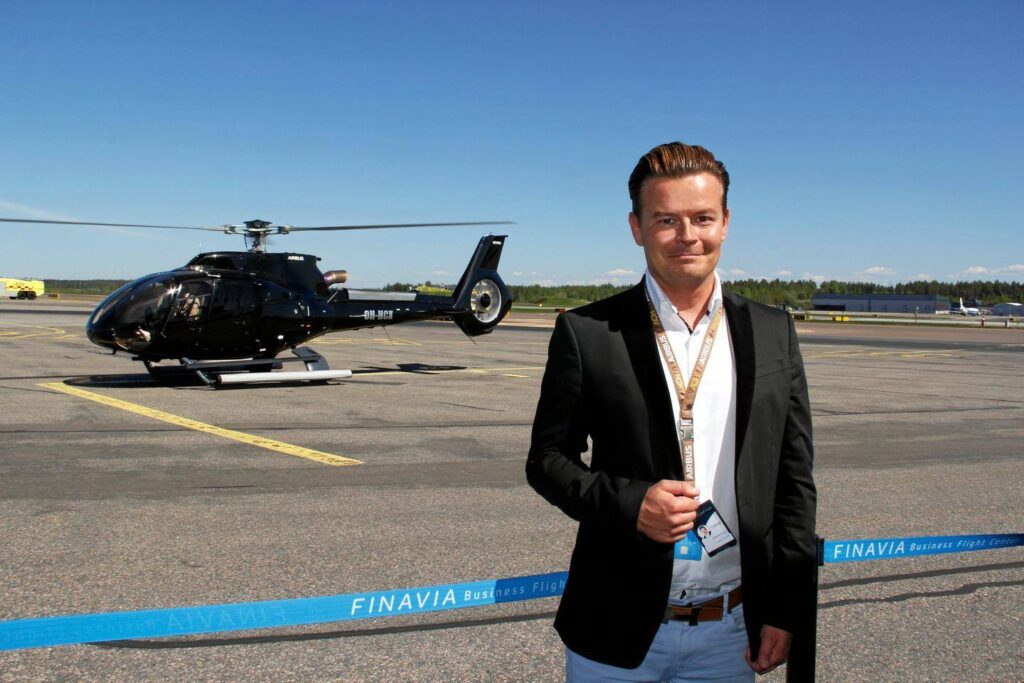
Co-founder Joonas Nurmi.
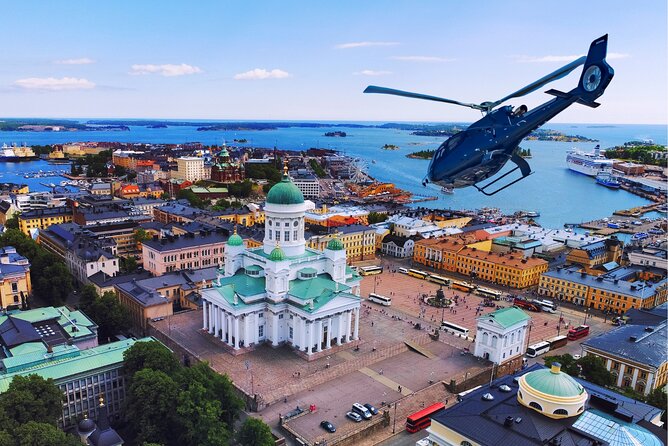
Helsinki Citycopter, founded in 2020, operates a fleet of five helicopters, comprising two Airbus ACHI30s and an H125. They have spacious interiors with leather seats, noise-cancelling headsets, and efficient climate control.
The company offers the widest selection of helicopters available in Finland, allowing you to choose the right helicopter for your flight based on your group size, convenience, and budget.
Helsinki Citycopter’s ACH130
Helsinki Citycopter offers a combination of ready-made packages and customizable experiences, making it perfectly suitable for any occasion. Offering door-to-door services, along with seamless connections within Northern Europe, the company presents you with effortless travel.
Powered by modern low-emission engines, the aircraft also leave a smaller environmental footprint than many of their competitors. “There’s a unique advantage to helicopter travel,” says co-founder Joonas Nurmi, who spent 15 years with Finnair. “You get perspectives that you don’t see from a plane or car, and you can land almost everywhere.”
Safety is the company’s top priority. Its reputation for excellence is built every day, on every flight and the ground, by a professional team of aviation experts who are committed to providing guests with the highest standards of safety in air travel.
Helsinki Citycopter offers unique experiences .
Helsinki Citycopter offers unique experiences such as an all-inclusive day trip to Tallinn or Finnish Lapland, exploration of the Finnish Lakeland, or a Nordic excursion above the Norwegian Fjords. With endless opportunities, travelers can tailor their experience to suit their wishes perfectly.
Now the market leader in northern Europe, the company has steadily expanded, adding a Cessna Citation CJ4 private jet to its portfolio and launching a flight academy for helicopter and fixed-wing pilots.
“Great service begins with great people and real experience, which is why we put so much into choosing the best professionals in the industry to join our team. You’ll always have a pilot who knows punctuality, local weather, safe flying, and customer service inside and out. We aim to not only meet your needs, but also exceed your expectations of what a transportation service can be,” states the company’s homepage.
“Our product is nature,” says Nurmi. “And we fly where no one else does.”
Helsinki Citycopter is part of the Aerocom Aviation Ltd. Group, under which one can also find another two distinct brands: ACXJET, which operates from Helsinki and provides its clients with the ultimate private aviation experience, and ACX Access, the only destination management and luxury concierge company in the Nordics with its fleet of private jets and helicopters.
During the prestigious Michelin Guide Ceremony in Denmark, it was a day of celebration for Bergen, Norway, as Michelin stars shone on the city.
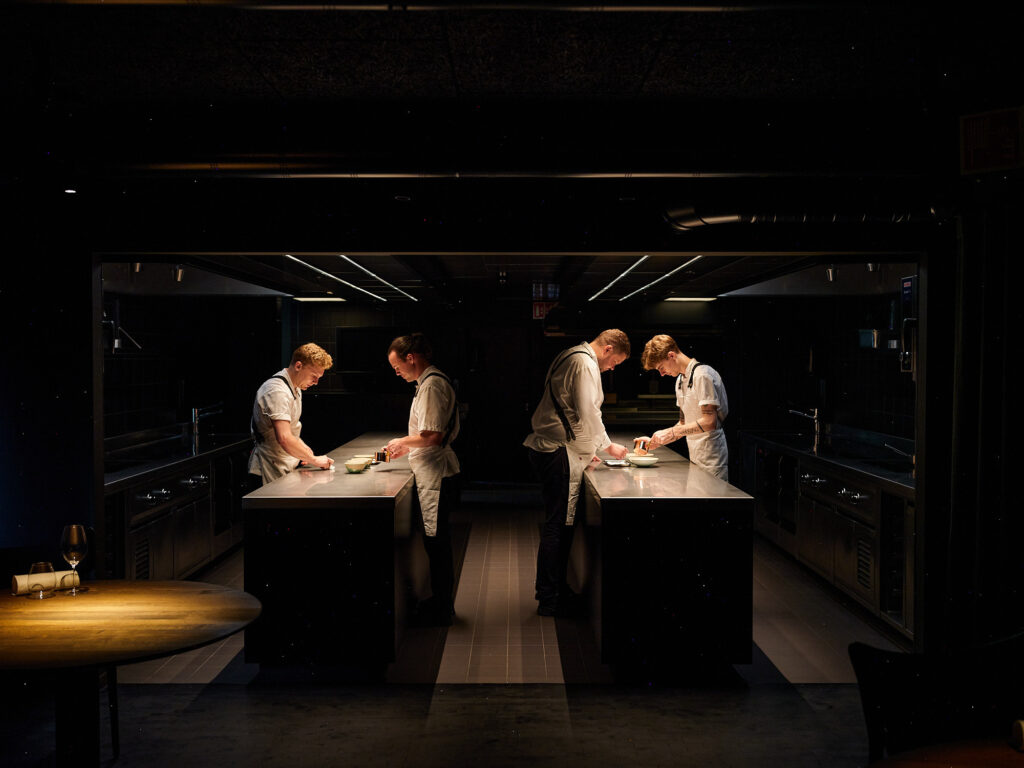
Two of the city’s restaurants, Gaptrast and Omakase by Sergey Pak, each received a desirable star, further strengthening Bergen’s position as a leading culinary destination in Norway.
Bergen has distinguished itself as a food city in recent years, and Monday’s awards mark another milestone for both the restaurant industry and the city. The two award-winning restaurants stand out for their dedication to quality, creativity, and the use of top-tier, locally sourced ingredients.
“This is incredibly huge – earning a star in the first year of opening is insane! The real work begins now; we will aim higher and strive to improve every day,” said Kristian B. Vangen and Øystein Ellingsen of Gaptrast enthusiastically. Sergey Pak and Kjetil Smørås from Omakase by Sergey Pak also expressed their pride: “Our focus has solely been on creating great dining experiences based on our fantastic ingredients from Western Norway. Receiving this recognition from the Michelin Guide is a major inspiration for our continued efforts.”
Bergen already boasts a Michelin star at the restaurant Lysverket, and Christopher Haatuft welcomes the new stars. “It’s great that we are getting two new stars in the city, so more people recognize that there are several excellent restaurants here. In Bergen’s restaurant scene, we all support each other – more great restaurants mean more reasons to visit the city.” Haatuft also highlights that access to high-quality local ingredients has significantly improved.
From Gaptrast. Photo: Visit Bergen.
Mayor Marit Warncke is in a celebratory mood: “This is a cheerful day for Bergen! Our local culinary experiences are once again being put on the world map, contributing to increased interest in the city among both locals and visitors, who are eager to explore everything we have to offer. Hard work and a deep passion for the craft lie behind this achievement, and it serves as a major inspiration for Bergen’s culinary scene.”
“This confirms that Bergen has developed into Norway’s foremost city for gastronomic experiences,” agrees Tourism Director Anders Nyland.
Food critic Ove Svendsen from Bergensavisen (BA) has been closely following the city’s culinary development over the past few years. “In a city where several restaurants operate at a high level, there is a continuous flow of creativity and inspiration. I have dined at many Michelin-starred restaurants across Europe, and many of them are nowhere near the outstanding food quality we have in Bergen.”
The Michelin Guide highlights restaurants of exceptional quality worldwide, and this year’s awards have once again placed Bergen on the international gastronomic map. With this recognition, the city’s culinary community hopes to attract even more food lovers from both Norway and abroad.
Michelin Stars Shine on Bergen, a press release from Fjord Norway.
Feature image (top): Omakase by Sergey Pak.