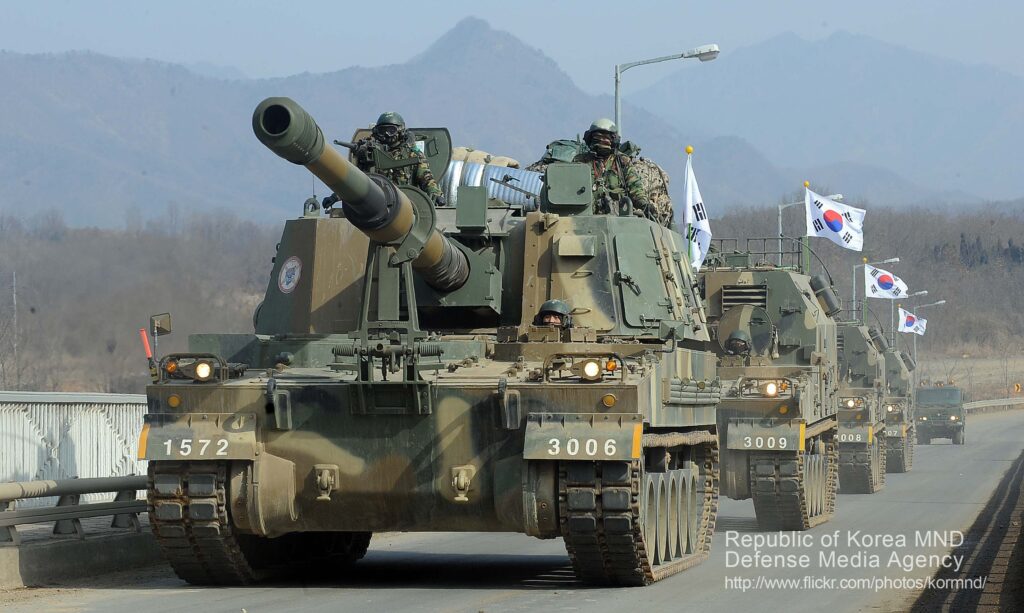
Norway, which previously took delivery of 28 K9s and 14 KIO ammunition resupply vehicles to keep their barrels fed with 155mm shells, is buying 24 new K9. This is a repeat purchase for Norway of self-propelled howitzers.
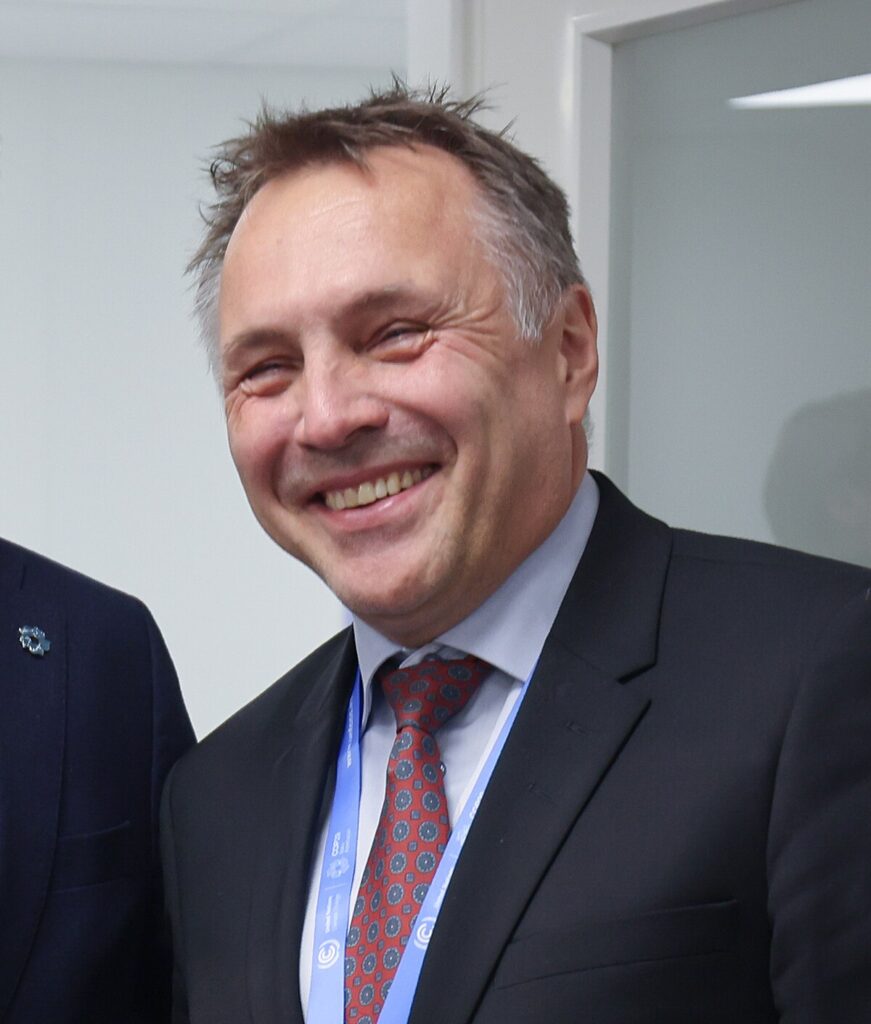
Norway nearly doubles its K9 howitzer fleet for around $534 million. “We are facing a serious security situation. We are therefore requesting the Storting [Parliament] to approve significant investments in various parts of the Armed Forces to strengthen Norway’s defense capability […],” Minister of Defence Tore O. Sandvik said in a statement.
As Europe has set about rearming, the K9 has done excellent business for the South Korean company Hanwha Aerospace. Other customers include Estonia, Finland, Poland, and Romania.
Norwegian Minister of Defence Tore O. Sandvik. Photo: Wikipedia
The 155 mm howitzers in Norway will equip a new artillery battalion within the planned Finnmark brigade being set up to bolster Norway’s defenses in the high north, according to a government proposal. The purchase plan is part of a proposed 17 billion kroner budget that also includes additional sea mine-clearing capability, new military trucks, and funding for facilities.
In addition to the new howitzers, the brigade will get anti-aircraft weapons, a light infantry battalion, an engineer company, an intelligence company, and a stronger command.
The K9 has tremendous mobility and has already proven itself in cold conditions. Photo: Wikipedia
There is little doubt about the K9’s purpose for Norway: to deter Russia from getting any funny ideas about the High North land border that the two countries share.
In October of last year, the Norwegian government proposed increasing the country’s 2025 defense budget by 19.2 billion kroner to 110.1 billion kroner. The budget for the additional howitzers includes the guns as well as spare parts, according to the spending proposal.
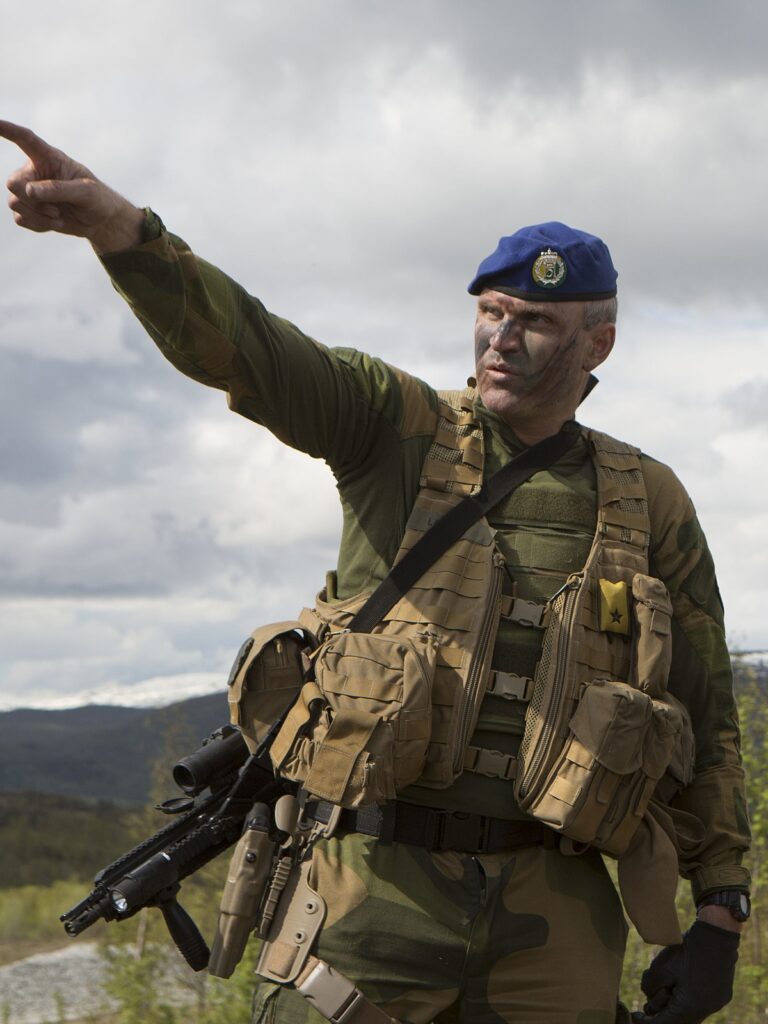
“We plan to develop a force that will be in Finnmark, in times of peace, crisis, and war. It will be a standing army force,” Head of the Norwegian Army, Major General Lars Lervik, told a local audience in Kirkenes in January 2025.
Head of the Norwegian Army, Major General Lars Lervik. Photo: Wikipedia
The K9 has tremendous mobility and has already proven itself in cold conditions; India’s army has deployed them in the freezing heights of Ladakh on the Chinese border. And they work where it counts too: Ukraine has used Polish-supplied Krab howitzers, which feature a K9 chassis and a 52-calibre gun made by BAE Systems.
Sidsel Paaske’s work extends beyond most retrospectives, providing not merely a historical context for the artist’s interdisciplinary practice but also evoking the restless energy that drove her constant improvisation. Learn more about a feminist pioneer in Norwegian art history.
“We play as we practise” was Sidsel Paaske’s motto and watchword. Throughout her career, she was open to new ideas and expressed herself through various media. She began in the field of textile art, but was soon breaking new “ism-free” ground.
Whether Paaske is presented as a feminist or a textile artist, she is a figure who has a knack for breaking out of categories. Her approach is particularly significant, as the diverse and unclassifiable nature of her output is undoubtedly one reason why the late Norwegian artist has been largely overlooked since she died in 1980 at the age of 43.
With the joy of experimentation in her bones, she immersed herself in a broad range of expressive forms, working freely with different techniques such as watercolors, painting, textiles, ceramics, music, writing, book illustration, sculpture, and jewelry.
An overwhelming breadth seems to have characterized Paaske’s life’s work, and possibly also stood in the way of her recognition. If you search for her name on the internet, it appears in several cultural contexts, but there is little supplementary information.
During her brief career, Paaske worked across various media, including enamel painting, poetry, and performance. Having been forced to leave art school in 1956 after falling pregnant, she went on, six years later, to gain a vocational qualification in textiles and art education – a field seen as more suitable for women.
Paaske was at the center of Oslo’s art scene from 1965 to 1980. Her sculpture, Extinguished Match (1966), has been described as Norway’s first pop art work. Some 21 years later, Claes Oldenburg, the “father” of pop art, made a variation on the same theme.
Paaske was also a talented singer, collaborating with musicians such as Don Cherry and Jan Garbarek. She designed numerous album covers and posters and created book illustrations for several of Jan Erik Vold’s books.
Abandoning textile design because she felt it was too laborious, Paaske initially gravitated towards abstract painting and printmaking, before exploring pop art, craft, jazz music, and non-Western cultural customs. Throughout her career, she engaged with ‘women’s work’ – making jewelry, for instance, from feathers and metals, as per the folk traditions she studied.
According to art historian Jorunn Veiteberg, Paaske was influenced by both Sami and African cultures, as well as Norwegian folk art, while simultaneously being interested in jazz and among the first in Norway to capture the impulses of American pop art.
Extinguished Match (1966).
By the early 1970s, Paaske’s various interests began to coalesce through her engagement in feminist politics. ‘Folk art [and] women’s art […] are concerned with, and characterized by, ornamentation and hence rhythm, which is related in turn to music,’ she wrote in 1975.
In Volume 7 of the standard edition of Norsk Kunsthistorie (The History of Norwegian Art), published just three years after her death, Paaske isn’t even mentioned. Although she was the editor of Billedkunstneren from 1978 to 1980, the periodical noted her death with nothing more than the headline “Sidsel Paaske is dead” and a short, elegiac poem.
There is, however, an article about the artist in Norsk Kunstnerleksikon, I-IV, published in 1982-86.
Why has Paaske’s Extinguished Match not been accorded the central place in Norwegian art history, as it deserves? Why have Paaske’s artistic achievements not been taken seriously? And what are the mechanisms that determine the process of canonisation?
Paaske expressed that her work was far from classical and academic, writing that “ornament, symmetry and rhythm were her starting point, more than anatomy and realism. Poetry and folk music were closer to her than “old masters”. Paaske claimed that she made art for the moment, not for eternity, and addressed the audience directly: “I want to show you the ‘non-authoritarian’, the soft, feminine values. I want to share with you my melodies and songs.”
A Feminist Pioneer in Norwegian Art History, compiled by Tor Kjolberg
Feature image (top): Portrait/National Museum in Oslo.
Dr. Liz Morris-Webb works in marine research at Nordlandsforskning in Rana, Norway. In April, she wrote a scientific paper on tides, which found that a quarter of the population in the UK and Ireland do not understand a standard tide table, and that about 10 million people had experienced being caught or nearly caught by the tide. This Norwegian survey reveals that a quarter of the population lacks a ‘basic understanding’ of how tides work.
The study, which surveyed 1,368 participants across the UK and Ireland, found that approximately 15 percent of respondents reported having been cut off, or nearly cut off, by the tide at some point in their lives. This equates to around 10 million people across the UK and Ireland. The study’s authors highlight that a notable proportion of these incidents involved individuals who had not intended to be in or near the water in the first place.
Dr. Liz Morris-Webb at Nordlandsforskning. Dr. Liz Morris-Webb photo: Private.
Such a startling lack of basic and vital knowledge did not go unnoticed in the British and Irish media. Bangor University in Wales, where Morris-Webb is an honorary researcher, issued a press release on the matter, along with the RNLI (Royal National Lifeboat Institution), an organization dedicated to saving lives at sea.
The survey highlights that 60 per cent of those affected by tidal cut-off were surprised by how quickly the water moved, indicating a general underestimation of tidal speed. Further findings show that 40 percent of people surveyed lack a basic understanding of tides, and only 50 percent check tide times before visiting the beach.
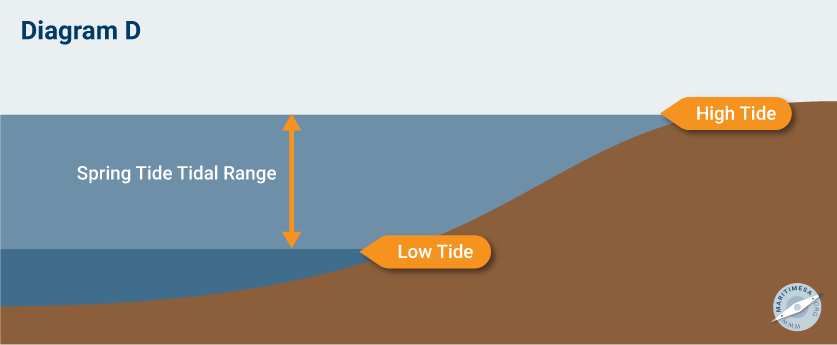
“In the UK, tides can rise to 10 meters, and shortly after our paper was published, a major flood coincided with the Easter holidays, making our research headlines,” says Morris-Webb.
Norwegian Survey Reveals that a Quarter of the Population Lacks a ‘Basic Understanding’ of How Tides Work, article continues below the image.
In the UK, tides can rise to 10 meters.
Data collected by the RNLI — which recently issued new safety checklists for boaters — shows that over the past decade, lifeboat crews and lifeguards have attended 7,971 incidents involving tidal cut-off. Of these, many were categorized as life-threatening, and 452 lives were reported to have been saved.
The major media houses, BBC and ITV, ensured that the research by the recent Norwegian citizen reached millions of viewers, listeners, and readers. In particular, coverage on BBC World News was adequate.
“Figures from the media analysis agency Vuelio show that a potential 287 million people have seen the case,” the RNLI press office reports.
Yvonne, who only provided her first name, experienced one such incident when she was cut off by the tide at Fleetwood beach during a family outing from North Yorkshire. Despite having consulted tide times beforehand, the group was unaware of the distinctions between high and low tide timings. As they attempted to return from the shore, the rising water quickly isolated them.
Liz Morris-Webb thinks it’s cool that a scientific article gets so much attention in society.
Vuelio uses the term “OTS,” which stands for “Opportunities To See,” to estimate the number of times the public has been exposed to media coverage of a case.
Yvonne says: “Suddenly, the water was getting towards waist height. My partner, who had just had a shoulder replacement, got separated from us and was standing on a sand embankment. Within two minutes, all the sand was gone. My phone got wet and I couldn’t make any calls for help, but I knew a lifeguard had seen us. I had to stay strong for my whole family. The water got deep so suddenly that we were almost swimming in it.”
Liz Morris-Webb thinks it’s cool that a scientific article gets so much attention in society. “Here in Norway, too, knowledge about the use of the ocean is vital, and, among other things, through the organization Flyte, drowning prevention work is being put on the agenda nationwide.”
“I find it very exciting how research like this can help improve safety messages and save lives in Norway, too,” she adds. “Although we have less difference between high and low tide than the UK, we have the second largest coastline in the world, and this can pose many types of risks if people do not have the necessary knowledge.”
The RNLI encourages coastal visitors to consult reliable sources, such as the Met Office, before making plans. The organization advises that tides follow a predictable pattern, occurring twice each 24 hours, but times vary by location and shift daily. Understanding these variations is considered necessary for both beach users and coastal walkers.
Data collected by the RNLI — which recently issued new safety checklists for boaters — shows that over the past decade, lifeboat crews and lifeguards have attended 7,971 incidents involving tidal cut-off. Photo: 8 shannon class illustration by Lee Hawkins/mli.org
Nordlandsforskning is the only social science research institute in Norway with both ownership and headquarters in the North.
The institute aspires to remain an excellent research environment and a trusted knowledge provider, both locally and globally. Its research is used in studies, plans, and consultations. When decisions are made, knowledge from Nordlandsforskning is often the basis.
The institute’s research activities are rooted in the highlands, leveraging local advantages to shed light on broader questions and issues. With projects related to restructuring, innovation, and adaptation, its research helps shape the future society.
Nordlandsforskning was established in 1979 in Bodø. Today, it also has offices in Svolvær and Mo i Rana.
Norwegian Survey Reveals that a Quarter of the Population Lack ‘Basic Understanding’ of How Tides Work, based on a press release from Nordlandsforskning.
Two Norwegian designers, Amy Hunting and Oscar Narud, create objects that straddle the boundary between design and art. They combine glass and wood in a way that challenges the properties of the materials. Norwegian Wood + Glass = Hunting & Narud.
Their multidisciplinary studio, Hunting & Narud, is based in London. Their work is driven by a shared commitment to craftsmanship, problem-solving, and integrating sustainable solutions into every project. Renowned for their ability to create projects with captivating spatial impact and compelling narratives, Hunting & Narud bring a wealth of knowledge in material processes to their designs. They have collaborated with esteemed clients such as the Tate Modern, the National Museum of Art, Architecture, and Design in Oslo, FLOKK, and the V&A in London.
Their multidisciplinary studio, Hunting & Narud, is based in London.
A notable example of the couple’s design is their 2014 series of side tables, the Apex Table (top). There, they challenged the properties of glass and wood. Apex is the technical name for the tip of the cone, and it is the only point where the two materials meet in the table.
Driven by their deep-rooted passion for design and sustainable practices, Hunting & Narud continually strive to push boundaries and challenge conventions.
Driven by their deep-rooted passion for design and sustainable practices, Hunting & Narud continually strive to push boundaries and challenge conventions. Their multidisciplinary approach, combined with their sensibilities of craftsmanship and problem-solving, enables them to create remarkable and environmentally conscious designs.
*******************************************
Related: The Norwegian Minus Chair
*******************************************
Their keen sense of storytelling is evident in their spatial installations, interior design, exhibition design, furniture design, and concept development.
Amy Hunting graduated from the Department of Furniture and Spatial Design at the Royal Danish Academy of Fine Arts in 2008. Meanwhile, Oscar Narud pursued his studies at the Royal College of Art, London, where he completed his MA in Design Products in 2006.
Renowned for their ability to create projects with captivating spatial impact and compelling narratives, Hunting & Narud bring a wealth of knowledge in material processes to their designs.
«As curious and multidisciplinary designers, we embrace the odd, the strange, and the curious, infusing playfulness into our work. Through storytelling, our designs evolve into objects and spaces that evoke emotions and forge connections. Sustainability guides our responsible approach, leaving a lasting impact on experiences and the environment,» state the designer couple.
We were heading to the Danish capital for this annual convergence of design brands. 3 Days of Design in Copenhagen: This year’s event co-hosted by Design Ambassadors, took place from June 18 to 20.
The primary role of the Design Ambassadors was to ensure a memorable experience for guests, exhibitors, the press, and design enthusiasts. They were active hosts, guiding attendees, facilitating discussions, and inspiring new ways of engaging with design. The Design Ambassadors were available at each of the 8 Design Districts, alongside the District Managers at the new i-Points.
3 Days of Design in Copenhagen
Each Design Ambassador’s area of expertise was matched with the themes within their designated district. Boasting backgrounds in design, interiors, event management, sustainability, and digital marketing, they were keen on fostering connections, sharing knowledge, and making the 2025 festival an unforgettable experience for all.
After searching the world for the most passionate and skilled design enthusiasts to join the team, the organizer has amassed a diverse group from countries such as the UK, Italy, France, Spain, Portugal, Switzerland, Norway, the US, Canada, and South Korea. It was a multi—cultural group of people excited about design joining our global community.
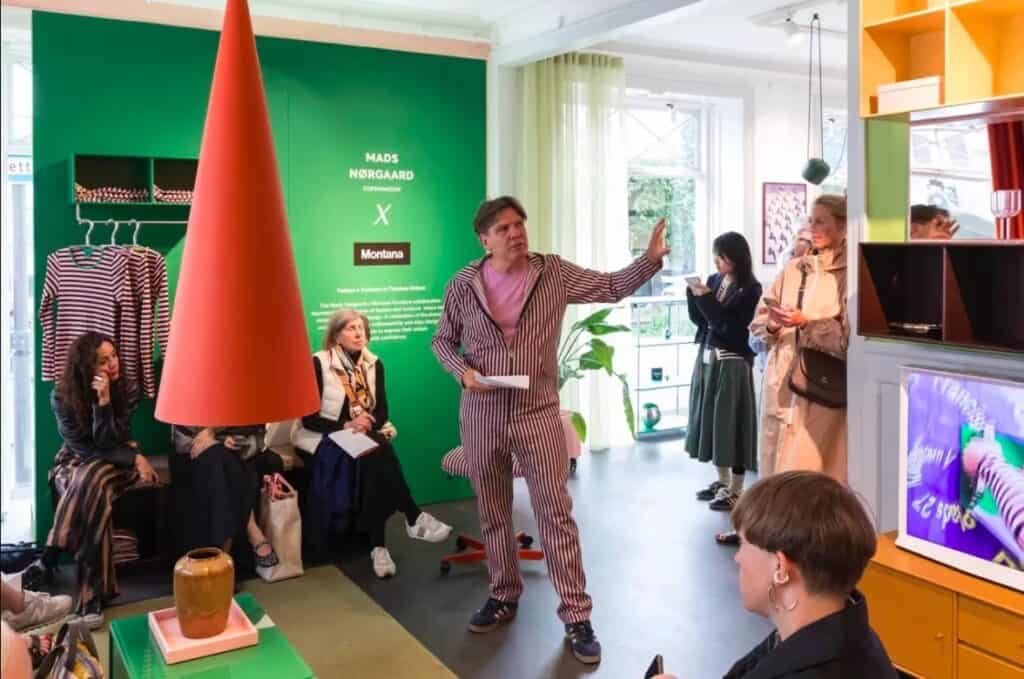
From the Montana exhibition 2024. Screenshot.
“We believe a design festival should be about more than just showcasing designs. At 3daysofdesign, we go to great lengths to foster connections across continents, inspire people with forward-thinking ideas, and offer multi-sensory, immersive experiences – all to create memorable moments that last well beyond the 3 days. Our Design Ambassador Program encourages deeper connections with the stories, ideas, and people behind design. We can’t wait for you to meet them this June. No doubt we will learn from them as much as they will learn from us, as a festival and as people,” said Signe Bydal Terenziani, CEO & Managing Director, 3daysofdesign.
******************************************************
Related: Danish Flair for Design
******************************************************
Leica Camera has been committed to the art of visual storytelling for 100 years. Photo:
Through the Lens of Leica
In collaboration with Leica Camera Nordics, the Design Ambassadors documented highlights of the design exhibitions and events, as well as memorable moments during the festival with photography.
Leica Camera has been committed to the art of visual storytelling for 100 years. Their dedication to design, craftsmanship, and innovative technologies has enabled people to bear witness to the world, capturing moments in art, design, and society through a shared passion for photography. This year marks Leica Camera’s 100th anniversary of photography.
The primary role of the Design Ambassadors was to ensure a memorable experience for guests, exhibitors, the press, and design enthusiasts. Photo: Bamberghi
“Leica Camera is delighted to support 3daysofdesign’s first Design Ambassador Program. We are thrilled to partner with an organization that shares our passion for design and culture, with a community of people much like ours, who are curious about the world,” said Louise Goldstone, Leica Camera Nordics.
Last year’s iteration brought together more than 400 leading brands.
3 Days of Design in Copenhagen: This Year with Design Ambassadors, based on a press release from 3daysofdesign.
From the snow-blanketed fjords of Norway to the patchwork fields of southern Finland, the Nordic landscape has long been shaped by the quiet interplay between nature and human activity. Yet much of this transformation has gone undocumented, scattered across generations and buried beneath layers of soil, infrastructure, and memory. Learn more about unearthing Nordic land using history through an old satellite imagery catalogue.
Today, a surprising tool is helping researchers across Scandinavia bring those stories to light: an old satellite imagery catalogue. What was once used primarily for Cold War surveillance or early weather prediction has become a rich resource for understanding how people and the environment have interacted over the decades. Now, thanks to improved access, new digital tools, and a growing sense of urgency surrounding climate and land-use planning, these images are being viewed not just as scientific data but as a form of historical testimony.
Unearthing Nordic Land Using History Through an Old Satellite Imagery Catalogue, the article continues below the image.
Aerialview from 2005 over the more central parts of Greater Stockholm, Sweden. Photo: ResearchGate
******************************************
Related: Sweden – A Hub For Commercial Satellites
******************************************
A Digital Time Machine
In many ways, these satellite archives are a time machine. Unlike written records or maps, which often represent decisions rather than reality, historical satellite imagery captures the world as it was, untouched by interpretation. In a single frame, you might glimpse a forest edge from 1975, a fishing village before it morphed into a tourist hub, or a coastline before sea levels began to bite at its edge.
Researchers at institutions like the Norwegian Institute for Nature Research and Sweden’s SLU (Swedish University of Agricultural Sciences) are working to view historical satellite images of key ecosystems over time. With advancements in machine learning and GIS, they can now stitch together thousands of satellite passes into seamless historical mosaics. In doing so, they’re revealing patterns that were previously invisible, such as how agriculture in southern Sweden has migrated northward in response to climate change, or how peatlands in Finland have been slowly drained over decades, sometimes without any official records.
What makes this particularly powerful in the Nordic context is the sheer diversity of landscapes across relatively small regions. A one-hour drive can take you from dense urban centers to wetland reserves, from coniferous forests to glacial plateaus. Having decades’ worth of imagery allows researchers to overlay environmental and human history to see how they moved together or, at times, collided.
Climate change is often portrayed as something happening fast, but in truth, it builds slowly, over generations. This is why satellite archives are becoming so crucial: they offer the rare ability to watch change unfold, year by year, meter by meter.
Take, for instance, the use of satellite pictures in monitoring Arctic-alpine environments in northern Norway. Scientists have been comparing imagery from the 1970s with contemporary data to measure the shrinkage of snow patches and the northward creep of tree lines. These seemingly small shifts have profound ecological consequences, affecting everything from migratory birds to reindeer herding.
Unearthing Nordic Land Using History Through an Old Satellite Imagery Catalogue, the article continues below the image.
Historic Finnish satellite returns to earth. Photo: Yle News.
In Denmark, urban planners are using archive satellite images to trace the growth of cities like Aarhus and Copenhagen. They’re mapping how green belts have disappeared and reappeared over time, as well as how industrial zones have sprawled, retreated, and often returned in new forms. This isn’t just academic; these visual records inform zoning laws, sustainability targets, and decisions on where new infrastructure should be placed or avoided.
Equally important is the work being done with open-access tools. Many Scandinavian researchers have collaborated with the European Space Agency and universities to make historical satellite imagery free for educational and governmental use. This democratization of data means municipalities, NGOs, and even curious citizens can now examine how their surroundings have changed, with no exceptional credentials or budgets required.
A Window Into Cultural and Ecological Heritage
Beyond urban and environmental planning, this imagery has a deeply human value. Across the region, communities are using it to understand their past, not just in terms of climate, but also in terms of identity.
In Finland, historians have utilized archival satellite images to reconstruct land use on Sámi territories, enabling indigenous communities to prove their historical connections to specific reindeer grazing routes. Meanwhile, Swedish environmental educators are incorporating these images into public exhibitions, allowing children and families to scroll through timelapses of their hometowns and see how forests, lakes, and even schoolyards have evolved over generations.
If societies forget what their landscapes once looked like, they risk making poor decisions in the future. Should a town restore a floodplain? Should a forest be managed for biodiversity or timber? Should agriculture adapt to hotter summers or colder winters? These aren’t hypothetical questions in Scandinavia. They’re pressing, and the answers depend heavily on understanding what came before. Old satellite imagery is helping fill those knowledge gaps. It brings evidence where memory may fail, and context where policies may have lacked foresight.
As Scandinavia continues to grapple with the twin challenges of environmental protection and economic development, one thing is becoming increasingly clear: we cannot build a sustainable future without first understanding the past. In that endeavor, satellite images from decades past are proving to be a necessity.
Peter Kogut
Unearthing Nordic Land Using History Through an Old Satellite Imagery Catalogue, written for Daily Scandinavian by Peter Kogut. Peter has a PhD in Physics and Mathematics and is the author of multiple scientific publications. Among other topics, he has a specific focus on satellite imagery processing and application in his academic research. Currently, Prof. Dr. Petro Kogut also works as a science advisor.
Feature image (top): Aerial shot of a football pitch in Henningsvaer, Norway surrounded by the Atlantic ocean.
The Swedish Culture Canon initiative was launched by the Swedish government in 2023, as part of a broader effort to define, preserve, and promote Sweden’s cultural heritage. What is Swedish culture? The goal is to create a curated list of works and items that represent Sweden’s cultural identity and legacy.
The Swedish Culture Canon is a government-led initiative that originated in 2022 to compile a list of works deemed essential to Swedish cultural history. It aims to create a shared understanding of Swedish culture and foster a sense of national unity. The canon includes both “expert” and “people’s” canons, with experts identifying significant cultural works and the public contributing their selections. This initiative has been met with both support and criticism, with some viewing it as a celebration of Swedish culture and others fearing it as a form of cultural authoritarianism.
Swedishness. Illustration. ikea.cn
Two main streams
This effort is divided into two main streams: The Experts’ Canon (“Expertkulturkanon”) and the People’s Canon (“Folkets kulturkanon”). The first involves academics, journalists, historians, and other authorities who will select 100 works or other items of cultural significance that have played a pivotal role in shaping Swedish culture.
The second will be made up of suggestions submitted by the Swedish public to the Culture Canon website, which can be drawn from the arts or can include everyday activities like the Swedish fika ritual, coffee and cake break, or ideas like “Allemansrätten”, the Swedish right of public access.
From the popular Swedish TV series ‘Rederiet’ 1992-2002.
Examples of the expert part
One criterion the committee has set for the expert part of the canon is that it can only include entries that are at least 50 years old. These may come from various domains, such as literature, film, music, architecture, visual arts, performing arts, design, and crafts.
The selections are expected to emphasize long-term cultural value, artistic merit, historical significance, and their impact on national identity.
Swedish Maypole. Photo: Per Bifrost/Visit Sweden
Examples (likely candidates, based on public discourse):
Astrid Lindgren’s books, such as Pippi Långstrump (Pippi Longstocking), are central to Sweden’s literary and cultural fabric.
Ingmar Bergman’s films, like Fanny and Alexander, are internationally acclaimed and profoundly influential.
Carl Michael Bellman’s songs – 18th-century works that are considered foundational to Swedish music and poetry.
Carl Larsson’s paintings – iconic depictions of Swedish family life and interiors.
Sven Markelius and Gunnar Asplund’s architecture – examples of Swedish functionalism and modernism.
Examples based on public suggestions and media coverage
Running in parallel with the expert selection, the People’s Canon stream invites the general public to nominate and vote for works they believe represent Swedish culture. It reflects popular sentiment and cultural attachment, often including more contemporary or mainstream elements that resonate widely, even if they lack traditional critical acclaim.
ABBA’s music is a globally recognized symbol of Swedish pop culture.
The Millennium Trilogy by Stieg Larsson – gripping and widely read modern literature.
TV series like Så mycket bättre or Rederiet – influential in shaping media habits.
The Lucia tradition – including the songs and processions, central to Swedish identity and seasonal celebrations.
IKEA design elements, like the “Billy” bookcase, are symbols of Swedish design and practicality.
Azxalea, aquarel by Carl Larsson.
Context and Criticism
The initiative has sparked significant debate in Sweden. Supporters argue it will help consolidate and celebrate national cultural identity, especially for educational purposes. Critics worry about the politicization of culture, exclusion of minority voices, or the potential for a narrow, nostalgic view of “Swedishness”.
The project is still in progress, with final selections expected to be published in phases over the coming years.
What Is Swedish Culture? The Swedish Culture Canon initiative, reported by Tor Kjolberg
A Nordic heritage journey is personal. It isn’t about checking off landmarks. It’s about walking the same streets your ancestors once did, finding names in parish records, and standing in the landscapes that shaped family stories.In this article, you’ll findNordic heritage travel tips for Denmark, Norway, & Sweden.
Denmark, Norway, and Sweden each offer something distinct. Planning a trip that honors your lineage across all three can be deeply rewarding when approached with care.
Embracing the Geography
Scandinavian heritage sites aren’t always close to major cities. That’s part of their charm. A village tucked into a fjord in Nordland or a church archive in inland Småland tells a more intimate story than any capital. Reaching these places takes effort, especially if time is short or someone in the group has specific mobility needs. Regional airports across the Nordics are well-distributed, and private aviation can make it much easier to reach towns and heritage sites that commercial routes overlook.
From Småland in Sweden. Photo: Visit Sweden.
Do the Paperwork Before You Pack
Genealogy in Scandinavia is surprisingly accessible, but it takes time to navigate. Before you travel, contact local parishes, regional archives, or heritage organizations. Many towns have historical societies with records that aren’t digitized. The Danish National Archives can assist with accessing church book records spanning centuries in Denmark. Norway’s Digital Archives provide open access, but narrowing results to the proper county is a painstaking process. Sweden’s ArkivDigital requires a subscription, but includes color scans of church records and population books. This legwork is done for you in advance, meaning you’ll spend more time connecting and less time searching.
Map to Stories, Not Just Cities
Most travelers default to the capital triangle: Copenhagen, Oslo, and Stockholm. That makes sense on a first visit. However, if your history lies outside those cities, you will need to build your itinerary differently. Focus on locations with personal significance, even if they seem out of the way. A birth record from a parish in Jutland or a farmstead listed in a Swedish land registry might lead you far from the usual tourist paths. That’s precisely the point.
Hiring a local guide can help, especially when visiting small communities or searching archives in unfamiliar formats. However, not all heritage tours are built the same. Look for guides who have experience with genealogical research or regional archives, not just sightseeing. Retired librarians, teachers, or amateur historians offer private services in many areas and may provide more accurate help than larger agencies.
Built-in Breathing Room
These journeys don’t benefit from tight scheduling. Even with efficient travel, visiting a family church or walking through an ancestral village takes more than just a quick photo stop. You will want time to explore slowly, ask questions, and follow leads. Leave room for spontaneity. A quiet visit to the cemetery might lead to a conversation with a caretaker. A lunch stop could turn into an unexpected meeting with someone who remembers your family name. Let those moments happen.
Hiring a local guide can help, especially when visiting small communities or searching archives in unfamiliar formats.
Travel Between Countries With Precision
If your heritage spans all three countries, you will likely need to travel between regions that are not well connected by commercial airlines. For instance, flying from Aalborg to Ålesund or from Gothenburg to Tromsø using regular carriers often requires multiple legs through capital hubs. Choosing the ever-more-popular ‘charter private plane’ option for these legs can save hours, reduce fatigue, and offer direct access to regional airports near the places that matter to your story.
Choosing the ever-more-popular ‘charter private plane’ option can offer direct access to regional airports near the places that matter to your story.
Be Smart About the Seasons
Traveling through Scandinavia is seasonal in more ways than one. Many small-town churches, family archives, and cultural sites operate on limited hours outside of the summer months. From May to early September, you will find longer daylight hours, open roads, and more opportunities to connect with local experts. Winter travel is beautiful, but icy roads and short days complicate logistics. If your time is limited, choose the season that allows you to do more with less effort.
Look for guides who have experience with genealogical research or regional archives. Photo: Enoch Pratt free library.
Think Beyond Museums
Not every moment of heritage travel must be tied to a historical site. You can learn a lot from standing in a village square, shopping at the local market, or attending a Sunday service at a small-town church. These ordinary experiences often reflect traditions and rhythms that have remained essentially unchanged for generations. Take them seriously. They may end up being the most memorable part of the journey.
End Where It Began
If possible, conclude the trip in a place where the trail is quiet. That could be a farmhouse outside Bergen, a parish church in Skåne, or a fishing village along the Limfjord. Ending in the place that once sent your family into the world has weight. It makes the story whole, and it often leads to a new one.
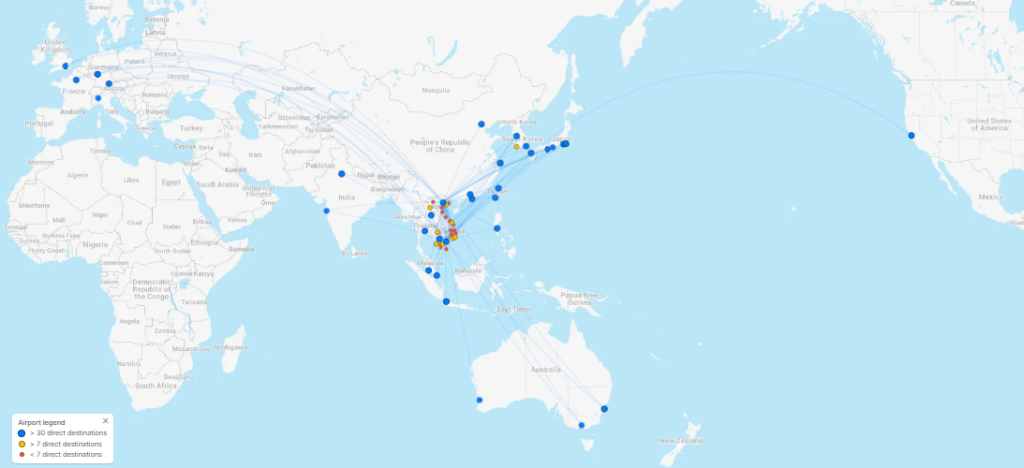
Vietnam Airlines launches First Direct Flights from Vietnam to Denmark.
In December 2025, Vietnam Airlines is connecting Vietnam and Denmark with nonstop flights between Copenhagen Airport and Ho Chi Minh City (HCMC), marking another step in the carrier’s European growth strategy.
Ho Chi Minh City is the country’s second-largest city, with a population of over 12 million. It is located in southern Vietnam.
According to Copenhagen Airport Kastrup, the route will be the first-ever direct air connection between the two countries. The offer commences with three flights per week, utilizing Boeing 787-9 aircraft, and will operate on a year-round basis.
Ho Chi Minh City is the country’s second-largest city.
With no previous direct air link between the two countries, all 74,800 passengers travelling between Vietnam and Denmark in 2024 did so via connecting flights, primarily through Doha, Paris Charles de Gaulle, and Istanbul, according to Sabre Market Intelligence. The new route will further strengthen tourism and business ties between the two countries.
Copenhagen Airport CCO Peter Krogsgaard. Photo:
“It’s fantastic news that we can welcome Vietnam Airlines to Copenhagen Airport and offer a direct route to Vietnam,” Copenhagen Airport CCO Peter Krogsgaard said in a statement.
The Copenhagen launch follows the airline’s rollout of regular service to Munich in October 2024 and its upcoming debut in Italy, with flights from Hanoi to Milan Malpensa set to begin on July 1. In May, the carrier also resumed service to Moscow Sheremetyevo after a three-year suspension following Russia’s invasion of Ukraine.
The route will be the first-ever direct air connection between the two countries.
Vietnam Airlines’ 787-9s feature a three-class configuration, comprising 28 1-2-1 lie-flat business class seats, 35 2-3-2 premium economy seats, and 211 3-3-3 economy class seats.
With the addition of Copenhagen, Vietnam Airlines’ European network will expand to seven destinations from the winter 2025-26 season: Copenhagen, Frankfurt, London Heathrow, Milan Malpensa, Moscow Sheremetyevo, Munich and Paris Charles de Gaulle.
“We sincerely thank Vietnam Airlines for their trust and collaboration in bringing this important new service to life, and we look forward to a strong and lasting partnership,” Copenhagen Airport said, adding, “This will provide even better connections for travelers flying out of Copenhagen and more options for tourists and business travelers heading to Denmark.”
Vietnam Airlines’ European network will expand to seven destinations from the winter 2025-26 season.
Vietnam Airlines has been part of SkyTeam since 2010, and its entry into Copenhagen adds to the alliance’s growing presence in Northern Europe. The move comes months after Scandinavian Airlines (SAS), the largest airline in Scandinavia and the leading operator at CPH, joined SkyTeam following its departure from Star Alliance. While Vietnam Airlines and SAS do not yet have a codeshare agreement, the new route lays the groundwork for potential cooperation.
First Direct Flights Vietnam – Denmark, Tor Kjolberg reporting.
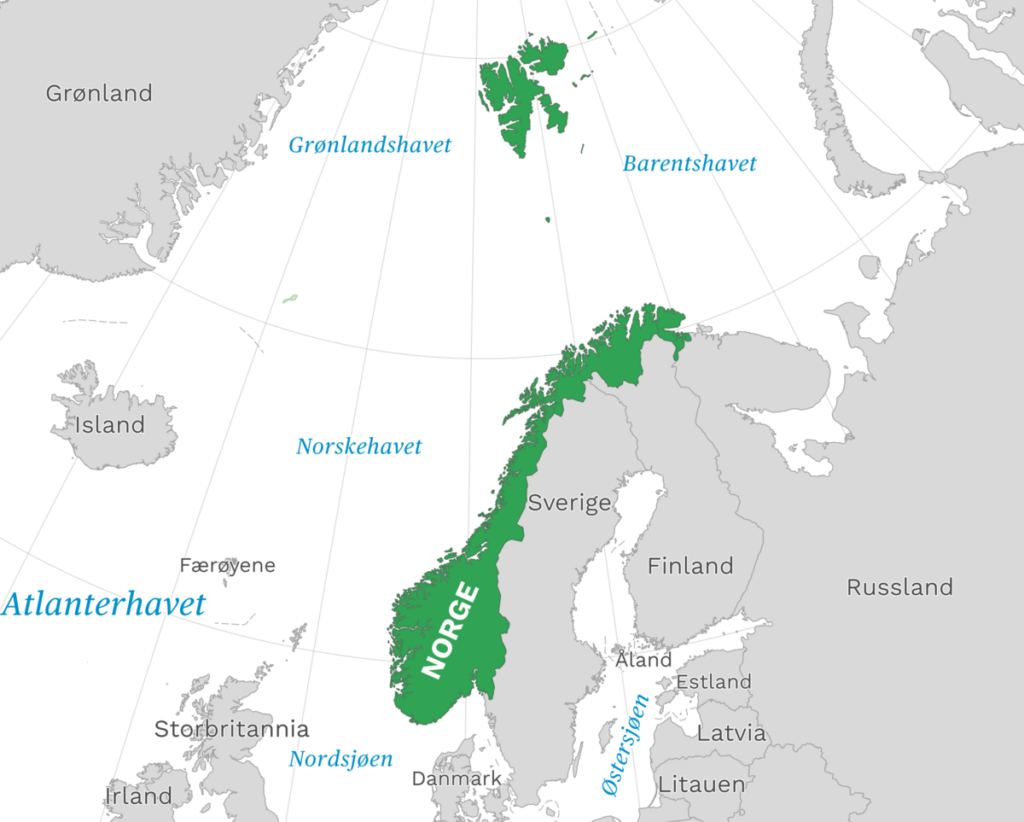
The Svalbard archipelago, governed by Norway under the Svalbard Treaty of 1920, has recently become a focal point of geopolitical tension and international conflicts.
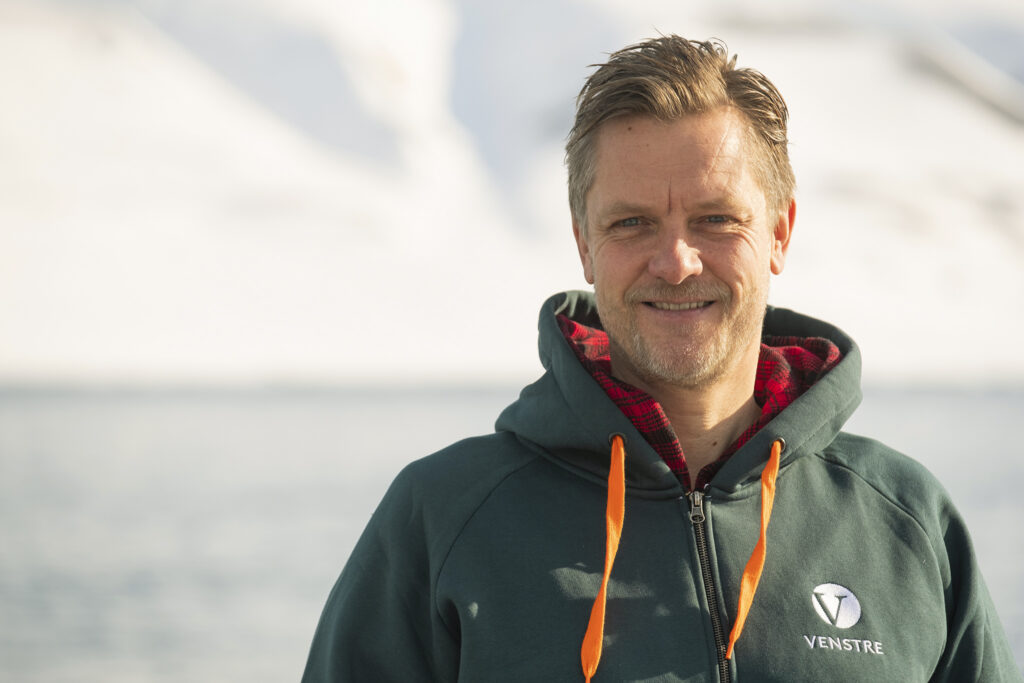
According to Øyvind Ravna, Faculty of Law, UiT The Arctic University of Norway, small states are perceived to be subject to the will of great powers in the international system. Yet, small states – such as Norway – also have interests they pursue through various means.
Øyvind Ravna, Faculty of Law, UiT The Arctic University of Norway.
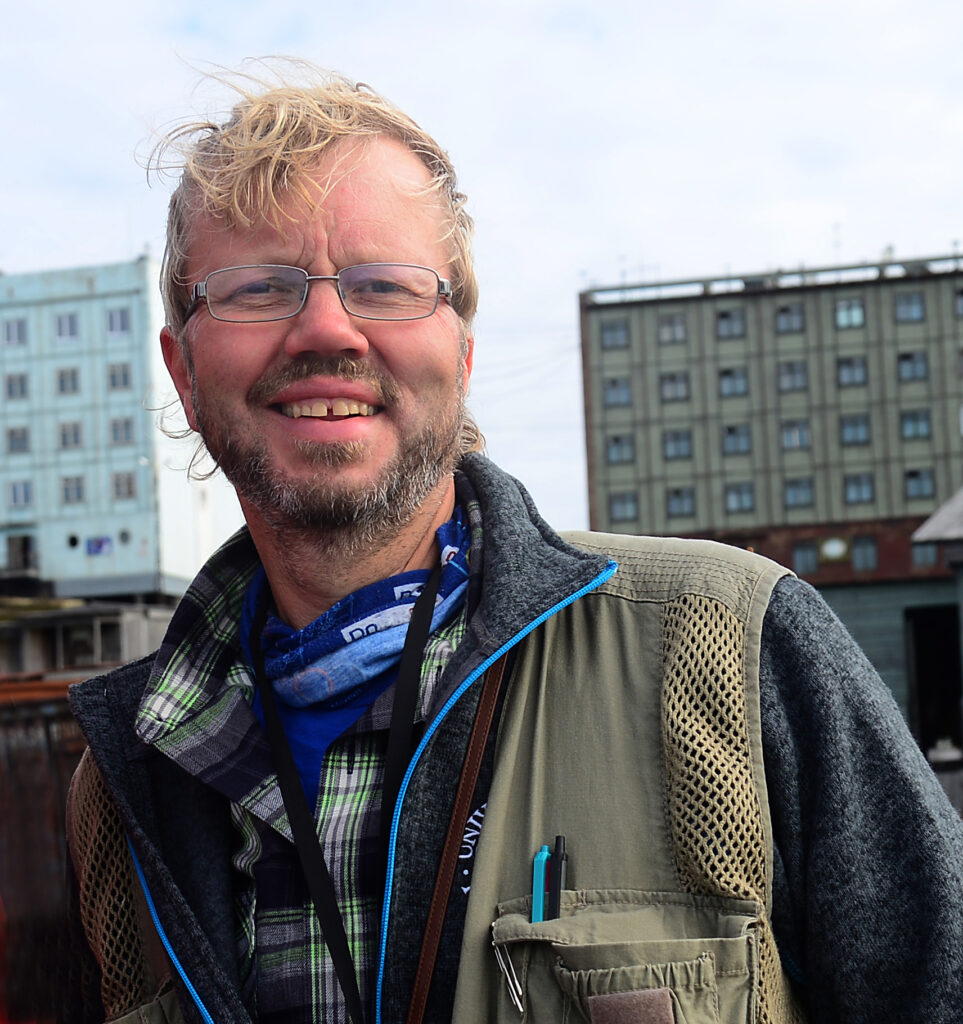
Local council chairman Terje Aunevik in Longyearbyen has received around 30 interview requests from around the world in the last six months alone, from publications such as The Washington Post, the BBC, The New York Times, and an Australian broadcasting company.
Local council chairman Terje Aunevik in Longyearbyen.
While Norway holds full sovereignty over the islands, the treaty allows citizens of signatory nations—including Russia—to engage in economic activity there. Russia maintains a presence in the form of a mining settlement in Barentsburg. It has grown more vocal in recent years about what it perceives as Norwegian overreach or restrictions on Russian activities.
“Located on NATO’s northern flank, Norway has a strong interest in keeping the High North peaceful, and the High North is “the most important peace project” for the government. As such, Norway is “far more than we generally realize, in a unique position internationally in terms of its dependence on a robust international legal order,” which is “a key objective of Norway’s interest-based policy.” Norway’s foreign policy has been described as a combination of small state realism, emphasizing the need for protection and the importance attributed to international law, and small state idealism, the belief that Norway can and should make a difference through engagement, such as peace diplomacy. This article gives a thorough overview of Norway’s Arctic policy priorities and interests, and asks: What is the rationale behind Norway’s Arctic policy, and does it contribute to strengthening Norway’s position internationally?
Svalbard-Norway map.
Previously, foreigners only discussed climate and polar bears, but now everything is about the security situation. This tension has escalated due to several factors:
Increased strategic importance of the Arctic due to climate change, opening new shipping lanes and access to resources. Russia’s military assertiveness and broader geopolitical rivalry with Western nations, especially following its war in Ukraine. Disputes over logistics and access, such as restrictions Norway places on supply routes to Russian settlements, and differing interpretations of the Svalbard Treaty in maritime zones around the archipelago.
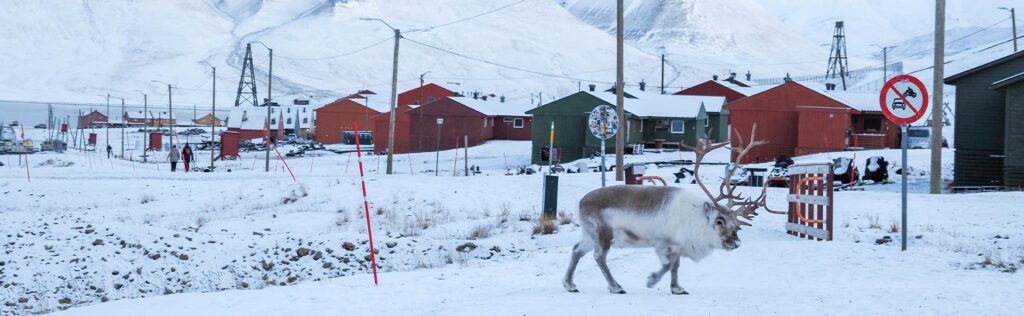
Reindeer on Svalbard. Photo: Visit Svalbard
And when Donald Trump announced earlier this year that the United States would buy Greenland, Aunevik’s phone immediately started ringing. Many asked: Will the same happen to Svalbard?
The Arctic Review article examines the extent to which Norway’s Arctic policy is shaped by great powers and influenced at the international system level.
In my opinion, Norwegian politicians should assert their sovereignty firmly and transparently. Norway should continue to uphold its sovereignty over Svalbard, based on international law, while communicating this position to both domestic and global audiences. This includes maintaining control over immigration, infrastructure, and environmental regulations, in line with the treaty.
Senior researcher Andreas Østhagen at the Frithjof Nansen Institute
Something is happening in the frozen region. “Trump is coming, and Russia is about to take over the Arctic”. That is the story that many media outlets bring to Svalbard. When they contact senior researcher Andreas Østhagen at the Frithjof Nansen Institute, he is forced to clarify and inform.
“That story is not wrong, but it is unvarnished, it confuses, and then it becomes my job to inform,” says the researcher who has received inquiries from everywhere, from Hong Kong to Poland.
Polar bear sign on Svalbard. Photo: Eveline Lunde/Hurtigruten
The Arctic Review article states, “The High North was defined as the most important strategic area for Norway, and became an important new foreign policy dimension for the Norwegian (Labor) government in 2006 when Jonas Gahr Støre – then foreign minister, now prime minister – launched The Norwegian Government’s Strategy for the High North. This strategy followed the 2005 white paper Opportunities and Challenges in the North, the aim of which was to pursue a more active High North policy in order to position Norway in the post-Cold War international arena, ensure political stability and sustainable development in the region, and safeguard Norwegian interests. This shift towards the north was driven by both internal and external forces. Internally, the economic opportunities in the region were becoming increasingly apparent, and externally, international conditions were changing following the more visible impacts of climate change, the potential for resource extraction, and Russia’s re-emergence as a central actor in the region.”
“The Norwegian authorities can partly thank themselves for the great interest. Over the past 20 years, they have traveled around the world, discussing opportunities and challenges in the Arctic, which has contributed to many countries seeking a presence and foothold in the North,” says Professor Torbjørn Pedersen at UiT The Arctic University of Norway.
Therefore, Norwegian politicians must now respect the treaty obligations to ensure that all Svalbard Treaty signatories, including Russia, can engage in lawful commercial activities without discrimination. Norway must also avoid giving grounds for accusations of treaty violations, thereby maintaining international legitimacy.
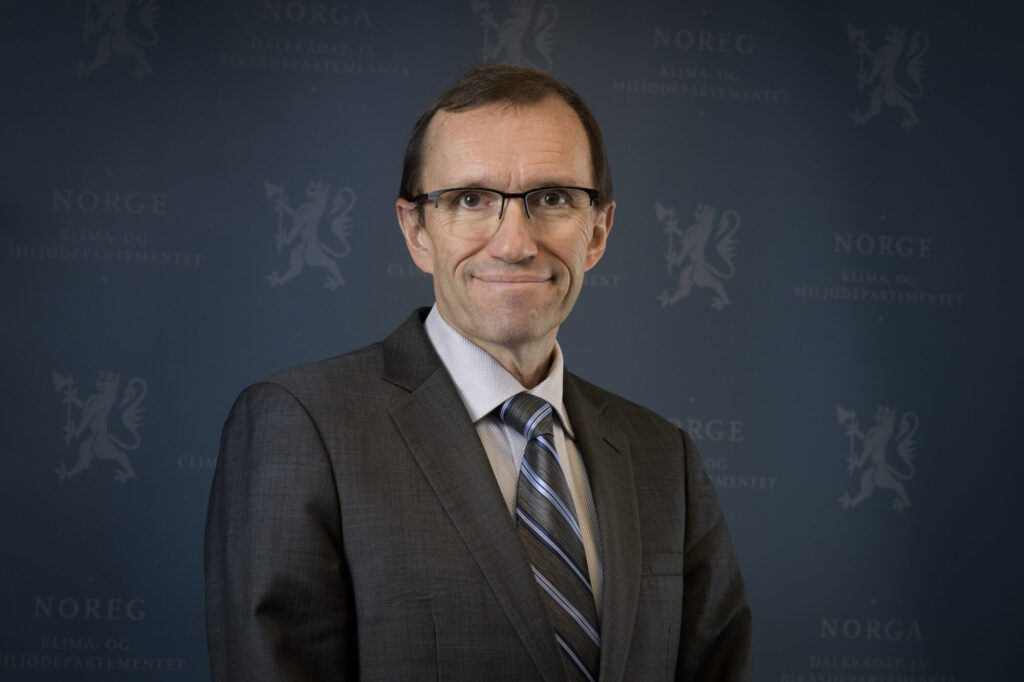
Norwegian Foreign Minister Espen Barth Eide
“In a geopolitical situation with tension between East and West, these are important strategic sea areas. We have been concerned about informing our allies about what is happening and what is not happening in the Arctic. That understanding is much greater now than it was 20 years ago,” says Norwegian Foreign Minister Espen Barth Eide.
“In 1987, Soviet president Gorbachev held his Murmansk speech, in which he outlined how tension in the Arctic could be reduced and cooperation advanced, and pointed to challenges that no Arctic state could address alone, e.g., environmental concerns such as the radioactive fallout from Chernobyl and oil spills at sea. In the years that followed, new forums and networks for regional cooperation emerged, reflecting the shifting political climate following the end of the Cold War. Norway is a member of these, which include the Arctic Council, the Barents Euro-Arctic Council and the Barents Regional Council, in addition to the Nordic Council and the Nordic Council of Ministers, which notably were established in a different, Cold War context.” (Arctic Review)
Today, Norwegian politicians must engage in strategic communication, which involves proactively informing the public and the international community about Norway’s legal position and actions in Svalbard. Not least, they must counter disinformation with facts and legal clarity.
Diplomatic channels should also be strengthened. Open communication with Russia should be maintained to mitigate the risk of misunderstandings escalating, and close coordination with allies in NATO and the Arctic Council should be ensured to promote regional stability and foster a shared understanding.
Lastly, but not least, investing in civilian presence and infrastructure should be a primary focus. This includes strengthening Longyearbyen and other Norwegian settlements through investment in research, environment, and tourism. Most visitors call the archipelago “fantastic Svalbard”. The Global Seed Vault, the world’s largest seed storage facility, is situated in the permafrost, approximately 1,300 kilometers north of the Arctic Circle. This bolsters Norway’s practical presence without militarizing the region.
TheSvalbard Treaty of 1920 and International Conflicts – In summary
Norway must strike a balance between assertiveness and restraint, protecting its sovereignty, fulfilling treaty obligations, and avoiding provocation. A calm, rules-based, and transparent approach is crucial for managing tensions in Svalbard amid shifting geopolitical dynamics.
The Svalbard Treaty of 1920 and International Conflicts, written by Tor Kjolberg based on an article in Aftenposten, June 15, and the Arctic Review Article, January 2024.