Huge Outdoor Waterpark and 500 New Summerhouses in Jutland by 2020?

0

Local authorities in Jutland, Denmark have proposed developing the largest waterpark in Northern
Europe. Sondervig Feriepark (Holiday Park) is estimated to cost approximately one billion kroner
(143 million dollars) and employ 1,000 workers by 2020.

100215-Sondervig-map
The Danish Ministry of Environment must, however, approve the project as one of ten permitted to take place in western Jutland’s protected coastal zone.

Last year the government approved the initiative in an attempt to support rural communities, dependent on tourism. There are currently 3,000 people working within the tourism sector.

Mayor Iver Enevoldsen of Ringkobing-Skjerm believes the application for the outdoor waterpark and new summerhouses in Jutland will be approved since the
documentation is good and this is the only municipality in the region applying for such a project.

The Ministry of Environment claims on the other side that they have received applications for ten different projects from nine municipalities. The final decision will be taken before summer.

100215-Denmark's-best-beach-sondervig
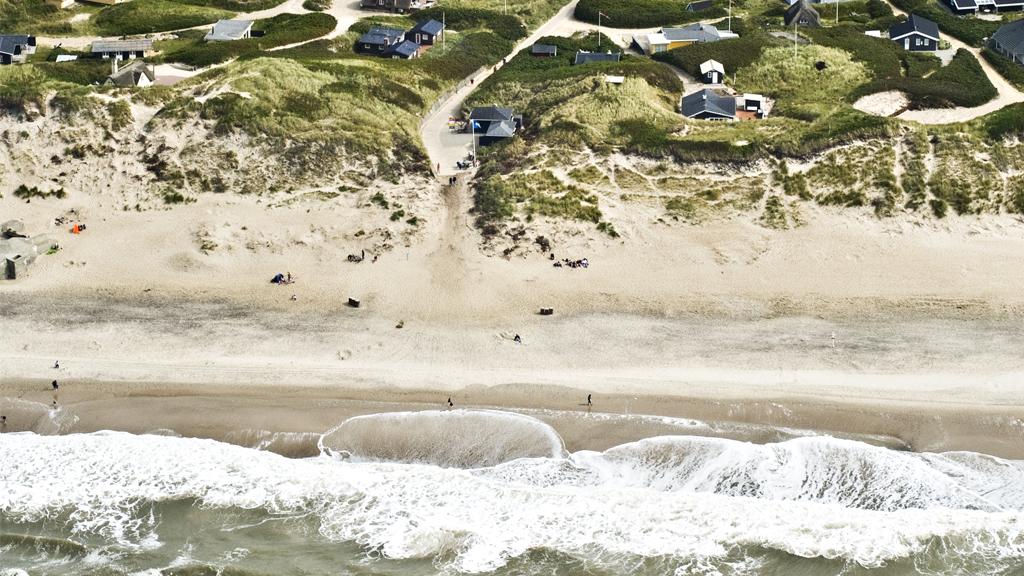
However, even today there is white sand as far as the eye can see. Three minutes’ walk from the city
center, you may experience the sand dunes and just beyond them the beach with plenty of space
and the sea. Walking along the small paths you can marvel at the beauty of nature.

100215-soendervig-denmark
The possibilities for biking are endless, or if you’re more the hiking type, why not pack a picnic basket
and enjoy the fresh sea air along the pedestrian paths. You decide the mileage, and the next
adventure is just around the corner.

100215-Sondervig-Holiday-Park-Denmark
From the holiday homes right along the dunes the sea can be clearly heard, so light a fire and enjoy
the indoor pleasures. It is therapy for the soul.

And don’t forget your binoculars. Sondervig offers bird adventures all year round. Each month
brings new birds to study.

Featrure image (on top): Winter-bath Festival

A French Love Affair

0

17 years old Monica Fürst was sent to language school in Nice, France. That was the beginning of her lifelong relationship with France. After finishing high school she studied French and art history at the Sorbonne University in Paris.

The Norwegian painter Monica Furst has had a studio and apartment in Nice the past seven years, and now she exhibits her paintings in Oslo, illustrating the differences between Norway and France.

090215-monica-furst
Fürst had her debut exhibition in Oslo in 1976. She is educated at the Oslo Drawing- and Painting School, and participated in the annual Oslo Autumn Exhibition in 1995. Since then she has regularly exhibited in Krageroe, Jomfruland and Oslo, but also participated in group exhibitions in Nice.

090215-Monica_Furst_Sunrise-at-Krageroe
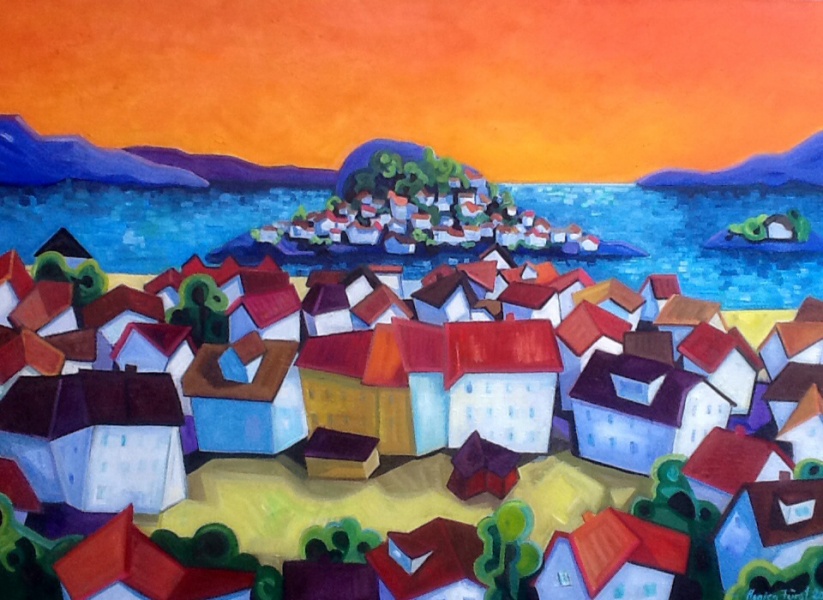
The last seven years she has lived in Nice during winter and in Krageroe, south in Norway, during summertime. And these two cities recur in her motifs. In her naïve style she paints regognizable places. The French Riviera has for generations attracted artists from all over the world, and the magical light is attractive even in January.

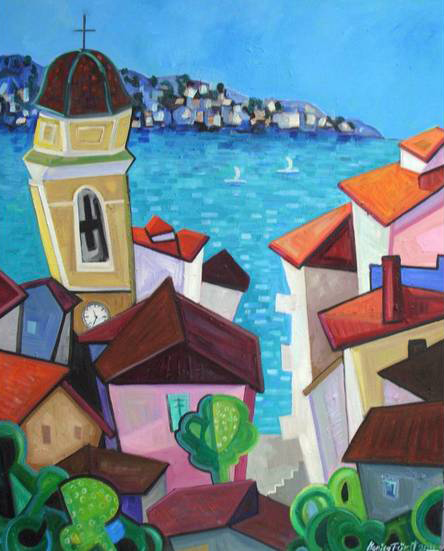
090214-francheville-by-Monica-FurstThe old, crooked houses and the urban environment in Villefrance are her main motifs. Colors are happy and strong – a typical Fürst expression. Villefrance is a little place just east of Nice towards the Italian border. The houses are located as in an amphitheatre on a steep slope facing south and overlooking the Mediterranean.  Here you will experience azure sea, green trees, crooked roofs and houses in all shades of red and orange clinging to the cliff edge.

In the bottom of the city center the church bells in the little yellow church are chiming every day. Fürst has used the old, crooked houses to create wider angles, and in the picture shown here she illustrates something quite common: a sense of happiness from the view of the blue, flashing sea and some old, venerable houses.

The exhibition at Gallery Artgate, Nedre Vollgate, Oslo, runs through February 14.

Salus Per Aqua – Health Through Water

0

The Swedish Ice Castles have been the scene of sins and orgies, burned and blown away, and torn and rotted at root. Today though, the Swedish cold baths are filled again with naked bodies and a belief in the future.

West coast storms have devastated the buildings and bathhouses which have been in fashion in terms of health and water over the years. Today Varberg has the most Spa facilities in the country.

Each day throughout the winter hundreds of Swedes throw off their clothes and have no inhibitions to nurture body, mind and socializing around icy swimming holes. The cold bath in Varberg fortunately brings our minds to warmer latitudes.
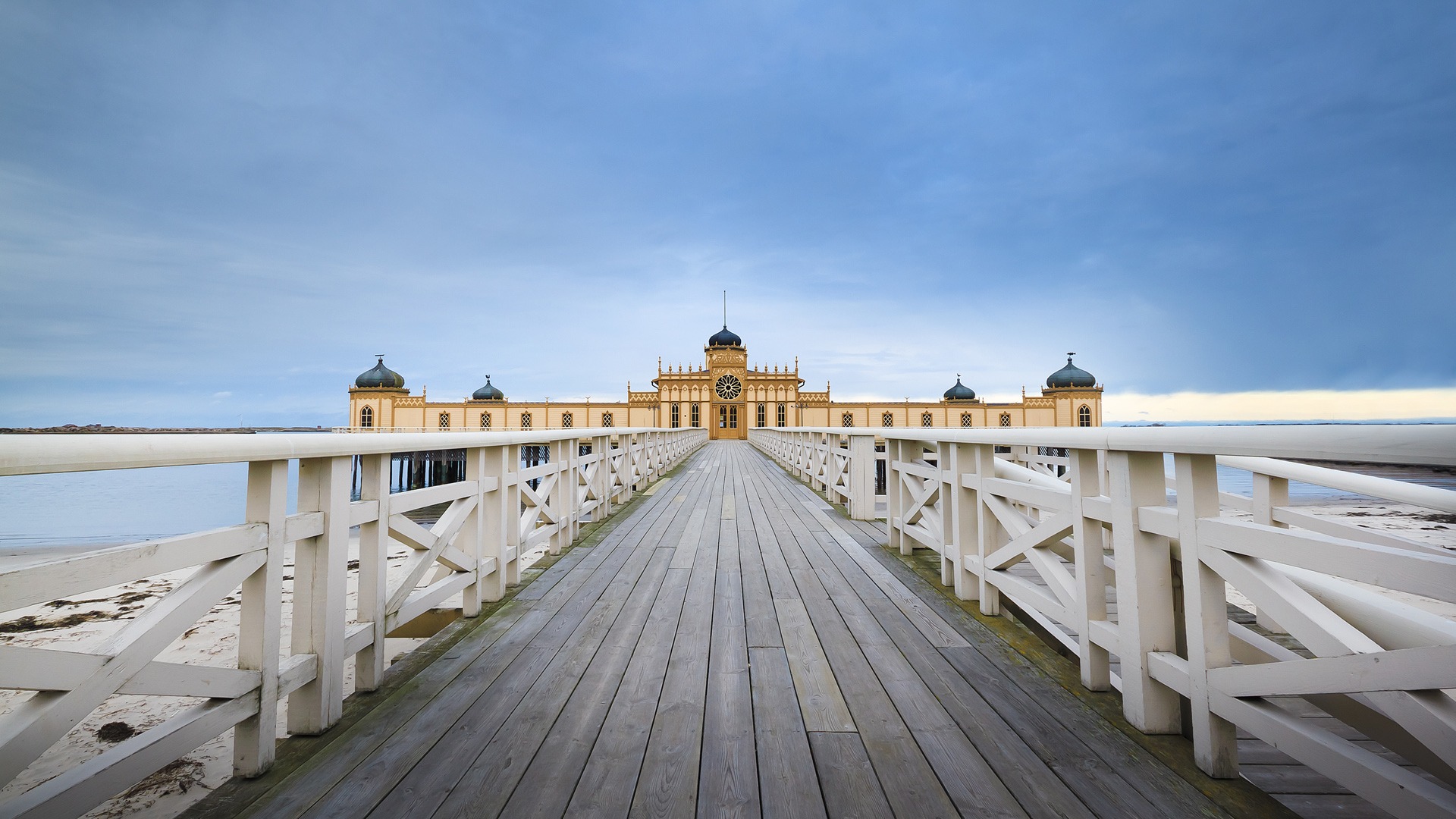
060215-Varberg-cold-house-bath-sweden
The history of Varberg
A health resort tradition has existed in Varberg since the 1800s.  The large range of facilities and  proximity to the fresh salty sea has led to the town becoming the municipality with the highest density of spas in the country.  Over the years bathhouses have been built and equipped with the latest developments in water and health treatments.

Varberg’s first hot bathhouse was built in 1823 between the present customs house and the cold bathhouse.  Initially the bathhouse only comprised five bathrooms, but as the number of guests increased, the building was extended and by 1860 it had no less than twelve bathrooms.  The guests were served by six female bath attendants. The town was gaining an increasingly solid reputation as a health resort.

1852 was an important year for Varberg as steamer traffic began along the coast from Göteborg to Malmö increasing the desire to travel to Varberg. The town’s authorities also realized that this pressure would mean that the seaside resort would need to be developed.

The Varberg of today, with its health- and spa facilities, has so much more to offer.  Since the 1920’s Varberg has been a seaside and health resort for everyone, as the old health resort concept is moving more and more over to the Spa concept – “Salus per Aqua” from the Latin, “health through water”.

PENTAX Image
Bjerreds
Salt Sea Bath
The first meeting regarding a new bathhouse in Bjerred was held in September 2001. Two and a half years later the new building, located 600 meters into the Lommabukten (Lomma Bay), was inaugurated.  In April 2014, the Bjerreds Saltsjöbad celebrated its ten year anniversary.

Most of the approximately 50 cold bath houses along the Swedish coast are experiencing a visit bonanza.   In recent years, tens of millions of Swedish kronor have been spent to renovate the elegant seaside houses of Varberg and Malmö to their former glory.  Nowadays, when the warehouse giant IKEA wants to show the world its roots, posters of the now ten year old  Bjerreds Saltsjöbad are printed

The news of this futuristic, functionalist house hovering weightlessly like a flying saucer above Øresund struck like lightning in Sweden when it opened. For the first time in a very long time a new cold bathhouse was built and that in an embodiment which honored  historical heritage and at the same time showed the way toward the future. Since then a small forest of modernist seaside bath houses has grown up along the west coast. Once again people are recalling the frenetic old days.

060215-ribersborg-cold-bath-house
Ribersborg Coldbath House

In June 1898 the new cold baths at Ribersborg in Malmo were Inaugurated.

Frozen lips distort a strange dialect over to pure babble.  Bicycle chains freeze and even the ocean gets a cover. This hibernation is broken behind the elegant façade of the Ribersborg Coldbath House as splashing, gasping and lustful moaning rise towards the heavens.  Nary a piece of cloth is to be seen, but when so many people are bathing naked together the sexual aspect somehow disappears.

The initiative for this was the cane factory CA Richter, which bought the building from the old cold bath house at the entrance to Nyhamn.  The Scandinavian concept of cosiness has long been the key to surviving bleak, dark winters, and the inviting little café in the Kallbadhus epitomises this ideal.

Ribersborgs Coldbath House is named after the district Ribersborg.  In 1902 a storm called “the Christmas hurricane” in western  Sweden destroyed the bath.  Reconstruction was made, and today large picture windows face out to sea, providing a much more calming view than the blasé nudity of the Swedes.

Whereas nouveau rich Norwegians check into spa hotels to pamper well-fed bodies in mud baths, chocolate mousse and spring water, the Swedes are swept with an opposite epidemic, “coldbath”, a physically and mentally ice cold dip in salty minus degree water, always followed by red-hot sauna.

Finnish researchers have concluded that the combination of sauna and ice swimming frees the body’s stores of the stress hormone endorphin.  Overdoses of nature’s own morphine are why the cold bath houses smile when they should have been crying.  They are high on the sea.

Text: Tor Kjolberg

Feature image (on top): Shutterstock

Plans Revealed For Floating Snowflake Hotel In Norway

0

Norway will soon have the world’s first floating snowflake hotel. Dutch Docklands is currently working on a project of a floating 5-star hotel in Norway in one of the most beautiful natural surroundings on earth.

So this new floating hotel could be the perfect answer for holidaymakers who want to spend their evenings looking skyward for a glimpse of the glorious Northern Lights.

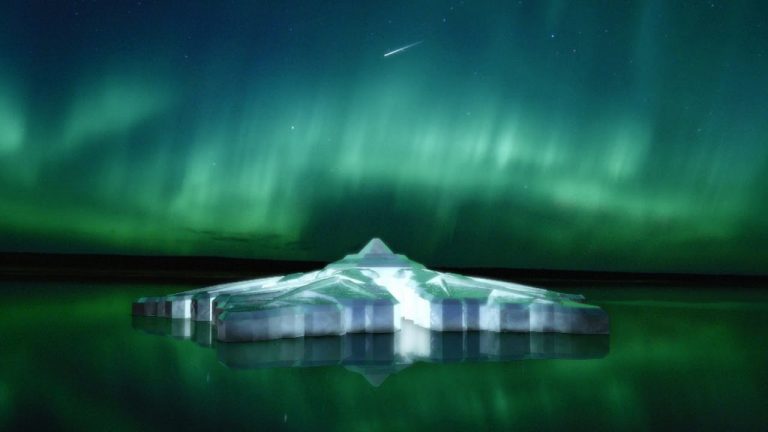
The design is based on an icecrystal which blends-in naturally with the “winter environment” between the most beautiful fjords. The hotel with a diameter of 120 meter will have 86 rooms, conference rooms, spa & wellness facilities and is completely self- supporting and self-sustainable.

050215-dutch-docklands-floating-hotel
A wall of windows will offer views of the snow-capped Norwegian coast, as well as the potential for some epic northern lights shows, according to Huffington Post.

The Snowflake hotel in Norway will be situated near Tromsø, a popular tourist town in the Arctic Circle known as a superb place to see the northern lights. Developers will tether the massive snowflake to the fjord’s floor, though it will be able to float about six to 10 feet from its center.

The Krystall is scheduled to open at the end of 2016, a hotel rep told The Huffington Post in an email.

Letter to the Editor

0

“Scandinavia…actually consists of Denmark, Finland, Iceland, Norway and Sweden!” wrote a lady, working in an agency named Lila Travelpartners, to us some weeks ago.

The mail continued:

“Dear editors,

Times of 3 country Scnadinavia are definitely over…
The world has shrunk..

After working 30 plus years sending Americasns et all to all over.
The Scsndinavian tourist bureau comprised all 5 countries..
Do not shoot in your own foot by trying to promote just the three countries.
For instance Lapland continues till Russian border over Finland.
Even
You tube is full of Aurora borealis videos from all over Lapland.!!

..or
are you funded by SAS airtlines?

Most respectfully
(to be polite we have omitted the name of the sender, but not corrected the spelling mistakes.)

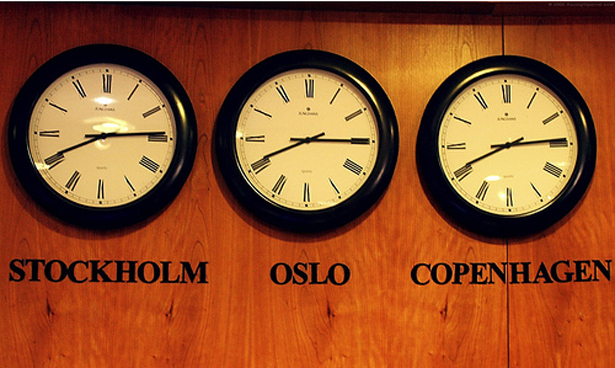
040215-scandinavian-time

… and we could not hesitate to send our reply to the sender:

Dear xxxx,

I am sorry, but you are wrong. Scandinavia consists of just three countries, Denmark, Sweden and Norway. Please refresh your geography lessons,

http://en.wikipedia.org/wiki/Scandinavia

As a Scandinavian I should know. Citing my British journalist friend, “The Finns have, however, reserved the right to opt in or out of the old marauder’s club as and when it suits them, and we don’t think the Icelanders would be too upset to be labelled Scandinavians either.”

If we are going to lump all five countries together we really ought to use the term “Nordic.

Thank you for your interest in our online magazine.

Yours sincerely
Tor Kjolberg, PhD, MNJ

Editor in Chief

(Both the Letter to the editor and our reply are authentic communication.

Illustrations: Graphic Stock

Oslo -The Best Coffee City in Europe?

0

Oslo, Norway, is reinventing coffee in a very good way. That’s one of the reasons USA Today ranked Oslo as one of the ten top coffee cities in the world.

The signature roast in Oslo is exceptionally light, resulting in an unusual flavor that, for most, takes a little getting used to. But converts say the style celebrates the true nature of the beans, turning a great cup of coffee into a fantastic one.

“I’m a convert. After spending two weeks in Oslo and drinking some of the most extraordinary coffees I ever encountered. While many cities are resting on their creaking reputations, Oslo is forging a new standard,” wrote Oliver Strand, coffee writer in New York Times.

“Oslo is on top with Seattle, Portland and San Fransisco,” says an enthusiastic George Howell, behind the coffee chain “The Coffee Connection,” later bought by Starbuck.

The beginning of the huge interest for coffee in Norway was the trade with Brazil. Norway exported dry fish and received coffee in exchange

But it was not before 1994 the American trend with coffee bars based on Italian espresso culture arrived in Norway.

Here are some of Oslo’s hottest coffee bars recommended by the Daily Scandinavian team.

Fuglen (The Bird)
Having served coffee continuously since 1963, Fuglen has one of the longest pedigrees in Norway. Located in downtown Oslo, set slightly apart from the main streets in the area, it is at once both close by and tucked away. In 2011 Fuglen has been featured in global publications such as Monocle, where it was just listed as one of the world’s five best retail concepts. Fuglen opened a branch in Tokyo in May 2012.

030215-fuglen-oslo-tokyo
Java at St. Hans Haugen offers their black coffee batch brewed, or brewed to order using a variety of different methods – normally a syphon or Hario V60 pour over. The exterior has no signage, but it’s hard to miss, with its enormous windows and tiled interior. The owner, Robert W. Thoresen won the Coffee World Championship in Monte Carlo in 2000.

030215-java-oslo
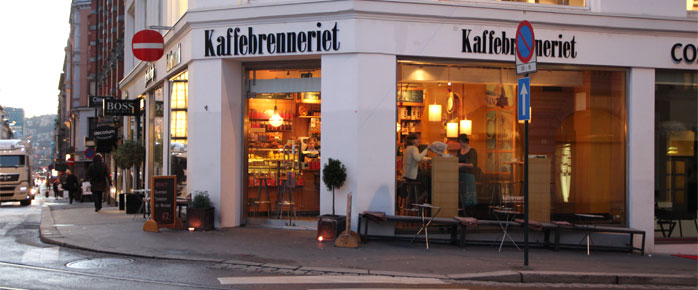
Kaffebrenneriet i(‘The Coffee Roastery’) is Oslo’s longest-running chain of coffee shops. Since opening their first shop in 1994, a stripped space in Oslo’s Bislett area, Thomas Pulpan and Steinar Paulsrud have built a thriving business that is now the single largest purchaser of Cup of Excellence coffee for the consumer market—globally.

030215-kaffebrenneriet
Mocca Mocca Kaffebar & Brenneri is a laid-back coffee bar located at the upscale neighbourhood of Briskeby. This is a great spot to unwind while enjoying well-crafted black coffee and espresso drinks.

030215-mocca-oslo
If you’re downtown in Oslo and in need of a fantastic cup of coffee, then head over to Stockfleth’s in Lille Grensen. Stockfleth’s happens to have several locations around town, but this is the original, dating back to 1895.

030215-Tim-Wendelboe
Tim Wendelboe micro roastery and espresso bar located at Grunergt 1, east in Oslo.
“It feels like a neighborhood shop, but it’s run like a Michelin-starred restaurant,” according to Strand. Tim Wendelboe won the Coffee World Championship in 2004.

Feature image (on top): Shutterstock

Sweden Annexes Finland

0

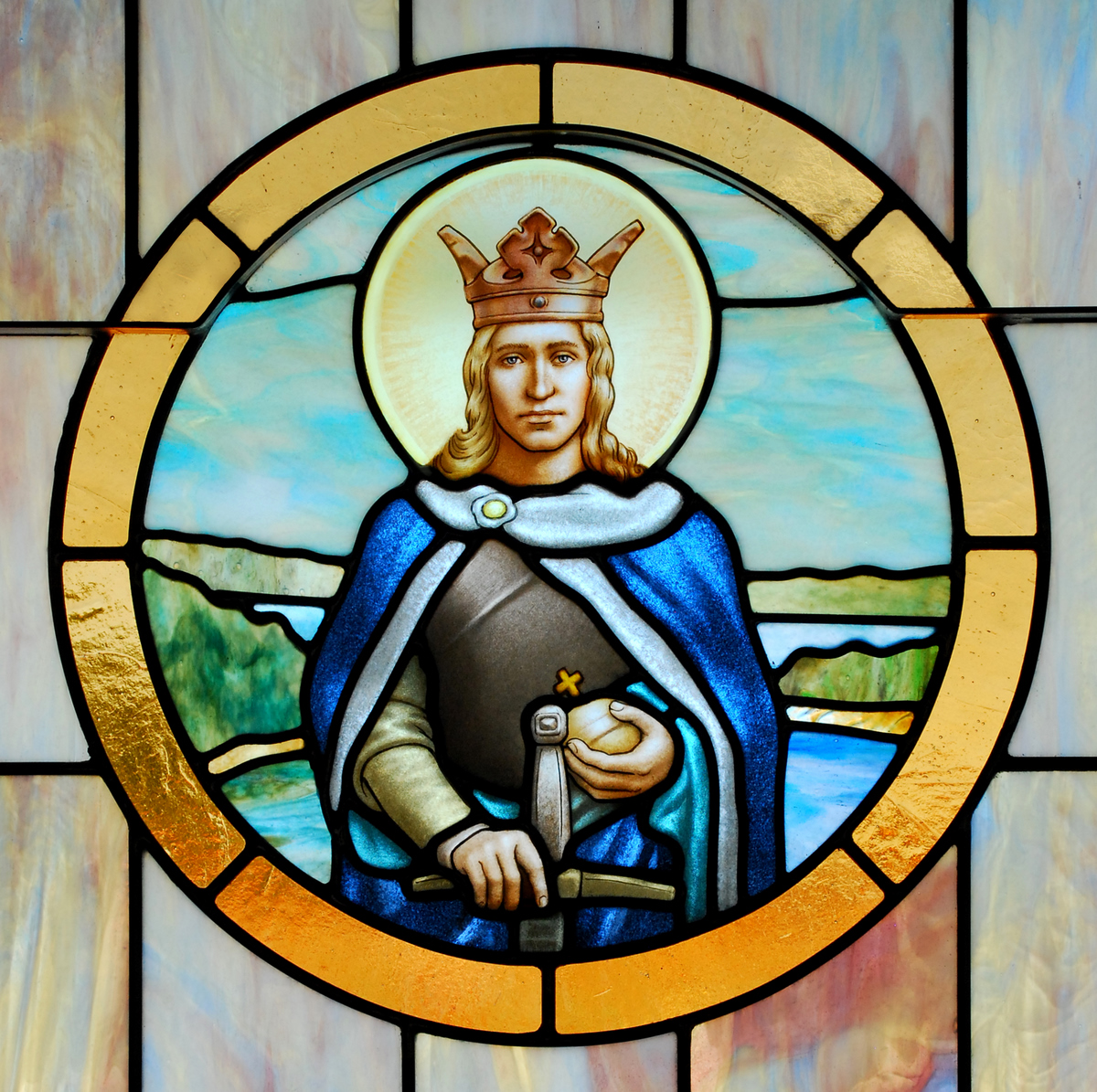
Erik I of Sweden did his crusader service among the Finns during the 12th century, marking the start of Sweden’s 700-year annexation of Finland and Erik’s climb to the status of his country’s patron saint.

?????????????????????????????????????????????????????????????????????????????????????????????????????????????????????????????????????????????????????????????????????????????????????????????????????????????????????????????????????????????????????????????????????????????????????????????????????????????????????????????????????????????????????????????????????????????????????????????????????????????????
The skull and crown of Swedish 12th century King Erik Jedvardsson, called Erik the Saint

020215-Valdemar-II-of-Denamrk
But aggrandizement was all too easily reversed, as occurred in Denmark on Valdemar II’s exit. “The crown fell off the head of the Danes,” a chronicle wailed, “and they became the laughing stock for all their neighbors through civil wars and mutual destruction.”

020215-Eric-I-of-Sweden
In Sweden, the saintly Erik I was murdered by the son of the king he had removed, Sverker, leaving Erik’s son in no doubt about what was expected of him. He did not disappoint.

Like the Church, German and Dutch Hansa traders recognized the chaotic absence of government as an excellent opportunity. Scandinavia had an abundance of fish but a shortage of grain. By tying up the markets in both commodities, and the shipping in between, the Hansa had a goose of pure gold, and it gave them a network of strategic ports and market towns across the continent.

But if Scandinavia was sapped by an extortionate exchange rate between fish and grain, it was then poleaxed by the Black Death in 1349. With the population of Norway for example, cut by more than half, economics reverted to the Stone Age.

020215-Hansa-traders
One interlude in the slow reconstruction process was the arrival of shoals of herring so dense that fish could be caught with bare hands. Fishing vessels raced from all over Europe until some 40,000 were crammed into the Sound, temporarily loosening the Hansa’s grip on the market.

020215-valdemar-IV-of-denamrk
The 14th-century king Valdemar IV of Denmark launched a snap invasion of the Hansa’s base at Visby in Gotland and, flushed with success, assumed the title of “King of the Goths”. The Hansa were not amused. Throwing the resources of their 77 towns and cities into a military alliance with Swedes, they bounced Valdsemar off his Danish throne and invited applications.

Margrethe, the young wife of King Håkon VI of Norway, proposed their son Oluf. He was five years old.

Shadows of War

0

The summer of 2014 was the 100th anniversary of the first shots fired in Sarajevo.  In art history World War I marks the transition from a hero worshipping war iconography to the metastasizing of human war-sufferings and its meaninglessness.

The avant-garde and tendency art that followed in the wake of that war was keenly felt in Norway. The exhibition Shadows of War, Political art in Norway 1914-2014, shows how artists at different times have rebelled against established norms, depicted dramatic collective experiences and created utopias of a better world.

The exhibition consists of 150 works and gives the audience a unique opportunity to see contraventions and continuity in political art in Norwegian history.

Per Krogh and other key artists from the interwar period up to today appear in Kunstnerenes hus from January 30th to March 29th.  Take this opportunity to experience works by, among others,  Per Lasson Krogh (1889-1965), son of the bohemians Oda and Christian Krogh. The family lived in Paris when Per Krogh was growing up and as an adult he had an important position on the Norwegian art scene and was headmaster at the National Art Academy for several years.

Growing up in Paris, Krogh showed early a clear artistic talent, and in the years 1903-1907 was a student of his father on Académie Colarossi and in 1909-1910 a student of Henri Matisse at the Matisse Academy in Paris along with several other Norwegian artists.  He was clearly influenced by Pablo Picasso and the cubism idiom, with decomposed images in cubes and geometric shapes with schematic and decorative constructions.  Below we see the painting Cabaret (musicians and female dancers) 1913/14 which was purchased by the Oslo National Gallery in 1966.

300115-Per_Krogh-Cabaret-Musicians-with-female-dancers
The exhibition’s theme of art relating to war and society is more relevant than ever today. How should we relate to our time’s wars and sufferings?  Do artists have a special obligation to do so?  As a result of new source material consisting of paintings, photographs and drawings, several of the works have never been exhibited before, and so the exhibition illustrates the importance of war and rebellion on the artist’s role and the development of contemporary arts.

The exhibition focuses on three periods; the  interwar  (1919-1939), the postwar years  and the present (2000-2014).

The tradegy of the First World War with millions of dead soldiers in the miles-long trenches are part of modernity’s experience and memory. War changed art from a nation’s hero worshipping war iconography to an accentuation of suffering and meaninglessness, which had great influence on  avant garde artists  and paved the way for a political message trend in art.  Henrik Sørensen (1882-1962) believed the artist had a special obligation to react against injustice and suffering, but his pacifist commitment was seen as utopian and naive infatuation in the 1930s.

Henrik Sorensen
Henrik Sorensen

Several of his anti-war works from the interwar period are centrally located in the exhibition, such as the large tableaux Street Fight (1930) and Ground of Honor (1931) along with sketches for the mural Dream of the eternal peace, the League of Nations in Geneva in 1939. In addition, paintings by Per Krohg (1889-1965),  Reidar Aulie (1904-1977),  Willi Midelfart (1904-1975), Kai Fjell (1907-1989), Arne Ekeland (1908-1994), as well as photographs of activist Nanna Broch (1879-1971) from the slums of and posters from Østkantutstillingen on Ankertorget (East side exhibition at Anker Square) are represented in the exhibition.

Henrik Sorensen: Gound of Honor

Text: Tor Kjolberg

Feature image (on top): Henrik Sorensen: Street Fight

Bella Donna – Danish Hospitality Giant Partners with Marriot International To Expand Footprint

0

Bella Sky Hotel joins Marriott International’s AC Hotels by Marriott brand. Solstra acquires Copenhagen Marriott Hotel, creating one of Denmark’s largest operators in the hotel, conference and hospitality industry.

Solstra, majority owner of Bella Center A/S, including Hotel Bella Sky and owner of Crowne Plaza Copenhagen Towers hotel, is now acquiring the Copenhagen Marriott Hotel. The acquisition makes Solstra one of Denmark’s largest operators in the hotel, conference, exhibition and Danish hospitality industry.

290115-Bella_Sky_Comwell_hotel-Copenhagen
The Copenhagen Marriott Hotel will continue to operate as normal and the sale will not impact day-to-day business, the employees or the many guests served by the hotel.

In connection with the purchase of the Copenhagen Marriott Hotel, Bella Center’s parent company is changing its name to BC Hospitality Group A/S. With wide ranging operations, BC Hospitality Group is now one of the absolute biggest and strongest players in the hotel, conference, exhibition and hospitality sector in Denmark, with total revenue of approximately DKK 1 billion annually.

“With the purchase of the Copenhagen Marriott Hotel, we continue our planned expansion and strategic development, realising our stated intention of creating a market-leading hospitality company that can further solidify Copenhagen’s position as an attractive destination,” says Oscar Crohn, Managing Partner at Solstra Capital Partners. He adds: “With Denmark’s strongest hospitality management team, we create added value and extract synergies in our portfolio. And we are not finished. If the right opportunities arise, we are prepared for further expansion. The aim is to be the undeniably strongest, best-run hospitality company in Denmark.”

290115-Bella_Sky_Hotel_-_lobby
In connection with the Marriott agreement, Bella Sky Hotel is being re-branded as “AC Hotel Bella Sky Copenhagen”. Bella Sky Hotel thereby becomes the first Danish hotel in the modern and rapidly growing international brand, AC Hotels by Marriott.

Solstra now operates its hospitality portfolio through the company BC Hospitality Group, which includes the following hospitality brands and hotels: Bella Center Copenhagen, Crowne Plaza Copenhagen Towers, AC Hotel Bella Sky Copenhagen, Comwell Conference Center Copenhagen, CIFF (Copenhagen International Fashion Fair), Forum Copenhagen and International House.

“We have a declared goal of being Denmark’s leading hospitality company. With the acquisition of the Copenhagen Marriott Hotel, the re-branding of Bella Sky with the AC Hotels by Marriott brand and the establishment of Comwell Conference Center Copenhagen, we have sent a strong and clear signal to the market that by ‘leading’, we not only mean biggest, but also best in terms of market-leading brands and quality in everything we do,” says Allan L. Agerholm, CEO of BC Hospitality Group. Agerholm adds: “We take the word ‘hospitality’ seriously – we must be Denmark’s best hosts for our customers and guests.”

Aula Medica – The Pulpit

0

Aula Medica, the lecture hall complex in Stockholm’s Karolinska Institute , with its 1,000-seat auditorium, was offiucially opened last summer. It enables the university to arrange major public events, such as the Nobel lectures, which attract audiences from around the world.

280115-aula_medica-detail-2
Long-felt need
As far back as 1937 architect Ture Rydberg drew up plans for a large lecture hall, his “Per Haps” proposal winning Karolinska Institutet’s architecture competition for future campus development. The plans were however shelved due to lack of funds.

280115-Aula-medica-inside
Karolinska Institutet has a close, interactive relationship with the wider community. Seminars, lectures and symposia form a natural part of its schedule of activities. Despite this, the university has previously lacked its own premises in which to arrange public events, and there has long been a need for its own lecture hall complex.

Private donation
Work started on the new lecture hall complex in September 2010. The auditorium, with the exception of the office and service facilities, has been fully financed by a private donation from the Erling-Persson Foundation.

Aula Medica was completed in the summer of 2013 and houses a 1,000-seat auditorium, office space for 90 staff, 100 conference seats, two restaurants and a café. Nobel lectures, large scientific symposia, gala receptions and conferences will be held here.

280115-Aula-Medico-detail
Building design
Wingårdh has designed the building, the form and geometry of which contrasts with the traditional low-rise brick buildings on the campus. It is situated along Solnavägen opposite the new university hospital. With its central location and geometric form, the lecture hall complex opens up the campus area to the main public thoroughfare.

Energy-efficient building
An environmental program has been produced to ensure a green build. Highly energy-efficient solutions have been devised following investigations into choices of system. For example, the carcass of the building comprises triangular elements that form an airtight, energy-lean façade.

Source: Karolinska Institutet, Stockholm