Bronze Age Artwork in Scandinavia

As there were still no written records in Scandinavia by the Nordic Bronze Age (1800 – 500 BC), we can only guess at the religion, law, language and culture of the mysterious new settlers.

But they have left tantalizing glimpses of their lives. Swords, shields, jewellery and musical instruments have been found across Scandinavia. The Trudholm sun chariot appears to be a religious artefact, showing a horse pulling the sun across the sky.

050914_Trundholm_Sun_Chariot_Copenhagen-National_Museum
The Trundholm sun chariot (Solvognen), was discovered in Denmark, a statue of a horse and a large bronze disk, which are placed on a device with spoked wheels.

The sculpture was discovered with no accompanying objects in 1902 in a peat bog on the Trundholm moor in West Zealand County on the northwest coast of the island of Zealand (Sjælland) in Denmark, in a region known as Odsherred (approximately55°55′N 11°37′E). It is now in the collection of the National Museum of Denmark in Copenhagen.

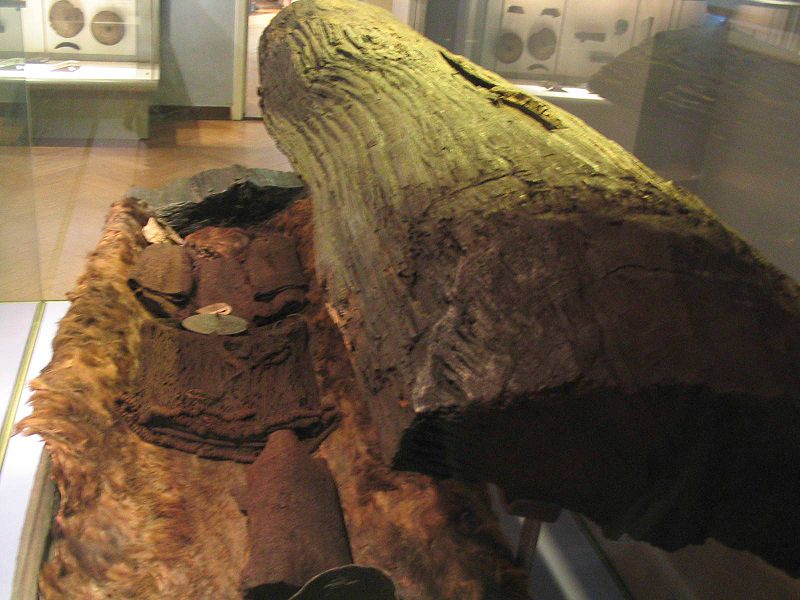
The well-preserved body of the Egtved Girl (c. 1390–1370 BC), found in southern Jutland in 1921, gives us a close-up view of a 3,500-year old person and her possessions. Aged 16–18 at death, she was slim, 160 cm tall (about 5 ft 3 in), had short, blond hair and well-trimmed nails. Her burial has been dated by dendrochronology to 1370 BC. She was discovered in a barrow approximately 30 meters wide and 4 meters high. Only the girl’s hair, brain, teeth, nails and little skin remain preserved.

050914_Egtved-girl_Copenhagen_National_Museum
Bronze Age artwork in Scandinavia includes rock carvings, such as those at Tanumshede in Sweden, reveal a well-appointed world of horse-drawn carts, ships with curious breaks at either end, weapons and a religion devoted to the worship of the sun and fertility.

The Rock Carvings in Tanum, near Tanumshede, Bohuslän, Sweden, has been declared a World Heritage Site by UNESCO because of the high concentration of petroglyphs.

050914_Tanumshede_rock_carvings
One of the larger rocks of Nordic Bronze Age petroglyphs in Scandinavia, the Vitlyckehäll, is located in Tanumshede.

In total there are thousands of images called the Tanum petroglyphs, on about 600 panels within the World Heritage Area. These are concentrated in distinct areas along a 25 km stretch, which was the coastline of a fjord during the Bronze Age, and covers an area of about 51 hectares (126 acres or 0.5 km²).

050914_Hjortspringsboat
Scandinavian Bronze Age and Iron Age people were sophisticated craftsmen and very competent travelers by water. (Dates for ages vary with the region; in Scandinavia, the Bronze Age is roughly 1800 to 500 BCE) Many of the glyphs depict boats of which some seem to be of the Hjortspring boat type carrying around a dozen passengers. Wagons or carts are also depicted.

Top Haunted Attractions in Oslo

Oslo has many popular attractions, including the Viking Ship Museum and the Vigeland Park, but there’s another side of Norway’s capital that few people see. Take a tour or visit Oslo’s top must-see spooky spots, and plan your next ghost adventure.

????????Christiania Square – A historic district
Christiania torv is a square in Rådhusgata in Oslo’s old city centre, an area known as Kvadraturen.

Some of Oslo’s oldest buildings are found around this square, and one block down you will find Christiania’s first town hall from 1641, today Gamle Raadhus Restaurant, one of the spooky places in Oslo. The building was raised in 1641 and there has been a restaurant since 1856. The rustic wine cellar and the men’s room downstairs are the haunted places. Once there were also prison cells there with chains connected to the walls. The prisoners were waiting to be beheaded. It’s probably some prisoners that remain to this day. Many are reluctant to go down in the basement.  At the Theatre Museum (in the same building) an older man again appears as a ghost, surrounded by strong cigar smell. People hear steps and some heavily breathing.

????????
Those who work there say they often hear the sound of shuffling steps and links that scrapes across the floors and also guests report that they have heard noises in the men’s room. A Swedish summer waitress claims she saw a white person in the wine cellar. It might have been a former chef, having worked in the establishment for more than 30 years.

Gamle Raadhus was the first Masonic Lodge in Oslo.

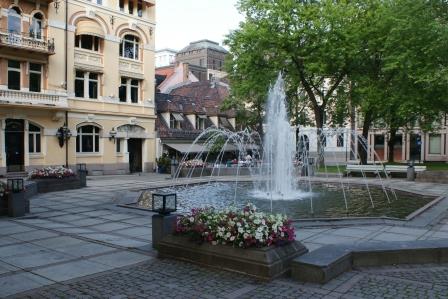
Christiania square is known for its fountain, with a sculpture of a hand pointing to the ground. After the big town fire in 1624, the Danish-Norwegian king Christian IV decided to rebuild the town in this area and name it after himself.  The sculpture is a symbol of King Christan IV pointing to this spot, saying, “The new town will lie here!” The fountain symbolizes that this was the only place with clean water.

Four women were found guilty in having put the town on fire in 1686, and were punished by decapitation on the square. Beheading was a popular amusement at that time.

At least 14 generations have lived in the district before, and many of them have apparently not abandoned us. It is no coincidence that the ghosts go again right here. In the old days people went to Christiania Torv to chat and shop, but the cobbled square was also a place for executions. At that time people could risk being put in the pillory for speaking ill of the king, and could be beheaded with either sword or ax.

????????
On the other side of the square you will find a yellow building, Celsius Restaurant, the other spooky place in this area. That’s where the executioner is said to have lived once.

A lot of people claim to have seen the executioner wearing black gown in front of the fireplace in the restaurant. The waiters at Café Celsius were even once resistant to go their nightshift there.    One of the girls saw a monk-like figure pass through what today is the coarse kitchen. In the café waiters have noticed a cold draft, that things move, and glass firmly and steadily falling from shelves inexplicably. It is always the innermost glasses that fall down.

Once, a cash register was ripped away under the fingers of one waiter as he was registering a receipt. A man dressed in black has also been seen in the restaurant after closing, and people claim to have heard whispers or suddenly been pushed.

Café Celsius to the left in image above) is the oldest half-timbered house in Oslo. Next door is a brick building from 1628, which is the oldest common house in town. Marthe has been down in the basement of the brick building and felt that it is terrible energies here, but she has not brought ghost hunters there.
????????
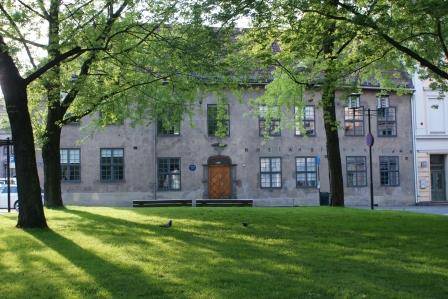
At the Bank Square, a few minutes walk from the Christiania Torv, we find the Waisen house in Kongensgt. 1. It was built 1638, rebuilt and enlarged 1640. Rebuilt 1871 by Jacob Nordan and 1920 by Arnstein Arneberg. Called Christiania Opfostringshus. Underneath there are escape tunnels from the Akershus Fort. It was the fines house in the 1600s. It was damaged by cannon balls during the Seven Years’ War. It was the first kindergarten in Oslo.
????????
The Waisen House has been described in the Norwegian folk tale collected by Asbjørnsen and Moe, An Old Fashioned Christmas Eve.

The Bank Square (Bankplassen) was surrounded by three banks, hence the name. Today only Norges Bank (Bank of Norway) has it’s headquarter there.

Oslo Ghost Trek
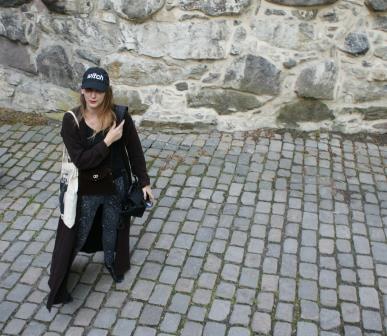
It’s Wednesday 7 pm and we meet our guide Marthe Andersen at Christiania Square. The group of about 15 people is tense and expectant, to take part in this ghost trek, organized by the Oslo City and Nature Walks.
????????
Marthe tells about ghosts who walk aimlessly around in the streets of Kvadraturen, and in the houses from 1600 – and 1700. The darkness and silence descends on the Akershus Fortress. We shudder a bit when Marthe says that the fortress is the place in Norway that has the most ghosts. She provides historical facts, including the founding of the fortress, its function through the years, and several tragic destinies. The castle was for many years besieged by enemies. Many lost their lives here, people have died of plague and famine or tortured to death.
????????
“No wonder there is a lot of energy here, and that people have heard screams or seen ghosts,” says Marthe and tells about the burning women, “Nightpyres”, who were visible before any fire on the fort. Nightpyres are baby sized females, who is said that to have ugly grin and a ghastly laughter.

????????
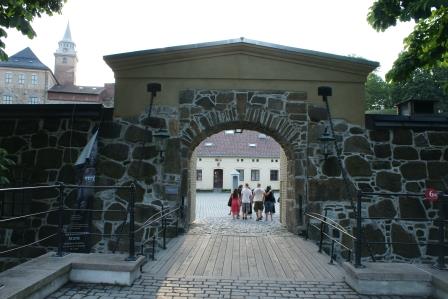
Many have felt someone breathing behind them when they walk across the drawbridge leading into the fortress. It might be the old gatekeeper.
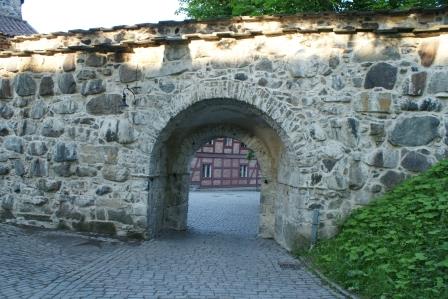
????????
Marthe tells us the story of a Swedish drunken soldier riding alone against the fortress walls, cursing and screaming that he was going to conquer Norway. The Norwegian soldiers shot both him and his horse, and the horse’s ghost has scared many since that time. It is said the Akershus Fort is the strongest fort in Northern Europe.

????????
The Virgin Tower and the Suicide Wall are also haunted places in Akershus Fort.

????????
Leaving the fort we pass some white buildings raised in the 1800s. This was the old prison where the Norwegian Robin Hood and escape king, Ole Hoyland, was prisoned.

????????
Despite strict security measures he managed for four years and long planning to escape from Akershus. After three years of freedom he was reported and arrested, and this time he could not get free. He sought a pardon both in 1846 and in 1847, and shortly after the last rejection he committed suicide in the cell.

Haunted Hotel
Last stop on the Ghost Trail is Kongensgate, and Marthe says there was once found a mass grave from 1700s, probably a war grave of Karl 12’s campaign in 1716. Today Hotel Grims Grenka has been raised on the site, and it is still a haunted place.

????????
“Many employees quit after experiencing ghosts, for example, a night watchman alarmed when a white-haired, bearded man with black clothes appeared in the empty air. Others have found that it suddenly smelled cigar or wet wool.”

Marthe was even frightened when she saw an iron door go up by itself, and also found that a heavy chandelier in the lobby began to spin around its own axis.

One year a lot of young children, participating in Norway Cup, one of the world’s largest soccer championships for young people, stayed at the hotel. One night the alarm and electrical appliances were turned on and off, without anyone having been near them, and since then no participant from the cup has stayed there.

Haunted Eve
Sure enough, none of us got close encounters with ghosts in Oslo this evening, but Marthe confirms that she occasionally gets feedback from people who have seen and experienced things. Spooky occurrences including footsteps heard in empty rooms, unseen hands rattling, moving chairs and cold spots have all been reported by guests, patrons and staff.

????????

There is a book on “The Ghost Walk in Oslo” written by Kristin Amundsen and Ross Kolby. Kirstin Amundsen is an Oslo authorized guide, who organizes Oslo City and Nature Walks.

The season starts in April/May and lasts until mid-September.  Reserved guiding is available at other times.

Experience the top haunted attractions in Oslo.

For further information on time and place, can be found at Oslo Walks.
Text and photos: Tor Kjolberg


Islamic Community Protests Against Extremism in Oslo, Norway

0

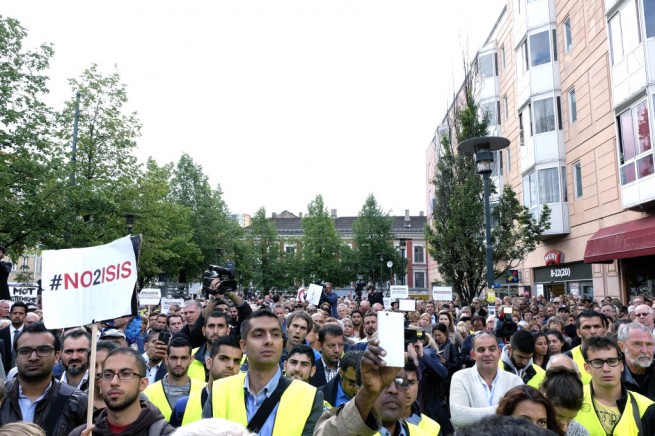
5000 people from both the Muslim and non-Muslim community in Oslo, Norway attended a demonstration aimed to show unified opposition to Islamic extremism both in Norway and abroad.

030914_Muslims_protest_against_ISIS_in_Oslo
Monday last week a group within Norway’s Islamic community had decided that they would no longer accept that the domestic debate around the Muslim community would be dominated by behaviour from extremist groups. They protested against extremism in Oslo and elsewhere in the world. This move had been sparked by continual reports of extreme violence on behalf of the Islamic State of Iraq and Syria (ISIS) and small groups within Norway that have recently been seen publicly supporting and spreading these messages of extreme violence.

ISIS is a self proclaimed caliphate that claims religious authority over all Muslims globally. It has captured large areas of territory in both Iraq and Syria in recent times and actively seeks to gain political control over the greater Islamic world.

On the 19th of August, 2014 ISIS uploaded a YouTube video entitled “A message to America” in which a US Journalist that was reported kidnapped in November 2012 named James Foley was beheaded. This sparked international condemnation with the President of the world’s most populous Muslim-majority country (Indonesia) Susilo Bambang Yudhoyono making the statement that the Islamic State militants were “embarrassing” to the religion.

030914_Muslim_demonstration_in_Oslo
One of the initiators of the demonstrations told the Norwegian state run media NRK that the demonstration has been “historic and successful to a degree” and that “the people who showed up today are genuinely concerned with peace, love and human dignity. They do not accept the hateful message of IS and their Norwegian supporters.”

The demonstrations started in the Grønland area of Oslo where people battled rainy conditions before and marching to the Parliament building (Stortinget) where numbers swelled and the predominantly muslim demonstration was joined by a greater number of non-muslims including members of various religious groups.

19 years old Faten Al-Mahdi Hussein spoke loudly on front of the Norwegian parliament building to applause. “It is not enough to be called a Muslim, Islam teaches us nothing but respect, tolerance and peace – and if beheading of people and destruction of churches and mosques, torturing innocents and rape of women is Islam for you, then you have misunderstood Islam. You do not follow Islam.”

No Mercy for Danish Smokers

0

More than half of Danes (52 percent) believe that work time shouldn’t include smoking breaks, according to a survey undertaken by Norstat for business advocate organization Dansk Erhverv.

250714_No_Smoking

The news comes just a few months after the telecommunications company TDC announced that it would begin docking its employees pay if they smoke during working hours.

“There’s no doubt that people are more aware of the time that smokers spend smoking, and that has impacted on tolerance regarding extra breaks for smoking,” Rikke B Ørum, the head of HR at Dansk Erhverv, told Avisen.dk

A dying breed
Lifestyle expert Henrik Byager argued that a ‘no mercy’ mentality towards smokers has evolved in recent times, and that has rubbed off on workplaces.

“That tunnel of smokers standing outside the main entrance at work will disappear soon too,” Byager said. “There is a zero-tolerance. Smoking is damaging to health, and people don’t think it should be tolerated. It’s over.”

The local union organization LO maintained that to avoid conflict among Danish smokers it was important for employers to have individual workplace agreements in place clearly conveying the rules in the area of smoking.

In related news, from tomorrow, all smoking on train platforms will be banned, according to the national railway operator DSB.

DSB contends that the decision is a result of complaints from its customers. A survey from 2012 showed that 70 percent of non-smokers wanted a complete smoking ban or special smoking zones, while smokers were not as opposed to bans as they have been previously.

Munch Through New Eyes

A new book gives a surprisingly approach to Edvard Munch. It contains new research on one of the world’s greatest expressive artists.

Authored by Marit Lande, Hans Grelland, Paul Nome and Haakon Mehren, the book reveals new material on several paintings, with astonishing conclusions. Through different approaches the four authors let us see Edvard Munch through new eyes.

290814_Munch_through_new_eyes
Edvard Munch (1863 – 1944) is described ad nauseam as the iconic Nordic, tormented 19th Century painter. His most famous piece, the pastel-on-board version of The Scream (1895) that sold at Sotheby’s for £73,921,284 in May 2012, depicts a deeply traumatic scene where a man screams in agony against the backdrop of a red, sinister sky. Unfortunately perhaps, The Scream series has somehow eclipsed Munch’s prolific body of work – drawings, paintings and prints that show a magnificent diversity in terms of subject, resonance and style.

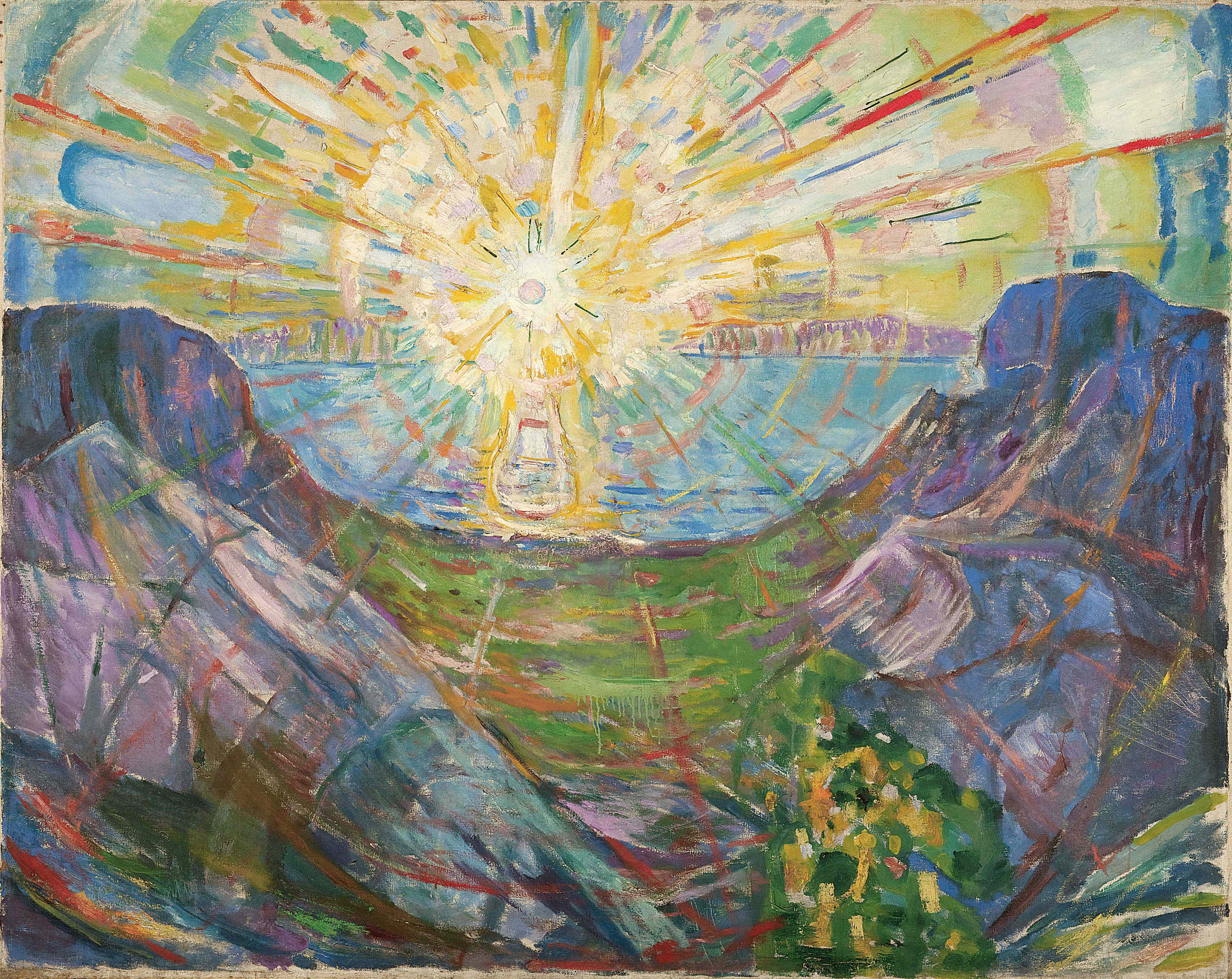
An important part of this book throws new light on Munch’s position towards religion and philosophy emphasizing the artist’s strong relation to the Danish philosopher Søren Kierkegaard. This is probably the most unusual book ever on Munch’s life and work.

290814_Munch-The-Sun
The book is published by Orfeus Publishing, a publisher of art and design books, with big ambitions. It has become one of the leading publishers within art, architecture and design in the Nordics and collaborate closely with Arvinius Publishing in Sweden, I.B. Tauris and Philip Wilson in the UK in addition to working closely with the outstanding designers and proficient printers Livonia. The aim is to produce books which are a delight to the eyes as well as containing many a literary gems.

The publishers also edit projects regarding documentaries which dare to make intrepid voices heard. Orfeus Publishing was started by Ole Rikard Høisæther in 1995 and in 2011 became an independent publisher after having been part of Cappelen Damm for 10 years.

Feature image on top: Portrait of Edvard Munch (1895) by Akseli Gallen-Kallela | WikiCommons


Most popular hotels in Norway – according to Trivago

The search service Trivago presents the ten most popular hotels in Norway based on reviews from hotel guests. The ranking includes guest reviews on Trivago and booking pages that are integrated in trivago.no.

Trivago has set up a list of the 10 hotels in Norway boasting to have received the best guest reviews. The ranking is based on hotels with minimum 100 reviews and includes hotels from around the country. We emphasize that the hotels listed are not rated by Daily Scandinavian.

Thon Trondheim, Trondheim – Average Rating: 89.30

Are you looking for a charming atmosphere during your hotel stay, you will find Park Comfort in the heart of Trondheim along Nidelven by Bakke Bro. The hotel offers comfortable rooms, and the friendly service-minded staff will make you feel at home. In some rooms you can enjoy views over Nidelven.

280814_thon-hotel-trondheim

Walaker, Solvorn – Average Rating: 89.30

Walaker Hotel has an idyllic location on the waterfront in the village Solvorn in Luster. The hotel has been passed down from generation to generation and is the oldest family-run hotel in Norway, with over 370 years of history. Enjoy a 4-course dinner in the restaurant or a glass of wine in their garden, surrounded by mountains and overlooking the Sognefjord. Related article.

SONY DSC

Losby Gods Finstadjordet – Average Rating: 88.91

Losby Gods is one of the largest golf resorts, 20 minutes from Oslo city center. The hotel offers 70 rooms and a wide range of activities, outside as well as inside. The hotel has been awarded Norwegian Heritage Olavsrosa. In the restaurant you can enjoy fine dining at one of their four rooms decorated in manor style.

280814_Losby_Gods_Norway

Rica Park Hotel Stavanger – Average Rating: 88.67

Rica Park Stavanger Hotel is ideally located close to the bus and train station and a few minutes’ walk from the center of Stavanger. The rooms are spacious and suitable for business travelers, families and weekend visits. The hotel offers a tasty breakfast composed in collaboration with the Olympic top team, which can be enjoyed on weekends until 11 o’clock.

280814_Rica_Park_Hotel_Stavanger

Rica Rock City Namsos – Average Rating: 88.51

Rica Rock City is the only rock hotel where the concept actually  is based on Troender rock history. The hotel is adjacent to Rock City – a resource for pop and rock. The hotel interior reflects the genre, and is located on the seafront. The eco-friendly hotel is linked to Rock City through a glass corridor.  Exterior photo see feature image on top.

280814_Rock_City_Hotel_Namsos_Norway_interior

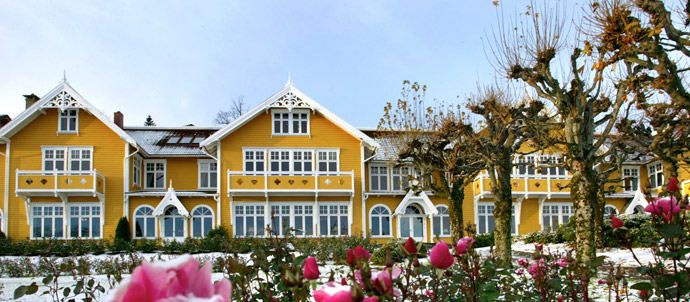
Solstrand, Os – Average Rating: 88.45

In the beautiful fjord scenery outside Bergen at Solstrand Bad & Hotel you can easily relax in a quiet and warm atmosphere. Their outdoor pool gives you the opportunity to enjoy birdsong, clear sea air and endless views of the fjord and mountains. You can also enjoy their spa for proper relaxation or explore the restaurant, offering local dishes and a taste of the coast.

280814_Solstrand_hotel_and_spa_Norway

Herangtunet, Øystre Slidre – Average Rating: 88.35

Close to the ski areas Beitostølen and Jotunheimen, three-hour drive from Oslo, you will find Herangtunet boutique hotel Norway. Herangtunet is a historic village square located on a hill in the woods. The hotel is built in traditional Valdres-style with rooms featuring a unique interior. The same applies to their restaurant where the floor is made of old Dutch cheese shelves.

280814_Herangtuner_Boutique_Hotel_Norway

Rica Nidelven, Trondheim – Average Rating: 88.29

Rica Nidelven is built on pillars 17 meters out into the river Nidelven and offers a great view of the river. If you choose to stay here you will almost certainly get a good start, as it is known to have Norway’s best breakfast. Need a break during the day, you can sit down in their river wing and enjoy a good cup of coffee enjoying the sights of the surroundings.

280814_Rica_Nidelven_Trondheim

Saga Hotel Oslo – Average Rating: 87.85

Saga Hotel can be found behind the Royal Palace in Oslo. The hotel, which dates from the late 1800s, has recently been restored and modernized but retains its beautiful and traditional architecture. At Saga Hotel, you can bring your refreshments from the lobby bar into their chill-out lounge with fireplace.

280814_Saga_hotel_Oslo_Norway 

Rica Airport Stavanger – Average Rating: 87.73

Right at the arrival hall of the airport you will find Rica Airport Hotel Stavanger. The hotel is not only convenient for airborne visitors, but also offers a variety of activities with its close location to Solastranden, Sola Golf Club and the Aviation Culture House. Rica Airport Hotel is also famous for its delicious breakfast.

280814_Rica_Airport_Hotel_Stavanger

Sweden Together With Switzerland and the United Kingdom Topped This Year’s Global Innovation Index

The report is published by Cornell University, INSEAD and the World Intellectual Property Organization.

The GII 2014 surveys 143 economies around the world, using 81 indicators — to gauge both their innovation capabilities and measurable results. Published annually since 2007, the GII is now a leading benchmarking tool for business executives, policy makers and others, seeking insight into the state of innovation around the world. This year’s study benefits from the experience of its Knowledge Partners: the Confederation of Indian Industry, du and Huawei, as well as of an Advisory Board of 14 international experts.

Top Rankings

For the GII 2014, Switzerland remains the leader for the fourth consecutive year. The United Kingdom moves up a rank to second place, followed by Sweden. A new entry into the top 10 this year is Luxembourg (9th).

Top Ten 2014 ranking


1

Switzerland (Number 1 in 2013)

6

United States of America (5)

2

United Kingdom (3)

7

Singapore (8)

3

Sweden (2)

8

Denmark (9)

4

Finland (6)

9

Luxembourg (12)

5

Netherlands (4)

10

Hong Kong (China) (7)

Norway was ranked number 14, after Germany and above Israel.

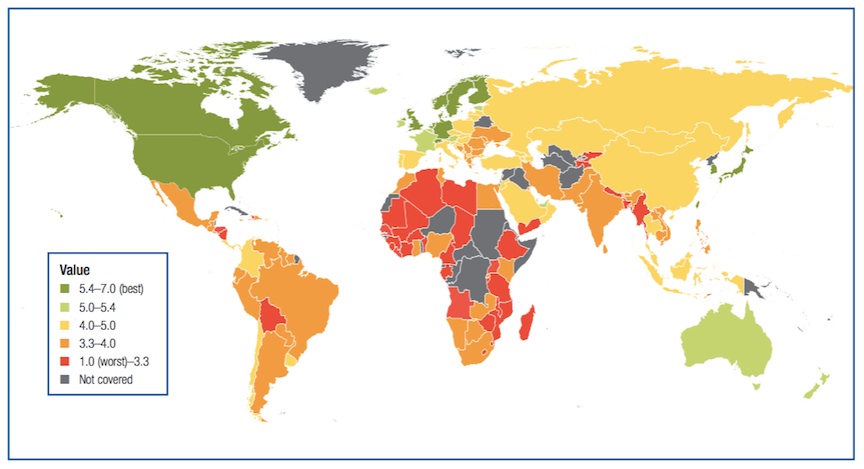
020914_World_Innovation_2014

These GII leaders have created well-linked innovation ecosystems, where investments in human capital combined with strong innovation infrastructures contribute to high levels of creativity. In particular, the top 25 countries in the GII consistently score high in most indicators and have strengths in areas such as innovation infrastructure, including information and communication technologies; business sophistication such as knowledge workers, innovation linkages, and knowledge absorption; and innovation outputs such as creative goods and services and online creativity.

The quality of innovation is assessed as well. In terms of innovation quality — as measured by university performance, the reach of scholarly articles and the international dimension of patent applications — the United States of America (USA) holds the top place within the high-income group, followed by Japan, Germany and Switzerland.  Top-scoring middle-income economies are narrowing the gap on innovation quality with China in the lead, followed by Brazil and India.

The GII 2014 confirms the persistence of global innovation divides. Among the top 10 and top 25, rankings have changed but the list of economies remains unaltered. A difficult-to-bridge divide exists where less-innovative economies have difficulty keeping up with the rate of progress of higher-ranking economies, even when making notable gains themselves. This can be partially explained by their difficulties to grow and retain the human resources necessary for sustained innovation, which is the focus of this year’s report.

Bruno Lanvin, Executive Director for Global Indices at INSEAD, and co-author of the report, stresses that “As innovation becomes a global game, a growing number of emerging economies are confronted with complex issues whereby ‘brain gain’ can only be generated through a delicate balance between talents outflows (e.g. citizens seeking an education abroad) and inflows (whereby high performers return home to innovate and create local jobs, and diasporas contribute to national competitiveness). Around the world, we see encouraging signs that this is happening.”

020914_World_Innovation_Index_2014

Various Groups Score Differently on Innovation

Viewing economies among their regional or income-group peers can illustrate important relative competitive advantages and help decision-makers glean important lessons for improved performance that are applicable on the ground.

The Human Factor: The Essential Spark to Innovation

This year’s report, both through its sub-indicators and through the chapters provided by the UNESCO Institute for Statistics, the OECD and reports on India, Russia, the United Arab Emirates, South Africa and Moroccohighlights how the human factor of innovation partly explains which innovation champions remain at the top, and why some of the large emerging economies offer divergent innovation performances.

In terms of education as a subset of human capital formation the top performers within the high income group are the Republic of Korea, Finland and the UK. China, Argentina and Hungary take the top positions among the middle-income countries. All of these countries have made visible efforts to maintain or enhance the quality of their human resources through education and life-long learning.

The GII shows that better educated citizens are more successful in higher-income economies in leveraging the favorable contexts for driving innovation. As countries move up the scale of innovation sophistication, the quality of its talents in science, engineering, but also in business and management for example become even more critical.

Global R&D Spending: Strong Post-Crisis Recovery; Growth Slowing Since 

A fall in the growth of public R&D support coupled with the continued hesitancy of company R&D expenditures seems to be leading to slower overall growth of total R&D expenditures worldwide; this is the case especially in high-income countries. In many advanced countries, fiscal consolidation also seems to have negatively affected public spending on education since 2010.

Second, although governments have effectively included a significant number of future innovation-related growth projects in stimulus packages in 2009, support for such efforts seems to have lost momentum in some countries. To be sure, the majority of countries for which data are available continue to show positive R&D expenditure growth in 2013 and 2014. Yet strong R&D spending growth in 2013 and 2014 is expected to take place mostly in Asia, in particular in China, the Republic of Korea, and India.

About the Global Innovation Index

The Global Innovation Index 2014 (GII), in its 7th edition this year, is co-published by Cornell University, INSEAD, and the World Intellectual Property Organization (WIPO, a specialized agency of the United Nations).

The core of the GII Report consists of a ranking of world economies’ innovation capabilities and results. Recognizing the key role of innovation as a driver of economic growth and prosperity, and the need for a broad horizontal vision of innovation applicable to developed and emerging economies, the GII includes indicators that go beyond the traditional measures of innovation such as the level of research and development.

In just 7 years, the GII has established itself as the premier reference among innovation indices, and has evolved into a valuable benchmarking tool to facilitate public-private dialogue, whereby policymakers, business leaders and other stakeholders can evaluate progress on a continual basis.

To support the global innovation debate, to guide polices and to highlight good practices, metrics are required to assess innovation and related policy performance. The Global Innovation Index (GII) creates an environment in which innovation factors are under continual evaluation, including the following features:

  • 143 country profiles, including data, ranks and strengths and weaknesses on 81 indicators
  • 81 data tables for indicators from over 30 international public and private sources, of which 56 are hard data, 20 composite indicators, and 5 survey questions
  • A transparent and replicable computation methodology including 90% confidence interval for each index ranking (GII, output and input sub-indices) and an analysis of factors affecting year-on-year changes in rankings

The GII 2014 is calculated as the average of two sub-indices. The Innovation Input Sub-Index gauges elements of the national economy which embody innovative activities grouped in five pillars: (1) Institutions, (2) Human capital and research, (3) Infrastructure, (4) Market sophistication, and (5) Business sophistication. The Innovation Output Sub-Index captures actual evidence of innovation results, divided in two pillars: (6) Knowledge and technology outputs and (7) Creative outputs.

The index is submitted to an independent statistical audit by the Joint Research Centre of the European Commission. To download the full report visit: www.globalinnovationindex.org.

Art, Music and Architecture in the Polar Landscape of Norway

SALT is an ambitious and conceptual “leave-no-trace” event inspired by a small number of archaeological artifacts found in the polar regions pointing to traces of cultural civilization. At the focus of the event is the future of the polar region, which is undeniably melting in front of our eyes.

260814_Fish_drying-equipment_norway
From August 29 through September 1 of next year, the music, art and architecture destination SALT will reverently situate itself in Norway’s polar landscape. Like a vibrant mirage, it will manifest in this barren terrain, and then, as the last concert notes fade away, it will disappear into the ether, as if it had never been… Perhaps leaving just an addendum to time’s undocumented chronicles of man and nature.

We asked the organizational team: Why the title of “SALT”? “Salt is a requirement of life. The salty sea surrounds the Arctic and is a supplier of food and resources. Until recent times, the main way for people to travel was by sea. Salt was, and is, used to preserve food, so that the people in the North could survive the long and cold winters. Salt is also a metaphor for wisdom. Salt is a word shared by many languages, and in ancient times, it was so valuable that it was used as currency; ‘salt’ is actually the root of the word ‘salary’.”

Lasting a whole year in length, SALT will give its visitors and audience the opportunity to experience its offerings both indoors and out – from exhibitions and experimental performances, to concerts of classical and modern music, campfire readings, and child-friendly events.

SALT will cover the art, culture and environments found in various corners of the region within the Arctic Circle. The first festival series will take place on the beach of the cliff-edged island of Sandhornøya, which lies south of the town of Bodø, in northern Norway. For one week in June, a group of architects – Sami Rintala (Finland), Joar Nango (Norway) and Roger Mullin (Canada) – held an architecture seminar during which the participants began building the physical constructs for SALT. Construction will continue throughout the summer, at the end of which the grand opening of SALT will then be held.

The backbone and central symbol of SALT is the architecture project “Fiske hjelle” – a traditional Norwegian structure for the drying of fish – which was developed by the Finnish architect and artist, Sami Rintala.

At the core of SALT are two central artworks: “SALT Night” for the dark part of the year, and “SALT Day”, for the light-filled summer season.

Site-specific installations – reflecting modern-day existence in a poetic and very delicate manner – have been specially made for the event by internationally renown artists. Yang Fudong (Beijing), currently one of China’s most well-known filmmakers, has created an open-air video installation.

Fudong’s films are mostly black and white, plot-less and fragmented, but at the same time – hypnotic and expressive. His work is inspired by ancient Eastern traditions that claim that the true meaning of things cannot be expressed with words, which is why the silence that is understood by the heart plays a major part in his works. Fudong’s video material for the project was filmed in both China and Norway.

In the SALT restaurant, guests will be served seasonal, authentically prepared local foods – fish, game and edibles gathered from the forest.

The architects have also designed modest, yet comfortable, lodging on site at SALT. Inspired by the the simple, yet functional, construction methods employed by the nomadic peoples of the Arctic, the architects have created a brilliant mobile tent suitable for the harsh northern climate “Njalla”.

Visitors to the event will also be able to overnight in the SALT “Siida” shelter, which can be set up anywhere – even right on the Atlantic coast if that seems comfortable to you.

This is definitely a wonderful opportunity to experience the polar landscape of Norway, combining summer festival plans with soul-enriching eco-tourism in the sublime natural environment of remote Northern Norway, and to do it all through the prism of culture and art.

In the upcoming years, SALT will travel to neighboring countries and create new festival camps in Greenland, Iceland, the Faroe Islands, Ireland, Scotland, Spitsbergen and Alaska.

These plans led us to ask SALT’s creative team the following question: In future years, will the SALT concept continue with the same philosophy as this year’s event, or will it be celebrating other aspects of each particular region? To which we received the following reply: “Yes, the philosophy will follow us where we go. It is inspired by the shared history, culture and present situation in the Arctic and across the different countries that we travel to. However, every destination has its own uniqueness and SALT will try to capture and communicate this as favorably, and as interestingly, as possible.”

We also asked the creative team to sketch out their vision of what a visitor could gain from SALT: Just for a brief second, imagine that person X  lives in the SALT resort of Sandhornøy for one whole year, with all of the SALT-offered goods and events at his or her disposal. In your opinion, how would this unique adventure – a whole year of SALT – change person X? And what can visitor Y, who spends just one day at SALT, gain?

“That is a very imaginative question, but also a difficult one to answer. I believe that even just one visit can have a profound impact on people. The beach itself and the surrounding landscapes are mind-blowing, even without SALT. It made a deep impression on me the first time I visited. Our hope is that one or several SALT experiences will fill people with respect, love and engagement for the planet we live on, and that they will take the urgent challenges that we face seriously.”

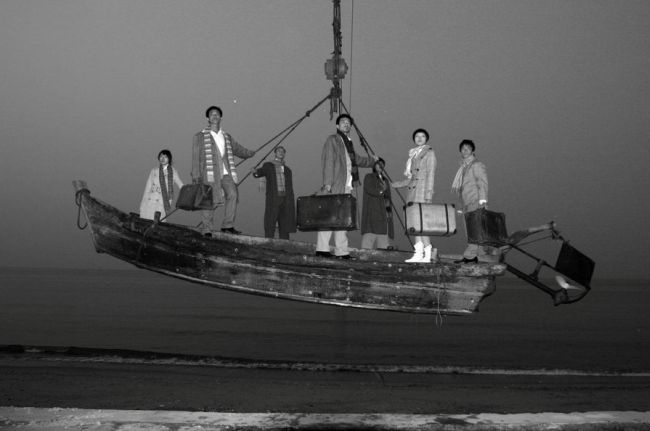
260814_Yang Fudong_Seven_ Intellectuals_in_ Bamboo_Forest
Photo above: Seven Intellectuals in Bamboo Forest, Part 4, 2007. Deutsche Bank Collection. © Yang Fudong Courtesy Yang Fudong and ShanghArt Gallery, Shanghai

260814_Salt_Festival_Norway
Opening weekend programme:

– On 29 August 2014, at 6pm, SALT’s journey will begin on the beach at Sandhornøy, with a unique experience: Chinese artist Yang Fudong’s film installation, The Light that I Feel.


– During 29 – 30 August, SALT will present an exciting combination of international, national and local visual and performing artists.

– Following the opening of Yang Fudong’s specially commissioned, site-specific installation, Friday 29 August will see an array of exciting and unique music performances, including American artist and musician Lonnie Holley.

The night will also feature performances by musicians from the Arctic Symphonic Orchestra, the world’s most northerly orchestral institution; plus DJ Are Mokkelbost and Ensemble Ylajali, a 20-piece all-female choir.

– Following the launch night, Saturday 30 August will see a second night of music and visuals, including performances by Biosphere, Wardruna, Slagr and Elle Marja Eira.

Written by: Elīna Čivle Üye Featured image (on top): Matti Aikio

Source: www.salted.no

Norwegian Cultural Landscapes

0

Winding rivers through green fields of lush vegetation;  patches of fields with straight lines made by agricultural equipment;  main roads passing through exciting farmland;  farmer’s crops creating incredible patterns – these are the stunning images we see in our areal photographer Lasse Tur’s book, “Norwegian Cultural Landscapes”.

????????
Professional photographer Lasse Tur’s academic agricultural background often comes into play when he is in the air on behalf of a customer or while creating images for one of his books, during which time he often sees and captures exciting Norwegian cultural landscapes.

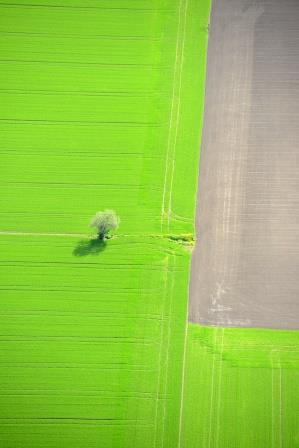
250814_Norwegian_Cultural_Landscape_1_Photo_Lasse_Tur

250814_Norwegian_Cultural_Landscapes_CoverAfter more than 6,000 hours  in the air, Tur had accumulated collection of cultural landscape motives, enough for a book.  The only problem he had was what the title of such a book should be:

Should the book be titled “Agricultural landscapes”? No, agriculture is producing crops like wheat, potatoes and corn. Perhaps “Norwegian Horticulture”?  No, such a title was too limited.

After searching for the title, among other sources in Wikipedia, he decided on “Cultural Landscapes”, which by definition is a landscape created by human activity, not a virgin landscape.

“Sometimes it was difficult to catch the particular landscapes because of background and light,” says Lasse. “The cover photo of the book illustrates one of the more successful challenges. When I returned over that field later that day the light had disappeared and it would hardly have been a motif worth capturing.”

See other books by photographer Lasse Tur here.

250814_Norwegian_Cultural_Landscape_3_Photo_Lasse_Tur
The book has become as much a photo book as a book with a collection of photographs of cultural landscapes.

250814_Norwegian_Cultutal_Landscape_4_Photo_Lasse_Tur
“My images are design oriented. By minimizing the object in the motif I have in many cases reinforced them,” explains Lasse. “I have also concerned on what people like best, by among other things following different Facebook communities. It is quite obvious that spectacular images, bright colors and few objects belong to their favorites.”

250814_Norwegian_Cultural_Landscape_5_Photo_Lasse_Tur
An image from Enebakk, outside Oslo, on page 2, is a good illustration. On page 11 you may see a combination of simplicity in form with several nuances. On page 18 two power pylons is a part of the composition. On page 24 the Laerdal mountains give enormous dimensions to the landscape. On page 28 and 29 is a picture showing two agricultural vessels in a huge field. “A very popular image,” Lasse points out.

“There is no message in my book,” says Lasse Tur. “It is just a collection of my pictures.”

All photos: Lasse Tur, except portrait of Tur by Tor Kjolberg


Oslo’s Summer Street Charm & Waterfront Pearls

Whether a visitor for the 1st time or returning to Oslo, this city has its own unique and irresistible charm. Another noticeable fact is Norwegians love enjoying life to its fullest.

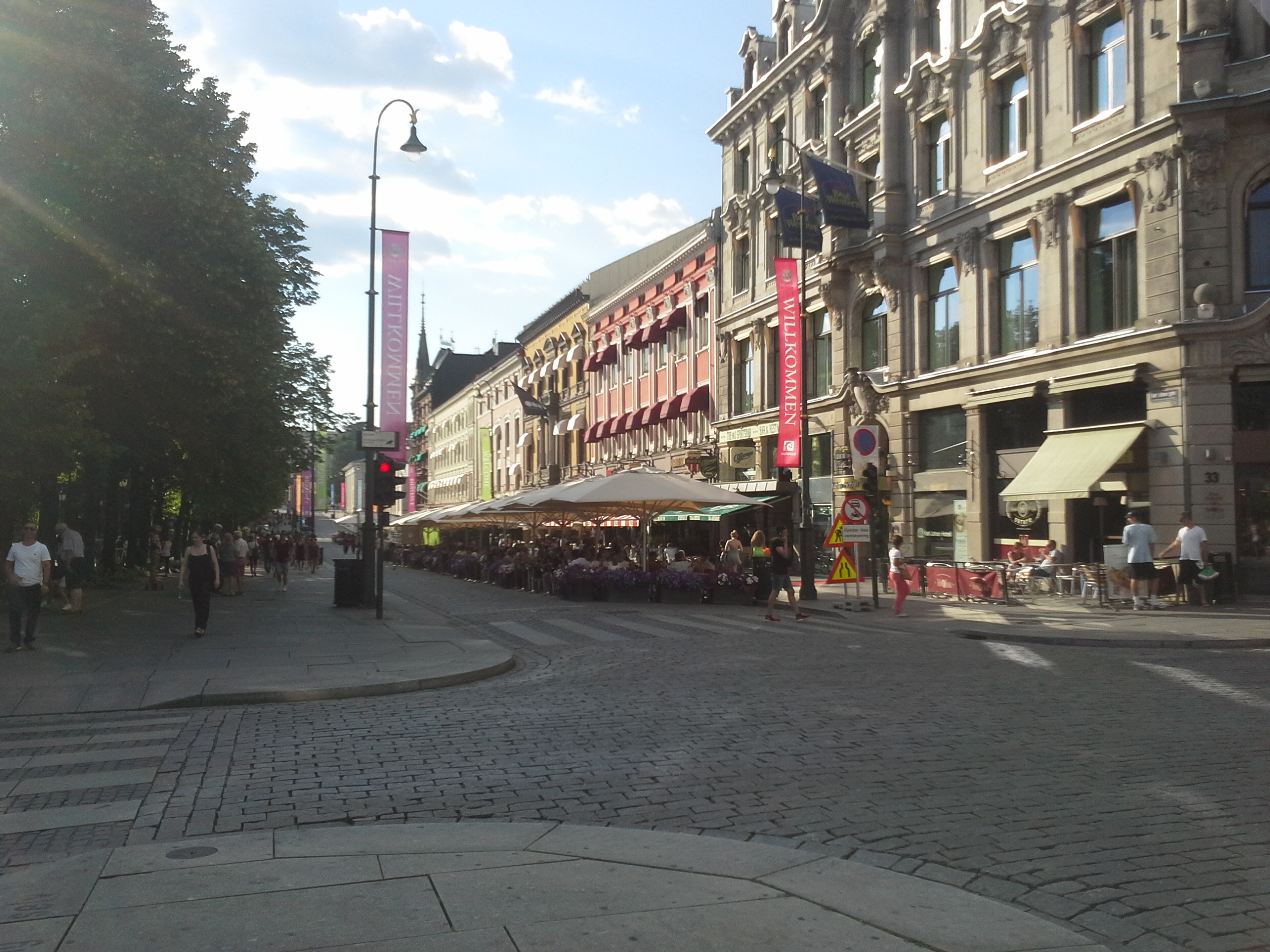
From Karl Johan, the street of human charmers, down to the mesmerizing waterfronts in Oslo will enrich your memories for the rest of your lives. Experience Oslo’s summer street charm.

220814_Oslo_Summer_Charm_1

One of the best recreations Norwegians love most is to “relax” at one of many outdoor cafes  on Karl Johan on a sunny afternoon.

220814_Oslo_Summer_Charm_2
Enjoy the view of yachts and Tall Ships from Aker Festning (Fortress). Even take ferries and cruise on the Oslo Fjord.

220814_Oslo_Summer_Charm_3
Shop, eat and enjoy many of the yachts along the marina of Aker Brygge

220814_Oslo_Summer_Charm_4
Walk the channels and side streets and find hidden treasures in the many small shops of Aker Brygge.

220814_Oslo_Summer_Charm_5

220814_Oslo_Summer_Charm_6
Refresh the family and kids with a dip on a hot sunny day in Astrup Fearnley own lagoon (see picture on top).

Writer and Photos: Lars T Tanskanen