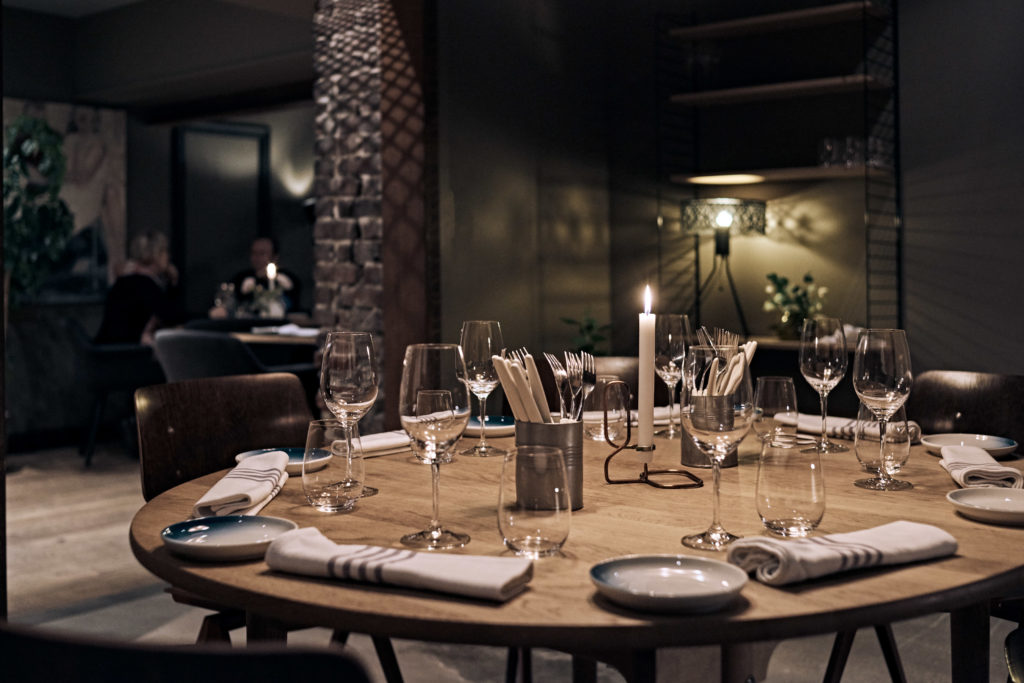
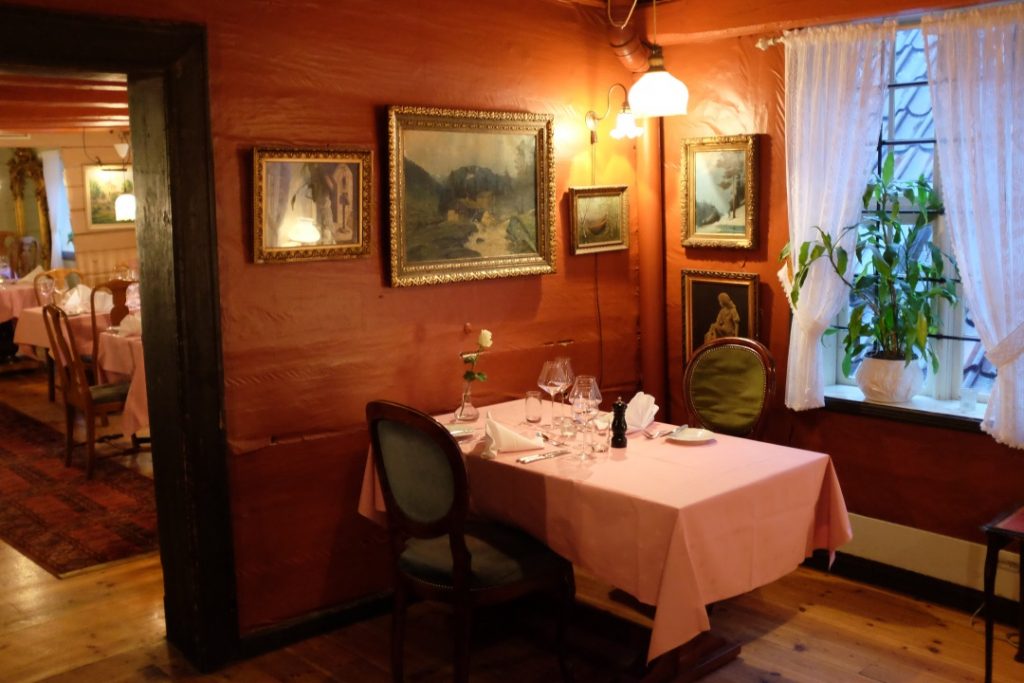
Norway’s second largest city has become a high-class culinary city. The fact that Bergen is one of the world’s most beautiful cities is well known. But it’s growing culinary reputation has taken place in recent years. Read more about culinary Bergen, Norway.
Traditionally, Bergen has been known to Norwegians for its “penny buns” and the Hagelin sisters’ fish cakes. It’s also an interesting fact that McDonald’s opened a branch in the Soviet Union before Bergen got the taste of a Big Mac.
Colonialen, Bergen
But something has happened. Restaurants like Hanne På Høyden and Colonialen aroused the people of Bergen’s sleepy taste buds. Bien (The Bee) opened in a closed protected pharmacy on Danmarks plass and in 2015, Bergen was included in the UNESCO list of gastronomic cities.
The Fana Cheese was awarded ‘the Best Cheese in the World’ at the Culinary World Cup in 2018. Not bad for a small farm in Fana with only 11 cows. The Bergen cuisine is dominated by the fresh local ingredients that abounds on the west coast of Norway, from fish to the array of plants that thrive in the green mountains by the fjords.
The Fana Cheese was awarded ‘the Best Cheese in the World’ at the Culinary World Cup in 2018
Journalists from the New York Times, the BBC and other international media have flown to Bergen to tell what’s happening in culinary Bergen right now. At Enhjøringen travelers can taste whale carpaccio, one of the typical Bergen dishes on the restaurant’s seafood-heavy menu. The restaurant is located in Bryggen, a picturesque 18th-century area rich with wooden buildings with painted walls and sloping roofs.
Restaurant To Kokker (Two Cooks) is also tucked away in one of Bryggen’s old houses and can be reached by strolling down a back alley and up a flight of stairs. The amazing food served in this top-notch restaurant is worth the detour.
To kokker, Bryggen, Bergen. Photo: Tor Kjolberg
The Oslo-based newspaper Dagbladet called Hoggorm (Viper), a new pizzeria which opened in a closed hairdressing saloon, “probably the coolest dining in Norway right now”.
In a wooden house with white walls and blue windows situated along a narrow, quiet cobblestone street, you find the coffeehouse Krok og Kringen with numerous volumes of books which are free to read, and even buy. However, the irresistible pastries, cookies and cakes, enjoyed with a steaming cup of coffee or tea are the very reason to pay this book café a visit.
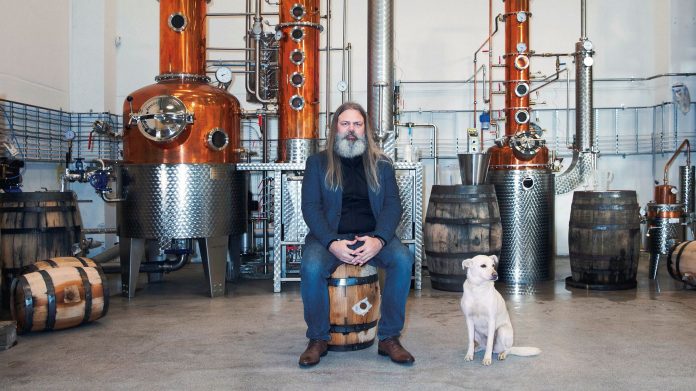
Gin producer Stig Bareksten
Gin producer Stig Bareksten has received many gold medals and World Cup titles for his botanical gin, which is made with exquisite, local ingredients. If you’re a beer lover, head to Henrik Øl & Vinstove with a selection of over 50 craft beers on tap, most of which are Norwegian and Scandinavian.
Last winter, Gordon Ramsay was in Bergen to produce an episode for the TV foodie program Uncharted. To the travel magazine Travel + Leisure, he said, “Regarding food, it’s impossible to beat Bergen.” His most memorable dinner was at Lysverket.
Lysverket, facade. Photo: Tor Kjolberg
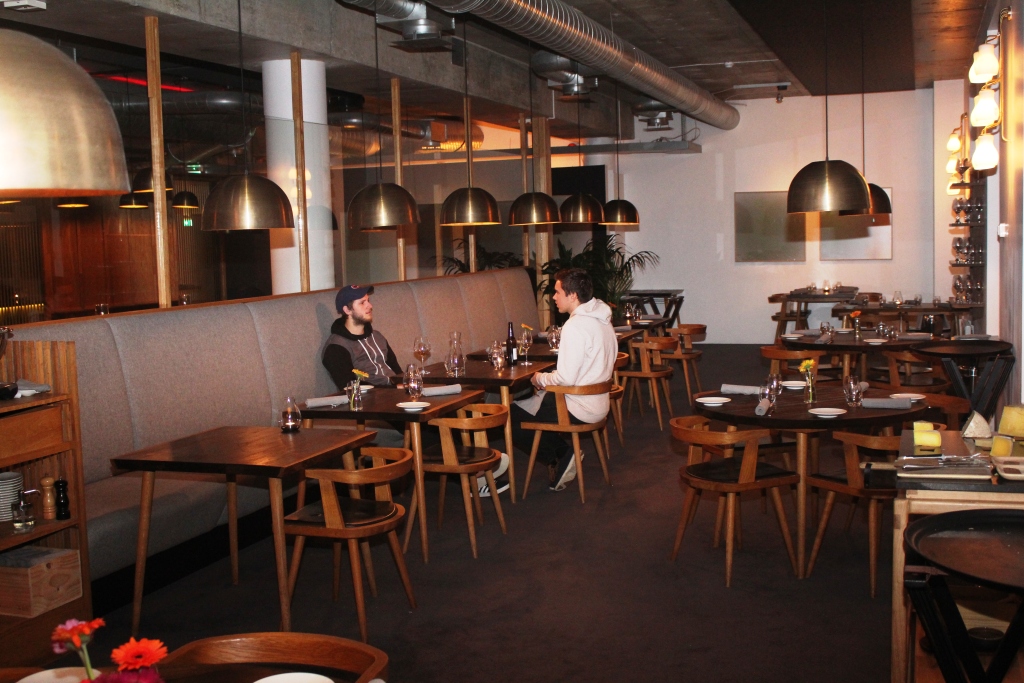
Personally, I must admit that a visit to Lysverket did not meet expectations. The service was eminent, but the venue was more like a cafeteria in a museum (Code 4, Bergen) than a luxury restaurant.
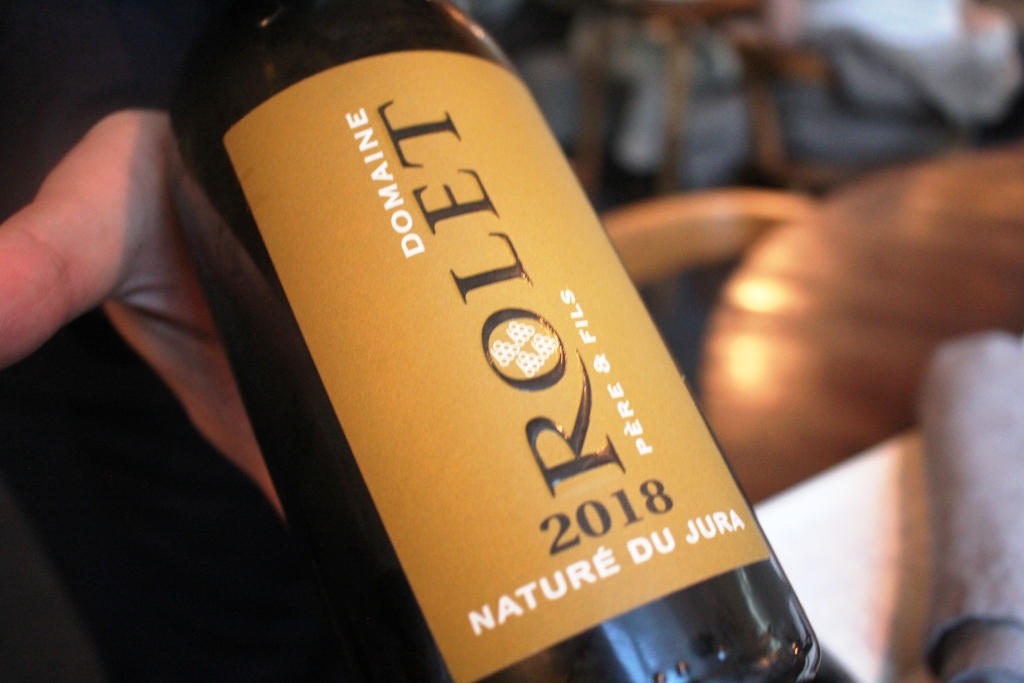
Domaine Rolet is established as one of the Jura vineyard flagships. Photo: Tor KjolbergStarter at Lysverket. Photo: Tor KjolbergRed wine, Lysverket. Photo: Tor KjolbergInterior, Lysverket. Photo: Tor KjolbergDry aged beef at Lysverket. Photo: Tor KjolbergDessert at Lysverket. Photo: Tor KjolbergMaster chef Christopher Haatuft at Lysverket, Bergen. Photo: Tor Kjolberg
The dry aged beef we were served was not particularly tender and I missed a sharp steak knife featuring a serrated blade. The skate fish with squid ink sauce and baby fennel we had as side dish was, however, superb. So were the accompanying wines. On a harsh autumn evening in Bergen, I would rather, though recommend a warming soup at the cozy soup bar Bastant. Inspired by the international cuisines of Thailand, Mecico, Marocco, Italy and beyond, you can enjoy some of the tastiest soups in the city there.
When we visited Hotel Børsen in Bergen three years ago, the hotel restaurant Bare Mat (Food Only) was a fantastic place to eat. In February this year, the restaurant was awarded the city’s first Michelin star.
Bare Mat at Bergen Børs Hotel. Photo: Tor Kjolberg
Private chef Anna Davis keeps coming back to Bergen summer after summer. “The chefs in Bergen really care about their ingredients,” she says. “They forage and stick to their roots, even in the developing culinary scene, focusing on pure, fresh food and specific flavors. The seafood here is also some of the best in Europe.” Over the past three years, she’s eaten her way through the region along the way.
Feature image (on top) From Bergen Aquarium. Photo: Visit Bergen
Bridging the water between Zealand and Jutland is the island of Funen, known as the “Danish Garden Island”, with the buzzing cultural center of Odense at its heart. Read more about the Danish Garden Island.
Funen is Denmark’s third-largest island and is often overshadowed by the diverse islands of Jutland and Zealand. But devote some time to explore its hidden corners and you’ll be surprised by this little island’s abundance of cultural sites and natural beauties.
Funen is Denmark’s third-largest island and is often overshadowed by the diverse islands of Jutland and Zealand. Photo: Visit Denmark
Funen is linked to Zealand by the mighty Store Bælt bridge and to Jutland by the Little Bælt bridge, and the E20 runs straight across the island.
Go beyond the birthplace of legendary author Hans Christian Andersen in Odense and explore Denmark’s green heartbeat. Funen is covered in gardens, woods, parks and connected to its own archipelago. It’s nearly impossible not to see a castle on Funen, an island full of unique attractions too like bridge-walking! This is the only bridge-walking outside Sydney!
Odense is like a miniature of the country’s largest cities, Copenhagen and Aarhus. Photo: Visit Odense
However, when visiting Funen, you should visit Andersen’s childhood home in Odense and roam around the house where he spent 14 years of his life. Here you will find drawings and personal letters written by the author himself from an early age.
Odense is like a miniature of the country’s largest cities, Copenhagen and Aarhus. But aside from the size, this scenic city lacks nothing compared to the other two. It boasts a strong culinary scene, a vivid nightlife enhanced by the city’s numerous students and a wide range of boutiques. Not to mention, the city’s cultural agenda is full of events all year round.
However, Odense is not the only town worth a visit in Funen. Every town on the island has its own personality and atmosphere. Some are known for their long coasts and beautiful landscapes while others for their cultural sites and scenic neighborhoods with the cobblestone streets and vibrant markets. Nyborg, one of Denmark’s oldest towns, Svendborg and Kerteminde at the north of the island are all scenic towns worth a place on your bucket list.
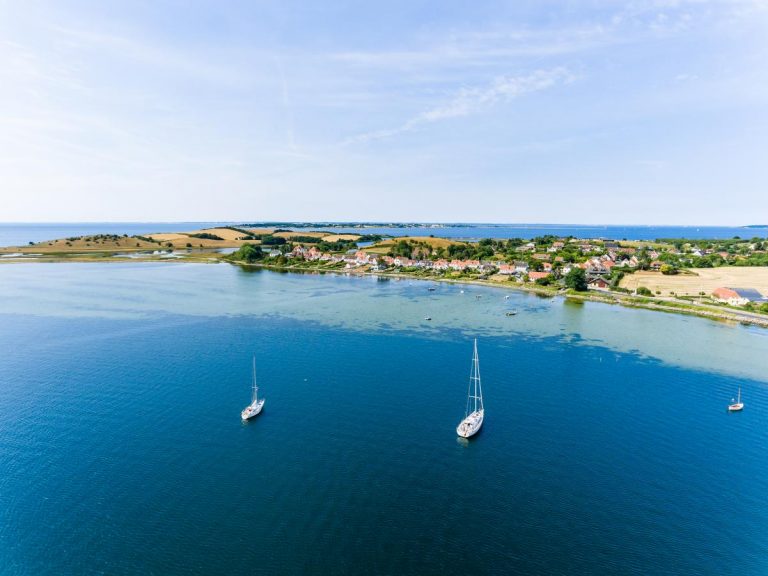
South Funen and the island archipelago are a paradise for anglers and yachtsmen. Ærø island is part of the South Funen Archipelago.
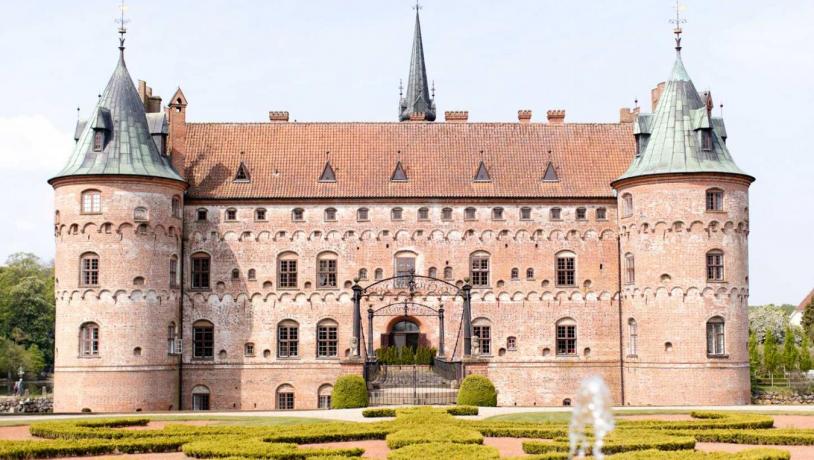
Egeskov castle. Photo: Visit Denmark
There are 123 castles and manors on Funen Island. You should spend a fun-filled day at Egeskov Castle, which is no ordinary castle. It’s a destination all on its own, packed with outdoor activities, exhibitions and festivals (such as the popular Heartland music festival) throughout the year. Plus, the Egeskov Castle Garden was recently named the best in Denmark. It’s not a bad backdrop for a picnic!
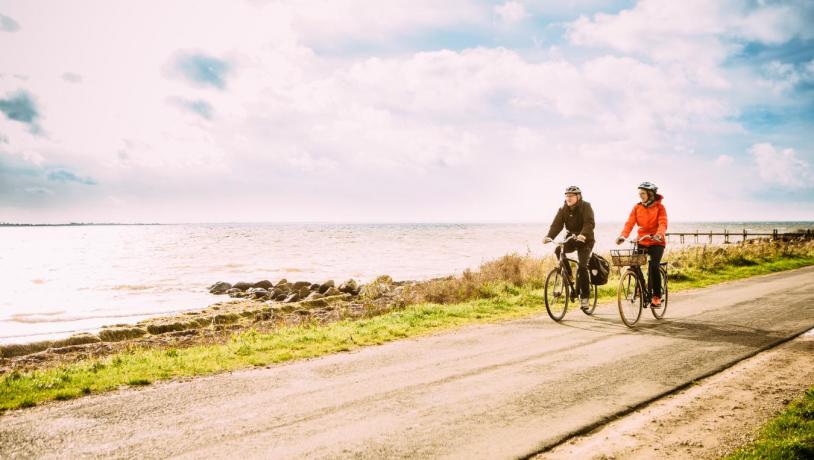
Biking on Funen. Photo: Visit Denmark
However, the most satisfying way to appreciate Funen’s finer aspects is slowly by the power of your pedaling feet. Here the hundreds of kilometers of marked routes, allowing you to lean your bike beside one of the little whitewashed churches to take a look inside, and inhale the scent of the wild flowers that lie beneath roadside rose hedges.
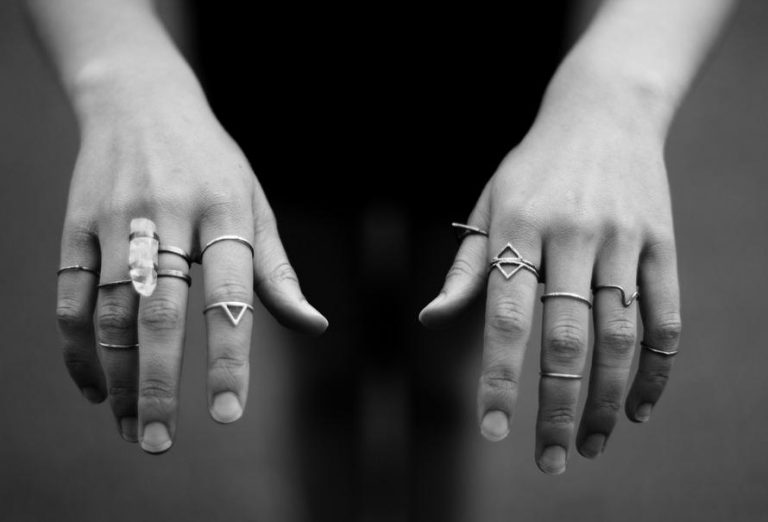
Inspired by Copenhagen’s industrial areas, Norwegian designer Renathe Todal Tande creates minimalist jewelry in silver.
Still With You is a Copenhagen-based fine jewelry label, founded in 2013 by Norwegian designer Renathe Todal Tande. Her first collection was launched February same year and today her jewelry is worn by women in 54 countries all over the world.
Renathe Todal Tande moved to Copenhagen in 2010
Renathe strives for longevity in both style and quality and that’s why women worldwide fall in in love with the interesting organic shapes of her jewelry. She admits that she has a weak spot for dark, minimalist silver pieces and works mainly with raw crystals and describes her designs as ‘staple pieces for the minimalist’.
The area outside her first-floor 20 sq. meter studio at Refshaleøen in Copenhagen is full of large building structures. Renathe says that she gets aesthetic inspiration just by staring out the window. Every piece of jewelry she makes is handcrafted from 925 Sterling silver and 14 karat gold with attention to detail and quality craftmanship. Inspiration grows on her gradually, especially from nature and her surroundings.
Renathe Todal Tande moved to Copenhagen in 2010 after studying political science in the south of Norway and started making jewelry as a hobby. Today, all suppliers and partners of her studio is either local, family-owned or started by female founders. On her website she says she believes it’s important to care about who you do business with.
Although her studio is organized and chaotic at once, Renathe claims that she has everything at hand: a lot of tools, coffee and music. Before she intends to make a new collection, Renathe makes a mood board with different images and layouts. Sometimes she works with negative space. “The empty space in between is sometimes more interesting than the object itself. That is a constant source of inspiration and visible throughout the collections,” she once said in an interview.
women worldwide fall in in love with the interesting organic shapes of SWY jewelry
Renathe Todal Tande is extremely detail-focused and some things seem almost impossible to create. But she never gives up. The idea behind each collection is that one piece of jewelry will always match any other, and also across collections.
“This might be a rigid approach,” she says “but I think it’s more of a principle to ensure a sustainable aesthetic and quality.”
Norwegian Designer Creates Minimalist Jewelry in Silver, written by Tor Kjolberg
When David Chu, creative director of the Danish design house Georg Jensen, was placed next to the Iraqi-British architect Zaha Hadid (1950-2016) during a dinner, he immediately noticed the jewelry she was wearing: large, sculptural rings and bracelets. It resulted in Danish jewelry designed by the Iraqi architect.
Just a few weeks after her collaboration with Georg Jensen, the star architect passed away. However, the line of silver jewelry inspired by the Wangjing SOHO complex she created in Beijing, is a wonderful example of jewels that blur the lines between artistic mediums.
Zaha Hadid’s jewelry is a wonderful example of jewels that blur the lines between artistic mediums.
When the Danish silversmith Georg Jensen died in 1935, he was eulogized by the New York Herald as “the greatest silversmith of the last 300 years.” It was quite an endorsement, especially for the son of a Danish man who sharpened knives for a living. Jensen was the ultimate poster boy for apprenticeships, having apprenticed as a goldsmith aged 14 and graduated in sculpture aged 26.
Zaha Hadid’s jewelry is considered iconic and highly collectible
The Zaha Hadid/Georg Jensen jewelry collection consists of five rings and three bracelets, in either sterling silver or black rhodium with black diamonds. Organic shapes, complex simplicity and play with light make the jewelry an echo of her life’s work.
Despite her untimely death, Zaha Hadid managed to build a reputation as one of the foremost and most visionary architects of our time. The Lamellae Twisted Bangle by Georg Jensen is a breathtaking silver cuff, part of the Lamellae jewelry collection. It was described by the architect as the collection’s defining piece. Zaha created the jewelry collection using the same 3D techniques she applied to her building concepts.
The Lamellae Twisted Bangle by Georg Jensen is a breathtaking silver cuff, part of the Lamellae jewelry collection
It is generally known that the Swedes love their beautiful country and have a spiritual affinity with the mountains and forests of Sweden. The varied landscape with moorland leading to the Arctic tundra is home to some endangered animal species. With a vibrant outdoor life, adventure sports and interesting cities such as Malmo, Stockholm and Gothenburg with their trendy shops, it is no wonder that a list of 10 things I hate and love about Sweden is so easy to put together…but I am actually finding it quite hard to limit my list to just ten things. Let me try:
Start with the Food Swedish favorites like kalops, a delicious and tasty slow-cooked meat stew, fried herring fillets and kottbullar or meatballs are a mouth watering treat on a cold winter’s night. Follow it up with home made sponge cake with whipped cream and strawberries; treats that the locals as well as tourists love about dining in Sweden.
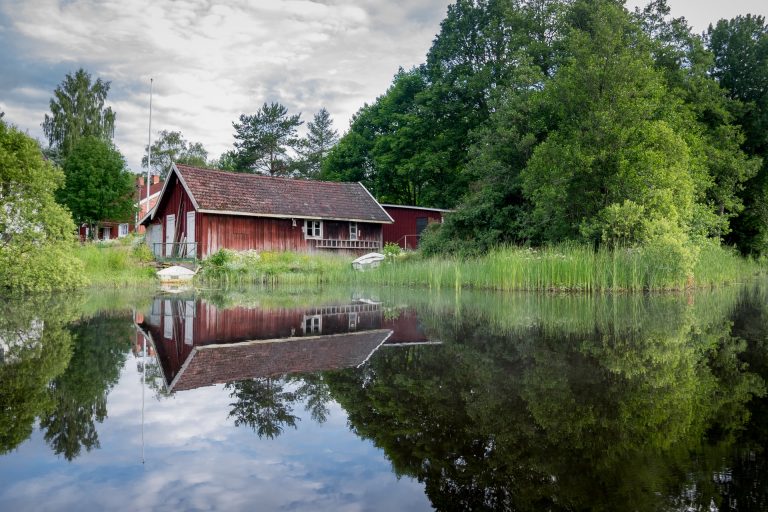
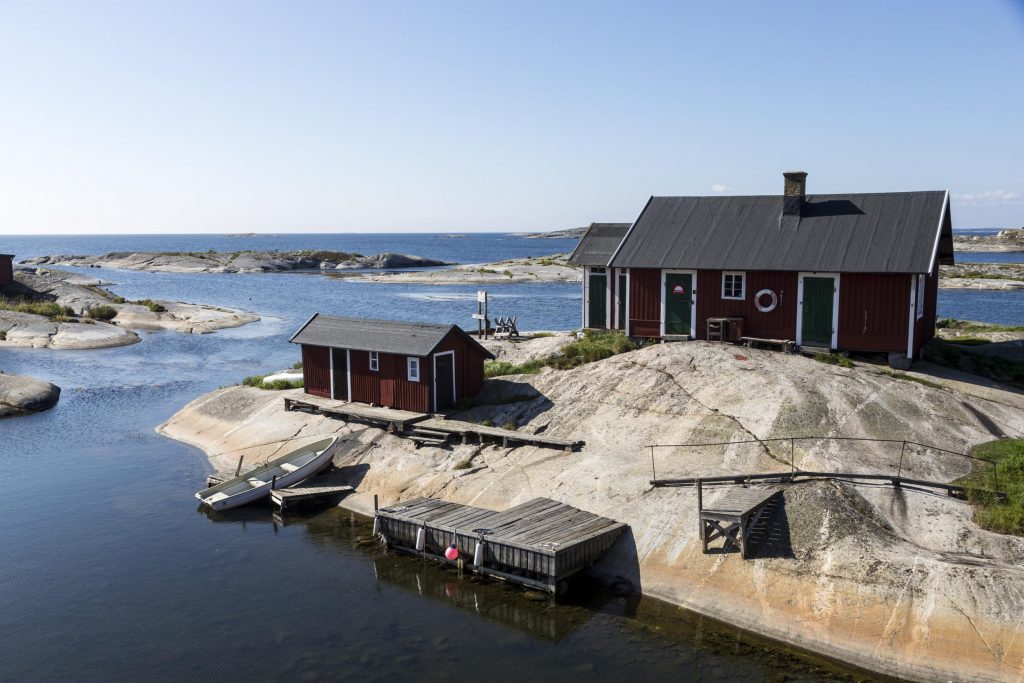
Tourists love those red and white painted wooden cottages. Photo: Visit Sweden
Being Accessible Sweden is way ahead of other countries when it comes to making buildings accessible to visually – as well as physically disabled people. Wheelchair ramps make it easy for everyone to access shops and offices.
Its Charming Looks Tourists love those red and white painted wooden cottages as well as the decoratively carved homes of the Stockholm archipelago as well as the timber homes in pastel shades around the harbors.
Great Music Sweden is loved for giving the world wonderful music. Swedish pop icons like ABBA and Roxette have turned Sweden into a place known for its rich pop culture. There are lots of annual events in Sweden for anyone who likes music.
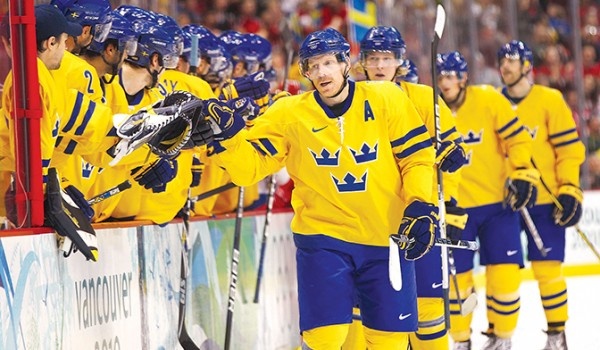
Swedish NHL players
Sports Lovers and Outdoor Enthusiasts They love getting out into the magnificent countryside for recreation. In addition, the long coastline lures many hobby anglers to this country. When it comes to sports and hobbies, Sweden is known for churning out tennis stars, racing drivers and top golfers. Bjorn Borg, the top Swedish tennis player of yesteryear, even has his own shops in Sweden.
The Seasons In winter, Sweden is covered in snow and there is opportunity for brilliant skiing in any of the many skiing trails, many of them floodlit. The largest ski resorts are Slen and Are and they have lifts for downhill skiers. Horse-riding is also a popular sport and there are heaps of riding clubs as well as exciting mountain trekking.
It’s Bookworm-Friendly People love the fact that Sweden is still a nation that loves a good book to read. In spite of the Internet and television, Sweden has invested in libraries and they still love to get their news from the daily newspaper.
Fika latte. Photo: Wikipedia
A Nice Little Coffee Break Swedes love their coffee, and even at work, their coffee breaks, known as fika paus are revered. In a hectic world, this simple pleasure sets Sweden apart as utterly unusual.
Things to Do Year Round Make the most of winter and skate on a frozen lake or visit the IceHotel in Jukkasjarvi, built entirely of snow and ice which melts and which is then rebuilt in October each year.
Lots of entertainment – whether it’s cultural or contemporary. People love World Heritage Sites and the town of Visby has a medieval wall and vaulted street with historic sights and trendy nightlife spots. Entertainment in Sweden is richly varied; with the weather partly influencing what’s on at the moment. Apart from the outdoors, there are excellent pubs, casinos, stores, markets and clubs in each town, so that there is always something to attract every kind of person traveling to this multifaceted country.
There is always something to attract every kind of person traveling to this multifaceted country. Photo: Jonathan Brinkhorst / Unsplash
In spite of Sweden being a modern Scandinavian kingdom, consumer goods of which are known the world over, and in spite of it having beautiful countryside and a world class capital city, all is not as it appears and I just want to get this off my chest. Yes, besides the things I Love about Sweden, there are indeed also 10 things I hate about Sweden.
Absence of Small Niceties It sometimes feels as if it is each person for themselves in Sweden; nobody holds a door open for you; even if you are in a wheelchair. I always make an effort to be helpful and friendly, and it just seems to me sometimes that the small niceties that people are inclined to take for granted in other countries are mostly unknown in Sweden.
The Weather Conditions The icy temperatures that blow in through the door are often not from the weather conditions but rather from the icy, judgmental and unemotional character traits of the Swedes. Small wonder that the Swedes, just like the other Scandinavian countries, walk around so morose; they bottle up everything inside and are petrified to show any kind of friendliness.
The icy temperatures that blow in through the door are often not from the weather conditions. Photo: Sweden.se
The Crime Rate It seems as though politics and racism are all Sweden holds dear. So much talk about politics day in and day out, bla bla bla. No wonder no one is safe anymore and the crime rate has escalated. They’ve had enough of it.
Litter The very foreigners Sweden’s media and politicians criticize are used to clean up their mess; it’s a common sight in many neighborhoods to see local youngsters chuck litter in their streets and scoff at the people who clean up after them.
Conducting Whale Hunts (* I despise Sweden when you consider that its so-called Minister for the Environment actually joins forces with other countries such as Denmark to work to allow the world’s whaling nations – Japan, Iceland and Norway – to conduct whale hunts. Simply barbaric. They will be the first nation up in arms when they hear that the whale has become extinct because of their relentless savage behavior.
They Are Rude and Obnoxious to Tourists What I hate about the Swedes is that they are not big on customer services at all. They don’t appreciate the money tourists bring in to their country. They are rude and obnoxious to tourists who come into their shops and will not even greet you. They could care less that they might be making a sale from you… you would think that they would care whether they lose customers, but it seems of little importance to them to make their country warm and inviting.
Stockholm – Egocentric City People People from Stockholm believe that, because the king lives in Stockholm, the world doesn’t exist beyond their city; they don’t follow news of events elsewhere, and when they travel they are often seen as selfish and egocentric city people.
Not Interested in the Outside World For their stupidity at not wanting to know what is going on beyond their borders, they aren’t even aware that there is such a thing as fitted sheets. They’re everywhere but in Sweden, it seems. How sad is that for such an advanced country?
Expensive Country Lastly, Sweden is an expensive country to visit; and the fact that they allow people to walk barefoot around the gym with no concern for the likes of athlete’s feet, tells me to put my money elsewhere.
All in all, there are things I hate and things I love about Sweden. It can be an outstanding travel destination…but it depends on the person.
10 Things I Hate and Love About Sweden, written exclusively for Daily Scandinavian by Diane H. Wong. Diane H. Wong is a search engine optimization specialist and business coach. Besides, she is a research paper writer at the service where everyone can ask to “write my essay” so she prefers to spend her spare time working out marketing strategies. In this case, she has an opportunity to share her experience with others and keep up with advancing technologies.
*) The Norwegian whaling is sustainable and legal. Norway’s resource management is based on the principle of sustainable use of natural resources. The harvesting of marine resources, including whales, is based on scientific criteria. Annual quotas are set on the basis of procedures developed by the Scientific Committee of the International Whaling Commission (IWC). Norway has worked, and will continue to work, within relevant international fora, to develop measures that will protect endangered species and, at the same time, allowing for sustainable harvesting of abundant stocks. (Editor’s note)
Photographer and artist Lina Iris Viktor works with a restricted color palette combining photography, painting, performance and sculpture with ancient gilding techniques. Don’t miss her latest exhibition Dark Testament at Fotografiska in Stockholm.
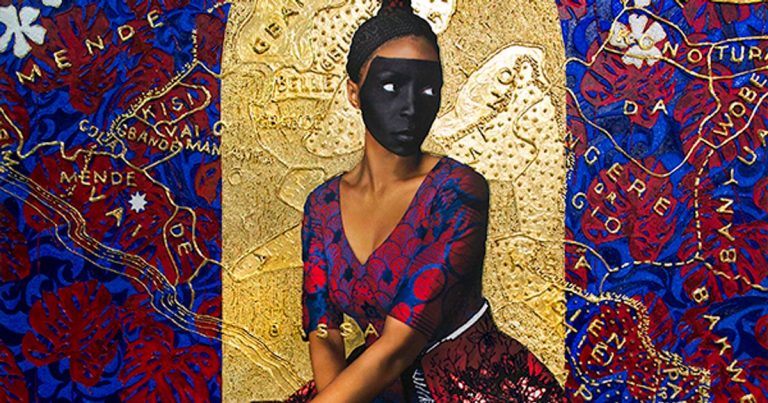
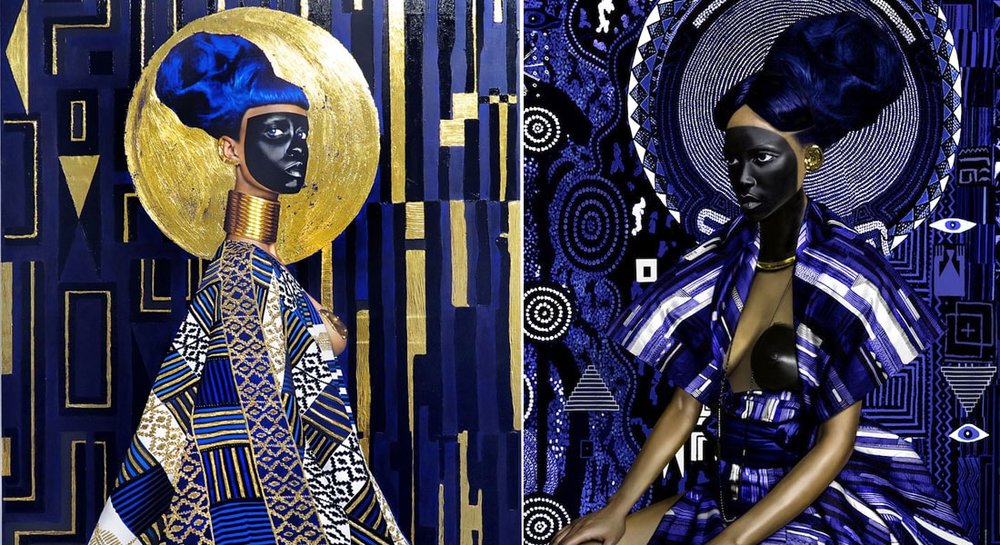
Curated by Renée Mussai, Fotografiska Stockholm is now presenting Dark Testament, a stunning and thought-provoking exhibition by British-Liberian conceptual artist Lina Iris Viktor between 25 September 2020 – 31 January 2021. This immersive, site-specific installation features more than fifty works on paper from Viktor’s evocative Dark Continent series (2016-19), alongside a unique work on canvas entitled Materia Prima I (2016) as well as Black Botanica (2019).
Lisa Iris Viktior /Stephon Joseph
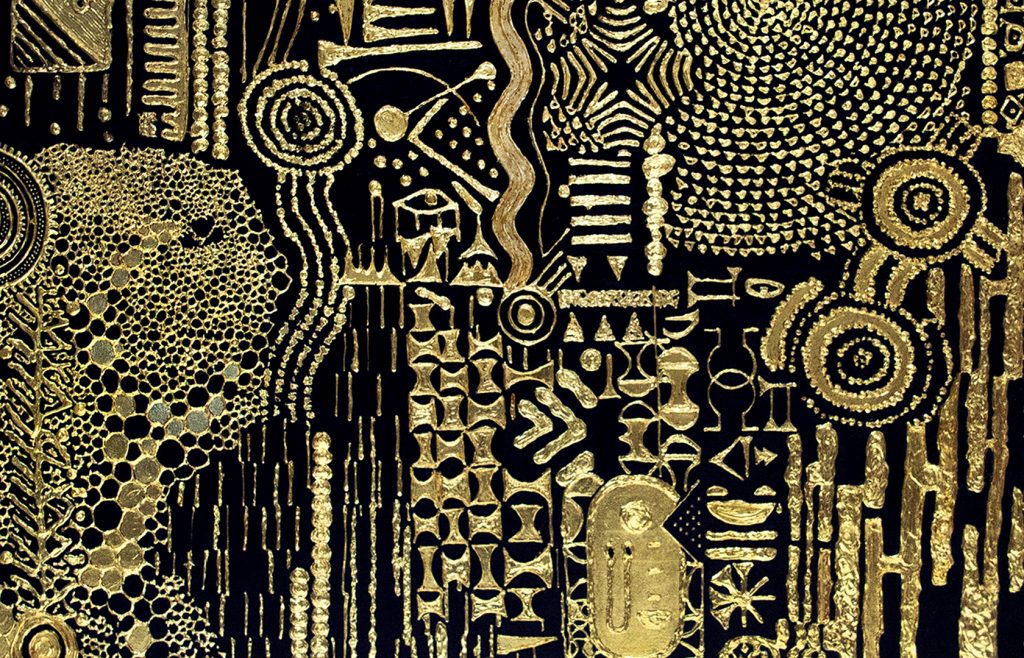
Working with a restricted color palette combining photography, painting, performance and sculpture with ancient gilding techniques, Viktor creates intricate, densely layered surfaces characterized by her ritualistic use of 24-karat gold leaf. Her extra ordinary black and gold works – based on photographs – are infused with complex cultural histories of the global African diaspora, and explore the cultural, historical and material implications and multifaceted notions of ‘blackness’: as color, value and socio-political consciousness.
Lina Iris Viktor, Some are born to endless night
I only see the absolute beauty and depth of black
In Viktor’s artistic universe, black is conjured as a deeply generative force: “I only see the absolute beauty and depth of black,” the artist states, ‘Black to me is the proverbial ‘materia prima’: the first matter, blackness as source, the dark matter that birthed everything.’ And beauty, in this arresting visual vernacular, ‘is forged from and within a restorative praxis of disavowal, as a radical method of transfiguration’, says curator Renée Mussai.
For Viktor, whose conceptual practice draws on a variety of artistic traditions and visual influences from European portraiture, classical mythology and astronomy, to ancient Egyptian and African symbolism, gold is both symbol and substance, a spiritual conduit of transcendence Viktor routinely deploys her own body in her figurative works, cast as the sole performer in a meticulously crafted cosmologywhere her body-as-canvas is abstracted through lustres of black and centred as the universal human form – a vessel through which narratives are woven, histories entwined, and possible futures imagined.
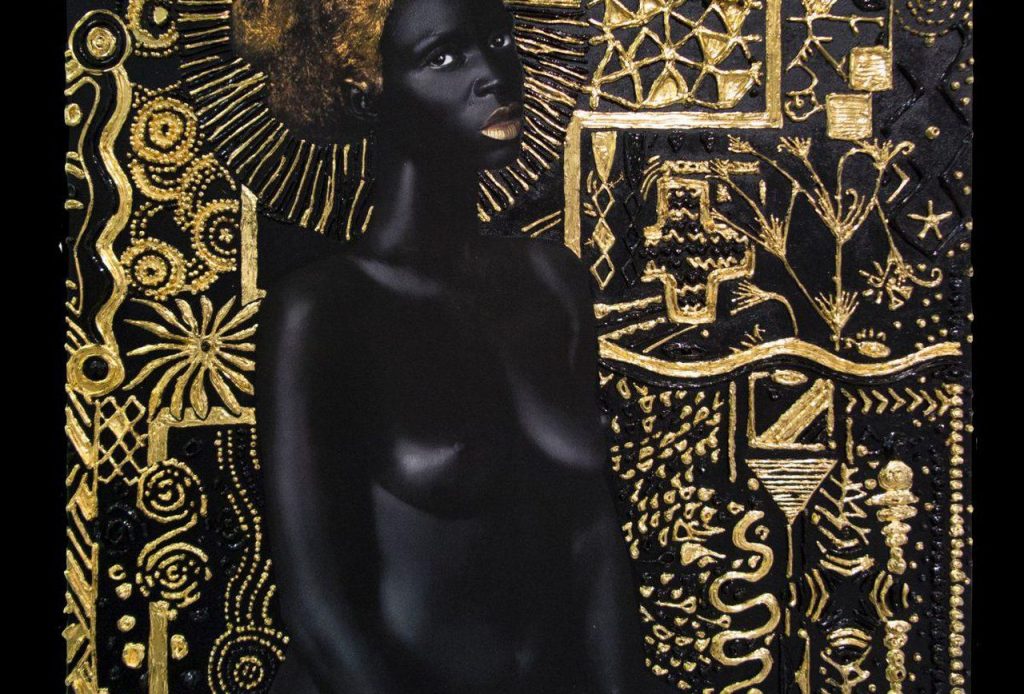
Playing with notions of colonial ‘discovery’ In the Dark Continent, a solitary female figure – shrouded in black paint, her hair golden – inhabits an imaginary monochromatic landscape of silver, grey and black hues, its deep lustrous blackness punctuated by luminous gilded solar/lunar symbols. At times contemplative and elusive, at times provocative and alluring, she occupies each frame seemingly absorbed in her own private reverie, yet occasionally challenges the viewer with a direct gaze, thus breaking the illusion of her isolated existence, and confronting inherent voyeurisms with a prophetic sense of foreboding. This body of work – which comprises Act I, II, III, IV as well Dark Testament and The Seven – represents an imaginary riposte to the nineteenth-century myth of Africa as the ‘dark continent’, a sinister place of danger and chaos.
Playing with notions of colonial ‘discovery’, Viktor invites viewers to contemplate the meaning of darkness and light, through a communion of past, present and future tenses and a creative engagement of speculative visual fiction and the birthing of new mythologies… Accompanied by an extended caption-poem of exquisite, redolent image titles, the series’ existential questions remain unanswered.
The dark continent series
Throughout the exhibition, the Dark Continent’s tropical foliage is liberated from the confines of the painted still image and presented as black floor-based sculptures and wall stencils entitled Black Botanica (2019). The latest variations in the series subtitled The Seven – the final pieces currently still in production – are included as image projection, seen together for the first time.
Also featured in the gallery installation in a discrete gold enclave is Materia Prima (2016): the ‘mother work’ that inspired the Dark Continent series, and one of Viktor’s earliest large-scale figurative gilded canvas works. Here, Viktor appears as a commanding pan-cultural deity, emanating an aura of power, authority and regality – her body posed against an intricate maze of elaborate signs and symbol, a coded vernacular that alludes to subliminal modes of communication and visceral forms of expression.
In Viktor’s artistic universe, black is conjured as a deeply generative force
A bold reclamation of historical and transcultural reimagining
The extraordinary works brought together in Dark Testament constitute a bold reclamation of historical and transcultural reimagining, and the creation of all-immersive visual universes and symbiotic environments, in which to engage viewers with a transformative experience, and offer a space for reflection.
“At the core of Lina Iris Viktor’s singular artistic practice are complex, cultural narratives and potent mediations on ‘blackness and being’: each sumptuous work is layered with profound provocations, fueled by her astute interest in etymology, astrophysics and remedial recovery. In a productive equilibrium between aesthetics and politics, history is creatively reimagined through an emphasis on the circularity of time, and an affirmative, visionary excavation of our collective pasts and possible futures.” Renée Mussai, Exhibition Curator and Senior Curator at Autograph, London.
Viktor routinely deploys her own body in her figurative works
A visual perspective that feels both reminiscent and brand new
“The way in which Viktor explores temporality in her work creates a visual perspective that feels both reminiscent and brand new. Drawing from old traditions, both culturally and artistically, merged with a futuristic approach lifting contemporary ideas and issues, we can all relate to her work regardless of our own history and background. We are introduced to hidden messages through beautiful images that attract young and old from all walks of life.” Johan Vikner, Exhibition Producer at Fotografiska.·
Playing with notions of colonial ‘discovery’, Viktor invites viewers to contemplate the meaning of darkness and light
Dark Testament in Stockholm – Quotes
Quotes by Lina Iris Viktor, excerpted from In Conversation with Renée Mussai, entitled “Dark Sublime – The Value of Blackness” published in Lina Iris Viktor: Some Are Born to Endless Night—Dark Matter (Autograph, 2019)
“I only see the absolute beauty and depth of black… Black to me is the proverbial ‘materia prima’: the first matter, blackness as source, the dark matter that birthed everything.”
“In a lot of my works I use black and gold exclusively. All the colors in the spectrum exist in white, and the extremity of white is black; light and dark are kin to one another. I’m interested in dualities and polarities: the most extreme hot, the most extreme cold; black and white. And everything that exists within them as part of the wider color spectrum. I don’t see them as colors, but as values, as the negation or absorption of light. So those two are the parents, the mothers, of the entire color spectrum. The two polarities that have birthed all. To me, the relationship between black and gold is a very natural conversation … they are siblings, if you will. And gold, while we attribute it as a color, is obviously a metal. Gold is a mythical, magical, singular material.”
“I feel that I have a mandate as an artist to not only make things that resonate with people on an aesthetic level, but also to address socio political conversations that are epistemic in people’s consciousness, to try and negotiate those ideas, to reconsider how we negotiate blackness. To ignore is not a luxury we can afford.”
The extraordinary works brought together in Dark Testament constitute a bold reclamation of historical and transcultural reimagining
ABOUT THE ARTIST Lina Iris Viktor lives and works itinerantly between New York and London. Raised in London to Liberian parents, she travelled extensively in her youth, and also lived in Johannesburg, South Africa, for several years. Viktor’s multifaceted practice is informed by a background in theatre and film at Sarah Lawrence College, New York, and her continued studies in photography and design at The School of Visual Arts, along with an education in performance arts during high school. Working with a restricted color palette, her artworks are a fusion of photography, performance and abstract painting, along with the ancient practice of gilding with 24-karat gold to create increasingly dark canvases embedded with ‘layers of light’.
Selected solo exhibitions include Some Are Born To Endless Night — Dark Matter, Autograph, London (2019-20); A Heaven. A Hell. A Dream Deferred, NOMA, New Orleans (2018); The Black Ark, The Armory Show, Mariane Ibrahim Gallery, New York (2018); Black Exodus: Act 1 – Materia Prima, Amar Gallery, London (2017); Arcadia, Gallery 151, New York (2014). Since 2014 her work has featured in numerous group exhibitions internationally, including recently Radical Love at Ford Foundation Gallery, New York (2019); Get Up, Stand Up at Somerset House, London (2019); and Re-Significations:
European Blackamoors, Africa Readings, Manifesta Art Biennial 12, Palermo, Italy (2018), among others. Viktor was a contributor to the 2019 Spring issue of Harper’s Bazaar. Her work is held in the public collections of the Smithsonian’s National Museum of African Art, Washington, DC; the Crocker Museum of Fine Art, Sacramento, California; Spelman College of Fine Art, Atlanta;
Autograph, London; and many private collections worldwide. Her first hard cover monograph Some Are Born To Endless Night —Dark Matter was published by Autograph in 2019, with an expanded second edition forthcoming in spring 2020. She is represented by Mariane Ibrahim Gallery, Chicago.
Dark Testament in Stockholm, press release from Fotografiska, Stockholm
A growing number of schools in Denmark have embraced outdoor learning as a part of the highly regarded Nordic education systems. The term ‘forest school’ or ‘forest kindergarten’ describes an engaging and motivating approach to play and learn outdoors, for children and young people as well as adults. Read more about free-range learning in Denmark.
Director of the outdoor learning consultancy Inside-Out Nature, Jane Williams-Siegfredsen experienced a “forest school” in Denmark for the first time in 1993. Since then the forest schools in Denmark have increased in popularity.
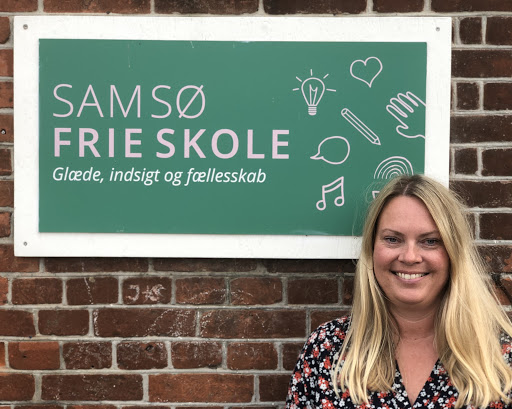
Kristina Thiemke, chairman at Samsø Frie Skole
As a precaution against the spread of the corona virus, Danish Prime Minister Mette Fredriksen urged teachers to allow for as much time outdoors as possible when the schools reopened in April. “Learn from the Danes and make the natural world a part of children’s learning experiences,” urges Williams-Siegfredsen.
Director of the outdoor learning consultancy Inside-Out Nature, Jane Williams-Siegfredsen experienced a “forest school” in Denmark for the first time in 1993
In a forest outside Copenhagen, Søren Emily Markepramd is the director of Stockholmsgave Centrum, a kindergarten teaching around 66 children from the ages of two to six ordinary classroom skills with books, just free-range.
On the island of Samsø, Samsø Frie Skole embraced a new way to hold certain classes almost entirely outdoors. The Scandinavian approach to using the outdoors as a part of the pedagogy of early years settings has its roots in the work of the German educator Friedrich Wilhelm August Fröbel, who inspired Danish pedagogues to start a kindergarten system. The system included natural environments and opportunities for young children to develop and learn outdoors.
Forest Schools have become culturally accepted in Denmark, where they originated in the 1950s, and have spread to countries including Germany, where there are around 2,000 outdoor kindergartens. A recent survey of 200 Norwegian schools, more than half said they had begun to provide more outdoor classes. Researchers in Denmark confirm a similar trend.
A survey conducted in 2009 by Copenhagen Council listed the values that parents and pedagogues feel to be most important for children to learn in early years settings as self-worth, independence, consideration for others, and tolerance. Present day Danish pedagogy sees child upbringing and the relationships between the young person, the family and society in a democratic and humanistic way.
“A lot of research says spending time outdoors is great for children: they have better concentration, they are much better socially, more creative, more innovative,” said Markepramd. “They are actually just happier.”
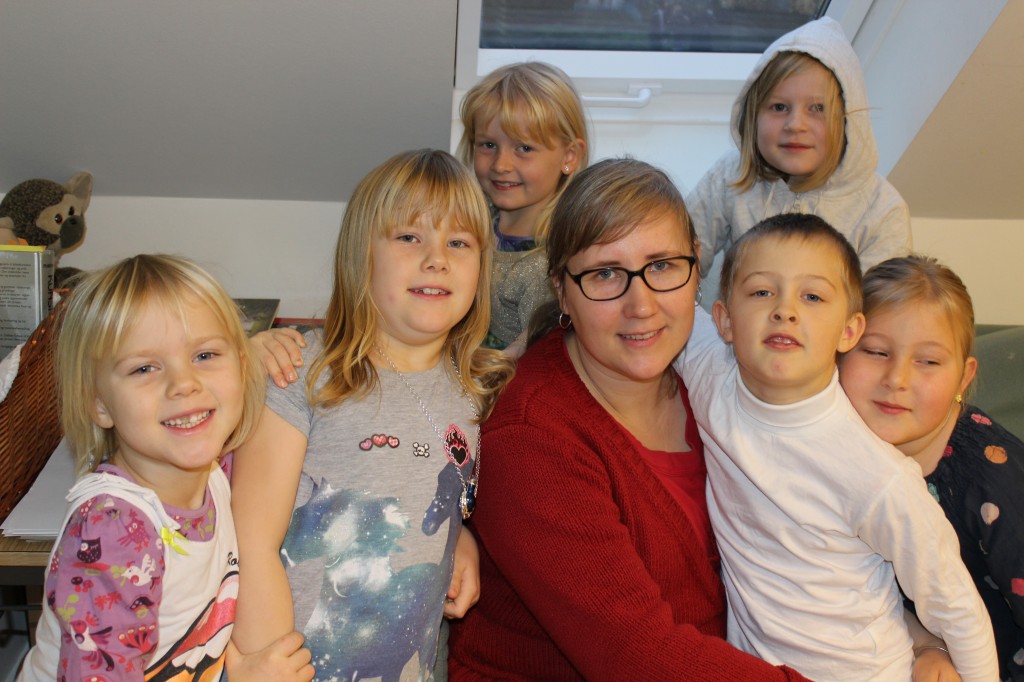
Students at Samsø Frie Skole
Denmark’s relatively smooth reopening of schools advocates for outdoor schooling and authorities say they hope the newfound acceptance of the approach will outlive the pandemic.
The curriculum for pre-school settings in Denmark became law in 2004 and every institution has to make an institutional curriculum plan that includes Body and movement and Nature and natural phenomena. Children in Denmark’s Forest Schools are supervised by “pedagogues”, who have completed a special three-and-a-half-year bachelor’s degree, and are trained to provide holistic support for the toddlers.
“Students taught outside display higher motivation levels than their peers in classrooms, said Karen Barfod, a professor at VIA University College in Denmark
The Samsø Frie Skole is surrounded by grain fields, including an old farmhouse where the students will be able to take shelter in bad weather. Like many other schools in Denmark, the school on Samsø is in large part funded through public grants.
Evidence that children being outdoors on a daily basis, all year round, benefits their learning and development has been documented in Scandinavia for over 20 years. Studies relieve that students have better concentration, they are much better socially, more creative, more innovative. They are actually just happier.
“Students taught outside display higher motivation levels than their peers in classrooms,” said Karen Barfod, a professor at VIA University College in Denmark who studies outdoor schooling. “Those who study outside for at least two hours a week also tend to achieve somewhat better reading test scores, according to one study,” she said.
Perhaps, as Markepramd ponders, reengaging children with nature might have broader implications. “The thinking is that if you have joy and positive experience in nature, you will grow up and take more care of our world,” she says.
Free-range Learning in Denmark, written by Tor Kjolberg
It was almost only foreigners who went on Norwegian holidays in the childhood of tourism. In some places it is still possible to sense a little of the atmosphere that met them. Read this exciting short history of tourism in Norway.
The travel agency Thomas Cook created the Discovery Route as the very first package holidays to be sold in Fjord Norway. Horse and carriage on land and steamboats on the fjords and the inland lakes was the means of the first explorers. The famous traveler, explorer and writer E. J. Goodman travelled the route in the 1890s and called it “The Best Tour of Norway”.
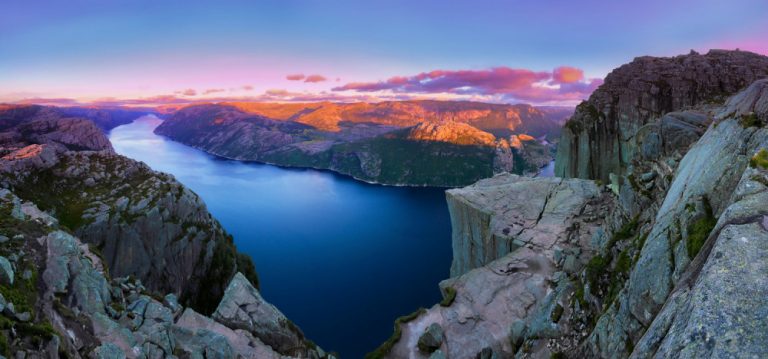
Spectacular nature with high mountains, narrow fjords, skiing and midnight sun attracted the very first tourists to Norway, mostly wealthy Englishmen who came to Norway for climbing and walking in the mountains, to see the fjords and waterfalls and later for fishing and hunting.
The beauty of Norway
This made Norway more and more famous for its beautiful landscapes and nature and had a great impact on the attitude of the Norwegians towards the beauty of their country. Hotels were constructed, first in the fjord regions and later in the mountains.
Few cared about Christiania (Oslo) and Bergen was just a transit ground. A time travel back to the first tourist destinations takes present days’ tourists to sceneries that have changed little in 100 years. At that time, however, there were no hotels. The travelers stayed at coaching inns and at the rectories. In the 1880s, the tourism industry had grown and you could find several venerable hotels in smaller villages, mainly in Swiss style. Tourists were now curious to experience the great nature, salmon fishing and the midnight sun in Norway.
The travel agency Thomas Cook created the Discovery Route as the very first package holidays to be sold in Fjord Norway. Photo: Ryfylkemuseet
British explorer E. J. Goodman on the Norwegian Discovery route
Experiences and recreation in the Norwegian nature has traditionally been the most important reasons why foreign tourists travel to Norway. Tourists do not come to Norway to experience sun and warmth. People from regions of big cities wish in a growing extend to experience something different. Fresh air, clear water and virgin nature have a great value for many people. Furthermore, there are the special nature-experiences which attract tourist to travel to a place where mass tourism has not broken out yet.
Painting from Balestrand by Hans F. Gude
One of the most visited places in the childhood of tourism was Balestrand by the Sognefjord. Maybe the light there attracted the visitors. When the sun rays break through the clouds, they create an almost magical light.
E. J. Goodman describes the route from Stavanger to Bergen in great detail. He travelled by steamer from Stavanger to Sand, from there with horse and carriage to Suldalsosen where there were two hotels at the time. The travel went on by the small steamboat MS Sulldalsdampen on the inland lake Suldalsvatnet to Nesflaten which had three hotels. From there with horse and carriage through the famous Bratlandsdalen to Røldal and Odda. The road though the valley of Bratlandsdalen opened in 1890. Before that the travelers had to walk through the valley.
Emperor Wilhelm II visited Norway for the first time in 1889. Here a picture from 1905. Photo: Wikiwand
Emperor Wilhelm II’s annual holidays in Norway
In Germany Norway became popular because of the annual holidays in Norway of emperor Wilhelm II. He was very enthusiastic about Norway and the nature. Emperor Wilhelm II visited Norway for the first time in 1889. Until 1914 he was here almost every summer. He traveled with his own ship, the Hohenzollen, but in the entourage there were usually two or three warships. In 1914, the emperor stayed in Balestrand when he learned that World War I was inevitable.
English middle-class discovers Norway
Late in the 19th century the English middle class also started coming. Besides the Englishmen there were also travellers from Germany and other European countries. Many tourists wrote about the beautiful Norwegian landscape, especially about the mountains, fjords and waterfalls which contributed to the popularity of Norway as a romantic travel destination.
From Odda. Photo: Fjords.com
Odda was the center of tourism in Fjord Norway at this time. There were 12 hotels in different sizes, with the flag ship; Hotel Hardanger being the biggest hotel and wooden building in Norway at the time. 70 – 80 cruise ships visited Odda every summer, and from 1861 there were steamboat routes going from Bergen to Odda and Stavanger to Odda. According to E. J. Goodman, the steamboat trip from Bergen to Odda took 13 hours.
Not impressed by Norwegian cuisine and sanitary conditions
According to some, the Norwegian cuisine was not very impressive at the time. “The food is miserable, and consist mostly of flatbread and porridge,” wrote the British minister Frederick Metcalfe after his first trip to Norway in the 1850s.
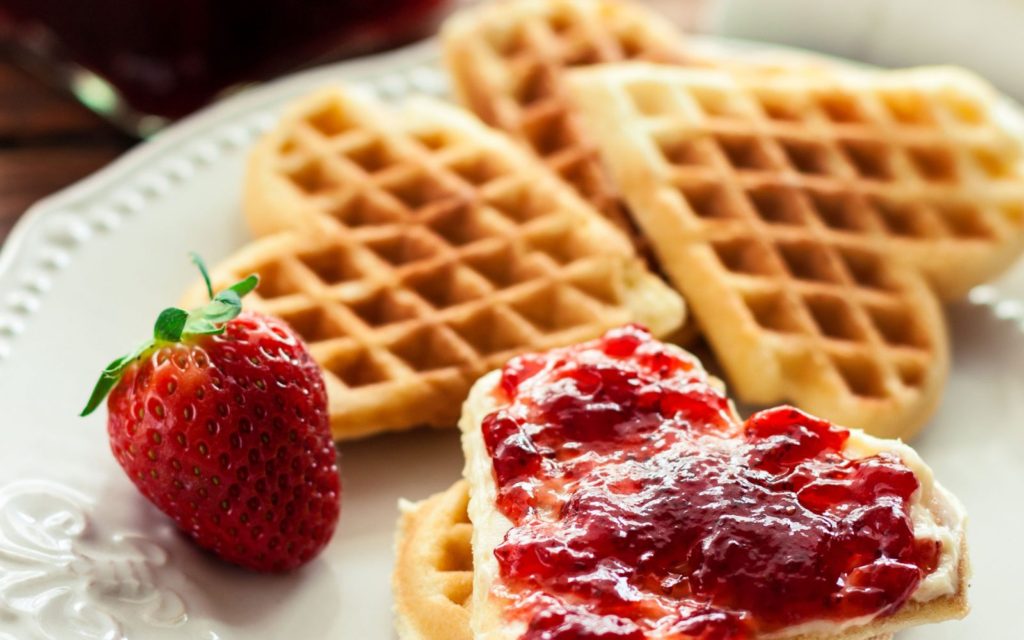
Norweigian waffles with strawberry jam and sour cream. Photo: Jernia
Nor the German-Norwegian Doctor Ferdinand Scarlett was impressed with Norwegian sanitary conditions for tourists.
“The most magnificent natural scenery or the most glorious climate cannot offset such abominable conditions. Away with the filth,” he wrote.
Paintings functioned like today’s social media
However, famous Norwegian painters came to Balestrand to find scenery for their paintings. Among them were Hans Dahl, Thomas Fearnley, Hans F. Gude and Johannes Flintoe. The paintings functioned like today’s social media and some of them were bought by wealthy art collectors in England, Germany and France. Norway was suddenly considered an interesting but exotic hook of the civilized world.
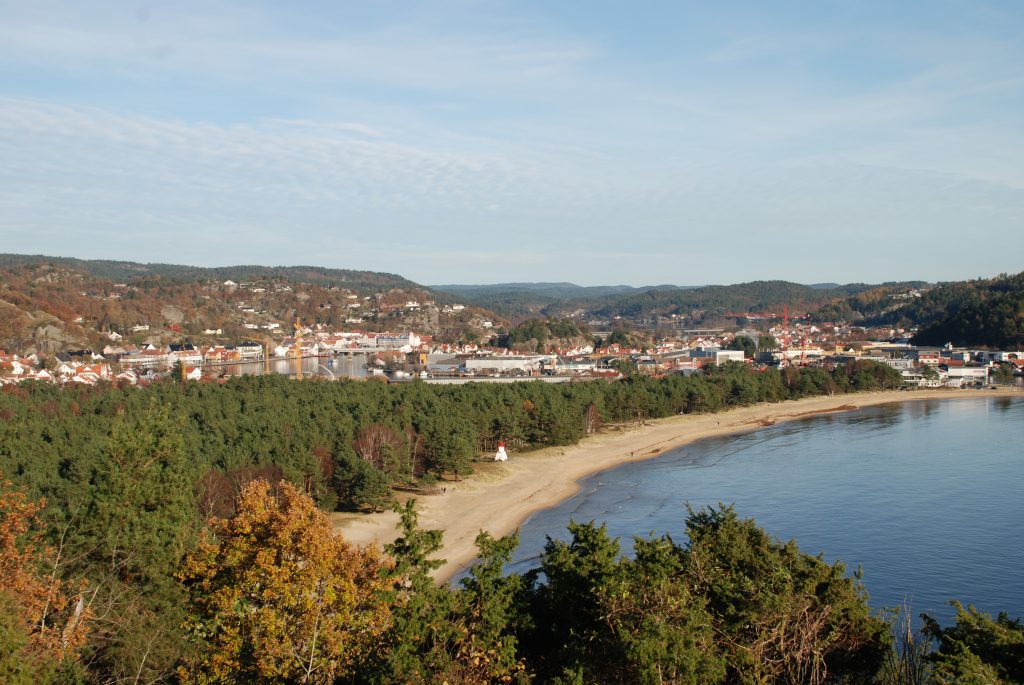
Sandy beach near Mandal. Photo: Wikipedia
The very first advertisement for Norway was produced by the Norwegian railway, NSB, in 1905 and illustrated the midnight sun, Norwegian mountains and a stave church. The national romantic image of Norway was soon noticed abroad.
Mass-tourism slowly taking place
But Norway didn’t become a country for mass tourism after the second world war and the beginning of mass tourism. This form of tourism focused on the southern periphery of Europe. And it was not expected that Norway was going to be a land for mass tourism. In view of the climate of the country, the lack of sandy beaches – there are only a few near Mandal at the Stavanger coast and in the southwest of Stavanger which are touristically developed – and of course the high prices for services of all kinds, Norway was more a country for individualism.
But in the time when car and plane became mass transportations, Norway experienced a real annual “invasion” of foreign tourists. In 1965 more than 5 million tourists visited Norway, tourists, which brought ca. 750 million NOK in the country. Numerical on top were Scandinavians (2,9 mill.) However, the Swedish car-tourist comes mainly for camping, and the Danes for skiing during the winter.
Skiing is the national sport in Norway and became popular because of among others explorer Fridtjof Nansen from this time. The mountain hotels had a second season due to the winter sport while the hotels near the fjords had the problem of only a short period during the summer. Most of the bigger hotels are in the mountains of Østlandet.
Improving traditional tourism products
Although nature is still Norway’s key selling point to foreigners, a lot has changed in how Norway is marketed abroad. Whereas the typical tourist used to be a passive observer of nature, today’s travelers want experiences that make them connect with nature, including domestic culinary dishes, historical destinations, Scandinavian interior design and art.
According to an international trend, the sector of city trips and event-tourism is growing and the aim of the Norwegian Tourist Board is to improve the traditional tourism products and at the same time develop the sector of events and new holiday activities.
A new Discovery Route was launched in 2013. Now it is time to bring back the success of the former destinations and invite new visitors to travel in the footprints of the pioneers from the 1880s in a much more comfortable and updated way.
Feature image (on top): From the Discovery Route
A Short History of Tourism in Norway, written by Tor Kjolberg
The fermented Baltic herring, known as surströmming, is so pungent it should be opened outdoors. Three days after you’ve opened a can of surströmming, the smell will hang in the air. Read more about the pungent Swedish fish dish.
More or less every country in the world has a local delicacy which from the outside look somewhat unusual. However, one of the most unusual is the infamous Swedish delicacy of surströmming. The delicacy which smells of rotten eggs has gained a following online of daring gastronomes filming themselves trying the seafood.
If you believe YouTube videos are nothing more than exaggerated click bait, you should think twice. How is this something humans could eat?
Surströmming has been a part of the local Swedish cuisine since the 16th century and possibly earlier and has acquired something of an enigma status due to its reputation for overpowering odor. To produce Surströmming requires a minimum of 6 months fermenting of the Baltic herring, which is a smaller cousin of the more common Atlantic Herring. To ferment, the fish is placed in a weak brine solution and kept in barrels, while producers add in just enough salt to prevent the raw fish from rotting during the process.
Directly translated surströmming means “sour herring”. Packaged in cans, the release of smell when a can is opened has been called the most overwhelming food smell in the world. Therefore manufacturers usually recommend opening the cans outside regardless of where it will be eaten.
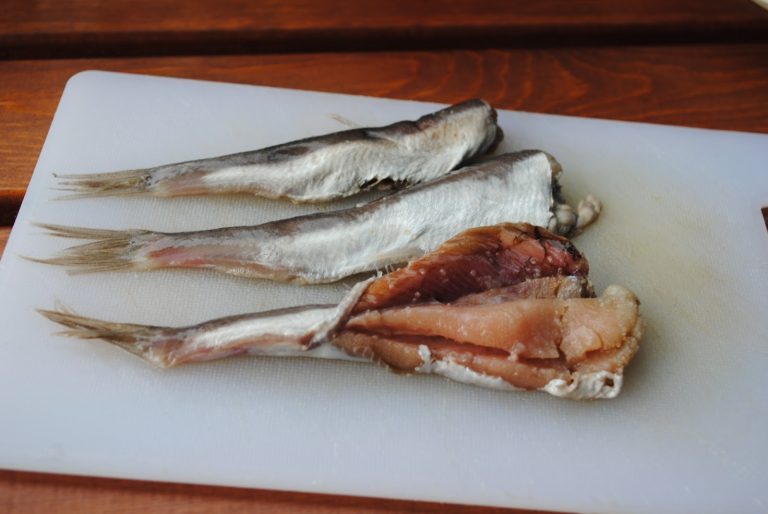
To produce Surströmming requires a minimum of 6 months fermenting. Photo: Wikipedia
Surstromming hails from northern Sweden, where it is most commonly eaten, but tins of the seafood are available from most large supermarkets across Sweden. In spring, the spawning fish are caught between Sweden and Finland, then the heads are removed and the bodies are stored in a series of salted water solutions. After roughly two months, the partially preserved herrings are transferred to airtight tins where they continue to ferment for up to another year.
As a food, it is very different to a fish-based meal that most people are used to. However, the native Swedes calmly enjoy their own can of surströmming. In recent years a museum has been dedicated to the divisive dish, and some restaurants dedicate a whole day to eating it to avoid offending other customers’ noses.
Each year’s batch of surströmming could not be sold before the third Thursday in August by royal decree. The mid-20th century ordinance was meant to tackle fermentation corner-cutting. While this rule is no longer on the books, the date is still celebrated as the delicacy’s premiere day. Surströmming Day is celebrated particularly in Sweden’s High Coast region, the birthplace of the dish.
It is great entertainment, seeing people both be shocked and surprised at surströmming. The first is the odor, then how it tastes but many are surprised by the dish once they get past the initial shock.
There are a few narratives around the history of surströmming and how it came to be. One theory comes from the evidence of humans fermenting fish some nine-thousand, two hundred years ago — 80 centuries before the age of the Vikings — as discovered by researcher Adam Boethius of Lund University and his team of 16 archaeologists. At a site in southern Sweden, they unearthed close to 200,000 fish bones, contained in bundles with pine bark and seal fat and covered in wild boar skin. The fish weren’t salted, as the discovery predates salt, but they were placed in the ground to ferment.
Life is all about discovery and trying new thingsPhoto: Visit Stockholm
The sophistication and scale of the endeavor has caused archaeologists to rethink the idea that people in Scandinavia at the time were nomadic hunters and gatherers.
Life is all about discovery and trying new things. Why not try the dish yourself and see just what this Swedish delicacy is and how nice it can be. Get your can and see for yourself just what people talk about, and open yourself to a new eating experience.
The Stinky Swedish Fish Dish, written by Tor Kjolberg
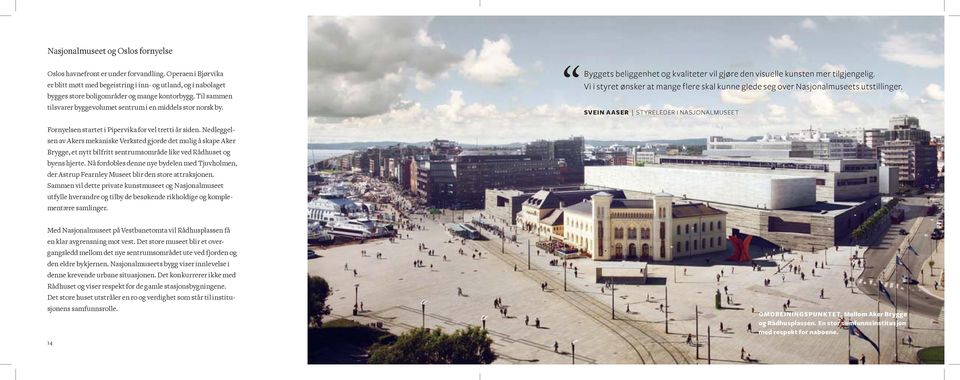
In 2021, the largest art museum in the Nordic countries will open in Oslo. Here you can experience older and modern art, contemporary art, architecture and design all under one roof and in completely new ways. Read more about the new National Museum in Oslo.
10,600 square meters and 91 rooms – the man behind the new museum is the Italian architect and exhibition designer Marco Magni. The National Museum for Art, Architecture and Design houses Norway’s most extensive collection of historical and modern art, design, handicrafts and architecture.
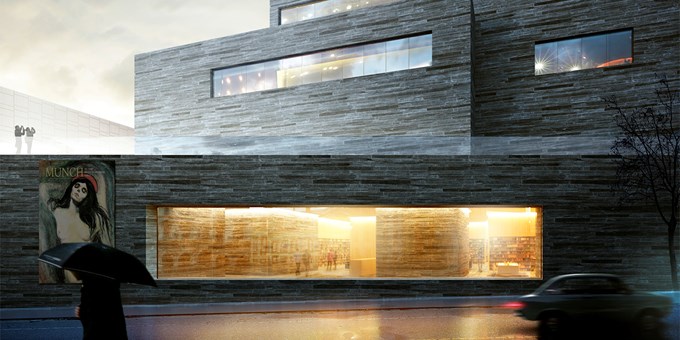
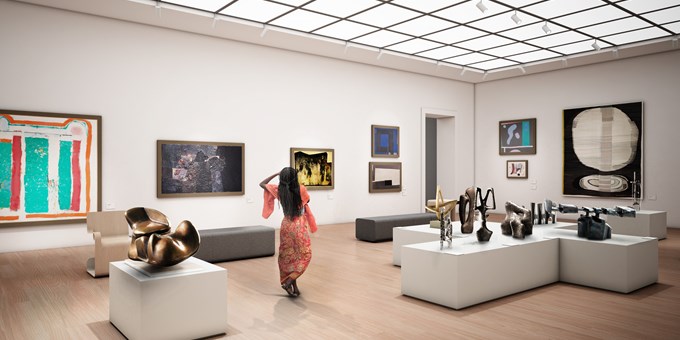
National Museum, Oslo – Atrium (illustration)
In 2013, Norway’s parliament approved the plans and the 5.3 billion Norwegian kroner bill for a new National Museum. Until 2018, the National Museum was divided into four different departments in various museum buildings in Oslo. Next year, these departments will gather under one roof. The museum will be situated by the harbor, at the inner part of the Oslo fjord.
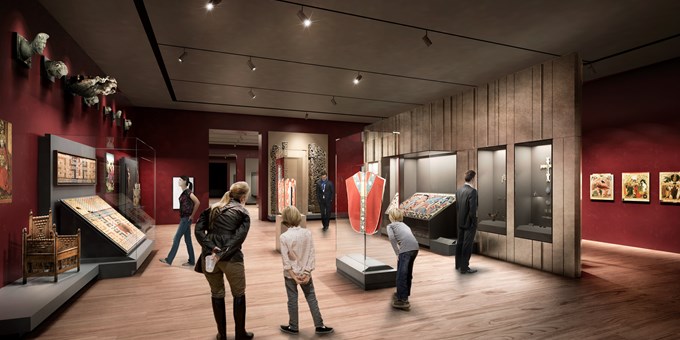
The museum’s permanent exhibition comprises over 6000 works and objects from over 5,000 years of art, design and architecture from around the world. Oslo’s new National Museum has been on the horizon for some time now. Unfortunately, the project has been hit by delays, but when it opens sometimes next year it will be a place for new ideas, inspiration and compelling cultural experiences. The aim is to make art accessible to everyone and reflect the society and the times we live in.
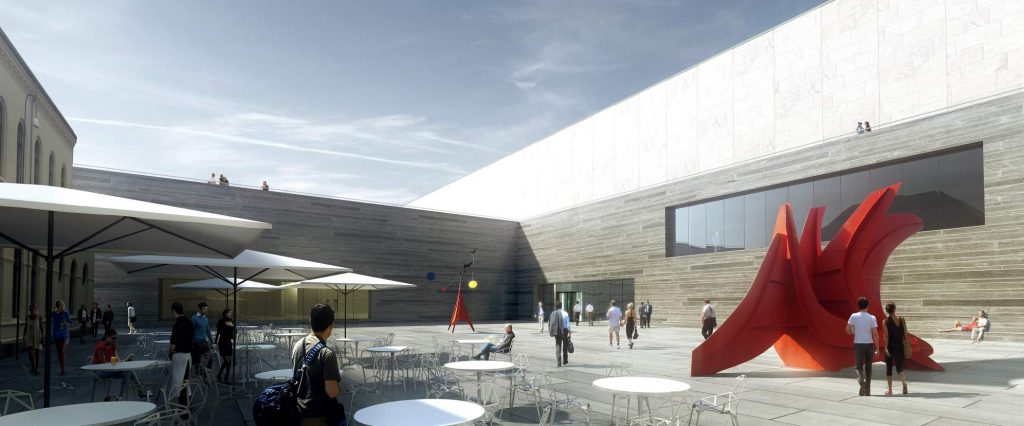
The museum’s permanent exhibition comprises over 6000 works and objects from over 5,000 years of art, design and architecture from around the world (illustration)
23 companies from all over the world applied for the tender to design the group exhibition, and the Italian architectural studio Guicciardini & Magno unanimously won the competition. Thus, Marco Magno, founder of the studio, won the largest exhibition assignment in Norway ever. In the new collection exhibition, older and modern art, architecture, design, arts and crafts, and contemporary art will be presented under one roof and in new settings.
In addition to the main exhibition halls, the museum has two temporary exhibition halls, plus a vast art hall of 2,700 m² for guest exhibitions. These will provide new exhibition opportunities for Norway and Scandinavia. There will also be a comprehensive library and archives section, study rooms and offices available for all museum employees.
However, the new building has not escaped criticism by some and a source of excitement for those eager for the modern new gallery to open.
In the years to come, Marco Magni will be responsible for the exhibitions in the 91 rooms, of which five are outdoors. The rooms will function both individually and as a whole.
With such large exhibition areas, the National Museum will be able to showcase twice as many works from the art, architecture and design collections than ever before, as well as presenting a rich program of temporary exhibitions with Norwegian and international artists.
The new National Museum in Oslo 10,600 square meters and 91 rooms
The National Museum is an established institution with a public mandate and is state-owned and controlled by the Norwegian Ministry of Culture. Every country with an art, architecture or design history should have one main location befitting of the diverse array of precious collections in its possession. Norway is no different in this respect. Something new and modern is coming to Oslo’s waterfront.
60 people – from curators and mediators to project managers, technicians, librarians and security managers – are working hard to retouch paintings, repair frames, clean sculptures and find out which works of art will be displayed in the different rooms – and what is actually affordable to pose, from plaster busts to wallpapers.
The New National Museum will provide new exhibition opportunities for Norway and Scandinavia (illustration)
The new museum with a total surface of 54 600 m² is more than just a venue for art, design and architecture. It also serves as an essential research, management and dissemination environment for each discipline. The museum shall, therefore, represent a broadness and diversity to the highest degree of the population.
Similar to the Opera House in the city, a viewing spectrum on the roof will be accessible to visitors. From the roof terrace, views of Akershus Fortress, Rådhusplassen and Oslo fjord can be enjoyed. Finally, the new museum will have all the usually amenities such as a restaurant, cafés and several boutique shops.
The New National Museum in Oslo, written by Tor Kjolberg

















 10 Things I Hate and Love About Sweden, written exclusively for Daily Scandinavian by Diane H. Wong. Diane H. Wong is a search engine optimization specialist and business coach. Besides, she is a research paper writer at the service where everyone can ask to “