How Independent Scandinavian Hotels Can Compete With International Hotel Chains in Attracting Chinese Visitors

Not every hotel is born equal. By nature, international hotel chains have the resources and experience to target outbound travelers from China. Most of these chains are already operating properties inside China, establishing their brands and they have big budget marketing teams to promote their overseas properties. Read how independent Scandinavian hotels can compete with international hotel chains in attracting Chinese visitors.

Having said that, it does not mean independent hotels should give up competing for a share of the potential. In fact, 55% outbound independent Chinese travellers prefer to stay at independent hotels to enjoy a unique local experience. The challenge for us is to give independent hotels the confidence to attack the market, show them why the China market is different, how to market effectively, and how to retain guests’ interest pre-visit and post-visit.

1. Potential of the China outbound market
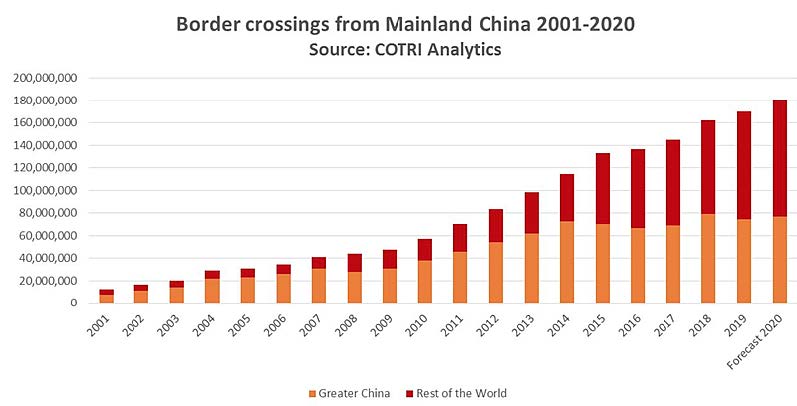
How Independent Scandinavian Hotels Can Compete With International Hotel Chains in Attracting Chinese VisitorsAccording to COTRI (China Outbound Tourism Research Institute) based in Germany, there were 170 million border-crossings from Mainland China, out of which 74.5 million went to Great China (Hong Kong, Macau, Taiwan), and 95.5 million travelled overseas.

The misconception of the potential is spending power. All marketeers are aiming for the huge population of 1.4 billion Chinese. The old saying “if each one of them spends $1 on my product, I will be a very rich man” is misleading. In reality, according to the Chinese Premier, there are 0.6 billion Chinese with a monthly income below Rmb1,000 (U$500). The spending power focuses on citizens from the first tier and second tier cities.

Related: Stories From A Young Norwegian’s Stay in China

Therefore, we have to show hotels that their marketing activities should be focused on these cities and do not fall into the misleading concept that China is one huge market. In fact, there are over 35 markets inside China. Each of these have GDPs similar to a nation. For example, the city of Chengdu (not far from where you can find pandas) has a similar GDP to that of Norway! For an independent hotel, it is not possible to target all these areas. We always advise them to focus on southern China, the Pearl River area including Shenzhen, Guangzhou and Hong Kong.

How Independent Scandinavian Hotels Can Compete With International Hotel Chains in Attracting Chinese VisitorsHow Independent Scandinavian Hotels Can Compete With International Hotel Chains in Attracting Chinese Visitors2. Marketing in China is a totally different ballgame
When we speak to hoteliers, a common misconception is that they believe they have ticked the box with their website translated into Chinese (similar to what they have done for the French, Spanish and German markets).

Related: Tremendous Interest in World Famous Norwegian Artist in China

However, Google may be blocked in China (like TLS 1.3 and ESNI) which means a hotel website may not even get through the Great Firewall of China. In terms of the content, the Chinese audience may be looking for something that western hotels tend not to focus on their websites.

We advise our hotel partners that they need a China focused website (totally independent of their corporate one), have it structured with content provided in the Chinese way and have the website hosted inside China in order to overcome the barriers mentioned above.

A hotel’s marketing personnel will typically say the usual means of digital marketing such as Facebook, Twitter, Instagram, YouTube have all been deployed. Again, for the majority of the Chinese audience who do not use VPNs to tunnel through the Great Firewall, they will not be able to see hotel’s activities on these western platforms because they are banned.

China has its own online marketing platforms that hotels must use in order to reach potential travelers.
How Independent Scandinavian Hotels Can Compete With International Hotel Chains in Attracting Chinese VisitorsHow Independent Scandinavian Hotels Can Compete With International Hotel Chains in Attracting Chinese VisitorsMost people will have heard of WeChat, which is a Super App and a complete ecosystem when it comes to affecting the daily life of Chinese. The situation is different in the west.

How Independent Scandinavian Hotels Can Compete With International Hotel Chains in Attracting Chinese VisitorsHowever, because WeChat is a closed system, instead we advise our hotels and help them set up Weibo accounts and we run these accounts for them instead. Weibo is an open platform and any posts by hotels will reach a wider audience.

Apart from WeChat and Weibo, popular social media sites such as Little Red Book, Bilibili, Mafengwo,Tick-Tok (Duo Yin) should also be utilised and we handhold our hotels through this maze of an unfamiliar landscape.

Related: Norwegian Mayor Courting Chinese Investors to Build a Polar Silk Road

3. Every Step of the Way
According to our own research, a typical young traveller goes through the following phases from inspiration, planning, validation, booking, staying and sharing.
How Independent Scandinavian Hotels Can Compete With International Hotel Chains in Attracting Chinese VisitorsEach of these steps require marketing focus in the appropriate channels.

Inspiration
Potential travelers are inspired by emotional connections from social media posts (40%), friends and relatives (33%), and by KOL (Key Opinion Leaders) 22%

Planning
Young Chinese use Mafengwo, Little Red Book, Ctrip and Weibo as their main online platforms to plan overseas trips

Validation
72% Chinese will search and review short-listed hotels’ websites to validate information

Booking
84% young Chinese book overseas hotels via Ctrip, Mafengwo, offline agencies etc., and only 16% indicates they will book direct on hotels’ official websites

Staying
This is when they share their experience instantly to inspire their friends and relatives

Sharing
After sharing, the top three platforms they will share their experience are WeChat, Weibo and Little Red Book

4. Reaching out to independent hotels in Scandinavia
Our team has been sharing the knowledge above with hotels at trade shows, seminars (both online and offline), giving keynote speeches at HSMAI events and so on.

We have also engaged highly respected veteran hoteliers to promote our services to independent hotels in the area. We also aim to expand the network further.

I have found it particularly useful in using LinkedIn to communicate with like-minded colleagues in the industry.

In addition, we have set up a FaceBook group called “ChinaReadyHotels” where we share articles and news on China Outbound with members. All hoteliers are welcome to join the group.

Through our efforts we are being recognized as the go-to people when independent hotels and smaller hotel groups wanting to be successful in tapping into this market.

These efforts have brought us the following awards recently:

** Seven Stars Luxury Hospitality & Lifestyle Award Winner 2019
** CTW Silver Award Winner at ITB China 2019
** Winner of Top Travel & Hospitality Solutions Provider 2018 & 2019

In addition, we have co-founded the LN Hotel Alliance with China Southern Airlines (biggest in China), LN Hotel Group (one of the biggest hotel group in China) and GZL Travel Services (the biggest tour operators and facilitators in China). This Alliance enables us and our hotels tap into over 46 million Chinese frequent travelers.

5. Feedback from our hotel partners
Here is an example from one of our hotels in Finland:
How Independent Scandinavian Hotels Can Compete With International Hotel Chains in Attracting Chinese Visitors
From Naantali Spa & Resort, Finland
How Independent Scandinavian Hotels Can Compete With International Hotel Chains in Attracting Chinese Visitors
Joni Hakkarainen, VP Sales & Marketing

“I have a very positive experience with Compass Edge. I now appreciate the complexity of the Chinese outbound market. For us the GoChina service is very cost effective and we have very good exposure via Chinese social media, engagement with KOLs and from our localized website. The icing on the cake is our membership with the LN Global Hotel Alliance where we can target their 46+ million loyalty members.” Joni Hakkarinen, VP Sales & Marketing, Naantali Spa Hotel & Resort

6. The effect of Covid-19
While we are all struggling in the western world, China is the first to have recovered from the pandemic.

During the last October 1st Golden Week Holiday, 637 million trips were made domestically and tourism had recovered to 79% of the level set in the same period in 2019.

Chinese travelers are ready to travel abroad again as soon as the borders are re-open. However, emphasis will change and as hoteliers, we need to pay attention to:

a) Communicating hotel’s preventive measures to guests (hygiene regime);
b) Be flexible on the guest’ travelling plan (non-refundable advanced booking rate is out);
c) Offer online check-in/check-out
d) Improve in-room entertainment
e) Provide reasonably priced F&B room service
f) Ramp up room service menu
g) Rearrange restaurant seating to facilitate social distancing

At this challenging time, a lot of hotels are thinking short-term which is understandable. However, building a hotel’s brand in China takes time and continuous efforts. Branding is everything there. If we cut off communications and promotional posts on Chinese social media platforms and on hotel’s own Chinese websites, people will soon forget them. They may conclude that these hotels are not interested in their business anymore.

To us, this “quieter time” is the best time to reach out to the target audience and maintain progress made before the pandemic.

These travelers will be desperate to travel the world when the it is deemed safe to do so and when airline capacities return.

Will they choose your hotel?

How Independent Scandinavian Hotels Can Compete With International Hotel Chains in Attracting Chinese Visitors is written exclusively for Daily Scandinavian by Cho Wong, Managing Director Compass Edge Europe. Cho is a seasoned practitioner in international business, hospitality services and digital marketing in China. Currently, Cho is the MD of Compass-Edge Europe, offering support and advice to hoteliers in the region to attract Chinese independent travelers. Prior to that, Cho was the MD of Supranational Hotels, a well-known GDS distribution company based in London.

All illustrations © Compass Edge Europe
Meet Locals in Scandinavia

Don’t let a guidebook tell you what a city’s best restaurants, bars and clubs are. No one knows a place better than its locals. Red how to meet locals in Scandinavia.

Find a local in Scandinavia to show you around. The concept of Showaround is one of those very few travel-related services, a sort of an AirBnB for touring places you visit. When it comes to travel, you can spend hours poring over guidebooks or trawling through Google results, searching for the best places to go. But there are so many recommendations on the internet that it makes it really difficult to choose. Only genuine advice from a local can help you to see and do things in a new city that truly interest you.

Meet Locals in Scandinavia
Only genuine advice from a local can help you to see and do things in a new city that truly interest you.

Related: Sociable Gothenburg in Sweden

Everyone who has ever traveled know about package deals; sightseeing trips with tourists taking that obligatory selfie in front of a famous statue. But how can you find the real heart of a destination, the one only locals know about and get to see?

Showaround is a really good service when you’re traveling to a new country or city where you don’t speak the local language or don’t know much. Showaround is a network of passionate locals offering tailor-made tours, In just three years the number of registered locals has grown to 129360 across 11989 cities worldwide. From artists to bankers, you may choose your specialist local and discover the secrets they have to offer. Many even give tours for free!

Founder Linas Sablovskis saw an obvious gap for locals to act as tour guides in their own cities and give travelers a more tailor-made, intimate experience. “In brief, Showaround allows locals to earn some extra money by showing travelers around their city,” he says. “In other words, it is a marketplace for private tours with locals who are ready to show you the best their cities have to offer, and then tailor activities to your interests,” he adds.

Meet Locals in Scandinavia
Once you have set up an account, finding a local is easy

Related: Jaw-dropping Street Art in Norway

Also, for solo travelers, having a local around is even better as they provide not only knowledge, some maybe less touristy attractions and educated insights, but also company. Once you have set up an account, finding a local is easy. Just enter a destination in the search bar and you’ll be shown a list of people available in the area, with a profile that shows not only what activities they can offer, but also highlights their personality and interests, so you can find a like-minded local. You can even chat to them beforehand, to outline your expectations and interests for the tour.

There is also a feature called Trips, whereby you can create a trip to your next destination and receive offers from locals with suggestions for your visit. This is an easier and effortless way of planning your trip as you simply choose which offers you like. However, it does not limit you to only those offers rather than seeking out someone potentially more suited.

Meet Locals in Scandinavia
Some of the most interesting spots, don’t always make the guidebooks.

Related: Copenhagen – The Capital of Green Spires

A review system informs travelers about the experience of others. But have in mind that Showaround is not a dating app of sorts, camouflaged behind an apparent service provider. You are really going to meet people who will be your guides for the period of time you have booked.

However, Showaround provides an easy way to meet local people and make new friends, meaning you’ll feel at home wherever you are. You’ll see the city through a local’s eyes and stay away from pricey tourist traps. It’s suitable for all, from business travelers and backpackers, to families and groups.

Realize that there are a lot of search options that you have to customize your search and make sure that you find guides based on your interests or what you’d like to see and do, saving you some time on guides that are too expensive or who wouldn’t be able to meet your demands.

Meet Locals in Scandinavia
Showaround provides an easy way to meet local people and make new friends

Get to know a new city better than you could have ever imaged with this platform. After all, some of the most interesting spots, don’t always make the guidebooks.

The founders are currently based in Malta and Greece, while their team is located in Lithuania.

Photo credits:
Woman and reindeer: Photo by Ugur Arpaci on Unsplash
Couple at waterfall: Photo by SaiKrishna Saketh Yellapragad
Beach: Photo by Jonas Jacobsson on Unsplash
Kid in snow: Photo by ?? Janko Ferlič on Unsplash

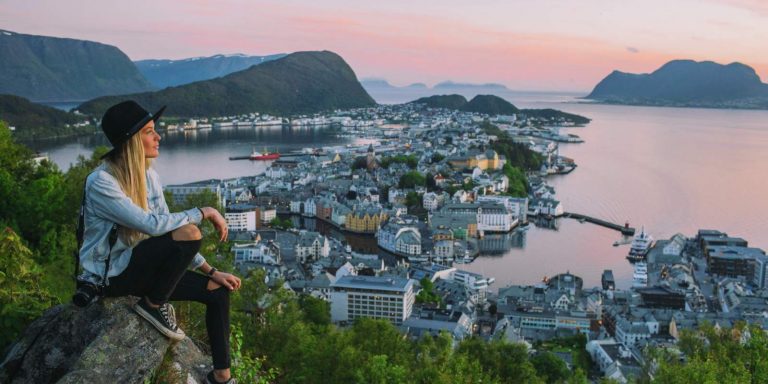
Feature image (on top): Woman at Aksla viewpoint, Ålesund Fjord Norway photo: Samuel Taipale Visitnorway.com

Meet Locals in Scandinavia, written by Tor Kjolberg

Scandinavian Asparagus

Asparagus has always been an expensive treat, a vegetable for the rich, who could afford either to grow or to buy it. The average Scandinavian was too hard-working to have the time to cultivate asparagus, a slow and labor-intensive business. Read more about Scandinavian asparagus.

Green asparagus has been popular in Scandinavia for only 30 years or so, which is why all traditional recipes use the white version. White asparagus spears are the pale, fat queens of May and June, with a consistency so beautiful and a taste so refined that they must be truly unique among vegetables.

Scandinavian Asparagus
White asparagus. Photo: Bama

Appearance and taste
Green asparagus tastes very much like a long, tender green pea. It has as delicious, fresh and distinctly ‘green’ taste. White asparagus, on the other hand, has a definite sweetness, paired with a slight bitterness, and a pervading flavor that spreads its loveliness over other foods that come into close contact; add it to a salad or stew and the dish will taste as though it consists of nothing else, a quality the white asparagus shares with artichokes.

Related: The Norwegian Asparagus Island

Scandinavian Asparagus
Asparagus growing at Hvasser, Norway. Photo: Tor Kjolberg

How it grows
The spears of wild asparagus, which can be found growing in sandy soils in southern Scandinavia, are very thin, and are even tastier than cultivated asparagus. White asparagus is grown widely in areas of sandy loam, though this is not easy. Asparagus is extremely time-consuming to grow, and a huge investment if you grow more than a few. The crowns must grow undisturbed for three to four years before they can be harvested, and after that you work from light until noon for three months during the harvest in April, May and June.

The paleness of white asparagus is achieved by excluding all light, which is done by piling up soil over the plants as they grow. All weeding much be done by hand, so as not to damage the still-invisible spears, growing undergrown. When they are ready to harvest you venture into your asparagus patch very early in the morning with a sharp long-handled tool to cut the spears before the sun’s rays turn them green. It must be inserted at ground level, and you work blind, as only the very upper up of the asparagus is poking through the soil.

Scandinavian Asparagus
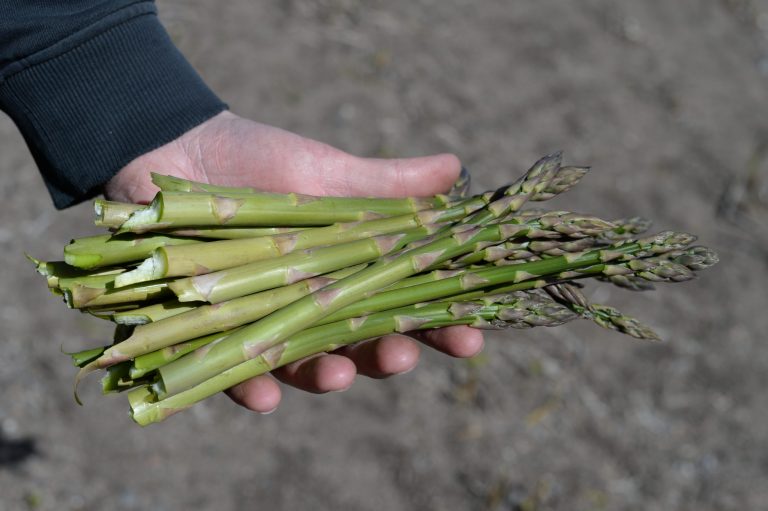
Green asparagus. Photo: Bama

Green asparagus is grown in the field and can be cut at any time of day, as long as it’s every day because, the spears grow at an alarming rate and are short and tender for only a day or two. If you miss the moment, they will be very long and tough.

Related: Scandinavian Cabbage & Kale

Buying and storing
Asparagus is pricy, but not irresponsibly so considering the growing conditions. You can buy relatively cheap white asparagus, which is too finely to peel but perfect as a base for soup, and even big fat spears for much less than a mediocre, small piece of meat. The thickness of green asparagus is not importamt, but the white needs serious peeling, and if the spears are too thin, there will be nothing left. Thin white asparagus tempt you to slack off when it comes to the peeling, and that is not a good idea. They can be used as they are for stock and are good buy for that purpose, as thin spears are much cheaper.

When buying asparagus, the most important thing is to check for freshness. Begin by checking the bottoms (which are often wrapped) as the spears dry out from the bottom up. They must be freshly cut, and the whole stalk must be juicy and firm, without signs of wrinkled old age, and the heads should be tight and not beginning to stretch. If the spears are not fresh, don’t buy them, even if they are cheap, as the taste alters with age and they will disappoint you. Our advice is to limit yourself to buying asparagus only during their brief season in May and June, when you can gorge on them at their best and then long for them until the next season.

Scandinavian Asparagus
Asparagus and cured ham. Photo: Rema1000

Asparagus can be stored wrapped in a clean damp tea towel in the fridge for no more than two days. If you are not going to use the peels straight away, they can be frozen and used for stock later.

Related: Scandinavian vegetables

Culinary uses
Both types of asparagus are beautiful in stews, salads, or simply steamed and eaten with fish, as a starter, or veal, chicken or smoked and salted meats. Remember always to add a little sugar to balance the bitterness of white asparagus.

Before you even consider cooking your white asparagus, the spears must be peeled. Rest them in your hand and peel from the head down. When you think you are done, try to bend the asparagus a little, and any traces of peel will show as long, shiny strands. It’s heart-breaking to watch your asparagus shrink, but any trace of peel will be a nasty experience. Asparagus are extremely fibrous, and in the past, you were forced to eat asparagus when you had swallowed a sharp item as the vegetable’s fibers curl themselves around anything in your stomach, guiding it safely on its way out. (Nowadays, they give you cotton wool to eat instead).

The woody ends and peel from white asparagus can do magic in the kitchen, in stocks, sauces and vegetable stews. If you boil the peels in water, then add the cooking liquid to your dish, you will find a satisfying asparagus flavor that suits anything. The woody ends of green asparagus are also useful in stocks and soups.

Green asparagus can be eaten raw, but a fast blanching will make its flavor much more intense.

White asparagus must be cooked, but not for a second longer than necessary. A few minutes in the pot are enough. If you want to eat the asparagus whole, boil them in a wide, shallow saucepan, with a little water, and the lid on, rather than in a huge pot of boiling water.

Scandinavian Asparagus
Asparagus soup. Photo: Rema1000

Asparagus soup
Asparagus soup used to be a Sunday special, and was often served as a starter at confirmations and weddings coinciding with the asparagus season. Serve with crusty sourdough bread.

500g thin white asparagus
2 celery sticks
1 bunch of new onions with green tops
1 sprig of tarragon
1 small bunch of chervil
1 small bunch of parsley
200ml white wine
4 garlic cloves, or a small bunch of ramsons (wild garlic)
1 bay leaf
1 tablespoon coarse sea salt
1 tablespoon black peppercorns
1 tablespoon sugar
200ml whipping cream
1 small bunch of chives, chopped

Serves 4-5 portions

Rinse the asparagus and cut off the tips. Save the latter and chop the rest into small pieces. Rinse and chop the celery and onions including the green part. Pick the leaves on the herbs and save for later.

Put the wine, garlic, bay, leaf, salt, pepper and sugar in a pan along with the vegetables and herb stalks. Boil slowly until the vegetables are very soft. Fish out the bay leaf, then whizz the soup in a food processor until smooth. Push through a fine sieve, making sure than only inedible fiber is left in the sieve.

Reheat the soup with the cream and reserved asparagus tips, and adjust the seasoning. Serve with the reserved herb leaves and the chopped chives on top.

Feature image (on top): Asparagus from Hvasser. Photo: Gartnerhallen

Scandinavian Asparagus, written by Tor Kjolberg

Self-driving Electric Ferries in Norway

0

A zero-emissions, self-driving ferry is a pioneering transport initiative by researchers at the Norwegian University of Science and Technology (NTNU) in Trondheim. Now, engineers are developing an autonomous electric ferry that may be summoned like an elevator. Read more about the self-driving electric ferries in Norway.

Also in the capital of Norway, one of the largest players in the retail segment, another vessel construction project is partially funded by the Norwegian Government as part of an overall plan for a significant reduction of emissions in Norwegian waters. Asko Management AS is in charge of developing 67 meters long ferries designed solely for the transport of semitrailers across the Oslo Fjord.

Self-driving Electric Ferries in Norway
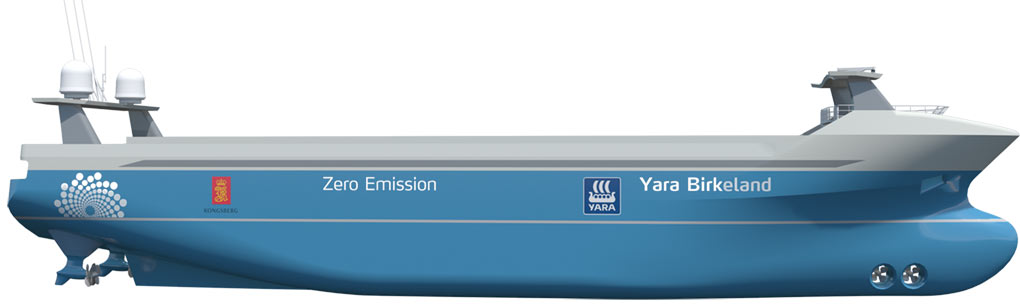
Yara Kongsberg Boxship

Related: A Green Revolution in the Norwegian Fjords

Expected to be launched nest year
In Trondheim, the small, autonomous ferry is expected to be launched next year and will be operated by the company Zeabuz. Currently being developed by a team at the Norwegian University of Science and Technology, the full-scale version of the non-cable-guided “Autoferry” will carry at least 12 passengers, along with their bicycles or baby strollers. If it’s not already on their side of the canal, those passengers will be able to call it over simply by pressing a button.


The vessels in Oslo will be managed by Massterly AS, which is the first company in the world that has been set up to undertake the technical management and the operation of autonomous vessels. Massterly is a joint venture between Kongsberg which is a significant player in the world of autonomous vessels and the shipping company Wilhelmsen. The ferries in Oslo will not be self-driving though.

Related: Norwegian Air Carrier’s World Premiere of New Generation Aircrafts

Self-driving Electric Ferries in Norway
Yara Birkeland

An alternative to a proposed bridge
The Trondheim ferry was developed in 2018 as an alternative to a proposed bridge across Trondheim’s harbor canal. The prototype was a hit and NTNU commercialized its research, forming Zeabuz in 2019. It’s part of a larger movement exploring how to use waterways for more sustainable transport.

The ferry will self-navigate its way over to the opposite bank, guided by an onboard GNSS (Global Navigation Satellite System). It will also use four integrated sensors – a radar unit, an infrared camera, an optical camera and a LiDAR (Light Detection And Ranging) unit – to detect and avoid other watercraft. Sensors located on the shore will provide additional assistance, by wirelessly transmitting data to the ferry.

Related: Will the world’s next-generation rechargeable batteries come from Norway?

Full-electric transport ferries
In Oslo, the autonomous vessels will be delivered as full-electric transport ferries, with the main propulsion power coming from a 500kW electric motor coupled to an azimuthing stern drive. This with be supplied with electrical power from an 1846kWh capacity battery bank. An electrically powered Schottel Pump Jet will be fitted at the bow to act both as emergency propulsion and as a bow thruster to improve manoeuvrability. The operating speed will be 10 knots and it is anticipated that this mode of trailer transport will save over 2 million road miles per year.

Self-driving Electric Ferries in Norway
“Historically, that’s how we traveled,” says Susanna Hall Kihl, an expert in waterborne, founder of Vattenbussen – Sweden

“Historically, that’s how we traveled,” says Susanna Hall Kihl, an expert in waterborne transport and founder of Vattenbussen – Sweden, a research and advocacy organization for urban waterways. She is highlighting that most major cities were built on or near water. “Reviving underused waterways to relieve road congestion is an easy solution,” she says, “as it requires minimal infrastructure compared to other transport systems”.

Feature image (on top): Zeabuz

Self-driving Electric Ferries in Norway, written by Tor Kjolberg

Spa Well-Being – the Swedish Way

0

What previously considered a rare luxury is now available to most people in Sweden. Well-being and indulge in more recreations in spas and wellness facilities, either in the company with friends and family or in connection with conferences and meetings, are increasingly in demand. Read more about spa well-being – the Swedish way.

The Swedes are nature lovers and this may be the reason why many spa hotels and spa resorts are located in beautiful seclusion in the Swedish countryside. However, as the competition within the spa market steps up a notch, it remains even more vital to ensure keeping an eye on the latest innovations and quality aspects.

Spa Well-Being – the Swedish Way
The Association of Swedish Spa Hotels (Svenska spahotel) is working to ensure a positive development and to work for the industry in maintaining a certain level of quality. Photo: Visit Sweden

Related: New Floating Hotel Opened in Northern Sweden

The Association of Swedish Spa Hotels
The Association of Swedish Spa Hotels (Svenska spahotel) is working to ensure a positive development and to work for the industry in maintaining a certain level of quality. This is accomplished by ensuring that the association’s members provide a range of facilities based on the four cornerstones of motion, recreation, nutrition and salutary skincare, and that staff possesses the right training and experience. In Sweden there are 43 hotels that meet the criteria set by the board.

Swedes take leisure-time and spa visits very seriously, and the clichéd image of them taking a dip in a lake after a soothing wood-fired sauna is in fact true. Well-being the ‘Swedish way’ means getting away from a hectic work and home life to a weekend or off-day retreat to live the simple life with family and friends. Or being pampered at a luxury, traditional spa in the countryside.

Incorporating spa and wellness services
For most of the hospitality industry the benefits of incorporating spa and wellness services into their business models are now well recognized. The global wellness economy is valued at £3.3 trillion and continues to grow at a rate of 6.4%, offering up increased opportunities for those who understand that this is an industry that can’t be ignored.

Spa Well-Being – the Swedish Way
There is a rise in more niche, creative spa concepts which dual as social hangouts. Photo: Visit Stockholm

Related: Sweden’s New Floating Sauna Hotel

But as wellness becomes more mainstream, it becomes more important for hoteliers to adapt and differentiate their products and services in this sector in order to attract and retain customers. Generally, we see two trends in the market. One is “back to basics”. Ancient forms of treatments known to show good results scientifically are being refined. Examples are massage, scrub, detox and spa. The second is a development of visually rejuvenating treatments. Many focus on treatments with firming effects for the face and invest in the market’s latest devices.

Swedish well-being
Well-being in Sweden also goes hand-in-hand with the right of public access – part of the Swedish constitution, that lets you roam the countryside as long as you leave it the way you found it. Many spa hotels and spa resorts in Sweden therefore offer packages that include walking and hiking and other invigorating outdoor activities.

Related: Ice-Cold Tradition is on Fashion Again in Sweden

From a design point of view, the influence of the experience generation can be seen. There is a rise in more niche, creative spa concepts which dual as social hangouts. This includes spas which invite guests to ’write a new life story’ by offering a mix of music, aromas, food, warm baths, cold drinks and hot steam.

Spa Well-Being – the Swedish Way
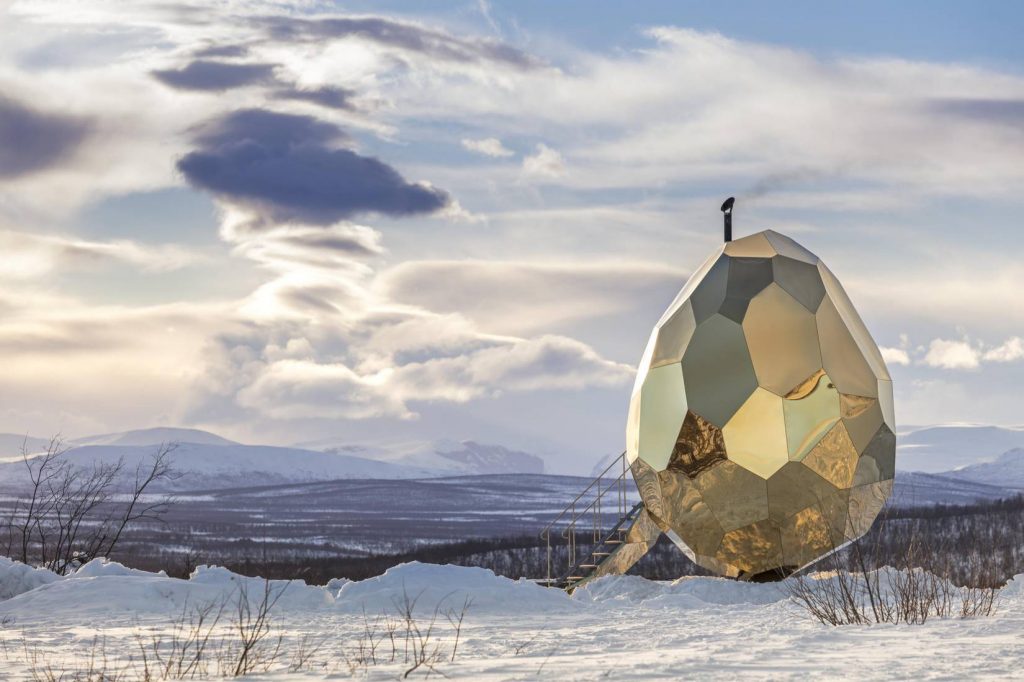
Solar egg. Photo: Visit Sweden

Similarly, others are twisting notions like enjoyment and relaxation to create new kicks. Whether this is an invitation to see a great movie in the pool, mix their own scrubs in a Spa lab or rethink spa music as it becomes music you can not only hear but feel.

Increase of interest
We can also see an increase of interest in exercise, healthy food and lifestyle analysis, which mixes various activities together, such as tailor-made diets, exercise programs with mindfulness and solution-focused counseling and relaxion through yoga, qigong and massage to achieve better harmony.

As the consumer looks for more flexibility in their life, professionally coached classes through streaming technology is growing, minimizing the dependency on hotel gym and studio staff. Come and enjoy Sweden’s spa traditions and its own take on well-being.

Feature image (on top): Asia Spa. Photo: Visit Sweden

Spa Well-Being – the Swedish Way, written by Tor Kjolberg

The Next Norwegian Oil Adventure?

0

Test drilling for rare seabed minerals on the Norwegian continental shelf has yielded promising results. Can minerals and gas hydrates become the next Norwegian oil adventure?

Renewable energy sources and battery technology call for access to substantial quantities of minerals with rare-earth elements (REEs). Oil veterans will now be heavily invested in the new oil adventure.

The Next Norwegian Oil Adventure?
Marine minerals will be important for securing the supply and provide supply independence

Marine minerals will be important for securing the supply and provide supply independence. Norwegian insiders believe that seabed mining will be competitive in cost and come with a smaller environmental impact. Norway has introduced groundbreaking technologies and environmentally sustainable systems within subsea production of oil and gas and been a leader within this field for decades.

Related: Sustainable Shipping in Norway

Crossover of technology
A crossover of technology from subsea production systems is very attractive. Norway has also a proud history and competitive edge within floating production systems, with fifty years of experience from building and operating floating oil and gas installations.

The Next Norwegian Oil Adventure?
According to people in the industry, seabed mining has the potential to be larger than offshore wind

The ship “Island Valiant” has test drilled at depths of over 3000 meters for minerals. Many of the minerals are located on the seabed. With the drilling, the Ministry of Petroleum and Energgy (MPE) in Norway wants to map how large the deposits of minerals are.

On 1 April 2017, the Ministry was given administrative responsibility related to prospecting for and recovering mineral deposits on the NCS. Administrative authority for seabed minerals was delegated to the NPD. That included mapping resources, compiling resource accounts and following up the industry’s activities, as well as providing technical and economic advice to the MPE. Little exploration for mineral deposits had so far taken place in Norwegian sea areas.

The Next Norwegian Oil Adventure?
Mapping rare-earth elements (REEs). Photo: Ocean Technology

Related: A Green Revolution in the Norwegian Fjords

Larger than offshore wind
Energy production with a low carbon footprint could mean rising demand for gas and minerals with REEs. Renewable energy output and the associated need for battery storage is expected to grow. It has long been known that big deposits of minerals with REEs could exist in the deep oceans.

According to people in the industry, seabed mining has the potential to be larger than offshore wind. Initial estimated studies conducted by NTNU in Trondheim suggest that there are marine minerals with a value of 1000 billion NOK in Norwegian waters.

Towards the end of 2019, three veterans, Hans Olav Hinde, Walter Sognes and Tore Halvorsen established a new company, Loke Marine Minerals, to take part in this new adventure on the Norwegian continental shelf.

The Next Norwegian Oil Adventure?
The ship “Island Valiant” has test drilled at depths of over 3000 meters for minerals

Related: Norway – Richest Country in the World?

Familiar technology
“Norwegian companies have paved the way internationally within offshore exploration and appraisal technology, such as seismic surveys, EM, advanced drilling and autonomous underwater vehicles (AUV). These proven and familiar technology is part of our approach towards mapping and quantifying the resources. Norway has a unique opportunity to become a leader within Marine Minerals, building on experience and competences from the oil & gas sector, focusing on a prudent environmental approach,” says Walter Sognes.

“We believe that seabed minerals can be extracted in a safe and environmentally friendly way here in Norway. It can be a big industry. Concentrations of minerals on the seabed can be 10 to 15 times higher than in a mine on land,” says Hans Olav Hinde.

Seabed minerals are known to exist in the deep parts of the Norwegian Sea. The University of Bergen (UiB) made the first discoveries of “black smokers” there more than a decade ago. Drawing in part on the NPD’s large multibeam bathymetric data set from these waters, the UiB identified a number of sulfide deposits (both smokers and mounds) along the volcanic Mohn Ridge between Jan Mayen and Bjørnøya and further north. Samples have since been taken from a number of sulfide deposits and crusts while mapping the Norwegian Sea in a multi-year research partnership between the UiB and the NPD.

The Next Norwegian Oil Adventure?
Seabed minerals are known to exist in the deep parts of the Norwegian Sea

Three pioneers
Walter Sognes has been key in establishing and heading several companies including Revus Energy and Spike Exploration. Tore Halvorsen has pioneered subsea solutions since 1980 and been global leader in FMC Technologies. Hans Olav Hinde is a serial entrepreneur within the oil and gas sector and has also been working for Esso.

The Next Norwegian Oil Adventure? Written by Tor Kjolberg

Annie – The Norwegian Princess of Pop

The Norwegian princess of Pop, Annie (Anne Lilla Berge Strand – born 1977) has made hits being noticed by Elton John as well as American hipster media. Read more about Annie – the Norwegian Princess of Pop.

We call her Princess of Pop because she is a singer-songwriter as well as a DJ and record producer. She began her recording career in 1999 with the underground hit single “The Greatest Hit“. For her debut album Anniemal (2004) she gained international acclaim.

Annie – The Norwegian Princess of Pop
Second Studio album, Don’t Stop

Pop fans may be forgiven for not knowing who Annie is, unless they live in Norway and the only country in which she initially had any sizeable commercial success. However, Annie possesses a sound and personality that proved subtly influential, both on the disco-indebted starlets and on the new audience of indie rock-weaned fanboys and fangirls who were suddenly extra receptive to their charms.

Related: An Intimate Portrait of Norwegian Pop Pioneers

The Streets Where I Belong
In 2001, her boyfriend Tore Kroknes died from a congenital heart defect and she wrote the song “The Streets Where I belong”, streets  she wanted to leave behind:

Annie – The Norwegian Princess of Pop
Dark Hearts, was released in July 2020.

That’s when I met the love of my life
He was a dj and we danced all through the night
Tell me tell me, why did you go?
I can still hear our song on the radio.

Anniemal
In 2003, Annie signed a record deal with Britain’s 679 Recordings. Next year she released her album Anniemal which received widespread critical acclaim and several Norwegian music awards. However, Annie didn’t reinvent the wheel with the album – she just released a really solid collection of shimmering, danceable and catchy pop songs which the right people happened to notice. Anniemal sold only 22,000 copies in the U. S.

Related: Norwegian Pop Singer Wearing Nothing

Nevertheless, Annie has experienced beating Jay-Z in the American competition “Song of the Year”, written music for Kylie Minogue, been sampled by rap giants Metro Boomin and Travis Scott and made activist music with Norwegian artist and fan Bjarne Melgaard.

Annie – The Norwegian Princess of Pop
Pop fans may be forgiven for not knowing who Annie is, unless they live in Norway

Annie has been described as “a pop singer with credibility, an indie artist with one eye on the dancefloor” and as “the Norwegian Kylie”. Annie describes her music as “pop with strange edges”.

The tracks “Chewing Gum”, “The Greatest Hit” and “Heartbeat” from Anniemal rank among the decade’s great synth-pop singles and what really set Annie apart is the subtly winking quality in her music, a self-awareness that make her seem smarter and more in control than the average pop star. Her lyrics have references to pop music and pop stardom which creates meta quality, showing that she doesn’t take herself or her would-be-superstar status too seriously.

Don’t Stop
In 2005, Annie won several awards for her work, including Best Pop Album and Best Newcomer at the Norwegian Alarm Awards. “Chewing Gum” had also been nominated for Song of the Year. In addition, Annie won the Best Newcomer award at the prestigious Spellemannprisen.

Related: The Norwegian Dance-Pop Wizard

Unfortunately, the second album took a little too long to come. News that she signed a deal with Island Records in 2007 offered hope that a new album was finally on its way, but artistic differences led to a split with the label a year later, and the album was again delayed.

Annie released her second studio album, Don’t Stop, on the Smalltown Supersound label on 19 October 2009. It came and went without much publicity, earning generally positive reviews but making few year-end lists, and selling only 6,000 copies to date in the States, according to SoundScan.

Annie – The Norwegian Princess of Pop
Annie has been described as “a pop singer with credibility, an indie artist with one eye on the dancefloor”

One possible explanation for “Don’t Stop’s” relative flopping might be that Annie had already been replaced in the hearts of many by another blonde, single-named, self-aware Scandinavian pop pixie. Robyn, once known to U.S. audiences as the teenage star behind the late ’90s mega-hits “Do You Know (What It Takes)” and “Show Me Love,” had re-emerged as one of the genre’s most compelling underground talents, equally capable at making “Chappelle’s Show” -quoting hip-hop prank jams like “Konichiwa Bitches” and heart-rending post-breakup songs like “Be Mine!”

Dark Hearts
This year, her first album in 11 years, Dark Hearts, was released on July 17 with songs that have made American and British media writing fancy raving reviews and Elton John to incorporate her into his radio show and his playlists.

Annie – The Norwegian Princess of Pop, written by Tor Kjolberg

Spectacular Architecture in the Norwegian Ocean Gap

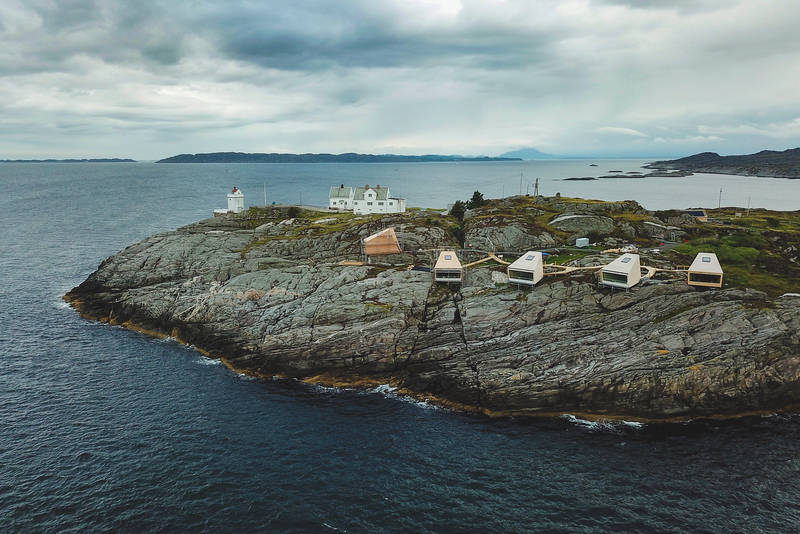
Several new, unique cabins are erected at a spectacular spot in Fjord Norway. The extraordinary location is perfect for an escape from everyday life or just for social distancing. Read more about the spectacular architecture in the Norwegian ocean gap.

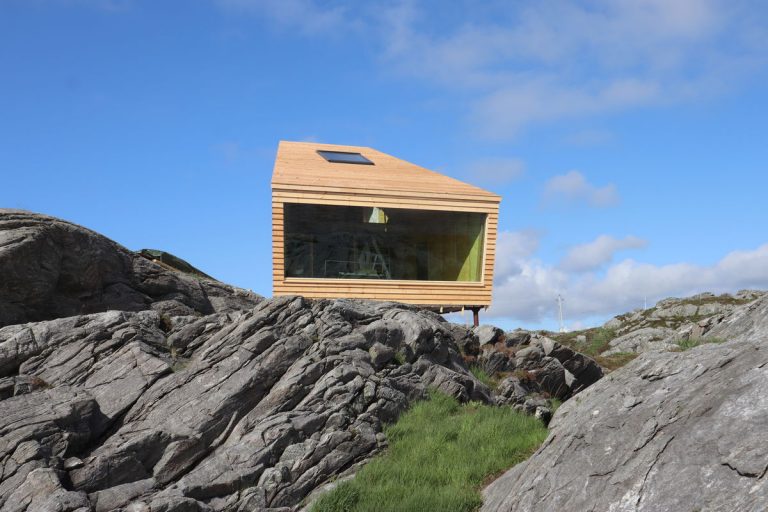
Construction of the Flokehyttene is now ready to use and you should consider planning a fantastic experience in the ocean gap. The Floke Cabins in Sveio, 621 miles north of Haugesund, allow you to spend the night close to nature and wake up to the sound of the ocean and the whistling of the wind. The cabins are built to naturally slide into the landscape and to bring the guests close to nature.

Spectacular Architecture in the Norwegian Ocean Gap
You should consider planning a fantastic experience in the ocean gap. Photo: Norwegian Tourist Association

Cuddle up by the fireplace and admire the mighty sea and the beautiful landscape from the panorama window. They are also the latest additions to the ever-expanding selection of stunning places to stay in Fjord Norway.

Related: Summer Nights In The Norwegian Tree Top Cabins

Where mighty sea meets the sky
At the far end of the headland, where the mighty sea meets the sky, lies Ryvarden Kulturfyr (Cultural Lighthouse). From here, Floke Vilgerdsson, or Ravnafloke, in the year 868 sailed out as the first man to settle on an unnamed island which he named Iceland. More than a thousand years later, Flokehyttene has been built in the sea gap in Sveio, a project Holon Arkitektur has carried out on behalf of Haugesund Tourist Association.

Spectacular Architecture in the Norwegian Ocean Gap
Cuddle up by the fireplace and admire the mighty sea and the beautiful landscape from the panorama window. Photo: Norwegian Tourist Association

One of the major aspects of the project was that the cabins should not leave a permanent trace in the landscape. Therefore, there were no holes drilled in the ground, there was no digging or levelling. The end result is five spectacular cabins with panoramic views over the North Sea.

Related: Exclusive Adventure and Exploration Resort in Northern Norway

About Floke Cabins
“Good architecture cares. It should give more than it takes,” says Roald Bø, the architect behind Flokehyttene.

The cabins are small in size, but designed to bring you close to nature and draw in the landscape. Inside the cabins you will find accommodation for 5 persons, kitchen, living room and WC. Each of the cabins are named after family of or important persons for Ravnafloke; his grandfather Horda-Kåre, mother Vilgjerd, daughters Geirhild and Tjogerd, and Faxe who joined Floke on his expedition to iceland. The largest cabin, Horda-Kåre, has accommodation for 10 people and is accessible for wheelchairs. The heart of each cabin is a fireplace that allows guests to keep warm and cozy inside while watching the waves crashing against the cabin walls outside.

Related: Spectacular Autumn in a Norwegian High Mountain Tourist Lodge

Spectacular Architecture in the Norwegian Ocean Gap
Inside the cabins you will find accommodation for 5 persons, kitchen, living room and WC. Photo: Norwegian Tourist Association

The cabins are forged into the landscape and the shape is carefully planned to withstand the harsh climate that sometimes ravages Western Norway. The triangular shape and flat cut means that the cabins can withstand gusts of wind up to hurricane strength.

Spectacular Architecture in the Norwegian Ocean Gap, written by Tor Kjolberg

What Is Sweden Famous For? Nine Things That Make Sweden the Country It Is

0

A lot of people around the globe are convinced that Scandinavia is the paradise on Earth.  If you are not one of them… You must be already living your best life elsewhere, congrats! However, we regular folks are attracted to the Scandinavian region – millions of people visit the Scandinavian countries as tourists and even more of them dream of moving there one day for good. Why? The answer is simple. Find out the nine things that make Sweden the country it is.

The countries of the Nordic area are considered to be the best for life because of the high living standards, breathtaking nature and convenient location. From year to year, the World Happiness Report puts those at the very top of the ranking hierarchy, which implies that Scandinavian people are the happiest in the world!

However high levels of life satisfaction are not the only thing that makes the Scandinavian region countries so attractive. Another appealing factor that drives lots of people there is their unique culture. Indeed, the former land of the Vikings can boast having one of the richest histories, which, subsequently, engendered a lot of cultural peculiarities. With a contemporary twist, of course – Scandinavians are the biggest adepts of modernity, minimalism and simplicity. They have a very specific approach to life, which differentiates them from the rest of European inhabitants.

Nine Things That Make Sweden the Country It Is
Photo: Ferhat Deniz Fors / Unsplash

One of the brightest examples of Scandinavian culture is Sweden. Despite not ranking the highest among the entirety of Scandinavian countries, it is still the most popular Nordic travel destination. Indeed, Sweden has a lot to offer to both tourists and locals – it is the real gem of the North! But what exactly makes Sweden the country that it is? Read on to find out about the top 10 most crucial factors that constitute the Sweden we know and love.

Nine Things That Make Sweden the Country It Is
Photo: Wikipedia

Kungens Kurva IKEA
In the modern consumerist society, the first thing that comes to mind when you hear any mention of Sweden is one of the numerous brands associated with this country. The most famous one is, undeniably, IKEA. Regardless of whether this brand has already entered your local market or not, you must have heard of the epic and absolutely legendary low-cost furniture manufacturer.

Even outside of Sweden a trip to IKEA is a fun adventure in itself. In fact, in the 30 years of its existence, IKEA has successfully expanded into the foreign markets and has fully infiltrated the American culture. In the USA, people actually go to the furniture store for fun and can spend hours wandering around the shop. There’s a good reason for this, too! IKEA stores, both in Sweden and outside of it, are built in a very peculiar way: there’s a maze with twists and turns, with fake fully equipped rooms and hundreds of pieces of furniture with funky names. In fact, the names of the IKEA furniture is yet another reason that makes the brand so lovable – there’s a fun and a little bit crazy name for everyone to match! Hence, it was inevitable for them to go viral on the internet and become the subject of numerous memes online.

And then, of course, there are IKEA meatballs, too! Who doesn’t love those?!

If you are a fan of those, you will love Kungens Kurva of Sweden, the home to the largest IKEA store in the world! It’s so big you can actually get lost there!

Nine Things That Make Sweden the Country It Is
Swedish pickled herring

Bold National Foods: Pickled Herring
Since we have already started talking about food with the delicious IKEA meatballs why not elaborate on the topic a bit and move onto the next point of this list.

Another thing that makes Sweden stand out is its national cuisine. You might be confused one: surely, every country has a couple of odd dishes on the national menu. However, one can say that Sweden is particularly crazy about making sure their foods are getting enough attention. You can either hate it or love it, but you cannot stay indifferent to Sweden’s bold national foods!

One of the most famous (or, shall I say infamous – a lot of people find this particular dish absolutely vile!) positions on the menu of Swedish restaurants is pickled herring. Sir Jamie Oliver described Swedish food as ‘Big, bold, brave and definitely up there with the best in the world’.

Nine Things That Make Sweden the Country It Is
Swedsih Design Museum

Swedish Design: The Homeland of Minimalism
If you are reading this article from the comfort of your bare-walled white-painted house with a couple of plants here and there but nothing much to not mess up the aesthetics, Sweden is the country you should thank for it! One of the most apparent cultural peculiarities of Sweden is its love for minimalism.

In fact, there is even a specific name for that – Swedish Ultra Minimalism. In Sweden, people believe that less is definitely more. So, both their houses and their lives are all about simplicity, purity, and calmness. What first started as a buying strategy (initially, Swedish Ultra Minimalism was associated primarily with buying less and buying better) has quickly turned into a lifestyle that spread across the world.

Nine Things That Make Sweden the Country It Is
Fika refers to making time for friends and colleagues to share a cup of coffee

Fika: The Coffee Culture
As mentioned previously, Sweden is all about simplicity. Wait! You thought this point was about the coffee culture? Well, you are right! Yes and no… Indeed, the Swedish love their coffee breaks but in this case, it is more about breaks and less about coffee.

This is a mindset, a concept, that literally allows Swedish people to remain among the happiest in the world – they make time to take care of their mental health. Despite the fact that the Swedish have a very strong working ethics, they are also very adamant about ensuring they are enjoying each and every moment of their lives. Sometimes, it means stepping away and focusing on what cares the most – Fika refers to making time for friends and colleagues to share a cup of coffee (or tea) and a little something to eat and simply have a second to reflect on how good life is!

Nine Things That Make Sweden the Country It Is
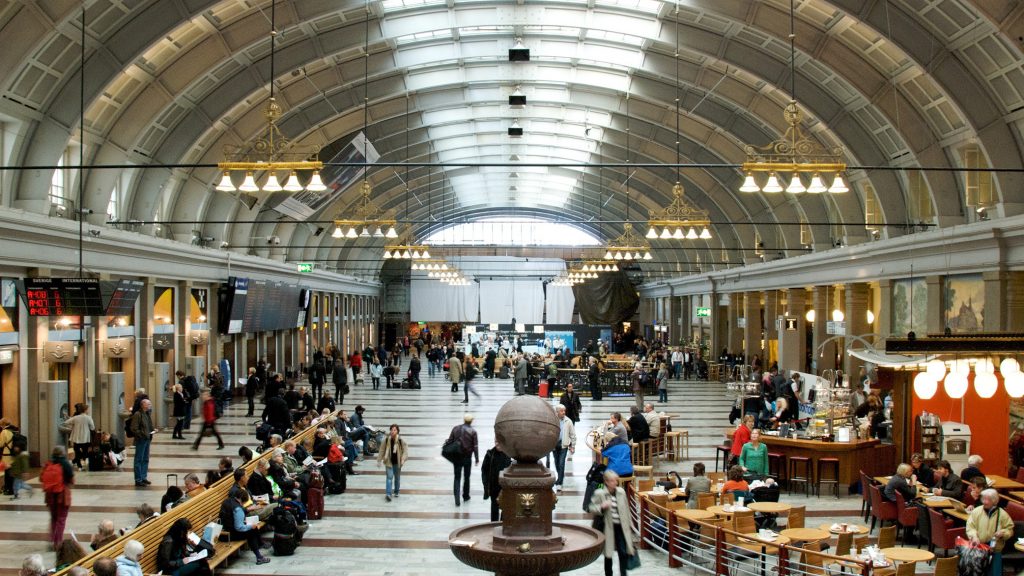
Stockholm Central Station. Photo: Sweden.se

Great Environmental Ethos: Zero (Well, Actually, 1%) Waste Culture
But don’t forget about making sure your cup of coffee is not made of plastic! Sweden is well-known for its robust environmental ethos – the country and its government care about the environment on the national level. This allows Sweden to qualify as a country with a Zero Waste culture.

In fact, Sweden takes the process of actively caring for the environment a step further. Instead of recycling, they are trying to minimize the consumption altogether. This ties in well with the concept of Minimalism.

Nine Things That Make Sweden the Country It Is
Photo by Lightscape / Unsplash

The Northern Lights
And nature is glad to cooperate! One of the most mesmerizing wonders of the world – the Northern Lights – is the national Swedish pride. Those have been romanticized in popular culture for ages now. So, every year, people from all over the world come to see the sky change colors.

Breathtaking scenery
It is not only the Northern Lights that Sweden can boast. The land is rich in absolutely beautiful scenic landscapes. Some of the most popular among locals and tourists places include:

Stockholm’s Archipelago.

Gamla Stan in Stockholm.

Höga Kusten – The High Coast.

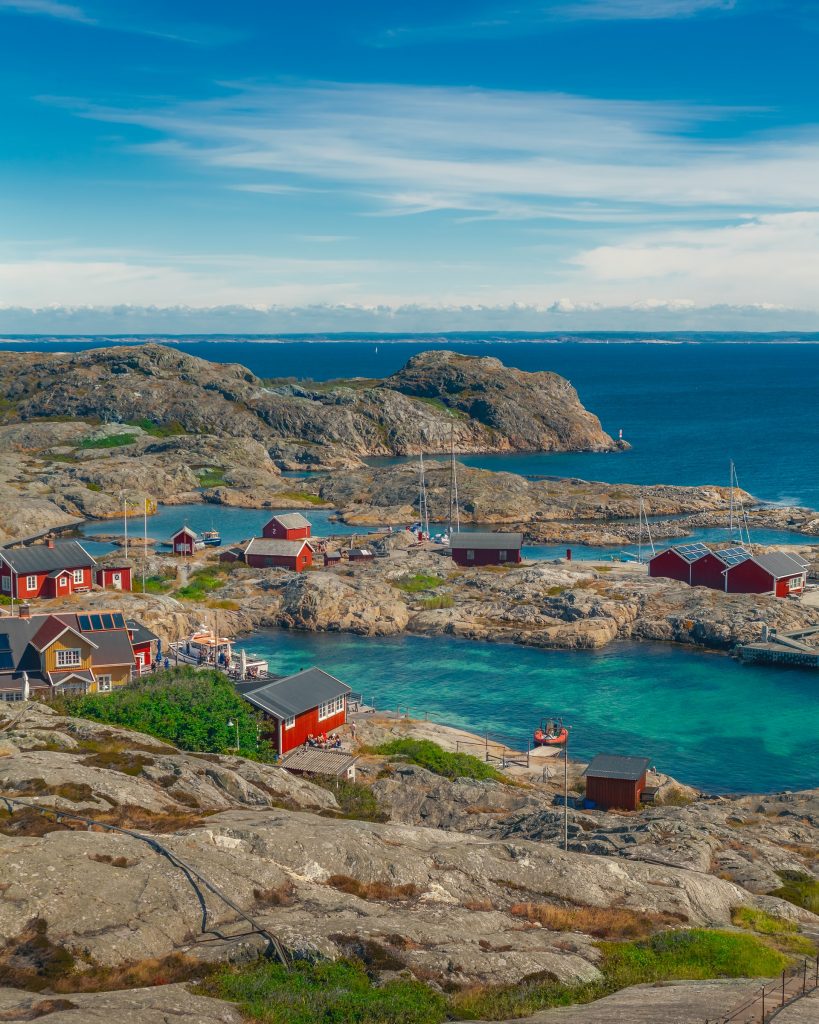
Gothenburg’s Archipelago and Bohuslän Coast.

Lake Siljan.

All of these look unreal and will definitely look good both in your memory and in photos!

Nine Things That Make Sweden the Country It Is
Santa Village, Arctic Circle. Photo: Wikipedia

Lapland Santa Village
Sweden is believed to be the country of wonders. Of course, granted that you can see the Northern Lights there… However, there is something more that makes Sweden so popular and magical. It is the home to Santa Klaus himself!

Swedish Lapland Santa village is the epitome of Christmas vibes: all year round (but especially closer to Christmas time) it is brimming with decorations, little elves packing presents and reindeer jumping in the snow. If you ever want to feel like a child on a Christmas Eve again, Sweden is the place to go!

Nine Things That Make Sweden the Country It Is
Swedish midasummer girls. Photo: Wikipedia

Scandinavian Women
At last but not least, Scandinavian women are a treasure on their own! Even though it is believed that Ukrainian and Russian women are the prettiest in the world, you cannot deny the fact that Nordic women are mesmerizingly beautiful. After all, the famous Barbie looks like one of them. Or shall I say women in Sweden look like Barbie? They are tall, slim, blonde and blue-eyed.

However, it is not just the looks that Swedish women charm a foreigner with – they are also extremely smart, hard-working and independent. Some people would say they are unapproachable but really, they are just reserved.

And… Even though this article has already covered the top nine things Sweden is famous for, including gorgeous Swedish women, there’s one more thing we forgot to mention. One man, to be precise. Mr Felix Arvid Ulf Kjellberg better known as PewDiePie is a Swedish YouTuber that has become a true legend in his lifetimes. Felix got famous playing video games on camera and has inspired generations of talented content creators to start their careers! Good job Sweden!

What Is Sweden Famous For? Nine Things That Make Sweden the Country It Is, written excusively for Daily Scandinaian by Karl Murphy. Karl is a professional journalist from Des Moines, Iowa. After obtaining his Master’s degree, he’s launched his career and over its course, Karl was contributing to the popular publications for men. He’s passionate about eSports, so now he develops his blog bestesportsbettingsites.net

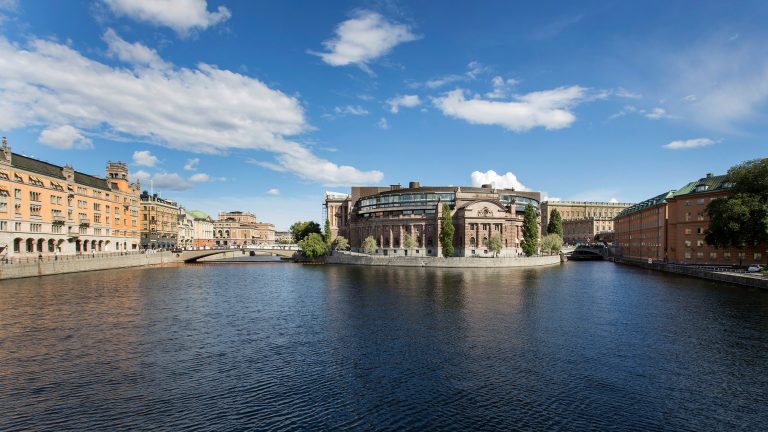
Feature image (on top): Swedish parliament, Stockholm. Photo: Sweden.se

Sociable Gothenburg in Sweden

0

The second-largest city in Sweden, Göteborg, or Gothenburg, was once a gritty industrial seaport. In recent years Gothenburg has evolved into a sophisticated 21-st-century city, with a thriving cultural life. It has even been named one of the world most sociable cities by the Legatum Prosperity Index. Read more about sociable Gothenburg in Sweden.

Gothenburg has also built growing reputation for world-class cuisine, and since Dutch architects planned the city in the 17th century for King Gustav II Adolf and grew in stature during the 18th century when the Swedish East India Company began shipping luxury goods from the Orient, it is now a sociable and green destination with beautiful parks.

Sociable Gothenburg in Sweden
Gothenburg Opera House. Photo: Wikipedia

Related: The Little Big City in Sweden

Gothenburg is still Scandinavia’s largest port: the harbor area is its soul and a good place to start for sightseeing.

The bold Göteborgsoperaen (Opera House) stands on the water just west of the commercial center. Built in ship-like style in 1994. It is well worth a visit for its architecture alone.

Near the Opera is Gothenburgs’s Maritiman (Maritime Center) on Packhuskajen. The world’s largest floating ship museum features 20 ships, including a submarine, destroyer and lightship.

Sociable Gothenburg in Sweden
Gothenburg got its own Ferris wheel. Photo: Wikimedia Commons

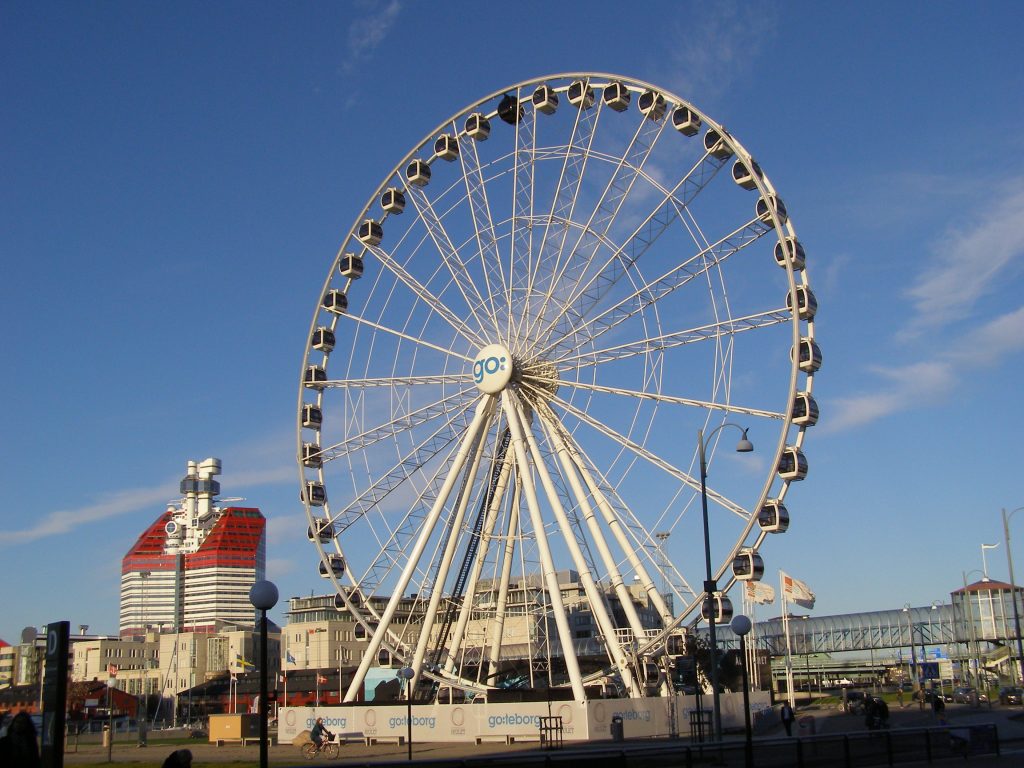
Gothenburg got its own Ferris wheel, the 60-meter (200ft) high Wheel of Gothenburg, giving great views of the area.


The heart of Gothenburg lies along Östra Hamngatan and Kungsportsavenyn. Start in the northern end of Östra Hamngatan, heading south you will pass Nordstan, one of Northern Europe’s largest covered shopping centers. Along the intersecting streets of Norra and Söndra Hamngatan, are dozens of small and interesting boutiques.

Sociable Gothenburg in Sweden
Tramcar in Gothenburg. Photo: Copyright Steampipe Production/Visit Sweden

Cross Stora Hamnkanalen (Great Harbor Canal) and continue south to Kungsportsplatsen, where you can pop into the Göteborg Turistbyrå (Tourist Office).

Across the street is Saluhallen, a large indoor marketplace stocked with Swedish specialties such as seafood, cheese and meats. This is a good place to enjoy a cup of coffee or a full lunch.

Kungsportsplatsen is also the place to embark on a Paddan, one of the flat-bottomed sightseeing boats that cruise through the old moat, along 17th-century canals, under 20 bridges, out into the harbor and back again (May – September).

Related: Culinary Attractions in Gothenburg

Sociable Gothenburg in Sweden
From Avenyn, Gothenburg

From Kungsplatsen, cross the moat into Kungsportsavenyn – known as “Avenyn”, which is a long, wide boulevard lined with trees, restaurants, pubs and cafés. Halfway along the Avenyn, you are just a block away from the Röhsska Museet, the Swedish museum for design and handicrafts.

At the southern end of the Avenyn is Gothenburg’s cultural center, Götaplatsen, with the Poseidon fountain by the Swedish sculptor Carl Milles. Götaplatsen is flanked by the Konstmuseum (Art Museum), with an extensive collection of Scandinavian art, including works by Munch, Zorn, Rembrandt and Pissarro.

Also on the square is the Konserthus (Concert Hall), home of the Gothenburg Symphony Orchestra.

Liseberg, in the middle of town, is the largest amusement park in Scandinavia with 37 attractions, including the highest freefall plummet in Europe.

Also great for families is Universeum, an impressive science and nature-center with shark tunnel and rainforest zone.

For a calmer experience, wander through the picturesque little 18th-century neighborhood Haga on the way to the Botaniska Trädgården or Slottsskogen.

Sociable Gothenburg in Sweden
Consider obtaining a Gothenburg City Pass

A Göteborg City Pass gives free parking, unlimited travel on city buses and trains, a boat trip and free admission to many museums and to Liseberg and is available for 24 or 48 hours.

Feature image (on top): Klippan. Photo: Visit Sweden

Sociable Gothenburg in Sweden, written by Tor Kjolberg