
750 Years of Art and History in Kolding, Denmark

Kolding, located in Southern Jutland, Denmark is often overlooked by tourists. The city has, however, plenty of things to offer- especially when it comes to art, design, nature and history. Experience 750 years of art and history in Kolding, Denmark.

Kolding is in fact the home of the most interesting tourist attractions in Southern Jutland. The city is located in the mouth if Kolding Fjord which has a host of outdoor activities. In and around Kolding you will also find a great variety of historical attractions. An added benefit in visiting Kolding is its very central location within Denmark, which makes it an ideal home base for the many interesting attractions within the region.

750 Years of Art and History in Kolding, Denmark
Koldinghus Castle

Related: National Museum in Copenhagen – A Journey in Time and Space

750 years of art and History in Kolding, Denmark
The two primary attractions in Kolding are the impressive Kolding Castle (Koldinghus) and Trapholt Art Museum. Visitors to Kolding should definitely make effort to visit both of these fine attractions. This year, the old castle Koldinghus has been a central part of Denmark’s history for 750 years, and the momentous occasion is marked with the anniversary exhibition The Splendor of Power, which tells 750 years of history through royal jewelry, medals and insignias from the halls of power. The exhibition runs through 21 October 2018. However, the castle can be explored all year round.
750 Years of Art and History in Kolding, Denmark
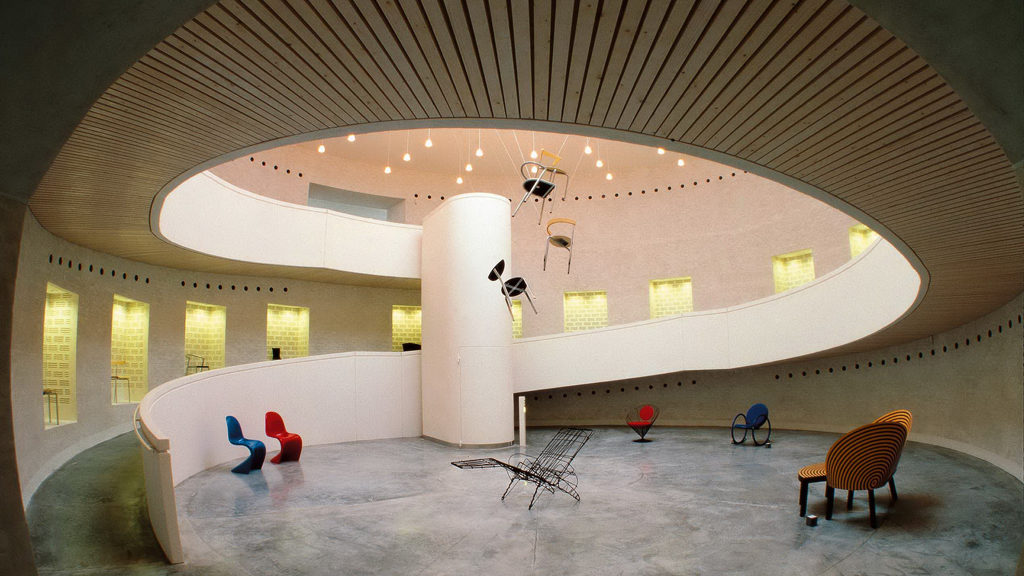
Traholt Art Museum

Related: The Bluest Light in Scandinavia

The Geographical Garden in Kolding has its 100th anniversary this year and is celebrated with a variety of events. The Garden is a combination of experience park and botanical garden.

750 Years of Art and History in Kolding, Denmark
White and purple flowers in the Geographical Garden in Kolding

Related: Art and Culture in Denmark

For nature lovers a visit to Skamlingsbanken is a must. The area offers a wonderful view of the Kolding area and Lillebælt, as well as beautiful beach forests.

UNESCO World Heritage Site Christiansfeld
The nearby town of Christiansfeld, which was built 245 years ago by an independent German Christian congregation and displays a very harmonious style of architecture has since July 2015 been a UNESCO World Heritage Site. The town is considered one of the best preserved of its kind, and guided tours are given throughout the summer.

Feature image (on top): Christiansfeldt

750 Years of Art and History in Kolding, Denmark, written by Tor Kjolberg

The Magical Book Town in Norway

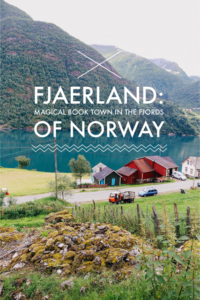
Located where the Sognefjord meets the Jostedalsbreen Glacier with its white and blue arms hanging down steep mountains, you’ll find Fjærland with almost 300 inhabitants. It is Norway’s official international Book Town! Visit the magical book town in Norway.

This remote small village of Mundal in Fjærland turns abandoned buildings into bookstores. The 10 second-hand bookshops in enchanting waterfront wooden houses, former ferry waiting rooms, stables, local banks and post office, below towering mountains and impressive glaciers as well as its reading material will undoubtedly charm visitors. There are more books and pine trees there than people – and the people are mighty nice.

You may also like to read: Strange Facts About Scandinavi

The Magical Book Town in Norway
Book Town Fjærland in Norway

The Magical Book Town in Norway
Bokbyen (the Book Town) is home to a collection of whopping 150,000 used books, but they’re no ordinary libraries. If you lined the shelves up side-by-side, the town’s library would span 2.5 miles of secondhand books.

The village of Fjærland can be reached by two ferries from Bergen (or a long bus haul from Oslo). In Bergen there’s a big, modern info center at the harbor where you can buy tickets). In Fjærland there are a variety of possibilities for accommodation, food and things to do. Like old fashioned wooden hotels, a glacier museum, restaurants just beneath the glacier and next to the fjord, beautifully placed cabins for rental and activities second to none such as glacier walks, hiking and kayaking.

You may also like to read: The Most Remote Hotel in Norway

The Magical Book Town in Norway
Fjaerland of Norway book-cover

Accessible by fjord and road
Ten years before the booktown became the reading hub it is today, you could only get to Fjærland by boat. The first road to the valley was built in 1986, and now there are bus routes to get in from the north or the south. In 1995, Mundal officially became the first “booktown” in Norway.

You may also like to read: Waffle Hearts: A Brilliant and Big Hearted Book From Norway

Some of the stores are large and let readers spend hours browsing the massive library. Others are humble outdoor shelves, relying on the honor system for bookworms to pay for their new reads. The book town is officially open for business from May through mid-September, though you can buy from its extensive library online all year.

The Magical Book Town in Norway
This remote small village of Mundal in Fjærland turns abandoned buildings into bookstores

The Magical Book Town in Norway, written by Tor Kjolberg

Ibsen Festival in Oslo 2018

The Ibsen Festival is Norway’s biggest theatre festival which celebrates and discusses Norway’s most important playwrights and poets at all time. And if Henrik Ibsen (1828-1906) truly saw anyone, he saw women.

Among other works this year, the festival presents three versions of the lyrical play Peer Gynt; one French, one Swedish and of course one in the original language Norwegian. Since 1876 there have been 3,086 productions of Peer Gynt globally.

Ibsen Festival in Oslo 2018
Henrik Ibsen (1828-1906)

Henrik Ibsen wrote modern, realistic dramas, and many of his later works were ahead of the curve for the development of modernist and expressionist theatre. It is hard to overstate the importance of Henrik Ibsen’s work to Norway’s cultural heritage; but then, as an Ibsen-filled autumn reminds us, his status is just as high on the world stage.

Related: 150th Anniversary of Norway’s Peer Gynt

Great influence on the present generation
Ibsen grew up in the small coastal town of Skien, located in Telemark, on the west coast of Norway: the oldest of five children. An affluent family, his father was a successful merchant and his mother painted, played the piano and enjoyed trips to the theatre. From an early age Ibsen himself expressed an interest in becoming an artist.

Ibsen Festival in Oslo 2018
A Henrik Ibsen quote

Ibsen left Norway in 1862, eventually settling in Italy for a short period. While he was there he wrote Brand, a five-act tragedy about a clergyman whose feverish devotion to his faith cost him his family and ultimately his life. This was the play that made him famous in Scandinavia. Two years later, Ibsen created one of his masterworks, Peer Gynt, a modern take on the Greek epics of old.

Related: The World Celebrates a Fine Old Gentleman

“Ibsen has been the greatest influence on the present generation; in fact, you could say that he formed it to a great extent,” wrote (a very young) James Joyce in 1900.

Ibsen Festival in Oslo 2018
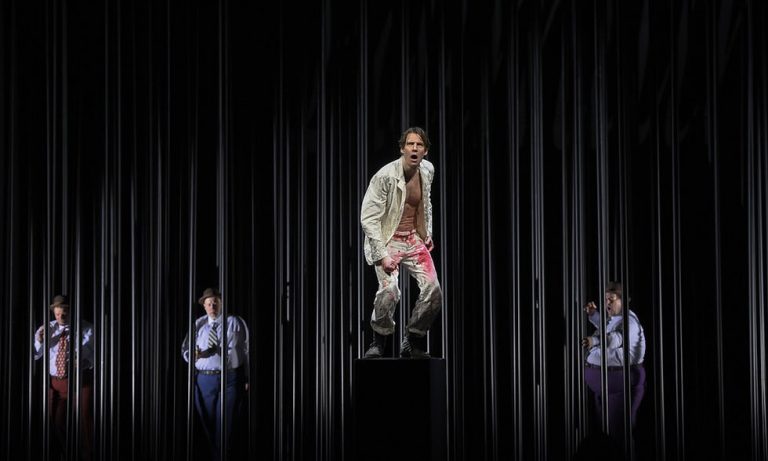
Erik Ehn plays Peer and Stina Ekbladh Mother Aase in Dramaten’s production of Peer Gynt

Ibsen Festival in Oslo 2018 presents French, Norwegian and Swedish versions of Peer Gynt
The Ibsen Festival 2018 offered several productions of Peer Gynt. One Swedish, from Dramaten, directed by Michael Thalheimer, and one French, from CDN de Normandie-Rouen directed by David Bebée. In addition, the festival collaborated on a co-production at the Norwegian Theatre, starring Thoralv Maurstad.

Peer Gynt is called a Nordic Faust and the German star director Micael Thalheimer, one of Europe’sd most renowned directors, moved his production of Peer Gynt from Dramaten in Strockholm to a performance at the National Theatre in Oslo during the Ibsen Festival 2018.

Related: In the Footsteps if Henrik Ibsen

Ibsen Festival in Oslo 2018
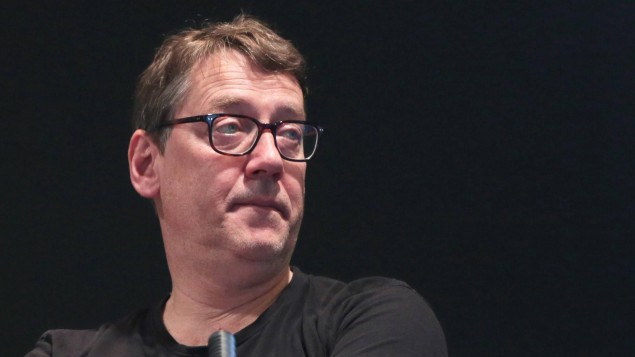
Michael Thalheimer has directed a number of major European theaters and is a regular director at the prestigious Berlin Ensemble in Berlin

Michael Thalheimer has directed a number of major European theaters and is a regular director at the prestigious Berlin Ensemble in Berlin. His first visit to Dramaten was a guest play with Goethes Faust on the Big Stage 2006.

We were privileged to watch the Dramaten version of Peer Gynt, which through light and mysticism and Olaf Altmann’s scenographic solutions, never showed the actors make an entry on stage, they only were there, in our heads and in Peer Gynt’s head. For a Norwegian like myself, I must admit I felt the scenery somewhat too minimalistic and Peer in Erik Ehn’s adaption became never really admittedly old. I was also not always able to follow neither the spoken Swedish or the literal translation into English, partly due to noises on the stage.

Universal themes
However, Ibsen’s works have held up over the years because he tapped into universal themes and explored the human condition in a way unlike any of those before him. To this day, his plays continue to challenge his audiences. Author James Joyce once wrote that Ibsen “has provoked more discussion and criticism that of any other living man.”

Feature image (on top): From muchael Thalheimer’s Peer Gynt at Dramaten, Stockholm

Ibsen Festival in Oslo 2018, written by Tor Kjolberg

Holocaust Museum to be Built in Sweden

0

In memory of Holocaust survivors from Sweden, the country plans to launch a museum in Malmö including a center devoted to the diplomat Raoul Wallenberg, who saved tens of thousands of Hungarian Jews from the Nazis during the Holocaust.

Last week Swedish Minister of Social Affairs and Sports, Annika Stranhall, said on Twitter that “it feels more important than ever.”

Holocaust Museum to be Built in Sweden
Swedish Minister of Social Affairs and Sports, Annika Stranhall

Holocaust Museum to be Built in Sweden
The museum is tentatively ready to open in 2020 in Malmö, a city of approximately 350,000 inhabitants where dozens of anti-Semitic incidents are recorded annually.

Related: Prize Winning Documentary and Debate in Hannah Arend in Oslo

Holocaust Museum to be Built in Sweden
Danish Jews arrive in Sweden

First- and second- generation immigrants from the Middle East make up one-third of the population in Malmö. Several hundred Jews live there. The museum is expected to attract international visitors.

Related: Stumbling Stones in Norway

Holocaust Museum to be Built in Sweden
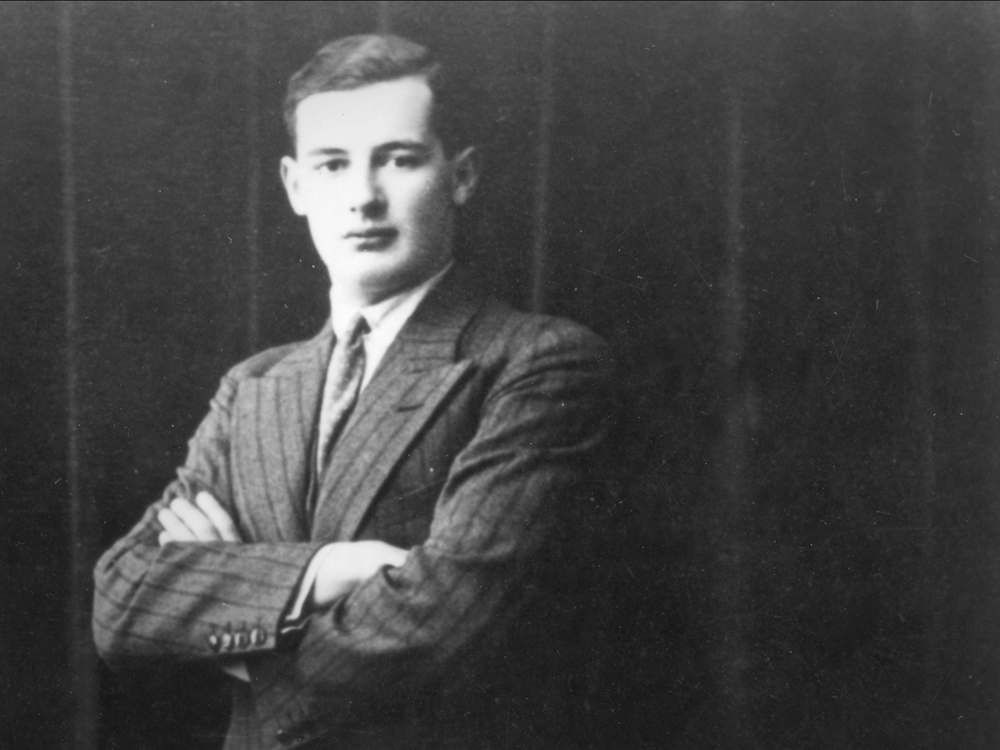
Diplomat Raoul Wallenberg

Documenting surviving Swedes
The museum will focus on surviving Swedes and collect items, interviews and documents about their experiences. Many of these objects are now scattered at museums, archives and private homes.

Related: Danish Nobel Winner Foiled the Führer

Holocaust Museum to be Built in Sweden
Rabbi David Lazar showing a Torah to Swedish Government Minister Stefan Attefall

Jews in Sweden
During 1933–39, some 3,000 Jews migrated to Sweden to escape persecution in Nazi Germany. Because Sweden was neutral during World War II, it became a place of asylum for Jews from occupied Europe: in 1942, 900 Norwegian Jews were given asylum from Nazi persecution and, in October 1943, almost the entire Danish Jewish community, some 8,000 people, was transported to Sweden. Swedish diplomat Raoul Wallenberg also saved thousands of Hungarian Jews in Budapest by providing them with “protective passports”. He also rented 32 buildings, funded by the United States, and declared them Swedish diplomatic facilities, thus bringing them under protection of diplomatic immunity.

Feature image (on top) shows the Malmö Synagogue

Holocaust Museum to be Built in Sweden, written by Tor Kjolberg

Norwegian Pop Singer Wearing Nothing

28-year-old Norwegian pop singer Dagny Norvoll Sandvik, better known as Dagny, hails from the northern city of Tromsø. She is the daughter of jazz guitarist/composer Øystein Norvoll and jazz singer Marit Sandvik. Dagny relocated to London, England in her twenties before her debut single, “Backbeat,” appeared in September 2015. The “Wearing Nothing” single was issued in 2017, with the atmospheric “That Feeling When” following in early 2018. However, Norwegian pop singer wearing nothing, doesn’t literarily means she is naked.

Dagny broke through in 2016 with her killer single ‘Backbeat’. To say it was successful might be a bit of an understatement (it got a premiere from Zane Lowe, and has been streamed a whopping 30 million times), putting huge momentum behind her debut EP ‘Ultraviolet’.

Related: The Norwegian Electro Pop Wizard From Oz

Norwegian Pop Singer Wearing Nothing
Dagny broke through in 2016 with her killer single ‘Backbeat’.

Touring the U. S.
Last year she toured the U. S. for the first time after having released her “first proper love song”, something she believes is “a little overdue” and claiming she has lots of new music she’s ready to share with the world.

In Dagny’s latest single ‘Wearing Nothing’ she is laying it all bare. It is a bona fide pop belter, packed with upbeat electronic percussion and funk-tinged bass that combines with explosive force as she repeats “when I’m with you I feel like wearing nothing”.

Related: 7 Years With Norwegian Singer/Songwriter Hanne Kolstø

Norwegian Pop Singer Wearing Nothing
Last year she toured the U. S. for the first time after having released her “first proper love song”

Norwegian Pop Singer Wearing Nothing
However, just because she’s talking about being naked though doesn’t necessarily mean she’s actually naked. It’s more of a metaphor for being so at ease with someone else that there’s an extreme sense of closeness.

Related: Passionate Norwegian Singer/Songwriter

Speaking of the track, Dagny explains: “The song is called ‘Wearing Nothing’ but it’s not just about wanting to be naked with someone. It’s about wanting to be completely bare together with someone and be as close as possible both emotionally and physically even to the point where a piece of clothing feels like too much in-between. I believe it’s my most intimate song to date”.

Norwegian Pop Singer Wearing Nothing, written by Tor Kjolberg

World’s First Dog Centric Apartment House – in Denmark

A new apartment building located in the Frederikssund Municipality in northern Zealand, Denmark will be filled exclusively with dog owners. Not surprisingly, it’s called “Hundehuset” or “The Dog House”. This is the world’s first dog centric apartment house – in Denmark.

Many potential homeowners looking for an apartment building that allows furry companions, know how difficult it may be.  Sellers of apartments at Hundehuset, however is faced with a new demographic of customers: dog owners. This apartment building was made specifically with dog owners in mind.

Related: Have You Considered House Sitting

World’s First Dog Centric Apartment House – in Denmark
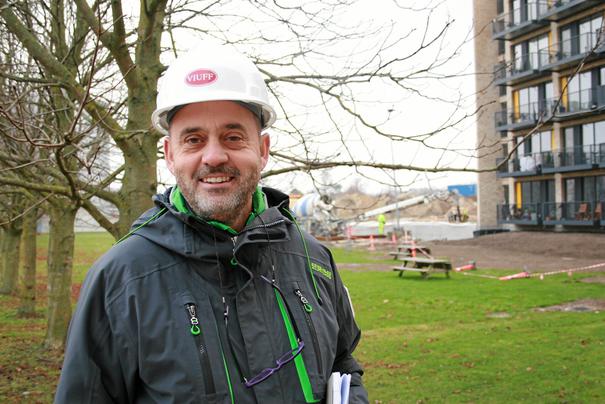
Entrepreneur Niels Martin Viuff (57) came up with the idea of a dog-centric building from conversations with local people

World’s First Dog Centric Apartment House – in Denmark
The three-story complex, about 45km from Copenhagen, should be finished within the next 12 months and its 18 rented flats will be reserved only for tenants with dogs.  Entrepreneur Niels Martin Viuff (57) came up with the idea of a dog-centric building from conversations with local people, so there is, in fact, a market for this.

“There is demand from some dog owners who are tired of there being so many places where dogs are not allowed. We want to meet the needs of dog owners. Many are very lonely,” Viuff said.

You might also like: Norway – The Kingdom of Lakes

World’s First Dog Centric Apartment House – in Denmark
This apartment building is made specifically with dog owners in mind

Advise from the Danish Kennel Club
In putting the project together, Viuff consulted the Danish Kennel Klub. An advisory group helped decide on dog-friendly features like tough flooring and a dog-bathing area in the building’s gardens.

However, there is a catch. Only dogs weighing just under 100 pounds (45 kilograms) can live in the apartment building. Owners with bigger dogs still may need to keep looking. Owners with multiple small dogs are welcomed though.

Related: On Copenhagen’s Amager Island

World’s First Dog Centric Apartment House – in Denmark
In putting the project together, entrepreneur Viuff consulted the Danish Kennel Klub

Innovative housing development
“We’ve never seen anything like this,” Lise Lotte Christensen, a behavioral consultant at the Danish Kennel club, the country’s largest association for dog owners, told a Danish paper. “It’s super exciting, it’s innovative, and we look forward to following the project as it evolves.”

A building devoted to cats is also “on the drawing board,” which we imagine will be significantly quieter.

World’s First Dog Centric Apartment House – in Denmark, written by Tor Kjolberg

50 Years of Living Art in Oslo

The Henie Onstad Art Center outside Oslo, Norway opened its doors for the first time in August 1968. At that time the collection consisted of approximately 300 paintings donated by World and Olympic champion figure skater Sonja Henie and her husband, shipping magnate and art collector Niels Onstad. A lot has happened during these 50 years of living art in Oslo.

50 Years of Living Art in Oslo
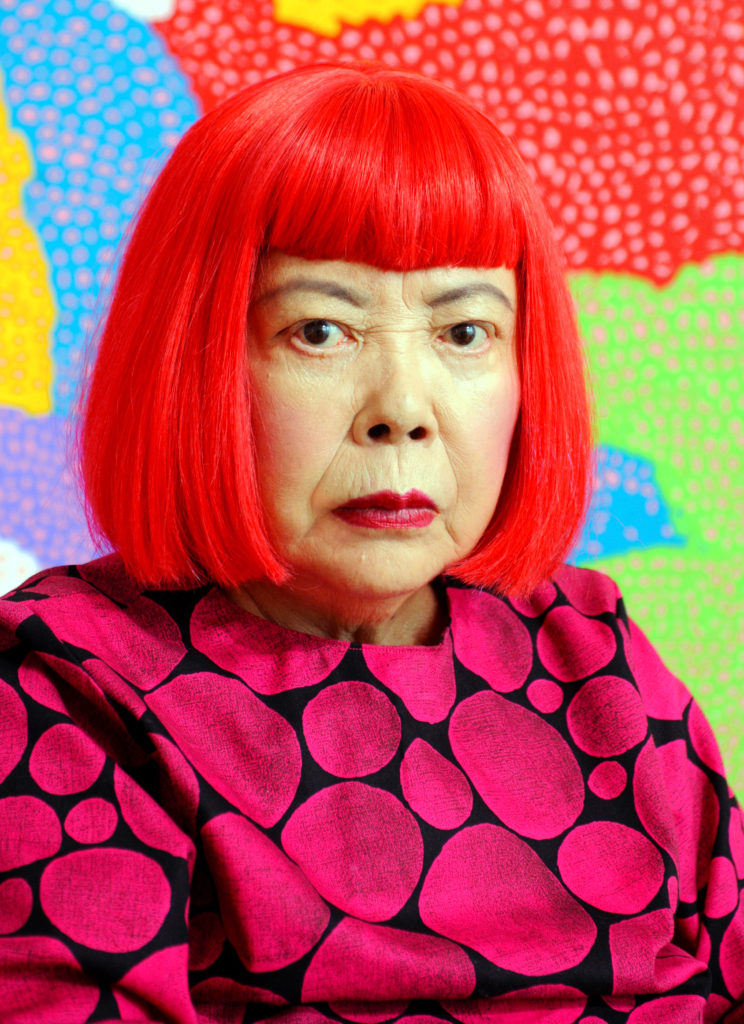
Yayoi Kusama

After 50 years, the collection has grown to more than 4000 works and a new permanent location ‘Hymn of Life’ by Yayou Kusama was inaugurated as a part of the jubilee. Yayoi Kusama is a Japanese artist elected as the world’s most popular artist last year. Although she makes lots of different types of art – paintings, sculptures, performances and installations, she is and sometimes called ‘the princess of polka dots’.

Related: Modern Art – or Just a Beach Day?

50 Years of Living Art in Oslo
The Henie Onstad Art Center, Høvik – Oslo

50 years of living art in Oslo
The art center, designed by Norwegian architects Jon Eikvar and Sven Erik Engebretsen, also contains Sonja Henie’s award collection. In 1994, the building was extended, and a two-story wing with exhibition spaces and technical rooms was added. This project was designed by the same architects—the new wing abuts the main body of the building as an organic extension.

In 2003, another extension was made, this time in the form of an annex that extends into the outdoor park, connected to the main building by a passage leading from the lower level. In addition to six exhibition halls, the Centre also has an auditorium and smaller meeting rooms. The total building area is today approximately 9,500 square meters, of which 3,500 are occupied by exhibition spaces

Related: Kurt Schwitters and Norway

50 Years of Living Art in Oslo
Sonia Henie and Niels Onstad – 1968. Photo: HOK

Turn and face the strange
The Henie Onstad Art Center contains beautiful works from the core collection by Picasso, Miró, Ernst, Dubuffet and Matisse in addition to important works from the special collections consisting of Cobra and Fluxus as well as larger deposits from Sparebankstiftelsen DNB with Schwitters and the historical avantgarde.

Related: Art and Culture in Norway

50 Years of Living Art in Oslo
Kusama 1920×1080

The anniversary exhibit is called “Turn and Face the Strange — 50 years of living art”.  It runs until August next year. Weidemann’s exhibit continues until October 14.

50 Years of Living Art in Oslo, written by Tor Kjolberg

Feature image (on top):
Henie Onstad Kunstsenter marked its fiftieth anniversary with the unveiling of a new work by Per Inge Bjørlo. Photo: Kunstkritikk.

One of Norway’s Most Interesting Pop Artists

Pop artist Kai Gundelach or just “Gundelach” has drawn praise from both media and streaming platforms. Gundelach’x cool falsetto and Nordic-noir analog-electronic production quickly went from being an underground favorite to one of the big cross overs in Norway. His is often cited as one of Norway’s most interesting pop artists.

Also called the Norwegian master of melancholy, Gundelach premiered his latest video, made in collaboration with Oslo singer ARY, earlier this year. Before becoming a solo artist, Kai Gundelach worked as a DJ, having kept his music to himself for several years while playing the clubs of Oslo. It’s a good thing he decided to air them as they deserved to be heard.

Related: Norwegian Pop Band Highasaklite Is Back With Brand New Single

One of Norway’s Most Interesting Pop Artists
Gundelach released his first single, Alone in the Night, in 2015 and the hype has been rising around him ever since. His self-titled debut EP was released in 2016. His single Spiders changed everything. Pharrell Williams played the track on his radio show and the Norwegian was also praised in the UK by BBC Radio 1’s Phil Taggart.

Related: 7 Years With Norwegian Singer/Songwriter Hanne Kolstø

One of Norway’s Most Interesting Pop Artists
Gundelach released his first single, Alone in the Night, in 2015 and the hype has been rising around him ever since

International recognition has also lead to him playing all over Europe and receiving heavy radio play in Germany and the UK. Recently, he signed a deal with American label Terrible Records – joining the likes of Blood Orange, Public Access TV and Solange – and breaking out onto the global stage is now a very real possibility for him.

Related: Musical Electro Waves from Norway Conquer the World

The Universe of Gundelach
Dark and introverted but with danceable rhythms that evoke the neon lights of the dance floor, his songs mix analog synths and soulful R&B vocals with minimalistic, dark electro-pop. The universe of Gundelach is Nordic cool, bleak and cold but full of sexy sounds that touch your soul.

One of Norway’s Most Interesting Pop Artists, written by Tor Kjolberg

World’s First ‘Men-Free’ Festival Held in Sweden

Last weekend the world’s first major ‘men-free’ festival was held in Gothenburg, Sweden in response to sexual offences reported at music events in the country last year.

The idea of a ‘for women only’ festival was thought up by Swedish comedian Emma Knyckare after sexual offences at Sweden’s biggest music festival Bravalla 2017. It claims to be the world’s first festival exclusively for women, trans and non-binary people.

Related: Gender-Neutral Swedish Preschools Produce More Successful Children

World’s First ‘Men-Free’ Festival Held in Sweden
Screenshot from the Statement Festuval in Gothenburg.

Cis-men and cis-women
As well as barring cis men from entry, the new festival only included performances by women, transgender and non-binary artists. Even catering and security personnel were women only.

Cisgender is the opposite of transgender. The term cis-man or cis-woman applies to an individual whose gender matches their assigned sex at birth, whereas a trans or non-binary person is someone whose gender or gender-identity differs.

World’s First ‘Men-Free’ Festival Held in Sweden
Comedian Emma Knyckare thought up the idea of a man-free festival

“We simply want that women, non-binaries and transgender to be able to visit an awesome festival and feel safe at the same time,” said Emma Knyckare and adds,  “I had no idea how much work was involved in organizing a music festival, now I know.”

Related: Leaders in Gender Enlightenment

World’s first ‘men-free’ festival held in Sweden
When questioned on how organizers were going to stop men getting in, Mis Knyckare said, “No-one will be questioned at the entrance, but the festival has hired a specialized security company to develop a specialized ‘access system’.”

To finance the festival, Knyckare and her team first collected donations via a Kickstarter crowdfunding campaign, raising half a million Swedish krona. As many as 300,000 people gave money, which laid the foundations for the festival and a further budget was provided by means of sponsors.

Related: Love and Relationships in Scandinavia

World’s First ‘Men-Free’ Festival Held in Sweden
‘Statement’ claims to be the world’s first festival exclusively for women, trans and non-binary people

Music and comedy
The event featured musical performances from former Eurovision Song Contest winner Loreen, Frida Hyvönen, Joy, Beatrice Eli, Maxida Märak and Tami T. Comedians also played at the festival, including Nour El Refai, Petrina Solange, and Josefin Johansson.

The organizers have a long-term goal of allowing cis men to attend the event.

World’s First ‘Men-Free’ Festival Held in Sweden, written by Tor Kjolberg

The Story of Norwegian Rosemaling

The Story of Norwegian Rosemaling

Rosemaling is the decorative folk painting of Norway and its history began in the low-land areas of Eastern Norway about 1750 inspired by upper-class artistic styles when Baroque, Regency and Rococo were introduced to Norway’s rural cultures. At first Norway’s painters followed these European styles closely.

If you came across this article as a student preparing a research paper, consider delegating the task to https://essayhub.com/ essay writing help professionals. Yet, in case a brief overview will suffice, keep reading this article!

At the beginning of the century, Norway had a population of a mere 500,000 – with only 40,000 people living in what was defined as urban areas. It was a society based on the age-old ways of agriculture, fishing and hunting – and people lived on farms or in cottages scattered across the long-stretched landscape.

So while writing your research, try to take into account all listed features. The art writers from EssayWriterCheap emphasize that cultural differences are the main factors to count on as well as historical background.

The Story of Norwegian Rosemaling
American Rogaland rosemaling

The story of Norwegian rosemaling
Compared to the art of woodcarving and textile art, rosemaling is a much younger art form, at least on a larger scale, and it may come as a surprise that the history of rose painting and its place in Norwegian folk art is not as old as one might think. Painter and author, Nils Ellingsgard, has chronicled the journey of the art form.

The painters who rosemaled for their livelihood were trained within a “guild” and they traveled from county to county painting churches and/or the homes of the wealthy for a commission of either money or merely room and board. Thus, rosemaling was carried over the mountains and toward Norway’s western coast.

Related: Norwegian Stave Churches

The Story of Norwegian Rosemaling
Norwegian rosemaling Telemark style

How did Rosemaling come to America?
Norwegian rosemaling continued its westward migration all the way to America. Emigration was heavy from some of the areas where rosemaling was well established. Travelers packed beautifully rosemaled trunks to make their journey across the Atlantic. Well-known as well as lesser known painters traveled to the New World.

Per Lysne, a Norwegian immigrant from Stoughton, Wisconsin rekindled an interest in Scandinavian folk art when his “Smørgaasbord” plates were sold in Chicago’s Marshall Fields department store in the late 1930’s. European folk art was rediscovered through home decorating magazine articles in the 1930’s and 1940’s.

Related: Art and Culture in Norway

The Story of Norwegian Rosemaling
Norwegian rosemaling on a chest

A traditional form of art
Some of the artists in Norway often worked as farmers during the summer, subsidizing their living in the winter months painting rooms and furniture for more successful farmers.

The art displays many stylized flowers and scroll forms, combining blended colors and fine outlines on a plain background color. Traditional paint colors were derived from local raw materials, for example, rust red came from red iron oxide in the ground. Brushes were made of hairs from a squirrel’s tail or a cow’s ear.

Related: A Short Introduction to Norwegian Literature, Art and Music

The Story of Norwegian Rosemaling
Compared to the art of woodcarving and textile art, rosemaling is a much younger art form

Once farther away from the influence of the guilds, these artists tried new ideas and motifs. Soon strong regional styles developed. The Norwegian authority on the art of decorative painting – or rosemaling Nils Ellingsgard has through his gem of a book, Norsk rosemaling, given us a better understanding of this world of artistic beauty.

As time passed the Telemark and Hallingdal valleys became known for their fine rosemaling.Upon their exposure to rosemaling, rural folk would often imitate this folk art. Not having been taught in an urban guild, the amateur became spontaneous and expressive in his work on smaller objects such as drinking vessels and boxes.

The Story of Norwegian Rosemaling
BNeer bowl from late 1700s. Artist Sondre Peerson Busterud from Telemark

The future of rosemaling
Rosemaling went out of style in about 1860-1870. Whether the traditions will continue to bloom is difficult to predict, but the many surviving objects will stay on and give joy to future generations for centuries to come. Objects that are symbols of our common history – and the many people who created them.

The Story of Norwegian Rosemaling, written by Tor Kjolberg