
Ingmar Bergman’s Passion

In 1960 Ingmar Bergman finished his screenplay to “Through a Glass Darkly”. He wanted to screen the film on the Orkney islands, but the film company realized it would be too expensive, and did everything they could to persuade him to think otherwise. He was taken to the Swedish island Fårö, and fell in love with this windswept destination.

051015-bergman-estate-faaroe
But before his arrival on Fårö, Bergman was somewhat skeptical. His encounter with the island was, however, life-changing. He has said, “If one wished to be solemn, it could be said that I had found my landscape, my real home; if one wished to be funny, one could talk about love at first sight.” For 40 years, Ingmar Bergman lived, worked and found inspiration on Fårö and was to shoot six films and one television series there.

051015-bergman's-passion-feature-image
In 1965 Bergman returned to Fårö, this time to produce “Persona”. To do both outdoor and indoor scenes, a house was erected on a high platform. The view was so stunning that the director wanted to build a house right there. However, the cinematographer Sven Nykvist knew about an even nicer place, a few kilometer further south, and one night they visited the place where “beach and forest meet”.

Ingmar Bergman, Sven Nykvist, Erland Josephson and Liv Ullmann on Faro.

Subsequently he purchased the land and built a house on it. The house was finished in 1967. The architect was Kjell Abramson, who was involved in the rebuilding of the Dramaten theatre in Stockholm, where Bergman was the director. Bergman compared the job to a regular staging. “It’s like sitting with a scenographer, drawing.”

He stayed on Fårö as often as his Stockholm duties would allow until 2003, when he sold his apartment in Stockholm and moved permanently to the island. Since then he very seldom left his new home. In the 1970s Bergman almost realized his plans to build his own film production center there. But the trouble he had with the tax authorities at that time forced him to exile. However, he did build a fully functional studio there, where Scenes from a Marriage was filmed.

Fårö became Bergman’s haven, his creative wellspring and a central character in many of his films. Here he filmed movies twice a day in a converted barn. With its rocky beaches and weather-beaten pine forests, Fårö epitomized Bergman’s unsparing and unsettled internal world.

The Bergman Center on Faro

To Liv Ullmann, who starred in Persona, and was Ingmar Bergman’s girlfriend, it was the beginning of a new life.

Linn Ullman and Ingmar Bergman in the church on Faro

She describes a screening summer of happiness, where the two one afternoon stray away from the rest of the film crew to find a small hill of grey stones – and sat and watched the sea. “There he took my hand and said, ‘You and I are painfully connected’,” she writes.

The films which make the most expressive use of the distinctive Fårö landscape are Through a Glass Darkly, Persona, Shame and A Passion. The barren, stony landscape framed by the Baltic Sea, has often been regarded as a metaphor for some of his characters’ inner emotional states.

For his 70th birthday Bergman invited several of his exes to Fårö. His guest list included Liv Ullmann, concert pianist Käbi Laretei and former leading lady Bibi Andersson. According to Linn Ullmann, who was there, “These are women who know how to go out onstage and be fabulous. And they are fabulous. There was no bad acting. My father hated bad acting.”

Bergman died in his home on July 30, 2007, at age 89. His will, written in the 90s, instructed his heirs to strike the set – to sell off his houses, his cinema and their contents to the highest bidder. He wrote that he wanted no emotional hullabaloo. The proceeds should be divided among his nine heirs.
The question of how the properties were to be administered as the cultural legacy of one of the greatest directors in the history of cinema sparked off a debate that reached far beyond Sweden’s borders.

Bergman had often expressed the wish that these buildings should continue to be meeting places for people working within various types of artistic fields, also after his death. His youngest daughter, the author Linn Ullmann, lived on Fårö during her father’s illness in spring of 2007.

“My father and Fårö was a great love story,” said Linn on an overcast afternoon in July, pointing out the imposing trees he refused to cut back because he wanted to witness the effects of wind and time on them. And yet, rather than celebrate the panorama outside, Bergman contained and framed it, lining his rooms with small windows that allowed only glimpses of forest and sea.

“There has not been a day in my life where I have not been thinking of death, or when it has not touched me,” said Ingmar Bergman once. He chose the place where he would be buried, a corner on Fårö cementry. He wanted distance to the road because he was “so sensitive to sound”.

After Bergman’s death, the family committed the auction houses Christie’s and Bukowskis to sell the properties. The deadline was set to August 2009. The media speculated both in price and buyers. The Swedish government rejected that it would go in and rescue the legacy if the country’s greatest director.

051015-bergman-estate-faro-for-sale
A Norwegian inventor and archaeologist acquired Ingmar Bergman’s home and turned it into an artists’ retreat, to the relief of campaigners who had been fighting for mjust such a project.

Hans Gude Gudesen, who made his fortune in IT, paid an undisclosed sum for the property, which was valued at that time at between €3-4m.

“My father and Fårö was a great love story,” says Linn on an overcast afternoon in July, pointing out the imposing trees he refused to cut back because he wanted to witness the effects of wind and time on them. And yet, rather than celebrate the panorama outside, Bergman contained and framed it, lining his rooms with small windows that allowed only glimpses of forest and sea.

Hans Gude Gudesen became aware of Linn Ullman’s plans for the properties and contacted her. Under the leadership of Linn Ullmann and Brit Bildøen, and in cooperation with a dedicated Board of Diretors, the important and time-consuming work of developing and formalizing what was to become the Ingmar Bergman Estate.

Ingmar Bergman's grave
Ingmar Bergman’s grave

In May 2010 The Bergman Estate on Fårö welcomed its first guests.

Ingmar Bergman’s Passion, written by Tor Kjolberg

Related article: The Best of Bergman

Could a Norwegian Saved Greece From Drowning?

0

Secretly the disputed Greek Minister of Finance, Yanis Varoufakis, tested out the possibility of introducing a parallel electronic payment system. Behind the model is the Norwegian scientist Trond Andresen.

The premise for the proposal was that the Greek government had a breathing space of a couple of months. At the end of that period a parallel electronic currency could have been put into circulation.

Trond Andresen, ntnu

Trond Andresen, scientist at The Norwegian University of Science and Technology Department of Engineering Cybernetics, Trondheim, Norway, was the first to argue for this, and he has long been pushing for such payment systems. Several times in recent years he has published articles in which he explains in detail how Greece could go forward.

“Such a mobile-based transaction system may be implemented through one of the technically proven schemes already in successful operation in some developing countries, also recently put in operation by the central bank of Ecuador. The system may be implemented to work also with older models of mobile phones, since it may be SMS-based (but there will be apps for smartphones),” he writes in one of his articles.

“My argument has been that a parallel electronic currency will speed up the Greek economy and also strengthen Greece’s position in negotiations with the EU,” says Andresen to the Norwegian newspaper Aftenposten.

The advantages of an electronic payment systems versus bills and coins are among others that the system can be implemented fast, and adjustments that turn out to be needed can be implemented in software, therefore very easily and cheaply. In addition the system is very cheap to run, compared to a system with notes and coins. And forgery is impossible.

News agency Bloomberg has expressed doubt to the system, but Varouflakis has talked openly about his “Plan B” with his team.

GREECE FINANCE

The Greek paper To Visma printed a long article with the heading, “Yaris, Andresen’s Adventure and Trondheim Drachmas”.

Andresen met Veroufakis in Australia in 1997 and To Visma calls him “the visionary from Norway”.

“It’s fun that Veroufakis would test the model that I have written about and promoted for five years, but I’ve never been a part of Varoufaki’s secret team,” said Andresen to Aftenposten.

Could a Norwegian Saved Greece From Drowning? compiled by Admin

Scandinavian Omelet

0

Thick omelet with tomatoes, chives and bacon. Serve with toasted rye bread, which is a completely different thing untoasted.

The toasting brings out the caramel flavor. Leftovers are eaten the day after as a topping for open sandwiches.

In a thick iron pan, fry the bacon in the butter until crisp. Remove the bacon.

Beat the eggs and then add them to the pan and fry in the bacon fat and butter. As soon as the eggs start to get stiff, lift the edges of omelet and tilt the pan so more runny eggs goes underneath.

Arrange the tomato and potato slices on the omelet. Fry until the egg is still gooey and then let the heat from the pan do the rest of the cooking.

021015-scandinavian-omelette-2
Scatter with chives and serve immediately with the bacon.

12 bacon rashers
50g butter
12 eggs
3-4 tomatoes, sliced
Maybe a few sliced boiled potatoes
Large bunch of chives, finely cut

Serves 4

Scandinavian omelet: Enjoy! Greetings from Admin

The Royal Past of Lindøya, Oslo

0

Lindøya is a small island located in the Oslo fjord, just south of central Oslo. Administratively it belongs to the borough of Gamle Oslo (Old Oslo).

In 1920, Lindøya was the Oslo base for the pioneer Norwegian airline, Det Norske Luftfartrederi, and its seaplanes. The operation only lasted until the autumn of 1920. When regular seaplane routes were again established in 1927, the operation was moved to neighboring Gressholmen.

Lindøya, Oslo east side

Today Lindøya is connected to Oslo from Town Hall Pier #4 by means of two boat routes: line 92 which docks on the western side of the island, and line 93 which docks on the eastern side. Service is year-round although very limited during the winter season.

However, once the island was restricted to the conditioned and the Royal Family.

The 'Regulars' House' at Lindøya, Oslo
The ‘Regulars’ House’ at Lindøya, Oslo

There is a beautiful empire-house on Lindøya. The hipped roof between heavy trees suggests its ancient origins. It is the former inn Stamhuset (The Regulars’ House), originating from a time in the 1700s, when Mogens Broch had an inn there.

Christiania Hunters Club at Lindholmen, Oslo
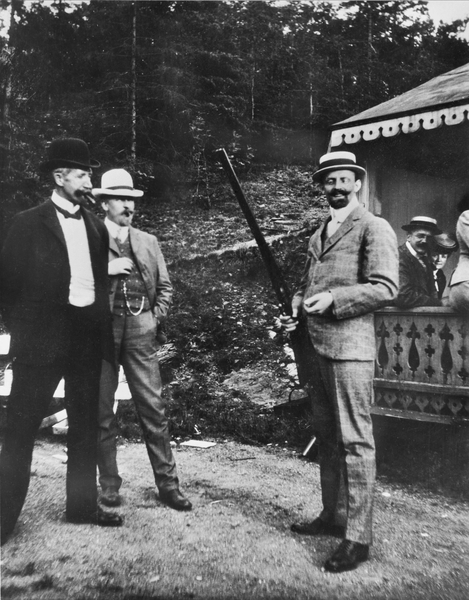
Christiania Hunters Club at Lindøya, Oslo

Most people in Christiania, as Oslo was called at the time, considered Lindøya with awe, since the distinguished Christiania Hunters Club was housed there. Membership was reserved for men of the upper classes and professions, such as wholesalers, professors, lawyers and landlords under the motto “mutual comfort and entertainment.”

Cabins at Lindøya, Oslo

The association was proudl to have King Oscar II among its members. He stayed frequently at his cottage on the west side of Lindholmen. You may see his former somewhat elaborate cabin if you take the ferry to Nakholmen.
In the 1900s, however ordinary working people began to settle on the island and the upper class people’s desire to stay there disappeared. The only explicit reminiscence is the Regulars’ House down by the northern ferry pier.

Feature image (on top): King Oscar II’s hunting cabin at Lindøya.

The Royal Past of Lindøya, Oslo, written by Tor Kjolberg

Scandinavian Royal Line

Monarchy is alive and well in Scandinavia. Sweden, Norway and Denmark all have royal figureheads. Learn more about the Scandinavian royal line.

Monarchy could hardly be more entrenched than in Denmark. Queen Margrethe II is the 53rd in an unbroken line of sovereigns spanning more than 1,000 years. She became Queen of Denmark in 1972.

300915-Queen-Margrethe-II-of-Denmark
Sweden, too, has had more than 60 kings since 980. The present King Carl Gustav may be “XVI”, but his direct line begins with Jean-Baptiste Bernadotte, the French marshal who became heir apparent in 1810 and Sweden’s king in 1818.

STOCKHOLM, SWEDEN - MAY 22: King Carl XVI Gustaf of Sweden attends the christening of new Swedish heir to the throne Princess Estelle Silvia Ewa Mary of Sweden at The Royal Palace on May 22, 2012 in Stockholm, Sweden. (Photo by Chris Jackson/Getty Images)
Norway’s royal line ceased when Norway became a Danish province and the monarchy was only restored, after a referendum, following the dissolution in 1905 of the subsequent union with Sweden. The present king, Harald V, is the third of the modern line, the “V” notwithstanding.

300915-hmk-king-harald-v-of-norway
Not a little craft has gone into keeping the Scandinavian monarchies in good health. When Carl XVI Gustav ascended300915-swedish-king-2 the Swedish throne in 1973, the Constitution began with: “The King alone shall govern the realm…” Lest he got the wrong impression, this was hastily changed to: “All public power in Sweden emanates from the people…”

The king decided his own official motto ought to be: “For Sweden – in keeping with the Times.”

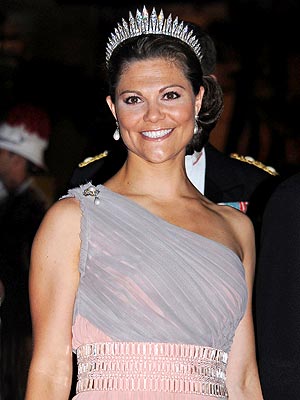
This was the cue for changing the rules of succession so that they no longer discriminated against daughters. Consequently, next in line is Crown Princess Victoria rather than her younger brother.

300915-crown-princess-victoria-of sweden
In 2010, the Swedish royal house had some dramatic highs and lows. Princess Victoria married her beau Daniel Westling in a ceremony that drew crowds of half a million onto Stockholm’s streets. But later that year, revelations about Queen Silvia’s father’s Nazi connection came hot on the heels of a best-selling biography about the king, which contained details of his wild sex life.

300915-king-of-sweden's-hats
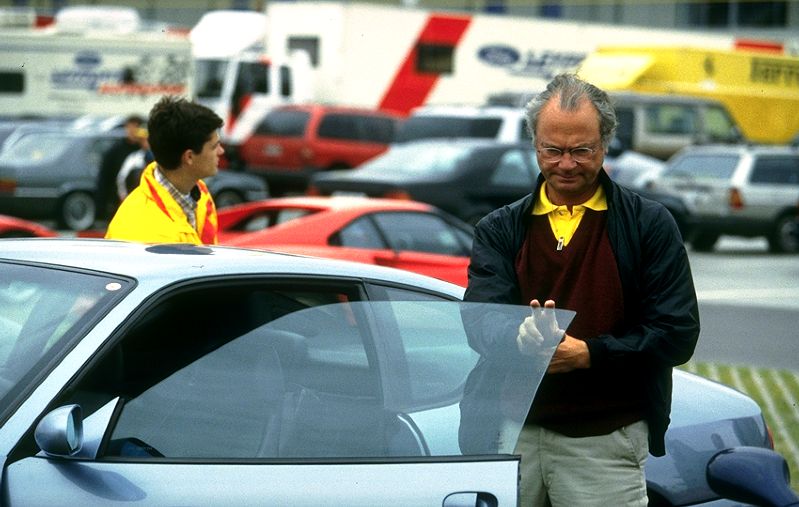
Carl Gustav is also not averse to tearing around in a Ferrari, and was reported to the police in Denmark for doing an alleged 250kph (155mph) on the Copenhagen expressway.

300915-king-carl-gustav-of-sweden-and-his-ferrari
In contrast, King Harald loves boats, representing Norway at the Olympic Games, and winning the European championship in 2005 – right after a heavy bypass. Unlike his Swedish counterpart, Harald would not be seen dead in a Ferrari. He uses public transport.

300915-sailing-champion-king-harald-of-norway
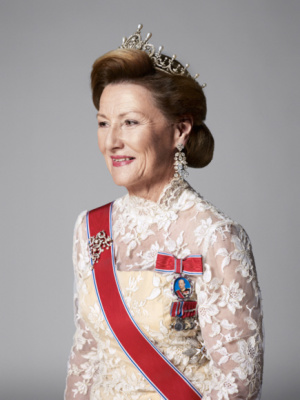
Queen Sonja is the daughter of an Oslo shopkeeper and their children went to state schools.

300915-queen-sonja-of-norway
Fittingly, the Crown Prince found himself a bachelor flat in an unfashionable part of Oslo, but let the side down, as it were, by sharing it with a waitress, and her three-year old son by a man who was in prison for drug offences; they are now married and have two children of their own. Despite her fear of flying, the crown-princess has travelled the world with her husband Haakon, and has made official visits to India, United Kingdom and the United States.

300915-crown-prince-haakon-of-norway-2011300915-crown-princess-mette-marit-of-norway


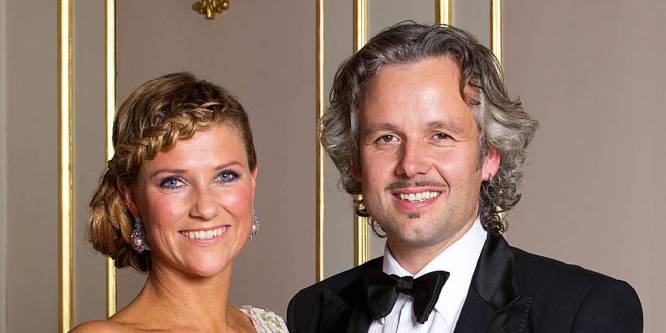
Daughter of King Harald and Queen Sonja, Princess Märtha Louise of Norway, married a Norwegian disputed author, Ari Behn in 2002. They divorced in 2017, and Ari Behn died in 2019. Later, she faced criticism from her own family after she collaborated with an American clairvoyant who contacts the dead.

300915-martha-louise-and-ari-behn
In August this year, Sweden’s Crown Princess Victoria, 38, and  Crown Princess Mette-Marit of Norway, 42, who had a busy schedule returning from a family holiday in France – and despite pregnancy rumors – joined force in the picturesque town Halden to promote UN’s global climate change campaign.

300915-Victoria-Sweden-Mette-Marit-Norway-UN's-climate-change-campaign-halden-norway-august-2015
If conscientious exercises in non-charisma go down well in Norway, Queen Margrethe could not hope to do the same in Denmark. She has been showered with academic honours from the likes of Cambridge, Oxford and the London School of Economics. While trying unsuccessfully to hide her distinguished output as a painter, writer and designer behind a string of aliases, she has at least persuaded her friends to call her Daisy. The Queen’s artistic works are represented at  Statens Museum for Kunst (National Gallery of Denmark), ARoS Aarhus Art Museum, , and Køge Art Gallery Sketch Collection (sketches for church textiles).

300915-Queen-Margrethe-II-of-Denmark-as-artist
Crown Prince Frederik, her heir, is not much better at disguise. Dressing down for a night on the town, he turned out so scruffy that the bar refused to let him in. As a trained soldier, no mean dancer and the leader of a husky-drawn expedition across Greenland, Frederik’s status as a dashing bachelor ended in marriage to Australian Mary Donaldson, with whom he now has four children.

300915-happy-crown-prince-frederik-of-Denmark
Scandinavian Royal Line, written by Tor Kjolberg

The Road to Norway

Today we proudly present the stunning photos taken by photographer Gianluca La Bruna and his comments on his visit to Norway a couple of years ago.

Born and raised in Italy, Gianluca rented a car and hit the roads of Norway. The following story, is Gianlucas own, accompanied by his stunning photos from the trip.

310815-Road-To-Norway_2-Gianluca-La-Bruna” I’m originally from Italy and my city is in front of the sea side. Summer to me has always meant warmth, sea, and beaches. I think most of the people that come from my town tend to avoid cold weather.

But in the summer of 2013 I just felt like I wanted to do something different. I felt like I needed nature, wilderness, breathless landscapes and silence, interrupted only by the echoes of the waterfalls. What I needed was a road trip. Away from the unbreathable hot air, away from everything I knew, away from everyone I know. I wanted to go to Norway!

As many people do before starting a travel to a new country, I started to read.
I swallowed some Norwegian books (Hamsun, Erlend Loe, Nesbø and some plays by Ibsen), while listening to Grieg, in order to be emotionally prepared for the trip.

I also saved some money, because the first thing everybody told me was that Norway was super expensive. For this reason, I decided to rent a car

in Sweden, fill it up with every kind of food, my tent, my backpack and a couple of cameras, and I took a ferry from Strömstad to Sandefjord.

310815-Road-To-Norway_03-Gianluca-La-Bruna
“Here I am”, I thought. I was in Norway with a map but with no clue where to go. According to my budget I had two weeks more or less. Two weeks to experience as much as I could. I decided to travel the South, to reach the West coast and to go back. Just a car and the road.

310815-Road-To-Norway_04-Gianluca-La-Bruna
I went to Risør, in Aust-Adger county. There, a nice young guy told me that I just missed the most important event in that city: a wooden boat festival that attracts many tourists. I didn’t care that much actually, because that white wooden town attracted me like no others. There, I really felt that I was in the North, far from everything, and I decided to forget my map. I just kept in mind that in three days I needed to be in Stavanger, then… whatever, I would have checked later.

310815-Road-To-Norway_06-Gianluca-La_Bruna
My travels through fjords had just started, I didn’t pay attention to the names of the little jewels I discovered, but I remember every single face I talked with, every food, every animal, every waterfall.

310815-Road-To-Norway_091-Gianluca-La-Bruna
I had to stop while heading to Stavanger, because I saw some crystal-clear water gushing from white rocks, and in the middle, a little rainbow! “You got to be kidding me!” I thought.

310815-Road-To-Norway_07-Gianluca-La-Bruna
When I got to Stavanger it was raining. A lot. Stavanger is in the Rogaland county, it has a famous university and its music scene is exciting. Here I met two girls, they played in a metal band (they talked to me about music in Stavanger) and with a pint in my hand, they told me about the Pulpit Rock (Prekestolen in Norwegian). They also told me about this tongue of rock suspended 600 meters onto a magnificent fjord. I am forever thankful to these girls for letting me know about this place!

310815-Road-To-Norway_08-Gianluca-La-Bruna
The morning after my destination was Forsand, a little town where the Pulpit Rock is located.

Well, at first I wondered how on earth I ended up in here? It was pouring rain, the parking lot was unbelievably expensive, and from where I was the Pulpit Rock appeared like an ordinary brushwood. I neither had proper clothes, nor proper shoes. After five minutes outside my car, I was soaked to the bones. Miserable, I decided to walk, not to throw away 100 NOK of parking fee.

310815-Road-To-Norway_16-Gianluca-La-Bruna
Maybe “walk” is not the appropriate word. At some points I had to climb, to jump, to fall, to clasp rocks, and so on, but after 2 km (it is 3.8 km to reach the top) it was not raining anymore, and I was actually flushed, striving for reaching the end of the path.

310815-Road-To-Norway_151-Gianluca-La-Bruna
And all of a sudden, there it was. The Pulpit Rock, and the Lysefjord that opens up in front of your eyes. It was really early in the morning, so there were not many people around, apart from some very nice Dutchmen that took a picture of me while I was lying on my stomach looking straight into the nothingness.

310815-Road-To-Norway_18-Gianluca-La-Bruna
Coming down was bittersweet, I wanted to stay the whole week on the top, but at the same time I felt the evil pleasure of seeing all the tourists who had started to flow panting for the scale.

310815-Road-To-Norway_111-Gianluca-La-Bruna
In the evening at my camp, I met an Australian guy who was on his way to Bergen to meet his Irish girlfriend, who was studying there for her Erasmus. We played guitar together, jammed in front of a bonfire, and he gave me his metal kazoo which I still have on my bookshelf.

Anyway, he asked me to follow him to Bergen. Bergen was a hell of a detour for me, but fair enough, we went to Bergen.

Bergen, in Hordaland, is the second-most populated city in Norway, and is truly amazing! I stayed two days there, which is the longest stay I had in one place in Norway. I, my new Australian friend and his girlfriend admired the remains of the quays, Bryggen, a World Heritage Site and (shame on us) we tasted whale meat. I know, one’s not supposed to do that, it’s bad. In our defense, I can say that we were on tourist frenzy, it was 4 or 5 days that the sun didn’t show up, and we needed to try new stuff. At the fish market, the nicest I’ve ever seen, I also met an Italian guy. He told us that with the money he earned from that job (which I think must have been a tough one) he could afford 6 months rent of a studio in Paris.

Well, now I had to head back, my money was running out.

Going towards Oslo, I wanted to pass through the county of Telemark, with its heterogeneous landscape (they say it’s like a small Norway itself, representing a heap of all Norwegian landscapes), full of stavkirker (stave churches) (typical Norwegian wooden churches) and stabbur (storehouse on pillars).

310815-Road-To-Norway_17-Gianluca-La-Bruna

Rjukan got my attention: a former industrial town that got its name after the close 104 meter waterfall Rjukanfossen. It’s famous for the Vemork hydroelectric plant. An old man there told me that in 1944 some Norwegian partisans sabotaged its machines, so that the Nazis were not able to make experiments with heavy water for the atomic bomb. It is really a powerful building.

There I also had a ride on the Krossobane, a cableway built to let the workers of the plant enjoy some sun now and then, since the valley is in the shade for the major part of the winter. Krossobanen was the first cable car to be built in Northern – Europe.

After Rjukan I meandered aimlessly through Telemark, meeting loads of people, eating the best salmon I’ve ever had (and also the worst food I’ve ever had: a cheap tin can of an already made reindeer stew), seeing beavers and even seeing a family of moose; two adults and a little dude. I almost set on fire a wooden bench, met a German couple that cooked on my grill (and err… destroyed it), caught by surprise by five rainbows one attached to the other, played guitar alone in the dark, walked barefoot on the grass while a creepy mist was rising from the ground. All of this and much more I left behind in Telemark.

When I finally got to Oslo, after a long trip accompanied by the sweet music of Kings of Convenience, I was kind of sad. I mean, I really liked Oslo, but I already missed my wandering into the wild. Luckily, I happened to be in Oslo during the year of the 150th anniversary of Edvard Munch’s birth. That meant that I had the chance to admire two exhibitions of this fantastic Norwegian painter completely for free.

310815-Road-To-Norway_Gianluca-La-Bruna
When I got back to the city I felt dazed, bewildered. I had the feeling that Norwegian nature had changed me, in some way.

After all, isn’t it good, Norwegian wood? ”

The Road to Norway, written by Gianluca La Bruna
All photographs: Gianluca La Bruna

310815-Gianluca-La-Bruna-on-twitterGianluca La Bruna
is an Italian photographer who has been working as a photographer, exploring several photography fields.

He is also a photojournalist, event photographer (music concerts, festivals, ceremonies, conferences), cinema and theatre photographer, food photographer, landscape photographer, portrait photographer and wedding and child photographer. He also shares his iPhone pictures on Instagram – exactly as you do!
This article has previously been printed in This is Scandinavia. We thank the publisher and Gianluca for their kind permission to republish the article with images.

The Viking Mystery on Greenland

0

What happened to the Greenland Norse? Why did the Vikings on Greenland disappear? The answer will probably never be revealed.

The mystery has been given many names, from Greenland’s Pompeii to the Farm under the Sand. In the mid-fourteenth century there was the site of a Viking colony founded on the southwestern coast in a fjord-indented ribbon between the glaciers and the sea. Archaeologists Jette Arneborg of the Danish National Museum, Joel Berglund of the Greenland National Museum, and Claus Andreasen of Greenland University could not have guessed what would be revealed when they excavated the ruins of the five-room, stone-and-turf house in the early 1990s.

Old Greenland map
Old Greenland map

The first Vikings came to Greenland more than 1,000 years ago. After almost 500 years they disappeared leaving no trace.

Did they starve to death or did all die of an epidemic? Were they killed and exterminated by the inuits? Did they return to their home countries because of the Little Ice Age? Did they seek their luck further west towards America? Or were they overpowered by pirates?

250915-norse-history-vikings-greenland
As the team of archaeologists dug through the permafrost and removed the windblown glacial sand that filled the rooms, they found fragments of looms and cloth.  They found household belongings, including an iron knife, whetstones, soapstone vessels, a double-edged comb and iron and caribou antler arrows, weapons needed for survival in this harsh country, medieval Europe’s farthest frontier.

Skeletpn igaliku. Photo: Jette Arneborg

The descendants of the Vikings had persevered in their North Atlantic outpost from the end of the 10th century until the mid-15th century. The Medieval Warm Period had made it possible for settlers from Norway, Iceland and Denmark to live on hundreds of scattered farms along the protected fjords, where they built dozens of churches and even had bishops.

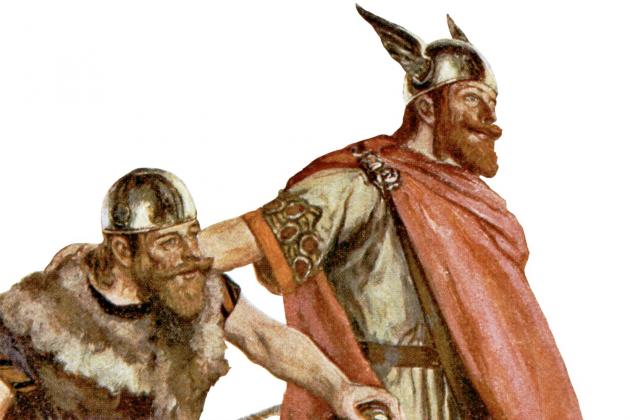
Eirik Raude
Eirik Raude

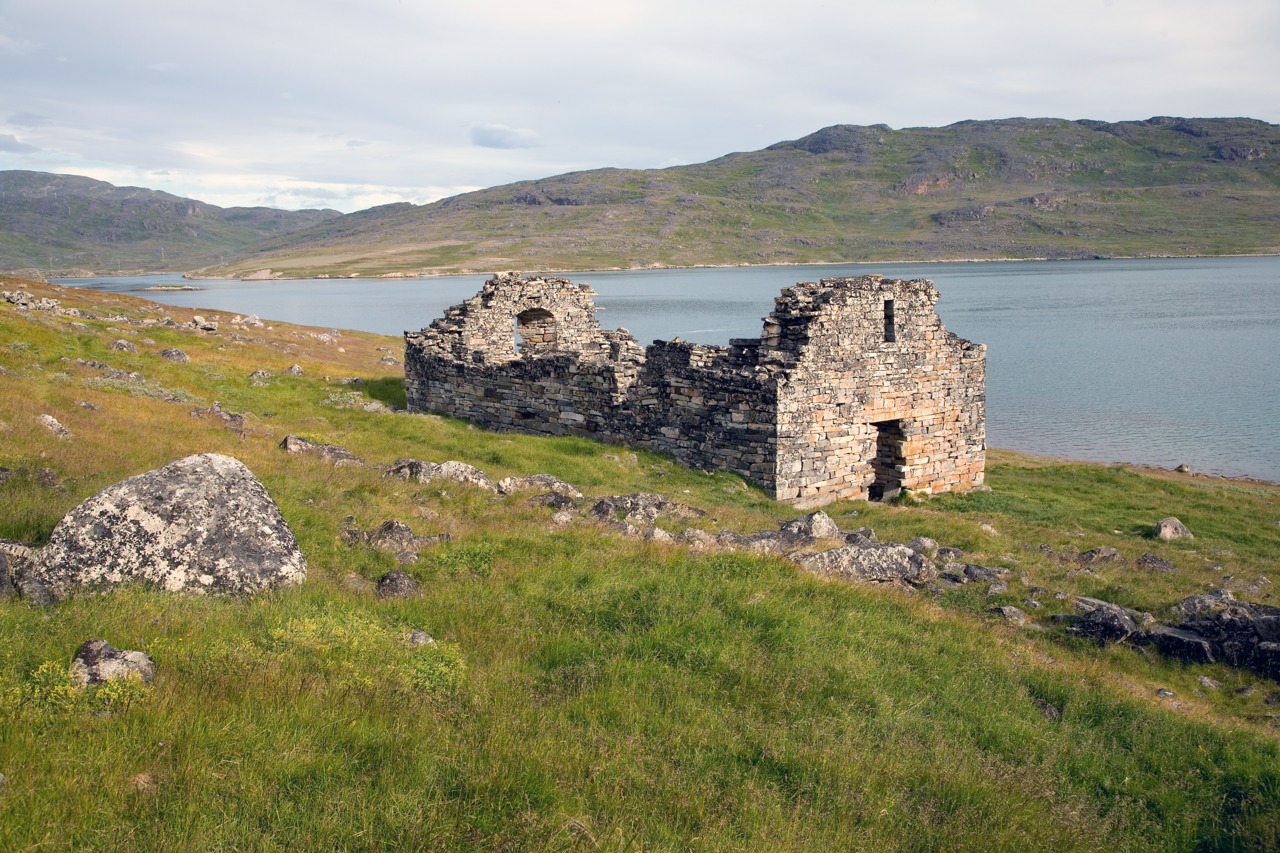
According to the saga tradition, it was the Norwegian Viking Eirik Raude who discovered Greenland in 982, when he as an outlaw escaped from Iceland. On 986-86 and the following years, hundreds of Vikings colonized the large island west in the Atlantic. The last written source from the Norse society is from September 14, 1408 when Thorstein Olafsson and Sigrid Björnsdottir were married in a church on Hvalsey Fjord in Greenland. The marriage of the Icelander and the girl from Greenland was one of the last raucous festivals in the far northern Viking colony. It all ended soon afterwards.

Ruins of Hvalsey Church

The disappearance of the Vikings on Greenland has intrigued students of history for centuries.  One old source claims that Skraelings (inuits) who had crossed over from Ellesmere Island in the far north around A.D. 1000, migrated down the west coast and overran the settlement.

Ivar Bardarson, steward of the Church’s property in Greenland, and a member of a sister settlement 300 miles to the southeast, was said to have gathered a force and sailed northwest to drive the interlopers out, but “when they came hither, behold they found no man, neither Christian nor heathen, naught but some wild cattle and sheep, and they killed as many of the wild cattle and sheep as they could carry and with them returned to their houses.” The death of the Western Settlement portended the demise of the larger eastern one a century later.

Their disappearance remains a mystery to this day. Until now, many experts had assumed that the cooling of the climate and the resulting crop failures and famines had ushered in the end of the Scandinavian colony. But now the Danish-Canadian team of scientists believes that it can refute this theory of decline.

Recent research is little by little removing the enigmatic veil. Most scientists now agree that climate change, along with other factors, forced the Vikings away from Greenland. A recent study from the National Geological Survey of Denmark and Greenland (GEUS), in collaboration with Aarhus University, supports this theory.

The scientists conducted isotope analyses on hundreds of human and animal bones found on the island. Their study, published in the Journal of the North Atlantic, paints the most detailed picture to date of the Nordic settlers’ dietary habits.

The study shows that the climate changed around 1200. The winters were colder, there was more sea ice, especially during summer time, and the coast was hit by strong winds. All this made it difficult to sail in and out of the fjords by ship. This caused dramatic consequences for the Norse settlers, since they practiced hunting, fishing and extensive trade.

Thomas McGovern of New York’s Hunter College, also supports this theory. He participated in the excavations in Greenland and has proposed that the Norsemen lost the ability to adapt to changing conditions. In their reluctance to see themselves as anything but Europeans, the Greenlanders failed to adopt the kind of apparel that the Inuit employed as protection against the cold and damp or to borrow any of the Eskimo hunting gear.

As the research shows, hunger could hardly have driven the ancestors of the Vikings out of their settlements on the edge of the glaciers. The bone analyses prove that, when the warm period came to an end, the Greenlandic farmers and ranchers switched to a seafood-based diet with surprising rapidity. From then on, the settlers focused their efforts on hunting the seals that appeared in large numbers off the coasts of Greenland during their annual migrations.

In 1261 Greenland became formally linked to the Hereditary Kingdom of Norway and had through the Norwegian king a trade agreement. The social and cultural contact was strong. Christianity was introduced also in Greenland and the first churches were built. The first was probably erected at Brattalid, reportedly at the request of Eirik Raude’s wife, Tjodhilde, early in the 1000s. In 1124 the diocese Gardar was established and later ruled from Nidaros.

Norse ruins, Brattalid

Although the presence of the Church had originally uplifted the Greenlanders, it now became their burden. By the middle of the fourteenth century, it owned two-thirds of the island’s finest pastures, and tithes remained as onerous as ever, some of the proceeds going to the support of the Crusades half way around the world and even to fight heretics in Italy. Church authorities, however, found it increasingly difficult to get bishops to come to the distant island. Several clerics took the title, but never actually went there, preferring to bestow their blessings from afar.

250915-vikings-bookThe biggest question in the Viking mystery is still unanswered: Where did the people in the region go? How can an entire settlement disappear without a trace?

“It is most likely that they traveled back to their countries of origin, such as Iceland and Norway, but it’s a bit odd that there is not a single story about people who have returned from Greenland. Just as when they came in 985, the Norsemen obviously have emigrated as a large group. The whole group could thus have disappeared in the storm or been caught in the ice, but this is just speculation, “says Antoon Kujpers, senior marine geologist at GEUS.

The Viking Mystery on Greenland, written by Tor Kjolberg, inspired by the Time-Life book Lost Civilizations, edited by Dale Mackenzie Brown, who lives in Alexandria, Virginia

Norwegian Tronder Farms and Food

0

The characteristic farm houses in the county of Trondelag in the middle of Norway are worth a visit, since they testify that people in Trondelag take care of their traditions.

The Tronder farms are known for their good food, especially for Christmas. Beef and pork were treated and prepared according to etiquette, and this also applied to batches of bread and griddle cakes.
260815-lynum-farm-trondelag-norway
260815-beautiful-tronder-farms-bookThe Lynum Farm in Skogn is described in the book “Vakre trøndergårder” (Beautiful Tronder Farms) by Birger Sivertsen (2007).

Before 1900, however, the range of food was rather sparingly in Trondelag. ‘Goro’ fried in an iron long-pan over open fire and Christmas bread in the oven were made for special occasions.

The working people often received such a bread and a bottle of liquor for Christmas.
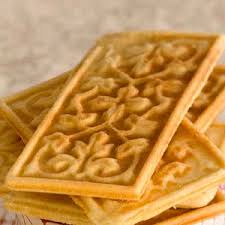
Norwegian Goro Crackers
So few people cook Norwegian goro “crackers” nowadays that they can become a signature gift for cooks who take the time to bake them for friends and teachers during the holidays. They are sort of a cross between a cookie, a cracker, and a waffle – not too sweet, and quite possibly the most beautiful of all Scandinavian baked goods.

260815-norwegian-goro-cracker
INGREDIENTS

3 eggs
1 cup sugar
1 Tbsp. vanilla sugar (or 1 tsp. vanilla)
1 cup whipped cream, whipped to firm peaks
1 cup butter, melted
1 Tbsp. brandy or cognac (optional)
6 to 7 cups all-purpose flour
1 tsp. freshly ground cardamom
1/2 tsp. cinnamon (optional)

Prep Time: 20 minutes

Cook Time: 10 minutes

Total Time: 30 minutes

PREPARATION

Trace a rectangular pattern the same size as your goro iron onto parchment or other paper; cut out. Spray goro iron lightly with cooking spray and heat, closed, over medium-high burner until a drop of water sizzles on the surface when opened.

Beat together three eggs, sugar, and vanilla sugar (or vanilla). Fold in whipped cream and melted butter. Stir in cognac, if using. Sift together 6 cups of flour, cardamom and cinnamon, then mix into batter.

Add additional flour, if needed, until dough is very firm (it should be about the consistency of pizza dough).

Separate the dough into thirds, and roll each portion out on a floured surface to a 1/8″ thickness. Place paper pattern on dough and cut squares the size of your goro iron.

Transfer each dough square to the goro iron, close iron, and cook the first side for 3-4 minutes, pressing the iron’s handle together lightly to impress pattern upon the cracker.

(Note: keep a wet towel on hand to immediately wipe up any butter than leaks from the press). Flip iron and cook for an additional 3-4 minutes, until both sides of cracker are golden brown.
Transfer cracker to rack to cool; while still warm, cut into the individual sections and trim off outside edges (if desired). Repeat process with remaining dough (rerolling scraps as necessary).

Freeze or store in an airtight container.

Yield: Approx. 48 goro cookies.

260815-saga-center-for photography
In a quiet environment, with beach property, just steps from the center of Straumen, you find SAGA, the new creative center in Inderøy. You can stay in one of our five spacious double rooms, enjoy a delicious breakfast and sit outside to enjoy the view of Borgfjorden.

There is a photographer in the house, who can perpetuate the memories from your trip, if desired.

Booking:
Tel.: +47 95 47 69 66
E-post: post@sagasenter.com

Norwegian Tronder Farms and Food , compiled by Tor Kjolberg

Action film and the Bible in Denmark

0

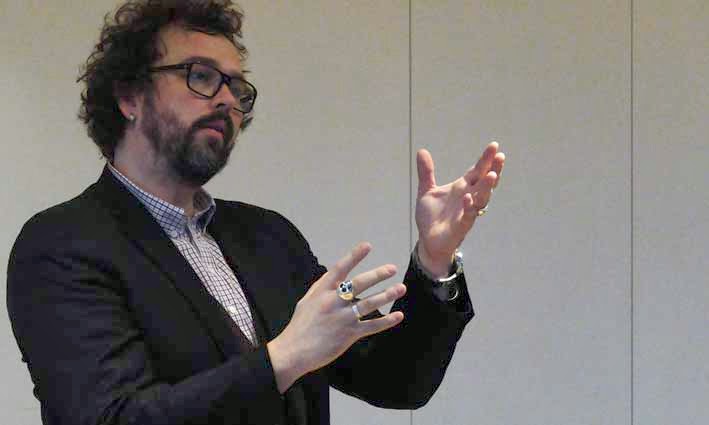
“Some ways of presenting art are more valid than other,” says the Norwegian director/curator Erlend G. Høyersten at Aarhus Art Museum in Jutland, Denmark. Is it possible to create an exhibition that is neither historically nor thematically chronological, and which does not leave the public in the middle of a cloud without instruments? 

240915_erlend-hoyersten
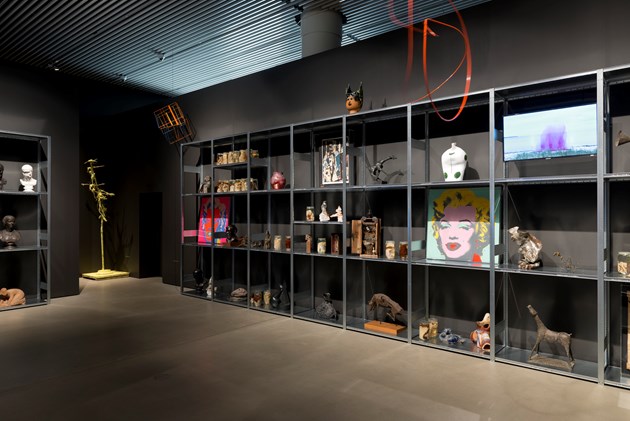
ARoS Aarhus Art Center in Denmark has taken the challenge by presenting the exhibition Out of Darkness- The exhibition runs through December 31.

Some ways of presenting art are more valid than others. The most widespread are modelled on traditional art history and structure their presentation according to date, geography, schools of art or relationships. We talk of this as a historical and chronological approach. It is based on the Darwinist idea that art undergoes a development to which there is a beginning and an end.

240915-ARoS_art-museum-aashus-denmark
In the western world’s homogenous view of the world and culture as having relatively few outstanding figures, as was the case during the 15th-century Renaissance or the 17th-century Baroque period, this makes sense. Indeed, even far into the 19th century this is an appropriate way of describing and presenting the artistic cohesion. Today, however, there are not many who would be inclined to view developments in the history of art purely in this way. Both the world and art are too complex for this. There are various currents and counter-currents, breaches and developments that at times are related to each other and at other times bear no relationship to each other at all.

A series of different explanatory models – social, economic, gender related – are used to gain an understanding of the creative force behind that thing we call art. In the light of this, the chronological approach emerges as something of an ana- chronism. And yet it nevertheless makes sense. So many museums, including ARoS, still choose to present art as a series of connected events. Picasso always comes after Cézanne. Why? Because we need structure and systematism and because we need meaningful stories.

240915-out-of-darkness-aros
Although there is a great difference between the first Wunderkammers (in which every conceivable kind of curiosity could be brought together in a single room) and the colossal museums of today containing millions of objects, it is all about the same thing: understanding the world by catching hold of the world. It makes sense to understand context by means of a story.

For the last 20 years – alongside the collapse of the grand narrative – curatorial approaches have been based on a fundamental idea or a theme that has become the guiding principle behind an exhibition. Chronology has become less important, although it is still fundamental when presenting “the political 60s”, “gender and identity”, “art and sport” or “art and urbanism”.

To present art without structure is like flying into a cloud without flight instruments. We have too little to help us find our bearings. Conceptual exhibitions provide a clear structure, but within the concept it is left to the individual to pick and shop and zap.

240915-out-of.darkness-aros-3
Human beings have always told each other stories. About creation, about heroism, about events. All great religions derive from a story of creation. A transformation from nothing, a word or some primal force into a world, an order and a harmony.

When the world has been created, it is in constant conflict between harmony and disharmony, between light and darkness, in an everlasting search for balance. Just as life is for all of us. The attempt to recover control and balance is the dominant principle in all great narrative art, whether in the form of religious texts, novels, drama or film. Some people will maintain that the narrative is the basis of all understanding: the Bhagavad Gita, the Book of Genesis, The Suffering of Christ, the final stories in the Koran, Hamlet, A Doll’s House, Death of a Salesman, Star Wars, The Matrix,

The Wire, The Bridge, My Struggle, House of Cards. All are based on the same fundamental structure: a beginning and an end, conflict and change.

In our exhibitions, we strive to create a framework that drives the experience on – in just the same way as an author drives a story on. With its large, clearly defined galleries, narrow corridors and passages, the architecture of the exhibition represents a series of formal tactics. The same can be said of the use made of light and darkness. The selected artworks are the content, and they are open to interpretation both individually and as a totality. Each gallery has an entrance and an exit. The public is not left to its own devices – there is an authoritative structure to the exhibition. Each gallery is unique, but at the same time it is related to those preceding and following it; like the chapters in a book, like scenes in a film or like one of the seven days in Genesis. This means that the experience of the artworks becomes a collective event rather than an individual happening. A formal game? Yes. An attempt to achieve something more? Yes, to make visible mankind’s everlasting and universal search for meaning.

The question now is: How does one create meaning and understanding in a world lacking cohesion, a world that is going through a dramatic process of change? This question could equally well have been asked by Søren Kierkegaard and Schiller as by Casper David Friedrich and J.C. Dahl. The conflicts between the cultural currents and thoughts of the Enlightenment and Romanticism in the decades around 1800 were about many things, including faith and doubt, regarding the place of mankind in Creation. The throbbing sense of being on the threshold of something new and at the same time recognizing with some melancholy that the safe world with which they were familiar was irrevocably a thing of the past must have been striking for people of the Enlightenment.

In the same way today, many look on the world in hope and despair. But the consequences of this ferment are far greater than was the case 200 years ago. In many respects, our age is defined by the fact that for the first time in the history of the world we are standing in the face of a global challenge and a collective fate; a potential abyss or a potential new way of living.

“We promise our visitors a most beautiful view at the top of the mountain. But they are not to have everything served on a plate; they must themselves make an effort to reach the top,” says Erlend Høyersten.

ARoS is an internationally oriented museum of art in Aarhus, Denmark’s second-largest city. The 17,000 m2 cube-shaped building was designed by the architects Schmidt, Hammer & Lassen and opened in 2004. In 2011, the world-renowned Danish-Icelandic artist Olafur Eliasson’s large-scale installation Your Rainbow Panorama was unveiled as a permanent decorative feature of ARoS. The museum is open all year round Tuesday to Sunday and visitors have access to Olafur Eliasson’s work at the top of the museum.

Action film and the Bible in Denmark, source: ARoS Aarhus Art Museum, Denmark

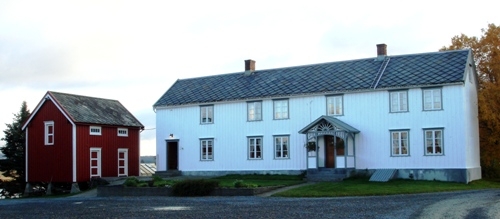
Bogstad Manor in Oslo

0

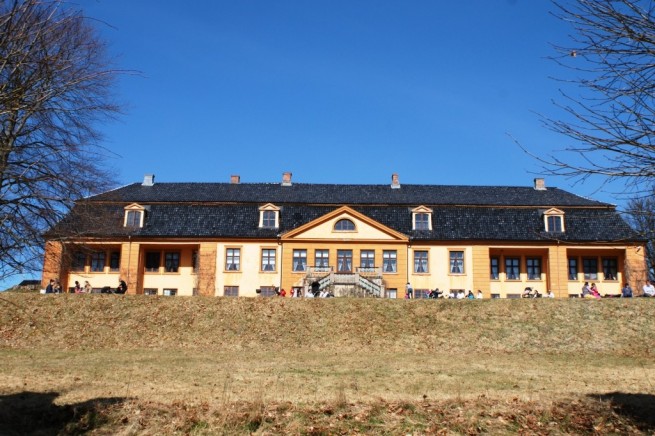
Bogstad Manor is a listed and protected cultural monument and one of the few country estates in Norway. It holds a central position in Norwegian history, both as an industrial estate and as a center during important periods of our political history.

While Norway was still Catholic the land was rented out to tenant farmers by Hovedøya Monastery. After the reformation in 1536 it was confiscated by the Crown.

Bogstad Manor early spring

In 1649 the Danish-Norwegian king Fredrik III sold Bogstad and number of other farms to Morten Lauritzen. These forest holdings provided raw material for sawmills and the timber trade, both rapidly expanding enterprises in the 17th century.

Activities at Bogstad Manor

Bogstad remained in the same family from its establishment in 1649 until it was presented to the Bogstad Foundation in 1955 as a public museum administered under the aegis of the Norsk Folkemuseum; a unique gift, they left everything as it was so it’s an authentic place with layers of layers of significant history.

The Bogstad Manor garden

The name that most Norwegian associate with Bogstad Manor is Peder Anker, who became the first Norwegian Prime Minister in Stockholm in 1814 during the union with Sweden (1814-1905).

Statue of Peder Anker

1814 is a remarkable year in Norwegian history. The country left the union with Denmark after nearly 450 years and got its own constitution, at that time the most liberal one in the world. Norway was forced into a personal union with Sweden. In November 1814 the Swedish crown prince Karl Johan visited Bogstad, and Peder Anker was asked to become prime minister. His son-in-law, the only count in Norway, Herman Wedel Jarlsberg, became the minister of finance.

Arbour at Bogstad Manor

From 1773 to 1780 Peder Anker made some alterations and additions to the main building in the best European tradition. He made his ballroom with inspiration from Versailles, bought a huge collection of paintings in Rome and created the first English landscape park in Norway. He experimented with rare trees and tried different plants to see if they could manage the climate. He created a model farm with several greenhouses and orangeries with exotic plants from all over the world.

Farmers' market at Bogstad Manor
Farmers’ market at Bogstad Manor

Free entry to the area – the fees below apply to guided tours only.

The manor’s animals include cows, sheep, pigs, goats, chickens and rabbits. The grounds also include a play area for children, walking trails, a café, a historic park and changing exhibitions in the lobby.

SONY DSC
The Café Grevinnen
The old bakery has been restored and is now café. A lit fireplace creates the right atmosphere. Serves excellent cakes and specialities as well as soup and open faced sandwiches.

The Museum shop

The artifacts for sale in the museum shop do relate to the history and tradition at Bogstad manor. They may be copies of actual pieces found in the manor itself. The museum shop sells glass, pewter and porcelain. All excellent pieces and nice gifts.

The park
Here we see the remnants of the baroque garden descending directly down from the main house to the lake. It was established in the first part of the 18th century. The romantic English style park was created by Peder Anker around 1780. It has winding canals, ponds for carp and ducks. Peder Anker introduced more than 400 rare trees and plants from abroad. This park became a model for number of parks in Norway.

Today the ponds have been restored with cascade and bridge. After the archeological excavations,registration and import of correct plantmoderial, it now expresses the feeling and atmosphere of a true 18th century park.

Farming at Bogstad
The farm at Bogstad is managed by the city of Oslo. Here the public can visit the barn and enjoy watching a number of different live animals. The barn with animals is open Tuesday until Friday from October until May. During the remaining part of the year the livestock are out in the fields grazing.

The farm at Bogstad is run by the Municipality of Oslo, and thousands of children come to visit every year.

Norwegian name: Bogstad gård

Hours

Café and shop:
All year: Tue. – Sun.: 12:00 -16:00

Guided tours of the museum
18 May– 28 September.
Tue. – Sat. at 13:00 and 14:00
Sun. every hour 12:30-15:30.

Fees, daily tours

Adults: NOK 60
Reduced rate: NOK 50
Children: NOK 20

Program days

Adults: NOK 30
Children: NOK 20

Guided tours for groups can be ordered all year.

Compiled by Admin. All photographs (except painting – Bogstad Manor) Tor Kjolberg

Bogstad Manor in Oslo, source: Bogstad Manor
All photographs: Tor Kjolberg