Canadian Composer Honors the Danish Fairytale King

Tomorrow, on the 2nd of April, it is 217 years since the Danish Fairytale king Hans Christian Andersen was born. The Canadian composer Jan Järvlepp has composed music to three of Andersen’s fairytales, which will be launched by Navona records on his biethday. We asked the Canadian composer why he honors the Danish fairytale king.

“it all started when the founding artistic director of the Ottawa Chamber Music Festival, Julian Armour, asked me in 2005 to compose some children’s music for a concert the next summer. Although I didn’t really want to do that since I had been composing a series of quintets for the festival, I decided to rise to the challenge and see what I could do. So, I went to the local bookshop (remember those?) and found mostly copyrighted Hollywood stuff like SpongeBob SquarePants and Spiderman.

Canadian Composer Honors the Danish Fairytale King
Bob Denn is the storyteller of three Hans Christian Andersen fairytales

Related: New Hans Christian Andersen Museum

Andersen’s stories resonated musically with the composer
In order to avoid copyright problems, I decided to go with classic texts and ended up buying stories by Andersen (the Mrs. H. B. Paull translation), the Grimm Brothers and 1,001 Nights. I read about 35 Andersen Stories and found three which resonated with me musically.

Julian and I successfully applied to the City of Ottawa for an arts grant and with that I composed music for The Little Match Girl. I felt that I was on a roll so I decided to do a couple of more lively stories to complement this sad tale. The stories were successfully premiered at the 2006 festival with two narrators and a string quintet. That was followed by a couple of performances in Finland by the Mikkeli orchestra and a Finnish actor telling the stories in Finnish.

Canadian Composer Honors the Danish Fairytale King
The Janacek Philharmonic orchestra conducted by Stanislav Vavrinek

Related: Two of Denmark’s Famous Sons

Distance collaboration
Fortunately Navona Records got interested in this project so the string orchestra part was recorded in Ostrava, Czechia by the Janacek Philharmonic orchestra conducted by Stanislav Vavrinek. I attended by Skype as this was done during the period of corona mania. Unfortunately, I had to get up at 2:30 a.m. to be ready, coffee in hand, for the 3:00 a.m. start time, which is a reasonable 9:00 a.m. in Czechia.

Canadian Composer Honors the Danish Fairytale King
New recording of three H. C. Andersen fairytales – The Steadfast Tin Soldier, The Little Match Girl and The Emperor’s New Clothes.

I also attended remotely the voiceover recording, which took place in Burbank, California using the veteran narrator Rob Dean, who has recorded about 1,000 audio books. Then, the whole project was mixed in Czechia and released from New Hampshire, USA where the cover art and booklet design were created.”

Related: Fairytale Castles in Denmark

Bob Denn is the storyteller of three Hans Christian Andersen fairytales; The Steadfast Tin Soldier, The Little Match Girl and The Emperor’s New Clothes.

Canadian Composer Honors the Danish Fairytale King
Composer Jan Järvlepp

Composer Jan Järvlepp
Composer Jan Järvlepp began playing pop guitar at the age of 12 and took up cello in high school at the age of 14. He also learned to play bass guitar and harmonica at this time. In university he majored in composition while developing his cello playing skills. As his studies progressed, he realized that he was not on the same wavelength as his modernist composition teachers.

Järvlepp delved deeper and deeper into the world of pop-influenced contemporary “classical” composition. He has completely turned his back on the avant-garde modernism that he was rigorously trained in to concentrate on the emerging neo-tonal style. He has also taken an interest in Hispanic, flamenco, Arab and Nordic folk styles. The result has been a variety of accessible pieces of music that appeal to a surprisingly wide cross section of the public. At times Järvlepp employs unusual combinations of instruments that have not previously been heard in the world of classical music. He has composed over 80 works for solo instruments, chamber ensembles, orchestra and electronic instruments.

Canadian Composer Honors the Danish Fairytale King, based on Järvlepp’s website as well as email conversation between the composer and Tor Kjolberg.
Humor in Scandinavia

Everyone has a sense of humor – at least to a certain extent – although not everybody is willing to show it. Despite the rumor that Northern people lack humor, I claim that Scandinavians are extremely good at making and taking jokes. Why? Read on and learn more about humor in Scandinavia.

One of the reasons why the rumor of Scandinavians’ lack of humor is probably that it often fails to translate. I must admit though that Scandinavians don’t have the reputation of being the clowns in the room. Many foreigners believe that Scandinavians laugh only when they have a facial cramp.

Humor in Scandinavia
We have all experienced that there is usually a chain reaction, when someone starts laughing and everybody starts laughing

The chain reaction
However. We’re not different from other people. We have all experienced that there is usually a chain reaction, when someone starts laughing and everybody starts laughing before they don’t even know what they are laughing at. Such scenes are very familiar to the ones who attend to academic conferences, where you can see the biggest number of people who are ready to laugh at anything.

Related: Is He Norway’s Victor Borge?

Humor in Scandinavia
‘gallows humor’ is very typical of Scandinavia. Illustration by Absurdgalleriet

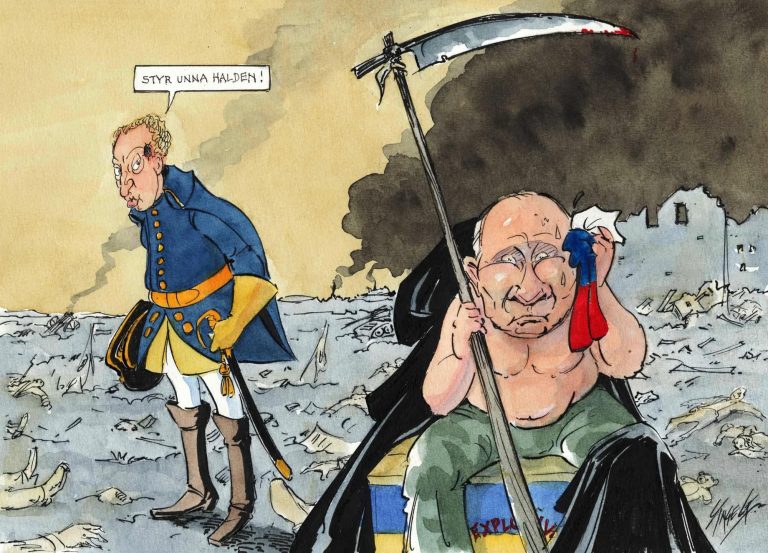
‘Galgenhúmor’ or ‘gallows humor’ is very typical of Scandinavia, and so-called Scandi comedy is about to become the new Nordic noir.

Thanks to a slew of satires, rom-coms and dramedies, things are changing: Scandi comedy is about to become the new Nordic noir. Lisa Langseth, creator of Netflix’s Love & Anarchy, said, “Sweden is put into a box where dark crime has made us famous abroad. People just don’t think of humor when they think of Sweden.” Her series, about an outwardly successful but secretly dissatisfied married mother of two (starring Ida Engvoll) couldn’t be further from grisly crime drama. A Man Called Ove (starring Rolf Lassgård) is another example of genuine Swedish humor.

Humor in Scandinavia
Rolf Lassgård starring in A Man Called Ove,

Norwegians, like myself, love to laugh, but there is a mix of different types of humors which hit a nerve with Norwegians. Although Norwegians love to laugh, I am not sure there is a typical Norwegian humor like for instance the British.

Related: What Does The Fox Say?

Danish humor is a tricky thing for many foreigners. Danes compete with the Brits for world leaders in dry humor and sarcasm, but it can be hard for foreigners to figure out what’s a joke and what’s not.

Sweden’s ‘The 100 Year Old Man Who Climbed Out of a Window and Disappeared’, based on Jonas Jonasson’s well-loved and best-selling book, is a relative recent comedy from Scandinavia that has found international success.

One of the possible reasons that most foreigners do not see that Norwegians have humor is that many Norwegians have a very dry humor. They say things with a serious face, when it was actually a joke.

The Danes have a tradition called the kvajebajer (failure beer) or kvajekage (failure cake.)
The person who makes a big mistake offers this beer or cake to others as a way of playfully admitting that he or she failed to live up to expectations.

Norwegian Sverre Bjørstad Graff is the author and illustrator of the very popular and hilariously funny Absurdgalleriet. Considering his huge fan base, it seems fair to say absurd humor is hitting a nerve in the Norwegian public.

Another home run is the very bad English some Norwegians have, using Norwegian expressions as if they were translatable in English: “Honey, don’t forget to take the dekks with the pigs” (piggdekk is a spiked winter tire), is one of them.  When one of our prime ministers should explain to a Brit that Norwegian cars have the steering wheel on the left side of the front seat, he said, “Norwegian cars have the rats on the left side.” (Ratt is steering wheel in Norwegian).

Related: How To Annoy Scasndinavian

Humor in Scandinavia
Translation of text: “My girl friend dumped me, so I stole her wheel-chair. Guess who came creeping back.”

I cannot end this short presentation of Scandinavian humor without trying my best to share with you a typical joke about the Swede, the Norwegian and the Dane:

Three men and a parachute
So, a Norwegian, a Dane and a Swede are on a private flight. Suddenly, the pilot turns on the speaker and says: “The plane is malfunctioning and is going to crash. There’s three parachutes, and I’m going to take one. You’re going to have to figure out who doesn’t get one”. He then proceeds to jump out of the plane.

The three men panic, but the Norwegian tells the others to calm down and then says to the Swede: “Here. You take one, we’ll figure out who gets the last one.” And the swede jumps.

The Norwegian then turns to the Dane and says: “Let’s grab the chutes and get out of this thing.”

The Dane says, very confused:” But you just gave the second to last parachute to the Swede? There’s only one left now.”

To which the Norwegian replies: “Relax man, I gave him my backpack.”

In any case, one thing is for sure, humor is very important in Scandinavian countries. To survive in an area where it is night time half of the year and raining the rest, you need minimum two things: alcohol and humor. And sex. And holidays in the South. Okay that makes four things.

Humor in Scandinavia, written by Tor Kjolberg

Feature image (on top): Illustration by Inge Grødum for Aftenposten

Norwegian Researchers on Ukraine’s Astonishing Defense

0

The book “Digitalisering og internasjonal politikk” (in Norwegian only) was launched on Monday. The use of digital weapons, not least in war-times, is a rising problem. The researchers Karsten Friis and Håkon Bergsjø, both from NUPI, take a look on different perspectives from leading professional environments on how digitalization affects international politics and conflict dynamics. The Norwegian researchers take also a look on Ukraine’s Astonishing Defense.

As the conflict in Ukraine escalated, experts on digitalization have been speculating about the kind of cyber-attacks that Russia might conduct. However, Russia’s reputation as a digital power nation seems to have failed just as much as Russia’s reputation as a military power.

Norwegian Researchers on Ukraine's Astonishing Defense
The book by the Norwegian researchers does not focus on what security policy choices and dilemmas the new digital everyday life represents for Norway and the rest of the world.

Related: New National Cyber Security Center To Be Established in Sweden

Ukraine’s cyber defense
Ukraine has been systematically investing in cyber defense for many years. The Ukrainian defense has succeeded in intercepting the Russian invasion forces as well as maintaining its own communication with the outside world. NATO, which has been working for a number of years with Ukraine to increase its cyber defense, signed an agreement a few weeks before the invasion aimed at enhancing cyber cooperation with Ukraine.

Zelensky has had video meetings with world leaders almost daily. Only in the last week he has spoken to the authorities in the United States, Israel and Italy. It strengthens the morale of the Ukrainian people – and the support of the international community.

Norwegian Researchers on Ukraine's Astonishing Defense
Ukrainian President Volodymyr Zelenskyy addresses the nation in Kyiv, Ukraine, late Monday, March 7, 2022. (Ukrainian Presidential Press Office via AP)

Related: Danish Movie – A Warning Sign For Europe

In what has been referred to as an unprecedented effort in the midst of an armed conflict, a whole “IT army” of volunteers was assembled in response to a request by the minister of digital transformation to support the country’s cyber-defense efforts, with reports of some even operating from within bomb shelters.

Security policy choices
The book by the Norwegian researchers does not focus on the  Ukraine’s cyber-defense but rather on what security policy choices and dilemmas the new digital everyday life represents for Norway and the rest of the world.

Norwegian Researchers on Ukraine's Astonishing Defense
The Ukrainian defense has succeeded in intercepting the Russian invasion forces as well as maintaining its own communication with the outside world.

Related: Nordic Cross Border Military Training

One thing is for sure, though. Russia wants to destroy the existing communication channels. Maybe they will succeed, because this war is not over yet. But so far it has been astonishingly quiet from Russian hackers.

Norwegian Researchers on Ukraine’s Astonishing Defense, written by Tor Kjolberg

The Norwegian China-Man

0

As a young man, Johan Munthe (1864-1933) was born in Bergen. He received a military education at the Cavalry Cadet School (Kavaleriets underoffiserskole) in Trondheim. In 1886, he emigrated to China during a period of upheaval and rebellion. He also collected what has become one of Europe’s largest collections of Chinese art. Learn more about the Norwegian China-man.

Senior consultant at the Bergen Museum Kode, Jorunn Haakestad, who is the editor of the book “Porcelain and Revolution”, says that the general, adventurer and art collector Johan Munthe is a fascinating man.

The Norwegian China-Man
Porcelain and Revolution, edited by Jorunn Haakestad

Munthe first started working with the Chinese Maritime Customs Service. He enlisted in the Chinese Army during the First Sino-Japanese War (1894–95). He mastered the Mandarin Chinese language and remained as a cavalry instructor under General Yuan Shikai.

Donated 2,500 objects to Bergen
After the fall of the empire, he became an adviser to the Chinese Ministry of War during the early years of the republic. At the same time, he was building up a massive collection of art objects, most of which he eventually donated to the West Norway Museum of Decorative Art in his birth-town Bergen.

For almost 25 years, Haakestad has been responsible for the art collection, which counts over 4,500 East Asian objects, 2,500 of which were donated to the museum by Munthe, who’s association with Yuan Shikai proved advantageous. He advanced in rank to lieutenant General and Chief of Legation Quarters Beijing. He was also an advisor to the Ministry of War, the first and only foreigner to achieve such a position. He gained good access to arts and crafts.

The Norwegian China-Man
the Chinese collection is part of KODE Art Museums and Composer Homes

The Chinese Collection
Today, the museum and Munthe’s magnificent bequest – the Chinese collection – are part of KODE Art Museums and Composer Homes. Munthe’s collection includes porcelain, paintings, costumes, and statues in bronze and marble.

The Norwegian China-Man
Munthe was building up a massive collection of art objects

In the book “Porcelain and Revolution”, Jorunn Haakestad introduces us to the life of this fascinating man. Drawing on new sources, she adds further dimensions to Munthe’s story, presenting him not just as a soldier and art collector, but also as a bank director, amateur poet, and religious contemplative. Thus, she brings us closer to answering the enigma of who Johan W.N. Munthe really was.

In 1919, he married German-born Alexandra Ethelred von Herder (1867-1920 ). She was the widow of Frederick William Grantham (1870–1915) and was the mother of Sir Alexander Grantham (1899–1978) who was Governor of Hong Kong from 1947 to 1957.

Throughout his life, Munthe sent boxes of Chinese art home to Bergen. The Jordan Schnitzer Museum of Art at the University of Oregon also holds a large number of works collected by Munthe, later acquired by the Museum’s founder, Gertrude Bass Warner (1863-1951).

The Norwegian China-Man
Throughout his life, Munthe sent boxes of Chinese art home to Bergen

Related: Stories From a Young Norwegian’s Stay in China

Jorunn Haakestad (born 1950) is an art historian with a PhD from the University of Bergen. From 1997 to 2007 she was director of the West Norway Museum of Decorative Art. Since the museum became part of KODE – Art Museums and Composer Homes, she has been principal conservator, with responsibility for the China collection.

Related: China and Norway Normalize Relations

There are many stories about the China collection, some disturbing. Which objects are

The Norwegian China-Man
Jorunn Haakestad

originals and which are copies? How did he get all the art? Was it legal? “I am exploring this”, says Haakestad about the book.

Jorunn Haakestad has contributed essays to many exhibition catalogues and specialist journals, and has edited several books on arts and crafts.

The Norwegian China-Man, written by Tor Kjolberg

All images © KODE, Bergen

The Cities and Towns of Norway

0

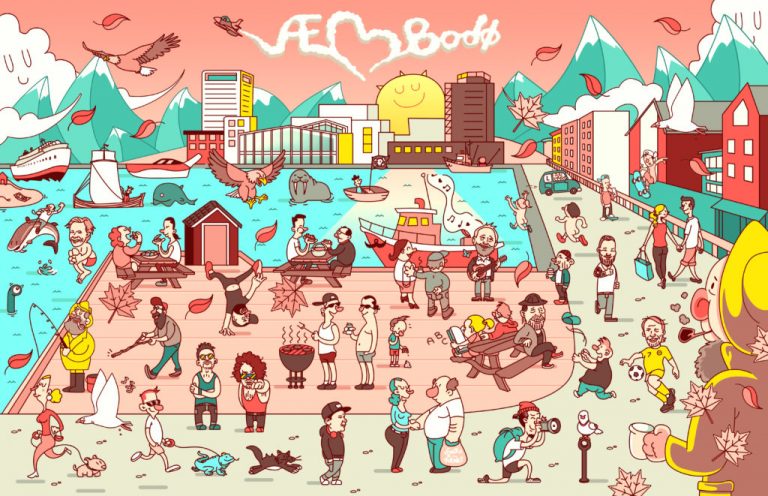
There is an interesting book on the cities and towns of Norway, illustrated by 15 of Norway’s most popular illustrators. The book, published by Figenschou Forlag, depicts 15 cities and towns from illustrator Ole Fredrik Hvidsten’s Arendal to illustrator Kristina Bjerkek’s Ålesund.

When it comes to Norway, the spotlight tends to fall on the beautiful fjords. However, also rural Norway scores big and the book “Norske byer fra A til Å” (Norwegian cities and towns from A to Å) takes us to Drammen, Kongsberg, Fredrikstad, Tønsberg, Hamar, Kristiansand, Lillehammer, Molde, Bodø and Tromsø in addition to the three big ones Oslo, Bergen and Trondheim.

The Cities and Towns of Norway
From Molde

Making of the book demanded in-depth preparation, because the publisher Anita Figenschou wanted to find talented illustrators who had a relationship with the city they were to illustrate. In addition, the cities and towns should represent the south, north, east and west of Norway.

Great emphasis has been placed on the visual part of the book, since telling stories through both pictures and text has become a trend. And children have become an important readership. They simply require well-illustrated books if they are to arouse interest.

The Cities and Towns of Norway
From Kongsberg

Drawing and interpreting the world we live in is something illustrators all over the world enjoy doing, and something people love to take part in.

Personally I would prefer that the book presented more Norwegian cities, but I understand that it would have been difficult to implement. And I do not think that children, as the book is aimed at, think anything special about just that at all. They are probably most concerned with the pictures and the find-and-find game. And both live up to expectations.

The Cities and Towns of Norway
From Fredrikstad

The illustrators: Ole F. Hvidsten • Åshild Kanstad Johnsen • Bjørn Rune Lie • Magnus Lunde Engen • Haakon Lie • Cecilie Maurud Barstad • Ingunn Dybendal • Janne Christensen • Sandra Blikås • Kristoffer Kjølberg • Endre Skandfer • Anette Moi • Tora Marie Norberg • Robin & Rudi • Kristina Bjerkek

The Cities and Towns of Norway, written by Tor Kjolberg

All illustrations © Figenschou forlag. Feature image (on top): From Bodø

Two of Denmark’s Famous Sons

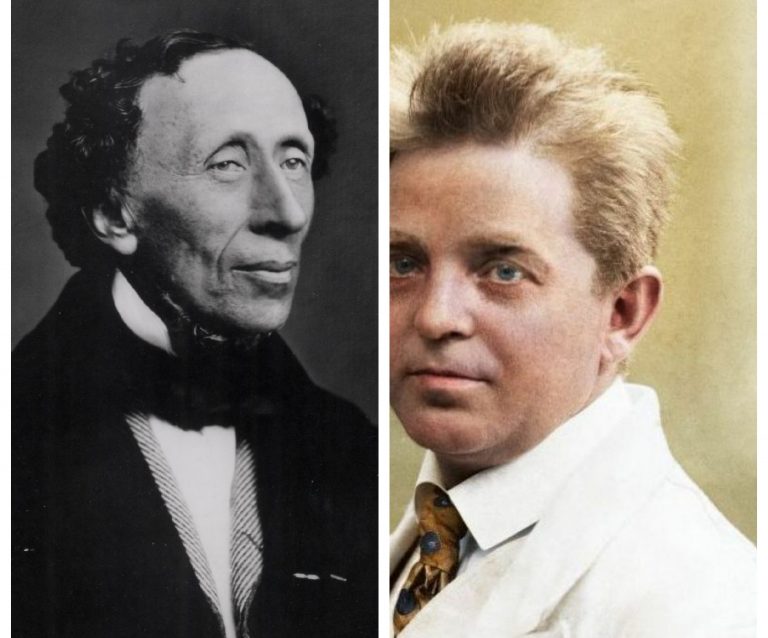
In the 19th century, two Funen boys, the storyteller Hans Christian Andersen and the composer Carl Nielsen, set off to make their fortunes in the world. Learn more about these two of Denmark’s famous sons.

Two of Denmark’s most noted literary and musical figures, Hans Christian Andersen and Carl Nielsen, were born on the island of Funen. At the height of his fame, the composer Carl Nielsen (1865-931), told an audience that his mother had always said to him: “Don’t forget that Hans Christian Andersen was a poor boy like you.”

There may have been something in the Funen air that inspired poor boys to rise to fame, but it is more likely that Nielsen was inspired by Andersen, 60 years his senior. Both came from humble homes, both left Odense to seek their fortune in Copenhagen.

Two of Denmark’s Famous Sons
Carl Bloch portrait of H. C. Andersen 1869. Private collection. Photo: Wikipedia

Hans Christian Andersen
Andersen (1805-75) was born in Odense, the son of a shoemaker and a washerwoman, and spent his childhood in a small half-timbered house in Munkemøllestræde, now a museum. Quite apart from his skill as a writer, Andersen had a good singing voice and was a gifted artist. At the age of 14 he set off to Copenhagen to attend the Royal Theatre School. The Theatre Board recognized his skills, and he was found a place at a grammar school in Helsingør.

After school, Andersen traveled widely. Shadow Picture of a Journey to the Harz Mountains and Saxony (1851) was the result of his early adventures.

Throughout his life he continued to write poems, novels and plays. His autobiographical novel, The Improvisatore, described the rise to fortune of a poor Italian boy. His early fairy tales, including The Tinder Box and The Princess and the Pea (1835) brought him immortality.

In spite of his worldwide fame and extensive travels, Andersen’s personal life was a lonely one. In 1840, he met and fell in love with the singer Jenny Lind, “The Swedish Nightingale”, but his love was unrequited – she always called him “brother”. His fairy tale The Nightingale was inspired by her. When he was made a honorary citizen of Odense in 1867, Andersen said it was ‘an honor greater than I had dreamt of.”

Two of Denmark’s Famous Sons
Nielsen composed two operas, the dark drama Saul and David and a comic opera, Maskarade along with symphonies and choral works, such as Hymnus Amoris.

Carl Nielsen
Carl Nielsen was born in Nørre Lyndelse, where his childhood home is now a museum. His father was a folk musician and Carl played the violin. His earliest compositions, at the age of eight, were two dance tunes.

Like Andersen, Nielsen wrote an autobiography, My Childhood in Funen. At the Royal Theatre Orchestra in Copenhagen, where Nielsen became second violinist, the Norwegian conductor Johan Svendsen encouraged him to compose. At 25, Nielsen won a fellowship which allowed him to travel and went to Dresden to steep himself in Wagner’s ideas. Nielsen composed two operas, the dark drama Saul and David and a comic opera, Maskarade along with symphonies and choral works, such as Hymnus Amoris.

Two of Denmark’s Famous Sons, written by Tor Kjolberg

The First UNESCO Global Geopark in Denmark

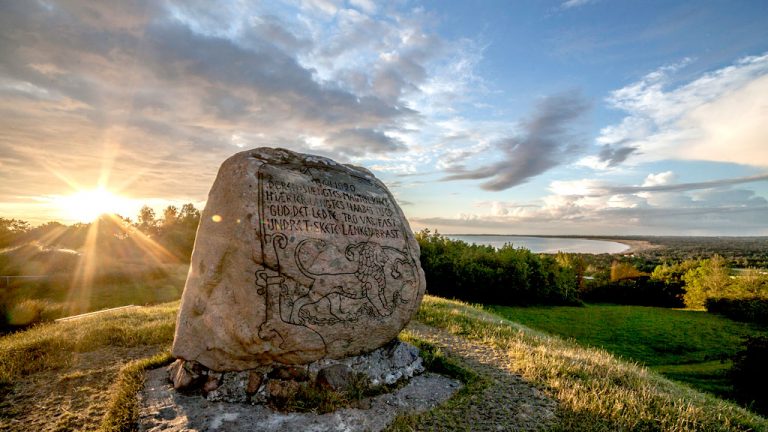
Thanks to its unique geological formation, rich cultural history and extraordinary agricultural qualities, Odsherred became Denmark’s first Geopark. Located 80 km north of Copenhagen, the region boasts kilometers of pristine sand beaches and is one of Denmark’s most popular holiday destinations. Learn more about the first UNESCO global geopark in Denmark.

This supreme geological heritage is constituted mainly by glacial structures formed during the latter part of the Weichselian approx. 17,000 years ago. The most dominant landscape feature is the presence of three very distinct end moraines called the Odsherred Arches, which form the core of the Geopark.

The First UNESCO Global Geopark in Denmark
The area of the Odsherred UNESCO Global Geopark is equivalent to that of Odsherred Municipality, populating 33,000 inhabitants.

In 2014 Odsherred successfully achieved that status to become the first geopark in Denmark, 17,000 years after the last glaciers had withdrawn from the Danish shores. However, the tracks they left are still evident and nowhere more so than in the beautiful, hilly landscape of Odsherred. When kids at Danish schools learn about the landscape formation, they look at the maps of an area containing some of the most recognizable coastline moraines seen anywhere. However, becoming a Geopark is not just about geology, it’s also about how the landscape has influenced the development of the region.

Together with the glacial depressions and meltwater plains, they represent a classical geomorphological example of a glacial landform, only equaled by very few other places in Europe. When the established society of geologists, not only in Denmark, but also abroad, at the beginning of the 20th century, turned their attention on glacial dynamics and ice age geology, they therefore also focused on Odsherred’s glacial landscape. Since the end of the last ice age, postglacial and coastal processes have shown just as important in forming of the landscape, today still causing a constant change.

The First UNESCO Global Geopark in Denmark
The hunebeds in the area are also members of the international network of Megalithic Routes. Photo: European Geoparks Network

The hunebeds in the area are also members of the international network of Megalithic Routes. The UNESCO Global Geopark Network has recognized 90 Geoparks based on the past and present influence of the areas’ geological attributes.

The area of the Odsherred UNESCO Global Geopark is equivalent to that of Odsherred Municipality, populating 33,000 inhabitants. Since the termination of the last glacial period, humans have been making their mark on Odsherred and the landscape has attracted people from far and wide since the early 18th century. Today the area is an attractive holiday destination with more than 26,000 summer residences, thus having the summer population arising to more than 100,000 inhabitants.

The cultural history, arts, and the local produce, are all closely intertwined with the landscape and geology, thereby becoming the four topics of Odsherred UNESCO Global Geopark. As a part of the strong and widespread community involvement, local stakeholders, business, the tourism agency, the national nature agency and associations help to support the socioeconomic development.

Last, but not least, Odsherred has become home to one of Denmark’s best gourmet restaurants, Dragsholm Slot. Expect to be taken on a gastronomic journey thanks to around 20 carefully crafted, innovative and intensely flavored dishes created using local, foraged, seasonal or preserved produce. This atmospheric cellar restaurant is set in the former kitchens of an impressive 800-year-old castle.

The First UNESCO global Geopark in Denmark, written by Tor Kjolberg

Feature image (on top) Photo: Visit Odsherred

Hydrogen Storage Facility in Sweden Has Reached Halfway Point in Construction

0

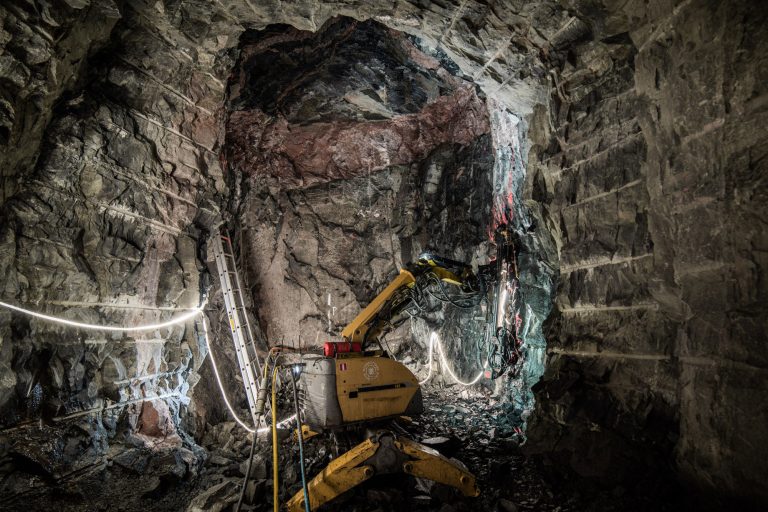
A rock cavern for green hydrogen storage in Luleå, northern Sweden, is in construction and Vattenfall Media Relations announces that the hydrogen storage facility in Sweden has reached halfway point in construction.

Right now the steel lining is being installed inside Svartöberget. The storage facility, which will be an important part of the value chain for fossil-free iron and steel production, is planned to be in operation by the summer and runs tests there until 2024.

The initiative was launched in 2016
The initiative was launched in 2016 and the hydrogen storage facility will play a very important role in the overall value chain for fossil-free iron and steel production. Production can take place without a storage facility, but storage provides the opportunity to vary the demand for electricity and ensure stable production. By producing hydrogen gas when there is a lot of electricity, for example when there is a lot of wind, and using stored hydrogen gas when the electricity system is under strain, will ensure production.

Construction works started in May 2021
Construction works started in May 2021. Vattenfall says that several parts of the pilot plant have been installed. This includes the pipelines to transport hydrogen gas to the storage facility, rock caverns and connecting tunnels, a ventilation shaft and the compressor that will pressurize the gas for storage.

Hydrogen Storage Facility in Sweden is Has Reached Halfway Point in Construction
HYBRIT wetgas storage, sketch. Illustration: Vannenfall AB

Related: The Danish Energy Island

Construction of the 100-cubic-meter (3,531 cu ft) rock cavern storage facility 30 meters below ground is done by Vattenfall AB in collaboration with Swedish steel company SSAB AB (STO:SSAB-A), iron ore miner Luossavaara-Kiirunavaara AB (LKAB). The three owners invested around SEK 200 million (USD 21.4m/EUR 18.9m) in three equal parts, with the Swedish Energy Agency contributing just over SEK 52 million towards the hydrogen storage construction.

Related: The Norwegian Electric Vehicle Success Story

Impressing technology
“The various parts of the plant are now mostly in place,” the consortium said in a statement. “Rock caverns and connecting tunnels have been constructed in the rock and a ventilation shaft has been drilled from the top of the rock down to the upper part of the rock cavern.”

Hydrogen Storage Facility in Sweden is Has Reached Halfway Point in Construction
Mikael Nordlander, Development Manager for Vattenfall’s industrial partnerships

“The hydrogen storage facility has a stabilizing effect on the electrical system. It reduces the risk of the system overloading. We want to develop HYBRIT technology so that it is in line with the future electricity system with more weather-dependent electricity generation,” says Mikael Nordlander, Development Manager for Vattenfall’s industrial partnerships.

Related: World’s First Fossil-Free Steel From Sweden

The cavern is being built via the so-called lined rock cavern (LRC) approach, which involves covering the walls of the cavern with a selected matter. The technology for storing gas in a lined rock cavern (LRC) is well proven and has been used in southern Sweden for about 20 years for storing natural gas. However, the technology is now taking another step forward as it’s being developed for the first time with hydrogen gas on a large pilot scale.

Hydrogen Storage Facility in Sweden is Has Reached Halfway Point in Construction
Martin Pei, Technical Director at SSAB.

The first in the world
“What’s so fantastic about HYBRIT is just how many different innovative parts the initiative consists of. The hydrogen storage facility is a good example of how we’re testing and using innovations to achieve the goal of a completely fossil-free value chain, the first in the world,” says Martin Pei, Technical Director at SSAB.

The finished plant will contain hydrogen gas pressurized up to 250 bar.

Hydrogen Storage Facility in Sweden is Has Reached Halfway Point in Construction, written by Tor Kjolberg

The Great Norwegian Racing Driver Talent

0

The world’s three biggest Formula 1 teams have been following Dennis Hauger (b. 2003) closely for several years. Since his teens he has been beating the world’s fastest on the go-kart track. learn more about the great Norwegian racing driver talent.

Hauger was born in Oslo and raised in Aurskog. His parents bought him a quad bike when he was two, and he started driving cross bikes at the age of four. He began his karting career at the age of five, winning his first race at the age of eight.

The growing interest in the Norwegian is not without reason. The last season, the youngster has shown a very good performance and is well positioned to win the Formula 3 championship.

The Great Norwegian Racing Driver Talent
Hauger was born in Oslo and raised in Aurskog. Photo: Red Bull Content Pool

You might also like to read: Extreme Sports Week, Norway

Moving into international competition
After finishing 62 out of 70 national races on the podium the Norwegian moved into international competition in 2014. That year, Hauger claimed the ROK International title in the Mini category and followed it up the following year by claiming Mini category titles in the Vega Winter Trophy, the Italian CSAI Karting Championship and the WSK Champions Cup and Super Masters championships. In 2016, Hauger became the youngest ever champion to claim the DKM junior title and repeated this feat the following year to become the youngest DKM champion.

1200 meters of asphalt, black from worn rubber, winds its way across a field by Lake Garda in Italy. It’s the year 2017. The exhaust is low, like a blue haze. On the long sides, some teams have parked their trailers and formed a small village of white tents, where go-karts roll through the streets, engines run, spanners wrench against metal and the smell of race fuel surrounds everything. As a thin and tall 13-year-old from Aurskog, Dennis stood in one of the tents to put on his black riding suit. But first he tested a specially molded fiberglass protector around his chest.

The Great Norwegian Racing Driver Talent
FIA F3 Austria 2021. Photo: Wikipedia

You might also like to read: Sweet Protection from Norway

Traces of gasoline and exhaust
Dennis is a member of the Red Bull Junior Team and the reigning FIA Formula 3 champion. He also won the 2019 Italian F4 Championship with Van Amersfoort Racing. “The goal is Formula 1, otherwise I wouldn’t have driven Formula 3 this year. This is what I am aiming for, so I will try to achieve that goal. It went well this season, so you have to work on it,” says Hauger to the Norwegian newspaper Dagbladet.

Traces of gasoline and exhaust stretch through the life Dennis Hauger. From a house in Aurskog with a 150 square meter garage with underfloor heating and a workshop, he was one year old and dressed with a driving suit from Subaru and brought to see his father drive rally on the weekends. Two years and two months old, Dennis drove himself for the first time. In a diaper and with a pacifier in his mouth, he rode a quad bike in the garden and gave full throttle into a pile of bricks. He still has scars on his chest.

You might also like to read: Top Surf Spots in Scandinavia

The Great Norwegian Racing Driver Talent
in the 2021 season, Hauger raced with Prema, partnering Olli Caldwell and Ferrari Driver Academy member Arthur LeclercIn. Photo: formel1.no

The way forward
in the 2021 season, Hauger raced with Prema, partnering Olli Caldwell and Ferrari Driver Academy member Arthur LeclercIn.

The way forward next year will be Formula 2. Dennis has Formula 1 as a distant goal, but he can concentrate well on the moment. When asked where the main character himself will be in five years, he replies: “Then hopefully in a Formula 1 car. But I’ll go step by step, then we’ll see.”

The Great Norwegian Racing Driver Talent, written by Tor Kjolberg

Feature image (on top): Photo  Red Bull


Tips for Achieving a Sustainable Scandinavian-Inspired Home

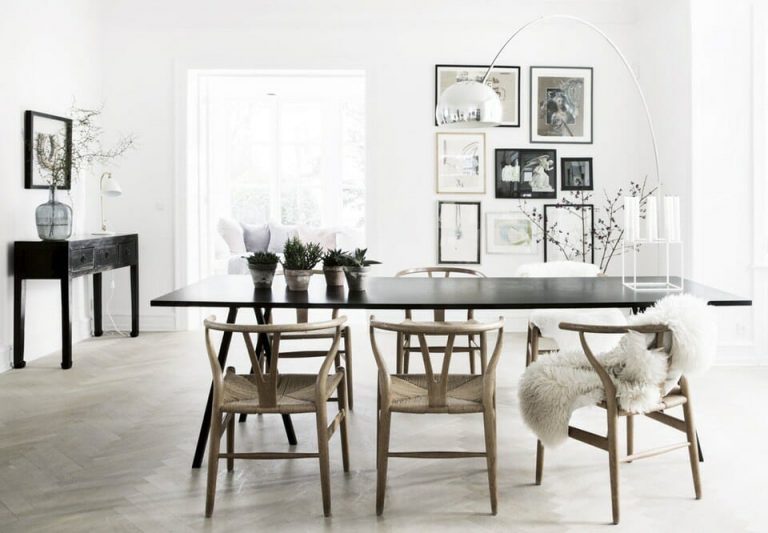
When it comes to interior design, no one does it quite like Scandinavian countries. From Norway to Denmark and around the globe, Scandinavian designs have long been at the forefront of home decoration trends and sustainability efforts. These Nordic innovations are inspiring interior decorators all over the world and creating opportunities to go green with a sophisticated, timeless look. Learn about these tips for achieving a sustainable Scandinavian-inspired home.

Setting the precedent are furniture and design companies based out of Scandinavian. For instance, the Sweden-based furniture giant IKEA (heard of it?) is prioritizing sustainability by investing in wind, solar, and responsibly managed forest. Regardless of whether or not you buy from these sustainability-focused companies, you can still borrow some ideas to achieve a green, Scandinavian-inspired home.

With these tips, a keen eye, and DIY experience, you too can create a home as green as Northern Europe.

Tips for Achieving a Sustainable Scandinavian-Inspired Home
sunlight streaming in can help cut down your electricity bill by as much as 10%.

1. Maximize natural light
First, start with the natural lighting in your home. With limited sunlight hours in the north, Scandinavians have learned how to make the most of light where they can get it. This means big, uncovered windows that both maximize natural light and minimize decor for a true northern feel.

Integrating more natural lighting in your home won’t just give your home that Nordic feel you’re going for, but it will also boost your sustainability efforts. That’s because sunlight streaming in can help cut down your electricity bill by as much as 10%. Additionally, the added Vitamin D can lead to health benefits.

Maximize your natural light, starting with your windows. You can also optimize your use of paint for greater lighting efficiency.

Related: 2021 Scandinavian Interior Design Trends You Need to Know

Tips for Achieving a Sustainable Scandinavian-Inspired Home
One of the pillars of Nordic design is to pair these muted colors—greys, whites, even pale pinks, and greens—with minimalistic and natural decor.

2. Paint in muted, neutral colors
Scandinavians know how to maximize lighting through the use of color. With light hues and shades of white, you can get a lot of vibrancy from even a small amount of window light. That’s because these lighter colors are better at reflecting what light comes in throughout an entire room.

One of the pillars of Nordic design is to pair these muted colors—greys, whites, even pale pinks, and greens—with minimalistic and natural decor. With wood finishes, these soft colors elevate a Scandinavian-inspired look.

Reduce your use of electricity with rooms painted to bring in and reflect light. Then, a minimalist design helps ensure a clear path for this light to shine.

Tips for Achieving a Sustainable Scandinavian-Inspired Home
Minimalism forces you to take a different look at how you use your space.

3. Minimalize
One of the most essential aspects of Scandinavian design is minimalism. Minimalism emphasizes quality over quantity, and it’s also a key element of any sustainability effort. This less-is-more approach to interior design is all the rage in Northern Europe for good reason. With it, you can gain all those sleek lines and uncluttered spaces you’re going for.

Minimalism forces you to take a different look at how you use your space. By keeping to the essentials, you can target things like furniture investments into durable pieces guaranteed to last a long time. As a result, you can save money while maximizing your space.

To minimalize sustainably, however, it helps to seek out natural materials second-hand or recycled.

Tips for Achieving a Sustainable Scandinavian-Inspired Home
One of the best ways you can prioritize sustainable interior design is to use recycled wood. Photo: Woodguide.org

Tips for Achieving a Sustainable Scandinavian-Inspired Home, continue reading….

4. Use recycled wood and furnitur
One of the best ways you can prioritize sustainable interior design is to use recycled wood and furniture. Nordic design heavily features natural materials for floors, wall paneling, fall ceilings, and other minimalist trim. However, if these materials are not sustainably sourced, you’ll harm the environment.

Though you can always turn to some sustainable Scandinavian brands for home decor supplies, it helps to thrift and repurpose. Vetting claims of sustainability isn’t easy in many cases. By thrifting, you can at least be sure that an already harvested material finds a new home.

Look for green alternatives to unsustainable big-box furnishings and supplies for your Scandinavian design. Even a fireplace can be eco-friendly with the right approach.

Tips for Achieving a Sustainable Scandinavian-Inspired Home
Electric fireplaces keep toxic fumes at a bare minimum. Photo: Greencoast.org

5. Install an eco-friendly fireplace
Your home might not feel truly Scandinavian without a nice fireplace to warm those long, dark winter nights. However, traditional fireplaces are notorious for their poor use of resources. Because they consume wood and emit toxic particulate matter, these timeless elements of any home can be problematic.

Fortunately, more eco-friendly fireplace options do exist. For example, ethanol fireplaces burn biofuel made from sugarcane and corn. Electric fireplaces keep toxic fumes at a bare minimum, and pellet-burning fireplaces are highly efficient.

Install an eco-friendly fireplace and reduce the toxic emissions that typically come with this feature. This might be the perfect finishing touch on your sustainable Scandinavian-inspired home.

Tips for Achieving a Sustainable Scandinavian-Inspired Home
Scandinavian design is both timeless and modern. Photo: Plant Refab

Achieving a sustainable Scandinavian-inspired home
Scandinavian design is both timeless and modern. Emerging trends in this field increasingly include sustainable materials and choices that maximize the efficiency of a space. Elevate your home with some Nordic charm, considering sustainability from every angle.

Start with maximizing your natural light, then use these tips for guilt-free comfort and aesthetic bliss in that exceptional Scandinavian fashion. You can make your home (and the larger world) a bit greener with the help of Scandinavian-inspired design.

Tips for Achieving a Sustainable Scandinavian-Inspired Home
Ainsley Lawrence

Tips for Achieving a Sustainable Scandinavian-Inspired Home, written exclusively for Daily Scandinavian by Ainsley Lawrence. Ainsley is a freelance writer from the Pacific Northwest. She is interested in better living through technology and education. She is frequently lost in a good book.

Other articles by Ainsley Lawrence you might like to read:
The Coworking Culture in Scandinavian Countries
How & Why to Startup a Business in Sweden
Examining the Gender Pay Gap in Scandinavian Countries

Feasture image (on top): Hellerup Villa/Little Scandinavian