28-year-old Danish Casper Steinfath battled several meters high waves, storms and snow, in his attempt to become the first person to cross from Denmark to Norway on a stand-up paddleboard (SUP). Read the fascinating story about the Danish Viking who crossed from Denmark to Norway on a paddleboard.
Sunday morning, 3rd April at 2am, six-time world champion paddler Casper Steinfath launched his paddleboard near his home in Klitmøller, Denmark and aimed north into the darkness across Skagerrak Straight, a 130-kilometer (80.8-mile) stretch of frigid, inhospitable ocean separating Denmark and Norway.
Six-time world champion paddler Casper Steinfath launched his paddleboard near his home in Klitmøller, Denmark and aimed north into the darkness across Skagerrak Straight. Photo: TotalSUP
As the son of an American father and a Danish mother, Steinfath travelled the world as a child with beaches and water often involved. When his family finally settled at Klitmøller in Denmark, Steinfath’s passion for SUP developed in ‘Cold Hawaii’ despite an initial fear of water. He carried nothing but a tent, a sleeping bag, a cooking set and some meat packages.
As the son of an American father and a Danish mother, Steinfath travelled the world as a child with beaches and water often involved. Photo: Limfjord Update
His mission was dubbed “The Viking Crossing 2.0” and his aim was to become the first-ever standup paddleboarder to cross Skagerrak through the night and most of the day on water notorious for harsh currents and conditions.
Traditionally, it’s Hawaiian stars who dominate prestigious SUP events. Steinfath exploded onto the competition scene in 2013 with several European and World titles following. His ambition, though, also lay in seeking out new challenges where he could truly test his mind and body. He said: “I want to taste the world and push the boundaries of what’s possible.”
His mission was dubbed “The Viking Crossing 2.0” . Photo: SUP
“Growing up by the North Sea in Jutland, I’m used to playing in any type of conditions,” Steinfath said. “But yesterday was pretty horrendous … I’m currently sunburned, windburned and I have frozen fingers. It’s a weird combination.”
This was his second attempt. He trained and prepared like never before, both mentally and physically. After nearly 19 hours at sea, battling wetsuit chafing in between a rest every 45 minutes and between 50,000 and 60,000 paddle strokes, Steinfath made landfall in the Norwegian city of Kristiansand just before 8pm as the day’s last light dipped into the ocean.
The Dane had created his own piece of Viking history. He revealed: “I’ve never felt so alive in my life, but also never so scared.”
“I have no more energy left in my body; this Viking Crossing is the gnarliest thing I’ve tried,” Steinfath said at the finish.
The Dane had created his own piece of Viking history. Photo: Jakob Gjerulff Ager
Steinfath was inspired to take on the challenge while grounded during the pandemic. “Before corona, I spent 10 years travelling the world for watersports competitions and was away for at least nine months of every year, so the pandemic is the longest period I’ve spent at home since I was a child.”
The Danish Viking Who Crossed from Denmark to Norway on a Paddleboard, written by Tor Kjolberg
With only 10 million, Sweden has given the world 12 famous brands. And – 30 Nobel laureates. Scandinavia in general – 57 Nobel laureates. Where do productivity and innovation in education come from? There are a lot of pros of studying abroad In Scandinavian Countries. Learn more about benefits and drawbacks of Scandinavian educational program.
If you are looking for a country for your child to study, or thinking about relocation and researching countries to study.
The average number of years spent studying is from 10.29 years in Finland to 12.63 years in Norway. Photo by christina@wocintechchat.com
A little about statistics A characteristic feature of the Scandinavian countries is the high degree of public interest in children receiving a quality education. According to the International Index of Human Development, children start their education in these countries at 6-7. The average number of years spent studying is from 10.29 years in Finland to 12.63 years in Norway.
However, the expected study duration, i.e., planned by the state, is 15.8 years in Sweden to 18.7 years in Iceland. Such data show that a significant part of the population of the Scandinavian countries are students. In Europe, the average proportion of students and the rest of the population is 20-25%. Scandinavia confirms this figure, and the share of students in the total population here is 23%. But, it should be noted that only 75% of students in the Nordic countries receive a certificate of completion of the pre-university program, according to which they have the right to continue their studies at the university level.
Given that Scandinavians graduate from high school between the ages of 18 and 20, it can be assumed that higher education priority is replaced by the importance of getting a job at this age. At the same time, it should be recognized that the number of citizens of the Scandinavian countries wishing to obtain higher education has been growing sharply in recent years.
Most academic institutions in the Nordic countries are public, and a small number of private schools and universities receive government subsidies. Photo by Tezos/Unsplash
The education system in the Scandinavian countries The education system of the Scandinavian countries is built mainly on one model. Most academic institutions in the Nordic countries are public, and a small number of private schools and universities receive government subsidies. Thus, education in college or university in Scandinavia is free for student, except foreigner, who can obtain a loan to study in Scandinavian countries. The pre-university program for students in the Scandinavian countries lasts three years, unlike most European countries, where children in high school study for two years. Several subjects are taught in English at school and university, so most Scandinavians speak English as their mother language.
Most Scandinavian schools teach children to write an essay from a young age. They believe that there can be many solutions in an essay. But it is okay when a child does not know how to write it. It is okay to search for some problem and solution essay topics and ideas to get some help. The main principle enshrined in the education system in the Scandinavian countries is the availability of education regardless of social origin, ethnicity or nationality, religious beliefs, or disabilities. In addition, the spread of migration processes has made the Scandinavian countries multicultural.
Hence, integrated learning ensures the realization of the right of every member of society to equal access to education, profession, and determination of their place in society. Another characteristic feature of the Scandinavian countries is the promotion of lifelong learning. Lifelong learning involves the organization of education from early childhood to old age. Such education consists of the division of education at the level of parts and its alternation with employment throughout life.
Library in Sweden. Photo by Susan Q. YinBenefits And Drawbacks Of Scandinavian Educational Program /Unsplash
Psychology of the Scandinavian system According to research on the level of education, they are somewhere in the top ten. According to the Swedes, education is not so much about knowledge as about what kind of society a person will live in and what the school should give him for happiness in this society. They abandoned the word “successful” in the system of economic relations. Thus, the school realizes the social demand: to raise a child in the value paradigm in which society exists.
Never in the rhetoric of the Scandinavians will you find the phrase “a child should.” This is not in their terminological field. They emphasize that when they say “freedom,” they also mean “responsibility.” Responsibility results from the freedom a child is given from an early age. And only in this way can you raise a citizen who can be responsible for their future.
For Scandinavians, school is a reflection of society’s values. It makes no sense to consider a school in any country, in any system, separately from the model of the state and society. There is even a whole course and lesson about this topic. For most young children, Scandinavian even write a book with a story about the unique hero to promote society’s values. There are many people there who reading such books to their children there.
According to research. The basic skills of the XXI century will be the ability to concentrate. Also, the ability to work with information, empathy and emotional intelligence, cooperation, the flexibility of thinking, and creativity. Is there something about knowledge in the literal sense? No, it’s all social skills. So we need to think about what our school should be about.
In Sweden, the school-based competency list was adopted in 1994. In 2010, they moved to a value-oriented framework during the last education reform.
The value of the Scandinavian countries is based on trust, mutual understanding, and partnership. 60% of their didactics are based on group discussion. They spend less time writing coursework in the library than in other countries. For example, a teacher divides a class into groups. Gives 15 minutes, and asks for a list of ten questions about how the Swedish pension system works. Then he asks to find the telephone numbers of the services. The mayor’s office and the ministry that are responsible for pensions. And immediately asks to contact and get answers to your questions. Children call department heads and ministry staff. And they don’t hear: “I’m busy, I have important public affairs, so let’s write to the secretary.” They get answers because the child is a priority. And there are no public affairs that the employee will not put off to spend ten minutes answering.
Benefits And Drawbacks Of Scandinavian Educational Program – Conclusion This creates a learning society. It is worth noting that the highest percentage of citizens are involved in lifelong learning. It is the highest in the Scandinavian countries compared to other European countries.
Benefits And Drawbacks Of Scandinavian Educational Program, is a promotional article written by gradefixer.com
The award-winning Ukrainian documentary “Klitscko” about the boxing champions will be screened in Norwegian cinemas to raise money for Ukraine. Read more about theKlitscko brothers film which screens all over Norway in solidarity with Ukraine.
The two brothers, legendary athletes and former world boxing champions, didn’t sleep for two days of the Russian invasion. Now, they’ve adjusted and stick together to use their international clout to muster international support for Ukraine.
Related: Norwegian Researchers on Ukraine’s Astonishing Defense, written by Tor Kjolberg The proceeds from the screenings in cinemas all over Norway go to refugee aid and are earmarked for war victims in Ukraine. Thus, Norway follows, among others, Germany, where 500 cinemas joined forces and screened the boxing film which was also screened in 600 cinemas in the USA.
“We understand it’s our land, we understand it’s our future, it’s our freedom,” Vitali explained to CNN. “We’re ready to fight for that, but we need support from (the) whole democratic world.”
“The response of German cinemas to our initiative has been overwhelming,” Cineplex Group CEO Kim Ludolf Koch told German press agency, dpa. “All the major chains and also many independent houses immediately agreed to participate.”
Former world-class athletes Vitali and Wladimir Klitschko are now fighting their toughest battle in the defense of their homeland. Photo: Deutche Welle
Elderflower is a marvelous herb, draping its aromatic veil over anything it comes into contact with. The elder tree is found all over Scandinavia, and indeed all over Europe. Learn more about Scandinavian elderflower.
Steeped in myth and magic, the elder was long regarded as sacred, and people would plant it near their house to ward of witches and evil spirits. It is said that if you can fall asleep under a flowering elder you should be able to dream of your future – and the smell is certainly intoxicating if you stay long enough.
Common elder (Sambucus nigra), grows wild, self-seeded, in every country garden, and kin ditches and clearings everywhere. Photo: Backyard Forager
How it grows Common elder (Sambucus nigra), grows wild, self-seeded, in every country garden, and in ditches and clearings everywhere. There are flowers enough for everyone in late May and June. In autumn, the elder tree bears small, round, purple berries, that are good for cordials.
There are flowers enough for everyone in late May and June. Photo: Plantasjen
Appearance and taste The cream flowers are used when young, but not while unopened. The smell is very complex and intoxicating: musky, heady, and even foxy if you smell long enough. Choose freshly opened flowers, and leave those whose petals start to drop when you pick them. Don’t wash them as they will lose their perfume. Instead, simply shake off any insects.
Culinary uses The elderflower’s muscat-grape aroma permeates and blends well with lemon and green herbs, butter and sugar, berries and fruit. It works well in teas, syrups, and of course, in cordials. Elderflower cordial captures the flavor so well that it effectively allows you to replace the flowers when the season is over.
Elderflower doesn’t have to be used exclusively in sweet dishes. It works well in mackerel, and is a beautiful ingredient in herb or spiced salts. The flowers’ affinity with gooseberries is legendary, both as a sauce for fish, in compote, and in jam.
Elderflower cordial This is a very strong cordial, and should be kept well, but it’s important that everything that comes into contact with it is sterilized in boiling water first, including the bottles, corks and even the muslin.
50 elderflower heads
Juice and thinly pared zest of 6 lemons
3kg brown sugar
2 liters boiling water
100g tartaric acid
MAKES 4 LITERS
Remove the coarsest stalks, as well as any little bugs, from the elderflowers, then put everything in a large, non-corrosive bowl. Stir in the remaining ingredients and cover with a clean cloth. Let the mixture sleep for 5 days, mixing occasionally, until the sugar has dissolved.
Stain through a scalded piece of muslin, then bottle. Store in a cool, dark place. Once opened, the cordial should be kept in the fridge and drunk within a week. There will be a layer of pollen in the drink, but this is harmless.
Scandinavian Elderflower, written by Tor Kjolberg
Feature image (on top): Photo: Nordic Kitchen Stories
The Norwegian rock hit “Sultana” filled the dance floors when disco was conceived at New York’s nightclubs in the early 1970s. 50 years later, the hit by the group Titanic is still a model for a new wave of Norwegian disco. Learn more about Norwegian disco hits.
From crossover stars like Røyksopp and Annie to progressive disco acts like Prins Thomas and Lindstrøm, Norway seems like a hub of exeptional DJs and idiosyncratic dance producers. The documentary Northern Disco Lights: The Rise and Rise of Norwegian Dance Music attempts to explain why and sheds light on the important dance music movement, birthed in the icy landscapes of the Arctic Circle, which came to influence the world’s electronic scene.
The story of Titanic’s “Sultana” is the story of Norway’s first international rock hit. It makes the Norwegian band a regular guest among the rock society in St. Tropez. But at the same time as the Norwegian band is partying with the Rolling Stones, Steve McQueen, Brigitte Bardot and Rod Stewart, their percussive instrumental plays an important role when disco is born in New York’s underground clubs in the early 1970s.
The story of Titanic’s “Sultana” is the story of Norway’s first international rock hit
Another hit from 1977 is “I gotta feel something” by Polish-born Alex. Alex is one of those who came closest to a genuinely American-inspired soul / funk expression in Norway. This song is a long and deep romantic disco hit from her second album.
In 1979 came Frank Aleksandersen’s sleazy and ubercool disco rock “Kong Vinter”, not far from the sound image “Fashion” by David Bowie.
In the 1980s, the Norwegian oil boom led to a cultural advancement, a musical “catching up” with the rest of Europe. Kjetil Stokkan’s pop group Zoo did several songs that flirted with soul and disco, but never as bizarre and futuristic as in the song “Jeg robot” (1980). It was rediscovered via Rune Lindbæk’s “Roboterotikk”, and later edited by Dimitri From Paris.
The group “The Aller Værste” had an anti-disco image. Photo: Store norske leksikon
The group “The Aller Værste” had an anti-disco image, but their “Dans til musikken” (1980) is the ultimate punk disco song in Norwegian history, not far from the later expression of LCD Soundsystem.
Beranek’s “Dra til helvet” (1981) was banned on radio. Photo: Tidal
Beranek’s “Dra til helvet” (1981) was banned on radio, but a giga-hit. Beranek mixes punk’s snarling and sarcastic expressions with a comp that is pure disco-minimalism.
The obscure Norwegian single release “Fotspor” by Frode Holm (1981) contains lyrics with references to both Los Angeles and San Francisco. The comp is easily funky in late 1970s Crusaders / Quincy Jones style.
It was in the early 1990s that the first wave of acts like Biosphere and Mental Overdrive started getting international recognition, putting a stake in the ground for Norway’s musical relevance.
Plann’s “Cherokee” (1982) is a whimsical synth pop project, a kind of synthetic jungle disco reminiscent of a cross between Yello and Native American music.
Ken-Dang, a band from Bergen, with roots in post-punk and vocal by Kjersti Bergersen, released “Born in Borneo” in 1983. This has become a collector’s item on the cosmic disco scene, with its percussive, ethnic and slightly mysterious character. Typical of Euro-African music from the early 1980s, atypical of a Norwegian band.
Per Kristian “Muffe” Indrehus and Geir Olav “Gækki” Bøkestad with their band Creation were the snot-nosed teenagers’ pop music’s greatest in the 1980s. “I’m Going Up” (1985) was a small detour, released only as a single, a fairly successful Italo-disco boogie song.
Later in the decade, a young, excitable DJ named Bjørn Torske emerged and began performing in the UK, returning home each time with exotic records. His music remains influential, favoring off-kilter, cosmic, noodling passages over the tight pop constructions of his Swedish neighbors. It bends like his gangly frame, long and spindly, with shades of wonky house, kosmiche-leaning disco, and Afro-cosmic flourishes.
“We were trying to escape the dull reality of living in Norway,” says Bjørn Torske, who was at the helm of sculpting the Scandinavian country’s sound in his hometown of Tromsø, one of the most northerly cities in the world. A country famed for its Northern Lights phenomenon and reindeer, it’s also the home of renowned artists like Torske, Martinsen, Strangefruit, Annie, Lindstrom, Prins Thomas, Todd Terje and more – who all feature in the documentary Northern Disco Lights: The Rise and Rise of Norwegian Dance Music.
The outsider on the list in Norway was Dr. Erik’s “Det eneste jeg vil, er å ha det fett”. It became a Norwegian underground hit in 1997. The good doctor came up with a hedonic tribute to life in full falsetto and bravura.
In 1999, Annie released her evergreen “The Greatest Hit” Photo: Wikipedia
In 1999, Annie released her evergreen “The Greatest Hit”. This Madonna-sampled song is the biggest Norwegian disco hit in recent times.
The same year, the late Tore “Erot” Kroknes’ “Song for Annie” was released. He was not just the man behind Annie’s first release. He was also the mainstay of the new Norwegian disco. He had an unusually deep, almost psychedelic, expression.
One of the first 1990s songs to hit the international club scene was Bjørn Torske’s “Jeg vil være søppelmann” (1999). This is tribal-disco at its most minimalist and best functioning.
«Please stay” (Røyksopp remix) by Mekon (2000) was one of the songs that made the world open its eyes to Røyksopp. Photo: Store norske leksikon
«Please stay” (Røyksopp remix) by Mekon (2000) was one of the songs that made the world open its eyes to Røyksopp. It stood out as pure metronomic machine disco in the best Patrick Cowley / Giorgio Moroder style.
The song that put Mjøndalen on the map was Todd Terje’s “Eurodans” from 2004, an ultra-catchy and modern piece of Ital-boogie, and just one of Terje Olsen’s many travels into discoland.
Rune Lindbæk & Lindstøm: “Alien in my Pocket (Prins Thomas remix) (2004) represents three of the strongest in Norwegian disco overall. They have a sea of material to choose from, but this one stands out as a piece of solid modern disco.
In 2005, Lindstrøm became the country’s first artist to break through internationally with “I Feel Space,” his throbbing, off-kilter take on Donna Summer’s “I Feel Love.” Prins Thomas, one of the best disco DJs in Europe, also came to prominence at this time and remains one of the seminal voices in Norway, as he runs many of the area’s small labels. And Todd Terje emerged from this wave as a global house star, with an ear for perfect pop hooks and sets at Coachella and other festivals.
Lindstrøm & Christabelle: Lovesick / Baby Can’t Stop (2010) contains songs from an album that was released a year earlier. Hans Petter Lindström’s escapades to the disco universe are innumerable, but these songs with a successful ripoff by Michael Jackson, without sounding like it, are extremely successful. Lovesick sounds like a lovesick Donna Summer.
The circle ends via Todd Terje’s imaginative remix of Bjørn Torske’s “Langt fra Afrika” (2011), an unofficial cover version of the Titanic’s “Sultana” with batucada rhythms and winds.
The hit “Sultana”, which will never die, reappears when clubs like HeadOn teach Oslo people to dance again in the 1990s. And now in the 2000s, this timeless groove becomes a source of inspiration for a new disco generation in Norway.
A rising star in Norway’s disco scene was Tore “Erot” Kroknes. Unfortunately, he died tragically in 2001 at age 23. He was known for his production work for his partner, Annie, in addition to his solo 12”s, which were significant to the country’s musical evolution; he is credited with filtering disco and boogie back into Norway’s dance equation. His work still feels eerily prescient and fresh; producers continue to chase his sound.
Per Martinsen, who DJs under the moniker Mental Overdrive, recalls using a radio high in the mountains: “We could just sit up here and monitor what the humans were doing in the rest of the world.” Then teenagers, the purveyors of a high-energy, arpeggiated wave of “cosmic disco” toiled in their rooms and tiny back-bars shrouded in 24-hour darkness to kickstart the movement.
In the book “Turn the Beat Around”, Peter Shapiro writes that “Sultana” became the blue paper for Euro-disco. “Quasi-Latin percussion evokes summers on an Ibiza beach, while the monotonous groove is taken from a strange world between rock and funk, where rigid librarians shake their hips unconvincingly.”
Norway’s FA President Lise Klaveness delivered a damning address 31st March at the FIFA Congress in Doha. The Qatar World Cup’s top organizer, Hassan Al Thawadi, accused her of failing to educate herself on the country’s human rights record. Read more about why Norway criticizes Qatari human rights record at FIFA Congress.
“Must set the tone and lead,” Klaveness, who became the body’s first female leader in its 120-year history when elected this month, took to the stage at the 72nd FIFA Congress, over human rights issues that include awarding the World Cup to Qatar. The speech quickly drew pushback. “The World Cup had been awarded by FIFA in unacceptable ways with unacceptable consequences,” she said before highlighting a variety of issues including the treatment of migrant workers and concerns among the LGBTQ+ community over travelling to Qatar for November’s finals.
“Football can inspire dreams and break down barriers but as leaders we must do it right, to the highest standards,” said Lise Klaveness. Photo: Screendump from TV2.
We must do it right
“Football can inspire dreams and break down barriers but as leaders we must do it right, to the highest standards,” she said. “Last year Norway debated boycott of the World Cup in 2022. Instead, we voted for dialogue and pressure through FIFA as the best way to work for changes. Our members question ethics in sport and demand transparency. FIFA must act as a role model.”
“In 2010, the World Cup was awarded by FIFA in unacceptable ways with unacceptable consequences,” Klaveness said. “Human rights, equality, democracy, the core interests of football, were not in the starting 11 until many years later. There is no room for employers who do not secure the freedom and safety of world cup workers.”
“It is not the place to discuss such issues,” said Jorge Salomon, president of the Honduras FA. Photo: HonduSports
The speech quickly drew pushback Klaveness called for migrant workers who were injured and the families of those who died in creating venues to be taken care of. “No room for leaders that cannot host the women´s game. No room for hosts that cannot legally guarantee the safety and respect of LGBTQ+ people coming to this theatre of dreams,” she said. Noting that FIFA and the Union of European Football Associations barred Russia national team and clubs after the invasion of Ukraine when forced by “international pressure,” she added, “FIFA must set the tone and lead.”
Hassan Al-Thawadi, the Supreme Committee Secretary-General charged with delivering the World Cup, told assembled delegates he was disappointed by Klaveness’s comments. Photo: Wish Virtual
Klaveness’ speech was immediately followed by Jorge Salomon, president of the Honduras FA, whose brief address included the assertion that “it is not the place” to discuss such issues.
Hassan Al-Thawadi, the Supreme Committee Secretary-General charged with delivering the World Cup, told assembled delegates he was disappointed by Klaveness’s comments, and that she had visited Qatar but made no contact or request for any meeting.
Related: Examining the Gender Gap in Scandinavian Countries “Madam President, you visit our country and made no request for a meeting,” he said. “You did not attempt to contact us and did not attempt to engage in dialogue before addressing Congress today.
Nepali worklers in Qatar. Photo: Human Rights Resource Center
“I urge everybody, we have always been open for dialogue. We have always welcomed constructive criticism, criticism that is based on discussion, understanding the issues and understanding the context of the issues and the progress of the facts on the ground.”
“I would like to inform yourselves, as well as the Norwegian Federation and anybody who has doubts about the legacy of this World Cup, that this World Cup is creating legacy,” Al Thawadi said. “We are creating legacy before a ball has even been kicked. The International Labour Organization has described Qatar’s reforms as historic.
Klaveness later told reporters she had met Hassan on numerous occasions and voiced her concerns.
Qatar hosts the 32-team soccer World Cup this year from Nov. 21 to Dec. 18.
Norway Criticizes Qatari Human Rights Record at FIFA Congress, written by Tor Kjolberg
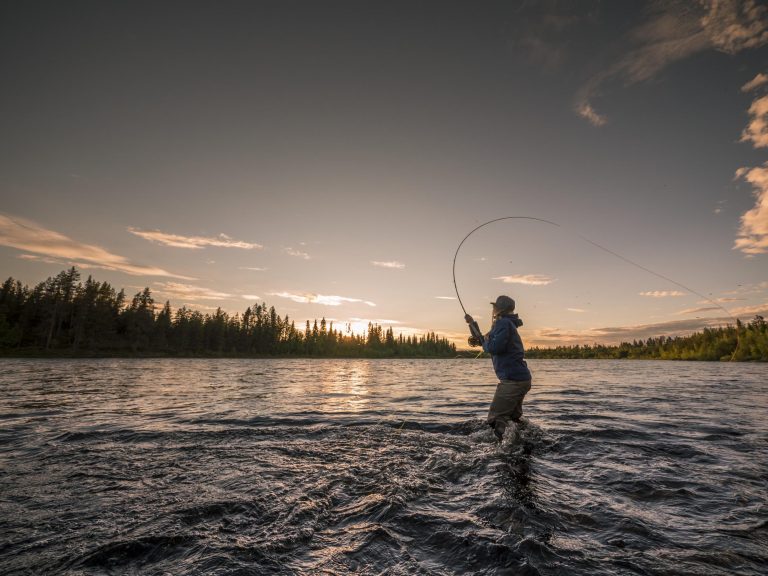
Sweden has 2,000 miles of coastline to enjoy and over 100,000 lakes giving you plenty of options for a family fishing holiday. Your trip can be the perfect opportunity to discover some of the wildlife, as well as trying to catch a few fish. Many of the lakes in Sweden are abundant with perch, tench and pike, and to the north of the country you will find grayling, brown trout and Arctic char. Enjoy a family fishing adventure in Sweden.
Older children and teenagers may also enjoy taking a chartered excursion into the Arctic circle, where the ocean is full of cod and mackerel. It can be a wonderful way of bonding, and you might even get the opportunity to see the Northern lights.
Ödevata Fish Camp in Småland is a good place to enjoy a few days with your little ones
For the little ones Learning how to fish is easy, and children can start as soon as they can hold a rod. When you are fishing with the younger members of the family, it is important that you find a safe and calm lake. Ödevata Fish Camp in Småland is a good place to enjoy a few days with your little ones. You can stay at the hotel or in one of the lodges right on the lake and make a real vacation of it. On the lake there are plenty of stable landings and platforms that you can fish from, and all equipment and life jackets are provided. There is also the option to rent a boat (with or without a motor), so that you can get out onto the water and enjoy the scenery.
Kastellet, Blekinge. Photo: Visit Blekinge
For the older ones Going sea fishing can be extremely exciting for older children and teenagers, and you can get the opportunity to catch some really impressive trout, and even salmon. Blekinge is one of the best places to visit in Sweden if you want to book an excursion. Using a fishing charter is advisable when going sea fishing with children. These are generally managed by experienced fishermen who understand the conditions of the water and the weather. The Blekinge archipelago is famous for pike, sea trout and herring, and it’s not unusual to catch salmon that are over 10kg in weight. There have even been flounder caught that are over 200kgs.
Boat trip on Hjälmaren. Photo: Örebro University
For everyone Every year in August, the Swedish people have a tradition of hosting a crayfish party. This is a family feast that is often celebrated outside on long tables, decorated with colored paper decorations and lanterns. You could host your own crayfish party, and spend some time catching your crayfish to eat. The public don’t need a license to catch crayfish for the whole of August and early September, and they are found in the majority of lakes and rivers in Sweden. Lake Hjälmaren is a good place to go, and you can catch crayfish with a simple net and some bait (bacon works well), or place a crayfish trap for a few hours and come back to it later in the day.
Going fishing in Sweden can be a fun adventure for the whole family. Whether you’re enjoying floating around on a boat in one of the many lakes, or on a deep-sea fishing excursion, there is an abundance of fish you can catch for your dinner.
Karoline Gore
Enjoy a Family Fishing Adventure in Sweden, written exclusively for Daily Scandinavian by Karoline Gore. Karoline is a freelance writer from Stoke on Trent in the UK who left the corporate grind when she started a family and has never looked back. She enjoys contributing to a range of online publications on the topics that are important to her.
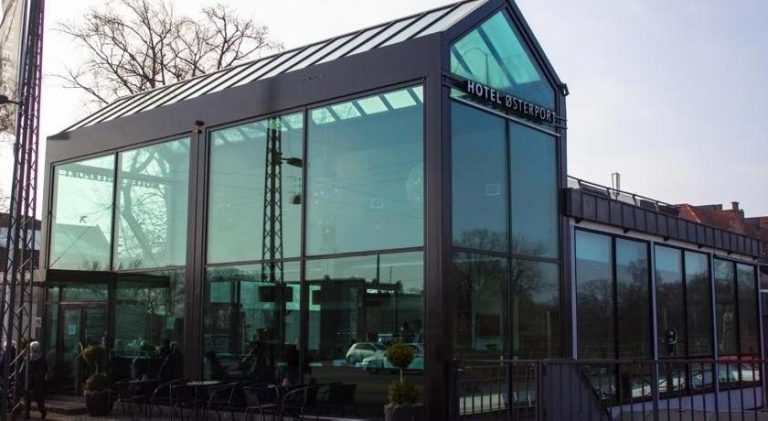
In a great location, right next to the Østerport station, this affordable hotel is easy to get to from Copenhagen airport and is perfect for the adventurous traveler who wants to explore the region’s many attractions. Learn more aboutØsterport Hotel in Copenhagen – great location and low prices.
Østerport Hotel was built in 1967 and last completed renovation was finished in 2004. Nowadays, it welcomes its guests into a modern ambience and offers everything today’s traveller needs. Several conference rooms are available for business events of all kinds.
Green residential Østerbro
Located where Copenhagen’s historical City Center meets green, residential Østerbro, Hotel Østerport offers modern accommodation with 24-hour front desk service, free Wi-Fi, a bar and bike rental. The hotel has multiple shared lounge areas with a view of bypassing trains. Family rooms and pet-friendly rooms are available.
All rooms at Hotel Østerport are equipped with a work desk, a tea/coffee maker, and a Smart TV
All rooms at Hotel Østerport are equipped with a work desk, a tea/coffee maker, and a Smart TV. All hotel guests have access to the Ironing Room, and laundry services are available for a fee. Breakfast is temporarily served at a café located 200m from the Hotel. The hotel’s bar and lounge area are serving beverages and snacks all day.
Plenty of culture
There is plenty of art and culture nearby, from the Grønningen gallery around the corner, to Rosenborg castle and the Amalienborg Palace. Tourists should also pay attention to the National Gallery of Art. If you venture into Copenhagen you’ll find a selection of exclusive boutiques and intimate restaurants and cafes.
Guests may enjoy complimentary coffee and tea in the lobby while watching the world go by.
Convenient connections
Hotel Østerport is a 5-minute train ride from Copenhagen Central Station and Tivoli Gardens. Attractions such as the Little Mermaid, Strøget and Nyhavn Harbour are within a 15-minute walk from the hotel. Østerport Station is less than 100m from the hotel, with direct train lines to Copenhagen International Airport within 20-minutes. Guests may enjoy complimentary coffee and tea in the lobby while watching the world go by.
Østerport Hotel in Copenhagen – Great Location and Low Prices, written by Tor Kjolberg
Nordic consumers spent nearly 20 billion euros on online shopping in 2020, of which 90 percent were bought from other countries. However, several studies prove that providing a simple option to return products or services can have a positive influence on the number of website visitors and conversion rates. Learn more aboutthe important issues in the booming Scandinavian e-commerce market.
The Swedish company Direct Link, an international-commerce logistic solutions provider, owned by PostNord, have operations and local personnel in Sweden, Germany, the UK, Poland, the US, Brazil, Hong Kong, Singapore and China. This year the company expands to the Netherlands and Turkey, as well as in Eastern Europe.
Consumers in the Nordic are in general digitally mature
Digitally mature consumers
Consumers in the Nordic are in general digitally mature. A report from PostNord states that the pandemic significantly advanced the development towards online shopping, up to a quarter more than before the pandemic. The trend was, however, already well underway, with a big shift from physical stores to e-commerce well before 2020, driven by changing Nordic consumer habits.
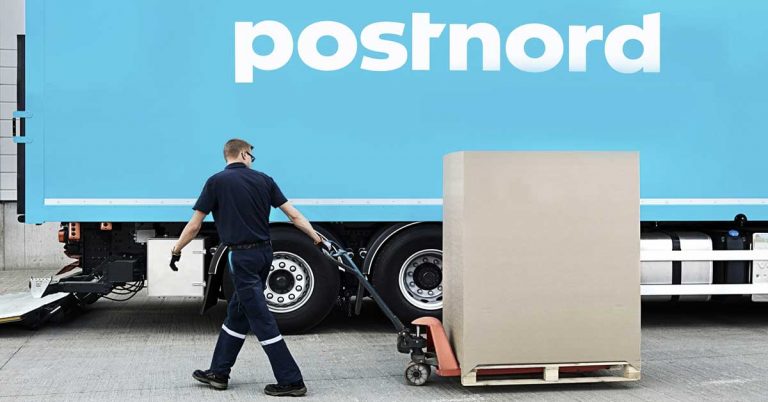
The Swedish company Direct Link, an international-commerce logistic solutions provider, is owned by PostNord
The Nordic consumers want updates on logistics and the opportunity to have choices. The ability to choose the method and place of a return, such as a pickup point or collecting from home, can positively impact consumers’ purchase intentions, according to a 2019 PostNord report. PostNord is the largest provider of logistic solutions and geographical coverage in the Nordic countries. Their ownership gives access to more than 8,000 service points where online consumers can conveniently pick up what they ordered.
The most provided delivery option is home delivery
Delivery options
Nordic consumers are happy to buy from other countries and with Amazon now established in Sweden, in addition to already well-established players like Zalando, Wish, eBay and others, this trend is likely to continue.
The most provided delivery option is home delivery followed by delivery at a pickup point. Furthermore, evening delivery has proven to be a popular delivery option in Denmark and Finland and is offered by approximately 15% of Finnish retailers. Machine pickup points, automated parcel lockers where customers can collect and send packages are an up-and-coming delivery option in the Scandinavian countries. Although this option is not provided by e-retailers in Iceland, Norway, and Sweden.
So, the Nordic market is obviously important. Since PostNord is a global company, it gives it the possibility to cooperate with a large number of established and skillful e-commerce operators throughout the world.
The products most often bought online in the Nordics, as in other European countries, are clothing and footwear
The most often bought products
The products most often bought online in the Nordics, as in other European countries, are clothing and footwear, followed closely by electronics and cosmetics, skin and hair care. Up to a quarter of Nordic consumers say that they have bought clothing or footwear online in the past year.
20-25% of e-retailers in Denmark and Finland offer machine pickup points. Around 60-80% of Scandinavian e-retailers offer returns via postal service, which is the most common return option. Returning a parcel at the physical store is also provided by 21% of Finnish e-retailers, however, not every e-retailer has a physical store or warehouse. Returning via a local return point is almost never used by Scandinavian e-retailers.
Important Issues in the Booming Scandinavian E-Commerce Market – read on….
Environment and sustainability are issues that are highly topical
Environment and sustainability
Environment and sustainability are issues that are highly topical and all players in the industry must be prepared to take responsibility to the best of their ability and will probably be a matter of survival more than anything else. DirectLink has published an annual report on European e-commerce since 2014, and the trend is obvious, companies are more and more environmentally concerned and consumers are willing to pay more for a more environment-friendly delivery.
More than 1,000 euros are spent in an average year by Swedish online consumers (well above the European average). This amount is not reserved just for fashion. A whole array of consumer goods are purchased by Nordic consumers via e-commerce, such as groceries, literature and audiobooks, home furnishings, dietary supplements, medication and other pharmaceuticals, sports and leisure products, as well as movies and entertainment and much more.
A master thesis study from Chalmers University shows that Swedish e-commerce consumers do not prioritize short delivery times as the most important criterion when choosing home delivery. In addition, most of the respondents stated that they are willing to wait between 1–5 days extra in order to promote sustainable transport. This indicates that not all deliveries need to be treated equally in terms of delivery time but can be adapted and adjusted as needed. With this knowledge, the opportunity opens to be able to offer e-commerce consumers an economical and sustainable transport with a delivery time adapted to the real demand.
In Scandinavian countries, sustainability has become one of the most important social issues for consumers and companies. Whether through media or government regulation, Scandinavian consumers are now keener to make conscientious choices when shopping online.
companies that addresses sustainability in a serious way will have a competitive advantage
A competitive advantage
So, in the years to come, companies that addresses these questions in a serious way will have a competitive advantage on top of doing the right thing as a start for a better reason. One challenge, though, is still that the interest varies very much around the globe related to making a change that matters. PostNord has been working actively for a number of years in order to try to limit its impact and has also managed to reduce its carbon footprint by 40% during the past ten years. The ambition is to become fossil fuel-free totally by 2030.
The Nordics certainly seem to enjoy the convenience of having products delivered to them. Apart from Finnish consumers, the vast majority of Nordic consumers prefer to have things delivered to their homes or P.O. boxes. In Finland, most consumers have a collection point close by, which might explain why more than 6 in 10 consumers there are happy to collect their purchases from a parcel locker or distribution hub.
The logistic companies that are best equipped to handle the above challenges will be the winners in the coming years.
Important Issues in the Booming Scandinavian E-Commerce Market, written by Tor Kjolberg
Some three million Scandinavians emigrated to the United States in the late 19th century, bringing with them craft skills and design aesthetics that would prove hugely influential to American manufacturing. The exhibition examines the relationship between Scandinavian and American design in the 20th century.Scandinavian Design & USA: People, Encounters and Ideas, 1890–1980 runs through 7 August 2022 at National Museum – Architecture, Oslo.
For the first time, the relationship between Scandinavian and American design in the 20th century is the subject of an exhibition. The National Museum – Architecture is proud to present Scandinavian Design & USA – People, Encounters and Ideas, 1890–1980, the product of extensive international collaboration and new research.
Finnish designer Tapio Wirkkala
What is Scandinavian design? What does Scandinavian Design really mean? Typically, the label brings to mind a mid-twentieth century design trend characterised by poise, elegance, natural materials, and an eye on exports. But is this a fair picture?
This exhibition explores almost a century of design that developed through encounters and exchanges between Scandinavia and the USA. The design-historical round trip traces the great emigration from Norway and neighboring countries in the late 19th century and the invention of the term Scandinavian Design in the 1950s. The exhibition delves into the ways that identity building, stylistic trends, and politics influenced perceptions of the objects we gather around us.
Trends that shaped the design aesthetic
Through a uniquely curated set of artifacts drawn from collections in the United States and Scandinavia, visitors can learn about the trends that shaped the design aesthetic, identity and philosophy that we encounter to this day. Among the topics examined were the significance of Scandinavian emigration and the large-scale marketing campaigns for Scandinavian Design in the United States in the 1950s. The exhibition also consideres the role played by design as a tool of international diplomacy.
Kaj Boyesten. Toy after 1930. Photo: Nasjonalmuseet
The exhibition brings together industrial design, toys, graphic design, textiles, clothes and furniture, offering moments of recognition and surprise that clarify links and foster new understanding between our cultures.
Contemporary design from the Nordic countries
When it was coined in the 1950s and promoted worldwide, the term Scandinavian Design referred to contemporary design from the Nordic countries. In the political and economic spheres, the concept became a brand embodying the traditions, culture, natural heritage and democratic values of Scandinavia. Although genuine to a certain extent, the concept is contentious, and the exhibition reveals a multifaceted design history reaching back much farther. Examples that stand out include airline advertisements featuring a Viking, the industrial design of new household goods, and finely crafted silverware for the new cocktail culture. Other examples that illustrate the widespread appeal of the concept include interior furnishings for the United Nations headquarters and upscale private residences, and car interiors featuring woven textiles.
Visitors can discover how transatlantic relationships between Scandinavia and the United States became central to cultural heritage on both sides of the pond. The exhibition is produced by the Los Angeles County Museum of Art and the Milwaukee Art Museum in association with Nasjonalmuseet, Oslo, and Nationalmuseum, Stockholm.
Scandinavian Design & USA: People, Encounters and Ideas, 1890–1980, compiled by Tor Kjolberg
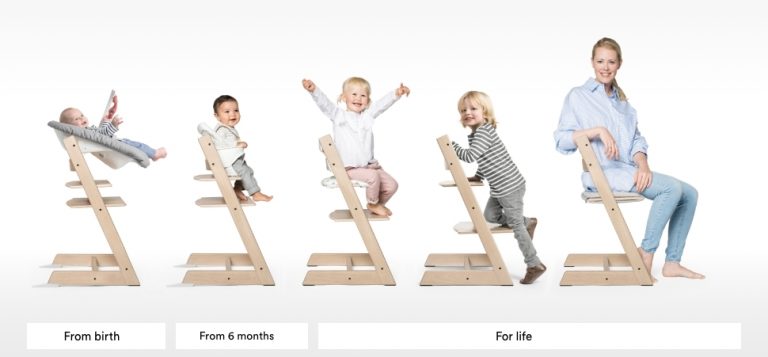
Featur image (on top): Peter Opsvik, Stokke (design 1972)