The Japanese silversmith Yuki Ferdinansen moved to Denmark 22 years ago. Her art can be described as Japan seen through a Danish filter.
“I want to sense these vastly different cultures and allow them to rearrange naturally and be expressed. My inspiration always comes from nature, expressed through the Fibonacci spiral systematic,” says Yuki Ferdinansen.
The Fibonacci spiral is named after the discoveries of the Italian mathematician Leonardo Fibonacci (1170-1250). Based on the mating characteristics of rabbits, he developed a series of numbers starting with 0 and 1, whereupon each next number is the sum of the two preceding. The number sequence can be used in nature, art and architecture to explain how certain shapes and structures are built up.
Yuki Ferdinandsen (Japanese, b. 1958) is a metalsmith artist living and working in Denmark whose refined minimalist works embody the aesthetics and traditional craftsmanship of her native Japan as distilled through a Danish lens.
In Denmark, she has combined the Japanese technique arare – which means hail and are small holes in a plate that follows a certain pattern – with Danish design tradition.
“With my hammer, with its small bumps I form a plate of silver; this solid piece gets a floating look simultaneously with flexibility. It has durability, weight, light, reflection, contrast, and silver’s unique brilliance. Silver’s gloss is hot and cold simultaneously, it is this gloss and disposition that is the charm of working with silver,” she says.
“Approximately 20 hits are required to create each bead-like protrusion, and the meditative and repetitive nature of the process imbues her works with an ethereal quality. “I enjoy every stroke and every blade is followed by step with the foot. Every sound of the rhythm of “my hammer’s dance” I feel in the whole of my body and enjoy within my soul”, says Yuki.
A subtle and nuanced play of light and shadow also emerges on the textured surfaces of the vessels, complemented by a semi-matte, whitened silvery finish achieved through an acid solution bath.
The Fibonacci spiral is named after the discoveries of the Italian mathematician Leonardo Fibonacci (1170-1250).
During her years in Denmark, she has made several works: from flower vases and large dishes, to earrings and an ice cooler. Her work has been placed in both private and public collections including the Danish Design Museum, Copenhagen, and The National Museum, Stockholm.
Japan Seen Through a Danish Filter, written by Tor Kjolberg
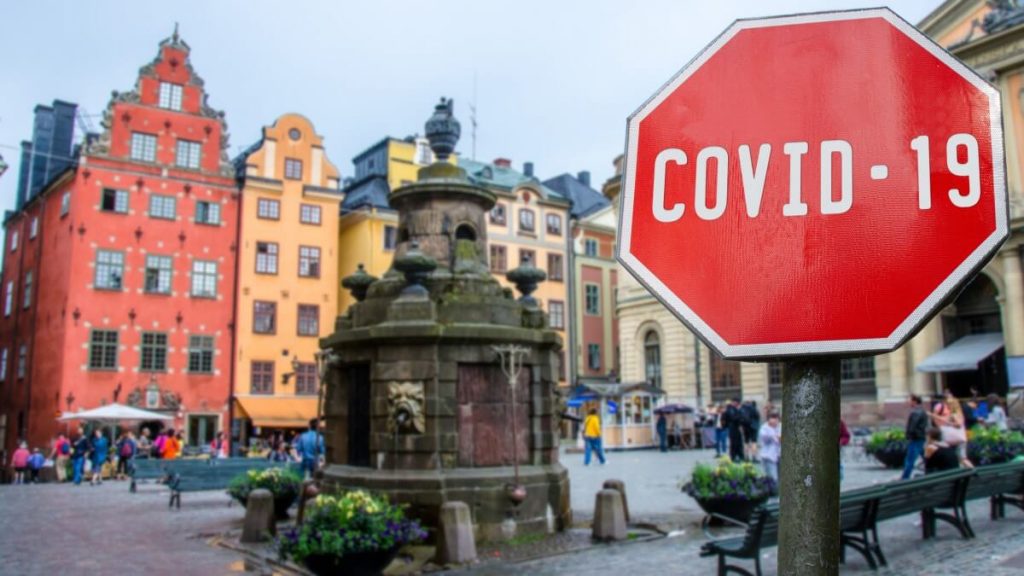
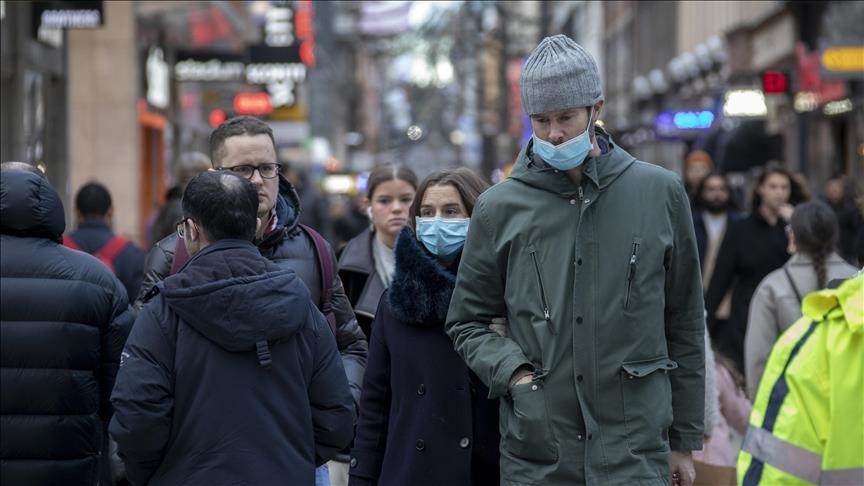
Different countries chose different strategies to combat the combat-19 devastation. One way to combat the pandemic was to focus on how many people died, another was to try assessing the complicated impacts of the various measures taken to combat the virus. When a lot of the functions in a society were frozen, people struggled – especially the most vulnerable. How did Sweden’s Covid-19 strategy work?
Sweden has been both praised and vilified for its “light touch” stance during the pandemic. However, when the second covid winter approached, how well did Sweden’s pandemic control work?
Recently Sweden’s state epidemiologist, Anders Tegnell had to defend himself from accusations that his laissez-faire approach to Covid-19 led to thousands of unnecessary infections and deaths.
To focus on how many people who would die, there was plenty of data to lean on. Meticulous records of the death toll were being kept in most countries, especially the wealthy ones, and presented in stylish graphs on various reliable sites.
“Swedish statistics do not differ from other European countries,” said Anders Tegnell. “Now, we are two years into this and Sweden doesn’t really stand out,” Tegnell told the Financial Times. “We are not the best, but we are definitely not the worst. That is what I hear now: how much good did all these draconian [measures] do for anybody?”
Sweden’s strategy has relied on individuals taking responsibility under non-binding recommendations.
To measure the consequences of lockdowns was, however, a lot harder. They appeared here and there as scattered anecdotes and figures. Perhaps the most striking data point came from the US: by the end of the academic year, a total of 55.1 million students had been affected by school closures.
In contrast to the stricter, often lockdown focused, approaches of many European countries—including its neighbors in Scandinavia—Sweden’s strategy has relied on individuals taking responsibility under non-binding recommendations. In the first six months of the pandemic, the Swedish government enacted extensive work from home measures for those that could, as well as remote learning for over 16s.
So, Sweden claims that its loose-reined Covid-19 strategy was working, that isn’t the case when compared with its near neighbors. The New York Times’s national editor who had noticed that the US death toll was about to pass 100,000, wanted to create something memorable — something you could look back on in 100 years to understand what society was going through. The front page was reminiscent of what a newspaper might look like during a bloody war.
Tegnell was among those insistent that the lockdowns imposed by other countries were excessive. Compared with other major European countries the number of overall cases and deaths in Sweden was low—just under 93 000 cases and 6000 deaths by 1 October 2020 compared with over 118 000 cases and 10 000 deaths in Belgium, which has a similar overall population size, or the 606 000 cases and 32 000 deaths seen in France and other larger countries.
Compared with its nearest neighbors Sweden’s Covid-19 pandemic has been catastrophic.
Compared with its nearest neighbors, however, Sweden’s Covid-19 pandemic has been catastrophic. Denmark has seen just 19 excess deaths per million since January 2020, while Norway has in fact seen fewer deaths than usual over the course of the pandemic.
In addition, tens of thousands of surgeries had been postponed by healthcare services in Sweden. Screenings for everything from cervical to prostate cancer were put on ice. The Swedish police hadn’t tested drivers for insobriety for months, out of fear of the virus. That year, it didn’t seem quite as serious if someone were to get killed by a drunk driver.
The question for the Swedish commission currently investigating Tegnell’s strategy is whether, if it had locked down, Sweden would have experienced rates of infection and death more comparable to Denmark or to the UK.
It was becoming obvious that the media, the politicians, and the public had a hard time assessing the risks of the new virus. To most people, the figures didn’t mean anything. But they saw the healthcare services getting overwhelmed in several countries. They heard the testimonies from nurses and doctors.
But by winter 2020 a second wave with the new alpha variant brought a spike in cases. In the six months between October 2020 and March 2021, Sweden saw 657 309 positive cases and 12 826 deaths.
“Swedish statistics do not differ from other European countries,” said Anders Tegnell. Photo: forskning.no
Fortunately, there is no need to speculate. A study by researchers from Imperial College London, published in Nature in August, modelled the hypothetical first wave death totals in Sweden, the UK and Denmark in scenarios where each country adopted the others’ lockdown strategies.
By the end of 2021, 56 countries had registered more deaths per capita from Covid-19 than Sweden. With regard to the restrictions that the rest of the world had put so much faith in — school closures, lockdowns, face masks, mass testing — Sweden had more or less gone in the opposite direction. Yet its results were not noticeably different from those of other countries. It was beginning to become increasingly clear that the political measures that had been deployed against the virus were of limited value.
However, British researchers found that Sweden would have cut its death rate during the first wave by three-quarters if it had adopted a UK-style lockdown, saving about 4,100 lives. Had the country adopted a stricter, Danish-style lockdown, the death rate could have been cut by 78%.
From a human perspective, however, it was easy to understand why so many were reluctant to face the numbers from Sweden. For the inevitable conclusion must be that millions of people had been denied their freedom, and millions of children had had their education disrupted, all for nothing.
“Obligation does not work by law in Sweden, and it would make people lose trust for vaccines” says Tegnell. “We should work more on spreading information about vaccines that most of the time, unfortunately, gets diluted by wrong and confusing messages.”
How Did Sweden’s Covid-19 Strategy Work? written by Tor Kjolberg
If you’re of the environmentally friendly persuasion, then a road trip in Scandinavia is the experience for you. The stunning scenery of seven-odd countries that make up the region is something that locals have sought to protect; as Sweden.se highlights, countries in the region consistently feature near the top of rankings lists as it concerns key environmental indicators, such as air quality and environmental sustainability.Enjoying Scandinavia by road – the eco-friendly way
It follows that visitors to the region should make every effort that they can to help protect this natural environment themselves, something which is absolutely achievable with a commitment to lowering your carbon footprint and waste. It starts with a car.
. According to Mer.eco, Norway, Sweden and Finland have led the way in electric car charging. Photo: Roberto H/Unsplash
Traveling on the road As Forbes highlights, the wildest parts of Scandinavia are difficult to get to via public transport. You can absolutely find towns and cities to act as a final stop before going to wilderness areas, but you’ll need your own vehicle past there. For that purpose, electric cars are ideal, but given the remoteness it’s reasonable to ask how to charge an electric car on a road trip in Scandinavia. The Scandinavian countries are leaders on this, too. According to Mer.eco, Norway, Sweden and Finland have led the way in electric car charging, providing plentiful spots across the country at rates that are very fair to the pocket. As a result, you’ll find yourself actively encouraged to drive electric.
You eat the produce that’s available at that time of year. Photo: David B Townsend/Unsplash
Keeping it seasonal People all over the world may have heard of the Nordic Diet, which, according to the Cleveland Clinic, is something of a fad but nevertheless a relatively healthy way to eat. In much of Scandinavia, this is simply how people eat, and there’s a big focus on seasonality. You eat the produce that’s available at that time of year or, alternatively, produce that has been cured and pickled in order to be fresh later on in the year – like smoked salmon. Seasonal eating is another powerful way to help the planet while traveling, so consider keeping your eating local. You’ll enjoy your food more this way, and enjoy a truly Scandinavian diet.
Scandinavia is well known for its progressive approach to waste. Photo: Pawel Czerwinski/Unsplash
Minimizing waste Scandinavia is well known for its progressive approach to waste. Whereas it’s a myth that 99% of everything in countries like Sweden is recycled, according to Treehugger, there is nevertheless a much more low-waste and recycling-friendly approach to daily life, and a social climate that puts a lot of credence in being responsible with your trash. With that in mind, use reusable tools and equipment when you’re out on the road or in the city, and prioritize stores and eateries that use reusable or biodegradable packaging. There’s plenty around, and doing your extra bit to help these countries stay clean is a big gesture.
Enjoying the Scandinavian life is one of the big pulls of heading over to Northern Europe, and it’s also a very environmentally sound way of living. Do something for the planet, and for Scandinavia, by acting in the best interests of everything around you and the natural environment.
Karoline Gore
Enjoying Scandinavia By Road – The Eco-Friendly Way, written exclusively for Daily Scandinavian by Karoline Gore. Karoline is a freelance writer from Stoke on Trent in the UK who left the corporate grind when she started a family and has never looked back. She enjoys contributing to a range of online publications on the topics that are important to her.
What do you know about Scandinavians – and their humor (or lack of it)? Have you experienced Scandinavian humor personally, or is it defined by things your parents told you – or what you have seen in the media or read online? Learn more about Humor – the Scandinavian way.
Some of the jokes below might be perceived by some as “politically incorrect” but I have included them just because they strike me as well-intended, good-natured humor.
Lars Andersen’s Laundry
A guy was walking through Chinatown and sees a building with a sign “Lars Andersen’s Laundry. “Lars Anderson,” he thinks. “How in the world does that fit in here?”
So, he walks into the shop and sees an old Chinese gentleman sitting in the corner. The visitor asks, “How in the world did this place get a name like Lars Andersen’s Laundry?”
The old man answers “Is name of owner.”
The visitor asks, “Well, who is the owner?”
“I am he,” answers the old man.
“You? How did you ever get a name like Lars Andersen?”
The old man replies:
“Many years ago, when I come to this country, I was standing in line at Documentation Center. Man in front of me was big blond Norwegian. Lady looks at him and go, ‘What your name?’ He say, ‘Lars Andersen.’ She looks at me and say, ‘What your name?’ I say, ‘Sam Ting.’
The Swede, the Dane and the Norwegian
Scandinavian jokes featuring “the Swede, the Dane and the Norwegian” are commonplace in schools. The typical Swede is seen as rich, arrogant, and tech-savvy. The typical Dane is usually seen as a slightly decadent hedonist, with a can of beer never far from reach. The typical Norwegian is shown to be an uneducated jumper-wearing country bumpkin, always with a fish close at hand.
Let’s laugh about some Swedish takes on the Norwegians:
Q: Why did the Norwegian take a ladder with him to the supermarket?
A: Because he’d heard the food prices in Oslo were extremely high.
Q: Why did the Norwegian crawl on the floor through the supermarket?
A: Because they’re looking for the low prices.
Q: Why do Norwegian garbage trucks drive so fast?
A: The drivers are scared of getting robbed.
Q: Why did the Norwegian bring a rolled-up piece of sandpaper to the desert?
A: Thought it was a map.
Q: How do you sink a Norwegian submarine?
A: Scuba-dive down and knock on the door.
Q: How do you sink a Norwegian submarine again?
A: Dive down and knock on the door again. Wait for them to open the window and say, “You aren’t fooling us this time!”
Q: How do you sink a Danish submarine?
A: Dive down and knock on the window. Wait for them to open the door and say, “Come on, who do you take us for? Norwegians?”
Q: How do you sink a Swedish submarine?
A: Give it a Norwegian crew.
Faulty blinkers
Two Norwegians are driving at night. The driver starts to worry something is wrong with his blinkers so he pulls over and asks the other Norwegian to get out and check them.
“Hey,” the guys yells from the front of the car, “It works… Wait it doesn’t work… No now it works… Wait it doesn’t work… No wait, now it works… Oh sorry, it doesn’t work…”
Irish and Norwegians
Centuries ago many Norwegians came to Ireland to escape the bitterness of the Norwegian winter. Ireland was having a famine at the time and food was scarce.
The Norwegians were eating almost all of the fish caught in the ocean, leaving the Irish with nothing but potatoes.
St. Patrick, taking matters into his own hands, like most Irishman, decided all the Norwegians had to go. Secretly he organized the IRATION (Irish Republican Army to Rid Ireland of Norwegians). Irish members of the IRATION sabotaged all the power plants in hopes the fish in Norwegian refrigerators would spoil, forcing the Norwegians to a cooler climate where their fish would keep. The fish spoiled all right, but the Norwegians, as everyone knows to this day, thrive on spoiled fish. Faced with failure, the Irishmen sneaked into the Norwegian fish storage caves in the dead of the night and sprinkled the rotten fish with lye, hoping to poison the Norwegian intruders, but as everybody knows, this is how lutefisk was introduced to the Norwegians, and how they thrived on the lye-soaked smelly fish.
Matters became even worse for the Irish when the Norwegians started taking over the Irish potato crop to make lefse. Poor St. Patrick was at his wits end. Finally, on March 17, he blew his top and told the Norwegians to “go to hell” — and it worked, because all the Norwegians left Ireland and went to Minnesota.
I hope to bring you more laughs next month!
Humor – the Scandinavian Way, compiled by Tor Kjolberg
Swedish chef Emma Bengtsson holds two Michelin stars at the New York City based restaurant Aquavit. She is the first female Swedish chef to win two stars, and only the second female chef based in the United States to do so. Learn more about the Swedish star chef in New York.
Long before the New Nordic movement burst onto the global culinary scene, even before the term “fusion” became a source of fascination and then derision in the food world, there was Aquavit.
You find Aquavit at the fashionable Manhattan address Park Avenue Tower, across the street from the Ferrari store and in the same block as the luxury hotel St. Regis
“I was not prepared for this, not at all”, says Emma Begtsson (40). “Everything has gone so fast. I just wanted to cook good food. And then everything changed”.
Emma Bengtsson was born in 1981 in Falkenberg, Halland County in western Sweden. She originally wanted to be a fighter pilot, and in preparation for a military career, would go to shooting ranges with her father. Bengtsson was inspired to cook by her grandmother, and went on to study at the International Restaurant School in Stockholm. She interned at Edsbacka Krog, the only restaurant at the time in Sweden to hold two Michelin stars.
The Swedish fine-dining restaurant Aquavit opened in Midtown Manhattan in 1986
The Swedish fine-dining restaurant Aquavit opened in Midtown Manhattan in 1986, and to this day it remains unlike any other dining establishment in the city. Polished and elegant with a distinctive menu that reflects the evolving cuisines of both Sweden and New York City, Aquavit remains unique, balancing traditional fine dining with modern-day whimsy while maintaining its Scandinavian roots under the watchful eye of owner Håkan Swahn.
“No matter which menu you choose, each of the delicious and often ambitious dishes is a clever and focused expression of the recently promoted chef Emma Bengtsson’s vision,” wrote the representatives of the Michelin guide in October 2014, six months after the young dessert chef had reluctantly taken over the job as head chef after her predecessor Marcus Jernmark. This wasn’t something Bengtsson had sought, as she had only intended to help out the kitchen while a new executive chef was recruited. Under Bengtsson, the restaurant gained a second star.
Aquavit offers a distinctive menu that reflects the evolving cuisines of both Sweden and New York City
Aquavit is probably best known for launching the career of chef Marcus Samuelsson, who surprised and delighted diners with dishes like curried herring that seemed so adventuresome at the turn of the century. And it’s not the most frugal New Yorkers who come to the restaurant at the fashionable Manhattan address Park Avenue Tower, across the street from the Ferrari store and in the same block as the luxury hotel St. Regis, especially not after the other Michelin star was achieved.
“The food for the last couple of years has been so focused on taking something, breaking it down into a thousand pieces and putting it together so it looks like something else, and it’s amazing and a lot of places make it look awesome, but you don’t have to do that with everything,” Bengtsson said. “Stuff that’s already delicious the way it is, if you cook it right, you use the right ingredients, you don’t have to do much else.”
Aquavit London
Aquavit opened a second restaurant, in London. This one differed from the New York establishment as it was significantly larger and so the dishes under supervision by head chef Jonas Karlsson are less complicated to allow the kitchen to cope with the number of diners.
Swedish Star Chef in New York, written by Tor Kjolberg
It’s been said that Norwegians are born with skis on their feet. Not necessarily true, but it’s a fact that being good at skiing used to be a necessity as it was a major method to transportation in Scandinavia for centuries. Learn more about 4,000 years of skiing in Norway.
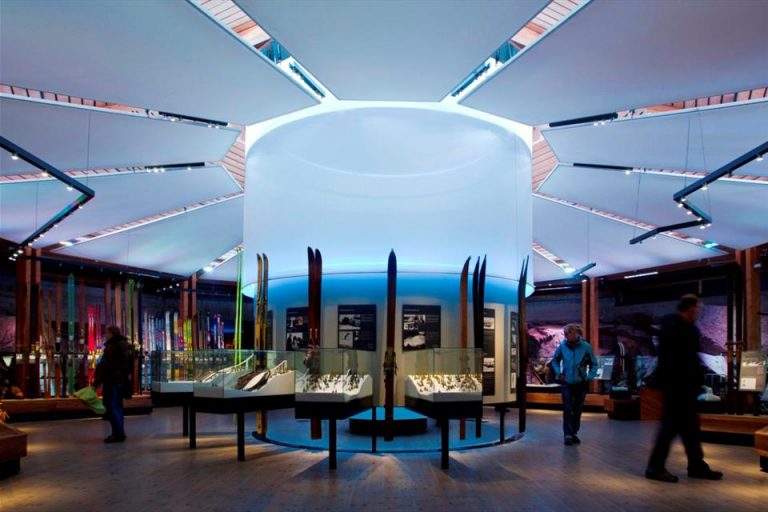
Today, it is a sport and hobby for most Norwegians. At the Ski Museum in Oslo visitors can learn more about why skiing has been, and always will be, such a massive part of Norway’s culture and history. The Ski Museum was founded in 1923 and is the world’s oldest ski museum located at the base of the Holmenkollen ski jump in Oslo. It is one of Norway’s most visited attractions and a famous sporting arena. Ever since the end of the 1800s, Holmenkollen and the surrounding area have drawn large crowds of Norwegian ski enthusiasts every winter. After it was rebuilt in 2010 it became the world’s most modern ski jump, attracting many visitors of its design and history. Most visitors climb to the top of the ski jump to experience the incredible view of Oslo and the Oslofjord, often described as ‘the blue, the green and the city between.’
The initiator of the museum was the architect Hjalmar Welhaven. His private collection formed the foundation of the antique and historic skis on display at the museum. Until 1951, the collection was housed in a building in the Oslo neighborhood of Frognerseteren. In connection with the rebuilding of Holmenkollbakken in 1951, the museum collection was moved to new premises at Holmenkollbakken.
From the exhibition
Skiing, be it cross country, alpine, or the jumping type, is enormously popular in Norway, which has led to a rapid development of the ski arena in Holmenkollen. Today this arena is home to some of the world’s most famous winter sports events, including the Holmenkollen Ski Festival which is affectionately nicknamed “the second national day” of Norway.
As the world’s oldest skiing museum it has become a popular destination for tourists looking to gain a deeper understanding of Norwegian’s favorite pastime. “I think it is interesting to learn about the history of skiing and how the use of skis has developed through time”, says the ski museum’s operation manager.
As the world’s oldest skiing museum it has become a popular destination for tourists looking to gain a deeper understanding of Norwegian’s favorite pastime.
The museum contains 4,000 years of skiing history, starting with rock carvings dating from the Stone Age. It also displays skiers and skis from the Viking Age. Additionally, it displays equipment used in the polar expeditions of both Fridtjof Nansen and Roald Amundsen. The Ski Museum is owned and operated by Skiforeningen. This association is responsible for the organization of sports, activities and events in Holmenkollen National Park.
The very first ski jumping competition in Holmenkollen took place in 1892 in front of a crowd of 12,000 people. Spectators could enjoy the 18-kilometer cross country event one day, and then a winning jump of 21.5 meters the next. A good ski athlete had to be able to perform well in both disciplines.
The Ski Museum was founded in 1923 and is the world’s oldest ski museum located at the base of the Holmenkollen ski jump in Oslo.
When Oslo was awarded the 1952 Winter Olympics, the arena was improved with a taller tower that included an elevator for the athletes. The Ski Museum moved in underneath the table where the jumpers start their flight, and the pond at the bottom of the hill was dug out to achieve greater jump lengths. Permanent spectator stands were built for the first time, as well as special stands for judges and the Norwegian royal family. The Olympic ski jumping competition that year drew between 120,000 and 150,000 spectators, a record that stands to this day.
The two-floor museum is divided into several exhibitions. The polar exhibitions are the most popular. Visitors find it fascinating to learn about Amundsen and Nansen and their expeditions. They are international heroes and looking at the equipment they used, you have to be impressed by their accomplishments.
Ever since the end of the 1800s, Holmenkollen and the surrounding area have drawn large crowds of Norwegian ski enthusiasts every winter.
Another popular exhibition is Winter Joy, which looks into why the outdoor life has had such a massive impact on Norwegian culture.
In the museum’s new building they also have temporary exhibitions, one of the current one being Blåkollen, a magic universe for the children. The exhibition is a mysterious and magic place where you can meet gnomes and tåketrolls. Their secret is that they can make fog and then make it disappear so you can see all the beauty behind it. The story of the fog people tåketrolls in Blåkollen is written especially for the exhibition and has been published as two books in 2018.
Holmekollen for Ukraine
The interactive exhibitions are also very exciting.
4,000 Years of Skiing in Norway, written by Tor Kjolberg
In the watchmaking world, there are a few countries that stand out above the rest. Switzerland is one of them, and Scandinavian countries are another. In this article, we will reveal five Scandinavian watch brands you should know about. These outstanding watch brands produce high-quality timepieces that are worth your attention.
1. Linde Werdelin Linde Werdelin is a Danish watch brand that was founded in 2002. The company is known for its innovative and avant-garde designs. Linde Werdelin’s timepieces are characterized by their unique cases, which are often made of titanium or carbon fiber. The brand offers a wide range of collections, including the SpidoSpeed, Oktopus, and Reef Sea lines.
If you’re looking for a Scandinavian watch brand that offers something different, Linde Werdelin is definitely worth checking out. The average cost of Linde Werdelin watches is $5000.
Linde Werdelin is a Danish watch brand that was founded in 2002.
Linde Werdelin Watch Collections
SpidoSpeed
The SpidoSpeed watch collection features timepieces with unique, skeletonized dials. The collection is named after the company’s first model, SpidoLite.
Oktopus
The Oktopus watch collection features dive watches that are water-resistant to 300 meters. The collection includes the Oktopus I and II models.
Reef Sea
The Reef Sea watch collection features timepieces that are inspired by the world of sailing. The collection includes the Reef 1000, Reef 2000, and Reef 3000 models.
2. Nordgreen Nordgreen is a Danish watch brand that was founded in 2017. The brand’s philosophy is to create minimalist timepieces that are both stylish and functional. Nordgreen’s most popular collections include the Native and Infinity. The prices for Nordgreen watches are quite affordable, with most models retailing for under $500.
Nordgreen Watch Collections
Nordgreen Native
The Native collection features timepieces with a clean and minimalistic design. The collection includes the Classic, Chronograph, and Date models.
Nordgreen Infinity
The Infinity collection features timepieces with an elegant and timeless design. The collection also offers the Classic, Chronograph, and Date models.
The Tid watchmaker is based in Denmark and was founded in 2009.
3. Tid Watches The Tid watchmaker is based in Denmark and was founded in 2009. Tid’s mission is to create simple, yet sophisticated timepieces. All of their timepieces are designed in-house and manufactured in Switzerland. The most popular Tid watch collections include No.1, No.2, and No.3.
Tid watches are loved for their simple and elegant design. The average cost of a Tid timepiece is worth $300.
VEJRHØJ is a Danish watch brand that was founded in 2008.
4. VEJRHØJ Watches VEJRHØJ is a Danish watch brand that was founded in 2008. The brand creates minimalist timepieces with a focus on functionality and durability. VEJRHØJ’s most popular collections include Classic, Sport, and Pilot. The average cost of a VEJRHØJ timepiece is around $250.
VEJRHØJ Watch Collections
VEJRHØJ Classic
The Classic collection is the brand’s flagship line of watches. The Classic watches are characterized by their simple and sleek design.
VEJRHØJ Sport
The Sport collection is the brand’s line of sporty watches. The Sport watches are loved for their dynamic and modern design.
VEJRHØJ Pilot
The Pilot collection is the brand’s line of aviation-inspired watches. The Pilot watches feature their sophisticated and stylish design.
Aarni Sirius walnut wrist watch
5. Aarni Watches Aarni is a Finnish watch brand that was founded in 2013. Aarni’s collections include Atlas, XO, and Vega. The timepieces are all inspired by different aspects of the Finnish culture and landscape. These collections offer something for everyone, whether you’re looking for a sophisticated or sporty watch. Aarni is definitely a brand to keep an eye on. The average cost of an Aarni timepiece is around $250.
Aarni Watch Collections
1. Atlas
The Atlas collection is inspired by the Finnish landscapes. The watches in this collection are characterized by their rugged and sturdy design.
2. XO
The XO collection is inspired by the night sky. The watches in this collection feature a starry dial and caseback.
3. Vega
The Vega collection is inspired by the Finnish summer. The watches in this collection are characterized by their bright and colorful design.
Frequently Asked Questions
Are Scandinavian Watches Worth Buying? Scandinavian makers offer a huge batch of solid watch collections. They are loved for their high quality and connection with native traditions. If you are looking for a durable and stylish piece, then Scandinavian watches are definitely worth considering.
Are Scandinavian Watches Better Than Swiss Watches? The quality of Scandinavian watches is on the same high level as that of Swiss watches. The main difference lies in the design. Scandinavian watches are more simplistic and modern, while Swiss watches tend to be more traditional. Plus, Swiss watchmakers tend to add expensive jewelry like gold, diamonds, and rubies. This makes such watches pricey.
What Is The Best Scandinavian Watch Brand? There is no one “best” Scandinavian watch maker. Each brand brings its own strengths and weaknesses. It all depends on your personal preferences as a watch collector.
What Scandinavian Watch Brand Is Perfect for Small Wrists? There are many Scandinavian watch brands that make small watches perfect for small wrists. Brands like Skagen, Daniel Wellington, and Triwa all make beautiful minimalist watches with smaller case sizes. You should measure your wrist size to find out which watch size is good for you.
Do Scandinavian Watches Have a Warranty? Yes, all Scandinavian watch brands offer a warranty on their products. This is usually a two-year warranty, but some brands may offer a longer warranty period.
What Is the Most Affordable Scandinavian Watch Brand?
Triwa is one of the most affordable Scandinavian watch makers. Their timepieces start at around $100 USD. But don’t let the low price tag fool you – these are still high-quality timepieces.
Five Scandinavian Watch Brands You Should Know About – Final Thoughts There are many great Scandinavian watch brands to choose from. These five brands are just a few of the most popular makers that offer quality timepieces at an affordable price. Do some research to find the perfect Scandinavian piece for you.
David Garcia
Five Scandinavian Watch Brands You Should Know About, written exclusively for Daily Scandinavian by David Garcia. David considers himself a huge fan of equestrian sports. Being born in a family of farmers, he was literally living at the ranch. His first riding experience was when David was six. He was so fascinated with the grace and intelligence of horses so he decided to plunge into equestrianism deeply. Thus, he’s been participating in a range of horse races and shows where he often grabs medal positions.
David believes that we could be better by sharing our experiences. That is why he founded Horsezz – a blog that is dedicated to equestrian sports.
Norwegian Sigurd Bronger makes jewelry from eggs, balloons and gold, and sells them to collectors all over the world. Become familiar with the Norwegian engineering artisan.
For more than 40 years Sigurd Bronger’s passion for craftsmanship and endless curiosity has driven him to seek new forms of expression on the borderline between jewelry, art, design and engineering. Sigurd’s highly conceptual work defies definition and has always baffled his fellow Norwegians. It has more in common with contemporary art than decorative jewelry and goldsmith art. Though clearly an artisan, Sigurd himself prefers the title of “engineering artist”.
For more than 40 years Sigurd Bronger’s passion for craftsmanship and endless curiosity has driven him to seek new forms of expression on the borderline between jewelry, art, design and engineering.
For many years he was an outsider in contemporary jewelry art, but now he enjoys increasing attention – nationally and internationally, not least due the book ‘Laboratorium Mechanum’ pulished by Arnoldsche in Germany.
Bronger studied gold and silversmith in the Netherlands and was inspired by the work of Modrian and Stijl. The art collection of Stedlijk Museum (Museum of Contemporary Art) in Amsterdam was an important inspiration for his art education. Galerie Ra in Amsterdam opened his eyes to what contemporary jewelry art could be.
As a gold and silversmith maker, Sigurd did not like that his craft was about making commercially mass-produced jewelry.
Over the last 35 years, Sigurd Bronger has used things like eggs, balloons, sponges, pieces of soap and glass lenses as materials for making jewelry. Photo: Reverso Gallery
Over the last 35 years, Sigurd Bronger has used things like eggs, balloons, sponges, pieces of soap and glass lenses as materials for making jewelry. His works are often ingenious, technical constructions that remind us less of conventional jewelry and more of instruments for scientific or medical research. He thinks of them as condition-measuring devices, communicative devices and wearable devices. Examples in the latter category are devices for carrying a goose egg, a drain pit, gall stones, a magnifying glass, and a transistor tube.
“There is a big world of people gathering jewelry out there”, says Bronger. A married couple in Switzerland has a collection of 4,000 rings from ancient times to the present day. One of the rings is made by Sigurd Bronger. In 18 carat gold, with a smiley balloon as an ornament.
Bronger studied gold and silversmith in the Netherlands and was inspired by the work of Modrian and Stijl. Photo: Torsten Söderbergs stiftelse
After four years and seven attempts, Ra accepted his work, and was his exclusive gallery from 1983-2020. This gallery relationship has been vital for his artistic career. Later, started a collaboration with Neue Sammlung (Design Museum) in Munich where they will show his work next year.
“My jewellery is not meant to be decoration”, explained Bronger to Norwegiancrafts.no. “This decorative stuff many people equate with jewelry causes me to sometimes say I hate jewelry.’
“He is unsurpassed, a jewelry engineer. He invents things, makes jewelry you can ponder about and have fun with”, says Professor Jorunn Veiteberg at the Faculty of Fine Art, Music and Design at the Bergen University.
His artistic breakthrough is partly due to the Crafts in Dialogue exhibition at Stockholm’s National Museum in 2005, and his lecture at the Neue Sammlung, Munich in 2009 was his international breakthrough. In Norway, it was his retrospective exhibition (Balloon Voyage) at Lillehammer Art Museum in 2011.
Diamond ring in a beachwood box
He explains that the jewelry concept allows his works to fall into a category that creates certain expectations, and when they break with these expectations, the off-the-wall ideas become even stranger, even more absurd.
One example is the brooch featuring his mother’s gallstones on display at the Stockholm National Museum; another is his Cuckoo Clock with an egg, a commission for the Norwegian Government Representational Buildings in Oslo.
Jewelry 2012
Sigurd Bronger loves to provoke. “Maybe it has more to do with surprise; that the works become difficult to relate to, difficult to understand, because they don’t fit in, because they don’t ‘follow the rule book’, he says.
The Norwegian Engineering Artisan, written by Tor Kjolberg
At the Nor-Shipping event in Oslo the week before Easter, the world’s most environmentally friendly coastal ship, Havila Capella, received the Next Generation Ship Award. Read more about the Norwegian coastal vessel which received Next Generation Ship Award.
During the Ocean Leadership Conference at this year’s Nor-Shipping event in Oslo on Monday April 4th, was Havila Voyagers’ ship Havila Capella’ announced as the winner of The Next Generation Ship Award. The ship’s groundbreaking technology allows her to sail with zero emissions. The award honors a ship project demonstrating the greatest advances and innovation in design with respect to energy efficiency, suitability, technology utilization, safety & security, and environmental sustainability for the coming decade. The vessel has been designed by Hav Group and built at the Tersan Shipyard in Turkey.
Havila Capella can sail quietly and sustainably through world heritage fjords and pristine surroundings along the Norwegian costline.
“It is with great honor we receive the award for our first ship, Havila Capella, the world’s most environmentally friendly ship. We are looking forward to welcoming 3 identical ships later this year forming an integral part of everyday traffic on the historical coastal route between Bergen and Kirkenes. Sustainability should mirror everything we do from ship design and all other operations, and this is a challenge we do not take lightly. To be awarded with this valuable recognition from the industry is therefore a prestigious moment and proof of that Havila Voyages’ highly innovative ship technology is a frontrunner towards the green transition of eco-cruiser ships”, says CEO of Havila Voyages, Bent Martini.
CEO of Havila Voyages
A plug-in hybrid ship
Havila Capella is a plug-in hybrid ship with the world’s largest battery packs designed for passenger ships. The battery pack weighs 8 tons and has a capacity of 6.1megawatt hours. The batteries on board the modern ship allow her to sail for four hours without noise and emissions, meaning she can sail quietly and sustainably through world heritage fjords and pristine surroundings along the Norwegian costline.
Havila Voyages has spent more than 500 million NOK to make their eco-cruiser environmentally friendly, and the battery packs are just one of several measures that cut NOx by around 90 per cent and CO2 emissions by around 25 per cent. In addition, the ships are built to run on biogas, a practically carbon neutral biofuel telling the most impressing attribute of Havila Capella: She is ready to run with zero emissions.
The ship is also prepared to run on hydrogen or ammonia and is therefore a ship built for the future. The ship’s groundbreaking technology is developed in close partnership with Hav Group, Hav Design, Kongsberg Maritime, and scientific networks.
Havila Food Stories The food concept on board has stainability as its most important ingredient. There are no buffets, meaning the guests can enjoy a highly personal Norwegian culinary experience with handpicked Norwegian ingredients from local producers and a target of maximum 75 grams daily food waste per guest. The concept cuts food waste by a total of 15 tons per ship per year, and to make the ship even more efficient, it has a waste energy recovery system that will make use of 65% of fuel energy that is normally lost through the exhaust and cooling water systems.
The company will be operating four brand new ships as a part of a ten-year contract with the Norwegian Government.
“Every year the debate to select a winner gets more intense, and 2022 was no exception. It is common knowledge that while fossil fuels will be with us for years to come, there must be a transition to cleaner, more efficient alternatives and the winning vessel for the moment, powered by the cleanest fossil fuel currently available – LNG, but it is intended for future transition by hydrogen when technology and availability permit” says the jury in statement from Nor-Shipping.
“Norway’s quiet and unspoiled nature, clean water and fresh air is worth taking care of, both for us and the future generations. Because of that, we are focused on green solutions – for those who follow us to be able to experience the same”, says Bent Martini.
Havila Capella is a plug-in hybrid ship with the world’s largest battery packs designed for passenger ships.
Passengers: 640 (cabins and port-to-port passenegers (172))
Built: 2021 at Tersan Shipyard, Turkey
A Havila Capell cabin
Havila Capella’s main features:
Runs on Liquid Natural Gas (LNG)
World’s largest battery pack on a passenger vessel
Clean hydropower charging
Heat recovery management
Energy-efficient hull design
4 hours electric sailing with zero emissions
15 tons food waste reduction per year
Extremely low noise emittance
About Havila Voyages Havila Voyages is a new Norwegian shipping company offering a more environmental responsible way to explore the Norwegian coast.
The company will be operating four brand new ships as a part of a ten-year contract with the Norwegian Government to sail the coastal route from Bergen to Kirkenes. The twelve-day return voyage visits 34 different ports sailing through narrow fjords & open seas and travels high up into the Arctic Circle.
The large battery packs fitted to each ship allow them to sail through the fjords and other vulnerable areas for up to four hours at a time – quietly and emission free. The batteries will then be charges in one of the numerous ports along the route, using clean hydropower.
The new ships showcase a modern and stylish Nordic design and offer 179 spacious cabins from ten to 45 square meters.
The on-board culinary experience will undoubtedly be one of the highlights of the trip, with menus reflecting Norway’s culinary traditions and using the highest quality Norwegian produce.
Norwegian Coastal Vessel Received Next Generation Ship Award, a press release from Havila Voyages
Bike routes in Norway are perfect for students and tourists! They allow you to see Norway in a new way, which is why they are so popular. But with so many routes to choose from, it can be hard to know which one is the best, and therefore it is good for students to have tips for choosing routes that are best for them. Here, you can learn tips for choosing the best bike routes in Norway for students.
1. The level of the bike itself Bike routes in Norway vary in level, and therefore it’s best to choose routes that are even. Low-level routes may be more suitable for some students, while high-level routes may be more suited to others. The best way to find out which is right for you is by trying them out. You can do this by taking a friend with you who can tell you about the difficulty of the route or do an experiment and measure how far you go on each route.
Outdoor biking in Oppdal. Photo: Marius Rua/Norway Image Bank
2. The level of the traffic The level of traffic is important to look at, because the bicycle routes in Norway may well be very beautiful, but they can also be quite dangerous if there are cars around. One way to ensure you don’t get into any trouble is by choosing a route that is not very close to major roads. You can also choose a route with less traffic by getting off the beaten track and cycling along quiet streets. Finally, it is best to choose routes where there will be no traffic in the winter.
Mother and kids biking. Photo: Jonas Sjögren/Norway Image Bank
3. The level of the landscape The levels of the landscape are important too. Just like the level of bike routes in Norway, the kinds of roads and things you see may vary. And if you have not been to Norway before, you may be surprised to see some beautiful views that you have never seen before. But students who are new to the place may not appreciate these things as much, so it is best to choose a route with low levels of the landscape. The best way to see Norway from your bike is by choosing routes that are close to the sea and have a good view of the fjords.
Evening biking in Hemsedal. Photo: Kalie Heggelund/Norway Image Bank
4. The time of year The time of year should be one of the first things you look at when choosing bike routes in Norway because it will affect how long you can cycle each day. The best times to go cycling in Norway are spring and autumn because it is much easier to cycle there in the summer. When it is too hot, you will find that your bicycle becomes too heavy and difficult to manage.
TIP: If you are a student in Norway and you just completed your college papers for the semester, it is good to consider biking on the right routes for refreshment.
Biking wintertime in Tromvik, Photo: Ismaele Tortelia/Norway Image Bank
5. The destination The destination you choose is important. Some students may want to cycle long distances, while others may just want to do a little local cycling. If you find yourself in the first category, then it’s really important that your route goes somewhere interesting. You may even want to look into finish lines as this will give you a reason to cycle each day and make your journey more enjoyable.
Tips For Choosing The Best Bike Routes In Norway For Students, written exclusively for Daily Scandinavian by Yaro Jones, chief editor at https://eduloh.com/