The first physical NFT exhibition, Something Ethereal, is now on display at Fotografiska in Stockholm. Read more about Something Ethereal in Stockholm.
Somewhere Ethereal is an exhibition that raises questions about the nature and future of digital art. The artworks are spellbinding experiences featuring dreamlike animations and magnificent landscapes exploring shape, color and sound.
Sun Cave 2000, by Andres Resinger, Something Ehereal in Stockholmresinger Studio
Spellbinding experiences featuring dreamlike animations
“For decades, digital art has been overlooked by museums and art institutions, but now the NFT trend is growing exponentially and starting to become a given part of the art world. This exhibition will offer an almost otherworldly experience. An image flowing from one thing to the next just as our thoughts can stray from one idea to another, creating a sense of natural flow and calm,” says curator Mathieu Wothke.
NFT stands for non-fungible (non-interchangeable) token – a digital resource that represents objects and phenomena in the digital world, such as art, music, playing time and videos. NFTs are bought and sold online using cryptocurrencies and can become extremely valuable due to their exclusivity.
Because it is encrypted in a blockchain, each individual NFT is unique and cannot be copied, enabling the artist to retain the copyright and reproduction rights to their digital works.
«My art is about the interaction between spaces and shapes. It serves as a gateway to the perfect world, often inspired by ASMR. … I want to lull the viewer into a meditative state, and my art defies the laws of physics, gravity and everything that is ‘real’, providing endless possibilities,” says one of the artists, Andreas Wannerstedt.
The exhibition runs through 21 August 2022.
Pollen Spring Foundation 2022 by Andres Resinger(c) Andres Rersinger, WEBB HERO MOBILE
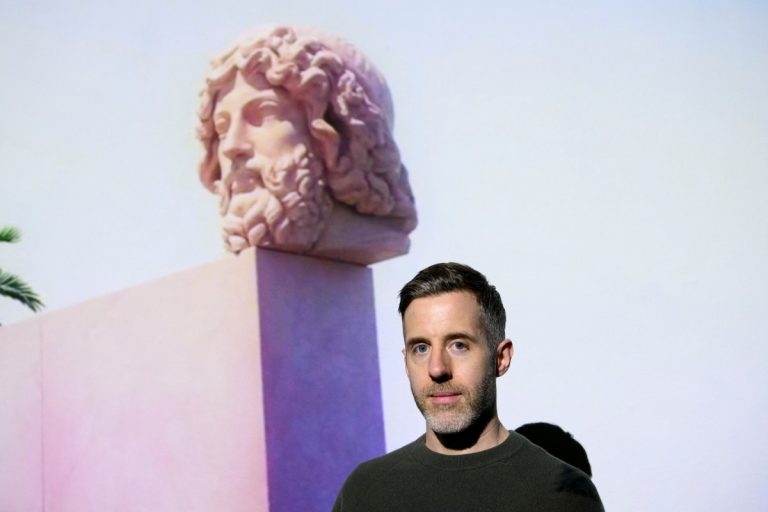
Andreas Wannerstedt, Stockholm, Swedish 3D artist and one of the world’s foremost names in NFT art.
Andrés Reisinger, Barcelona, one of the world’s top 3D artists, featured in the Forbes 30 Under 30 list.
Krista Kim, Toronto, famous virtual designer who, among other things, recently became the first person ever to sell a digital home, which went for half a million dollars.
Erick Calderon (Snowfro), Houston, NFT legend who often explores the boundaries between physical and digital art.
Six N. Five, Barcelona, world-famous digital artist with a clean and contemporary aesthetic.
Chinese automaker Xpeng launches its new all-electric P5 sedan vehicle in Scandinavia. It features a 66 kWh battery pack driving a single electric motor with 211 hp and 228 lb-ft (310 Nm) of torque. The company quotes a 0-62 mph (0-100 km/h) time of 7.5 seconds but, more importantly, says the P5 has a driving range of 465 km (289 miles) on the WLTP cycle.
The P5 is the Chinese automaker’s third production model and prices start at CNY 157,900 (EUR 20,825) and go up to CNY 223,900 (EUR 29,530). It’s a threat to Tesla’s locally manufactured Model 3, which costs CNY 251,740 (EUR 33,201) before subsidies/CNY 235,900 (EUR 31,112) after subsidies in the base configuration.
In October 2021, Xpeng Motors gave thrust to its overseas operations, launching the P7 in Norway, its first overseas market.
In October 2021, Xpeng Motors gave thrust to its overseas operations, launching the P7 in Norway, its first overseas market, where it was riding on its sole offering, the G3. The company has now entered Sweden and Netherlands to boost exports, with the first retail outlet operational in both markets from March 2022.
He Xiaopeng, co-founder, Chairman and CEO of Xpeng, has said that the brand’s global journey begins from Europe.
In Denmark, buyers will need to part ways with 390,000 DKK ($56,823) for the EV while those in the Netherlands will pay €48,000 ($52,033), customers in Norway will be charged 380,000 NOK ($42,717), and in Sweden, the P5 will start at 550,000 SEK ($57,825).
He Xiaopeng, co-founder, Chairman and CEO of Xpeng, has said that the brand’s global journey begins from Europe. It is partnering with the most prominent local players to boost energy conservation and electrification in European countries.
Insiders say that the P5 is the brand’s testbed to understand the customer preference for a family car with higher levels of intelligence. “The P5 brings some of the most advanced driver assistance systems to China’s middle-class”, He Xiaopeng said at the launch.
Insiders say that the P5 is the brand’s testbed to understand the customer preference for a family car with higher levels of intelligence.
All P5 models to be sold in Europe come standard with Xpeng’s XPILOT 2.5 advanced driver assistance system that features five high-definition millimeter-wave radars, 12 ultrasonic wave sensors, four driving cameras, and nine high-perception cameras to support the XPILOT Driving, XPILOT Parking, and XPILOT Safety features. The system also includes Adaptive Cruise Control, Lane Centering Control, Adaptive Turning Cruise, and Active Lane Change.
Chinese Automaker Launches New Electric Vehicle in Scandinavia, written by Tor Kjolberg
After completing her training as a sculptor in 1949, Aase Texmon Rygh became one of the pioneers of abstract sculpture in Norway.But she spent many years waging a quiet struggle to gain a hearing for the sculptural forms that had long been prevalent in Europe. For years she could adorn herself with the title “Norway’s most rejected sculptor”. She was almost considered a leper in an otherwise healthy and naturalistic and reactionary artist environment.
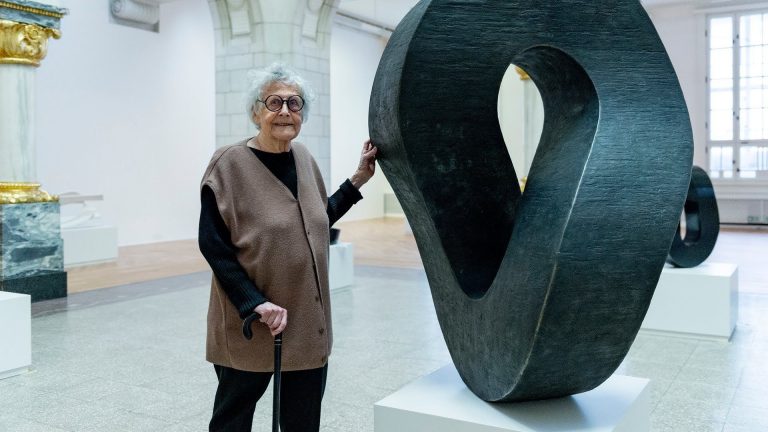
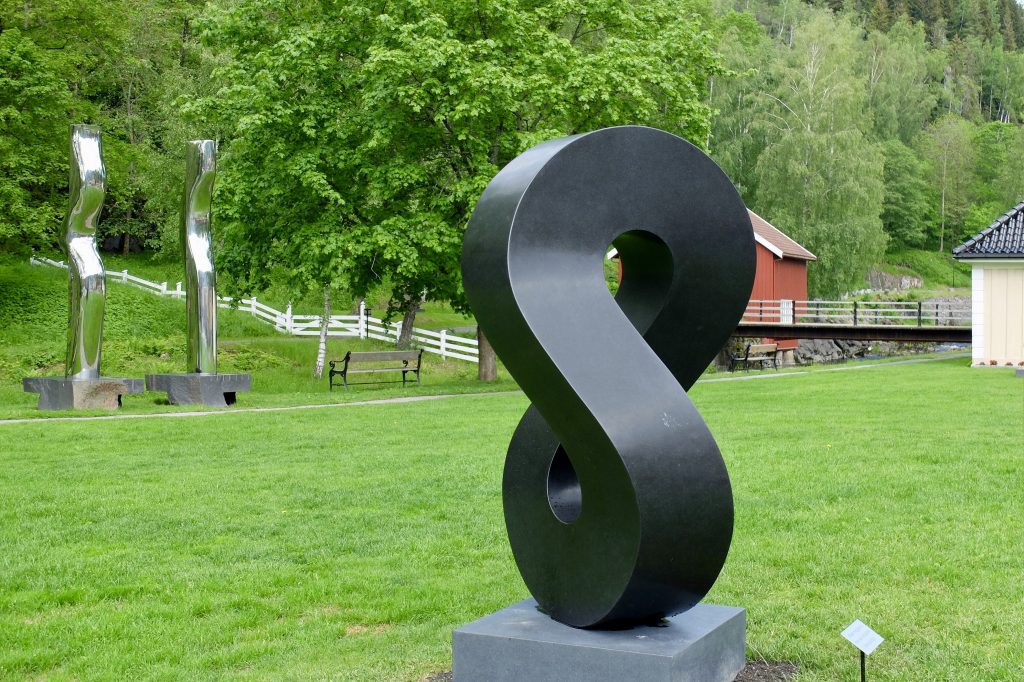
Aase Texmon Rygh (1925 – 2019) has dedicated her career to developing an abstract idiom, exploring in particular the properties of the Möbius strip and translating them to sculpture. Her series of Möbius sculptures is based on a geometric phenomenon discovered by the nineteenth-century German mathematician August Ferdinand Möbius: in essence, a strip is held firm at one end and rotated once around itself, before the two ends of the strip are joined together, thus creating an infinity loop.
Aase Texmon Rygh (1925 – 2019) has dedicated her career to developing an abstract idiom, exploring in particular the properties of the Möbius strip and translating them to sculpture. Photo: NRK
She was educated at the Norwegian National Academy of Art in 1944 – 46 and at The Royal Danish Academy of Fine Arts in Copenhagen in 1948 – 49. Central to the artist’s oeuvre is an exploration of what Texmon Rygh calls ‘form principles’, and the balance between formal expression and the properties of the material.
In his book about Aase Texmon Rygh, art history professor Øivind Storm Bjerknes writes that “despite Texmon Rygh being the pioneer among Norwegian sculptors when it came to abstraction, Arnold Haukeland was given much of the credit for the breakthrough.”
. Central to the artist’s oeuvre is an exploration of what Texmon Rygh calls ‘form principles’. Photo: Alta museum
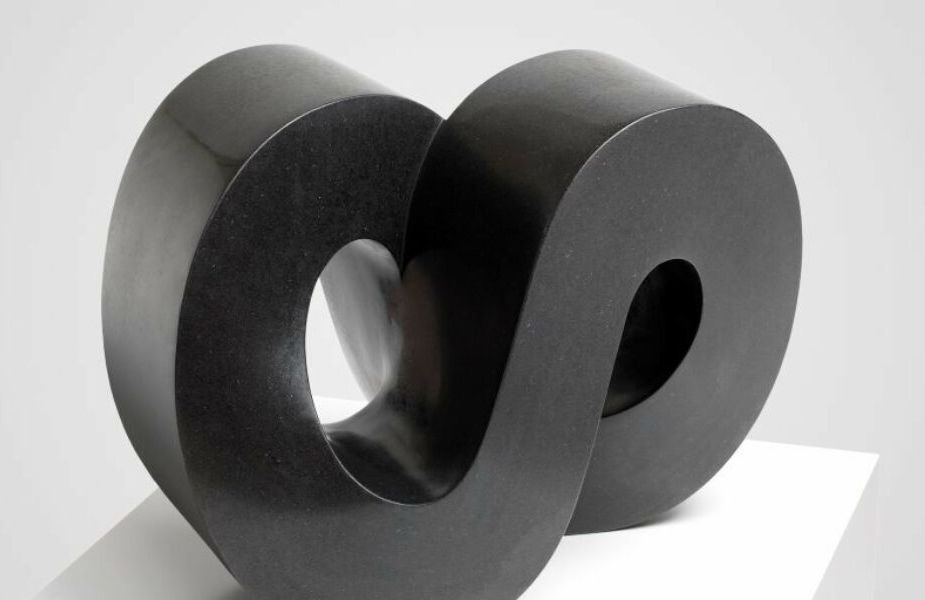
Texmon Rygh created her sculptures in bronze as well as in stone. She has made not only single Möbius strips, but also double and triple ones, some lying and some standing. She refined the form by rotating the sculpture and adding additional loops. These sculptural variations are complex, with extra dimensions of spatiality.
Her explorations began early on; over the early years, her style moved rapidly towards further simplification and abstraction, where variations of geometric and symbolically charged forms – like the yin and yang shape, and especially the Möbius strip – recur in numerous varieties. For Texmon Rygh, these forms hold interest as expressions of cosmic and mathematical principles, and as such the deep forces of nature and man.
Texmon Rygh has made not only single Möbius strips, but also double and triple ones, some lying and some standing. Photo: Bærums verk
A decade and a half was to pass from her debut in 1950 until she became a member of the Norwegian Sculptors’ Association, which was completely dominated by naturalistic sculptors, and thus received public decorating assignments. If the criticism was positive, her application for membership in the Young Artists’ Society (Unge kunstneres samfund) was rejected and her exhibition applications were often rejected. Her short stay at the Academy of Fine Arts under Professor Per Palle Storm’s catheter, threatened to take away from her both self-confidence and enthusiasm.
Until her death, Texmon Rygh stayed active as an artist and in recent years her work received increasing national and international recognition. Photo: Bærums verk
Until her death, Texmon Rygh stayed active as an artist and in recent years her work received increasing national and international recognition. In 2001 she was appointed a Knight, First Class of the Order of St. Olav, and in 2012 she was represented at the Documenta exhibition of international contemporary art in Kassel, Germany. In 2016 she was included in Skulptur i Pilane, Sweden, and in October 2016 the Norwegian National Museum of Art opened the traveling solo exhibition Evighetens form (The Form of Eternity).
Norway’s Most Rejected Sculptor, written by Tor Kjolberg
Feature image (on top): Aase Texmon Rygh and her sculpture of eternity. Photo: National Museum, Oslo
New EU legislation regulates price clauses for online giants such as Booking.com and Google.Learn more about thenew EU regulations on online hotel booking sites.
After a group of friends didn’t show for a 2019 hotel reservation in Germany, the hotel charged them for their booking. They argued the German wording didn’t make it clear that they were obliged to pay.
Following dialogue with the European Commission and national consumer authorities, Booking.com has committed to make changes in the way it presents offers, discounts and prices to consumers. Once these new changes are fully applied by Booking, consumers should be better able to make informed comparisons in line with the requirements of EU consumer law.
With increased digitization and e-commerce, online travel giants, so-called OTAs, gained enormous market power globally.
With increased digitization and e-commerce, online travel giants, so-called OTAs, gained enormous market power globally. Also in Scandinavia, an increasing proportion of hotel bookings are made with players such as booking.com or hotels.com.
Didier Reynders, Commissioner for Justice and Consumers, said: “All companies must meet our high consumer law standards if they want to do business in the EU. As a market leader, it is vital that companies like Booking.com meet their responsibilities in this area, ensuring that online accommodation reservation systems are free from manipulative techniques such as hiding sponsoring in ranking, unduly putting time pressure on users or misrepresenting rebates. The European Commission and national consumer authorities will continue to monitor all online travel platforms to ensure a fair online environment for consumers.”
An increasing proportion of hotel bookings are made with players such as booking.com or hotels.com.
The EU’s top court says that online hotel systems must have “easily legible and unambiguous” reservation buttons if customers are on the hook for charges.
In a case referred to the European Court of Justice by a German court, the unnamed defendant argued that it wasn’t obvious on the German website for Booking.com that he was required to pay for his four hotel rooms after he didn’t show up for his holiday because the wording of the button was imprecise.
The EU’s top court says that online hotel systems must have “easily legible and unambiguous” reservation buttons if customers are on the hook for charges.
OTAs do not own any tourism products themselves. They are only an intermediary between hotels / restaurants / activity organizers and the customer and are therefore often referred to as third-party players. And the largest are defined as gatekeepers. Now EUs wants to regulate these as follows:
Make clear to consumers that any statement such as “last room available!” refers only to the offer on the Booking.com platform;
Not present an offer as being time-limited if the same price will still be available afterwards;
Clarify how results are ranked and, whether payments made by the accommodation provider to the OTA have influenced its position in the list of results;
Ensure that it is clear when a price comparison is based on different circumstances (e.g. stay dates) and not present that comparison as a discount;
Ensure that price comparisons presented as discounts represent genuine savings, e.g. by providing details about the Standard Rate price taken as a reference;
Display the total price that the consumers will have to pay (including all unavoidable charges, fees and taxes that can reasonably be calculated in advance) in a clear and prominent way;
OTAs do not own any tourism products themselves. They are only an intermediary between hotels / restaurants / activity organizers and the customer
Present sold-out accommodation in a position in the search results that is appropriate to the search criteria;
Clearly indicate whether an accommodation is offered by a private host or a professional.
EU legislators have agreed to introduce a ban on the OTAs price parity clauses in the hotels’ contracts. These are clauses that refuse hotels to sell hotel rooms through their own channels, such as the hotel’s own website, at a lower price than the OTAs charge for the same rooms. This fight has been going on for many years and the clauses have been the subject of lawsuits in many countries.
New EU Regulations on Online Hotel Booking Sites, written by Tor Kjolberg
Angelica is a truly northern species. It grows wild all over Scandinavia, thriving in damp, cool conditions. More Herbs From Scandinavia – Angelica, is our second last article about Scandinavian herbs in this series.
Angelica (archangelica) is said to be the only plant grown for food by the white settlers on Greenland in the early Middle Ages, and was a common plant in Viking-age gardens. However, it’s hard to believe that angelica was ever eaten in massive quantities – its taste would forbid it. But the herb definitely has its uses.
Angelica (archangelica) is said to be the only plant grown for food by the white settlers on Greenland in the early Middle Ages, and was a common plant in Viking-age gardens.
An even bigger plant than lovage, angelica grows to an impressive 3 meters, with huge, lime green flower heads. The young stalks can be candied, while the tender, young shoots, thinly sliced and in small quantities, can give an extraordinarily exquisite taste to anything with rhubarb. The root and stalk lend flavor to schnapps.
An even bigger plant than lovage, angelica grows to an impressive 3 meters, with huge, lime green flower heads. Photo: Wikipedia
Buying and storing herbs In Scandinavia, the essential herbs are all fresh, and are used abundantly during the summer months, or during the short spring season in the case of wild herbs. The rest of the year, cultivated herbs can be bought fresh. Dried herbs are just not an option, as the texture and taste are altered too much to be an alternative, the only exception being thyme, which is used both fresh and dried.
Fresh herbs will keep for a couple of days in a plastic bag in the fridge. Some of the herbs are hard to obtain outside Scandinavia, but I recommend that you grow your own,
Rhubarb soup with angelica
Rhubarb soup with angelica This cold soup is delicious served with cardamom or vanilla ice cream, and a dusting of cinnamon. You can substitute six rose geranium leaves or a small bunch lemon verbena if you cannot get hold of angelica.
If you are at the beginning of the strawberry season, you can add some sliced strawberries just before serving.
2 bunches of rhubarb (approx. 14 stalks)
10cm piece of angelica
1 liter water
Juice and thinly pared zest of lemon
1 vanilla pd, split
For the syrup: 600g sugar
Serves 6-8
Cut the rhubarb into thin, slanted slices, or thin matchsticks. Be sure to use the bottom part of the stalks, these are often discarded which is a shame. Cut the angelica into very thin slivers.
Boil together the syrup ingredients until the sugar has dissolved. Pour over the rhubarb and angelica in a bowl. The heat will tenderize the fruit sufficiently, leaving the rhubarb a little chewy and delicious. Leave to cool and the soup is ready to serve.
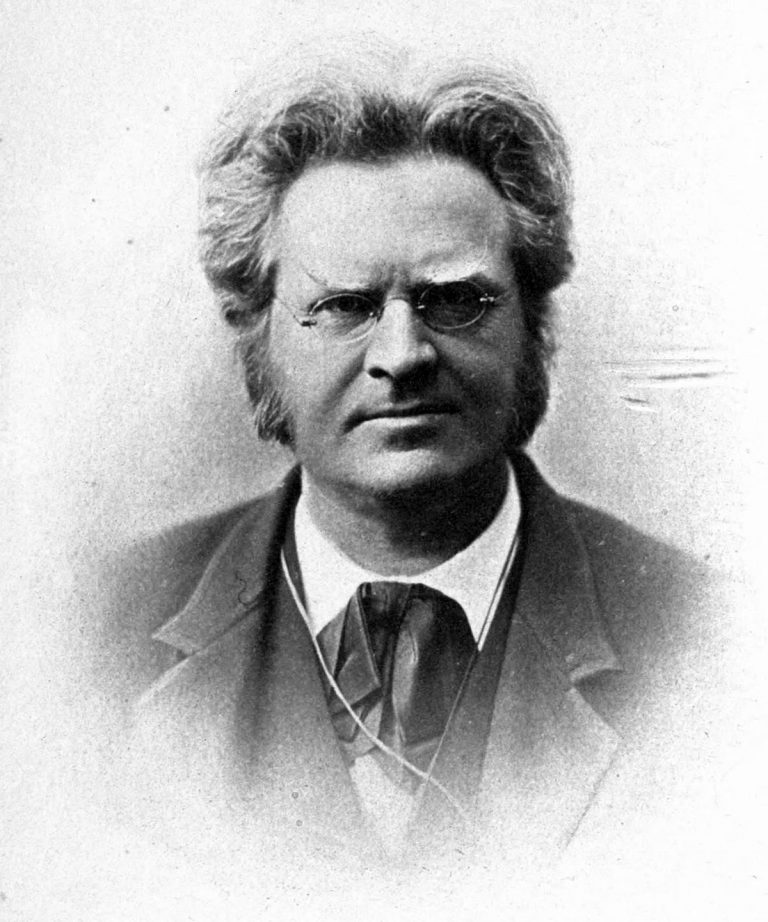
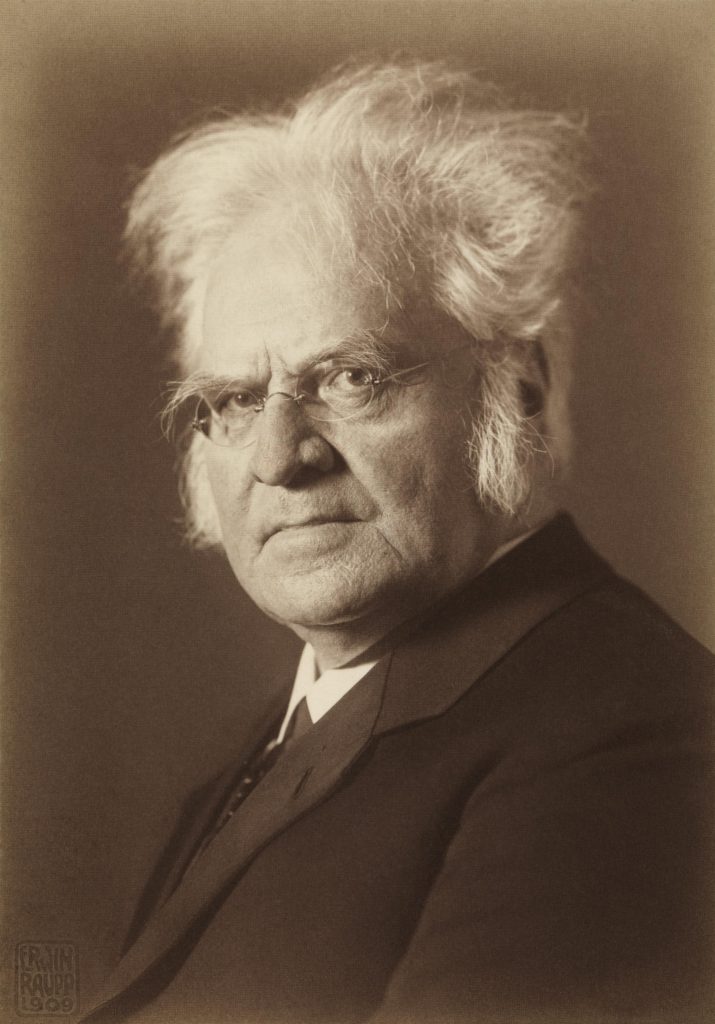
The Norwegian national poet Bjørnstjerne Bjørnson (1832-1910) received the Nobel Prize in Literature in 1903 “as a tribute to his noble, magnificent and versatile poetry, which has always been distinguished by both the freshness of its inspiration and the rare purity of its spirit”. He was alsoone of the first Norwegian celebrities to be hunted by photographers.Here is a brief story and some famous portraits of the Norwegian national poet.
Bjørnstjerne Bjørnson was born at the farmstead of Bjørgan in Kvikne, a secluded village in the Østerdalen district, some sixty miles south of Trondheim. In 1837 Bjørnson’s father Peder Bjørnson, who was the pastor of Kvikne, was transferred to the parish of Nesset, outside Molde in Romsdal. It was in this scenic district that Bjørnson spent his childhood, living at the Nesset Parsonage.
Bjørnstjerne Bjørnson was born at the farmstead of Bjørgan in Kvikne, a secluded village in the Østerdalen district, some sixty miles south of Trondheim. In 1837.
Bjørnson was a poet, dramatist, novelist, journalist, editor, public speaker, theatre director, and one of the most prominent public figures in Norway of his day. He is generally known, together with Henrik Ibsen, Alexander Kielland, and Jonas Lie, as one of “the four great ones” of 19th-century Norwegian literature. His poem “Ja, vi elsker dette landet” (“Yes, We Love This Land”) is the Norwegian national anthem (music by Rikard Nordraak).
Vintage illustration of Bjørnstjerne Bjørnson
From his breakthrough in 1857 until his death in 1910, Bjørnstjerne Martinius Bjørnson was a national celebrity and pop star in Norway, the Nordic countries and Europe. He became famous and infamous for all he stood for, poet, nation builder and peacemaker. And a party pooper, troublemaker and womanizer. But in the many photographs of him, there is mostly only one Bjørnson who appears.
After a few years studying in Molde, Bjørnson was sent at the age of 17 to Heltberg Latin School (Heltbergs Studentfabrikk) in Christiania to prepare for university. This was the same school that trained Ibsen, Lie, and Vinje.
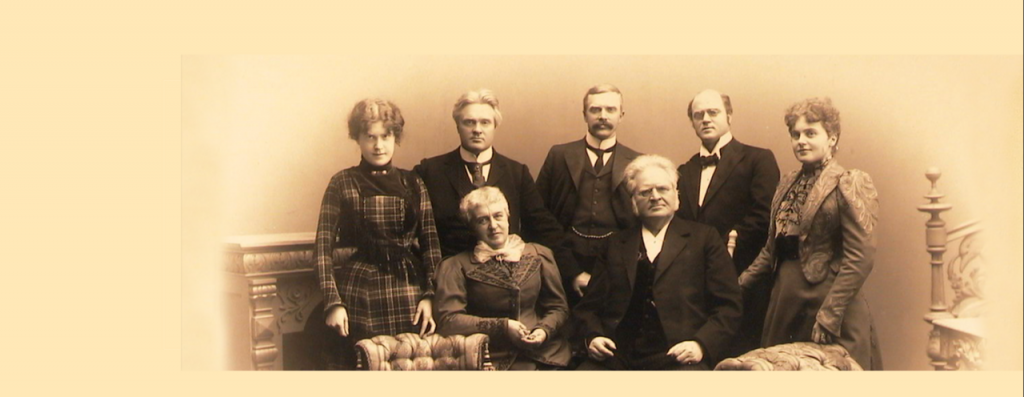
Family portrait of the Bjørnstjerne Bjørnson family
From the start, his writing was marked by clearly didactic intent; he sought to stimulate national pride in Norway’s history and achievements and to present ideals. For the first 15 years of his literary career, he drew his inspiration from the sagas and from his knowledge of contemporary rural Norway. He exploited these two fields in what he described as his system of “crop rotation”: saga material was turned into plays, contemporary material into novels or peasant tales. The early products of this system were the peasant tale Synnøve Solbakken (1857; Trust and Trial, Love and Life in Norway, and Sunny Hill), the one-act historical play Mellem slagene (1857; “Between the Battles”), and the tales Arne (1858) and En glad gut (1860; The Happy Boy) and the play Halte-Hulda (1858; “Lame Hulda”).
Bjørnstjerne Bjørnson was a poet, dramatist, novelist, journalist, editor, public speaker, theatre director, and one of the most prominent public figures in Norway of his day.
The first pictures of Bjørnson originate from the childhood of photography. Taking a picture at the time was a laborious process, and the poet had full control over the photographic situation.
After he had matriculated at the University of Oslo in 1852, he soon embarked upon a career as a journalist, focusing on criticism of drama.
From his breakthrough in 1857 until his death in 1910, Bjørnstjerne Martinius Bjørnson was a national celebrity and pop star in Norway, the Nordic countries and Europe.
At the close of 1857 Bjørnson had been appointed director of the theatre at Bergen, a post which he held for two years, when he returned to Christiania.
From 1860 to 1863 he travelled widely throughout Europe. Early in 1865 he undertook the management of the Christiania Theatre, and brought out his popular comedy of De Nygifte (The Newly Married) and his romantic tragedy of Mary Stuart in Scotland. He married the actress Karoline Reimers in 1858 and also became the editor of the Bergenposten. Partly because of his activity with this paper, the Conservative representatives were defeated in 1859 and the path was cleared for the formation of the Liberal Party a short time later.
Bjørnstjerne Bjørnson had always a hat on if he was out, Bjørnson liked hats very much.
After traveling abroad for three years, Bjørnson became director of the Christiania Theatre, and, from 1866 to 1871, he edited the Norsk Folkeblad.
Bjørnson was a leader of the spirit who wanted to change Norway as a nation and change Europe based on the avlues of the Nordic countries. He was very strong in his convictions, and he posed in a way that built up under that image.
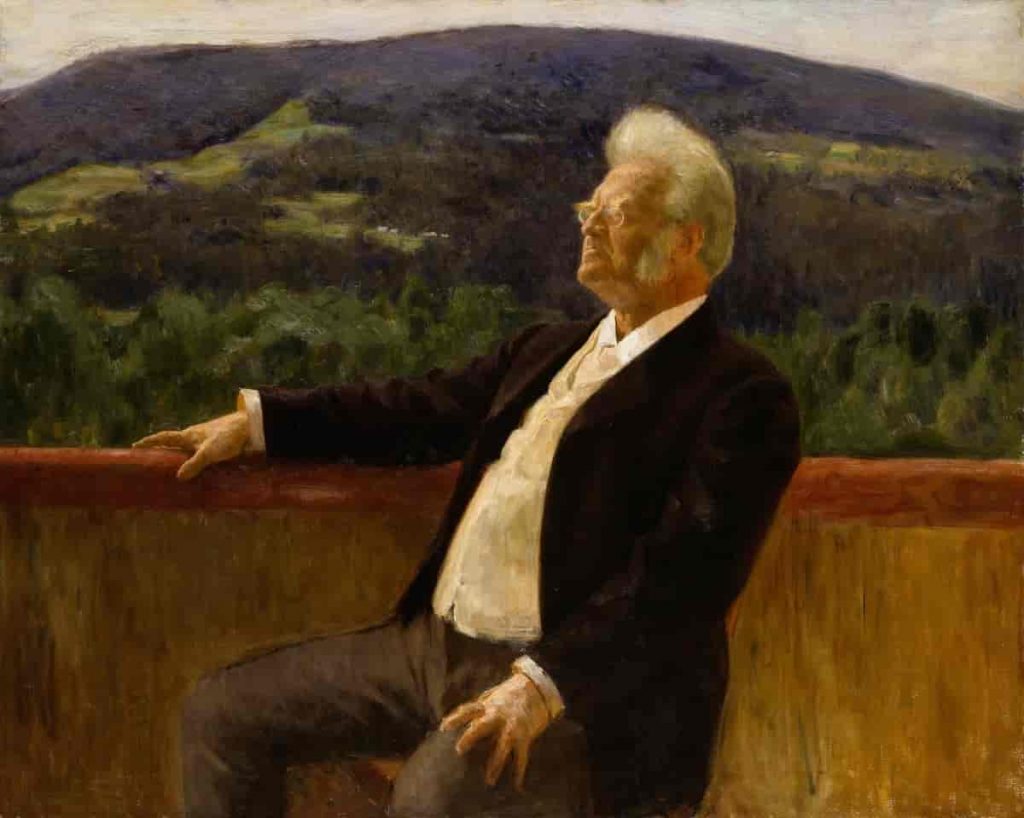
Painting of Bjørnstjerne Bjørnson. Photo: Store norske leksikon
Between 1864 and 1874, Bjørnson displayed a slackening of the intellectual forces very remarkable in a man of his energy; he was mainly occupied with politics and with his business as a theatrical manager. This was the period of Bjørnson’s most fiery propaganda as a radical agitator. In 1871 he began to supplement his journalistic work by delivering lectures throughout Scandinavia.
Bjørnson’s political battles and literary feuds took up so much of his time that he left Norway in order to write. The two dramas that brought him an international reputation were thus written in self-imposed exile: En fallit (1875; The Bankrupt) and Redaktøren (1875; The Editor). Both fulfilled the then current demand on literature (stipulated by the Danish writer and critic Georg Brandes) to debate problems, as did the two dramas that followed: Kongen (1877; The King) and Det ny system (1879; The New System).
In the 1870’s Bjørnson and the composer Edvard Grieg, who shared his interests in Norwegian self-government, became friends.
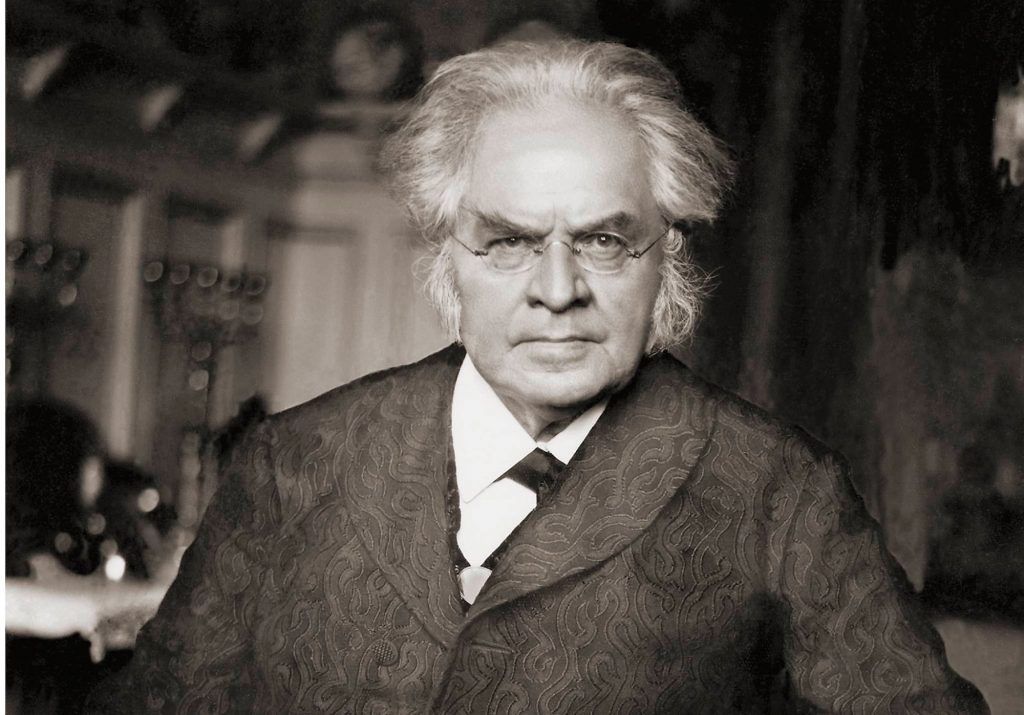
It is easy to recognize Bjørnson’s hair style in the portraits of him. The hair is somehow straight up in front of the head. His comrades called his hair Romsdalshorn, after the mountain. He is often depicted wearing glasses on his nose, a bow around his neck and a watch chain over his chest. Always a hat on if he was out, Bjørnson liked hats very much.
In the 1870’s Bjørnson and the composer Edvard Grieg, who shared his interests in Norwegian self-government, became friends. Grieg set several of his poems to music, including Landkjenning and Sigurd Jorsalfar. Eventually they decided on an opera based on King Olav Trygvason, but a dispute as to whether music or lyrics should be created first, led to Grieg being diverted to working on incidental music for Henrik Ibsen’s play Peer Gynt, which naturally offended Bjørnson . Eventually their friendship was resumed.
It is easy to recognize Bjørnson’s hair style in the portraits of him. The hair is somehow straight up in front of the head. His comrades called his hair Romsdalshorn, after the mountain.
He died on 26 April 1910 in Paris, where for some years he had spent his winters, and was buried at home with every mark of honor. The Norwegian coastal defence ship Norge was sent to convey his remains back to his own land.
Portraits of the Norwegian National Poet, written by Tor Kjolberg
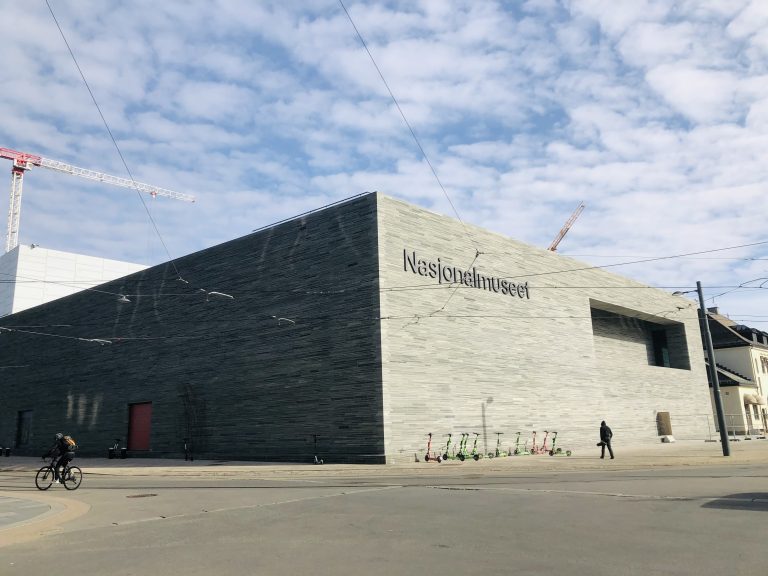
Located on Oslo’s western waterfront, the $723m museum will be the biggest in the Nordic region when it opens on 11 June. When Norway’s $723 million mega museum open after eight-year wait, you can experience older and modern art, contemporary art, architecture and design all under one roof and in completely new ways.
The museum, which has been in the works for seven years, brings the collections of three of Norway’s most important art institutions—the former Kunstindustrimuseet, the Museum of Contemporary Art, and the National Gallery – under one roof. Among its gems are an impressive selection of work by Edward Munch, including The Scream. The former Kunstindustrimuseet closed in 2016; the Museum of Contemporary Art closed in 2017; and the former National Gallery closed in 2019.
Across 13,000 sq meters of exhibition space there will be 5,000 works on show at the site off Oslo’s Rådhusplassen
From its “grey box-like” appearance and eye-popping price tag to protracted construction delays, Norway’s new National Museum has kept the critics busy.
In spite of appealing praises on the museum’s website like “the new museum will be a place for new ideas, inspiration and compelling cultural experiences. We will make art accessible to everyone and reflect the society and the times we live in,” critics claim that ‘German-Italian architect Klaus Schuwerk has spent a fortune and eight years building what has been panned by some as a slate-covered grey box’.
However, in the new museum you will find arts and crafts and design from antiquity to the present day. Here, you can familiarize yourself with everything from the unique Baldishol tapestry and Chinese imperial porcelain to fashion through the ages and the unique Norwegian glass cups of the 18th century – not to mention the latest in contemporary design and arts and crafts.
The Nzagtional Museum in Oslo will be bigger than Amsterdam’s Rijksmuseum or the Guggenheim in Bilbao. Photo: Statsbygg
Across 13,000 sq meters of exhibition space there will be 5,000 works on show at the site off Oslo’s Rådhusplassen, making it bigger than Amsterdam’s Rijksmuseum or the Guggenheim in Bilbao. Older and modern art, architecture, design, arts and crafts, and contemporary art will be presented under one roof and in new settings.
Ahead of its official opening, the museum—eager to commune with the public after years of delays – has opened its doors early to allow visitors to venture inside while the art is being installed. “We are inviting visitors to join us and have a look inside while the art is being mounted and the museum is taking shape,” the museum’s director Karin Hindsbo said in a statement. “That we have not met the audience’s expectations in recent years, I’m sorry,” she wrote in 2020.
With its new, large exhibition areas, the National Museum can now showcase more of its collection than ever before, as well as presenting a rich program of temporary exhibitions with Norwegian and international artists.
Working area in the new National Museum in Oslo. Photo: Statsbygg
The vast new building has two stories and 90 galleries, cafés, a shop, and the largest art library in the Nordic region. But its architectural hallmark is a spectacular new illuminated exhibition space on the roof called the Light Hall. The 2,400-square-meter space will be reserved for temporary exhibitions, the first of which will be a survey of Norwegian contemporary art. The museum also boasts an open-air roof terrace from where you can enjoy stunning views of Rådhusplassen (city hall square), Aker Brygge and the fjord.
The museum’s director Karin Hindsbo wrote in a statement in 2020, “That we have not met the audience’s expectations in recent years, I’m sorry.” Photo: Mynewsdesk
The museum plaza in front of the main entrance will be a vibrant urban space and meeting arena with an outdoor restaurant, seating and events.
The second floor is dominated by the visual arts, from Dutch and Flemish landscape paintings to still life paintings from the 17th century and Johan Christian Dahl’s 19th-century landscape masterpieces.
Built by Norway’s government building commissioner Statsbygg, the museum has also prioritized sustainability, designed to emit 50 percent less greenhouse gasses than current building standards.
Norway’s $723 Million Mega Museum To Open After Eight-Year Wait, written by Tor Kjolberg
Swedish graffiti artist Finsta decorates house walls in Sweden’s roughest suburbs. There, graffiti is far less unfamiliar than traditional art. Read more about the Swedish street artist and how he arrivedfrom sketchbook drawings to international fame.
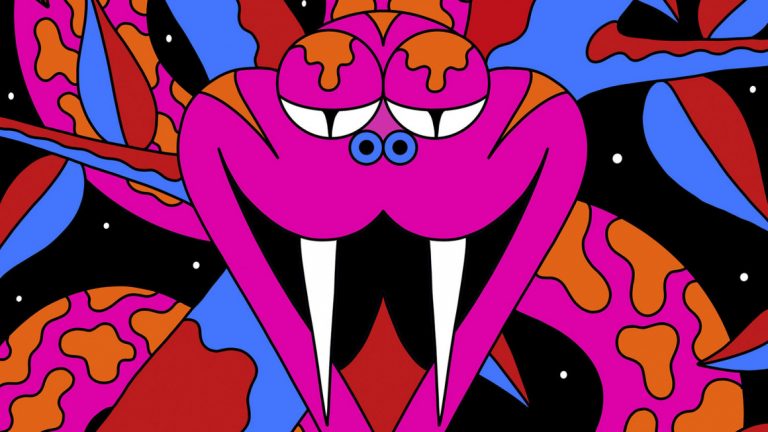
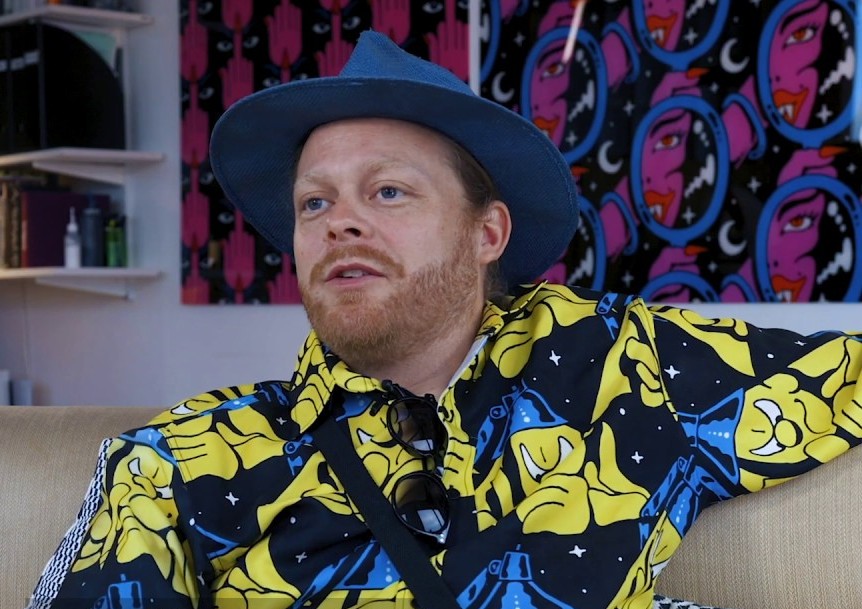
During the last 25 years, the multidisciplinary artist Finsta’s art has spread from the pages of his sketchbook to the walls of his native town in southern Sweden and beyond. Today, he gets commissioned by global brands and exhibits his artworks all around the world.
During the last 25 years, the multidisciplinary artist Finsta’s art has spread from the pages of his sketchbook to the walls of his native town in southern Sweden and beyond. Photo: Arctic Paper
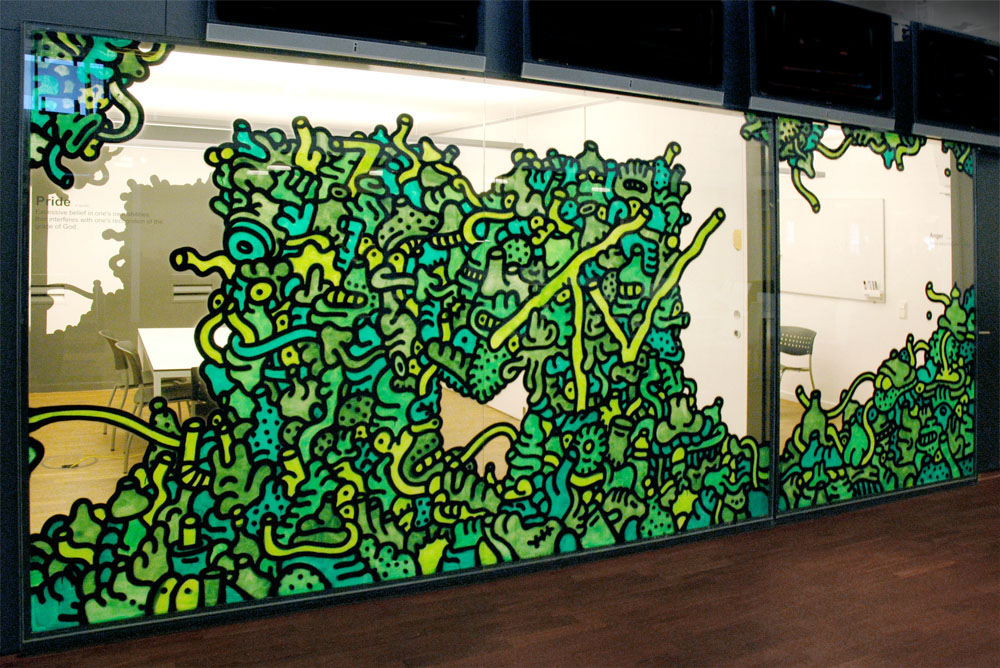
The multifaceted artist Finsta (Finn Hallin, born 1978) is one of Europe’s leading urban contemporary artists. He moves between painting, design, music and animation. His love of popular culture and the urban environment, combined with a strong desire to be seen and produce works available to the general public, has made him move endlessly between the established art institutions and the street. With megalomania as an engine, Finsta always wants to do more, better and bigger. Nothing is impossible in graffiti – the art form in which everything is about being visible and making your personal mark on your surroundings.
From the outside, Linehed outside Halmstad on Sweden’s west coast looks like any other Swedish suburb. Uniform brick apartment buildings, adapted for play and recreation. Walking distance to bus, shops and services. On a bumpy meadow are a couple of football goals made of welded steel pipes, tattered remnants of what was once a net wire from the crossbar. Besides the rustle of the birch trees and an enthusiastic labrador in the distance, the district’s park area is quiet.
Araby graffit by Finstai. Photo: Mural Spray Daily
At the entrance to a small – and strangely out of place – outdoor amphitheater, the graffiti artist Finsta stands and applies black and tubular streaks with a spray can on sky-blue concrete walls. Like most graffiti painters, he has chosen to keep a low public profile, but has no reservations about being photographed.
With a career spanning back to 1993, when he as a fifteen-year-old made his first public graffiti painting on the walls of a fraternity in his hometown Lund in the south of Sweden, the name Finsta has long been well-known within the graffiti community. In the last decade, as public acceptance for the artform has increased, his eye-catching, often humorous, artworks have caught the attention of a wider audience with commercial commissions and international exhibitions as a result. Even though he’s mostly known for his work with spray cans, every project begins with a graphite pen and piece of paper.
Squeek by Finsta
His first major solo exhibition in Sweden is at Skissernas Museum – Museum of Artistic Process and Public Art in Lund. At the exhibition visitors are able to follow Finstad’s journey over his 25 years as an artist, his creative process and sources of inspiration. The exhibition runs through 11 September, 2022.
“Everything starts as a sketch. I’ve been drawing for as long as I can remember and that has developed my expression. When other graffiti artists did letters and tags, I’ve always done characters. It helped me develop my unique style at an early age, and today I benefit from that. Like any brand, you want to be easily recognizable”, Finsta says.
Finsta og MTV office wall
Finn Hallin was part of Skissernas Museum’s international residency program for professional artists. With generous support from the LMK Foundation, a highly qualified international artist is offered the opportunity to work for a time in connection with Skissernas Museum and its collections.
“I do not want people to call me if they see one of my walls and do not like what they see”, says Finstad. “Then they can rather send a reader’s letter to the newspaper or go and paint something themselves.”
Swedish Street Artist – From Sketchbook Drawings to International Fame, written by Tor Kjolberg
Among his many works, Danish architect Jørn Utzon (1918-2008) is best known for the Sydney Opera House. Learn more about The Danish architect who designed the Sydney Opera House.
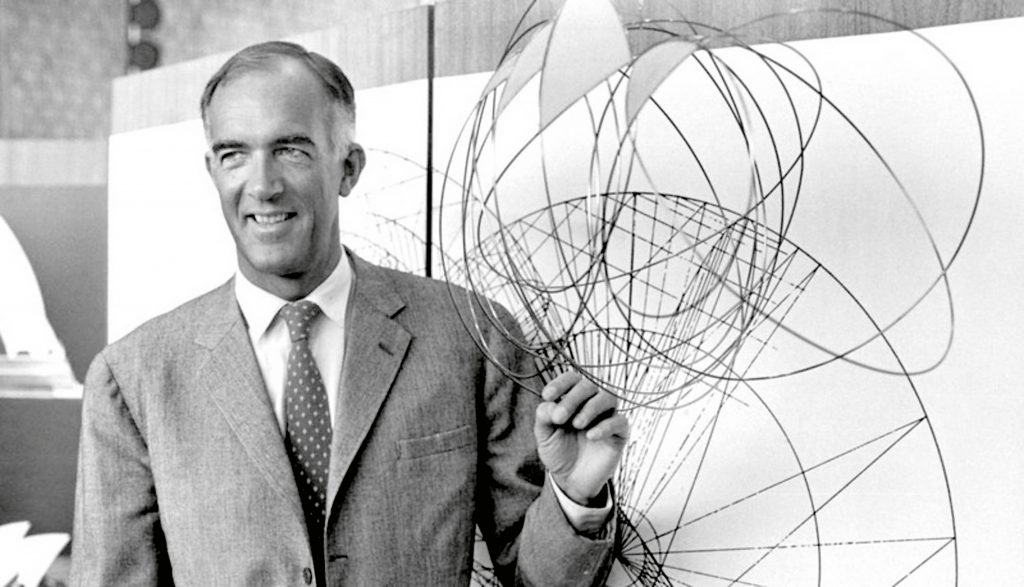
Utzon was born in Copenhagen, the son of a naval architect, and grew up in Aalborg, Denmark, where he became interested in ships and a possible naval career. As a result of his family’s interest in art, from 1937 he attended the Royal Danish Academy of Fine Arts where he studied under Kay Fisker and Steen Eiler Rasmussen. Following his graduation in 1942, he joined Gunnar Asplund in Stockholm where he worked together with Arne Jacobsen and Poul Henningsen. He took a particular interest in the works of American architect Frank Lloyd Wright. After the end of World War II and the German Occupation of Denmark, he returned to Copenhagen.
The relatively unknown 38-year old Dane Jørn Utzon was the surprise winner in 1956 out of 233 designs from 32 countries.
Utzon was influenced by Swedish architect Gunnar Asplund and later Alvar Aalto, with whom he worked in Finland for a short period after the war. In 1949 he received a grant that enabled him and his wife Lis to travel extensively in USA and Mexico, coming into contact with some of the most influential architects and designers of his day, inlcuding those at Frank Lloyd Wright’s school at Taliesin, Mies van der Rohe and Ray and Charles Eames.
Finn Eero Saarinen, who was on the judging panel, hailed Utzon’s vision as “genius”. Photo: Store norske leksikon
Fascinated by the way the Mayans built towards the sky to get closer to God, he commented that his time in Mexico was “one of the greatest architectural experiences in his life.”
In 1957, he travelled first to China (where he was particularly interested in the Chinese desire for harmony), Japan (where he learnt much about the interaction between interiors and exteriors) and India, before arriving in Australia in 1957, where he stayed until 1966. All this contributed to Utzon’s understanding of factors which are important to successful architectural design
Utzon’s vision for a sculptural, curved building on the Harbor broke radically with the cube and rectangular shapes of modernist architecture. Photo: Encyclopedia Britannica
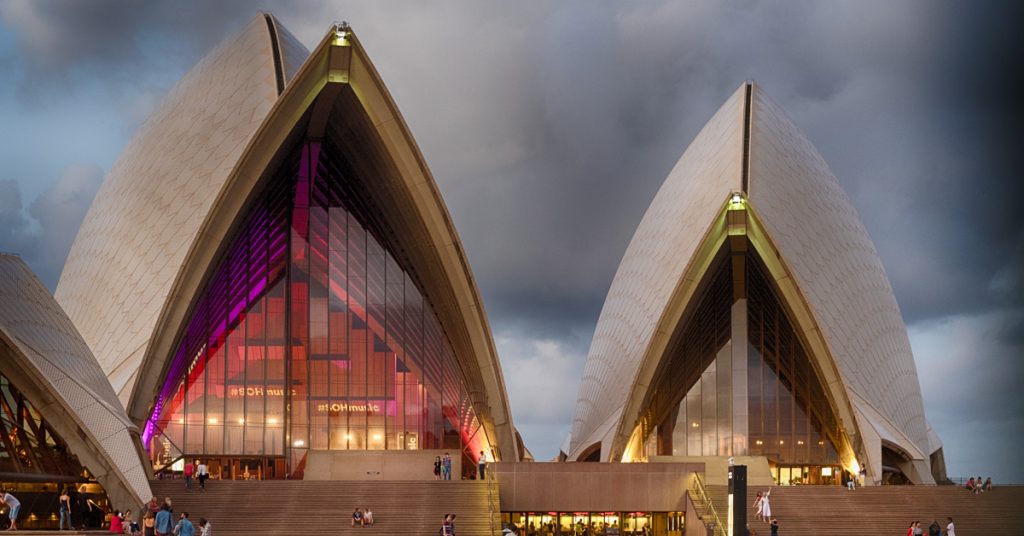
The competition to design Sydney Opera House was launched in 1956. The relatively unknown 38-year old Dane Jørn Utzon was the surprise winner out of 233 designs from 32 countries. Finn Eero Saarinen, who was on the judging panel, hailed Utzon’s vision as “genius”. His vision for a sculptural, curved building on the Harbor broke radically with the cube and rectangular shapes of modernist architecture. The building transformed his career and, in turn, transformed the image of an entire nation.
“To me it is a great joy to know how much the building is loved”, said Jørn Utzon.
The building transformed Utzon’s career and, in turn, transformed the image of an entire nation.
The Opera House was completed in 1973. When it was declared a World Heritage Site on 28 June 2007, Utzon became only the second person to have received such recognition for one of his works during his lifetime, after Oscar Niemeyer. Other noteworthy works include Bagsværd Church near Copenhagen and the National Assembly Building in Kuwait.
Utzon said he took inspiration for the Sydney Opera House from peeling an orange: the building’s 14 shells are supposed to form a perfect sphere if combined. The building is 180m long and 125m wide, and its highest point is 67m above sea level – equivalent to a 22-storey building.
Concert hall in the Sydney Opera House. Photo: ArchDaily
Jørn Utzon’s realisation that the form of the Sydney Opera House could be derived from the surface of a sphere marked a milestone in 20th century architecture.
However, Utzon had a troubled working relationship with the engineer and fellow Dane, Ove Arup. Though things started well, Utzon apparently rejected many of Arup’s practical suggestions for building in loadbearing concrete to preserve the purity of his design, soon they were not talking and the relationship never recovered.
While there were cost overruns on the ambitious project, a change in the local government in 1965 signaled the end for Utzon: the new minister for public works, Davis Hughes, questioned Utzon’s capabilities and refused to pay running costs. In 1955, Utzon left and never returned. The building finally cost AUD$ 102 million (now about NOK5bn); the original estimate was AUS$ 7m.
THE SYDNEY OPERA HOUSE – 2010 – Sydney, Australia – Photograph by: JACK ATLEY www.jackatley.com – for The Sydney Opera House.
Since Queen Elisabeth II opened the Sydney Opera House in 1973, the building has become a symbol of Sydney and Australia- The Royal Australian Institute of Architects awarded him its gold medal the same year, though Utzon did not attend the ceremony. Utzon was awarded the Freedom of Sydney in 1998 and again did not travel. In 2008, Utzon was awarded the Priztker Architecture Prize by a panel including Frank Gehry.
Jørn Utzon died peacefully in his sleep in Copenhagen on 29 November 2008, aged 90. Two years earlier he had been represented at the opening of the Opera House’s Western Colonnade, redesigned with Utzon’s involvement, by his son Jan Utzon. “My father is too old by now to take the long flight to Australia,” Jan said of his father. “But he lives and breathes the Opera House, and as its creator he just has to close his eyes to see it.”
The Danish Architect Who Designed the Sydney Opera House, written by Tor Kjolberg
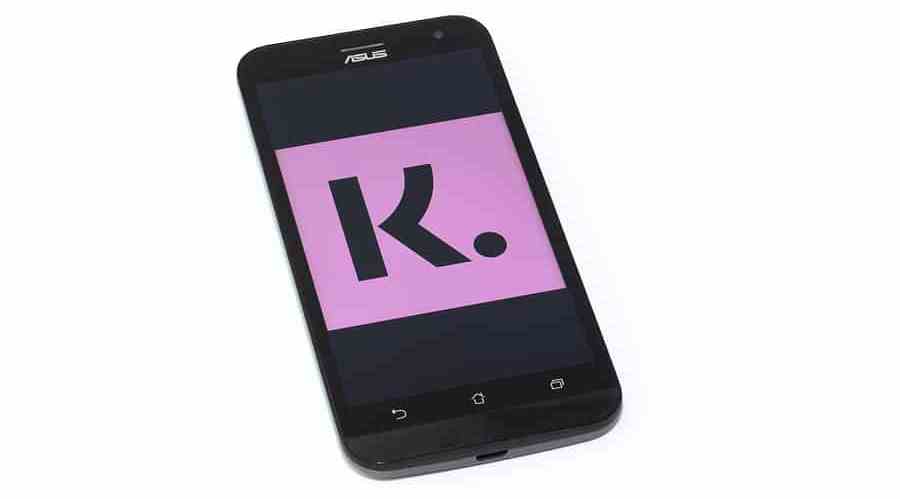
Many consumers wish for a more streamlined shopping experience because of the abundance of shopping apps available. Swedish company Klarna says their app, launched last year, will change the complete shopping experience of consumers fundamentally. Learn more aboutthe Swedish one-stop shopping app.
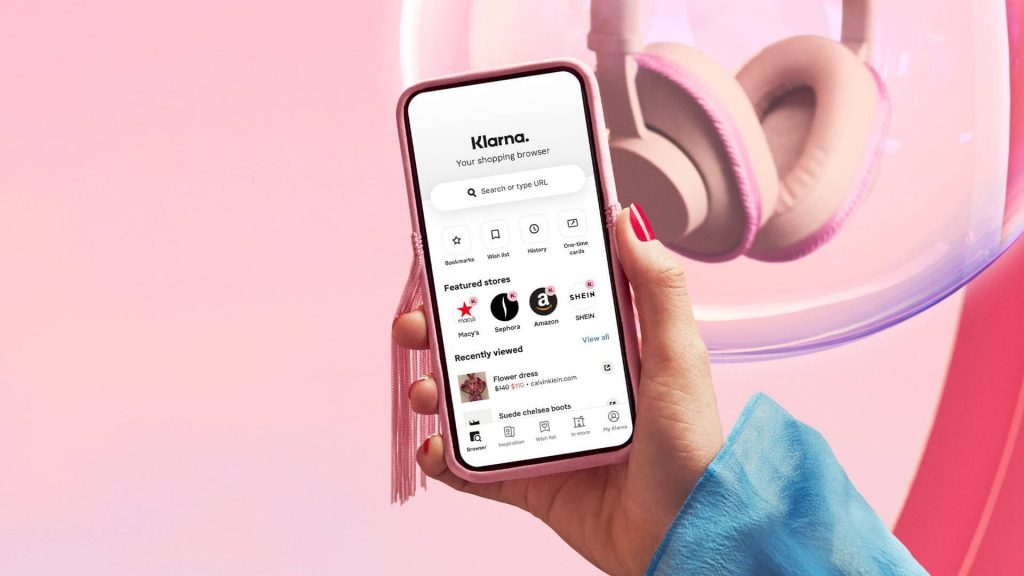
Klarna is the leading global banking, payments and shopping service and the company’s Shopping app empowers users to Pay in 3 in any online shop directly through the Klarna app, without ever paying more than the price of the product. Klarna’s in-app shopping experience covers the whole retail journey, from inspiration and discovery right through to purchase and return management.
Consumers can buy in all online stores through the app, explore exclusive offers and collections of personalized purchases, save items and activate notifications of price drops.
As the app economy grows, consumers are faced with an increasingly saturated landscape of e-commerce apps, which can be frustrating and time consuming. Klarna solves this by launching the only application they need. Consumers can buy in all online stores through the app, explore exclusive offers and collections of personalized purchases, save items and activate notifications of price drops, track the shipment of their items, manage payments and returns, and much more.
Klarna is the leading global banking, payments and shopping service.
With Klarna’s interest-free purchase functionality, consumers can use the company’s payment methods in all online stores, regardless of whether these brands are directly associated with Klarna or not.
Research by Klarna amongst Dutch consumers shows that up to 74% of them would prefer using just one shopping app in which they can perform various actions. Such an app would bring multiple benefits, of which time saving (57%) and easier shopping experience (54%) are the most important ones for consumers. Additionally, up to 51% of Dutch consumers claim to be overwhelmed by the amount of shopping apps.
Klarna’s in-app shopping experience covers the whole retail journey, from inspiration and discovery right through to purchase and return management.
The new feature eliminates the need to use credit cards when shopping online, making high interest APRs a thing of the past
With Klarna’s interest-free purchase functionality, consumers can use the company’s payment methods in all online stores, regardless of whether these brands are directly associated with Klarna or not.
Mobile commerce continues to grow at a fast pace. Retailer app downloads have increased 36% in the last two years and in-app purchases, 54%. Although the rise of e-commerce has made shopping more accessible than ever, it has also created friction in the process. Today, users demand integrated experiences that respond to their specific needs while saving time and money.
A recent survey carried out by Klarna revealed that 68% of Spanish consumers now shop more frequently on their mobile than two years ago, before the pandemic. 59% admit having between 1 and 5 shopping apps installed; 25%, between 6%, 10% and 11% have more than 10. However, 70% of Spaniards would choose a single shopping app that allows them to perform multiple actions instead of having to change applications. 75% agree that simplicity in the purchasing process and saving time are the two most important benefits. The new Klarna app responds to this demand, making everything they need available to consumers.
Klarna will add more functionalities to the app in the short term, such as a collective loyalty card environment, extra money-saving tools, social functions such as live shopping events and product data. These data will show price history, reviews and availability in the store. Moreover, the company also wants to enable integrations with third parties, to provide more solutions and services.
“At Klarna, we believe that no-one should ever have to pay credit card fees or high interest rates and now, thanks to our new in-app shopping feature, they don’t have to.,” says Sebastian Siemiatkowski, CEO of Klarna.
Sebastian Siemiatkowski, CEO of Klarna said: “At Klarna, we believe that no-one should ever have to pay credit card fees or high interest rates and now, thanks to our new in-app shopping feature, they don’t have to. Shoppers now can interact with their favorite retailers without having to leave the Klarna app, to create a smooth, safe and frictionless shopping experience. Our one stop shop app is the future of shopping, it creates a truly personalized and bespoke service for every user and liberates consumers from ever paying more than the price of the product.”
Klarna was founded in 2005 in Stockholm, Sweden with the aim of making it easier for people to shop online.
About Klarna Klarna was founded in 2005 in Stockholm, Sweden with the aim of making it easier for people to shop online.
Klarna is the leading global payments and shopping service, providing smarter and more flexible shopping and purchase experiences to 147 million active consumers across more than 400,000 merchants in 45 countries. Klarna offers direct payments, pay after delivery options and instalment plans in a smooth one-click purchase experience that lets consumers pay when and how they prefer to.
When the company acquired SOFORT in 2014 the Klarna Group was formed. Klarna is backed by investors such as Sequoia Capital, Silver Lake, Bestseller Group, Dragoneer, Permira, Visa, Ant Group and Atomico.
The Swedish One-Stop Shopping App, written by Tor Kjolberg