Cozy Friday in Sweden

0

The Swedes have a wonderful tradition, after a working week they are spending Friday evenings on their sofa in the living room, watching TV, drinking wine and enjoying taco, pick’n’mix and snacks. They call it ‘fredagsmys’. It’s cozy Friday in Sweden.

On cozy Fridays, families grab their fuzzy slippers, play games while the fireplace’s a-crackling and get warm-and-cuddly ideas for cooking, decorating, and more. However, pickled herring and meatballs are the global faces of Swedish cuisine, and the old generation in Sweden are still sticking to these delicacies, having ABBA music in the background. It’s as Swedish as IKEA.

After a busy working week, instead of staying late at the office, or going out for drinks with colleagues, the Swedes are heading home and put on their favorite sponge clothes
after a good cleaning session. This is perhaps not surprising given that for much of the year, hibernating is the Swedes’ best defense against the cold and dark nights.”

Cozy Friday in Sweden
Fredagsmys means enjoying pick’n’mix and snacks. Photo: Hamza Bouasria / Unsplash

Back in the 1950s, Sunday was the day Swedish families reserved for festive dinners. In the 1960s, celebrations became less formal and were moved to Saturday. Fast-forward to today, and Friday has become the family high point of the week in Sweden.

Until the late 1980s, television in Sweden was a publicly-funded state monopoly. In 1987, the first Swedish satellite channel, TV3, began broadcasting from the United Kingdom, and the governmebt allowed commercial players into the market. With a bigger selection of shows to watch together, the family-viewing trend was improving and optimized for fredagsmys nights.

Related: 5 Scandinavian Life Philosophies that Can Make You Happier

Cozy Friday in Sweden
: spending time together with loved ones and relaxing while enjoying some easy-to-make food is the main principle of fredagsmys. Photo: Scott Warman / Unsplash

Nobody is sure exactly how or when fredagsmys was formally conceptualized, but grew immensely popular in the 1990s, as part of a marketing campaign for Swedish crisp brand OLW, but it grew into a popular movement in the 2000s. According to a recent survey by Swedish Tex-Mex brand Santa Maria, one-third of Swedes aged 15 to 70 take part in fredagsmys every week, whilst a massive 78% enjoy fredagsmys once a month. The term made its way into the Swedish dictionary in 2006.

Fredagsmys has become a deep-rooted ritual that affords Swedes a weekly treat, while upholding the country’s strong family values and obsession with work-life balance. Cozy Friday is the beginning of your weekend, you have a sense of freedom and you don’t have to think about the next day. It’s just a great start to the weekend.

Regardless of whether you’re embracing fredagsmys with family, friends or four-legged pals, the main principles are the same: spending time together with loved ones and relaxing while enjoying some easy-to-make food. By building this day into your week, it takes the pressure off coming up with an amazing or big way to mark the end the work week.

Cozy Friday in Sweden
Fredagsmys has become a deep-rooted ritual upholding the country’s strong family values and obsession with work-life balance. Photo: Ekaterina Shakharova / Unsplash

Related: Danish Happiness Explained

Today, the majority of Swedes choose a ‘cosy Friday’ above any other activity, including a gig, a cinema night, exercising and even sex.

There are similar concepts in Norway (fredagskos) and Denmark (fredagshygge), but personally I think the Swedes do it best.

Cozy Friday in Sweden, written by Tor Kjolberg

Feature image (on top) © Pablo Merchan Montes / Unsplash

Salmon Fishing in Norway

Salmon fishing is often thought of a sport reserved for some privileged people. However, splendid salmon fishing in Norway does not have to be expensive or exclusive. In the Bjerkreim river, Rogaland county’s longest watercourse, you have good chances of getting fish at a reasonable cost. Read more about salmon fishing in Norway.

Norway has also the reputation being an expensive country and for this reason many sport fishermen see salmon fishing in Norway as an impossible dream. Even many Norwegians don’t realize how privileged they are with regards to fishing.

Bjerkreim river.
The Bjerkreim River has got its name of the village Bjerkreim which it is passing before reaching the Atlantic Ocean at Egersund. Screenshot YouTube

Related: Scandinavian Salmon

There are many big salmon rivers in Norway, but the salmon season is relatively short. On the other side, the cultural outlook is different than in many other salmon fishing countries where there are now more fish released than taken. Like other game, salmon in Norway are seen as a resource that can be harvested, and Norwegian rivers are classified on the number of fish that are killed.

For fly fishermen, Bjerkreim river is perhaps Southern Norway’s finest river with affordable prices and unlimited sales of fishing licenses. In addition, it is an incredibly beautiful river, which makes up for the fact that the size of the salmon is moderate. However, the number compensates for the size.

Related: Positive Trend for Norwegian Salmon

The season is mainly from June through July, but locals are fishing here almost through September.

The most interesting period, however is between 10th of July until end of August.  The Bjerkreim River has got its name of the village Bjerkreim which it is passing before reaching the Atlantic Ocean at Egersund. The quickest and easiest way to arrive here is by flight to Stavanger in combination with a rental car. By car from Stavanger on highway E39 it takes less than an hour.

Owners of parts of the river offer cabins and apartments for rent. Fishing in Norwegian rivers is always private, but the owners have been organized in order to offer longer stretches of the river and often at both sides. This explains the owners’ engagement for protection and improvement of the salmon population in the Bjerkreim River.

There are few other rivers in Norway that have the same objection to wild salmon as the Bjerkreim River. Fish counts show that 14,000 salmon swam up the watercourse. In 2020, 4,000 of these were caught on rods. The average weight of the salmon was a little over two kilos, and eight percent of the fish was released again.

Salmon Fishing in Norway
Fish counts show that 14,000 salmon swam up the watercourse In the Bjerkreim river in 2020, 4,000 of these were caught on rods. Photo: Henrik Suort /Fjord Norway

Related: A Norwegian Eldorado for Anglers

Do not forget to perform a disinfection of all equipment and waders after arrival. You get all needed equipment as well as necessary information at the fishing shop “Fiskekroken Bjerkreim”.

For further information, here’s the link to the Bjerkreim River’s official website.

Another useful link for those who might want to travel to Norway for salmon fishing is the official site for Norwegian salmon rivers (in Norwegian only).

Salmon Fishing in Norway, written by Tor Kjolberg

Feature image (on top) © Gaspar Manuel Zaldo / Unsplash

How to Find the Right Vacuum Cleaner in Norway

Finding just the right vacuum cleaner can be a challenge. It is perhaps the most important cleaning tool you have in your home, and something you would want to splurge a little bit on. However, a vacuum cleaner does not have to be as expensive as you might think, and you can get a lot for your money if you look in the right places. Learn How to Find the Right Vacuum Cleaner in Norway.

There is a great selection of vacuum cleaners in Norway, that is there to fulfill your cleaning needs. As many know, Norway is known for being an expensive country and there are certainly many things here that many spend an unnecessary amount of money on. Here is a guide to how you can find the best vacuum cleaner in Norway, for a reasonable price.

How to Find the Right Vacuum Cleaner in Norway
Miele Complete C-3 Black Diamond Ecoline

Related: How to Clean Your Scandinavian Birch Wood Furniture

The one that aces the test
A good tool for when you are looking for the right vacuum cleaner, is a vacuum cleaner test. This will provide you with sufficient information about the once that have scored the best in tests done by professionals and everyday people. Here you might just find the right vacuum cleaner for you and even discover one with new and useful features. The test covers every element and function of the machine, as well as going in depth as to how well it works. This can be everything from suction ability, design, noise level and power consumption.

You might also like to read: In Bed With a Norwegian

Furthermore, the test will tell you what rating every machine has gotten and which one is the very best. If you are looking to splurge, you might go for the best one, which is often the most expensive. However, there are many good vacuum cleaners for lower prices. The test can also reveal how the most expensive ones are not always the best ones, sometimes a cheaper option is better. You can look at a good vacuum test from Norway here.

You might also like to read: Hand-Made Brushes from Sweden

How to Find the Right Vacuum Cleaner in Norway
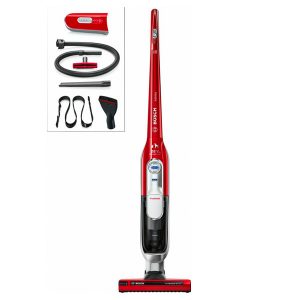
Bosch wireless

With wire or without?
There are several elements to a vacuum cleaner to take into consideration, before you buy one. You know your preferences best and try to think about what you are going to use it for in the future. Is it simply to vacuum the floor occasionally, or do you need it to clean other things? Are you many people in your household and need to clean almost every day? Do you have pets that shed?

These are some of the factors that plays a big role when it comes to pick a vacuum. If you have a big home, you might want a cordless vacuum cleaner, to make it easier to use and store. This lets you clean without the stress element of having to unplug the cord and find a new outlet.

Vacuum cleaners are a must in any Norwegian household. Whether it is to keep dust out, clean up after your kids or pets, or get sand and dirt away from your door mat, it is a must-have and something you should spend some time and effort picking.

How to Find the Right Vacuum Cleaner in Norway, written exclusively for Daily Scandinavian.

Feature image on top: Cord-free Dyson

Renting a car in Scandinavia: Everything you need to know

The first thing you must do before renting a car in Scandinavia is to research the set rules and regulations. Do this well in advance of commencing your trip. Once you do that, you can start with the rental process of your vehicle. Learn more about renting a car in Scandinavia and learn everything you need to know.

 Plan well to give yourself ample time to secure the vehicle that you want. Your desired vehicle will not only provide you with peace of mind, but the process will also save you money. You will then have a choice between different types of vehicles from various rental companies. You will also be able to compare the different rental companies’ fine print with each other. If you do not plan and pitch up at the first rental company, they will overcharge you almost every time. Your vehicle choice might not be available, and after a long flight, you would not be interested in reading the fine print anymore.

Renting a car in Scandinavia: Everything you need to know
Plan well to give yourself ample time to secure the vehicle that you want. Photo: Why Kei / Unsplash
Go through the following checklist with care when you’re planning to rent a car in Scandinavian countries.

Should you ever need to rent a car in Scandinavia, Discover Cars has updated information.

Related: Car Rental Company in Norway Awarded International Prize

Age restrictions
Age restrictions vary depending on the country where you plan to rent the car and also the type of car. For instance, to rent a car in Sweden, you have to be at least 18 years old and you must have had your license for 2 years. While in Norway, you have to be 19 years old and have held your license for 1 year. In Denmark, you have to be 21 years old and also have held your license for 1 year. It would be best if you had your international driving permit. Getting an international driver’s permit allows you to easily get around in a foreign country.

Best Car Rental Companies In Dubai

Rules of the road
In all Scandinavian countries, trolleys, buses, and passengers disembarking have the right of way. If a bus passenger exits at a crossing, you must wait until they have crossed the street before proceeding. Whether the weather is cloudy or clear, dipped headlights are required during the day.

Renting a car in Scandinavia: Everything you need to know, continue reading

Related: Spectacular Driving in Norway

Renting a car in Scandinavia: Everything you need to know
In all Scandinavian countries, trolleys, buses, and passengers disembarking have the right of way. Photo: Samuel Foster / Unsplash
Parking and Tolls
Scandinavian countries don’t have any toll highways. But when you’re driving in Copenhagen, you must show a one-hour parking disc (which you can find in petrol stations, banks, tourist information centers, etc.) on your dashboard if meters are not available. Parking is prohibited on major roads of Norway, however, there are numerous municipal lots. Parking meters are color-coded, with yellow meters allowing one hour of parking, gray meters two hours, and brown meters three hours. In most Swedish cities, they have both metered on-street parking and timed ticket machines from 8 a.m. to 6 p.m

Speed limits
Speed limits differ slightly in Scandinavian countries. The speed limit for driving in the city for all the countries is 31mph/50kph. While for driving on highways, Sweden and Denmark’s speed limit is: 68mph/110kph, while for Norway: 55mph/90kph

Insurance
Fire and third-party liability insurance are mandatory when renting a car in Scandinavian countries. Because the cost of car rental insurance varies greatly depending on the period of your rental and also the laws of the nation where you rent the car, you should choose carefully before making your reservation.

Related: The Norwegian National Tourist Route Leading to the Arctic Ocean

Before you sign the agreement
Check the car carefully, and make sure any damage appears on the rental agreement. You may even take some photos of the damage. If something is not working in the car, or if there are switches or controls that you do not understand, ask for help and explanation. A good idea would be to keep fuel receipts if any issue appears later. And also take a picture of the fuel gauge when you leave the car.

Renting a car in Scandinavia: Everything you need to know
Hertz, Europcar, Budget, Avis, Thrifty, and Sunnycars are some of the most popular car rental brands in Sweden

Accidents and breakdowns
Everyone in most of Scandinavia is compelled by law to assist in the event of an accident, even if they were not engaged in the disaster. You can access emergency services in any Scandinavian country by dialing 112, the European Emergency Number.

Hertz, Europcar, Budget, Avis, Thrifty, and Sunnycars are some of the most popular car rental brands in Sweden. Be alert and keep your eyes on the various road signs and drive safely.

Ensure that you choose the right vehicle to hire
Are you traveling with children or a lot of gear? Choose a large sedan or SUV. Remember, European cars are smaller. Be sure to order the size you need in case you do not get an upgrade. Looking to save money on rental rates and gas? Reserve the smallest available model. Make sure about any age restrictions regarding drivers of rental vehicles.

In many countries, manual transmissions are the norm, and you’ll have to pay a premium for an automatic and reserve it in advance. Familiarize yourself with the local rules of the road long before you get there. Know which side of the road to drive on, who has the right of way in a traffic circle, and whether you’re permitted to turn right (or left, in some countries) on a red light.

This information can be found in an up-to-date guidebook. Smartphone mapping apps can be expensive to use and hard to access, depending on your cell phone plan. Take a printed road map as a backup. Renting a GPS unit from your rental car company is another option; set it to English if you don’t know the local language.

Having only one driver reduces the cost hugely, but you might want to consider adding a second driver. Make sure what your car hire company’s rules are.

Renting a car in Scandinavia: Everything you need to know
Alesia Hundermort

Renting a car in Scandinavia: Everything you need to know, written exclusively for Daily Scandinavian by Alesia Hundermort. Alesia is working as a Construction Manager, She relocates to different locations and stays for several months to oversee a project. While being there for work she also takes this opportunity to explore the area. Alesia also likes to write and share her experience with the online audience.

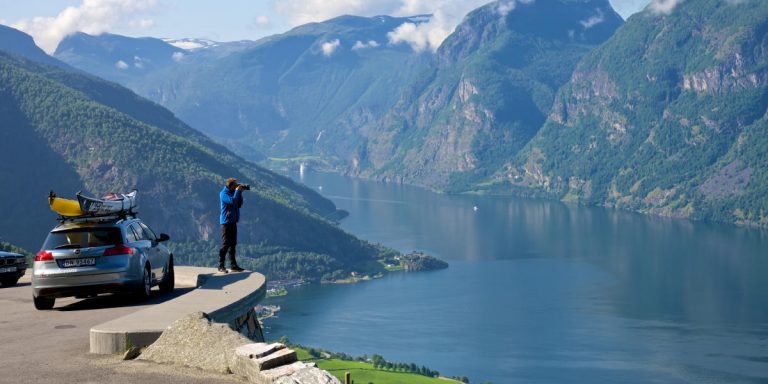
Feature image (on top): Aurlandsfjord viewpoint, Western Norway. © Innovation Norway

How to Pack for a Trip to Norway on a Budget

Norway is an incredible country to visit, but because of the constant weather changes, you need to spend time carefully considering how you will pack for your trip. The weather can change in an instant, one minute it is sunny and warm and the next you find yourself surrounded by heavy snow. Most Norwegians are really warm and friendly people, and most of them can speak perfect English. Learn how to pack for a trip to Nprway on a budget.

Although a lot of people opt to skip Norway while travelling through Europe because it is known to be one of the most expensive countries in the world, it is possible to travel through Norway on a budget. You won’t be able to stay in fancy hotels or eat out in nice restaurants but there are ways you can move through Norway without having a large sum of money sitting in your bank account.

How to Pack for a Trip to Norway on a Budget?
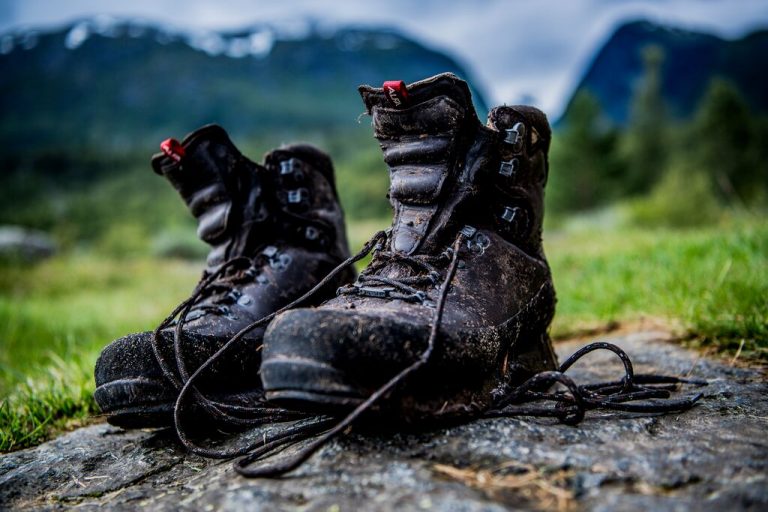
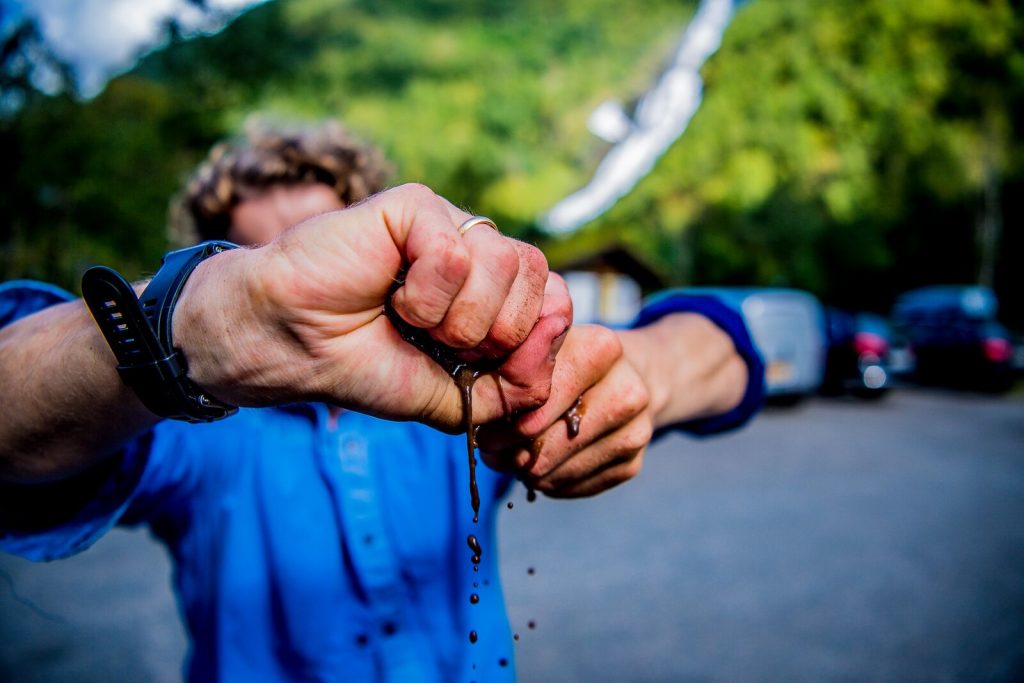
Wet socks in Utlandsdalen

How to Pack for Hiking in Norway
There are plenty of places throughout the country ideal for hiking. If you are going hiking in the fjords, make sure you are prepared. Make sure you bring lots of warm layers and plenty of rain gear too. The issue that a lot of people find when hiking in Norway is that they need to carry a large backpack to store all the different layers. For a lot of these hiking trails, you will want to be an experienced hiker, with a lot of upper body strength to carry heavy baggage. A lot of people avoid packing extra layers to make their bag lighter, but they often regret it once they are hiking. If you are not used to extremely cold conditions, perhaps hiking in Norway is not for you.

Related: 5 Ways To Travel Well In Scandinavia While On A Budget

Make sure you have plenty of spare socks. Even with high-quality hiking boots, your socks are bound to get damp. Having a spare pair of clean socks can help make your overall experience more enjoyable.

A lot of trail maps can cost a lot of cash in stores in Norway, so instead of spending money, there are plenty of free trail maps available to download. However, if you plan on using a smart device while hiking, make sure it is fully charged. It might be worth your while investing in a portable power bank. These handy devices allow you to charge your devices on the go, which makes them an ideal purchase for those travelling through Norway. These chargers are so popular there are lots of affordable devices on the market.

How to Pack for a Trip to Norway on a Budget?
Vetti Gard

How to Organize items before you get to Norway?
As mentioned earlier, Norway is one of the most expensive countries on the planet, so if you are on a budget, do your shopping somewhere else first. If you lose some of your items, you might be forced to spend an outrageous amount of cash replacing them, so consider labelling your items first. There are companies like the dutchlabelshop.com shop that allow you to make your custom labels. Not only will it add style to your belongings, but it will also lower the chances of getting items mixed up with other people’s belongings. You can put labels on anything, such as electrical devices, backpacks, sleeping bags and even add a quilt label.

Related: Happy Travels With Award-Winning Scandinavian Travel Gear

Because you will need to pack a lot of gear, make sure that you roll all clothing items up, so they don’t take up a lot of space in your bags. Before you get on a flight, if you feel your big hiking boots are taking up too much space, why not wear them before checking in your luggage. Although you’ll need boots to hike, they can cause a lot of frustration when packing for your trip. So instead of stuffing them in your bag, put smaller trainers inside instead and wear the hiking boots while commuting.

How to Pack for a Trip to Norway on a Budget?
From Utladalen

What should Women Pack before Going to Norway?
Here is a checklist that will help women pack before setting off for Norway:

  • Good quality waterproof jacket: Most hiking jackets on the market are waterproof. However, if you are looking to buy a new jacket, consider checking out reviews online first. You can save money on a lot of items, but investing in a quilty rain jacket, especially before a trip to Norway will prove worthwhile.
  • Thick gloves: To keep your fingers warm, a pair of thick, woolly gloves will do the trick.
  • Dresses: There are plenty of incredible places throughout the country that will make for an ideal photo opportunity, so don’t forget to pack at least one dress.
  • Waterproof Pants: If you find yourself hiking through the fjords in heavy rain, you might have wished that you brought a pair of waterproof pants. If you have a light pair, you can wear them over other pants to keep you warm and dry.
  • Pyjamas: Even if you are not used to wearing pyjamas, you might want to start getting used to it. It can get very cold in Norway, especially during the night. Comfortable pyjamas will add much-needed warmth and pyjamas can help you get better quality sleep.
  • Swimwear: There are lots of great places where you can go for a nice swim in Norway.
  • Hat: Hats like beanies are ideal for cold conditions.
  • Women’s trail socks: These comfortable socks are perfect for hiking, running, or biking.

Related: The New York Times Recommends Norway

If you have a friend or family member that is willing to lend you some of their belongings before the trip begins, examine each item thoroughly for damage first. You don’t want to get caught in a storm in Norway and then realize there’s a hole in your waterproof jacket.

How to Pack for a Trip to Norway on a Budget?
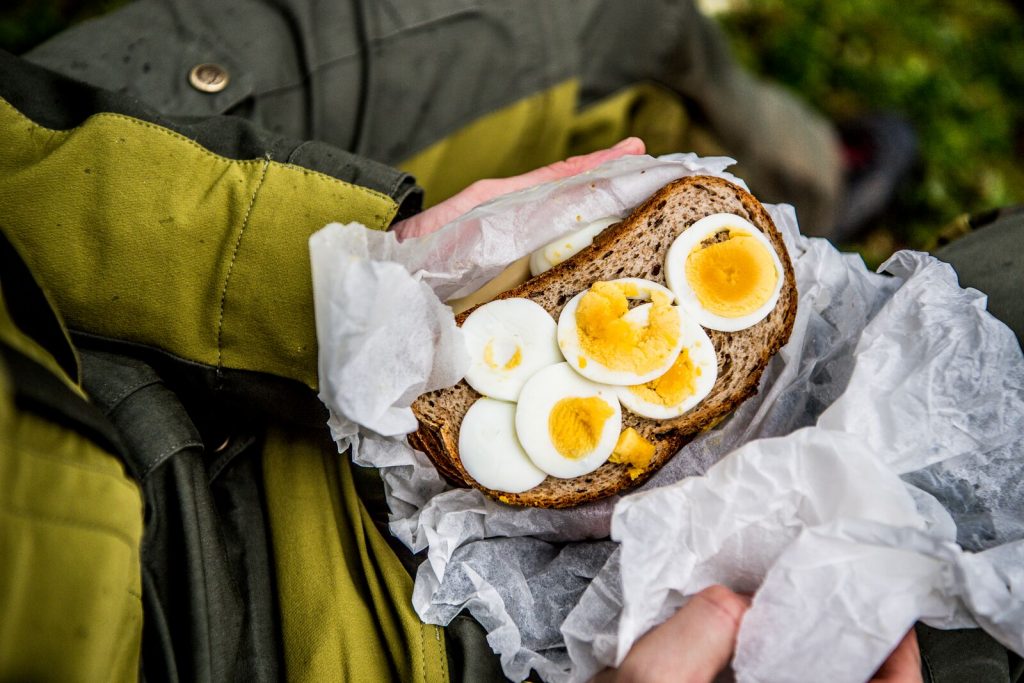
Packed lunch in Utladalen

What should Men Pack before Going to Norway?

Although a lot of items mentioned in the women’s checklist are the same for men, here are a few items that men should consider packing before jetting off to Norway.

  • Long underwear: A lot of men living in Norway wear long underwear to keep them warm, so you should consider doing the same thing.
  • Short-sleeved shirts: It’s not always cold in Norway, so pack multiple short-sleeved shirts. When it is cold, you can wear these shirts under your other clothes to keep you warm.
  • Pair of pants: Bring at least two pairs of pants.
  • Down jacket: A well-insulated down jacket with comfortable under feathers is a must for any man going to Norway. It will help keep you insulated in cold conditions.
  • Woolly socks and a warm hat: The best way to stay warm is by making sure your feet and head are covered. Woolly socks and a quality beanie will help keep you warm.

Although most of these items are readily available in stores in Norway, avoid spending top dollar on them by ordering them online before you start your trip.

How to Pack for a Trip to Norway on a Budget? Conclusion
Norway is a wonderful place to travel however it can cost a pretty penny. To save money on accommodation in Norway, there are a lot of hosts that offer their spare rooms, or even their couches to travellers for free. So, you won’t have to put your hand in your pocket to get a good night’s kip and you will also meet some local people in doing so. Don’t be afraid to talk with the locals in Norway because they are great, fun-loving folks.

How to Pack for a Trip to Norway on a Budget, written exclusively for Daily Scandinavian.

All photos by: Thomas Rasmus Skaug © Innovation Norway

Norwegian Assisted Senior Home with a Hotel Feeling

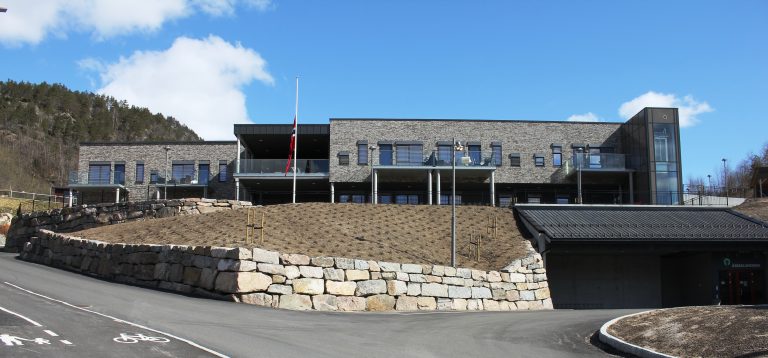
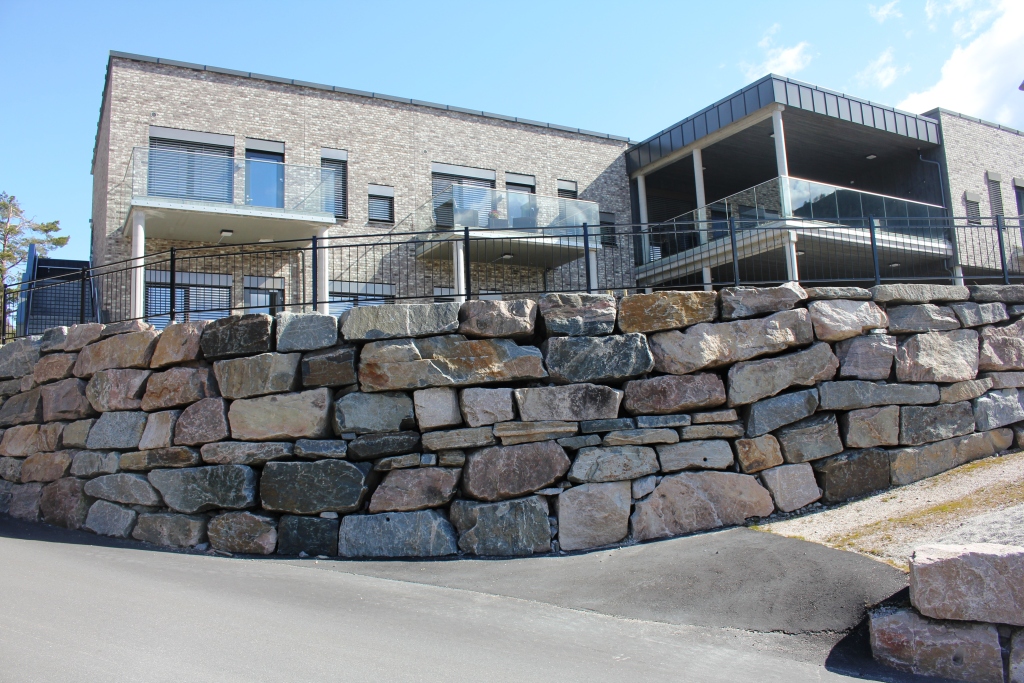
Åseral is a Norwegian inland municipality north-east of Kristiansand with a population of just under 1,000, equaling to 1.2 inhabitants per square kilometer. Late last year, a new assisted retirement home was completed after 11 years of planning and a building period of 22 months. It has become a Norwegian assisted senior home with 20 apartments and a hotel feeling.

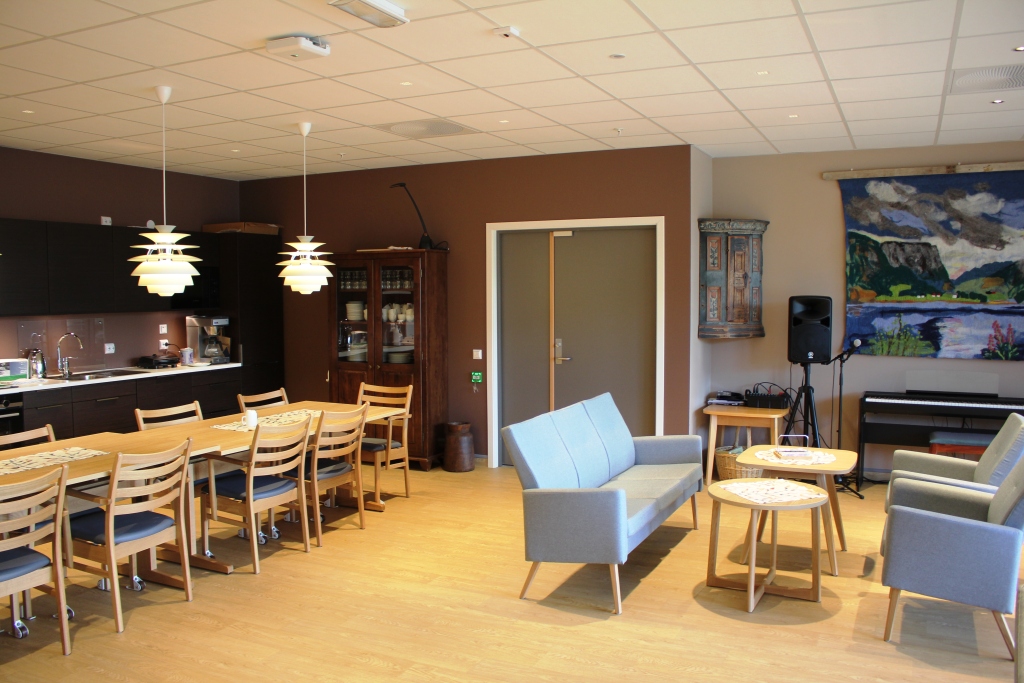
“The aim was to create a care home without an institutional character,” says architect Siv Nordbø at ENO arkitekter AS in Kristiansand. “We started by analyzing the old building which was too large and unserviceable, and applied the principles of space planning. To accommodate all technical installations, the actual ceiling height construction is now 4 meters, while the visible operational ceiling height is only 2.5 meters in some corridors,” she explains.

Norwegian Assisted Senior Home with a Hotel Feeling
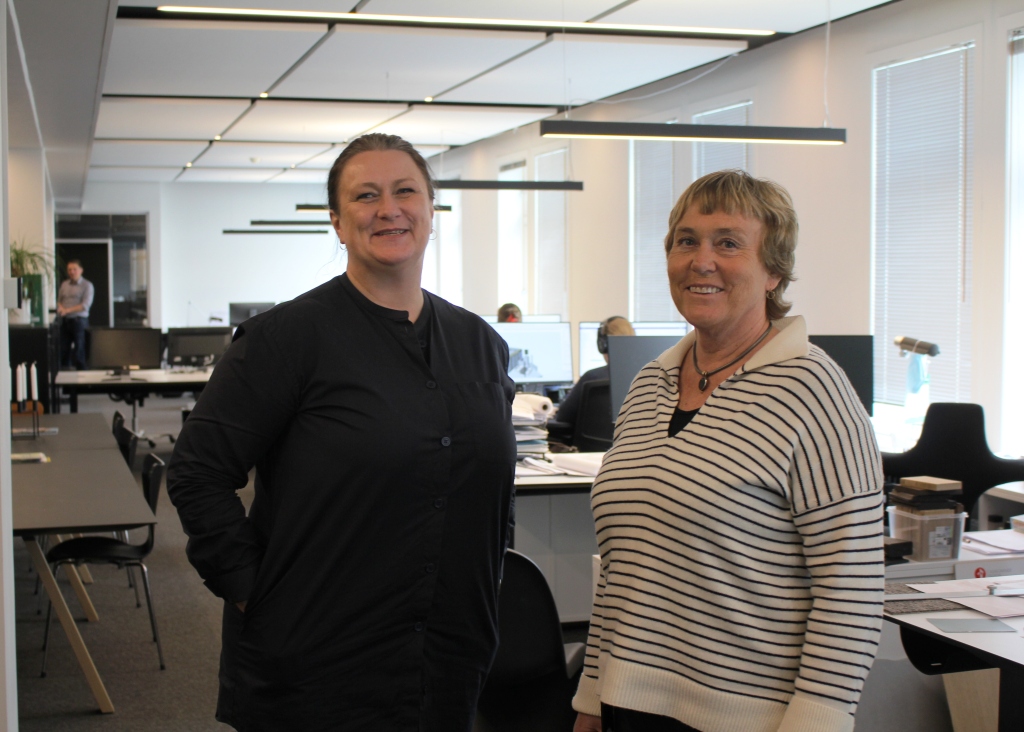
Construction technician Kristine Berg (left) and architect Siv Nordby, ENO Arkitekter AS

Space planning is a complex process with many factors to consider and is frequently about compromise.  In this case, the emphasis has been on lifestyle since elders are often forced to make the most dramatic lifestyle changes.

Norwegian Assisted Senior Home with a Hotel Feeling
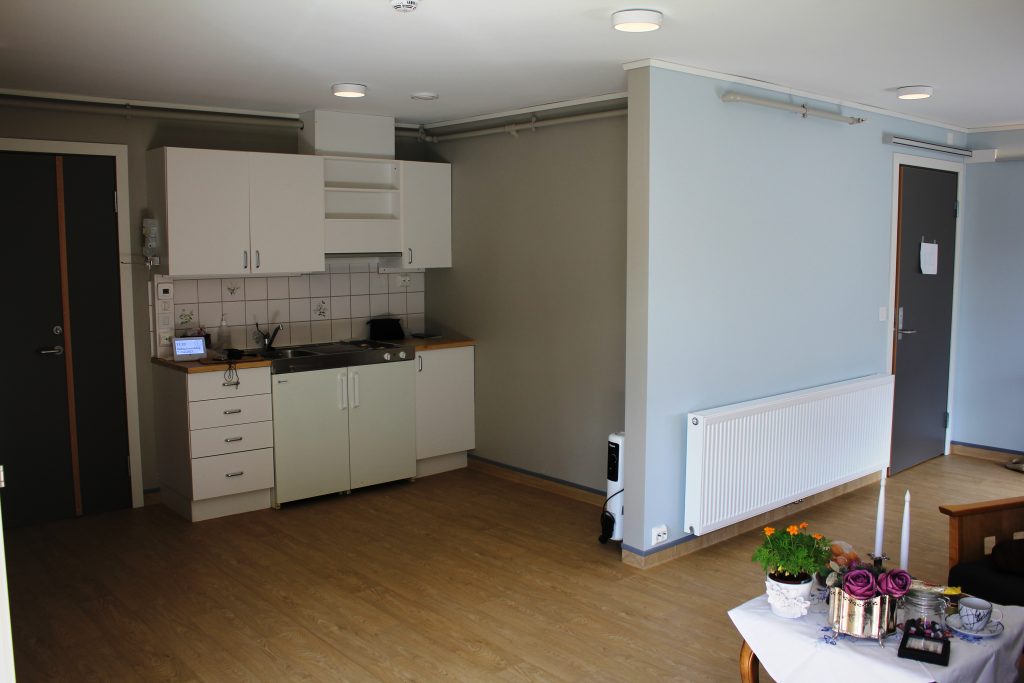
Spacious rooms for all in need of care at Åseral Senior Home

Focused on operating expenses
“Not only do our loved ones have to leave their familiar environments they used to, but they must also accept the fact that advancing age and/or increasing health needs necessitate this move. We wanted all residents to be on the same floor level. It would simplify operations, and we focused on operating expenses,” says Nordbø. “We have emphasized open spaces without unnecessary walls and doors that provide greater freedom of movement for people with reduced mobility. At the same time, however, this was a challenge for the safety regulations, and therefore we have installed invisible fire curtains in the ceilings, “she adds.

Norwegian Assisted Senior Home with a Hotel Feeling
Project engineer Jan Oddvar Lineikro proudly introduced and guided us through the new care building in Åseral

Project engineer Jan Oddvar Lineikro proudly introduced and guided us through the new care building in Åseral. Technical installations that control most things in the house, from temperature, sun-screening and sorting waste and dirty clothes to sensors that can warn of dementia’s unwanted absence.

Norwegian Assisted Senior Home with a Hotel Feeling
Part of technical room

A hotel feeling
Åseral assisted senior home with a gross area of 2910 square meters contains 8 apartments, 5 nursing home places, 2 emergency places and 5 separate units in a housing association adapted for demented residents. In addition, there is a day center for seniors, a hair salon, a physiotherapist studio as well as kitchen and several common and living rooms.

Norwegian Assisted Senior Home with a Hotel Feeling
View from terrace

From the building there is a fantastic view over the village and the Øvrevatn lake and the outdoor area has a universal design including paths and seating areas. It is a sensory garden for the demented and maybe there will even be some hens. The nearest neighbors are an elementary school and kindergarten, which it turns out that the residents appreciate.

Norwegian Assisted Senior Home with a Hotel Feeling
Cosy outdoor areas

It strikes us immediately when we enter the building that It doesn’t smell like a residential institution at all. It’s like entering into a hotel. Most seniors wish to remain in the comfort of their own homes surrounded by memories and personal belongings. But when their care needs increase and the safety, assistance and social interaction that a well-planned senior center offer, they can feel more at peace with the idea of the move and ease into their new home.

Norwegian Assisted Senior Home with a Hotel Feeling
“The aim was to create a care home without an institutional character,” says architect Siv Nordbø at ENO arkitekter AS in Kristiansand

“I believe the residents at Åseral care center appreciate the safety, warmth and friendship this good assisted living facility offers,” concludes architect Siv Nordbø.

Norwegian Assisted Senior Home with a Hotel Feeling, written by Tor Kjolberg
All images © Daily Scandinavian / Tor Kjolberg

More pictures below:

Norwegian Assisted Senior Home with a Hotel Feeling
Common room
Norwegian Assisted Senior Home with a Hotel Feeling
Physiotherapist studio
Norwegian Assisted Senior Home with a Hotel Feeling
Common room
Norwegian Assisted Senior Home with a Hotel Feeling
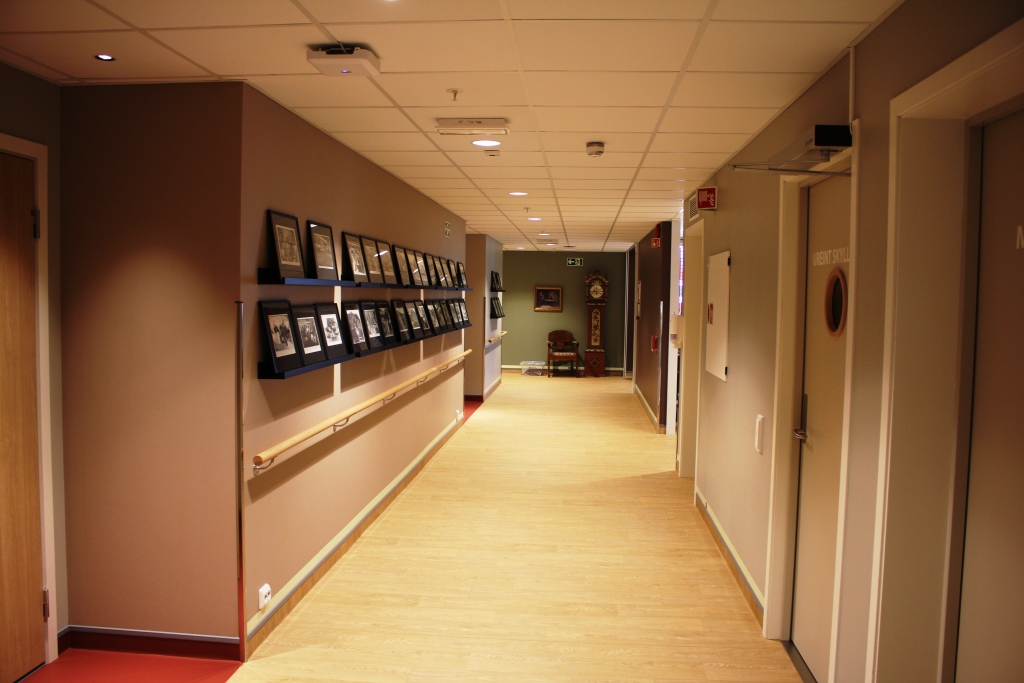
Hallway connecting divisions
Norwegian Assisted Senior Home with a Hotel Feeling
Hairdressing saloon
Norwegian Assisted Senior Home with a Hotel Feeling
Åseral assisted senior home with a gross area of 2910 square meters contains 8 apartments, 5 nursing home places, 2 emergency places and 5 separate units in a housing association adapted for demented residents.


How Traveling to Europe and Scandinavia Will Change in 2022

Travelers to Europe in 2022 will need to get an ETIAS visa waiver before entering the EU. Read How Traveling to Europe and Scandinavia Will Change in 2022 and find out what you will need to do to get ready for this change.

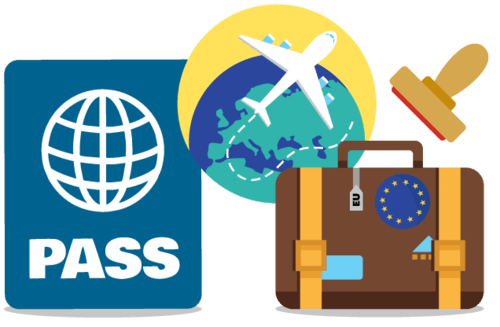
2022 will be a milestone year for traveling to Europe as it will mark the launch of the ETIAS visa waiver.

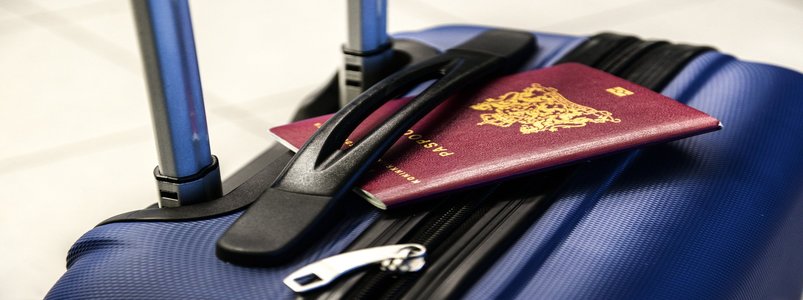
Until now, entering the EU Schengen Area has just involved a passport check and little else for travelers from the US, UK, or Canada. However, this will change next year and ETIAS will become a mandatory step from 2023 onwards for visitors from visa-exempt countries.

However, getting an ETIAS waiver will be a fast and simple process and once you have it registered it can be used multiple times for up to 3 years. More importantly, it’s going to make travel to Europe more seamless and secure.

How Traveling to Europe and Scandinavia Will Change in 2022
2022 will be a milestone year for traveling to Europe as it will mark the launch of the ETIAS visa waiver

Read on below to learn more about:

  • Why ETIAS will be introduced next year
  • Who needs it
  • How to apply for your electronic visa waiver online
  • The most important travel tips for 2022
  • What Is ETIAS and Why Is Travel to Europe Changing?

ETIAS (Electronic Travel Information and Authorization System) was first proposed in 2016 as a means to enhance the border security of the Schengen Area and reduce illegal immigration into the bloc.

Since then, it has been enshrined in EU legislation and work carried out to make it a reality from 2022 onwards.

As part of the passenger screening goals of the project, those visiting Europe without a visa for trips of under 90 days within a 180-day period will need to register with the system prior to arriving.

This will be done via an electronic visa waiver. This will give authorities the chance to properly check passengers to ensure they don’t pose a threat to EU residents or have a history of overstaying on visas.

To find out more check here for further information.

How Traveling to Europe and Scandinavia Will Change in 2022
Getting an ETIAS waiver will be a fast and simple process and once you have it registered it can be used multiple times for up to 3 years

Who Needs an ETIAS Visa Waiver?
Anyone traveling to Europe from one of 62 visa-free countries will need an ETIAS visa waiver to visit the 26-country Schengen Area. This will be a mandatory requirement from 2023 onwards.

This includes nationals from the USA, Canada, the UK, Australia, and New Zealand. Visitors from these countries will need to hold a valid ETIAS authorization prior to visiting any Schengen countries.

How to Apply for ETIAS
The application for ETIAS can be accessed and completed fully online. It will only take 10-20 minutes to complete the form for most people applying.

It is also expected that approval or denial will be given within 24 hours of submission. However, passengers are advised to apply at least 72 hours before departure in case mistakes or discrepancies occur on their form.

When filling out the application you will be asked to provide data, such as your:

Name
Nationality
Date of birth
Passport information
Arrival country in the EU
Answers to background questions

Once done, you will need to pay a small administration fee by debit or credit card and enter a working email address.

The latter is especially important as it will be your primary source of contact with the EU authorities during the process. It is also how you will receive the approved visa once it is authorized.

After you have received an approved visa waiver it is then electronically linked to the passport you registered during the application process. The waiver itself is valid for 3 years from its date of issue although you will need to reapply if your travel document expires or is replaced during this time.

How Traveling to Europe and Scandinavia Will Change in 2022
The application for ETIAS can be accessed and completed fully online

What to Know Before Traveling to Europe in 2022
If you want to visit the EU and countries such as Denmark, Norway or Sweden it will be possible to apply for ETIAS once the system goes online in late 2022. It will become mandatory for eligible passengers from 2023 onwards.

Your visa waiver will be checked when you first arrive in the Schengen area. After you have passed through border security you will then be able to visit all 26 countries in the passport-free zone for up to 90 days with no further documentation checks.

It isn’t necessary to print your ETIAS authorization although it’s advised to keep a physical or digital copy just in case. As the document is electronically linked to your passport the authorities will be able to see whether visitors have the correct entry authorization during the immigration process.

ETIAS is going to be an essential change to prepare for in 2022 and 2023. However, there are many benefits that the system will bring and travelers can expect a faster, more efficient, and more importantly, safer experience of visiting Europe in the future.

How Traveling to Europe and Scandinavia Will Change in 2022, written for Daily Scandinavian by ETIAS, The European Travel Information and Authorisation System,

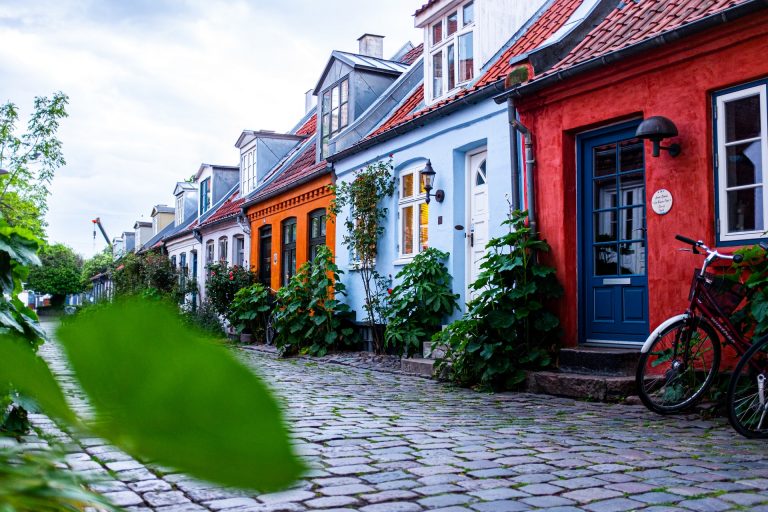
All illustrations © ETIAS, except feature image (on top): Møllestien, Aarhus, Denmark. Photo by Steffen Muldbjerg / Unsplash .

One of Sweden’s Most Prolific Designers

Stig Lindberg (1916–1982) was one of Sweden’s most important postwar designers and was working with ceramics, glass, textile, illustrations, paintings as well as industrial design. Read more about one of Sweden’s most prolific designers.

Stig Lindberg was active in a period in which segmentation and specialization within the design profession was less developed. His work can therefore be found in a variety of materials, from melamine to textiles and enameled steel, but also in a variety of forms, from ceramics to book illustrations and public fountains.

One of Sweden’s Most Prolific Designers
Lindberg’s design patterns characterized the Swedish folk home from 1940 to 1980 with, for example Prunus dinnerware with blue plums

Related: Swedish Designer Lisa Hilland’s Leather Magic

Before a wood-cutting accident in his northern Swedish home, changed his mind the young Lindberg seriously considered a piano career, but after the incident he concentrated on drawing and studied with Helmer Osslund, a local artist.

It is said that a young Stig Lindberg on a June day in 1937 appeared at the porcelain factory in Gustavsberg outside Stockholm to ask for a summer job. The factory did not go well, and since the boss could not even promise him a position as a summer trainee, Lindberg said: “If you hire me, I will make sure there will be enough to do at the factory.”

One of Sweden’s Most Prolific Designers
Stig Lindberg achieved fame for his eccentric forms and whimsical decoration.

Related: Practical Swedish Aquarium for Small Homes

Gustavsberg, a three hundred years old factory at that time had just (1937) been sold to KF (Kooperativa Förbundet) The strongly socialist inspired cooperative culture was both instrumental in changing the status of designers by allowing Wilhelm Kåge to introduce the “studio” system, as well as in encouraging the young Stig Lindberg in studying in Paris and in Denmark.

During a long career with the Gustavsberg pottery factory, Lindberg created whimsical studio ceramics and graceful tableware lines. Stig Lindberg studied painting at the University College of Arts, Crafts and Design. In 1937, he went to work at Gustavsberg under Wilhelm Kåge. In 1949, he was named Kåge’s successor as art director. From this period until he left Gustavsberg in 1980, he designed individual ceramic items, as well as factory produced ranges and lines of dinnerware. He achieved fame for his eccentric forms and whimsical decoration.

One of Sweden’s Most Prolific Designers
During a long career with the Gustavsberg pottery factory, Lindberg created whimsical studio ceramics and graceful tableware lines.

Related: Swedish Furniture Rooted in Nature

Lindberg’s design patterns characterized the Swedish folk home from 1940 to 1980 with, for example Adam, cup-ware with the dot pattern or Prunus with blue plums, or Berså with stylized green leaves. In the 2000s, several of the series were put into production again.

Stig Lundberg also designed faience, textiles, public art, graphic design, industrial design and enamel art. He died from a myocardial infarction in 1982.

One of Sweden’s Most Prolific Designers, written by Tor Kjolberg

Scandinavian Celeriac

Celeriac has been known in Scandinavia for centuries, but has been used sparingly, mostly as a flavoring for soups and stews. The root is not widely eaten anywhere else, except in France. Read more about Scandinavian celeriac.

Celeriac is too strong-flavored to become a universal favorite, and it is rarely eaten on its own, bit for those who love it, celeriac is a marvel, and do not mind if it is served as the main vegetable. However, many don’t love it, particularly children. Adults share childhood memories of how celeriac floating among the diced carrots and leeks was the scare of the week. The carrot and leek were acceptable, end edible, but the celeriac was considered nothing but a punishment. Even worse were the celeriac ‘steaks’, a slab of boiled, breaded and fried celeriac that health-conscious housewives believed to be good for you.

Related: Scandinavian vegetables

Scandinavian Celeriac
The celeriac has been selected for its swollen roots, over millennia, and looks very much like celery when growing. Photo: REMA 1000

How it grows
In other parts of the world, a similar taste is achieved by celery, or the herb parsley-celery, or par-cel, which is actually the ancestor of them both.

They are all biennials and umbellifers, like carrots, and will flower in their second year. The celeriac has been selected for its swollen roots, over millennia, and looks very much like celery when growing, except that part of the root above the ground and most growers will mulch the roots to keep them pale. The leaves of celeriac taste like celery, only much stronger, and are very useful as pot-herb, or chopped like parsley and scattered over winter-dishes.

Celeriac is a greedy feeder, and must be sown indoor in February, as it grows extremely slowly.

Related: Scandinavian Poor Man’s Asparagus

Appearance and taste
The taste of celeriac is so overwhelming that it is often used more like a herb than a root. Its flavor, a cross between that of celery and a parsley root, with overtones of parsley leaves and lovage. The root can be used in any size, from tennis-ball to monumental football, like other roots, a very young, small celeriac is the most delicious and tender. The roots have a tendency to become spongy in the middle, due to a lack of minerals while growing, so choose one that is very firm and heavy, with no soft spots. They keep forever wrapped in plastic in the fridge.

Scandinavian Celeriac
The easiest way to clean a celeriac is to cut it into thick slices and peel the slices individually. Photo: coop.no

Culinary uses
Celeriac is used as flavoring in stews, soups and braises; celery adds a similar, but milder flavor, though celery is seldom used in Scandinavia. Celeriac can also be mashed and made into fries and gratins, because of its starchy nature. Try a 50/50 potato-celeriac mash, or include it as part of a mixed root bake.

When raw celeriac has a delicate nutty taste and, if very finely diced, it’s beautiful in a salad. Even children seem to like it raw, or made into chips as an alternative to the more usual potato. These will never become crisp but the frying brings out the sweetness and a caramelized melting quality that children love. They are very good with game,

Coarsely grated, raw celeriac, coated in a vinegary homemade mayonnaise or crème fraiche, spiked with mustard, is a delicious accompaniment for venison, and very good in sandwiches with all kinds of cold cuts. When very young, in late summer, and only the size of a tennis-ball, celeriac can be braised whole in butter, or simmered in stock and served as a very interesting accompaniment for fish and beef, or in their own as a starter. A whole large celeriac is difficult to handle and clean. The roots make up a tangle at the bottom, and if you cut them all off, there is not always much left. The easiest way to clean a celeriac is to cut it into thick slices and peel the slices individually.

Related: Scandinavian Beetroot

Scandinavian Celeriac
Celeriac soup. Photo: REMA 1000

Celeriac soup with cardamon

In this soup you get the full advantage of celeriac’s spectacular taste. The topping makes a good spicy contrast to the velvety soup.

1 teaspoon cardamom seeds, picked from whole green pods
2 medium celeriac
2 leeks
2 garlic cloves
1 tablespoon of salted butter
3 heaped tablespoons Madras curry powder
1 liter very strong chicken or fish stock.
Salt and coarsely ground black pepper

for the topping
200ml whipping cream
50g fresh ginger, finely grated
Finely grated zest of 1 orange
Juice of 1 lime

Serves 6

First, whip the cream for the topping in a bowl. Press the juice from the grated ginger by wringing it through a handkerchief, add this with the other seasonings to the cream, which will thicken and be soured by the seasonings. Set aside.

Grind the cardamom seeds to a fine powder.
Rinse the celeriac and leeks and cut into large chunks
Fry the leeks and garlic gently without browning in the butter: when they become translucent and fragrant, add the curry powder and cardamom, and fry a little more.
Add the celeriac and stock and season sparingly with salt and pepper. Add water just to cover the vegetables. If necessary, simmer until the vegetables are very tender.
whizz in a food processor until smooth Adjust the seasoning, then eat while really hot with the cream on top.

Scandinavian Celeriac, written by Tor Kjolberg

Feature image (on top) Photo by coop.no

Four Swedish Underground Attractions

Go underground in Sweden and experience world-unique installations from war-time hangars and silver mines to contemporary art beneath a modern-day city to a mysterious underground church. Find out more about these four Swedish underground attractions.

The secret airbase in Gothenburg
Hidden near Gothenburg City’s Airport is a vast underground airbase, built in the start of the Cold War, extending over 22,000 square meters. The above-ground area covers 70,000 square meters.

Four Swedish Underground Attractions
Once top secret, the site has been transformed into an interactive aviation museum. Photo: Visit Stockholm

Once top secret, the site has been transformed into an interactive aviation museum, complete with simulators, a coffee shop and planes kids can scramble on.

Since January 1st 2008, Aeroseum has been part of the SMHA (Sveriges Militärhistoriska Arv – Swedish Military Heritage) network, under the umbrella of Statens Försvarshistoriska Museum (SFHM – The National Swedish Museums of Military History).

Today, the Aeroseum offers experiences that have not previously been available to the general public, including flying in vintage aircraft and helicopters.

You may also like to read: Holocaust Museum to be Built in Sweden

Four Swedish Underground Attractions
The “mine suite” said to be the world’s deepest hotel room. Photo: Uniwue Hotels, Sweden

A room without a view at Sala
The old silver mine at Sala, 120km north-west of Stockholm has a suite hidden 155m beneath the surface. In the 1500s, King Gustav Vasa used to call the Sala Silver Mine “Sweden’s Treasure Chest.” Today, the mine is still a treasure chest—filled with history and adventures, above and below ground.

Temperatures in the tunnels hover just above freezing but the “mine suite”, said to be the world’s deepest hotel room in which you may be served a soup, is kept at a relatively balmy 18 degrees.

You may also like to read: Norway’s Mining Past

The underground church in Västerbotten
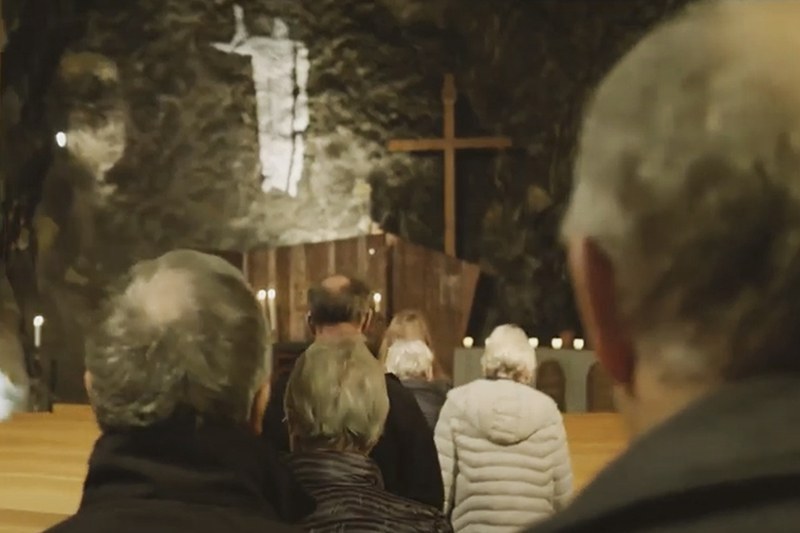
Working deep beneath Västerbotten County in 1946, the miner Johan Olofsson discovered a 2m-high image on one of the walls resembling Christ – apparently caused by detonations in the mine.

Four Swedish Underground Attractions
The church is open for worship complete with a replica of the Jesus-like image. Photo: Källan hotel

The news spread like wildfire and Norra Västerbotten published the picture in the newspaper. People flocked to Kristinebergsvägen to get down to the 120-meter level and climb 13 meters up on a vertical iron ladder to admire the figure.

The space was eventually filled in and the life in this small community continued and so did the mine. Until in year 1968 when a marble slab from the Co-op in Kristineberg was reversed and a dark image of Christ on a white background appeared. Christ had apparently appeared a second time.

In 1986, the ecumenical underground church of St. Anna was built 90m below ground in Kristineberg, close to the original spot. It’s still open for worship complete with a replica of the Jesus-like image.

Stockholm’s Metro Art Gallery
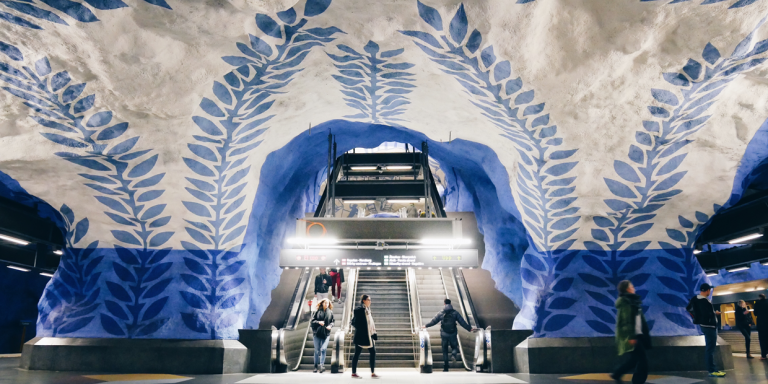
Travelling by subway in Stockholm is like being in a personal, mobile art gallery. It has often been described as ”the world’s longest art museum”. For the price of a Metro ticket, you can enjoy impressive works spanning from the 1950s to the 2000s.

The Stockholm metro has more than one hundred stations, and at least ninety of them have elaborate art installations as part of their status quo decor. It evokes feelings of being part of a modern-day archeological expedition, full of undiscovered secrets and surprises.

Four Swedish Underground Attractions, written by Tor Kjolberg

Feature image (on top): The Metro in Stockholm. Photo: Visit Stockholm