Earlier this month, the world’s largest all-electric ferry went into full operation on the stretch between the two Norwegian cities of Moss and Horten. This is Norway’s busiest ferry route. Read more about the world’s largest electric ferry now operational in Norway.
Norway has had a successful kickstart of electrification of cars, and now the government is focusing on electrifying other forms of transport. In a country with one of the longest coastlines in the world with many fjords, transport by water has been a natural mean of moving people and cargo.
Bastø Electric, made Sefine Shipyard in Turkey, is the first of three battery-powered ferries on a route across the Oslo Fjord
Bastø Electric, made at Sefine Shipyard in Turkey, is the first of three battery-powered ferries on a route across the Oslo Fjord, a route of some 10.5km (5.67 nautical miles). Bastø Electric measures 139.2 meters in length and is 21 meters wide. Top speed is 13 knots (15 mpr 24 km/h). Every year, 3.8 million passengers and 1.8 million vehicles are transported between Moss and Horten. The ferry can carry either 200 cars or 24 trucks, as well as 600 passengers.
All three ferries will be made in Turkey. The battery and fast-charging systems for the ferries are supplied by Siemens Energy from the battery factory in Trondheim. Bastø Electric uses batteries with a capacity of 4.3 MWh. The fast-charging system has a capacity of 9 MW, according to the shipping company. When docking, the ferry is always “charged at lightning speed”.
CEO Bastø Fosen Øyvind Lund (left) and Minister of Climate and the Environment Sveinung Rotevatn. Photo- KLD
The building of Bastø Electric has taken 20 months. This is by no means Norway’s first electric ferry, though, just its largest. The first fully-electric ferry to enter active service in Norway was the MF Ampere which debuted in early 2015.
World’s Largest Electric Ferry Now Operational In Norway, written by Tor Kjolberg
Studying abroad is not just a silly teenage dream but rather a serious life goal as getting higher education in another country is a very serious and advantageous venture. Learning abroad allows you to not only learn a foreign language or get a degree at a globally famous school but also gain some very important life experience, communicate with lots of different people, and simply have fun. Learn how to apply to top 5 Swedish universities.
One of the best foreign Scandinavian countries to visit and study there is, of course, Sweden. Sweden is not only the homeland of IKEA and PewDiePie but is also an extremely culturally open country with some of the best universities in the world.
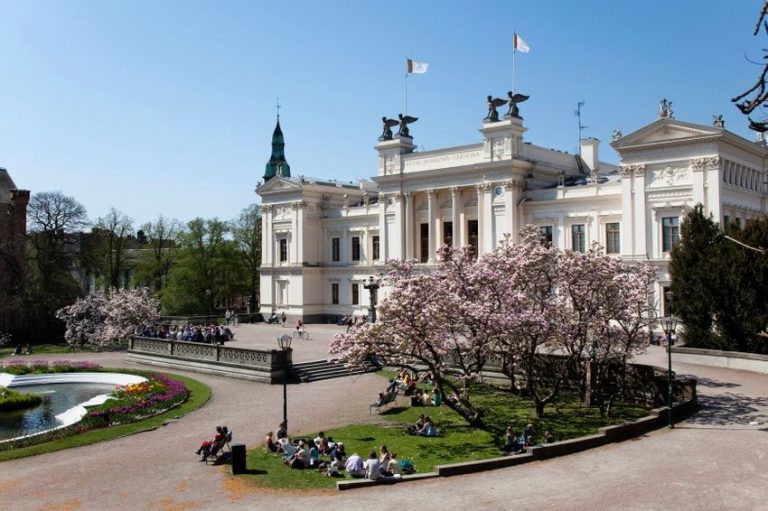
Depending on what you want to learn, there’s a variety of universities in Sweden open for any foreigner and native student alike. Photo: Science in HD / Unsplash
Top Swedish Unis and How to Apply There
Depending on what you want to learn, there’s a variety of universities in Sweden open for any foreigner and native student alike. Still, some of the best universities in Sweden, like in the rest of Scandinavian countries specialize in technology and computer science, so you might want to consider studying this occupation there. Now, for the particular universities. The top 5 universities in Sweden are considered to be the following.
Lund University. One of the oldest and biggest universities in Sweden. It actively supports the international exchange program Erasmus, which makes it particularly attractive to foreign students. Some of the best specializations taught in Lund are considered to be the medical ones.
Royal Institute of Technology. Being in the top 40 technical unis of the world, this school would certainly be of interest to engineers. On top of that, the university has a very positive reputation for being home to the Nobel Prize. Some of the best specializations studied here are engineering, science, and architecture.
Uppsala University. Another older university of Sweden, Uppsala Uni is known for its quality of education and openness to international students. Some of the top specializations to study here are literature, history, arts, and music.
Karolinska Institute. Being established in the early 19th century as the university that would train military surgeons, Karolinska is still considered to be one of the top medical schools in the world. Aside from that, the students also learn engineering and business here.
Stockholm University. Being one of the youngest unis in Sweden, the school in the country’s capital is known for its innovation in education and lots of available specializations. Some of the best and top-rated programs here are law, humanities, math, and natural science.
Some of the best universities in Sweden, like in the rest of Scandinavian countries specialize in technology and computer science. Photo C D X / Unsplash
Now, applying for the program at one of the Swedish unis is not that hard at all. First, you must collect some major documents. Those include the following.
Any documents proving that you are eligible of applying for the bachelor’s or master’s program. That could be your school or college diploma, for instance.
A document proving that your level of English is good enough for a certain program.
A document that proves you are qualified for a certain program.
After that, you just might need to make sure that those documents are in order. That can also mean that you might need to take a look through an online translation services review to find the one that fits your needs the most. And that’s basically it. You can even apply online. Every top university certainly has such an option. The rest will depend on you and your persistence regarding learning. If you’re passionate about what you study and really want to get that degree, success will always follow you whatever happens and wherever you may go. So, buckle up for this wonderful adventure, apply today, and remember to study well!.
Although applying to Swedish university (and pretty much any other Scandinavian uni) is not that hard, it’s still important to pay attention to detail. Photo: Vadim Fomenok / Unsplash
Never Miss Anything
Although applying to Swedish university (and pretty much any other Scandinavian uni) is not that hard, it’s still important to pay attention to detail. Forgetting to translate one of the required documents or failure to study before the exam can severe disappoint and demoralize you. In order to avoid this, keep yourself focused not only on the goal but also on the means of achieving it.
Michael Carr
How to apply to top 5 Swedish universities, written exclusively for Daily Scandinavian by Michael Carr. Michael has a long-lasting and successful career as an experienced author and educator. He managed to study in several countries of the world, thus, being able to understand where and what he can learn better. One of the greatest things Michael has learned is that the best way to learn is to share his experiences with others, that’s why he combines the writing and teaching careers, all to great success.
Copenhagen-based Norwegian furniture designer Martin Solem was inspired by classic Danish design and began working as an intern for one of the oldest surviving Danish cabinet makers, Rud. Rasmussen in 2005. He undertook an MA at the Royal Danish Academy of Fine Arts in 2007, but has always been working with Norwegian materials and his Norwegian presence.
Since 2011, Solem has worked as a full-time designer at HAY Studio in Copenhagen, while pursuing solo projects and collaborations with international brands such as Cappellini and Bernhardt Design. Every year since 2015, he has appeared with Norway in Milan, and he received the Young Talent Award from the Norwegian Design Council in 2015.
A full-time designer at HAY design studio in Copenhagen, Martijn Solem also continues working on various solo projects
Many solo projects
A full-time designer at HAY design studio in Copenhagen, Solem also continues working on various solo projects. He is for example also doing textile projects taking the idea of ‘traces’ as its starting point, using ancient, naturally occurring Norwegian materials and digitally transforming them into new patterns. His first textile designs were inspired by Norwegian Larvikite – particularly its formation millions of years ago from the melting and mingling of different minerals miles below the surface, and the way that its monochrome appearance from a distance reveals more complex color tones close up.
In his work, which strives to introduce progressive elements alongside established design tradition, he places usefulness and realism at the forefront, and as a result he has exhibited broadly, in cities including Cologne, London, Milan, New York, Paris, Oslo and Stockholm.
An innovative designer
Last year, Solum explored the idea of using the strength of molded-wood veneer material to create innovative, light and strong constructive furniture profiles and 100% Norway exhibited a table Martin designed for the project; built using a low-cost production process to enable it to be produced cheaply and efficiently.
The table keeps cables tidy with hidden storage in each leg
Martin Solem describes his work: “I try to always be innovative, for me a product has to be realistic and useful to be considered a good design. What I try to accomplish is to combine these fundamental thoughts with innovative design.”
Norwegian Materials – Norwegian Presence, written by Tor Kjolberg
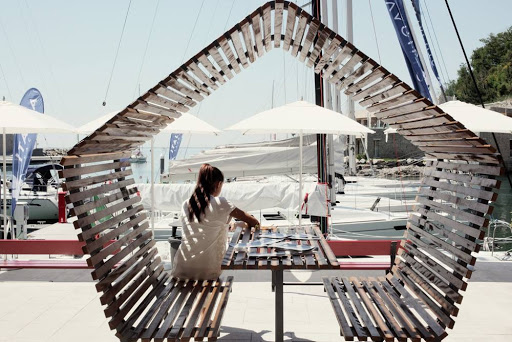
Feature image (on top): Martin Solem’s Urban shelter / The Italian Lab
Bornholm’s Biennials for contemporary glass and ceramics have been arranged biannually since 2005. Hundreds of European artists flock to the small Danish island to take part in the European Ceramic Context. The Danish Glass and Ceramics Biennial is the only one of its kind in Europe.
The biennial exhibits works of leading artists from all over Europe and offers a string of workshops, master-classes and other events. The biennial has always been a visionary collaboration between partners representing the commercial, cultural and educational sectors of Bornholm. The program takes place in the school at Nexø.
The biennial exhibits works of leading artists from all over Europe and offers a string of workshops
The Royal Danish Academy, Design, Program for Crafts in Glass and Ceramics, is one of Europe’s leading educational institutions within the field of glass and ceramics. Its Professional Bachelor program is rooted in the strong tradition of Danish craftsmanship within glass and ceramics. “We investigate processes, materials and practice and develop an artistic voice and a professional language throughout the 3 ½ years of education,” is a statement on its website.
Way back in time, Bornholm, an island of only 36,000 inhabitants, has rich clay deposits to thank for its prominence in the field of ceramics and glass. Already in the 18th century the first ships exporting pottery took off from the island’s shores. The ceramics industry continued to flourish until the mid- 20th-century when the focus shifted to a growing sector of skilled individual craftsmen and women. During the following years, Bornholm’s artistic profile continued to grow as its rugged beauty attracted a string of artists, including a number of glass-artists who landed on the island.
The biennial is motivated by a desire to promote the disciplines and trades of glass and ceramic art at European and global levels. The event aims to show a changing biannual overview of contemporary glass and ceramics. The workshops provide a living incubator for teaching, research and experiments of high quality, which attract visitors from all over the world and bring new perspectives to the area.
The Royal Danish Academy has excellent facilities, with both analogue and digital technologies for the use in working with the two materials, glass and ceramics. Bornholm’s strong artistic community still at the core of the island’s identity, the reason the Biennial takes place on Bornholm and not mainland Denmark.
Today, European Glass and Ceramic Context has become a significant event that not only conveys the development of the contemporary European scene in the form of exhibitions throughout Bornholm, but an essential platform that connects practitioners, researchers, curators and intermediaries. In addition, the Biennale communicates contemporary glass and ceramics to a broad art-interested audience in a multitude of exhibitions, talks and events.
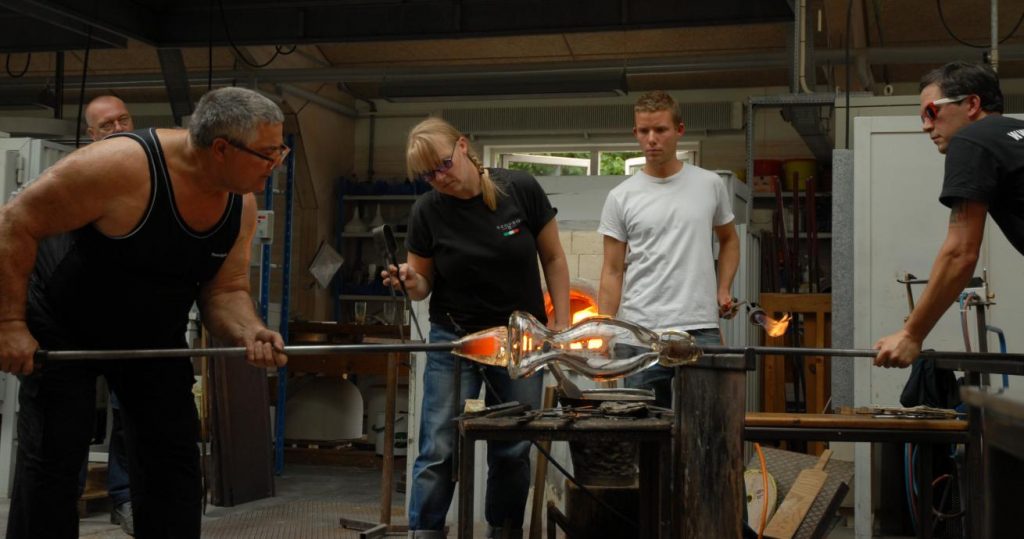
Students, teachers and researchers can work on ceramics on every conceivable scale and with both cold and hot glass
Students, teachers and researchers can work on ceramics on every conceivable scale and with both cold and hot glass. The workshops, which are closely related to the number of students admitted, can accommodate approximately 70 working students.
In 2021, European Glass Context (11.09 – 21.11) will focus more on the UN’s World Goals and Sustainability and, moreover, sharpen the Biennale’s program points to further emphasize and develop the experimental scene. Bornholm Biennials for contemporary European glass and ceramics are jointly organized by Bornholm Art Museum, Royal Danish Academy – Crafts in Glass and Ceramics and Grønbechs Gård, where the Royal Danish Academy is the main partner.
The Danish Glass and Ceramics Biennial, written by Tor Kjolberg
Spanish low-cost airline Vueling strengthens the connectivity between Scandinavia and Spain. Vueling is the largest airline in Spain measured by fleet size and number of destinations. The new flight connections between Scandinavia and Spain will be available from June 2021.
According to a press release from airline Vueling, a part of IAG (International Arlines Group), the company reinforces its commitment to the Nordic market and thus ensures connectivity with a region of great interest to the tourism sector. The airline today announced that it will operate four new routes from Barcelona – El Prat to Gothenburg (Sweden), Billund (Denmark) and Bergen and Stavanger (Norway).
To face the current epidemiological situation, the airline has adopted all sanitary measures against COVID-19 in all its operations
Connections from Barcelona to Gothenburg (Sweden) will be available from June 11, with two weekly frequencies, every Friday and Sunday. On June 18, the route to Billund (Denmark) will be launched, with two weekly flights, every Monday and Friday. Bergen and Stavanger (Norway) will be connected to Barcelona from June 19 and 20, respectively, with one weekly flight: every Saturday in the case of Bergen, and every Sunday in Stavanger.
In addition to the new routes announced, Vueling will operate four other routes during the summer season that are already part of its regular program from Barcelona to Copenhagen, with two daily flights; Stockholm, on a daily basis; Aalborg, with two weekly frequencies; and Oslo, where the airline increases its offer and goes from three weekly flights to a daily frequency.
Health & Safety Vueling is one of the main low-cost airlines in Europe, part of IAG (International Airlines Group – British Airways, Iberia, Level, Aer Lingus). To face the current epidemiological situation, the airline has adopted all sanitary measures against COVID-19 in all its operations, in order to offer all the guarantees to its customers and crew.
In this way, and following the measures established by EASA (European Aviation Safety Agency), in collaboration with the European Center for Disease Prevention and Control, the company has adopted measures in its operations such as: reinforcing cleaning and disinfection of all their aircraft (both in terms of frequency and in the use of specified products), the mandatory use of masks – surgical or superior protection – has been established and, once on board, the aircraft’s HEPA air filters renew the air every three minutes, preventing the spread of bacteria and viruses with an efficiency of 99.99%. In addition, the company has adapted its routes, frequencies, and procedures to the requirements of the authorities of each destination to minimize the incidence of the pandemic.
On the other hand, Vueling has also redefined its product portfolio to adapt them to the current context of maximum flexibility for its customers, allowing it to make changes to the route, date, time and even passenger, without any additional cost.
New Flight Connections Between Scandinavia and Spain, based on a press release from Vueling
After ‘Young Alien’ (2019) and ‘Jalousy’ (2020), Norwegian singer/songwriter Sval has released her potentially “breakthrough moment” with her song (I can’t be your) Medicine. It’s obvious that this alt-pop single is something special. Read more about the Norwegian singer/songwriter’s potentially “breakthrough moment”.
Sval proves that she is a creative genius when it comes to writing impactful music, and she is a strong performer too.
Her 2011 Breakthrough Sval’s real name is Sval Rosenløv Eeg, (born 1998) and she won Norwegian Song Contest for Juniors in 2011. Her later single Tidsfrist (Deadline), released in 2014 was streamed about 1.5 million times. According to her record label Warner Music Norge, she has been streamed more than 11 million times.
Sval writes her own songs but says she has been given great guidance of among others the hit producer Jasper Borgen. “I come up with an idea I have written in my room, and from there it develops into a full production in the studio.”
Performing with a sense of purpose
Sval details a battle to save someone from themselves. “It’s about caring for someone so much and wanting to do everything for them and then realizing that you can’t really save anyone alone, but you can do your very best to try,” she says. “I think we all have our demons and our struggles, and this song is about trying to help someone, whilst also trying to make them want to help themselves.”
This time, Sval has been writing and is performing with a sense of purpose. Norwegian Singer/Songwriter’s «Breakthrough Moment”, written by Tor Kjolberg
Feature image (on top): Photo Jonathan Vivaas Kise
For many years, the Scandinavian nations have topped the PISA list of the nations with the highest percentage of an educated population. The high scores did not come easily but the governments had to restructure the education system and come with better innovative ways. Learn the top 3 secrets to Scandinavian innovation in education.
The Scandinavian government had first to create a conducive environment for all children to join a school and continue learning to the highest level. Teachers also needed incentives while teaching. An overhaul in the Scandinavian education system was done through the following steps.
Education is not about exams Most education systems internationally are test-based systems where students learn for a given period and then sit for tests before graduating to the next phase. Test-based education systems have major challenges that affect teachers, students, parents and governments.
On one hand, teachers rush through syllabuses to evade blame that the students failed because they didn’t cover the whole syllabus. On the other hand, students are preoccupied with passing exams and therefore, they spend their time cramming notes instead of understanding concept.
The Scandinavian no exams policy has helped teachers and students to focus on quality instead of quantity. Photo: Taylor Wilcox/Unsplash
Parents and governments put pressure on students and students and judge their performance by the number of As students score. The Scandinavians were quick to notice this gap and the governments chose to focus on knowledge-based education.
They scrapped off exams from early childhood to the junior high. Students only sit for an exam when they are preparing to join higher education. The no exams policy has helped teachers and students to focus on quality instead of quantity.
It has also helped ease off the pressure on students and teachers that can come from parents and government demanding exam-based performance. Instead, students are graded individually and it is the teacher who sets the grading system.
Buying a college paper College education prepares students for long-term work life. One of the best ways to prepare the students away from lectures is assignments which can include homework, essays, dissertations and research paper.
Due to inexperience, the college student can be faced with challenges on how to structure their papers. One solution to this challenge is asking for a help from the professional writing service writix.co.uk. Assignments require students to commit themselves to study and research and this is where the writing will help you immensely.
The policy of the balanced school and work-life In the traditional education system, teachers are rewarded according to hard work. The measure for hard work is done by the number of hours the teacher spends in class and how fast they cover the syllabus.
Students are also rewarded according to hard work. They need to study as many books as possible and possibly spend their entire school life on books. Teachers also spend every free minute they get to prepare notes for the next lesson or marking homework and assessment tests.
The Scandinavian governments believes that an educated population can be better innovators. Photo: Anita Jankovic/Unsplash
A visit to Scandinavian schools will reveal a different scenario. Lessons are sufficiently balanced to create time for relaxation in between. Lessons take forty-five minutes, followed by a 15-minute break. The purpose of the break is to help teachers relax before they go for the next lesson.
Students also spend this time relaxing and catching up with their on a few conversations with their classmates. In the Scandinavian education system, there is nothing like wasted time.
The many breaks between lessons help students and teachers to relax and you will rarely meet a stressed teacher or student. They always have fresh energies before the start of any lesson.
One of the best ways to prepare the students away from lectures is assignments which can include homework, essays, dissertations and research paper. Photo: Anthony da Cruz/Unsplash
The free mandatory education system It is possible to meet with children who dropped from school due to lack of fee. Every year, thousands of students drop from basic education schools, high schools and universities because of fee-related challenges. Nations end with a generation where half the population is learned and half is not.
The Scandinavian nations were able to overcome this challenge by declaring education free and accessible for all citizens. At the age of six, children join the mandatory early childhood classes.
The mandatory classes continue up to junior high school. In senior high school and university, the education system is not mandatory but remains free. The government believes that an educated population can be better innovators.
The top 3 secrets to Scandinavian innovation in education– Conclusion
The Scandinavian education system took many years of reforms to become what it is today. Although the political leadership in the Nordic region actively took the initiative and pioneered reforms in their education systems, the generation population was supportive even today. The result was an educated population and the benefits can be seen in Nordic technology, arts and innovation. Governments around the world can replicate the Nordic secrets of the knowledge-based education system to produce a productive population.
The top 3 secrets to Scandinavian innovation in education is written exclusively for Daily Scandinavian by Emma Rundle. Emma works in the sales department of an engineering and technology firm and her work is mostly at the B2B level. Her side gig as an academic writer for a thesis writing agency is something she really admires. Her free time is for drawing cartoons, enjoy skiing and meditating.
Feature image (on top): Photo by Annie Spratt / Unsplash
Before the pandemic, outbound travel from China reached record numbers. Now, Chinese travelers are impatiently waiting for borders to open again, and worldwide destinations will once again try to reach these people. But how?
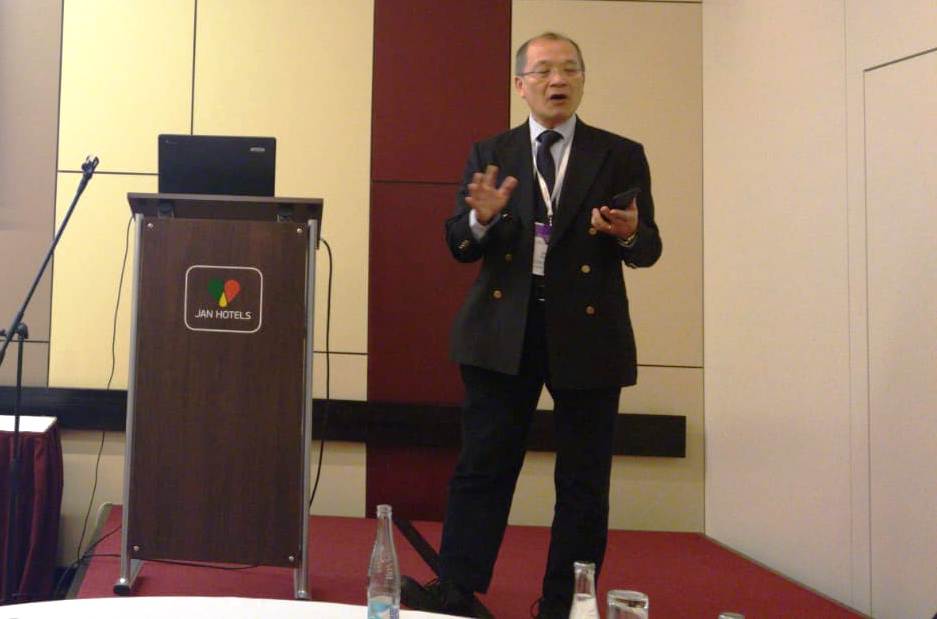
Cho Wong was born in Hong Kong and completed his graduate and post-graduate education in the UK. His first job was to introduce western technology into China. “How things have changed and now China is exporting technology!” he smiles.
Cho Wong has workes in the hospitality industry since early 2000s
Later, he lived in Singapore for 4 years setting up a regional head office for a UK packaging manufacturer, followed by running a Sino-British factory in Kunming, Yunnan Province. His first involvement in the hospitality industry was being the head of a hotel booking agency in early 2000s.
Since the he has stayed in the industry, first with Pegasus Solutions, and subsequently became Managing Director of Supranational Hotels, a hotel representation company which was well known in Scandinavia. At that time Rica Hotels, Arp-Hanson Hotel and Restel Hotels were counted among its membership.
In 2015, Anita Chan, CEO of Compass Edge, realized that the number of Chinese outbound travelers were increasing and yet they could not find much information about hotels in the west
The Compass Edge History
Cho retired in late 2017 but was persuaded by one of his customers Anita Chan, CEO of Compass Edge, to form a partnership in the UK, promoting her GoChina services to hoteliers in Europe. Compass Edge in Hong Kong was founded by Anita Chan in 2008. With an extensive experience from her hotel and hotel representation background (VP of Small Luxury Hotels), Anita and her team’s main business is to represent independent hotels and regional hotel groups in GDS distribution. OTA connectivity, booking engines and so on.
In 2015, Anita realized that the number of Chinese outbound travelers were increasing and yet they could not find much information about hotels in the west. Part of that is due to the Great Firewall which restricts information going in and part of it is due to western hotels not knowing how to market themselves properly inside China.
Anita started offering China Strategy services to overseas hotels and GoChina is the main service including building China-specific websites and hosting them inside China, using Chinese social media and the latest marketing channels there to help hotels build up their brands.
“Naturally, there is a need here in Europe and therefore Anita and I set up Compass Edge Europe to offer the GoChina service to hoteliers here,” says Cho.
Where does the typical Chinese traveler get information on a specific destination?
“There is a need here in Europe and therefore Anita and I set up Compass Edge Europe to offer the GoChina service to hoteliers here,” says Cho
A specific destination can be known to Chinese travelers via the traditional way such as:
Travel programs on Chinese Television
Travel magazines
However, to be effective, it is now mainly through:
Social media and active engagement with audience by using the two most important social media channels in China, namely Weibo and WeChat and set up accounts there (Visit Britain is a good example); using posts regularly to “sell” the destination
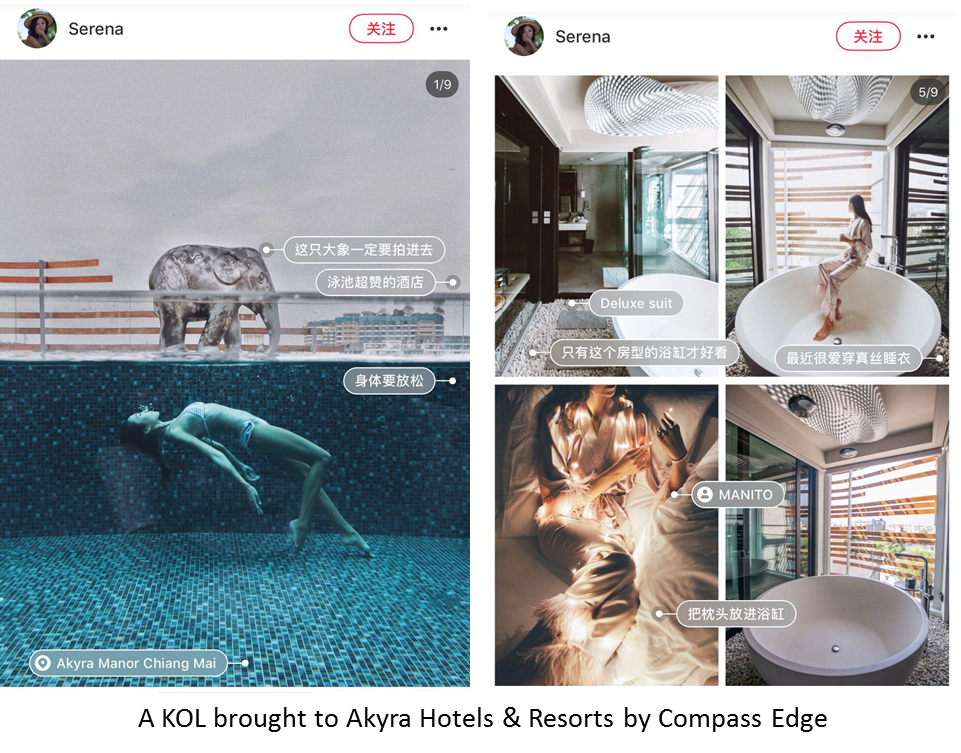
Gaining traction via KOLs (Key Opinion Leaders) talking about their travelling experience and recommending what to see, eat, shop and stay.
In addition, typical Chinese travelers also get information from friends and relatives through their social media posts during and after their trips.
What is most important for the typical individual Chines traveler?
Years ago, it was about visiting well know foreign destinations such as London, Paris and New York. They called it “clocking in”, i.e. posting their selfies using famous landmarks as backdrops. Also shopping!
For seasoned travelers, it is now about experience. This is not just about the hotel stay but also about what they can see and learn when they are there. For example, it is important to know what they can do to enhance themselves (such as learning wine tasting organized by the hotel, preparing cocktails, learning how to cook with the head chefs). For some people, going to less well-known destinations mean meeting less fellow Chinese travelers which they prefer. Hence chasing northern lights in Iceland, cruising in the Antarctic has become popular among the well-offs.
Under the Covid-19 shadows, the most important factor for them now is safety. This includes the hygiene regime offered by hotels (contactless checking-in and out, enhanced room service, social distanced restaurants, good health care system in place in case of need etc.)
What is the best way for a small hotel owner to market a destination to the Chinese market?
The best way is to identify their unique selling points and tell the market about them (why one should visit the place, what you will miss if you don’t, things you can see, smell and feel that cannot be replicated by just looking at photos or videos)!
You are right that a Chinese traveler does not come to stay at a small hotel because he or she loves the hotel (this comes afterwards, hopefully..).
Are there any historical stories about the destination? Any famous people from there? Is the hotel near any World Heritage Sites or UNESCO destinations? Is there a local cuisine, wine, special cooking methods, other unique local activities that visitors will find interesting?
It will be beneficial if hotels can also take part in their local tourism board’s promotion activities targeting China.
How important will you say the Scandinavian market is to Chinese travelers?
Scandinavia is fascinating to the Chinese, especially the story of Father Christmas (a relatively new concept to them), Lapland, the Northern Lights, the midnight sun and so on.
In addition, because of the pollution in China, they long for visiting places famous for clean air and nature.
Luckily, the region is not yet a destination for the mass market which is good news to the host countries as well as the more well-off travelers from China.
Any thoughts about language barriers?
Most independent Chinese travelers speak some English. Also, there are now Apps on their mobile phones acting as interpreters and most Scandinavians can speak English anyway and therefore language barrier is not a problem.
Food is one of the most important enjoyment in life for the Chinese. Above, Chinese tourists in Helsinki. Photo: Kai Jaskari/YLE
How important is food?
Food is one of the most important enjoyment in life for the Chinese. The four factors forming their travel experience are eat, play, sleep and shop. In the past, they would like to stick with Chinese food but now, especially with the younger generation, they want to experience local food and cuisine. Norwegian salmons, Danish smørrebrød shrimp open sandwiches, Finnish reindeer steak and so on are known to them and they would like to try the real thing.
How can a Scandinavian company be visible on Internet in China?
In order to make sure that it is visible on internet in China, a Scandinavian company will have to do the following:
Check whether their corporate website is visible in China;
If so, how about the speed (it takes about 33 seconds to download a European website inside China due to internet filtering by the government there, which is far too long);
Consider building a China specific website, in Chinese, with a “.cn” domain and have it hosted inside China;
Set up their Weibo account to start engaging with their target audience;
If it is useful, set up their WeChat official account as well;
Consider using other Chinese social media channels and video sharing channels such as DouYin (TickTok) to engage the younger generation.
How does your company help clients in Europe to market their destinations in China?
First of all, we do a check to see whether our potential clients are “visible” inside China.
At the same time, we work with them to pinpoint their USPs, prepare and build their Chinese websites, obtain the “.cn” domains and host their websites on Alibaba cloud for them.
As part of the GoChina package, we set up their Weibo accounts in China. Normally for independent hotels, it may not be cost effective to have a WeChat Official Account. However, if it is a big hotel group or a destination tourism board, a WeChat Account may then be useful.
how individual Scandinavian hotels can benefit from a stream of Chinese travelers
Marketing destinations require commitment in terms of regular posts to engage with the audience, checking on trends and matching the trends with information on destinations such as the most popular events, festivals, food of the season, and anything that can enhance travelers’ experience and their impression of the places.
One important element is to deploy KOLs (Key Opinion Leaders) or what we call Influencers in the west). KOLs, and now KOCs (Key Opinion Consumers) are very popular and they have a huge number of followers. Their efforts in promoting these destinations by visiting there and filming will be widely noticed and will increase the popularity. Some of them have their own photographers taking pictures of the landscapes, things the KOLs do while they are there, talking with locals and so on.
Last but not least, live streaming is now making a big impact and a well-known local chef cooking a signature dish via on live streaming will no doubt attract attention and following.
In addition, we should not forget the importance of off-line marketing. Taking part in trade shows and exhibitions in China where you can meet potential customers are equally important.
Combination of the above will make sure that the destinations are on top of visitors’ lists during their inspiration and planning phases.
Daily Scandinavian and Compass Edge Europe using the strategies and tactics mentioned above can attract Chinese visitors
How can a content provider like Daily Scandinavian attract Chinese visitors?
A content provider can consider using the strategies and tactics mentioned above in order to attract Chinese visitors. The beauty of a content provider such as Daily Scandinavian is the vast amount of information and data about various places of interests, things to do, choices of restaurants, hotels accommodation, festivals, changes of seasons. The question is how to communicate all this information to the audience effectively and making sure that they use this provider as one of their preferred channels to search for information.
Having said that, Rome was not built in a day and therefore commitment and continuous efforts are required.
Can you give me any examples of success stories from our region?
Hotel Helka in Helsinki is in a very good location. They provide a 4-star service and yet the room rates are very competitive. However, they have Japanese guests and they would love to attract Chinese guests. Through our join efforts, they have seen good results.
We have also helped Zleep Hotels to test the market.
“Consistency is the name of the game which requires commitment of manpower and resources,” says Cho Wong
Why a lot of hotels or destinations fail Cho Lee would also like to point out why a lot of hotels or destinations fail, even after a lot of money has been spent targeting the Chinese market.
“First, it is not enough to have their websites translated into Chinese and think that people will find them. I mentioned the Great Firewall before. Google is banned in China and Baidu is the number one search engine there.
Second, the layout of these websites may not be the format that the Chinese prefer.
Third, having a Weibo and even a WeChat account does not necessarily mean people will read your posts. There are too many accounts there fighting for eyeballs.
Fourth, branding is everything in China. It needs constant nurturing and therefore posting once a week on social media is not enough. Equally, a period of hyper activities followed by a period of “hibernation” does not help either. Consistency is the name of the game which requires commitment of manpower and resources.”
How individual Scandinavian hotels can benefit from a stream of Chinese travelers credits:
How Individual Scandinavian Hotels Can Benefit from a Stream of Chinese Travelers, Cho Wong, managing director Compass Edge Europe was interviewed by Tor Kjolberg.
As part of the move into the new National Museum in Norway’s capital, Edvard Munch’s world- famous painting “The Scream” is now preserved and studied by conservators. Read more about the interpretations of Norway’s most famous painting.
The Scream, painted by Edvard Munch in 1893, is one of the most famous paintings in the world and has been the source of countless parodies and referred to as The Cry, it has also been referenced to horror movies. The bright swirling sky and its expressionistic colors is a mysterious subject in itself, but why is the person screaming?
Edvard Munch, self portrait
Munch’s early life was a tragic affair. His mother died for tuberculosis when he was five, followed soon by his sister. Another sister was diagnosed with a serious mental illness, forcing her to live in a psychiatric institution, the father suffered manic-depressive disorders and his brother died a few months after getting married. Edvard Munch said: “I inherited two of mankind’s most frightful enemies, consumption and insanity.”
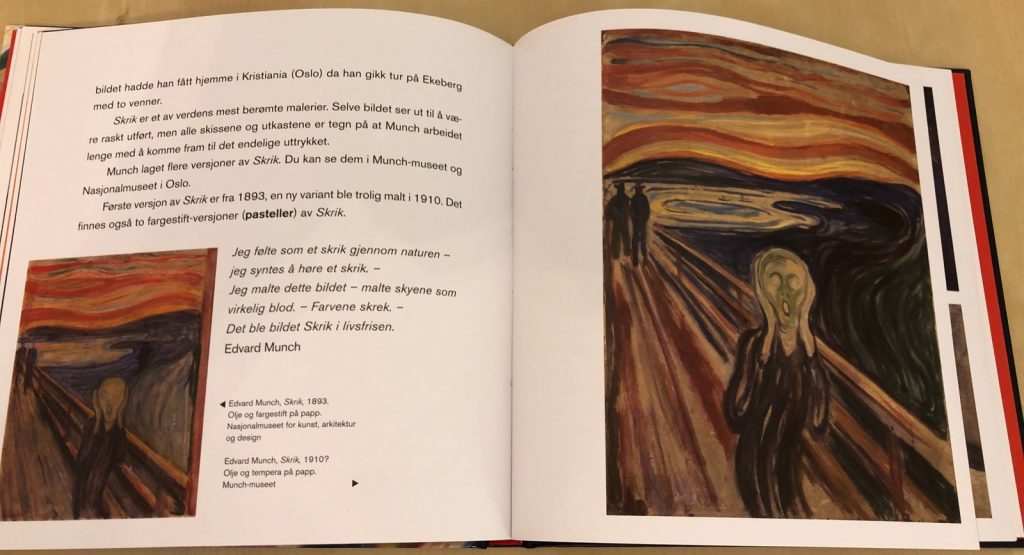
All art is open to interpretation and as an artefact of ‘high’ culture, The Scream is seen as great work of art and has as a cultural product been widely referenced and reproduced. During recent conservation and research, however, new information has emerged about Edvard Munch’s world-famous motif. In the red sky, for example, there is an inscription “Can only be painted by a crazy man”. As a museum visitor, you can barely read the inscription if you stand close to the picture.
Brave and forward-thinking painters like Edvard Munch was by the end of the nineteenth century less interested in showing off their technical skills and more inclined to use their art to express inner thoughts, feelings and emotions, often considered too radical in their time. Even from early age, Munch used painting to represent anguish and despair like few artists had done before him. According to Munch himself, his art was not a form of catharsis but a scene where nothing else existed in life.
Munch was born in 1863, and grew up in Norway’s capital Christiania, now called Oslo. He was the son of a military doctor, and nephew of a Norwegian historian. Munch himself was frequently ill. He was encouraged to be culturally active, and he used his art to express his feelings about his experiences. He studied under Christian Krohg, Norway’s leading artist at the time, and his early influences were French Realist painters. Around 1889 he became involved with the Kristiania (as Christiania was spelled at this point) bohemians, a group of radical anarchists. Their leader, Hans Jæger, taught Munch about modernism, and encouraged him to paint about the longings and anxieties of the individual.
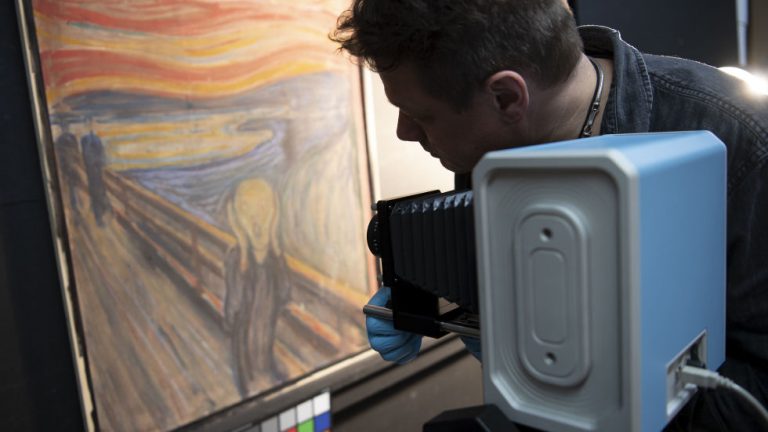
There is an inscription in the painting “The Scream”, stating: “Can only be painted by a crazy man”
The inscription on the red sky in The Scream has been known for a long time, but now conservators have analyzed the handwriting based on Munch’s letters and diaries, and through infrared photography, the inscription on the work of art appears more clearly.
The idea and inspiration for The Scream was intensely autobiographical, with the painting’s content closely inspired by a personal experience first recorded in Munch’s now infamous 1892 diary entry:
“I was walking down the road with two friends when the sun set; suddenly, the sky turned as red as blood. I stopped and leaned against the fence, feeling unspeakably tired. Tongues of fire and blood stretched over the bluish black fjord. My friends went on walking, while I lagged behind, shivering with fear. Then I heard the enormous infinite scream of nature.”
For Munch, The Scream was profoundly personal. He has called it a “soul painting” in which he reveals an honest and perhaps even ugly glimpse into his inner troubles and feelings of anxiety. Originally Munch titled his painting The Scream of Nature. Well, who screams, is it the nature and the artist who is covering his ears for defense or is it an expression of the protagonist’s crisis?
Munch’s father is described as a religious man in most biographies of the artist. Perhaps it is his childhood experience of religion, and his subsequent exposure to modernist theories amongst the Kristiania bohemians, that caused conflict within him. However, Munch’s portrayal of raw human emotion through art has led to him being labelled an existentialist. Ideas of God and heaven which was once a certainty for him, were now outdated concepts, and all that was left was the suffering and anguish of a man without hope.
But Munch loved to provoke. Today, conservators have no doubt that the inscription in The Scream was made by the artist himself. Both the handwriting and events from the time when Munch showed the painting for the first time in Norway point in the same direction. He saw his pictures as part of himself, and pressure from international media had been intense in the last 24 hours.
While Munch mentions feeling “unspeakably tired,” the painting also suggests his lightheadedness and helplessness in that moment, with the person in the foreground seemingly being pulled into the painting’s eerily sentient background.
Few people are aware that the Scream contains an inscription saying “Can only be painted by a crazy man”. Munch was probably no more neurotic than most of us. So, the inscription can be interpreted as a basic fear of being human and that we all stand alone as human beings. The figure in the painting holding his hands to his ears, is probably not the person who is screaming, but nature.
If you’re looking to buy a home in Sweden, you aren’t alone. Due to its stalwart commitment to social equality combined with a high GDP per capita, Sweden is consistently ranked among the happiest countries in the world. Thus, it’s no surprise that Sweden is attracting more and more immigrants as the years go by, because who wouldn’t want to live in one of the happiest places in the world? Here’s our tips for buying a home in Sweden.
While buying a home in Sweden might be the right move for you, you should understand a bit about what Swedish homeownership entails, how the process of purchasing a home works, and how to seamlessly integrate yourself into Swedish culture. Not only will this help you to avoid any surprises in the home buying process, but it will help you to more easily turn your new house into a real home.
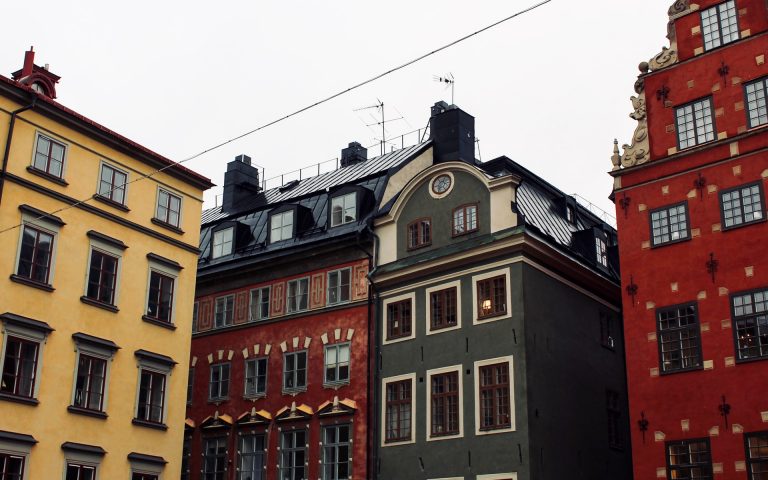
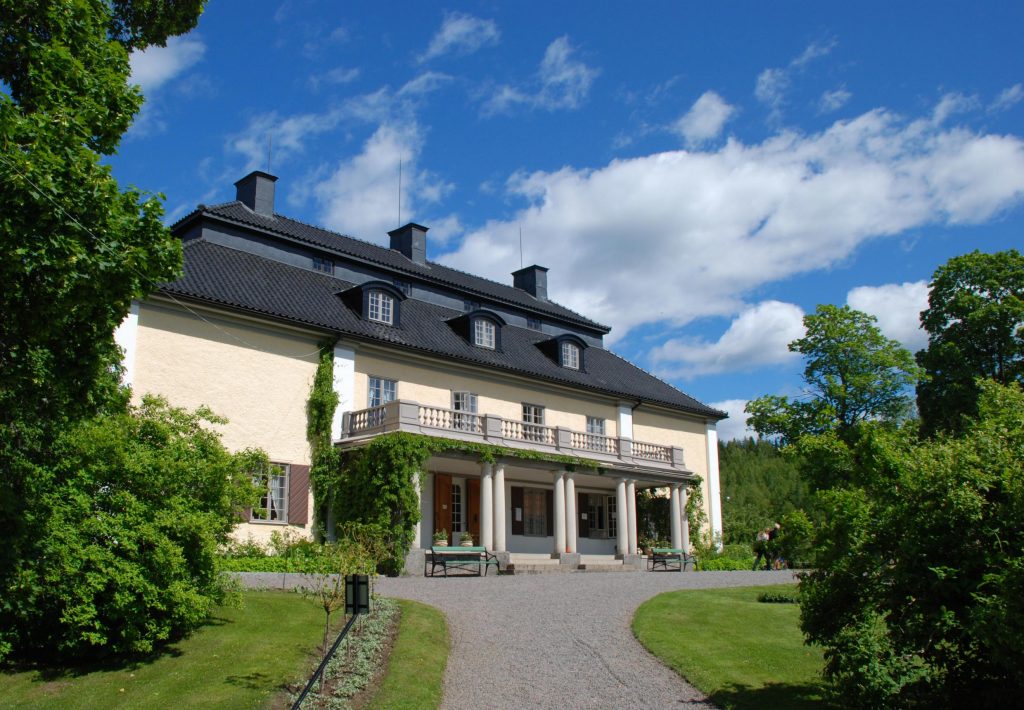
In more rural areas of Sweden you’ll find larger plots of land for sale. Photo: Visit Sweden
Know What You’re Looking For Sweden has a lot to offer homebuyers of every stripe. Whether you want to live in a bustling city like Stockholm to enjoy music, restaurants, bars, and art or out in the countryside to take in the stunning beauty of the Swedish landscape, you won’t be disappointed. While in any of the major cities you’ll likely only be able to find a modestly sized apartment, in more rural areas of Sweden you’ll find larger plots of land for sale, often with the iconic Swedish red cottages dotting the countryside.
If you’re a citizen of the United States and are looking to move to Sweden, it is important to understand that the act of finding the perfect home is largely on your shoulders. Sweden doesn’t have buyer’s brokers, and without a real estate agent, you will be interacting directly with and entering bids to the seller’s broker. While this might seem daunting, seller’s brokers are required to ensure that whatever deal is struck is equally beneficial to both parties.
One thing that you can do to emulate Swedish culture is to take a look at how they design their homes. Photo: Visit Sweden
The process of finding the perfect home in Sweden is otherwise largely similar to house-hunting anywhere else in the world. Doing your due diligence on a property is especially important without a real estate agent helping you make the final decision. To find the best possible home for your needs, think about what is most important to you in a house and don’t jump headfirst into a huge financial commitment without first being sure a home suits your particular needs.
Buying a Home Will Be Different In addition to having the bonus of finding and submitting bids on the perfect home in Sweden being on your shoulders, there are other ways in which buying and owning a home in Sweden might be different than expected. Prospective buyers must hire independent building surveyors to root out any faults in the property as the seller is responsible for faults in the home for up to 10 years if they are detected before the purchase.
Sweden has no restrictions on foreigners buying property, though, for any citizens of the United States, they must understand how financing and the actual costs of homeownership add up in Sweden. While Americans can certainly finance a real estate purchase overseas using a self-directed IRA or implement other methods of financing, there is a more direct route. Assuming one can provide the rather extensive proof of income, foreign buyers are eligible to obtain a mortgage in Sweden and many other European countries.
A typical Swedish modern villa. Photo: Maka arkitektur, Swedish residential houses and holiday homes.
Adapt to the Unique Design World If you’re foreign and are looking into purchasing a beautiful home in Sweden, it will also likely mean needing to adapt to the culture to fully integrate yourself. One thing that you can do to emulate Swedish culture is to take a look at how they design their homes. While home design and decoration are unique everywhere, open house exhibitions in Sweden highlight the pinnacle of the country’s predilections for style.
Though it can be daunting to try to change up your style of decorating to try and keep a homogenous aesthetic with your new neighbors, Swedish style decorating is pretty straightforward. Due to the dark winters, homes generally have light and airy colors to accentuate and reflect the natural light coming in. Mirrors placed throughout Swedish homes also help to make rooms feel brighter, and while accessories are largely shunned, greater importance is placed on well-designed furniture as the centerpiece of each room.
Swedish homes are also a far cry from the often gigantic homes that can be found in the U.S. as they eschew massive rooms for more compact, cozy living spaces. These smaller spaces are another reason why Swedish design can lean towards minimalism as there really isn’t that much room for all the random knick-knacks and superfluous, unused furniture that abound in American homes. Learning how to design for the smaller spaces you’re more likely to find in Sweden is an important step towards making a lasting home in the Nordic country.
At the end of the day, where you choose to purchase your home is ultimately a huge decision and should not be taken lightly. That being said, buying a home in Sweden might be drastically different than purchasing a home overseas, but in many ways, the differences put much more power in the hands of the buyer. Just remember to do your due diligence and to respect and embrace the unique culture Sweden has to offer and your new house will quickly become a home.
Beau Peters
Tips for Buying a Home in Sweden, written exclusively for Daily Scandinavian by Beau Peters. Beau is a creative professional with a lifetime of experience in service and care. As a manager, he has learned a slew of tricks of the trade that he enjoys sharing with others who have the same passion and dedication that he brings to his work. When he is not writing, he enjoys reading and trying new things.
























 The top 3 secrets to Scandinavian innovation in education is written exclusively for Daily Scandinavian by Emma Rundle. Emma works in the sales department of an engineering and technology firm and her work is mostly at the B2B level. Her side gig as an academic writer for a thesis writing agency is something she really admires. Her free time is for drawing cartoons, enjoy skiing and meditating.