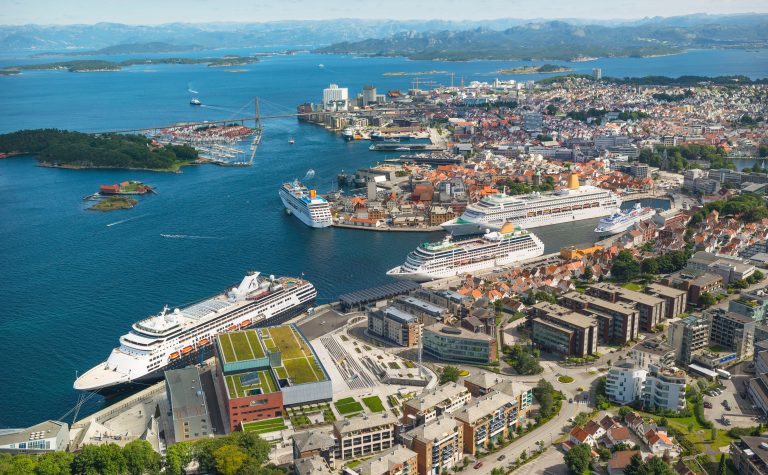
When Norway discovered North Sea oilfields in 1965, Stavanger became the base of the oil exploration. Nearly one of ten of its 142,000 inhabitants was born abroad in Norway’s fourth-largest city. This is rather ironic since in the early 19th and 20th century, Stavanger was the principal port of embarkation for the great waves of Norwegian emigration to the United States. Read more about the oil capital of Norway.
The first 52 emigrants left in 1825, bound for New York on the sloop Restauration. Those wishing to trace their roots can contact Norwegian Emigration Center (Det norske utvandingssenteret).
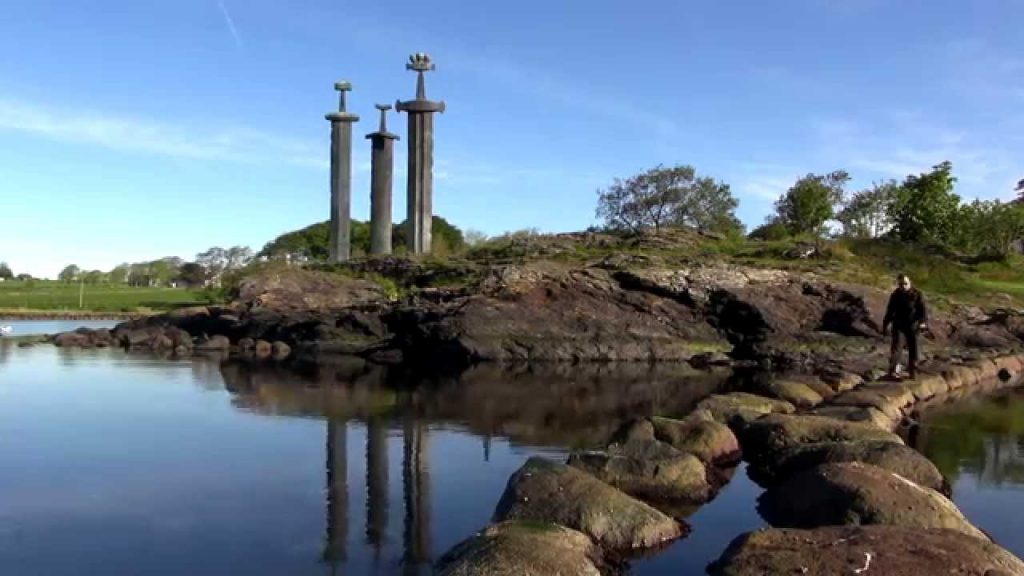
The Stavanger siddis (colloquialism for a person from Stavanger) claim to be the oldest true Norwegians, tracing their lines to the Battle of Hafsfjord. This decisive battle that first united the country under King Harald Hårfagre, ca 880, took place at a bay just southwest of the city. On the shore is an impressive monument to the event, Sverd i fjell, three larger-than-life Viking swords seemingly thrust into bedrock.
The heart of modern Stavanger is the area around Breiavatnet, the small lake in the middle of the city, near the Anglo-Norman-style cathedral, dating to 1125. Northwest of the cathedral are winding cobbled streets and old timber houses of Old (Gamle) Stavanger.
Sverd i fjell, three larger-than-life Viking swords seemingly thrust into bedrock. Photo: Visit Stavanger
Around 1870, as fishing and shipping were in decline, the fishermen turned their attention to brisling (small herring) which were cured and canned in the town and sent as Norwegian “sardines” all over the world. Stavanger thrived on sardines until the 1950s. Today, the Canning Museum, located in the former cannery, has recreated an authentic 1920s environment.
The interactive Norwegian Petrolium Museum (Norsk Oljemuseum) provides insight into the exploration and production of oil and gas.
Feature image (on top): Visit Norway
The Oil Capital of Norway, written by Tor Kjolberg
International students who pick Europe as their study destination often place Scandinavia on their list. Scandinavian countries are known for their great education, as well as the big focus on innovation and research. According to Bloomberg, Sweden is ranked second in the list of 50 most innovative economies, followed by Finland as seventh. This makes the three countries an excellent opportunity for students, especially since they are the home of some of the best universities on a global level.
Why Scandinavian Universities? Nordic and Scandinavian countries are home to some of the top-rated universities in the world. In 2019, the QS World University Rankings featured 27 Nordic universities out of which 10 in Finland, 8 in Sweden, and 4 n Norway. To be more, some Scandinavian universities are specialized and don’t meet the criteria for the overall rankings, while their popularity is immense on a global level. For example, Scandinavia is the home of the renowned medical university Karolinska and the Stockholm School of Economics, both pillars in quality education worldwide.
Scandinavian universities’ popularity is immense on a global level. Photo: Pixabay
How to Choose a University to Study at If you’ve decided to study in Scandinavia, you still have a lot to consider. There are the matters of where to study, where to live, not to mention the enrollment requirements for the university of your choice. Here are five tips to help you with this.
Follow Your Passion Before anything else, follow your passion! Scandinavia has a lot to offer to students. On its grounds, you can find specialized universities like nowhere else in the world, so check all your options before you make a decision.
Scandinavia has a lot to offer to students. Photo: Pixabay
The first thing you need to do is decide where and what you want to study. Have an alternative or two you’ll apply for, especially if you’re looking to study on a scholarship, but find something that excites you. Studying at a university is not an easy ordeal, especially not when you’re enrolled in top quality institutions with a great potential for research.
Many international students today reduce the burden by paying somebody to write an essay for them or edit their papers. This can definitely help you, but you still need to love what you’ve chosen.
Check the Courses in Detail Even when you choose a university, you need to know exactly what you’ll study there. Dig into the offered programs and know what you want to study before you send out your applications. It can be scary to move to a different country and enroll in an entirely new level of education right away. You need to be prepared for university before you set foot there. This will help you make informed decisions and increase your confidence in the selected program. Not to mention, it will help you immerse in the country and the lifestyle faster.
There are plenty of great choices in Scandinavia but the three countries in it can offer very different conditions. Photo: Andrew Neel/Unsplash
Know Your School Choices When you know what to study and what programs are at your disposal, it’s time to pick the schools. Narrow down the list to your top choices and start researching. Before you apply, you need to know what kind of school it is, what it requires from the students, and how you can enroll there.
Research the Location Picking a school is not enough to get you prepared. There are plenty of great choices in Scandinavia but the three countries in it can offer very different conditions. Location is something you should definitely consider when studying here. Do you like to study in a school that’s full of nightlife and have many restaurants and pubs nearby? Or maybe you want to study in a school that is surrounded by nature and clean air? Perhaps you like the idea of seeing the northern lights and enjoying 6 feet of snow?
Consider the Budget Beyond the academic institutions, Scandinavia has a lot to offer in terms of lifestyle and quality of life. They have amazing social support systems, high quality of life, and a relatively relaxed atmosphere. Students who move to study there are immediately immersed by the lovely culture and amazing lifestyle of the locals, not to mention they have the option to study there free of charge.
When you choose a university, you need to know exactly what you’ll study there. Photo: Priscilla du Preez/Unsplash
Scandinavian Universities: 5 Tips on How to Choose – How? Well, Scandinavian countries have relatively high costs of living, which is why many students toss the idea of studying there aside too abruptly. But, the tuition fees are actually quite low compared to the living expenses, and there are plenty of discounts and scholarships offered to international students.
For example, if you study in Finland, you should know that EU and EEA citizens and PhD students aren’t required to pay fees. In Norway, the public universities are free for students of all nationalities and study levels, with a minimal fee of around $50 per semester.
There’s one final tip that applies to all international students – take your time!
Scandinavian Universities: 5 Tips on How to Choose, written for Daily Scandinavian by Emma Rundle. Emma is a career coach who does her work mostly online. She schedules online sessions and posts tutorials for people who need help with their career choice. To be more, Emma shares her expertise in online blogs.
The capital of Sweden will make you fall in love with it from the first glance, and perhaps this is due to its diversity. “All tourists will be surprised not only by the warm atmosphere but also by how much is unusual in this city,” – shared their experience the young Best Writers Online writing services review team. In fact, it is so. In this article, you will find the best 100 cheap and free things to do in Stockholm that you should pay attention to.
Top 100 Cheap and Free Things and Places All travelers should pay attention to the places and activities from this article as they are free or cheap. Everything what to see in Stockholm and what to do in Stockholm will be divided into categories to make it easier to navigate.
The R1 Nuclear Reactor is Sweden’s first nuclear reactor to watch.
Light the Color by Numbers Tower with your smartphone.
Visit the former bank building where the world-famous Stockholm Syndrome was born.
Admire the gigantic water lilies at Victoriahuset.
Spelmuseum is a separate museum dedicated to video games.
Every Tuesday night, students scream into the sky (Lappis Scream).
The Grave of Morgan, a monument to the most formidable Swedish military horse.
Wooden Horse is a small museum of famous national toys.
Pompe the Dog’s Grave, the grave of the beloved dog of the King of Sweden.
Västerbron is the bridge of lovers.
Snösätra Wall of Fame exhibition of graffiti.
Östermalm is a district that is distinguished by its chic.
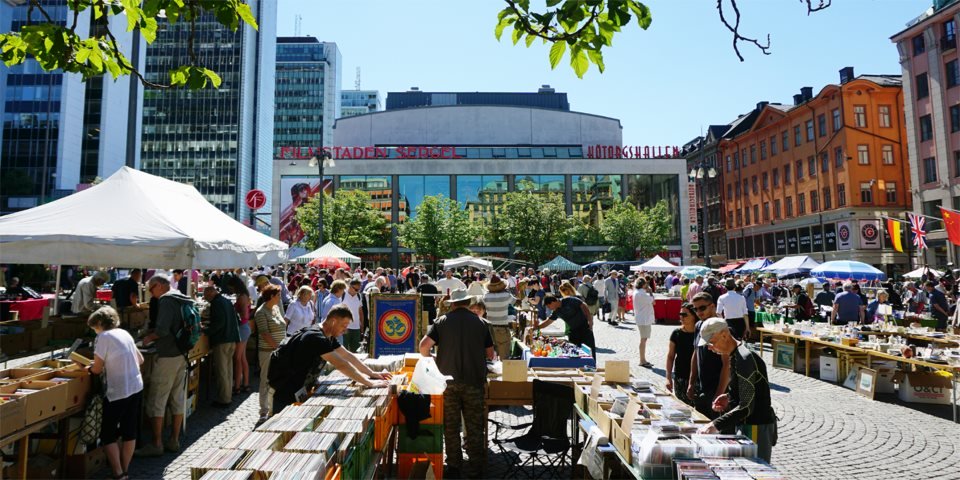
Flea market on Main Square, Stockholm. Photo: Visit Stockholm
Bars, Food, Markets In this category, there are bars, places for snacks, and also markets.
There are a lot of independent coffee houses, try coffee in Swedish.
Take a pub tour as each one is unique.
Spend your time in one of the Stockholm Language Cafes.
Try Carlson’s favorite buns. Vete-Katten offers a kanelbulle (cinnamon rolls).
Taste the fried herring at the Nystect Strumming.
Aifur is a cafe that carries over during the Vikings.
Buy fruits/vegetables directly from the garden at Slottstradgarden Ulriksadal.
Cafe Langangens Gard will surprise not only with its fabulous interior but also with traditional Swedish cuisine.
The interior of the String Café is striking, as the chairs are of different sizes, the wallpapers are different and the decor is from different centuries.
Bruno’s Korvbar offers not expensive but good assortment of hot dogs.
The Best 100 Cheap and Free Things To Do In Stockholm– Do You Think It’s All?
As you see, everyone can find something to their liking. Fans of antiquity will appreciate the narrow streets, colorful houses, and museums. Connoisseurs of the modern world will enjoy the metro, youth districts, and art centers. Stockholm is so amazing!
Gregory V. Chapman
The Best 100 Cheap and Free Things To Do In Stockholm, written for Daily Scandinavian by Gregory V. Chapman. Gregory is passionate about researching new technologies in both mobile, web and WordPress. Also, he works on Best Writers Online the best writing services reviews. Gregory is in love with stories and facts, so Gregory always tries to get the best of both worlds.
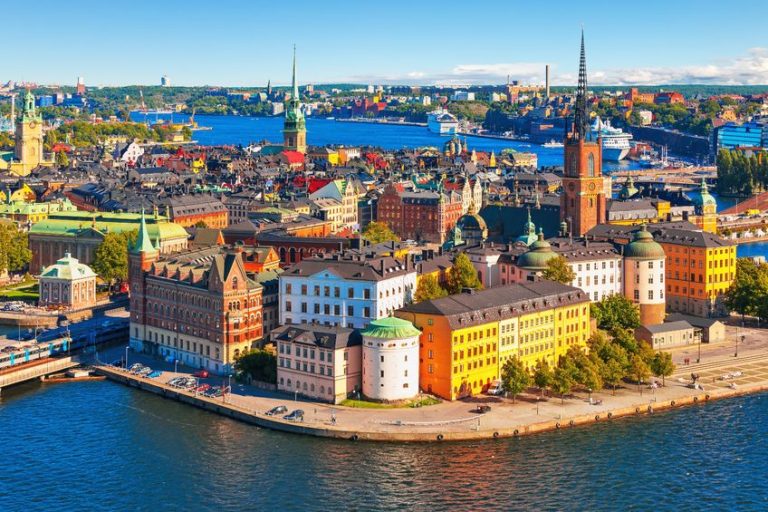
Feature image (on top): Scenic summer aerial panorama of the Old Town (Gamla stan)
Denmark has abundant of fairytale castles, from Shakespearean stronghold and regal rural retreats to abandoned island fortresses. Here we present some of the best of Denmark’s fairytale castles.
This small Scandinavian kingdom showcases an impressive collection of palaces, fortresses, magnificent water castles and countryside regal retreats.
Let’s begin our journey with the “Hamlet” castle Kronborg.
Kronborg Castle. Photo: Wikipedia Commons
Kronborg Castle, in the city of Helsingør, has been immortalized by Shakespeare as the setting for much of his epic royal revenge tragedy, and he named it Elsinore. No wonder, Kronborg Castle is famous for being the Hamlet Castle.
Constructed in the 15th century as a vital border point for the ships traveling via the sound to and from the Baltic Sea, it was once one of the most prominent and powerful castles in Europe.
The spectacular UNESCO-protected fortress stands over the narrow Øresund sound, just four kilometers across the water from Sweden. It’s filled with mysterious pathways, halls and dungeons.
Egeskov castle. Photo: Wikipedia Commons
The magnificent Egeskov Castle is one of the most famous castles in Europe and conveniently and romantically located in the middle of the country’s southern Funen landscape. The castle has around 2,000 window panes and the ground floor, named the Hunting Room, displays some of the oldest trophies won in the game hunting. The first floor consists of a banquet hall and five other rooms with different names, all worth visiting.
The classic car exhibition featuring over 50 vehicles of different eras is a must for classic car enthustiasts.
Titania’s Palace is an impressive 3,000-piece dollhouse hand-built by the Irish company James Hicks & Son at the beginning of the 20th century.
Egeskov has genuine fairytale looks and the many hedge mazes may let you get completely lost on the castle’s premises. On its picturesque ground you might even come across remnants of the old oak forest that helped create the foundations of the best maintained and beautiful water castles in Europe that isn’t in ruins.
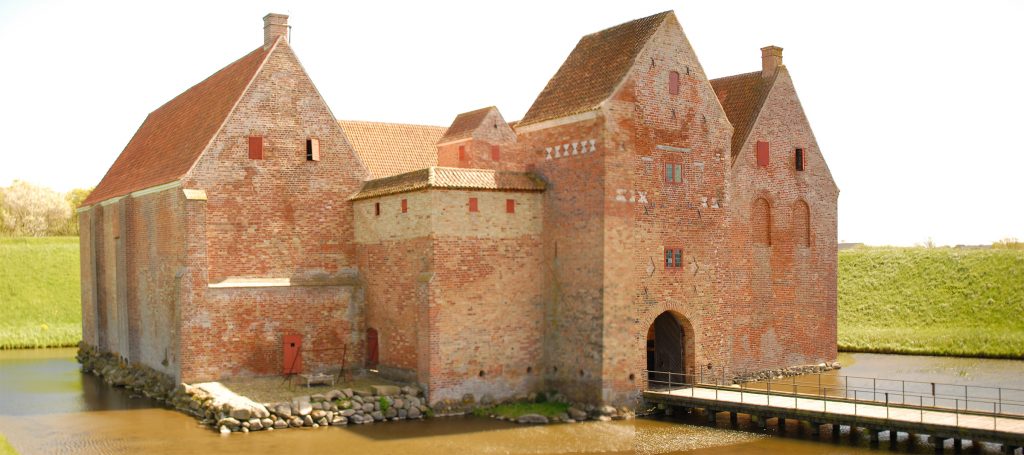
Spøttrup castle. Photo: Wikipedia Commons
Sitting a mere 30 minutes from Skive in Northern Jutland, Spøttrup Castle is slightly off the average visitor’s radar. The castle is from the beginning of the 16th century and looks like a real robber baron’s castle with its moat, ramparts and high walls with embrasures.
The Castle Museum offers insight into the life of the people who lived, fought and worked at the castle through the ages.
Fredriksborg castle. Photo: Wikipedia Commons
Frederiksborg Castle situated in the Hillerød is a Renaissance palace on the water surrounded by lovely Baroque gardens. Built by the Danish king Christian IV, It was the first Danish castle to be built inland and was always destined for recreational rather than defense purposes, which explains the fairytale looks.
Numerous towers, fountains, statues, turrets and spires enhance its charming allure.
The rooms are very beautifully decorated with paintings, furniture, portraits, and other decorative art invite the visitors to go through the Danish history and culture from the late middle ages to the present. This is a stunning example of the historic opulence of royal families in Denmark. Don’t forget to head inside the Valdemar Room and the palace’s very own chapel.
Voergaard castle. Photo: Wikipedia Commons
In the north-western Denmark you’ll find the beautiful historic Voergaard Castle with an art collection worth watching. Its very own moat held back hordes of angry villagers from its spectacular interiors with pictures by Raphael, Rubens and El Greco. The Napoleon’s dinner service collection is also something that will surely blow your mind, and you can enjoy it all without fear of being thrown into the moat!
Vordingborg castle. Photo: Wikipedia Commons
Take a trip to the quaint little town of Vordingborg and explore the vast grounds and ruins of Vordingborg Castle that date back almost a millennia. The castle may cause you to think of the home of Rapunzel.
In the classic hunting landscape of North Zealand, you’ll find the Hermitage, which technically is not a castle but a hunting lodge. Nevertheless, the Hermitage is an indisputable part of the Danish castle heritage. In 2015, UNESCO inscribed the Dyrehave (Deer Park) surrounding the lodge into its World Heritage list of North Zealand. It’s still richly forested.
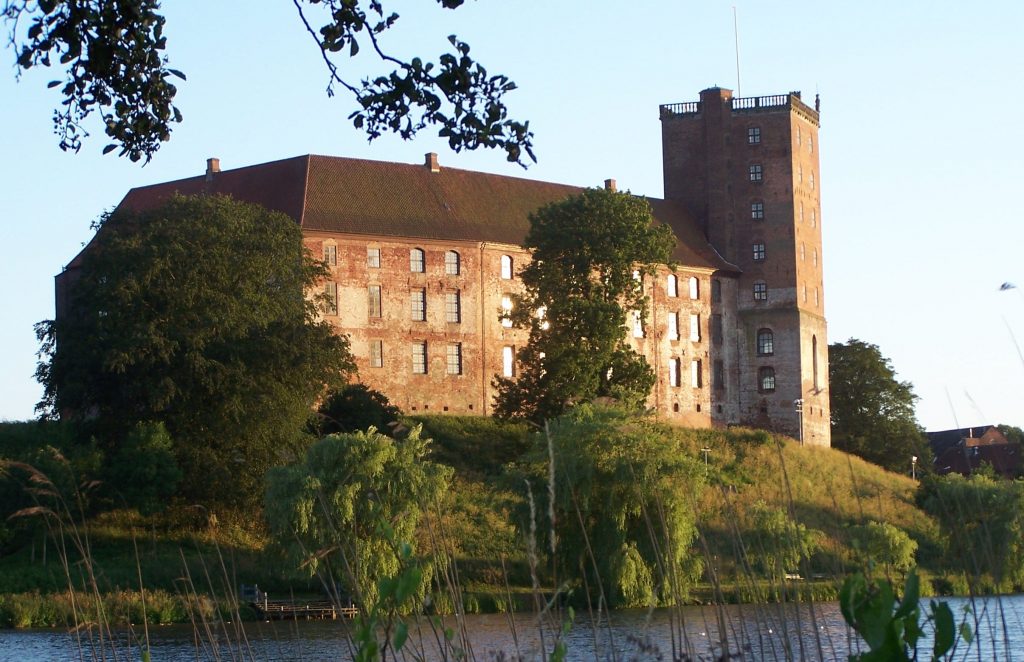
Koldinghus castle. Photo: Wikipedia Commons
Located in Kolding, you’ll find the beautiful Koldinghus Castle with its colorful history where you also can see pieces of jewelry from the 13th century until modern times. The castle is so big that you might get lost if you don’t stick with your guide.
Rosenborg castle. Photo: Visit Copenhagen
The 400 years old beautiful Rosenborg Castle, a perfect example of Renaissance architecture, is sitting in the beating heart of Copenhagen. The castle was built by one of the famous Scandinavian kings, Christian IV. Don’t miss the Long Hall inside where you can discover all about the country’s regal past. The Royal Collections include the Crown Jewels and Regalia, a Coronation Carpet and the Throne Chair of Denmark.
Apart from the splendid exhibits, the walk through the numerous richly decorated halls and pathways of the castle are an architectural feast.
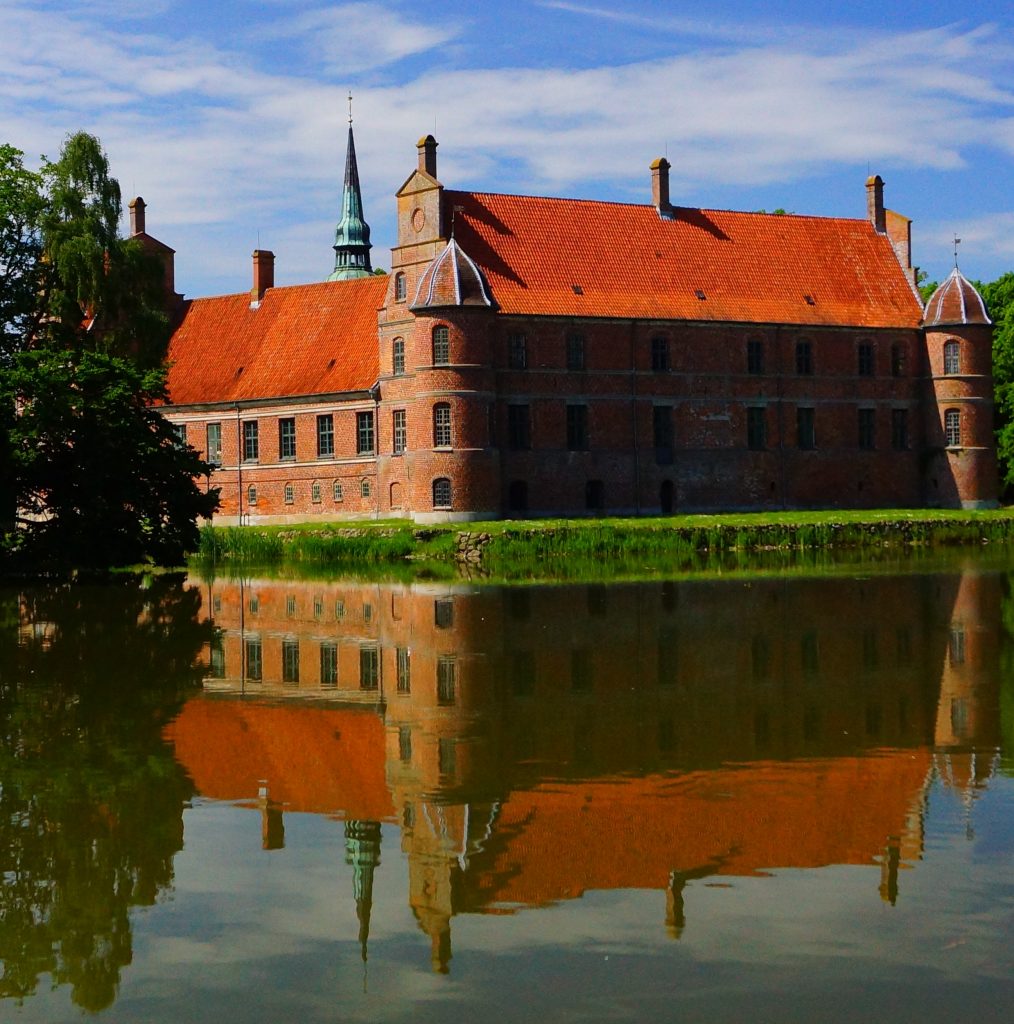
Rosenholm castle. Photo: Wikipedia Commons
The 500 years old Rosenholm Castle is Denmark’s oldest family-owned castle. Much of its architectural inspiration comes from Italy in the 16th Century and is truly one of its kind in Northern Europe.
It’s been said that if London has Buckingham Palace, Copenhagen has Amalienborg Castle. Both England and Denmark have queens and both countries are constitutional monarchies. Amalienborg in Copenhagen, designed by the architect Nicolai Eigtved in the starting of 1750, consists of four identical buildings initially intended to be residences for four famous aristocrats.
The royal guard changes at every two hours and it is a place where you can take glimpses of past duration back (150 years) of the monarchy. The rooms of the king and queen are maintained exactly as if they live in them.
The royal family moved here at the end of the 18th century after a fire that destroyed their old home at Christiansborg Palace.
Christiansborg castle. Photo: Wikipedia Commons
Situated on the central islet of Slotsholmen, Christiansborg Palace is surrounded by canals in the heart of Denmark near Copenhagen. Christiansborg was the place where the queen used to sign laws, hold audiences, hold banquets and receptions. This was the place where old tradition of modern royal families used to meet.
Today, Christiansborg Palace is the only building on Earth that houses all three supreme powers in governing a country; the country’s Parliament, the Prime Minister’s Office and the Supreme Court. Royals also have their corner here, hosting receptions and meetings with the official delegations.
At Christiansborg, you will be able to explore and enjoy the Royal Stables, the Tower with the best (and free) views over Copenhagen, the Palace Chapel and ruins of two former castles underneath.
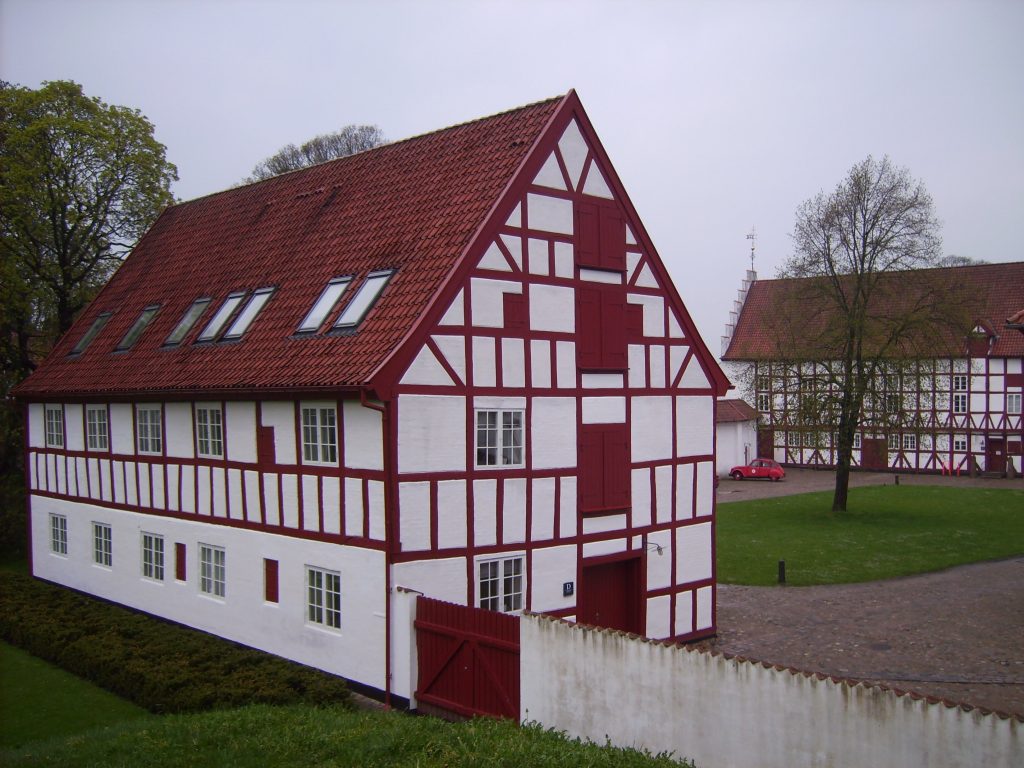
Aalborghus castle. Photo: Wikipedia Commons
With almost 500 years of history, Aalborghus Castle, located in Aalborg near the Limfjord and Tolbod Plads is one of the countries most understated castles. It’s timber frame and charming buildings may look quite different from the likes of Frederiksborg Castle but its significance is just as important.
The castle was built by King Christian III in 1539 and after 16 years, it was finally completed and became the residence of the local governor. It was built as a fortress but it turned out that it was useless as a fortress. Instead it became the main office for the king’s vassal in North Jutland and today, the castle is used by the state administration.
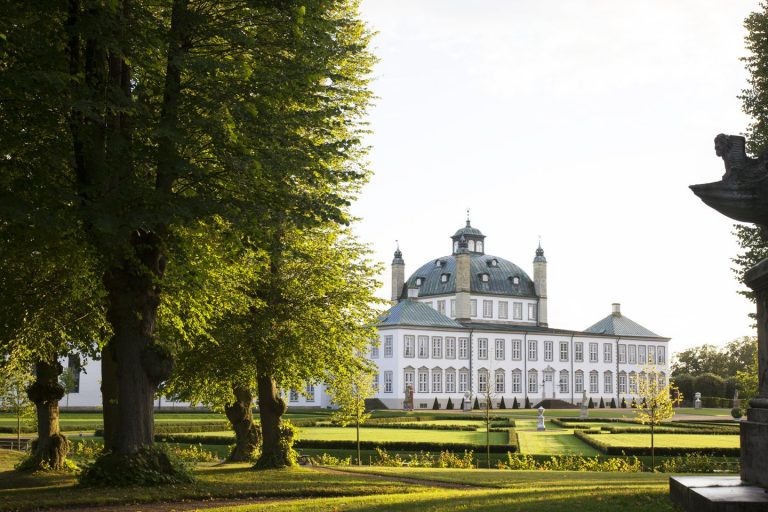
Fredensborg castle. Photo: Visit North Sealand
The elegant Baroque style Fredensborg Castle is perhaps the castle that the Danish royals love the most. It’s often called Denmark’s Versailles. It was named by King Frederik IV and Fredensborg literally means “Castle of Peace” due to the fact that the king was at peace during those times, and that he wished to celebrate the end of the Great Northern War of 1722 that had been raging on their land for long.
Perched on a small islet in Zealand, Dragsholm Castle is one of the oldest buildings in the region. Nowadays you can not only explore but also stay in this wonderful (and haunted) castle.
Hammershus castle, Bornholm. Photo: Wikipedia Commons
Towering over the rocky cliffs of the North tip of Bornholm island lies the epic Hammershus, considered to be the largest medieval fortification in Northern Europe.
Although now in ruins, the walls of this fortress tell countless stories of Baltic crusades, fierce battles and daily life in the Dark Ages.
Nyborg castle. Photo: Wikipedia Commons
Located on the Danish island of Funen, the Nyborg Castle is a beautiful castle and one of Denmark’s oldest royal residences. Its Danehof Hall was the Danish Parliament in the 15th century. In 2009, a museum was built inside the castle which displays the cultural heritage of Denmark. The castle was majorly damaged during the Danish-Swedish war but was later restored and opened for public in the form of Museum.
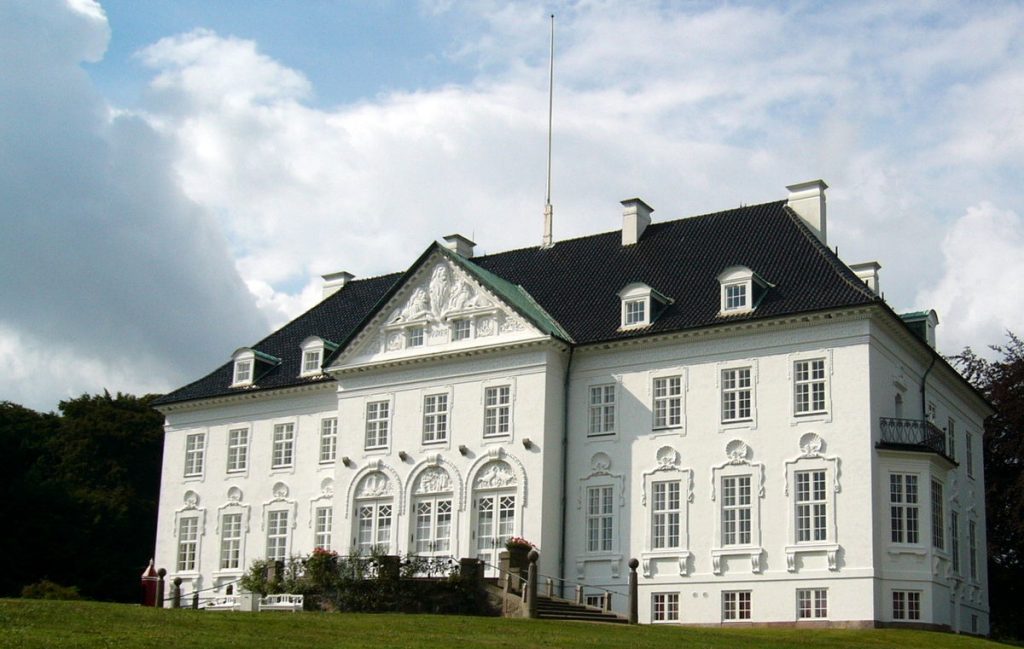
Marselisborg castle. Photo: Wikipedia Commons
Last, but not least, we head for Aarhus to visit the gorgeous Marselisborg Palace. It’s famed for its everyday ritual of the ‘Changing of the Guard” conducted by the Royal Life Guard. The Palace grounds, including the Queen’s rose garden, are open to the public when the Royal family is not in residence.
Marselisborg Palace was given by the people of Denmark as a wedding gift to the Crown Prince Christian (later Christian X) and his consort Princess Alexandrine. They used it as their summer residence. The current palace was rebuilt in 1899 – 1902 by Architect Hack Kampmann.
No wonder that Denmark’s fairytale castles attract millions of tourists from across the globe every year. Each castle has a charm of its own and represents the ancient history, tradition and culture of this great country.
You might be wondering why it would even matter to watch Norwegian startups. When you think of countries famous for their startups, Norway isn’t known to feature too prominently. And yet this country is steadily gaining prominence in the startup space, especially the tech startup sector.
Part of the reason is that Norway has a strong spirit of Entrepreneurship. Norway’s economy grew as a result of the discovery of oil deposits in the North Sea. However, the country soon decided to migrate from a resource-based economy to an entrepreneurship based one, with a special emphasis on technology and services. It has a stable government, a high standard of living, a good education system, highly skilled labor, a tech savvy population, great infrastructure and ease of doing business, lots of private incubators, and a low unemployment rate. It also certainly helps that the country has the 2nd highest GDP per capita in the world.
This is the perfect environment in which startups can grow that go on to change the world. And many are cropping up indeed, and we do expect them to go on to change the world. Do you want to learn about some of them? Here are the top 7!
Kahoot at school
Kahoot Kahoot was founded in 2011 and seeks to transform education technology to make it more user friendly, intuitive, and fun! It basically has an approach to education that gamifies it. The unique selling point is the huge existing catalog of user generated content, not to mention the strong network effects (it’s on track to 100 million users, if it hasn’t already got there).
They’re making a particularly good effort in an industry that is experiencing rapid innovation. These days, not only can you learn online, but you can even get homework help online. You can learn more if you hop over to this website, where you can find talented experts to help you with your school work.
Spacemaker AI
Spacemaker AI In the spirit of employing AI to solve the world’s problems and make life easier, Spacemaker AI is using AI to make architecture faster and more innovative. Their AI engine synthesizes expertise from many different fields to optimize the building development process. The main focus is to make the building development process faster, more efficient, and more sustainable, and the company is already gaining a lot of traction, having partnered with some of the biggest developers in Norther Europe.
Otovo is all about improving the accessibility of solar power
Otovo Otovo is all about improving the accessibility of solar power. The company aims to be the largest solar retailer in Europe. Its unique selling point is to make the process of purchasing and installing solar panels easier, and employing analytics to reduce energy consumption and costs for their customers.
Unlock founder Kris Riise
Unloc Unloc is a unique company that is seeking to digitize house keys. They’re leveraging the power and growth of the Internet of Things to make it possible to remotely grant access to spaces to the right people, such a member of the household, a coworker, a cleaner, etc. With this new technology, it’s possible to send keys via text, taking out the hassle of having to share physical keys and risking losing them.
Boost AI erntrepreneur Lars Ropeid Selsås
Boost.ai Boost is on track to becoming the first Norwegian unicorn, with a possible billion-dollar valuation in the offing. The company focuses on building AI powered virtual assistants, A.K.A chatbots, and has quickly become a leader in the space. Since its inception in 2016, it has grown to over 100 people and continues to build partnerships with industry leaders around the world. At the time of this writing, it has already automated over half of the chat traffic going to DNB, Norway’s largest bank.
Empower CEO Wilhelm Myrer
Empower Empower is looking to leverage the power of blockchain to help solve the plastic waste problem the world currently faces. Over $10 billion worth of plastic waste finds its way into the natural environment on a yearly basis. Employer is setting up recycling stations where people can deliver plastic waste and exchange it for cryptocurrency tokens, which they can later redeem as cash.
BluEye Robotics
BlueEye Robotics BlueEye Robotics builds drones that help us take a look underneath the waves. Their drones enable underwater exploration and make it more accessible to people, helping them learn more about our final frontier on the planet: the oceans. In fact, they have an ethical imperative to building their drones, as they believe that learning more about the oceans will help more people understand how to preserve them and make them more sustainable.
7 Norwegian Startups to Watch out for in 2020 – Conclusion As you can see, the future promises to be exciting with the things these 7 startups are trying out. We’ve only mentioned 7, but they are only a slice of the many other startups in Norway doing great things to make the world a better place. We all can’t wait for them to succeed in their endeavors.
7 Norwegian Startups to Watch out for in 2020 is written for Daily Scandinavian by Sandra Larson. Sandra is a renowned freelance writer and journalist. She emphasizes the importance of good content and tries to improve people’s perception of the profession of a writer by explaining its complexity.
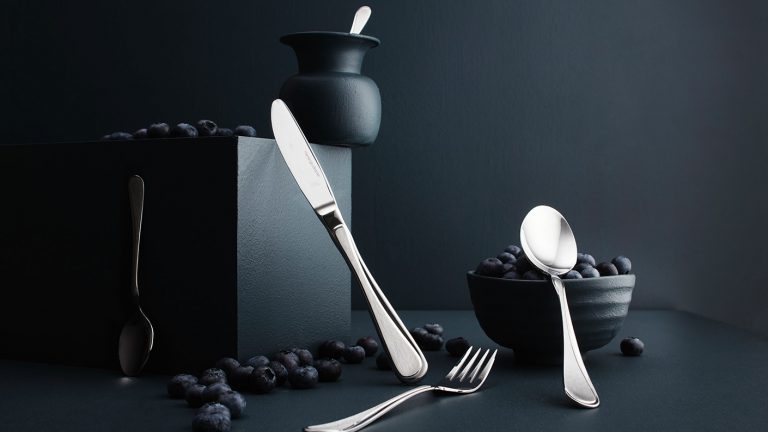
In 2012, the prestigious Museum of Modern Art (MoMa) in New York began selling Hardanger cookie cutlery under the label MOMA exclusive. This has led to increased interest in the Hardanger cutlery range. Read the unknown story of Norwegian Hardanger flatware.
Cutlery is something that we all use every day. No other factory has taken this fact more seriously than Hardanger Bestikk in Norway, which today offers 27 different designs, since not every type of mass-produced cutlery suits every group of users.
Tuva fits everyone
However, Per Finne Industridesign studied thoroughly how people use knives, forks and spoons and incorporated this knowledge into the whole design process to end up with a result which suits anyone who sits down to eat. Thanks to the Tuva cutlery’s design, there is no need to have special cutlery available for particular groups, either for children or people with a restricted use of their hands.
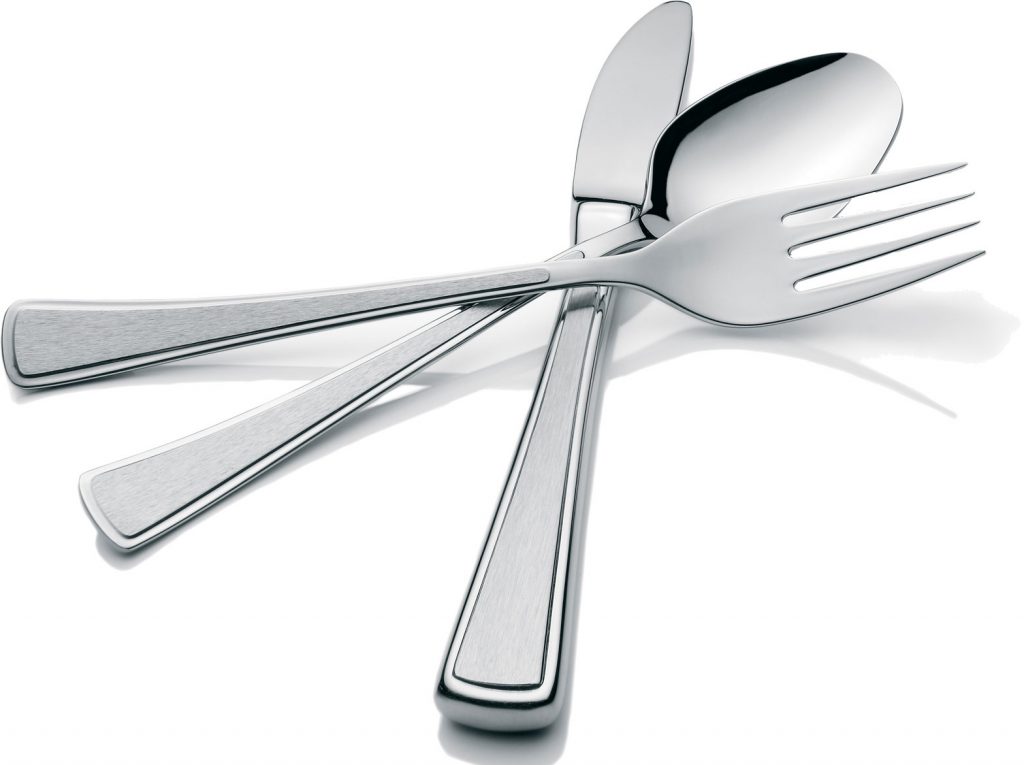
Representatives from MoMa discovered the Hardanger Tuva flatware, created as an additional product alongside the usual cutlery, during an exhibition in Frankfurt in 2011. However, the oldest cutlery series from Hardanger Bestikk is Ramona, Silje and Carina, launched in 1982 and designed by Odd Leikvoll, the founder of the Norwegian factory. The timeless design with brushed surfaces and straight edges has struck the nerve of the Scandinavian design, with no geographical limitations.
Hollow handles
Since 2009, Hardanger Bestikk has been using Tuva cutlery (MoMa Exclusive), designed with hollow handles, to show that it is possible to create products which are considered to look good on the table and are accessible to a larger group of users. The cutlery is lighter, but also easy and substantial enough to grip so that it can be used by any group of users, from children to the elderly.
Hardanger Bestikk, located in Kinsarvik on the Hardanger Fjord, is today Scandinavia’s largest producer of flatware and its products are based on the finest Norwegian handicraft traditions and a strong focus on quality.
Thanks to the Tuva cutlery’s design, there is no need to have special cutlery available for particular groups
Hardanger Cutlery since 1982
Since 1982, Hardanger Bestikk has produced over 42 million pieces of cutlery. To put it into perspective, we can say that every citizen of Canada, Poland or Iraq can have one cutlery piece each.
In 2009, Hardanger Bestikk and Per Finne received Award for Design Excellence.
The Unknown Story of Norwegian Hardanger Flatware, written by Tor Kjolberg
Hundreds of species of wild birds migrate every year to northern Scandinavia from Africa and southern Europe. Every year in March, you can watch migrating birds far overhead and wonder how they find their way, and how they get the strength to travel thousands of kilometers twice every year. Read more about Scandinavian wildfowl.
The fascination with this is beautifully described in Selma Lagerlöf’s famous story The Wonderful Adventures of Nils Holgerson, which recounts a boy’s journey with the wild goose to the very northern part of Norrland in Sweden.
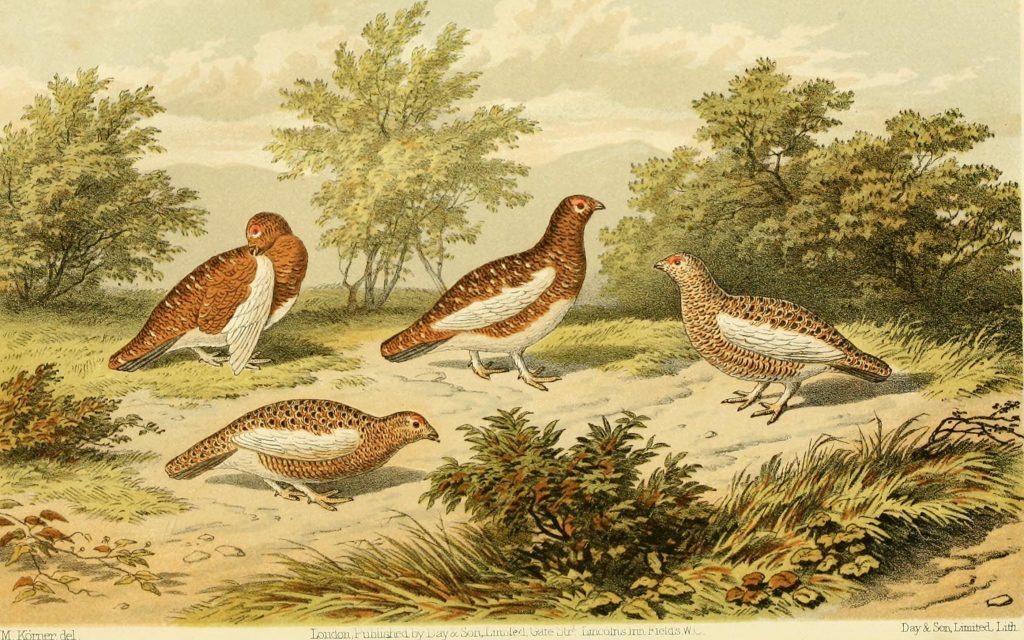
Many species are shot and eaten, mostly ducks and geese, but some are protected and can be eaten only locally. These are numerous different ducks and geese, just marketed as wild duck, and if you want a specific duck you must know the hunter. Eider and coot are plentiful available. In the mountains and on the moors, there are grouse, black grouse and ptarmigans, and in the south mostly pheasants; the last, which were originally imported for hunting from Asia, are bred intensively to offer shooting possibilities for trigger-happy city dwellers. Partridges are becoming rare, and so are the delicious snipe.
Some sea birds, such as puffins, are hunted locally when the bird population permits, but are not sold commercially.
Eider ducks
The common eider duck is a beautiful sight, the male having strikingly beautiful black and white plumage. As with all ducks, the female has mottled brown plumage so it can remain undetected on the nest.
The eider is the source of luxurious eiderdown, collected in the wild after the ducklings have left the nest, it’s an exciting thing to find, and one nest is enough to stuff a pillow. The nests, filled with regurgitated dish and bird shit, look unappetizing but are in fact easy to clean. The tiny down feathers, which the female eider plucks from her breast and stick together even in the strongest gale, so you can bash the whole nest against the rocks, and every piece of dirt will blow away, leaving only unbelievably soft and warm down.
The game birds and wildfowl of Sweden and Norway. Image: Wikipedia Commons
Buying and storing With wildfowl you must be happy with what you can get. Young birds have bendable beaks and tender feet – a young duck’s webbed feet can easily be torn with your fingers, which is impossible with old bird’s leathery feet. It would take up far too much space here to give you advise on hanging, plucking and cleaning wildfowl. Your hunter friend or butcher can tell you how.
Culinary uses Wildfowl are generally lean birds and can be cooked like chicken, domesticated duck or goose, though the leaner flesh must be compensated for in terms of fat, and cooked in a sauce to prevent it from drying out. Many wild birds have a huge breast and almost no other meat, and this can be cut off and grilled or fried as you would a duck breast.
All wildfowl are prepared in much the same manner throughout Scandinavia. All dish- and molluse-eating birds need a 24-hour soak in buttermilk to take away any fishy taste; after this they can be prepared like other wildfowl. The fishy taste is in the bone and tissue and seldom in the meat itself. The older the bird is, the fishier it becomes. Wildfowl that do not eat fish will not need the soak.
If you want a specific duck you must know the hunter
When dealing with coots, there is not much meat apart from the breast, so you can simply cut off the breast meat and fry it like a steak, or braise it as you would other wildfowl, except for a shorter time as there is no bone.
Pheasants must be cut up as they are very lean, and the breast will need only a short time to cook, whereas the thighs will need a long time to be tender. The thighs have numerous thin, needle-like bones, so take care when eating them, or simply take them out with tweezers before serving.
Ducks do not need to be cut up, as the thighs and breasts both become tender in a very short while.
In these coronavirus times, people all over the world are sitting at home in their living room – perhaps even in an iconic Norwegian Siesta chair made by the Norwegian designer and architect Ingmar Relling (1920-2002).Read more about the iconic Norwegian Siesta chair.
Ingmar Relling is known as one of Norway’s most internationally recognized designers who created a series of functional furniture designs during his career. He took apprenticeship at a tender age of 16 at Vestlandske Møbelfabrik. His brother Adolf Relling, who was also a trained furniture designer, insisted that he enrolled at the Norwegian Academy of Craft and Art Industry in Oslo.
In 1965, Ingmar and his brother Knut designed the Siesta chair
Before starting his own studio in his home municipality Sykkylven in 1950, he started his career at Rastad & Relling design studio (1947).
420 Chair and the Nordic Chair
In the 1950s, Relling produced his 420 Chair for Vestlandske Møbelfabrik and in 1954 he desined his Nordic Chair, composed of two separate parts, a seat and a back. The chair could be folded and stored while not in use. Simplicity, minimalism, elegance and uncompromising quality are key concepts in all of Relling’s designs.
The Iconic Norwegian Siesta Chair
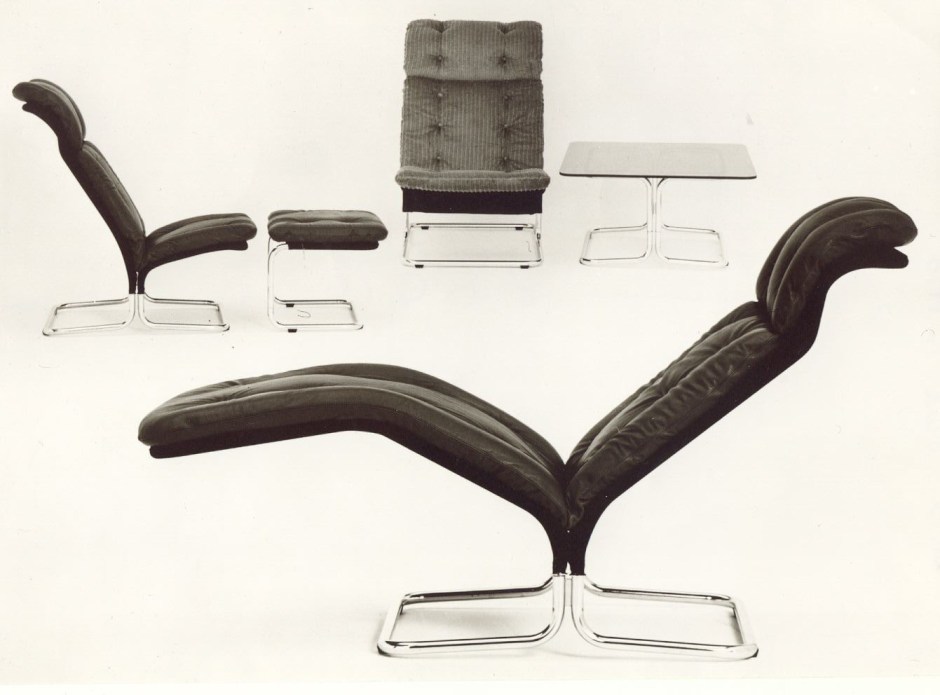
Nearly a decade later, in 1965, Ingmar and his brother Knut designed the Siesta chair. The Siesta has been produced in over 800,000 units and is still in production. United States President Jimmy Carter purchased sixteen Siesta Chairs to furnish the White House during his term. Over the years, the simple construction and design has remained the same, but the materiality, the thickness of the cushion and general detailing have changed with the trends.
The Siesta Chair can be found in permanent collections around the world, like the Victoria & Albert Museum in London, the National Gallery of Victoria in Melbourne, Die Neue Sammlung in Munich, the Cooper-Hewitt in New York, and the National Museum Oslo.
In 1992, the Siesta was awarded the Classic Award for Design Excellence by the Norwegian Design Council.
The Siesta has been produced in over 800,000 units
A legendary contemporary furniture designer Today, Ingmar is a legend in the world of contemporary furniture designers and is known for his designs characterized by minimalism, simplicity, elegance, and, more importantly, high quality.
Another gem by Ingmar Relling is the Tema chair from 1973 that borrowed a big leaf from the Siesta and was engineered from flat steel and a thick leather skin seat.
The furniture museum The furniture museum, Møbelmuseet, formerly Norsk Møbelfaglig Senter (NMFS) in Sykkylven is a museum and a documentation center for the furniture industry of Norway. Among others, the museum contains a permanent exhibition showing the development of the furniture industry, and now celebrates Ingmar Relling’s 100th anniversary.
The Iconic Norwegian Siesta Chair, written by Tor Kjolberg
We can’t imagine our lives without social media. And naturally, we want our social media accounts to look better than those of our friends. And that’s not a bad thing! Striving to take perfect pictures for Instagram, we develop our creativity, photographing, editing, and other skills. Read about the 11 Most Instagrammable Places in Stockholm.
Today, we will talk about the best places to take photos in Stockholm. Look through our top 11 list and find a perfect spot for your next photoshoot.
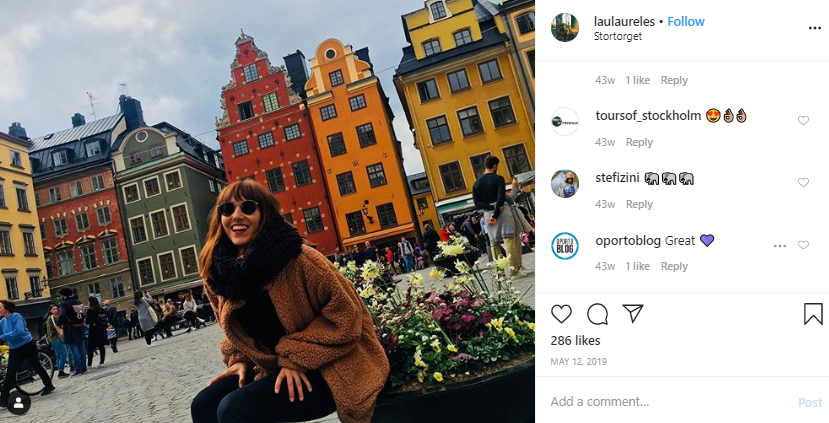
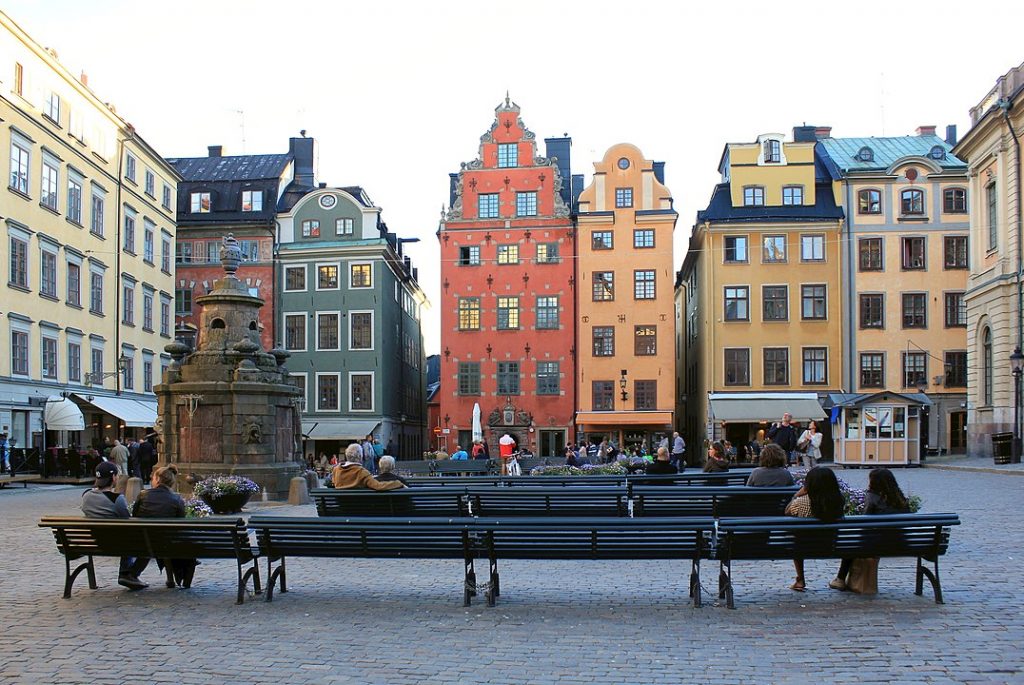
The most Instagrammable place in Stockholm is Stortorget
Stortorget
The most Instagrammable place in Stockholm is Stortorget, a public square in the old town. The square is famous for its colorful buildings that, according to historical records, were built no later than 1479.
Stortorget is a perfect place for walks and photoshoots. Whether you’re visiting Stockholm for the first time or have been to the city many times, we highly suggest you come to the square in the morning and take a few vibrant pictures for Instagram.
Stockholms stadsbibliotek is the biggest public city library created by famous Swedish architect Gunnar Asplund
Stockholms stadsbibliotek Stockholms stadsbibliotek is the biggest public city library created by famous Swedish architect Gunnar Asplund. Stadsbibliotek has been listed as one of the world’s most beautiful libraries for its stunning panorama of books spanning the cylindrical walls.
Today, you can come to the library not only to read a book but also to take pictures for Instagram. This place is open for the public, so you can visit it even if you don’t have the library card.
Riddarholmen is a small islet in central Stockholm
The Riddarholmen Church If you like to take photos next to historical buildings, here is another great Instagrammable spot for you.
Riddarholmen is a small islet in central Stockholm. It’s famous for its church used as Sweden’s royal burial church for a few centuries.
The church and islet itself look really beautiful and authentic in photos. So if you run a travel blog on Instagram, this place is a must-visit for you.
Grand hotel has an exclusive interior design that hasn’t lost its classic period charm
Grand Hôtel Stockholm Are you looking for a fancy Instagrammable place? Visit Grand Hôtel Stockholm. The hotel has an exclusive interior design that hasn’t lost its classic period charm.
“Do you want to convince your Instagram followers that you live a luxury life? Stay at Grand Hôtel Stockholm and take a few pictures in the main hall. Golden walls and red carpet always look fabulous in photos, so it will be easy for you to amaze your followers,” says Amanda Benson, fashion blogger and writer for Studyker.
Jumbo Stay Hotel Would you like to stay at one of the most Instagrammable hotels in Scandinavia? Jumbo Stay Hotel is the right choice for you.
Jumbo Stay Hotel is set in not in a building, but a decommissioned Boeing 747 jumbo jet. It has 33 standard rooms and a more expensive and luxurious “cockpit suite” located on the upper deck. Photos taken in these rooms go viral online, so the chances you have seen them on Instagram many times.
Jumbo Stay Hotel is located very close to Arlanda Airport. So if you have an early flight the next day, it will be comfortable for you to accommodate here.
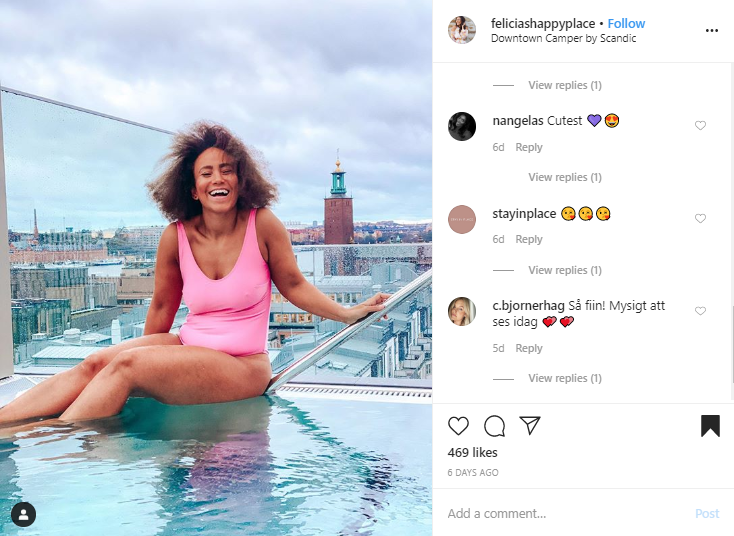
Downtown Camper by Scandic Do you want to make your Instagram followers jealous? Take a picture at a rooftop pool at Downtown Camper by Scandic. There are not that many rooftop pools in Scandinavia, so this place is rather unique.
If you don’t want to swim in the pool, get to the roof to shoot the Stockholm city skyline. From this spot, you will get awesome pictures.
The Stockholm metro is known as one of the most beautiful subways in the world
Odenplan Pendeltågsstation The Stockholm metro is known as one of the most beautiful subways in the world and for a good reason. Most of the metro stations look like masterpieces of modern art and architecture.
Odenplan Pendeltågsstation is one of those stations that look beautiful not only in life but also in photos. Both tourists and locals visit this place to take unordinary pictures for social media. Thanks to neon lights, this station is a suitable spot for photo shootings.
Snösätra Graffiti Wall of Fame is another Instagrammable place in Stockholm
Snösätra Graffiti Wall of Fame Snösätra Graffiti Wall of Fame is another Instagrammable place in Stockholm. Each painted wall can be used as a background for portrait photos. There are dozens of graffiti over here, so you can take a bunch of great photos in one visit.
Gavin Pereira, a professional photographer and content creator for Subjecto and WriteScout, shares tips on how to photograph graffiti: “Come closer to the wall, but make sure that your body doesn’t overlap the essential elements of the graffiti. Then ask photographer (your friend or random passer) to stand directly in front of you and take a few shots from your eye level.”
If you are fond of maritime museums, go visit the Vasa Museum
The Vasa Museum If you are fond of maritime museums, go visit the Vasa Museum. There is a vasa, Swedish warship built between 1626 and 1628, in the museum, and you can take photos in front of it. The good news is that you are 18 years old or younger you can enter the museum for free.
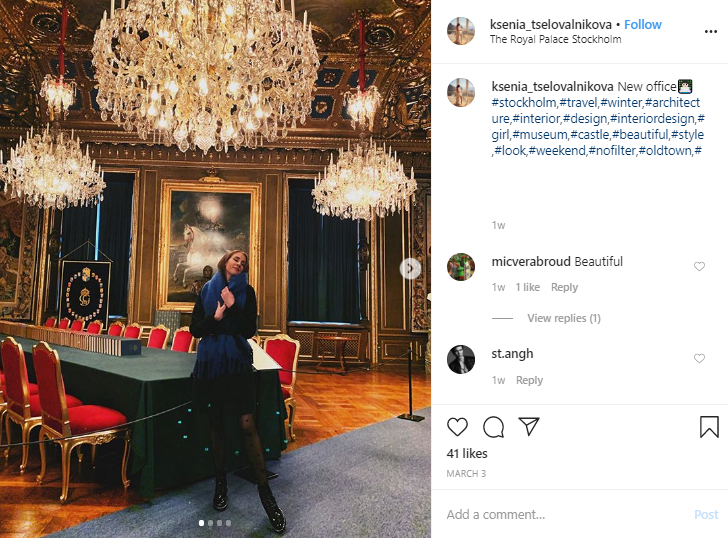
In the Royal Palace of Stockholm, you can take pictures in chic rooms
The Royal Palace And here is another Instagrammable spot for those who love museums, baroque style, and luxury interior designs. In the Royal Palace of Stockholm, you can take pictures in chic rooms decorated with red velvet wallpapers, golden ceilings, and enormous crystal chandeliers.
Just keep in mind that only small bags are permitted at visitor attractions. You will not be able to visit the palace if you bring a bag or case with wheels.
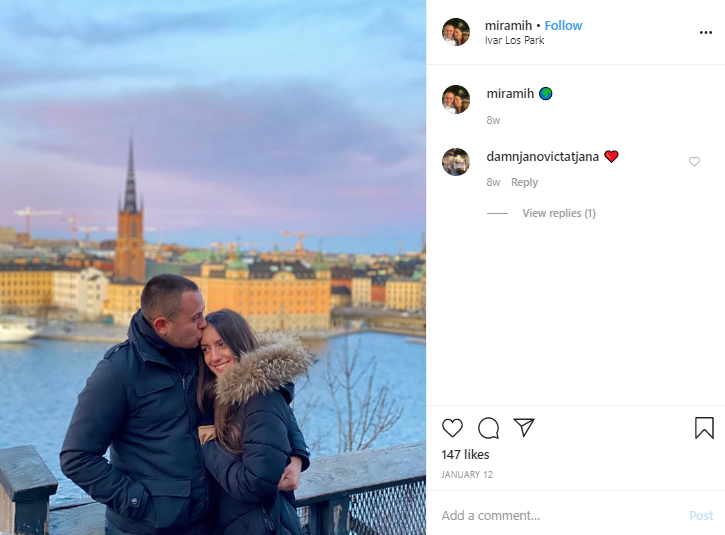
Monteliusvägen is a good place for a family photoshoot in Stockholm
Monteliusvägen
Monteliusvägen is a good place for a family photoshoot in Stockholm. If you have kids, you can take photos of them exploring cute old-timey houses and wooden farm animals in the playground.
Monteliusvägen also provides a great panoramic view of the city. So if you want to photograph a city skyline, this park is a must-visit for you.
Editor’s note: Although Instagram refers to this place as Ivar Los Park, one of our readers, Hanna Karlsson from Sweden, has brought to our notice that the place is in fact Monteliusvägen, located on Skinnarsberget. Thank you, Hanna!
The 11 Most Instagrammable Places in Stockholm – Wrapping up
Stockholm is a magnificent city with a rich history. So wherever you go, you will see great Instagrammable places. Whether you choose to walk in the old city or to visit a museum, you will find great spots to take stunning pictures.
Marques Coleman
The 11 Most Instagrammable Places in Stockholm , is written for Daily Scandinavian by Marques Coleman. Marques works as a writer and content creator for EssayAssistant and TopEssayWriting. He is passionate about traveling, photography, and social media marketing.
You are probably reading a lot of news related to China right now. We are moving into an uncertain, near future that is scary for many. I am now one of many who practices home office, and I have more time on my hands than what I would have otherwise, also generally fewer distractions (if one looks away from the bigger picture being painted in the global media) due to distanced socialization. Read the fascinating stories from a young Norwegian’s stay in China.
Recently, I received some tips from a friend in Shanghai, who just finished two months of home quarantine. He spent this time on self-reflection, reading books, and learned how to cook better. During these times, it might be wise to look backwards and forwards, to learn from yourself, about yourself, about others and about the larger world.
Sunshine on Mt. Taishan
Personally, I now have time to reflect about the past and the future, but especially I have been thinking about my past and the many experiences I’ve had and I am incredibly grateful for them. There are many to share, but I would like to start with some stories from China, long before the Corona chaos started.
Sharing all of my experiences and stories from China could fill a book. I will therefore share three stories, not necessarily the three most important or the most exciting stories, but simply the first stories that came to me when I wrote this. I want to tell you about a holy Buddhist mountain, how I met my best friend in China, and a story about myself, a Ukrainian man and a potato.
A Chinese man wanted a picture during my hike up Taishan
Growing up in an adventurous family
My China adventure started at a young age. I grew up in an adventurous family, who frequently took me and my older brother to travel in Norway, Europe and the United States during our childhood whenever our parents had the opportunity. My grandfather was a sailor, and on my mom’s side of the family several family members worked with building railroads. In other words, they lived a vagabond lifestyle on the road or at sea. That is why I have been told that my inner traveler is “in my blood”.
When I first wanted to leave the nest on my own initiative, I went on an exchange during high school as soon as I had the opportunity to. I ended up in New Zealand, where I stayed with an indigenous Maori family. This was an exciting experience in itself, but perhaps most importantly – it made me long for new experiences. I thought as soon as I get an opportunity to do something like this again, I will grab it.
My 4th day in China, on my way up Mt. Taishan. On the gate it says “门天中” – meaning “In the middle of heaven’s gate”
I was pretty tired of school by the end of high school. The plan was to take a year off, work for 6 months, earn some money, and then travel to Asia. I wanted to experience something new and foreign, and was inspired by ancient the Chinese philosophy, Taoism, learning to live in harmony with your surroundings.
Starting a bachelor’s program in Chinese
In my favor, the University of Bergen started a bachelor’s program in Chinese the same year I graduated from high school. My plan suddenly changed a bit: “What if I apply for the bachelor’s program in Chinese language and culture, so I can go on an exchange through university?” My train of thought was, yes, I was tired of school, but Mandarin, was something completely new. Why not give it a try?
I entered the undergraduate program and was quickly intrigued by the Chinese written language. A completely different structure, the use of symbolism to express oneself, and a different way to think and see the world. This added to my China curiosity, so as soon as I could, I applied for another exchange year abroad. This time not staying with a host family, but by myself.
Arriving in Shanghai
On August 22, 2014, I left for Shanghai with butterflies in my stomach. A new life as a 19- year old, alone, in a city with 25 million people in a completely foreign culture. With my very limited language skills, I managed to explain to the taxi driver at the airport where I was going. The first address we arrived at was wrong (thanks to my accent), but we found my hotel on the second try around. I will never forget the hour-long drive into the city on a freeway with 6 lanes in each direction. High-rise on high-rise on high-rise under construction, until we ducked down to the street level entering a myriad of life.
To have some time to explore Shanghai and its surroundings, I went to Shanghai two weeks prior to the start of my studies. I did not research much before getting there, so after I landed in China, I started to look for nearby attractions. My eyes fell on a sacred Buddhist mountain a few hours north of Shanghai, the Taishan mountain in Shandong Province. Partly due to my fascination with Taoism, partly due to the mountaineer in me, I decided after two days in China to go climb this mountain.
Language barriers
One of the first things that struck me in Shandong was that I was suddenly the only foreigner. There were no longer English-speakers around or English menus. At the hotel I paid 30 bucks for an overnight stay, to later realize that they made a bargain. There was nothing wrong with the hotel, but I had not yet learned the art of bargaining when they showed me the price on a calculator. As a gullible Norwegian, I accepted the price.
When I went out for dinner, I blindly pointed out on a menu at a local restaurant and ended up with a dry salad, not exactly ideal before going on a hike. Later, I realized the waiter meant, “are you sure it is sufficient,” while I thought they would take advantage of me as the hotel did.
Immortal Bridge, Mountain Taishan
On the way up the mountain, I was stared at up and down, not in a nasty way, but out of sheer curiosity. Then it helped that I knew a little Chinese – enough to say my name, where I came from and what I was doing. I was met with a fascination just as great as I had about the culture I was indulged in; all of a sudden, parents wanted to take pictures of me with their kids, I got thumbs up and wishes for good luck for my future.
A night outdoors on top of the mountain
The plan was to spend a night at the top of the mountain to watch the sunrise, a Buddhist tradition. At the top, I rented a hotel room in a Chinese mountain lodge. After checking in, I went out to explore the majestic mountain top. As I wandered around, I met a young Chinese man, Zhao, who also carried a large backpack and a sleeping bag. I knew a little Chinese, he knew a little English. It was clear that he was happy to befriend a Westerner, turned out I was the first he had talked to personally.
Zhao planned to spend the night outdoors, watching the stars and the sunrise. It didn’t take long to persuade me, even though I didn’t have a sleeping bag. With the help of Zhao, I rented my room to another Chinese couple who needed accommodation. Then we decided to spend the money I regained from the hotel room on a good dinner. Finally, I could share a table with a Chinese friend, before I knew it, we had six dishes on the table, among other things, fried scorpion.
Me eating scorpions
It was a cold night, but one I will never forget. It was not only me and Zhao who slept outside. It was not a sea of people, but enough to call it a community, a community that was equally excited to watch the stars, and the beautiful sunrise.
Socializing in rastaurants About a month later, I had settled down in Shanghai and lived in a collective with two other Norwegian exchange students from the University in Bergen. The night we had signed a lease for our new apartment, we went out to celebrate. After a few beers, it was time for some supper. Late at night in a Turkish restaurant, we sat next to another table with four Asians, and one standing next to it, a little drunk, who tried to make a scene. He scolded the table next to us, who was just trying to enjoy their meal. Finally, he was shown out by the staff. “What was that all about?” we asked the neighboring table. “Just someone who had a little too much to drink and looked for trouble,” they replied. Suddenly we were in a conversation with the neighboring table.
I pulled up my cellphone to show a picture of Bergen when someone at the table said “Hey, I know that sticker” and pointed to a sticker I had on the front of my cellphone. “Ghostly International, one of my favorite record labels,” he said. What a coincidence, it was also one of the record companies I like best! We started talking about music, one of my biggest passions, and quickly realized that we had a lot in common. Chen, nicknamed “C.C”, ran a cafe in a loft in Shanghai, “The Attic”. He gave me his business card, “Check it out!” he said. Well, of course I’ll do that, I thought, a little drunk.
C. C. and his dog Haru
C.C and The Attic
Some days went by, a few weeks went by, I was so distracted by the new school, new friends, a new language, a new city, so C.C. and “The Attic” were somehow forgotten. A few months later, one beautiful spring day, I was on a bar crawl with a friend from Brazil. We walked around the streets of Shanghai and jumped from bar to bar. At one point, we saw something that looked like a party on a roof terrace on the 6th floor in a low high rise, for Chinese standards. It looked lively, we thought, should we check it out?
We walked over to the building, where there was a restaurant on the ground floor, and some other dining places and offices on higher floors. There were no signs for the 6th floor. Let us check it out regardless, we thought. We went into what was known as Shanghai’s smallest elevator, just enough space for three people shoulder to shoulder, and took it up to the 6th floor. A lively gathering of people from all over the world met us on the little roof terrace we had seen from the street. We were not greeted with staring eyes, indicating “who are you and what are you doing here?” rather “welcome up!”
On the other side of the roof terrace was a small door that went into an attic with sloping ceilings. I walked in the door and who was sitting in the corner serving coffee and drinks, none other than C.C.! Instantly I went over to him, “So you finally came through huh!” he said to me. “Yes, I only wish I had come sooner!” I answered. In the Attic there were white painted walls, homemade furniture, art objects, vinyls, used clothes, a sofa corner and a small bar corner. I immediately felt a form of belonging. A place you could be yourself, meeting exciting, creative people from all over the world.
It wasn’t long before I became a regular at The Attic. C.C., ten years older than me, took me under his wings, and introduced me to a vast network of exciting people, taught me Chinese language and culture, how to DJ and some barista skills. He became a mentor, an older brother, a close friend. C.C. even took my parents on a trip when they visited me in China, while I was busy writing my bachelor thesis. He took me to his hometown and introduced me to his family. We still communicate regularly, 6 years later. I wait for him to have the opportunity to come to visit me here in Norway.
Me with Ms. Lin’s dumplings, while she is being camera shy in the background
A Potato story
Fast forward a few more months. My Norwegian roommates had moved out, and I was living with a young Ukrainian man and a Chinese girl. Me and Artiem, was his name, were going to cook dinner after a workout. The nearest supermarket was a little out of the way, we had to go into a mall and up to the second floor, to get to a giant market called Carrefour (French version of Wallmart).
On our way home, three minutes from the apartment, we discovered that we had forgotten to buy potatoes, an essential ingredient for what we were about to make. We were close to one of our favorite restaurants, where we ate about twice a week. It was run by Chinese Muslims, who served food from the Xinjiang region, located in the north-west of the country. They knew us well since we were regulars. “Should we ask if we can buy some potatoes from them,” we thought.
We walked into the restaurant and asked with broken accents if we could buy some potatoes. “Buy potatoes, from us?” asked the waitresses as they scratched their hair. “Wait a minute,” they told us. Okay, we thought, they will probably ask the boss. Two minutes later, they returned with a bag full of potatoes, and a freshly cooked potato for each of us. What a great service, we thought, then asked how much. “No no no, no payment,” they insisted. After a little back and forth, we took the potatoes and said, “thank you very much, we will come and eat here tomorrow!”
During the three-minute walk home we peeled and ate our freshly cooked potatoes. We passed a retired Chinese couple, who stared at us with big, curious eyes. They wondered what we were eating, whether it was actually boiled potatoes. “Yes,” we replied, “we got them from the restaurant on the corner over there”. Suddenly we were talking to this couple, who lived in a block in front of us, turned out we were neighbors.
Giving private lessons in English
We told them that we were exchange students who were in Shanghai to learn Chinese. They had a grandson who learned English and wondered if we would help him with his English lessons, then they could help us learn Chinese. “Of course!” we answered. The following Sunday, we turned up outside Mr. and Mrs. Lin’s apartment.
When they opened the door, they greeted us with big smiles and it smelled of home cooked food. Mrs. Lin was making 48 dumplings and asked if we would like to help prepare them, after a cup of tea in the living room. In the living room, I got caught up with Mr. Lin, who eagerly told me about his personal war stories. With my limited language skills, I tried as best I could to keep up, but I was struggling, something Mrs. Lin quickly picked up. “End your old stories,” she said, “they don’t understand anything! Come into the kitchen instead and I’ll teach you how to make dumplings. ”
This developed into a long-lasting friendship, we were frequently invited Sunday guests with the Lin couple. We helped the grandson, Wang, with his English homework, which he initially thought was a bit scary, but eventually became less and less scary. In return, we got to practice our Chinese, and often got some amazing good food served too.
Stories of humanity
These are stories of humanity. In times like this, with increasing protectionism and localism, with borders being closed, it is easy to resort to xenophobia. It is important to remember that we are all of the same kind, have the same needs and feelings. The generation of the Lin couple has gone through war, misery, hunger and need. It is a challenge for our generation to undergo restrictions to our freedom for the first time, but it is also important to think of all the good we have that we must not take for granted.
Take care of your mental health, show love to those around you, have a routine, a reason to get up in the morning, and be creative. Use this crisis to train your body and soul, both of which can be done at home. Though you may have to give yourself an extra push in the back to take action, maybe now is the time to slow down, evaluate what truly matters and continue on with open hearts.
Charlie Mandelid
Stories From a Young Norwegian’s Stay in China, is written by Charlie Mandelid for Daily Scandinavian. Charlie is an enthusiastic traveler with a special interest in China. He studied at Fudan University and Jiaotong University and ended his stay in China with an engagement with the Norwegian Foreign Ministry in Guangzhou. With a master’s degree in International Studies and Diplomacy, Charlie enjoys topics like international politics, sustainability, the Arctic and the Sino-Norwegian relationship.
Charlie Mandelid has a wide range of understanding and contacts to help enterprises understand how to successfully work with Chinese businesses. His source of information comes from his direct experience living in China for 3 years and his wide knowledge of commerce and regulations in China.
By the age of 25, Charlie has lived on five different continents, contributing to his global mind and spirit. He is also a musician with a passion for culture, languages, and food.



 The interactive Norwegian Petrolium Museum (Norsk Oljemuseum) provides insight into the exploration and production of oil and gas.





















 7 Norwegian Startups to Watch out for in 2020 is written for Daily Scandinavian by Sandra Larson. Sandra is a renowned freelance writer and journalist. She emphasizes the importance of good content and tries to improve people’s perception of the profession of a writer by explaining its complexity.