
This Is How the New Norwegian Weather Will Be

0

A new book, “This Is How the New Norwegian Weather Will Be,” offers insight into the changes in Norwegian weather and how climate change will affect everyday life in the country.

Since 1980, precipitation in Norway has increased by more than 20 percent. Climate models indicate that by the end of this century, rainfall and snowfall will be 10 to 20 percent higher than now. That is an increase of perhaps 50 percent during this century. More and more of this rain will come as torrential rain.

This Is How the New Norwegian Weather Will Be
In the book, the authors have selected 21 places in Norway.

In July 2024, Bø in Telemark was hit by heavy rain for several days. Several hundred people had to be evacuated from their homes, roads and bridges were destroyed, and fields were flooded.

On July 29, 2021, 78.5 mm of rain fell within one hour from an intense rainstorm over Tjøme. That is as much as the norm for the entire month of July.

On August 16, 2011, the heavens opened up over the municipality of Holtålen in Sør-Trøndelag, and the Gaula River overflowed its banks. Large amounts of water flooded into buildings, destroying much of the infrastructure, the shops, and the brand-new artificial turf pitch that was to be opened that day. There will be many such episodes in the years to come.

What we can expect in the years to come

What the future Norwegian weather will look like and how it will transform the way we live is the theme of a new book that offers thought-provoking insight into what we can expect in the years to come.

This Is How the New Norwegian Weather Will Be
Ole Mathismoen, leading environmental writer and long-time journalist at Aftenposten. Photo: Paal Audestad.

“This is what the new Norwegian weather will be like where you live, go on trips and have holidays” is written by Ole Mathismoen, leading environmental writer and long-time journalist at Aftenposten, together with meteorologist and climate researcher Hans Olav Hygen at the Meteorological Institute. In the new book, the two explain what is happening to our weather and why. In addition, they present regional forecasts for winter, spring, summer, and autumn.

How the weather will change where you live

This Is How the New Norwegian Weather Will Be
Climate researcher Hans Olav Hygen at the Meteorological Institute. Photo: Cappelen Damm.

“We explain why and how different weather phenomena will occur more frequently. Heavier rain, warmer heat waves, and more snow in the mountains. And most importantly, we try to give the reader answers to how the weather will change where you live, where you like to go hiking, and where you have a cabin. There is a lot of uncertainty, but researchers are becoming increasingly sure about the trends,” say Hans Olav Hygen and Ole Mathismoen.

“In the book, we have selected 21 places. Some on the coast, some inland, some in the mountains. If you imagine a large enough circle around these 21 places, the whole of Norway is covered. Together, they represent the new Norwegian weather. The book also gives a taste of trends we are in the midst of, and which are changing Norway. Climate change affects us in countless ways, from the permafrost at Galdhøpiggen thawing to moose struggling with more insect bites and parasites.”

Norway is experiencing more extreme weather

Climate change is affecting the everyday lives of all Norwegians. What were once stable and predictable seasons are being replaced by shorter winters, early springs, stronger storms, wetter rainy periods, and hotter summers. Norway is experiencing more extreme weather, with regional variations already evident.

This Is How the New Norwegian Weather Will Be
Storm clouds. Photo: Uri Bershadskiy/World Meteorological Organization (WMO).

With global warming, for example, Bergen will be wetter than Oslo, while Oslo’s weather will increasingly resemble Bergen’s weather today. Weather patterns are changing. People in Southern Norway will have to get used to weather patterns common in northern France, while those living in Central Norway can expect the weather southerners have had up until now. The extreme rain “Hans” in August 2023 caused record flooding. Rain replaced snow in February, and many are experiencing poorer skiing conditions. A near-record warm July meant many people in Trøndelag could enjoy real summer weather. At the same time, Europe experienced the warmest March ever, accompanied by an almost global heat wave.

This Is How the New Norwegian Weather Will Be
, translated by Tor Kjolberg from a press release by Cappelen Damm.
Feature image (top) © wisconsinacademy.com

15 Things to Remember When a Crisis Hits

What we learned from the COVID-19 pandemic and how it can help us to plan & react to future crisis scenarios, according to the Nordic Council of Ministers. Here are the ministers’ 15 things to remember when a crisis hits.

Following the Pandemic in 2019-2021, a range of studies were conducted in the Nordics to evaluate the crisis’s effects across different fronts. What if some of the lessons learned can serve as guidelines for handling a future crisis? This article collects research across the Nordic region on topics such as coordination among health authorities, green economic recovery efforts, youth involvement, crisis communication, and outreach to minority groups, and presents lessons to keep in mind for future scenarios.

15 Things to Remember When a Crisis HitsHEALTH, PANDEMIC RESPONSE

1   Share situation awareness across national borders

2   Early planning of “after-action reviews” (AARs) helps authorities to adopt a uniform approach across the Nordics during a health crisis

3   Collect & make evaluations available in English to reach a broader audience & encourage peer reviews

4   Large-scale testing and contact tracing are vital components of early pandemic response
*********************************************
Related: Culture is Resilience – Nordics Step Up Preparedness Through Co-Operation

*********************************************

15 Things to Remember When a Crisis Hits
Children and youth must be informed about how their views have been interpreted. Photo: Wikipedia.

YOUTH PARTICIPATION

5   Create structures that enable children to participate meaningfully in decisions that affect their lives

6   Give adults who facilitate children’s participation proper preparation, skills, and support

7   Children and youth must be informed about how their views have been interpreted and what conclusions and/or decisions have been made

SOCIAL INTEGRATION

8    It is essential to devise strategies that are effective for the right groups, at the right time. Use, for example, civil organizations for outreach (trust can be compromised, language skills can be lacking, and digital competencies can vary in migrant populations). One size does not fit all; what works for some older adults may not work for others.

15 Things to Remember When a Crisis HitsCRISIS COMMUNICATION

9   Communicate with authenticity and build on trust. Consider who is the right spokesperson for the topic at hand.

****************************************
Related: The Future Role of Nordic Cooperation
****************************************

ECONOMY & GREEN RECOVERY

10   Plan a “green correction” in advance and develop contingency plans that already identify measures with climate and environmental potential when designing stimulus packages

11  Base necessary restrictions on research-based methods, as it helps reduce polarization and resistance

15 Things to Remember When a Crisis Hits
Today’s challenges in healthcare are considerable. Photo: UiS, Norway.

GENDER PERSPECTIVE ON WELFARE RESILIENCE IN HEALTHCARE

12 The resilience of welfare is crucial, both for good and equal health and for functioning societies in general.

13 Today’s challenges in healthcare are considerable.

14 Challenges are exacerbated in a crisis, raising the question of when a crisis begins.

15 To cope with future crises, the Nordic countries need not only to strengthen the capacity of their systems, but also to address the structural inequalities that make healthcare vulnerable.

“Now, five years after the pandemic, we know almost as little about the benefits and harms of the measures as we did at the beginning of the pandemic. Many people have had and still have opinions about the measures that were introduced, but we don’t have research that clearly states what the positive or negative consequences,” says Atle Fretheim, Director of the Norwegian Institute of Public Health, leading Nordprep.

15 Things to Remember When a Crisis Hits, a press release from the Nordic Council of Ministers.

Feature image (top) © Nordregio.

Exploring Denmark’s Urban Farming Scene From Roof To Table

0

Denmark is moving toward sustainable food production with strong intent, and this shift is growing each year across major towns. Urban growers shape new ideas that reach rooftops, courtyards, and shared spaces. In this article, we are exploring Denmark’s urban farming scene from roof to table.

As a matter of fact, Denmark’s urban farming scene is gaining momentum because residents support innovative methods that improve local access to food. Public demand for hyper-local produce is rising rapidly, and growers are responding with intelligent systems that reduce waste and boost crop quality. Social projects help people join together through practical food initiatives. Tech innovators push progress with controlled environments and efficient tools that improve reliability. With this in mind, Denmark shows how focused action strengthens city harvests and inspires new ways to feed communities.

The Expansion of Rooftop Green Spaces

Rooftop farms rise across Denmark as growers and architects work together to use overlooked space in innovative ways. Projects in Copenhagen, Aarhus, and Odense produce herbs, greens, and mushrooms while improving building performance. Extra soil depth and plant cover increase insulation, strengthen biodiversity, and cut heat gain during warmer months. However, developers now support edible roofs because they see clear value in fresh food and substantial community interest. Building owners team up with growers to design layouts, manage irrigation, and coordinate harvest goals that suit each site. Local teams study wind patterns, shifting seasons, and weight limits to prevent failures. Creative planning still moves progress forward, and each rooftop farm proves how cities can support productive food spaces with steady collaboration.

A woman holding a basket full of vegetables
Rooftop farms rise across Denmark as cities turn unused space into productive growing areas. Photo: rdne/Pexels.

Hydroponics and Vertical Farms Reshaping Cities

Hydroponic growers in Denmark push fresh ideas into city spaces and show how controlled systems improve crop output. Stacked units built by tech teams raise leaf greens, herbs, and specialty plants with consistent quality. They use LED lighting, mineral solutions, and close monitoring to support reliable growth. Chefs value these farms because they gain steady access to clean produce with short delivery routes. Startups design compact units for old factories, warehouses, and retrofitted retail spaces. On the other hand, growers study energy costs to prevent waste and keep operations efficient. They adjust lighting cycles, nutrient levels, and airflow to maintain strong results. Each setup creates a practical model that strengthens local food access and inspires further city innovation.

Community-Driven Gardens Enhancing Social Bonds

Community growers across Denmark shape local gardens through steady involvement that brings neighbors together with a clear purpose. They meet often, share ideas, and build trust through consistent hands-on work. Then again, each garden grows stronger when people take responsibility for daily tasks that support healthy crops and active participation. In contrast, groups explore new methods that meet the needs of changing neighborhoods and welcome growers who bring fresh perspectives.

Activities that strengthen community gardens

  • Planting diverse greens, root crops, herbs, and fruit bushes that support varied diets and encourage year-round engagement
  • Teaching soil-care skills, composting methods, and watering techniques that help newcomers gain confidence faster
  • Hosting workshops that cover seed saving, tool maintenance, and small-space planting strategies
  • Creating harvest plans that guide families through seasonal picking, storage tips, and simple cooking ideas
  • Testing new varieties in rotating plots to measure flavor, resilience, and suitability for different climate conditions
A woman holding a wooden box with vegetables in it
Community gardens build stronger neighborhoods through shared work and steady cooperation. Photo: Zen Chung/Pexels.

Building Stability Through Urban Farming During an International Move

People who relocate to Denmark often look for ways to settle quickly, and urban farming projects create an easy path toward community involvement. Newcomers join rooftop teams, courtyard growers, and neighborhood gardens that welcome fresh perspectives and practical skills. These spaces help families adjust by offering routine, local friendships, and clear roles that build confidence in a new country. Many parents use garden activities to help children feel grounded during the early weeks of change. If you plan on moving your household overseas, you can prepare your family for an international move by discussing expectations, exploring nearby food projects, and choosing communities that value cooperation. Urban farming becomes more than food; it becomes a steady anchor that helps newcomers build meaningful connections in Denmark.

Restaurants Bringing Roof-Grown Produce to the Table

Chefs across Denmark seek crisp, fresh ingredients that arrive within hours, and rooftop growers answer that demand with reliable harvests. Restaurants plan menus around short-distance produce of Denmark’s urban farming scene and highlight flavor as their core focus. In short, this system improves quality because chefs choose items at peak ripeness, with no long-distance transport. Growers respond with custom plant lists that match each kitchen’s goals. They harvest microgreens, herbs, edible flowers, and seasonal crops for a steady supply. Similarly, chefs visit farms to study plant cycles and propose new varieties for upcoming dishes. These tight partnerships cut waste, support local food culture, and build excitement among diners who value transparency. Each meal reflects a direct connection between farmers and chefs, building stronger ties throughout Danish cities.

Policy Support Shaping Denmark’s Urban Farming Scene

Local governments across Denmark shape conditions that help urban farms grow with structure and clarity. Officials adjust zoning rules to open rooftops, courtyards, and idle lots for agricultural use. To support progress, they create grant programs that reward creative food projects and climate-friendly initiatives. Developers use these policies to test new concepts and work with growers from early planning stages. Nevertheless, some regions refine guidelines to balance construction needs with safe food production. Teams handle paperwork, structural checks, and long-term planning with steady communication to avoid conflict. These steps make room for new models that improve city resilience. Policy support strengthens cooperation among citizens, builders, and innovators who want reliable local food within easy reach.

Business Opportunities and Local Startups

Agritech entrepreneurs in Denmark design practical tools that support city farming and open commercial potential for new players. Startups focus on sensors, compact greenhouses, and micro-distribution services that strengthen food access. Founders study market needs and create products that solve daily challenges for growers. Investors meet with teams who test prototypes in real settings to refine performance. Local shops partner with farms to offer unique produce that shoppers value. Besides, entrepreneurs explore subscription boxes that deliver greens with short transport times and high freshness. Workshops and incubators guide new companies through early steps and provide space to test new systems. Each business pushes innovation forward and adds new choices for people who value local food.

Two people holding a basket with vegetables
Startups fuel Denmark’s urban farming scene with fresh tools, services, and creative food solutions. Photo: Sam Lion/Pexels.

A Future Built on Edible Cities

Scandinavia moves toward edible cities through steady growth in Denmark’s urban farming scene. Growers expand rooftop sites, courtyard plots, and vertical systems that support local food access. These projects strengthen climate goals. Whereas old spaces sat unused, new farms now shape healthier and more resilient urban communities.

Exploring Denmark’s Urban Farming Scene From Roof To Table
Chris Stevens

Exploring Denmark’s Urban Farming Scene From Roof To Table, written exclusively for Daily Scandinavian by Cris Stevens. Chris writes about sustainable living, urban agriculture, and modern food systems. He studies how cities grow healthier through community projects and practical environmental solutions.

Feature image (top) © Markus Winkler/Pexels.

Colombo – A Shopper’s Paradise

In my previous article about Colombo, I stated that on my next visit to the capital of Sri Lanka, I would like to take more time to explore the city’s unique character, not least its top shopping spots. Colombo is indeed a shopper’s paradise.

Next time in Colombo, with more time and in a shopping mood, I would start the morning at the iconic local bazaar, the Pettah Market. Here you can find spices, textiles, cheap electronics, street fashion, and more. Bargaining is normal — expect to negotiate prices.

Pettah (from a Tamil word meaning “outside the fort”) is located just outside Colombo Fort. The market has deep historical roots, dating back to colonial times. The Khan Clock Tower marks one of its main entrances.

The market is not a single building — it spans many narrow alleys and streets, each specializing in different types of goods. Because of this layout, it feels like a maze: you can wander for a long time and still discover new things. Various streets are known for particular product categories. For instance: electronics on certain streets, fabrics on others.

The market is very crowded — the chaos is part of its charm. Traders come from a variety of ethnic groups, including Muslims, Tamils, and Sinhalese, which contributes to the diversity of goods.  Because it’s a genuine trade center (not just for tourists), there is a lot of wholesale-style activity too.

Recommended: Use a tuk-tuk to get to the edges of the market, then walk in — navigating by foot is often easier once you’re inside.

Best Malls in Colombo & What Makes Each One Special

Probably the most upscale and modern mall in Colombo is One Galle Face Mall. The mall has seven levels with 300+ retail brands, combining both international and local names.

There are rooftop restaurants with ocean views, as well as a large food court featuring a mix of global and Sri Lankan cuisine.

This is your one-stop “lifestyle mall” — great for high-street fashion, fancy dining, and as an experience (not just shopping).

Crescat Boulevard is a more boutique, elegant mall, offering shopping in designer boutiques, fashion stores, perfumeries, and accessories on three floors. You’ll find international and local brands.

This mall is more upscale but intimate, and great for a relaxed shopping and dining experience. Ideal if you want a more refined, design-focused mall with quality local products and a calm atmosphere.

Liberty Plaza is one of Colombo’s oldest malls — and very central. It’s more budget-friendly with lots of small shops selling electronics, mobile phones, accessories, gifts, and clothes. Liberty offers a more traditional mall feel — less glitzy, more practical.

If you’re hunting for good deals on electronics or want to browse a lot of small local shops, this is super useful.

Majestic City is a large, seven-story mall in Bambalapitiya. It offers a wide variety of fashion, electronics, DVDs, toys, and a supermarket. It is well-connected by public transport and has parking. Majestic City is a good all-rounder mall — somewhere to go if you want a mix of shopping categories and entertainment.

Arcade Independence Square is a very stylish, boutique-style mall housed in restored colonial buildings in Cinnamon Gardens. It offers 40+ boutique stores: fashion, lifestyle, and international brands like Levi’s, Fossil, and Samsung. For dining, there are charming cafés, Thai or local-style restaurants. It is excellent for design lovers, architecture buffs, and people who want a refined shopping + café hangout experience.

*****************************************
You might also like to read How to Use Long Layovers as a Tool
*****************************************

House of Fashion is quite a well-known department-store retailer, not precisely a “mall” in the traditional multi-store mall sense, but rather a huge standalone store.

Because it’s so large, you can find a lot of different things under one roof — clothes, toys, home items, etc. Many people say it’s more affordable than some international-brand boutiques, especially for everyday wear. It’s especially recommended for winter jackets.

Multiple floors dedicated to different categories make browsing easier. During peak times (weekends, sales), however, it can make shopping a bit hectic. If you’re more into designer boutiques or luxury shopping, then some of the premium malls mentioned above or boutiques might be a better bet. But for a broad, value-oriented, extensive department-style shopping experience, House of Fashion is a strong choice in Colombo.

Marino Mall is precisely as the name suggests: it’s located by the sea, and so you will have the best view from the mall. Marino offers a compact, cozy space with a minimalist approach to electronics outlets. This mall is a great spot to hang out with the family because it provides distinct areas for food, gaming and entertainment, apparel and accessories, and furnishings.

The greatest jewelry retailers in Sri Lanka, including Jewel Court, Sayonara Jewelers, Topaz Gem Pit, and Treasure Chest, are showcased in this mall, alongside high-quality clothing and eye-catching collectibles. The mall is a great location for family outings, excellent shopping, and superb, delicious food from different restaurants in Sri Lanka.

Nestled in the bustling heart of Colombo, across from the tranquil Gangarama Temple and with views of the iconic Beira Lake, Colombo City Centre (CCC) seamlessly merges the city’s rich cultural history with modern sophistication. Both locals and visitors can enjoy an experience that captures the dynamic spirit of the capital.

CCC showcases a wide range of local and international brands, from high-end fashion to everyday essentials, ensuring there’s something for every taste and style. Shoppers can explore the latest trends or uncover unique finds throughout the center.

When hunger strikes, CCC’s diverse dining options cater to all needs. Grab a quick bite at the Food Studio or indulge in a leisurely meal at Lago Italian Bistro. For entertainment, enjoy a variety of family-friendly activities. CCC offers the perfect blend of shopping, dining, and entertainment, all while embracing Colombo’s distinctive charm.

Don’t forget the tailor

If you’re looking for a custom-made suit or dress, I highly recommend Kingsman.
They use premium fabrics imported from the UK and elsewhere.

Colombo – A Shopper’s Paradise
Kingsman Studio offers traditional Savile Row-style tailoring, including custom-made suits for both men and women.

Kingsman Studio is a high-end tailor in Colombo, Sri Lanka, located at 29/14 Visakha Private Road, Colombo 04, that specializes in bespoke suits. Another related business, Kingsman Perennial, is a menswear brand with a showroom at No. 32, 1/1, Melbourne Avenue, Colombo 04, which also offers a collection of ready-to-wear items and accessories.

Kingsman Studio offers traditional Savile Row-style tailoring, including custom-made suits for both men and women. The process involves detailed consultations, fabric selection, meticulous measuring, and multiple fittings, often over several weeks, to create a bespoke garment.

Appointments are required, and they operate Monday to Saturday from 10:30 am to 7:00 pm.

Colombo – A Shopper’s ParadiseThe travel agency Explore Sri Lanka, the only agency in Norway solely focused on Sri Lanka, can tailor a visit for travelers interested in the country. The agency is now planning to arrange long-term stays (3 weeks) in Sri Lanka, including Colombo.

More on this in my next article on Sri Lanka – to be published next month.

Colombo – A Shopper’s Paradise, compiled by Tor Kjolberg
Feature image (top) © Chamindu Parera/Unsplash

Scandinavia Leads the World in Anti-Obesity Innovation: What New Research Means for Everyday People

Obesity is a primary public concern, with statistics indicating that the total number of adults affected by the condition will increase by more than 115% in the period 2010-2030. During this period, it is projected that the condition will affect some 524 million to 1.13 billion people. Scandinavia leads the world in anti-obesity Innovation. In this article, you can learn what new research means for everyday people.

Several breakthroughs have emerged to tackle this gargantuan problem, resulting in substantial social and economic impacts. From increased healthcare expenditures to lost productivity, obesity is a significant financial drain that impacts the overall economic growth of societies worldwide. Scandinavia leads the fight against obesity, developing novel drug treatments and innovative research to address the issue.

Understanding Weight Loss

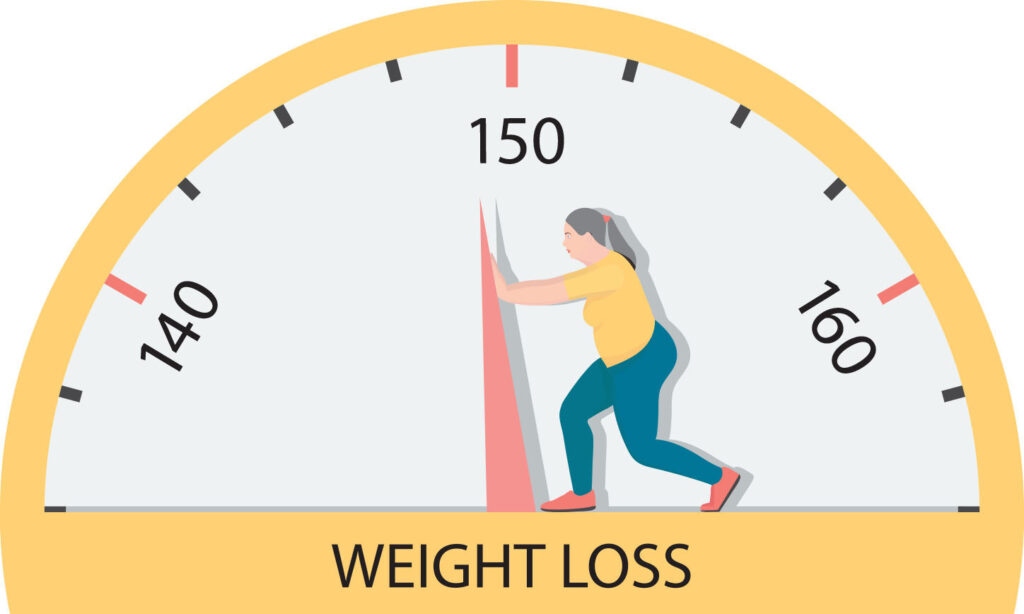
Weight loss is a biologically complex process. It’s not a matter of eating less and moving more as an oversimplified advice. The human body is designed for survival, and calorie intake is its vigorous defense against perceived starvation. Losing weight triggers powerful, long-lasting changes in the hormones that regulate appetite and fullness. It is also equated to metabolic slowdown, which happens when one restricts calories, the body’s energy-saving response to a new lighter body. The effect is to conserve energy, making the body more efficient and requiring fewer calories to function. This slowdown means that to maintain lost weight, an individual must continue to consume significantly fewer calories than someone of the same size and activity level who has never lost weight. This modification can be sustained for long periods, making weight maintenance an uphill battle against the body’s biology.

Scandinavia Leads the World in Anti-Obesity Innovation: What New Research Means for Everyday People
Weight loss is a biologically complex process. Illustration: Harvard Health.

In addition, genetics plays a significant role in determining the body’s natural weight range. Research shows that genetics can account for 40-70% of a person’s predisposition to obesity, according to a study by Charmarthi and Daley. Genes influence everything from the number of calories burned at rest to appetite regulation to where the body stores fat. It appears the body has a preferred weight, or set point, that it stubbornly defends. Hence, when weight is lost, hormonal and metabolic mechanisms kick in to drive it back up.

Furthermore, the brain’s reward systems are also altered. It has been demonstrated that the brain, following weight reduction, reacts more strongly to food cues such as smell and sight, making it harder to resist high-calorie, tasty foods. Chronic stress can also elevate cortisol, which is linked to increased appetite and a tendency to store fat, particularly in the abdomen, adding another layer of biological resistance. Hence, weight loss is always a battle against an individual’s evolutionary wiring.

Scandinavia Leads the World in Anti-Obesity Innovation: What New Research Means for Everyday People
Scandinavia, particularly Denmark, leads the world in developing new obesity treatments. Photo: Pharma University.

Pharmaceutical Breakthroughs

In this respect, Scandinavia, particularly Denmark, leads the world in developing new medications for obesity. For example, Wegovy (semaglutide), a GLP-1 receptor agonist, is a class of injectable drugs that mimic gut hormones to suppress appetite and regulate blood sugar.  These drugs offer significant, long-lasting weight loss and show the potential to reduce the risk of serious complications like heart attack and stroke in people with obesity.

Other biological mechanisms that target the gut and the brain in weight loss, such as NDMA receptor antagonism, are also being studied by Scandinavian research centers. They are developing a new drug that will sustain weight loss with few side effects. This means that more efficient, tailored, and tolerable pharmacological treatments for obesity and metabolic diseases like type 2 diabetes will be developed.

Scandinavia Leads the World in Anti-Obesity Innovation: What New Research Means for Everyday People
The usage of digital tools will increasingly be common for self-management, prevention, and treatment of obesity and other related chronic diseases. Illustration: Momentum Mecical Central Florida.

Non-Pharmacological Interventions

Technology and broader policy changes can also be part of scalable, non-pharmacological methods to address obesity. At Sweden’s Karolinska Institutet, mobile phone technology is used to deliver lifestyle interventions. Projects such as ‘MINISTOP’ use apps to support parents in promoting healthy diets and physical activity among preschool children. In effect, the usage of digital tools will increasingly be common for self-management, prevention, and treatment of obesity and other related chronic diseases. These tools could provide personalized, affordable support for diet and exercise, as well as mental well-being in daily life.

The Nordic countries also actively engage in policy recommendations that strongly emphasize the prevention of childhood obesity. Such measures include restrictions on marketing unhealthy foods to children, levying higher taxes, mandatory front-of-package labeling of foods, and promoting physical activity through schools and urban planning.

*******************************************
Related: Five Scandinavian Slimming Secrets
*******************************************
Scandinavia Leads the World in Anti-Obesity Innovation: What New Research Means for Everyday People – Conclusion

To put it in a nutshell, the Scandinavian model combines powerful new drugs with crucial public health and technological strategies. This integrated approach demonstrates that obesity can be treated as a chronic disease, supported by personalized digital support and proactive public health policies and environments.

Scandinavia Leads the World in Anti-Obesity Innovation: What New Research Means for Everyday People
Karoline Gore

Scandinavia Leads the World in Anti-Obesity Innovation: What New Research Means for Everyday People, written dedicatedly for Daily Scandinavian by Karoline Gore. Karoline is a freelance writer from Stoke-on-Trent in the UK who left the corporate grind when she started a family and has never looked back. She enjoys contributing to a range of online publications on topics vital to her.

Feature image (top) © Mart Production/Pexels

A Swedish Oracle Speaks

In the book Orakelet taler (The Oracle Speaks – Seven Life Advice Against Life Advice), the Swedish author and social commentator Liv Strömquist reveals, among other things, the shame many feel when they try to have fun on command – and fail.

With her characteristic, seemingly simple lines and language, she makes it impossible to ignore how we are all caught up in this mess. It’s like getting a new pair of glasses – once you see them, you can’t look away.

Liv Strömqvist, born 1978, debuted with the book “Hundre procent fett” (2005), the same year she started at Serieskolan in Malmö. Since then, she has published the comic books “Drift”, a sex series illustrated by Jan Bielecki (2007), “Einsteins fru” (2008), “Prins Charles känsla” (2010), “Ja til livet” (2011) and «Fruit of Knowledge» (2014), about the taboo of menstruation and the vulva in society, also translated into Bulgarian, Catalan, Croatian, Czech, Danish, Dutch, English, Finnish, Galician, Greek, Italian, Japanese, Korean, Macedonian, Polish, Portuguese, Russian, Slovene, Spanish, Turkish and Ukrainian.

A Swedish Oracle Speaks
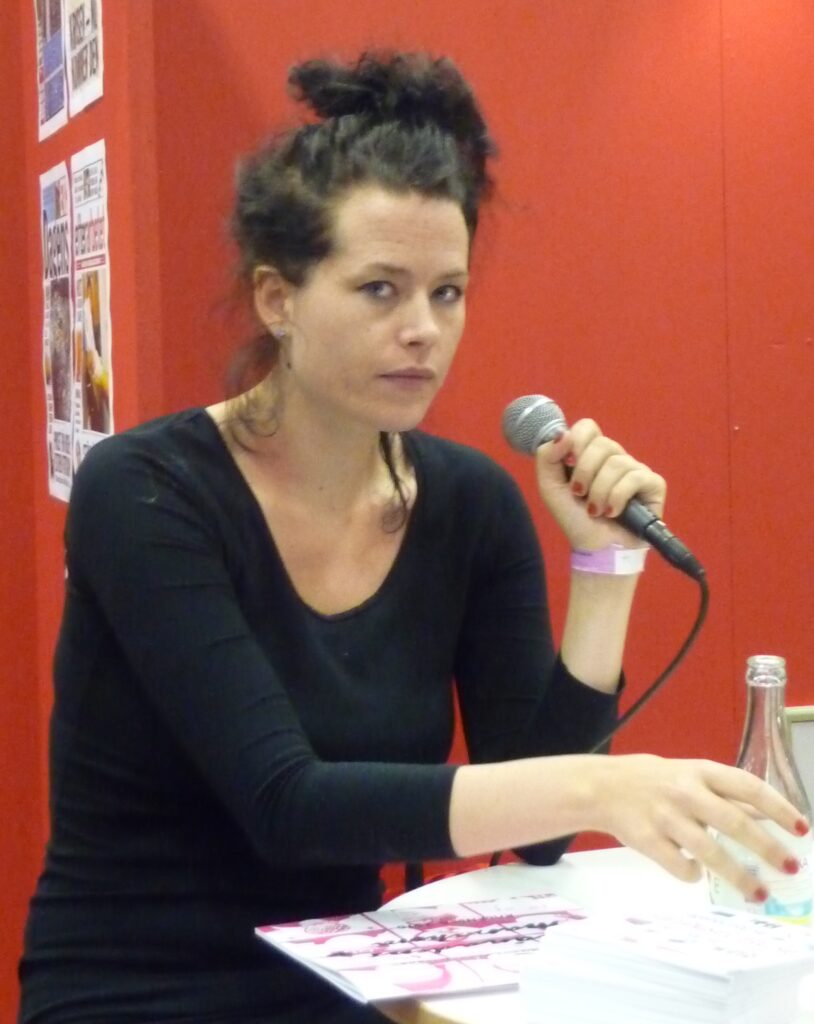
Liv Strömqvist. Photo: Wikimedia commons.

Strömquist studied sociology at Lund University and earned a degree in political science at Malmö University. She has been awarded an honorary doctorate twice, in 2016 by Malmö University and in 2021 by UCLouvain. Her comics are mostly about sociopolitical issues from a feminist and left-wing perspective. They are satirical essays about power and injustices.

******************************************
Related: The Danish Comic Book Illustrator

******************************************

The Oracle Speaks

În her recent book “The Orace Speaks, Duchess Meghan Markle is supposed to shine a light on a charity that distributes food to sex workers living in poverty and substance abuse. The Duchess had what seemed like a really great idea: full of enthusiasm, she grabbed a pen and began scribbling encouragement and slogans on the bananas that were given with the food packages.

A Swedish Oracle Speaks
In the book, a duchess full of enthusiasm, grabs a pen and begin scribbling encouragement and slogans on the bananas included with the food packages.

In the book, Strömqvist reveals, among other things, the shame many feel when they try to have fun on command – and fail. With her characteristic, seemingly simple lines and language, she makes it impossible to ignore how we are all caught up in this mess. It’s like getting a new pair of glasses – once you see them, you can’t look away.

It’s perhaps no wonder that the Duchess finds it difficult to imagine what the world looks like from the perspective of women in crisis. But Meghan’s attempt to encourage them backfires. The exhortation to “work hard” takes on a whole new meaning when you imagine what it might mean for someone who works in the sex industry. (More thorough blowjobs? More clients at once?) The message to smile, or “live, laugh, love,” is, of course, also tragically out of place on a banana in the hands of a woman covered in bruises.

Several keen life advisors are  portrayed in this comic book

Drawing on the sociologist Edgar Cabanas’ concept of “emodity,” Strømquist reveals how our insecurities about beauty, happiness, and pleasure are commodified. Suddenly, you see: That one too many lager on the town isn’t just a failure of self-control—it’s your role as a pawn in the neoliberal machinery, in what Strøquist calls the “fun-happy-pretty industry.”

The Duchess of Sussex is one of several keen life advisors portrayed in this comic book.  You will also meet check-up guru Rollo Tomassi, super celebrity therapist The Holistic Psychologist, and a colorful group of randomly selected makeup and fitness influencers, who you may have already encountered in your own Instagram feed in real life.

A Swedish Oracle Speaks
In the book, Strömqvist reveals, among other things, the shame many feel when they try to have fun on command – and fail.

But all of this is just new acts in the fun-happy-pretty industry’s endless spectacle. Strömquist claims we are both actors and audience in our own consumer drama. And no, no one escapes – not even you with your demonstrative dumb phone and well-worn Dag Solstad novel in your inner pocket. In “The Oracle Speaks,” she reveals how even those who rise above the Instagram chase have changed the scene: They now play the leading role in another aesthetic drama, where fun, pretty, and happy are still mandatory exercises – just wrapped in a more intellectual wrapper.

A Serious critique of our average existence

In “The Oracle Speaks – Seven Life Advice Against Life Advice,” Strömquist elegantly glides between philosophers, psychologists, and other intellectual voices. Through the comic’s colorful twist paper, she serves up a serious critique of our average existence – a diagnosis that hits so hard that it sticks in the body. With a sharp pen, she uncovers the absurd paradox of our time: We first construct a sicker self, just to be able to “self-optimize” ourselves into a healthier self. Perhaps Strömquist is the outlet that encourages us to do the completely unthinkable: To give up being fun, pretty, and happy. Let’s instead throw ourselves headlong into boredom, embrace mediocrity, and give ugliness a real chance. Because who knows – when we finally stop running like crazy with 550 steps under the heart rate target at 11:56 p.m., maybe that’s when we can actually start enjoying ourselves. For real.

******************************************
Related: The Great Norwegian Comic Book Artist

******************************************

A Swedish Oracle Speaks
Photo: Podtail

Here are Strömqvist’s seven counter-advice to influencers’ advice:

  • Lose control of your health
  • Lose control of your body
  • Lose control of your love life
  • Don’t follow advice
  • Give more to others than you get back
  • Don’t have personal goals
  • Go out!

Funnily enough, Strömquist shows that this is nothing new. In fact, the author traces today’s self-optimization trend back to the origins of modernity in the 18th century. Because when humans stopped believing in God, she explains, something happened to what we considered the meaning of life.

A Swedish Oracle Speaks, Tor Kjolberg reports

Norwegian Singer Full of Shame, Anger, and Jealousy

Known for his remarkable voice and critically acclaimed performances in full artistic expression, artist Nils Bech is a one-of-a-kind artist. This star shines just as brightly in a sweaty club as on theater and festival stages, both in and outside Norway. But the Norwegian singer is also full of shame, anger, and jealousy.

In 2014, his third album, “One Year,” was released. It was about the first year of a relationship with the man he was with. “There’s an awful lot of me, my inner emotional life, in this album, shame, anger, jealousy. But when I talk about it, it doesn’t become so dangerous,” Nils Bech said at the time.

Nils Bech has long been a clear voice for diversity and acceptance in Norwegian society. Through his music and openness, he has helped to put essential topics on the agenda, both within cultural life and in public discourse.

********************************************

But what is it that Nils Bech has not done? From the royal golden wedding in Oslo Cathedral, the Venice Biennale, duets with Bjørn Eidsvåg and Dutty Dior, “O helga natt” in Skam, collaborations with the Norwegian National Ballet, commissioned works, and award nominations – all delivered with an uncompromising expression.

Norwegian Singer Full of Shame, Anger, and Jealousy
Nils Bech has long been a clear voice for diversity and acceptance in Norwegian society. Photo: Gaffa

In 2009, the prestigious celebrity magazine Interview, which Andy Warhol founded, described Nils Beck as «a 28-year-old camp performance  artist with teen idol looks.”

Later, Ryan McGinley invited him to sing at his club night in New York. AA Bronson opened other doors, calling him one of the best he’s seen, to Office of Contemporary Art director Marta Kuzma, which led to a regular night at the OCA.

***********************************************
Related: Passionate Norwegian Singer/Songwriter

***********************************************

However, the artist struggled with shame for years. Last year, he opened up about what it was like growing up gay and about being subjected to homophobia. Musically, Bech has made it his trademark to complement his unique musical expression with strong visual tools. He can combine high and low culture, stock exchange and cathedral, contemporary music and pop songs – in a way that no other Norwegian artist can.

Norwegian Singer Full of Shame, Anger, and Jealousy
Nils Beck has struggled with shame for years. Photo: Act Agency.

Composer and performance artist Nils Bech was born in Hønefoss in 1981. He studied music at St. Halvard in Drammen. He released his first album, “Look Back,” in 2010. This was followed by “Look Inside” (2012) and “One Year” (2014) on the label Fysisk Format. In 2011, he received the Statens Arbeidsstipend under visual arts, even though he is a singer. He has also been a campaign model for the clothing brand Cos.

When Nils Beck performs, it’s always surprising, always heartfelt, and always with his distinctive communication and artistic ambition at the center. Hold on to those you stand beside – because Nils Bech is likely to provoke fits of laughter, tearful eyes and endless affection, every time he appears!

Norwegian Singer Full of Shame, Anger, and Jealousy, written by Tor Kjolberg.
Feature image (top) © Olavsfest.

A Look Into Crushing Fear, Stress, and Anxiety

Everyone experiences fear, stress, and anxiety in life from time to time. These feelings can arise from everyday situations such as traffic, an acute work stress, or worrying about an upcoming event. In this article, we will take a look at crushing fear, stress, and anxiety.

If these feelings become recurring, interfere with daily life, affect health, or lead to behavior changes, such as avoiding normal activities and commitments, it may be time to investigate.

How fear, stress, and anxiety are related

Let’s first explore how fear, stress, and anxiety are related. These emotions involve the brain’s threat response system and can put us into the uncomfortable state of “Fight or Flight” mode, a term coined by physiologist Walter Cannon. In this state, our sympathetic nervous system is activated, and can range from mild feelings of anxiety to full-blown panic attacks.

Triggers can include stressful situations, unexpected events, emotional distress, perceived threats, and immediate physical threats. Physical sensations can include sweating, heart racing, nausea, lightheadedness, muscle tension, rapid breathing, and more. Cognitive and emotional sensations such as feeling impending doom, panic, feeling faint, and completely overwhelmed or depressed are just some of the rather dreadful feelings in fight or flight mode. Over time, this can begin to affect overall physical and emotional/mental health.

A Look Into Crushing Fear, Stress, and Anxiety
up to 80 percent of doctors’ visits in Western society are stress-related. Photo: Rockefeller Institute of Government.

Interestingly, up to 80 percent of doctors’ visits in Western society are stress-related; digestive issues, headaches, heart palpitations, dizziness, elevated blood pressure, muscle tension, and general feelings of malaise, anxiety, or depression. These health effects may stem from prolonged periods of fight or flight or changes in lifestyle that result from stress, such as inactivity, overeating, lack of sleep, or overconsumption of caffeine, alcohol, or other substances. So, what can we do about it?

**************************************
Related: The Role of Nature in Scandinavian Mental Health and Well-being

**************************************

A regular part of life

First, we must acknowledge that fear, stress, and anxiety are a regular part of life; however, we should not allow these feelings to consume us or disrupt our daily routines. Education is key to helping us move through these emotions. Many people try to suppress their fear, stress, and anxiety, but by avoiding or denying these feelings, we often give them more power. When left unacknowledged, they can begin to lead us—creating a negative spiral that intensifies over time.

The most effective way to overcome these emotions is through acceptance. Learning to accept fear, stress, and anxiety, rather than fight it, requires discipline and self-awareness, but it can lead to profound improvements in both health and overall quality of life.

A Look Into Crushing Fear, Stress, and Anxiety
It is important to note that help is always available if implementing healthy techniques does not seem to be working.

**********************************************
Related: Examining Scandinavian Mental Health

**********************************************

Distinguish between what is unavoidable and what is unnecessary

The first step of acceptance is to identify stressors and distinguish between what is unavoidable and what is unnecessary. The stressors that we can not avoid, we can learn to change our reaction to. There are a few ways to do this, including reframing our thoughts. We can ask ourselves if the idea is actual, look at other ways to view the thought, and create a positive thought pattern instead of the repeated negative pattern, telling ourselves “I can do this”, “This will make me feel accomplished when I finish”, or “I can handle whatever comes my way”, for example.

Reframing thoughts helps by challenging negative patterns and creating positive new ones. This also helps us to reduce catastrophic thinking and minimize negative thoughts. Overall, reframing thoughts can help break free from automatic negative cycles, fostering a healthier mental state and enabling better stress management.

Positive thinking has a profound impact on emotional regulation by influencing how we perceive and respond to situations. In learning to accept, or sort of dance with our fears, anxiety, or stress, we can ask ourselves a powerful question: “Do I want to feel afraid today?” This may seem daunting, yet once you get used to feeling a bit of fear, it can be a healthy challenge. Because our brains tend to follow expected patterns, we can create new neural pathways by reframing and changing our behavior. With practice, the old fearful patterns lose their hold, and situations that once felt intimidating no longer seem so daunting. This process helps us become more resilient.

A Look Into Crushing Fear, Stress, and Anxiety
A method taught by Dr. Andrew Weil, helps calm the nervous system.

Create practices

Practices such as deep breathing, progressive muscle relaxation, journaling, goal setting, meditation, and mindfulness are beneficial tools that can be put into practice easily at almost any time. For example, taking a few deep breaths before or when faced with a stressful situation. The 4-7-8 breath, a method taught by Dr. Andrew Weil, helps calm the nervous system. Breathe in for four seconds, hold for seven, and exhale slowly for eight seconds. Repeat as needed. Practice progressive muscle relaxation, tensing and releasing muscles from head to toe. This helps us gauge our tension and the ability to release it. Good nutrition, proper sleep, and physical activity are also essential for improving and maintaining overall health. Get out in nature, enjoy a meal out or coffee with a friend, spend time with family, read a book, light a candle, write things down, set goals, and see marked improvements in your health in body and mind.

A Look Into Crushing Fear, Stress, and Anxiety – Conclusion

If fear, stress, and anxiety have taken up space in your body or mind, try some of the aforementioned information and techniques and put them into practice. Don’t let it take control of your life. Remember that acceptance and dancing with life’s challenges is key.

It is important to note that help is always available if implementing healthy techniques does not seem to be working. Call a friend or family member, doctor, or find a therapist, counselor, or group to join.

A Look Into Crushing Fear, Stress, and Anxiety
Nicole Hammond

A Look Into Crushing Fear, Stress, and Anxiety, written exclusively for Daily Scandinavian by Nicole Hammond. Nicole is a health educator, coach, and wellness writer with a Master of Science in Health and Human Performance and a Bachelor of Science in Health Science.  She also holds certifications in stress management, coaching, and feng shui design.  She enjoys writing, researching, creating, and facilitating in the areas of health and creating balance in mind, body, and the home.  In her spare time, Nicole enjoys reading, cooking, traveling, exercising, and spending time with her family, including her two golden retrievers and cocker spaniel.

The Complete Fear, Stress, and Anxiety Crushing Guide by Nicole Hammond is on sale for USD16.99. To order the report, please email Nicole Hammond at nichammondmhhp@gmail.com.

Calm Traffic in Copenhagen

Traffic in Copenhagen’s Nordhavn district is calm because it was designed as a car-limited “15-minute city” with excellent public transport, dedicated bike paths, and pedestrian-friendly streets.

The Nordhavn district is imbued with gentle curves to slow down urban life, calm traffic, and encourage walking.

Calm Traffic in Copenhagen
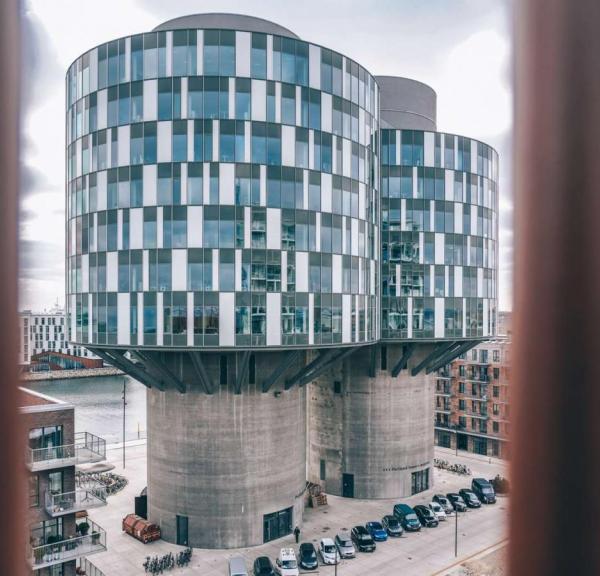
Portland Towers. Photo: Daniel Rasmussen/Visit Copenhagen.

The city’s once-industrial neighborhood, excitedly claiming it would become the most incredible new city in Europe. The district has minimized reliance on cars by making amenities within walking distance and encouraging cycling and walking over driving. This approach results in a quieter, less car-centric environment than in other neighborhoods. The city’s design prioritizes pedestrians, cyclists, and public transport over cars.

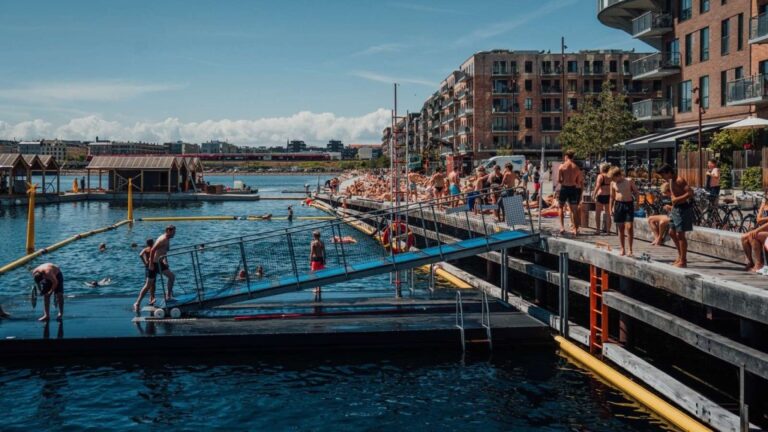
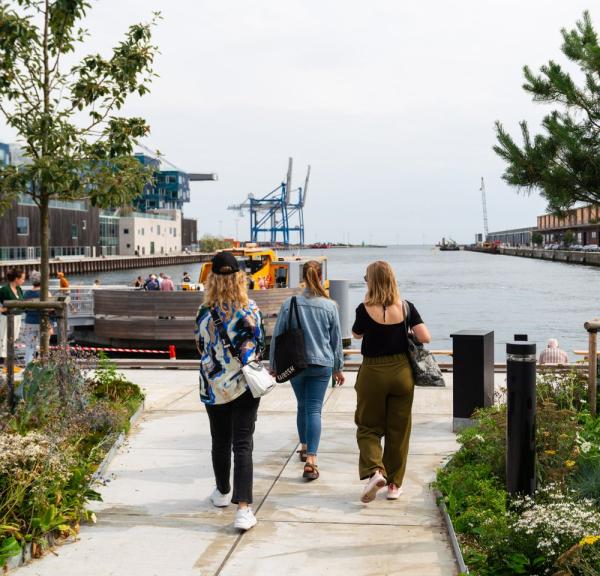
At Århusgadekvarteret, the core of the new development, there are gleaming apartment buildings, high-end office spaces, and a cafe-lined boardwalk along the previously industrial harbor. In summer, people can bring their beach towels and relax at the waterfront, soaking in the Scandinavian summer sun without the morning commuter chaos found in cities around the world.

Calm Traffic in Copenhagen
People can bring their beach towels and relax at the waterfront. Photo: Büro Jantzen / Visit Copenhagen.

A comprehensive network of cycling paths is a key feature, making biking a convenient option, and the district is served by a well-developed public transport system, including a metro line, which reduces the overall number of cars needed for commuting.

Some areas are even designed to be car-free, fostering a peaceful, refreshing atmosphere.

The emphasis on sustainability from the outset included creating a city that grows inward rather than outward, with eco-friendly traffic solutions and green transportation as the natural choice.

Calm Traffic in Copenhagen
Photo: Lukas Bukoven/Visit Copenhagen.

In the early 20th Century, when legendary Danish designer Arne Jacobsen said, “Architecture is not just about creating buildings; it’s about shaping the environment and enhancing people’s lives,” it was theoretical. A century later, Danish authorities, in collaboration with Danish architects, have made Jacobsen’s words a reality.

Calm Traffic in Copenhagen, written by Tor Kjolberg.
Feature image (top) Nordhavn Bad. Photo © Simon Bang/Visit Copenhagen.

Next Year, You Can Go by Train from Copenhagen to Prague

0

From May 1 next year, Deutsche Bahn and DSB will launch a new direct train service from Prague to Copenhagen via Berlin. Next year, you can go by train from Copenhagen to Prague.

The train is operated by DB, DSB, and České dráhy (Czech Railways). The new route will feature two daily departures plus a seasonal night connection, with an approximate 11-hour journey time from Prague to Copenhagen. The service will be operated by ComfortJet trains and will make stops in Hamburg, Dresden, and other cities.

Next Year, You Can Go by Train from Copenhagen to Prague
Comfortjet interior.

International long-distance rail transport is already booming, and when general overhaul work on the line between Berlin and Hamburg is complete, the new connection will give it another boost. The connection will offer an eco-friendly travel option. The journey time from Prague to Copenhagen is approximately 11 hours.

Two pairs of trains (two outward and return journeys) will run year-round – with journey times of just seven hours between Copenhagen and Berlin and eleven hours between Copenhagen and Prague. A seasonal night-time connection will also be offered. There is already a night train that runs between Hamburg and Copenhagen in the summer, but from 2026 it will be extended to Prague via Berlin and Dresden.

Next Year, You Can Go by Train from Copenhagen to Prague
The new connection is the first of 10 pilot projects supported by the European Commission to promote cross-border rail connections.

The new connection is the first of 10 pilot projects supported by the European Commission to promote cross-border rail connections. The Commission selected the Prague–Copenhagen project as one of the initiatives to overcome obstacles in international rail transport, improve market conditions, and develop attractive, sustainable mobility in Europe. Another project is the new direct connection recently announced that will link Munich, Milan, and Rome. Last December, DB and France’s SNCF started services on their new direct connection between Berlin and Paris.

********************************************
Related: Train Journeys: Sustainable – Comfortable and Cost Saving

********************************************

Next Year, You Can Go by Train from Copenhagen to Prague
Apostolos Tzitzikostas, the European Commissioner for Sustainable Transport and Tourism.

Apostolos Tzitzikostas, the European Commissioner for Sustainable Transport and Tourism, said: “Improving high-speed rail, especially across borders, is our top priority. This new line, connecting the Czech Republic, Germany, and Denmark, is a strong example of progress. And I am especially proud that it is the first of the ten pilot projects supported by the European Commission to promote new cross-border rail connections.”

Next Year, You Can Go by Train from Copenhagen to Prague, Tor Kjolberg reports.