Malmö Opera will stage the horror classic “The Shining” next fall. The production of The Shining debuted live on stage with the Minnesota Opera in 2016. Ten years later, “The Shining – the Opera” premieres in Sweden in the fall of 2026.
Inspired by Stephen King’s best-selling novel, the Torrance family settles into the infamous Overlook Hotel, where the caretaker, Jack, confronts his own demons—both real and imagined. While ghosts often feature in many operas, the spirits inhabiting the remote Rocky Mountain hotel in The Shining are servants to a powerful, malevolent force: the hotel itself.
The famous Overlook Hotel starring in The Shining.
The British director Keith Warner aims to make the audience so scared that they will feel “spiritually cleansed afterward,” according to the Swedish newspaper Sydsvenskan. Will Wendy Torrance be able to protect her wife and son from the evil forces within the Overlook Hotel? Wendy ultimately defends her son, Danny, from the hotel’s malevolent influence, while Jack becomes the antagonist. Despite her initial loyalty to Jack, Wendy discovers an unexpected inner strength to shield Danny from her husband, who has been driven mad by the hotel’s supernatural forces.
Shelly Duvall- as Wendy Turrance in Stanley Kubrick’s The Shining.
Stephen King’s novel about the man assigned to manage a hotel that closes for the winter became a pop culture classic through Stanley Kubrick’s film, starring Jack Nicholson and Shelley Duvall in two of the lead roles.
The British director Keith Warner aims to make the audience so scared that they will feel “spiritually cleansed afterward”.
*************************************************
You may also like to read Six Scandinavian Opera Greats
*************************************************
The Shining, the opera, commissioned by Minnesota Opera’s New Works Initiative, was “designed to invigorate the operatic art form with an infusion of contemporary works.” Given its completely sold-out success in St. Paul, where it premiered, it can safely be stated that this production accomplished the mission of drawing vigor from a perhaps unexpected source, and even that it stands a chance of bringing its chilling artistry (not to mention its promisingly warned-about “strong language, gunshots, simulated nudity, theatrical haze, and strobe lighting”) to Malmö, preferably in the dead of winter to suit best the story — a time that, in Sweden, already counts as forbidding enough.
The Shining, the opera, commissioned by Minnesota Opera’s New Works Initiative, was “designed to invigorate the operatic art form with an infusion of contemporary works.”
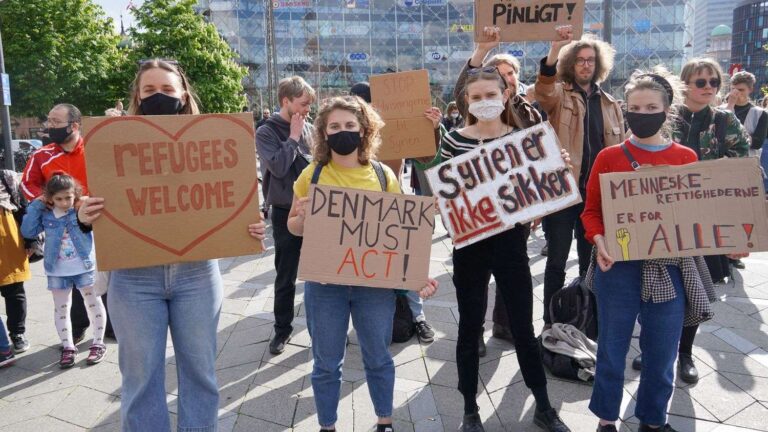
The British Home Secretary Shabana Mahmood is set to announce a significant shake-up of the immigration and asylum system later this month. According to the BBC, she will model some of her new measures on the Danish system, seen as one of the toughest in Europe. Now, Britain is looking to the rigid Danish asylum rules.
Danish asylum rules are strict, with tight criteria for family reunification, including age (24 and older), language proficiency, and financial guarantees. The ability to join a family is blocked if the resident lives in a “parallel society” housing estate. Gaining permanent residency is challenging, requiring at least 8 years and meeting strict integration standards, such as full-time employment for a specific period. Additionally, Danish authorities can seize assets above a certain threshold to cover living expenses.
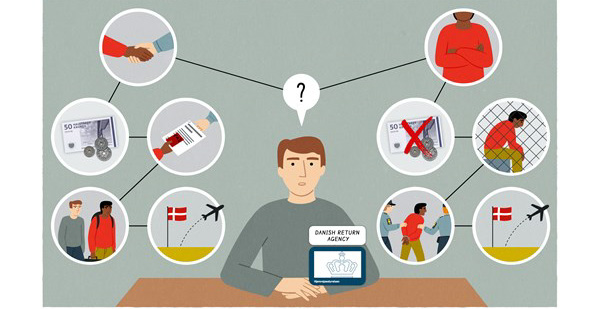
A letter to the Danish Minister. Photo: Immigration Council of Europe.
Concerns about immigration have risen steadily over the past five years in Britain, fueled in part by the number of migrants arriving in Britain via small boat crossings. A recent YouGov poll suggested voters were more worried about migration than the state of the economy.
Mahmood wants to reduce incentives that draw people to the UK while making it easier to expel those without the right to be in the country.
Family reunification rulesin Denmark state that a partner must be at least 24 years old. The partner in Denmark must not have claimed benefits for the past 3 years and must provide a financial guarantee. Both partners must pass a Danish language test. Family reunification is not possible for residents in housing designated as “parallel societies” (where more than 50% of residents are from what the government calls “non-Western” backgrounds).
The British Labor government now faces significant challenges from Nigel Farage’s Reform Party, which is ahead in the polls. Reform promises to radically overhaul the immigration system if it gains power, most notably scrapping the right of migrants to qualify for permanent settlement in the UK after five years.
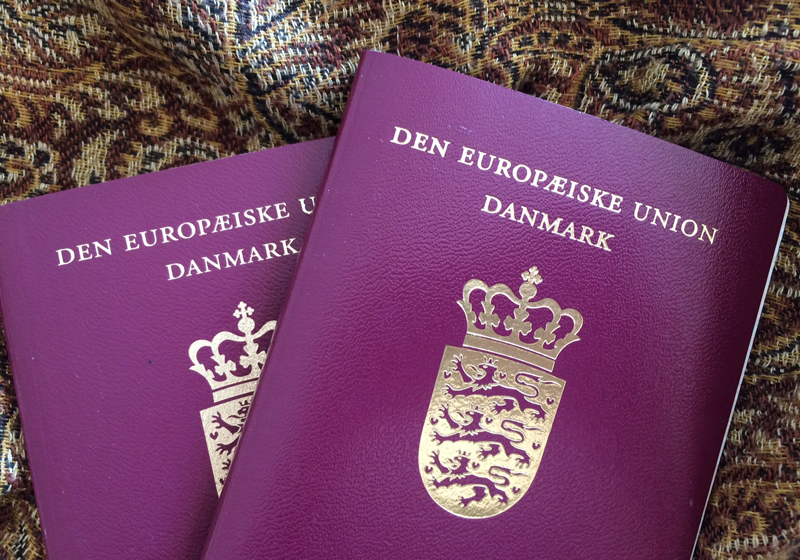
Danish passports.
It comes as 1,269 more migrants crossed the English Channel in small boats in recent days, the latest Home Office figures show. This follows two weeks of bad weather, during which there were no crossings.
Permanent residencyin Denmark requires a minimum of eight years of legal stay and requires meeting strict integration criteria, including full-time employment for a specific period.
After excluding data from 2020, when significant travel restrictions were in place because of the pandemic, the number of people granted asylum in Denmark is at a 40-year low.
The BBC reports that Mahmood dispatched senior Home Office officials to Copenhagen last month to study what lessons could be applied to the UK.
In Denmark, the Authorities can seize assets, including cash and valuables, from asylum seekers to cover living costs. This rule applies to items with a value above a certain amount, with exceptions for purely sentimental items.
Denmark usually gives people targeted personally by foreign regimes protection, but this is often temporary, with the government reserving the right to return an asylum seeker to their home country when it is deemed safe.
For example, in 2022, the Danish government told about 1,200 refugees from Damascus, Syria, that they would be returned after it judged there was no longer a risk to them in the region. This decision was at odds with the positions taken by the UN and the EU.
The pre-September scheme allowed spouses, partners, and dependants under 18 to come to the UK without having to meet the income and English-language tests that apply to other migrants.
Mahmood is unlikely to go as far as Denmark when she announces the UK’s replacement rules for family reunions, but it seems likely that she will take steps along a more restrictive route.
Danish asylum rules are strict, with tight criteria for family reunification, including age (24 and older), language proficiency, and financial guarantees.
In Denmark, asylum seekers are required to attend classes to maintain and increase their general skills and trade or professional skills. There is a mandatory work obligation of up to 37 hours per week, which may be fulfilled through unpaid internships; benefits may be deducted if the individual refuses or cannot complete it.
Some Labor MPs, particularly in “red wall” seats where support for Reform is strong, have welcomed the possibility of moving closer to a Danish model.
Britain is looking to the Rigid Danish Asylum Rules, Tor Kjolberg reports.
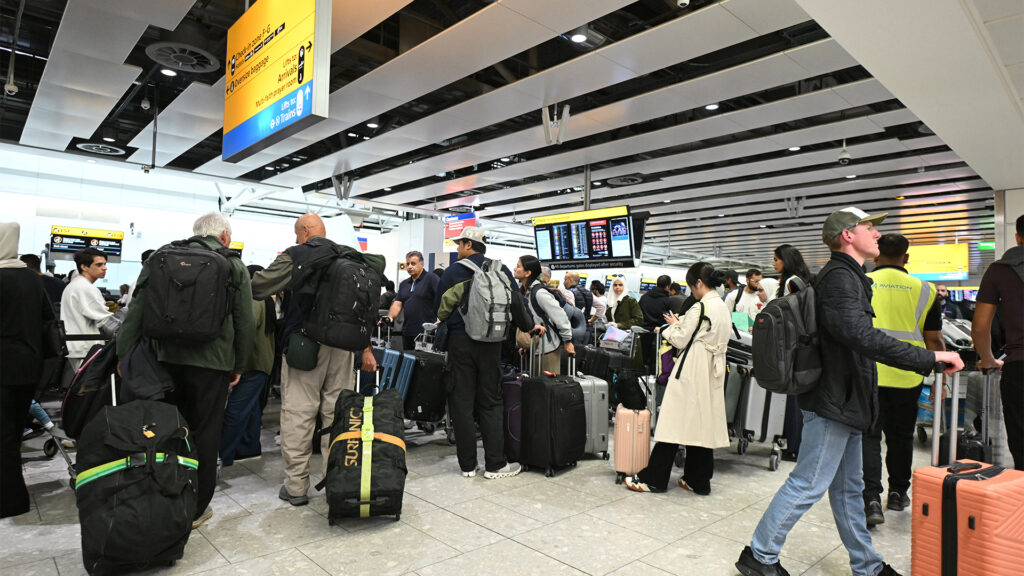
Flights can be the most painful part of a journey, especially those that surpass 13 hours, such as the dreaded flight from OSL to Dubai or from OSL to Colombo. A frequent flyer’s tips for flying below allow you to arrive at your destination rested and prepared to conquer a new country.
I will never understand why everyone is in such a hurry to get on the plane. Some people even pay extra to get on the plane first. If I am going to be stuck in a space smaller than a toilet seat for the next fourteen hours, I will wait at the gate and stretch my legs as long as possible. Sometimes I even wait until the gate attendants call my name.
Not only does this keep me out of that cramped seat for as long as possible, but it also ensures I am not waiting in line on the jetway to board the plane. I cannot stand waiting on the jetway with my heavy carry-on bag, watching the people in front of me inching up before getting on the plane.
Thai check-in counters. Photo: Wikipedia.
I prefer to wait until the last minute and walk right on. If you are physically at the gate watching everybody board, you will not even come close to missing the flight. The flight attendants will always call the names of passengers who have checked in but have not boarded yet before closing the gate.
Some fight to get on board the plane as soon as possible to claim that ever-so-coveted overhead compartment space. I choose not to participate in that so-called luxury so I can relax while everyone else engages in the feeding frenzy.
I will never understand why everyone is in such a hurry to get on the plane. Photo: Pexels.
My carry-on is a large photo bag that I place under the seat in front of me. My bag holds everything I need for a long flight, so I do not need to bother my neighbor to get my earphones, snacks, or books from a bag in the overhead bin.
I deal with the foot space by placing the bag on the floor in front of my seat to stretch out my legs. I push the bag under the seat to bend my knees for a while, then alternate between the two positions several times on a long flight.
Some fight to get on board the plane as soon as possible to claim that ever-so-coveted overhead compartment space. Photo: ITPro.
Finnish Iittala has become synonymous with the Scandinavian home and is now one of the biggest names in the design world. Over the past 140 years, the company has given us more than one design classic that we still love today. Design classics, which are with us through all moments in life, no matter how big or small. But the Finnish glassmaker is not looking back only. Both heritage and the future are essential.
As a pioneer of Nordic design, Iittala embraces the essence of Nordic living. It’s about functional and refined aesthetics along with a deep respect for the progressive ideas and Nordic values that shape our way of life.
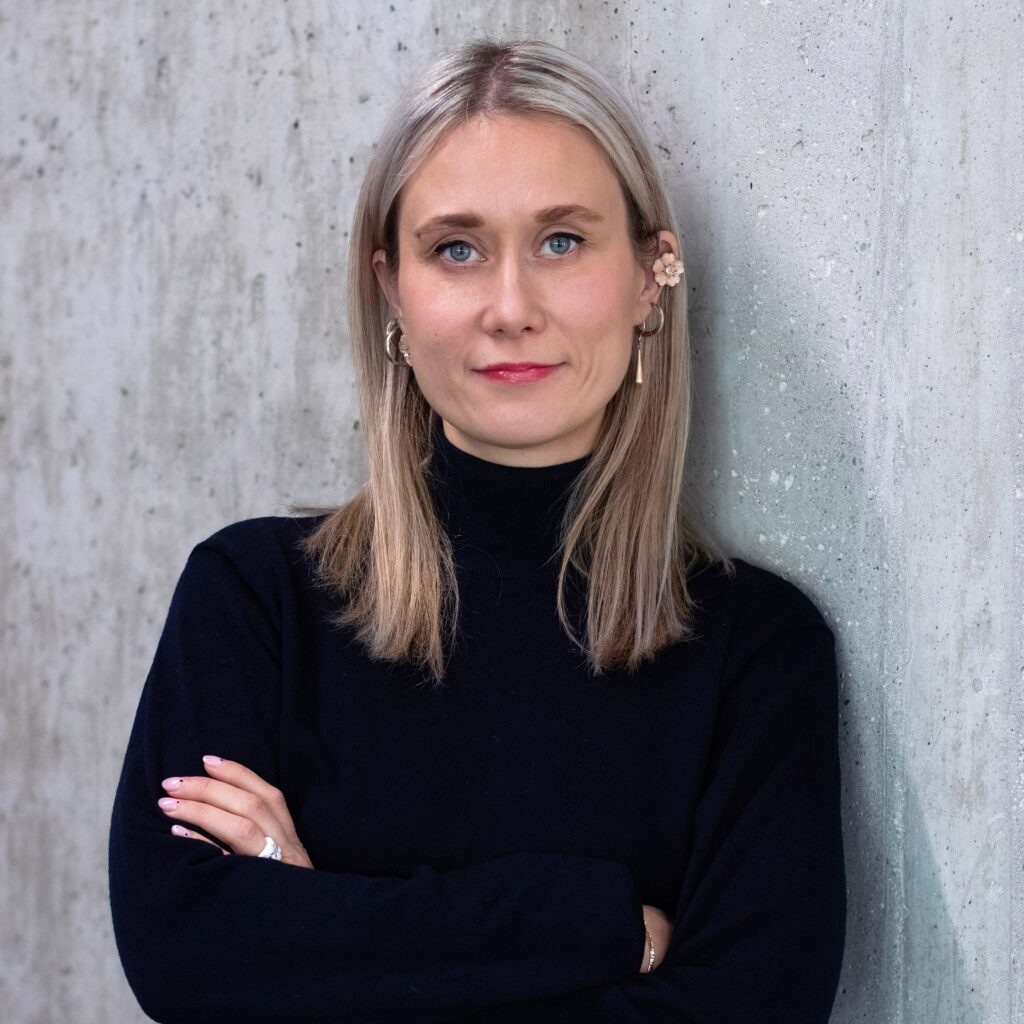
Janni Vepsäläinen took the helm in 2023 and comes not from the homeware section but from fashion, knitware, to be precise. But the pull of Iittala’s heritage, its craft, and its factory proved irresistible to her. “When I was approached about this role, I couldn’t say no,” she says.
With legendary designers such as Alvar Aalto, Iittala adopted a design philosophy that pushed boundaries, giving people both beauty and function.
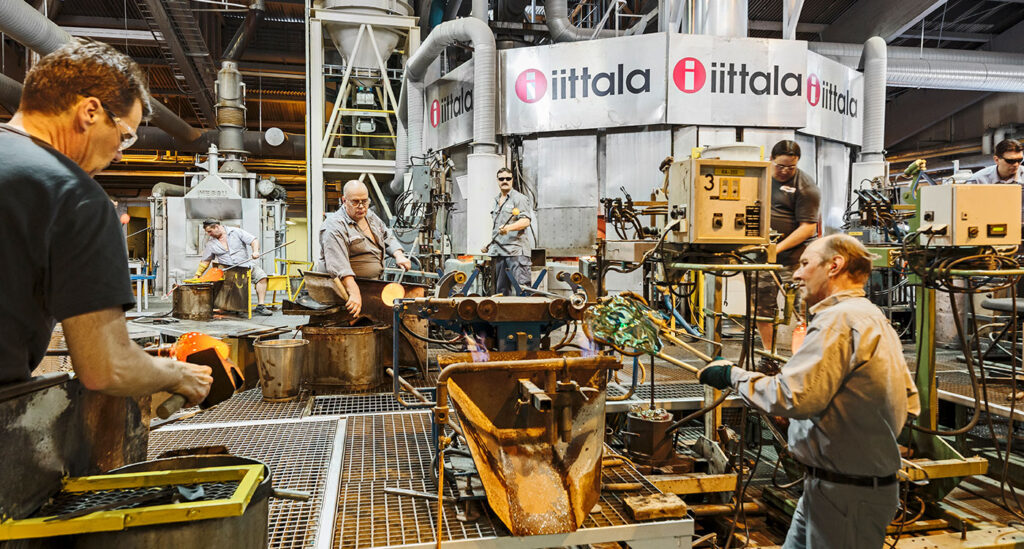
The origins of Iittala began to take shape as early as 1881 in the Finnish village of the same name. At the time, Iittala was a glassworks that produced blown, pressed, and polished glass in continental patterns. Today, Iittala is a natural part of the Scandinavian home, whether it is through the Essence wine glasses, Kastehelmi candleholders, or Teema plates; they all bring something special to our homes and our lives.
However, the company is also committed to creating a sustainable future. This starts with design, not only beautiful objects, but design that will stand the test of time.
Every year, Iittala picks a color from its treasured glass color library and brings it to life in glass items of the highest quality and timeless aesthetics.
As part of Fiskars Group, the company promotes change through three long-term sustainability commitments: against the throwaway culture, for a carbon-neutral future, and for increased joy.
Vepsäläinen’s background shapes her creative vision. She describes having an “epiphany” as a student when she discovered she could make her own fabrics by selecting yarns, colors, and techniques to create something from scratch. During her interviews for the creative director role, she visited Iittala’s factory and felt the same spark. However, it was in the 1930s, during the rise of functionalism in the design world, that Iittala achieved its significant breakthrough. With legendary designers such as Alvar Aalto, Aino Aalto, and Kaj Franck at the helm, Iittala adopted a design philosophy that pushed boundaries, giving people both beauty and function. This design philosophy gave birth to the now iconic Aalto vase in 1936, as well as a series of design classics that stand for simple, functional design and solid craftsmanship.
Janni Vepsäläinen took the helm in 2023 and comes not from the homeware section but from fashion, knitware, to be precise.
Now, Iittala continues to push boundaries by committing to a sustainable future, working with the best creative minds, investing in product development, and thinking responsibly from the beginning of the design process, creating innovations, and questioning familiar ways and experimenting with new opportunities.
“I had never done glassware design,” says Vepsäläinen, “but I realized that the process was the same. Both knitware and glassblowing are about craftsmanship and century-old techniques that can be used to create something modern.”
The origins of Iittala began to take shape as early as 1881 in the Finnish village of the same name.
To celebrate 140 years of timeless, Nordic design, Iittala released an anniversary collection in 2021. The Aalto vase is now available in a beautiful and very on-trend Amethyst color.
Every year, Iittala picks a color from its treasured glass color library and brings it to life in glass items of the highest quality and timeless aesthetics. The Glass color of the year for 2019, for example, was sea blue, a color inspired by the north, where the sea is an ever-changing portrait of the four seasons.
Vepsäläinen’s leap from knitware is proof of what can be achieved when creative boundaries are crossed.
Finnish Glassmaker – Heritage and Future, Tor Kjolberg reporting.
Feature image (top): Alvar Aalto vase.
Colombo, the capital of Sri Lanka, is, in my opinion, an underrated capital destination due to its vibrant blend of ancient heritage and modern energy, often overlooked by many tourists. Read on and find out why.
Colombo’s history is influenced by Portuguese, Dutch, and British colonizers, and its economy thrives on trade, government, banking, and industry. The port has been in use since at least the 5th century. Its name is thought to derive from the Sinhala “Kola-amba-thota,” meaning “harbor with leafy mango trees”.
The old Parliament Building. Photo: Tor Kjolberg
With its tropical climate, Colombo experiences warm temperatures year-round, making it an inviting destination for travelers seeking both relaxation and adventure. The city offers a fascinating juxtaposition of colonial-era architecture and contemporary skyscrapers, providing a visual narrative of Sri Lanka’s evolution through the centuries. Exploring its lively streets, visitors can encounter bustling markets, tranquil temples, and a rich tapestry of cultural influences that reflect Colombo’s position as a crossroads of trade and tradition.
From the Pettah market. Photo: Tor Kjolberg
Visitors can explore historic colonial architecture, bustling markets like Pettah Market, and cultural sites such as temples and the National Museum. The city also offers a growing food scene, thriving nightlife, and scenic spots like Galle Face Green, a 5 ha (12 acres) ocean-side urban park, which stretches for 500 m (1,600 ft) along the coast, in the heart of Colombo, the financial and business capital of Sri Lanka.
On my first visit to Sri Lanka, Colombo was just a transit point. On my recent second visit, I wish I could have stayed longer. I discovered the cultural and historical blend of the capital.
The city provides a unique mix of old and new, with colonial buildings sitting alongside high-rise hotels. You can find ancient temples and mosques standing side by side, reflecting a rich multicultural history. Colonial-era hospitals have been converted into shopping precincts.
Colombo buzzes with homegrown chefs, bartenders, and entrepreneurs doing remarkable things with native produce. Think cocktails made with once-overlooked local spirits or alfresco brunches melding Thai and Sri Lankan flavors. And more than anything, Colombo is an excellent introduction to the island itself.
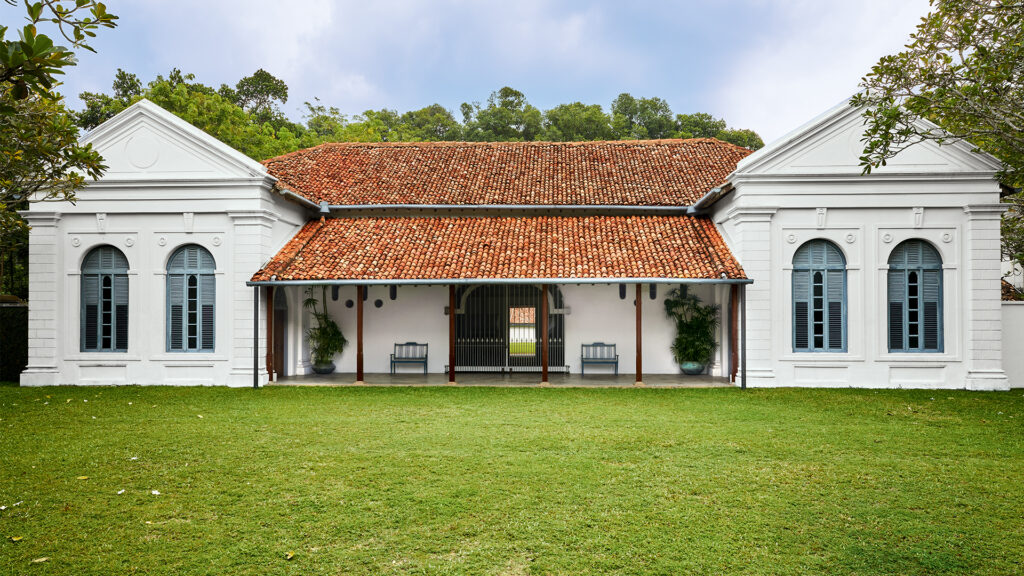
The Geoffrey Bawa Residence. Photo: Architectural Digest India.
Let me begin the exploration of Colombo in a perhaps unexpected way. That’s due to my interest in architecture. Geoffrey Bawa (1919-2003) is recognized as one of the most influential architects of the twentieth century.
The Geoffrey Bawa residence, No. 11, 33rd Lane, Bagatelle Road, Colombo 03, is considered a special architectural marvel and also houses art and artifacts from the late architect’s collection. Visits, however, are only possible by appointment. The house is located in the city’s fanciest residential neighborhood.
Walking distance from Bawa’s House is the Gallery Cafe, one of the upscale dining options of Colombo. Not surprisingly, this was the former office of Geoffrey Bawa. It’s a quiet garden cafe where you can take a break from the craziness of Colombo. The food is exquisite, a bit expensive, but indeed worth a visit.
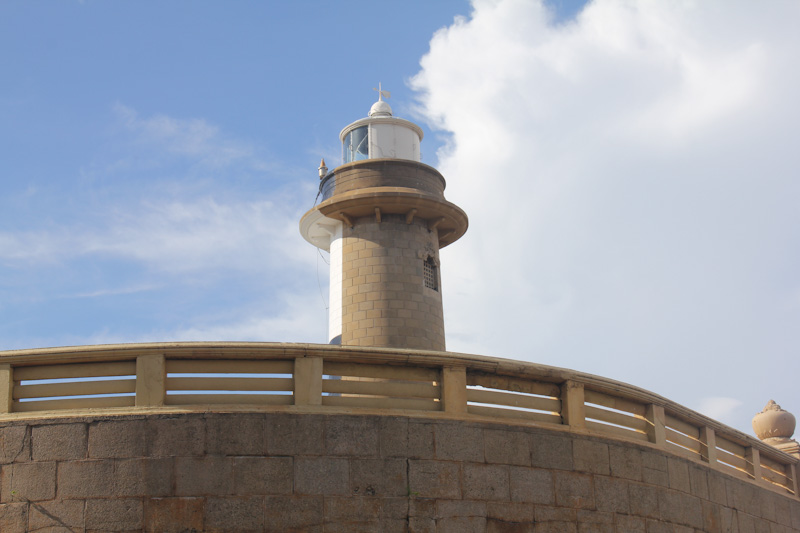
The old Colombo lighthouse. Photo: Tor Kjolberg.
Colombo Fort houses many architectural gems built during the Dutch ruling period. The De Mel Building with Pagoda Tea Rooms on the ground floor is one of the prettiest buildings in the street. The Fort Jumma Mosque and Old Colombo Lighthouse are in the neighborhood.
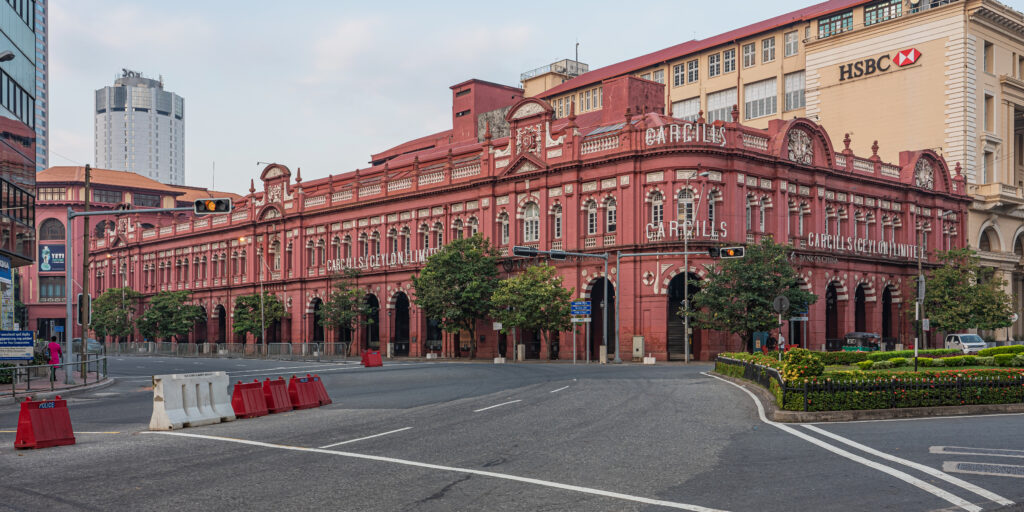
The Cargills Building. Photo: Wikimedia Commons.
On York Street, you’ll find the iconic Cargills building which was once the residence of a former Dutch military commander, then the home of the first British Governor of Ceylon, before being acquired by Cargills in 1896. Another worthy stop in the Fort is the Old Parliament Building.
The Cargills Food Hall.
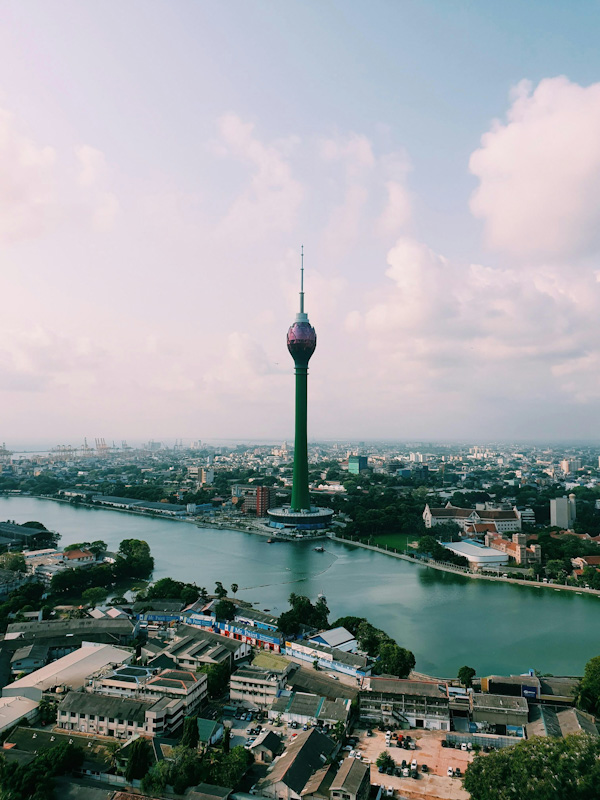
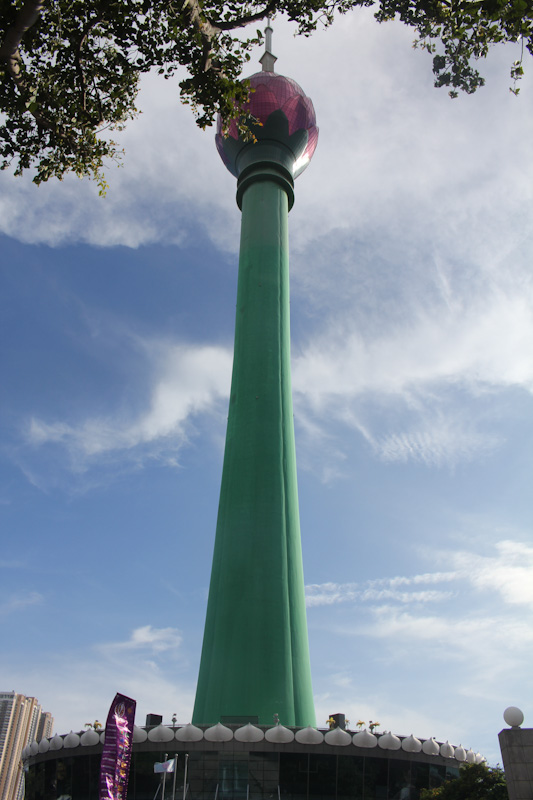
Situated along the banks of Beira Lake, the Colombo Lotus Tower is a landmark visible from far beyond the city limits, drawing thousands of visitors each month who come to experience its panoramic observation deck, cutting-edge technology, and entertainment facilities. The tower offers a 360-degree view of Colombo, the Indian Ocean, and the lush landscapes that extend inland, making it a prime spot for sightseeing, photography, and cultural immersion.
The Lotus Tower. Photo: Tor Kjolberg.
Construction began in 2012, the tower was meticulously crafted over a decade, and opened to the public on 15th September 2022, marking a new chapter in Sri Lanka’s architectural and technological advancement.
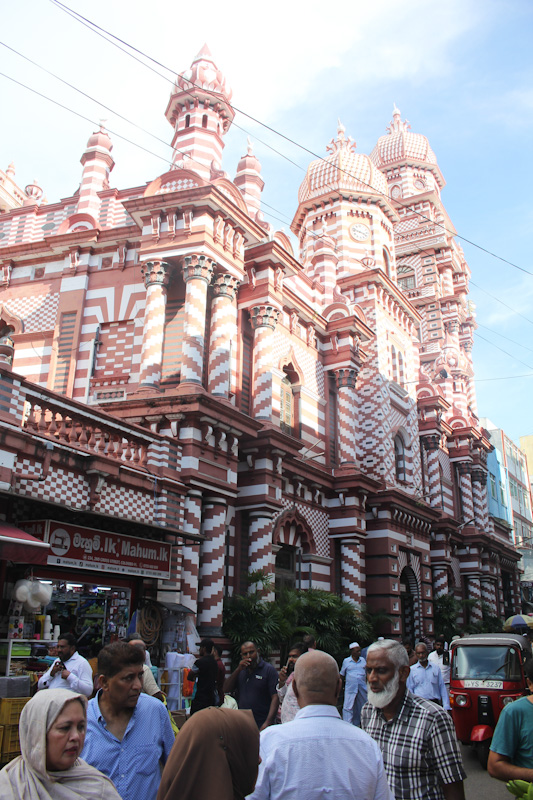
The Red Mosque. Photo: Tor Kjolberg
One of the oldest mosques in Colombo, the Red Mosque (Jami Ul-Alfar Mosque) was completed in 1909. It occupies almost an entire block in Pettah market. This historic and prominent landmark is famous for its striking red-and-white candy-striped facade and pomegranate-shaped domes, reflecting a blend of Indian, Islamic, and Neo-Classical architectural styles. The mosque is a significant religious and cultural site in Sri Lanka, with a capacity to accommodate up to 10,000 worshippers.
Strolling around Independence Square and the Arcade is one of the best things to do in Colombo in the afternoon. The grounds feature Independence Memorial Hall, built to commemorate Sri Lanka’s independence from British rule, the Independence Memorial Museum, and the Arcade, a shopping complex. People come here for an evening jog or to chill on the monument’s steps.
The largest museum in the country, the National Museum of Colombo, built in 1876, features a permanent collection of ancient Sri Lankan art and carvings, as well as colonial-era weaponry and artifacts. The real treasure of the museum is the crown jewels and the throne of the last King of Kandy, which were returned to Sri Lanka by the British Government.
Sambodhi Chaithya. Photo: Tor Kjolberg
Tucked away near Colombo Harbor, only a short walk away from five-star hotels, you’ll find the Buddhist stupa Sambodhi Chaithya, one of the best-kept secrets in Colombo. The stupa floats over Marine Drive because it is built on a platform supported by two interlocking arches. There’s a staircase that will take you to the top and into the shrine inside. From the top, you can see Colombo Port.
Viharamahadevi Park with Town Hall in the background. Photo: Wikipedia.
The largest park in Colombo is Viharamahadevi Park, with a golden Buddha statue, several water fountains, and a kids’ playground. The area is full of incredible sights, shops, and restaurants.
Just steps away from Viharamahadevi Park are the new Town Hall building and the beautiful Dewatagaha Mosque. Odel, one of Colombo’s most popular shopping malls, is also within walking distance. I’ll tell you more about shopping in Colombo later this month.
In Colombo you can try tea-inspired cocktails, mocktails, and even desserts.
Being in Sri Lanka, you must taste Ceylon Tea. Although you’ll have plenty of opportunities to drink it all around the island, in Colombo you can try tea-inspired cocktails, mocktails, and even desserts. Dilmah T-lounge has three locations in Colombo. Don’t miss out on traditional brews. They offer everything from black tea to green tea to silver and golden tips.
But did you know that before Sri Lanka became known for its tea, the island was one of the world’s biggest coffee exporters, along with Brazil? Unfortunately, a disease called Hemileia vastatrix wiped out the coffee plants in 1869. Nowadays, it is not easy to find a good cup of coffee in most cities in Sri Lanka, but Colombo is an exception. Several coffee shops in Colombo brew fantastic Ceylon coffee, including Cafe Kumbuk, Whight & Co, and Kiku Colombo.
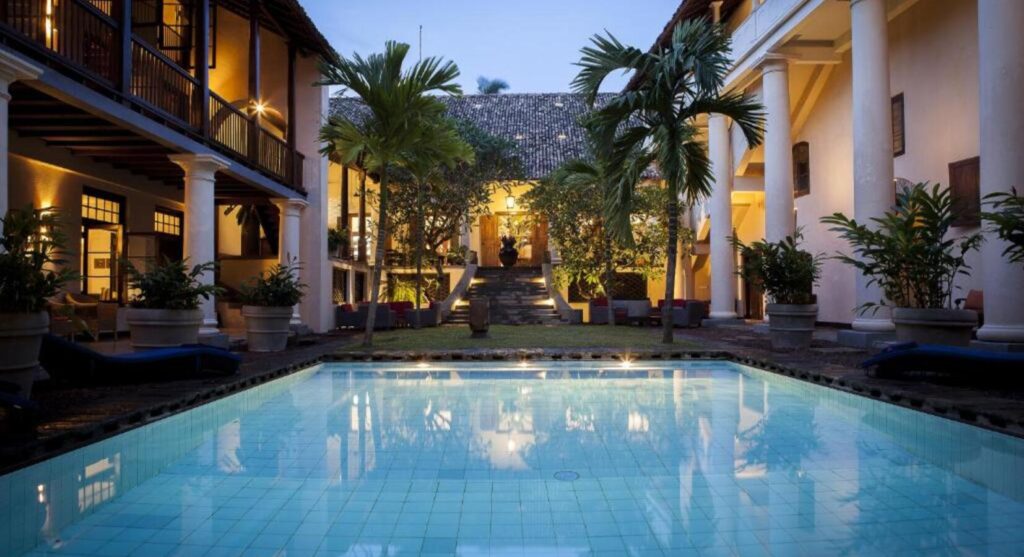
Pool at Galle Fort Hotel. Photo credit: Galle Fort Hotel.
Galle Face Green is the city’s only promenade, the place for afternoon walks and snacks. It stretches from Galle Face Hotel, where I stayed, to the Fort and features multiple street vendors.
My room at Galle Fort Hotel. Photo: Tor Kjolberg
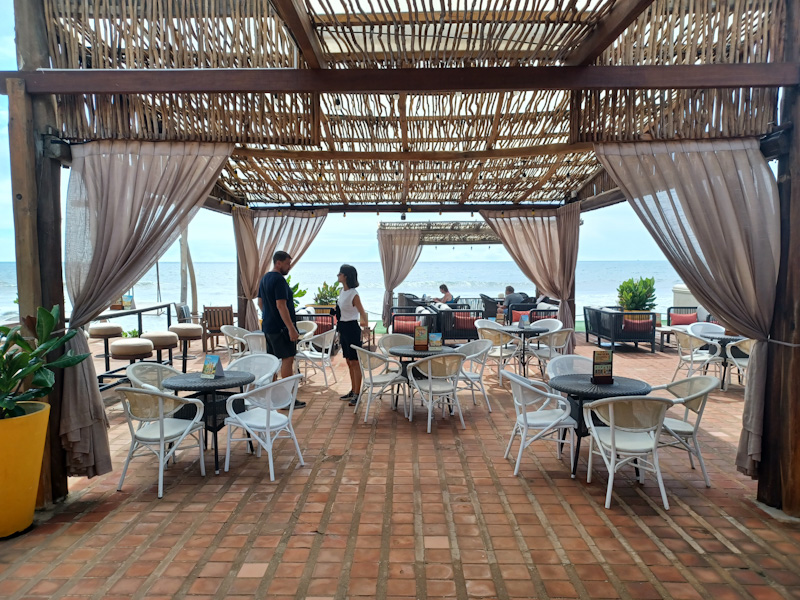
At Galle Fort Hotel, there are three restaurants: a fine-dining restaurant, a buffet restaurant, and an outdoor beachfront restaurant and bar. Every evening at 5.30 pm, they have a ceremonious lowering of the flag to the sounds of a bagpipe. Tips: Enjoy your afternoon tea, offering baked goods and desserts inspired by Sri Lankan cuisine.
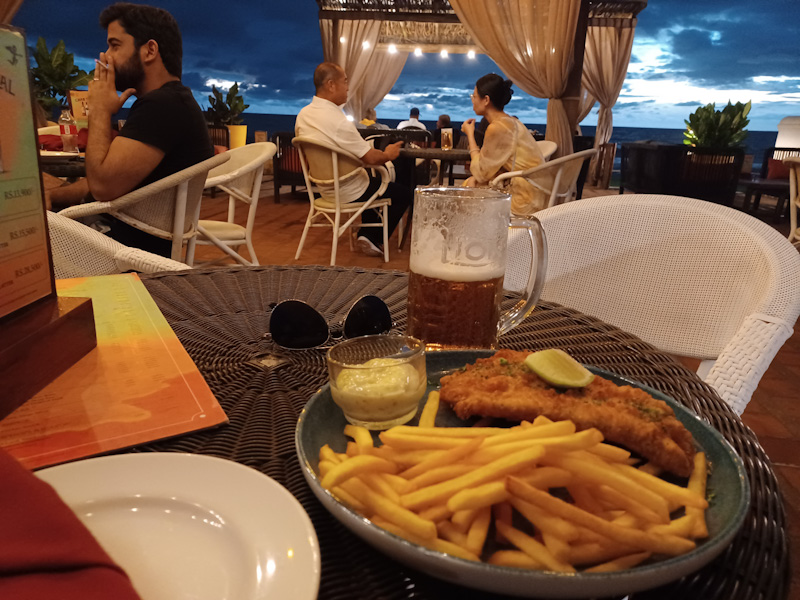
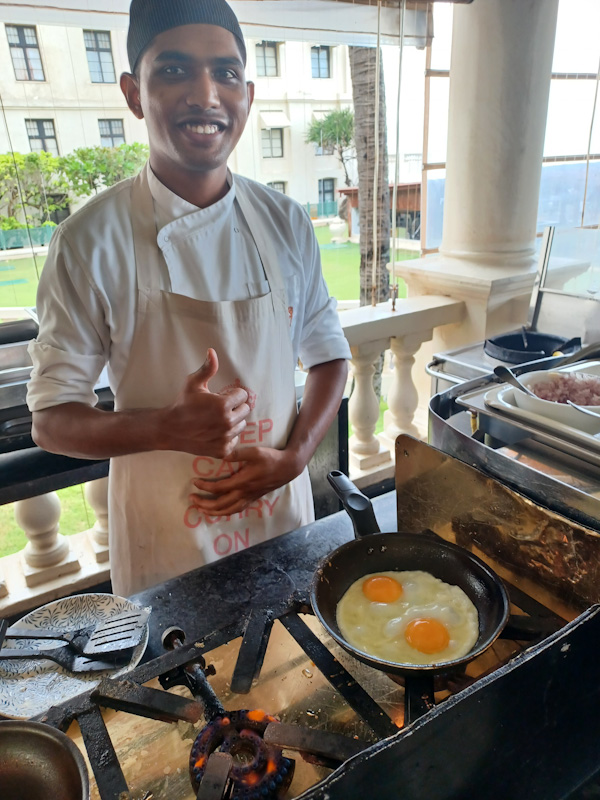
A room with a view. Photo: Tor KjolbergFrom the hotel terrace. Photo: Tor Kjolberg.I chose a delicious fish and chips at the terrace restaurant in the evening. Photo: Tor Kjolberg.Preparing my fried eggs in the morning. Photo: Tor Kjolberg.From the breakfast restaurant. Photo: Tor Kjolberg.The beachfront restaurant. Photo: Tor Kjolberg.From the Galle Fort Hotel reception. Photo: Tor Kjolberg.Relaxing atmosphere at the Galle Fort Hotel reception area. Photo: Tor Kjolberg.
If you’re interested in art, you should visit the open-air art market at the Green Path, a street running along the Viharamahadevi Park. Every day of the week, young artists display and sell their works along the road, making the street bright and colorful. Bargaining is acceptable.
Established in 1879, it is located at The Ridgeway Links, also known as the Anderson Golf Course. It is home to the Sri Lanka Golf Union, the governing body of Golf in Sri Lanka, and maintains links with The Royal and Ancient Golf Club of St Andrews in Scotland. According to our golf contributor, however, the golf course near Kandy is far better, more picturesque, and cheaper—but a bit of a drive unless you’re in Kandy or staying overnight.
Many travelers consider Colombo merely a gateway to other parts of Sri Lanka, such as the beaches or the central highlands, and spend only a night or two before moving on.
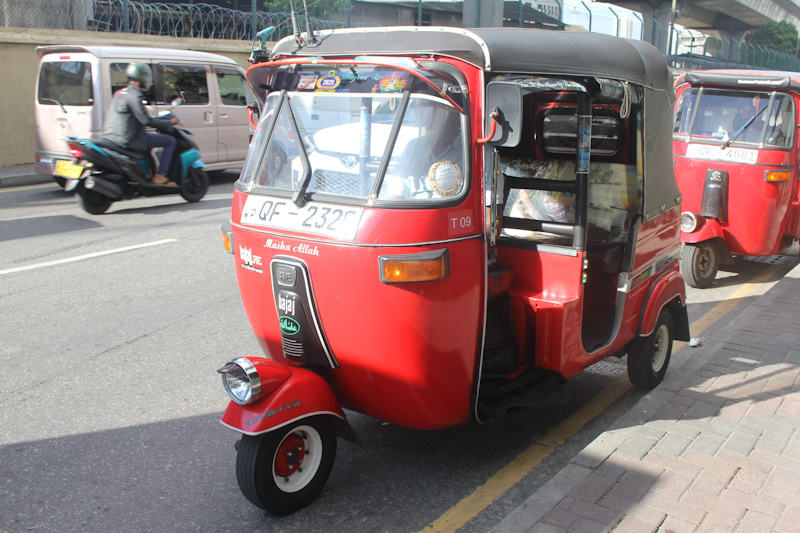
Tuk tuks were my favourite means of transport when visiting the attractions of Colombo. Photo: Tor Kjolberg.
Despite the capital’s rapid development, the city retains a unique character and a more laid-back feel compared to other Asian capitals, a fact often overlooked by visitors. Some visitors might find the initial combination of bustling traffic and colonial buildings a bit overwhelming, but this is precisely where its unique charm lies.
Next time in Sri Lanka, I intend to take the time to explore Colombo’s unique character.
The travel agency Explore Sri Lanka, the only agency in Norway solely focused on Sri Lanka, can tailor a visit for travelers interested in the country. The agency is now planning to arrange long-term stays (3 weeks) in Sri Lanka, including Colombo.
The Svalbard Global Seed Vaultis a secure backup facility for the world’s crop diversity on the Norwegian island of Spitsbergen in the remote Arctic Svalbard archipelago. Let’s have a look inside the world’s largest secure seed storage.
The Seed Vault, carved into virgin solid rock, was opened on 26 February 2008. The seed storage area itself is located more than 100 meters inside the mountain, beneath layers of rock that range from 40 to 60 meters thick.
Climate change has been affecting farms for years, with floods washing away crops, unpredictable weather wiping out harvests, and drought killing whole yields. Seed banks are a clever way to make sure that thousands – sometimes millions – of fruit and vegetable varieties don’t go extinct despite these threats.
Svalbard globale frøhvelv provides long-term storage for duplicates of seeds from around the world, conserved in gene banks. This includes the security of the world’s food supply against the loss of seeds in gene banks due to mismanagement, accidents, equipment failures, funding cuts, war, sabotage, disease, and natural disasters. The Seed Vault is managed under terms spelled out in a tripartite agreement among the Norwegian government, the Crop Trust, and the Nordic Genetic Resource Center (NordGen).
“Perpetual Repercussion”, an illuminated fiber optic art installation created by the Norwegian artist, Dyveke Sanne, that decorates the entrance.
A global icon
The entrance portal is a simple concrete construction that has gained status as a global icon, in part due to “Perpetual Repercussion”, an illuminated fiber optic art installation created by the Norwegian artist, Dyveke Sanne, that decorates the entrance. Many Svalbard visitors go to the Vault’s entrance to take selfies and tick off “been there”.
The massive vault, set amid cold, dry permafrost, now holds thousands of varieties of essential food crops, including beans, wheat, and rice. There are over 1,378,238 samples of 6,521 crop species, and the volume is constantly growing.
Seeds arriving the seed vault.
“During 2024, 61 seed gene banks deposited 64,331 seed samples, including 21 from institutes that deposited seeds for the first time this year,” says Åsmund Asdal, the Svalbard Global Seed Vault coordinator.
Around 75 per cent of global domestic vegetable varieties have been permanently lost since the 1900s because of monoculture farming, according to the FAO. This popular farming technique involves growing just one crop species in a field at a time.
Items that preserve and store genetic material, such as seeds, tissues, or DNA samples – are sent from all over the world to Svalbard in a bid to keep native – and sometimes ancient – crop varieties alive.
The Norwegian government entirely funded the Seed Vault’s approximately 45 million kr (US$8.8 million in 2008) construction cost. Norway and the Crop Trust pay for operational expenses. Storing seeds in the vault is free to depositors.
The seed storage area has a cooling system to maintain a temperature of -18 °C and keep it constant.
Cooled to minus 18°C
The mountain mass has permafrost, with a stable temperature range of -3 to 4°C. The seed storage area has an additional cooling system to maintain a temperature of -18 °C and keep it constant. The public power plant in Longyearbyen provides electricity for the Seed Vault. In addition, the Seed Vault is equipped with generators that provide electricity in the case of a power outage.
While countries may have their own national or even regional seed banks, it’s crucial, like any critical data, to have a ‘backup’. For gene banks, this is Svalbard, where the Arctic tundra provides an ideal, secure climate for storage.
There are over 1,378,238 samples of 6,521 crop species, and the volume is constantly growing. Photo: Dag Endresen/Wikimedia commons
The Seed Vault functions like a safe deposit box in a bank
The bank owns the building, and the depositor owns the contents of their box. The Government of Norway owns the facility, and the depositing gene banks own the seeds they send. The deposit of samples in Svalbard does not constitute a legal transfer of genetic resources. In gene bank terminology, this is called a “black box” arrangement. Each depositor signs a Deposit Agreement with NordGen, acting on behalf of Norway.
The Agreement makes clear that Norway does not claim ownership over the deposited samples and that ownership remains with the depositor, who has the sole right of access to those materials in the seed vault. No one has access to anyone else’s seeds from the seed vault. NordGen maintains the database of samples and depositors.
Illustration of Svalbard Global Seed Vault.
The Facility
The seed store facility consists of three halls, each with a base measuring about 9.5 x 27 meters. Each hall can accommodate about 1.5 million seed samples, giving the Seed Vault a total capacity of 4.5 million seed accessions. Only one of the three halls is in use, cooled to -18°C, and equipped with shelves for seed boxes. When this hall reaches capacity, the second storage hall will be prepared and cooled to the level needed for seed conservation.
Inside the World’s Largest Secure Seed Storage – Svalbard Global Seed Vault, Tor Kjolberg reporting.
According to Time Magazine, Löyly Sauna and Restaurant in Helsinki is one of the world’s most incredible places.
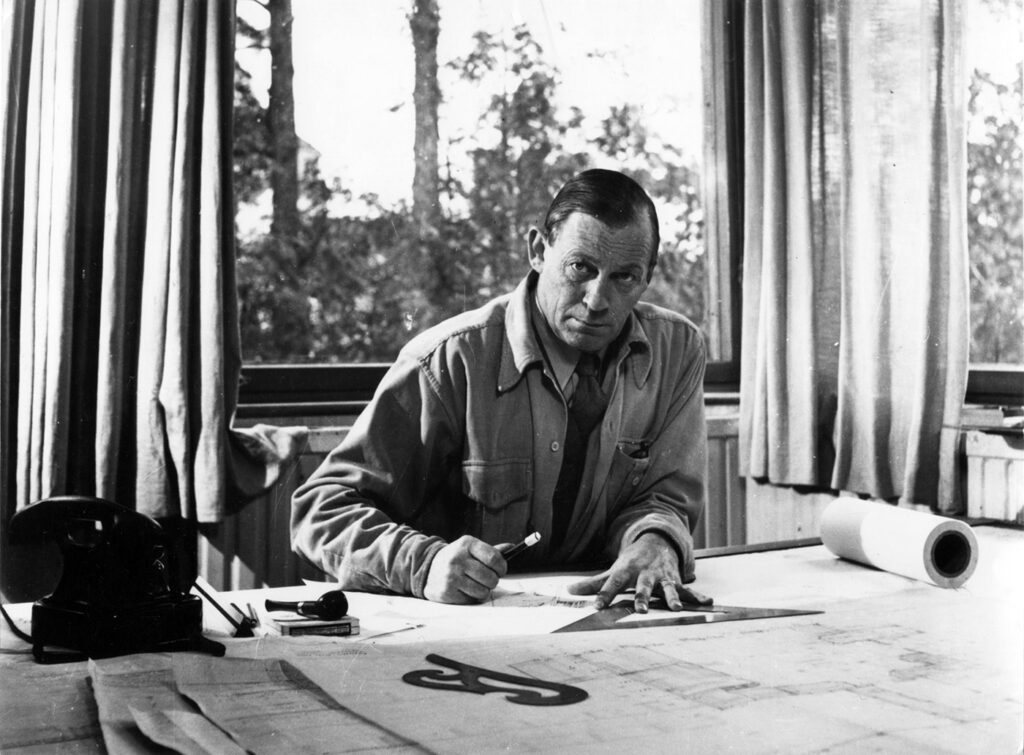
The ancient tradition of public saunas had its renaissance in Finland in 2016 after architect Ville Hara and his partner Anu Puustinen spent six years completing the magnificent Löyly building in Helsinki.
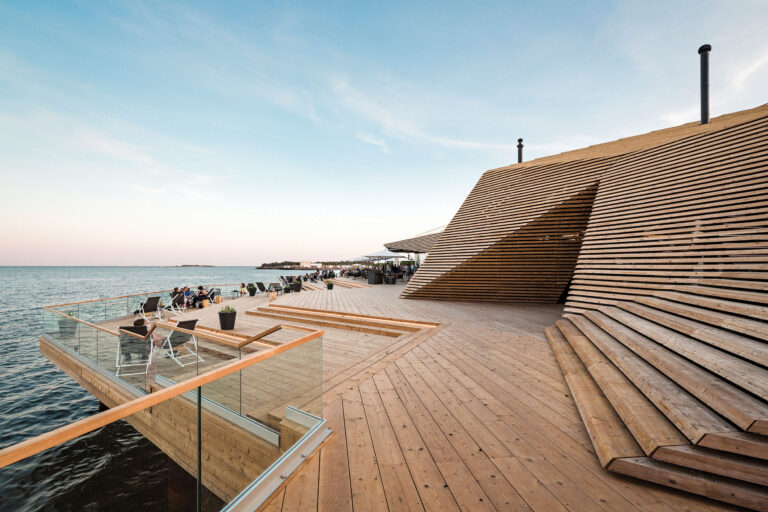
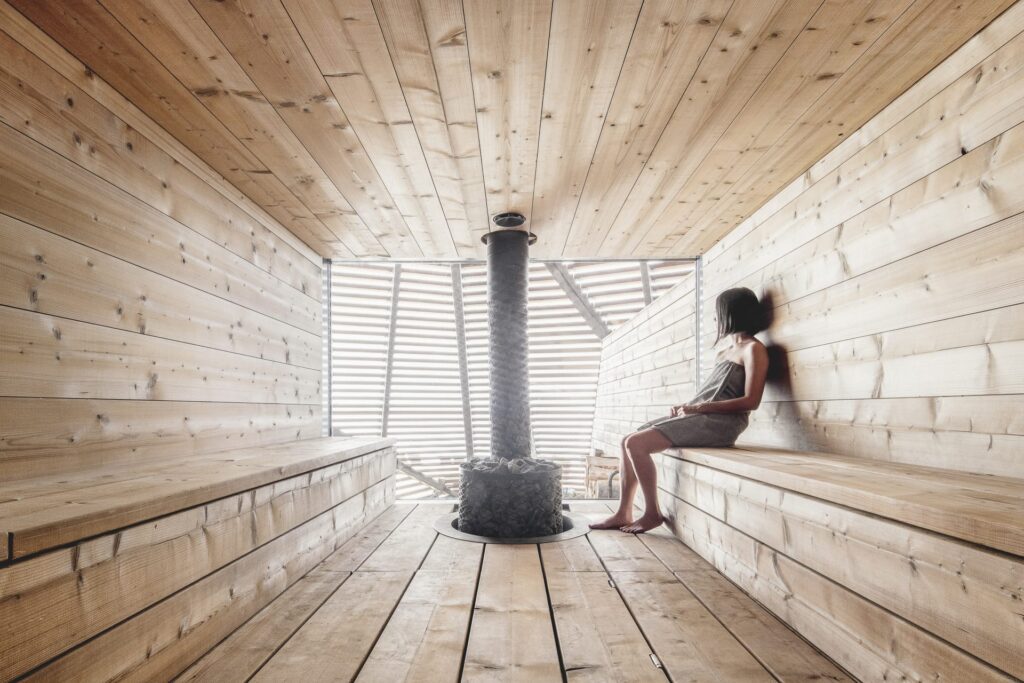
Loyly is a traditional wood-fire sauna perched right on the Baltic Sea (the term löyly refers to the steam rising off the hot stones). This means it offers fantastic views during the day, and provides immediate access to the freezing water for a shocking plunge between sauna sessions.
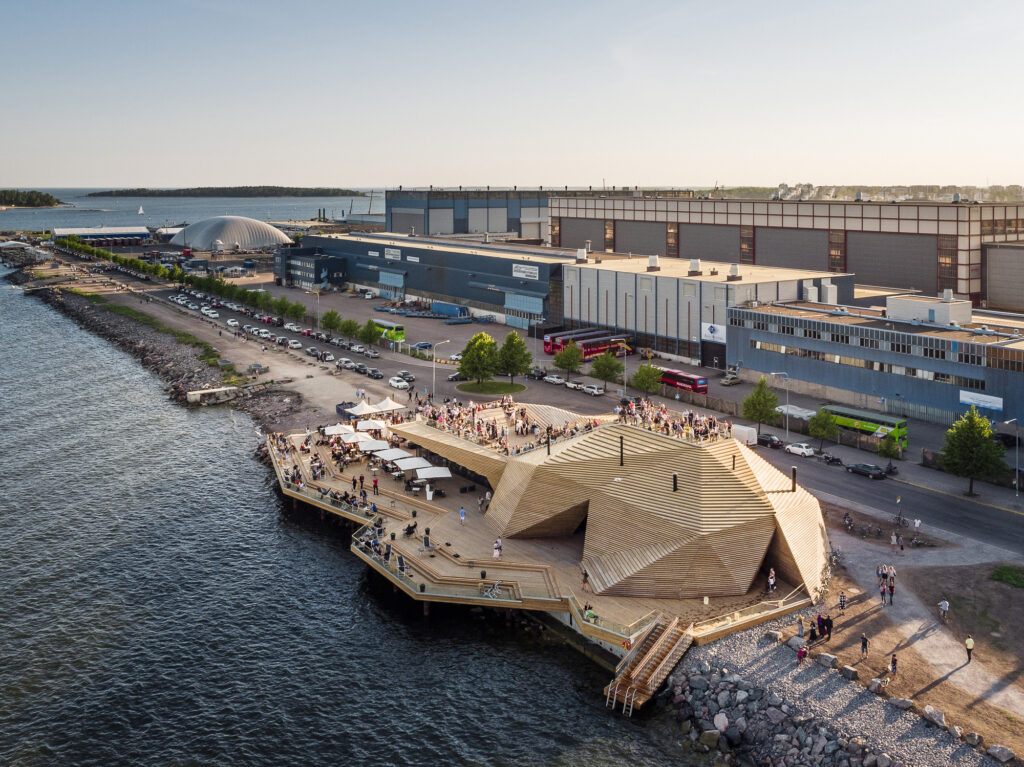
. Being less than 2 kilometers from the city center, Löyly is very central, yet its landscape resembles that of the outer archipelago.
The project started in a former industrial area
The project started with the city of Helsinki’s initiative. Hernesaari is a former industrial area on the Helsinki seashore that is being developed into a residential area. New uses have been developed for the area while awaiting future changes. There is a cruise ship harbor in Hernesaari, and the city wanted to activate the area with new functions and to serve visitors with new attractions. The project began in 2011, with the design of a temporary sauna village at the farthest end of the peninsula. The concept proved financially unsustainable, so the first client left the project. Then, with the second client, a floating sauna was developed, but the idea proved impossible because the site faces the open sea, and a floating structure couldn’t withstand high waves and ice pack pressure.
“Sauna is almost a religion here in Finland. There are countless ways to heat saunas, and everyone has their own rituals they think are best. The art of creating the best possible löyly is a bit like wine tasting. Foreigners probably don’t notice the difference,” says Hara.
Loyly is a traditional wood-fire sauna perched right on the Baltic Sea.
Like being in the outer archipelago
There are many saunas in Helsinki, and most hotels offer one as well. But Löyly regularly comes up in recommendations from both tourists and locals. The site is unique. Being less than 2 kilometers from the city center, it is very central, yet its landscape resembles that of the outer archipelago. The plot is situated in a future coastal park that will be part of a broader “Helsinki park” connecting the capital city to the sea. The building was designed to be slim and elongated to avoid cutting the narrow park strip. The volume is kept as low as possible to avoid blocking views from future residential blocks. Instead of building a conventional structure, the sauna is developed as an easygoing, faceted building that is more part of the park than a traditional building. When the wooden building turns gray, it will become more like a rock on the shoreline.
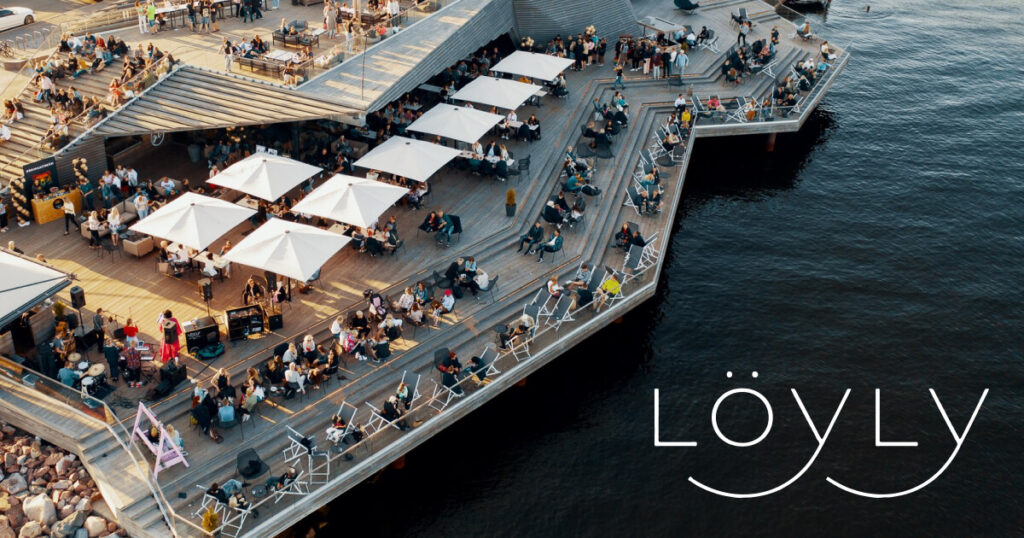
On weekends, there is a DJ and a bar in the typical Scandinavian minimalistic restaurant.
Helsinki’s hottest hangout
Since opening, the sauna has become Helsinki’s hottest hangout, and not just because of the temperature. The sauna is partially submerged in the water, allowing guests to take a dip, or they can lie on the terrace, which is built on stilts. On weekends, there is a DJ and a bar in the typical Scandinavian minimalistic restaurant. If you feel like having a sauna trip, you can bring drinks into the sauna with you, so why not enjoy a Finnish Long Drink while sweating your face off?
The building consists of two parts: public saunas and a restaurant. The saunas and public spaces open to the sea, offering interesting views of the city center and even the open sea. The atmosphere is calm, and the spaces are dimly lit. Different areas are conceived as spaces within a space. Interesting views open between closed spaces as you move from one location to the next.
The building consists of two parts: public saunas and a restaurant.
Combining fine dining with a sauna
You enter the restaurant, a light, open space. From there, a dimly lit sauna path leads to the bathing area. Shoes are left in a wardrobe before you go to the reception desk, where you get a locker key and a towel. Dressing rooms and showers are separate for men and women. A leather curtain covering the door indicates entry into the unisex area, where visitors must wear a bathing suit. Traditionally, men and women bath separately and naked.
“We wanted to develop sauna culture so that there would be a possibility to bathe together with your friends, regardless of gender. This makes the sauna experience available to foreign visitors who might not be used to bathing naked,” says the management.
Denmark sets fresh standards for forward-thinking cities. Modern urban areas need new models that support people and the planet. Many cities face rising pollution, housing pressure, and limited green space. These issues grow daily as populations increase. Denmark redefines urban sustainability and shows strong leadership through smart planning and climate-focused action.
Many places still rely on outdated systems. However, Denmark links innovation with social wellbeing and nature, creating models that other cities can adapt with success worldwide today. This approach stands out through its focus on community, clean energy, and resilient design that keeps life healthy and enjoyable for residents.
Smart City Planning Rooted in People and Nature
Cities in Denmark use smart planning that puts people and nature first. Human-focused design guides housing, transport, and public facilities to support daily life and wellbeing. Green pockets sit within neighborhoods to keep residents close to nature. Many cities pack buildings tightly, offer limited outdoor space, and push cars as the main transport option. That approach harms health and community connection.
Denmark, on the other hand, promotes walkability and safe cycling routes that link homes, schools, and workplaces. Planners create social spaces that inspire interaction and active lifestyles. People enjoy healthier routines and stronger community ties. Car-heavy layouts in other places reduce movement and weaken local connections. Denmark’s model inspires balanced, nature-friendly urban growth.
Copenhagen: A Living Model of Sustainable Urban Mobility
Copenhagen demonstrates how effective mobility design supports daily life and community health. Residents choose bicycles, trains, and buses because the system works for short and long trips. Of course, cycling paths stay wide, safe, and connected across the city. Public transport integrates well with these routes, so people switch transport options with ease. Many places still rely on cars, which increases congestion and pollution. Then again, Copenhagen shows that cities improve air quality and reduce noise with smart transport choices. Investment in bike lanes, reliable buses, and metro lines lifts the quality of life for residents. Active travel strengthens physical health and builds stronger neighborhood connections through everyday contact and movement.
Copenhagen shows how safe cycling, reliable public transport, and reduced car use improve health, air quality, and daily life. Photo: Pixabay/Pixels
Clean Energy Transition Powering Urban Living
Denmark leads with clean energy solutions that support modern city life. Wind turbines supply large amounts of electricity and reduce carbon output—district heating networks warm homes with energy that would go to waste in other places. Solar panels appear across schools, offices, and homes to support local power.
Cities that depend on fossil fuels struggle with high emissions and rising energy costs. Denmark shows that renewable energy fits daily life without disruption. Residents gain reliable power, lower long-term costs, and cleaner air. Hence, families, businesses, and public services function with less impact on the planet. Denmark’s model inspires cities to upgrade energy systems with practical, community-focused solutions that support both comfort and climate goals.
Denmark powers city life with wind, solar, and district heating to cut emissions and support cleaner, more affordable energy use. Photo: Pixabay/Pexels.
Moving Abroad to Greener Cities: Lessons for Global Residents
People who dream of relocating to greener cities look at Denmark for guidance. Families, students, and professionals explore life in Copenhagen or Aarhus to enjoy cleaner living and strong communities, even moving overseas and starting fresh here. Many start preparing for an international move after comparing lifestyles and long-term benefits. Denmark offers efficient transport, safe cycling, and easy access to nature, which attracts global attention.
An international relocation demands research, planning, and realistic expectations. Newcomers learn local customs, climate habits, and community values to fit in smoothly. Denmark’s model inspires people to seek places that support wellness, fairness, and environmental care. Relocating to a greener city shapes future habits and nurtures healthier daily routines.
Many people consider relocating to Denmark after seeing how Denmark redefines urban sustainability, offering healthier living, strong community values, and greener daily habits. Photo: Zhicheng Zhang/Pexels.
Circular Economy Culture That Reduces Urban Waste
Denmark supports a circular mindset that cuts waste and keeps materials in use for longer. People reuse, repair, and recycle instead of discarding items. Local schemes collect organic waste to produce biogas for heat and electricity. One of Denmark’s key environmental actions is reducing greenhouse gas emissions by 70% by 2030 compared to 1990 levels. Schools and community groups teach repair skills to reduce landfill pressure. In contrast, many cities still depend on single-use items that fill landfills quickly. Denmark treats waste as a resource with value. To support this culture, cities encourage:
Shared repair workshops
Deposit-return programs for packaging
Reuse centers for furniture and goods
Companies innovate with packaging, clothing, and building materials to reduce waste. This approach cuts pollution and inspires responsible habits across generations.
Waterfront Regeneration and Climate-Resilient Architecture
Danish cities redesign waterfronts for public use and climate readiness. Parks, swimming zones, and cultural sites sit next to the water and stay open to everyone. However, these areas also protect neighborhoods from storms and rising sea levels. Architects design buildings with elevated structures, flood-ready foundations, and strong materials. Many coastal cities focus on short-term construction and face damage during extreme weather.
Denmark invests in designs that guard people and infrastructure without blocking access to nature. Green roofs, energy-smart insulation, and water-saving systems cut costs and support healthy living. Similarly, public involvement shapes waterfront plans so communities gain active and safe spaces. Denmark proves climate-ready design creates value, recreation, and long-term security.
Community-Driven Ecosystems Encouraging Social Sustainability
Danish neighborhoods grow stronger through community-driven spaces and programs. Residents meet, share ideas, and support each other through local projects. Co-living concepts reduce isolation and bring people of different ages together. Community gardens, shared kitchens, and workspaces invite participation and learning. Nevertheless, some cities design housing with limited interaction, which weakens social ties. Denmark includes young people in planning events, school projects, and environmental actions. This involvement develops confidence and a mindset of responsibility for shared spaces. Local councils encourage open decision-making that invites feedback and builds trust. Residents develop pride and protect neighborhoods. Denmark shows that social support and inclusion stand at the heart of a healthy, sustainable urban life.
How Denmark Redefines Urban Sustainability: Global Lessons Cities Can Learn
Cities worldwide study how Denmark redefines urban sustainability to shape stronger urban strategies. Leaders explore housing ideas, transport models, and clean energy systems that support daily life. Denmark shows progress grows from people and nature working together. Cities should adapt Danish ideas to local culture, climate, and budgets, not copy them without thought. To clarify, Danish success comes from community involvement, strong values, and long-term planning. Consequently, cities that prioritize health, green access, and social connection see lasting improvement. Denmark encourages open cooperation between residents, schools, and city councils to build trust and action. After all, positive change starts with small steps. Denmark inspires cities to act today and create places that support wellbeing, respect the planet, and improve life for everyone.
Final Thoughts on Denmark’s Urban Model
Denmark shows a clear direction for greener, healthier cities. How Denmark redefines urban sustainability inspires action grounded in people, nature, and smart design. Cities gain cleaner air, stronger communities, and better daily living through simple, steady change. Start small, act with purpose, and create urban spaces that support both life and the planet.
Alex Fisher
How Denmark Redefines Urban Sustainability, written dedicatedly for Daily Scandinavian by Alex Fisher. Alex writes about sustainable living and smart urban development. He shares practical insights that help readers understand how cities improve daily life through greener choices. Outside of writing, Alex explores eco-friendly communities around the world to learn and share real solutions.
The Norwegian Panorama Cabins (Panoramahyttene), located in the Haugesund region, are among the finalists for the prestigious AHEAD Awards Europe 2025, celebrating the best in hospitality and design worldwide.
With annual ceremonies in Singapore, New York, Dubai, and London, the AHEAD Awards celebrate the world’s most inspiring hospitality design and the creative teams behind it. As the only Norwegian finalist, Panoramahyttene brings international attention not just to the project itself, but to the entire Haugesund region.
“It feels almost surreal to see Panoramahyttene among the finalists for such a prestigious award. Looking at both this year’s and past finalists, we’re truly honored to be in such a great company,” says Tove V. Bråthen, Marketing and Operations Manager.
Nestled in the dramatic coastal landscape of Western Norway, Panoramahyttene stands out for its seamless blend of architecture and raw natural beauty.
Recognized for their spectacular cabins by the sea
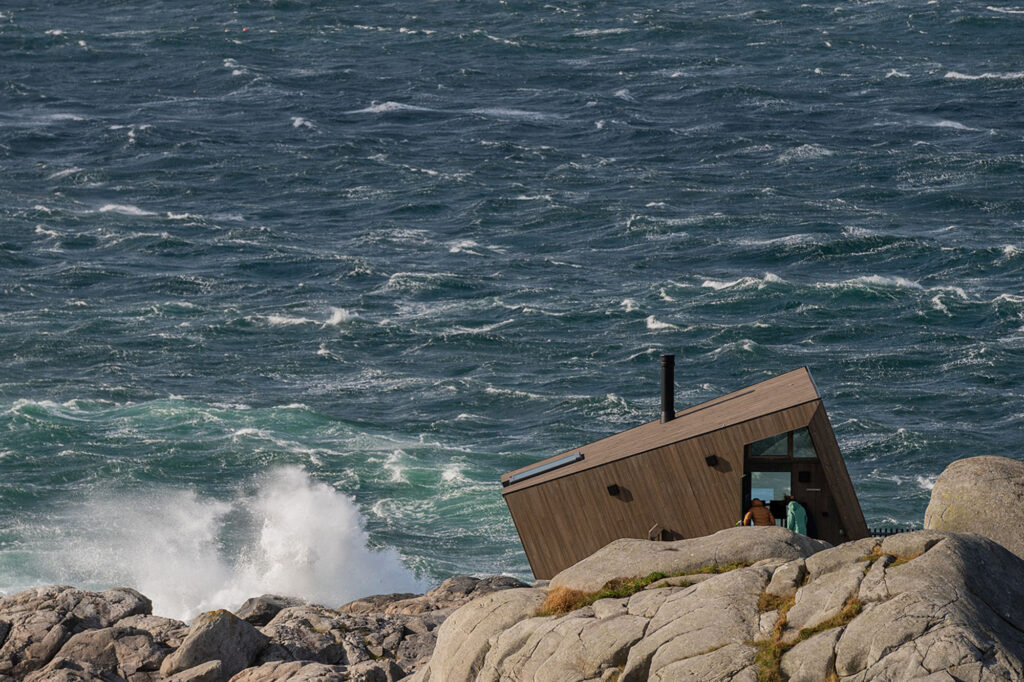
Nestled in the dramatic coastal landscape of Western Norway, Panoramahyttene stands out for its seamless blend of architecture and raw natural beauty. Here, the sky feels endless and the horizon stretches wide, with shifting light and weather adding a new layer to the experience.
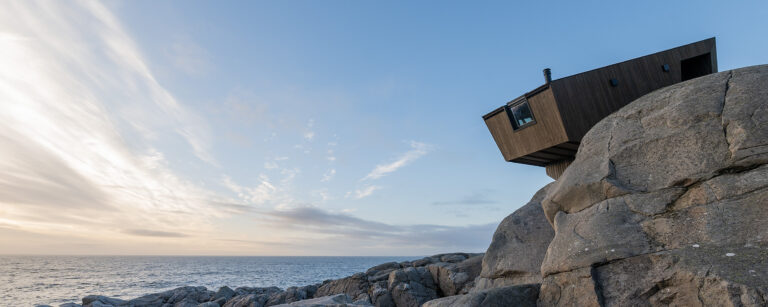
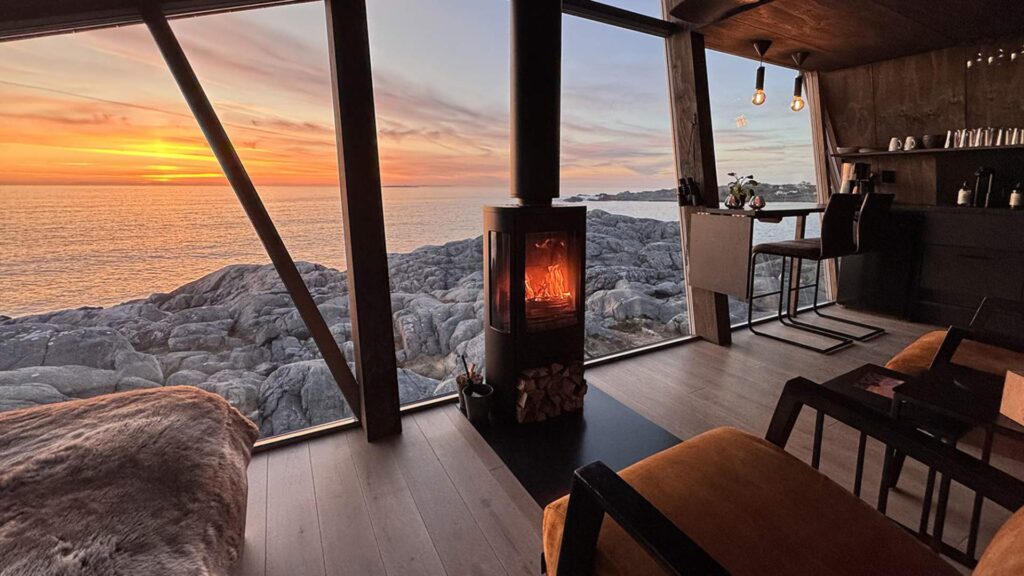
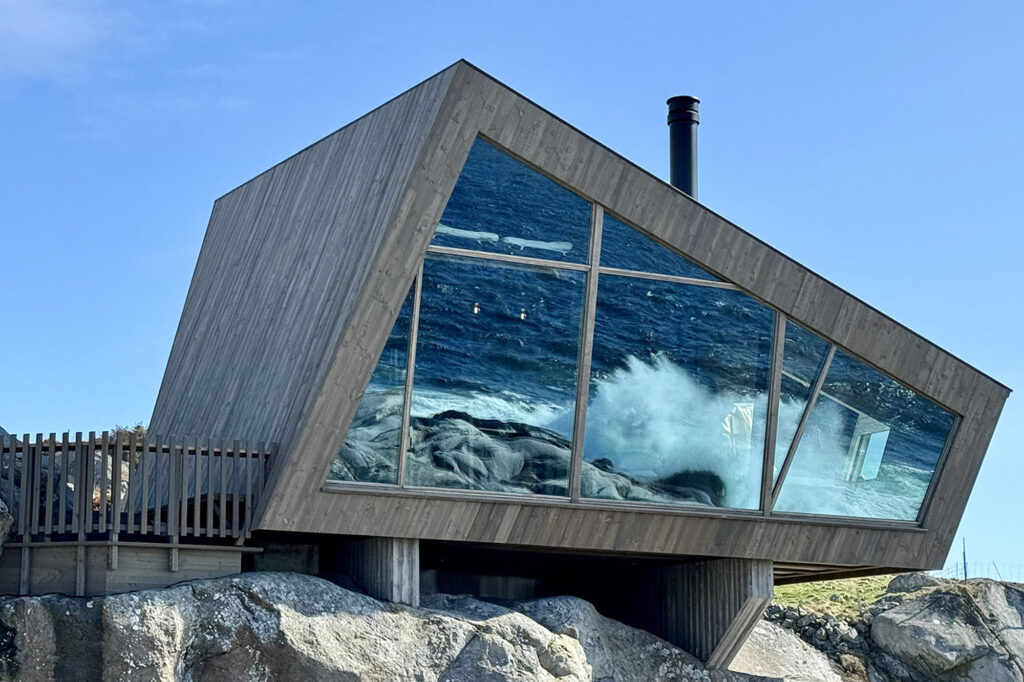
Perched on the rocky edge above the sea, the cabins invite guests to experience nature up close, yet from a calm and comfortable space. Elevated placement provides an unbroken 180-degree panorama, with large windows on the front, sides, and roof drawing the landscape into the interior.
Inside, dark tones frame the ever-changing light, turning nature itself into the artwork.
Inside, dark tones frame the ever-changing light, turning nature itself into the artwork. No television is needed. Here, the 7.5-metre window offers an uninterrupted, real-time view of Norway’s raw coastal drama.
Designed by HOLON arkitektur – inspired by nature
When designing the cabins, the architect looked to nature itself for guidance. Inspired by Ice Age boulders scattered across the terrain, he created cabins that seem carved by time; sculptural yet subtle, luxurious yet low-impact, entirely in tune with the landscape around them.
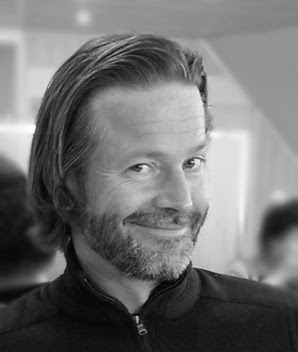
Architect Roald Bø
The architect Roald Bø explains: “Our goal was to let the architecture follow the rhythm of the terrain.” The cabins aren’t placed in nature; they’re part of it.
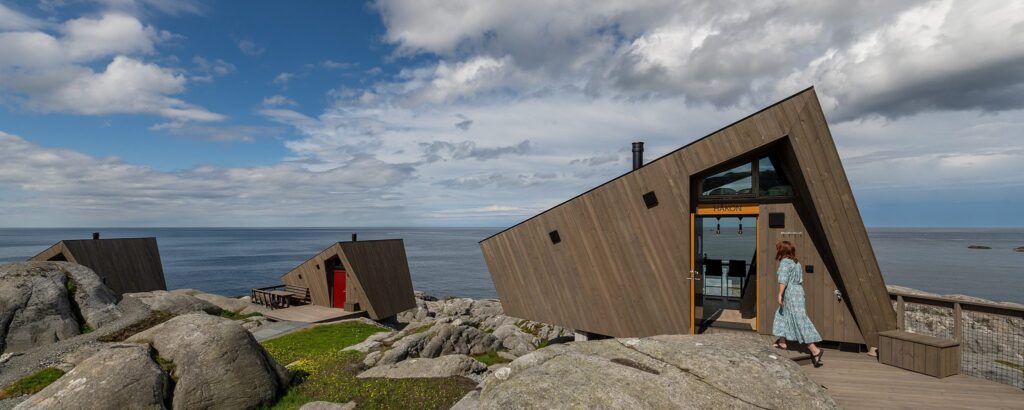
The way the cabins are designed, with their longitudinal orientation towards the sea and large panoramic windows, provides a unique landscape experience.
The winner is…. revealed in November
The winners of the AHEAD Awards Europe will be announced later this month at a ceremony in London.
“We look forward to attending the ceremony, and no matter the outcome, it’s a huge recognition for Panoramahyttene to be a finalist in the category “Lodges, Cabins & Tented Camps”, Bråthen concludes.
Perched on the rocky edge above the sea, the cabins invite guests to experience nature up close, yet from a calm and comfortable space.
Panoramahyttene among finalists for AHEAD Awards Europe 2025
Panoramahyttene, located in the Haugesund region, has been shortlisted for the prestigious AHEAD Awards Europe 2025, celebrating the best in hospitality and design worldwide.
With annual ceremonies in Singapore, New York, Dubai, and London, the AHEAD Awards celebrate the world’s most inspiring hospitality design and the creative teams behind it. As the only Norwegian finalist, Panoramahyttene brings international attention not just to the project itself, but to the entire Haugesund region.
“It feels almost surreal to see Panoramahyttene among the finalists for such a prestigious award. Looking at both this year’s and past finalists, we’re truly honored to be in such a great company,” says Tove V. Bråthen, Marketing and Operations Manager.
The way the cabins are designed, with their longitudinal orientation towards the sea and large panoramic windows, provides a unique landscape experience.
About Panoramahyttene
Location: Sandhåland in the Haugesund region, Western Norway. Established: 2023. Design: HOLON arkitektur. Contractor: Byggmester Helge Kvale. Concept: Minimal-impact luxury cabins blending architecture and nature—capacity: 3 cabins, with a capacity of 4 adults each.
In his first novel since winning the Nobel Prize in Literature in 2023, Fosse navigates the dark waters of a coastal Norwegian town. ‘Vaim’ is the first book in a new trilogy by Norwegian Nobel Prize winner Jon Fosse.
Jatgeir travels from the fishing village of Vaim to the city of Bjørgvin in search of a needle and thread. Cheated twice, he returns to his boat, where he falls asleep as waves rock the hull. Soon, he is awakened by a woman calling his name from the quay. There stands Eline, the secret love of his youth—and the namesake of his boat—with a packed suitcase. Eline pleads to come aboard. In what follows, this single encounter reverberates across three narrators, three deaths.
As the story unfolds, relationships become complicated and the stakes higher, and Fosse shows his mastery of the unnerving atmosphere and page-turning plot.
“The act of writing,” the Nobel Prize-winning novelist and playwright Jon Fosse has said, “is one of listening.” His novels, for all their stylistic experimentation and temporal slipperiness, have a distinctly oracular quality: tales of complex lives in Norway’s fjords, they compress lifetimes into shining moments, and they are told to us earnestly and directly, if poetically.
New Trilogy by Norwegian Nobel Prize winner Jon Fosse, reported by Tor Kjolberg




















 Next time in Sri Lanka, I intend to take the time to explore Colombo’s unique character.







 ***************************************