
Indian Destination Marketing Company Looking to Scandinavia

YS Hospitality and its sister company Establishing Brands are international destination and marketing consultancies, located in Gurgaon, India.  When the group wanted to expand into the Scandinavian market, it was a natural choice for them to contact Daily Scandinavian. The Indfian destination marketing company is looking to Scandinavia for outbound as well as inbound travelers.

You might also like to read: Cycled from India to Sweden for Love

YS Hospitality is a reputed name in the Asian Market for Networking and business development offering creative solutions and implementation support at every stage.

Indian Destination Marketing Company Looking to Scandinavia
YS Hospitality is a reputed name in the Asian Market

What the company do
YS and its daughter company Establishing Brands do are helping tourism operators to develop better understanding of market trends and agent network. The ambitious strategies and campaigns planned by the company aim to make companies’ brands and identity more visible and bring in added business traffic from the Indian and the neighboring South Asian sub-continent.

In other words, the consultancy help companies all over the world to create a platform for themselves through innovative research and development.

Indian Destination Marketing Company Looking to Scandinavia
Looking for travelers from Asia? YS Hospitality is there to help you

The beginning
Ms. Duggal is a well-seasoned professional in the field of travel and trade for over two decades. She serves as the front figure of YS Hospitality and as such serves internationally recognized travel brands with her vast and diversified experience. Her marketing vision includes innovative ideas for product development aiming to generate more business. With a keen understanding of her clients’ business strategies and challenges combined with her innovation expertise, she gives partners the global perspective necessary in today’s destination marketing.

Interview with founder and director Ms Preeti Duggal
When Daily Scandinavian was approached by YS hospitality and realized the importance of the group’s work, we were of course curious. So curious that we contacted Ms. Duggal to find out more about how her companies can help overseas hospitality customers.

Indian Destination Marketing Company Looking to Scandinavia
Founcer and director of YS Hospitality, Ms. Preeti Duggal

Ms. Duggal, could you please tell us a little more about yourself and the work you do at YS Hospitality?
“We are providing solutions to our travel partners.  We work for travel companies based in different parts of the world and help them to develop business from the Indian Market.  So, our main idea at present is to develope business for travel companies based in Scandinavia which would like to have business from the Indian Market.

You might also like to read: Record Number for Northern Lights Tourism

We have a dedicated team of people working together and each one of them is in charge of specific profiles and as such taking an ownership in the business development of a specific destination.  Our IT and PR business development activities keep track of market trends which we share with each destination and advise them what is required to have a closer look on.”

Indian Destination Marketing Company Looking to Scandinavia
YS Hospitality serves internationally recognized travel brands with its vast and diversified experience

What are your visions for the company?
“YS aims to take up any challenges for any travel company based anywhere in the world.  We strive to build and develop business from the Indian, Asian or any other markets that our partners wish to develop.”

We notice that you have customers all over the world, from Australia to Europe. What is the process of working with a brand?
“We approach different DMCs (Destination Marketing Companies) and try to understand their needs if they are interested in the Indian market.  We act as their local contact in the Indian or the neighboring markets in which they want more business from. A dedicated team under my guidance then conducts market surveys and filter out the potential clients who wish to promote that specific destination.”

Indian Destination Marketing Company Looking to Scandinavia
The team at an Sri Lanka destination marketing event

Since you first got involved in the tourism industry, has your view on destination marketing changed?
“As a destination marketing company our focus is more on having a perspective on growing any given destination by identifying the marketing trends which are required for that particular destination.

You might also like to read: Scandinavian Travel Awards 2018 Revealed

We study customer behaviors and find it very interesting and challenging to change strategies whenever a market indicates so.”

Indian Destination Marketing Company Looking to Scandinavia
Size comparison between India and Scandinavian countries

Based on your experience, what is the main challenges for destination marketing in today’s market? Although pivotal to the travel and tourism system, the destination is widely acknowledged to be one of the most difficult products to manage and market. 

“Over the coming decade, the challenges facing destination marketers are likely to be even greater with a whole host of issues likely to impact the future marketing of destinations.

We need to act as a strong unifying force that brings all component parts of the destination together to develop it further.”

Indian Destination Marketing Company Looking to Scandinavia
“We are providing solutions to our travel partners,” says Ms. Duggal

Do you have, and if so, noticed any differences in travelers’ behavior?
Yes, the travel industry has become heavily service intensive. Word-of-mouth is still a strong tool used by visitors to seek information about destinations.

There has been a shift and a comparative range regarding business and leisure travelers. To summarize, the preferences for business travelers are as follows: Location is key and so is the need to be constantly connected. Emphasize the necessity for all-inclusive amenities.

When it comes to leisure travelers, they are generally more price sensitive. Reviews and recommendations are important as well as information on packages and specials which requires extra on-site hotel facilities and other accommodation.”

 Can you tell us a little about brand initiatives you have taken this year?
“For us in YS Hospitality it is important to participate in various tradeshows, networking meetings, bulk emailing and launching promotional deals.”

Indian Destination Marketing Company Looking to Scandinavia
Let your customers experience the real Asia

Your mission statement is: “We market you the right way!” How can a customer in for instance Europe or Australia benefit from your services? What exactly do you do?
“We are basically a destination marketing and representation company which represents a few niche categories of international DMC’s: For Australia and Europe for instance, we are the persona of those DMC’s in India and their marketing partners. Our dedicated team works to initiate business from India or neighboring states to that destination – or you can say that DMC.”

How important is content marketing for your customers?
“Travel industry marketing isn’t just about posting images, snapshots and telling stories about having fun in the sun.

There are some significant challenges when it comes to successful storytelling in this field, not to mention plenty of competition.

With the content has started to grab customer’s attention the destination is in the process of being marketed, the content must be very refined.”

Indian Destination Marketing Company Looking to Scandinavia
Air India is considering to provide point-to-point connectivity to Scandinavian regions

What are some key learnings that you have had since you launched YS Hospitality?
“As we go into different destinations to market them, we learn that everyone has a different type of client base.  We have expertise to understand this and to initiate different tailor-made strategic marketing. For example, understanding the dynamics between agents working in Kenya and agents working in Europe is essential.

Indian Destination Marketing Company Looking to Scandinavia
The Indian market has enormous potential

So, it is a continuous search to find and identify different agent networks in different destination markets.

Not only this, as we get into international assignments we are developing networks not only in India but in different countries as well. So, it is always a new leaning at every step as we develop and penetrate markets for them.  We continuously understand that every given destination has a different type of client tiers.“

Thank you so much, Ms. Dugal

Indian Destination Marketing Company Looking to Scandinavia
An YS client

What customers say
Steve Galpin, Managing Director of CHR Travel in London says, “Preeti started to work for us in 2012 with the directive to expand our market awareness in India through sales and agent marketing. She has proved to be a great success for us and has worked hard to increase our business not only from India but also from other markets in Sri Lanka and Nepal. She has bought in many new clients and has proved tenacious in following up on quotations and closing business for us. We would not have achieved our current position within the South Asian market without her efforts. For anyone looking to expand their marketing efforts in India we would thoroughly recommend YS Hospitality as the best vehicle for greater success”

YS Hospitality & Establishing Brands
The consultancies prioritize the requirements of their clients and serve them by giving them the best each and every time. The trust of their clients is their most valuable asset. The clients are provided with trend forecasting, strategic planning, tourism policy and destination branding to help them realize the full potential of their destinations.
Swedish Ornithologist has Co-written Influential Handbook of Western Palearctic Birds

2

The Swedish ornithologist Lars Svensson (1941) and the Israel born ornithologist Hadoram Shirihal (1962) have written the best ever Handbook of Western Palearctic Birds. Read more about Swedish ornithologist who has co-written an influential handbook of western Palearctic birds.

This handbook is sure to be the bird book publishing handbook if 2018. Eighteen years in making after extensive research, exhaustive travel two volumes on passerines are finally here. Two more books on non-passerine birds follow in due course.

Swedish Ornithologist has Co-written Influential Handbook of Western Palearctic Birds
This handbook is sure to be the bird book publishing handbook if 2018

This spectacular handbook is the most complete and comprehensive photographic guide to the passerines of the Western Palearctic.  it contains the most up-to-date information available on bird identification covering all aspects of plumage, moult, ageing and sexing, with sections on voice and other identification criteria as well as detailed taxonomic notes.

Swedish Ornithologist has Co-written Influential Handbook of Western Palearctic Birds
Afghan Babbler (Kuwait)

Identification and taxonomy
Focusing on identification and taxonomy, the handbook aims to be the most complete and profusely illustrated photographic guide to Western Palearctic birds. It has a ‘birdwatcher-friendly’ approach as well as being useful for museum workers and other professionals. It includes the whole of Iran and Arabia but correspondingly shrinks coverage in the Sahara by following the southern borders of Algeria, Libya and Egypt. Any species recorded at least ten times in the region by the end of 2016 is afforded full treatment, those with fewer records being listed in an Appendix.

Swedish Ornithologist has Co-written Influential Handbook of Western Palearctic Birds
This spectacular handbook is the most complete and comprehensive photographic guide to the passerines of the Western Paleaecric

You may also like to read: Spotting Polar Bears in the Arctic

The passerines are divided into two volumes, with the first covering larks, hirundines, pipits and wagtails, bulbuls, accentors, robins, chats, wheatears, thrushes, prinias and cisticolas, and warblers. The second is covering flycatchers, reedlings, tits, nuthatches, orioles and sunbirds, shrikes, corvids, finches and buntings, along with extreme vagrants.

Swedish Ornithologist has Co-written Influential Handbook of Western Palearctic Birds
The books has a ‘birdwatcher-friendly’ approach

Time for a new handbook of BWP
The two ornithologists decided it was time for a handbook entirely illustrated with photographs.  Camera standards had developed significantly in the 90s, and through the internet more and more brilliant bird photographs were shared. All species are portrayed within a large region with all plumages and geographical variation covered in photographs with brief summaries of the various subspecies that were deemed distinct enough to be upheld.

You might also like to read: Scandinavian Wildlife

Many subspecies in most contemporary handbooks and checklists are extremely subtle or even impossible to separate from neighboring subspecies, and the authors set off to independently check the validity of all subspecies in museum collections. Applying the so-called ‘75% rule’ (meaning that at least 3/4 of all individuals should be possible to distinguish based on morphology) they ended up discarding c. 15% of all subspecies as synonyms compared to other handbooks and major checklists.

Swedish Ornithologist has Co-written Influential Handbook of Western Palearctic Birds
The passerines are divided into two volumes

Exceptional text and photographs
The exceptional text is backed up by a remarkable collection of more than 5,000 photographs, featuring a comprehensive range of plumages that illustrate every race and morph of each species in the region. The authors attempt to achieve what they call a ‘sensible balance’ between maintaining the status quo and adopting every new taxonomic development.

You might also like to read: Wildlife Conservation un Norway

Swedish Ornithologist has Co-written Influential Handbook of Western Palearctic Birds
The two ornithologists decided it was time for a handbook entirely illustrated with photographs

The reader will quickly find that some of the taxa recently split by IOC (such as Stejneger’s Stonechat, Eastern Yellow Wagtail and Gran Canaria Blue Chaffinch) do not feature here as full species.    Surprisingly in this context the authors split Western and Eastern Subalpine Warblers.

Swedish Ornithologist has Co-written Influential Handbook of Western Palearctic Birding
Most handbooks of BWP (Birds of the Western Palearctic) were made some 20-30 years ago when it was still possible to squeeze information into one project – on distribution, population estimates, atlas, ecology, seasonal biology, behavior, voice, and so on, as well as identification and variation (but with generally only very basic illustrations and paintings, so an updated modern handbook of these issues was indeed needed. This stunning handbook will be the definitive reference for the region for years to come – no birder’s shelf will be complete without it.

Swedish Ornithologist has Co-written Influential Handbook of Western Palearctic Birds
“Few books have generated such a buzz before being published … this is one of the most important and potentially influential books of this decade. Its high standards shine through every page … A top-quality publication,” wrote Yoav Perlman in Dutch Birding

Swedish Ornithologist has Co-written Influential Handbook of Western Palearctic Birds
Lars Svenssson

Lars Gunnar Georg Svensson (1941)
is a Swedish ornithologist who received an honorary degree from the Uppsala University in 2004. He specializes in the identification of passerine birds. In 2008 he published a paper on the poorly known large-billed reed-warbler (Acrocephalus orinus) which “dramatically changed ornithological perception of the Large-billed Reed Warbler”.

Swedish Ornithologist has Co-written Influential Handbook of Western Palearctic Birds
Hadoram Shirihai

Hadoram Shirihai (1962)
grew up in Jerusalem where he became fascinated with birds when he was 13 and spent much time documenting shorebird behavior, raptor breeding biology and participating in bird migration surveys. In the 1980s and 1990s, he lived in Eilat on Israel’s Red Sea coast, where he founded the International Birdwatching Center, becoming its first director.

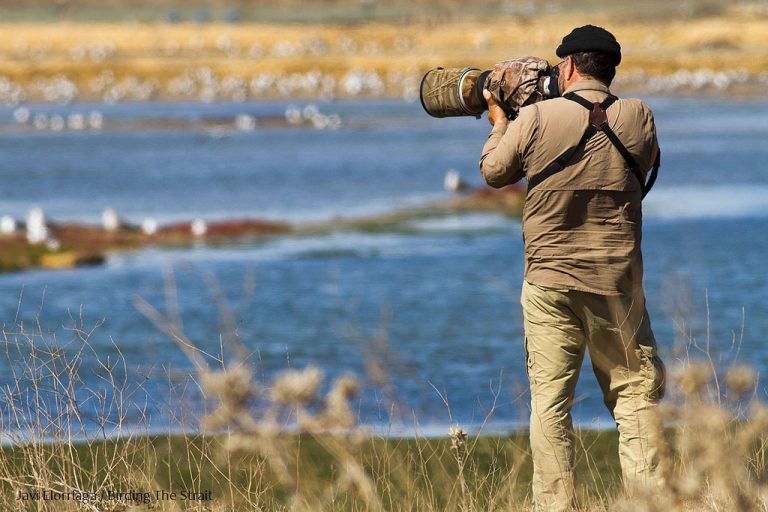
Feature image (on top): Hadoram photographing a large group of audouins gulls in the strait of Gibraltar

Swedish Ornithologist has Co-written Handbook of Western Palearctic Birding, written by Tor Kjolberg

Roald Amundsen’s Maud has Returned to Norway

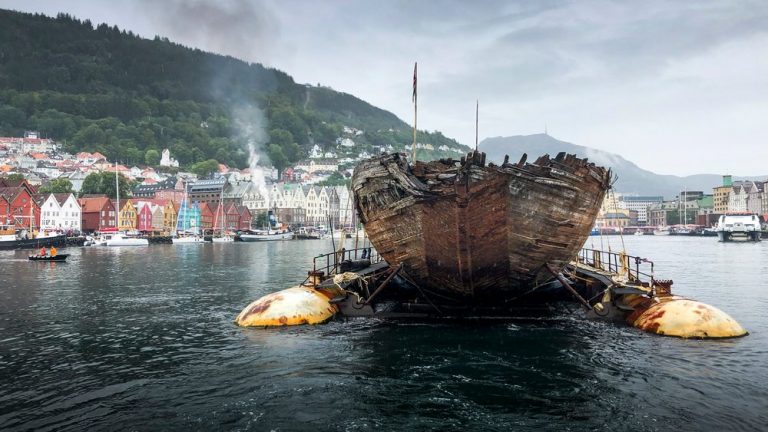
One hundred years after Norwegian explorer Roald Amundsen sailed from Kristiania, now Oslo, Norway in wooden ship Maud with the hopes of reaching the North Pole, Roald Amundsen’s Maud has returned to Norway, its country of origin.

Maud was raised from the seabed in Cambridge Bay, Canada, over the summer of 2016 by the Maud Returns Home project. You can follow the Maud Return Home Project on Facebook:

https://www.facebook.com/maudreturnshome/


Roald Amundsen’s Maud has Returned to Norway
Maud spent several years in the Arctic ice without reaching the North Pole

Queen Maud of Norway
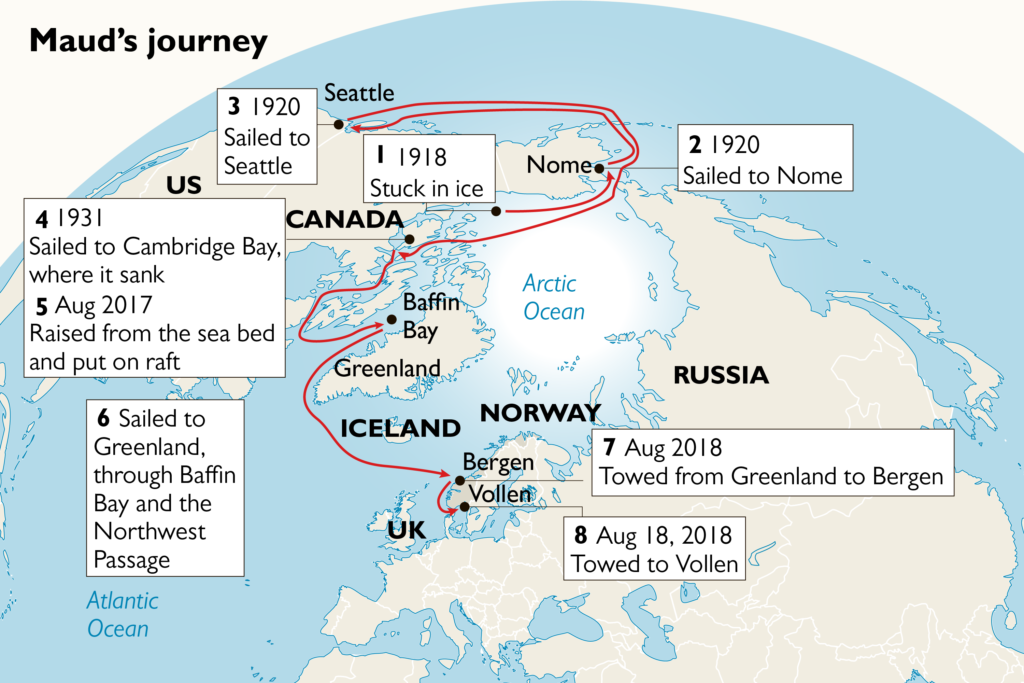
Named for Queen Maud of Norway, she was built for Amundsen’s second expedition to the Arctic and launched in June 1916. In the summer of 1918, Amundsen departed Norway. Maud spent several years in the Arctic ice without reaching the North Pole. Running into financial troubles, he left the expedition and sold the vessel to the Hudson Bay Company in 1920, where it was used it as a floating warehouse and a wireless radio station before she sank on her mooring in 1931.

Related: Welcome Back to Norway, Maud

Roald Amundsen’s Maud has Returned to Norway
Partially above water, Maud was a longtime local landmark and tourist attraction

Partially above water, Maud was a longtime local landmark and tourist attraction. A seven-foot high structure made of rocks called a cairn now takes its place on the shore.

Roald Amundsen’s Maud has Returned to Norway
Roar Amundsen in fur skins

Amundsen was the first expedition leader to sail the Northwest Passage and the first person to reach the South Pole.

Maud Returns Home Initiative
In 2016 the Maud was rescued from the shallow coastal waters of Cambridge Bay, Nunavut, by a team of four Norwegians who launched the ‘Maud Returns Home’ initiative. They began their quest to recover the ship six years prior.

Related: Only Filipina Who Has Reached the North Pole

Roald Amundsen’s Maud has Returned to Norway
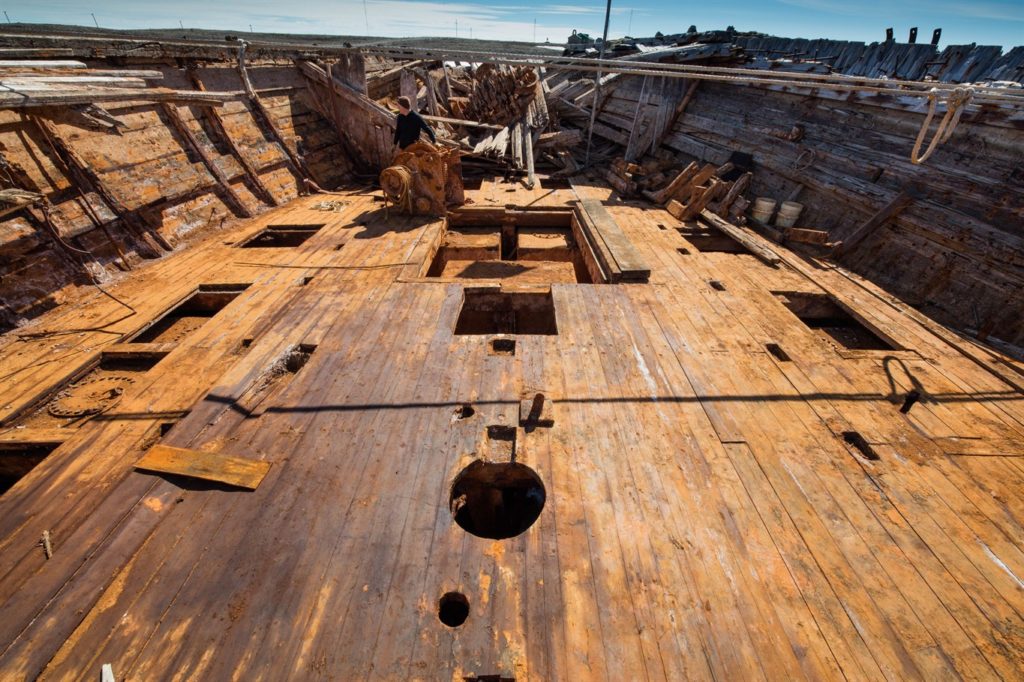
Here’s how the anchor winch on the half-submerged Maud — once sailed by the Norwegian explorer Roald Amundsen

Before leaving Cambridge Bay, the team was honored by a visit from The Mayor of Asker  Municipality, Lene Conradi. She also met mayor of Cambridge Bay, Jeannie Ehaloak, and they were both taken on a tour on Maud before a memorable get together where they both praised the efforts with finally should bringing old Maud back home to Norway.

On the morning of 29th August 2017, Maud was pulled slowly out of the Maud Bay approximately 90 years after her arrival.

Roald Amundsen’s Maud has Returned to Norway
Maud was built in 1917 in Vollen, Asker by Christian Jensen

Preparing for a new departure from Greenland
3rd of May 2018, the crew prepared for a new departure from Greenland early June to return to Vollen near Asker in Norway where the ship was built in 1917 by Christian Jensen. Up to the time of departure the crew emptied Maud from materials and dirt to make her as light as possible. The result was four full containers on the shore that was sent by cargo ship to Norway.

Related: 10 Top Attractions in Oslo

Roald Amundsen’s Maud has Returned to Norway
Maud was raised from the seabed in Cambridge Bay, Canada, over the summer of 2016

Roald Amundsen’s Maud has Returned to Norway
“It brings joy to our hearts to see Maud, still proud after all these years, see her old homeland once again.” said Jan Wangaard, who led the Maud Returns Home project. “We can hardly think of a better way of honoring Roald Amundsen and his great ship,” he added.

Maud arrived at Vollen in Asker on 18th August 2018.

Amundsen’s other polar vessels Gjoa and Fram are on display at the Norwegian Maritime Museum in Oslo. Wangaard hopes Maud will be displayed in a new museum at Vollen, the port where she was built.

Roald Amundsen’s Maud Returns to Norway, written by Tor Kjolberg

Best Iced Coffee in Copenhagen

Iced Coffee are available most places where coffee is served in Copenhagen. Here’s our guide to some of the best places for iced coffee in Copenhagen.

The Brits call it Cold brew coffee, and the Copenhagen baristi know exactly how to brew it. Daily Scandinavian has explored the capital of Denmark and here are our recommendations.
Best Iced Coffee in Copenhagen
Bevars oin Copenhagen

Bevars
Ravnsborggade 10B
For work or pleasure, this is a must ho-to-spot, not only for excellent coffee, but for budget dinner and drinks as well. The interior design is appealing – a true Scandi café.

Best Iced Coffee in Copenhagen
Cakenhagen in Copenhagen. Pgoto: Lasse Salling

Cakenhagen
Tivoli
Tivoli’s new pastry shop is a genuine wonderland for the smooth youth, featuring a wide variety of delicate cakes as well as delicious iced coffee – or bubbling champagne – if you prefer.

Best Iced Coffee in Copenhagen
Coffee Collective in Copenhagen

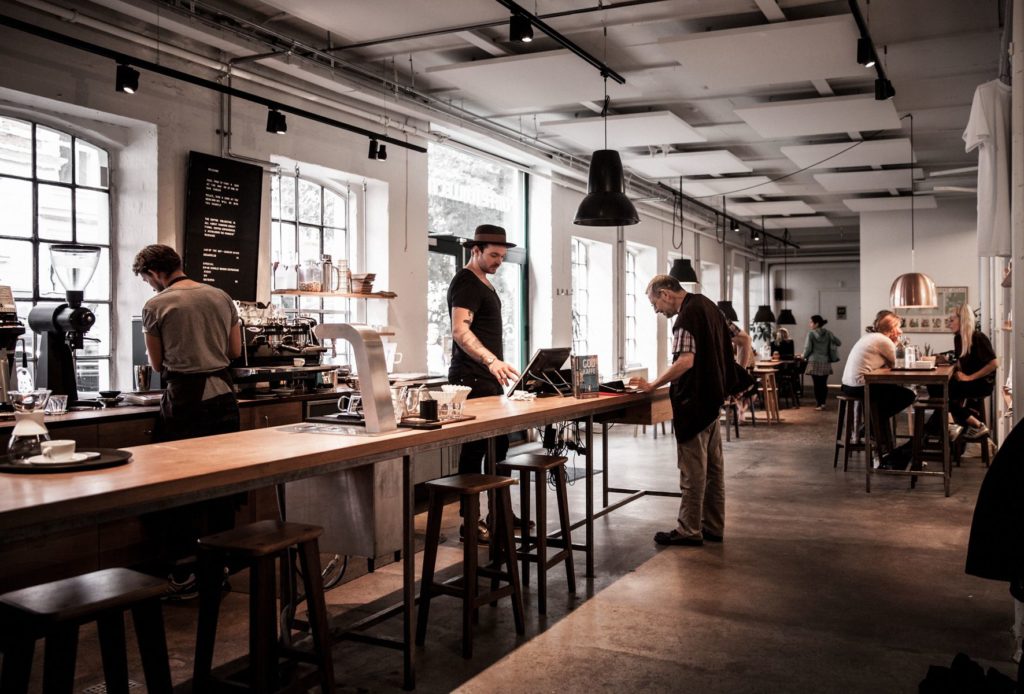
The Coffee Collective
Torvehallerne
If you are a coffee liver, don’t miss this one. At the Coffee Collective, they have a mission:
“The dream that drives The Coffee Collective is to explore and unfold exceptional coffee experiences in a manner that gives better living conditions to coffee farmers across the globe.”

Best Iced Coffee in Copenhagen
The Coffee Factory in Copenhagen

Coffee Factory
Cozy relaxed atmosphere and awesome iced coffee. Great pastries to go with your coffee. The mirrors make the coffee shop brighter and look like there’s more seating than actually available. A superb place for a coffee with some bakery.

Best Iced Coffee in Copenhagen
District Tonkin in Copenhagen

District Tonkin
Dronningen Tværgade
Have you ever tried Vietnamese iced coffee? It’s delicious! Their Vietnamese filter coffee with condensed milk is also like taking a sip of Vietnam. This is also a great place for a good meal on a budget.

Best Iced Coffee in Copenhagen
Far’s dreng in Copenhagen

Far’s Dreng (Eng.: Father’s boy)
At Far’s Dreng, you can enjoy colorful flavors of photogenic meals. The place is in particular known for their breakfast – including croissants, fries, waffles and toasted rye bread and a lot of temptations. You can chose which type of milk you want to use in their iced coffee.

Best Iced Coffee in Copenhagen
Græsk smag in Copenhagen

Græsk smag (Eng: Taste of Greece)
Enjoy the Greek iced coffee called frappe, or the ice cold espresso called freddo. Also try freshly made tasty pastry at this friendly place in a convenient location.

Best Iced Coffee in Copenhagen
Kaffebaren på Amager in Copenhagen

Kaffebaren på Amager
Simple and friendly atmosphere in the Amager Strandpark area where you can enjoy super coffee meditating alone or chatting with friends. This is indeed one of Copenhagen’s best (and tiniest) iced coffee bars. You can even enjoy a very nice and affordable breakfast there.

Best Iced Coffee in Copenhagen
Kaffeplantagen in Copenhagen

Kaffeplantagen
Sankt Hans Torv 3
Speciality: Iced coffee with vanilla ice cream. Elbhold coffee shop in Hamburg is a good comparison if you’ve ever been there.

Best Iced Coffee in Copenhagen
Lagkakehuset in Copenhagen

Lagkakehuset
Vesterbrogade 4A
This is probably the best bakery in the Danish capital – serving superb iced coffee. Be sure to buy the 70 percent full grain ryebread to take with you before leaving.

Best Iced Coffee in Copenhagen
Original Coffee in Copenhagen

Original Coffee
Illum Rooftop, Østergade 52
This small rooftop terrace in the city center is excellent for the cold brew. For a traditionally Danish sweet treat, try the hindebærsnitte (raspberry tart). Enjoy the view as well.

Best Iced Coffee in Copenhagen
Riccos Coffee Shop in Copenhagen

Riccos Coffe Bar
Stefansgade 15, Nørrebro
Legendary uced coffees, best cortados in the capital – and perhaps the sweetest baristi around!

Best Iced Coffee in Copenhagen
Rist kaffebar in Copnhagen

Rist kaffebar
A nice and cozy coffee bar making the perfect brew. Here you can enjoy design magazines and listen to good music played at a comfortable level. Delicious snacks and lovely service.

Best Iced Coffee in Copenhagen
Roast coffee bar in Copenhagen

Roast Coffee
Vestmannagade 4

This coffee spot in Copenhagen do put the Daish capital on the barista map. The interior is uncluttered and customers can mingle or just enjoy the aromas from the cappuccinos. Have your coffee exactly how you want it. Those who enjoy a quality brew, join the queue. The wait is worth it.

Best Iced Coffee in Copenhagen
Tak for kaffe in Copenhagen

Tak for kaffe
The Danish expression ‘Tak for kaffe’ is in fact the Danish way of saying ‘Wow’. And we guarantee you’ll say ‘wow’ to their iced coffee. It’s amazing – and the priced there are absolutely affordable.

There you have it; some of the places for the best iced coffee in Copenhagen.

Related:
Cocktails in Copenhagen
Coffee Lovers, Look to Sweden
Oslo – the Best Coffee City in Europe?

Best Iced Coffee in Copenhagen, compiled by Admin

Dried Fish in Scandinavia

Dry, salty air that contains almost no bacteria comes naturally in northern Scandinavia, and makes drying fish, even huge whole, split fish, fairly easy. As with many of our ancient necessities, the product has been refined over time and dried fish in Scandinavia is now a delicacy sold at high price.

Norway has been trading dried fish, caught as far away as Newfoundland, with the Catholic countries of southern Europe since before Reformation. In the Catholic fasting tradition, you are allowed to eat only fish for a large part of the spring. And although Portuguese and Spanish fishermen were catching and drying fish in the same waters, the huge demand exceeded the supply.

Dried Fish in Scandinavia
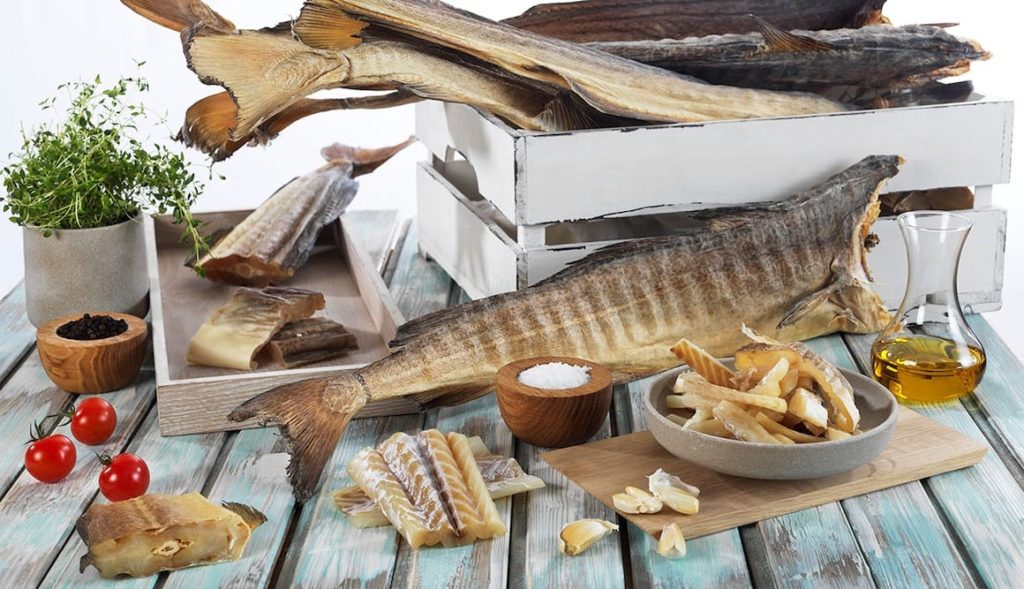
Stockfish and salt fish, made from a variety of fish in the cod family, are very good travelers and keep for years

Dried fish in Scandinavia
Stockfish and salt fish, made from a variety of fish in the cod family, are very good travelers and keep for years. Even if preservation is no longer a necessity, the taste of these foods is more than enough reason for people all over southern Europe to demand an ongoing supply, even now and whatever the price.

Most salt cod sold in Spain and the rest of Europe is still sourced in Norway and Iceland, though nowadays most of the fish is salted and dried industrially. Confusingly, while stockfish and salt fish are two rather different products, Scandinavian recipes are not usually specific, which means you can use either; as long as you know what you are dealing with, it is not a problem.

The term klipfisk (klippe means cliff, after the cliffs originally used for drying the fish) is used loosely for both types, as well as for the dishes made from them.

Dried Fish in Scandinavia
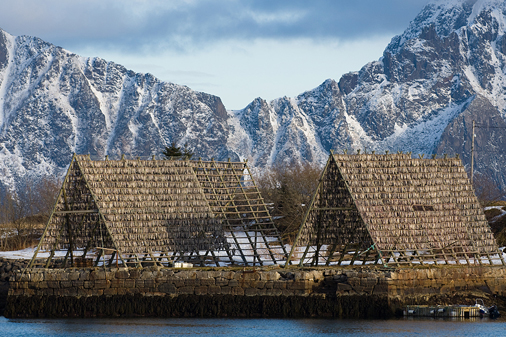
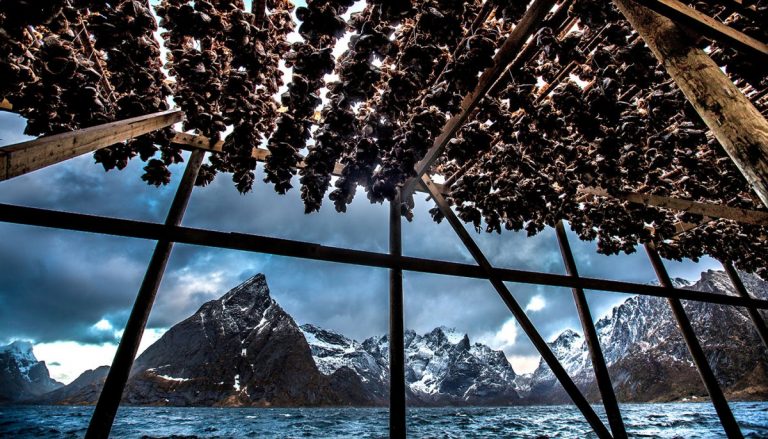
The famous wooden racks often features in pictures of northern Norway

Stockfish (tørfisk)
This is the oldest and most basic form of dried fish. It is not salted, and as it is extremely dry takes several days to reconstitute in fresh water. Stockfish is made by dipping the whole, hutted, split and flattened fish in seawater and then hanging it up to dry in icy wind – being practically free from bacteria, the cold, dry air allows the fish to dry without it going bad.

The famous wooden racks often features in pictures of northern Norway, are not much used any more. Once dried hard, stockfish keeps for years. During drying, the fish ferments slightly, giving it a delicious taste not present in salt fish. While stockfish us still produces, it is rare and very expensive.

Dried Fish in Scandinavia
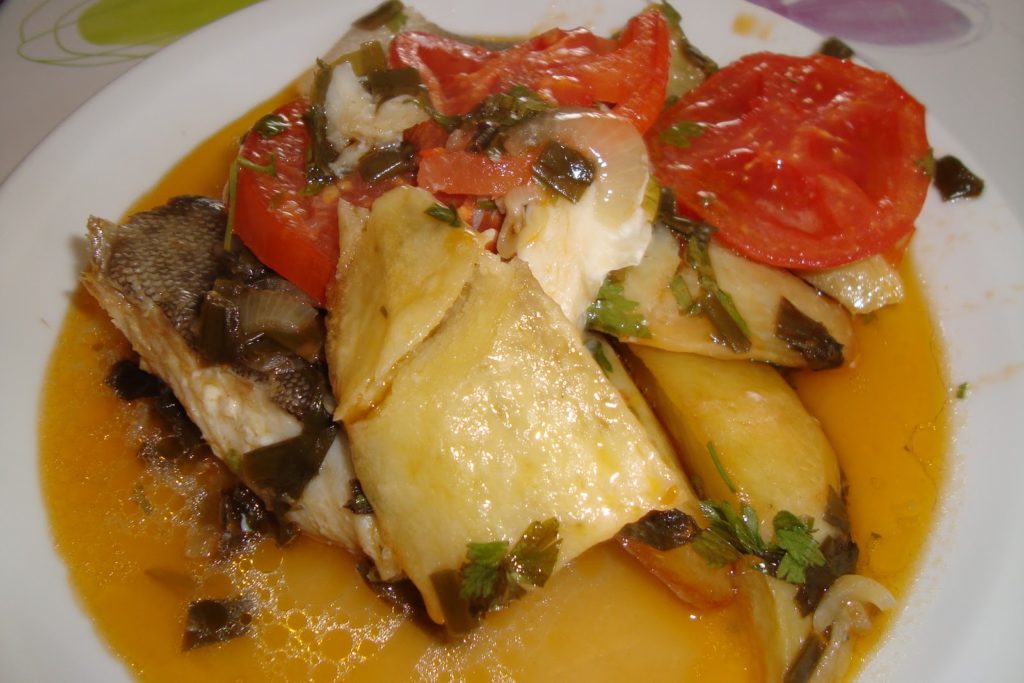
Klipfisk in tomatoe sauce

The flesh of a dried stockfish keeps magically fresh and, once soaked, can be restored to a salty, lightly fermented glory. Some people say it’s an acquired taste, but we don’t agree: If you love fresh fish, you will love this. If you are lucky enough to come across stockfish, the flesh us dry and cream-colored rather than white.

Salt fish (klipfisk)
Made from several species of fish in the cod family, which are caught way out at sea, gutted and salted straight away, then dried after landing either in the open or in huge during sheds, salt cod is much more common than stockfish. It has also been made for thousands of years, beginning with the Phoenicians, but it only gradually became common in the north.

Nowadays, salt cod is made all over Scandinavia, but mostly in Norway. Salt cod fish is extremely salty, but not very dry, and reconstituting it is only a matter of drawing out the salt in several changes of cold water. The flesh should be white – yellow fish indicates old age or poor quality and, while edible, is not as delicious.

Dried Fish in Scandinavia
Whole stockfish

Buying and storing
You can buy both kinds of dried fish at good fishmongers, or at West Indian, Spanish or Portuguese shops. Always look for a good color and avoid dark pieces. The best quality is from the thick, meaty middle part of the fillet. This is also the easiest to handle, as it contains fewer bones, fins and skin, which means more flesh to the kilo.

Thinner pieces tend to be dryer and saltier, with more wastage. Needless to say, the best pieces are more expensive. Pieces with a high ratio of bone and mucilage should be cheaper. Dried fish keeps indefinitely if stored in a container in the fridge. Soaked fish keeps maybe a little better than fresh fish, but it should be eaten within a day or two,

Culinary uses
You can’t do a thing with salt cod or stockfish until it has been soaked in clean water to soften the flesh and, in the case of salt cod, to remove most of the salt. Salt cod should be soaked for about 12 hours, with 3-4 changes if water, though you should adapt the soaking time to suit the thickness of the fish and how salty you want it. Be warned, though, that if the fish becomes complete devoid of salt, it’s actually a little bland.

Related: Food and drink in Norway

Dried Fish in Scandinavia
Delicious soaked klipfisk

Stockfish, on the other hand, needs around 48 hours if it’s a thick piece. When it resembles fresh fish it’s ready to use, and the saltness will be gone.

We are not too adventurous when it comes to food up north, and almost all dried fish is eaten in much the same way, maybe it it’s so good. Strong spicing is necessary to stand up to the fish’s flavor, and a thick sauce and floury potatoes to mop up the sauce. Horseradish, mustard, vinegar and capers are all traditional accompaniments, as are pickled beetroots and bacon.

Along Denmark’s wst coast there is a traditional soeciality known as tørrede jyder, meaning ‘dried people from Jutland’. This consists simply of dried fish which are soaked for a day, fried in butter and served with potatoes and raw sugared lingonberries.

Related: 3 Shocking Reasons Why You’ll Love Norwegian Cuisine


Lutefisk
This unique treatment of dried fish often gets put on to lists of ‘the world’s weirdest foods’. Originating in Norway during the Middle Ages, lutefisk is a relatively new invention. Traditionally it was served on Christmas Eve, but now a rising number of Norwegians – and Swedes, too, these days – eat lutefisk not so much on that particular evening, but during winter in general.

This is part of a growing awareness and pride in northern specialties and food culture. Interestingly, more lutefisk is eaten by North Americans of Nordic ancestry than by native Scandinavians themselves.

Dried Fish in Scandinavia
Lutefisk from Norway

To make lutefisk, stockfish or salt cod is soaked in water for several days to swell, and then treated with lye (lut); historically, this was generally in the dorm of birch ashes, but nowadays caustic soda (leached from wood ash) is normally used. This breaks down the proteins in the fish and gives it a particular, jelly-like consistency. Then it is soaked for several days to bring down the pH to normal, and finally prepared very simple: baked in its own juices for a very short time, sealed in with a lid or foil.

The odor is strong but the taste is surprisingly mild. The fish is most eaten with a white sauce, buttered peas, bushed neeps (mashed swede) and potatoes.

Feature image (on top): Stockfishj from Lofoten, photo: Michael Ulriksen

Dried Fish in Scandinavia, written by Tor Kjolberg

Exotic Surfing Paradise in Norway

0

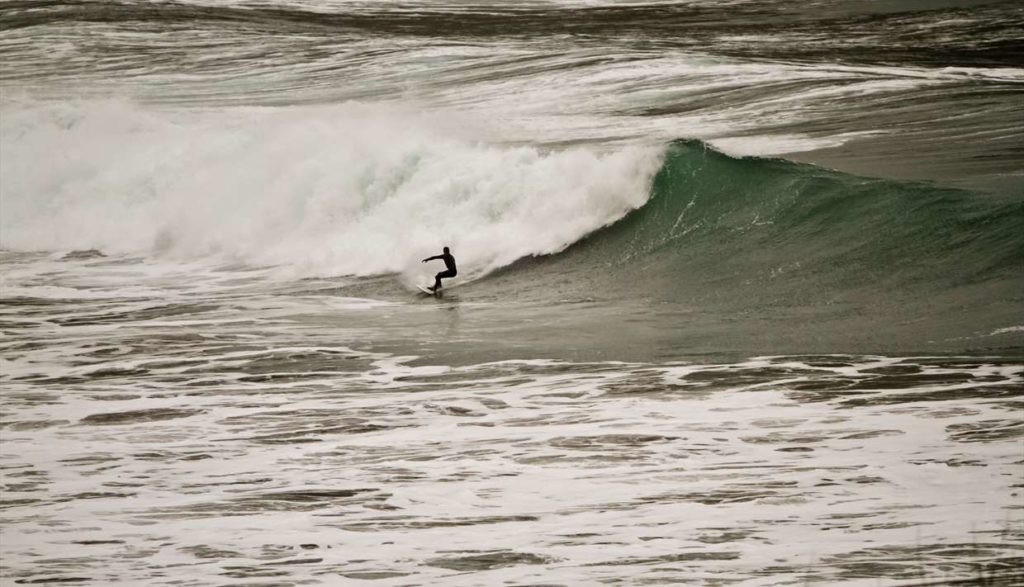
Hidden behind green-clad rocks on Norway’s westernmost and roughest outpost, Stadlandet, you’ll be surprised to find an exotic surfing paradise in Norway. There are white sandy beaches and great waves, but no danger of sharks or tropical heat.

Travelers to Hoddevik meet the windy Norwergian Westlands, majestic mountains, barking sheep and wave-hungry surfers from all over the world in their wet suits. At Stad on the coast of Nordfjord in Norway, you will find ideal conditions for surfing. Great waves coming in from the Norwegian Sea, white sandy beaches and steep cliffs that create perfect surroundings for an unforgettable surfing experience – all year round!

Exotic Surfing Paradise in Norway
From Hoddevik in Norway

“The most weather”
If you’re not quite sure, Norway is the tall skinny bit on the left-hand side Scandinavia, just up and right a bit from Scotland and left of Sweden. Westerly facing and boasting an impressive coastline of over 1500 miles, it’s wild and rugged, scribble like shore grabs all the swell the North Atlantic offers and folds, wraps, dumps and peels the resulting waves into a selection of isolated playgrounds.

To find the right wakesurf board for different types of waters, head over to Surfango.com

Related: Surfing in Norway

It’s not the first place that comes to mind when the topic is surfing. Maybe it should be. Hoddevik is a small surf town on the Stadlandet peninsula in the Selje Municipality which marks the spot where the Norwegian coast turns eastwards. It is one of the places in Norway, or perhaps in the whole world, where you have “the most weather.” Waves, storms, sun, hurricanes, sleet, breeze, rain, snow, hail, very fresh air and wind.

Exotic Surfing Paradise in Norway
Stad surfing hostel lodge, Hoddevik

Exotic surfing paradise in Norway – suitable all year round
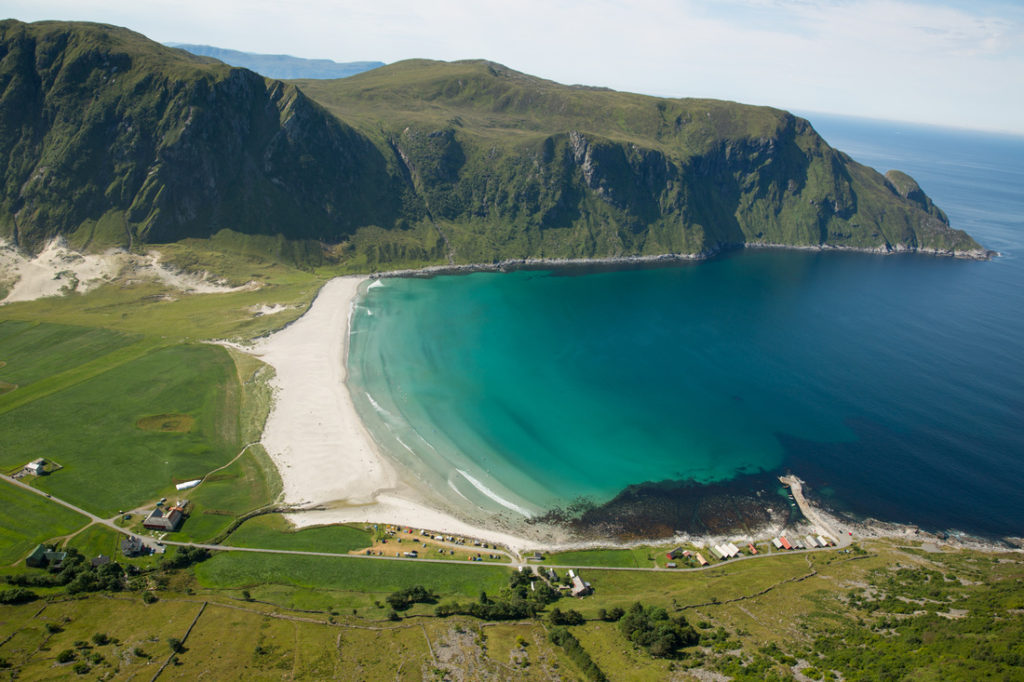
These fantastic beaches have long been hidden treasures, but more and more people become aware of the excellent surf spots on the Norwegian west coast. All of it in a little valley between beautiful but steep mountains that you can easily hike to the top of, thanks to the occasionally used path up the hillside. The mountains aren’t only there for decoration or the occasional hike. They provide shelter and make the beach surfable even during extreme weather.

Related: Extreme Surfing in Norway

As a buffer between the land and the furious ocean, there is a beach with the fine and soft white sand you would normally expect to find in Samoa, Marshall Islands or Kiribati. What the hell is it doing here? It either got lost or just wanted a little more excitement than is to be expected in the Pacific Ocean.

Exotic Surfing Paradise in Norway
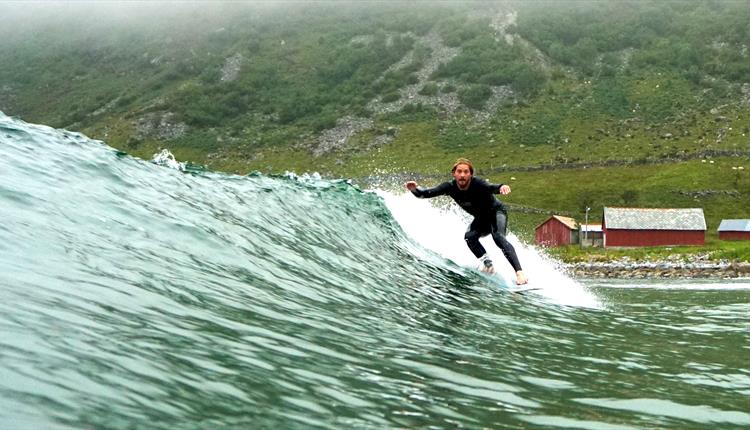
Surfing in Ervik, Norway

Refreshingly consistent
Don’t be fooled by the wind when you step outside. What might feel like a force nine in the village is sometimes nothing more than a light breeze by the time you’ve walked to the beach.

Depending on who you ask, and who’s at the shops, Hoddevik boasts a permanent population of somewhere between 15-25 people. So even with the surf camps at capacity and few visiting surfers, this place is never going to look like Cocoa Beach in Florida. The locals spread a cheerful and friendly vibe in and out of the water. You’re more likely to get a wink than stink eye.

Related: At the Coastline of Mid-Norway

Refreshingly consistent, it’s not often you’ll find a totally flat day here. If nature is not delivering the goods at Hoddevik, there are a few other options close by. Just around the other side of northernmost mountain is Ervik, which offers a higher performance wave than Hoddevik, with a punchier low tide option that fills out as the tide hits high. Ask around at the surf camps and you might even be enlightened to a few of the more secret spots.

Exotic Surfing Paradise in Norway
White sandy beaches and steep cliffs create perfect surroundings for an unforgettable surfing experience – all year round

What equipment do you need?
Equipment wise, you’ll need more rubber than normal and we’d advise you to take your favorite boards. Although the surf camps and hostels will dish out 5/4/3 suits all year round, if you’re bringing your own kit, you can easily get away with a decent 4/3 up to the end of September. If you’re visiting from October onwards you’re in 5/4 territory, and you’ll need boots, gloves and hat.

Where to stay
Stad Surfing is a surf camp in an old traditional wooden house built in a style often seen on the Norwegian countryside. It has been modernized and is now the place to stay in Hoddevik. There is a modern kitchen and common room in the basement and a well-stocked surf shop and bed rooms on the main floors. The owner, Mr. Torkild Strandvik, has run the place for many years after he moved from Oslo to live his dream, to be a full-time surfer on one of the most unique surf spots in the world.

The La Point surf camp offers standard hostel style housing with bunked rooms, communal kitchens and shared living space. Clean and tidy and run by the friendliest bunch of surfers you could imagine, you’ll feel right at home. Double rooms are available if you want a bit more privacy and there’s a wonderful hot tub in the garden for thawing out post surf.

Both places offer board and wetsuit hire with prices depending on the length of your stay and what you need.

Exotic Surfing Paradise in Norway
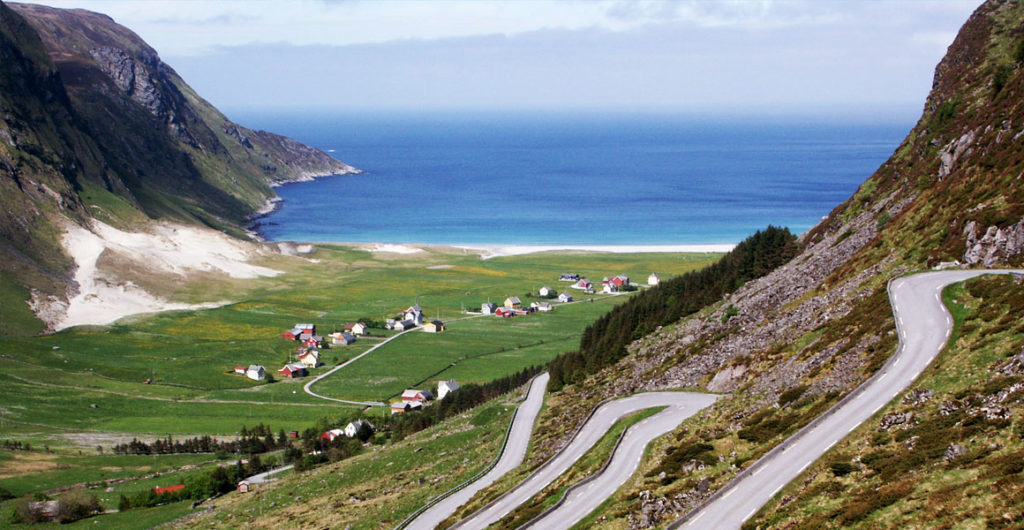
Hoddevik is a small surf town on the Stadlandet peninsula in the Selje Municipality

Driving there is a bit like having a handful of picture postcards repeatedly thrown at your face. The thawing of the last ice age left Norway’s landmass peppered with countless deep fjords and huge mountains that make any long-distance travel equally slow and beautiful.

Exotic Surfing Paradise in Norway, written by Tor Kjolberg

Royal Parks and Gardens in Stockholm

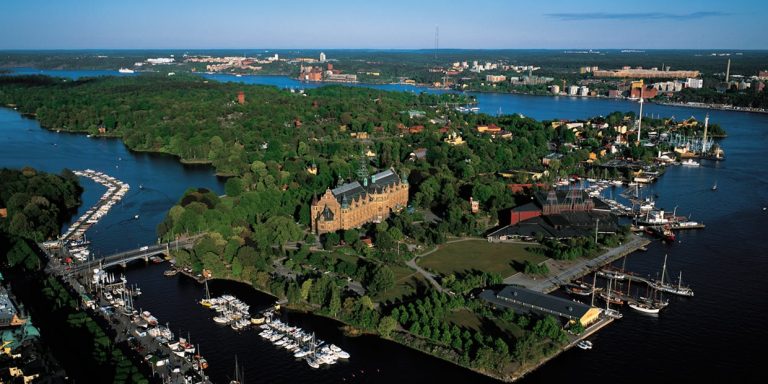
Ekoparken is the world’s first national city park, a huge set of green lungs, that stretch out in a 12km (7-mile) long arch from Djurgården (where the Vasa Museum, Gröna Lund and Skansen are situated) in the south, up to Ulriksdals Slot (castle) in the north. The royal parks and gardens in Stockholm should be on your bucket list.

This green swathe is so large you’ll need a full day of serious hiking to explore it, by foot during the warmer months or on skis or long-distance skates in winter. Bus tours to the northerly Haga Royal Park, run by Strömma Turism, include a free boat tour on Brunnsviken Lake.

Royal Parks and Gardens in Stockholm
Map of the Ecopark in Stockholm

The Ekopark includes three royal parks, Djurgården, Haga and Ulriksdal, with palaces to tour (Ulriksdals Slot, Gustav II’s Paviljonh and Rosendals Slot). Visit the tropical Fjärilshus (Butterfly House) where hundreds of colorful species land lightly upon your shoulder, the Bergianska (Bergianska Botanical Gardens) which contains the world’s largest water lily, and Naturhistoriska Riksmuseet (Museum of Natural history) where you’ll also find Sweden’s only IMAX cinema.

Related: King’s Garden in Stockholm

Royal Parks and Gardens in Stockholm
Swedish Museum of Natural Histpry

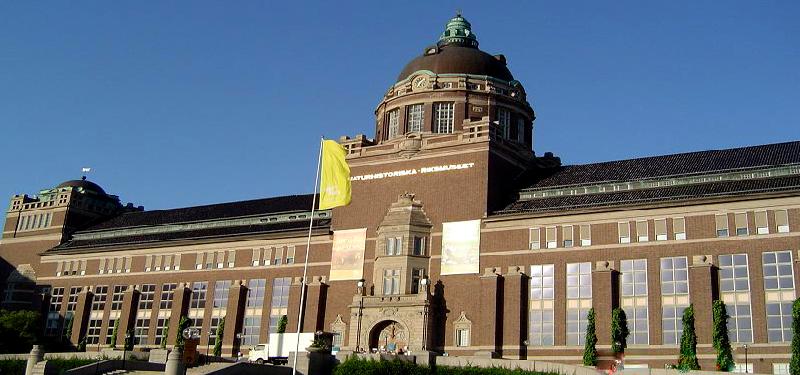
Swedish Museum of Natural History
The Swedish Museum of Natural History is a government agency that reports to the Ministry of Culture. Its task is to promote interest in, and knowledge and research on, the origins and development of the universe and Earth, on the plant and animal worlds and on the biology and natural environment of human beings.

For a pleasant retreat on northern Djurgården, you’ll find Rosendals trädgård (Rosendals Garden) with orchards, flowers and vegetables, garden shops and a café. For many Stockholmers this has become the ideal retreat after a day in Djurgården. For more information, read here.

Related: The Island of Skeppsholmen in Stockholm

Royal Parks and Gardens in Stockholm
Rosendals Gardens, Stockholm

Rosendals’ Gardens
For more than thirty years Rosendals’ Garden Foundation has cultivated and spread biodynamic farming practices. Rosendals Garden is a driver of the farm to fork concept and the harvest of vegetables, herbs, flowers and fruits are used in the garden café and woodfired bakery.

Royal Parks and Gardens in Stockholm
As a visitor you can enjoy the garden as well as enjoy a meal, sandwich or something sweet from the artisanal bakery in the greenhouse café. Photo: Katja Halvorsson

As a visitor you can enjoy the garden as well as enjoy a meal, sandwich or something sweet from the artisanal bakery in the greenhouse café. There’s also a farmshop on site as well as a plantshop. Throughout the year organized events, private functions as well as exhibitions are being organized.

Royal Parks and Gardens in Stockholm, compiled by Tor Kjolberg

The Strauss of Scandinavia

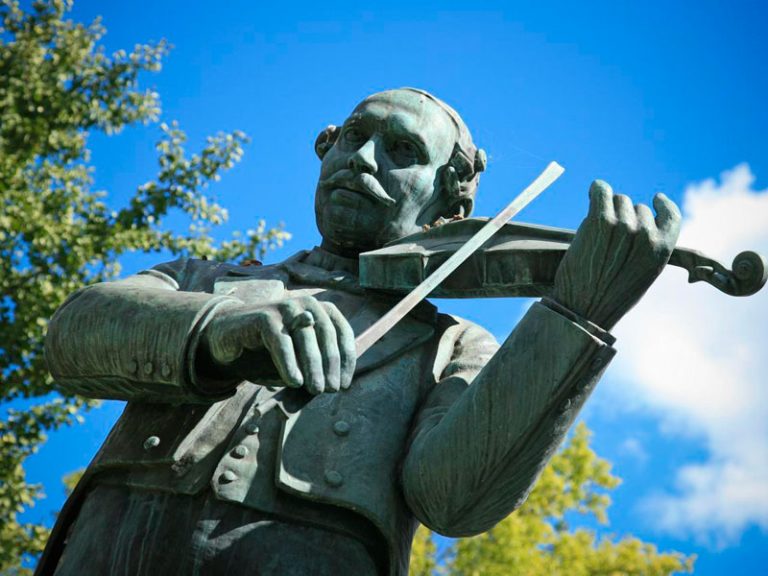
The Danish composer and conductor Hans Christian Lumbye (1810-1874) has been associated with the Tivoli Amusement Park in Copenhagen from the beginning, when the park opened in 1843 because of his popular concerts there. People called him the Strauss of Scandinavia.

Lundbye was born in Copenhagen but because his father, a military officer, was stationed first in Jutland and later in Odense, already as a child he moved to the Danish provinces. In Odense, he took his first genuine lessons in music and learned to play the violin and trumpet as well as having music theory lessons. Early on he began to write songs and marches. By the time he was 14, he had managed to land a job as the hornist in the local regiment orchestra. Later he asked for transfer to Copenhagen and returned to his native city as a 19-year-old.
The Strauss of Scandinavia
Hans Christian Limbye. Courtesy: Det Kongelige Bibliotek, Copenhagen

There, in Copenhagen in 1829 he was entrusted with a position as a trumpeter in the Royal Horse Guards. This was also his musical tipping point as he first heard the music of Joseph Lanner and Johann Strauss (father).
When Lumbye was off duty, he played dance music. He also worked as a composer, wrote a lot of dance music and became a popular band leader for Copenhagen’s upper class.

Through the 1830s, alongside his Royal Horse Guard responsibility, Lumbye was a hard-working member of Copenhagen’s Town Musicians’ Ensemble. His earliest surviving dance compositions originate from this decade.

In 1839, he assembled his own orchestra. He was inspired to take this step after having witnessed a series of concerts in Copenhagen presented by a music company from Steiermark in Austria, where Johann Strauss the Elder’s and Joseph Lanner’s latest dance melodies were played for the very first time in Scandinavia.

With his first Concert à la Strauss at the fashionable Raus Hotel (the present Hôtel d’Angleterre) in Copenhagen on 4 February 1840, Lumbye seriously ushered in his lifelong occupation as Denmark’s – and Scandinavia’s – uncontested leading composer of music in a similar style and people began to call him the Strauss of Scandinavia.

The Strauss of Scandinavia
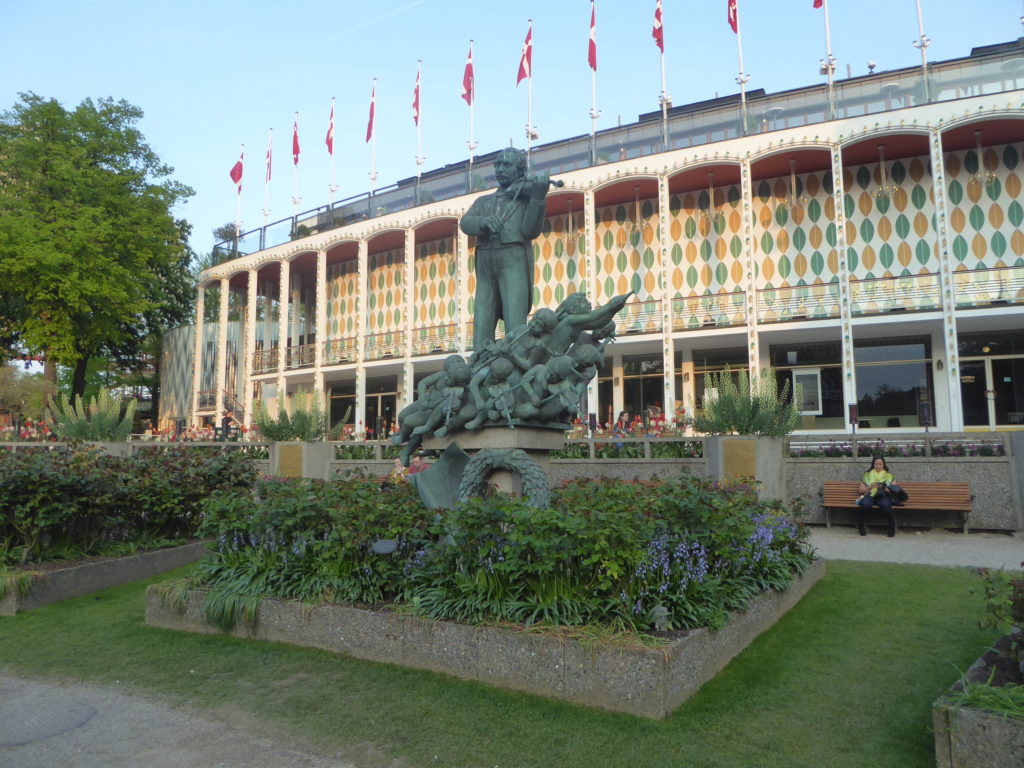
The Coincert Hall in Tivoli Gardens, Copenhagen

Audiences loved his music, and this was one reason Lumbye’s concerts in the Tivoli amusement park were well frequented and very successful. Lumbye was involved in the park since its opening in 1843 as music director of the concert hall’s orchestra and Tivoli’s resident composer. The Tivoli became the steady and definitive base for his long and illustrious career as composer and conductor.

Related: Christmas Wonderland in Copenhagen

In winter, when the Tivoli was closed, Lumbye’s orchestra played in Copenhagen’s theatres or toured through Denmark and abroad.

The Strauss of Scandinavia
Lumbye and his Orchestra. Courtesy: Kongelige bibliotek, Copenhagen

Lumbye wrote more than 700 pieces over the course of the next thirty years and is one of the few Danish composers whose music is popular all over the world. Almost one hundred of his melodies are named after women.

In 1872, Lumbye had to quit his work as director and conductor because he was weakened and deaf, a sickness probably caused by one of several boat trips with his family for his father’s military transfers.

The Strauss of Scandinavia
The Strauss of Scandinavia, one of many records with music of H. C. Lumbye

In May 1873, he conducted his famous “Champagne Galop” for the last time – seated. Hans Christian Lumbye died on March 20, 1874.

A superb collection of 76 minutes of his music, The Strauss of Scandinavia, offers the composer’s best music, including the unforgettable Copenhagen Steam Railway Galop, Cannons Galop, Memories from Vienna and the Champagne Galop.

The Strauss of Scandinavia, written by Tor Kjolberg

Whitewater Rafting in Norway

0

There are several rivers to do rafting in Norway, but one of the best ones is considered to be the River Sjoa which travels eastwards to the Gudbrandsdalslågen, one of Norway’s finest angling rivers. Through the Heidal traditional district, Sjoa ultimately falls in the Gudbrandsdal. Sjoa is THE spot for whitewater rafting in Norway.

Fast-flowing and frothing waters running over huge rocks and through tight gorges can quickly become addictive, and many rafters have Norwegian rivers on their whitewater bucket list. Sjoa River is regarded as the best river for rafting in Northern Europe.

Related: The World’s Strongest Current – in Norway

Whitewater rafting in Norway
Fast-flowing and frothing waters running over huge rocks and through tight gorges can quickly become addictive

One of the well-known spots for rafters
Sjoa offers you the most exciting rafting activities. With several modern infrastructures offered for carrying out several water activities including rafting and kayaking, the Sjoa River has now emerged as one of the most well-known spots for all interested rafters. Several parts of the rivers require a certain degree of technical expertise, while other trips are more family-friendly through calmer rapids.

The main rafting season is from mid-May till the end of September. You can also try canyoning and Follow a river through gorges and canyons. This is an experience of nature that can take your breath away.
Related: Wild Wild Voss in Norway

Whitewater rafting in Norway
The white wild river Sjoa will make you nervous and make your adrenaline rush all through the trip. With water splashing all over your body and providing you the ultimate thrills, you can feel the power of the waves and can also experience the power of the current.

Whitewater rafting in Norway
When it comes to whitewater rafting in Norway, Sjoa offers you the most exciting rafting activities

However, experienced guides will take you down the rapids safely, with a lot of fun and excitement all the way. You will get the opportunity to raft through all the well-known rapids such as ‘The Micro Surf’, ‘The Gulf Stream’, ‘Haystacks’, ‘The Chocolate Gorge’, ‘Devil’s Elbow’, Bye Bye Baby, and the Faukstad Fall.

Related: Surfing in Norway

Experience the Washing Machine
you can surf under the ‘China Hole’ and take off towards the biggest and final rapid ‘The Washing Machine’. This is the final rapid, yet one of the most thrilling.

Whitewater rafting in Norway
The Sjoa River has now emerged as one of the most well-known spots for all interested rafters

The rafting companies have long experience and offer safe whitewater rafting.  Various activities during the winter include snow play, snow rafting and sledging.

Here are some companies offering rafting in Sjoa:

Sjoa Rafting
Heidal Rafting
Go Rafting
Sjoa Raftingsenter

White Water Rafting in Norway, compiled by Admin

Coastal Hygge in Denmark

Most Northern European summer holidays abroad involve the Med, or its surrounding countries, but we reckon the cooler attractions of the north need to be sampled. There are several pristine white sandy beaches as well as self-catering coastal holiday cottages and holiday homes where you can indulge in coastal hygge in Denmark.

No wonder that famous artists like Krøyer and Drachmann often found their way to the coast of North Jutland. Also, Kierkegaard found his way to those old seaside resorts up in the north of Denmark. And life in the charming towns of Sletten, Hornbæk, Lynæs, Liseleje, Gilleleje and Tisvilde. is still as charming today as at the time of the famous painters and philosopher.

Coastal Hygge in Denmark
Skagen rooftops. Photo_ Wikipedia

Coastal hygge in Denmark – Jutland
Denmark can be characterized by its anthem “Der er et yndigt land” (There is a lovely land). For while the country covers a landmass of only 16,562 square miles — 72,182 less than Great Britain — it is pure pastoral backdrop, a shifting image of sea and sand; flat and arable with few built-up metropolitan areas.

Jutland is a pointy-peninsula which, as its name suggests, “juts” out to the North Sea towards Norway and Sweden, where the land consists of long beaches and high-rise dunes like monstrous sandcastles. It has long been a holiday spot for southern Danes and is associated with fishing and a thriving art scene.

Coastal Hygge in Denmark
Hirtshals lighthouse

The fishing port of Hirtshals
Let’s start our exploration in the town of Hirtshals. At first sight it appears as a tough little fishing port with few obvious attractions, but it soon proves fascinating. The harbor is full of busy boats and there is a wonderful chandlery, its cafe furnished with tables and chairs made from crates and driftwood. Nearby is a fiskehus (fishing house), an outdoor fish restaurant, a common feature of Danish seaside towns, with a serving hatch, a blackboard menu and picnic tables.

The Hirtshals specialty is stjerneskud (shooting star). The dish was apparently invented to mark the visit of Yuri Gagarin to Copenhagen in 1962, a year after he became the first man in space. It’s an example of smørrebrød, or open sandwich, but this one is a spectacular assemblage of cod, smoked salmon, roe, shrimps, asparagus, dill, poached egg and rye bread.

Coastal Hygge in Denmark
The Hirtshals specialty is stjerneskud (shooting star)

Visit the Hirtshals museum to get the flavor of the town. The museum appears to double as a distillery and off-licence, making and selling various types of a “heritage” drink called bjesk, a kind of schnapps.

Picturesque Skagen
The town of Skagen is a maze of picturesque lanes and offshoot alleys, with seaside houses painted monochrome yellow, some apricot. The paint is a symbol of wealth, having started in the 19th century with the use of ochre transported from France. It doesn’t take long to walk around Skagen.

Coastal Hygge un Denmark
Imagine waking up to a cloudless sky and the sound of soft waves

Today, nearly every house, hotel and boutique is daubed in a shade of yellow. In his foreword to the book Skagens Huse, poet Klaus Rifbjerg writes: “You could call the town a mishmash, but actually because the houses in Vesterby and Østerby are — despite certain common characteristics —different, there’s a harmony that lies a long way from the suffocating and conformist.”

We’re getting the sense that Denmark, under a composed and tranquil exterior, has hidden depths of eccentricity. They just don’t market it.

Coastal Hygge in Denmark
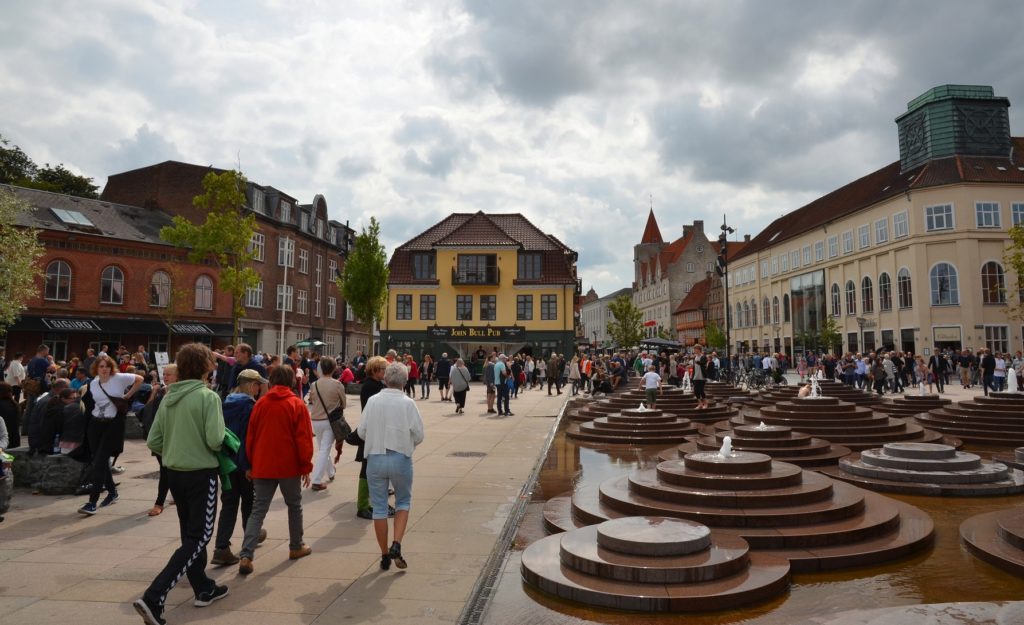
Aalborg is the capital of North Jutland and Denmark’s fourth largest city

Aalborg is the capital of North Jutland and Denmark’s fourth largest city. It dates back to the Middle Ages (circa AD 700) and with its natural harbor and thriving herring fishing industry, contributed to the town’s growth.

Danish hygge
2016 was the year that Danish hygge became a global lifestyle phenomenon adopted by hoards of disgruntled westerners after an excess of international books, magazine and newspaper articles and television programs showed the world how hygge contributes to continuously keep Denmark at the top of worldwide happiness and quality of life surveys.

Coastal Hygge in Denmark
Excellent coast in Denmark. Photo: Jan Madsen

Hygge also became a canonized defining Danish Value by the Danish Ministry of Culture together with gender equality and freedom and seven other values.

The Danish holiday cottages are the epitome of hygge to the Danes and over a quarter of a million Danes own their own holiday home. They all have an intimacy with their natural surroundings. A Danish seaside dwelling is ultimately an open door to nature. Imagine waking up to a cloudless sky and the sound of soft waves. See the sun heat up the horizon while you put on your bathing clothes and take a swim in the clear blue sea. You can enjoy bread directly from the oven, freshly squeezed juice and coffee on the wooden terrace of the resort waiting for the day to start.

Coastal Hygge in Denmark
House in Taasinge by the water

North Zealand – the Danish Pacific Coast
Just an hour’s drive north of Copenhagen, the area is often referred to as the Danish Riviera or the “Hamptons of Denmark”. For a night or two away from it all, try the Helenekilde Badehotel, a remote seaside getaway. At Helenekilde Badehotel you can enjoy a 3-course dinner with a fantastic view of Kattegat, while the sun sets at sea and peace reigns.

Visit the new Kulturhavn Kronborg in Elsinore that consists of Kulturværftet, M/S Museet for Søfart, Kronborg Slot and Helsingør Havn. The new M/S Museum for Søfart was recommended by New York Times as ‘a must see in 2014’.

Coastal Hygge in Denmark
Henne strand holiday coast in Denmark

Sankt Helene Feriecenter, Tisvildeleje is the perfect place for the entire family. There are farm animals, summer activities and playgrounds. And it is not very far from the beaches on the riviera which are some of the best in the country. Take a trip to the town and do not miss the flea market that offers bargains every Saturday.

There is a very special atmosphere and evening light in Tisvilde with the sunset over the beautiful Kattegat Sea and the informal luxury of the small streets in town. Tisvilde Cafeen is located in the middle of Tisvildeleje in fantastic surroundings close to the forest, the beach and the sea. Have a look, feel the atmosphere and enjoy a good dinner.

It is time for a porpoise safari with Øresundsakvariet in Elsinore. A unique experience on Øresund – getting closer to the big fish. Nature guides and diving instructors will show you a North Zealand that is quite different from what you have explored on your own.

Coastal Hygge in Denmark
Danish hygge at business event in Copenhagen. Photo: Daniel Rasmussen

Hygge for all
Time itself seems to go slower here and the hygge life becomes a series of breaks. You can escape the superficial hustle and bustle of city-life and pull out the plug and let the quiet embrace you. The spa lover, the culture freak or the gourmet will not be disappointed, and the hyperactive family can easily spend weeks enjoying nature under and above water.

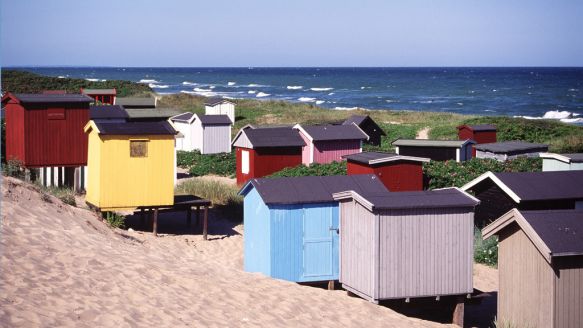
Feature image (on top) Bathing houses in Tisvildeleje. Photo: Visit Denmark

Coastal Hygge in Denmark, written by Tor Kjolberg