
Woven Politics by a Norwegian Artist

The Norwegian artist Hannah Ryggen spent six years as a painter’s apprentice before turning to weaving, and her renegade use of traditional rural techniques was just as attention-grabbing in 1930s Norway as it is now. Making tapestries almost exclusively for public spaces. The woven politics by the Norwegian artist has been known across Europe and America.

Hannah Ryggen (b. 1894, Malmö, Sweden – d. 1970, Trondheim, Norway) was one of Scandinavia’s most outstanding artistic figures of the 20th century. Ryggen remains an important artist, as she dealt with the pressing social and political concern of her time. Her art has enlightened issues from the rise of fascism and the Nazi occupation of Norway, to the proliferation of nuclear power and the Vietnam War.

Woven Politics by a Norwegian Artist
From the Hannah Ryggen Center in Norway

Trained as a portrait painter
Born to a working class Swedish family in 1894, Ms. Ryggen trained as a portrait painter. On a trip to Dresden, Germany, as a young woman, she immersed herself in the work of Vermeer, Goya and El Greco. She was likewise versed in the art of her own time, making repeat visits to the huge 1914 Baltic Exhibition in Malmo, Sweden, at which paintings by Kandinsky and the German expressionist group Die Brücke were shown.

Related: Living on a star in Oslo
Woven Politics by a Norwegian Artist
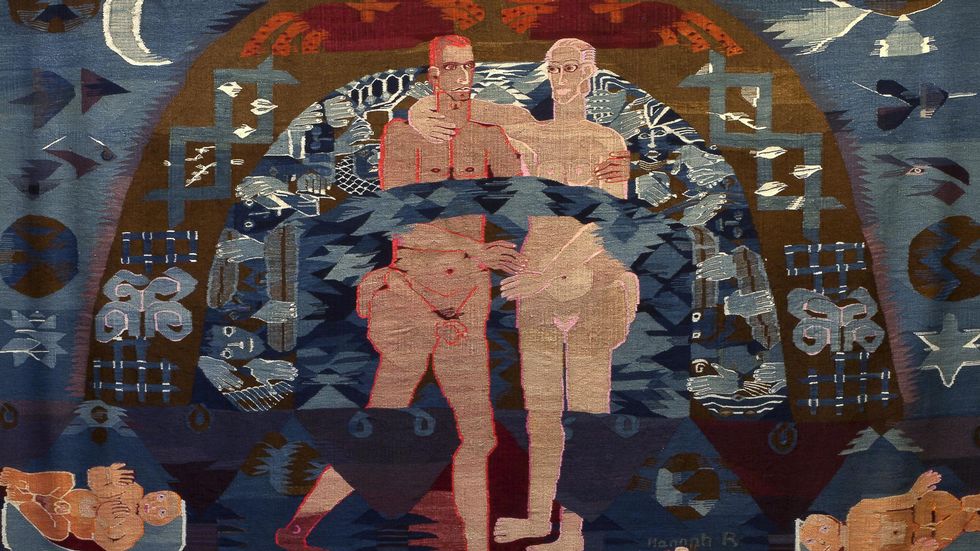
Bomb-wounded by Hannah Ryggen

She later abandoned painting in favor of weaving, which became her area of expertise after having moved with her husband to a wind-blown farm on a remote Norwegian farming community Ørlandet near Trondheim. On this shore, with no running water or electricity, she learned the processes of treating wool, spinning and weaving from local tradition, and developed as an artist by experimenting with materials and techniques from the world around her.

Woven Politics by a Norwegian Artist
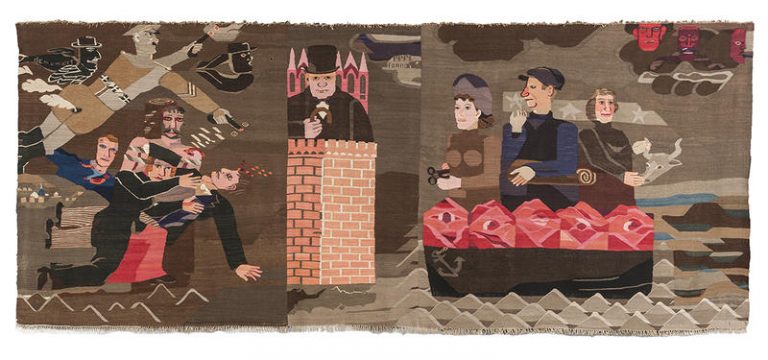
“The death of dreams”, 1936 by Hannah Ryggen

Anti-fascist tapestries
Hannah Ryggen worked utterly from scratch on her anti-fascist tapestries. Spinning wool from her sheep, she dyed it with things she’d found by foraging: birch leaves, bark moss and bog rosemary. Urine, too, was an essential part of this alchemical process, and visitors were asked to leave their donations in a bucket.

Related: A Short Introduction to Norwegian Literature, Art and Music

One of her earliest famous works is the frieze-like “Etiopia,” Ms. Ryggen’s furious response to the Italian occupation of Ethiopia in 1936. Portraits of the Emperor Haile Selassie and Italy’s King Victor Emmanuel III are set above a large geometrically patterned rug panel suggesting Ms. Ryggen’s kinship with African weavers. “Etiopia” was shown by Norway at the Paris Expo of 1937 in the pavilion adjacent to Spain, where Pablo Picasso’s “Guernica” offered a horrified response to the Nazi bombing of a Basque town during the Spanish Civil War.

Related: Shadows of War

Woven Politics by a Norwegian Artist
“Ethiopia” bY Hannah Ryggen

Woven politics by a Norwegian Artist
In one 1936 work, Hitler, Göring and Goebbels pop up like murderous glove puppets with blood-red faces and hands. Three decades later, Lyndon B Johnson’s beagle – for the artist a fluffy media distraction from the Vietnam war – becomes a similarly scarlet hound of hell.

Woven Politics by a Norwegian Artist
Hannah Ryggen was one of Scandinavia’s most outstanding artistic figures of the 20th century

Her works can be seen at the Hanna Ryggen center, Brekstad, Norway

Since her death in 1970, the Swedish-born artist has remained a defining figure in Scandinavia, although she has only recently been rediscovered by the wider world.

Woven Politics by a Norwegian Artist, written by Tor Kjolberg

Feature image (pn top): Nazi occupation of Norway by Hannah Ryggen
Kastrup- The Culinary Airport of Copenhagen

Regarding culinary experiences, Copenhagen Airport has been considerably upgraded in recent years. Whether it is steaks or sushi, caviar or cinnamon rolls, the approximately 72,000 daily travelers at Kastrup are looking for, the culinary airport of Copenhagen has the world’s best offering of restaurants and coffee shops.

Eating in airports is more often than not a humiliating, expensive and unfulfilling experience. Not so at Copenhagen airport. In 2016 the airport was honored with the “Airport Food & Beverage Offer of the Year” award as the airport with the world’s best range of coffee shops and restaurants (the Oscars of the food and beverage industry).

The Culinary Airport of Copenhagen
In 2016 Kastrup was honored with the “Airport Food & Beverage Offer of the Year” award

Serving 29 million travelers annually
Passengers at Copenhagen Airport currently have a choice of more than 34 restaurants and coffee shops offering everything from quality snacks to fine dining. The airport’s strategy is to establish a good mix of internationally well-known restaurants and very good Danish names.

Related: World Class Scandinavian Airports

For an airport that serves more than 29 million people annually, the remarkable thing about Copenhagen Airport is how peaceful it feels. You never feel like herded cattle, the atmosphere in Copenhagen is deliciously serene.

With lots of different restaurants to choose from, we have selected a number of restaurants to give you an overview of where to eat in Copenhagen Airport.

The Culinary Airport of Copenhagen
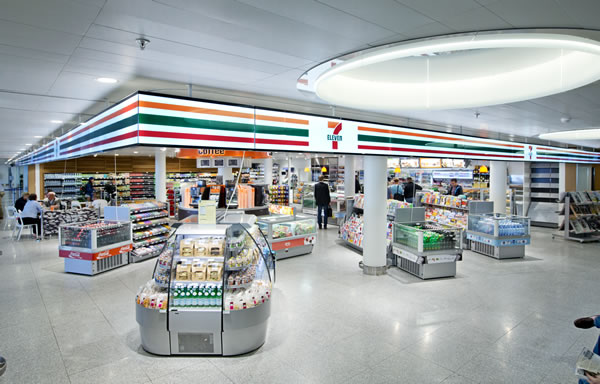
There are two 7-Eleven Deli at the airport

7-Eleven Deli
There are two 7-Eleven Deli at the airport. You might think that 7-11 is the worst American fast-food on earth. Maybe it once was, but the market has changed and so has the Deli chain. If you prefer, the food is wrapped up so you can take it with you onboard the plane. If you choose to eat it out in the C-pier – where the big international aircraft leave, you can also enjoy a supreme view – where all the 380’s are taxing by.

Related: World-class Airport Gastronomy in Denmark

The Culinary Airport of Copenhagen
Gorm’s is located between piers B and C and is one of the airport’s largest restaurants

Gorm’s
Copenhagen Airport has succeeded in getting ‘local heroes’ into the restaurant scene – long lasting Danish concepts. This is also true of Gorm’s, although the restaurant chain hasn’t revamped the pizza, it has at least raised it to a level where eating pizza is fun.  Gorm’s is located between piers B and C and is one of the airport’s largest restaurants. Good raw materials are treated the way they deserve, just to demonstrate Italian cuisine at its best.

The Culinary Airport of Copenhagen
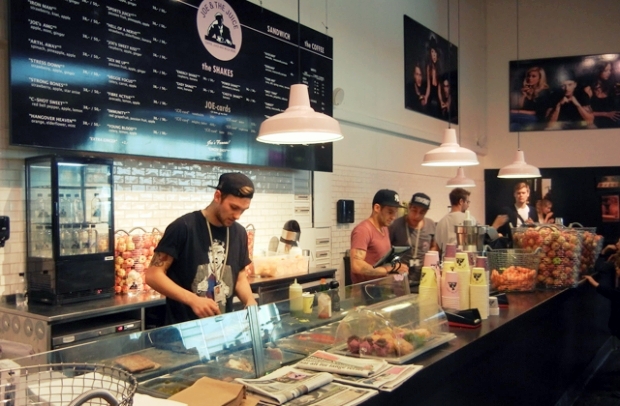
Joe & the Juice has three locations at the airport

Joe & the Juice
Joe & the Juice has in fact three locations at the airport. And in all three places, the music is loud and lively, while the tattooed bartenders squeeze one healthy glass of juice after another – if they’re not busy roasting one of their delicious sandwiches. Their tuna sandwich has taken the world by storm. Smart, young travelers are attending Joe & the Juice at all times of the day. Should you need an energy boast, a visit is recommended.

The Culinary Airport of Copenhagen
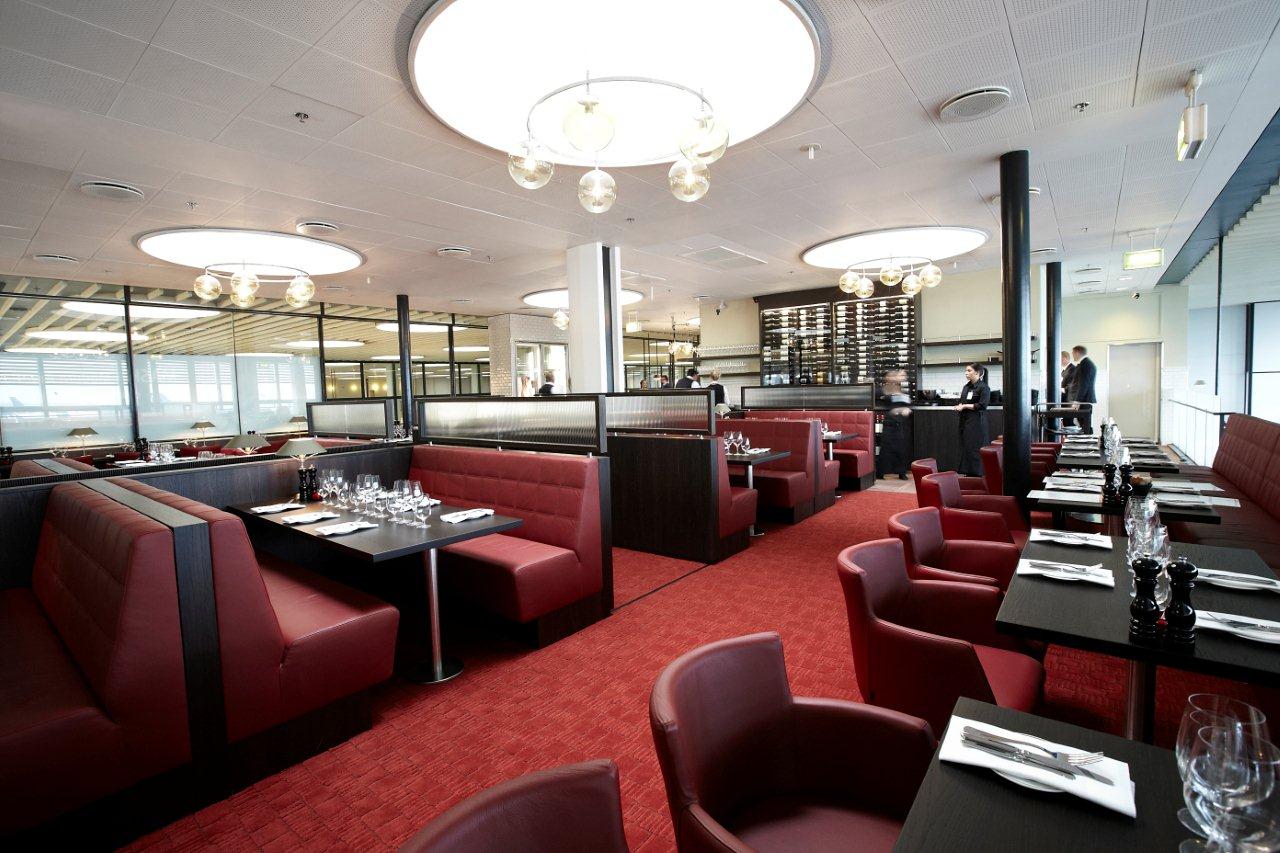
The Danish beef success MASH has already conquered many places in the world

MASH
The Danish beef success MASH has already conquered many places in the world – not least in Germany and England. Now the restaurant chain also has a department at the Copenhagen Airport. It is situated between the A and B piers, on the first floor. Like elsewhere, MASH at the airport offers red sofas, stalls and lots of proteins on the menu with the characteristic side orders. Therefore you don’t have to bother your belly with what the airlines are serving up in the air. Copenhagen Airport has made it a rule not to make calls over the speakers other than strictly necessary ones, so a visit to MASH is as pleasant as a normal visit to their other restaurants.

The Culinary Airport of Copenhagen
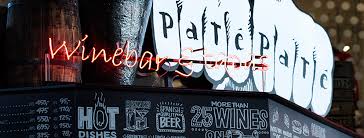
Kenn Husted, the wine king of Copenhagen, is in charge of Paté Paté at Kastrup

Paté Paté Winebar & Tapas
Kenn Husted is the wine king of Copenhagen. One of his most recent openings at the airport is the Paté Paté Winebar & Tapas. The emphasis on fresh ingredients, expedient service, and supporting “local hero” restaurants has been a strategic shift for Copenhagen Airport, one that is meant to increase the overall experience of every traveler. “Copenhagen’s gastronomy has strongly contributed to putting Denmark on the world map, and naturally, the New Nordic food culture must be reflected at the airport,” says Lise Ryevad, director of airport sales. “Sixty percent of passengers attach importance to food when traveling, and we want to give travelers a taste of Copenhagen on the go. It is important to us that you eat well—very well—at the airport,” she adds.

The Culinary Airport of Copenhagen
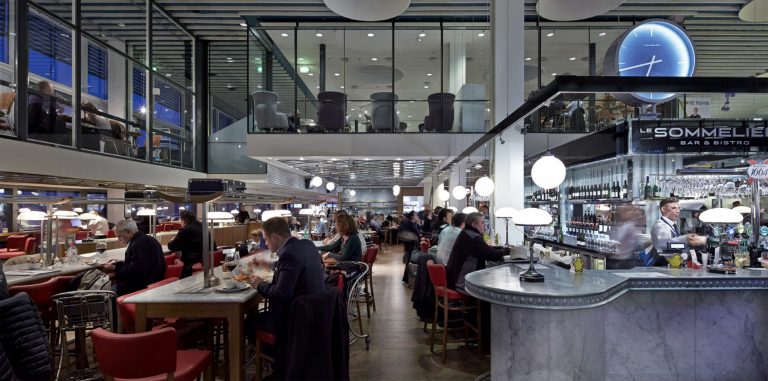
Le Sommelier was one of the first at Kastrup to really show what good airport food consists of

Le Sommelier
Le Sommelier was one of the first at Kastrup to really show what good airport food consists of. They have also the best location at the entire airport, at pier B – where almost all SAS flights come and go. Guests are also coming to the large open restaurant, which has a basic rule stating that all food on the menu is served within a quarter of an hour – and in fact, usually faster, down to 12 minutes. Almost no matter how busy they are, you can always have a glass of good wine or a classic French bistro dish – or why not just a few oysters with caviar on top and a glass of champagne?

The Culinary Airport of Copenhagen
Aamanns is a gift to Danish gastronomy

Aamanns
Aamanns is a gift to Danish gastronomy and offers delicious warm open-faced sandwiches made with free-range beef and herring, as well as a signature beef tartare with capers and tarragon. The airport restaurant – located between the B and C piers – is divided into two – there is the bar facing the buzzing airport, and ‘inside behind’ it’s very close to the most authentic restaurant experience you’re able to find throughout the airport. Here you are relatively isolated, it’s cozy located near to a few panorama windows facing the planes, so you can sit and enjoy your sandwiches while watching different flights taxing back and forth from the runways. The food is so excellent that Aamanns is a must.

Related: New Restaurants in Copenhagen

Kastrup- The Culinary Airport of Copenhagen
Many airports, especially the larger ones, will boast about how many food and beverage choices they have, but Copenhagen actually delivers exceptional-quality options as well. There are, of course, the crowd-pleasing fan favorites, a handful of foolproof Irish pubs, and, yes, even a Starbucks. But the real treat of flying through Copenhagen is experiencing what the airport refers to as its “local heroes”—the vendors showcasing Scandinavian cuisine, with many run by chefs with successful pre-existing restaurants in the city center.

Kastrup- The Culinary Airport of Copenhagen, written by Tor Kjolberg

Feature image (on top): Le Sommelier

Norway – The Kingdom of Whales

0

Several companies in Norway run boat trips on which there’s a good chance if seeing whales. While you’ll need to go in summer for a chance to see blue whales, winter is a good time to see killer whales and humpbacks. Welcome to Norway – the Kingdom of Whales.

Every year thousands of tourists come to Norway to do some whale watching. No matter the season, there are all kinds of whales, not to forget the truly spectacular and epic landscapes. Sea scientists have never seen so many whales as in recent years, and outside the city of Tromsø, the sea is sometimes “boiling” with whales.

When can you go watching whales in Norway?
But how and when can you go whale watching in Norway, and what’s the price? Tromsø, The Lofoten and Vesterålen, far north in Norway, are perfect places for whale watching all year round. While you can rely on seeing sperm whales in summer, orcas and humpbacks crowds the fjords full of fish in winter.

Related: Look Out for Whales in Norway

Norway – The Kingdom of Whales
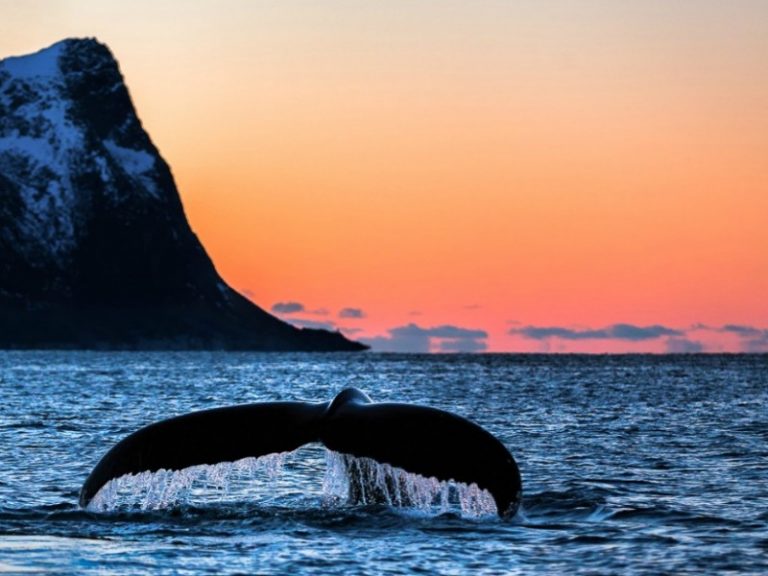
Killer whales in Andenes, Lofoten. Photo: Jesper Anhede

Going in winter, you can even watch world-class Northern Lights on the very same visit. And it never gets dark in summer, so both being perfect conditions to watch the most fascinating animals on our planet. With one of the most staggering, breathtaking coastlines as background, it will probably be an experience you’ll never forget.

Norway – The Kingdom of Whales
Orcas and humpbacks

Norway – the kingdom of whales
If you believe it’s impossible to miss these giant marine mammals, you’re completely mistaken. The sea around Norway is vast and the animals don’t always feel like showing off. You should therefore definitely seek out one of the more experienced expedition operators.

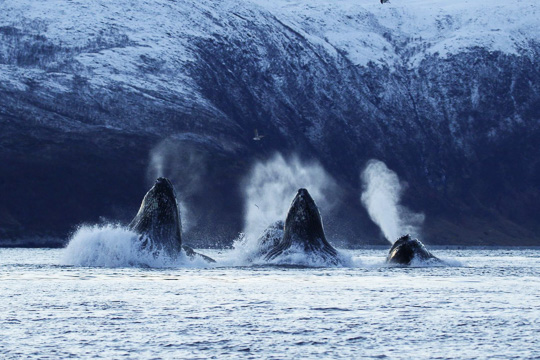
During the winter months there is an enormous supply of plankton and krill in the northern waters, which attracts lots and lots of fish. And those fishes attract the whales back to Norway! From late October until mid-January you’ll have an almost 100% chance of seeing whales in Norway, often swimming right next to the boats.

Related: Scandinavian Adventure Activities

Norway – The Kingdom of Whales
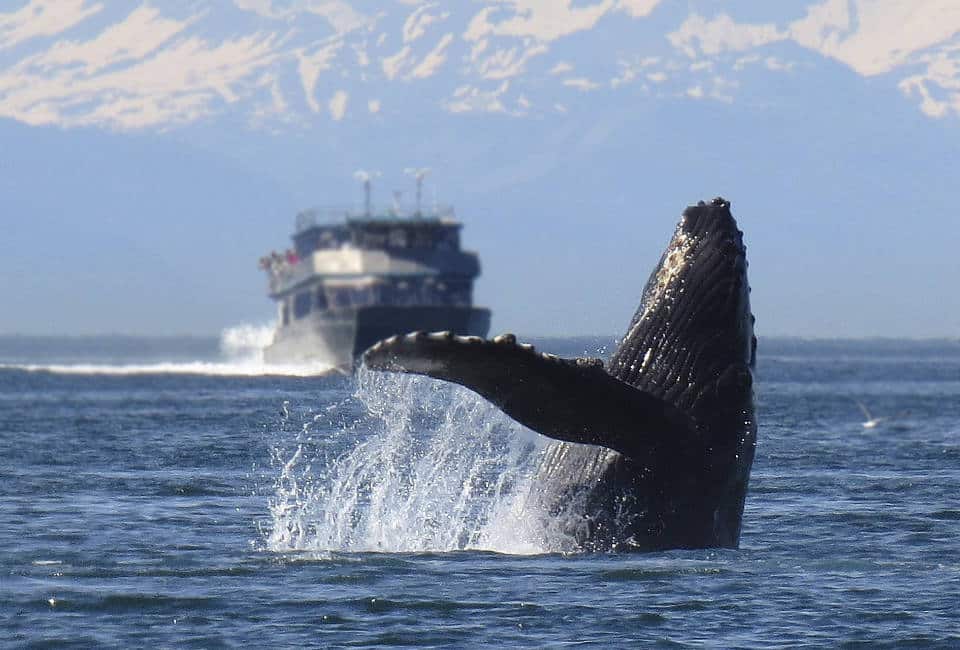
Whale safari in Norway

The animals are spread out from the Lofoten to Andøya (Tromsø region). During these months there are a lot of whale watching safaris going on in Norway.

Do you remember Keiko?
Do you remember Keiko from the films Free Willy? This world-famous, beautiful and friendly orca actually chose Norway after he was set free, and he stayed around the Tromsø region a couple of years, until he sadly died from pneumonia in 2003.

The best places for whale watching
During summer, the most important place is the little harbor town of Andenes in the north of the Vesterålen. Only 3.000 people live there but there are over 15.000 tourists in the city every year. They watch the sperm whales, which are full-time residents to the waters off Andøya, so encounters are very likely.

Norway – The Kingdom of Whales
Lofoten and Vesterålen, far north in Norway, are perfect places for whale watching all year round

In open sea it’s very difficult to see whales and orcas. You’ll get the best chances in between the fjords where there are a lot of fish on which the whales can hunt. Most of the times you’ll get to see tails and backs, but still it is a magical experience to see these creatures from up close!

Related: Exciting Northern Norway

Norway – The Kingdom of Whales
During summer, the most important place for whale safaris is the little harbor town of Andenes in the north of the Vesterålen

Summer and winter season
About 50% of all Norwegian summer whale watching tours start from Andenes and its little neighboring town of Stø. In Andenes you can also find a very good and informative whale centre with life size models. Sperm whales are best spotted between June and August, occasionally also pilot whales, minke whales and various dolphins show up.

Tromsø offers some of the highest probabilities of whale sightings on earth in the winter. Scientists say that the whale activity in these fjords is quite unique. Tromsø city is situated among islands, breathtaking fjord landscapes and dramatic mountain peaks.

Useful links:

Whalesafari Andenes

Whalesafari Tromsø

Many whale excursions are often fully booked for weeks in advance. If you’re sure that you’re going to Norway to watch the whales, we recommend that you book the safaris beforehand.

Norway – The Kingdom of Whales, written by Tor Kjolberg

Sweden’s Culinary Island Gotland

Gotland is Sweden’s largest and most sunny island – and also a culinary gold mine. A tasteful journey in Gotland’s food world offers surprises and wonderful gastronomic experiences. A number of new eateries and old traverses have resurfaced on the island.

The Gotlandic culinary culture is known for its ingredients and the art of improving the value of a culinary experience. In 2013 Gotland was in fact appointed culinary capital of Sweden by the government.

Sweden’s Culinary Island Gotland
Visby panorama from Klinten

Gotland culinary heritage
The central role of regional food traditions in the island’s culture has resulted in Gotland becoming a member of the network Culinary Heritage Europe, which works to promote and stimulate the development of local businesses. That includes restaurants, farming and processing of foodstuffs, fishing, both local and international, in which the businesses have a clear regional connection and an expressed intent to profile and further develop the cuisine of the entire region.

Sweden’s Culinary Island Gotland
Visby – the medieval city

Related: A Hidden Gem in Sweden

A walk through Gotland’s medieval city, Visby keeps both tourist and gourmet in touch with the city’s savory past. The Gotlandic food culture is renowned for its fine ingredients and the art of changing them to delicious dishes and unique dining experiences. The island has good conditions for cultivating many different raw materials. The sunny climate and the calcareous soil provide excellent prerequisites for growth. There are many varieties unusual elsewhere in Sweden, such as truffles, asparagus, rams and different types of root vegetables. Even the Gotlandic meat has a very distinct flavor since the animals are grazing in open meadows covered with herbs.

Sweden’s Culinary Island Gotland
Don’t miss saffron pancake

A vibrant historic district
Not surprising, the raw materials in Gotland are delivered to Michelin-starred restaurant NOMA in Copenhagen as well as to Nobel dinners and royal weddings. Grilled lamb, smoked flounder, saffron pancake and Burgundy truffle are all Gotlandic specialties.

Strolling along the narrow, cobblestoned streets of this island city, it is easy to imagine Swedish knights in armor; ladies in flowing gowns; jesters and minstrels; and the salty air thick with the savory aroma of spit-roasted mutton.

Sweden’s Culinary Island Gotland
Strolling along the narrow, cobblestoned streets of this island city, it is easy to imagine Swedish knights in armor

Related: A Swedish Island Retreat in Medieval History – Visby, Gotland

Although the area within massive granite walls is now a vibrant historic district with craft shops, cafes, and cottages, the ruined medieval churches remind us of the turbulent past of this Viking stronghold and Hanseatic League city-state.

Sweden’s Culinary Island Gotland
Take the opportunity to get closer to the food during your stay and visit farm shops or go on an organized truffle hunt with dogs. Or, at least, visit some of the new restaurants and eateries.

Sweden’s Culinary Island Gotland
Cafe Breidablikk

Café Breidablikk
With the beautiful botanical garden of Visby as the nearest neighbor, Café Breidablikk is a place filled with harmony, flowers and tranquility. As of this spring, the cafe has new owners, Ingela and Lars Nisser. The place is open for breakfast, coffee, lunch and selected evenings arranged for barbecue nights.

Sweden’s Culinary Island GotlandAdel 33
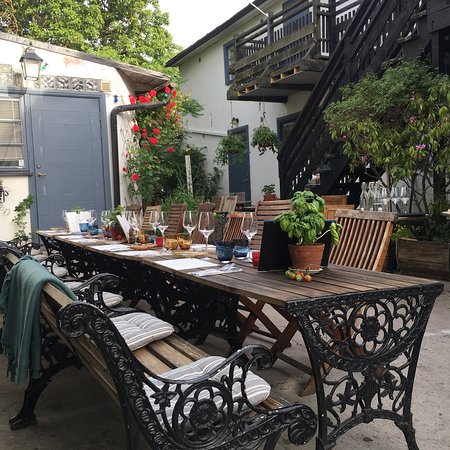
Robin Ingelse, former chef of Wisby Strand, has opened his own restaurant, Adel 33, in the shopping street Adelsgatan. The restaurant offers an inspiring crossover concept with Caribbean and Japanese-inspired menu. The restaurant aims to offer a culinary healthy experience with food, drink and music. Here you can enjoy exotic drinks that can be enjoyed in the outdoor dining room at Adelsgatan or in the backyard

Tuppens Krog
The famous eatery Gula Hönan has now a sister restaurant in Adelsgatan in Visby called Tuppens Krog. In venerable 17th century rooms, you may enjoy rustic flavors composed by the chef Marc Enderborg.

Sweden’s Culinary Island Gotland
Tuppens krog

Pensionat Warfsholm
Pensionat Warfsholm in Klintehamn is now run by new owners and the place has undergone a renovation, while retaining its old character. The restaurant offers tasty food from the charcoal grill, to be enjoyed out on the porch. During summer, concerts with well-known Swedish artists will also take place.

Sweden’s Culinary Island Gotland
Warfsholm pensionat, Klintehamn

Brasserie Lickers
In the small charming old settlement and fishing village Lickershamn, Julia Söderbloom has taken over the Brasserie Lickers after her parents. After gathering inspiration from traveling to Asia and experience from the restaurant industry in Stockholm, she has given new life to Brasserie Lickers. Here, you may enjoy smoked shrimps from the local fish shop as well as food from all over the world with a Gotlandic twist.

Sweden’s Culinary Island Gotland
Julia Soderbloom in front of Brasserie Lickers

Related: Gotland – Best in Europe 2017


Try saffranspannkaka

Gotland’s history as a Baltic trading center is also reflected in the island’s food. Take, for example, saffranspannkaka, a baked rice pudding flavored with saffron. It is on the menu of nearly every cafe and restaurant in Visby.

Sweden’s Culinary Island Gotland, written by Tor Kjolberg

The Scandinavian Summer Paradise – Skagen, Denmark

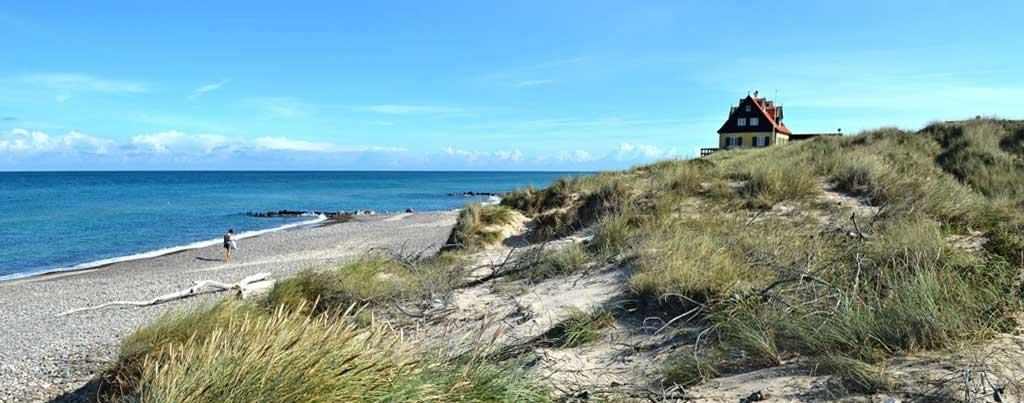
About five hours’ drive from Copenhagen, you arrive at the perfect summer holiday spot in Scandinavia, North Jutland. At Denmark’s northernmost tip there’s nothing but water between you and the horizon. You have arrived at the Scandinavian summer paradise Skagen.

Sand and dunes are interrupted only by wild grasses, and the people barely make a dent in the landscape. You have to have an affinity for sand to truly appreciate Skagen. But as the short summer season kicks into high gear, people from all over the world gather at this resort town.

The Scandinavian Summer Paradise - Skagen, Denmark
Rooftops in Skagen

Skagen – a medieval fishing village
A few hundred years ago, the entire spit, from the Råbjerg Mile to the northernmost tip of Grenen, was more or less obliterated by migrating dunes. By the end of the 18th century, the fishing village of Skagen, once a proud medieval trading center with a population of 4,000, had been reduced to about 600 inhabitants, and its church buried up to its tower.

Related: Art and Culture in Denmark

The Scandinavian Summer Paradise - Skagen, Denmark
Lighthouse at Grenen

There are three lighthouses in Skagen: a gray one, a white one, and the original one, which resembles a giant, primitive wooden lever. Past this odd structure, off the road to Grenen that runs north of town, lies the Danish painter P. S. Krøyer’s favorite beach.

The Scandinavian Summer Paradise – Skagen
Today, still without the crowds or amusement arcades, Skagen offers plenty of sun, rain, sand and sea, and families love going to the beach to build sandcastles or fly kites. Skagen is also the summer-vacation sport for Denmark’s “well-heeled”, mostly people from Copenhagen.

The Scandinavian Summer Paradise - Skagen, Denmark
Fishermen hauling the net on Skagen’s north beach, painting by P. S. Kroyer

This remote, medieval fishing village attracted back more than a century ago a remarkable group of artists due to its authentic character, its mammoth, ever-shifting dunes, but most of all because of the extraordinary quality of its light.

Related: Between Light and Darkness in Denmark

The light in Skagen
Mention Skagen to almost anyone around the country, and you will immediately hear about its light and about the Skagen school of painters, the best-known being Peder Severin Krøyer, Michael and Anna Ancher and Holger Drachmann. The area’s sandy beaches were a favorite motif for the artists, though most of the painting done in Skagen is of the town itself, where the houses are predominantly and startlingly daubed every shade of yellow. The Skagen artists have shown the rest of the world what life was like here at the tip of the world.

The Scandinavian Summer Paradise - Skagen, Denmark
The blue light in Skagen

The area still enjoys an artistic cachet, and there are several artists’ houses to visit, beautifully preserved, and a fine museum that organizes painting days for children. You will also hear about Hans Christian Andersen, famous for his pen rather than his brush. However, the writer’s time in Skagen was notably brief, if rich in the stuff of legend. He visited Skagen only once.

A popular week-end retreat
There are no castles in Skagen. The location itself is the luxury, with modest cottages and hotels and a few local bars and restaurants. For Europeans it’s a big advantage that the Danish schools break up earlier for summer holidays than in most other European countries. This means that at the height of the summer season, plenty of the best seaside accommodation becomes available at low-season prices and the local attractions are less busy, too.

The Scandinavian Summer Paradise - Skagen, Denmark
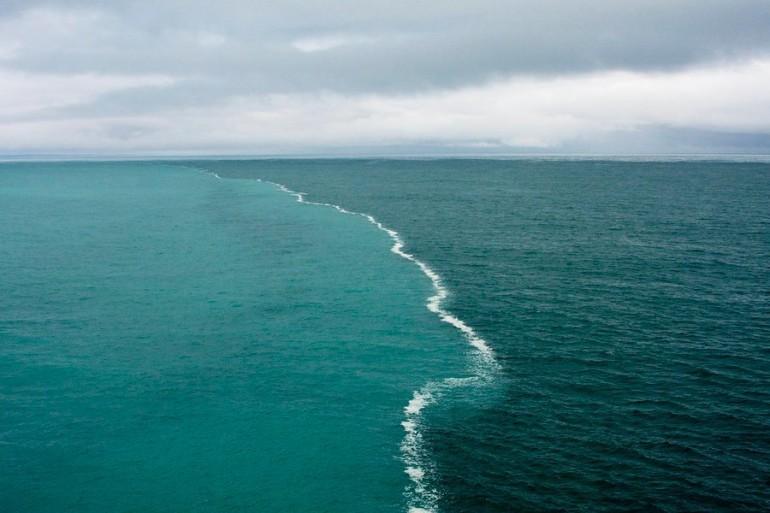
Two seas meet at Skagen, Denmark

Related: The Bluest Light in Scandinavia

Skagen attracts weekend visitors from Norway and an international cruise-ship crowd. The sandbar called Grenen marks the spot where waters of the North Sea meets the Baltic. Wave after wave of pilgrims visit this point.

The Scandinavian Summer Paradise - Skagen
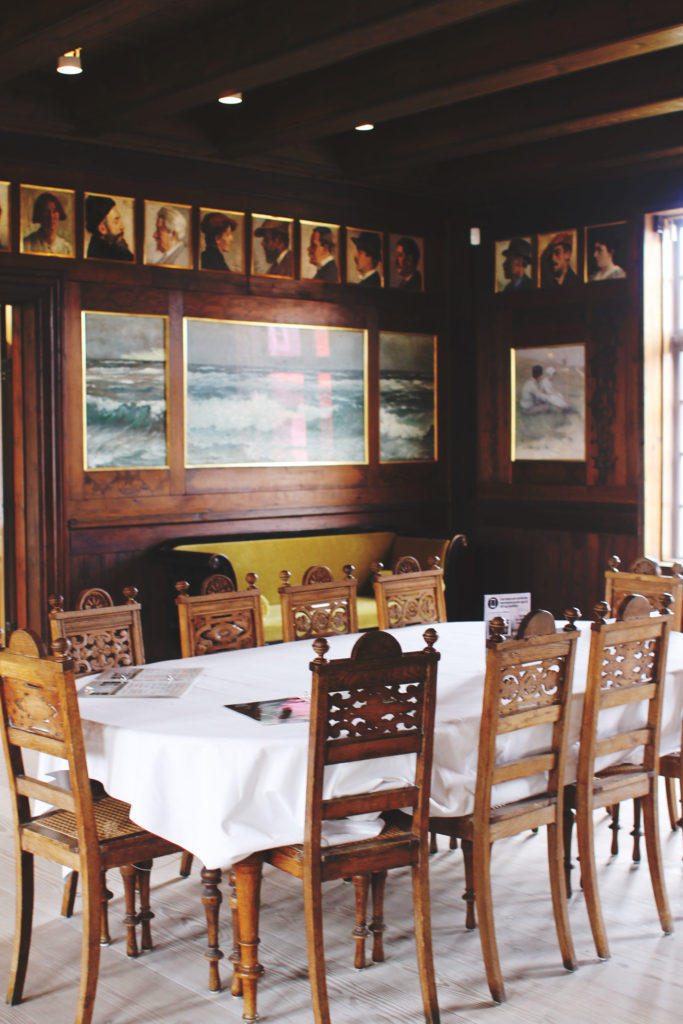
The dining room at Brondums hotel

Skagen Proper and Old Skagen
Skagen is actually two places, closely related yet distinct. There’s Skagen proper, a working port; home of Brøndums Hotel with its portrait-filled dining room. The small portraits were the preferred payment method by the painters. The main shopping and dining street is on the peninsula’s east side.

The Scandinavian Summer Paradise - Skagen, Denmark
Raabjerg Mile, Skagen

And then some two miles to the southwest is the Gammel Skagen (Old Skagen), tucked among grassy dunes on the Skagerak coast. There are six small hotels, a handful of restaurants, one general store and a number of traditional style rental cottages. The simple, modestly elegant Seaside hotel and the swanky summer watering hole and restaurant Ruths Hotel are worth a stay.

On top of a steep dune stands a massive wooden structure called Sømerket, placed there as a marker for boats. From this spot there is a magnificent view of the boundless sea, notched with ships, that surrounds this improbable spit of land. The largest sand dune of all is called Råbjerg Mile. It still grows by 20 feet a year.

The town of Amber
A popular local pastime across the region is collecting amber. Necklaces of the chunky fossilized resin are for sale everywhere, but it is often hard to distinguish the real thing from stones of the same color. If you wish, local “ambermen” will take you out on amber-spotting courses along the beach.

The Scandinavian Summer Paradise - Skagen, Denmark
Charming street in Skagen

Food in Skagen
Here far north in the country, Danish food tends to hit the same notes again and again. The staples are herring—spiced, creamed, or marinated—fried fish, cod fritters, smoked salmon, mussels, and potatoes in gravy. But the chefs are doing it so well that even such seemingly plain fare can be wonderful.

The Norwegian playwright Henry Ibsen found Skagen too busy and preferred its smaller neighbor, Saeby, where he found the inspiration for his play The Lady of the Sea. Both towns have plenty of fish restaurants.

The Scandinavian Summer Paradise – Skagen, Denmark, written by Tor Kjolberg

Scandinavian Preserved Fish

Fish has been a vital source of food on the long Scandinavian coastline since man first inhabited the north after the last Ice Age. In the months to come, we’ll dive into some of the many preserved fish recipes in Scandinavia.

Fish were plentiful in the past and migratory fish were easy to catch, even without boats. The need to preserve this seasonal abundance to survive long months of cold and unfishable waters, with primitive means, is the basis of the enormous heritage if all manner of preserved fish in Scandinavia.

Scandinavian Preserved Fish
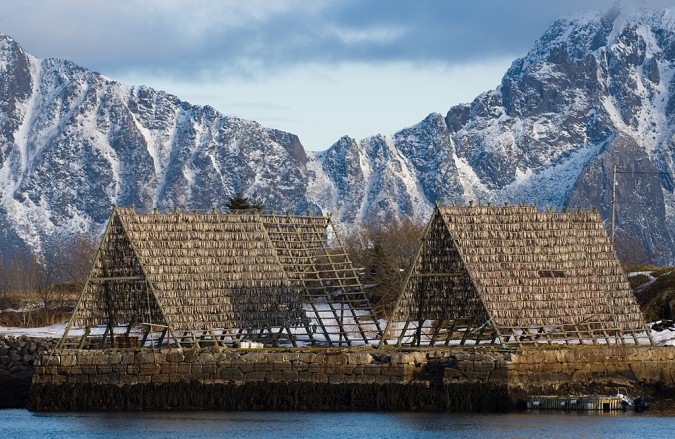
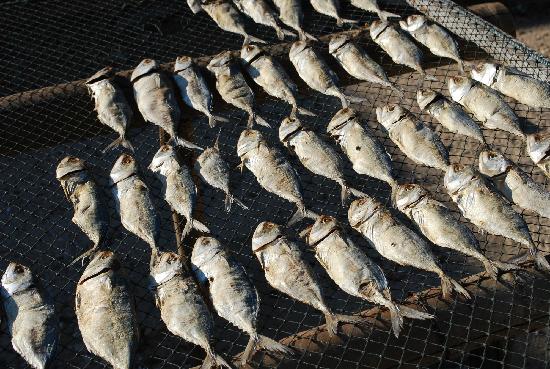
Dried Scandinavian fish

Related: More Seafood from Norway

Drying fish
Drying fish in the cold, dry winter air has been a necessity for as long as man has lived in the north. Fishing waters in the lakes and rivers freeze solid for a large part of the winter, or storms make fishing at sea impossible, so the preservation of fish caught in the summer has long been a means of survival.

It’s the mastery of skills such as smoking, drying and vinegar pickling that kept us alive – the Viking would not have been able to launch multiple and ambitious adventures abroad without their reliable supply of salted, smoked and dried fish.

Related: The Scandinavian Herring Adventure

Scandinavian Preserved Fish
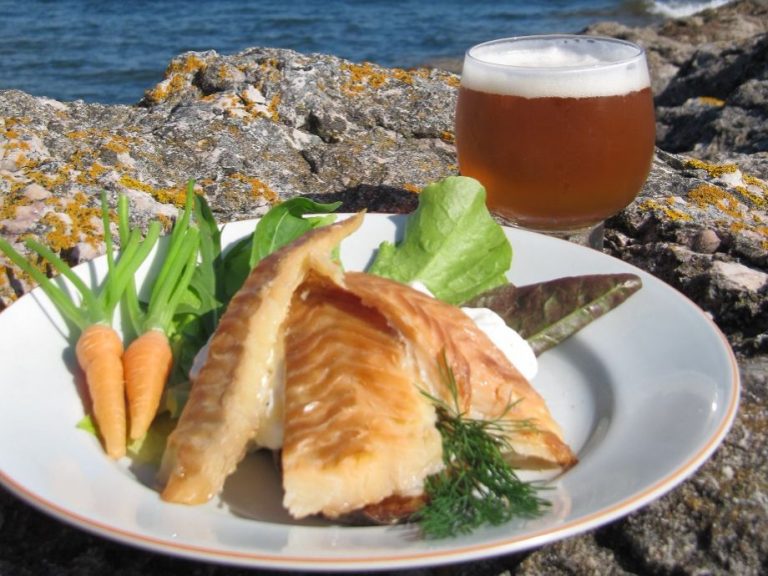
Preserved Scandinavian fish

Early preservation methods
Early preservation methods were simple, and before salt was available at an affordable price, drying and smoking were the only methods used. As trade improved, salt became another means of preserving, either on its own, or combined with drying, smoking and fermentation.

Lactic acid fermentation and lime curing are relatively new methods but are still at least thousand years old. Over time and through human ingenuity, the skills of salting, smoking and pickling have developed and survived the advent of modern refrigeration.

Related: Than You for Smoking, Mr. Hansen

Scandinavian preserved fish
Preserved fish is still an important part of the economy of fishing communities all over the north, transformed from an age of necessity into something refined and delectable in its own right.

Scandinavian Preserved Fish, written by Tor Kjolberg

Featured image (on top) Drying fish in Lofoten, Norway

Macbeth Visits Scandinavia

The American Drama Group is visiting Scandinavia this summer to give four performances of Shakespeare’s Macbeth in Copenhagen, Stockholm, Bergen and Kristianstad. Macbeth visits Scandinavia is a part of the group’s annual Castle Tour.

The American Drama Group Europe
ADG Europe was formed by Ohio native Grantly Marshall in 1978 in the city of Munich. it was linked in the beginning to the University of Munich where the first performances were held. It expanded quickly to other theatres in Munich and also began to give guest performances in other German cities. The expansion later continued to include many countries in Europe and Asia. In 1994, the ADGE began touring European Castles featuring many illustrious places and surprises. We are hoping to make it a pan-European tour.

Macbeth Visits Scandinavia
ADG Europe was formed by Ohio native Grantly Marshall in 1978 in the city of Munich

The Tragedy of MACBETH by William Shakespeare
If MACBETH is not the finest play ever written, it is certainly the most performed.  The play explores the corruption of power and its terrifying results, both politically and personally. But while the themes are profound and complex, the form is hugely entertaining: this is a thriller, a war story, a romance, a nightmare, a horror story and a most powerful presentation of the supernatural.

Related: Copenhagen – the Capital City of Green Spires

Macbeth Visits Scandinavia
Bergenshus fortress, Norway

The witches ride above this play as both demons and restorers of the natural order that MACBETH and his murderous wife seek to destroy.  The evil that the royal couple unleash rebounds upon themselves and, by means of the most extraordinary poetry, we, the audience, watch the collapse of naked ambition into tortured self-doubt and ultimate insanity.

Macbeth Visits Scandinavia
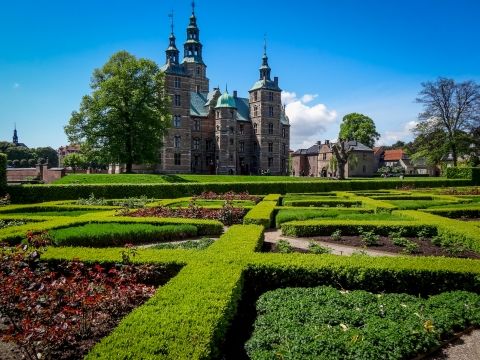
Rosenborg gardens, Copenhagen

Acclaimed all over the world
Macbeth was the company’s first Shakespeare production.  The production has been so successful that it has been constantly revived and toured worldwide since 2001 to over forty countries on four continents. This might be the most performed production of MACBETH this century.  Audiences have thrilled to this production from London to Atlanta, from Beijing to Berlin, from El Salvador to Thailand and from Australia to Norway.

Related: Royal Residences in Stockholm

Macbeth Visits Scandinavia
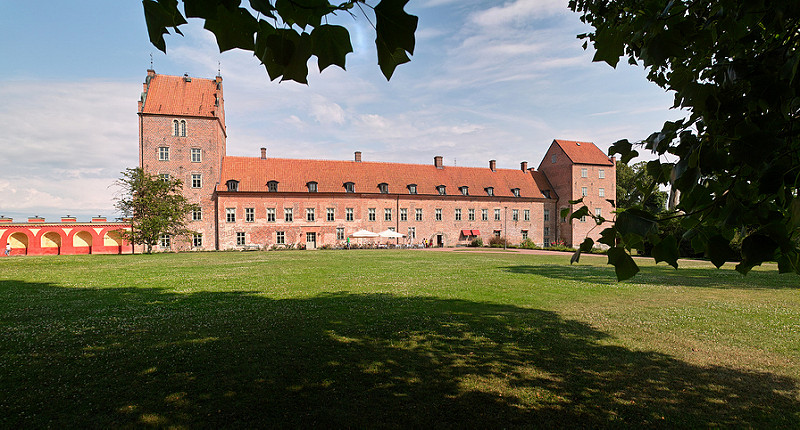
Bäckaskog Castle, Sweden. Photo: Ulf Bodin

A full-blooded version if Shakespeare’s Macbeth
This is a full-blooded version of the play, witch-driven in its intensity. The production is not frightened of the supernatural or compromised by modern dress. But this is not an old-fashioned production either; the musical score by Paul Flush drives the play forward and creates a compelling sound texture of almost filmic quality. Forest and castle merge and melt. The witches are an almost constant presence, neither male nor female (or both) and as ruthless as Greek Furies.

Macbeth Visits Scandinavia
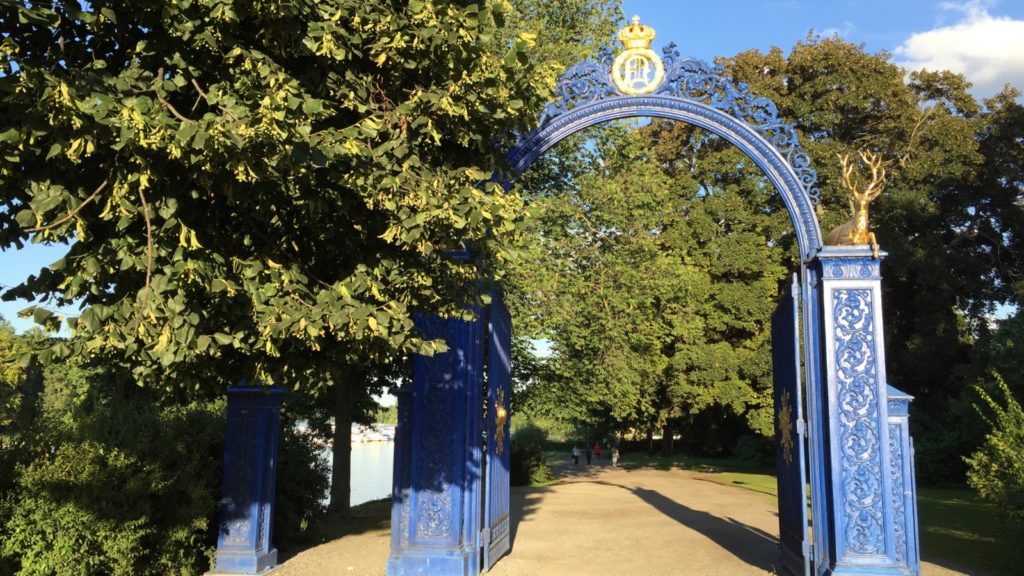
Kungliha djirgården, Stockholm

Macbeth – the murderous monarch
The acting is fast and physical. Above all the production releases the poetic intensity of Shakespeare, writing at the height of his powers. The play is not so much interpreted as elucidated, exposing its universal truths. In our modern world where power seems divorced from morality and the irrational seems to sweep all before it, this mighty drama reminds us that we are not only corrupted but diminished by evil.  For without a moral compass we shall be like MACBETH the murderous monarch.

Related: Beautiful Bergen – Its Arts and Artists

Stunning reviews
“Feral cries pierce he air…from the very first moment of this MACBETH, the audience were held is a vice like grip” wrote JAPAN TIMES

“I never knew Shakespeare could be so entertaining”. CNN TV

“World class theatre”. The Observer UK.

Macbeth visits Scandinavia
Directed by Paul Stebbings, Macbeth will be performed at open-air theatres in

Bergen, Bergenhus festning – courtyard – August 20
Copenhagen, Rosenborg Garden – King’s Garden – August 23
Kristianstad, Bäckaskog Slot – August 31
Stockholm, Kungliga Djurgarden – September 3

Macbeth Visits Scandinavia, Source: ADG Europe

The Saga of Norwegian-based Actor Gisli Örn Gardarsson

He was never accepted admission to the Academy of Theatre in Oslo. However, that did not prevent Icelandic actor Gisli Örn Gardarsson from being accepted at Broadway or in West End and working closely with Nick Cave. Today the Norwegian-based actor is acclaimed by international producers.

Earlier this year, when an actor was unable to do the English version of a new comedy TV series titled One Night Stand due to a death in the family, Gardarsson was ready to step in.

The Saga of Norwegian-based Actor Gisli Örn Gardarsson
Norwegian-based actor Gisli Örn Gardarsson

“He did it in 3 days’ notice, which must be regarded as extremely brave,” says director Øystein Karlsen.

Related: Norwegian Star Actor

The Saga of Norwegian-based Actor Gisli Örn Gardarsson
Gardarsson interprets Robin Hood

Norwegian-based actor Gisli Örn Gardarsson is an international star
Following the recent success of Norwegian television series like SkamOne Night wanted international attention. For that reason, they chose to shoot in English. It is already creating buzz, having been named one of the top ten foreign ‘must see series’ by Deadline.

London audiences got their first glimpse of his restless ingenuity in 2003, when his rapturously received adaptation of Romeo and Juliet played at the Young Vic, before transferring to the Playhouse Theatre.

The Saga of Norwegian-based Actor Gisli Örn Gardarsson
Vesturport is performing Faust

In 2005, the Reykjavik-based Vesturport theatre company, which Gardarsson co-founded with a group of friends while they were still at theatre school, was bringing an equally ambitious production to the Young Genius season, a collaboration between the Young Vic and Barbican BITE.

Related: Prestigeous Prize to Norwegian Film Director


Critical successes

“Gisli Gardarsson’s shows have been such critical successes, doing what is almost impossible in today’s multimedia society; attracting a new young audience to the theatre,” wrote BBC News and continued: “He made his directing début with a circus-themed production of Shakespeare’s Romeo and Juliet at the Reykjavík City Theatre in 2003, also playing Romeo. The production’s success led to a transfer to the Young Vic in London, from where it moved in 2004 to the Playhouse Theatre in the West End. He has since directed further stage productions all over the world, including an adaptation of Kafka’s Metamorphosis in association with David Farr.”

Büchner’s Woyzeck at the BAM Next Wave Festival, directed by Gísli, was his work’s first appearance in the US. He has since been to Boston, Toronto, Winnipeg, New York and San Francisco with his work.

Related: Shame – the Successful Voice of Youth in Norway

The Saga of Norwegian-based Actor Gisli Örn Gardarsson
In three days’ notice Gardarsson stepped in and took a role in a new TV series titled One Night Stand

Travel between Oslo and London
He has acted in, written and produced many theatre, film and TV productions, winning numerous awards, such as the Broadway World and Boston theater awards for The Heart of Robin Hood and Metamorphosis and the prestigious European theater awards in 2011. In 2007 he received the European Shooting Star for his acting in the film Children.

His productions of Woyzeck, Metamorphosis and Faust had the music specially composed by Nick Cave and Warren Ellis. Gisli continuously works across the Globe, mounting productions of all sizes to a very broad audience. He is an associate director at the National Theatre in Oslo, Norway and at the Young Vic Theatre in London.

The Saga of Norwegian-based Actor Gisli Örn Gardarsson, written by Tor Kjolberg

On Copenhagen’s Amager Island

Visitors glancing out of the plane window near Copenhagen (Kastrup) airport may be intrigued – or even alarmed – by what appears to be a swirling vortex on Amager Island.

The spiraling landmark is actually one of many surprising buildings springing up around Copenhagen. On its completion in 2013, it became the home of Scandinavia’s biggest aquarium, The Blue Planet. The aquarium has water on all side and is intended to give the visitors a feeling of being under water. The building has five “arms” from its center so that guests can choose their own way around to see exotic animals.

On Copenhagen’s Amager Island
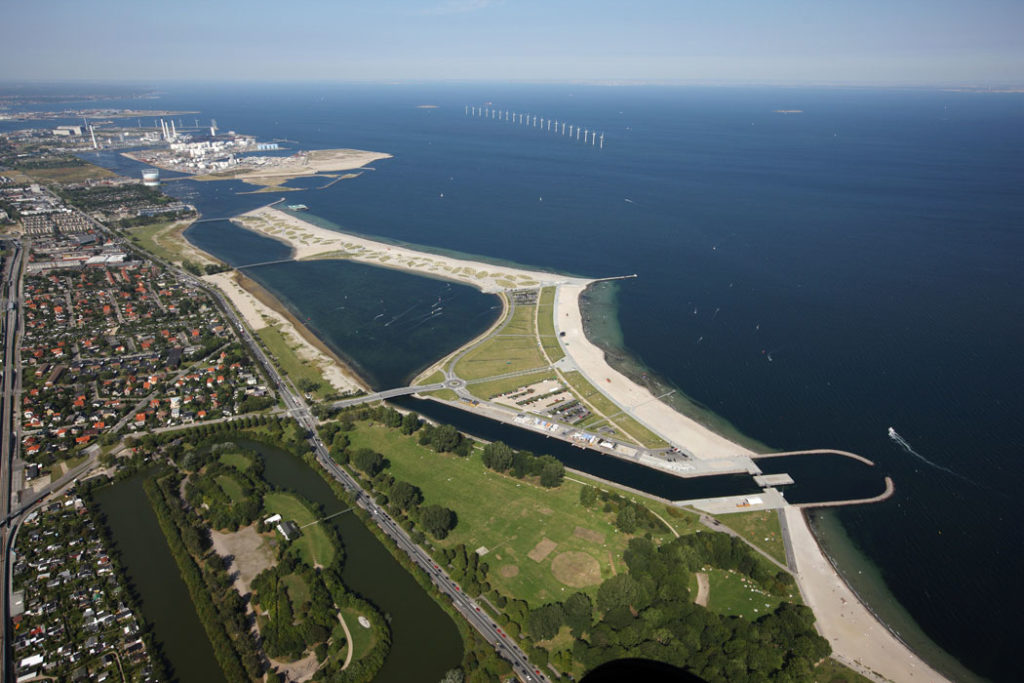
Amager beachpark

Exciting architecture on Copenhagen’s Amager Island
For years, Amager was quiet hinterland, created by some judicious damming and a mass of Copenhagen landfill. Today, it’s the scene for some of Denmark’s most exciting architecture.

Related: Copenhagen’s Latin Quarter

On Copenhagen’s Amager Island
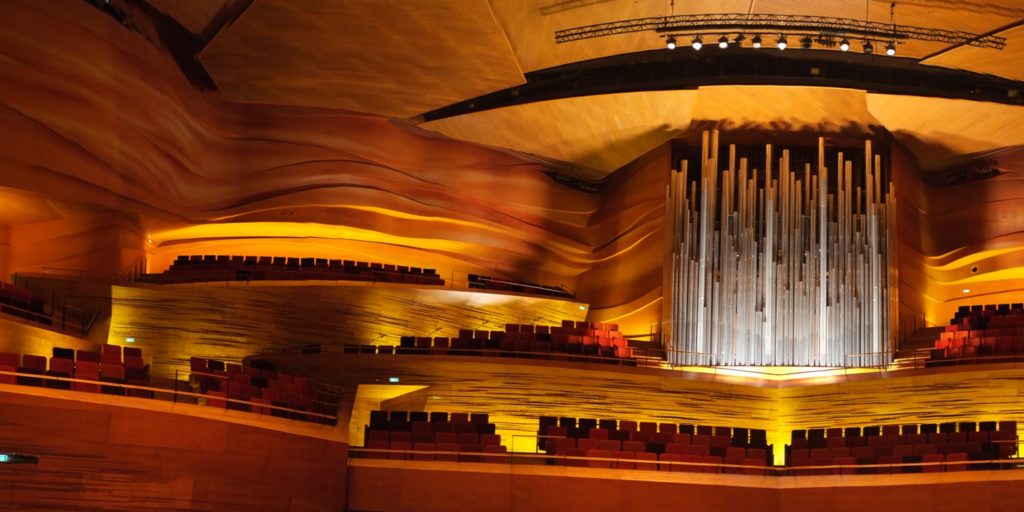
From the beautiful DR Koncerthuset

A whole ‘downtown’ area, Ørestad, is being created from scratch here; a shining new metro station brings shoppers to one of Denmark’s largest malls, and to the beautiful DR Koncerthuset, a part of the DR Byen (DR Town),home of the Danish Broadcasting Corporation. The concert complex consists if four halls with the main auditorium seating 1,800 people, in which you can enjoy listening to the Danish National Symphony Orchestra. The venue was officially opened in 2009.

On Copenhagen’s Amager Island
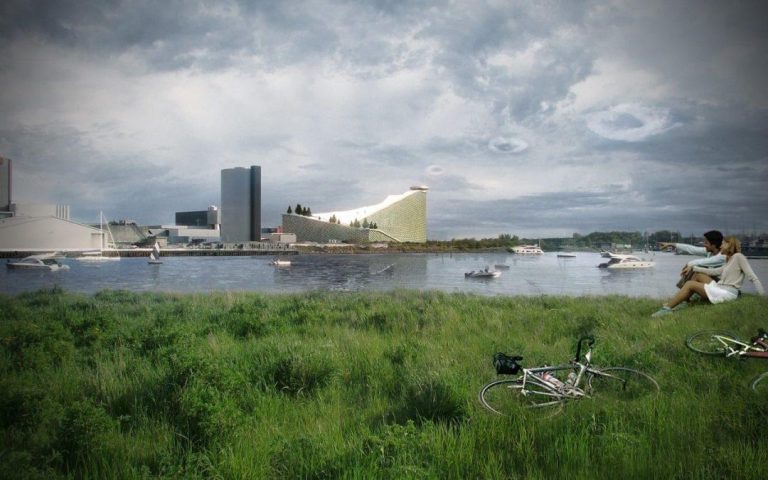
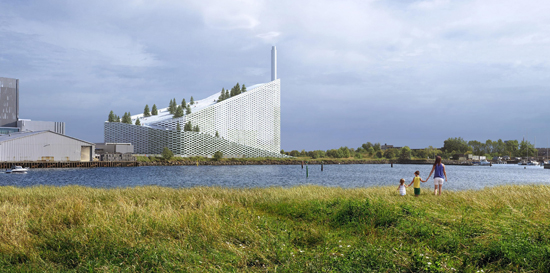
The waste-to-energy plant Copenhill/Amager Bakke features a rooftop ski slope.

An attractive waste-to-energy-plant on Copenhagen’s Amager Island
The new waste-to-energy plant Copenhill/Amager Bakke opened last year, and it features a rooftop ski slope. The power plant is not only one of Europe’s most energy-efficient, environmentally friendly and highest capacity waste-to-energy plants, but also the most visually attractive and publicly acceptable, according to builder Babcock & Wilcox Vølund (See feature image, on top).

Nearby, the Øresund bridge uses the island as a launchpad to curve itself over to Swedish shores.

On Copenhagen’s Amager Island
From the wonderful Havneparken (Beach Park) at Islandsbrygge

Islandsbrygge, on the west of Amager, has more to offer the casual visitor, with its wonderful Havneparken (Harbor Park). The water around Copenhagen is clean enough to swim in, and in the park, you’ll find the harbor baths – five outdoor pools full of happy, splashing people.

Even more luxury, Amager Strandpark is a beach development in the east, with over 4km (2 ½ miles) of beaches, an artificial island and a lagoon.

On Copenhagen’s Amager Island, written by Tor Kjolberg

European Leading Guitar Maker Is Looking to Norway

The Czech Republic-based acoustic guitar brand Furch is an exceptional tale of creative rebellion. When the company wanted to revitalize its visual expression recently, the European leading guitar maker was Looking to Norway and reached out to the Bergen-based design and strategy company KIND.

Conceptional branding
CEO Tom Emil Olsen founded KIND in February 2013. In 2012, Olsen was listed on Adweek’s Magazine’s Talent 100 list as one of the top 100 creative talents in the world.

European Leading Guitar Maker Looking to Norway
From KIND design and strategy company

KIND conceptional branding
What KIND is doing is called conceptional branding and the company claims it is expert at finding the sweet spot between a brand’s ‘look’ and its own ‘soul’. Conceptional branding can be described as extended brand building where the focus is on both the visual and emotional aspect of a brand. To KIND it’s all about creating an emotional attachment instead of only developing logos and colors.

European Leading Guitar Maker Looking to Norway
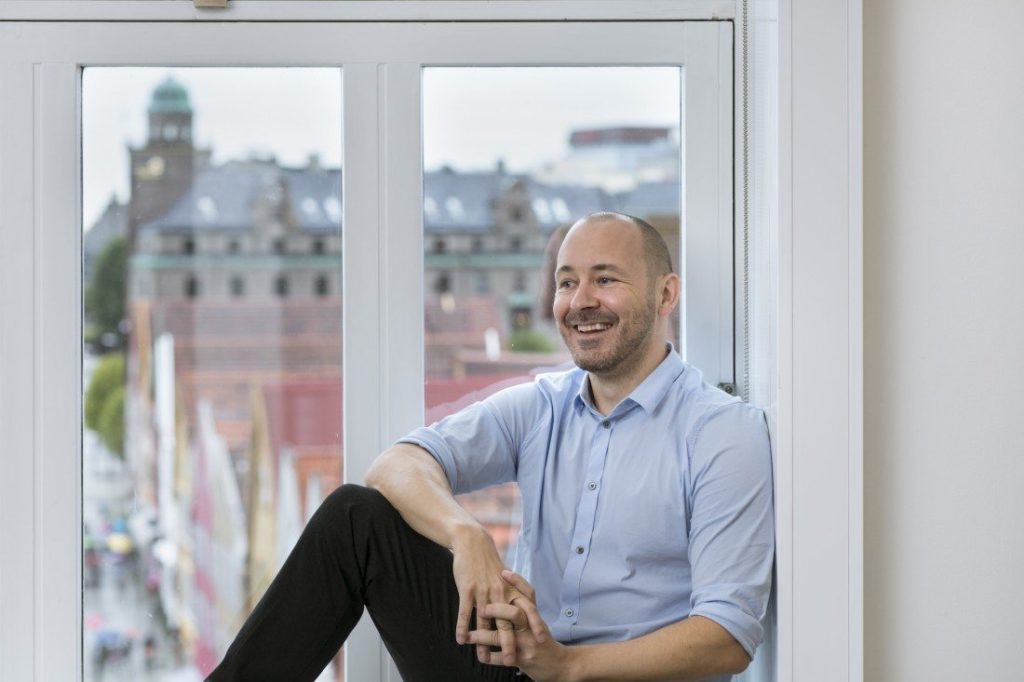
KIND co-founder and CEO Tom Emil Olsen (Courtesy Bergensmagasinet)

KIND’s positioning allows the designers to work closely with the client from the idea phase to implementation, ensuring the creation of a unified concept. According to KIND, the key to a successful brand lies in telling stories which appeal to the heart.

High-quality acoustic guitars for almost four decades
Czech Republic-based Furch is a European acoustic guitar maker with an incredible focus on quality and constant innovation. When the company wanted to refine its nearly 40-year-old brand, it turned to KIND.

Related: Norwegian Musician Plays the Largest Instrument Ever Invented

European Leading Guitar Maker Looking to Norway
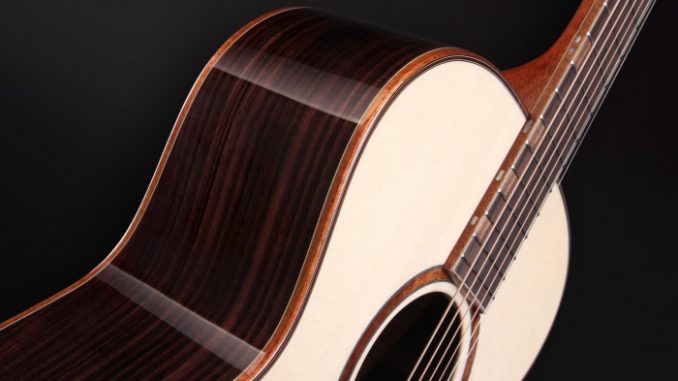
Furch 632 sm custom made acoustic guitar

The Furch name has been synonymous with high-quality acoustic instruments for almost four decades. Its guitars are used by a diverse roster of major artists worldwide, including the legendary Suzanne Vega, hitmaker Per Gessle of Roxette, former Dire Straits rhythm guitarist and now solo artist David Knopfler, plus Oscar-winning Irish singer/songwriter Glen Hansard.

European Leading Guitar Maker Looking to Norway
Furch aciustic color series 2018

The Furch logo story
Since the establishment of Furch in 1981, its logo has only changed twice. A yellow-black diamond shape, illustrating two reverse “F” letters, have decorated the head of the guitar up to 1996. The last one was replaced by a handwritten Furch inscription in a pearl design. The longest used and currently well-established logo, in the shape of an elegant “F” symbol did not start appearing on the guitars until 2000.

This year, the Furch underwent its third change, which is less visible at first glance but completely natural. Compared to the existing 17-year-old option, most of the original curves have been changed and the minor details have been fine-tuned. Thanks to this change, the Furch logo appears lighter and clearer. The change in the logo symbolically reflects the continuous technological development and qualitative advantage of the Furch guitars in the field.

European Leading Guitar Maker Looking to Norway
Furch new logo, 16 July 2018

The European leading guitar makes is looking to Norway
Petr Furch, who joined the management team of Furch in 2006 and is now CEO of the company that his father created, said: “The recent refinements are subtle when it comes to our new logo, but this was a challenge that KIND worked with us closely on and they respected our desires and needs. It was very much a case of showing a path of natural evolution. The logo change reflects our commitment to continuing technological development and the high quality of Furch guitars.”

“With our team of designers, we were successful in shifting our logo to a higher level. We emphasized the importance of preserving the well-established F symbol, which I perceive as a fundamental visual element of our brand,” Furch adds.

European Leading Guitar Maker Looking to Norway
Conceptional branding can be described as extended brand building where the focus is on both the visual and emotional aspect of a brand

Natural evolution
KIND’s first task was to enhance the Furch logo with a subtle update; essentially the client wanted a slightly refined, more modern and cleaner take of the logo that guitar players have been accustomed to for decades. ‘Aspire to perfection’

In addition, KIND has created a bold, distinct advertising campaign for the brand which will feature in a host if international guitar publications in 2018 and beyond. To complement this, KIND was also commissioned to produce a short video – which the agency christened ‘Aspire to perfection’ – to capture the soul of Furch. This film now forms a central role on the company’s marketing.

KIND has also received a lot of international recognition for their local projects, which in turn has led to companies all over the world contacting them for their in-house expertise.

European Leading Guitar Maker is Looking to Norway, sources:  KIND and FURCH