
Scandinavian Shrimp

There are two very different species of Nordic shrimp: the tiny, sweet-fleshed Baltic shrimp (Palacemon adspersus) caught in the fjords and inlets of southern Scandinavia, and the ten-times bigger North Sea prawn (Pandalus borealis) caught in deep northern waters.

Baltic shrimp are caught in low waters; often you can catch them from the beach in bug, light nets. It’s a favorite pastime on summer evenings for children and playful parents. Half of the shrimp caught this way are often a different species, the brown shrimp (Crangon crangon) which will not turn red on cooking but are delicious just the same, especially if you have caught them yourself. Shrimp must be very much alive, wriggling all their little thin legs, and jumping around in the crate; if they are lazy they are almost dead and not good to eat. The color is mousy grey, turning to baby pink when cooked.

Scandinavian Shrimp
Deepwater prawn

Related: World’s Best Oyster – a Wild Swedish Delicacy

These Baltic shrimp are traded alive from early summer to September. Freshly boiled, tiny shrimp, still a little bit tepid, are an affordable luxury. If you cannot get them fresh, the large North Sea prawns are a good choice.

Scandinavian Shrimp
Nordic shrimp

Buying and storing
All around the globe, deep-sea prawns live in cool waters, and they are caught out at sea, they are usually cooked and often frozen un their shells on board. North Sea prawns, on the other hand, are best bought frozen as there is no telling how long they may have been thawing at the fishmonger’s. The quality of these ready-cooked prawns is very good if you thaw them yourself in the fridge overnight. Fresh Baltic shrimp are best. You can also buy them frozen, canned, and in brine, but it’s not at all the same thing.

Related: Scandinavian Salmon

If shrimp are the main course, you should by at least 500g for each person; if they’re a starter, 200g is enough. North Sea Prawns have a higher ratio of flesh to shell, so you don’t need more than 300g per person; 150g is fine for a salad.

Scandinavian shrimp
Fish soup with shrimp

Culinary uses
Shrimp have a delicate taste, making them best when eaten on their own, with bread and butter. In Denmark, they say that pepper on a shrimp is a crime, like potting pepper on a baby.

Related: Norwegian Crow’s Balls

In Scandinavia, the shrimp season is the heart of summer. Big bowls brimming with shrimp, new potatoes, asparagus, dill, a simple meat dish, or fish, and strawberries with cream for dessert: it’s a well-loved menu for Sankt Hans, midsummer evening, celebrated with bonfires and songs, even if it rains on eight out of ten midsummer evenings.

Scandinavian shrimp
Shrimp sandwich

Shrimp should be boiled, like the other crustaceans, in the court-bouillon, and use a large bunch of dill weed which is in season in the summer, when the dill flowers are not yet out. Dump the shrimp in the boiling court-bouillon, boil vigorously for 1 minute, then let them cool in the liquid. This method makes them easier to peel, while also firm and salty.

Small Baltic shrimp are really very small, so it takes maybe a hundred of the little pink creatures to make up a proper open sandwich. But they are a marvel when piled high on a special sourdough bread made from both wheat and rye, studded with caraway seeds. You may add a little black pepper, a spring of dill and a blob of homemade mayonnaise – but lemon I a dirty word here.

A sandwich like this is worth every effort, but it seems it’s becoming less and less popular to spend a summer’s evening with friends eating shrimp – we have perhaps grown so accustomed to fast food that people just think it is a waste of time. You can only pity them; the small shrimp are just as good as lobster, and not hard to peel, once you get the knack. Some people, especially men, claim that they are unable to peel shrimp, and let women do it for them. This must be the ultimate proof of true love. It’s altogether an interesting study of human behavior, and patience; some people eat them while they peel them, others patiently build up masterpieces of pink-fleshed art and devour the masterpiece at the end.

The shells are very good for soup, especially if you include a few shrimp still in their shells.

Scandinavian shrimp
Shrimp salad

North Sea prawns have a strong marine taste and can be used in numerous ways, including in sandwiches and salads, or gently fried in their shells. We usually stick to shrimp salad in Scandinavia, a dish that has appeared in so many inferior versions that you could tend to forget just how exquisite and refined the real thing is. The other possibility is to make a soup and pile in the huge prawns at the last minute; they can stand up very well to the intensity of the flavors.

Scandinavian Shrimp, written by Tor Kjolberg

The World’s Most Environmentally Friendly Luxury Hotel to be Built in Norway

In northern Norway, the national park Saltfjellet-Svartisen expands from fjord to mountain in Salten, Nordland. The glacier Svartisen covers one fifth of the national park. At the foot of the mountain, the luxury hotel Svart (Black) is to be built. You can only get there by sea.

Start of construction is estimated next year. Architect firm Snøhetta is responsible for the project, and the architects have sky-high and environmentally friendly ambitions.

The World's Most Environmentally Friendly Luxury Hotel to be Built in Norway
In northern Norway, the national park Saltfjellet-Svartisen expands from fjord to mountain in Salten, Nordland

The theme of the project is nature and the building will become a so-called powerhouse, which means that the hotel is going to generate energy with what it consumes. This also applies to the energy that is included in the construction, as well as removal of material.

Related: Sound of Silence in Luxury Spa Hotel Outside Oslo, Norway

The World's Most Environmentally Friendly Luxury Hotel to be Built in Norway
Saltfjellet – Svartisen

The building will use 85 percent less energy than a typical modern hotel. “This will be the world’s most environmentally friendly hotel,” says architect Zenul Khan to the Norwegian D2 magazine.

The World's Most Environmentally Friendly Luxury Hotel to be Built in Norway
Zenul Khan, senior architect and project manager, Snøhetta

The hotel is what the creators consider the luxury hotel of the future: an accommodation close to unspoiled nature and wildlife experiences.

One of the most important challenges for Snøhetta has been to chart how sunlight hits the area, to be able to store the solar energy with maximum efficiency, a very important issue, since the hotel is built above the polar circle with almost no sun in the winter months.

Related: The Most Remote Hotel in Norway

The World's Most Environmentally Friendly Luxury Hotel to be Built in Norway
Guest will only be able to arrive by boat at a pier located inside the circle

The circular wood-shaped hotel has a panoramic view of the fjord through its many large windows, providing proximity to nature. Inspired by the area’s traditional fishermen’s cabins and drying facilities for fish, the carrying system consists of wooden piles.

Guest will only be able to arrive by boat at a pier located inside the circle. It will be possible to paddle under the construction, both at high and low water.

Related: The Oldest Hotel in Norway

The World's Most Environmentally Friendly Luxury Hotel to be Built in Norway
The building will use 85 percent less energy than a typical modern hotel

Snøhetta is Norway’s most famous architectural firm. Among other projects, they have been responsible for the Opera House in Oslo and the 9/11 Memorial Museum in New York.

The World’s Most Environmentally Friendly Luxury Hotel to be Built in Norway, written by Tor Kjolberg

A Little Piece of Norway in Berlin

Gallery Gerhardsen-Gerner, owned by two Norwegians, represents a little piece of Norway in Berlin. On 28 April, their new exhibition place at Weekend Berlin 2018 will be inaugurated by Dirk Stevens on the vicinity to the Berlin Museum Island.

After moving to Berlin in 2000, Atle Gerhardsen opened the space in the railway arches near the Berlin Jannowitzbrücke station under the name c/o – Atle Gerhardsen in 2001. In early 2009, the gallery was renamed Gerhardsen Gerner in order to include the name of Atle Gerhardsen’s business partner of many years, Nicolai Gerner-Mathisen.

A Little Piece of Norway in Berlin
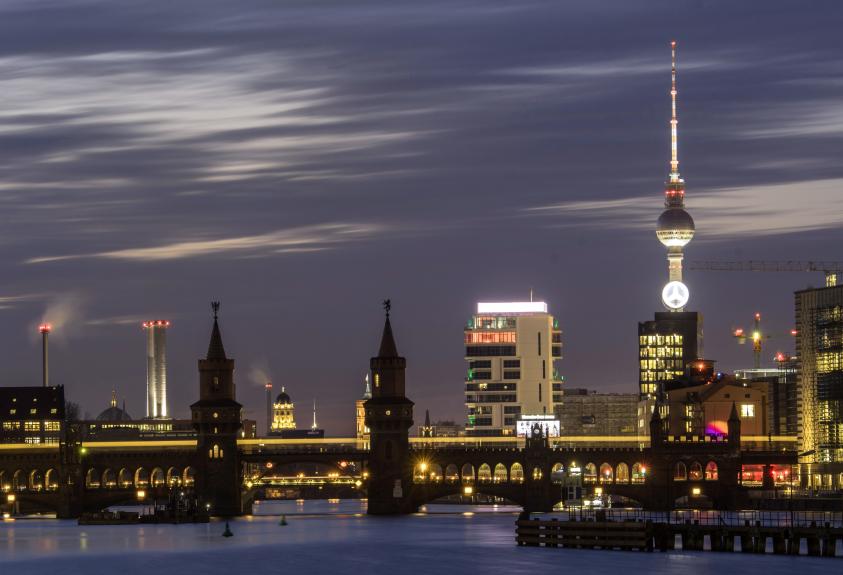
Gallery weekend in Berlin

Atle Gerhardsen and Nicolai Gerner-Mathisen opened their premises in Oslo in the newly built district Tjuvholmen on 15 May 2012.  In Oslo the gallery has shown exhibitions with artists such as Tal R, Julian Opie, Georg Herold and Olafur Eliasson. In March 2014 the gallery displayed the group exhibition DO NOT DISTURB with the Scandinavian artist duo Elmgreen & Dragset.

A Little Piece of Norway in Berlin
Berlin bird, by Sirk Stewen

After 15 years at Jannowitzbrücke the Berlin gallery moved in February 2016 to the new premises at Linienstrasse 85.

Related: Three Unique Museums in Oslo

A Little Piece of Norway in Berlin
From April 27-29, more than 45 galleries will debut new spring exhibitions and stay open late for visitors as they gallery hop around the city

From April 27-29, more than 45 galleries will debut new spring exhibitions and stay open late for visitors as they gallery hop around the city. The Gallery weekend is a festival of the galleries and serves as a culmination of their year-round activity. As they discover artists, maintain lasting relationships with them, and continually promote and disseminate their work worldwide, the galleries are a point of contact for curators, critics, and collectors. All elements combined—concentrated individual exhibitions, memorable Berlin experience and annual social event, this engagement is celebrated at the place where everything originates.

A Little Piece of Norway in Berlin
The Gallery weekend is a festival of the galleries and serves as a culmination of their year-round activity

Artist Dick Stevens will inaugurate the new exhibition space with a selection of watercolor and ink drawings celebrating his 8th show with Gerhardsen Gerner. The exhibition is named Zen and the Birds of Appetite.

Related: A Norwegian Artist With a Museum

Known for creating unique works that draw on a multiplicity of art-making techniques including photography, assemblage, painting, collage, and embroidery, Dirk Stewen will present a set of figurative drawings of birds this time, which are an exceptional and strange part of his extensive oeuvre. Their ambivalence is reflected in the Show´s title, which is borrowed from the book of the same name from 1968 by the theological poet Thomas Merton.

Related: Modern Art – Or Just a Beach Day?

The birds in Stewen´s drawings look competitively busy and their obsessions seem to be blinding them. They can appear delightful and macabre at the same time, part beauty, part parody. Sobriety and humor, controlled and uncontrolled moments coincide in them and this is where these creatures draw their power from.

Dirk Stewen’s work has been featured in numerous international gallery exhibitions.

A Little Piece of Norway in Berlin, compiled by Tor Kjolberg

Waffle Day in Sweden

This week-end, or around March 25, brings out the urge for waffles in Sweden. This is a tradition that is celebrated in Sweden, and to a lesser extent elsewhere. As it turns out, waffles are such a popular world-wide phenomenon, that they merit two days in the calendar to celebrate them.

However, this sweet tradition is created through a mispronunciation. The name comes from Vårfrudagen (“Our Lady’s Day“), which in vernacular Swedish sounds almost like Våffeldagen (waffle day). Our Lady’s Day falls on the same date (nine months before Christmas). The day historically marks the beginning of spring

Related: Totally Swedish in London

If you are in Sweden on or around March 25, chances are you’d eat waffles! In Sweden the heart shaped waffle iron is the most common, but it didn’t come into existence until the 19th century. Waffles is an old dish, dating back to the Middle Ages, when they were grilled over an open fire and the waffle irons were different than the heart shaped used today.

Related: World’s Best Oyster – A Swedish Delicacy

Waffle Day in Sweden
The Waffle day in Sweden historically marks the beginning of spring

The alternative Waffle Day (on August 24th) began in the USA and honors the anniversary of the patenting of the first US waffle iron invented by Cornelius Swarthout of Troy, New York.

Waffle Day in Sweden
If you are in Sweden on or around March 25, chances are you’d eat waffles!

Waffles used to be a food eaten everyday dressed up or down depending on occasion. Whichever day is picked to honor it however, the waffle is certainly deserving of celebration. The simplest waffles contained only flour and water, but for festive affairs cream, sugar, butter and eggs were added. Eating waffles with cream and jam, like Swedes do today, became popular at the beginning of the 20th century.

Related: Food and Drink in Sweden

The remarkable dough-based gridded cakes can be eaten for breakfast, lunch or dinner, snack or dessert. It was something most people enjoyed with their coffee after their Sunday walk. And then there is that whole other business of the potato waffle, different but still delectable.

In older days there were several “våffelbruk” (waffle farms) around Stockholm and other cities and towns where one would gather, so take this day to explore the variety that the world of the waffle has to offer you.

Waffle Day in Sweden
Authentic Swedish waffles

A true authentic Swedish waffle receipt

INGREDIENTS

3 ½ oz butter
1 ⅔ cups all-purpose flour
1 teaspoon baking powder
½ teaspoon salt
2 cups plus 3 tablespoons milk
2 eggs

DIRECTIONS

Melt butter.Whip together flour, baking powder and salt with half of the milk until you have an even batter. Pour in the rest of the milk, eggs and the melted butter, whip until thoroughly mixed. Heat the waffle iron and brush with butter. Pour in 6 tablespoons of batter and bake until golden brown. Serve with whipped cream and Felix Lingonberry Jam.

Makes 8 waffles.

Waffle Day in Sweden, written by Tor Kjolberg

A Stroll Through the Heart of Oslo

The main street in Oslo, Karl Johans gate, stretches from the Royal Palace to the Central Station. We recommend a guided tour with a duration of approximately two hours. They are free and the sessions often start at the Parliament building, dating to 1866.

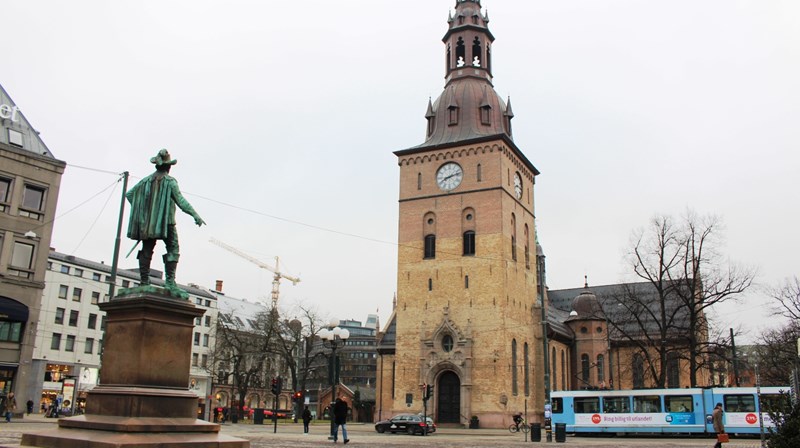
East of the pedestrianized section of Karl Johans gate, just before the main station, is Oslo Cathedral (Domkirken). It was consecrated in 1697 after a fire destroyed its predecessor.

The ruins of an even earlier cathedral, St. Halvard’s, named after Oslo’s patron saint, lie to the east of the city of Gamle Oslo (old town), where the first city stood. Before going into the Domkirke, take a look at the stone relief to the right of the main entrance (1100). The 1718 tower clock us Norway’s oldest.

Related: Oslo – the World’s Biggest Village

A Stroll Through the Heart of Oslo
Oslo cathedral, consecrated in 1697

The interior owes its appearance mainly to a restoration in 1950, but the original design is typified by the organ front which now surrounds a modern organ. The stained glass windows are the work of Emmanuel Vigeland, and the ceilings were painted by Hugo Louis Mohr, depicting various biblical scenes.

Related: Three Unique Museums in Oslo

Behind the cathedral is Basarhallene, a round colonnaded market with food, flower and handcraft stalls, galleries and Café Bacchus, which is open to at least 1am (except Sundays).

A Stroll Through the Heart of Oslo
Basarhallene is a round colonnaded market with food, flower, handcraft stalls, galleries and cafés

The last stretch of Karl Johans gate leads to Oslo Central Station (Oslo Sentralstasjon) or Oslo “S” and a more hectic part of town with shopping centers and city hotels.

Feature image (on top): Oslo Central Station, Østbanehallen, Jernbanetorvet

A Stroll Through the Heart of Oslo, written by Tor Kjolberg
National Tourist Routes in Norway

In 2024 – thirty years after the Norwegian Parliament’s Standing Committee on Transport and Communication launched the initiative – the Norwegian Public Roads Administration will have given Norwegian tourism the biggest boost ever.

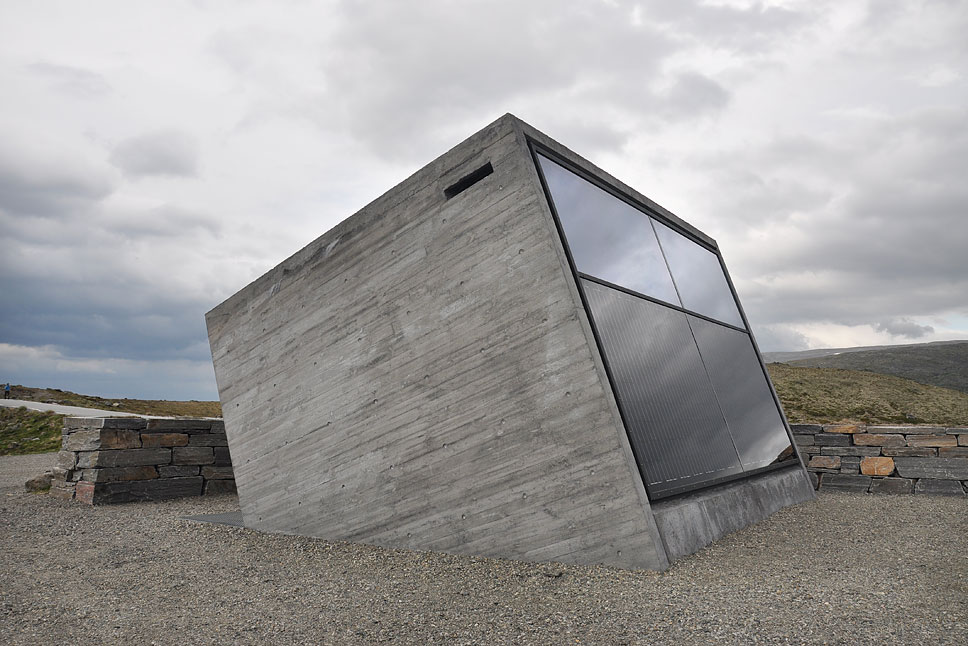
On 18 selected roads, from Jæren in the south to Varanger in the north, visitors by car can now experience 195 rest areas and viewpoints which have been transformed into small architectural gems. The National Tourist Routes will continue to strengthen its position as a tourist attraction towards 2024. The tourists’ expectations are high. Five new sites will be opened in May-June this year, and 46 new attractions will be added from 2018 – 2023.

Related: Columna Transatlantica in Norway

National Tourist Routes in Norway
Terje Moe Gustavsen, Director General at Norwegian Public Roads Administration

“With the new pictures of Norway, with its distinctive combination of nature, road, architecture and art, we will entice tourists from home and abroad to spend their holidays here,” writes Terje Moe Gustavsen, Director General at Norwegian Public Roads Administration in the foreword to the recently published book National Tourist Routes in Norway. The book contains impressing photos from the national tourist routes with text in Norwegian, English and German.

National Tourist Routes in Norway
Hiking path, tourist information, toilet facilities and parking at Stensdalfossen, Hardanger

In 2017 the Norwegian Public Roads Administration had completed about 60 percent of the job. The book presents a selection of the projects that have been completed or are in the process of being transformed from idea into reality. New generation of architects and landscape architects have been given the opportunity to contribute with the different perspectives on how nature experiences, practical needs and construction can be incorporated with the uniqueness and mood of the various sites.

Related: Norway’s Views

National Tourist Routes in Norway
Pier and viewpoint at Askevågen, Atlantic road

The installations have to be operated and maintained, and both the Norwegian government and the county administrations are prepared to contribute.

National Tourist Routes in Norway
Rest area with toilet facilities at Flotane, Aurlandsfjellet

“We must also make sure that the experience of landscape is preserved when roads are improved for better mobility and safety,” writes Gustavsen.

Related: The Beautiful Tourist Roads in Norway

National Tourist Routes in Norway
Viewpoint and rest area with toilet facilities at Tungeneset, Senja

Local food, accommodation and activities must also be of the highest quality. This means that many local businesses have a huge task ahead of them.

National Tourist Routes in Norway
Viewpoint at Ohlbergplassen, Rondane

Tourism is one of the world’s fastest growing industries and it will be important to Norway’s future economy. The primary objective of the National Tourist Routes is to contribute to viable business and industry in rural Norway.

National Tourist Routes in Norway
Viewpoint, café, souvenir-shop, toilet facilities and parking at Trollstigen, Geiranger

As this book shows, Norwegian Public Roads Administration is well underway with its part of the task –  to plan, build, renovate and maintain the National Tourist Routes attraction.

Buy the book and let it inspire you to experience the unique Norway by car.

National Tourist Routes in Norway
Viewpoint with rest area and toilet facilities at Eggum, Lofoten

National Tourist Routes in Norway, is based on the foreword to the book National Tourist Roads in Norway by Terje Moe Gustavsen, Director General of the Norwegian Public Roads Administration, updated with numbers from the 2017 Annual Report.

All photographs provided by the National Tourist Routes in Norway

Feature image (on top): Viewpoint with parking and toilet at Stegastein, Aurlandsfjellet

National Tourist Routes in Norway
Viewpoint and café with toilet facilities at Gudbrandsjuvet, Geiranger


Thermal Garments from Sweden

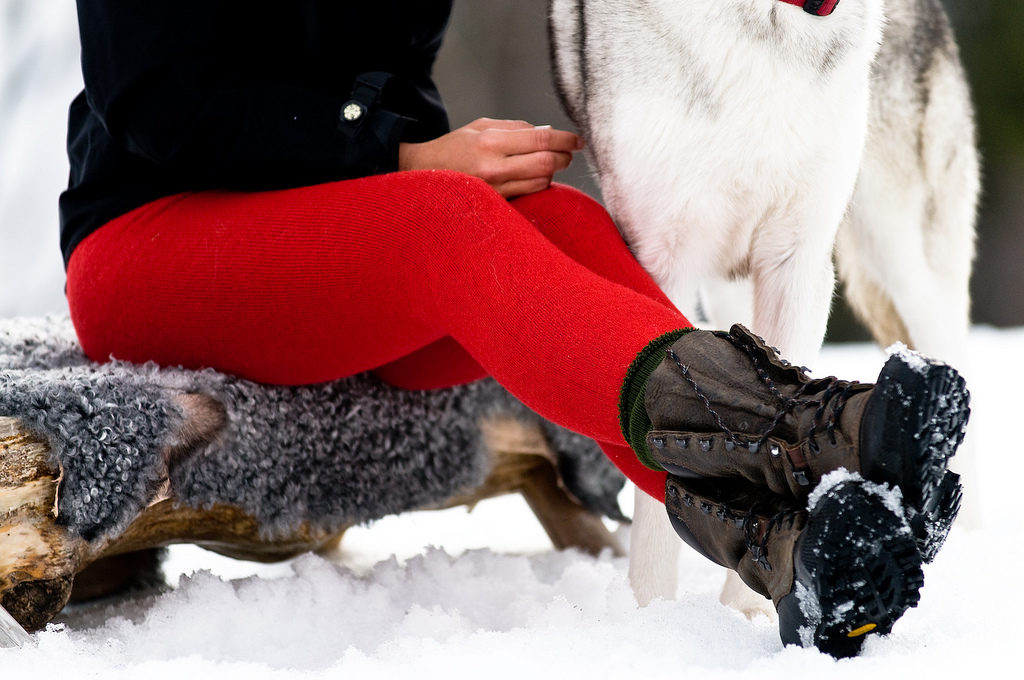
The wool of the merino sheep in Uruguay is shipped to Germany where it is transformed into yarn. Finally, it ends up in Östersund, in the north of Sweden, where Woolpower creates thermal garments of the highest timeless and functional quality.

About 45 years ago, a collaboration between the Swedish Military, scientists and Woolpower resulted in the material Ullfrotté Original. Ullfrotté is knit with a smooth outer synthetic layer, and a soft terry loop inner lining, so as to avoid wastefulness. The lofty terry loops on the inside, coupled with the natural crimp of Merino wool fibers, create a garment capable of trapping warm air circulating just above the outer layer of skin.

The fabric, still used by Woolpower today to make comfortable and warm clothes for people who have weather they want to – or not – to stay outside despite cold weather. The permeable nature of Ullfrotté Original material allows moisture to be transported away from the body.

Related: Functional Fashion from Sweden

Thermal Garments from Sweden
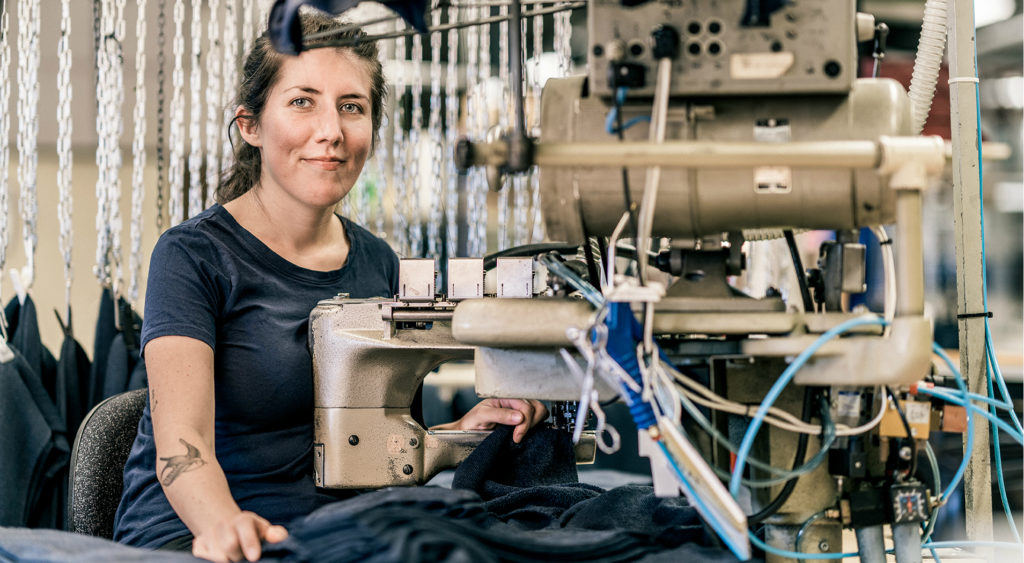
Seamstress Thilda at Woolpower AB, Sweden

Wearing woolen undergarments and socks from Woolpower, you can be confident that they’ve been made with responsibility towards our surrounding nature. The Swedes have a tradition of being outdoors and because of the cold climate up north in Sweden, they have a lot of knowledge about how to keep warm.

Thermal Garments from Sweden
Because of the cold climate up north, Swedes have a lot of knowledge about how to keep them warm

The choice to keep all manufacturing in Östersund reduces the number of links to control in the supply chain. Being able to follow the manufacturing process step by step, gives the company a unique possibility to constantly improve both the products and the competence. There is a strong sense of values and significant engagement among the employees.

Related: Sweden’s Most Powerful Fashion Man

Thermal Garments from Sweden
Quality is guaranteed by the seamstress

Once the material is knitted and prepared through several machines, the different parts get much more personal attention. The sewers quality mark their garments by stitching their own name tags inside them. This creates a sense of pride and responsibility for everybody. Each garment is made by one seamstress.

Thermal Garments from Sweden
Woolpower AB offers a wide selection of products for both adults and children

The company offers a wide selection of products for both adults and children. You can choose between base layers, thermal undergarments, socks and a range of accessories. One of the mere unusual additions is a belly warmer for pregnant women.

Related: Durable Scandinavian Workwear

The collection is divided into 4 degrees:

200 g/m2:
The thinnest Ullfrotté Original garment to be worn directly against the skin as a base layer.

400 g/m2 & 600 g/m2:
Designed as a mid-layer to increase insulation between base layer and outer shell.

800 g/m2:
The heaviest Ullfrotté Original fashioned into the warmest, comfiest sock on Earth.

Thermal Garments from Sweden
Whether you have to stay outside because of your profession or your desires, Woolpower makes it possible for you to do so without having to pay any attention to the freezing weather

Whether you have to stay outside because of your profession, or you want to enjoy outdoor sports or trekking, Woolpower makes it possible for you to do so without having to pay any attention to the freezing weather.

Thermal Garments from Sweden, written by Tor Kjolberg

Fishy Tales from Award-winning Norwegian Author

0

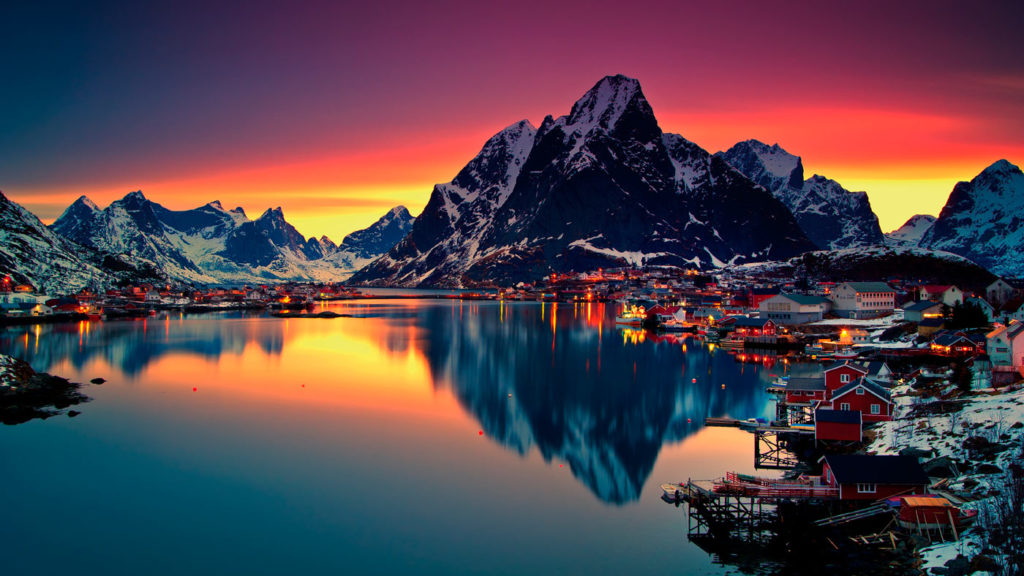
Up north in Norway the Lofoten archipelago rear out of the Atlantic, towering mighty from the deep sea. Norwegian journalist Morten Strøksnes and his artist friend Hugo Aasjord recount their sporadic, year-long quest to catch a huge creature, a Greenland shark.

Shark Drunk: The Art of Catching a Large Shark from a Tiny Dinghy in a Big Ocean,” that’s the long title of the book translated from the Norwegian original, titled “The Book of the Ocean”. The English title is long, but more describing. Immediately you get the image of adventure, isolation and challenges. Being in a rubber boat on the deep cold ocean, with nothing but a fishing rod hunting a Greenland shark.

Fishy Tales from Award-winning Norwegian Author
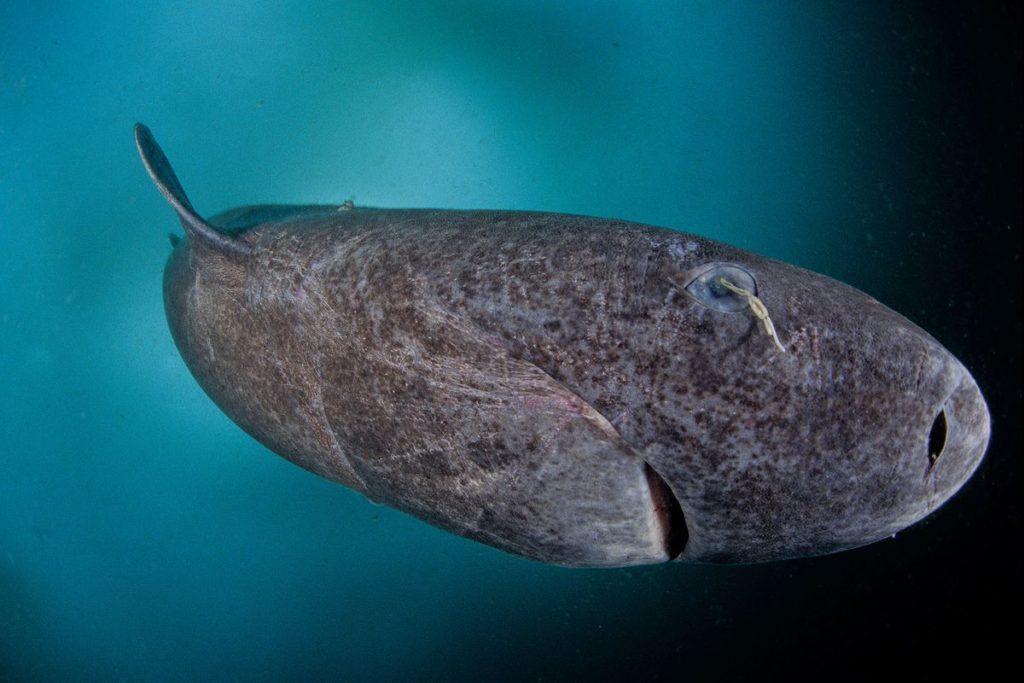
Greenland shark

A Greenland shark lives for centuries and can grow to more than 20 feet long preying on sleeping seals at enormous depths. Many specimens are blind from eye-worm, not least the infamous Greenland Shark, the oldest vertebrae in the world, clocked in at 400 years old.

Related: Norwegian Crime Author has Succeeded Again

Fishy Tales from Award-winning Norwegian Author
Shark Drunk, book-cover

The beast’s eyes glow luminous green, attracting finger-long parasitic worms that hang from its eyeballs.

Of the Lofoten peaks, the Norwegian painter Christian Krogh wrote: “The purest of the pure, the coldest of the cold, the grandest imaginable, altars to the God of solitude… how difficult to paint this! To convey the elevation, the grandeur and nature’s inexorable, merciless calm and indifference.”

Morten Strøksnes has written a wonderful reflection on his adventures with his friend Hugo. Both are fascinated by the mysteries of the sea, which the shark embodies. Morten and Hugo pass long days with nary a strike while they weather storms and view stunning scenery in Norway’s Lofoten archipelago, vividly rendered by Strøksnes’s prose.

Fishy Tales from Award-winning Norwegian Author
The author ponders everything related to the ocean. Here from the Lofoten archipelago

Mostly, they sit in a boat, talking little, leaving Strøksnes to ruminate whimsically on sharks, sea life, evolution, the culture and history of Norwegian fishing communities and the work of the 16th-century bishop Olaus Magnus, who wrote “a guide to the Northern Peoples” and produced a map illustrated with sea monsters.

(“The sun isn’t visible to us, but it casts its light around and in between the rain… like gigantic spotlights slowly sweeping across the surface of the water.”) The book follows the activities of the author and Hugo over four seasons of a year as they try to bring up the Greenland Shark from the depths.

Even If the book’s associative structure occasionally feels like a saunter through pages of Wikipedia, there is a trove of interest here, too.  The author ponders everything related to the ocean, including frolicking orca pods and sperm whales, ancient disquisitions on maritime monsters, flinty islanders who live off the sea, and the close, testy relationships between fishing friends.

Fishy Tales from Award-winning Norwegian Author
Thee Skomvær lighthouse at the tip of Lofoten archipelago

Isolation was a problem for Norwegian lighthouse keepers; the Norwegian Lighthouse Association had a mobile book collection it circulated among them to stop them going mad. Strøksnes’s erudition, salty humor, and unfussy prose yield a fresh, engrossing natural history.

The book isn’t actually a book about a shark hunt. It encompasses it, but it also encompasses a meandering through various reminiscences, events and subject-matter. Strøksnes’s sidelong approach to science is beguiling. The book’s beauty, undemanding science and soothing, musing qualities made the book a bestseller in Norway. Shark Drunk was awarded five prizes in Norway when it was first published, including the prestigious Brage Prize for non-fiction. Now it has been translated into English and several other languages.

Fishy Tales from Award-winning Norwegian Author
“The purest of the pure, the coldest of the cold, the grandest imaginable, altars to the God of solitude,” wrote Norwegian painter Christian Krogh

After studying in Oslo and Cambridge, Strøksnes embarked on a career as a journalist. He has published eight critically acclaimed books of reportage, essays and literary non-fiction.

Fishy Tales from Award-winning Norwegian Author, written by Tor Kjolberg

Norway – World’s Best Democracy

Norway was recently ranked number one in the following indices: democracy, freedom, economic freedom and gender equality. The United States was downgraded to a “flawed democracy” in a recent index that examined 167 countries.

The constitution of Norway, drafted in 1814 when Norway left the 434-year union with Denmark, was influenced by British political traditions, the Constitution of the United States, and French Revolutionary ideas. Amendments can be made by a two-thirds majority in the Storting (Parliament).

Norway – World’s Best Democracy
Recently, Norway deployed its first portable oil drilling rig

Norway was fortunate to have discovered oil off their coast some 20 or 30 years ago. Today, Norway ranks among the top 10 countries of the world in GNP per capita and has one of the world’s highest standards of living. Norway has been ranked the best democracy in the world for the sixth year running by the Economist Intelligence Unit, a London-based consultancy.

Norway – World’s Best Democracy
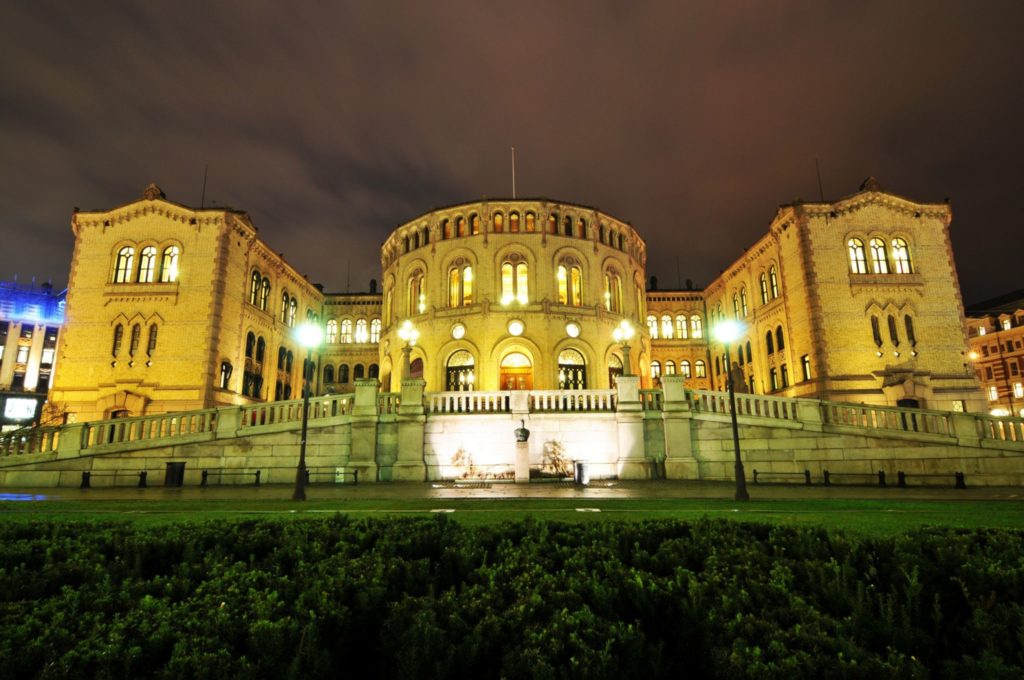
Norwegian Parliament building in Oslo

Many other countries have much greater oil reserves, but unlike other nations, Norway has put most of its oil profits into a Sovereign Fund, now the world ’s largest.  Norway itself consists of only 5+ million people, so the country needs little oil and virtually all of its oil is sold elsewhere.  Annual revenues from the sovereign fund now exceeds income from oil sales.  By law only 4 percent of the funds net worth can be extracted for use by the Norwegian government.

Norway – World’s Best Democracy
A general view inside the Norwegian Parliament

Elections to the 169-member Storting are held every four years. All citizens, at least 18 years of age, are eligible to participate, and seats are filled by proportional representation. Norway’s political life functions through a multiparty system.

Norway – World’s Best Democracy
Norway was fortunate to have discovered oil off their coast some 20 or 30 years ago

Norwegians are automatically registered to vote, and 78 percent of them did so in the last election, compared to 58 percent in the US.  The city of Oslo constitutes one of the country’s 19 fylker (counties). The other counties are divided into rural and urban municipalities, with councils elected every fourth year (two years after the Storting elections).

The key to Norway’s success is the healthy relationship between its people and lawmakers. Unlike many parliamentary forms of legislature, the Storting cannot be dissolved during its four-year term of office (amendments to overturn this restriction have been defeated frequently since 1990). Instead of big personalities with even bigger war chests, the focus here is on how rival political parties can collaborate on policies.

Norway – World’s Best Democracy
Norway’s Prime Minister Erna Solberg

Norwegians do feel like they’re part of the democracy. They recognize their politicians as not part of some kind of elite, just regular people. The politicians don’t earn that much money. It seems like they do their work because they care about the country and the future. The basic pay for U.S. senators and representatives is $174,000 — compared to $108,000 in Norway, which functions as a social democracy, the type of place Sen. Bernie Sanders dreams about.

Norway – World’s Best Democracy
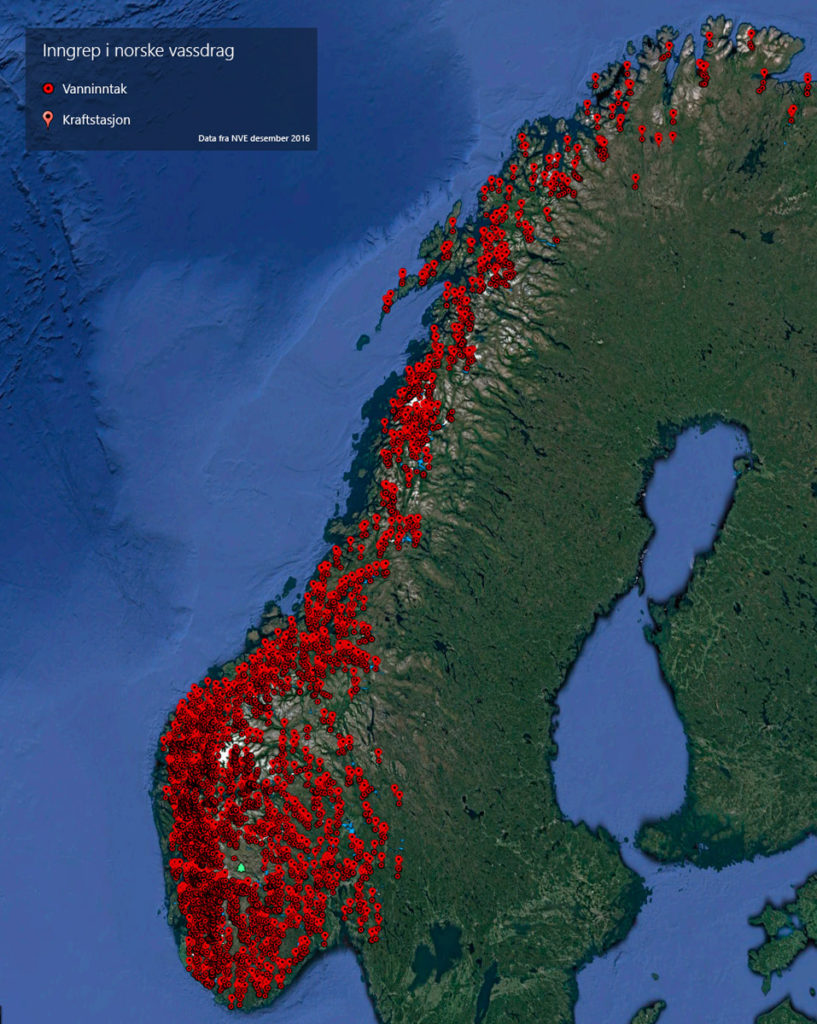
Hydroelectric power stations in Norway

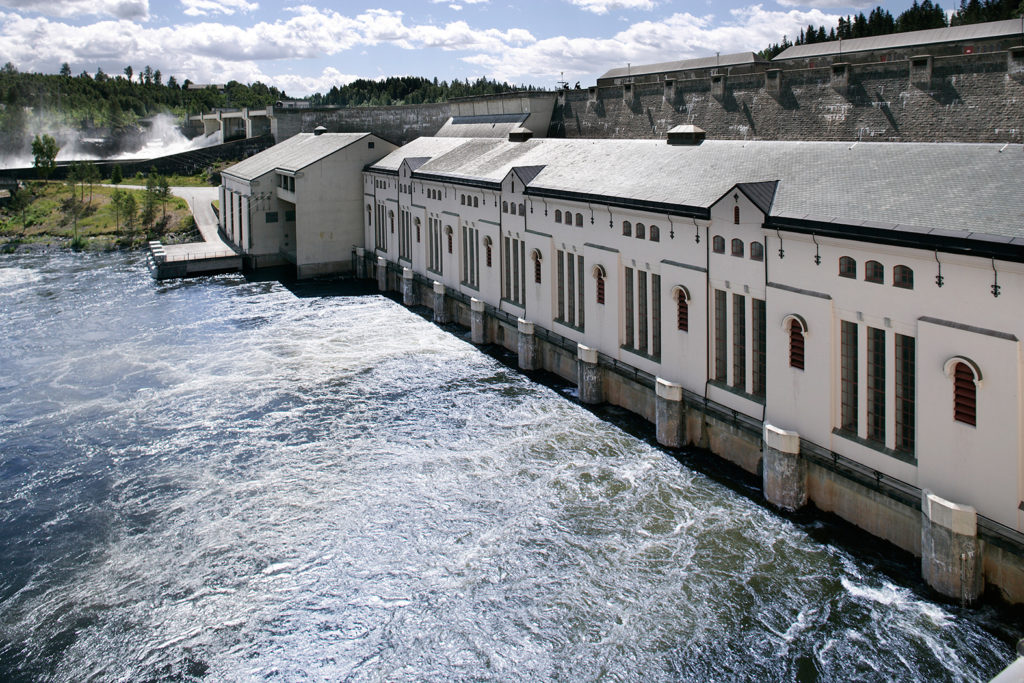
Norway is also lucky to have more potential hydropower than the rest of Europe combined. Some 09 percent of Norway’s electricity is produced by nonpolluting hydropower. This is the highest percentage in the world.

Norway – World’s Best Democracy
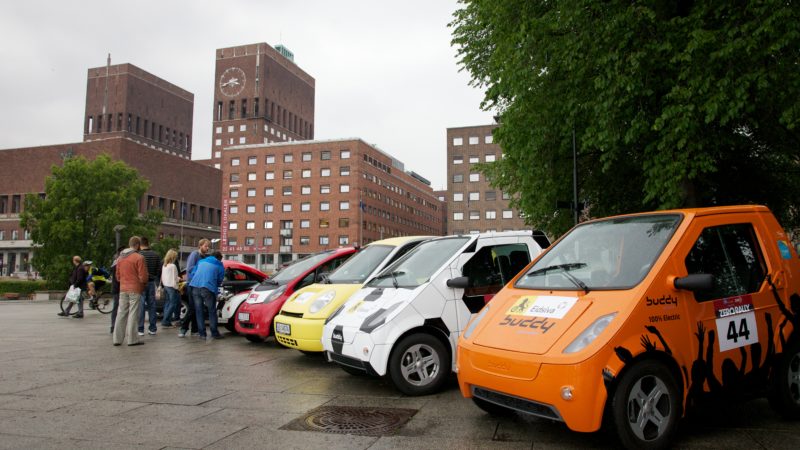
Zero Rally 2011 in Oslo. Photo: Eirik Helland Urke

And while worldwide fresh water supplies are seriously endangered Norway’s fresh water supply is more than ample. Norway is also aggressively tackling pollution from cars.  It has put in place conditions that encourage the use of electric cars.

Norway – World’s Best Democracy
Vamma hydropower plant, Norway

Norway has long been a leader in offshore oil rig technology. Recently, Norway deployed its first portable oil drilling rig. Science and research have limited means in a small country. Nevertheless, the Foundation for Scientific and Industrial Research at the Norwegian Institute of Technology (SINTEF) was created in 1950 as an independent organization at the Norwegian University of Science and Technology to stimulate research and develop cooperation with other public and private research institutions and with private industry. SINTEF is financed by the state and by payments for its services. In the natural sciences, reflecting the country’s intimacy with an overpowering physical environment, the individual efforts of Norwegians have won particular acclaim.

Norway – World’s Best Democracy
Most gold medals to Norway also at the Pyeongchang Winter Olympics 2018

Norway has won more Winter Olympic Gold medals and total winter medals than any other nation. This might lead many people to believe that Norway is a snow country only. However, the weather in Norway is fairly mild despite that fact that its latitude is the same as Anchorage, Alaska.  This is because of the Gulf Stream that flows north along our East coast and on to Europe and up the Norwegian coast. In southern Norway, where the vast majority of the population resides, the winter temperatures are not markedly different than in New York City.

Norway – World’s Best Democracy
National costumes from Norway

Located on the outskirts of Europe and with much of its inland population almost completely isolated until the 20th century, Norway has been able to preserve much of its old folk culture, including a large body of legends concerning haugfolket (pixies), underjordiske (subterraneans), and vetter(supernatural beings).

Norway – World’s Best Democracy
From Hunderfossen family park, Norway

On the other hand, as seafarers and traders, the Norwegians have always received fresh cultural stimuli from abroad. A number of Norwegians have made important contributions in return, notably the playwright Henrik Ibsen (1828–1906) and the composer Edvard Grieg (1843–1907). The Norwegian recipients of the Nobel Prize for Literature are Bjørnstjerne Bjørnson (1903), Knut Hamsun (1920), and Sigrid Undset (1928).

Norway – World’s Best Democracy
From Utøya after the attack

It was, however, an attack on Norwegian democracy on July 22 , 2011 when Anders Behring Breivik exploded a car bomb near the government building in Oslo, killing eight people, then travelled to the nearby island of Utøya and gunned down 68 young people attending a Labor Party youth rally.

Norway – World’s Best Democracy
From Loen, Stryn, Norway

Breivik is now behind bars and the democracy he attacked endures. While the U.S. went to war after 9/11, Norway received plaudits for its calm response. Of course, not everyone in Norway agrees that Norwegian politics is all that great in the first place, but Norway is an amazing country, blessed with resources and doing its best to maintain a world leading egalitarian democracy.

Norway – World’s Best Democracy, compiled by Tor Kjolberg

The Mythical Norwegian Electro Pop Wizard from Oz

Electro pop singer and songwriter Aurora gained international prominence when she covered the Oasis song “Half the World Away” for the British retailer John Lewis’ Christmas commercial in 2015.

Aurora was discovered in 2012 after she had uploaded a personal song onto Norwegian Soundcloud, originally meant as a Christmas gift for her parents. It quickly found its way to the ears of an agent.

The Mythical Norwegian Electro Pop Wizard from Oz
Aurora Aksnes born in Os outside Bergen, Norway, released her first single “Puppet” in December 2012

Aurora Aksnes born in Os outside Bergen, Norway, released her first single “Puppet” in December 2012. Her song “Runaway”, from her debut-ep “Running With The Wolves”, released by Decca records in February 2015, received 1 million views on Spotify in six weeks. Pop star Katy Perry tweeted, calling her music “new music that makes my heart flutter.”

Aurora’s music is also making the American rapper Jaden Smith feel all the feels. He has described her music as “cosmic conscious”.

Related: Norwegian Pop Group a-ha is Back

The Mythical Norwegian Electro Pop Wizard from Oz
Aurora’s melancholy and moody songs sound like they’re bending toward a light, and her lyrics are often surprisingly dark

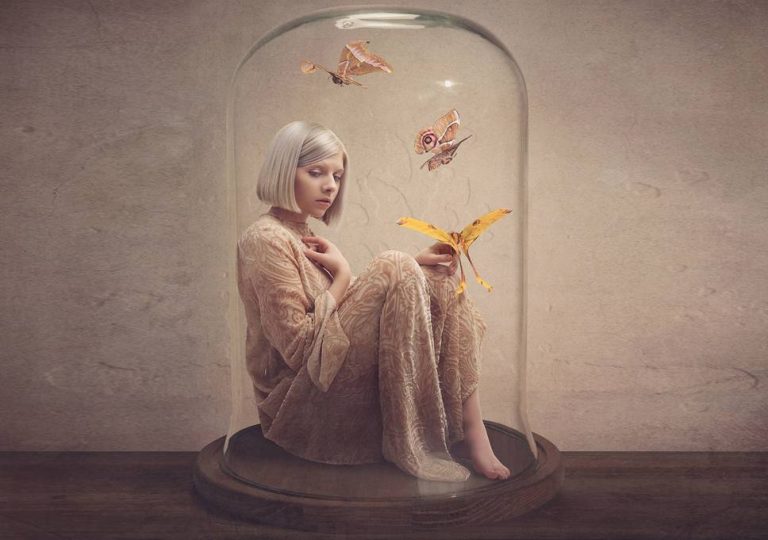
The 21-year-old musician (who records under her first name) is seemingly moving through the world without any particular pattern, drifting to whatever entices her. With platinum-blonde hair and an angelic accent, Aurora reminds us of a mythical creature where you almost can hear the birds chirping in the background. She began making music when she found her parents’ old electric piano in her attic, and at 10 she began writing her own songs.

Related: Passionate Norwegian Singer/Songwriter

How does a girl from the mountains of Norway make it all the way to the world of stardom? Her melancholy and moody songs sound like they’re bending toward a light, and her lyrics are often surprisingly dark.  When she sings her fingers flicker in the air, as if she’s literally trying to grab words out of the sky.

Related: Norwegian Electronica Artist André Bratten

The Mythical Norwegian Electro Pop Wizard from Oz
When Aurora sings her fingers flicker in the air, as if she’s literally trying to grab words out of the sky

“At first, I wasn’t really keen on the idea of me being on stage having to sing in front of people,” says Aksnes. “That’s why I made the gift for my parents in the first place — so they could listen to me without me having to be there.”

“I am definitely affected by energy,” says Aurora, “and that’s why I write mostly, to get rid of these energies so I don’t have to carry them around with me all the time.”

Mythical Norwegian Electro Pop Wizard from Oz, written by Tor Kjolberg