Black Metal Meets Edvard Munch in Oslo

The 18th Inferno Metal Festival in Oslo 2018 offered legends of Norwegian black metal bands as well as cultural excursions. For the first time, festival participants could enjoy a guided tour to the Norwegian painter Edvard Munch’s sites in Oslo.

Black metal fans are a cultural bunch of people, not only interested in metal bands like Satyricon and Napalm Death. Proof was the about 20 participants joining the guided tour offered by Northway – unique tours of Norway.

Black Metal Meets Edvard Munch in Oslo
Festival participant Åsmund Sjupant watching a Munch painting

One of the guests, Åsmund Djupang from Norway had never been to the National Gallery in Oslo before. Now he could learn from Edvard Munch specialist and co-owner of Northway, Silvia Leine, about Munch’s life and art in the Edvard Munch room, containing world famous paintings like the Scream, Madonna and Girls on the Bridge.

Related: Edvard Munch Trough the Eyes of Andy Warhol

Black Metal Meets Edvard Munch in Oslo
Black Metal band Satyricon’s album cover ‘Deep calleth upon deep’

The Norwegian black metallers, the Satyricon, featured a drawing by Edvard Munch as their latest album’s macabre cover artwork. “I like it,” said Åsmund Djupang, “but I have heard that several black metal fans don’t like it,” he adds.

Black Metal Meets Edvard Munch in Oslo
20 festival participants joined the Edvard Munch excursion during the Oslo Easter this year

The excursion began at Edvard Munch’s first home in Oslo, in which he lived from the age 5 to 12, and ended at the Ekeberg Park. It was in fact in conjunction with a walk at Ekeberg that Edvard Munch had the experience which led to the world-famous painting and icon The Scream. The Munch Spot is the place where one of the world’s most influential artists, Marina Abramovic, paid homage to Munch with her interactive performance in 2013.

Related: Munch Trough New Eyes

Black Metal Meets Edvard Munch in Oslo
Black metal lovers are not singleminded

A total of 270 Oslo residents participated in what is now immortalized on both film and photo. Today, visitors can see a modern version of the view of the city and the fjord which the artist immortalized as the backdrop for the angst-ridden figure in the painting.

Festival participant Joseph Aprill from Los Angeles visited the festival for the first time. “I am interested in Scandinavian Black Metal,” he says. “I have been to London, Stockholm and Bergen before to enjoy the genre.” He tells us that he has inherited the interest for finer arts from his parents and aims to visit at least one art gallery on his black metal. In addition to the Munch excursion, he had been to the Astrup Fearnley Museum of Modern Art.

Related: The Much Trail

Black Metal Meets Edvard Munch in Oslo
Festival participants Pawel Dzjepak from Poland and Joseph Aprill from California enjoying a break during the Edvard Munch excursion in Oslo

Both he and Pawel Dzjepak from Poland agree that Inferno Festival offers a good mix of bands, nice sound and a few positive surprises. For them the highlights were the bands Wiegedood from Belgium and Emperor from Norway.

Northway is a Norwegian travel agency, specializing in small tailor made guided tours (maximum 20 people). Its task is to organize memorable travel experiences for private travelers as well as businesses. The tours are tailor-made according to requirements. A representative from Northway will gladly accompany during the entire tours to ensure quality assurance.

Black Metal Meets Edvard Munch in Oslo
Silvia Leine from Northway Travel guided the tailor made excursion

“The huge interest for Edvard Munch’s art during the later years has enticed us to cooperate with some of the foremost specialists on the artist,” says Silvia Leine, looking forward to the opening of the new Edvard Munch museum in Oslo in 2020. The contours of the twelve-story tall new building drawn by the Spanish architect Juan Herreros, is clearly visible from the Ekeberg Park.

Black Metal Meets Edvard Munch in Oslo, written by Tor Kjolberg
All photos: Tor Kjolberg

Two Sisters From Norway

0

Two Norwegian teenage sisters of Somalian decent were lured from Norway to Syria by ISIS on an October morning in 2013. Åsane Seierstad, the author of the international bestseller The Bookseller of Kabul, has written a powerful and gripping true account of a family torn apart.

Nineteen-year-old Ayan Juma and her sixteen-year-old sister Leila left their family home in Oslo, dragged into ISIS’s web of horror. Later that day they sent an email to their parents: ‘Peace, God’s mercy and blessings upon you, Mum and Dad … Please do not be cross with us…’

Two Sisters From Norway
Two Sisters book-cover

In her new book, “Two Sisters”, Seierstad is writing their story in intricate, compelling detail. The sisters had been planning their secret journey for months. Their desperate father Sadiq set off after them, tracking them across ISIS territory determined to find them.

Related: Egoiste from Norway

In her exploration of why the two sisters abandoned their home for a distant war, Seierstad weaves a complex picture of their lives as young Norwegians. Ayan was a brilliant pupil at one of the elite high schools in Oslo but had disputes with her mother about clothes that were too revealing. Seierstad teases out the sense of alienation that a distinct and different heritage can produce in a homogeneous society. What had gotten into these girls – so educated and so adored?

Two Sisters From Norway
Sadiq Juma: Sadiq Juma’s quest to recover his daughters from Isis took him to Antakya in southern Turkey. Photograph: From the documentary Only a father. Needtoknow.tv.

Their father risks his own life to bring his daughters bac, while his wife Sara begins to question their life in Norway. How could their children have been so radicalized without their knowledge?

Two Sisters From Norway
Two sisters: Ayan, left, and Leila Juma planned carefullyNEEDTOKNOW.TV

The oldest sister Ayan in particular was drawn into a radical milieu as she reached an age where she was trusted to go out on her own. At weekends she was inspired by a charismatic but radical teacher giving Quaran classes and drawn into the world of IslamNet, a society of young, Salafist Muslims in Oslo.

Related: Islamic Community Protests Against Extremism in Oslo, Norway

Two Sisters From Norway
The sisters had only got as far as Sweden when the family first called police for help

Åsne Seierstad has with the complete support of the Juma family followed the story from the beginning. It’s a tale that crosses from Sadiq and Sara’s original home in Somalia, to their council estate in Oslo. The sisters had only got as far as Sweden when the family first called police for help.  Leila was still a minor and it should have been possible to intercept them there.  However, the father’s desperate pleas went unanswered. After the sisters’ slow passage through Turkey, and passing the border to Syria, they faced the shocking consequences of their decision.

Two Sisters From Norway
Åsne Seierstad. Photo: Sturlason, Norway

This is Seierstad’s second investigation into radicalization. “One of Us” (2015) told the story of Anders Behring Breivik, who murdered 77 people in Norway in 2011, most of them teenage members of a left-wing political youth organization. Åsne Seierstad was born in 1970 and studied Russian, Spanish and the History of Philosophy at Oslo University. An internationally bestselling author, she has also received numerous awards for her journalism. She has worked as a war correspondent across the world, including Russia, China, Iraq and Afghanistan. Her second book, The Bookseller of Kabul, has sold over two million copies.

Two Sisters From Norway, reviewed by Tor Kjolberg

The World’s First City National Park – in Stockholm

From Gamla Stan in Stockholm, it is just 10 minutes by boat across the harbor to the island of Djurgården, once a royal deer park.

Much of Djurgården is still in its natural state, with paths and woods where you may spot small creatures, both everyday and rare, such as hares and the occasional deer. The island is part if Ekoparken, the world’s first city national park.

The World’s First City National Park – in Stockholm
Much of Djurgården is still in its natural state

A good way to get around is to hire a bike at the bridge, which forms the road entrance (also the place to hire kayaks and rowing boats when the lure of Stockholm’s glittering waters proves overwhelming).

The World’s First City National Park – in Stockholm
Gröna Lund, the amusement park with 18th-century roots and up-to-the-minute rides

As the ferry slides into the Djurgården quay, there is no mistaking that this is an island devoted to enjoyment. On the right is Gröna Lund, an amusement park with 18th-century roots and up-to-the-minute rides, including its seventh rollercoaster, Twister new for 2011.

Related:  The World of Astrid Lindgren

The World’s First City National Park – in Stockholm
Fans of Astrid Lindgren’s children’s books should not miss Junibacken

Fans of Astrid Lindgren’s children’s books should not miss Junibacken, a children’s attraction/theatre dedicated to her eccentric characters. An electrically operated indoor tram, with narration in English, allows the rider to experience Astrid’s World, floating over miniature scenes from her books with moving figures, light and sound, as familiar characters suddenly pop out of corners.

The World’s First City National Park – in Stockholm
In 1891, Arthur Hazelius decided to preserve the fast-disappearing Swedish way of life by collecting traditional buildings

Heading south on Djurgården, where the island rises in steps to a hilltop, is Skansen, the oldest open-air museum in the world. In 1891, Arthur Hazelius decided to preserve the fast-disappearing Swedish way of life by collecting traditional buildings. Today there are some 150, including an 18th-century church, still used for services and weddings. In summer, costumed craftspeople meander round the steep cobbled town and demonstrate traditional crafts such as glassblowing in the little workshops.

Related: Best Museums in Scandinavia

The World’s First City National Park – in Stockholm
Bears at Skansen’s Zoo

Skansen’s Zoo contains Nordic fauna, such as bears, elk, reindeer, wolves and wild boar; and its Aquarium holds some distinctly un-Nordic creatures such as monkeys and crocodiles.

While on Djurgården it’s worth visiting the lovely former home and collection of the “Painter Prince” Prince Eugens Waldemarsudde, which overlooks the sea.

The World’s First City National Park – in Stockholm
It’s worth visiting the lovely former home and collection of the “Painter Prince”

On the far side of the island, fans of Nordic art should make time for the Thielska Galleriet. Ernest Thiel was pals with Carl Larsson, Edvard Munch and Bruno Liljefors, and accumulated a fine collection of his friend’s work.

Related: Top Ten Places For Stockholm Visitors

The World’s First City National Park – in Stockholm
Nordic Museum (Nordiska Muséet), depicts Nordic life from the 16th century

If you choose bus instead of boat and enter the island over Djurgårdsbron from Strandvägen, the first museum you come to is the Nordic Museum (Nordiska Muséet), which depicts Nordic life from the 16th century. It has peasant costumes, a collection of bridal gowns and the traditional silver and gold crowns worn by Swedish brides, exhibits on Lapland culture, folk art, and more.

The World’s First City National Park – in Stockholm
The Vasa Museum (Vasamuseet) was Inaugurated in 1990

To the west of the Nordiska Muséet on the waterfront is the huge, oddly shaped Vasa Museum (Vasamuseet). Inaugurated in 1990, the must-see museum houses the Vasa warship, built in the 1620s for the Thirty Years Wat, on the orders of Sweden’s warrior king, Gustav II Adolf. She was a magnificent ship, decorated with 700 sculptures and carvings, but her oak was too solid. In 1628 she sank in Stockholm harbor on her maiden voyage. In 1956 the Swedish marine archeologist Anders Franzén found her and, in 1961, brought her up from the depths.

The World’s First City National Park – in Stockholm
Historiska Muséet

More than 24,000 objects have been salvaged from the seabed, including skeletons, sails, cannon, clothing, tools, coins, butter, rum and many everyday utensils.

A short walk across the bridge is the spectacular Guldrummet (Gold Room), an underground vault featuring more than 3,000 prehistoric gold and silver artefacts, inside the Museum of National Antiquities (Historiska Muséet).

The World’s First City National Park – in Stockholm, written by Tor Kjolberg

New Seafood Restaurant in Copenhagen

The well-known food entrepreneur Torben Klitbo has done it again. With his former company, Cofoco, he started something near a gastronomic revolution in Copenhagen. At that time, he served unheard of high quality at affordable prices.

In December 2016 he finally said goodbye to the Cofoco chain, and now his “restaurant quarantine”, which was inserted as a clause in his resignation, was completed. This means, of course, he was in a hurry to start something new.

New Seafood Restaurant in Copenhagen
The Fat Pike opened its doors on Thursday, March 15th

On Thursday, March 15th he opened the doors to the fish restaurant The Fat Pike, which is located in one of Islands Brygge’s old warehouses on Njalsgade 19D.

Related: Monday Aperitivo in Copenhagen

New Seafood Restaurant in Copenhagen
The well-known food entrepreneur Torben Klitbo has done it again

“I have always loved seafood and I want to make it more accessible and popular for more people. At The Fat Pike we serve ample amounts at reasonable prices. There must be value for money, “says Torben Klitbo.

New Seafood Restaurant in Copenhagen
The Fat Pike is located in one of Islands Brygge’s old warehouses on Njalsgade 19D

The Fat Pike will not be a snobbish place. “We serve seafood rustically and easily, but we have of course full focus on freshness,” says Torben Kilbo, and adds, “Drink whatever you want with your meal, red, white or cocktails.”

Related: New Restaurants in Copenhagen Worth a Visit

New Seafood Restaurant in Copenhagen
The open kitchen at The Fat Pike

There is also a so-called Raw Bar, in which you can have 3 pieces of Fine de Claire at 75 DKK, Gillardeau oysters as well as tartar. And have a look into the wishing well, the Fryer, from where you can collect soft shell crabs and popcorn shrimps.

The three main dishes (175-195 DKK) symbolize land, water and air; grilled strip steak with grilled red onions and bourbon sauce from the country fried halibut with browned butter from the water and from the air, salivary chicken with creole style hollandaise sauce.

New Seafood Restaurant in Copenhagen
Value for money at The Fat Pike, Copenhagen

The dessert at about 50 DKK was the season’s crumble pie with ice cream for sharing at the table.

Related: Michelin Restaurants Lower-priced Siblings in Copenhagen

To drink, you can choose from craft beer, cocktails and a wine list focusing on wines from the north and south American continent.

New Seafood Restaurant in Copenhagen
The Fat Pike will not be a snobbish place

Chef and co-owner is the American-born cook Israel Karasik, who throughout his career has cooked along the entire east coast of the United States.

Happy hour is renamed Happy Pike, and it offers good prices for both beer and cocktails, seafood and pizzas from the wood burning stove in the yard every Wednesday to Friday at. 16-18.

New Seafood Restaurant in Copenhagen, written by Tor Kjolberg

Scandinavian Shrimp

There are two very different species of Nordic shrimp: the tiny, sweet-fleshed Baltic shrimp (Palacemon adspersus) caught in the fjords and inlets of southern Scandinavia, and the ten-times bigger North Sea prawn (Pandalus borealis) caught in deep northern waters.

Baltic shrimp are caught in low waters; often you can catch them from the beach in bug, light nets. It’s a favorite pastime on summer evenings for children and playful parents. Half of the shrimp caught this way are often a different species, the brown shrimp (Crangon crangon) which will not turn red on cooking but are delicious just the same, especially if you have caught them yourself. Shrimp must be very much alive, wriggling all their little thin legs, and jumping around in the crate; if they are lazy they are almost dead and not good to eat. The color is mousy grey, turning to baby pink when cooked.

Scandinavian Shrimp
Deepwater prawn

Related: World’s Best Oyster – a Wild Swedish Delicacy

These Baltic shrimp are traded alive from early summer to September. Freshly boiled, tiny shrimp, still a little bit tepid, are an affordable luxury. If you cannot get them fresh, the large North Sea prawns are a good choice.

Scandinavian Shrimp
Nordic shrimp

Buying and storing
All around the globe, deep-sea prawns live in cool waters, and they are caught out at sea, they are usually cooked and often frozen un their shells on board. North Sea prawns, on the other hand, are best bought frozen as there is no telling how long they may have been thawing at the fishmonger’s. The quality of these ready-cooked prawns is very good if you thaw them yourself in the fridge overnight. Fresh Baltic shrimp are best. You can also buy them frozen, canned, and in brine, but it’s not at all the same thing.

Related: Scandinavian Salmon

If shrimp are the main course, you should by at least 500g for each person; if they’re a starter, 200g is enough. North Sea Prawns have a higher ratio of flesh to shell, so you don’t need more than 300g per person; 150g is fine for a salad.

Scandinavian shrimp
Fish soup with shrimp

Culinary uses
Shrimp have a delicate taste, making them best when eaten on their own, with bread and butter. In Denmark, they say that pepper on a shrimp is a crime, like potting pepper on a baby.

Related: Norwegian Crow’s Balls

In Scandinavia, the shrimp season is the heart of summer. Big bowls brimming with shrimp, new potatoes, asparagus, dill, a simple meat dish, or fish, and strawberries with cream for dessert: it’s a well-loved menu for Sankt Hans, midsummer evening, celebrated with bonfires and songs, even if it rains on eight out of ten midsummer evenings.

Scandinavian shrimp
Shrimp sandwich

Shrimp should be boiled, like the other crustaceans, in the court-bouillon, and use a large bunch of dill weed which is in season in the summer, when the dill flowers are not yet out. Dump the shrimp in the boiling court-bouillon, boil vigorously for 1 minute, then let them cool in the liquid. This method makes them easier to peel, while also firm and salty.

Small Baltic shrimp are really very small, so it takes maybe a hundred of the little pink creatures to make up a proper open sandwich. But they are a marvel when piled high on a special sourdough bread made from both wheat and rye, studded with caraway seeds. You may add a little black pepper, a spring of dill and a blob of homemade mayonnaise – but lemon I a dirty word here.

A sandwich like this is worth every effort, but it seems it’s becoming less and less popular to spend a summer’s evening with friends eating shrimp – we have perhaps grown so accustomed to fast food that people just think it is a waste of time. You can only pity them; the small shrimp are just as good as lobster, and not hard to peel, once you get the knack. Some people, especially men, claim that they are unable to peel shrimp, and let women do it for them. This must be the ultimate proof of true love. It’s altogether an interesting study of human behavior, and patience; some people eat them while they peel them, others patiently build up masterpieces of pink-fleshed art and devour the masterpiece at the end.

The shells are very good for soup, especially if you include a few shrimp still in their shells.

Scandinavian shrimp
Shrimp salad

North Sea prawns have a strong marine taste and can be used in numerous ways, including in sandwiches and salads, or gently fried in their shells. We usually stick to shrimp salad in Scandinavia, a dish that has appeared in so many inferior versions that you could tend to forget just how exquisite and refined the real thing is. The other possibility is to make a soup and pile in the huge prawns at the last minute; they can stand up very well to the intensity of the flavors.

Scandinavian Shrimp, written by Tor Kjolberg

The World’s Most Environmentally Friendly Luxury Hotel to be Built in Norway

In northern Norway, the national park Saltfjellet-Svartisen expands from fjord to mountain in Salten, Nordland. The glacier Svartisen covers one fifth of the national park. At the foot of the mountain, the luxury hotel Svart (Black) is to be built. You can only get there by sea.

Start of construction is estimated next year. Architect firm Snøhetta is responsible for the project, and the architects have sky-high and environmentally friendly ambitions.

The World's Most Environmentally Friendly Luxury Hotel to be Built in Norway
In northern Norway, the national park Saltfjellet-Svartisen expands from fjord to mountain in Salten, Nordland

The theme of the project is nature and the building will become a so-called powerhouse, which means that the hotel is going to generate energy with what it consumes. This also applies to the energy that is included in the construction, as well as removal of material.

Related: Sound of Silence in Luxury Spa Hotel Outside Oslo, Norway

The World's Most Environmentally Friendly Luxury Hotel to be Built in Norway
Saltfjellet – Svartisen

The building will use 85 percent less energy than a typical modern hotel. “This will be the world’s most environmentally friendly hotel,” says architect Zenul Khan to the Norwegian D2 magazine.

The World's Most Environmentally Friendly Luxury Hotel to be Built in Norway
Zenul Khan, senior architect and project manager, Snøhetta

The hotel is what the creators consider the luxury hotel of the future: an accommodation close to unspoiled nature and wildlife experiences.

One of the most important challenges for Snøhetta has been to chart how sunlight hits the area, to be able to store the solar energy with maximum efficiency, a very important issue, since the hotel is built above the polar circle with almost no sun in the winter months.

Related: The Most Remote Hotel in Norway

The World's Most Environmentally Friendly Luxury Hotel to be Built in Norway
Guest will only be able to arrive by boat at a pier located inside the circle

The circular wood-shaped hotel has a panoramic view of the fjord through its many large windows, providing proximity to nature. Inspired by the area’s traditional fishermen’s cabins and drying facilities for fish, the carrying system consists of wooden piles.

Guest will only be able to arrive by boat at a pier located inside the circle. It will be possible to paddle under the construction, both at high and low water.

Related: The Oldest Hotel in Norway

The World's Most Environmentally Friendly Luxury Hotel to be Built in Norway
The building will use 85 percent less energy than a typical modern hotel

Snøhetta is Norway’s most famous architectural firm. Among other projects, they have been responsible for the Opera House in Oslo and the 9/11 Memorial Museum in New York.

The World’s Most Environmentally Friendly Luxury Hotel to be Built in Norway, written by Tor Kjolberg

A Little Piece of Norway in Berlin

Gallery Gerhardsen-Gerner, owned by two Norwegians, represents a little piece of Norway in Berlin. On 28 April, their new exhibition place at Weekend Berlin 2018 will be inaugurated by Dirk Stevens on the vicinity to the Berlin Museum Island.

After moving to Berlin in 2000, Atle Gerhardsen opened the space in the railway arches near the Berlin Jannowitzbrücke station under the name c/o – Atle Gerhardsen in 2001. In early 2009, the gallery was renamed Gerhardsen Gerner in order to include the name of Atle Gerhardsen’s business partner of many years, Nicolai Gerner-Mathisen.

A Little Piece of Norway in Berlin
Gallery weekend in Berlin

Atle Gerhardsen and Nicolai Gerner-Mathisen opened their premises in Oslo in the newly built district Tjuvholmen on 15 May 2012.  In Oslo the gallery has shown exhibitions with artists such as Tal R, Julian Opie, Georg Herold and Olafur Eliasson. In March 2014 the gallery displayed the group exhibition DO NOT DISTURB with the Scandinavian artist duo Elmgreen & Dragset.

A Little Piece of Norway in Berlin
Berlin bird, by Sirk Stewen

After 15 years at Jannowitzbrücke the Berlin gallery moved in February 2016 to the new premises at Linienstrasse 85.

Related: Three Unique Museums in Oslo

A Little Piece of Norway in Berlin
From April 27-29, more than 45 galleries will debut new spring exhibitions and stay open late for visitors as they gallery hop around the city

From April 27-29, more than 45 galleries will debut new spring exhibitions and stay open late for visitors as they gallery hop around the city. The Gallery weekend is a festival of the galleries and serves as a culmination of their year-round activity. As they discover artists, maintain lasting relationships with them, and continually promote and disseminate their work worldwide, the galleries are a point of contact for curators, critics, and collectors. All elements combined—concentrated individual exhibitions, memorable Berlin experience and annual social event, this engagement is celebrated at the place where everything originates.

A Little Piece of Norway in Berlin
The Gallery weekend is a festival of the galleries and serves as a culmination of their year-round activity

Artist Dick Stevens will inaugurate the new exhibition space with a selection of watercolor and ink drawings celebrating his 8th show with Gerhardsen Gerner. The exhibition is named Zen and the Birds of Appetite.

Related: A Norwegian Artist With a Museum

Known for creating unique works that draw on a multiplicity of art-making techniques including photography, assemblage, painting, collage, and embroidery, Dirk Stewen will present a set of figurative drawings of birds this time, which are an exceptional and strange part of his extensive oeuvre. Their ambivalence is reflected in the Show´s title, which is borrowed from the book of the same name from 1968 by the theological poet Thomas Merton.

Related: Modern Art – Or Just a Beach Day?

The birds in Stewen´s drawings look competitively busy and their obsessions seem to be blinding them. They can appear delightful and macabre at the same time, part beauty, part parody. Sobriety and humor, controlled and uncontrolled moments coincide in them and this is where these creatures draw their power from.

Dirk Stewen’s work has been featured in numerous international gallery exhibitions.

A Little Piece of Norway in Berlin, compiled by Tor Kjolberg

Waffle Day in Sweden

This week-end, or around March 25, brings out the urge for waffles in Sweden. This is a tradition that is celebrated in Sweden, and to a lesser extent elsewhere. As it turns out, waffles are such a popular world-wide phenomenon, that they merit two days in the calendar to celebrate them.

However, this sweet tradition is created through a mispronunciation. The name comes from Vårfrudagen (“Our Lady’s Day“), which in vernacular Swedish sounds almost like Våffeldagen (waffle day). Our Lady’s Day falls on the same date (nine months before Christmas). The day historically marks the beginning of spring

Related: Totally Swedish in London

If you are in Sweden on or around March 25, chances are you’d eat waffles! In Sweden the heart shaped waffle iron is the most common, but it didn’t come into existence until the 19th century. Waffles is an old dish, dating back to the Middle Ages, when they were grilled over an open fire and the waffle irons were different than the heart shaped used today.

Related: World’s Best Oyster – A Swedish Delicacy

Waffle Day in Sweden
The Waffle day in Sweden historically marks the beginning of spring

The alternative Waffle Day (on August 24th) began in the USA and honors the anniversary of the patenting of the first US waffle iron invented by Cornelius Swarthout of Troy, New York.

Waffle Day in Sweden
If you are in Sweden on or around March 25, chances are you’d eat waffles!

Waffles used to be a food eaten everyday dressed up or down depending on occasion. Whichever day is picked to honor it however, the waffle is certainly deserving of celebration. The simplest waffles contained only flour and water, but for festive affairs cream, sugar, butter and eggs were added. Eating waffles with cream and jam, like Swedes do today, became popular at the beginning of the 20th century.

Related: Food and Drink in Sweden

The remarkable dough-based gridded cakes can be eaten for breakfast, lunch or dinner, snack or dessert. It was something most people enjoyed with their coffee after their Sunday walk. And then there is that whole other business of the potato waffle, different but still delectable.

In older days there were several “våffelbruk” (waffle farms) around Stockholm and other cities and towns where one would gather, so take this day to explore the variety that the world of the waffle has to offer you.

Waffle Day in Sweden
Authentic Swedish waffles

A true authentic Swedish waffle receipt

INGREDIENTS

3 ½ oz butter
1 ⅔ cups all-purpose flour
1 teaspoon baking powder
½ teaspoon salt
2 cups plus 3 tablespoons milk
2 eggs

DIRECTIONS

Melt butter.Whip together flour, baking powder and salt with half of the milk until you have an even batter. Pour in the rest of the milk, eggs and the melted butter, whip until thoroughly mixed. Heat the waffle iron and brush with butter. Pour in 6 tablespoons of batter and bake until golden brown. Serve with whipped cream and Felix Lingonberry Jam.

Makes 8 waffles.

Waffle Day in Sweden, written by Tor Kjolberg
A Stroll Through the Heart of Oslo

The main street in Oslo, Karl Johans gate, stretches from the Royal Palace to the Central Station. We recommend a guided tour with a duration of approximately two hours. They are free and the sessions often start at the Parliament building, dating to 1866.

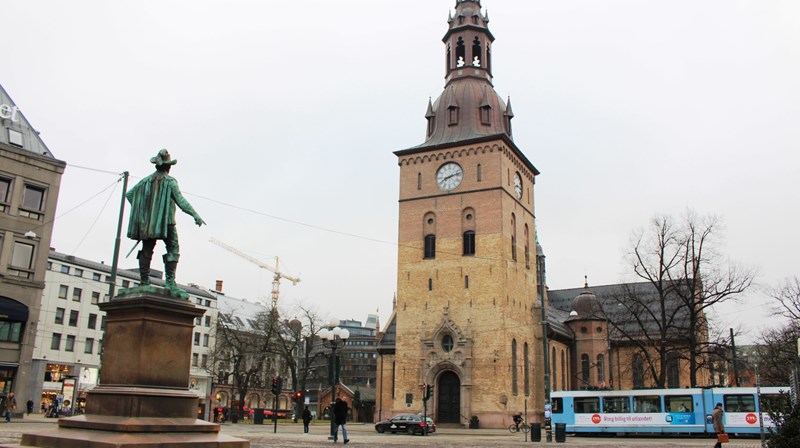
East of the pedestrianized section of Karl Johans gate, just before the main station, is Oslo Cathedral (Domkirken). It was consecrated in 1697 after a fire destroyed its predecessor.

The ruins of an even earlier cathedral, St. Halvard’s, named after Oslo’s patron saint, lie to the east of the city of Gamle Oslo (old town), where the first city stood. Before going into the Domkirke, take a look at the stone relief to the right of the main entrance (1100). The 1718 tower clock us Norway’s oldest.

Related: Oslo – the World’s Biggest Village

A Stroll Through the Heart of Oslo
Oslo cathedral, consecrated in 1697

The interior owes its appearance mainly to a restoration in 1950, but the original design is typified by the organ front which now surrounds a modern organ. The stained glass windows are the work of Emmanuel Vigeland, and the ceilings were painted by Hugo Louis Mohr, depicting various biblical scenes.

Related: Three Unique Museums in Oslo

Behind the cathedral is Basarhallene, a round colonnaded market with food, flower and handcraft stalls, galleries and Café Bacchus, which is open to at least 1am (except Sundays).

A Stroll Through the Heart of Oslo
Basarhallene is a round colonnaded market with food, flower, handcraft stalls, galleries and cafés

The last stretch of Karl Johans gate leads to Oslo Central Station (Oslo Sentralstasjon) or Oslo “S” and a more hectic part of town with shopping centers and city hotels.

Feature image (on top): Oslo Central Station, Østbanehallen, Jernbanetorvet

A Stroll Through the Heart of Oslo, written by Tor Kjolberg

National Tourist Routes in Norway

In 2024 – thirty years after the Norwegian Parliament’s Standing Committee on Transport and Communication launched the initiative – the Norwegian Public Roads Administration will have given Norwegian tourism the biggest boost ever.
On 18 selected roads, from Jæren in the south to Varanger in the north, visitors by car can now experience 195 rest areas and viewpoints which have been transformed into small architectural gems. The National Tourist Routes will continue to strengthen its position as a tourist attraction towards 2024. The tourists’ expectations are high. Five new sites will be opened in May-June this year, and 46 new attractions will be added from 2018 – 2023.

Related: Columna Transatlantica in Norway

National Tourist Routes in Norway
Terje Moe Gustavsen, Director General at Norwegian Public Roads Administration

“With the new pictures of Norway, with its distinctive combination of nature, road, architecture and art, we will entice tourists from home and abroad to spend their holidays here,” writes Terje Moe Gustavsen, Director General at Norwegian Public Roads Administration in the foreword to the recently published book National Tourist Routes in Norway. The book contains impressing photos from the national tourist routes with text in Norwegian, English and German.

National Tourist Routes in Norway
Hiking path, tourist information, toilet facilities and parking at Stensdalfossen, Hardanger

In 2017 the Norwegian Public Roads Administration had completed about 60 percent of the job. The book presents a selection of the projects that have been completed or are in the process of being transformed from idea into reality. New generation of architects and landscape architects have been given the opportunity to contribute with the different perspectives on how nature experiences, practical needs and construction can be incorporated with the uniqueness and mood of the various sites.

Related: Norway’s Views

National Tourist Routes in Norway
Pier and viewpoint at Askevågen, Atlantic road

The installations have to be operated and maintained, and both the Norwegian government and the county administrations are prepared to contribute.

National Tourist Routes in Norway
Rest area with toilet facilities at Flotane, Aurlandsfjellet

“We must also make sure that the experience of landscape is preserved when roads are improved for better mobility and safety,” writes Gustavsen.

Related: The Beautiful Tourist Roads in Norway

National Tourist Routes in Norway
Viewpoint and rest area with toilet facilities at Tungeneset, Senja

Local food, accommodation and activities must also be of the highest quality. This means that many local businesses have a huge task ahead of them.

National Tourist Routes in Norway
Viewpoint at Ohlbergplassen, Rondane

Tourism is one of the world’s fastest growing industries and it will be important to Norway’s future economy. The primary objective of the National Tourist Routes is to contribute to viable business and industry in rural Norway.

National Tourist Routes in Norway
Viewpoint, café, souvenir-shop, toilet facilities and parking at Trollstigen, Geiranger

As this book shows, Norwegian Public Roads Administration is well underway with its part of the task –  to plan, build, renovate and maintain the National Tourist Routes attraction.

Buy the book and let it inspire you to experience the unique Norway by car.

National Tourist Routes in Norway
Viewpoint with rest area and toilet facilities at Eggum, Lofoten

National Tourist Routes in Norway, is based on the foreword to the book National Tourist Roads in Norway by Terje Moe Gustavsen, Director General of the Norwegian Public Roads Administration, updated with numbers from the 2017 Annual Report.

All photographs provided by the National Tourist Routes in Norway

Feature image (on top): Viewpoint with parking and toilet at Stegastein, Aurlandsfjellet

National Tourist Routes in Norway
Viewpoint and café with toilet facilities at Gudbrandsjuvet, Geiranger