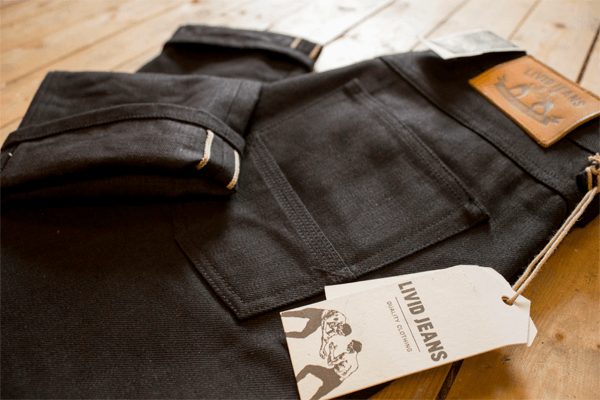
Livid Jeans is a small manufacturing company in Trondheim, Norway, created from a simple love and passion for superior quality and true craftmanship, dedicated to honoring the old traditions in making jeans.
The company’s products adhere to the Japanese finesse within fabric construction while maintaining the classic silhouettes of contemporary Scandinavian design. Since its establishment in 2010, Livid Jeans remains today the only apparel manufacturing company left in Norway, driven not from an economic point of view, but with a purpose.
Founder Jens Olav Dankertsen (30) is proud of upholding an old trade and conventional craft in a country where a once blooming textile industry is gone
Founder Jens Olav Dankertsen (30) is proud of upholding an old trade and conventional craft in a country where a once blooming textile industry is gone, and the fine craft with it. “Our company originated from a fabric and construction oriented perspective that aims to preserve traditions by building quality made products,” says Dankertsen.
Related: Glorious Colors From Norway For 25 Years.
In the 1920’s the Dankertsen family had a thriving business growing plants, vegetables and metal casting signs. His parents had to close down the company in the 1990’s because of lack of business.
Handmade Livid jeans skinny denim
In 2006, Jens Olav and his friend Kristoffer Dagslott moved to Trondheim to pursue their dreams of being a musician and a filmmaker, respectively. They were both from the small town of Volda, on the west coast of Norway. Together they established the jeans factory.
Of two different lines, one collection is made the old-fashioned way, locally in Trondheim
“Growing up, constantly surrounded by nature’s evidential beauty is a great nurturer of creativity,” says Dankertsen. “It has definitely laid the foundations for what was to become the visual identity of Livid,” he adds.
Jens Olav Dankertsen owns 80 percent of the company
Today the brand Livid jeans consist of two different lines. One collection is made the old-fashioned way, locally in Trondheim. Another ready-to-wear collection is made in Barcelos, Portugal. The locally sewn garments are tailor made for customers in Trondheim and Oslo.
Livid Jeans remains today the only apparel manufacturing company left in Norway
Dankertsen owns 80 percent of the company. His dream is to establish a shop in Tokyo. “Made in Japan” is the gold standard for designer jeans. Livid Jeans are sold in 53 shops in 10 countries.
The Only Jeans Factory in Norway, written by Tor Kjolberg
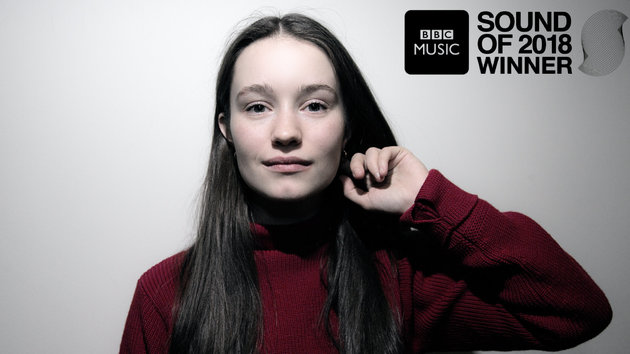
Sigrid, the “Don’t Kill My Vibe” singernow aims to showcase the most exciting new music for the year ahead. She was voted for by some 170 industry experts, DJs, festival bookers, critics and former winners.
Aged just 21, Sigrid is one of the youngest ever artists to receive the honor – beaten only by Adele, who was 19 when she topped the 2008 list. The prize honors 10 new, European bands or artists whom reached audiences outside their home territory.
Aged just 21, Sigrid is one of the youngest ever artists to receive the honor
“It’s quite crazy to get this recognition,” said Sigrid, who is signed to Island/Universal and released her debut single “Don’t Kill My Vibe” in February last year. “It’s a huge honor,” she told the BBC. “I don’t know how to explain it.”
Now Sigrid is switching confidently between fragile ballads and feisty pop bangers
Last year was a massive year for Sigrid. After launching her debut single in February, she has performed late night shows and festivals around the world and written a score in the new Justice League movie.
Sigrid Solbakk Raabe was born in Ålesund, Norway and taught to play piano at an early stage. However, she didn’t consider writing her own music until four years ago when her musician brother Tellef Raabe, encouraged her to write her own music instead of playing Adele covers. Now she is switching confidently between fragile ballads and feisty pop bangers. BBC Radio 1’s Annie Mac called her “literally the perfect pop star” and “an absolute pleasure to play on the radio”.
This marks the fifth consecutive year a Norwegian artist receives the award, with Nico & Vinz (2014), Todd Terje (2015), Aurora (2016) and Alan Walker (2017) all having won the prize before her.
“It’s quite crazy to get this recognition,” said Sigrid, who is signed to Island/Universal and released her debut single “Don’t Kill My Vibe” in February last year
“Helping these artists reach a wider audience is a key part of BBC Music’s mission,” stated James Stirling, BBC Music’s head of content commissioning. He said the diverse range of acts “clearly demonstrates both the quality and breadth of music currently coming through.”
The top five winners are:
1. Sigrid
2. Rex Orange County
3. IAMDDB
4. Khalid
5. Pale Waves
Sigrid from Norway Winner of BBC Music Sound of 2018 Poll, written by Tor Kjolberg
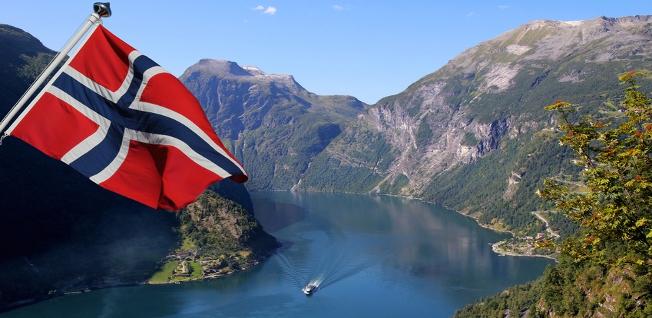
Fjords, mountains and natural phenomena top the list of what foreigners associate with Norway.
Innovation Norway conducts weekly surveys in Norway, Sweden, Denmark, the UK, Germany, the Netherlands and France. Their purpose is to discover the perception of Norway as a holiday destination and the likelihood pf the respondents visiting Norway on holiday.
City life in Bakklandet, Trondheim
Among other things, the respondents are asked to write down the first thing that comes to mind about Norway as a tourist destination and holiday experience in Norway. They are asked to give their opinion in a number of statements related to holidaying in Norway.
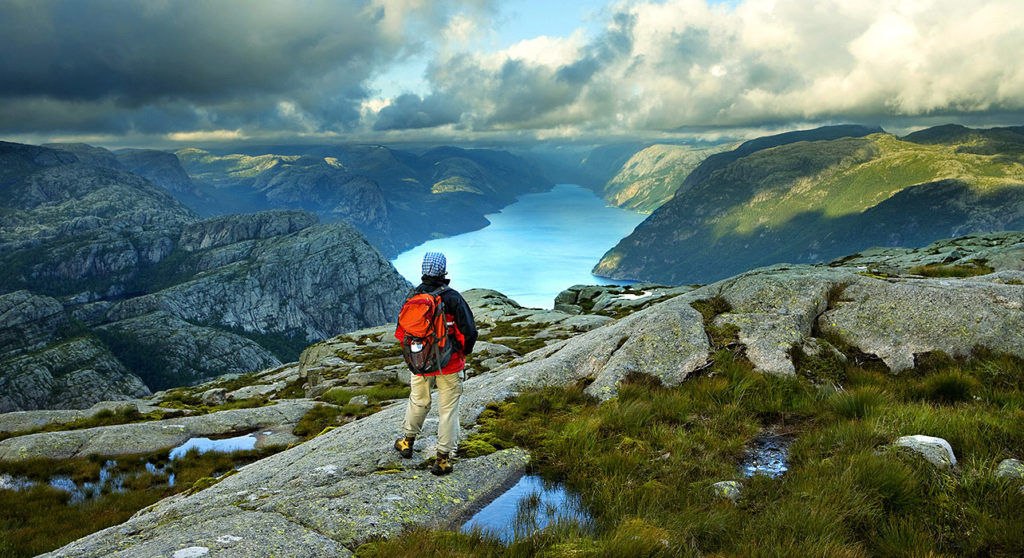
Many people think of Norway as being a good place to pursue outdoor activities.
The strongest association that most people have to Norway is fjords. Many people associate Norway with nature, fjords, mountains, cold and the northern lights. Many people also think of Norway as being a good place to pursue outdoor activities.
Norway has strengthened its position as a country with good opportunities for cycling
At the same time, the survey shows that more people will come here if they think that a holiday in Norway offers something more. The fact that a holiday in Norway can also offer exciting city life, culture and history, good food and local specialties is a plus.
Norway can also offer exciting city life, culture and history, good food and local specialties . Here from Bergen Matbørs.
During the last two years, more people have agreed with the statement that Norway is a suitable place for good food and local specialties, exciting city life and stimulating culture and history. In the same period, Norway has also strengthened its position as a country with good opportunities for cycling, hiking in the countryside and winter activities such as skiing and snowboarding.
Perceptions of Norway as a Holiday Destination is an excerpt from the report “Key figures for Norwegian travel and tourism 2016, issued by Innovation Norway.
The 25 years old Oleana story reads much like a fairy tale come true. The founders’ dream was to prove that producing clothing in Norway was possible. Today, the fashion knit-ware producer Oleana is one of Norway’s premier textile companies, exporting to over 14 export markets, including Japan and USA.
Oleana was founded in 1992, when most textile factories in Norway were closing due to labor costs up to 100 times more than in developing countries. Hildegunn Møster, Kolbjørn Valestrand and Signe Arhus, the factory’s designer for 23 years, decided to design and produce some of the most beautiful knitwear in the world.
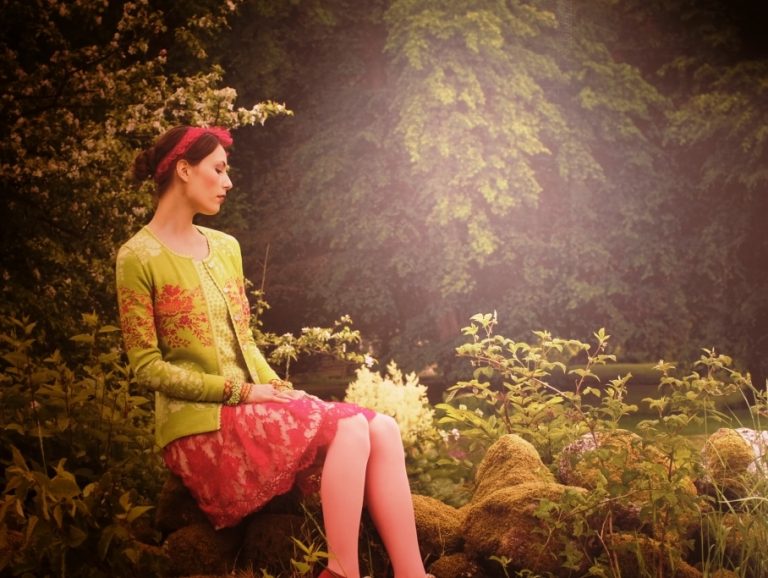
Glorious colors and complicated unusual knitted patterns have been the company’s trade mark for 25 years now
The name is inspired from the violin virtuoso Ole Bull from Bergen, who bought 25,000 acres of land in Pennsylvania to start his own settlement, Oleana, for poor Norwegian immigrants.
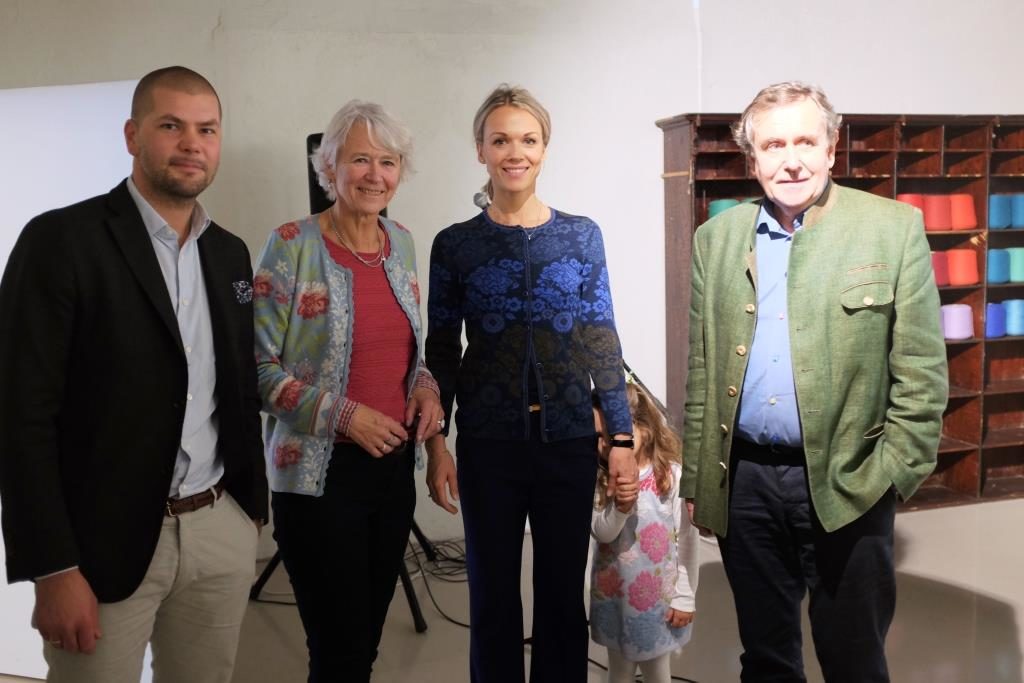
From left to right: Husband of Gerda Sørgus Fuglerud, Hildegunn Møster, Gerda Sørhus Fuglerud and Kolbjørn Valestrand
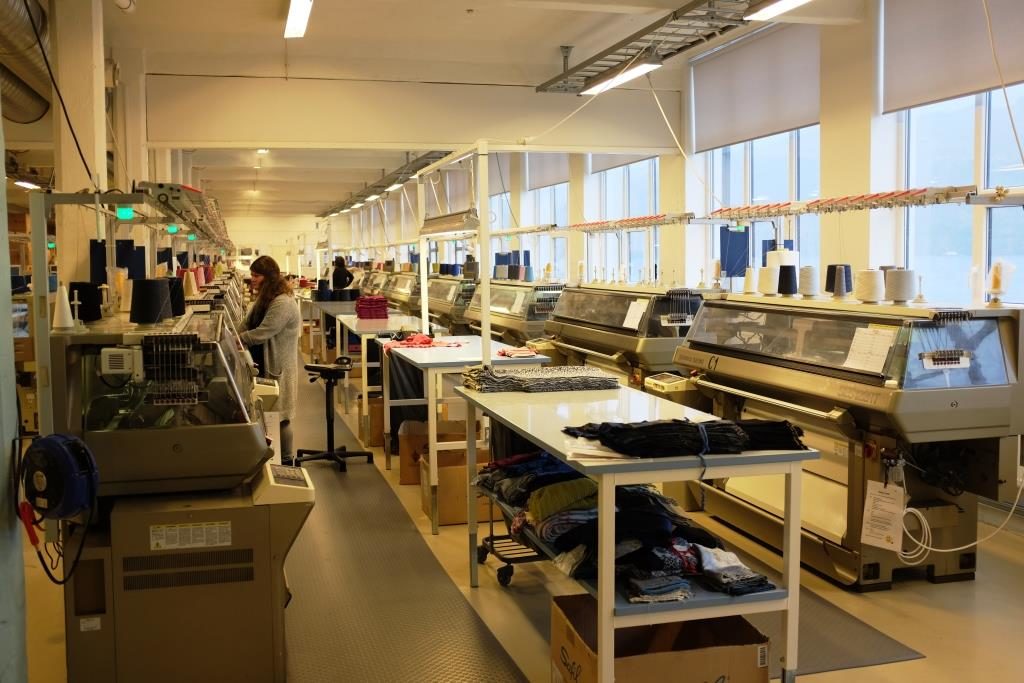
Glorious colors and complicated unusual knitted patterns have been the company’s trade mark for 25 years now. For 25 years Oleana has produced award winning sweaters and knitwear. ”Made in Norway by machines and human hands”, is the statement written on all the garments sent out from the factory. Oleana wants to produce goods in Norway and at the same time take care of an industry so rich in traditions.
Today Oleana is showing Norway off to the rest of the world. Designer Signe Aarhus has signed most of the collections during these years. Daily Scandinavian has asked her about her assignment.
Designer Signe Aarhis in front of an Oleana poster
Being the only designer for so many years – doesn’t that make the business vulnerable?
“Maybe, but that’s something we’ve chosen to live with. There are also many advantages by giving me as a designer the opportunity to characterize the visual expression. It becomes visually recognizable, I get a lot of experience and I can cooperate very closely with the management- and production team.”
Do you have any apprentices – or do others come up with suggestions for colors and themes?
“Yes, we are constantly working to ensure our best for the future. We are in an industry where news and changes characterize the way we work and are part of everyday life. That’s what makes it so exciting and challenging.
We now have a women’s and an interior collection. Our children’s collection is new of the year. A new designer and I have been involved in the preparation of this line.”
An old weaving machine displayed in the Oleana premises
Do the machines knit a path in which the different pattern parts are placed and adjusted?
“No. The machines go back and forth with wire guides over a bed with knitting needles.”
What do you do with the remaining bits and pieces?
“Our items are knitted in what we call “full fashion”, which means in shape. Nothing but the throat is cut. That’s why there are minimal surplus remaining. Sustainability and minimal unnecessary consumption are very important to us.
From the museum
Can a machine knit more than one part at a time? “No, not usually. The exception is a machine with two sleds, which can knit two smaller parts, for example shawls.”
Do you need to change the pattern for each size?
“Yes, it’s called grading. We spend a lot of time on this because we want the pattern to fit and see to that our garments have the right dimensions to sizes, ranging from XS to XXL.”
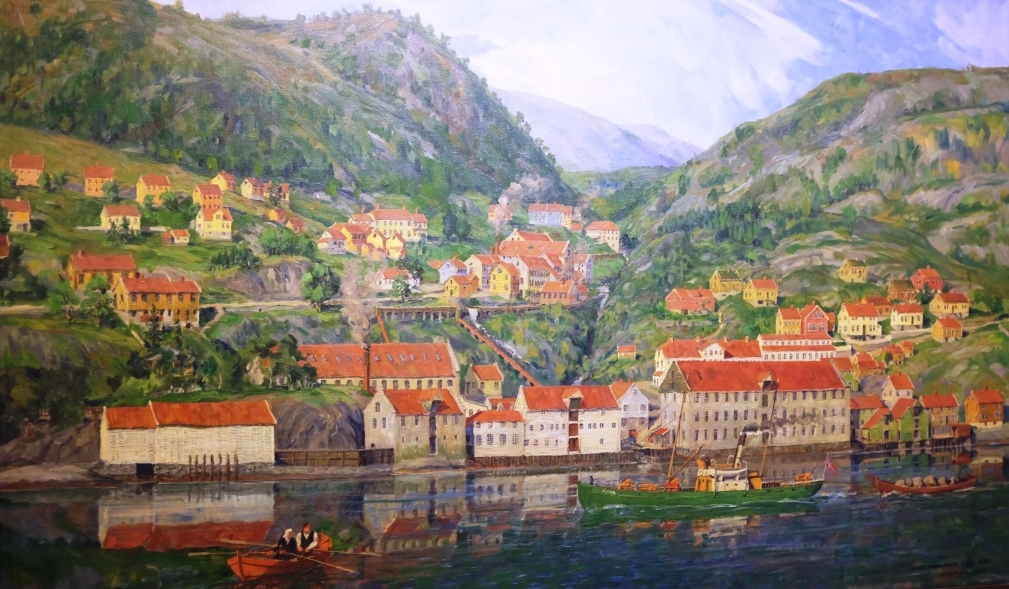
A painting from Ytre Arna (The old factory in the foreground)
Do defects during the knitting process occur often? If so, is that due to the thread?
“There are many sources to defects, but fortunately it does not happen very often in our knitting.”
How often do the designs change?
“It is entirely dependent on needs, and I have no good answer.”
. ”Made in Norway by machines and human hands”, is the statement written on all the garments sent out from the factory
Is design customized for specific export markets?
“No. However we know quite a lot about the different countries’ demand, for example in connection with choices of color. Our collections are made with domestic as well as international markets in mind.”
Fargespill, an international dance group from Bergen
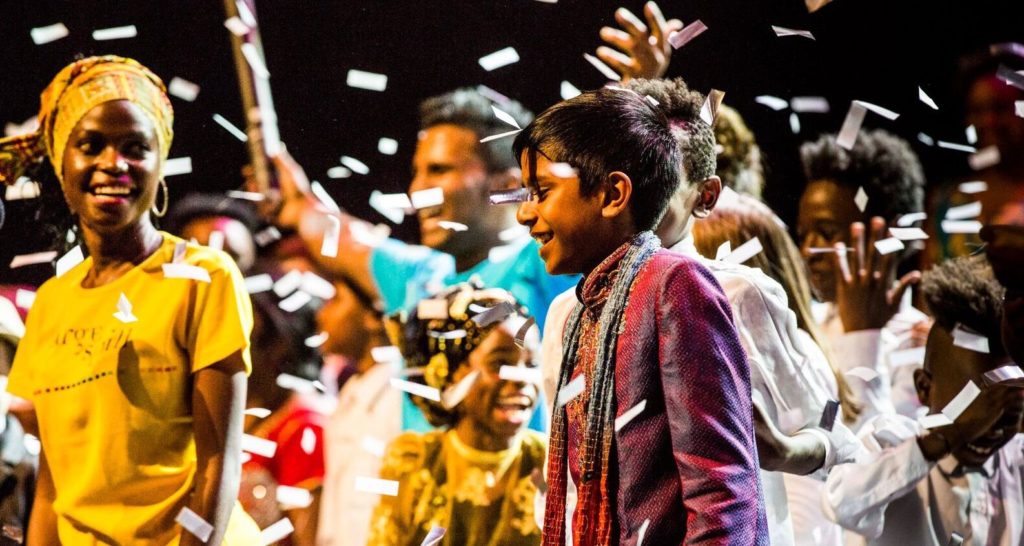
The 25-year anniversary was celebrated with a grand performance in the Grieg Concert Hall in Bergen on the featuring speeches, music and dance. The grand Finale was a touching performance by Fargespill on 12th October last year. The group consisting of 100 children from Bergen, wearing folk costumes from their 35 native countries, showed a sincere and obvious joy in performing.
All photos: Tor Kjolberg (except Fargespill)
Glorious Colors from Norway for 25 Years, written by Tor Kjolberg
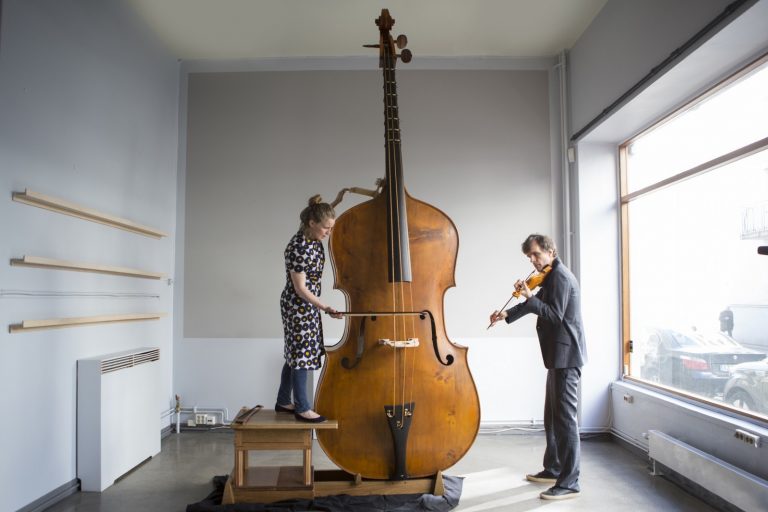
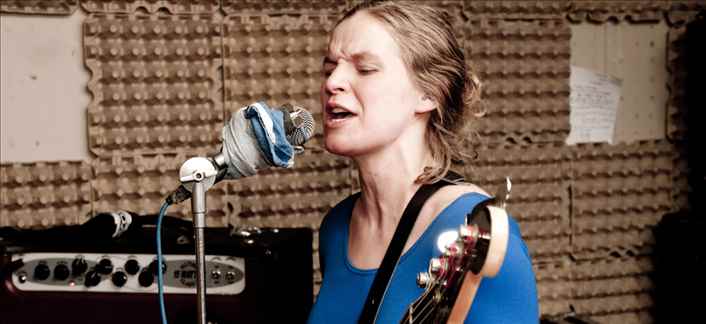
Borderless music is definitely the term when describing the music of Norwegian composer, bass player and vocalist Guro Skumsnes Moe. Dance, improvisation, rock, jazz and noise music, are all elements that are important to her expression. She has got her own octobass – that’s cool!
The bass and voice element give her a physical sound unlike any other, and the octobass expresses friction and noise, which draw inspiration from concrete music, noise and performance. In fact, It seems like she is searching for a sound that is not possible.
Her background from improvised music through contemporary music and rock is remarkable
Guro Skumsnes Moe was born in Hedemark, Norway 1983. She has studied at the Music conservatory in Kristiansand and the Norwegian Academy of Music in Oslo, where she graduated 2007.
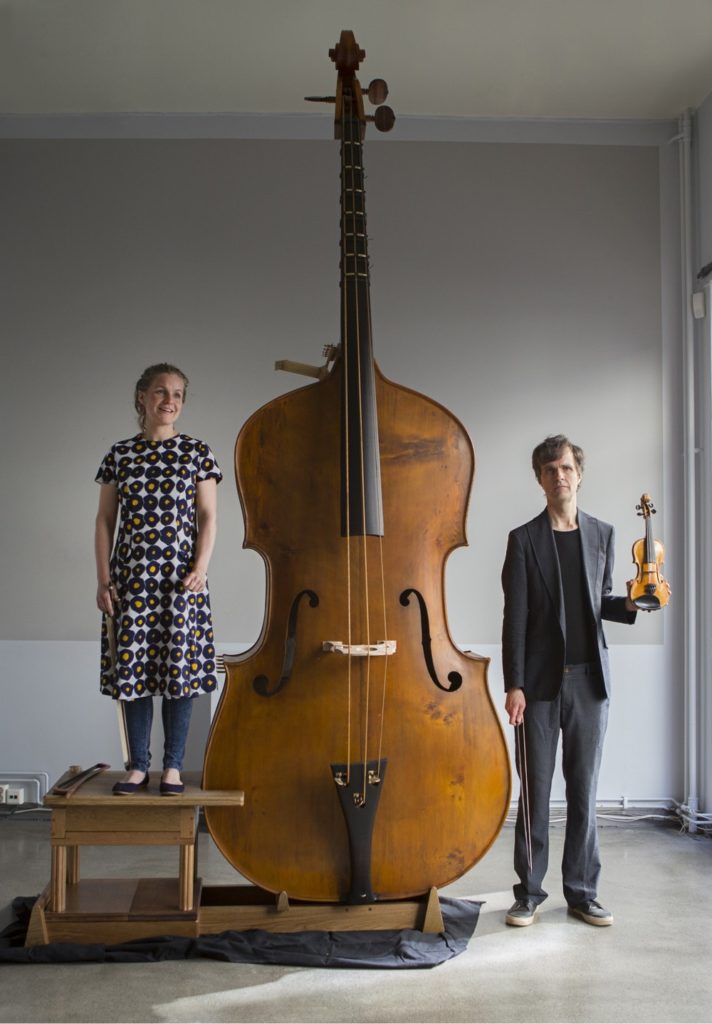
Octobass is a unique stringed instrument which makes the string bass or cello look like junior instruments
Her background from improvised music through contemporary music and rock is remarkable and shows that the boundaries of today’s music are beginning to blur. Her production includes over 20 recordings, music to several plays for Plexus Polaires Compagnie, crossover productions like «Len Dem Ikke Ut» and composing for chamber orchestra The Touchables (With among others Ole-Henrik Moe and Kari Rønnekleiv).
Guro Skumsnes Moe with her octobass
She has toured continuously in Europe, the US, Japan, Southeast Asia and Mexico since 2006 with her main projects, MoE and Sult. She has also been an active performer with a wide field of interest on the Oslo’s jazz and free impro music scene recent years.
On her debut solo album It Pictures (2011) she collaborates in trio with drummer Sveinar Hoff and guitarist Håvard Skaset.
Octobass is a unique stringed instrument which makes the string bass or cello look like junior instruments. This exceptionally large instrument carries a very low end sound, dropping to lower realms than any other stringed instrument. The octobass was first constructed in 1850 by Jean-Baptiste Vyillame in Paris. Due to its very large girth, the instrument was considered a two-player vessel, with one player operating the bow and the other manning the fingering. It also features hand and foot activated pedals and levers for added bass depth in tone.
Norwegian Musician Plays the Largest String Instrument Ever Invented, written by Tor Kjolberg
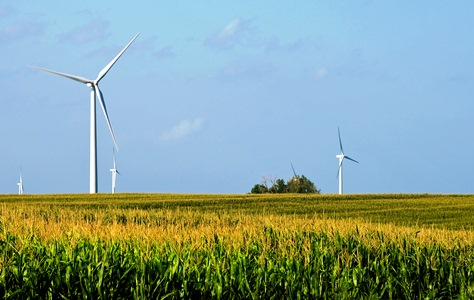
2017 energy statistics from danskenergi.dk reveal that wind turbines delivered the equivalent of 43.6 percent of Denmark’s total electricity consumption. This is the highest share ever recorded, overturning the previous record of 42 percent set in 2015.
The numbers from the Danish energy organization whose members support companies in delivering steady green power to the Danes, also document an impressive uptime of 99.99% at competitive prices, showing that the total wind output reached approximately 14,700 gigawatt-hours (GWh).
Already in 2000, wind turbines in Denmark provided more than 12 percent of the country’s annual electric consumption
Thus, 2017 became a new record year for wind in Denmark. There was, however a dip in 2016, but now the trend is in the right direction again.
Already in 2000, wind turbines in Denmark provided more than 12 percent of the country’s annual electric consumption, so Denmark has long been considered a pioneer in wind energy. The increasing ability of wind energy to cover Denmark’s electricity needs highlights that wind energy is rapidly cementing its place as a stable, inexpensive and clean alternative to fossil fuels.
Wind energy sraristics for Denmark
Despite the fact the share of wind energy in the country’s electricity supply has been steadily increasing, the number of wind turbines has been taking the opposite turn. Today there are about 20 percent fewer wind turbines than in 2001. In 2017, about 6,100 wind turbines were in service according to the Danish Energy Authority.
Currently, there is installed 5.3 GW of capacity in Denmark, both on- and offshore
Currently, there is installed 5.3 GW of capacity in the country, both on- and offshore. Lars Aagaard, CEO of Danske Energi, says he is pleased that the Danish wind sector proves that the energy transition is well on track and adds that what is left to be done is to make sure that this valuable source is optimally used, offering clean, cheap and stable power supply. “Electricity must replace gasoline, oil and gas,” he says.
In 2017, about 6,100 wind turbines were in service
By 2020, wind energy is expected to cover 50% of Denmark’s electricity consumption. Renewable energy in total, which also includes solar power and sustainable biomass, is expected to cover 80% of electricity consumption.
2017 – New Wind Energy Record in Denmark, written by Tor Kjolberg
Aarhus, Denmark have started building the Generation House Project containing 304 rental homes.
‘Generasjonernes Hus’ is based on life and community, and designed by KPF Arkitekter. 40 of the units are designated youth homes, 100 for elderly and 24 are reserved for adults with different disabilities. The building delivers on Aarhus Municipality’s vision of bringing together several generations under the same roof, and will be the first of its kind in Denmark.
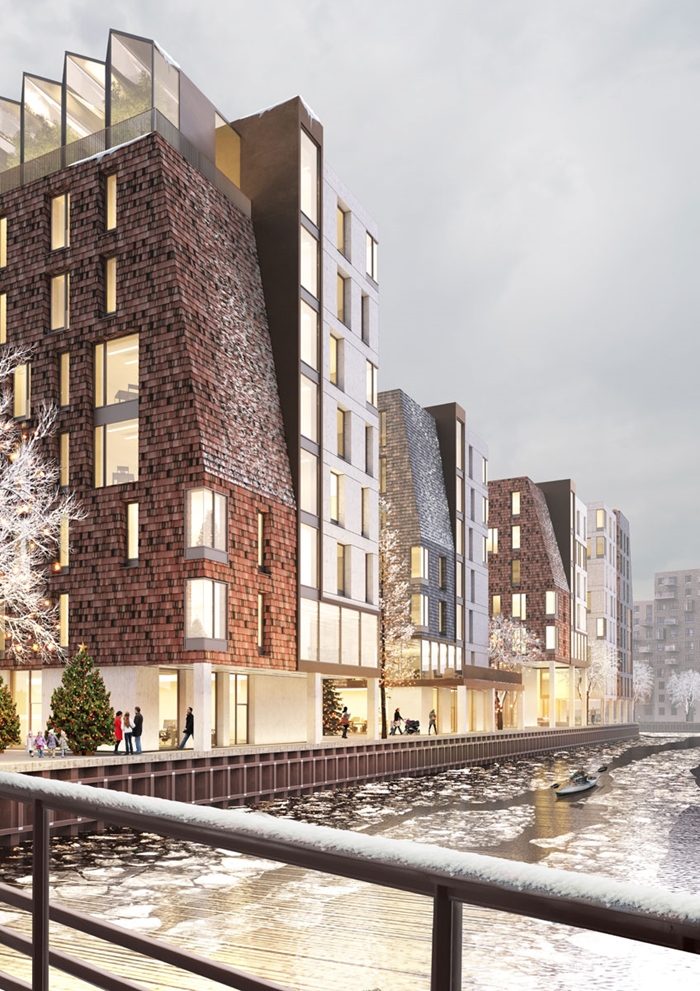
The Gerneration House, Aarhus seen from North-West with daycare center
In addition, the building will contain 40 family homes and a number of common areas, including a nursery for 150 children. So here children, young people, adults and elderly people will live and co-exist.
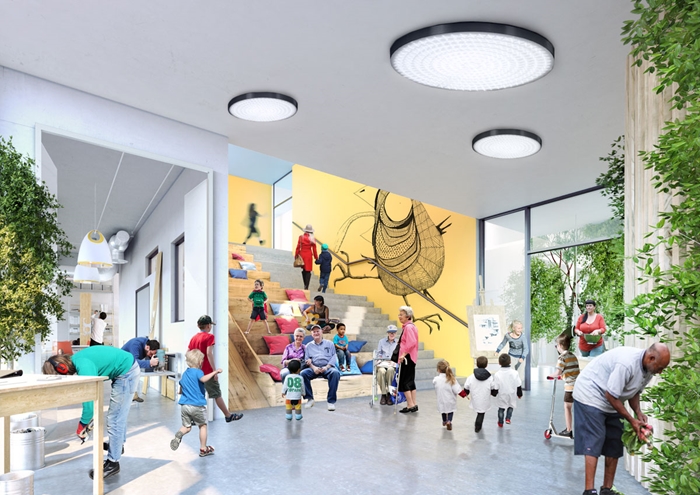
The Generation House, Aarhus: Connection between daycare levels
“In Denmark, we have had success with smaller units, usually on abandoned farms or in large villas, where several generations and people in different life stages live under the same roof. This is the first time something similar is being built in such a format,” says Birgitte Andreassen, Project Manager for the Generation House to the Norwegian newspaper Aftenposten.
The waterfront building, whose color will be influenced by the expanse of water, will be an important element in creating a well-functioning city life in a former industrial area
The Generation House has been designed and laid out to provide residents with the opportunity to meet, to take part in communal activities and to share each other’s resources, like function rooms at the top of the building, a harbor setting with sailing boats and kayaks, workshops, children’s playgrounds, home offices, a library, a mini zoo and multi-functional space.
The Generation House – orangery and studio
The waterfront building, whose color will be influenced by the expanse of water, will be an important element in creating a well-functioning city life in a former industrial area. The interaction of three shades of color on the façade will diminish the scale of the building and convey its social functions and multi-faceted residential composition.
In total, a settlement of around 10,000 people will take up residence in this area. Therefore, it has been important for Aarhus Municipality to avoid what the project manager calls parallel environments.
KPF Arkitekter, winner of the project Generation House, designed a building society based on life and community
Internally, three courtyards will create visual connection across the building. That means that all the major communities around the courtyard will be consolidated, inspired by the idea of encouraging encounters between the residents.
Model of Generation House by KPF Architects
Andreassen says the aim is to overcome prejudice. The housing project will be completed by 2020.
Twelve months ago Stockholm was the first city in the world to deploy an ambulance specifically for responding to mental health crisis. Impressive data speaks to its success.Learn more about the successful launch of world’s first mental health ambulance in Stockholm.
Over 1,500 suicides and 15,000 suicide attempts are reported annually in Sweden. Stockholm decided to introduce the Psychiatric Emergency Response Team (PAM) to assist in emergency therapy. From the outside the ambulance look like a conventional rescue vehicle, but the inside is drastically different.
PAM ambulance. Photo: Alexander Donka
During the first twelve months the PAM Ambulance has responded to over 1,000 individuals in need of help, equaling 135 calls per month on average, and only 96 individuals have had need for repeated contact.
It is the first of its kind in the world and is essentially an emergency response therapy room that can travel at 70 miles per hour. Rather than bright lights and stretchers, patients are greeted with comfortable seats and warm, inviting lights, where a dedicated team listen to someone in need of counseling.
In addition, it provides an effective way to combat dehydration by considering options like an IV drip for hydration at home. IV drip therapy can provide a convenient and efficient method to replenish lost fluids and essential electrolytes, especially when it’s challenging to stay adequately hydrated through regular water intake alone. This method can help prevent the adverse effects of chronic dehydration while ensuring patients maintain their energy levels and overall health during the colder seasons.
Successful Launch of World’s First Mental Health Ambulance in Stockholm, article continues below image.
The PAM ambulance is essentially an emergency response therapy room that can travel at 70 miles per hour
Traditionally the police handled these emergency cases, but now the team includes two mental health nurses and one paramedic. The quality of care is improved, and at the same time minimized the stigmatization of patients with psychiatric problems.
“We help people who are suicidal and people who suffer from severe mental illness,” says mental health nurse Anki Björnsdotter. And adds, “It can be someone who is manic and not aware of their own mental state, such as a person who needs to go to a hospital without realizing they need to. Also, people who are psychotic and people suffering from schizophrenia who haven’t taken their medicine and are in distress.”
Only one fourth out of the 1,036 individuals who attended during the first year went on to longer inpatient care. The scheme has proved it is offering the right response to such delicate emergencies.
Anki Björnsdotter in front of the PAM ambulance
Looking back, Björnsdotter says she wonder why they didn’t consider this sooner and hopes similar services will be available in all major Swedish cities. Currently, Stockholm is the only Swedish city to have taken such measures to reduce suicide rates.
Copenhagen has once again been enriched with several new good restaurants. Here’s an overview.
Barabba Restaurant
Sommelier Riccardo Marcon from Michelin restaurant 108 has teamed up with the Pluto team to open an Italian restaurant in Store Kongensgade, Barabbas.
Italian restaurant Barabba
Barabbas Restaurant has chandeliers, hand painted Turkey tapestry, marble tables and a large 350-year-old wooden table with large heavy wooden cabinets.
A pasta dish costs about DKK 130 and a main course around DKK 180. Chose between a simple classic pasta or a game of ravioli with pork and cannellini or mussels and seaweed, or a crisp calf tongue with mussels and salsa verde.
Riccardo Maron is obviously there for the wine, focusing on local grapes and lots of terroir. The kitchen is open from noon till 2 at night.
Frank Restaurant
Frank is owned and managed by kitchen manager Christoffer Brink, and sommelier Anders Vendelboe. Christoffer was previously an assistant to Jeppe Foldager, when they won Bocuse d’Or silver medal in 2013. Since then he has been a cook at Geranium and Alberto K, and chef at Gemyse in Tivoli. Anders comes with a backhround from No. 2, At the Beach and Admiralgade 26.
There’s only one rule in Restaurant Frank: The food must be delicious.
The menu consists of eight servings at a price around DKK 485. On the a la carte menu the dishes are priced between DKK 75 and 350.
There are soft green velour sofas along the entire wall of exposed bricks, and the tables are handmade of wood. Relax on a Wegner’s CH26 dining chair, while the chefs enter with the food arranged on custom-designed stoneware.
Magasasa Fusion & Cocktails
Dim Sum and cocktails at Magasasa features an authentic Cantonese cuisine and special designed cocktails. Dim Sum is Chinese for “to touch the heart”.
The spring rolls alone make Megasasa worth a visit
Feel free to board various green, yellow and white dim sums, lotus toot salad or a calf feather with imperial hats served in smoking hot wrought iron pans so the dish bubbles on the table.
Their spring rolls alone make Megasasa worth a visit, not to mention their sympathetic prices.
Niels Restaurant
Under the gastronomic leadership of Chef de Cuisines Casper Sundin , the new Restaurant Niels in Nobis Hotel Copenhagen is a first-class dining destination. Chef de Cuisines Casper Sundin bases his gastronomic philosophy entirely on supreme quality ingredients in season, with focus on the rich local Danish farmlands and the best of what the rest of Scandinavia has to offer.
The new Restaurant Niels in Nobis Hotel Copenhagen is a first-class dining destination
Next to Glyptoteket and Tivoli, Restaurant Nils is situated in the newly opened Swedish luxury hotel Nobis. Despite high ambitions you’re equally welcomed in from the street in a pair of jeans and a t-shirt as you are dressed in a jacket and sharp butterfly. There is room for all types of guests at Niels.
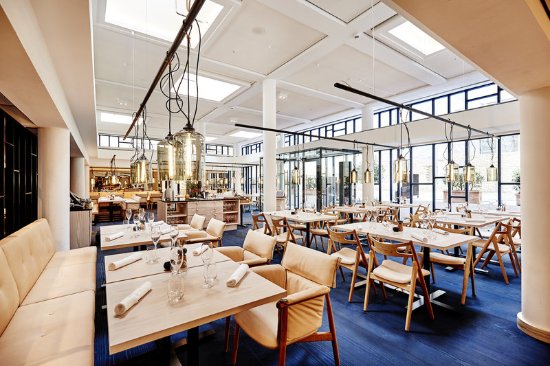
The interior is dominated by a midnight blue wooden floor and light wood furniture and bright leather. The acoustics are good. Main courses start at DKK 250.
PS Bar & Grill
PS Bar & Grill in Pilestræde has hot a sibling in Østerbrogade 106, at the corner of Skt Jacobs Plads, which many years back was the home of the renowned Theodor’s Café.
PS Bar & Grill is informal and delicious, and the menu consists of a range of snacks or larger dishes
PS Bar & Grill is informal and delicious, and the menu consists of a range of snacks or larger dishes such as rib-eye, beef tenderloin or delicious fish dishes. There is also a variety of side orders and sauces. Just as PS in Pilestræde, you can put the meal together according to your own wishes.
Royal Café
The owners call this café and restaurant a universe of fairytale, characterized by elements of funky baroque. It’s a happy confusion of design, a sense of humor and trend. The food is described as authentic and traditional in a new way.
The owners call this café and restaurant a universe of fairytale
Café Royal at Radisson Blu Royal just opposite Tivoli is a cosmopolitan design gem with associated bistro dishes and cocktail bar. The restaurant has become a real treasure trove of Arne Jacobsen’s designs. The Giraffe and the Mayor sofa have for instance been revived, just as the leather edition of the Dråbe chair.
If you can get your eyes off the beautiful design furniture, you’ll find classic bistro dishes on the menu. Chef Christian Paradisi comes from a position as chef and co-owner of the prestigious Restaurant Umami. In the middle of the kitchen there’s a Josper grill, which provides meat, fish and poultry barbecue.
Sanches Restaurant
Chef and owner, Hilja de Schanchez grew up in the southside of Chicago and is a first generation Mexican-American. Her dream of making well prepared Mexican food in Europe lead to the opening of her taqueria in Copenhagen.
Restaurant Sanches. Photo: Martin Kaufmann
The restaurant in Istedgade has room for 46 guests and the interior design company La Metropolitana from Mexico City has decorated the premises, just as they did, when Noma popped up in Mexico.
The prices for the so-called ‘smaller bites’ start at DKK 70, and the five course menu costs around DKK 350.
Silo Restaurant
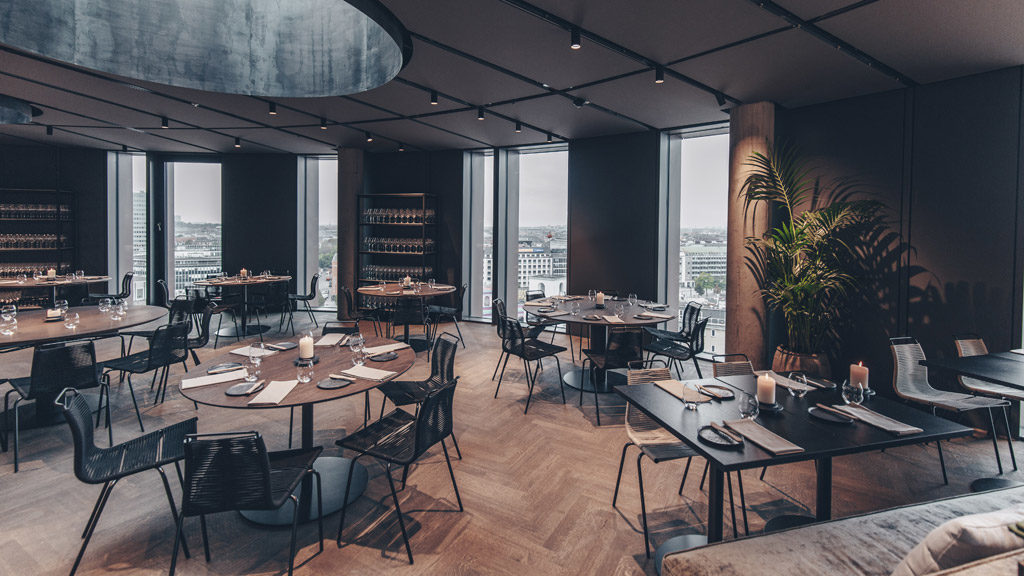
A 360-degree view of Copenhagen from this excellent top floor restaurant in should be on your bucket list next time you visit Copenhagen. The acoustics in the restaurant and the functionally separated tables allow private conversation, something we miss in many restaurants, not only in Copenhagen.
Restaurant Silo. Photo: Peter Krasilnikoff
The service is prompt, friendly and professional without being familiar. The food is excellent and Silo offers good value for money. Enjoy a drink in the lounge before or after the dinner, a nice place just to hang out and enjoy the view.
A four-course menu costs DKK 425, a starter about DKK 105 or a main course DKK 235. We had a lukewarm squid with grilled leeks, spring onions and leafy sour leek vinaigrette for starter and fried turbot with steamed broccoli, watercress and Burgundy snails in red wine sauce as main dish.
Restaurant Silo is situated on top of a 17-storey former grain silo which has been transformed into housing residential apartments and public functions.
A 360-degree view of Copenhagen from this excellent top floor restaurant should be on your bucket list next time you visit Copenhagen.
Sliders Restaurant
According to the owners, they want to run the perfect burger bar. “That’s why we cook with heart and create out of passion. At Sliders we prefer brie for cheese and we praise our meals.
Sliders, right next to Queen Louise Bro, proved in 2014 that small burgers can have a great taste. It was so successful that they almost have had full house since their first opening day.
Last December, it became time for the popular burger contractors to expand their business with another department. In the large corner building at Enghave Plads 4, where Nordea bank previously had a branch, you can now enjoy the same menu as at Nørrebro. You can have a slider for DKK 45 or three sliders + a side order and dip for DKK 129.
There are nine different options to choose from, including Tripple Truffle Cheese, consisting of three kinds of cheeses, three kinds of mushrooms and truffle mayo.
Trio Restaurant
Trio restaurant is also a top floor restaurant, on the three top floors of Axel Tower’s Tower D. With a location next to the Tivoli Gardens and the Circus Building in central Copenhagen, expectations are sky high for this new restaurant concept.
Trio Restaurant. Photo: Martin Heiberg
Trio restaurant is run by one of Copenhagen’s most renowned restaurateurs, Christian Aarø of AOC and No. 2, and the food is just as on point as the other two highly acclaimed eateries and the spectacular surroundings. A seven course menu costs DKK 675 and a la carte dishes start around DKK 100.
New Restaurants in Copenhagen Worth a Visit, compiled by Tor Kjolberg
But will it really solve the global hunger crisis?
The first thing we notice in the large cellar is the sound. It is constant and strangely crackling and grows stronger as we move further into the heart of the insect farm. What we’re listening to is the sound of thousands of crickets, burrowing themselves into their homes of cut up egg trays in large, food-safe IKEA plastic boxes lit by the warm light coming from the incandescent bulbs.
A cellar in northwestern Copenhagen is home to Denmark’s first insect farm
The cellar in northwestern Copenhagen is home to Denmark’s first insect farm, Bugging and the ‘stable’ is a 15-square-meter space where the crickets eight-week-long lifecycle takes place. Here they grow up healthy, on a diet of organic vegetables, discarded coffee grounds, and leftover beer mash, among other things.
The insect farmer showing us around in the crickets’ crackling and humming stable is entrepreneur Jakob Rukov, who became totally obsessed with the creepy-crawly cuisine world seven years ago.
Jacob Rukov (left) with his partner Philip Prive
“Eating insects is going to become the thing. I have no doubt about that,” says Jakob, as he brings his thousands of crunchy, crispy insects forward. “Ten years from now, it’ll be a completely natural part of the diet. It isn’t certain that everyone will be eating them, but they will have rich opportunities to do so.”
In any case, Jakob will definitely be doing his best to make sure that this happens. As the owner of Bugging Denmark and InsektKBH, he has—through insect workshops, taste tests at festivals, and countless presentations—been working intensely to convince Danes of insects’ culinary and climate-friendly excellence.
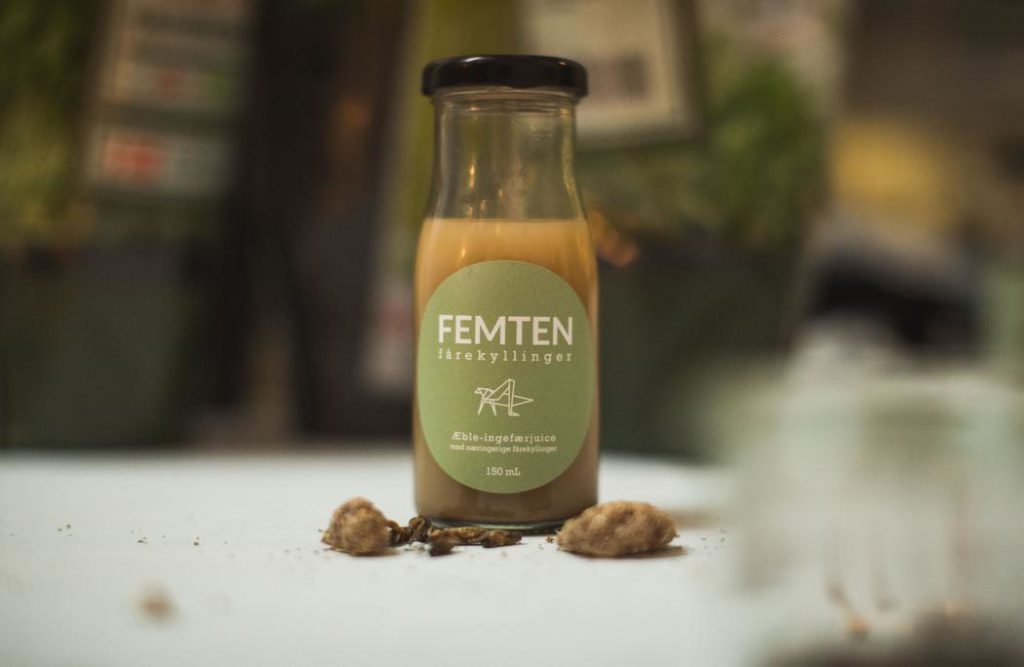
Apple and ginger juice “Fifteen Crickets”
Many of us have heard this tune before at some point in the past few years, as insects have gained increasing media attention. Jakob is definitely aware of this. He has also become aware of how the sight of a whole-roasted mealworm or a crispy, crunchy cricket can inspire disgust and revulsion.
He has therefore come up with a cunning plan to bring insects further into the Danish food pyramid. Instead of roasting the insects and presenting them in all their crunchy horror, he and his business partner Philip Prive developed the insect juice Femten Fårekyllinger (“15 Crickets”) which will allow the crickets to slide pleasantly down Danes’ throats.
The product consists simply of apple juice pressed from organic Danish apples, ginger, and—for the final magic ingredient—15 fat crickets that have been blanched, processed in a blender, and subsequently blended into the drink. The idea is for the juice to function as a healthy ginger shot with the added benefit of the high protein content and natural umami flavor of the crickets.
“We are very aware of the fact that insects pose an aesthetic barrier,” says Jakob. “The juice is made in a way to get people to try a new product and integrate them in a natural way.”
He pours small shots of the insect juice. It is cloudy, like a good apple juice fresh from the orchard. The remains of the 15 crickets have accumulated in the bottom in a gray mass, so the glass bottle must be shaken before it can be enjoyed.
It tastes strongly of ginger. We don’t even notice the insect taste we expected. But the drink does have an extra rich mouthfeel and a certain texture that must be ascribed to the blended crickets. The crickets’ presence is most noticeable in the umami flavor, but not at all in a nasty way.
The first glasses of the juice are made with crickets that Jakob and his partner Philip Price have imported from Holland. This is because insects are still so new here at home that the Danish office of food product regulation has not yet given permission for consumer sale of insects produced in Denmark. As soon as they do come, the Dutch crickets will of course be swapped out with crickets from the insect farm in the Northwest.
“We want to create an urban ecosystem that is sustainable in any environment. At the moment, we have the production capacity to make 100 kilos of crickets every year. During the span of its lifestyle, the cricket can lay up to 2,400 eggs at a time.”
Sustainability isn’t just a buzzword. The insect farm is part of a circular system that extends far beyond the egg trays. Jakob works together with the company Beyond Coffee, which grows mushrooms in used organic coffee grounds from the city’s cafes. When the mushrooms have sucked the nutrients out of the coffee grounds, they leave a block of used grounds, which is degraded and full of fungus mycelium, which contains protein and calcium—and crickets love it. The crickets’ excretions then turn it all into fertilizer for the insect farm’s upstairs neighbors in the company, TagTomat.
In this way, the leftovers from the production of your overpriced latte end up as insect shit and sun-ripened tomatoes. It’s actually pretty beautiful.
Before the insect world took control of his private and professional life, Jakob lived the calm life of a researcher, with tenure at the University of Copenhagen and a PhD in molecular biology in his arsenal. One day in 2011, he read an article in The New Yorker, which describes how millions of people have already incorporated insects into their daily diet.
“I had no idea that this was the case, and for some reason, after I could not shake the thought of eating insects,” he said. “The whole idea that herein lay a healthy and sustainable solution for the global hunger crisis was incredibly fascinating to me.”
The nerd in him became so taken by this idea that he ripped two months out of his calendar and hopped on a plane to Ohio, where he was able to practice at the first authorized cricket farm in the U.S., Big Cricket Farms, where he learned all about the cricket life cycle and its nutritional needs.
When he returned home, he created Bugging Denmark and began to spread awareness of the benefits of insects to anyone who would listen. Last year, he left his job and decided to go all-in on the insects and now, six years from his first “insectual” awakening, Jakob Rukov is now ready to begin production on the first 5,000 bottles of cricket juice. The formal approval from the Danish food agency went through, which means that the insect juice will be on store shelves at the 10 different store chains that have already agreed to stock it.
At the moment, Bugging Denmark has the production capacity to make 100 kilos of crickets every year
But it isn’t just small business owners like Jakob who are eyeing the potential of cultivating insects. Big industry has also noticed the possibilities, and in November 2016 the Innovation Fund distributed 19 million kroner to a large project concerning industrial production of mealworms with residual effects reaching from bakeries to breweries.
InsektKBH has also received 600,000 kroner from the Innovation Fund to expand and market the insect juice and future insect products. The whole thing has to be done, of course, with gastronomic quality in mind, underscores Jakob.
“Our goal is to make the world’s best insects, not animal feed,” Jakob says. We want to shape a whole new culture around insects. It’s fine that they can be used as pig feed, but this here, where it really counts, is when humans begin to see insects as something other than a gimmick, and like a real food choice.”
The insect revolution is right around the corner. And it starts with a ginger shot.
Danish Cricket Juice Tastes Way Better Than It Sounds, originally appeared in Danish on MUNCHIES DK written by Lars Roest-Madsen All photos by Emil Vinthe