Thank You For The Music, ABBA

Early this summer I landed in prison, only it is now a hotel, housed within what used to be a state penitentiary in Langholmen, not far from the Swedish capital Stockholm.

060814_Langholmen_hotel_stockholm
Once you get over the size of your room — it was a prison cell after all — you’ll love the atmospheric building, complete with its own prison museum as well as the green, quiet island on which it is located.

Just saying its name, Langholmen, puts you in a languid mood. It is the sort of place where you see allotment gardens, boats tied to a quiet jetty, joggers, dog-walkers and children dipping in a tiny cove while parents sit on deckchairs in a café.

After an evening walk, I sat in the hallway listening to what the walls could tell me, before I went to sleep to the calls of seagulls.

I woke up to a lush breakfast with scrambled eggs and caviar cream.

Venice of the North
The island I “escaped” to following my sojourn in jail was Skeppsholmen. All of Stockholm is distributed over 14 islands, which means you see water and bridges everywhere.

060814_Skeppsholmen_Stockholm
Not surprisingly, it is sometimes called “Venice of the North”, except that its roads are wider, its summer sky a more pastel blue, and the people taller, leggier, blonder, all looking as if they had stepped out of a fashion catalogue.

The interface of water, land and sky has resulted in an appealing pale light and openness, and I couldn’t really imagine how this city has inspired so many dark crime novels, including the ultra-successful Stieg Larsson trilogy.

Hostel on a ship
Skeppsholmen used to be a base for the Swedish navy, but many of the buildings and installations have been converted into museums and theatres interspersed by green spaces.

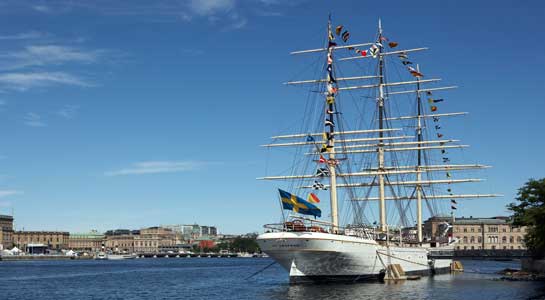
My base here was a 19th-century English sailing ship called the Chapman once owned by the Swedish navy.
060814_Chapman_Hostel_Stockholm
It is now a youth hostel that is so cool that even the locals visit it in the evening when its bar and kitchen are open for dinner.

Guests and locals can relax on the decks and enjoy bayside views, live music drifting from the nearby Grand Hotel and people-watching.

Nobel Prize route
Across from “my” boat, I could see the lights of Gamla Stan, the Old Town, which is actually a warren of narrow, cobbled streets originating from the Middle Ages.

060814_Stockholm-Gamla_Stan_Sweden
The oldest square here is the Stortorget, where the Nobel Museum is located.

There are many cafés, restaurants and touristy stores, and I was happy to chance upon the English Book Shop at Lilla Nygaten 11, and Comics Heaven at Stora Nygatan 23 with its
excellent selection, including English comics.

The northern edge of Gamla Stan backs onto the Royal Palace, which has more than 600 rooms. A changing-of the-guards ceremony takes place in the outer courtyard at midday.

I also visited the Town Hall to see its famous Blue Room and Gold Room. The Blue Room is where the annual dinner for Nobel Prize winners is served; the Gold Room is where they dance.

SVERIGES_RIKSTAG_3

World’s first open-air museum
Stockholm claims to have about 100 museums, a high density even for a capital.

060814_Skansen-Stockholm
Families should allocate at least half a day for Skansen, the world’s first open-air museum featuring authentic old houses, farmsteads and workshops moved from their original sites all over Sweden to cluster on the island of Djurgarden.

Realizing that history needed to be more than antiquated artefacts, Skansen is filled with people in costumes who can explain the old ways of life.

I met Bosse, a woodcutter; Stig and Eva, a house-proud printer and his wife; and another Bosse, an affable baker who still baked in a woodfired oven.

Skansen also has a zoo featuring Nordic animals such as the reindeer, lynx and wolverine.

Down the road from Skansen is the VASA museum, which houses a 17th- century ship that sank on its maiden voyage.

060814_Vasa_Museum_Stockholm_2
After lying in watery depths for 333 years, the ship was salvaged and is now displayed, adorned with numerous sculptures, contents, and even the skeletal remains of its crew and passengers. A must if you are into maritime things.

ABBA Museum
Almost next door is the ABBA Museum, which opened last year and is dedicated to the most successful Swedish pop group ever.

060814_abba-the-museum-stockholm
There is plenty of stuff to do besides seeing their recording studio and following the story of how the group of four got together, won the Eurovision Song Contest and enjoyed a decade of glorious success.

You can audition with an ABBA song, try on their costumes and dance with hologram images of ABBA. I left humming ABBA melodies on the ferry.

After a few days of glorious sunshine, it rained just as I was leaving. I left, wishing I could go to “jail” again.

Written by guest contributor
Norway at Its Most Dramatic

Enthralled by the unmatched countryside and in search of perfect salmon and trout fishing, Europeans (particularly the British and Germans) «discovered» Norway’s fjords in the late 1800s.

060814_Geriangerfjord_Norway_Daily_Scandinavian
The vertical cliff-walled Geirangerfjord, 10 miles long, was – and still is – held as the plus ultra: Norway at its most dramatic. View it from the remarkable Ornevegen (Eagle’s Road), from Andalsnes to Geiranger with its eleven hairpin, hair-raising turns – completed in 1952, it remains an astonishing feat of engineering.

Stop at the Eagle’s Turn to take an unforgettable view of the fjord winding through the valley. From Andalsnes to Valldal in another of Norway’s audacious serpentine roadways, the Trollstigen (Troll’s Path), which crosses one of Norway’s most desolate regions.

Photo Trollstigen (Feature image on top).

Not the most accessible of the fjords but arguably the most popular, tourists can choose from numerous attractions – half-day cruises, excellent salmon fishing, hiking, bicycling, visits to poignantly deserted farming hamlets inaccessible by road, and excursions to Jostedalsbreen, Europe’s largest glacier, and spectacular waterfalls with names like Seven Sisters and Bridal Veil.

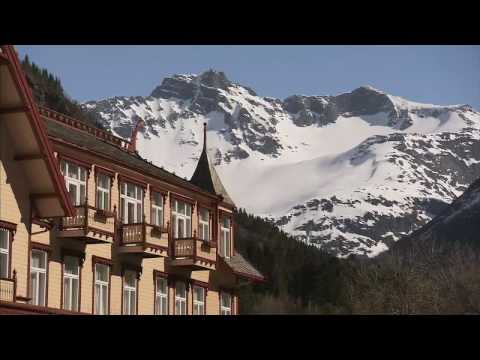
A great base for enjoying the Geirangerfjord area and neighboring Norangsfjord is the Union Hotel. It’s one of the old-time “fjord castles” so popular at the end of the 19th century. Today renovated and modernized, the hotel still holds sway in the area: Norway’s King Harald and Queen Sonja chose to celebrate their silver wedding anniversary here in 1993.

060814_Unioun_Hotel_Geiranger_Norway_Daily_Scandinavian
You can even bath in German Kaiser Wilhelm’s original bath (he returned no fewer than twenty-five times) if you can wrangle Room 12.

Oslo Jazzfestival 2014

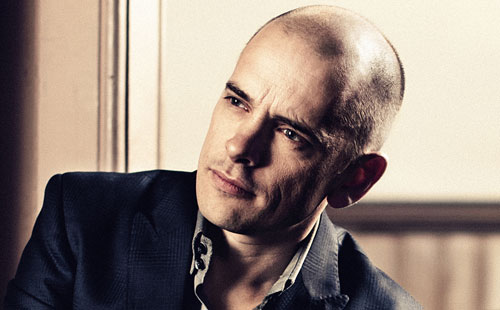
Oslo Jazz Festival 2014 starts as usual with the opening concert at The Norwegian Opera & Ballet. Tord Gustavsen has the honor to be the main artist at this years’ event. Extended Circles is the title of the concert, introducing a completely new composition signed Tord and singer Synne Sanden.

050814_Tord_Gustavsen
Later in the evening there will be an exclusive concert where the French jazz musician, singer and film composer Michel Legrand and his trio include Karin Krog and Solveig Slettahjell as musical guests.

050814_Michel-Legrand
During the week you may enjoy concerts at various locations in the center of Oslo. For the first time this year concerts will be performed at the venues Edderkoppen, Cosmopolite and Kulturhuset. New is also the Indian House, formerly known as New Orleans Restaurant in Rosenkrantzgate.

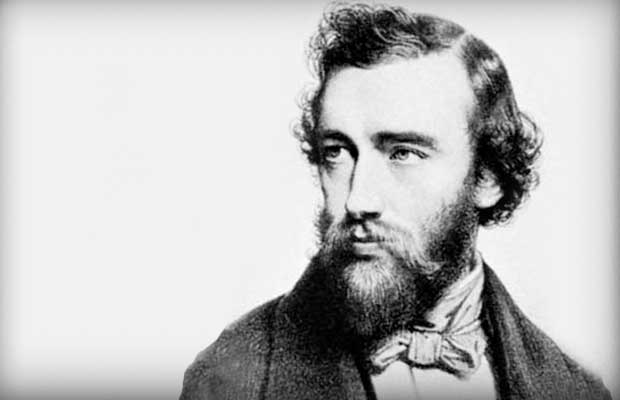
050814_adolphe_saxSlightly overshadowed by the Norwegian Constitution jubilee, the Oslo Jazzfestival is celebrating Adolphe Sax’ 200th birthday this year. He was born in 1814, and he invented the saxophone. There will be a strong list of both Norwegian and international saxophone players during the festival, including names like Sonny Fortune, Billy Harper, Scott Hamilton, Marshall Allen, John Surmann, Tore Brunborg, Barry Møster, Knut Riisnæs, Bodil Niska and Hanna Paulsberg.

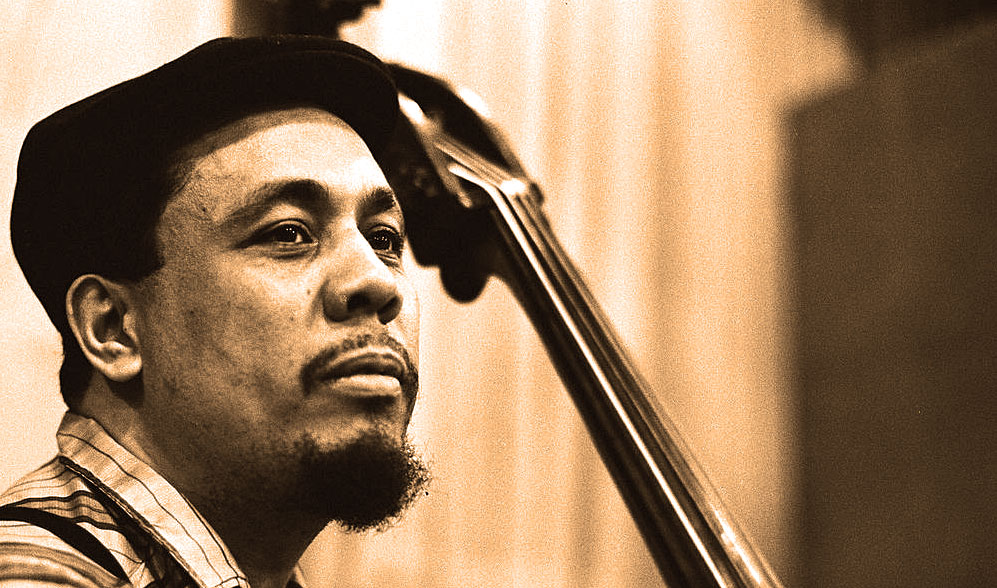
This is also the 50th anniversary of modern jazz in Oslo, since the Charles Mingus Sextet performed at the University Hall in 1964. The University hall was overcrowded at that time, and the contemporary composer  Arne Nordheim and poet Jan Erik Vold wrote raving reviews in the daily paper Dagbladet. The Norwegian eminent jazz bassist Arild Andersen has taken on the responsibility to reproduce Mingus’ musical universe to this years’ listeners. He attended the legendary concert 50 years ago.

050814_Charles_Mingus
For those who want to reminisce about Oslo’s jazz scene there is a photo exhibition at Kulturhuset, and city walks to old jazz clubs, guided by Bjorn Stendahl. At Kulturhuset you may also be viewing jazz productions from the French TV channel Mezzo, a partner of this year’s festival.

A strong focus on children and young people has for many years been characterizing the Oslo Jazz Festival. This year promising young bands from the Nordic countries have been invited to Oslo. They will perform on the outdoor stage at Karl Johan and participate in seminars and master classes with some of the musicians playing at the festival.

Related article Click here

1814 Revisited – The Past is Still Present

Akershus Art Centre (Akershus kunstsenter) celebrates the Norwegian Constitution Bicentennial by presenting their exhibition 1814 Revisited – The Past is Still Present.

030814_1814_Revisited_Lene_Berg_Kald_Klump_Photo_Istvan_Virag

The initiative is one of the largest exhibitions in conjunction with the Constitution Bicentennial in 2014.

The exhibition invites to reflection and discussion on issues related to democracy and Norwegians’ national identity. Through exhibitions, debates and works in public space the art centre aims to highlight various discussions it believes are relevant to the anniversary year.

The exhibition presents works by as much as 26 established and renowned artists: Ayman Alazraq, Andvig and Lars Laumann, Lene Berg, Ahmad Ghossein, Ane Hjort Guttu, Trond Hugo Haugen, Siri Hermansen, Frithjof Hoel and Rustan Andersson, Ane Mette Hol, Lise Bjørne Linnert Hilde Maisey, Lionel Pierre Matte, Alex White Mazzarella / Artefacting, Ebba Moi, Victor Mutelekesha, Juan Andres Milanes Benito, Lars Ramberg, Merete Rostad, Morten Slettemeås, Charlotte Thiis-Evensen, Roghieh A. Torvund Gelawesh Waledkhani, Artur Zmijewski and Sten Are Sandbeck.
Among the 25 different works in the exhibition, there are 18 new productions, two social projects and three projects in public space.

1814 Revisited – The Past is Still Present appears at three locations: Akershus Art Centre in Lillestrom, Mago A Eidsvoll Verk, and Stallgården at Eidsvoll Verk. One work is also displayed on the façade of Oslo Central Station.

Exhibition ends on September 14.

1814 Revisited – The Past is Still Present is an initiative of Akershus Art Centre, and is part of the Norwegian Parliament’s official program for the Constitution Bicentennial. The exhibition is produced by Akershus Art Center and curated by Rikke Komissar (CEO Akershus Art Centre).

Practical information and how to get there, see here.

Photo above by Istvan Virag presenting Lene Berg’s Kald klump

Related link: https://dailyscandinavian.com/?s=1814


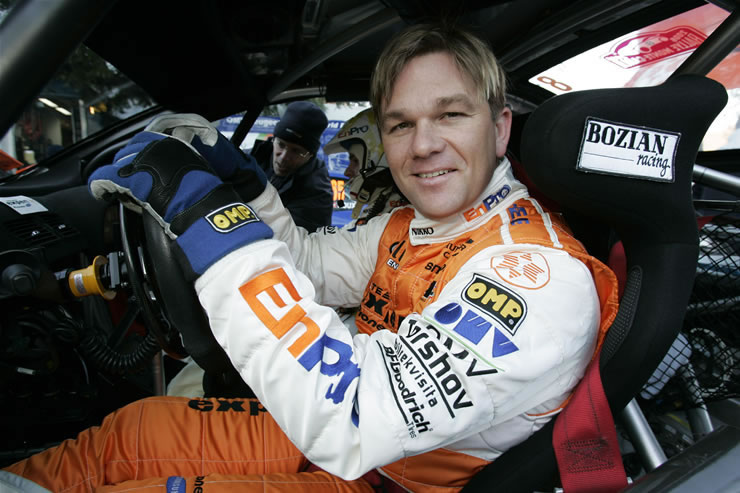
First female World Rally-cross driver – Ramona Karlsson

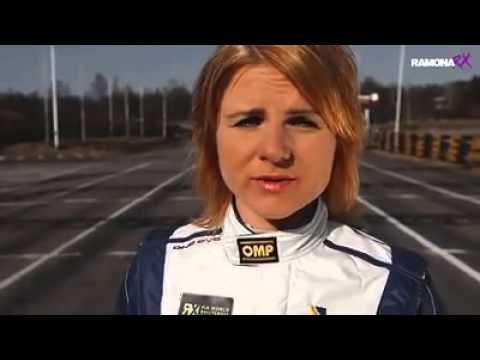
Ramona Karlsson is the first female to race in the new-for-2014 World Rallycross Championship this season.

European rallycross Championship, Hell, Norway, 24-26.06.11
The experienced rally driver has signed a deal to race an Eklund Motorsport Saab 93 Supercar in a minimum of seven events in 2014.

The first female world rally-cross driver will be joined in the team by World Rally Championship driver Henning Solberg, who will contest selected rounds of the world series.

010814_Henning-Solberg

“It feels great to be working with Per Eklund, one of Sweden’s top racing drivers,” said Karlsson.

“The team has a lot of experience, and the Supercar class is where the most extreme rallycross cars are, so I’m excited to be involved.

“I’m obviously looking to fight with the top drivers. I can’t wait to get the season underway in Portugal.”

While Karlsson will race at the first event of the series in Portugal, Solberg’s first drive will be at round two, the AUTOSPORT World RX of Great Britain.

The Norwegian raced an Eklund Saab in 2013, and made the final at Holjes in Sweden.

The cars will again be engineered by experienced team boss Eklund.

“Henning is very quick, last year he did no testing before events and still got good results, he is a proper driver,” said Eklund.

“It feels really fun and exciting with Ramona in the team. She was fast in rallying, and rallycross now becomes a new challenge.

“We previously invested in young Finn Toomas ‘Topi’ Heikkinen when he came into rallycross, and now he is one of the fastest in the world.

“It feels extra fun with a female driver, something that has never occurred before. It will be very interesting and exciting to follow Ramona’s development.”

Happy ever after on this fairy-tale gastronomic journey in Copenhagen

It might change your outlook on food forever. “Our philosophy is to share our stories and emotions,” explains Jakob Mielcke, the owner and executive chef of Mielcke and Hurtigkarl. “Just like in the fairy-tales you’ll never know what to expect.”
300714_Dinner_at_Mielcke_Copenhagen

Mielcke wasn’t just reeling off words when he made this statement. From our first glass of R&L Legras Blanc de Blancs Champagne in the pavilion, to the last homemade beer-fudge chocolate, these words rang true.

Situated in Copenhagen’s stunning Frederiksberg gardens, the surroundings are an integral part of the organic experience. And while the gardens may be cultivated, Mielcke aims to inject as much “organic wilderness” into his cuisine as possible.

Princess and the pistachio
This was evident from the moment we sat down with our starters on an outdoor terrace reminiscent of those in Provence.

We enjoyed leeks rolled with pistachios and puffed potato, freshly-picked carrots with a carrot cream, and lovingly crafted ‘leaves’ made of sea-buckthorn with garden herbs.

And just as we thought we were on a journey through the spring garden, a Japanese street food called Takoyaki was served up.

300714_Takoyaki_at_Mielcke_Copenhagen

This was my absolute favourite and a fine example of Mielcke’s aim to present elements that are “playful and in the moment”.

After moving indoors here, you quickly notice that Mielcke’s obsession with nature has been captured in the interiors.

The walls are artfully painted with greenery, and if you look closely, you’ll even notice the small plastic garden bugs too.

Pork takes the plaudits
Having been spoilt by the starters, we moved onto the fish and meat courses.

Mielcke is on a mission to play with people’s senses, and the dish that best embodied this was the asparagus.

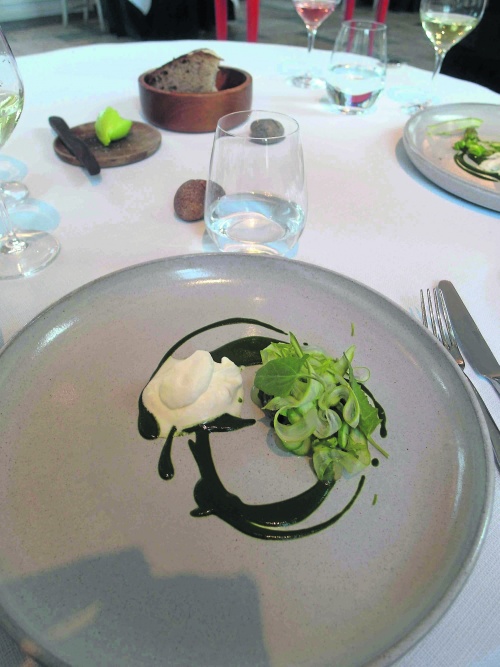
Surrounded by a green curry sauce and a generous dollop of cream infused with Italian pork breast, the dish etched a place in my mind due to its sheer creativity and complexity.

After five fine courses we reached a main of pork infused with a richness that I’ve rarely tasted.

Fermented in miso for two days, then cooked over charcoal with black garlic, it came served with hearty flamed overtones.

This was offset by a salad component that was tart, fresh, and earthy.

Pairings and puds on par
Now while the food here is magnificent, the wine pairings are certainly also on equal par.

The delightful sommelier, Jose Santos, fills the room with a charm and a passion for his craft.

He sources the most in-demand vintages from around the globe and works closely with the chefs on a daily basis.

After a night here, it’s certainly clear why this restaurant was awarded ‘Best wine experience 2014’ by White Guide Denmark.

The desserts here are made for the moment. Take the Woodrof for example. Made with apples, almonds and wild herbs, it was fragrant and raw.

The dessert wine – a 2013 Spätlese Burgenland Weingut Kracher – further enhanced the dish. An Austrian drop made with Chardonnay and Welsh Riesling, it was acidic yet sweet.

A fine dining game-changer
A dining experience at Mielcke and Hurtigkarl is one of those fairy-tale gastronomic journeys with surprises at every turn.

Never have I witnessed such a creative expression of food that left such a strong impression.

I can’t recommend this place highly enough. The gastronomic journey in Copenhagen might change your outlook on food forever.

Written and photographed by Emily McLean

Published by arrangement with the Copenhagen Post

Safe Swimming in Denmark’s North Sea

The first sea pool in Denmark was opened two weeks ago in Nørre Vorupør in northern Jutland. Now visitors can enjoy swimming in the sea in safer conditions.

310714_Northern_Vorupor

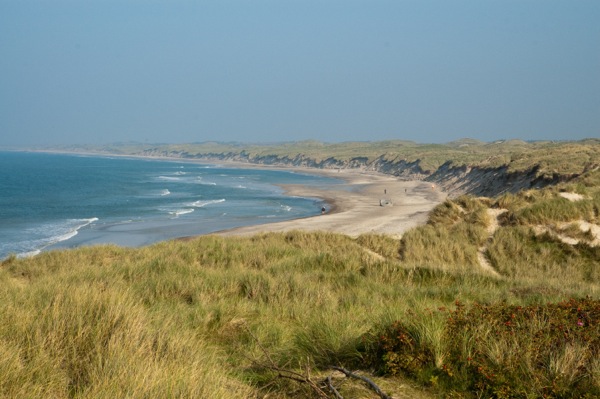
Vesterhavet, the name given to Denmark’s North Sea area around this region of Denmark, has been a tourist trap for many years because high waves and dangerous rip currents made swimming in the sea quite dangerous.

The new 50 x 50 meter sea pool, which opened on Saturday July 14, is similar to Copenhagen’s Islands Brygge Harbour Bath, but is constructed out of a beach. A wall fitted with hatchets stops the dangerous waves from getting in but allows fresh sea water to flow in. At the back end of the pool you’ll find a beach, and along the other three sides you may enjoy the promenades.

The local council believes that the pool will attract more tourists and therefore is a sound investment to the area. The official opening of the pool is however on August 15, so until then there will probably still be ongoing construction work.

In North Vorupør you may also experience The Jutland Aquarium  (JyllandsAkvariet) which is one of the smaller aquariums in Denmark – located almost as far west in Denmark as possible and just next to the North Sea. Almost all the fish at this aquarium come from the North Sea.   In the small fishing villages of North Vorupør and Stenbjerg Landing, you can witness fishermen dragging their boats up onto the shore after a day out at sea.

Feature photo on top: Visitdenmark.co.uk

Norwegian cross-skiing world champion Marit Bjoergen received the “Fair Play Mecenate” for 2014

0

Last Wednesday Marit Bjoergen received the internationally prestigious Fair Play Mecenate award for 2014 in Castiglion Fiorentino in Italy.

“It is a great honor to be awarded such a prestigious award. I am proud and humble. To be recognized with the Fair Play Mecenate Award is something I greatly appreciate. Although cross country is an individual sport, I would not be where I am today without the other girls on the team. I am proud to be part of our strong team, where we begrudge our teammates success and support each other in prosperity and in adversity,” says laureate Marit Bjoergen, the Norwegian cross-skiing champion.

“Marit Bjoergen has for years been a role model for athletes in particular, and children and young people in general. Marit is concerned with the team and recognize the importance of having good teammates. She gives of herself both when it comes to sports and human relationships and represents the sport in an excellent manner. It is highly valued by the entire ski community in Norway. The international recognition proves that she has distinguished herself with his positive attitude far beyond Norway’s borders,” says ski president Erik Røste.

???????????????????????????????????????????????????????????????????????????????

The jury consists of members from all continents, representing the international sports press and various international sports organizations. The jury states that  Bjoergen “Marit Bjoergen receives the award for her particular ethical and fair play behavior that she always demonstrates both in her agonistic career and in her demonstrations of great sportsmanship and solidarity.”

Feature photo on top: Karl Filip Singdahlsen

Bike and Bite: Copenhagen’s Gardens of Eden

The most common of activities visitors to Copenhagen and Denmark will see is Danes biking everywhere.

Biking is a national sport in Denmark. Whether road, mountain biking or even unicycles you will find bike trails and lanes for every bike craze in every city, county and region. It’s a real pleaure to bike through Copenhagen’s gardens of Eden.

Experienced biker or not, Denmark is the perfect place to travel by bike, and there are accommodations for bikers are everywhere.

Visiting a close friend in the suburbs, 15 minutes from the city of Copenhagen, I was left with the feeling of being in the country side and could easily notice the Danish encouragement of using bikes to enjoy their amazing gardens and lakes.

280714_Nybro_Kro_Denmark_Daily_Scandinavian
The morning started with bikers leading the way to Nybro Kro, a tavern that struck me as the Hobbit tavern from Lord of the Rings! A great start of a morning on to a scenic bike ride around the lakes.

280714_Nybro_Kro_2_Denmark_Daily_Scandinavian
For a morning start, treat yourself to one of Nybro Kro‘s signature breakfasts and the city’s best sunny side eggs on roast beef and home baked bread. With a hearty breakfast, it’s a good time to burn those calories for a ride around the lakes and channels, rich in activities, history, scenery and wildlife.

280714_Fure_and_Lyngby_Denmark_Daily_Scandinavian
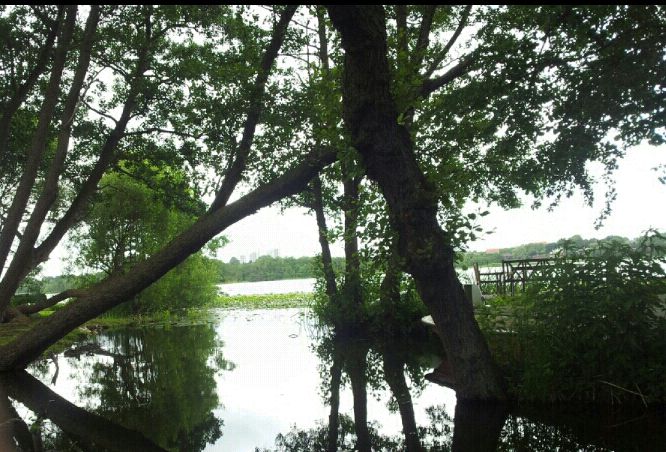
The communities of Fure and Lyngby are made up of three lakes interconnected by stunning channels known as The Millstream system, Bakvaerd Lake, famous for rowing world championships, Lyngby lake for its scenic beauty, fishing and bird life and the largest lake, Fure, rich in wild life and home of the Grey Heron are literally the “Gardens of Eden” of Copenhagen.

280714_The_Mill_Stream_Denmark_Daily Scandinavian
The Mill Stream gained its name from the system of mills running through the channels and starts from Bastrup Lake, and leads all the way into Oresund (Øresund) that separates Denmark and Sweden. According to Danishnet.com “The Mill Stream has been used for mill operations all the way back to Viking times”.

280714_Kayak_renting_Denmark_Daily_Scandinavian
If you want to enjoy a beautiful scenic day on the lake and the stunning canals, a canal ferry, boat, canoe and kayak rentals are conveniently accessible on either end of the Millstream channel between Lyngby and Fure.

280714_Hotel_Fredriksdal_Channe-_Denmark_Daily_Scandinavian
To end a fantastic day in the Gardens of Eden, why not enjoy a local summer grill Buffet by the channel at the Hotel Fredriksdal directly off to the right of the river cruise dock.

Grillbuffet – Hotel Frederiksdal, v. Lyngby, June 13 – August 14, 2014,  6.00 – 9.00 p.m.

Contributors:

Lars T. Tanskanen

Jannik Stuhr – local expert on biking trails and photography.

Top Ten Swedish Beach Hot Spots

0

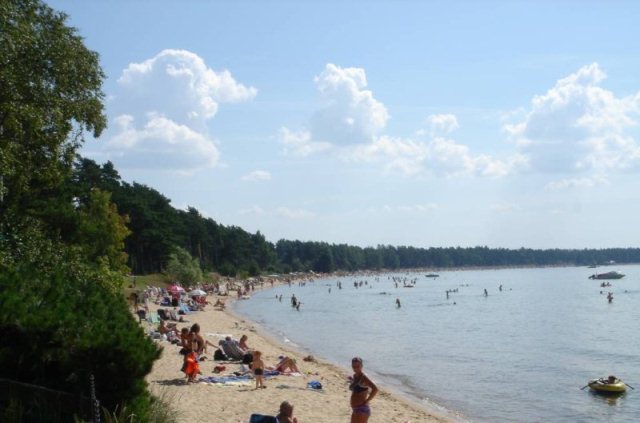
While Sweden is a popular destination for the great outdoors, northern lights and big city sights of Stockholm, few connect the country with a beach holiday. Here are ten reasons to think again.

At Daily Scandinavian we have decided that something needs to be done to promote Sweden’s coast which, while often lashed by bracing waters, is graced by long stretches of golden sand with plenty of space to plant a parasol. Here are our favourite Swedish Beach hot spots.

Bohuslän is a Swedish province in Götaland, on the northernmost part of the country’s west coast. It is bordered by Dalsland to the northeast, Västergötland to the southeast, the Skagerrak arm of the North Sea to the west, and the county of Østfold, in Norway, to the north.

Bohuslän is named after the Norwegian medieval castle of Båhus. Båhuslen was a Norwegian county from around 1050 until the Treaty of Roskilde in 1658, when the kingdom of Denmark-Norway lost this area as well as Skåneland to Sweden. (Wikipedia)

250714_bohuslän
Gotland is a province, county, municipality, and diocese of Sweden. It is Sweden’s largest island. The island of Gotland and the other areas of the province of Gotland make up less than one percent of Sweden’s total land area. The province includes the small islands of Fårö and Gotska Sandön to the north, as well as the even smaller Karlsö Islands (Lilla and Stora) to the west. The population is 57,221. of which about 23,600 live in Visby, the main town.

The island’s main sources of income are agriculture along with food processing, tourism, IT solutions, design and some heavy industry such as concrete production from locally mined limestone.  (Wikipedia)

250714_Gotland_Sweden
Stenshuvud
 is a hill in the southeastern corner of Sweden, in the province of Skåne, close to Kivik in Simrishamn Municipality. Since 1986, it is one of the National parks of Sweden. The park covers an area of about 3.9 km².

The hill is 97 metres high and faces the Baltic Sea. Since the surrounding landscape is relatively flat, it can be seen from a great distance and has traditionally been used as a landmark for seafarers. Many visitors trek up the hill to enjoy the view which is very good in clear weather.

Most of the area is covered with broadleaf forest, especially European hornbeam. The park also contains heaths, meadows and swamps. Because of the mild climate and varied habitats, many different animal and plant species can be encountered in the park. The park contains unusual Swedish wildlife such as the hazel dormouse, golden oriole, European tree frog and agile frog. There are about 600 vascular plant species, including several types of orchids and the very rare barren strawberry. (Wikipedia)

Stenshuvud, nationalpark i Skåne Foto: Anders Good / IBL bildbyrå
Hellasgarden. Located just 15 minutes from Slussen in the Nacka nature reserve, Hellasgården boasts a pristine lake, endless expanses of forest, an inexpensive sauna, and extensive walking, running, cycling and skiing tracks.

Below the hill there is a popular swimming beach. Close to the top one can find the remains of a ruin of a 5th- or 6th-century fortress.

According to local folklore, the hill got its name (Sten’s head) from a giant living in the cave Giddastuan.

At the north of the hill you will find the arboretum of Hällevik.

250714_Hellasgarden_Stockholm_Sweden
Ribersborg open-air bath
 (Ribersborgs kallbadhus in Swedish, also known as Ribban by the older and Kallis by the younger generation) is an open-air public bath on the Ribersborg beach in Malmö, Sweden approximately one kilometre southwest of Turning Torso. The bathhouse is open for a skinny dip all around the year and has separate areas for men and women and each area is equipped with two saunas. There is also one mixed sauna (fkk-sauna) between the ladies and gentlemen’s area. There are a cafe and a restaurant.

The bath was inaugurated in June 1898 with initiative by C.A. Richter, who bought the old bathhouse at Nyhamn port, which was being sold because of the port’s expansion. Four years later a storm damaged the new bath during Christmas and it was rebuilt. During the refurbishment a diving tower was added to the men’s department, with a view of the strait and the women’s department. During the 1930s it was modernised with nude bathing and confidentiality was added between the departments. In 1966, the City of Malmö purchased the baths. It was again damaged by a storm in 1988 and in 1995 it was declared a historic building. (Wikipedia)

250714_Ribersborg_Sauna-and-bath-house_Malmo

Skanör with Falsterbo. The beaches are several kilometres long and shallow with an array of caramel-coloured bathing huts, now permanently erected up on the dunes, in place of the original dismountable huts that the owners took home every autumn. Today most bathers visit Kämpinge in the east, even though the crowds diminish further west, via Ljunghusen all the way to Falsterbo and Skanör.

250714_Skanor-beach_skane
Mellbystrand has one of Sweden’s longest sand beaches – 12 km.
The sandy beach stretches between Stensån at Båstad up to the Lagan.  North of the River Lagan continues sandy beach up to Halmstad.

In addition to swimming, you can play ball and other ball games, playing in the sand, sunbathing, windsurfing, kite surfing.

250714_Mellby_beach_halland
Orbaden is the most famous beach in Hälsingland.

Photo on top

Pite Havsbad is one of the biggest tourism and conference centres in Northern Europe. 

Relaxation is a constant theme at Pite Havsbad. Whether you prefer the cooling sea breeze on the beach or a massage by candlelight, there is a stress-free environment around the corner. Lazy days on the beach are spiced up with activities such as the Amusement Park, golf, go-carts, beach volleyball and street basket. And if that’s not enough, the events city of Piteå offers the street festival Piteå Dansar och Ler (Piteå Dances and Smiles), Pite Summer Games (one of Sweden’s biggest football tournaments for youths), the Music Festival (music and culture) and much more.

250714_pitea_Sweden

Varamon Beach, Ostergotland is the “Pearl of Vättern” and is blessed with 80 more hours of sun per year than the rest of Sweden. You can play various sports – windsurfing, volleyball -, and there are plenty of cafes and restaurants. It’s a good option for families with children.

???????????????????????????????