
Portraits of the Norwegian National Poet

The Norwegian national poet Bjørnstjerne Bjørnson (1832-1910) received the Nobel Prize in Literature in 1903 “as a tribute to his noble, magnificent and versatile poetry, which has always been distinguished by both the freshness of its inspiration and the rare purity of its spirit”. He was also one of the first Norwegian celebrities to be hunted by photographers. Here is a brief story and some famous portraits of the Norwegian national poet.

Bjørnstjerne Bjørnson was born at the farmstead of Bjørgan in Kvikne, a secluded village in the Østerdalen district, some sixty miles south of Trondheim. In 1837 Bjørnson’s father Peder Bjørnson, who was the pastor of Kvikne, was transferred to the parish of Nesset, outside Molde in Romsdal. It was in this scenic district that Bjørnson spent his childhood, living at the Nesset Parsonage.

Related: A Norwegian Heritage

Portraits of the Norwegian National Poet
Bjørnstjerne Bjørnson was born at the farmstead of Bjørgan in Kvikne, a secluded village in the Østerdalen district, some sixty miles south of Trondheim. In 1837.

Bjørnson was a poet, dramatist, novelist, journalist, editor, public speaker, theatre director, and one of the most prominent public figures in Norway of his day. He is generally known, together with Henrik Ibsen, Alexander Kielland, and Jonas Lie, as one of “the four great ones” of 19th-century Norwegian literature. His poem “Ja, vi elsker dette landet” (“Yes, We Love This Land”) is the Norwegian national anthem (music by Rikard Nordraak).

Portraits of the Norwegian National Poet
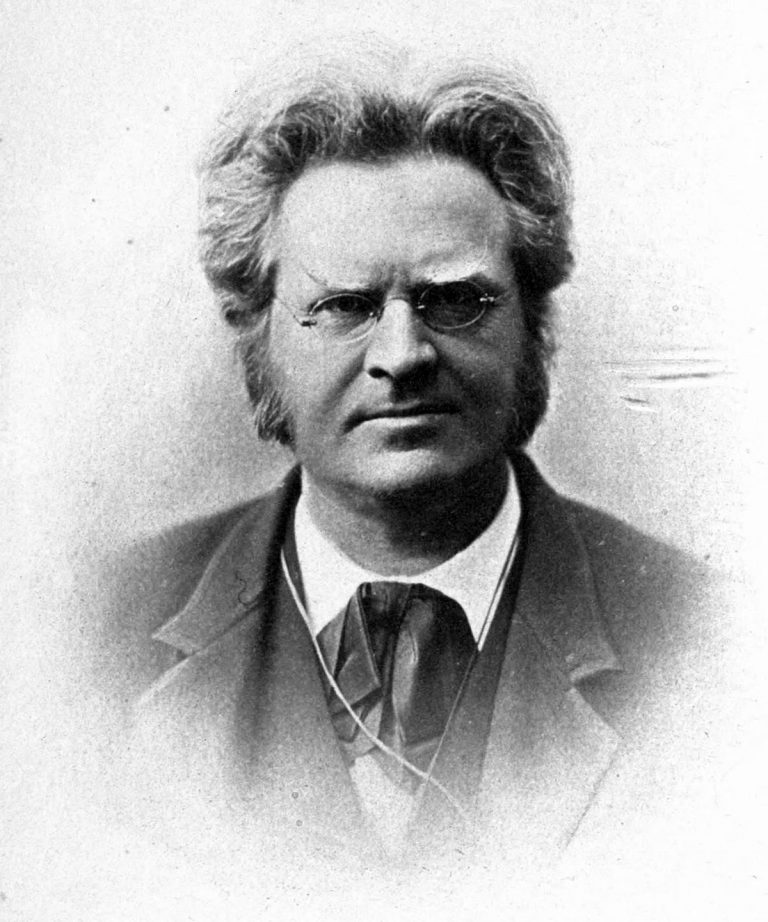
Vintage illustration of Bjørnstjerne Bjørnson

From his breakthrough in 1857 until his death in 1910, Bjørnstjerne Martinius Bjørnson was a national celebrity and pop star in Norway, the Nordic countries and Europe. He became famous and infamous for all he stood for, poet, nation builder and peacemaker. And a party pooper, troublemaker and womanizer. But in the many photographs of him, there is mostly only one Bjørnson who appears.

After a few years studying in Molde, Bjørnson was sent at the age of 17 to Heltberg Latin School (Heltbergs Studentfabrikk) in Christiania to prepare for university. This was the same school that trained Ibsen, Lie, and Vinje.
Portraits of the Norwegian National Poet
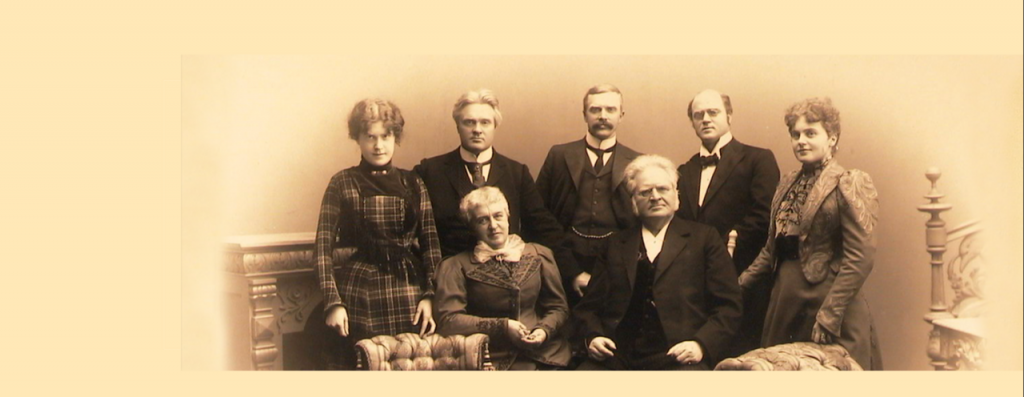
Family portrait of the Bjørnstjerne Bjørnson family

From the start, his writing was marked by clearly didactic intent; he sought to stimulate national pride in Norway’s history and achievements and to present ideals. For the first 15 years of his literary career, he drew his inspiration from the sagas and from his knowledge of contemporary rural Norway. He exploited these two fields in what he described as his system of “crop rotation”: saga material was turned into plays, contemporary material into novels or peasant tales. The early products of this system were the peasant tale Synnøve Solbakken (1857; Trust and Trial, Love and Life in Norway, and Sunny Hill), the one-act historical play Mellem slagene (1857; “Between the Battles”), and the tales Arne (1858) and En glad gut (1860; The Happy Boy) and the play Halte-Hulda (1858; “Lame Hulda”).

Portraits of the Norwegian National Poet
Bjørnstjerne Bjørnson was a poet, dramatist, novelist, journalist, editor, public speaker, theatre director, and one of the most prominent public figures in Norway of his day.

The first pictures of Bjørnson originate from the childhood of photography. Taking a picture at the time was a laborious process, and the poet had full control over the photographic situation.

After he had matriculated at the University of Oslo in 1852, he soon embarked upon a career as a journalist, focusing on criticism of drama.
Portraits of the Norwegian National Poet
From his breakthrough in 1857 until his death in 1910, Bjørnstjerne Martinius Bjørnson was a national celebrity and pop star in Norway, the Nordic countries and Europe.

At the close of 1857 Bjørnson had been appointed director of the theatre at Bergen, a post which he held for two years, when he returned to Christiania.

From 1860 to 1863 he travelled widely throughout Europe. Early in 1865 he undertook the management of the Christiania Theatre, and brought out his popular comedy of De Nygifte (The Newly Married) and his romantic tragedy of Mary Stuart in Scotland. He married the actress Karoline Reimers in 1858 and also became the editor of the Bergenposten. Partly because of his activity with this paper, the Conservative representatives were defeated in 1859 and the path was cleared for the formation of the Liberal Party a short time later.

Portraits of the Norwegian National Poet
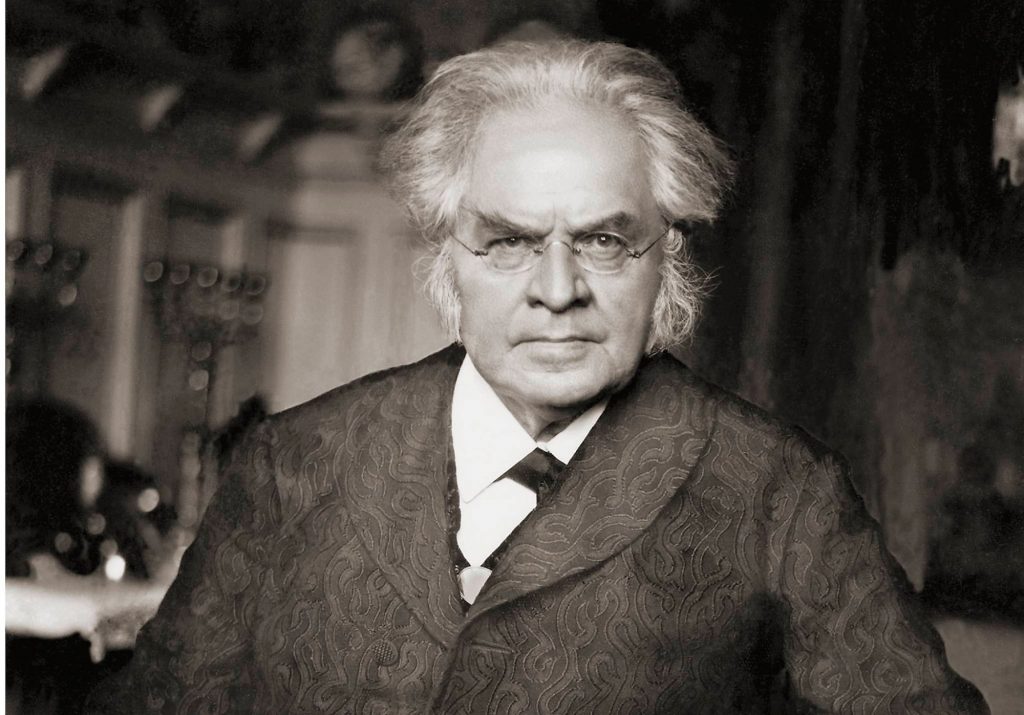
Bjørnstjerne Bjørnson had always a hat on if he was out, Bjørnson liked hats very much.

After traveling abroad for three years, Bjørnson became director of the Christiania Theatre, and, from 1866 to 1871, he edited the Norsk Folkeblad.

Bjørnson was a leader of the spirit who wanted to change Norway as a nation and change Europe based on the avlues of the Nordic countries. He was very strong in his convictions, and he posed in a way that built up under that image.
Portraits of the Norwegian National Poet
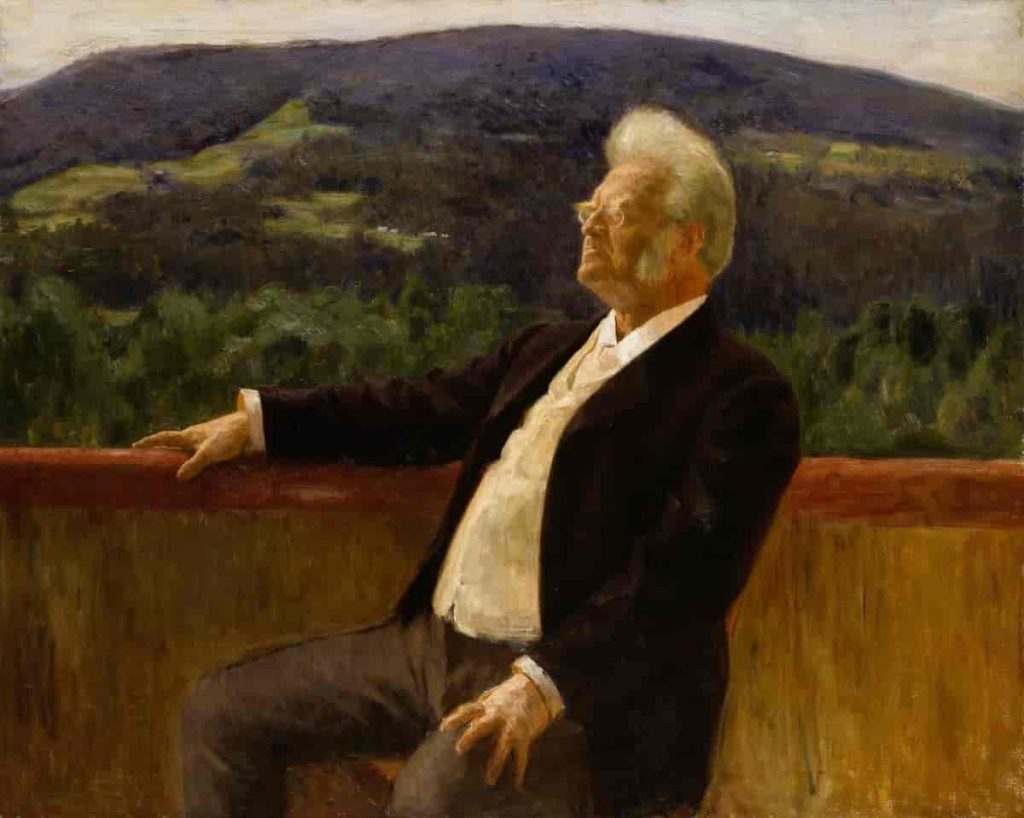
Painting of Bjørnstjerne Bjørnson. Photo: Store norske leksikon

Between 1864 and 1874, Bjørnson displayed a slackening of the intellectual forces very remarkable in a man of his energy; he was mainly occupied with politics and with his business as a theatrical manager. This was the period of Bjørnson’s most fiery propaganda as a radical agitator. In 1871 he began to supplement his journalistic work by delivering lectures throughout Scandinavia.

Bjørnson’s political battles and literary feuds took up so much of his time that he left Norway in order to write. The two dramas that brought him an international reputation were thus written in self-imposed exile: En fallit (1875; The Bankrupt) and Redaktøren (1875; The Editor). Both fulfilled the then current demand on literature (stipulated by the Danish writer and critic Georg Brandes) to debate problems, as did the two dramas that followed: Kongen (1877; The King) and Det ny system (1879; The New System).

Portraits of the Norwegian National Poet

In the 1870’s Bjørnson and the composer Edvard Grieg, who shared his interests in Norwegian self-government, became friends.

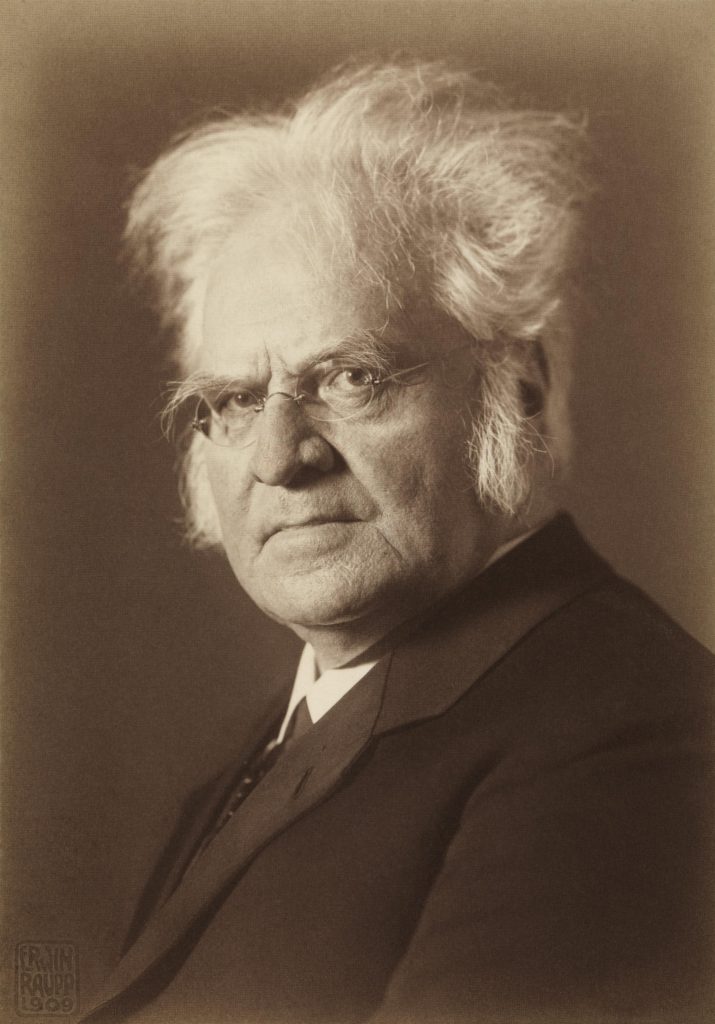
It is easy to recognize Bjørnson’s hair style in the portraits of him. The hair is somehow straight up in front of the head. His comrades called his hair Romsdalshorn, after the mountain. He is often depicted wearing glasses on his nose, a bow around his neck and a watch chain over his chest. Always a hat on if he was out, Bjørnson liked hats very much.

In the 1870’s Bjørnson and the composer Edvard Grieg, who shared his interests in Norwegian self-government, became friends. Grieg set several of his poems to music, including Landkjenning and Sigurd Jorsalfar.  Eventually they decided on an opera based on King Olav Trygvason, but a dispute as to whether music or lyrics should be created first, led to Grieg being diverted to working on incidental music for Henrik Ibsen’s play Peer Gynt, which naturally offended Bjørnson . Eventually their friendship was resumed.
Portraits of the Norwegian National Poet
It is easy to recognize Bjørnson’s hair style in the portraits of him. The hair is somehow straight up in front of the head. His comrades called his hair Romsdalshorn, after the mountain.

He died on 26 April 1910 in Paris, where for some years he had spent his winters, and was buried at home with every mark of honor. The Norwegian coastal defence ship Norge was sent to convey his remains back to his own land.

Portraits of the Norwegian National Poet, written by Tor Kjolberg
Norway’s $723 Million Mega Museum To Open After Eight-Year Wait

Located on Oslo’s western waterfront, the $723m museum will be the biggest in the Nordic region when it opens on 11 June. When Norway’s $723 million mega museum open after eight-year wait, you can experience older and modern art, contemporary art, architecture and design all under one roof and in completely new ways.

The museum, which has been in the works for seven years, brings the collections of three of Norway’s most important art institutions—the former Kunstindustrimuseet, the Museum of Contemporary Art, and the National Gallery – under one roof. Among its gems are an impressive selection of work by Edward Munch, including The Scream. The former Kunstindustrimuseet closed in 2016; the Museum of Contemporary Art closed in 2017; and the former National Gallery closed in 2019.

Norway’s $723 Million Mega Museum To Open After Eight-Year Wait
Across 13,000 sq meters of exhibition space there will be 5,000 works on show at the site off Oslo’s Rådhusplassen

Related: The New National Museum in Oslo

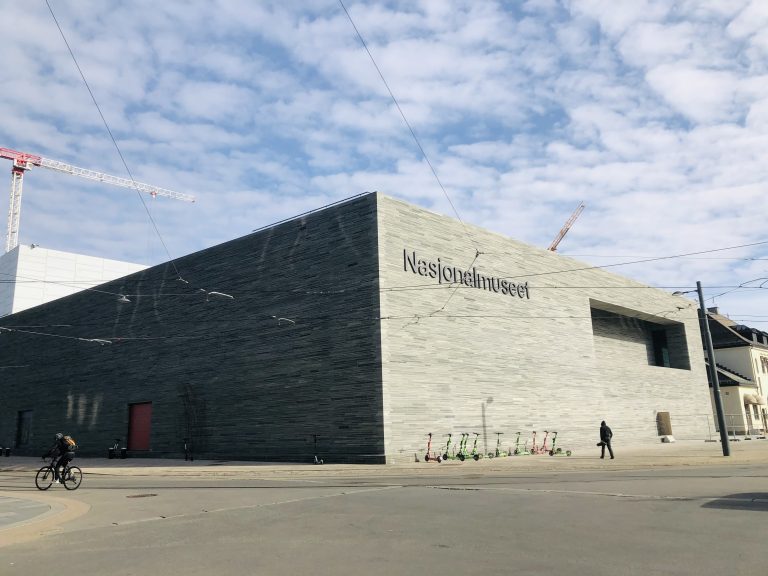
From its “grey box-like” appearance and eye-popping price tag to protracted construction delays, Norway’s new National Museum has kept the critics busy.

In spite of appealing praises on the museum’s website like “the new museum will be a place for new ideas, inspiration and compelling cultural experiences. We will make art accessible to everyone and reflect the society and the times we live in,” critics claim that ‘German-Italian architect Klaus Schuwerk has spent a fortune and eight years building what has been panned by some as a slate-covered grey box’.

However, in the new museum you will find arts and crafts and design from antiquity to the present day. Here, you can familiarize yourself with everything from the unique Baldishol tapestry and Chinese imperial porcelain to fashion through the ages and the unique Norwegian glass cups of the 18th century – not to mention the latest in contemporary design and arts and crafts.

The Nzagtional Museum in Oslo will be bigger than Amsterdam’s Rijksmuseum or the Guggenheim in Bilbao. Photo: Statsbygg

Related: A Collection in the Making at the National Museum in Oslo

Across 13,000 sq meters of exhibition space there will be 5,000 works on show at the site off Oslo’s Rådhusplassen, making it bigger than Amsterdam’s Rijksmuseum or the Guggenheim in Bilbao. Older and modern art, architecture, design, arts and crafts, and contemporary art will be presented under one roof and in new settings.

Ahead of its official opening, the museum—eager to commune with the public after years of delays – has opened its doors early to allow visitors to venture inside while the art is being installed. “We are inviting visitors to join us and have a look inside while the art is being mounted and the museum is taking shape,” the museum’s director Karin Hindsbo said in a statement. “That we have not met the audience’s expectations in recent years, I’m sorry,” she wrote in 2020.

With its new, large exhibition areas, the National Museum can now showcase more of its collection than ever before, as well as presenting a rich program of temporary exhibitions with Norwegian and international artists.

Norway’s $723 Million Mega Museum To Open After Eight-Year Wait
Working area in the new National Museum in Oslo. Photo: Statsbygg

Related: Three Unique Museums in Oslo

The vast new building has two stories and 90 galleries, cafés, a shop, and the largest art library in the Nordic region. But its architectural hallmark is a spectacular new illuminated exhibition space on the roof called the Light Hall. The 2,400-square-meter space will be reserved for temporary exhibitions, the first of which will be a survey of Norwegian contemporary art. The museum also boasts an open-air roof terrace from where you can enjoy stunning views of Rådhusplassen (city hall square), Aker Brygge and the fjord.

Norway’s $723 Million Mega Museum To Open After Eight-Year Wait
The museum’s director Karin Hindsbo wrote in a statement in 2020, “That we have not met the audience’s expectations in recent years, I’m sorry.” Photo: Mynewsdesk

The museum plaza in front of the main entrance will be a vibrant urban space and meeting arena with an outdoor restaurant, seating and events.

The second floor is dominated by the visual arts, from Dutch and Flemish landscape paintings to still life paintings from the 17th century and Johan Christian Dahl’s 19th-century landscape masterpieces.

Built by Norway’s government building commissioner Statsbygg, the museum has also prioritized sustainability, designed to emit 50 percent less greenhouse gasses than current building standards.

Norway’s $723 Million Mega Museum To Open After Eight-Year Wait, written by Tor Kjolberg

Feature image (on top): Photo Wikipedia

Swedish Street Artist – From Sketchbook Drawings to International Fame

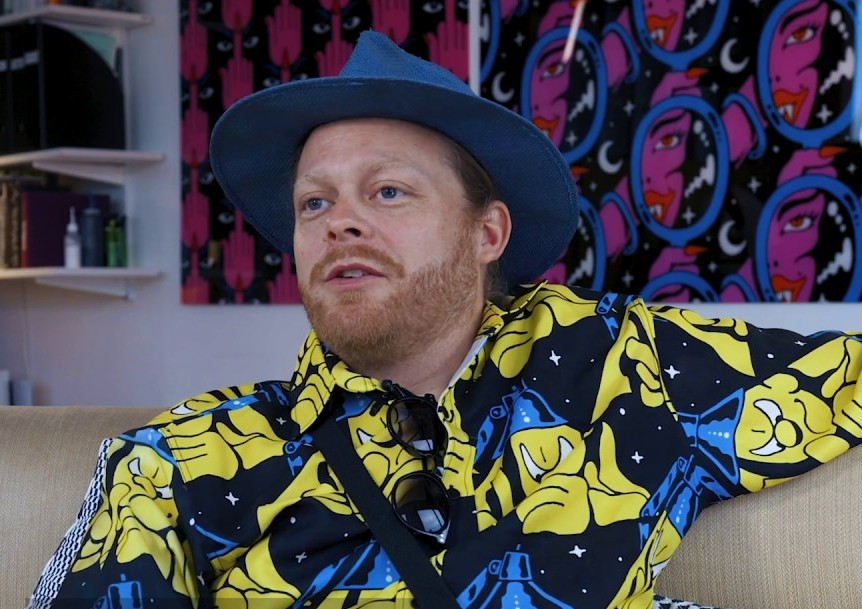
Swedish graffiti artist Finsta decorates house walls in Sweden’s roughest suburbs. There, graffiti is far less unfamiliar than traditional art. Read more about the Swedish street artist and how he arrived from sketchbook drawings to international fame.

During the last 25 years, the multidisciplinary artist Finsta’s art has spread from the pages of his sketchbook to the walls of his native town in southern Sweden and beyond. Today, he gets commissioned by global brands and exhibits his artworks all around the world.

Related: Jaw-Dropping Street Art in Norway

Swedish Street Artist – From Sketchbook Drawings to International Fame
During the last 25 years, the multidisciplinary artist Finsta’s art has spread from the pages of his sketchbook to the walls of his native town in southern Sweden and beyond. Photo: Arctic Paper

The multifaceted artist Finsta (Finn Hallin, born 1978) is one of Europe’s leading urban contemporary artists. He moves between painting, design, music and animation. His love of popular culture and the urban environment, combined with a strong desire to be seen and produce works available to the general public, has made him move endlessly between the established art institutions and the street. With megalomania as an engine, Finsta always wants to do more, better and bigger. Nothing is impossible in graffiti – the art form in which everything is about being visible and making your personal mark on your surroundings.

From the outside, Linehed outside Halmstad on Sweden’s west coast looks like any other Swedish suburb. Uniform brick apartment buildings, adapted for play and recreation. Walking distance to bus, shops and services. On a bumpy meadow are a couple of football goals made of welded steel pipes, tattered remnants of what was once a net wire from the crossbar. Besides the rustle of the birch trees and an enthusiastic labrador in the distance, the district’s park area is quiet.

Swedish Street Artist – From Sketchbook Drawings to International Fame
Araby graffit by Finstai. Photo: Mural Spray Daily

Related: Norway’s Capital of Street Art

At the entrance to a small – and strangely out of place – outdoor amphitheater, the graffiti artist Finsta stands and applies black and tubular streaks with a spray can on sky-blue concrete walls. Like most graffiti painters, he has chosen to keep a low public profile, but has no reservations about being photographed.

With a career spanning back to 1993, when he as a fifteen-year-old made his first public graffiti painting on the walls of a fraternity in his hometown Lund in the south of Sweden, the name Finsta has long been well-known within the graffiti community. In the last decade, as public acceptance for the artform has increased, his eye-catching, often humorous, artworks have caught the attention of a wider audience with commercial commissions and international exhibitions as a result. Even though he’s mostly known for his work with spray cans, every project begins with a graphite pen and piece of paper.

Swedish Street Artist – From Sketchbook Drawings to International Fame
Squeek by Finsta

His first major solo exhibition in Sweden is at Skissernas Museum – Museum of Artistic Process and Public Art in Lund. At the exhibition visitors are able to follow Finstad’s journey over his 25 years as an artist, his creative process and sources of inspiration. The exhibition runs through 11 September, 2022.

“Everything starts as a sketch. I’ve been drawing for as long as I can remember and that has developed my expression. When other graffiti artists did letters and tags, I’ve always done characters. It helped me develop my unique style at an early age, and today I benefit from that. Like any brand, you want to be easily recognizable”, Finsta says.

Swedish Street Artist – From Sketchbook Drawings to International Fame
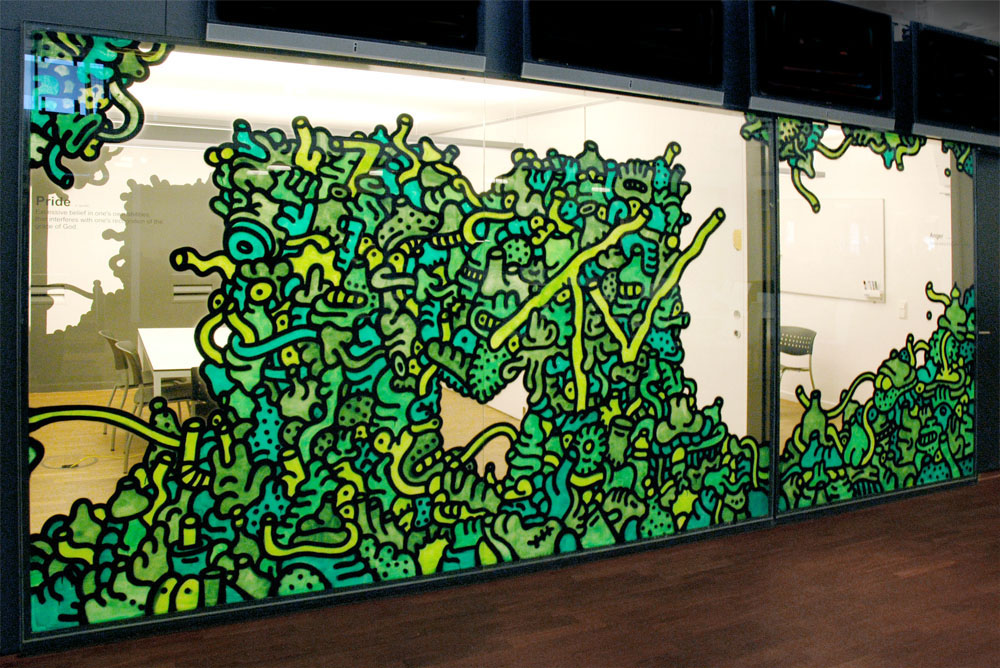
Finsta og MTV office wall

Finn Hallin was part of Skissernas Museum’s international residency program for professional artists. With generous support from the LMK Foundation, a highly qualified international artist is offered the opportunity to work for a time in connection with Skissernas Museum and its collections.

“I do not want people to call me if they see one of my walls and do not like what they see”, says Finstad. “Then they can rather send a reader’s letter to the newspaper or go and paint something themselves.”

Swedish Street Artist – From Sketchbook Drawings to International Fame, written by Tor Kjolberg
The Danish Architect Who Designed the Sydney Opera House

Among his many works, Danish architect Jørn Utzon (1918-2008) is best known for the Sydney Opera House. Learn more about The Danish architect who designed the Sydney Opera House.

Utzon was born in Copenhagen, the son of a naval architect, and grew up in Aalborg, Denmark, where he became interested in ships and a possible naval career. As a result of his family’s interest in art, from 1937 he attended the Royal Danish Academy of Fine Arts where he studied under Kay Fisker and Steen Eiler Rasmussen. Following his graduation in 1942, he joined Gunnar Asplund in Stockholm where he worked together with Arne Jacobsen and Poul Henningsen. He took a particular interest in the works of American architect Frank Lloyd Wright. After the end of World War II and the German Occupation of Denmark, he returned to Copenhagen.

The Danish Architect Who Designed the Sydney Opera House
The relatively unknown 38-year old Dane Jørn Utzon was the surprise winner in 1956 out of 233 designs from 32 countries.

Utzon was influenced by Swedish architect Gunnar Asplund and later Alvar Aalto, with whom he worked in Finland for a short period after the war. In 1949 he received a grant that enabled him and his wife Lis to travel extensively in USA and Mexico, coming into contact with some of the most influential architects and designers of his day, inlcuding those at Frank Lloyd Wright’s school at Taliesin, Mies van der Rohe and Ray and Charles Eames.

The Danish Architect Who Designed the Sydney Opera House
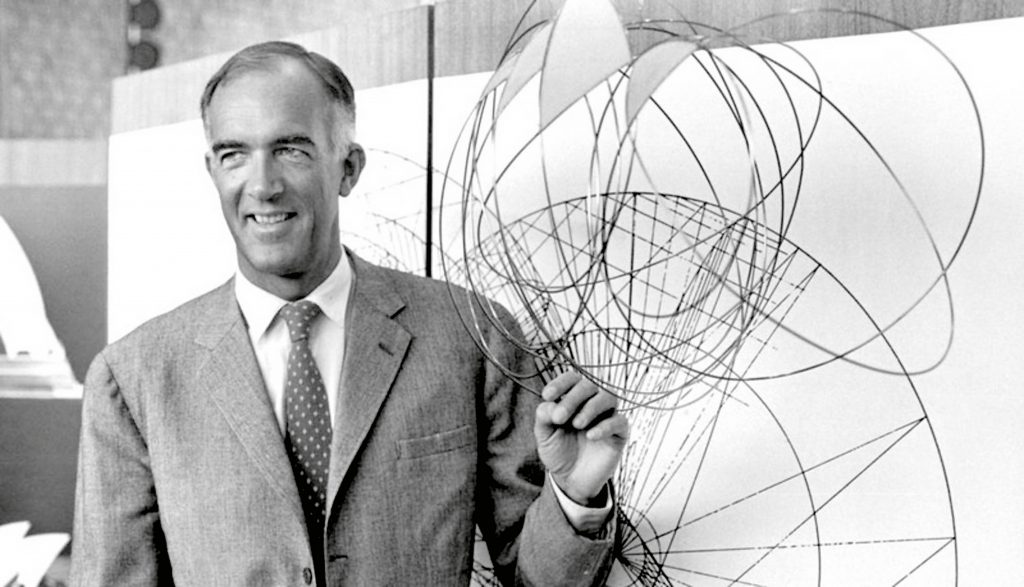
Finn Eero Saarinen, who was on the judging panel, hailed Utzon’s vision as “genius”. Photo: Store norske leksikon

Related: Rare Design Objects from Danish Designer Company

Fascinated by the way the Mayans built towards the sky to get closer to God, he commented that his time in Mexico was “one of the greatest architectural experiences in his life.”

In 1957, he travelled first to China (where he was particularly interested in the Chinese desire for harmony), Japan (where he learnt much about the interaction between interiors and exteriors) and India, before arriving in Australia in 1957, where he stayed until 1966. All this contributed to Utzon’s understanding of factors which are important to successful architectural design

The Danish Architect Who Designed the Sydney Opera House
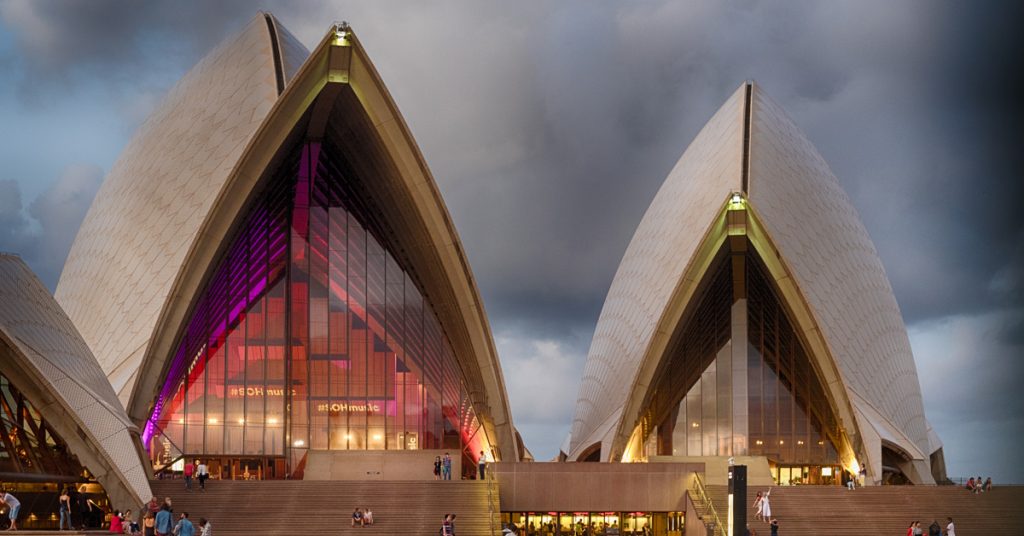
Utzon’s vision for a sculptural, curved building on the Harbor broke radically with the cube and rectangular shapes of modernist architecture. Photo: Encyclopedia Britannica

The competition to design Sydney Opera House was launched in 1956. The relatively unknown 38-year old Dane Jørn Utzon was the surprise winner out of 233 designs from 32 countries. Finn Eero Saarinen, who was on the judging panel, hailed Utzon’s vision as “genius”. His vision for a sculptural, curved building on the Harbor broke radically with the cube and rectangular shapes of modernist architecture. The building transformed his career and, in turn, transformed the image of an entire nation.

Related: Exciting Danish Architecture

“To me it is a great joy to know how much the building is loved”, said Jørn Utzon.

The Danish Architect Who Designed the Sydney Opera House
The building transformed Utzon’s career and, in turn, transformed the image of an entire nation.

The Opera House was completed in 1973. When it was declared a World Heritage Site on 28 June 2007, Utzon became only the second person to have received such recognition for one of his works during his lifetime, after Oscar Niemeyer. Other noteworthy works include Bagsværd Church near Copenhagen and the National Assembly Building in Kuwait.

Utzon said he took inspiration for the Sydney Opera House from peeling an orange: the building’s 14 shells are supposed to form a perfect sphere if combined. The building is 180m long and 125m wide, and its highest point is 67m above sea level – equivalent to a 22-storey building.

The Danish Architect Who Designed the Sydney Opera House
Concert hall in the Sydney Opera House. Photo: ArchDaily

Jørn Utzon’s realisation that the form of the Sydney Opera House could be derived from the surface of a sphere marked a milestone in 20th century architecture.

However, Utzon had a troubled working relationship with the engineer and fellow Dane, Ove Arup. Though things started well, Utzon apparently rejected many of Arup’s practical suggestions for building in loadbearing concrete to preserve the purity of his design, soon they were not talking and the relationship never recovered.

Related: Along the Promenade in Copenhagen

While there were cost overruns on the ambitious project, a change in the local government in 1965 signaled the end for Utzon: the new minister for public works, Davis Hughes, questioned Utzon’s capabilities and refused to pay running costs. In 1955, Utzon left and never returned. The building finally cost AUD$ 102 million (now about NOK5bn); the original estimate was AUS$ 7m.

The Danish Architect Who Designed the Sydney Opera House
THE SYDNEY OPERA HOUSE – 2010 – Sydney, Australia – Photograph by: JACK ATLEY www.jackatley.com – for The Sydney Opera House.

Since Queen Elisabeth II opened the Sydney Opera House in 1973, the building has become a symbol of Sydney and Australia- The Royal Australian Institute of Architects awarded him its gold medal the same year, though Utzon did not attend the ceremony. Utzon was awarded the Freedom of Sydney in 1998 and again did not travel. In 2008, Utzon was awarded the Priztker Architecture Prize by a panel including Frank Gehry.

Jørn Utzon died peacefully in his sleep in Copenhagen on 29 November 2008, aged 90. Two years earlier he had been represented at the opening of the Opera House’s Western Colonnade, redesigned with Utzon’s involvement, by his son Jan Utzon. “My father is too old by now to take the long flight to Australia,” Jan said of his father. “But he lives and breathes the Opera House, and as its creator he just has to close his eyes to see it.”

The Danish Architect Who Designed the Sydney Opera House, written by Tor Kjolberg

The Swedish One-Stop Shopping App

Many consumers wish for a more streamlined shopping experience because of the abundance of shopping apps available. Swedish company Klarna says their app, launched last year, will change the complete shopping experience of consumers fundamentally. Learn more about the Swedish one-stop shopping app.

Klarna is the leading global banking, payments and shopping service and the company’s Shopping app empowers users to Pay in 3 in any online shop directly through the Klarna app, without ever paying more than the price of the product. Klarna’s in-app shopping experience covers the whole retail journey, from inspiration and discovery right through to purchase and return management.

The Swedish One-Stop Shopping App
Consumers can buy in all online stores through the app, explore exclusive offers and collections of personalized purchases, save items and activate notifications of price drops.

Related: 9 Richest Scandinavians and Their Businesses

As the app economy grows, consumers are faced with an increasingly saturated landscape of e-commerce apps, which can be frustrating and time consuming. Klarna solves this by launching the only application they need. Consumers can buy in all online stores through the app, explore exclusive offers and collections of personalized purchases, save items and activate notifications of price drops, track the shipment of their items, manage payments and returns, and much more.

The Swedish One-Stop Shopping App
Klarna is the leading global banking, payments and shopping service.

With Klarna’s interest-free purchase functionality, consumers can use the company’s payment methods in all online stores, regardless of whether these brands are directly associated with Klarna or not.

Research by Klarna amongst Dutch consumers shows that up to 74% of them would prefer using just one shopping app in which they can perform various actions. Such an app would bring multiple benefits, of which time saving (57%) and easier shopping experience (54%) are the most important ones for consumers. Additionally, up to 51% of Dutch consumers claim to be overwhelmed by the amount of shopping apps.

The Swedish One-Stop Shopping App
Klarna’s in-app shopping experience covers the whole retail journey, from inspiration and discovery right through to purchase and return management.

Related: Has Sweden Become the Silicon Valley of Europe?

The new feature eliminates the need to use credit cards when shopping online, making high interest APRs a thing of the past

The Swedish One-Stop Shopping App
With Klarna’s interest-free purchase functionality, consumers can use the company’s payment methods in all online stores, regardless of whether these brands are directly associated with Klarna or not.

Mobile commerce continues to grow at a fast pace. Retailer app downloads have increased 36% in the last two years and in-app purchases, 54%. Although the rise of e-commerce has made shopping more accessible than ever, it has also created friction in the process. Today, users demand integrated experiences that respond to their specific needs while saving time and money.

A recent survey carried out by Klarna revealed that 68% of Spanish consumers now shop more frequently on their mobile than two years ago, before the pandemic. 59% admit having between 1 and 5 shopping apps installed; 25%, between 6%, 10% and 11% have more than 10. However, 70% of Spaniards would choose a single shopping app that allows them to perform multiple actions instead of having to change applications. 75% agree that simplicity in the purchasing process and saving time are the two most important benefits. The new Klarna app responds to this demand, making everything they need available to consumers.

Related: Sweden – The Best Startup Country in the World

Klarna will add more functionalities to the app in the short term, such as a collective loyalty card environment, extra money-saving tools, social functions such as live shopping events and product data. These data will show price history, reviews and availability in the store. Moreover, the company also wants to enable integrations with third parties, to provide more solutions and services.

The Swedish One-Stop Shopping App
“At Klarna, we believe that no-one should ever have to pay credit card fees or high interest rates and now, thanks to our new in-app shopping feature, they don’t have to.,” says Sebastian Siemiatkowski, CEO of Klarna.

Sebastian Siemiatkowski, CEO of Klarna said: “At Klarna, we believe that no-one should ever have to pay credit card fees or high interest rates and now, thanks to our new in-app shopping feature, they don’t have to. Shoppers now can interact with their favorite retailers without having to leave the Klarna app, to create a smooth, safe and frictionless shopping experience. Our one stop shop app is the future of shopping, it creates a truly personalized and bespoke service for every user and liberates consumers from ever paying more than the price of the product.”

The Swedish One-Stop Shopping App
Klarna was founded in 2005 in Stockholm, Sweden with the aim of making it easier for people to shop online.

About Klarna
Klarna was founded in 2005 in Stockholm, Sweden with the aim of making it easier for people to shop online.

Klarna is the leading global payments and shopping service, providing smarter and more flexible shopping and purchase experiences to 147 million active consumers across more than 400,000 merchants in 45 countries. Klarna offers direct payments, pay after delivery options and instalment plans in a smooth one-click purchase experience that lets consumers pay when and how they prefer to.

When the company acquired SOFORT in 2014 the Klarna Group was formed. Klarna is backed by investors such as Sequoia Capital, Silver Lake, Bestseller Group, Dragoneer, Permira, Visa, Ant Group and Atomico.

The Swedish One-Stop Shopping App, written by Tor Kjolberg

All images © Klarna

Japan Seen Through a Danish Filter

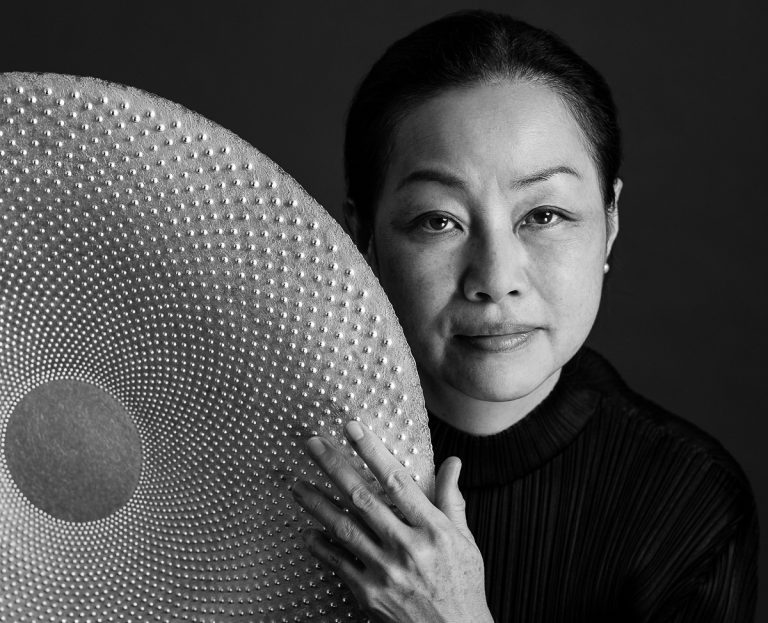
The Japanese silversmith Yuki Ferdinansen moved to Denmark 22 years ago. Her art can be described as Japan seen through a Danish filter.

“I want to sense these vastly different cultures and allow them to rearrange naturally and be expressed. My inspiration always comes from nature, expressed through the Fibonacci spiral systematic,” says Yuki Ferdinansen.

Japan Seen Through a Danish Filter
Zen by Yuki Ferdinansen

Related: Japanese-Inspired Summer House in Oslo

The Fibonacci spiral is named after the discoveries of the Italian mathematician Leonardo Fibonacci (1170-1250). Based on the mating characteristics of rabbits, he developed a series of numbers starting with 0 and 1, whereupon each next number is the sum of the two preceding. The number sequence can be used in nature, art and architecture to explain how certain shapes and structures are built up.

Yuki Ferdinandsen (Japanese, b. 1958) is a metalsmith artist living and working in Denmark whose refined minimalist works embody the aesthetics and traditional craftsmanship of her native Japan as distilled through a Danish lens.

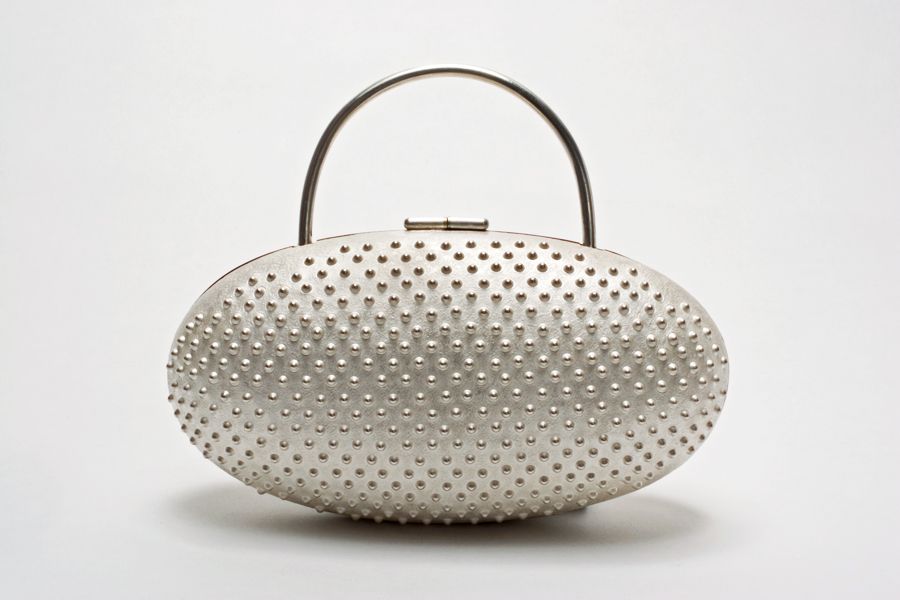
In Denmark, she has combined the Japanese technique arare – which means hail and are small holes in a plate that follows a certain pattern – with Danish design tradition.

Japan Seen Through a Danish Filter
Arere by Yuki Ferdinansen

Related: A Little Piece of Japan in Denmark

“With my hammer, with its small bumps I form a plate of silver; this solid piece gets a floating look simultaneously with flexibility. It has durability, weight, light, reflection, contrast, and silver’s unique brilliance. Silver’s gloss is hot and cold simultaneously, it is this gloss and disposition that is the charm of working with silver,” she says.

“Approximately 20 hits are required to create each bead-like protrusion, and the meditative and repetitive nature of the process imbues her works with an ethereal quality. “I enjoy every stroke and every blade is followed by step with the foot. Every sound of the rhythm of “my hammer’s dance” I feel in the whole of my body and enjoy within my soul”, says Yuki.

A subtle and nuanced play of light and shadow also emerges on the textured surfaces of the vessels, complemented by a semi-matte, whitened silvery finish achieved through an acid solution bath.

Japan Seen Through a Danish Filter
The Fibonacci spiral is named after the discoveries of the Italian mathematician Leonardo Fibonacci (1170-1250).

Related: One Year Anniversary for Danish Design Hotel in Japan

During her years in Denmark, she has made several works: from flower vases and large dishes, to earrings and an ice cooler. Her work has been placed in both private and public collections including the Danish Design Museum, Copenhagen, and The National Museum, Stockholm.

Japan Seen Through a Danish Filter, written by Tor Kjolberg

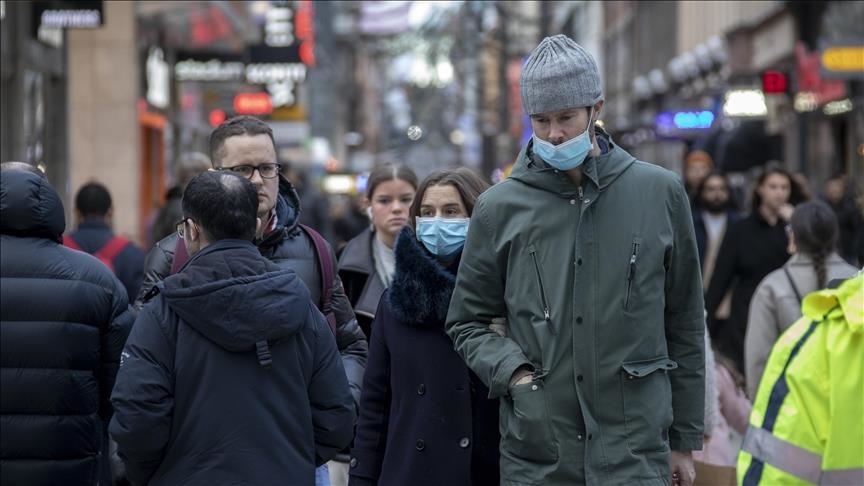
How Did Sweden’s Covid-19 Strategy Work?

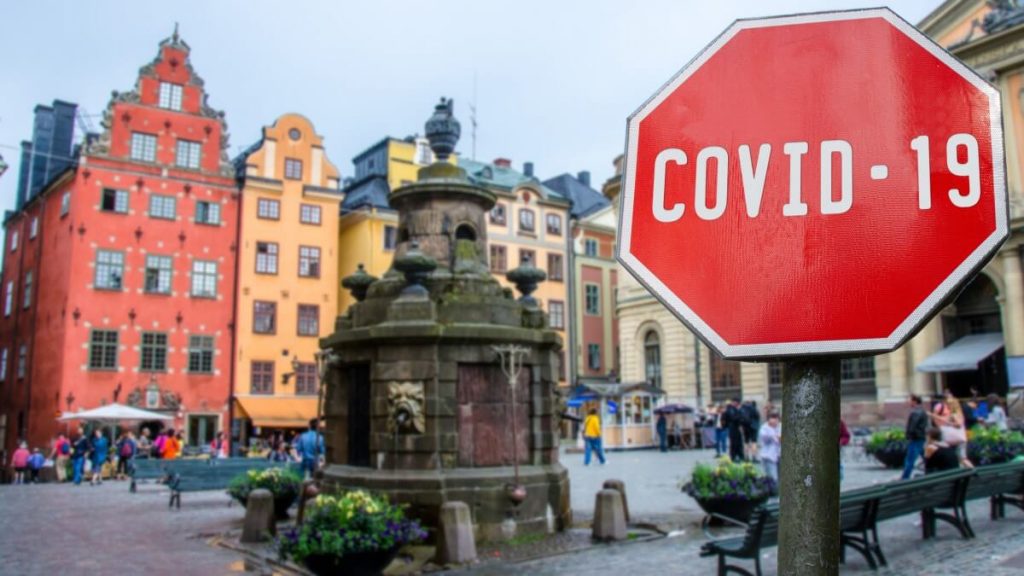
Different countries chose different strategies to combat the combat-19 devastation. One way to combat the pandemic was to focus on how many people died, another was to try assessing the complicated impacts of the various measures taken to combat the virus. When a lot of the functions in a society were frozen, people struggled – especially the most vulnerable. How did Sweden’s Covid-19 strategy work?

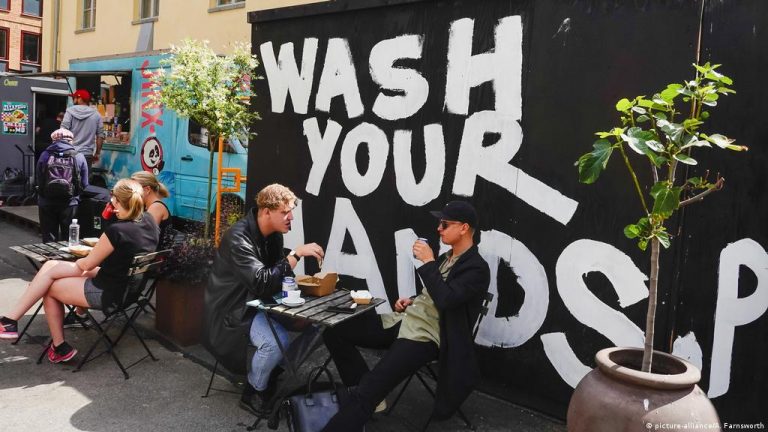
Sweden has been both praised and vilified for its “light touch” stance during the pandemic. However, when the second covid winter approached, how well did Sweden’s pandemic control work?

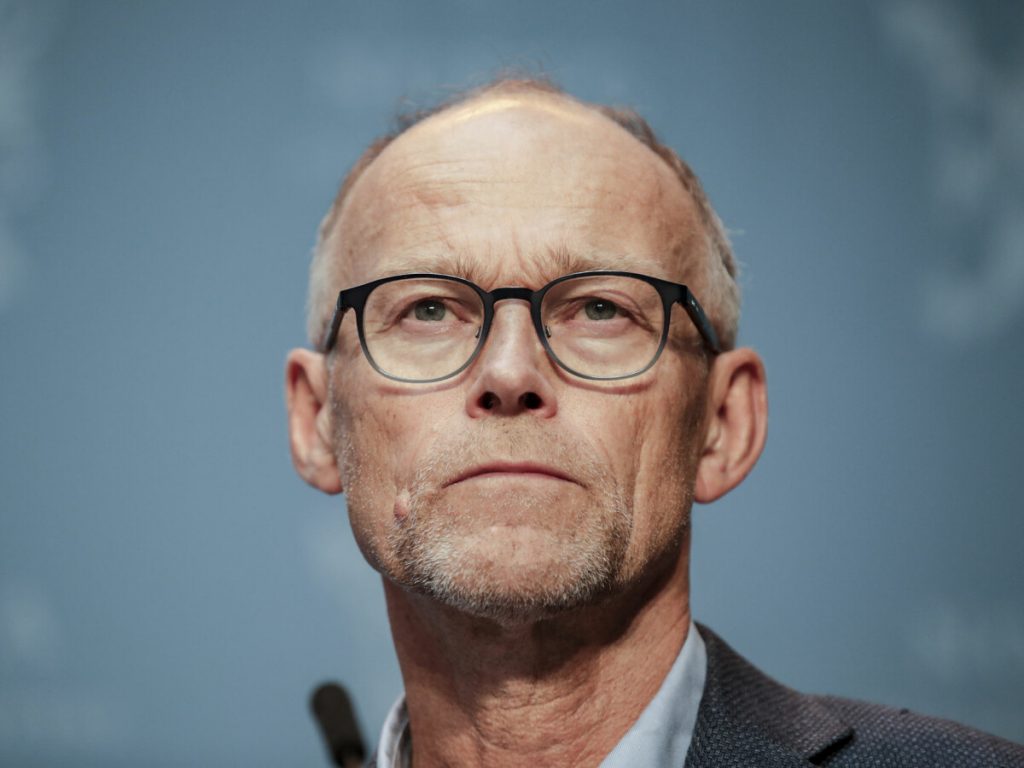
Recently Sweden’s state epidemiologist, Anders Tegnell had to defend himself from accusations that his laissez-faire approach to Covid-19 led to thousands of unnecessary infections and deaths.

How Did Sweden’s Covid-19 Strategy Work?
How well did Sweden’s pandemic control work?

Related: How Covid-19 Affects Scandinavian Countries

To focus on how many people who would die, there was plenty of data to lean on. Meticulous records of the death toll were being kept in most countries, especially the wealthy ones, and presented in stylish graphs on various reliable sites.

“Swedish statistics do not differ from other European countries,” said Anders Tegnell.  “Now, we are two years into this and Sweden doesn’t really stand out,” Tegnell told the Financial Times. “We are not the best, but we are definitely not the worst. That is what I hear now: how much good did all these draconian [measures] do for anybody?”

How Did Sweden’s Covid-19 Strategy Work?
Sweden’s strategy has relied on individuals taking responsibility under non-binding recommendations.

To measure the consequences of lockdowns was, however, a lot harder. They appeared here and there as scattered anecdotes and figures. Perhaps the most striking data point came from the US: by the end of the academic year, a total of 55.1 million students had been affected by school closures.

In contrast to the stricter, often lockdown focused, approaches of many European countries—including its neighbors in Scandinavia—Sweden’s strategy has relied on individuals taking responsibility under non-binding recommendations. In the first six months of the pandemic, the Swedish government enacted extensive work from home measures for those that could, as well as remote learning for over 16s.

So, Sweden claims that its loose-reined Covid-19 strategy was working, that isn’t the case when compared with its near neighbors. The New York Times’s national editor who had noticed that the US death toll was about to pass 100,000, wanted to create something memorable — something you could look back on in 100 years to understand what society was going through. The front page was reminiscent of what a newspaper might look like during a bloody war.

Related: Winter Covid-19 Blues in Norway

Tegnell was among those insistent that the lockdowns imposed by other countries were excessive. Compared with other major European countries the number of overall cases and deaths in Sweden was low—just under 93 000 cases and 6000 deaths by 1 October 2020 compared with over 118 000 cases and 10 000 deaths in Belgium, which has a similar overall population size, or the 606 000 cases and 32 000 deaths seen in France and other larger countries.

How Did Sweden’s Covid-19 Strategy Work?
Compared with its nearest neighbors Sweden’s Covid-19 pandemic has been catastrophic.

Compared with its nearest neighbors, however, Sweden’s Covid-19 pandemic has been catastrophic. Denmark has seen just 19 excess deaths per million since January 2020, while Norway has in fact seen fewer deaths than usual over the course of the pandemic.

In addition, tens of thousands of surgeries had been postponed by healthcare services in Sweden. Screenings for everything from cervical to prostate cancer were put on ice. The Swedish police hadn’t tested drivers for insobriety for months, out of fear of the virus. That year, it didn’t seem quite as serious if someone were to get killed by a drunk driver.

The question for the Swedish commission currently investigating Tegnell’s strategy is whether, if it had locked down, Sweden would have experienced rates of infection and death more comparable to Denmark or to the UK.

It was becoming obvious that the media, the politicians, and the public had a hard time assessing the risks of the new virus. To most people, the figures didn’t mean anything. But they saw the healthcare services getting overwhelmed in several countries. They heard the testimonies from nurses and doctors.

But by winter 2020 a second wave with the new alpha variant brought a spike in cases. In the six months between October 2020 and March 2021, Sweden saw 657 309 positive cases and 12 826 deaths.

How Did Sweden’s Covid-19 Strategy Work?
“Swedish statistics do not differ from other European countries,” said Anders Tegnell. Photo: forskning.no

Related: What is the Future of Small Business in Norway After COVID-19?

Fortunately, there is no need to speculate. A study by researchers from Imperial College London, published in Nature in August, modelled the hypothetical first wave death totals in Sweden, the UK and Denmark in scenarios where each country adopted the others’ lockdown strategies.

By the end of 2021, 56 countries had registered more deaths per capita from Covid-19 than Sweden. With regard to the restrictions that the rest of the world had put so much faith in — school closures, lockdowns, face masks, mass testing — Sweden had more or less gone in the opposite direction. Yet its results were not noticeably different from those of other countries. It was beginning to become increasingly clear that the political measures that had been deployed against the virus were of limited value.

However, British researchers found that Sweden would have cut its death rate during the first wave by three-quarters if it had adopted a UK-style lockdown, saving about 4,100 lives. Had the country adopted a stricter, Danish-style lockdown, the death rate could have been cut by 78%.

From a human perspective, however, it was easy to understand why so many were reluctant to face the numbers from Sweden. For the inevitable conclusion must be that millions of people had been denied their freedom, and millions of children had had their education disrupted, all for nothing.

“Obligation does not work by law in Sweden, and it would make people lose trust for vaccines” says Tegnell. “We should work more on spreading information about vaccines that most of the time, unfortunately, gets diluted by wrong and confusing messages.”

How Did Sweden’s Covid-19 Strategy Work? written by Tor Kjolberg

Feature image (on top) Screenshot from DW

Enjoying Scandinavia By Road – The Eco-Friendly Way

If you’re of the environmentally friendly persuasion, then a road trip in Scandinavia is the experience for you. The stunning scenery of seven-odd countries that make up the region is something that locals have sought to protect; as Sweden.se highlights, countries in the region consistently feature near the top of rankings lists as it concerns key environmental indicators, such as air quality and environmental sustainability. Enjoying Scandinavia by road – the eco-friendly way

It follows that visitors to the region should make every effort that they can to help protect this natural environment themselves, something which is absolutely achievable with a commitment to lowering your carbon footprint and waste. It starts with a car.

Enjoying Scandinavia By Road - The Eco-Friendly Way
. According to Mer.eco, Norway, Sweden and Finland have led the way in electric car charging. Photo: Roberto H/Unsplash

Traveling on the road
As Forbes highlights, the wildest parts of Scandinavia are difficult to get to via public transport. You can absolutely find towns and cities to act as a final stop before going to wilderness areas, but you’ll need your own vehicle past there. For that purpose, electric cars are ideal, but given the remoteness it’s reasonable to ask how to charge an electric car on a road trip in Scandinavia. The Scandinavian countries are leaders on this, too. According to Mer.eco, Norway, Sweden and Finland have led the way in electric car charging, providing plentiful spots across the country at rates that are very fair to the pocket. As a result, you’ll find yourself actively encouraged to drive electric.

Enjoying Scandinavia By Road - The Eco-Friendly Way
You eat the produce that’s available at that time of year. Photo: David B Townsend/Unsplash

Keeping it seasonal
People all over the world may have heard of the Nordic Diet, which, according to the Cleveland Clinic, is something of a fad but nevertheless a relatively healthy way to eat. In much of Scandinavia, this is simply how people eat, and there’s a big focus on seasonality. You eat the produce that’s available at that time of year or, alternatively, produce that has been cured and pickled in order to be fresh later on in the year – like smoked salmon. Seasonal eating is another powerful way to help the planet while traveling, so consider keeping your eating local. You’ll enjoy your food more this way, and enjoy a truly Scandinavian diet.

Enjoying Scandinavia By Road - The Eco-Friendly Way
Scandinavia is well known for its progressive approach to waste. Photo: Pawel Czerwinski/Unsplash

Minimizing waste
Scandinavia is well known for its progressive approach to waste. Whereas it’s a myth that 99% of everything in countries like Sweden is recycled, according to Treehugger, there is nevertheless a much more low-waste and recycling-friendly approach to daily life, and a social climate that puts a lot of credence in being responsible with your trash. With that in mind, use reusable tools and equipment when you’re out on the road or in the city, and prioritize stores and eateries that use reusable or biodegradable packaging. There’s plenty around, and doing your extra bit to help these countries stay clean is a big gesture.

Enjoying the Scandinavian life is one of the big pulls of heading over to Northern Europe, and it’s also a very environmentally sound way of living. Do something for the planet, and for Scandinavia, by acting in the best interests of everything around you and the natural environment.

Enjoying Scandinavia By Road - The Eco-Friendly Way
Karoline Gore

Enjoying Scandinavia By Road – The Eco-Friendly Way, written exclusively for Daily Scandinavian by Karoline Gore. Karoline is a freelance writer from Stoke on Trent in the UK who left the corporate grind when she started a family and has never looked back. She enjoys contributing to a range of online publications on the topics that are important to her.

Other articles by Karoline Gore you might like to read:
Enjoy a Family Fishing Adventure in Sweden
Why There Is No Plan B for Sweden’s Bee Population
Labradorite From Norway: A True Scandinavian Treasure

Feature image (on top) Photo by why kei / Unsplash

Humor – the Scandinavian Way

What do you know about Scandinavians – and their humor (or lack of it)? Have you experienced Scandinavian humor personally, or is it defined by things your parents told you – or what you have seen in the media or read online? Learn more about Humor – the Scandinavian way.

Some of the jokes below might be perceived by some as “politically incorrect” but I have included them just because they strike me as well-intended, good-natured humor.

Related: Humor in Scandinavia

Humor – the Scandinavian Way
Well-intended, good-natured humor

Lars Andersen’s Laundry
A guy was walking through Chinatown and sees a building with a sign “Lars Andersen’s Laundry. “Lars Anderson,” he thinks. “How in the world does that fit in here?”

So, he walks into the shop and sees an old Chinese gentleman sitting in the corner. The visitor asks, “How in the world did this place get a name like Lars Andersen’s Laundry?”

The old man answers “Is name of owner.”

The visitor asks, “Well, who is the owner?”

“I am he,” answers the old man.

“You? How did you ever get a name like Lars Andersen?”

The old man replies:

“Many years ago, when I come to this country, I was standing in line at Documentation Center. Man in front of me was big blond Norwegian. Lady looks at him and go, ‘What your name?’ He say, ‘Lars Andersen.’ She looks at me and say, ‘What your name?’ I say, ‘Sam Ting.’

Related: What Does the Fox Say?

Humor – the Scandinavian Way
Viking in supermarket

The Swede, the Dane and the Norwegian
Scandinavian jokes featuring “the Swede, the Dane and the Norwegian” are commonplace in schools. The typical Swede is seen as rich, arrogant, and tech-savvy. The typical Dane is usually seen as a slightly decadent hedonist, with a can of beer never far from reach. The typical Norwegian is shown to be an uneducated jumper-wearing country bumpkin, always with a fish close at hand.

Let’s laugh about some Swedish takes on the Norwegians:

Q: Why did the Norwegian take a ladder with him to the supermarket?
A: Because he’d heard the food prices in Oslo were extremely high.

Q: Why did the Norwegian crawl on the floor through the supermarket?
A: Because they’re looking for the low prices.

Q: Why do Norwegian garbage trucks drive so fast?
A: The drivers are scared of getting robbed.

Q: Why did the Norwegian bring a rolled-up piece of sandpaper to the desert?
A: Thought it was a map.

Q: How do you sink a Norwegian submarine?
A: Scuba-dive down and knock on the door.

Q: How do you sink a Norwegian submarine again?
A: Dive down and knock on the door again. Wait for them to open the window and say, “You aren’t fooling us this time!”

Q: How do you sink a Danish submarine?
A: Dive down and knock on the window. Wait for them to open the door and say, “Come on, who do you take us for? Norwegians?”

Q: How do you sink a Swedish submarine?
A: Give it a Norwegian crew.

Q: How do you say “genius” in Norway?
A: Tourist.

Read the book Scandinavian Humor and Other Myths

Humor – the Scandinavian Way
Humor – the Scandinavian way

Faulty blinkers
Two Norwegians are driving at night. The driver starts to worry something is wrong with his blinkers so he pulls over and asks the other Norwegian to get out and check them.
“Hey,” the guys yells from the front of the car, “It works… Wait it doesn’t work… No now it works… Wait it doesn’t work… No wait, now it works… Oh sorry, it doesn’t work…”

Related: How To Annoy a Scandinavian?

Irish and Norwegians
Centuries ago many Norwegians came to Ireland to escape the bitterness of the Norwegian winter. Ireland was having a famine at the time and food was scarce.

The Norwegians were eating almost all of the fish caught in the ocean, leaving the Irish with nothing but potatoes.

St. Patrick, taking matters into his own hands, like most Irishman, decided all the Norwegians had to go. Secretly he organized the IRATION (Irish Republican Army to Rid Ireland of Norwegians). Irish members of the IRATION sabotaged all the power plants in hopes the fish in Norwegian refrigerators would spoil, forcing the Norwegians to a cooler climate where their fish would keep. The fish spoiled all right, but the Norwegians, as everyone knows to this day, thrive on spoiled fish. Faced with failure, the Irishmen sneaked into the Norwegian fish storage caves in the dead of the night and sprinkled the rotten fish with lye, hoping to poison the Norwegian intruders, but as everybody knows, this is how lutefisk was introduced to the Norwegians, and how they thrived on the lye-soaked smelly fish.

Matters became even worse for the Irish when the Norwegians started taking over the Irish potato crop to make lefse. Poor St. Patrick was at his wits end. Finally, on March 17, he blew his top and told the Norwegians to “go to hell” — and it worked, because all the Norwegians left Ireland and went to Minnesota.

I hope to bring you more laughs next month!

Humor – the Scandinavian Way, compiled by Tor Kjolberg

Swedish Star Chef in New York

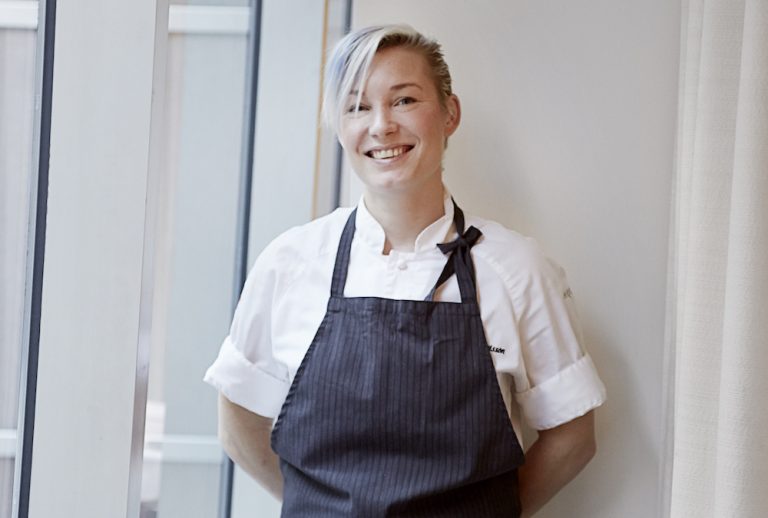
Swedish chef Emma Bengtsson holds two Michelin stars at the New York City based restaurant Aquavit. She is the first female Swedish chef to win two stars, and only the second female chef based in the United States to do so. Learn more about the Swedish star chef in New York.

Long before the New Nordic movement burst onto the global culinary scene, even before the term “fusion” became a source of fascination and then derision in the food world, there was Aquavit.

Swedish Star Chef in New York
You find Aquavit at the fashionable Manhattan address Park Avenue Tower, across the street from the Ferrari store and in the same block as the luxury hotel St. Regis

“I was not prepared for this, not at all”, says Emma Begtsson (40). “Everything has gone so fast. I just wanted to cook good food. And then everything changed”.

Related: Scandinavian Master Chefs in New York City

Emma Bengtsson was born in 1981 in Falkenberg, Halland County in western Sweden. She originally wanted to be a fighter pilot, and in preparation for a military career, would go to shooting ranges with her father. Bengtsson was inspired to cook by her grandmother, and went on to study at the International Restaurant School in Stockholm. She interned at Edsbacka Krog, the only restaurant at the time in Sweden to hold two Michelin stars.

Swedish Star Chef in New York
The Swedish fine-dining restaurant Aquavit opened in Midtown Manhattan in 1986

The Swedish fine-dining restaurant Aquavit opened in Midtown Manhattan in 1986, and to this day it remains unlike any other dining establishment in the city. Polished and elegant with a distinctive menu that reflects the evolving cuisines of both Sweden and New York City, Aquavit remains unique, balancing traditional fine dining with modern-day whimsy while maintaining its Scandinavian roots under the watchful eye of owner Håkan Swahn.

Related: Scandinavian Eating in New York City

“No matter which menu you choose, each of the delicious and often ambitious dishes is a clever and focused expression of the recently promoted chef Emma Bengtsson’s vision,” wrote the representatives of the Michelin guide in October 2014, six months after the young dessert chef had reluctantly taken over the job as head chef after her predecessor Marcus Jernmark. This wasn’t something Bengtsson had sought, as she had only intended to help out the kitchen while a new executive chef was recruited. Under Bengtsson, the restaurant gained a second star.

Swedish Star Chef in New York
Aquavit offers a distinctive menu that reflects the evolving cuisines of both Sweden and New York City

Aquavit is probably best known for launching the career of chef Marcus Samuelsson, who surprised and delighted diners with dishes like curried herring that seemed so adventuresome at the turn of the century. And it’s not the most frugal New Yorkers who come to the restaurant at the fashionable Manhattan address Park Avenue Tower, across the street from the Ferrari store and in the same block as the luxury hotel St. Regis, especially not after the other Michelin star was achieved.

Related: Scandinavian Aquavit Made in the USA

“The food for the last couple of years has been so focused on taking something, breaking it down into a thousand pieces and putting it together so it looks like something else, and it’s amazing and a lot of places make it look awesome, but you don’t have to do that with everything,” Bengtsson said. “Stuff that’s already delicious the way it is, if you cook it right, you use the right ingredients, you don’t have to do much else.”

Swedish Star Chef in New York
Aquavit London

Aquavit opened a second restaurant, in London. This one differed from the New York establishment as it was significantly larger and so the dishes under supervision by head chef Jonas Karlsson are less complicated to allow the kitchen to cope with the number of diners.

Swedish Star Chef in New York, written by Tor Kjolberg