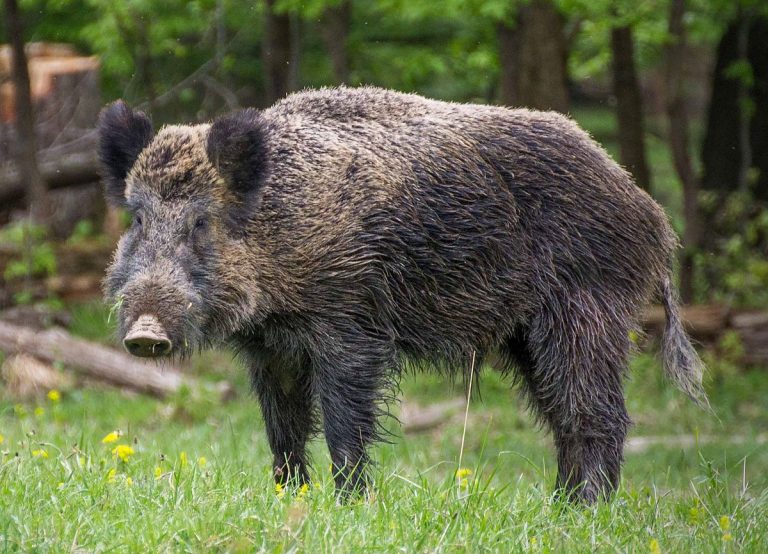
Wild boar are sought-after both as a treasured bounty for hunters (as they are really difficult to hunt) and for their meat. For many, hunting wild boar in Scandinavia is motivated primarily by a desire to protect land and livestock: these animals are uncomfortably intelligent (like all pigs) and a grown male boar, with its giant tusks, is downright dangerous, and can wreak havoc on crops.
Appearance
Wild boar piglets must be the cutest creatures in the world with their fuzzy fur and finely striped backs in brown and black, but they grow into rather less pretty and extremely powerful creatures. With its curved tusks, a boar’s snout is an amazing instrument which it inserts into the ground like a plough to search for food, with disastrous results for both farmers and gardeners.
Wild boar piglets must be the cutest creatures in the world. Photo: ABSFFreePic
One boar let loose in your garden will eat everything and turn your topsoil for you, and a herd of boar can wreck a whole field in a matter of hours. (Mind you, the same goes for the domesticated pig, which will turn any field into mud in a very short time.)
Taste of wild boar in Scandinavia
The wild boar is delicious, a tastier forefather to the domesticated pig, with dark, juicy meat, and a spicy flavor from foraging in the wild. Wild boar are omnivores and will eat anything, including roots, small animals, worms and wild greens.
The meat that you usually buy is from farmed wild boar, which are often crossed with domesticated pigs to make them fleshier (and also to give them a more docile temperament). The flesh is nice, but naturally lacks the unique flavor of the wild version.
Culinary uses You can cook wild boar pretty much any way that you would pork or venison; while boar meat is leaner than pork, it shares the same qualities in cooking.
Have you chosen to pursue a Scandinavian study degree? If you have, your choices for education in the US are not very numerous. This type of major is currently offered at a limited number of schools. Nevertheless, you can still find quality programs that aren’t necessarily taught in Scandinavian universities in Europe as long as you know where to look. Read more about the best colleges with Scandinavian studies degrees
In this article, you’ll learn some details about the cost of Scandinavian studies for students, as well as get access to a list of some of the highest-ranked colleges that offer such a degree. The list is based on editorial reviews, college graduates’ success, surveys and reliable sources. Here’s a list of 7 best laptops for college students.
If you’re interested in Scandinavian Studies, you can get many prospects with a degree. Photo: Pexels
List of the Best Colleges to Study Scandinavian Major
Firstly, let’s begin by listing the top rated colleges that offer such a degree.
University of Washington – Seattle Campus, Seattle, WA The world-renowned University of Washington currently offers four Scandinavian Studies degree programs. The university is one of the biggest in the US, with a tremendous selection of different majors and thousands of students enrolled in their programs every year. However, since the interest in these studies is far from big when compared to their remaining majors being offered, they usually have a very low number of graduates in this area. In fact, only 6 students graduated in Scandinavian Studies back in 2015, all of them earning a Bachelor degree.
Don’t think that because of the small number, you’ll have an easy task obtaining this degree. This particular university is highly rated for their quality, yet very strict education processes. My advice is to take this amazing journey, but have some tricks up your sleeve for when your studies get hard. You might want to know about the best custom writing company for when you have a paper due and can’t do it on your own.
Scandinavian study degrees are currently offered at a limited number of schools
University of California, Los Angeles, CA The University of California in Los Angeles currently offers two Scandinavian Studies programs. This is also quite a large university with many different majors and fields of study. According to CollegeCalc, they had only 2 graduates who chose this program back when they made the report.
University of Wisconsin, Madison The third option in this list offers four degree programs in Scandinavian studies. The city it is located in is rather smaller than the previous two, but the university is a large public educational institution with many different programs. In 2015, a slightly bigger number of students received their Bachelor’s degree in this major – 9 students, out of which 7 obtained their doctoral degrees, while 2 obtained their Bachelor’s degrees.
Pacific Lutheran University, Tacoma, WA This university has shown very similar results with their Scandinavian Studies degree programs – 2 graduates back in 2015. The Pacific Lutheran University is a private university, much smaller than the rest in this list. It’s located in a big suburb and has quite the wide choice of different programs, including the quality program for Scandinavian Study degrees.
Concordia College, Moorhead, MN With a total of 2 degree programs in this field, the private university in the suburbs have deserved a nice spot in this list. They have an excellent program and, back in 2015 when the aforementioned research was conducted, they had 2 Bachelor graduates in the area of Scandinavian Studies.
Gustavus Adolphus College, Saint Peter, MN There’s just one Scandinavian Studies degree program offered at the Gustavus Adolphus College alongside their numerous and versatile programs for different fields. This small private university is located in a rather outlying town, but has enjoyed great popularity and, compared to some universities who offer the same program in the list, much bigger interest. They had 9 Bachelors in 2015.
Minnesota State University, Mankato, MN Last but definitely not the least, the Minnesota State University has a great program for Scandinavian Studies, as well as the most attractive price for the program. In 2015, four students graduated and obtained their Bachelor’s degree in this field.
Library at Lund University, Sweden
Best Colleges with Scandinavian Studies Degrees: The Cost According to CollegeCalc, the most affordable bachelor program in Scandinavian Studies is currently offered by the Minnesota State University Mankato at a cost of $26.589 annually. Compared to this, the most popular bachelor program for this major in the US is the University of Washington in Seattle, with a total of 11 degrees awarded per year.
This is a rarely selected program in the United States, but not because of the lack of demand or because it’s not an interesting field to study. If you’re interested in Scandinavian Studies, you can get many prospects with the degree obtained in one of these universities.
Nicole Cowart
Best Colleges with Scandinavian Studies Degrees is written for Daily Scandinavian by Nicole Cowart. Nicole works as a technical writer, as well as a freelance tutor for students who choose to pursue the same major in school. According to her, choosing to study this was the best choice she’s ever made.
Feature image (on top): Students graduating / Pexels
There is no real Scandinavian. Everything we think of as Norwegian, Swedish and Danish is originally Greek, Persian or Turkish. Sincerely, Scandinavian Airlines Systems. So, the acronym could as well stand for Scandinavians Against Scandinavians.
A new two-minute 42 second ad from Scandinavian Airlines, “What is truly Scandinavian”, uploaded to YouTube last week, quickly went viral, garnering more than half a million views in just a few hours. However, it got so many “thumbs down” reactions that the video was temporarily removed and replaced by a “shorter and cleaner” version.
If the ad is targeted at Scandinavians, then telling them “hey, we’re actually small and just copy stuff” it isn’t going to resonate with people who don’t have that outlook.
The ad starts with the narrator saying:
“What is truly Scandinavian?”
“Absolutely nothing.”
“Everything is copied.”
When the message is that the rye bread beloved by Danes and the Swedish meatballs are Turkish, no wonder anti-immigration parties have accused the video of insulting the region’s culture and history. Also, other cultural icons like democracy and parental leave have been tackled in the video.
Nevertheless, SAS claims that the concept of the ad is to promote the idea of being inspired by other cultures, and therefore being inspired to travel. In a statement, SAS says that they plan to continue the campaign and “hope that it emphasizes the core message that travel enriches us”.
What is truly Scandinavian?
“We are no better than our Viking ancestors. We take everything we like on our trips abroad, adjust it a little bit, and et viola. It’s a unique Scandinavian thing. Going out into the world inspires us to think big, even though we’re quite small.”
The updated video received nearly 60,000 dislikes, and comments under the video have been disabled. Søren Espersen, the foreign affairs spokesperson for the populist, right-wing Dansk Folkeparti (Danish People’s Party), said he was “in shock” over the video and called on the Government, which owns 14.24% of the airline, to intervene.
In my opinion, this is in fact a great ad for globalism, but not so great for an airline. “It is regrettable that the film is misunderstood, that some choose to interpret the message and use it for their own purpose,” says a spokesperson for SAS, claiming there has been a “coordinated attack” on social media.
That being said, I think the ad is wonderfully made. The visuals are incredible and the commentary from the narrator almost poetic. But let me emphasize, Scandinavia is a region worth visiting with a genuine culture and heritage.
SAS – Scandinavians Against Scandinavians, written by Tor Kjolberg
Have a website and want to present your content to a broader international audience? Don’t worry, it’s not so difficult or expensive as you might think. There are many translation companies out there, but the Scandinavian translation service Topcontent, with offices in major destinations on several continents, has developed a state-of-the art project managing system helping the company to deliver large volumes of text in a cost-effective manner. The Scandinavian translation service gets your message across – in any major language
We googled ‘translation services’ and received 799 million hits. The language service sector has indeed grown into a $30 billion industry, so no doubt it is difficult to choose the right service. According to European Business Review, nearly 90% of consumers won’t even consider buying from an English website if they don’t speak and can’t read English. What then, if we’re communicating in minor Scandinavian languages like Danish, Norwegian and Swedish?
How do you get an international audience interested in your products or services? You have to speak their language!
If you are looking for a translation service, I have listed 5 factors for you to consider.
Image by Gerd Altmann / Pixabay
1. Global employees in relevant countries Topcontent is one of the few website localization agencies that employ the services of writers who are native speakers to manually translate content. While a person in India can offer you a translation from English to French, perhaps at a lower cost, hiring a French linguist will probably benefit you in many ways.
2. Translation is the translation company’s core business
Translation should never be a side business. Good translation services have become essential, and hiring a freelancer or buy costly software should not be necessary if you chose a company where translation and language services are its core business.
Language: by Oli Lynch / Pixabay
3. Translation quality management
One of the most important determining factors of translation quality is the expertise of the translators. Among the many website translation companies available, Topcontent stands unique in its processes. With the company’s Application Program Interface (API) every item of translated content goes through several stages of quality checks by its editors to ensure consistency and originality.
4. Turnaround Time You should work with agencies that adhere to strict deadlines and have the resources to deal with a project of any scale. Agencies that don’t agree with strict deadlines are often those that scout for freelancers after they have taken up a new project.
5. Cost
you should shortlist few agencies and ask quotes from them before settling for one that promises you the best quality coupled with value for money. It is always important to keep an eye on the cost of a project. Some agencies give unbelievable quotes, and if it’s too good to be true, yes, you know the answer.
Dictionary: by Tessa Kavanagh / Pixabay
Scandinavian Translation Service Gets Your Message Across – in Any Major Language
Topcontent has a large pool of writers with their own set of skills in their own different native languages. The company has created a state-of-the-art project managing system assuring its customer delivery on promised deadlines. Pricing is set per word depending on what quality the client is looking for. The company also offers a subscription service.
In short, clients can order text online, pay directly and keep track of all orders from one easy-to-use dashboard. The control is yours!
“Buying translations from Topcontent is one of the best investments we’ve ever made,” said Carl Månsson, CEO of Dreamled Ltd.
Read more about Topcontent and its translation services here.
Some 40 km (25 miles) southeast of Malmö in Sweden, are the summer idylls of Skanör and Falsterbo. Skanörs Ljung is recommended for bird lovers, particularly in September and October, when a large number of migrating birds gather. Read more about what you can enjoy along the Swedish south coast.
Southeast of Kivik is Bredarör, site of the Bronze Age, Kiviksgraven (King’s Grave). Scientists still debate the mysterious markings on the stones, unearthed in 1748, which are different from any others found in the region.
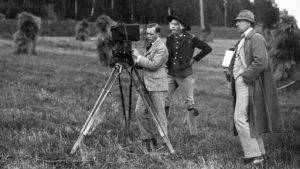
The original studio in Kristianstad (Filmmuseet) is intact and is now a museum where you can watch old films on video. Photo: Regionmuseet, Kristianstad
Kristianstad is the birthplace of the Swedish film industry, which started around 1910. The original studio (Filmmuseet) is intact and is now a museum where you can watch old films on video.
Nearby, Kristianstad Vattenrike (Water Kingdom) is a rich wetland on the Helge River, with a diversity of birds, wildlife and plants.
Along the Swedish South Coast
Blekinge is a tiny province with sandy beaches and Sweden’s most southerly archipelago. It is excellent for sea fishing. You can enjoy peaceful angling in some of the lakes, or good sport for salmon in the Mörrum River. Canoeing is popular.
Driving to Blekinge from Skåne, you first reach Sölvesborg, and the ruins of 13th-century Sölvesborg Castle.
Mörrum, 30 km (19 miles) north of Sölvesborg, is noted for its salmon fishing: at Mörrums Kronlaxfiske you can see salmon and trout at different stages of their development; fishing fans can cast a line here too.
The biggest town in Blekinge is Karlskrona, a naval center built in the 17th century, with wide streets and impressive buildings. In the Björkholmen district you’ll find quaint 18th century cottages built by ships’ carpenters.
The nearby village of Kristianopel is renowned for its smoked herring.
Feature image (on top): From Kristianopel. Copyright: Svenskekartan.
Along the Swedish South Coast, compiled and written by Tor Kjolberg
Director Gunnar B. Kvaran at Astrup Fearnley Museum of Modern Art in Oslo has since 2005 explored the scenes in different countries and on different continents. Previous exhibitions have presented contemporary art from USA, Brazil, India, China and Europe, and now it is Africa’s turn in the spotlight. The exhibition Alpha Crucis represents the final instalment of a series of such exhibitions.
The exhibition Alpha Crucis aims to highlight the originality and diversity of African artists who live and work in sub-Saharan Africa. The museum has invited André Magnin as guest curator. He has a long-standing relationship with Africa, and possesses a deep level of insight, knowledge and experience regarding various local art scenes on the African continent.
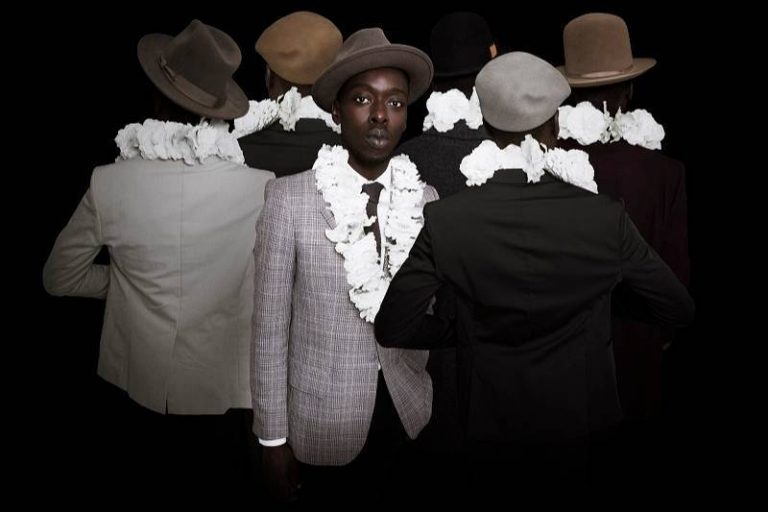
The exhibition Alpha Crucis aims to highlight the originality and diversity of African artists who live and work in sub-Saharan Africa
Magnin was one of the main curators behind the legendary Magiciens de la Terre at Centre Pompidou and Grande Halle de la Villette in Paris in 1989, which was the first exhibition to simultaneously display art works by contemporary artists from all of the world’s continents in one place.
The brightest star
Alpha Crucis is the brightest star in the constellation of the Southern Cross, located in the Milky Way. It is one of the most visible in the night sky and indicates the direction of the South. As such, it is often used by navigators, but the star is only visible from the southern hemisphere. For that reason, it was not mentioned in European antique astronomy.
The museum has invited André Magnin as guest curator
The exhibition at Astrup Fearnley Museet gathers seventeen artists from seven African countries. The artists originate from numerous countries, belong to different generations and have diverse practices. The exhibition thus shows an impressive diversity in terms of materials, techniques and narratives.
Contemporary African Art in Oslo
Stars in the sky are not connected to each other; they are associated in constellations and given names by astronomers. Here, the curator acts like an astronomer, ordering the cosmos to give coherence that offers a certain reading of the world.
The exhibition at Astrup Fearnley Museet gathers seventeen artists from seven African countries
The title ‘Alpha Crucis’ makes a statement advocating a reorientation of the polarized art world towards the south, in order to fight the ignorance that has endured too long and to shed new light on contemporary African art.
The exhibition is open through 17 May.
Artists:
Seyni Awa Camara (1945, Senegal), Omar Victor Diop (1980, Senegal), John Goba (1944-2019, Sierra Leone), Kay Hassan (1956, South-Africa), Romuald Hazoumè (1962, Benin), Nicholas Hlobo (1975, South-Africa), Lebohang Kganye (1990, South-Africa), Houston Maludi (1978, DR Congo), Abu Bakarr Mansaray (1970, Sierra Leone), Senzeni Marasela (1977, South-Africa), JP Mika (1980, DR Congo), Fabrice Monteiro (1972, Benin/Senegal), Rigobert Nimi (1965, DR Congo), Wura-Natasha Ogunji (1970, Nigeria), Chéri Samba (1956, DR Congo), Amadou Sanogo (1977, Mali), Billie Zangewa (1973, South-Africa).
Curator: André Magnin (b. 1952 in Vesoul, France) is an independent curator and researcher and started working on non-western Contemporary Art in 1989 with the historic exhibition Magiciens de la Terre at the Centre Pompidou and at the Grande Halle de la Villette in Paris, an exhibition for which he was co-curator. From 1989 until 2009, Magnin ran the Pigozzi Collection, Geneva, which focused on sub-Saharan African contemporary art. He later founded MAGNIN-A, which promotes contemporary African art within the international market.
Contemporary African Art in Oslo is based on a press release from the museum
Scandinavia is one of the most popular, but also pricey spots for tourists to visit in the world. Nevertheless, there is an interesting food (or, in this case, drink) culture that takes place in a part of Scandinavia – Norway.
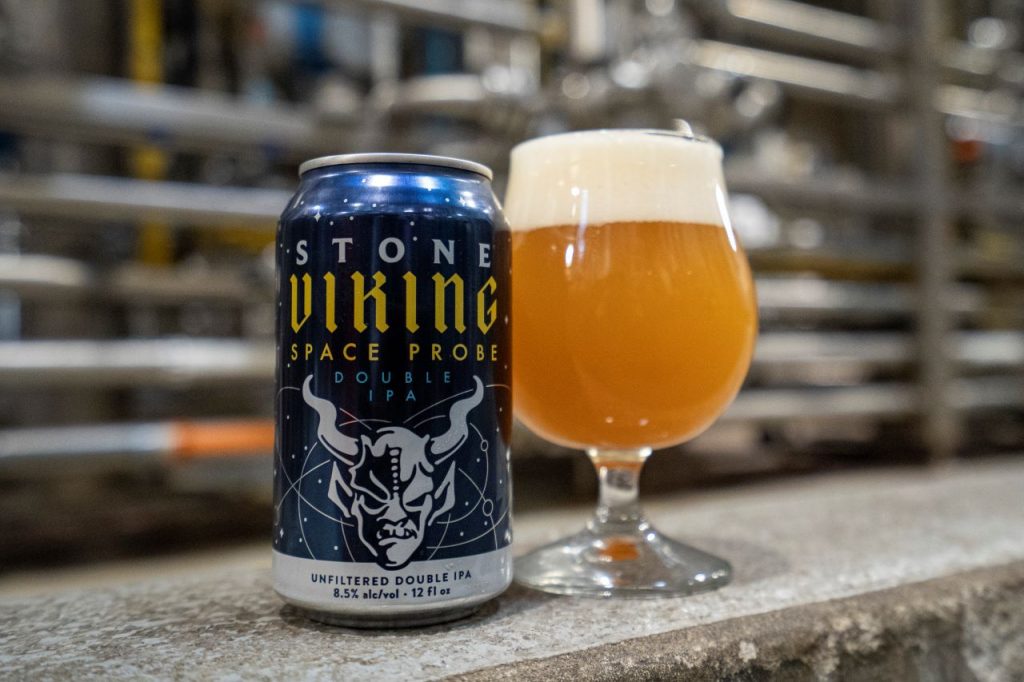
Norway is most popular for its beer brewing, a cultural way of life that has lasted for at least 1,000 years. But what makes Norwegian beer brewing unique? In order to understand this phenomenon, one must take a look back at the mythology, history, along with the careful ways that beer is handled and respected in Norway.
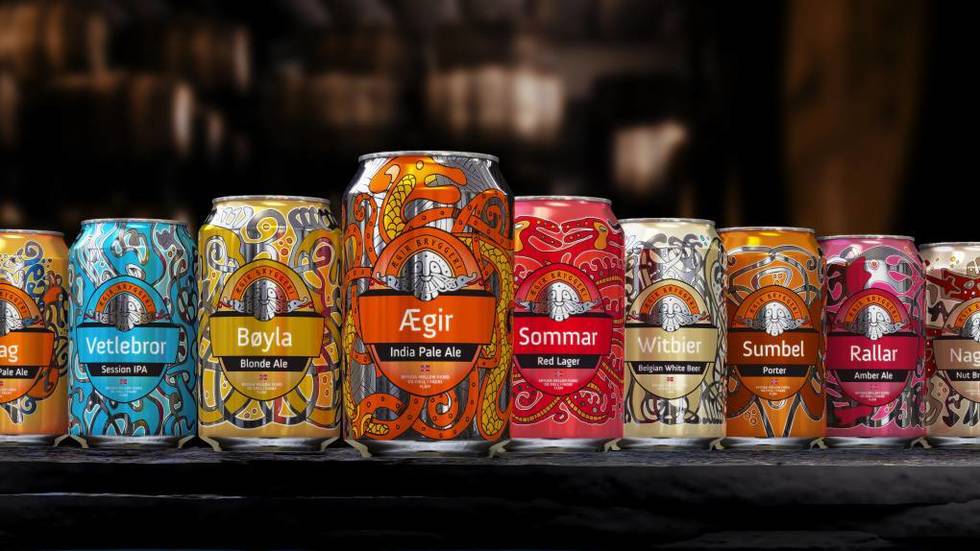
Ægir cans
Mythology Beer-drinking is no stranger to myth. According to Norse mythology, the supposed beer-god Ægir was known to host extravagant parties for the other gods. But the most energized part that happens in these parties was the alcohol. The beer-god was generous with his brew, serving the gods unlimited amounts of beer. Sounds like something from modern times, right?
An overly-generous benevolent host aside, how can the myth equate to part of history? And is the lore a symbol to today in Norway?
History Farms were built to have their own brewing sites during the late Middle Ages, especially in Denmark, the neighboring country of Norway. These designated brewing stations were known as “bryggehus,” or “brewing house”; and the production of beer took place inside these establishments.
Norway immediately took note of this phenomenon. By 1857, Norway was home to 353 breweries. In fact, beer brewing was so popular, that it became law. The Norwegian government mandated the brewing of beer; and the failure to do so would result in punishment.
Beer display in a Norwegian Kiwi outlet
“However, these laws were tested, once the growth of industrialization kicked off. Therefore, industrializing brew was the accepted norm; and home-brewing became illegal. Even advertising about alcohol in the 1970s was illegal,” says Julia Thomson, a writer at NextCoursework and Britstudent.
Despite beer-brewing being regulated, the craft of brewing didn’t completely die out. The Norwegian Brewery and Beverage Association has reported that the number of breweries to this day is around 80 – still less breweries than in the 1850s, but still a significant amount.
Drinking Culture Scandinavia is a costly vacation spot, Norway is no exception, especially with the cost of alcohol. A regular 400ml or 500ml glass of pilsner, from most Norwegian bars, ranges from 65 to 95 kr; but expect to pay more in places such as restaurants and airports. Also, ales and craft beers tend to be more expensive, ranging from 85 to 125kr.
The reason why alcohol prices are super high in Norway, is because the Norwegian government imposes taxes on alcohol, the highest in Europe. Any beer subject to tax is anything over 0.7% ABV, but this ultimately depends on the strength of the brew. Basically, the stronger the brew, the higher the tax.
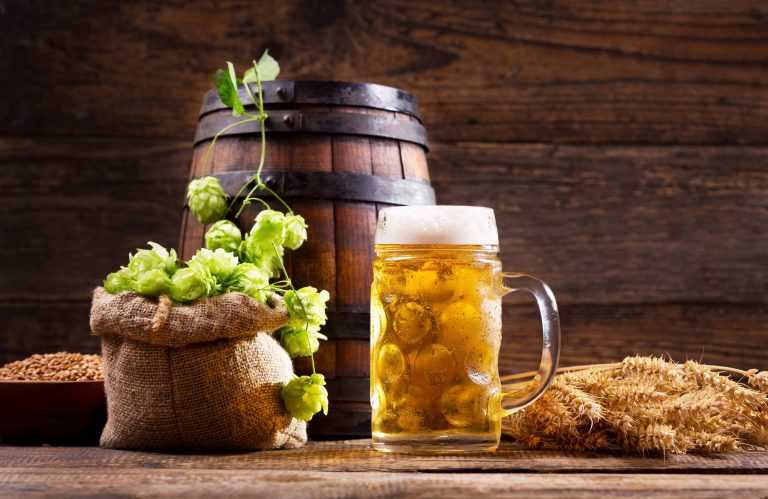
Norway has always been abundant with its beer brewing
In addition, not only will alcohol take a huge chunk out of your wallet, but it’s also imperative to show the shopping schedules for alcohol. In Norway, the cut-off for beer sales Monday through Friday is after 8pm; but the cut-off on Saturdays is after 6pm. Limited hours may be assessed on Christmas Eve, Pentecost Eve, and New Year’s Eve. However, buying beer is forbidden on Sundays, and any public holidays. Yes, the shopping schedule can be so grueling that don’t be surprised to see several stressed-out people waiting in line to buy their beer before the cut-off time. But for the lucky shopper, they can enjoy their drinking “sessions,” which are usually reserved for special occasions, such as birthdays and cabin trips.
“But the great thing about beer in Norway is that the NBBA has made it to where brewing festivals are allowed, for the sake of tourism. Now more than ever, it has become easy and fun to try out new beers from breweries that have been recognized by the NBBA. Beer connoisseurs everywhere are even encouraged to recommend the best places for people to enjoy a beer,” explains Valerie Hilton, a travel blogger at Write My X and 1 Day 2 Write.
Norwegian Beer – Then and Now: Conclusion Norway has always been abundant with its beer brewing, despite its strict limitations and regulations. To this day, Norway is still considered a popular tourist spot for beer-lovers and curious foodies. Reverting to the Norse myth of the beer god, that would be the best representation of the beer culture in Norway today – Happy drinking! (But also, drink responsibly.)
Michael Dehoyos
Norwegian Beer – Then and Now, written for Daily Scandinavian by Michael Dehoyos. Michael is a marketing expert who imparts his expertise as a content marketer and editor at Phdkingdom and Academicbrits while contributing writing to numerous sites and publications including Essay Help Service. Additionally, he offers marketing consultancy to companies in need of strategy.
Although Norway isn’t one of the larger countries of the world, there is so much fun, history, and culture packed into this Scandinavian country that it’s become a favorite for world travelers who want to broaden their horizons. In my opinion, here are the 5 must-see destinations in Norway.
When planning your trip to Norway, you’ll probably plan a stop in the capital city of Oslo, but there are so many must-see destinations in this gorgeous country that it would be a shame to stop your trip after visiting one city. And who knows? You may find your grandest adventure by going off the beaten path.
From Bergen. Photo: Nordic Choice Hotels
Bergen Settled by Vikings nearly 1,000 years ago, Bergen is one of the most historical places to visit in Norway. It’s a popular cruise ship port, so when you’re researching itineraries for Mediterranean cruises, you may stumble upon lots of references to Bergen.
In Bergen, you’ll find some of Norway’s finest dining and legendary Norwegian pizza. You’ll discover one of the most modern art museums (the KODE) in Scandanavia, and have the chance to explore a medieval fortress. Bergen offers a delightful juxtaposition of ancient and modern, and there’s something for everyone.
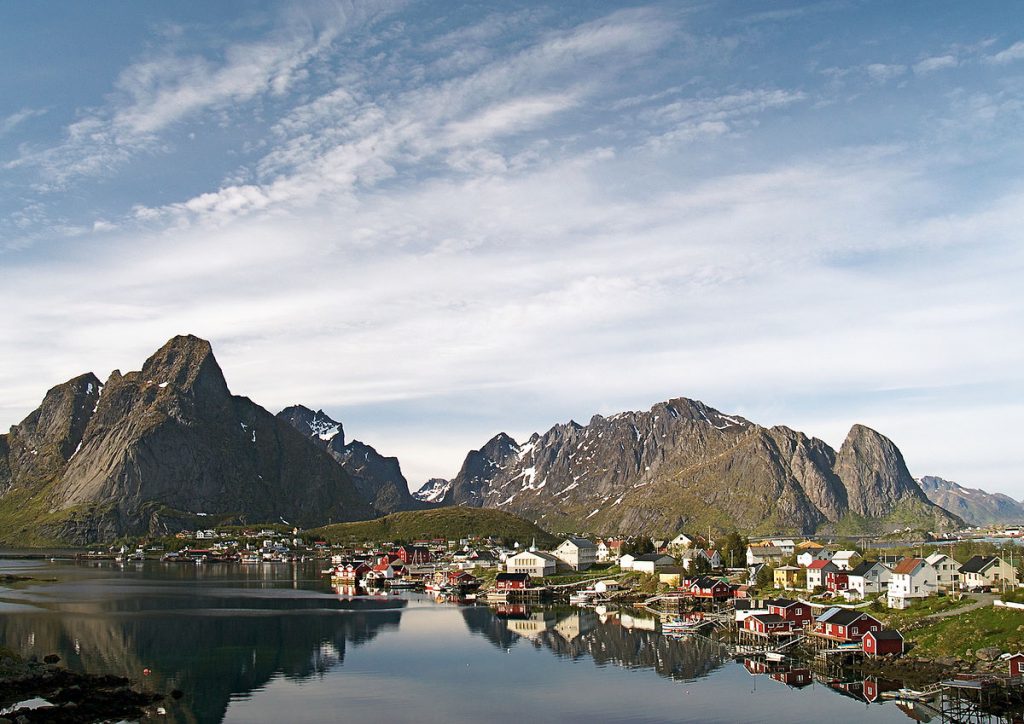
From Reine, Lofoten. Photo: Wikipedia
Reine The picturesque town of Reine is nestled on the island of Moskenesøya and is part of the beautiful Lofoten Islands and archipelago. With a population of fewer than 400 people, Reine has earned a reputation for being a great place to travel alone. You’ll have all the solitude you crave when you stay in one of the converted fisherman’s cabins.
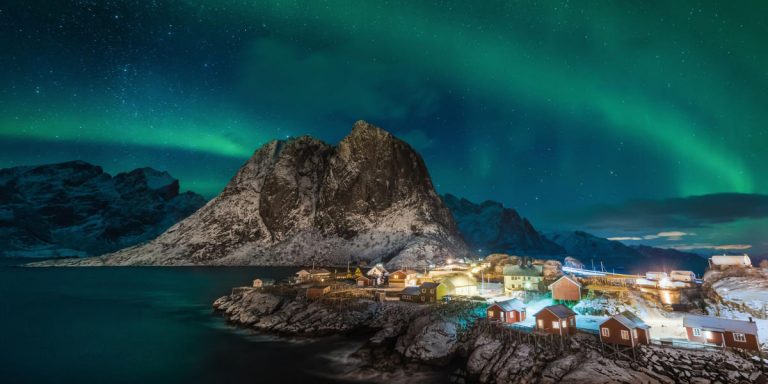
If you want to experience something almost otherworldly, head down to Bunes Beach with a blanket. When you lie down and gaze at the dancing Northern Lights, you’ll have an experience you’ll remember for your entire life. And what a story you’ll have to tell!
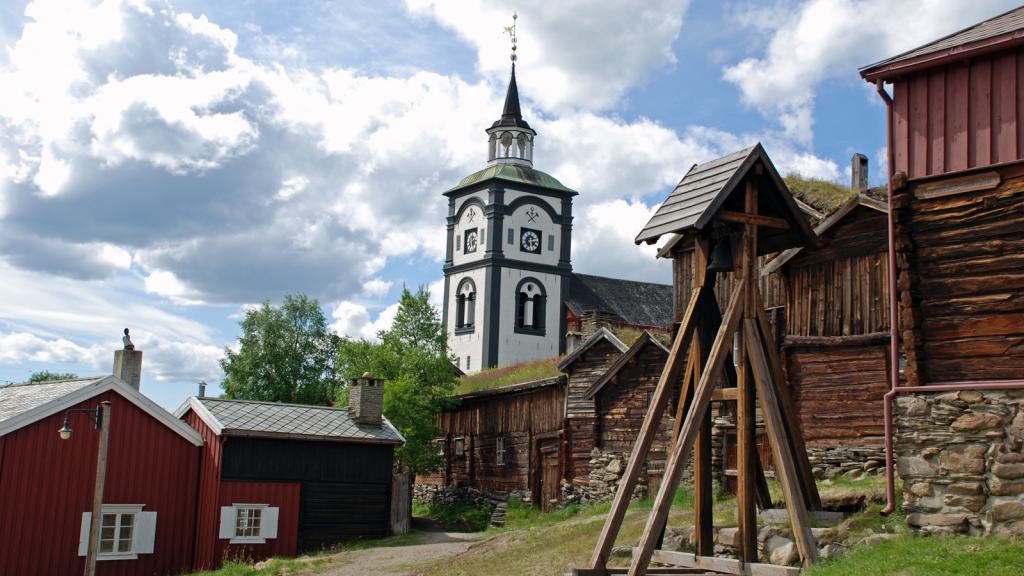
From Røros. Photo: Oppleve Trøndelag
Røros If vintage charm is what you’re looking for, then Røros is a place you don’t want to miss. As one of Europe’s oldest towns of wooden buildings, there is charm galore if you love seeing ancient architecture and homes. In 1980, Røros was added to the UNESCO World Heritage List and gives a glimpse into what a Norwegian mining town may have looked like in the 1600s.
Since it is a living museum, the town center is highly protected. When you explore the narrow streets, buildings, and old courtyards, you’ll be delighted with the unique independent shops and workshops. Popular things to buy include food, clothing, and ceramics.
From Trondheim. Photo: Visit Norway
Trondheim Although it’s the third-largest city in Norway, Trondheim has a cozy small-town feel. Part of what gives Trondheim its coziness is the plethora of colorful wooden cottages on stilts. To get an eyeful of color, take a drive or boat ride along the Nidelva River. You’ll see all of the colors your heart desires.
One of the top attractions in Trondheim is Nidaros Cathedral, an 11th-century gothic cathedral where King Olav II is buried. Trondheim is chock-full of museums and art galleries, so you can feed your craving for culture.
Want to see more wooden buildings? Be sure to check out Bakklandet, a small neighborhood of colorful wooden warehouses, where 17th-century artisans and merchants lived and worked.
From Flåm. Photo: Kviknes Hotel
Flåm Norway is a thoroughly modern country that offers old-world charm with modern conveniences and attractions. However, hidden within all of Norway’s modern cities are villages that seem to exist outside of time. Flåm is one such village.
Located at the innermost bank of the Aurlandsfjord, Flåm is surrounded by thundering waterfalls, steep mountains, and narrow valleys. Even though it seems off the beaten path, Flåm is surprisingly accessible via boat, bus, train, or car, and Flåm’s harbor is a popular stop for cruise ships that glide in the Sognefjord.
Most people who visit Flåm take a cruise through Nærøyfjord for once-in-a-lifetime sightseeing.
Equally popular is the breathtaking scenic Flåm Railway train journey.
So Much Norway, So Little Time
The minute you set your sails (or wings) home after your vacation in Norway, you’ll probably be planning your next trip back. There’s so much to see and do in Norway, and so many exciting contrasts. It’s easy to see why it’s become one of the world’s premier vacation destinations.
Until next time!
Feature image (on top): Northern lights at Lofoten islands, northern Norway.
Photo: Stian Klo/Visit Norway
Craig Middleton
5 Must See Destinations in Norway is written for Daily Scandinavian by Craig Middleton. Craig is a retired business consultant who has worked in health, real estate, and HR businesses for most of his professional career. He graduated at UC Berkeley with a bachelor’s degree in Marketing and currently spends his days blogging and enjoying his retirement traveling Scandinavia.
The Finnmark 40 Years Anniversary Race invites competitors from all over Europe. The 2020 race keeps the tradition, which means the longest dog sled race in Europe takes place in Norway in week 10, starting on Thursday 5 March. The Norwegian Prime Minister Erna Solberg will officially open the race this year.
Alaska has its manhood test Iditarod. Norway has the longest dog-sled race in Europe, the Finnmark Race, challenging dogs and mushers to explore the limits of their capabilities to perform.
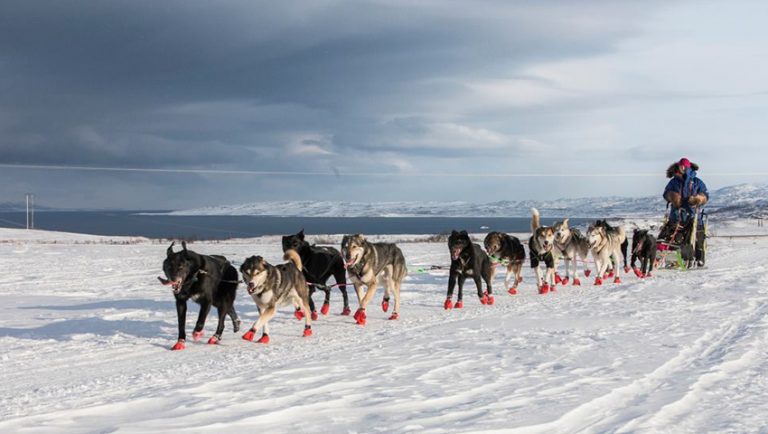
challenging dogs and mushers to explore the limits of their capabilities to perform at the Finnmark Race. Photo: Finnmarksløpet
The Finnmark Race is a big event all over the Finnmark region. Alta and Kirkenes are the venues for the biggest events. The start in Alta is probably the place to be, while Kirkenes is the best place to see a checkpoint and all the logistics around the race.
745 miles across snowy Finnmark
1,200 kilometers (745 miles) with 14 or 8 dogs per sled over 5-6 days will cross snowy Finnmark: 160 teams and more than 1500 dogs will take part in Finnmark Race, a great test of strength and a great winter festival on the roof of Europe. The dogs as well as mushers must be top-trained, but also the dogs need trust and dedication to the mushers to perform.
Ole H. I. Eira and his dogs.
The Finnmark Race takes place every year in March and starts in Alta, crosses Finnmark to Kirkenes and ends back in Alta. It is not only Europe’s longest, but also the world’s northernmost sled dog race.
Without stop from start to finish
There are no stages in the Finnmark Race – it goes without stopping from start to finish. While there are of course obligatory rest breaks, they take place when the teams reach designated checkpoints. The musher must not only work while racing, but also when the checkpoints are reached. He or she must prioritize the dogs before resting. The dogs need good care, plenty of attention, food and rest.
The winner takes around five days and 10 hours to complete the race in good weather conditions, while the last teams cross the finishing line after seven days.
The Alaska husky
The Alaska husky is a dog with very special characteristics; there is no other dog in the world capable of transporting people quickly over long distances. A 25 kg (55 lb) husky needs up to 10,000 calories a day, while a man needs around 2,500. The 500 km race is run with teams of eight dogs each, while the 1,000 km race uses teams of 14 dogs.
A total of 11 veterinarians carry out health checks on the dogs throughout the race, and retire any which should not run any further. If too few dogs are left, the team has to withdraw. There is rarely disagreement between the veterinarians and the mushers, for the mushers keep a close eye on how their four-legged friends are faring.
Geir Stian A. Larsen and his dogs. Photo: Finnmarksløpet
The Longest Dog Sled Race in Europe Takes Place in Norway
The Finnmark terrain is as though made for sled dog racing, with gentle slopes, flat plateaus and forest-clad valleys, which allows the dogs to get up plenty of speed.
The Longest Dog Sled Race in Europe Takes Place in Norway, compiled by Tor Kjolberg
Crown Prince Frederik of Denmark married Mary Donaldson on 14 May 2004 in Copenhagen Cathedral. The couple has four children, Prince Christian, Princess Isabella, Prince Vincent and Princess Josephine. We have collected a series of private photos to accompany a modern “fairytale” romance between a prince and a commoner. Se the private photos of the Danish royal couple.
Prince Frederik of Denmark was visiting Australia during the 2000 Summer Olympics there and met Donaldson at the Slip Inn Pub in Sydney. They conducted a long-distance relationship and Frederik made a number of discreet visits to Australia. On 15 November 2001 the Danish weekly magazine Billed-Bladet named her as Frederik’s girlfriend, and Mary Donaldson moved from Australia to Denmark in December same year.
The Royal couple in their private balcony at the National Theatre, Copenhagen. Photo: Pinterest
A Fairytale romance
The couple announced their engagement in 2003 after Frederik had presented her with an engagement ring featuring an emerald-cut diamond and two emerald-cut ruby baguettes, which are similar to the colors of Denmark’s flag and Donaldson started to study Danish as a foreign language in Copenhagen. The couple’s marriage in 2004 was extensively portrayed by Australian and European media as a modern “fairytale” romance between a prince and a commoner. “I am so happy that you swept me off my feet,” she said to her husband.
The couple lives in Frederik VII’s mansion in Amalienborg Palace, Copenhagen. Photo: PinterestFrom Frederik VIIIs-mansion in Amalienborg Palace. Photo: PinterestThe Crown Princess and her family currently reside at Frederik VIII’s Palace, one of the four palaces that make up the Amalienborg Palace complex. Photo: Pinterest
Donaldson wore a wedding gown designed by Danish designer Uffe Frank and had a small bridal party which included her two sisters and her friend Amber Petty, a radio announcer on commercial radio in Australia. The couple reportedly spent their honeymoon in Africa.
During a Council of State on 2 October 2019, the Queen’s request to appoint Mary a rigsforstander, a functioning regent when the monarch or the heir is out of the country, was approved by the government Photo: Keld Navntoft 2019/Kongehuset
Crown Princess Mary of Denmark
The Danish Folketing (parliament) passed a special law (Mary’s Law) giving Donaldson Danish citizenship upon her marriage, a standard procedure for new foreign members of the royal family.
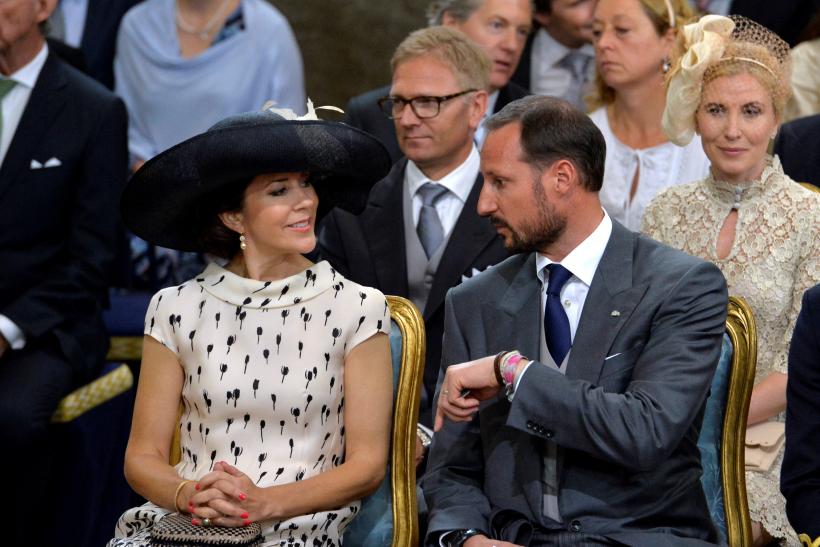
Crown-princess Mary of Denmark together with Crown-prince Haakon of Norway. Photo: Kongehuset
Following the wedding the couple embarked upon a summer working-tour of mainland Denmark aboard the royal yacht Dannebrog, then travelled to Greenland and later to the 2004 Athens Olympics.
Crown-princess Mary takes part in home defence exercise on Bornholm 2013. Photo: Kongehuset
Hans Christian Andersen Ambassador
In 2005, during the celebrations for the 200th anniversary of Hans Christian Andersen, the royal family was involved in related events throughout the year. Frederik and Mary marked the anniversary in London, New York and in Australia, where she was made Honorary Hans Christian Andersen Ambassador to Australia in the Utzon Room of the Sydney Opera House. In 2005 the royal family visited the Faroe Islands.
In September 2007, she formally established the Mary Foundation, with capital from public and private donations, to advance cultural diversity and encourage a sense of the right to belong and contribute to society for those who are socially isolated or excluded.
Woman of the Year
Mary was voted Woman of the Year 2008 by a Danish magazine, Alt for damerne, donating her cash reward to charity. Mary is an active patron of Denmark’s third-highest-earning export industry, the fashion industry, and is Patron of the Copenhagen Fashion Summit. She has been named one of the world’s most fashionable people in Vanity Fair’s annual International Best-Dressed List and has posed and given interviews for several international fashion magazines.
Since becoming Crown Princess of Denmark, H. H. Mary has made a number of international visits. In November 2009 Mary made a surprise visit to Danish soldiers in Helmand Province, Afghanistan.
World Pride Patron
In 2016, on the International Day Against Homophobia and Transphobia, the Crown Princess gave a speech on LGBT rights at a forum in Copenhagen hosted by the Danish government. She called for an end to discrimination, oppression, and violence against people because of their sexual orientation and gender identity. She thus became the first ever member of the royal family to attend the Danish Rainbow Awards (2018). She also attended the awards ceremony in 2019, where it was announced that Crown Princess Mary will serve as the patron of World Pride Copenhagen 2021, making her the first ever royal to serve as patron for a major LGBT event.
During a Council of State on 2 October 2019, the Queen’s request to appoint Mary a rigsforstander, a functioning regent when the monarch or the heir is out of the country, was approved by the government. After having sworn to respect the Danish constitution, she became the first person not born into the royal family to assume the position of rigsforstander since Queen Ingrid in 1972.
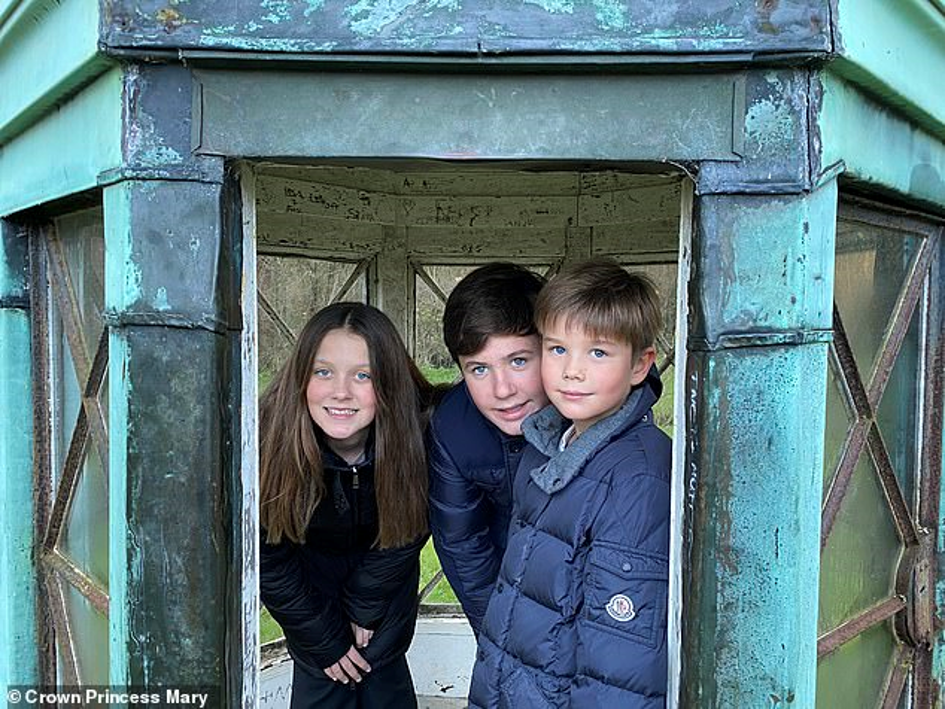
The adorable snaps were taken by the proud mother, 47, over the past few months, presumably in Denmark
Adorable kids – private photos of the royal Danish couple
Crown Princess Mary of Denmark recently shared four previously unseen photos of twins Prince Vincent and Princess Josephine to mark their ninth birthday. The adorable snaps were taken by the proud mother, 47, over the past few months, presumably in Denmark.
Crown Princess Mary of Denmark recently shared four previously unseen photos of twins Prince Vincent and Princess Josephine to mark their ninth birthday
The Crown Princess and her family currently reside at Frederik VIII’s Palace, one of the four palaces that make up the Amalienborg Palace complex. From May 2004, they have also resided at the Chancellery House, a building in the park at Fredensborg Palace, during the summer months.
Danish princess with horse
A Crown-Princess’ Life in Denmark
In December last year, in a candid interview with Australian Women’s Weekly, the Crown Princess revealed that moving to the other side of the world was difficult.
‘I did experience a feeling of loneliness – short-term – when I first moved to Denmark. Moving to Denmark was a huge change in my life – a new culture, new language, new friends, and another way of life. So, I see it as quite natural that at times I felt quite alone or a little bit like I was on the outside looking in,’ she told the magazine.
Private Photos of Danish Royal Couple, compiled by Tor Kjolberg