Every year in December, the Icehotel in Sweden’s Lappland open its door to visiting guests. This year, the hotel is welcoming guests into a very special season. It is 30 years ago, in 1989, it offered a revolutionary experience, allowing guests to stay in a structure made of ice and snow. Experience Ice Hotel Sweden’s 30th years anniversary.
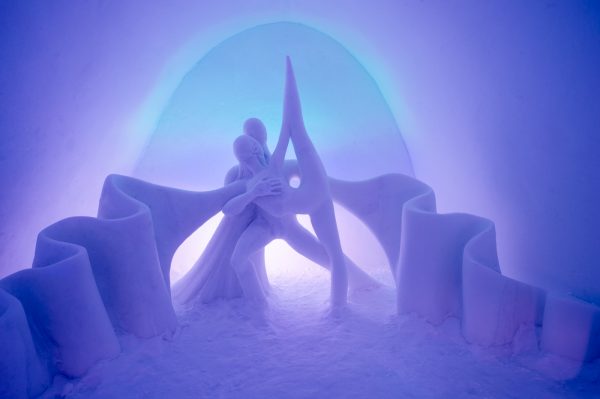
Artists, designers, architects and sculptors from all over the world have always been interested in submitting ideas and art to the hotel. This year is no exception. The jury has received 126 unique concepts from 34 countries in six different continents. From December on you can experience the selected few in the 15 art suites of ice and snow.
Luca Roncoroni, Creative Director at the Icehotel. hoto Asaf Kliger
100 miles north of the Arctic Circle
About 100 miles north of the Arctic Circle you find the Icehotel in the village of Jukkasijärvi. From mid-November when layers of snow will form a blanket over the village, artists will be working together to create an exhibition of snow, ice and light to enable the opening of the Icehotel 30.
Every spring, after the hotel has melted and returned to its origins of the Torne River, the process of planning the next season’s hotel is taking place. This year, Luca Roncoroni, Creative Director at the Icehotel, has been leading a total of 18 design teams building the 15 Art Suites as well as the Main Hall, the Ceremony Hall and the Icebar.
Torneland Icebar
The Icebar is titled Torneland and designed by Luc Voisin and Mathieu Brison, who also worked on a project with Icehotel in 2012. It plays on a carnival theme to celebrate the nearby Torne River, where 5,000 tons of ice are sourced annually to create the entire hotel.
Ice Hotel, Sweden – 30th Years Anniversary
“I am really looking forward to welcoming the artist teams to Jukkasjärvi this winter and see their visions turn in to unique experiences for our guests,” says Luca Roncoroni.
Artists, designers, architects and sculptors from all over the world have always been interested in submitting ideas and art to the hotel
The art suites
In the Art Suites, guests will have the option of checking into a frozen West End theatre production complete with ice-carved curtains and a stage; sleeping next to a submerged iceberg; spending the night in a subterranean ice room with giant ice ants; settling down in a frozen feline lair; or waking up surrounded by an ice-carved Kaleidoscope.
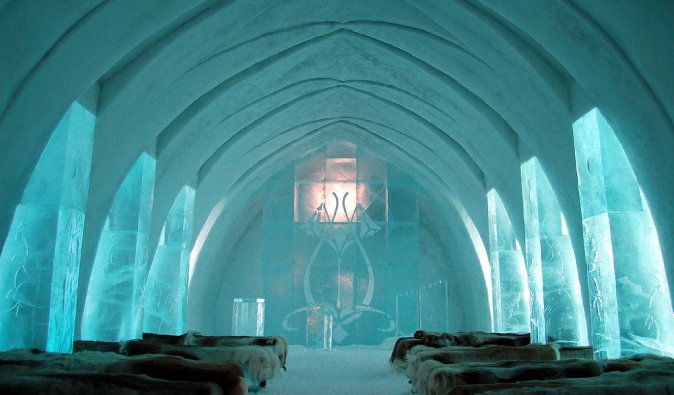
The Main Hall’s theme, “Brutalism,” will celebrate the construction of the hotel, the Ceremony Hall, “Ginkgo,” will highlight the Ginkgo tree, which is seen as a symbol of hope, strength and longevity.
Feature image (on top): Art suite Dancing Auroras, by Emilie Steele & Sebastian Dell’Uva. Photo: Asaf Klige
Ice Hotel, Sweden – 30th Years Anniversary, written by Tor Kjolberg
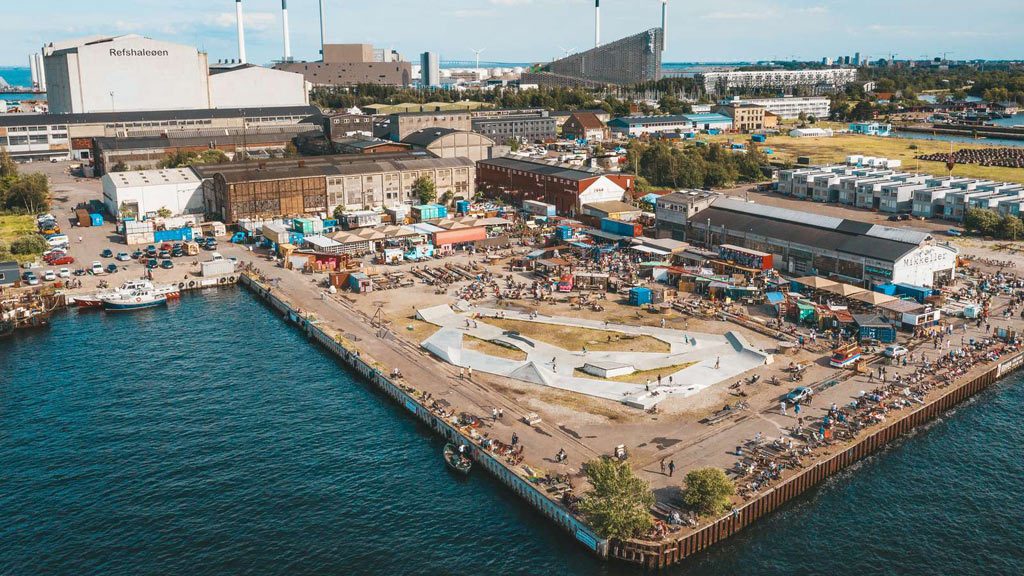
The former industrial area Reffen in Copenhagen is one of Scandinavia’s hippest food markets. And when you’ve met your stomach’s needs, the peninsula has much more to offer.
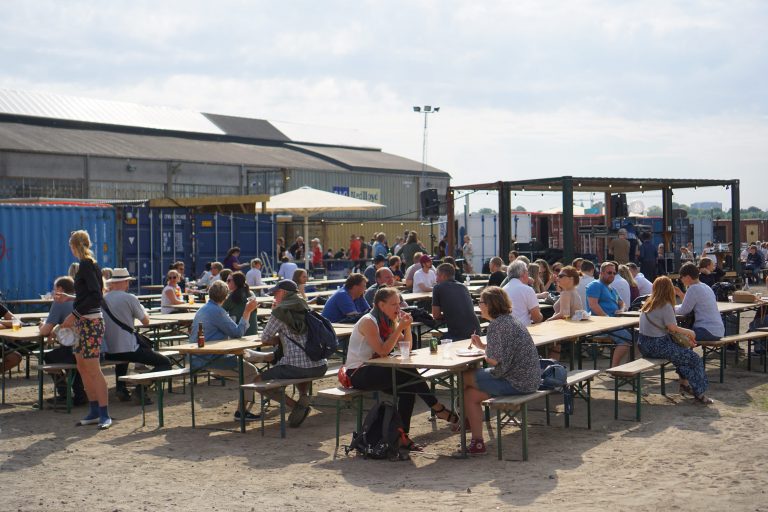
At the Reffen Peninsula in Copenhagen more than 50 chefs and creative artisans share their enthusiasm for great food and craftmanship on a 6,000 square meters’ playground. 18 nationalities are represented and new individual entrepreneurs are learning how to stand on their own feet in their own stalls for three years.
Reffen offers flea markets, concerts and workshops. Photo: Astrid Maria Rasmussen
The new street-food market opened its doors in May 2018 in a 10,000 square-meter area. In addition to more than 50 creative food stalls with flavors from many parts of the world, Reffen offers flea markets, concerts and workshops.
It all started, however, in 2013 when Jesper Møller launched Copenhagen Street Food at Papirøen (The Paper Island). The last year, before Papirøen closed in 2017, the street food market was visited by 16 million visitors.
Last July alone, more than 150,000 vistors found their way to Reffen. Photo: Martin Kaufmann
If you pass Kongens Nytorv and the urban neighborhood Gammelholm and pass the bridge Inderhavsbroen, you will experience a different Copenhagen. Behind the smoldering shipyard buildings, you’ll find Reffen Street Food. Several signs point to the street, but it is sufficient just to follow the scents.
Locals as well as visitors gather here to play bingo and quizzes, do workshops or listen to talks and workshops. But most important, during summer, thousands of people stop by for a quick bite and Reffen’s popularity is growing. Last July alone, more than 150,000 vistors found their way.
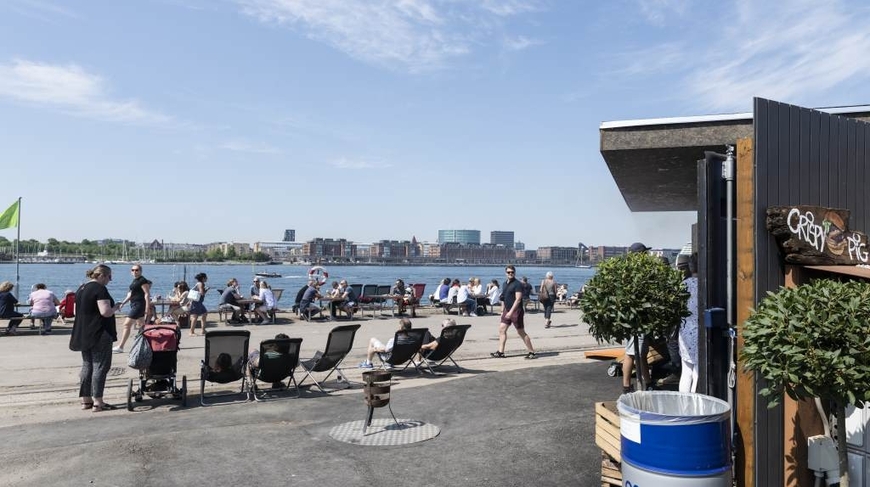
That old industrial areas with a reasonable square meter price are taken over and hipsterfized is nothing new. But on the Ref Peninsula, it is a little different, as if you had just discovered a secret world just fifteen minutes from the city center.
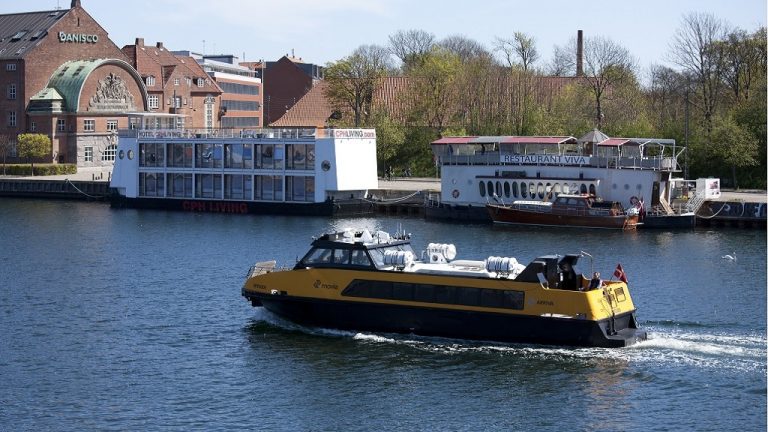
Copenhagen is one of Europe’s truly great cities. With its perfect blend of old and new, it is a city that demands to be explored. The Copenhagen Waterbus is the perfect choice to explore the capital of Denmark.
While most cities are only slowly waking up to the fact that their waterways are a vital resource for life, as well as for trade, Copenhagen has always known it. Most of its great sights are visible and accessible from the water and there is no better way to travel around it than by waterbus.
The Copenhagen Harbour Bus. Photo: Astrid Maria Rasmussen
This hop on, hop off service calls all of Copenhagen’s major tourist attractions, as well as providing an important transport link for those who like to travel at a more relaxed pace.
Several operators ply the route
Several operators ply the route and offer up to 16 drop-off points from May to September. So, with ticket and timetable in hand, it is time to climb aboard and investigate this wonderful compact city. With forward planning, it’s possible to stroll along the world famous Tivoli Gardens before having a lunch in Nyhavn, the old sailors’ quarter which brims with fabulous cafés.
The Copenhagen waterbuses map
The afternoon can then be spent lapping up the central delights of the Frihedsmuseet, a museum dedicated to those who resisted the Nazis in World War II and the Amalienborg Palace or the imposing historical monument Christianborg Palace before visiting the artist’s district of Christiania. This can all be rounded off with a visit to the city’s renowned Opera House.
The Copenhagen Waterbus The choice is really yours on this most flexible of tours. You can buy one or two-day passes. It is an excellent way to get to know your way around Copenhagen and for those who already know the city well, it affords a new perspective on the most magnificent of urban landscapes.
While most cities are only slowly waking up to the fact that their waterways are a vital resource for life, as well as for trade, Copenhagen has always known it.
It is not possible to book a seat on these journeys and the boats can get full, especially in the peak seasons of July and August. If you find you are not able to board a particular vessel, Copenhagen’s compactness means it is possible to walk to your next destination.
During the cold war in Europe there was no possibility for Eastern European Academics to interact or communicate with their colleagues in Western Europe. Therefore, the Rector of the University of Zagreb, Ivan Supek, had a dream of establishing a university “free of government control”. In a meeting of university leaders in Montreal in 1970, he launched his idea which was immediately embraced, and the small Peace University in Croatia was founded.
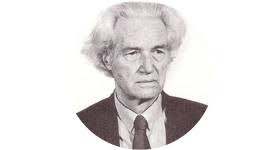
Ivan Supek had heard about the Norwegian sociologist, mathematician and principal founder of the discipline Peace and conflict studies, Johan Vincent Galtung (b. 1939), and when he was about to establish a “group of founding fathers and mothers” one of his colleagues suggested Galtung as the first director. Galtung was honored to be offered the position as it seemed compatible with his many duties. That was a successful decision.
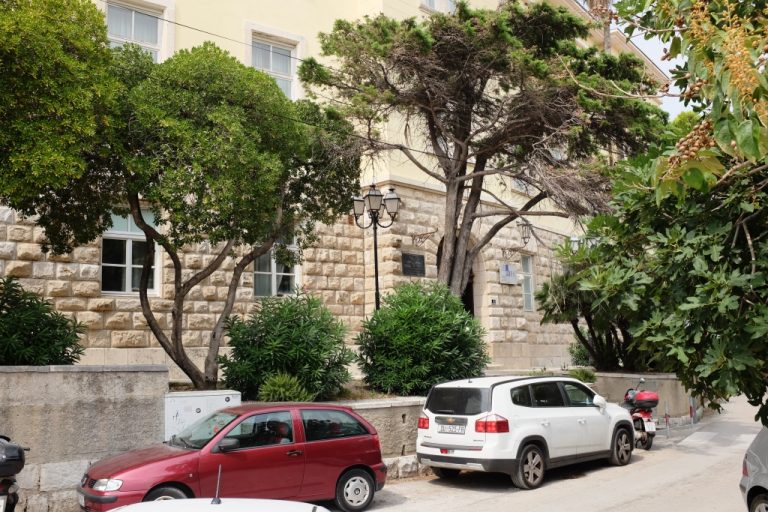
The City of Dubrovnik offered the building of its former Teachers College to the IUC (International University Center) which was founded in 1971.
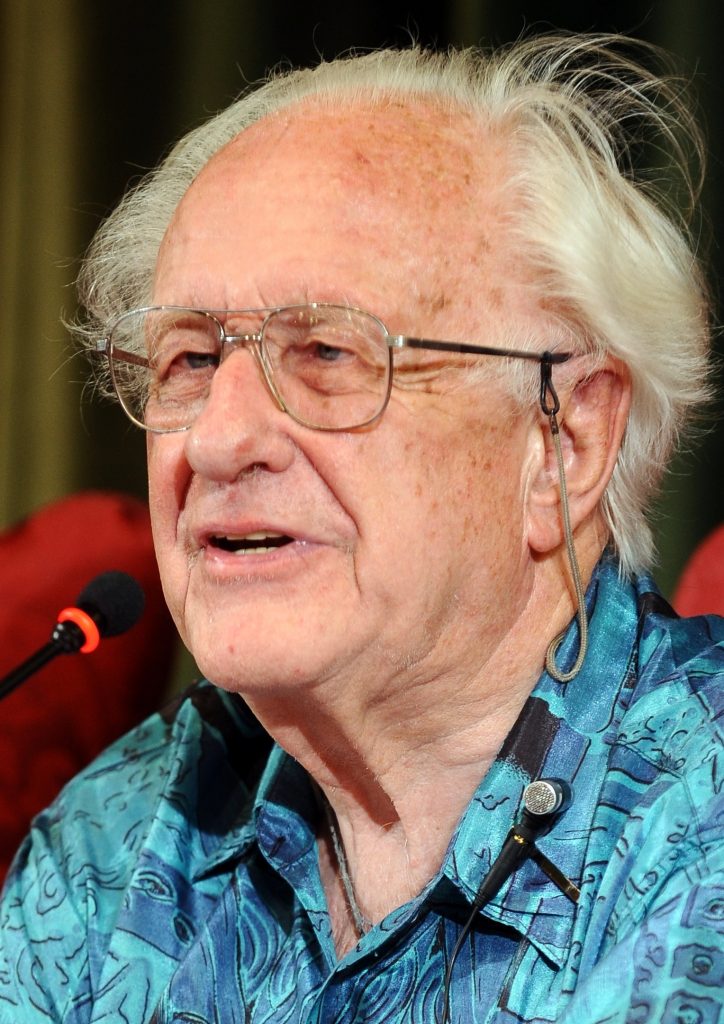
The Norwegian sociologist, mathematician and principal founder of the discipline Peace and conflict studies, Johan Vincent Galtung (b. 1939) was the first director of IUC. Photo: Wikipedia
The principle of international openness
The principle of international openness demanded that the directors of the Center should be selected among the academic staff of universities outside Croatia so, Johan Galtung from Norway became IUC’s first director.
The University Charter of Dubrovnik
The venue for academic exchange expanded from a handful of member universities to more than 250 before the outbreak of the Balkan wars. However, due to EUs extensive study programs and other avenues for academic exchange in Europe in later years, the member universities have declined to approximately 170.
Nevertheless, today the IUC in Dubrovnik still has an important role in intellectual exchange in the new Southeast Europe.
Berta Dragičević, the former general-secretary of IUC has been involved in the center since its very beginning
The Life’s work of Berta Dragičević
We have spoken to Berta Dragičević, the former general-secretary of IUC. She has been involved in the center since its very beginning and served officially as general-secretary. However, she did in fact do the work of an executive director of the facility. Today she is an Honorary Member of IUC.
“It was a very important mission to launch the work of Johan Galtung’s field studies on Peace and Conflict,” she says and adds, “He and his connection to institutions around the world was essential.”
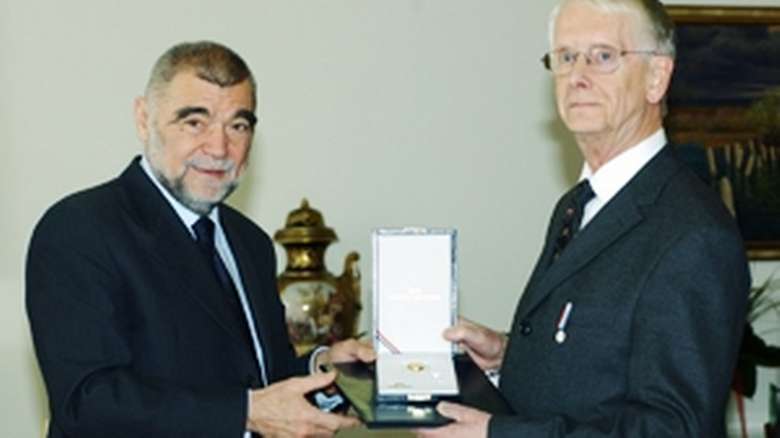
Professor Ørjar Øyen Right) was given the Order of the Croatian Star with Effigy of Ruđer Boković by the President of Croatia, Mr. Stipe Mesić. (Press photo)
Norwegian leaders
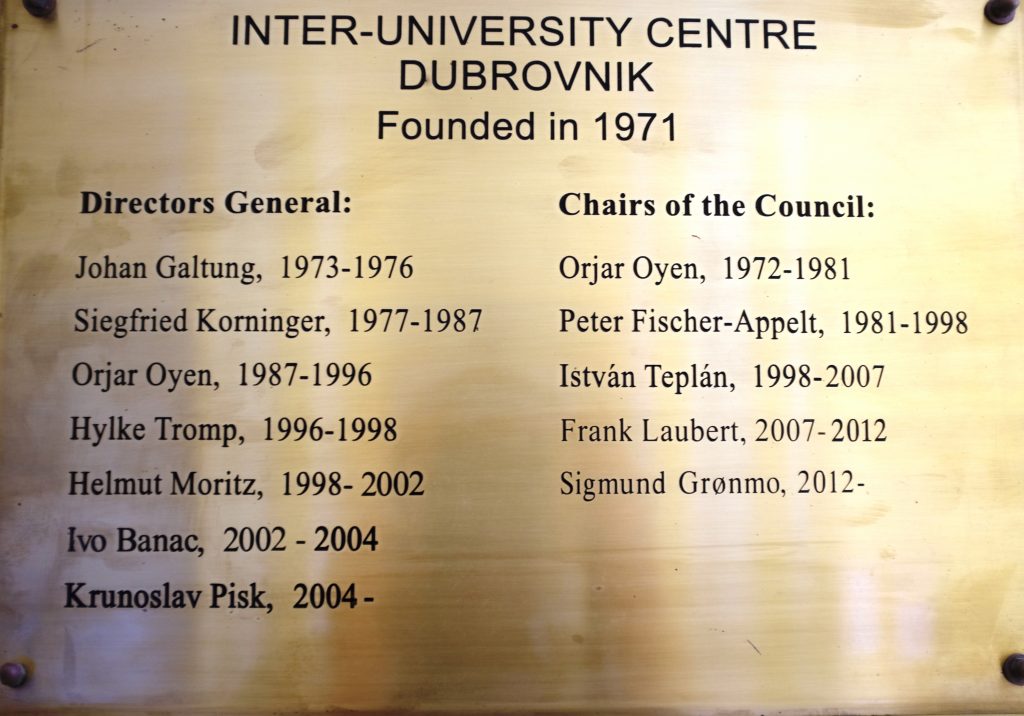
When Galtung left in 1976, the Bergen University in Norway served the center in many controversies reflecting ongoing debates among politicians at that time. Ørjar Øyen from the University of Bergen was chairman from 1972 to 1981 and director from 1987 to 1996. Later Lise Kjølsød from the University of Oslo was elected chairwoman, while Sigmund Grønmo, from the University of Bergen, was elected chairman in 2012. Today, Professor Gunn Birkelund from the University of Oslo is IUC’s chairwoman
During the Balkan wars in 1991 the IUC building was hit by a Yugoslavian bomb and burned down completely. Again, with support from the Bergen University, the building was restored and scholars from all over the world could again meet and exchange ideas across borders.
Relaxing in the courtyard at IUC between lectures
The main formula is that the University of Zagreb offers the administrative, technical and personal support while each individual university supports their own professors.
IUC is situated just outside the old town of Dubrovnik
Recent years at the UIC
In recent years, between 1500 and 2000 participants take part in 55 to 65 yearly IUC events. IUC is not a degree-giving institution. However, from the very beginning there were efforts to secure the recognition to students who fulfilled the course requirements. American universities started that by providing credits through the authority of the home universities. Due to the Bologna process changes of European educational systems, European course directors are now also encouraged to secure ECTS points to their students.
Top left: Professor Wolfgang Heuer. Top right: Professor Zoran Kurelić. Bottom: Dr. Cristina Sánchez (left) discussing a topic with Dr. Helgard Mahrdt
European Identity
Most of the groups at IUC have been participating in weekly studies at the center for many years. In 2006, Professor Wolfgang Heuer from the Free University Berlin, was invited by the French course director Gilbert Merlio (Sorbonne) to an international study group, “European Identity” and he has participated since then with one or two exceptions.
“I don’t think the title ‘European Identity’ is very well chosen,” he says. “Several participants of our group who joined later, are critical with this title, because the use of the concept is often used in an essentialist and not cultural way. There is a rightwing racist movement which calls itself the Identitarians. So, that is completely different of what we think.”
In the interdisciplinary spirit of IUC, he invited Dr. Helgard Mahrdt, a government scholar associated with the University of Oslo, to join the group in 2013. She says, “For me, being born in the former GDR, growing up in Western Germany, living in Oslo and having received Norwegian citizenship, the annual seminars provide an extraordinary and important space to exchange views about Europe. This, I believe, is especially relevant today when democracy is challenged – and not only in post-communist societies.”
Wolfgang Heuer explains that It is not easy to get postgraduate and doctoral students from other countries. Two students from Zagreb have always received scholarships. The last two years he has brought four doctoral- and post-doctoral students into the group, and sometimes also colleagues from other countries like Brazil and Japan.
The new 2019 IUC poster
Professor Zoran Kurelić from the University of Zagreb, who joined the group 10 years ago, says «At that time, the papers were all presented in German, except for one day in English. It was rather exhausting, since I don’t speak German. However, during the past years all communication has been in English.”
Highly emotional loaded courses According to Johan Galtung, the courses have a high temperature, the pedagogy is characterized by freshness and is highly emotionally loaded. They are very intensive in terms of activity and participants have been very quickly to point out that such courses lasting for more than a maximum of two weeks would be impossible.
Berta Dragičević tells us that the idea of the IUC was possible to realize with the help of different German foundations. In the mid-eighties the Soros Foundation provided 1,000 scholarships for Eastern European participants. In Dubrovnic they could meet colleagues from the west. It was also important for Croatian students to get in touch with academics from other parts of the world.
“This was the only university which intentionally brought people together from divided countries,” Dragičević says. “Low fees were important, and the fee for participants are still as low as 30 – 50 Euros per person for a week.”
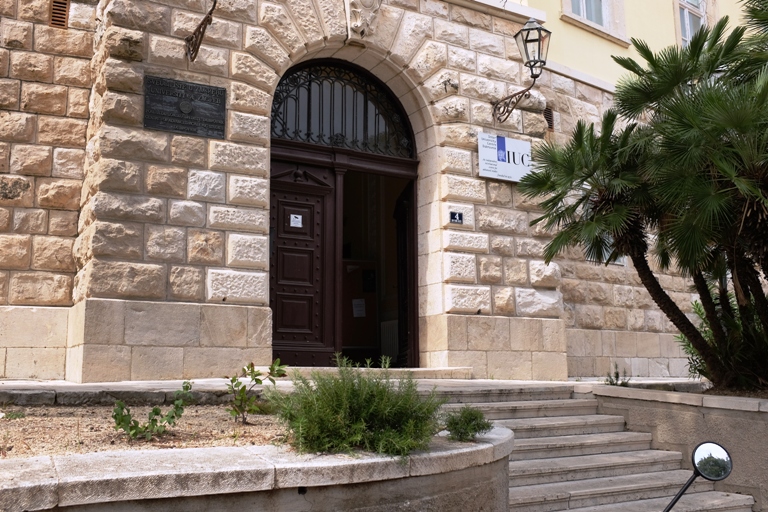
Main entrance, IUC Dubrovnic
Other Peace Universities The idea of the IUC in Dubrovnik has later been embraced by others. The MIT World Peace University in India, formerly known as the Maharashtra Academy of Engineering and Educational Research, was established in 1983.
The Central European University (CEU) was inspired by IUC and founded in 1991 by hedge fund manager, political activist and philanthropist George Soros in Budapest. He provided the university with an $800 million endowment. Due to the politics of Hungarian prime minister Viktor Orbán, and the university’s philosophy of promoting open societies, the university was closed down and has been reallocated in Vienna.
Distinguished lecturers
Many distinguished professors have participated in the IUC courses. Among them are the American philosopher Richard Jacob Bernstein who has written extensively about a broad array of issues and philosophical traditions. His work is best known for the way in which it examines the intersections between different philosophical schools and traditions, bringing together thinkers and philosophical insights that would otherwise remain separated by the analytic/continental divide in 20th century philosophy.
Directors and Chairs at IUC Dubrovnik
The Small Peace University in Croatia Co-Founded by Norwegian Scholars To Berta Dragičević, the Norwegian professor Ørjar Øyen from the University of Bergen, is a living legend. In a ceremony in Zagreb on 8 March 2005, he was given the Order of the Croatian Star with Effigy of Ruđer Boković by the President of Croatia, Mr. Stipe Mesić, for his merits in promoting the international position of Croatia and for his great contribution to the development of the Inter-University Centre in Dubrovnik.
“Croatia and Dubrovnik will always remember what you did in the period of war to help present Dubrovnik war events in the widest university and other circles in the world,” said President Mesic and stressed also the great contribution of Professor Øyen to the international promotion and reputation of the Inter-University Centre in Dubrovnik.
Founder of IUC, Rector of the University of Zagreb, Ivan Supek. Press photo
The future of IUC Ørjar Øyen once wrote, “We saw a divided Europe, and here in Dubrovnik, in a corner of Europe, we worked together to face our futures and to carve out a place that more or less intendedly came to serve the diffusion of knowledge and understanding across and beyond frontiers. One division line, the Iron Curtain, disappeared. Then the Balkan wars caused great loss and destruction and brought about dramatic upheavals in the geopolitical environment.”
According to the IUC website, “the world around us keeps changing and the IUC has to adapt to new conditions. The former breathing-hole function between East and West is not so important any more, but we feel that the IUC has much to do in providing a venue for intellectual exchange in the environment of the new Southeast Europe, while issues of the globalization of university life – within the world community – presents many new challenges for an organization such as the IUC”.
All photos by Tor Kjolberg unless stated otherwise
The Small Peace University in Croatia Co-Founded by Norwegian Scholars, written by Tor Kjolberg
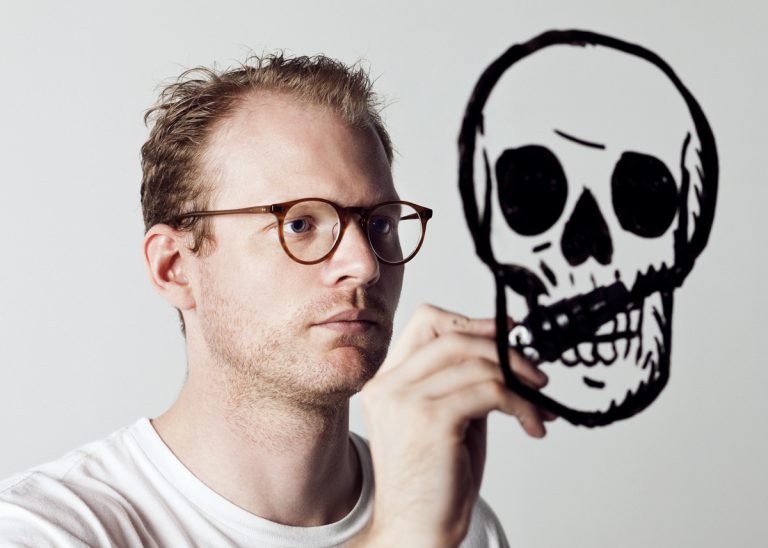
The talented Norwegian illustrator Kristian Hammerstad (39) has since his debut in 2012 emerged as an international illustrator and his drawings have been published in reputable media such as the New Yorker, New York Times, Las Vegas Weekly and Wired. The Norwegian horror & sci-fi illustrator lives and works in Oslo.
Hammerstad has studied at the Central Saint Martine College, London and has developed a pop-gore comic style that makes his work unique. His somewhat bizarre drawings often reveal skeletons, androids and kind of lizard-creatures in weird settings.
Hammerstad has studied at the Central Saint Martine College, London and has developed a pop-gore comic style that makes his work unique
Norwegian Horror- & Sci-Fi Illustrator Kristian Hammerstad’s strokes as well as his thematic are reminiscent of American Charles Burns, who in comics such as “Black Hole” and “Last Look” also blends genre, clichés and 1950s aesthetics with underground and modern themes.
Hammerstad says that his drawing process is very simple
Started in music animations
His ‘real’ work started in animation making music videos for Lex Records in London working with friends at college. Since then, we have seen his work described as riffing on upbeat series such as Archie and the innumerable romance comics of the period. Personally, I believe his interest is more matched by his fascination with the 50s’ equally prevalent horror comics.
Beethoven, by Kristian Hammerstad
Hammerstad says that his drawing process is very simple. He just thinks a bit and then draws. He likes creating posters. First, he draws with pencil on paper, then ink the drawing with a brush, scan it, colors it, and then approves or rejects it.
Hammerstad’s drawings are always on spot giving a lot of room for admiration as well as inspiration
Important to stay curious
Horror, sci-fi and fantasy have always influenced Hammerstad. “I’m not really into parody or irony, it’s more about really liking something and having fun with it,’ he once said in an interview. He is inspired by films, books, music, art and, not surprisingly, comics. He admits that he is not very structured, so he never knows how much time he spends working on a project.
“It’s really important to me to stay curious and keep checking things out. If I didn’t have time for that I would be depressed!” he says.
Use your imagination
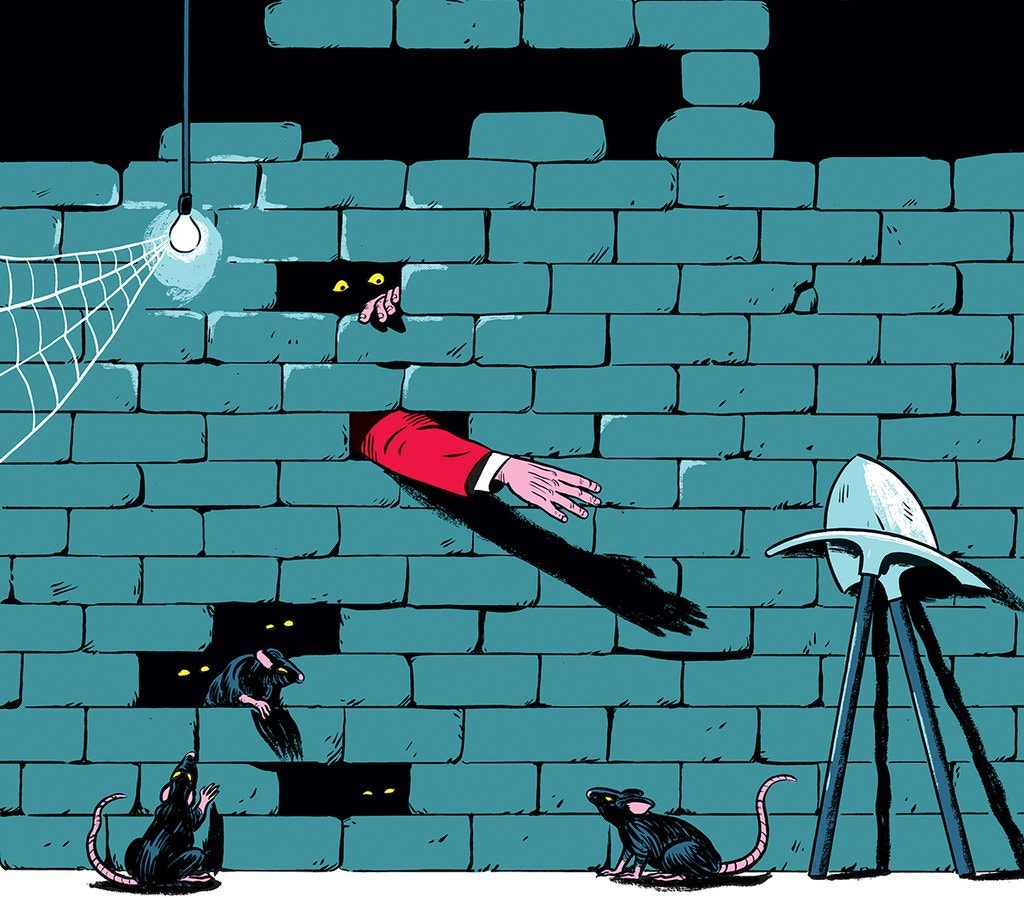
In January this year, the New York Times published the drawing below by Kristian Hammerstad, asking what story the image could tell. The encouraged its readers to use their imagination to write the opening of a short story or poem inspired by the illustration.
Hammerstad is inspired by films, books, music, art and, not surprisingly, comics
We don’t know how the readers reacted to the request, but Hammerstad’s drawings are always on spot giving a lot of room for admiration as well as inspiration.
Norwegian Horror- & Sci-Fi Illustrator, written by Tor Kjolberg
Across the Öresund bridge from Denmark, southern Sweden is home to the lively city of Malmö. Castles and Stone Age sites abound, while bathers and birdwatchers head for Öland. The castles and manor houses in Southern Sweden are also popular attractions.
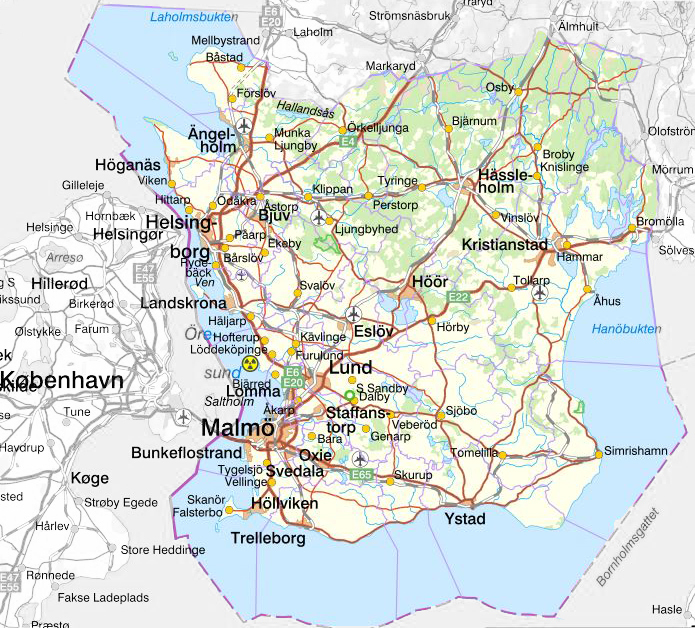
Skåne is Sweden’s most southerly province, so close to Denmark across the narrow sound that even the accent is faintly Danish. For centuries Swedes and Danes fought over this area, along with the provinces of Halland and Blekinge, until Sweden established its sovereignity in 1658.
Map of Skåne
The Öresund Bridge
Since 2000, however, the two countries have been joined by the Öresund road and rail bridge that links Malmö and Copenhagen. The project has prompted a renaissance for southern Swedes as a center for the Danish-Swedish Öresund region, with a total of 3 million people and one-fifth of the total combined GNP of Sweden and Denmark.
The Öresund Bridge, Photo: Wikipedia
Sweden’s food store Skåne is often called Sweden’s food store because of its rich farmland, mild climate and good fishing. Along the coast the landscape is undulating and lush, and especially spectacular in the southeast corner, Österleden. Inland, there are lakes and three large ridges with lovely walks.
Skåne is often called Sweden’s food store because of its rich farmland and mild climate
Skåne is renowned for its castles and manor houses. There are said to be 240 in the province, most of which are in private ownership, but it is usually possible to walk round parts of the house and/or gardens such as at Sofiero, 4 km (2 ½ miles) north of Helsingborg.
Sofiero palace and gardens
Built in 1857, Sofiero was used by King Gustav VI Adolf as his summer palace until his death in 1973. He was a keen botanist, as the gardens show – they were awarded the title of Europe’s most beautiful park in 2010.
Feature image (on top): Kronovalls Wine Castle in Tranås
The Castles and Manor Houses in Southern Sweden, written by Tor Kjolberg
Berns Salonger has been an institution in Stockholm since 1863. Many famous artists have performed here over the years, and concerts and other entertainment events are constantly being organized. On Sunday 6 October, Americana rock group, The Gary Douglas Band with Southside Johnny & The Asbury Jukes visit venerable Berns Salonger in Stockholm.
Berns Salonger are located in Berns Hotel, just north of Gamla Stan in the heart of the Swedish capital. Gary Douglas spends each and every day, both as a rebel rocker and as a Trial Lawyer Hall of Fame attorney fighting for workers’ rights and the victims of corporate greed. With The Gary Douglas Band’s bracing new LP, DEEP IN THE WATER, he has now crafted his most powerful statement thus far, a clarion call of passionate rock ‘n’ roll fueled by expertly crafted melodies, stadium-sized choruses, and Douglas’ uncompromising lyricism.
Concert at Berns Salonger, Stockholm. Photo: Heineken
Fighting for people who have been exploited
“Law is about fighting for people who have been exploited or taken advantage of,” Douglas says, “people who have been harmed and hurt by the powerful elites in our society. Music is just a different medium to get to the same result. These songs, they’re about the same people, their struggles and their lives. Both things, it’s about giving voice to the voiceless.”
Gary Douglas newest released album, Deep in the Water
Exploring social effects of politics and power
Songs like “Nothing Ever Goes As Planned” and the forceful title track find the singer-songwriter-bandleader opening up his rousing American sound to better explore the social and emotional effects of politics and power on living, breathing people.
Indeed, DEEP IN THE WATER’s remarkable title track reflects Douglas’ recent efforts on behalf of multiple plaintiffs battling DuPont for injuries sustained by the chemical giant’s illegal dumping of the dangerous chemical C8 into the Ohio River.
“Law is about fighting for people who have been exploited or taken advantage of,,” says Douglas
Gary Douglas Band Visits Venerable Berns Salonger in Stockholm The Gary Douglas Band will be playing with Southside Johnny & The Asbury Jukes on 10/6 at Berns Salonger, Stockholm. Don’t miss them perform live! Buy tickets here.
Gary Douglas Band Visits Venerable Berns Salonger in Stockholm, edited by Tor Kjolberg in cooperation with the Miles High Productions.
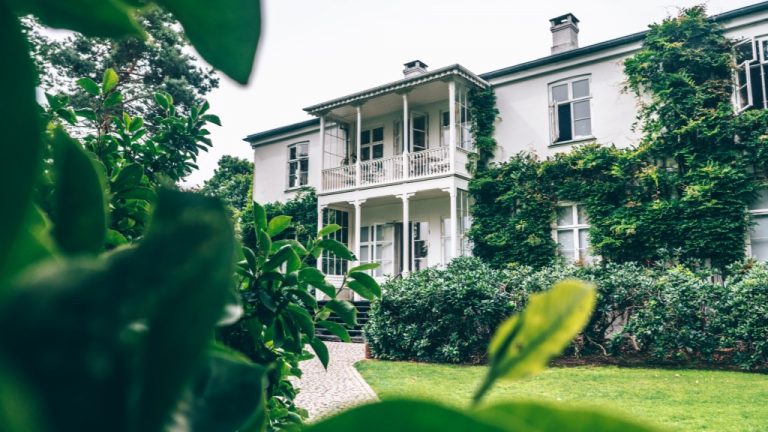
The Louisiana Museum of Modern Art in Humlebæk 55 km (22 mil) north of Copenhagen opened its doors in 1958. At that time, it’s founder, Knud W. Jensen, intended it to establish a home for modern Danish art. However, a few years later he changed course and Louisiana became an international museum of modern art. But why is there a Louisiana Museum of Modern Art in Denmark?
Today, Louisiana Museum of Modern Art has an extensive permanent collection of modern and contemporary art as well as special exhibitions and is the most visited art museum in Denmark. Claude Monet was the focus of a major exhibition in 1994. When you enter through the modest courtyard and old country villa, you immediately will be surprised what opens up.
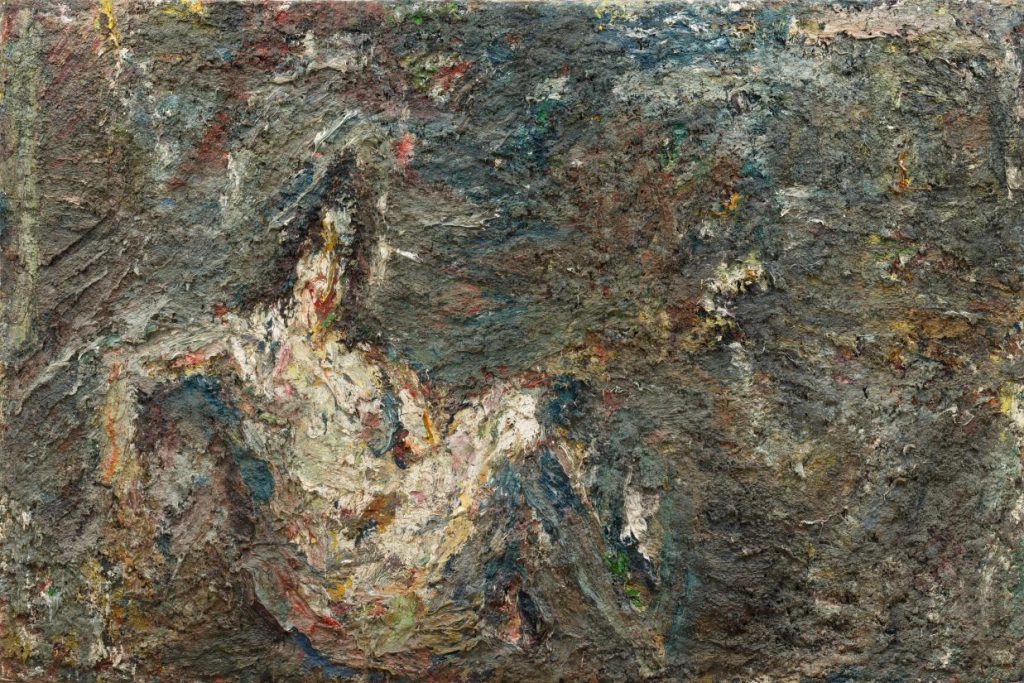
Grand nu assis, by Eugéne Leroy
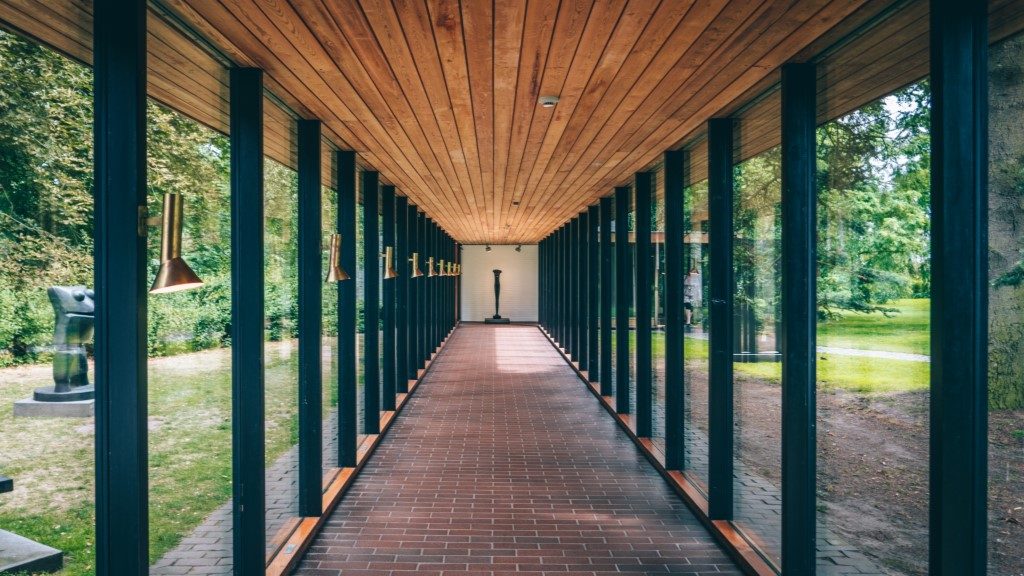
Louisiana’s close contact and collaboration with the international arts and cultural milieu has been one of the museum’s greatest strengths. The museum is also acknowledged as a milestone in modern Danish architecture, and is noted for its synthesis of art, architecture, and landscape.
Louisiana has achieved a standing as one of the world’s most respected exhibition venues, which is able to attract exhibitions and artists at a level that few other museums – either in Denmark or abroad – can match.
Louisiana Museum of Modern Art has an extensive permanent collection of modern and contemporary art as well as special exhibitions and is the most visited art museum in Denmark. Photo: Daniel Rasmussen
It can be said that Louisiana is inspired by German Bauhaus, the California Bay Area and Japanese architecture, but the intimacy, choice of materials and the light are unmistakably Danish.
Louisiana’s close contact and collaboration with the international arts and cultural milieu has been one of the museum’s greatest strengths. Photo: Poul Buchard
Louisiana’s exhibition practices have followed the tradition at MoMA, the Museum of Modern Art in New York, which in the first half of the twentieth century had become famous – and notorious – for expanding the range of modern art to include architecture, design, photography, film and other genres. On its own account, Louisiana has also supplemented modern art with cultural and ethnographic exhibitions and placed an importance on the versatility of the program by highlighting the interplay among the various artistic fields.
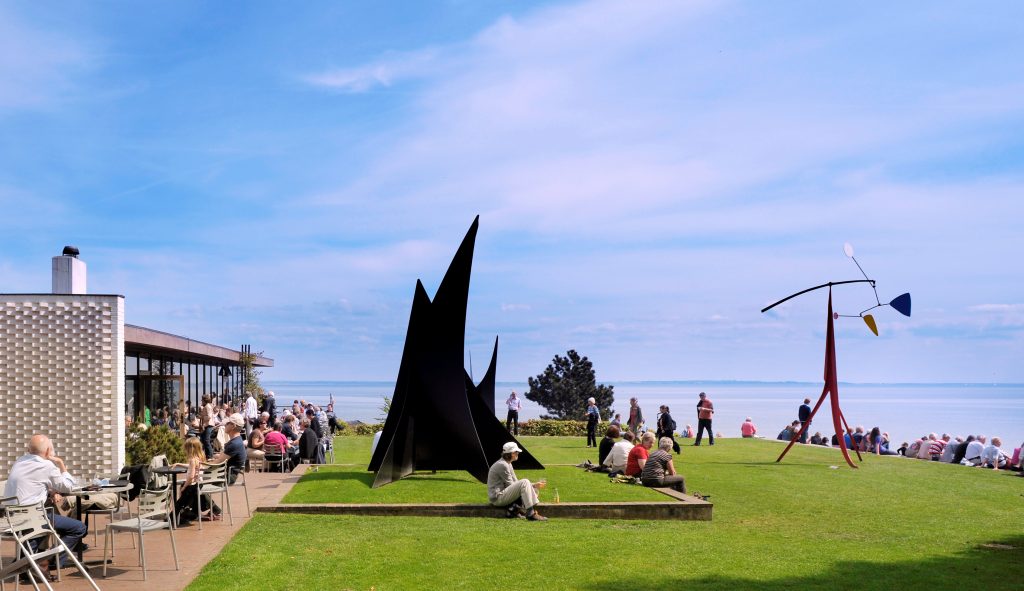
The museum has a wide range of modern art paintings, sculptures and videos dating from World War II to the present day, including works by artists such as Roy Lichtenstein, Andy Warhol, Anselm Kiefer, Alberto Giacometti, Pablo Picasso, Yves Klein, Robert Rauschenberg, David Hockney and Asger Jorn. The videos are often housed in room settings where the viewer is made to feel part of the scene being portrayed. Perched above the sea, there is a sculpture garden between the museum’s two wings with works by artists including Henry Moore, Alexander Calder, and Jean Arp.
The museum’s strong commitment to literature, music, culture-policy, international dialogue etc. creates a constant dialogue with society and a transdisciplinary mindset.
Of particular interest is the Giacometti Gallery containing the collection of Giacomettis. The proportions of the gallery and the view of the lake form an artistic totality which is majestic, serene and breathtaking. The Sculpture Park, with its Henry Moores and Alexander Calders and view of the sea, is a reason in itself to visit the museum.
Louisiana is indeed a living museum. The interaction between art, architecture and nature and the museum’s strong commitment to literature, music, culture-policy, international dialogue etc. creates a constant dialogue with society and a transdisciplinary mindset. Only a handful of museums in the world have achieved such a well-tempered interplay between different disciplines.
Almost from the very beginning, Kund W. Jensen divided the exhibitions into hot and cold varieties, a technique he called the “sauna principle”. The hot consisted of artists that the guests already knew – the great modern classics – while the cold gave room for names the guests had never heard of. The trick WAS to combine the two so that the popular exhibitions attract guests who on the same occasion also get to see something other than what they would have come for themselves.
Perched above the sea, there is a sculpture garden between the museum’s two wings with works by artists including Henry Moore, Alexander Calder, and Jean Arp.
The Concert Hall was built in 1976 in connection with the West Wing which had been built in 1966 and 1971.
The South Wing opened in 1982 to make room to present more and larger exhibitions and pieces. The opening attracted prominent visitors.
In 2008, when Louisiana, upon the occasion of its fiftieth anniversary, introduced evening hours, it was precisely in order to strengthen and further develop this tradition and way of thinking.
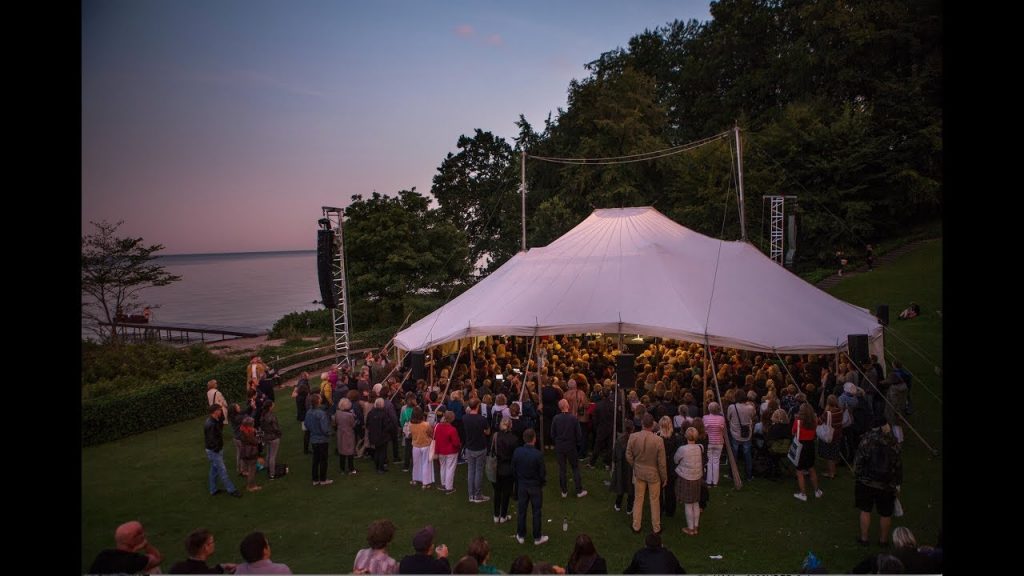
In 2010, the museum launches its annual Louisiana Literature festival. The festival features about forty writers from across the world. They perform on stages around the museum and in the sculpture park, and attract more than 10,000 people each year.
In late November 2012, Louisiana Museum of Modern Art launched Louisiana Channel, a web-TV channel contributing to the development of the museum as a cultural platform.
In 2013, the museum’s music department launched Louisiana Music, a webpage dedicated to musical videos produced by the museum in collaboration with world-famous musicians.
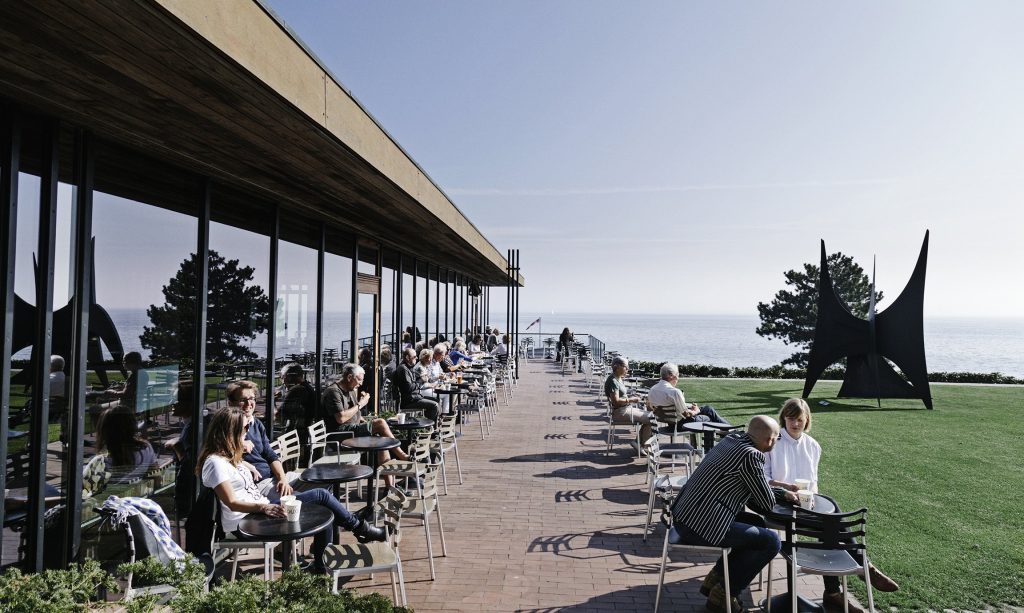
From the café at Lousiana Museum of Modern Art
In proportion to the size of Denmark, Louisina’s membership club is one of the biggest in the world and on the rise. The amount of really young members aged 18-27 is growing most rapidly and has quadrupled in recent years.
So, why the name Louisiana?
The name of the museum derives from the first owner of the property, Alexander Brun (1814-93), who named the villa after his three wives, all called Louise. Knud W. Jensen chose to “take over” the name of the country house.
From Tuesday to Friday the museum is open from 11am to 10pm (from 11am to 6pm on Saturday and Sundays, and closed on Mondays).
Only 30 square meters, the Norwegian architects Lund Hagem’s designed cabin situated in Sandefjord, Norway, the name Knapphullet (Buttonhole) is indeed appropriate. Knapphullet is a small annex replacing two small sheds on the property.
This small seaside holiday home nestles against a cliff, and features a stepped concrete roof folding down to the ground that doubles as a viewing platform. Knapphullet is a small annex to one of the Oslo studio’s founding architects’ summer residence.
Knapphullet is a small annex to one of the Oslo studio’s founding architects’ summer residence.
The small annex contains an open living space with a bathroom and a mezzanine bed that sleeps two people. Although the building occupies such a small footprint, the space expands vertically over four levels including a roof terrace.
The Buttonhole Cabin in Norway
The project began as an idea for how to utilize a naturally sheltered area surrounded by large rocks and dense vegetation. The idea developed to create a way to climb up from this shelter to see the panoramic view over the sea, which led to the characteristic shape of the roof: a stepped ramp leads up from the terrain to the roof.
Wedged between weather-beaten boulders, a typical example of a Norwegian coastal landscape, double its height, Cabin Knapphullet is protected from extreme weather conditions
Wedged between weather-beaten boulders, a typical example of a Norwegian coastal landscape, double its height, Cabin Knapphullet is protected from extreme weather conditions. Its walls are glazed, but it is sheltered beneath a chunky concrete roof.
A sheltered outdoor area The annex is accessed by a footpath that runs along the small meandering wooded area to the north of the site. The slit on the roof pours light into the building, combined with a hammock.
The project began as an idea for how to utilize a naturally sheltered area surrounded by large rocks and dense vegetation
A matching concrete patio fits around the rocky outcrops and provides a sheltered outdoor area with an open fire. A concrete bench extends along one side of the patio and through a glass wall into the small residence, which also has concrete floors and is warmed by a wood-burning stove.
Exploring the materials Exploring the detailed execution of each material expands this seemingly restricted material palette. The roof is executed in 270mm thick reinforced concrete with 20mm VIP insulation underneath. Courtyard and floors are white concrete. The concrete itself is water resistant. Acoustic ceiling is covered with woven oak strips to mask joints in the panels making a continuous surface. Interior walls are natural sawn oak 50/50mm.
The Buttonhole Cabin in Norway, text description provided by the architects.
Famous Danish architects like Juhl, Karpf, Kjærholm, Vedel and Utzon put Denmark on the designers’ world map in the 1950s and 1960s. The Danish designer company Architectmade promotes high-quality rare and timeless hand-crafted design products by famous Danish masters.
Architectmade scours archives, drawings and museums to reveal what makes for mastery and to search for objects from Denmark’s leading architects. In collaboration with some of Denmark’s most prominent designers and architects the company then produces exclusively selected design objects from the golden age of Danish design.
Simple and sophisticated aesthetics Danish architects are known for their simple and sophisticated aesthetics in buildings as well as furniture. “Architectmade is more than a collection. It’s a philosophy,” says Morten Jensen, owner of Architectmade.
Architectmade products are designed to share, for generations to come. The company has managed to find unique design objects that were created many years ago but have since been forgotten. The products have been given a new lease of life and can boast the title ‘design classics’. Examples are Kristian Vedel’s family of birds from 1959 and Finn Juhl’s Circle Bowl from 1954.
Architect-precision and personal vision
Each Architectmade object is designed with architect-precision and personal vision that comes from the heart, reflecting the individual values, beliefs and ways of life of some of the greatest Danish architects of our time. All objects are made by hand from durable and carefully selected materials.
Rare Design Objects from Danish Designer Company
“The Danish architects created amazing products. Testament to their elegant simplicity and refined craftsmanship, they’ve become icons, standing the test of time and serving as reminder that in today’s trending world, quality is still timeless,” says Morten Jensen.
Architectmade performs strict quality controls to ensure no product is sold without being seen first.
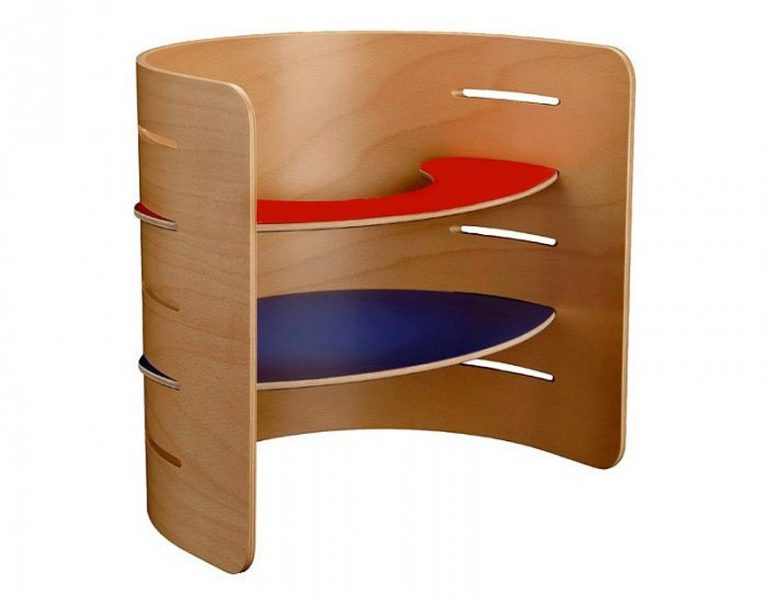
Feature image (on top): Child’s chair by Architectmade
Rare Design Objects from Danish Designer Company, written by Tor Kjolberg