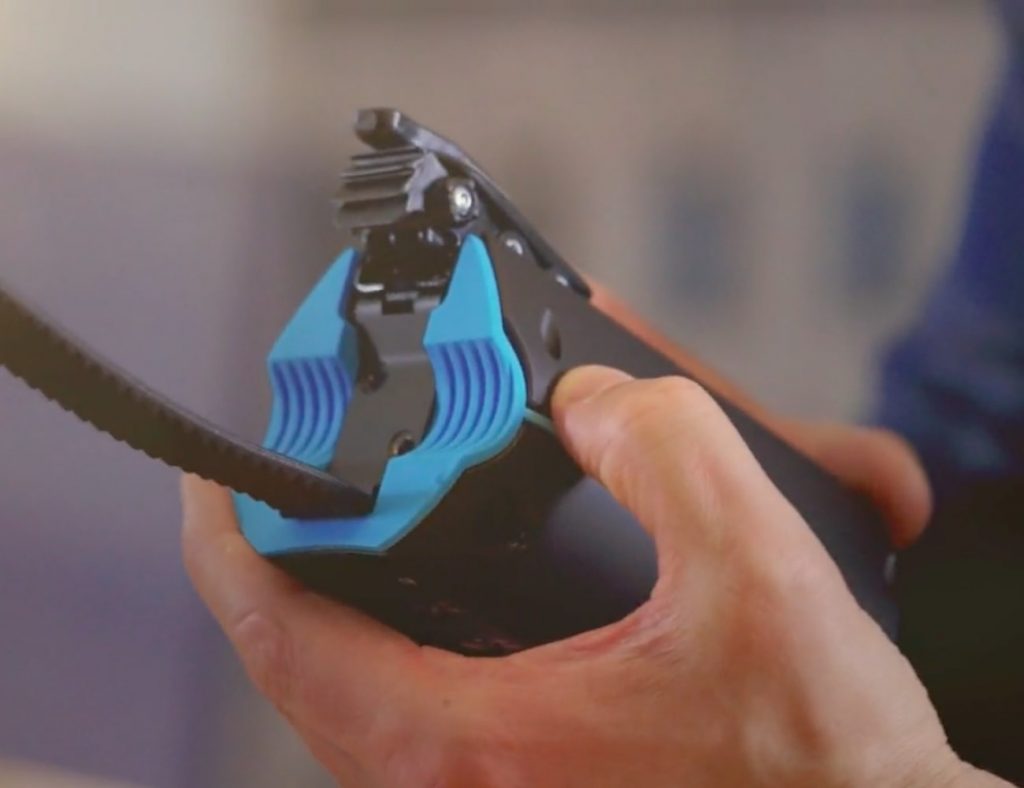
What do you do when your baby just won’t sleep unless you rock, carry, stroll or drive him around? Parents don’t wish to repeatedly get up in the night and rock their fussing infant back to sleep. That’s why Norwegian entrepreneur Ståle Flataker invented the Sleepytroll. Read more about the Norwegian invention that automatically rocks the cradle Sleepytroll is a device that is attached via a ratcheting ladder strap, and then proceeds to monitor the sleeping infant using a microphone and a monitor sensor. In order to keep the child from becoming dependent on the rocking motion, it automatically stops when it detects the baby-sounds or movements associated with waking. Then it activates an integrated flywheel to get itself and everything else gently three minutes’ movements.
Sleepytroll is a device that is attached via a ratcheting ladder strap, and the proceeds to monitor the sleeping infant using a microphone and a monitor sensor.
Parents sleep better at night Ståle Flataker’s child number three had problems sleeping and adopting a healthy sleep pattern. He rarely slept more than 20 minutes unless there was a rocking motion. So, his parents had to walk him in the stroller or drive around in their car. Then Ståle came up with the idea to build an automatic baby rocker.
This device easily attaches to your stroller and creates gentle rocking so your baby can fall back to sleep. Sleepytroll comes with built-in sound and motion sensors, enabling it to start rocking once it registers sound or motion.
Users can adjust the sensitivity of the sensors based on the size and weight of the stroller/bed, and on their infant’s behavior. They can also choose between three rocking speeds, plus they can manually activate the rocking motion, which will cease after half an hour.
Norwegian Invention Automatically Rocks the Cradle
The award-winning Sleepytroll is the world’s first automatic sensor-controlled baby-rocker, and because it is water-resistant it can be used outdoors. Sleepytroll comes in modern Scandinavian design, is rechargeable, portable and tested in rough Nordic weather.
All this being said, Flataker emphasizes that his device is not made to replace hands-on baby care, but is instead intended simply for “getting the rest you need to be a good parent.”
Norwegian Invention Automatically Rocks the Cradle, written by Tor Kjolberg
The environmentally friendly capital of Sweden has become a game-changer in the world of recycling. Not only is it an obvious benefit to the environment. Estimates show that Sweden imports around 2 trillion tons of trashfrom surrounding countries. It contributes to bring the overall European carbon footprint down. Several European countries are now exporting trash to Stockholm.
Sweden is aiming for a zero-waste society. This takes the country’s recycling revolution one step further – from dumping rubbish in landfills, to recycling to reusing. Thanks to the sensitiveness of the citizens to the environment and sophisticated collection techniques, Sweden recycles an astonishing 99 percent of locally-produced waste. Only 1% of its trash is going to landfills.
The most environmentally friendly people in the world The Swedes are probably the most environmentally friendly people in the world. The Swedes regularly separate their empty cartons and packaging into containers in shared trash areas, and that is just one of the two tons of rubbish Swedes recycle per person each year. The percentage of recycled waste by households has increased from 38 percent in 1975 to at least 99 percent today.
The Behavior Lab Beteendelabbet (The Behavior Lab) is a lab that specializes in sustainable living. On one hand, it seeks to stop behaviors that are damaging the planet. On the other hand, it instills values into families that don’t just have a recycling mindset, but also one that focuses on creating patterns and new behavioral cycles that will reduce single-use products and automatically choose environmentally-friendly products.
Ida Lemoine, the founder of Beteendelabbet, says, ‘We think people need services that make it easy to do the right thing. We need to make it possible for ourselves as consumers to share and reuse all kinds of gadgets, clothes and furniture, and even our workspaces and homes.’
Burning waste is kinder to the environment
Experts say that landfills are a major contributor to global emissions of the greenhouse gas, while burning waste is kinder to the environment. The energy content of the waste is a critical component of using it as efficiently as possible and while some are used to fuel vehicles, others make their way to warming houses. Trash is not considered trash in Sweden, but rather an energy source that can be put to good use. The entire process is designed with the environment in mind, with even air filters repurposed for other uses.
Between 2005 and 2014 the import of trash from the UK, Norway, Ireland and other countries has increased four-fold. In 2016 Sweden imported almost 2.3 tons of waste, paid by the exporting countries. Part of the reason Sweden is so efficient at dealing with their waste is that they put their waste to good use.
Circular economy
Circular economy is an approach that involves using products that can be reused completely, a so-called cradle-to-cradle approach. In 2018 the Swedish government even established a special advisory group to help it make circular economy a key part of its policy. Of the household waste produced in Sweden in 2017, around 15.5 percent was used for biological recycling, 33.8 percent for material recycling and 50.2 percent went to energy recovery.
Experts say that landfills are a major contributor to global emissions of the greenhouse gas, while burning waste is kinder to the environment.
Recycling schemes
In 2017 the Swedish government reformed the tax system so that people could get cheaper repairs on used items, and Swedish clothing giant H&M operates a recycling scheme where customers get a discount upon handing in old clothes. Meanwhile, researchers are working on finding new clothing materials that are less damaging to the environment.
Trash is not considered trash in Sweden, but rather an energy source
“If you incinerate one ton of Italian waste in Sweden you get 500kg CO2 equivalent less emissions than if it is dumped in a landfill in Italy. That’s a substantial reduction,” said Johan Sundberg, Energy and Waste Consultant at Profu.
While mass-adoption of this model might not work everywhere, it acts as inspiration for cities and nations who want to be more sustainable.
Exporting Trash to Stockholm, compiled and written by Tor Kjolberg
Last month, the Norwegian sprint canoeist Eivind Vold (26) was awarded the International Canoe Federation’s Pierre de Coubertin International Award for fair play.
During the end of the men’s K1 5,000 meters final at the ICF Canoe Sprint World Championship in Portugal in 2018, there was confusion when the Spanish lodged a protest after boats came together in the final sprint to the finish. The Spaniards also suggested Vold may have passed on the wrong side of a buoy.
However, after viewing footage of the race, ICF officials dismissed the protest and the results were allowed to stand.
Missed a race buoy
Vold crossed the finish line in third place and received the bronze medal, but later he realized he had missed a race buoy and immediately notified the International Canoe Federation and the fourth place-getter, Spain’s Javier Hernanz.
Vold crossed the finish line in third place and received the bronze medal
“I was absolutely sure that I was on the right side. I thought I was discouraged because I had a little accident with Spaniard Javier Hernanz. There was a lot of war and a small crash along the way, but the judges decided that nothing was wrong,” Vold said to NTB after the race.
“I’m glad that Eivind knows what’s right in this situation,” said Eirik Veraas Larsen, sports director of the Norwegian Paddle Association
A right decision
“I’m glad that Eivind knows what’s right in this situation. I’m proud of Eivind, proud of his track and proud that he does not want a bronze medal with ice,” sports director of the Norwegian Paddle Association, Eirik Verås Larsen, said in a press release after the competition.
So, Norges Padleforbund (NPF) and Eivind Vold asked to return the World Championship bronze medal, which was then presented to Hernanz.
President José Perurena praised Vold and the Norwegian Canoe Federation for their sense of fair play
Fair Play Award to Norwegian Canoe Athlete
In September, the 2018 Fair Play Award was given to the Norwegian Canoe Athlete, Eivind Vold in Budapest. Vold was unable to attend as he is was competing in the Tokyo 2020 canoe sprint test event.
President José Perurena praised Vold and the Norwegian Canoe Federation for their sense of fair play.
“It’s often very easy to forget what is important about playing sport and competing at all levels. Eivind Vold and his Norwegian Canoe Federation have provided us with a timely reminder of what should be at the heart of any sporting confrontation, be it at an Olympics or World Championships, or playing at the local park or on your nearby river,” Mr Perurena said.
Its Headquarters are located in the Maison du Sport International (MSI) in Lausanne, “Olympic Capital”, Switzerland; a mere paddle away along Lake Geneva from the proposed site at Lausanne.
Fair Play Award to Norwegian Canoe Athlete, written by Tor Kjolberg
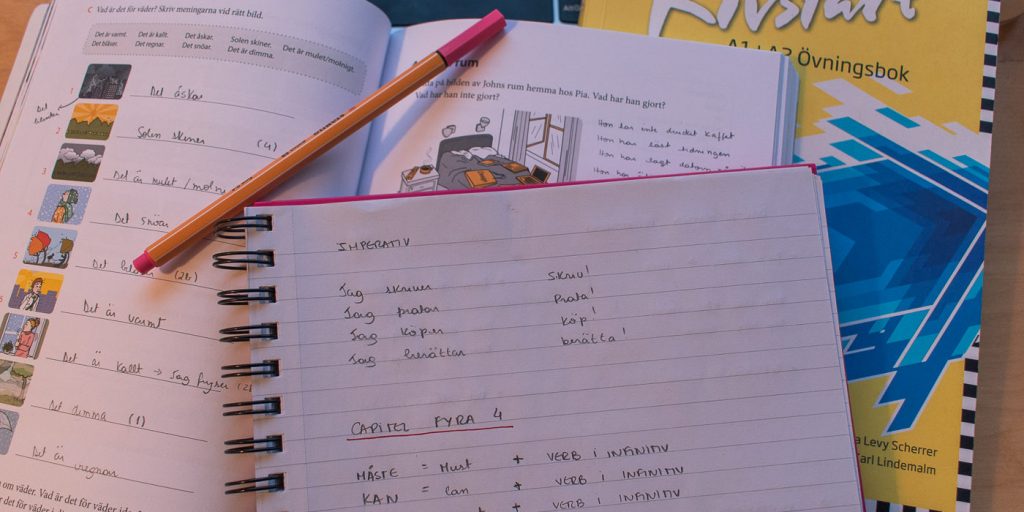
Did you know that on average, it takes 25 minutes to refocus on a task after an interruption? And to reach fluency, you should spend at least 20 – 30 minutes a day, 5 days a week practicing. So, you’ll need to find distraction-free periods of time to focus on learning Swedish each day. The best way to make this happen is knowing how to schedule learning Swedish.
Why You Need to Schedule Learning Swedish Structure matters. Without a schedule, you won’t have the structure you need to reach your language learning goals. Mainly because you’ll lack a way of gauging your progress. Sticking to a schedule makes it easy to track your efforts, the strength of the strategies you’re using, and the actual time you spend studying.
Without a schedule, you won’t have the structure you need to reach your language learning goals
This is important because you will stumble in your language-learning journey. But failure isn’t the end of the world, as long as you can learn from your mistakes and grow. But without a schedule in place that allows you to see where you failed, you won’t be able to make the necessary adjustments that allow you to grow.
Cramming in Language Learning Won’t Work When it comes to learning a language, cramming doesn’t work. In fact, there’s science that proves this. So, before you begin your language learning journey, you have to get rid of that belief. Your brain needs to form new synapses to help you remember the language. And that takes time. This is why there is a limit to how fast you can learn a new language.
Your brain needs to form new synapses to help you remember the language
To get the best results, you need to slowly create these new pathways over time. The best way to do that is to study for about 20 – 30 minutes a day, 5 days a week. You can do more, but giving yourself two days off each week helps rest your brain. This is much better than studying once a week for 3 hours. All that will do is hurt your head and leave you frustrated.
The Importance of Goals Before you can lay out a schedule, you need to look at what you want to achieve. If you’re interested in reaching fluency in Swedish, then you need to understand that your lessons will have to take priority over other things in your life.
Before you can lay out a schedule, you need to look at what you want to achieve
For instance, if you’re trying to figure out whether or not you have time to study, you need to look at what kind of activities you do for fun each day. While Netflix, YouTube, and social media can be fun, they won’t get you closer to mastering Swedish. (Unless you’re using Netflix to learn a foreign language or watching Youtube Language lessons).
Once you realize what you want to get out of your language learning efforts and how important learning Swedish is to you, you’ll be able to schedule time each day to learn the language.
Flexibility is key
When Is the Best Time of Day to Learn a Language? The short answer is that it depends. We all have a circadian rhythm, our body’s way of regulating wakefulness and sleepiness. It keeps us balanced and healthy. 4 out of 5 people do their best work in the mornings. That means that 20 percent of people are night owls. But the rest of us are better off scheduling our language-learning lessons in the morning.
If your mornings are busy, try scheduling a nap or meditative period after work that will help you clear your mind before studying Swedish. Alternatively, if you work out, you can have your lesson after going to the gym. Physical activity can recharge the brain and body, giving you the focus you need to study.
Keep in mind that there’s nothing wrong with studying Swedish before you go to bed either. You’ll fall asleep thinking of Swedish while giving your brain the time it needs to build new neuropathways, helping you remember your lessons.
the longer you stick with the schedule, the easier it will be
How to Create a Language-Learning Calendar Once you’re familiar with all the aspects around a schedule, you’ll need to create a calendar. While you may not pull it out every day, it can be beneficial to have that structure in place at the beginning. Whether you like digital or paper, start by blocking out the time where you cannot study. Everyone has to sleep, most of us have to work, and we have other life obligations.
After you do that, look at which time blocks are free and where you can put in a slot of 20 – 30 minutes to study Swedish. If you have more time than that, great. But first, try and focus on making sure you give yourself at least that much time each day to study.
Finally, you’ll want to test it out. We sometimes forget about obligations when we first sit down to write out a schedule. These may push your lessons to later in the day. You may also realize you’re more of a late owl when it comes to language lessons than you thought. You might also find that certain days of the week are simply too busy or that you’re too distracted at certain times. Either way, test out your schedule and adjust.
Your Language Learning Schedule Needs to Work for You Flexibility is key. If you don’t enjoy your schedule, you won’t follow it. If your friends want to go out on a Wednesday night, you should be able to push your efforts to learn Swedish to a different time or a different day. This will help you stick with it in the long run.
You also want to give yourself time to adjust to this new schedule. Human beings aren’t great at handling sudden, drastic changes. So, if you miss a few days starting out, don’t worry, it’s not the end of the world. Habits take time to form (about 2 months). And know that the longer you stick with the schedule, the easier it will be, and the faster you’ll reach fluency in Swedish.
Jonty Yamisha
How to Schedule Learning Swedish, written for Daily Scandinavian by Jonty Yamisha
Entrepreneur and Linguist, Jonty Yamisha created OptiLingo after his efforts to protect his native language, Circassian, from extinction. Using scientifically proven strategies such as Spaced Repetition and Guided Immersion, OptilLingo has helped thousands finally achieve fluency.
You’ve probably heard Scandinavia is an expensive region to visit. Yes, it’s true the food and drink in Oslo Airport are super expensive compared to the States or southern Europe. But that doesn’t mean you can’t travel well in Scandinavia on a budget. Learn 5 ways to travel well in Scandinavia while on a budget.
The trick is to plan ahead. Here are 5 tips to help you plan your visit to Scandinavia and keep your costs low.
Go offseason For some strange reason, most visitors to Scandinavia want to go in summer. In summer, you don’t get to see the amazing Northern Lights and you can’t have fun on a snowmobile or go skiing.
It’s not always as cold as you might expect during other times of the year. In fact, the name “Norway” is said to derive from the fact the coastline of Norway stays free of ice for much of the winter making it the best route north that time of the year. Warm air off the Gulf Stream keeps Norway warmer than other nations at the same latitude even within the Arctic Circle.
If you visit Scandinavia during the shoulder season (spring and fall) then you can expect to find more affordable flight deals, cheaper hotel rooms, and discounted tour tickets. If you can put up with the cold and go in winter, the effect will be more so.
Northern lights in North Norway
But there are always exceptions to the rule. Hotels in Stockholm are sometimes cheaper in the summer if most of their guests are business travelers. They get fewer business travelers during summer and weekends, so they charge cheaper room rents at those times.
Book in advance and be flexible You will get much better deals on flights and accommodation if you book between 6-3 months in advance. Otherwise, you’ll find that only the most expensive tickets and hotel rooms remain. Booking in advance also allows you to avoid any unwanted flight delays or cancellations. In the event that this does happen, make sure that you know that you do have the right to claim compensation for cancelled flights.
If your timing is flexible when booking, this will enable you to seek out the lowest costs. Some online air ticket sites, like Skyscanner and Momondo, can be set up to alert you when your ideal flight has dropped in price.
If you’re headed for Norway or Sweden, don’t automatically book a flight there. Copenhagen Airport in Denmark is by far the busiest airport in Scandinavia, which means you’re more likely to pick up discounted flight deals.
Because of the Øresund Bridge linking Copenhagen to Malmö by road and rail, it’s actually easier to get to parts of southern Sweden from Copenhagen Airport than from Stockholm Arlanda Airport. And a convenient and affordable ferry link between Copenhagen and Oslo means a cheaper flight to Copenhagen will allow you a more affordable entry into Norway.
Don’t be too fussy about accommodation Yes, the top hotels in Scandinavia are expensive. However, Scandinavia has a very developed backpacking culture. That means you’ll find a good selection of economy options for budget travelers.
If you don’t mind sharing a room with between five and ten people of the same sex, hostels are an affordable option for traveling around Scandinavia. And if you’re travelling in a large family group, you might even be able to book one room for all of you. You can find more information on hostels on sites like HostelWorld.
If you shop around, you can find budget hotels in most cities in Scandinavia. And renting a self-catering apartment is always an affordable option. You can find apartments to rent on AirBnB and BookingDotCom. These sites have options to search for apartments in preference to hotel rooms.
Eat grocery food ready-made meals You will find many restaurants in Scandinavia to be expensive. However, regular grocery stores outside of the main tourist traps won’t be that much more expensive than back home. There are discount grocery chains around Scandinavia, such as ALDI, Lidl, ICA, and Netto. Watch out for these.
Drottningholm Palace, Stockholm
You can purchase pre-made foods, like salads and sandwiches, at reasonable prices. Plus, if you’ve gone for the self-catering apartment option, you can cook your own meals for much less than eating in restaurants.
Alcohol is expensive in bars but reasonably priced in grocery stores. Alcohol in night clubs is super expensive. In fact, you’ll often find Scandinavian nightclubbers sticking to bars until they close and then moving on to nightclubs because it’s so much cheaper for them that way.
Be smart about sightseeing Sightseeing tours can be expensive. However, if you do your research, you can often find free activities in major Scandinavian cities. Try Googling “Free things to do in Stockholm” and see what you find.
Quite often you’ll find museums and art galleries that offer free entry. And observing the best architecture and monumental sculpture never costs anything. The most famous attraction in Copenhagen is The Little Mermaid, and it cost you nothing to visit!
Bryggen, Bergen – Norway
While some attractions are free, for most you must pay. However, sometimes you get super cheap deals because you stumbled across them. For example, if you purchase a City Pass in Copenhagen, not only will it cover public transport around the city, but it also provides free entrance to a wide range of popular tourist attractions and some organized tours.
Do your research and plan ahead As you can see, there are lots of ways you can keep costs low when visiting Scandinavia. The main thing it to research well and make plans.
That doesn’t mean you must always take the cheap option. Budget carefully for most items but allow yourself some treats along the way. Use what you save on discounted air flights to pay for that gourmet meal in Oslo you really want.
Be flexible in your planning, and you’ll have a wonderful time.
Remember these 5 ways to travel well in Scandinavia while on a budget, it will save you a lot of hard cash.
Feature image (on top): Troll’s Tongue, Lysefjord – Norway
5 Ways To Travel Well In Scandinavia While On A Budget, written for Daily Scandinavian by the editors at Outsidepursuit.
The first stop for modern art enthusiasts south of Copenhagen is the sleek white Arken Museet for Moderne Kunst at Ishøj, while Køge is popular for its beaches crowded with sun-loving Danes. Køge is characterized by half-timbered houses. The oldest dated 1527, stands at 20 Kirkestrædet. But these are just a few of the best attractions in Southern Zealand, Denmark.
Best Attractions in Southern Zealand, Denmark
Skt Nikolai Kirke has one of Denmark’s most beautiful town church interiors. Not far from the market is Hugos Vinkælder, a historic inn serving old-fashioned draft porter.
The cliffs of Stevns Klint on the south headland of Køge Bay are impressive when the sun illuminates them in brilliant hues of white.
The Køge Bay
The cliffs of Stevns Klint on the south headland of Køge Bay may not be quite as dramatic as those on the island of Møn, but they are impressive when the sun illuminates them in brilliant hues of white.
Næstved has been an important trading town for most of its history and has an attractive city-center
The ancient town of Haslev
Inland, 5 km (3 miles) south of the ancient town of Haslev, Hans Christian Andersen found inspiration for one of his most famous stories, The Ugly Duckling, in Gisselfeld Slot, a castle built in 1554.
Næstved 10 km (6 miles) southwest of Haslev has been an important trading town for most of its history and has an attractive city-center. About 6 km (4 miles) to the southwest is Gavnø Slot, set among magnificent gardens on a tiny island linked by road. In the 13th century it was used as a pirates’ castle; today it houses Scandinavia’s largest privately-owned picture collection.
Feature image (on top) Gavnø Castle. Photo: Wikipedia
Best Attractions in Southern Zealand, Denmark, written by Tor Kjolberg
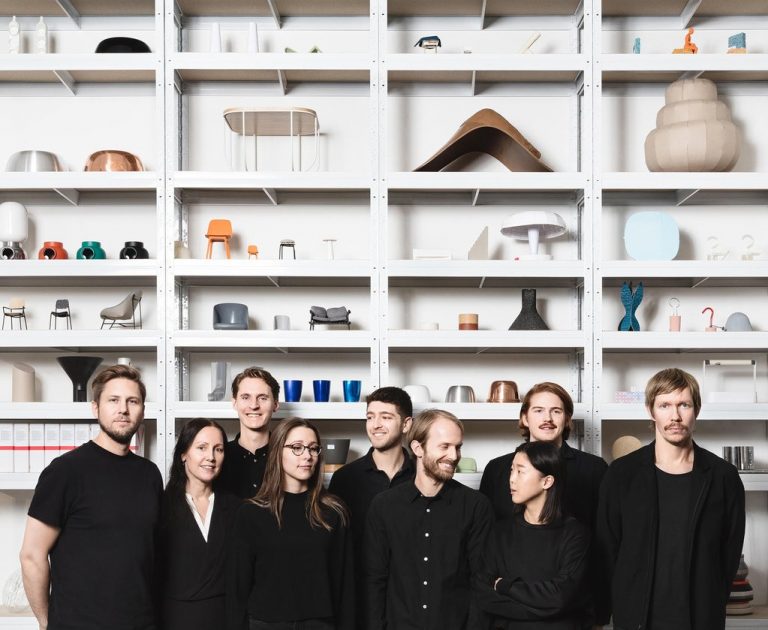
The Danish furniture producer +Halle and the Stockholm-based Design Studio Form Us With Love have developed a furniture collection named the Nest collection. It’s seating for the public space but presents opportunities for people to work in a more natural way. So, the Stockholm-based design studio forms us with love.
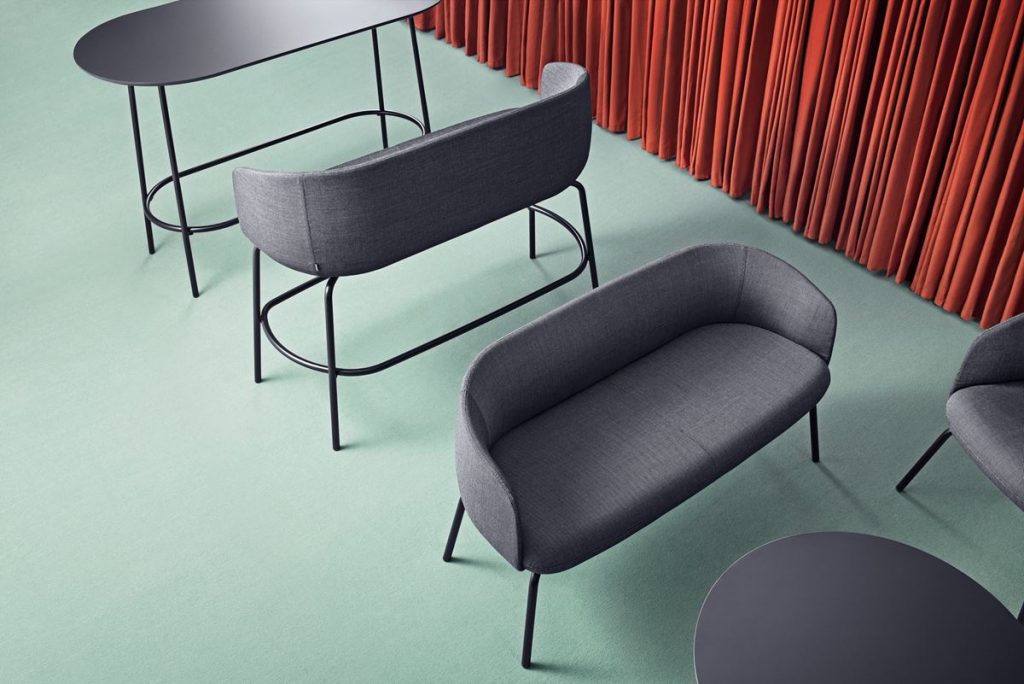
It all began with a high sofa and continued to expand with new typologies and a modular system. Triggered by the idea of gatherings, the Nest collection plays with ideas of high and low, with seats perching on slim wood and steel legs in secluded and open clusters. It’s seating for the public space but presents opportunities for people to work in a more natural way. It’s precisely this youthful sense of flexibility that the Nest collection provides, an alternative to the traditional lounge space.
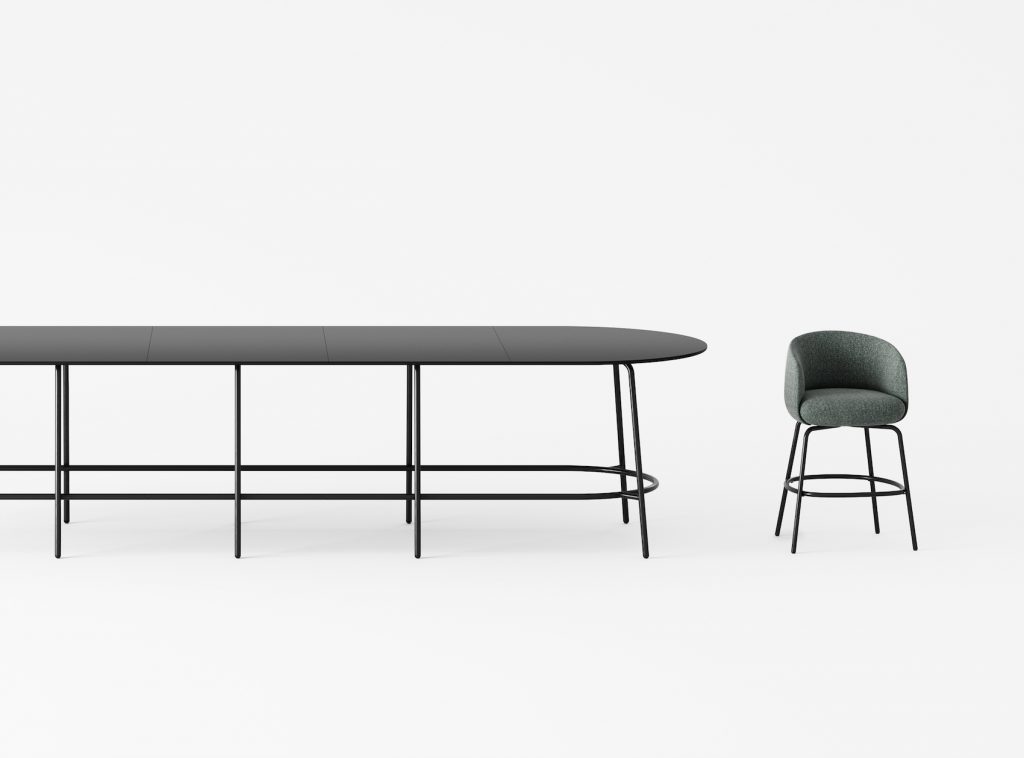
The Nest System Tables are distinguished by their modular table solution
The Nest System Tables The Nest System Tables are distinguished by their modular table solution, configured to turn and bend. This is the latest extension to the popular +Halle Nest series. The collection of high and low sofas, chairs and tables is loved by many public spaces for its mix of casual and productive behaviors—above all its adaptable to change. From the series use in public spaces comes a new set of behavioral learnings: insisting on a high worktop, individual space, and a sense of scale.
The Nest collection is seating for the public space but presents opportunities for people to work in a more natural way
There is a level of play in the Nest System Tables that is unmatched in the market, a call for the creativity to be brought back, as a way to create landmarks within communal spaces. What configuration of The Nest System Table would you create to fit the needs of your workspace?
The ambition was always to give people the option to effortlessly remain seated in that perfect balance between taking a break and remaining active
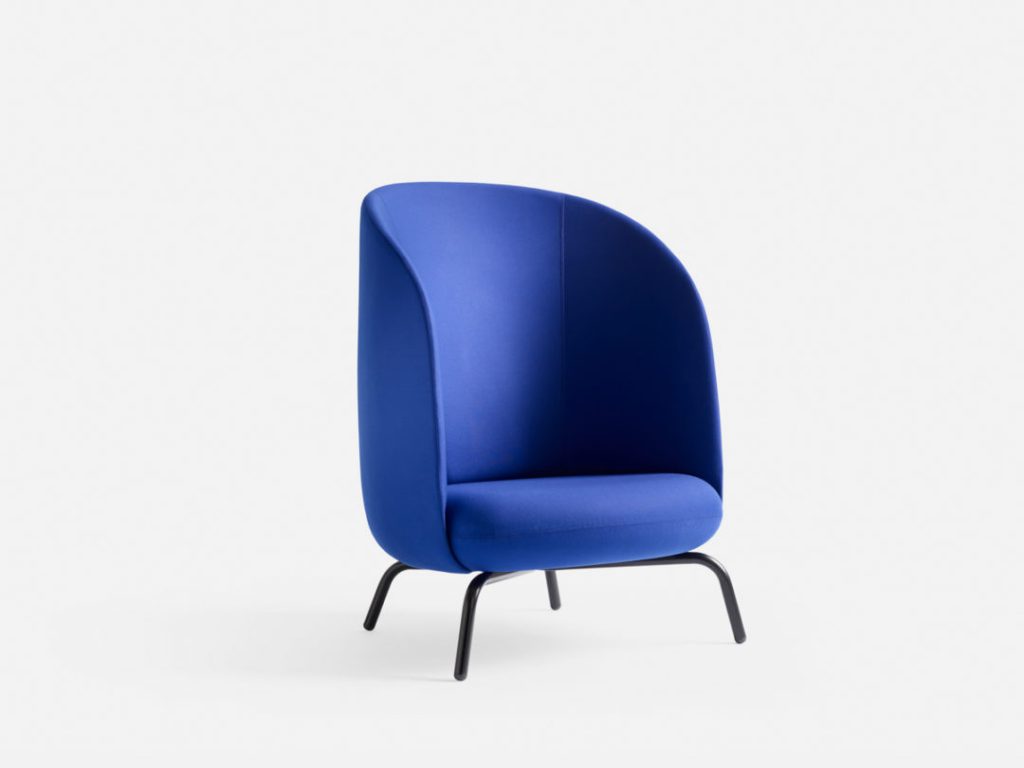
Effortless seating The ambition was always to give people the option to effortlessly remain seated in that perfect balance between taking a break and remaining active. The result is the new Easy Nest, a clean cut, high back armchair in two sheltering heights and two lengths filling the gap between public and private spaces.
Positioning brands
Stockholm-based design studio, Form Us With Love, positions brands through the strategic design of things. At the studio’s core lies a process that blends traditional creative practices with a lean, strategic application. The central intention is to evolve with the needs of each project, its place in the market, and the ever-changing needs of real people.
The Nest Collection is winner of Metropolis Likes Award and HiP Award for Workplace: Training Tables/Desking.
Stockholm-based Design Studio Forms Us With Love, press release from Form Us With Love
The Drawing Triennial 2019, curated by Helga-Marie Nordby and organized by the Norwegian Drawing Association has been named Human Touch. The exhibition opens at Kunstnernes Hus (Artists’ House) in Oslo November 8 where 35 invited artists present their drawings as a basic human expression. Don’t miss the exhibition Human Touch in Oslo.
Helga-Marie Nordby says, «To me, time ends when I see a drawing, it is a direct encounter with another human being. Energy transferred; vulnerable, immediate, powerful. Nine red ocher lines on a stone drawn by a human 73,000 years ago. It ignites a spark in me!»
Drawing as an art
The exhibition focuses on drawing as exploration and processing of the human. The curator seeks to create a larger space of reflection around drawing as an art, not only as an artistic expression, but as an inherent language and potential in humans: In drawing we can see both inward and outward, and by drawing we can formulate what we see, not just as an imitation or imagery, but as visual ideas, as reflection, as exploration, as questions.
“Drawing is to me a direct encounter with another human being.” says Helga Marie Nordby
Man’s primary imprint
The 2019 Drawing Triennial presents works by artists searching with the help of their lines. They use drawing as a method to approach who we are. The exhibition also points to the prehistoric times when drawing was a way of communicating before the written language originated, and is therefore largely about drawing as man’s primary imprint – in both physical and mental sense.
The visual identity for the 2019 Drawing Triennial was developed by designer Ariane Spanier.
Ina Aasheim explaining one of her drawings
The following artists participate in the Drawing Triennial: Filippa Barkman, Per Inge Bjørlo, Eirik Blekesaune, Louise Bourgeois, Jennie H. Bringaker, Peder K. Bugge, Ann Iren Buan, Liv Dessen, Marthe Ramm Fortun, Ida Madsen Følling, Andrea Galiazzo, Guttorm Guttormsgaard, Silje Hammer, Ane Hjort Guttu , Anna Carin Hedberg, Nina Heum, William Kentridge, Käthe Kollwitz, Ingeborg Annie Lindahl, Per Maning, Elisabeth Mathisen, Pierre Lionel Matte, Ana Mendieta, Gunnveig Nerol, Randi Nygård, Cecilia Jiménez Ojeda, Shwan Dler Qaradaki, Bendik Riis, Anngjerd , Bente Stokke, Per Teljer, Monica Winther, Vera Wyller and Ina Åsheim.
“When you move from home to home, the most important furniture to bring along is the kitchen” is an Italian saying. The philosophy of Frama Studio in Copenhagen is that a kitchen should look like any other living space, outfitted with freestanding pieces that can work in any setting. Read more about the Danish takeaway kitchen.
Niels Strøyer Christophersen established Frama Studio in 2008. It operates in various creative fields and directions from furniture, lighting, apothecary, books, apparel and kitchens. The Frama headquarters are anchored in a grand former pharmacy in the center of Copenhagen, with a retail place and café and defines its creative approach as a dialogue between two opposite poles -”between a classical and contemporary approach, and between digital and analogue production.”
The Frama Kitchen portrays the light expression of a piece of furniture within the kitchen environment
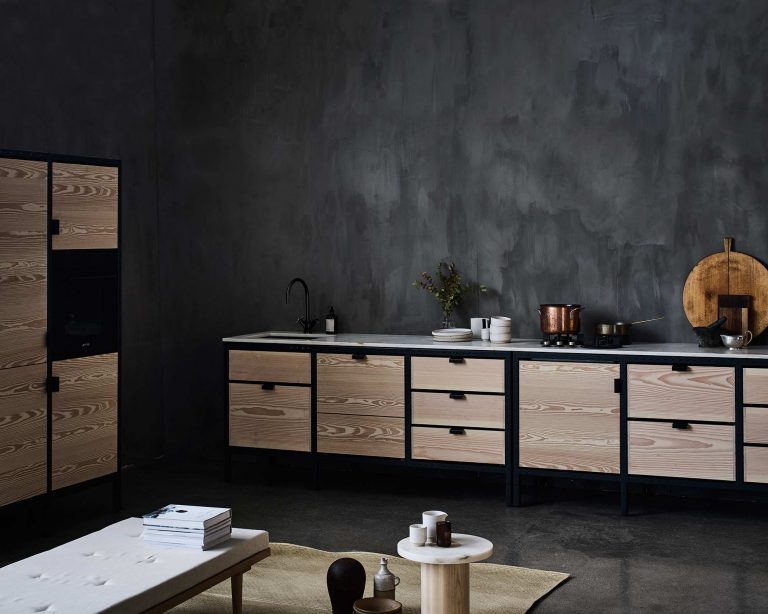
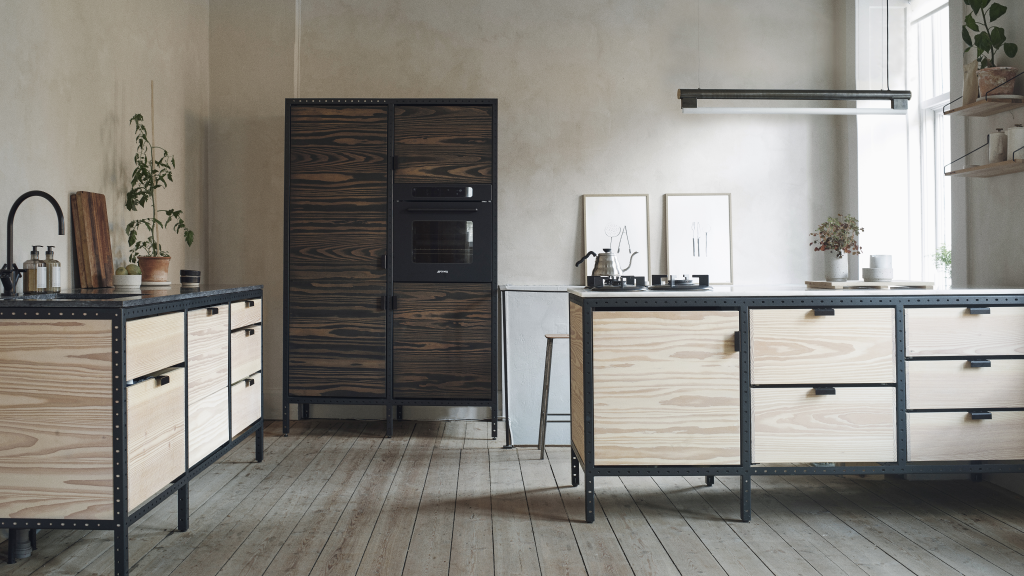
The model-based and removable kitchen project began when the company set up its new studio in an old watch shop in Østerbro in 2012. The Frama Kitchen portrays the light expression of a piece of furniture within the kitchen environment. Every Frama Studio Kitchen is built upon a powder coated metal grid, providing an industrial but light approach.
Niels Strøyer Christophersen established Frama Studio in 2008
Within the free-standing units, Frama has encased top of the line appliances while retaining a low-tech and analogue expression. They all have in common that they focus on natural materials, simple geometry and a general appreciation of permanency.
Within the free-standing units, Frama has encased top of the line appliances while retaining a low-tech and analogue expression
“We want to inspire people to see the kitchen as a base to build on. The idea of being able to take the kitchen with you when moving is also interesting from a sustainable perspective. Alternatively, that it is sturdy enough to last for generations,” says Strøyer Christophersen.
The Danish Takeaway Kitchen, written by Tor Kjolberg
Berlin-based architect Sigurd Larsen has designed a cabin built around a tree at Als Odde peninsula in Denmark. The expression is Nordic minimalism, utilizing every cubic centimeter to its utmost. The cabin will be a part of a new treetop hotel in Denmark.
The cabin, perched eight meters (20 feet) above the floor of its forest site, is the first of nine designed for the Treetop hotel Løvtag. The cabins will be clustered in the forest and each house a separate bedroom for up to four guests.
The cabin is both modern, comfortable and ‘hyggelig’
Modern, comfortable and ‘hyggelig’
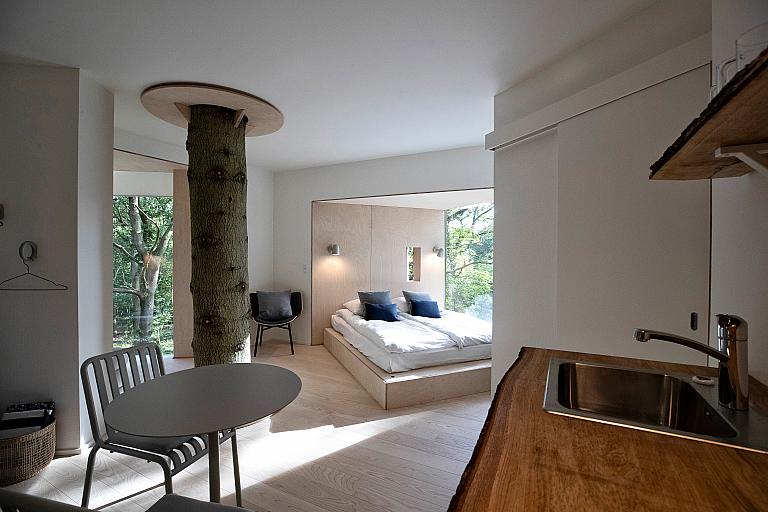
The cabin is both modern, comfortable and ‘hyggelig’. Larsen has given the interiors a Nordic bent, juxtaposing white walls and blonde wooden floors with the rough skin of the tree trunk, which rises through the center of the cabin. It has a bedroom, indoor living area and bathroom, and floor-to-ceiling glass walls. An expansive rooftop deck offers unique views of the natural setting.
The cabin has a bedroom, indoor living area and bathroom, and floor-to-ceiling glass walls
A sweeping wooden bridge leads up from the forest floor into the cabin’s living space. A small wooden staircase leads further upwards to the rooftop terrace. The forest is a mix of deciduous and coniferous forest with soft moss covering large expanses of the forest floor. If you are lucky – and quiet – you may well see deer in the forest.
Idyllic location
“The access to the roof terrace gives the impression that you continue to ‘climb’ the tree to reach the canopy”, described the studio.
The forest is a mix of deciduous and coniferous forest with soft moss covering large expanses of the forest floor
The idyllic location is on a small hillside known as The Dwarf’s Mound close to both the sea and Denmark’s longest fjord, the Mariager, which winds inland through a diverse landscape. A total of nine cabins have been planned at the Als Odde site, the first one is open now, available to rent from KR 2.750,00 per night.