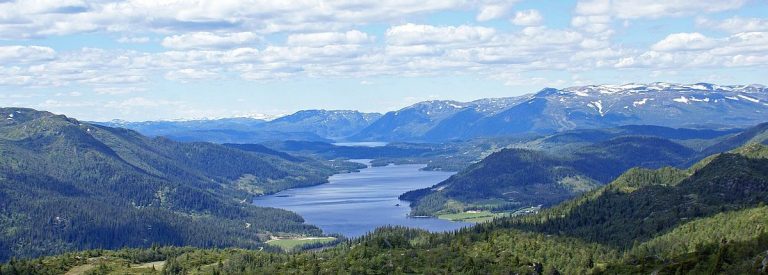
Telemark in Norway is best known for its stave churches and canal system. However, the beautiful rural Telemark region in Norway has much else to offer; lakes, mountains, forests and fjords.
The regional capital is Skien, where Henrik Ibsen (1828-1906) spent his childhood. His home, Venstøp, forms part of the Telemark Museum. In summer, tulips bloom en masse there in the elegant English gardens, which are surrounded by stylish mansions.
Northwest of Skien lies Ulefoss, a village that until the end of the 19th century was a major exporter of ice, which was transported along the waterways of the Telemark Canal, a 105 km (65 mile) long waterway linking Skien to Dalen. Blasted out of the rocks over 100 years ago, the canal wends a scenic route through 18 locks. From late May to early September, two venerable passenger launches – the M/V Victoria and M/V Henrik Ibsen – ply the watercourse on pleasure cruises lasting from 2 to 11 hours.
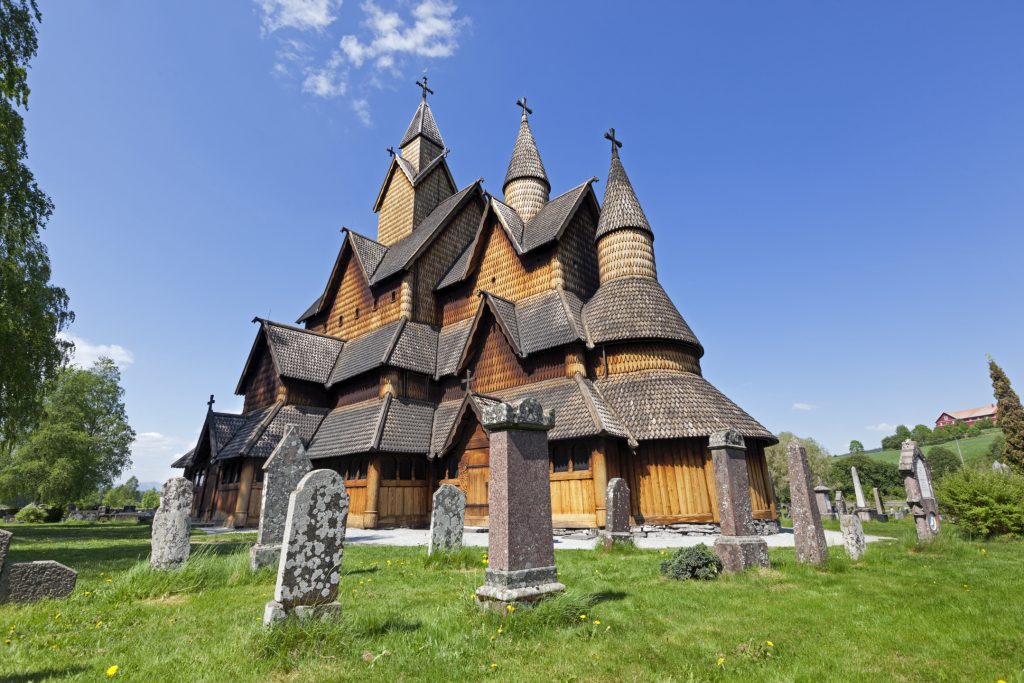
The small industrial town of Notodden is unremarkable in itself, but just 5 km (3 miles) along Route 11 is one of Norway’s top attractions, the medieval Heddal Stave Church, considered a masterpiece in wood. Its ornate carvings are rivaled only by the beautiful period rose paintings in the Ramberg room of the nearby museum Heddal Bygdetun.
About 10 km (6 miles) further on, Route 17 branches north past Tinnsjø lake towards Rjukan. The principal attraction here is the former Vemork hydroelectro plant, just west of Rjukan. Dating from 1910 and surrounded by beautiful scenery, it now houses the Norwegian Industrial Workers Museum (Norsk Industriarbeidermuseum).
The museum details the story of the brave attempts of the Norwegian Resistance to sabotage the plant where heavy water was once produced which the Nazis were using to develop nuclear weapons. In 2010, a new exhibition was installed which focuses on the everyday lives of workers from 1950 until the present day.
The Beautiful Rural Telemark Region in Norway, written by Tor Kjolberg
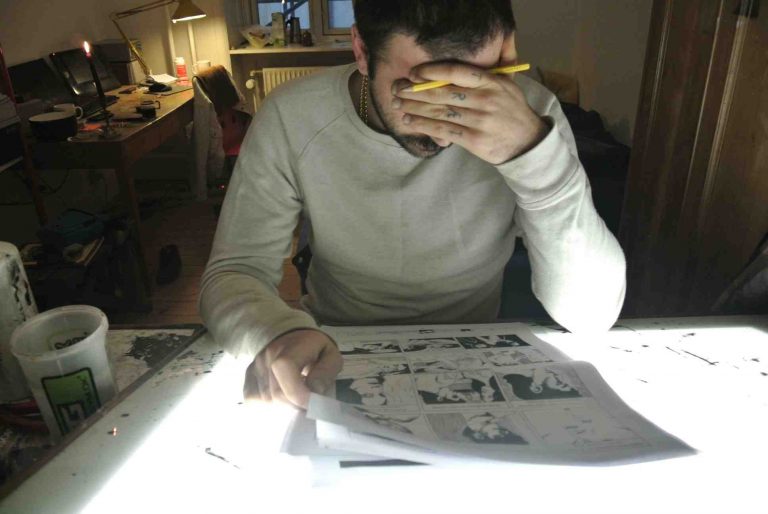
Danish cartoonist Halfdan Pisket (b. 1985) graduated from the Royal Danish Academy of Fine Arts in 2009 and is inspired by visual artists such as Edvard Munch and Palle Nielsen as well as comics such as Dave McKeane, the Spanish Crime Series “Torpedo”, David B “Epilep” and “Cages”. Now he has drawn the story of his father’s criminal past.
After two years at the Academy he got fed up with the structures and absurdities of fine arts and started making comics. Now he is a full-time cartoonist and illustrator.
From Diserter by Halfdan Pisket
The first comic Halfdan Pisket published was deemed too artistic by the critics. Therefore, he started to follow a more traditional format.
The Dane-Trilogy
From 2014 to 2016 he produced the so-called “Dane-trilogy” consisting of three books; Desertør (Deserter), Kakerlak (Cockroach) and Dansker (Danes). These books as well as his work in general are inspired by linocuts from the sixties and the seventies and tells the fictionalized story of his father’s criminal background – to great pleasure of the Danish press.
Linocut by Halfdan Pisket
Best Comic Award
In January 2019, he won the award for best comic in Festival International de la Bande Dessinée, which is considered the comic industry’s counterpart to the Cannes Film Festival. The linocut technique, black and white imagery and sharp contours, has until now served as the main source of inspiration for Pisket’s work.
“I have learned more from the American TV-series The Wire than any lesson I’ve ever had in art history,” Pisket once told a journalist.
Halfdan Pisket, No escape – from Bureaucracy
Danish Cartoonist Tells the Story Of His Father’s Criminal Past
Halfdan Pisket plays an important role in the cartoon about his father, but says he has no interest in making an autobiography about himself. “We live in a society with an extreme focus on the self, and it was important to me that my father became the protagonist, not me,” he says.
The story came to life when Halfdan Pisket’s father was diagnosed with incipient dementia, and Pisket saw the opportunity to get to know his father before his memory would slowly fade away. The result is the story of a Turkish immigrant who deserted from the Turkish army and fled to Denmark to create a life for himself and become a naturalized Danish citizen.
“The story is 100 percent based on reality, but it’s not true,” Pisket emphasizes.
Danish Cartoonist Tells the Story Of His Father’s Criminal Past, written by Tor Kjolberg
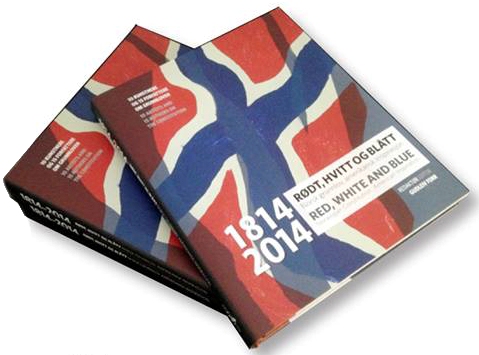
In 2014, when the Norwegian Constitution could celebrate its 200th anniversary, publisher Trond B. Olsen put together a book tracing the US Constitution’s influence of its Norwegian counterpart. 1814 – 2014 Red, White and Blue is a fascinating book about the second-oldest living constitution in the world and the Norwegian constitution and Norway’s links to the USA.
The Norwegian constitution has for more than 200 years been the backbone of a society that has created political stability, economic development and personal freedom for generations of Norwegians. The book, 1814-2014 Red, White and Blue, edited by Gudleiv Forr, is a cooperation between 10 artists and 15 authors. The book tells how the Norwegian constitution was created in Eidsvoll northeast of Oslo in 1814, how it has functioned and the authors do not forget the democratic challenges it faces.
The Norwegian constitution was created in Eidsvoll northeast of Oslo in 1814
About the book
Although the true Norwegian sovereignty did not happen until 1905, when the country broke free from its union with Sweden, May 17 has become Norway’s national day. Many notable political figures have contributed to the book, including former US Vice President Walter Mondale (whose paternal grandparents were Norwegian). The book features 15 essays by writers and scholars alongside artworks by Norwegian contemporary artists inspired by the Constitution, among them Sverre Bjertnes and Inger Sitter, a one-time young rebel who became a pioneer of Norwegian abstract in the post-World War II years.
1814 – 2015, The book
The writers as well as the artists focus on what it means to have a national identity. EU researcher Erik Oddvar Eriksen’s chapter deals with the Norwegian connection to the EU, and how it influences and challenges Norway’s sovereignty. According to Eriksen, the Norwegian participance in the EEA has constitutional implications, and every administration since 1994 has brough the country closer to the EU.
The Norwegian Constitution and Norway’s links to the USA
Norway’s link with the USA goes back around 1,000 years, when Norse Vikings first landed in North America. The largest waves of emigration occurred, however, in the 19th and early 20th centuries, first for religious reasons, and then for work.
17 May, Norwegian constitution day celebration in Oslo
“The United States has always been fortunate to have a special relationship with Norway due to the thousands of migrants that left Norway for America at the turn of the last century,” writes Vice President Mondale in the book’s preface. “The impact of this has been that Norwegian-Americans have made and continue to make, significant contributions to US politics, to the arts and sciences, and to the all-round betterment of our society. Their Norwegian ancestors passed down values from one generation to the next that focus on hard work, service to society and placing the public good above all.”
Famous Norwegian Americans Here are just a few of famous Norwegian Americans. Actor James Arness, Actor James Cagney, the inventor of the outboard motor Olav Evinrude, creator of the animation series The Simpsons Matt Groening, founder of the Hilton Hotels Conrad Hilton, entrepreneur Fred Kavli, actor Robert Mitchum, actress Marilyn Monroe, icon from the Prohibition Eliot Ness, musical director for Frank Sinatra Axel Stordahl, violinist Camilla Wicks,
The Norwegian Constitution and Norway’s links to the USA, written by Tor Kjolberg
For almost 30 years her voice has captivated and fascinated a discerning audience. Silje Nergaard (b. 1966) has been successful both as a vocalist and songwriter. She is one of the best-selling jazz artists on the official sales chart in Norway and became known worldwide after the release of the international bestseller Tell Me Where You’re Going, featuring Pat Metheny on guitar. The power of Norway’s Best-selling Jazz-artist Silje Nergaard has reached a world-wide audience.
She says, “I cannot live without music. It is like the air I breathe. Music is my way of existing in the world. Everything I do, experience and feel goes through a music filter. Could this be the inspiration for a song? Does it have a resonance I can use? Then starts the slow, intuitive process of creating music. At the beginning I sit tinkling at the piano, fumbling my way forward. And suddenly it’s there – one or two key phrases. I can feel it in my whole body, that’s it. Then comes the time-consuming and laborious work of building a song around those key phrases. The foundation is there, but you have to build the walls and roof, and other instruments to my voice. And then the melody need to go off and get some clothes – a set of lyrics created by Mike McGurk.”
Tell me where you’re going
Silje entered the music scene at the age of 16, and her first hit single “Tell Me Where You’re Going” made it to no. 1 in Japan as well as top 10 in Norway and other countries. Part of what makes Silje an exciting artist is that her songs can float in a room like an atmosphere, cool, elegant and ingratiating. But then, suddenly, a note wakens you from your trance and challenges you: Hey! I’ve got something to say.
At first light Her album “At First Light” (2001) is the best-selling Norwegian jazz album ever recorded and entered the official sales chart in Norway at no. 1 in its first week. The album “A Thousand True Stories”, which Silje recorded with the Metropole Orchestra in 2008, was a great success in both Europe and Asia. Silje is one of the few Norwegian artists to have been commercially released all around the globe, on most continents and major music markets including Japan, Brazil, Germany, the United States, and the United Kingdom.
The Power of Norway’s Best-selling Jazz-artist
“Since I sing for an international audience, it feels right to sing in English,” she says. It is difficult to place Silje in any kind of box or genre. You could call her a jazz artist and point to her collaboration with the legendary Pat Matheney, and listen to her 2003 album “Night-watch”, which is more cool jazz than anything else.
But you could also call her a pop singer, and point to her version of Chicago’s “If you leave me now”, from her album “Be still my heart”. You could also point to her role model, Joni Mitchell, and simply call her a ‘singer’.
“I cannot live without music,” says Silje Nergaard
Silje’s special blend
Or you could mix all the different genres together and call it ‘Silje’s special blend’. Silje has recorded and performed songs with Al Jarreau, Pat Metheny, Toots Thielemanns, and Morten Harket of A-ha. She has had Tord Gustavsen and Jarle Vespestad as two pillars in her bands. Vince Mendoza received a Grammy Award Nomination for the Best Instrumental Arrangement Accompanying Vocalist(s) Award for the song “A Thousand True Stories” in 2011.
Now, Silje has ventured into an exciting collaboration with the great jazz pianist Espen Berg. Espen is considered a world class pianist and was the recipient of Molde Jazz Festival’s renowned music award in 2016.
EFG London Jazz Festival 22 & 23 November 2019
At the EFG London Jazz Festival 22 & 23 November 2019, the duo will perform carefully selected songs from Silje’s vast musical catalogue, including Be Still My Heart, The Waltz, Japanese Blue, and Tell Me Where You’re Going.
Espen is a masterful pianist, and Silje’s beautiful and expressive voice is truly allowed to shine in this wonderful musical landscape created with Espen’s dynamic and playful piano. This duo will give you a unique concert experience – nothing less than pure medicine for your ears, your heart, and your soul!
Rumors say, they also have surprises in store, with their very own interpretations of well-known classics.
The Power of Norway’s Best-selling Jazz-artist, written by Tor Kjolberg
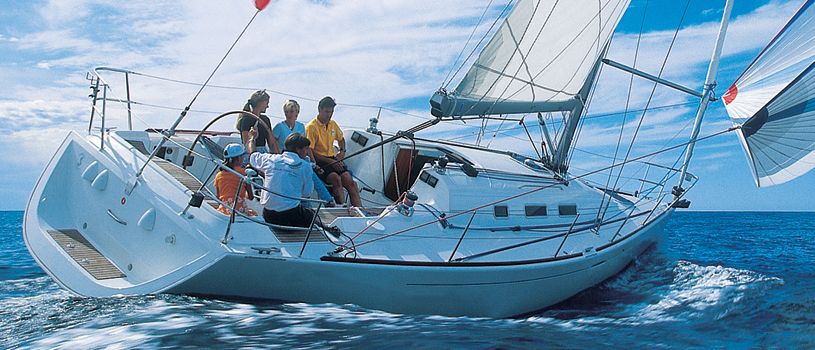
It seems a paradox, a sailing boat goes a third of the speed of a motorboat, but travels three times as far during a season. There must be an explanation. Find out more about the Scandinavian passion for sail.
You will find the explanation when you get out to sea. It’s when we have left our home port and motored out to the wind and the beast below decks (the engine) has been switched off it all happens, every time. Peace descends. All we hear is the wind and the sea, which begins to ripple along the hull.
All we hear is the wind and the sea, which begins to ripple along the hull.
The boat slips through the waves and picks up speed. It’s like flying, but we’re sailing. Hooray, that’s even better!
Alone with the forces of nature It is fantastic to run before the wind. That means we have the wind right behind or slightly to one side at our backs. We are pushed along, and everything is plain sailing. The wind is mild and there is not much to do, apart from enjoy life, perhaps even with the warmth of the sun not being blocked out by the sails.
The boat slips through the waves and picks up speed
But what if the wind is blowing one way and we want to go another? Then we harness the forces of nature and use them against her. We trim our sail and get a good speed out of the boat, even if we are sailing 45 degrees to the wind, e. g. into it. We ‘saw’ our way towards our destination. It is called sailing ‘close-hauled’, and if you are a philosophical turn of mind, you might say that running close-hauled is a metaphor for human life itself.
Noble race Scandinavians have a long history when it comes to moving from one place to another under canvas. It is scarcely more than two or three generations ago that all movement of people and transport took place by sea, either with oars or under sail.
A race against the wind and the water.
Now, as in days of yore, we want to sail as efficiently as possible, with its inevitable consequence. As soon as we spot another sail, we have to see who is sailing the fastest. It could be said, and only partly in jest, that a regatta is two sailing boats on the same heading. It really is not so strange. We are already engaged in a race which is both intellectual and physical; a race against the wind and the water. So why not test our prowess?
Traditionally a ‘man thing’ The great thing about racing is that many regattas, both short and long, can be completed in using the family tourer. But it is mostly with only the man on board. Regatta sailing is pretty much a ‘man thing’, which is a shame because those women who do join the fray can beat the boys. If they try just as hard. There are only one or two female international champions, after all!
So women are not inherently less capable than the men, either at the helm navigating or putting into port.
It is fantastic to run before the wind.
Novice mistakes A lot of people sail with too much canvas spread. That is a typical novice mistake, which can have a number of unfortunate consequences. Firstly, the boat heals right over, making it difficult to steer. Secondly, the boat will drag through the water, going slower than it should. It is no fun being aboard a boat like that. It may not be dangerous, but it can feel very uncomfortable.
The experienced sailor shortens his sail in time, perhaps even before it is really necessary. Then everything is so much better on board. The waves no longer seem perilous, they just give a wonderfully lively cruise. Yes, good sport! Now a little sea spray over the deck seems like a gush of champagne. Wow, we’re really moving!
Wind against the current And here is another mistake that novices make. They don’t take the wind seriously. Those sailing along the coast of Scandinavia, should be aware of meteorological phenomenon whose cause is difficult to describe in detail, but whose consequences are tangible enough.
As the day progresses, the sun sets up a special wind system which blows along the coast from right to left when you have your back to the land. It churns up the waves, with a lot of water spilling over the deck, because the current is running in the opposite direction along most of our coatline. The smart people choose that moment to enjoy life in port, and go out either late in the evening or early in the morning. Then your sailing holiday will be a great experience for everybody on board. And that is the objective, isn’t it?
Easy and hard Sailing is either easy or very demanding, depending on the size/type of boat, the waters you are sailing in and your level of ambition. But that sailing requires a different kind of knowledge from that needed to pilot a motorboat cannot be disputed. In fact, you have to know rather a lot to get a sailing boat to go where you want it to in all weathers.
Scandinavians have a long history when it comes to moving from one place to another under canvas.
In earlier times such knowledge was handed down from generation to generation. Today, more and more people are out on the water, and many of them know absolutely nothing about boats in general and sailing in particular.
There are several ways to learn. You can go out with an experienced sailor and learn from him or her, while also studying some of the many good books to be found on the market. There are local sailing clubs all over the place, so all you have to is check out the web.
Cath ‘em young We adults can only envy the young. They learn all that stuff so easily, so easily. Enroll them at a local sailing club and you will soon see. They understand instinctively and become very competent very quickly.
Luckily more and more sailing schools for adults are popping up too, both for singles and couples. Yes, there is even sailing schools for girls. So, if you are worried about making a fool of yourself with a man at the helm, that is the answer for you.
The Scandinavian Passion for Sail, written for Daily Scandinavian by Odd Lindboe
Hot, dangerous, and physically demanding work, traditional glass making methods go back centuries. Scandinavian glass was not widely known until 1920’s, when glass designers started a movement to bring high design standards to mass-produced glassware. However, without a doubt, some of the finest glass produced are those made in Scandinavia. Today, people from all over the world is fascinated by the magic of Scandinavian glass.
Glassmaking arrived in the Scandinavian countries in the 1500’s, which may seem early but relatively late compared with the rest of Europe. Denmark, Norway and Sweden are producers of Scandinavian glass, also known as Nordic glass.
With increased demand glass became such an integral part of Scandinavian culture that entire communities were built around the glassworks. The glassworks were established in small town like Orrefoss, Kosta, Kastrup and Hadeland. At that time, it was demanding and dangerous work with little protection for the workers. That has, of course, changed over the years.
Denmark
In Denmark, the leading glassworks are Kastrup and Holmegaards, which became one company in 1954. Michael Bang and Per Lutken were concentrating on very simple flowing vases in dark colors and were their most famous designers.
Crystal from Hadeland, Norway
Norway
In Norway, the main glassworks is Hadeland, which was founded in 1792. Notable glass designers in the 1950’s were Arne Jon Jutrem and Severin Bjorby.
Sweden
In Sweden, the great Orrefors glass-works led the way and designers like Simon Gate and Edward Hald developed techniques like Graal glass and Ariel glass, Sven Palmquist developed Ravenna glass, and Vicke Lindstrand designed for Orrefors from 1928 to 1941.
Kosta, the oldest glassworks in Sweden, founded 1742, and Flygfors, established in 1888, also produced some brilliant designs. In the 1950s Paul Kedely produced his Coquelle series of sculptured vessels for Flygfors. Flygfors was later taken over by Orrefors and closed in 1980.
Glasses from Orrefors, Sweden
The Magic of Scandinavian Glass
The Scandinavian glass making communities, surrounded by ample forests filled with production resources, produced fine crystal, excelling in engraved and enamel décor, for hundreds of years. But Scandinavian glass was held in somewhat low regard in the rest of Europe. It wasn’t until the Paris World Fair of 1925 that Scandinavian glass finally gained international recognition for its quality, beauty, and craftsmanship.
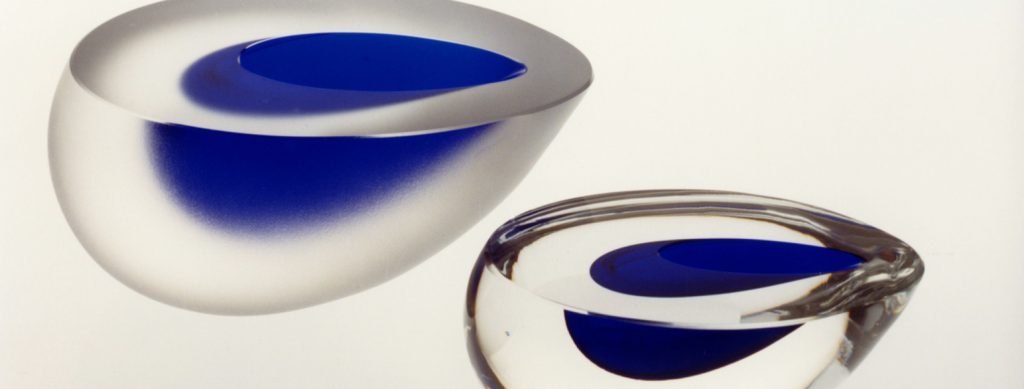
The second world war was a difficult time for Scandinavian glassworks. However, after the war they went back into full gear and readily embraced the new modern aesthetic. They experimented with color and new shapes, and produced some of the most beautiful glass pieces ever made, often simple, some seemingly delicate, but always striking.
Antique and vintage Scandinavian glass is widely collected by enthusiasts today and can be found at relatively reasonable prices.
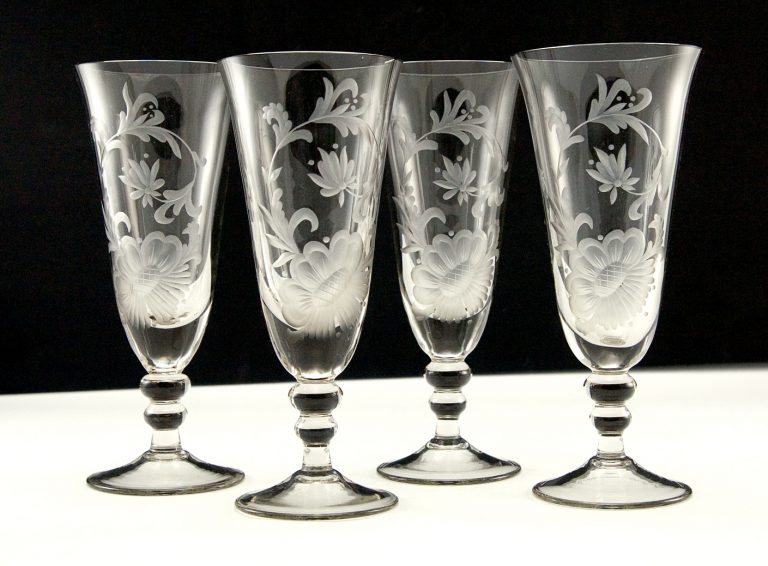
Feature image (on top): Etched crystal from Sweden
The Magic of Scandinavian Glass, written by Tor Kjolberg
The people of the southern Swedish territory of Skåne have more in common with the Danes than they do with their fellow countrymen in the north. Crossing over the Öresund Bridge between Denmark and Sweden has opened up the opportunities in the area for inhabitants as well as for visitors.
Even the relatively flat rolling landscape is remarkably similar. It is therefore no surprise to learn that those two areas were linked by land some 7,000 years ago. Only two courses of action were available to those who wanted to reunite these lands, one was to wait for another ice age, the other was to build a crossing.
Built in a true spirit of cooperation, what resulted was a wonder of modern construction, to rival that of the Channel Tunnel.
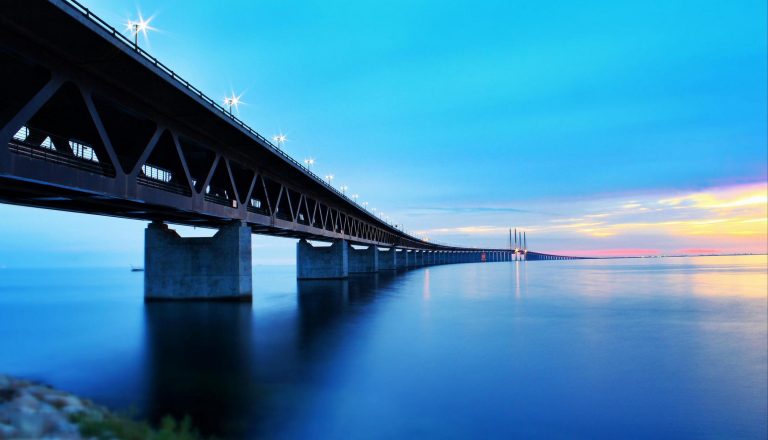
Built in a true spirit of cooperation, what resulted was a wonder of modern construction, to rival that of the Channel Tunnel. Before the bridge was officially opened in 1999, the crossing between Copenhagen and Malmö was a joyless one. Coaches and hovercraft would ferry people who found cheap flights to Sweden via Denmark, and they would mingle with Swedes who were looking for bargains on the other side of the water.
The arrival of the combined rail and road crossing changed all that and it is now possible to make the excursion in comfort and with speed. As you depart Copenhagen, the Öresund has a surprise for you as it starts its life as a tunnel to avoid interfering with the busy airport. Soon it emerges from the water, as a majestic bridge, providing fantastic views on both sides.
The crossing has really opened up this area of southern Sweden, and re-attached it to the mainland. Once across, the opportunities to explore are numerous. Outside of the cities the most popular destination is the area around the Falsterbro Peninsula. With its long sandy beaches, it draws hikers and sun-seekers from far and wide and transport-links connect well with the bridge.
Photography and film works spanning the period 1990 to 2005 by the Danish-Greenlandic artist Pia Arke (1958-2007) are exhibited in Trondheim Kunsthall with the title Wonderland. The exhibition Wonderland in Trondheim, Norway runs through 10 November.
Ever heard of Arctic hysteria? Neither did the Danish-Greenlandic artist Pia Arke until 1995, and then she forever changed the way we view Arctic explorers.
Pia Arke is remembered for her self-portraits and landscape photographs of Greenland
The complex ethnic and cultural relations between Denmark and Greenland
Pia Selskabit Arke (née Gant) was a Greenlandic Inuit (Kalaaleq) and Danish visual and performance artist, writer and photographer. She is remembered for her self-portraits and landscape photographs of Greenland, as well as for her paintings and writings which strove to make visible the colonial histories and complex ethnic and cultural relations between Denmark and Greenland.
Throughout her artistic-research practice, the artist used the metaphor of her own mixed-heritage (the “mongrel”) as an opportunity to engage these historical relationships, as well as address significant questions of Arctic indigenous identity and representation.
The relationship between Denmark and Greenland
The relationship between Denmark and Greenland, and their shared history, is at the heart of Pia Arke’s artistic work, in particular an investigation into the ways in which the western presence has shaped Greenlandic identity and what ethnicity entails. She posed questions related to how history is created and to whom it belongs. Arke explored what happens to a place and its people when a foreign power exposes it to systematic mapping and scientific research, and what happens when the foreigner has the power to determine the way in which the other is represented.
In the late 1980s Arke began to exhibit her paintings. In 1988, the artist developed her own life-size pin-hole camera (camera obscura) which she hand-built using pine and plywood, to photograph the landscapes of Greenland that she had known as a child. The results were exhibited in her exhibition Imaginary Homelands in 1990. The structure had a small entry-way where the artist would climb in and attach a sheet of film along the back wall. Light from the outside would then stream in through a small hole at the opposite end of the enclosure.
Arctic Hysteria
When Arke was digging through the archives of New York City’s Explorers Club in the spring of 1995, one photo from American explorer Robert E. Peary’s collection shocked her. The photo showed a native woman, topless and screaming, restrained by two fur-clad and seemingly untroubled white men. A curator told Arke the woman could have been suffering from a madness called Arctic hysteria.
In his Editors’ introduction to Pia Arke’s Arctic Hysteria 1997, Iben Mondrup describes how her exhibition was provocatively called “Arctic hysteria“, given the controversial irrationality that was said to affect indigenous women. Her exhibitions and accompanying explanations encouraged Denmark to reexamine the colonial history of Greenland. While a number of exhibitions were held during her lifetime, the first major exhibition of her work in Denmark did not take place until after her death with Tupilakosaurus (2010).
Greenland hunter, by Pia Arke
The history of Denmark’s colonial past on Greenland
The history of Denmark’s colonial past on Greenland has not been well known internationally and was rarely talked about. The Greenlandic side was also silent on the subject, as this part of their history was seen as shameful. Pia Arke wished to break the silence which characterized the history of Denmark and Greenland, which she herself had been born into.
The colonial history is primarily described in sources written by European explorers. Arke wished to collect the small stories which had not been told previously.
Arke’s mesmerizing film Arctic Hysteria, which she created the year after she found that dark photo, was looping endlessly in an alcove at Denmark’s Louisiana Museum of Modern Art, a museum which enjoys the kind of international acclaim that makes it a dream exhibit space for most artists.
Pia Arke explored what happens when the foreigner has the power to determine the way in which the other is represented
Greenlandic mother and Danish father
Pia Arke was born not far from the town of Scoresbysund (Greenlandic: Ittoqqortoormiit) in North-Eastern Greenland. She was a result of the relationship between Greenland and Denmark, with a Greenlandic mother and a Danish father. For Pia Arke the history of the two countries was a personal matter, directly connected to her own family history. Her artistic praxis was a means to process the colonial history, but also a recovery of history for the artist herself and her ancestors. Arke’s artistic oeuvre is a work against the collective loss of memory which silence has led to.
The art of Pia Arke
Her art and photographs re-examine the places where she lived as a child revealing Denmark’s repressive colonization. The exhibition Tupilakosaurus consisted of over 70 photographs, paintings, videos, installations and reports. As a result, Arke is now recognized as one of the Nordic region’s most important postcolonial critics and players as a result of the artistic research which she practiced for two decades.
“Slow violence”, by Pia Arke. (From Kunsthall Charlottenborg)
The woman that Peary called crazy, Arke considered kin. That sad knowledge drove all of her work, even the high-concept Artic Hysteria. “I make the history of colonialism part of my history in the only way I know,” Arke once wrote, “namely by taking it personally.”
The fight over what’s remembered and what’s forgotten is far from over. Arctic hysteria – and Arke – beg us to remember.
Trondheim Kunsthall
Wonderland in Trondheim, Norway
The exhibition title, which is loaned from the work Wonderland (1996), points to the arctic landscape as a symbol of resources and prosperity, as seen through the international interests which the western presence was a result of. The exhibition Wonderland runs at Trondheim Kunsthall through 10 November.
Wonderland in Trondheim, Norway, sources: Trondheim kunsthall and Wikipedia
West Sweden, with its beautiful preserved archipelago, cold and salty waters and quiet coves make Bohuslän the perfect destination for shellfish lovers. The Bohuslän coast, north of Gothenburg, stretches 170 km to the Norwegian border with several tiny fishing villages, pretty towns, smooth waters for sailing, narrow fjords and an abundance of seafood in clean, mineral-rich waters. Read more about shellfish safaris in West Sweden.
While most people visit Sweden in the summer months (June, July and August), the autumn is far better if you want to go on a shellfish safari looking for mussels, crabs, lobster and oysters when Bohuslän is staggering beautiful. Thanks to the abundance of fresh, local seafood, you won’t be surprised that food journalists have gone mad for the west Swedish coastline.
Bohuslän is the perfect destination for shellfish lovers
You can hire a car and drive to quiet and secretive places, join the locals and sail along the coastline. Most of the islands here are linked by bridges or ferry crossings and are easily accessible. Places worth stopping at includes Tjörn, a short drive over the Skåpesund bridge from Orust. Orust Shellfish organizes shellfish safaris, and we recommend a stay at Strandflickorna Havhotellet in Lysekil
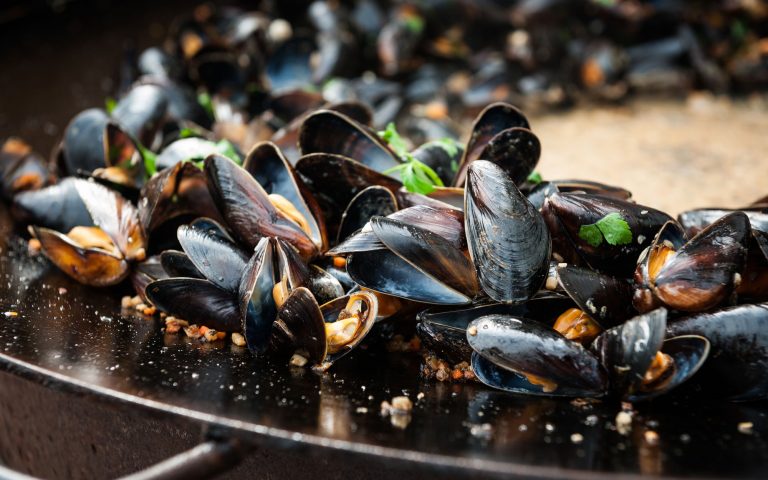
Shellfish safaris have become one of the most popular activities in the region, and a mussel- and oyster safari in Lysekil is a real adventure. Mussels are caught by hanging nylon stockings out of big pipes in the water. The mussels are ‘sown’ into the stockings and the dangled into the sea where they grow for 2 years in the nutrient-rich waters until mature enough to be harvested.
If your favorite shellfish is oyster, head for Grebbestad
The definition of a safari is a journey or expedition for the purposes of hunting, exploration or investigation. When you embark on a shellfish safari in West Sweden, you combine all of those aspects into one unforgettable trip. In Lysekil there is also an interesting museum of marine life, Havets Hus.
On the first Monday in September every year something magic happens in the county of Bohuslän. It is the beginning of the lobster season and countless boats leave the dock at the same time ready for the big catch. Lobster season is mid-September through December.
From the tiny car-free enchanting Koster Islands
Whether you come in September or later in the oyster season, you can learn everything there is to learn about fishing for the black gold. In recent years, both hotels and private boat owners have begun offering safari-type shellfish voyages to visitors eager to experience fresh seafood.
Don’t miss Marstrand island with its ornate wooden houses and the impressive fortress Carlstens Festning.
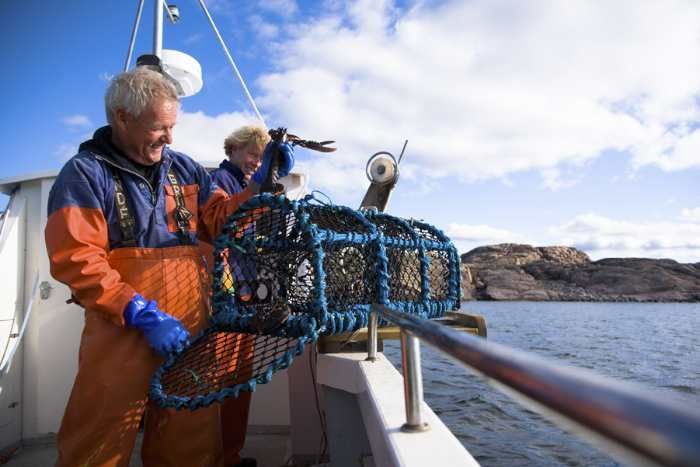
On the rolling waves of Kosterhavet, outside the tiny car-free enchanting Koster Islands, you can Join a fisherman and help him land the cages filled with the “black gold”. The islands are populated by more birds than people and is perfect for cooking fresh seafood on campfire in specially designed areas. On Sydkoster Hotel Ekeneäs you can enjoy a 4-course lobster menu.
Lobster safari in Fjällbacka
The organic restaurant Kosters Trädgårdar is a must. It sums up why the Koster islands are so unique. Everything cooked in this restaurant is either caught that day or harvested from their own gardens, epitomizing the naturally laid-back atmosphere of the islands.
The lobsters fight often with one another and with the crabs too, gnarly little sods; this is why they often lose a claw, then grow a new one, leaving them with one claw bigger than the other. They’re incredibly lively when fresh and the claws need to be banded quickly, as they can take a finger clean off no problem. We saw lobsters as big as 2kg but they’re not good to eat at that age – less sweet.
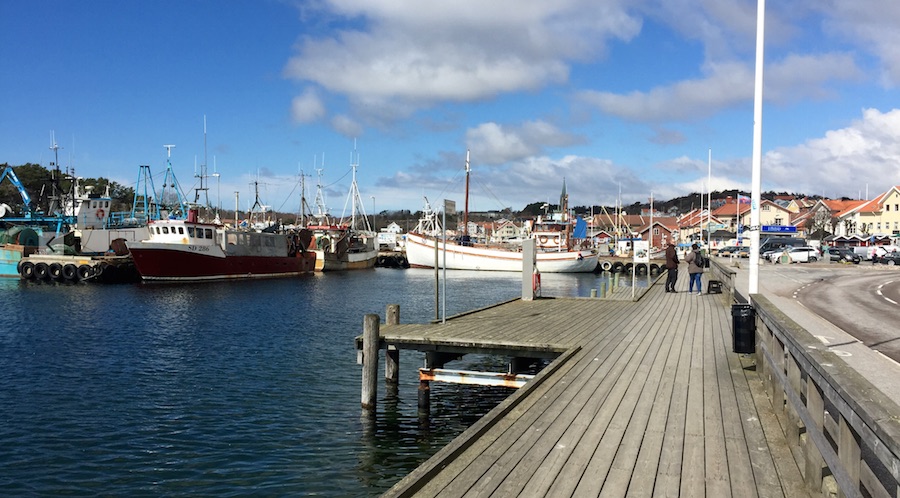
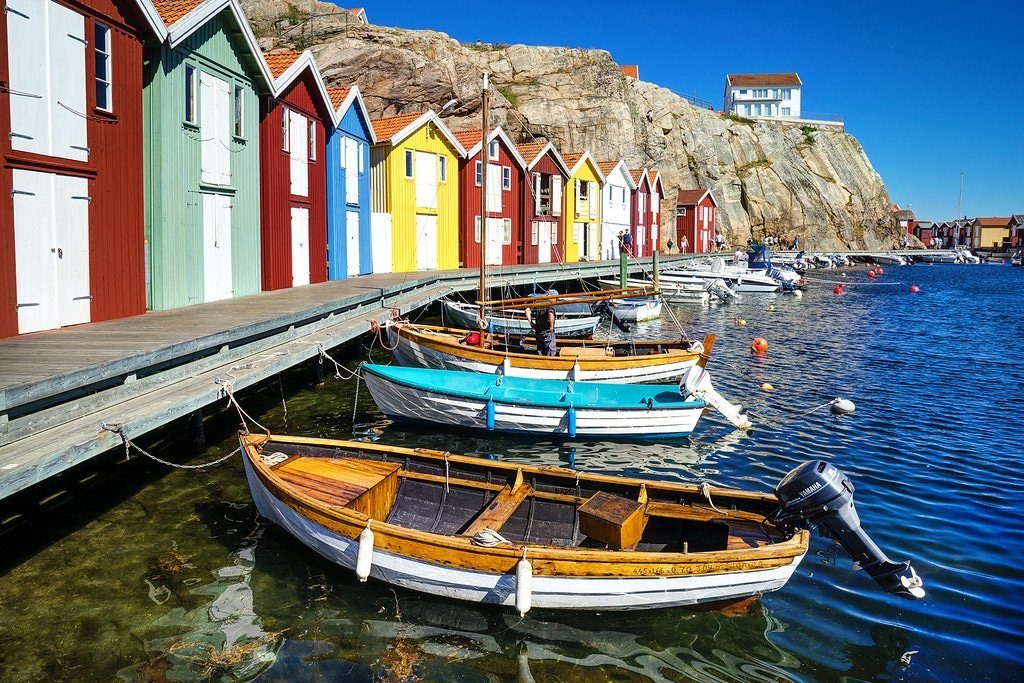
While the entire Bohuslän offers excellent lobster fishing, Sea Lodge Smögen is a special gem thanks to its own pier and certified gourmet restaurant. Enjoy your own catch cooked to perfection by the gourmet chefs after having joined the local fishermen on their boats at sea. In Smögen you’re sure to find it all; crayfish, oysters, langoustines, mussels, lobsters, crab and shrimps. If you want to enjoy them as a local, there are certain traditions you should know about.
Langoustines, for example, should be drunk with Aquavit while prawns are best eaten from a paper cone on the pier or harbour wall and washed down with a cold beer. Shrimp are delicious in a sandwich, but try them smoked and eaten out of a bag as you stroll the boardwalk of pretty Smögen.
Mussel- and oyster safari in Lysekil is a real adventure. Photo credit: Wikipedia
With all this talk of wildness and water, you’ll be itching to know what’s on the menu on this coast. Name a northern-waters fish or shellfish and it’s a fair bet you’ll find it here: mackerel and herring. To enjoy them like a local,
If your favorite shellfish is oyster, head for Grebbestad. An astonishing 90 per cent of Sweden’s oyster supply originates here. At Everts Sjöbod you can take part in a two-hour oyster opening class in the 19th century boat house. Per Karlsson from Grebbestad has been selling oysters for almost 25 years and says that the oysters of Sweden are considered by experts to be some of the best in the world, and the best way to enjoy them is fresh from the sea.
Cottages in Smögen
At Handelsman Flink hotel, located on the island of Flatön, you’re offered a package that begins with a gourmet lunch followed by a boat voyage in which guests take turns pulling lobster traps from the water.
Most closely associated with Sweden, however, is perhaps the crayfish, because of the traditional crayfish parties that take place in August every year. At Fjällbacka you can go on an oyster trip with local fishermen.
A top tip is to visit Bohuslän during the autumn or spring. The shellfish season has then kicked off properly but you’ll avoid the crowds. Moreover, there is plenty to do before that shellfish safari: between nature walks, boat trips and kayaking, you can be sure that all your nature, adventure and culinary desires will be seen to.
Shellfish Safari in West Sweden, compiled and written by Tor Kjolberg
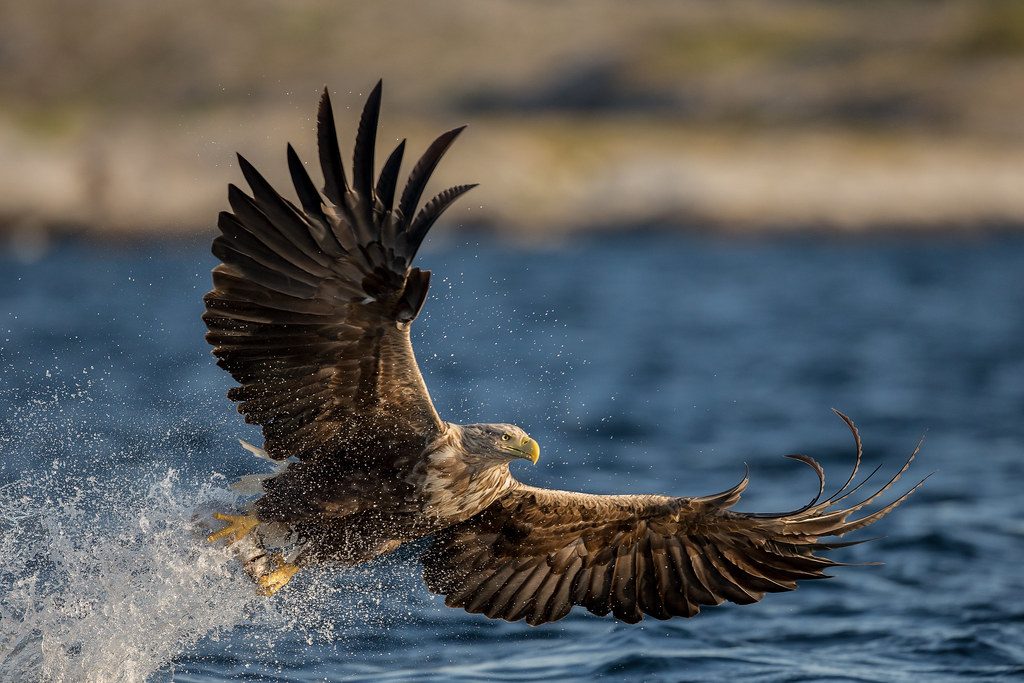
The white-tailed eagle (Haliaeetus albicilla) is enormous and indefatigable and turn their daily hunt into a thrilling display of aerial dominance. You can watch the majestic sea eagles in Norway all year round.
However, the white-tailed eagle population in Norway hasn’t always been so robust. They were hunted aggressively until 1968, when protections helped their numbers rebound from several hundred breeding pairs to thousands of pairs today.
So if you are a passionate student hungry for new knowledge or just an essay writer like KingEssays that is looking for topics for research, just keep reading.
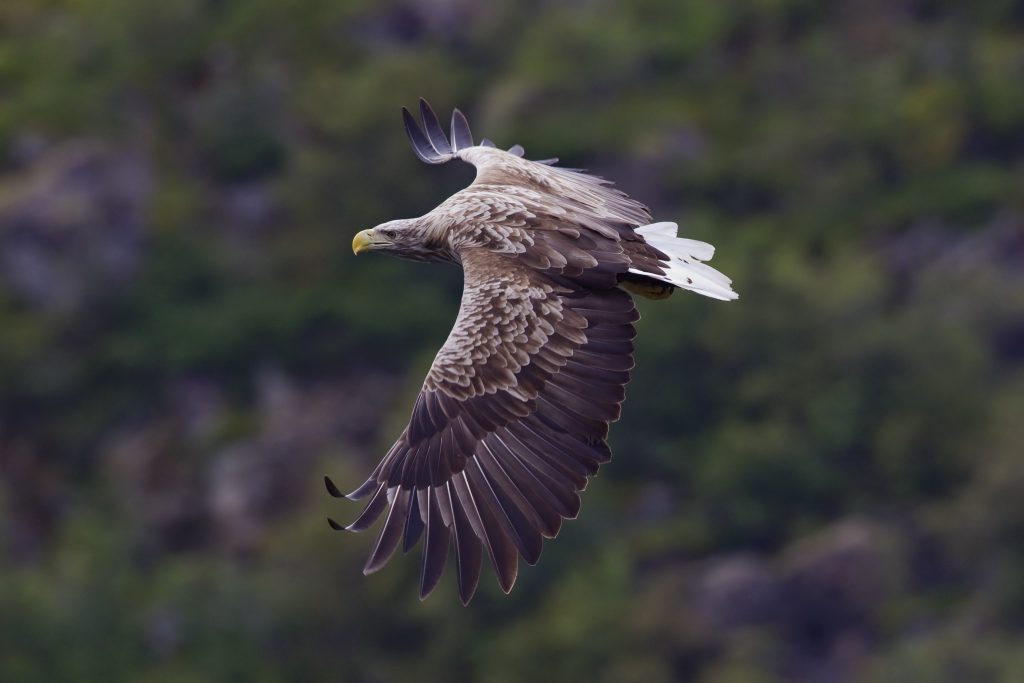
Haliaeetus albicilla, Svolvær.Photo credit: Wikipedia
The largest species of eagle in the world It is the largest bird of prey in the family of Accipitridae which includes other raptors such as hawks, kites, and harriers. They are among the largest species of eagle in the world, with a wingspan of up to eight feet. Nordland (North Norway) has 35 % of all the white-tailed eagles in Norway and 20 % of the world population. You will not find a better guarantee for a meeting with this majestic bird of prey. Here you can catch the eagle’s eye all year round.
The White-tailed Eagle also called the Sea Eagle, and White-tailed Sea-eagle is a large bird of prey in the family
Norwegian white-tailed Sea eagle
Scientifically these large raptors are commonly known as sea eagles or white-tailed eagles. “Sea eagle” is an accurate translation of the genus name, Haliaeetus, while “white-tailed” is accurate for the species name, albicilla. The Norwegians call them Havørn.
She as been watching you for quite some time
“You feel her presence before you see her. But she has already seen you. Been watching you for quite some time, gliding majestically above your head, reconnoitring, sailing on the up-current and waiting. Waiting for her prey to approach the surface, ready for transformation into a tasty lunch,” says a fishing expert.
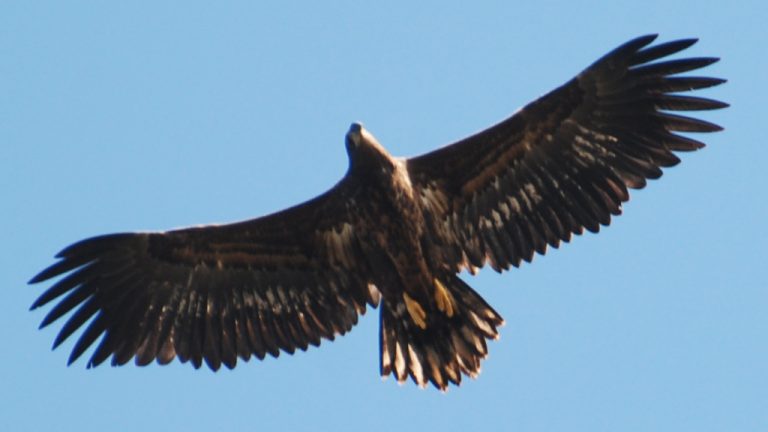
Haliaeetus albicilla is the largest bird of prey in the family of Accipitridae
According to BirdLife International, the European population is 50 to 75 percent of the global population. European breeding pairs are in the range of 9,000 to 12,000, with more than half in Norway and Russia. The total European sea eagle population is estimated at 18,000 to 24,500 mature individuals. The White-tailed eagle is considered a close cousin of the Bald Eagle and occupies the same ecological niche, but in Eurasia. It is a very large bird. It measures 66 – 94 cm in length with a 1.78 – 2.45 meters wingspan. The wingspan, with a midpoint of 2.18 meters is on average the largest of any eagle.
A perfectionist at work The White-tailed eagle is a perfectionist at work. Quick, yet surprisingly leisurely, she approaches the great blue expanse of water. A quick splash and it’s all over, but only for the fish. For you, this meeting with the sea eagle is something you will bear with you. For a long, long time.
In north of Norway, these birds are year-round residents. However, sea eagles are also found in sizeable populations in Greenland, Sweden, Poland, and Germany and in smaller numbers in Iceland, the UK, all the countries along the Baltic, parts of central and eastern Europe, the Adriatic, Greece, Turkey, and Iran. In Asia, populations are found in China and Japan.
You can watch the majestic sea eagles in Norway all year round. Photo credit: Flickr
Watch the Majestic Sea Eagles in Norway
Virtually any fish found near the surface is potential prey for the White-tailed eagle. Commercial fisheries and carp ponds are readily exploited by the eagles when available. There are hundreds of Sea Eagles (White-tailed Eagles) in the area around Bodø, both young and old. The people who live there, and who are out at sea on a daily basis, know where they are. BirdingBed is run by two hobby ornithologists, Erik A. Hansen and Kenneth T. Lunna. Erik has been birdwatching periodically his whole life, while Kenneth is relatively new to the game. They will gladly take visitors to sites close to the eagles – but not too close!
Sea Eagles pair for life. They are known for spectacular courtship displays, locking their talons together in midflight and tumbling to earth. The eagles build their nests in trees or on coastal cliffs. They are very territorial and will often use the same nests year after year. In fact, a nest in Iceland has been used by successive generations for over 150 years.
Bodø – the town of the Sea Eagle
Bodø is known as the town of the Sea Eagle, and nowhere in the world is there a larger stock of this majestic bird. Daily these huge birds are observed soaring high above the town or perthed on rocks on the islands near Bodø. The Sea Eagle Society (in Norwegian only) is an exclusive club that aims to protect the sea eagle and to inform the public about this proud bird.
Membership in the Sea Eagle Society is available at Destinasjon Bodø and at the Norwegian Aviation Museum, but only to those who have actually been in Bodø and have seen the sea eagle in its natural environment.
Feature image (on top): Photo credit: Wikipedia
Watch the Majestic Sea Eagles in Norway, compiled and written by Tor Kjolberg