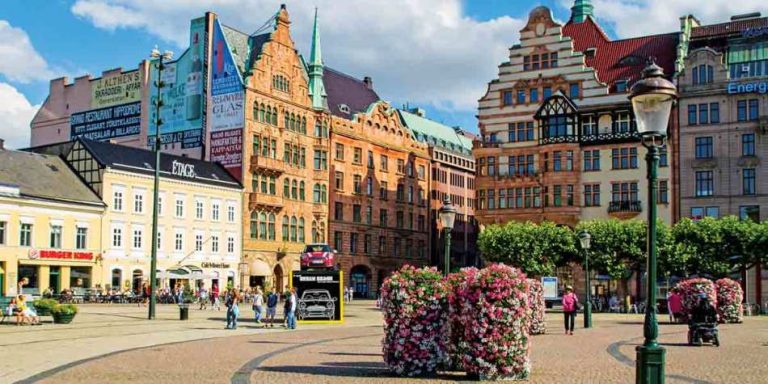
Malmö is Sweden’s third city, a lively, multicultural place with a population of about 320,000 and a bubbling restaurant scene. In the 16th century, Malmö competed with Copenhagen to be Scandinavia’s leading capital. Read more about Malmö – Sweden’s lively multicultural city.
Malmö was an important port, not far from rich fishing grounds. Today, the harbor is still busy and many of the old buildings remain. Malmöhus, the dominating castle built by King Christian III when Skåne was still part of Denmark, is Scandinavia’s oldest remaining Renaissance castle. It houses the Malmö Museer (Malmö Museums), which include the Art Museum, history exhibitions, an aquarium, the Science and Technology/Maritime Museum and the Kommendants Hus (Commander’s House).
Malmöhus is Scandinavia’s oldest remaining Renaissance castle
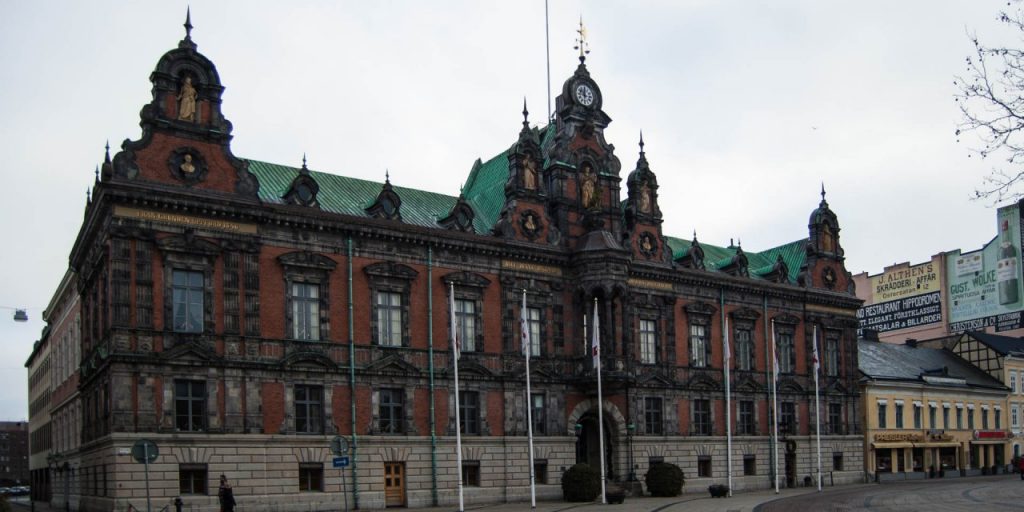
Malmö City Hall
From the same period is Rådhus (City Hall), which you will find in Stortorget, one of the largest squares in Scandinavia. It was built in 1546 in genuine Dutch Renaissance style. In 1860 it was given a facelift with niches, bays, allegorical paintings and colonnades.
Northeast from Stortorget is St. Petri Kyrka (St Peter’s Church), built in the Baltic Gothic style and dating from the 15th century, although its towers were built in the 15th century and its copper spires in 1890. This elegant cathedral features a beautiful altar area created by sculptors in 1611.
Malmö City Hall was built in 1546 in genuine Dutch Renaissance style
The Small Square
A particular idyllic place to sit and relax is Lilla Torg, with its cobblestones, carefully restored houses and 16th-century charm. Through an arch on the south side of the square is Hedmanska Gården. Once a merchant’s home and trading yard, it now houses the Form/Design Center, where Swedish industrial design and handcrafts are displayed.
Hedmanska Gården houses the Form/Design Center, where Swedish industrial design and handcrafts are displayed
Walking east from Lilla Torg, make sure you don’t miss Malmö’s exciting new cultural hub, the Moderna Museet, which opened at the end of 2009. This former power station now contains one of the most comprehensive 20th century art collections in Scandinavia, and host-changing exhibitions of local and international artists.
Turning Torso is Sweden’s tallest building at 190 meters (620 ft), designed by Spanish architect Santiago Calatrava
Malmö – Sweden’s Lively Multicultural City Malmö’s most impressive modern building is without doubt the Turning Torso. Sweden’s tallest building at 190 meters (620 ft), designed by Spanish architect Santiago Calatrava. This unique structure, which twists 90 degrees from bottom to top, has revitalized the West Harbor area of the city, now a popular summer dining spot.
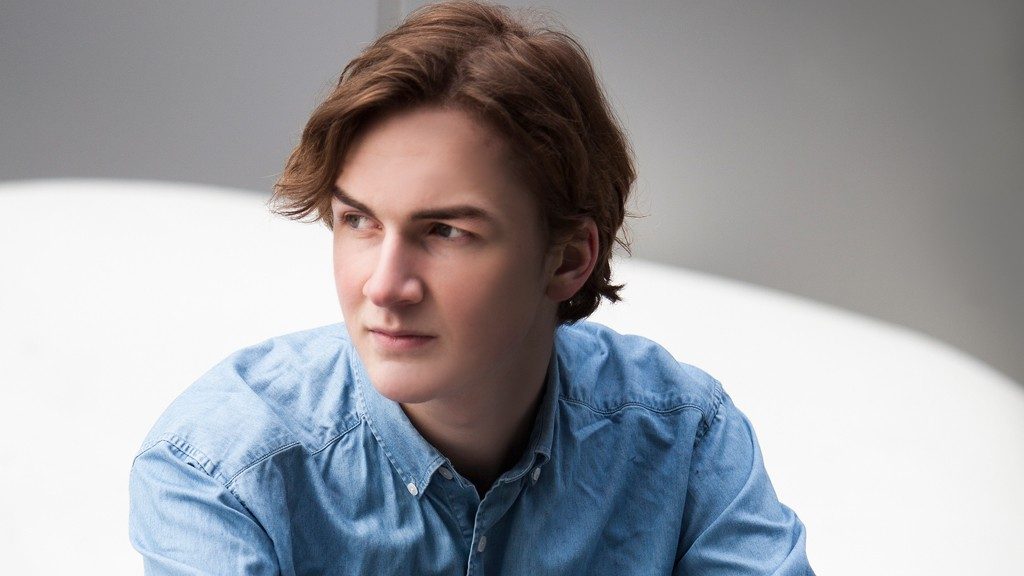
Read the fascinating story about the Norwegian dance-pop-wizard Bearson (Jacob Bjørn Hansen) who moved to Los Angeles, got a record deal with America’s most important publisher of electronic music and wrote songs in Nicuragua’s jungle with Carly Rae and Tove Lo.
The producer of pop-oriented dance music, Bearson, made his first steps during the mid-2010s as a teenager. His music is characterized by relaxed rhythms and colorful melodies. He was first noticed with remixes by artists such as Susie Suh, James Bay, the Lighthouse and the Whale and Benjamin Francis Leftwich. His first two hit recordings were “Pink Medicine” (2015) and Imposter (2015).
Bearson’s music is characterized by relaxed rhythms and colorful melodies
A sought-after remix producer
However, Bearson was particularly successful with the 2016 singles “Want You” (featuring Cal) and “One Step at a Time” (featuring Nat Dunn), both of which were released through the Sony-distributed Ultra Music. Since then, he has become a sought-after remix producer for the likes of Susie Suh (“Here with Me”), Ghost Loft (“Talk to Me”), and Tove Styrke (“Ego”).
In collaboration with Utah-based teen producer, Ford, he tackled his previous track, ‘Get Lost’ (feat. Ashe). The original partnership with EDM-pop songstress Ashe occupied a tropical-pop setting that featured a soaring spectacle of Bearson’s ultra-sleek productions commanded by the pop singer’s yearning vocals.
Melding the worlds of disco, dance and electronic
In 2018, he received a co-writing credit for BØRNS’ “Second Night of Summer” and continued issuing singles through Ultra, including “Go to Sleep” and “Get Lost,” which added Kailee Morgue and Ashe to his list of vocal collaborators.
In 2018, he received a co-writing credit for BØRNS’ “Second Night of Summer”
Earlier this year, Chicago producer Whethan made his first release in a collaboration with Bearson on the single “Win you over” which enlists Irish singer SOAK. The song carries a contagious groove throughout its duration, melding the worlds of disco, dance and electronic into a smooth cohesion.
The Norwegian Dance-Pop Wizard
Not content to merely work with other artists, Bjørn-Hansen has supported like-minded talent through his Next Wave label.
The Norwegian Dance-Pop Wizard, written by Tor Kjolberg
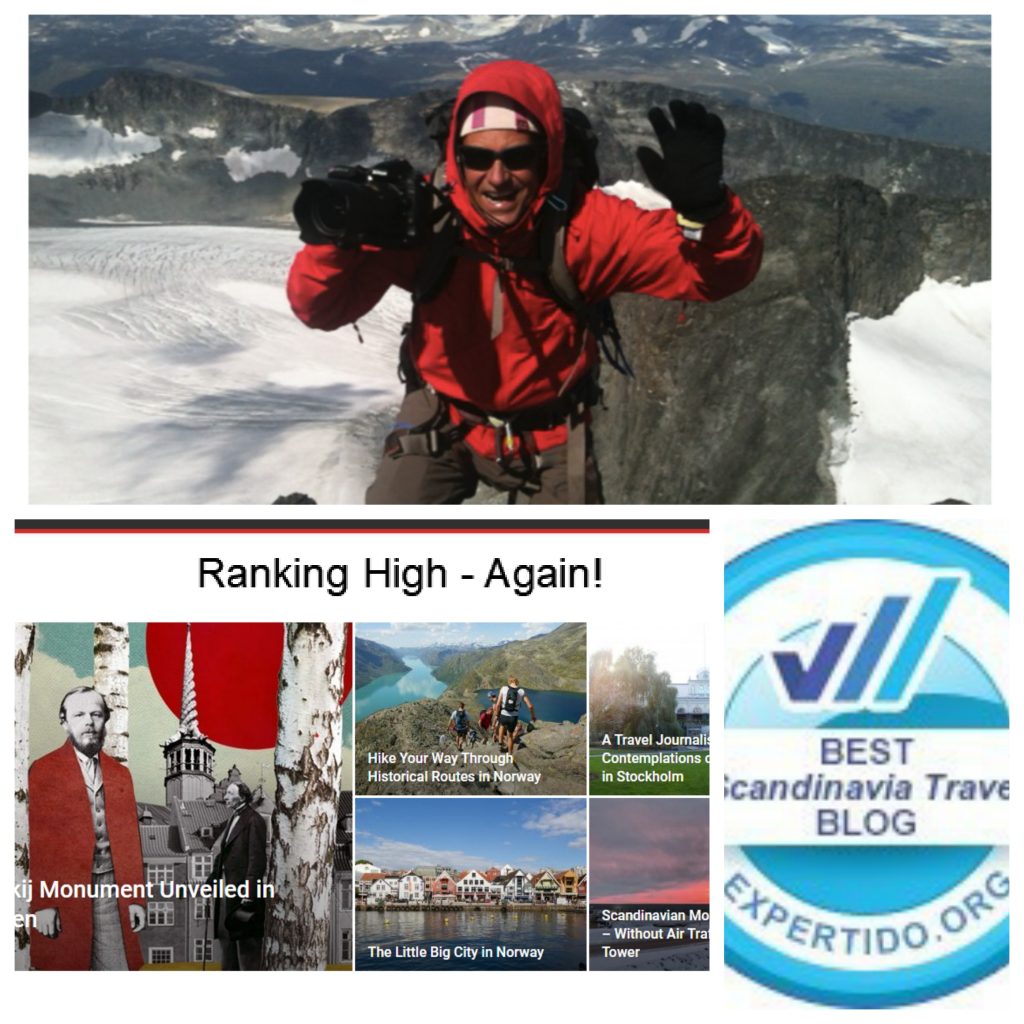
Our hard work pays. Last year Daily Scandinavian was awarded the 3rd ranking award on “Top 50 Scandinavia Travel Blog” by Feedspot. This week, it was proclamimed that we were accepted on the Expertido’s list of the 25 Best Scandinavia Travel Blogs.
Expertido’s 70-person strong team of professionals has researched and collated over 192 blogs to see which would fit their customers high hopes. “It’s not surprising that only 32 were able to reach that goal, as we only give the best suggestions,” says a spokesperson for the company.
According to Expertido, there are about 25,716 Scandinavian travel blogs on Facebook alone
The team is looking through a number of factors, and among the most crucial questions are the following:
– How well does the site protect your data?
– Is it easy to read, with proper spelling and language use?
– Is the interface clean and user-friendly?
– What kind of promotions are on the site?
– What is their social media presence like?
Although we (Daily Scandinavia) feel we have a long way to go (and several new ideas will be realized in the coming months), it is inspiring to receive an honor like this.
Travelblogs in a competitive market
According to Expertido, there are about 25,716 Scandinavian travel blogs on Facebook alone. Twitter, which is always a top choice for bloggers, has an average follower count of about 912.
Expertido’s editorial team (from top, clockwise: Julia J. Cohen, Jeff Smith, Carmen Schantz and Claudia Vergara
In its announcement, Expertido says, “We heartily recommend all the blogs listed here, as they have impressed our professionals and met our golden seal of approval, which means they can use our seal free of charge for good.”
The selected few
The company adds that it looks into many different elements other than appearance in social media and follower counts, but this metric is an important one to think about. “To synopsize, we’ve made sure that the blogs we’ve favored are highly popular on social media and will continue to grow. Expertido wishes these great blogs the best”!
Daily Scandinavian’s editor-in-chief interviewing founder of Fotografiska, Stockholm, Janne Bromann
Expertido US based Expertido was launched in 2019. The company is aiming to be one of the largest and most comprehensive product review sites in the United States, with tens of thousands of reviews and rankings in categories that include travel, fitness & outdoor equipment, personal care, infant care, electronics, home & garden, household appliances and much more.
«Unlike many other consumer portals, we focus entirely on digital commerce. We regularly browse the largest online shops such as Amazon and eBay for new product ranges, which we examine for our readers».
It’s inspiring to receive an honor like this
The winners have earned their titles
The company is not dependent on any manufacturer, brand or laboratory. Its comparison and award winners have earned these titles due to their outstanding product features – but never bought them. If there is a cooperation with a retailer, this will be clearly communicated by means of information.
The Expertido teams spend more than 5,000 hours a year, reviewing, analyzing, researching, and testing new products to provide recommendations, reviews, and guides to keep you informed.
Feature image (on top): Our photographer Terje Rakke/Nordic Life in action.
Daily Scandinavian Ranking High – Again! based on information from Expertido
Nord-Sjælland (North Zealand), north of Copenhagen, has been named the Danish Riviera. There are many reasons for this. Stunning landscapes, castles and museums combined with endless sandy beaches make North Zealand an all year-round favorite. When you add the world-renowned culinary scene and countless cultural lures, the name ‘the Danish Riviera’ is well and truly earnt.
Both locals and visitors enjoy the world-famous Louisiana Museum of Modern art as well as the traditional thatched cottages along the way. Zealand is Denmark’s biggest island and it is easy to fall in love with the northern part with scenic villages like Gilleleje, Helsingør and Hillerød. This part of Denmark has so much to offer; in addition to top art museums and historic castles you can enjoy award-winning restaurants and chic shops.
Fredensborg Castle. Photo: Kim Wyon/Visit Copenhagen
Attractions Louisiana Museum of Modern art is situated on Road 152 in Humlebæk. It is the most visited museum in Denmark, built in the 1950s. It displays artworks by renowned Danish and international artists with both permanent and temporary exhibitions. Its unique location is a reason on its own to visit the museum.
Three of Denmark’s most spectacular castles are nestled here; Fredriksborg Castle is called Denmark’s Versailles. Another spectacular building is Fredensborg Palace with its Baroque Gardens and the Valley of the Norsemen. And not least the UNESCO World Heritage site Kronborg Castle, widely known for being the set of Shakespeare’s Hamlet. In the summer there is the annual Shakespeare’s Theatre Festival.
The Maritime Museum of Denmark (adjacent to the Kronborg Castle) offers a unique experience to its visitors. The several exhibitions and installations that present the 600 years of Denmark’s maritime story must be seen from a subterranean showroom, conceived in 2013 by the renowned architects the Bjarke Ingels Group.
The old shipyard in Helsingør has been repurposed into a sprawling library and arts space, the Culture Yard.
Frederiksborg Castle is a structure built in the first decades of the 17th century by the Danish king Christian IV, is situated in Hillerød, just north of Copenhagen. Photo: Courtesy of Frederiksborg Castle/Daniel Rasmussen
On summer Saturdays, artisans, craftspeople, and farmers sell their handmade and homegrown goods at the Tisvilde flea market.
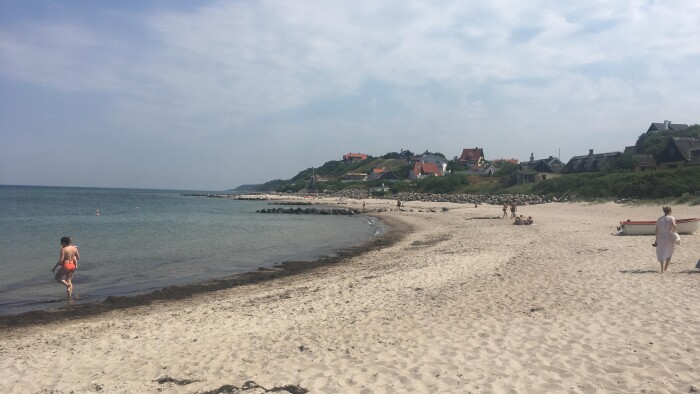
Beaches, Lakes and Forests On the northernmost coast you find three of Denmark’s most popular beaches; Tisvildeleje Beach, Dronningmølle Beach and Gudmindrup Beach. The largest beach in North Zealnad is Hornbæk Beach.
Two beautifulk gems worth visiting are Denmark’s second-largest lake, Esrum Sø surrounding Fredensborg Castle and Hornbæk lake which is in the homonymous city.
Denmark’s fourt-largest forest is Grib Forest at Bribskov. Here you should discover the hidden paths of Troldeskoven (Troll’s Forest). Enjoy the wooed nature trails in Teglstrup and Hellebæk Forest.
Where to stay The star of North Zealand is Helenekilde Badehotel, located in the charming seaside town of Tisvildeleje overlooking the Kattegat. It was built as a private summer home by a construction magnate in 1896 and acquired in 2001 by former ballet dancer Alexander Kølpin. It underwent a complete renovation in 2008 and is famous for its dynamic restaurant serving modern Nordic cuisine.
The elegant but understated inn Tisvildeleje Strandhotel offers an enjoyable stay for couples as well as for families.
Originally constructed in 1904, Hotel Hornbækhus is a beloved seaside sanctuary with 36 recently renovated whimsically decorated rooms by Danish design studio EEN. The hotel’s sister property Villa Strand with 15 rooms offers direct beach access.
Blink and you’ll miss the quaint town of Tisvilde. The sleepy hamlet has two elegant but understated inns, the Tisvildeleje Strandhotel and the Helenekilde Badehotel. The latter is the sister to Copenhagen’s buzzy Hotel Sanders. Curl up on the sprawling back deck to watch the sunset over the waves.
Cafe Hammermøllen
Wining and dining Restaurant Sletten in the idyllic town of Sletten is helmed by the chef duo behind the Michelin-starred Formel B. It offers an inventive a la carte menu of small plates that showcase seasonal local ingredients. Enjoy seasonal dishes like poached oysters, white asparagus and cod.
In a pink building standing on top of the hill in Tisvilde, you find Restaurant Tisvilde Kro. This restaurant is the work of Danish entrepreneur and multimillionaire Thorvald Stigsen (known for founding travel brands Skygate and Momondo). Two years of painstaking renovations saved this dilapidated building from demolition and made it into a swanky restaurant. On the menu: fresh-shucked oysters; zucchini blossoms stuffed with mozzarella and anchovies; burrata panzanella; white asparagus with fjord shrimp; and lingonberry sorbet.
Rabarbergaarden has a constantly changing limited menu based on produce harvested from the restaurant’s organic farm. Meat and fish dishes are available throughout the season.
Café Hammermøllen in Teglstrup is housed in a 1765 water mill in the park.
Unlike the French and Italian Riviera, the ‘Danish Riviera’ isn’t as touristic so prices haven’t hit the roof yet. It is also always the choice of finding a quieter place away from the crowd.
The Danish Riviera, compiled and written by Tor Kjolberg
In the dark November month in Stockholm, the capital of Sweden gives us many sparkly and enlightened ways to have fun and keep our minds away from the gloomy weather conditions. Read more about the glittering seasonal events in Stockholm.
The streets of Stockholm start glittering when they are dressed with the Christmas decorations, and even the Swedish movie stars shine on the red carpets of the capital’s cinemas during the Stockholm Film Festival. The light of the projectors on the screens in the theatres takes us to worlds we only have dreamed of. November in Stockholm is far from a dark time. It’s a time to see the light in different shapes.
The streets of Stockholm start glittering when they are dressed with the Christmas decorations
One million LED light
One million LED lights in over 40 streets, places and squares is launched on the 16 November. In addition, the city offers a wonderful Christmas atmosphere. Enjoy the Christmas Market at Skansen which has been an annual tradition since 1903. From 30 November, the market square is filled with food, treats and decorations and the bonfires are lit.
Christmas in Stockholm. Stockholm, Sweden
All the historical houses and farmsteads are decorated and in the town quarters you can meet skilled craftsmen. On the opening day, there will be craft demonstrations and live music in the buildings where the tables are also set for Christmas dinner. Young and old can participate in dancing around the Christmas tree and make their own Christmas decorations in the workshop.
There are several Christmas markets in Stockholm, just find the events here.
For visitors and citizens alike, a traditional Swedish Christmas buffet, “julbord”, in Stockholm is a must during the season
The traditional Swedish Christmas buffet
For visitors and citizens alike, a traditional Swedish Christmas buffet, “julbord”, in Stockholm is a must during the season. Here are our top tips on restaurants offering Christmas buffet, and some restaurants that are open for dinner during the Christmas holidays. Enjoy meatballs, Jansson’s temptation, lutfisk, gingerbread, hot glögg and much more. The season starts in late November.
For the second year in a row, Herman’s Restaurant & Trädgårdscafé is holding a 100% vegan Christmas market, filled to the brim with delicious treats, healthy products, artworks, books and much more!
Glittering Seasonal Events in Stockholm Why not come into the holiday spirit with some classic Christmas carols? Or why not design and build your own a gingerbread house? Here’s are some exciting things to do in Stockholm when Christmas comes rolling in.
Feature image (on top): Photo – Your Living City – MIKAEL SJÖBERG
Glittering Seasonal Events in Stockholm, based on material from Stockholm tourist boards
On Sunday 3 November, a monument of one of the world’s most important authors, Fjodor Dostojevskij (1821-1881), was unveiled at the historical Assistens Cemeteries outside the City of Copenhagens´s Nørreport. But why was a Dostojevskij monument unveiled in Copenhagen?
Actor Viktor Melnikov has since 2013 provided a sparklingly sharp insight into Dostoevsky’s writing, a unique acting performance with the dissemination of the authorship on stage, which has been performed in the small Chapel there. He created an authenticity and intensity on the stage room, entirely in the Dostojevskij’s spirit. Dostojevskij’s writing allows us to look into the secret corners of our fellow human beings.
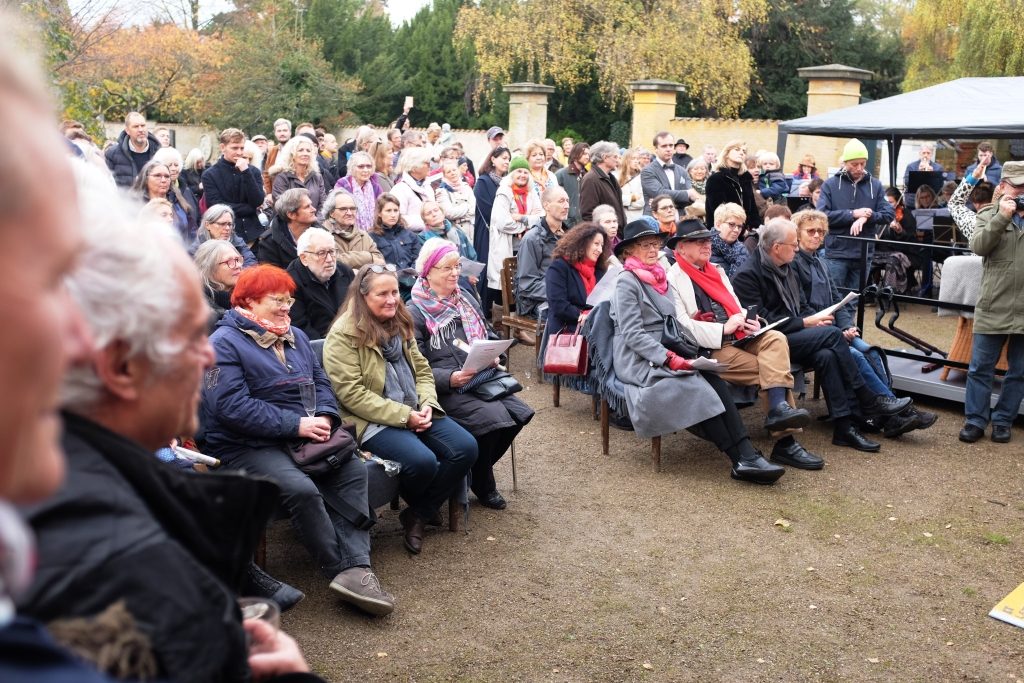
A lot of invited guests as well as interested visitors attended the event
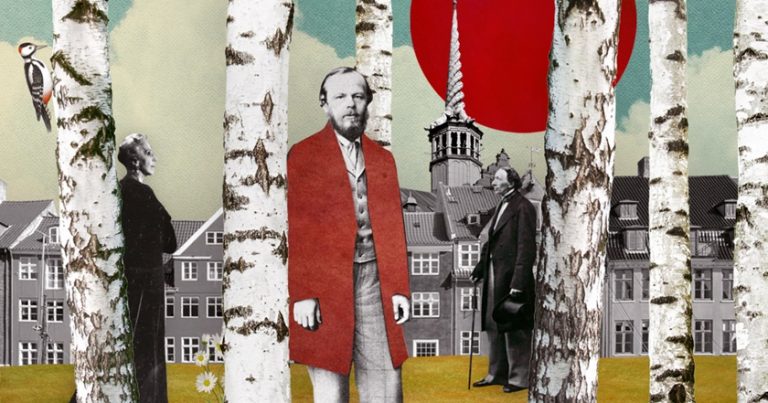
The Dostojevskij monument in Copenhagen
The unveiling ceremony consisted of live music, pantomime art and speeches by, among others, cultural adviser Christoffer Jørgensen, Dostoevsky experts and the Russian ambassador to Denmark, Vladimir Barbin. The young Russian artist Andrey Tartishnikov was present, saying that his biggest problem when he created the sculpture was when he should make the eyes. He said, he chose to leave two black holes in his face which symbolized how Dostoevsky was able to see the depth and contradictions of his heroes.
The monument is given in appreciation of the Dostoevsky theater trilogy, The Dream of a Rediculous Man, Krotkaja and The Little Orphan.
From left: Russian ambassador to Denmark, Vladimir Barbin, with interpreter mime artist, cultural adviser Christoffer Jørgensen
Fjordor Dostojevskij, Hans Christian Andersen and Søren Kierkegaard
Hans Christian Andersen (1805 – 1875) used Assistens cemetery as a place where he could be inspired, and where he could – in his mind – bury persons on whom he was annoyed. In Greek mythology we find the nucleus of the double motif in the myth of Narcissus. Dostojevskij as well as Andersen was engaged in this theme. Dostojevskij wrote his novella The Double in 1846 and Andersen his fairy tale The Shadow in 1847.
The Danish philosopher Søren Kierkegaard introduced existentialism in the 19th century. The philosophical movement was followed by philosophers such as Nietzsche and Heidegger and authors like Camus and Dostojevskij. Both H. C. Andersen and Søren Kierkegaard are buried at Assistens Cemetery in Copenhagen. Dostojevskij visited the cemetery in 1865.
The Dostojevskij monument in Copenhagen. Photo: Helgard Mahrdt
So, the Dostojevskij monument can now be appreciated by all visitors to the Assistens Cemetery in Copenhagen.
Feature image (on top): Official poster
All photos by Tor Kjolberg, except unless stated otherwise.
Dostojevskij Monument Unveiled in Copenhagen, written by Tor Kjolberg
There are 11 historical hiking routes in Norway. One of the most popular is the one along magic Jotunheimen National Park. Stay at different cabins, explore the mountain area and learn about the pioneers in Norwegian mountaineering history. Hike your way through historical routes in Norway.
The trails along the Jotunheimen National Park were among the first in Norway and is a truly authentic mountain hiking experience. If you decide to hike in Jotunheimen we recommend that you spend at least three days and stay two or three nights in the generously equipped cabins supported by DNT (Norwegian Trekking Association). You can hike from cabin to cabin and enjoy breathtaking views.
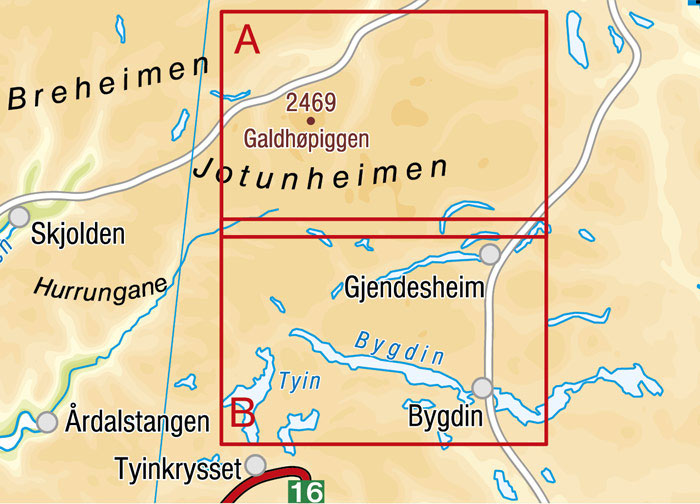
Jotunheimen map
The Norwegian Trekking Association
The Norwegian Trekking Association was formed more than 150 years ago and the two lakes Gjende and Bygdin were the important gateways into the remote parts of Jotunheimen. The first cabin was built at Tyin in 1870.
A good starting point is the historical cabin at Gjendesheim. Buses to Gjendesheim run from Oslo between late June and late September and take 5-6 hours. Take the trip the day before and spend the night at the Gjendesheim cabin so you can start hiking the next morning.
Gjendesheim cabin
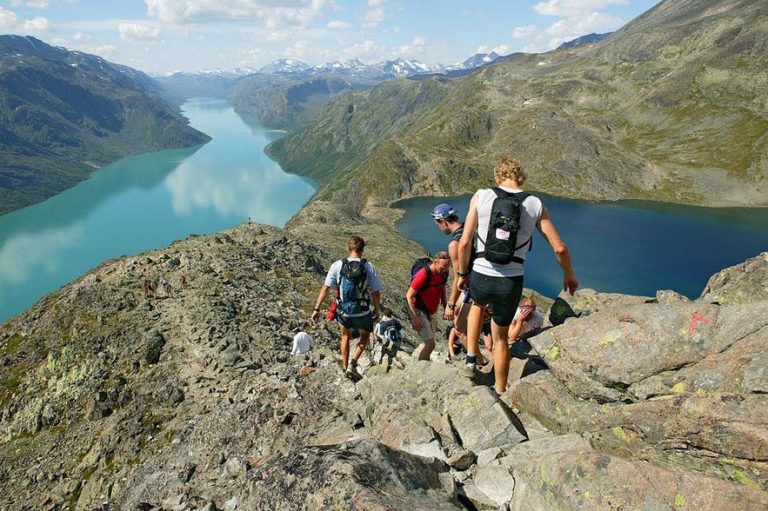
The impressive Besseggen Ridge
From Gjendesheim hike westwards above the Gjende Lake and along the impressive Besseggen Ridge to Mermurubu. This route is located in the heart of Jotunheimen National Park and is one of the world’s most famous hikes, rooted in the history of Norwegian mountain life and outdoor culture. Besseggen Ridge has even been written into literary history by the famous Norwegian author, Henrik Ibsen, who detailed the spectacular ridge in his known piece, Peer Gynt, set to music by Edvard Grieg.
From Mermurubu continue west to Gjendesbu, where the trail heads south through the Svartdalen valley to Torpfinnsbu on the shore of the Bygdin Lake. You will experience a steady climb up to the Mermurutunga plateau and will hike among a variety of beautiful trout-filled lakes – a great place to catch your lunch.
Well-marked trails
Finally, follow the lake to Eidsbugarden. Million of hikers have enjoyed the trails and peaks in this area, for recreation as well as adventures.
Eidsbugarden hotel
Every stage allows you to follow in the footsteps of some of the most historic pioneers and artists in the Norwegian mountain history. The trails are very popular and well-marked with large elevation changes along the way.
The route is best hiked from July to September and is easy to access by public transport. Boats are available to transport heavy backpacks and travelers looking to break up the hike.
Hike Your Way Through Historical Routes in Norway, written by Tor Kjolberg
How do hoteliers deal with requests, bogus requests and property visits? Travel journalists want to share their experiences in an honest and storytelling way so that visitors can make up their own minds, mapping a hotel on their ‘wish’ list or their ‘avoid’ list. Travel-writing is a profession, and hoteliers should therefore be encouraged to make a journalist’s visit a part of their overall marketing mix. My visit to Stockholm recently was a poor example of such an understanding. So, here you have it, a travel journalist’s contemplations on a hotel stay in Stockholm.
I had booked a room at Berns Hotel in Stockholm weeks before my arrival, and a dedicated person should be available to show me the facilities and tell me about the history of the hotel.
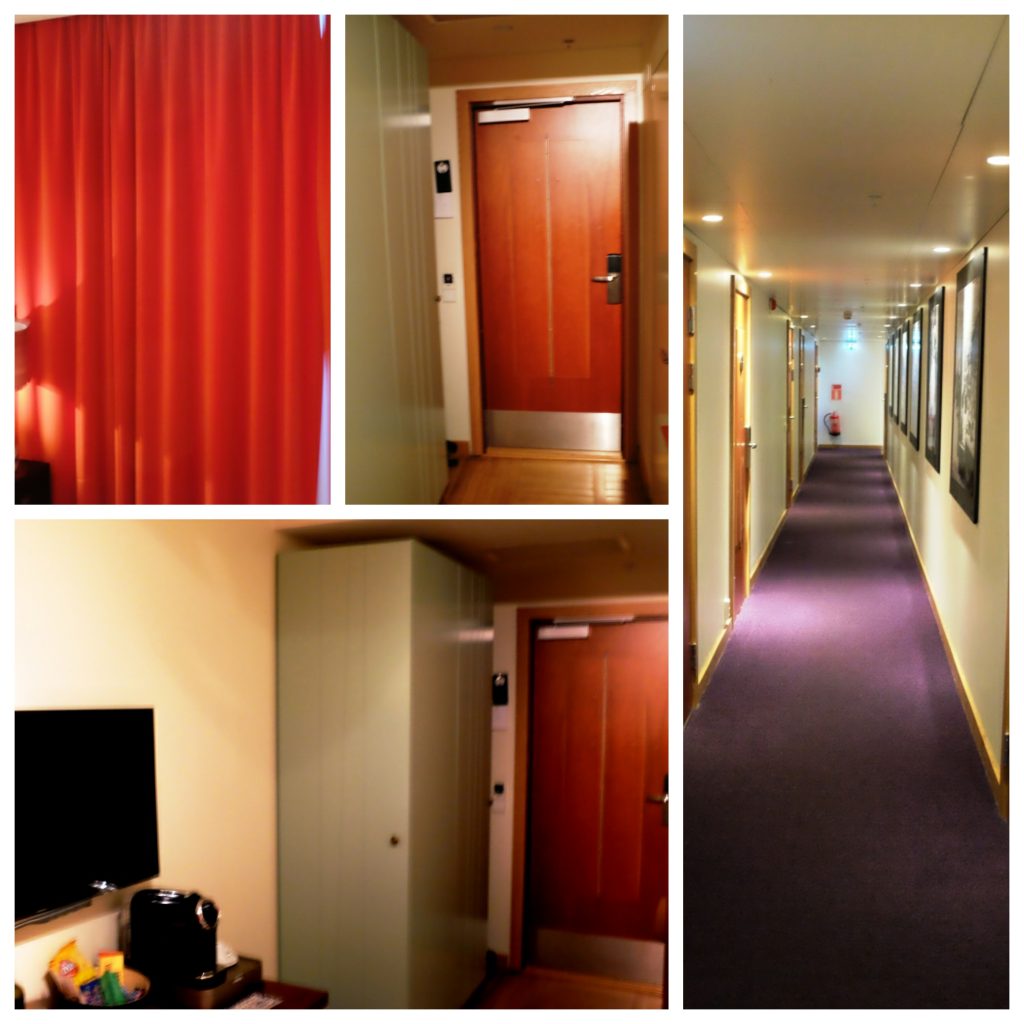
My ‘standard room’ at Berns hotel in Stockholm had a bit stern décor and ugly furniture with a certain 90s air
A cultural gem
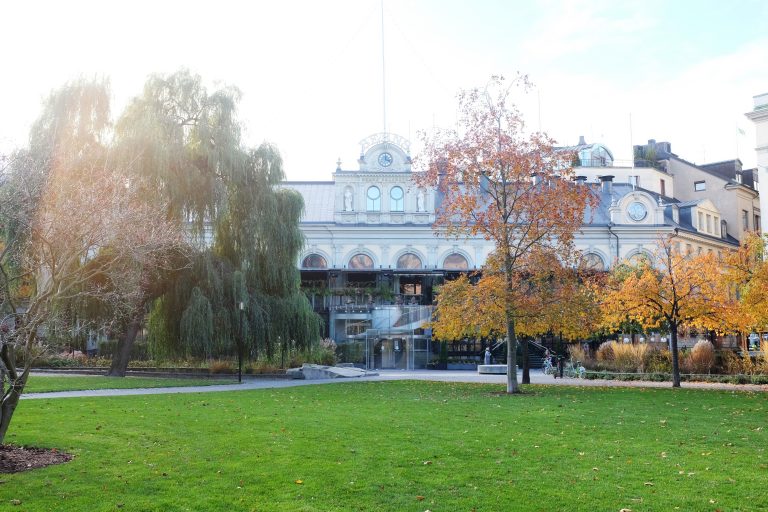
To my generation, Berns Salonger by Berzelli Park in Stockholm is a cultural gem which since 1863 has offered visitors food, drinks and theatrical experiences. In 1866 cancan was performed there for the first time for a Swedish audience. Berns Salonger featured in Strindberg’s classic 1879 novel The Red Room, which follows broke young locals searching for freedom and truth.
Berns hotel
The adjoining hotel opened in the 1980’s with rooms designed by Olle Rex and immediately attracted a well-heeled crowd of people not afraid to splash the cash and enjoy noisy club nights and concerts. Bill Gates and Rihanna have apparently spent the night here, not together, I hasten to emphasize.
Why has Berns salonger been turned into an Asian restaurant?
The main restaurant, once a music hall is beautiful with amazing chandeliers and ambient decor, but why have the hoteliers in cooperation with British designer and restaurateur Terence Conran chosen to make it an Asian restaurant?
A Travel Journalist’s Hotel Contemplations
Arriving at the hotel, I was disappointed to experience that I had been squeezed into perhaps the smallest room in the hotel (categorized ‘standard room’) with a bit stern décor and ugly furniture with a certain 90s air. The air conditioning did not work which is really unusual for a four-star hotel. During the night, I had to keep the balcony doors open, but then it was impossible to keep the warmth under the synthetic tiny bedclothes, which today is unusual for any number-of-star hotel.
The Berzelli Park
Related: Södermalm Artistic Center in Stockholm That being said, the reception informed me that the ‘press guy’ was busy in a budget meeting and could not see me until the next day. Since I had a full schedule in Stockholm for the next two days, I decided I would write these contemplations instead.
In my opinion, the biggest pitfall a hotelier can do is to treat a writer as a VIP and neglect their customers. Journalists do not expect that. But when they treat a writer as a mere backpacker, they should realize that journalists also pick up on all of that.
For me the best part of the hotel was the central location for everything I had scheduled to do in Stockholm during my stay. And nearby Grand Hotel has a wonderful wine bar.
All photos: Tor Kjolberg
A Travel Journalist’s Contemplations on a Hotel Stay in Stockholm, written by Tor Kjolberg, editor-in-chief
Stavanger in Norway is a small metropolis, with a lot to offer and everything within easy reach. Norway’s former oil capital has a lot to offer all year round. When visiting the little big city in Norway you can enjoy both gastronomic delights and a varied program of events.
Stavanger’s highest point is Ullandhaugtårnet (the Ullanhaug Tower). From there you can see the mountains of Ryfylke to the west. To the north lies Ryfylke, with the legendary Lysefjord and the Pulpit Rock vantage point. Just below the tower to the west, lies Hafrsfjord, where in 872 Harald Fairhair won a great sea battle that resulted in the unification of Norway. The memorial’s Swords in Stone marks the spot where Harald Fairhair achieved his objective. In the evening sun, the three giant swords with the sea in the backgreound are a power sight.
The Ullandshaug Tower in Stavanger
The wide agriculture landscape of Jæren spreads out to the south. Out towards the coast a series of long, lovely beaches stretch from Sola in the north to Brusand in the south, only interrupted by stretches of shingle.
In Stavanger nothing is very far away. Whether you want to go to Siridalen for the skiing, chug out to the sea in Ryfylke or take a stroll along the beaches and watch the North Sea rolling in. And in many ways, the town itself is a mini-metropolis.
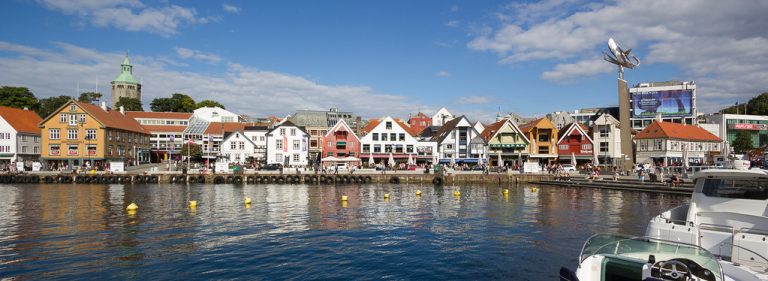
From Vågen
The streets are lined with shops, restaurants and bars. The harbor area, Vågen, is packed with people all year round, although it is in the spring and summer that the town really shows itself to advantage. Vågen is Stavanger’s beating heart.
Along the harborside bars and restaurants pop up as the day ends. A cold beer and a bucket of fresh shrimp at Hansens Hjørnet does the trick, while you watch the world pass by.
Museums
In the center of Stavanger, near Kjerringholmen, lies the Norwegian Petrolium Museum. The museum looks out over Rosenberg Shipyard, which has built many of the rigs and platforms in use in Norway’s oil fields. The museum is modern and has a lot to offer both adults and children. In addition to a presentation of Norway’s oil industry from its beginnings until today, you can also find out what it is like to work on an oilrig.
The Archeological Museum is a ten-minute walk from the town center. Here you can see a permanent exhibition showing much of the country’s history, or visit one of the special exhibitions. The temporary exhibitions are designed and built in the Museum or presented on loan from other Museums and institutions.
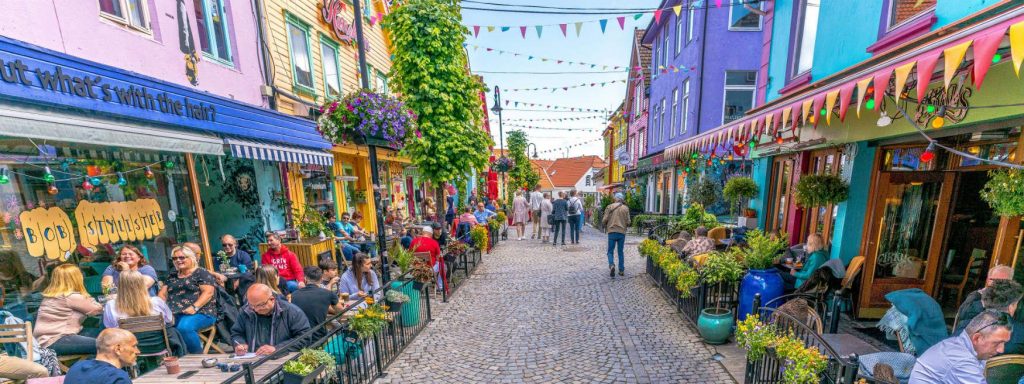
From old Stavanger
Old Stavanger If you want to take a short walk and are looking for a peaceful spot not far from the town center, Stavanger’s old town (Gamle Stavanger) is the place for you. This idyllic area filled with classic, wood-clad houses was only just saved for posterity during the 1970s when Stavanger underwent large-scale modernization. In the old town’s narrow cobbled streets you are shielded from all traffic. Here you can relive Stavanger as it was more than a hundred years ago. And here you can find traces of the canning industry which made Stavanger rich at the turn of the 20th century.
Shopping Today, the town center, made up of pedestrian shopping streets, is a busy place all year round. The chain stores rub shoulder with small specialist boutiques, where the shopkeepers display their newest items. Here you will find the latest fashion, or second-hand 1950s memorabilia. And if the weather should be at its west-country worst, the shopping centers Stavanger Storsenter and Arkaden are good alternatives. Here you can stay warm and dry while the rain or sleet lashes down outside.
Shopping is hungry work. At Bøker og Børst you can enjoy wholesome sandwiches. But if that doesn’t tickle your fancy, you are never far from a restaurant, whether you want traditional Norwegian rissoles in gravy or more international fare.
From the Utopia Festival in Stavanger
Festivals A festival curiosity which deserves mention is Stavanger Wine Festival. The festival is brought together by 12 of the city’s best restaurants and some of Europe’s best wine makers, fantastic chefs and suppliers will be present. There will be a wine parade with 8 stops for tasting wine and food. The Stavanger Wine Festival runs from 4 to 7 March 2020.
4 to 10 May 2020, the Stavanger Jazz Festival (MalJazz) takes place. Over the years MalJazz has grown into one of the country’s foremost jazz festivals, presenting top international jazz artists and the best in national and local jazz.
The biggest musical festival in the region is the Utopia Festival, which follows the trends of young people presenting some of the biggest and most popular artists in pop, EDM and urban music. It takes place in the Stavanger Concert Hall’s outside area 28 to 29 August 2020.
Stavanger is known as Norway’s capital of Street Arts. Since 2001, the non-profit festival NuArt has widely been considered the world’s leading celebration of Street Art among its peers. It takes place in September.
The Little Big City in Norway, written by Tor Kjolberg
Scandinavian Mountains Airport at the border between Sweden and Norway is one of the first airports in the world to pioneer new remote air traffic control technology. Designed to improve safety and cut costs, there will be no physical control tower at the airport. Scandinavian Mountains Airport – without air traffic control tower – a world’s first!
The operators do their work in a low-rise building in Sundsvall some 300 kilometers (186 miles) away. The solution could pave the way for drastic changes to the way smaller airports operate around the world.
The terminal at Scandinavian Mountains Airport serves Scandinavia’s largest alpine ski areas, Trysil in Norway and Sälen in Sweden
“The idea has been around for a while,” says R. John Hansman, professor of aeronautics and astronautics at MIT. According to CNN, multiple cameras and sensors will be installed around the airfields and its immediate surroundings. High-definition screens will give operators at the airport’s remote tower 360-degree views of the airport. The sensors, however, will be scaled back to a “225-degree arc”, which will in ways offer a more comprehensive overview than a traditional tower.
Swedish defense company Saab has been trialing remote air traffic control for around a decade, with testing taking place everywhere from Ireland to the US to Australia. “From a tech standpoint we have better surveillance,” Hansman told CNN.
BRA (Braathens Regional Airlines) and SAS will fly ski enthusiasts to the Scandinavian Muntains Airport
The remote technology has other advantages as well. Vision is for instance improved at night in adverse conditions, and the operators are able to zoom in and out with ease. “Virtual towers in principle work like any person who works remotely using technology, whether it is education, software, meetings and so on,” said David Gillen, a professor at the University of British Columbia
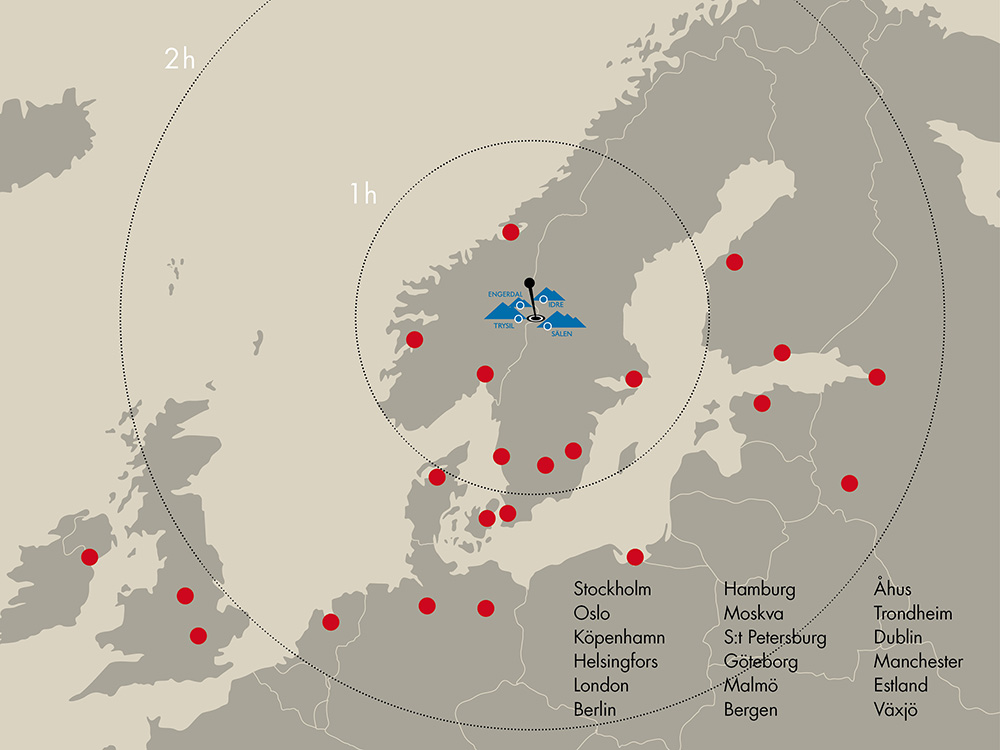
The terminal at Scandinavian Mountains Airport serves Scandinavia’s largest alpine ski areas, Trysil in Norway and Sälen in Sweden, and is designed to handle four flights simultaneously, from the airlines SAS and BRA (Braathens Regional Airlines). The airfield will open December 22, connecting winter holiday-makers in Scandinavia, the US and the UK with Norway and Sweden’s largest ski resorts.
During the 2019-2020 winter season SAS is going to start direct flights from Copenhagen, Aalborg and London to Scandinavian Mountains Airport.
The flight center at Sundsvall in Central Sweden is already looking after flights from nearby Sundsvall-Timra Airport, Örnsköldsvik in northern Sweden and, as of April 2019, Linköping in the south.
According to The Economist, in Norway, 15 airports will be shutting their towers and transferring operations to remote control rooms. Air traffic control towers, those mighty symbols of aviation dominating airports around the world, might one day disappear from view. “They operate using radar and other sensitive information transfer devices. The move to virtual towers is a relatively small step technically and operationally,” says Gillen.
The terminal at Scandinavian Mountains Airport serves Scandinavia’s largest alpine ski areas, Trysil in Norway and Sälen in Sweden
During the 2019-2020 winter season SAS is going to start direct flights from Copenhagen, Aalborg and London to Scandinavian Mountains Airport. The new airport is only a short distance from around 250 ski slopes in Sweden and Norway. The new services will give snow lovers from Denmark, Southern Sweden and the United Kingdom a totally new way of enjoying Scandinavia’s leading winter sports area.
The new airport is only a short distance from around 250 ski slopes in Sweden and Norway.
The services from Denmark and the United Kingdom will operate during the winter season until Easter. “We are delighted that SAS is able to offer the first international flights to the new airport. Short journey times, attractive timetables, combined with fantastic opportunities for skiing and other winter activities in the Swedish and Norwegian mountains are what a lot of people are looking for. We are going to continue to develop our collaboration with SkiStar in order to improve the services we can offer our passengers and make it a whole lot easier to enjoy the Scandinavian winter experience”, says Karl Sandlund, Executive Vice President Commercial, SAS.
Scandinavian Mountains Airport – Without Air Traffic Control Tower, compiled by Tor Kjolberg