The two islands Lolland and Falster, commonly just called Lolland-Falster are only separated by a narrow strait, Gulborgsund. A new ferry link, the Fehmarn Belt Fixed Link, is due to open in 2021 and will connect Rødby in Lolland with Puttsgarden in Germany. The Danish twin islands Lolland-Falster are worth a visit.
The Farø bridges connect Zealand to Falster and the ferry routes to Germany. The main town on the island Falster is Nykøbing, noted for the Czarens Hus (Tsar’s House), where Peter the Great stayed in 1716, which now houses the Falsters Mint Museum of local history.
The Farø bridges connect Zealand to Falster and the ferry routes to Germany.
Fuglsang Museum of Art
From Maribo, just off the Nykøbing-Nysted road (Route 297) you’ll find the Fuglsang Kunstmuseum (Fuglsang Museum of art). The paintings displayed there, echoes some of the landscapes in the area, originally collected by brewer Carl Jacobsen from 1887 onwards.
Fuglsang Museum of Art
Medieval Center in Nykøbing
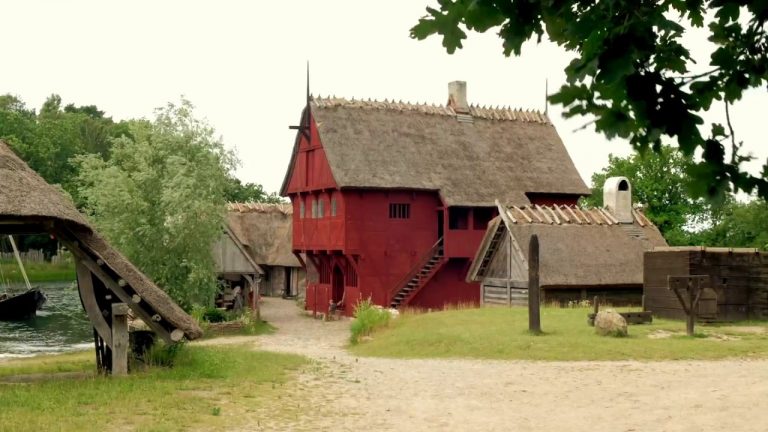
In Nykøbing you can time-travel to the days of damsels and knights at the recreated early 15th-century Medieval Center, a village populated by numerous costumed craftspeople at work.
Beach holidays
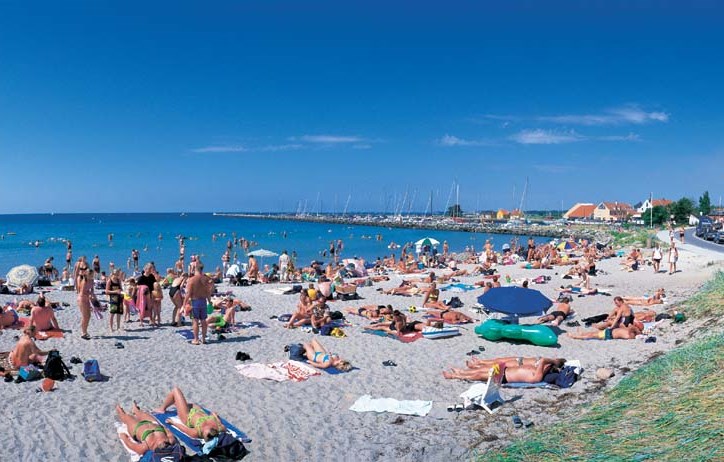
The area around Marielyst to the southeast, has miles of white sand dunes where families take beach holidays. A choice of bridges links Falster to Lolland.
Lolland-Falster beaches
The 12th-century castle Aalholm Slot is closed to visitors, but you can visit the Automobile Museum in its grounds.
“If you have an efficient hair tablet in your range in Scandinavia, we would like to see it,” said the Category Manager of the biggest pharmacy chain in the world one day in the early 90s to the director of New Nordic. Why would such a pharmacy chain want to sell a tablet manufactured from a company on the other side of the Atlantic? Read more about the Scandinavian Health Company with a Secret Weapon.
Apple cider from New Nordic
Today, the global dietary supplement market is predicted to grow nearly 10% annually towards 2024 and New Nordic plan to take market share in this growing market. New Nordic is the herbal expert in Scandinavia which for years has studied and used the herbs in ways that positively affect the body.
The company focuses on supplying specific nutrients that help activate the special cells in the body. From the original Swedish eye tablet Blue Berry to the iconic Hair Volume tablet, New Nordic aims to help people maintain vitality year after year.
New Nordic is the herbal expert in Scandinavia which for years has studied and used the herbs in ways that positively affect the body
A passion for developing more effective health products
At New Nordic in Sweden they had a genuine love for nature and a passion for developing more effective health products. Is it always necessary to be slowed down by aching joints and muscles or simple lack of energy? At New Nordic they don’t think so.
The idea of living a healthier life using highly concentrated extracts of natural herbs and berries was born in Scandinavia. From the first day of business, the founders have pioneered the health industry and today, the New Nordic brand has a strong Scandinavian identity and a unique positioning in Europe, North America and Asia. New Nordic products are regularly available from more than 50,000 pharmacies, health stores and online retailers.
The company focuses on supplying specific nutrients that help activate the special cells in the body
The Scandinavian Health Company with a Secret Weapon
Since its foundation in 1990, all New Nordic products have been produced in Scandinavia in state-of-the-art and pharmaceutical grade factories. At New Nordic in Malmö, Sweden they have an outstanding know-how in the field, and that is their secret weapon. Researchers at the company put great efforts into following and understanding the latest scientific research and they are initiating their own research as a platform for new product development.
Today, New Nordic products are sold to more than 50,000 pharmacies and health food stores in 32 countries, from China in the east, to the USA in the west. No wonder Nordic Nordic’s website emphasizes, “That’s why our ‘Silver Tree’ logo is the stamp of quality for New Nordic’s world-famous supplements.”
The Scandinavian Health Company with a Secret Weapon, written by Tor Kjolberg
The fine art museums of Norway have been joined by a new, ‘enlightened’ gallery in Oslo’s city center. “Galleri Polaris,” is an aptly named exhibit space in the trendy Aker Brygge waterfront area of the city.Thenew fine art gallery brings a subtle “Northern Light” to Oslo.
Located within the Felix Conference center, Polaris prominently features the evocative art of Kåre Tveter, widely-regarded as Norway’s “master of light.” The subtle hues of the high Arctic landscapes of Svalbard are a particular signature of Tveter’s watercolor and oil painting, along with interpretations of light in snowy forests and rural scenes in his native Hedmark.
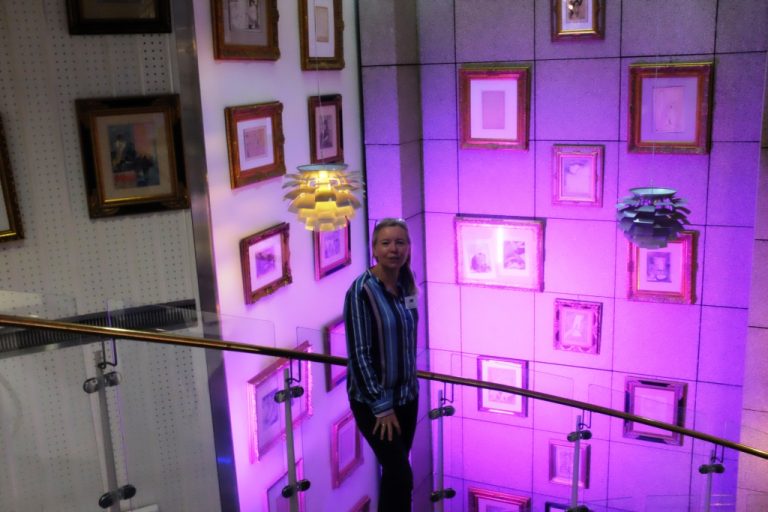
Gallery owner and Oslo native Annette Bjørum Lynne. Photo: Tor Kjolberg
Daily Scandinavian recently spoke with gallery owner and Oslo native Annette Bjørum Lynne about the gallery’s two featured painters, Tveter and Petar Tale, and the unique aspects of showing fine art in a combination conference center and cinema.
Petar Tale and Kåre Tveter – masters of light
“Light,” says Ms. Lynne, “is the common denominator for Galleri Polaris. The name itself reflects an aspect of Scandinavian culture – the connection to high polar regions, summer’s midnight sun, protracted polar night and the transitional play of growing or fading light as the seasons change.”
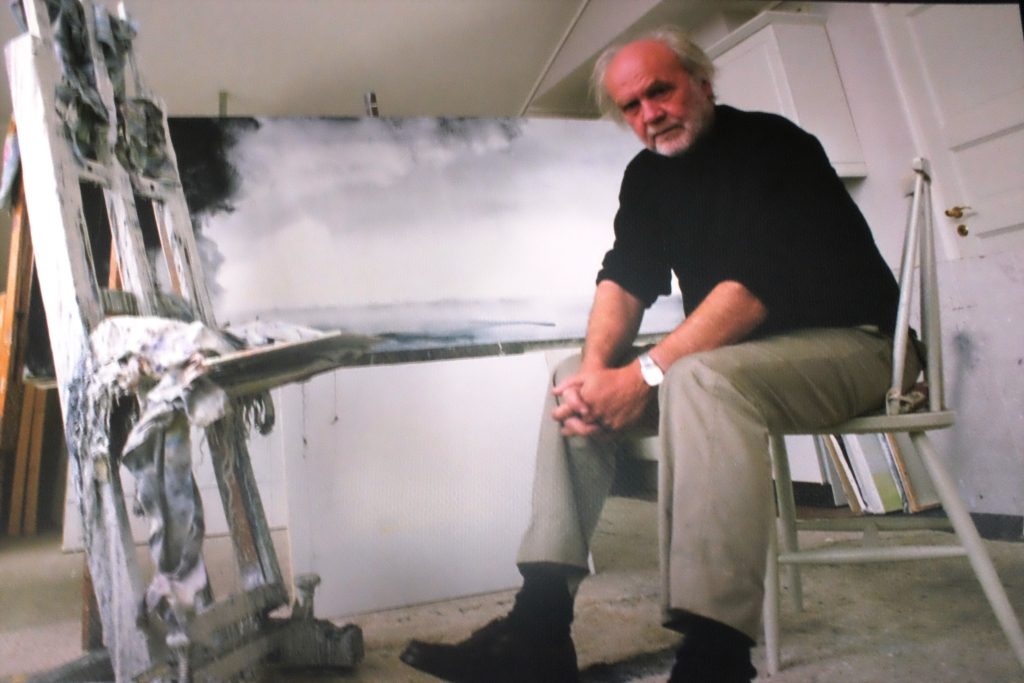
Kåre Tveter in his studio
Artist Kåre Tveter (1922-2012) had his exceptionally sophisticated way of expressing emotions brought on by light playing on landscape scenes, as did his long-time colleague, Montenegro-born painter Petar Tale. “Both men shared an approach that light was the topic,” says Ms. Lynne, “like clothing draped over a manikin.”
Ms. Lynne noted that Tale first saw Tveter’s art in an exhibition at Gallery Haaken in Oslo in the 1980s. Tale, both artist and an established collector at the time, was immediately fascinated. The two men met the next day, and thus began decades of long collaboration. “We soon became good friends,” Tale has said, noting Tveter was a “relentless perfectionist. He would wreck nine out of ten works” that were not up to his high standards.
Petar Tale has produced an impressive number of drawings and paintings. Photo: Tor Kjolberg
Uniquely, Tale was in a position of a younger man to mentor the older artist, and proudly witnessed Tveter’s accession to being named “master of light” and Svalbard’s number one painter. Tveter’s art is represented in various fine art galleries and museums, including the National Gallery of Norway and the Henie-Onstad Art Center. He is also part of Queen Sonja’s private collection and considered to be one of her favorite painters. “The two men referred to each other as artistic soulmates,” says Ms. Lynne, “and they had a studio together in Lillestrøm outside Oslo in the 80s and 90s. The works of Tale and Tveter will be a prevailing part of the future exhibitions in Galleri Polaris, but we will gradually expand, starting with Bjørn Ransve, one of Norway’s most famous contemporary artists.”
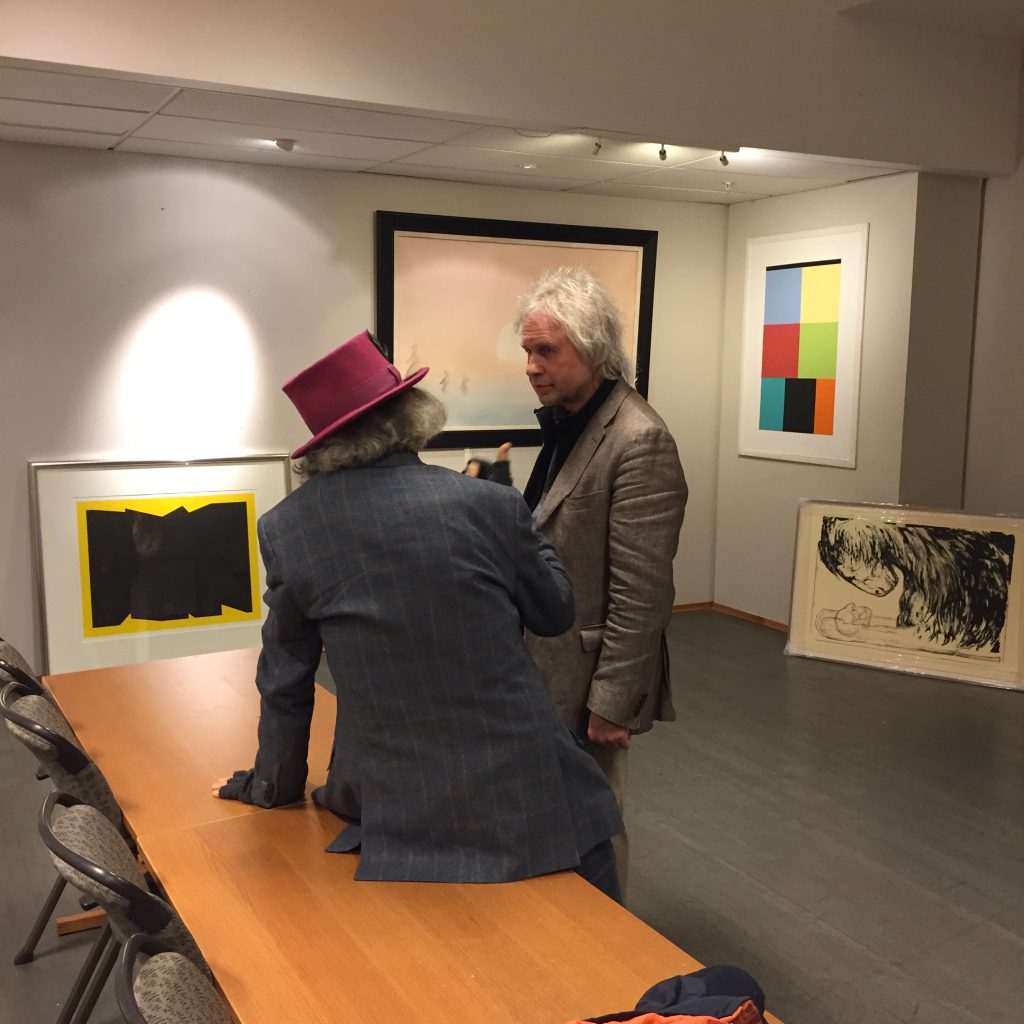
Petar Tale in conversation with artist colleague Bjørn Ransve. Photo: Galleri Polaris
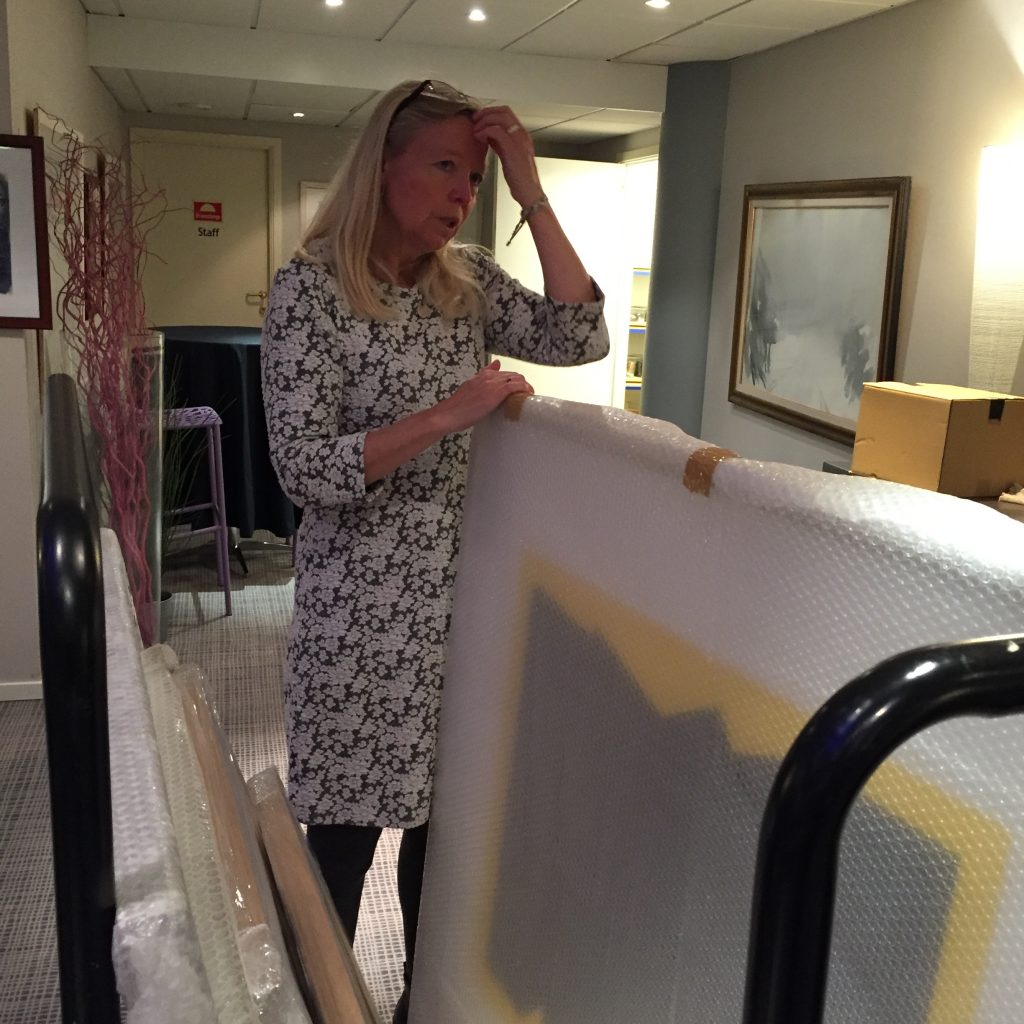
Passion for light Perhaps not so coincidentally, the collaboration between Ms. Lynne and artist Tale began with the opening of a door to where the gallery now resides. Tale, now 72, was struggling to move some of his own paintings on a trolley through the main entrance to the Felix Conference Center at Aker Brygge. She offered to keep the door open for him, leading to a conversation “which shed some light on common interests”, she laughs. The two kept in touch and the idea of Galleri Polaris was born.
“We are proud to exhibit artwork by outstanding contemporary artists,” says Ms. Lynne. Photo: Galleri Polaris
Petar Tale settled in Norway in 1977 and has since then produced an impressive number of drawings and paintings. In fact, more than 12,000 pieces are signed by him. “Tale’s passion for light is always evident,” wrote his biographer Janet Wilson. “Though his light is certainly revelatory the light he creates, while bearing resemblance to actuality, is an ‘inner’ light which is ultimately more concerned with the revelation of thought or feelings, often both.”
Whether his subjects are architectural, floral, landscape, or human, Tale is able to infuse his art with light and mystery.
Annette B. Lynne has always been fascinated by light. Photo: Tor Kjolberg
Petar Tale has also been an avid collector of original paper-works by master of fine art since the age of 20. His collection features iconic works by Picasso, Matisse, Chagall, Miró, Braque, Giacometti, Bonnard, Tàpies, Vasarely, Matta and Klee. Thanks to the collaboration with Petar Tale and Tale Art Museum many of these artists’ works will also be on display in Galleri Polaris.
New Fine Art Gallery Brings a Subtle “Northern Light” to Oslo, read on….
Annette B. Lynne and her assistant, art student Torill Andersen. Photo: Tor Kjolberg
Stella Polaris
Light has also been an important part in Annette Lynne’s life. Stella Polaris has always been her favorite and symbolic star. “Light gives me positive energy,” she says and those who know her agree there’s lot of light inside her that radiates outward. (She was nicknamed «Miss Sunshine» by former co-workers.)
In a way, that same light literarily opened doors when she helped Mr. Tale pass through the main entrance to Felix conference center with his trolley. “Coincidences are not always coincidences,” she notes.
Have a seat, rest and enjoy fine Norwegian art. Photo: Tor Kjolberg
Annette, as she prefers to be addressed, is by background a professional career advisor, and freely admits she lacks a formal art background. Tale’s knowledge and warm, supportive collaboration helps her administer the gallery, while running it as independently as possible. “I have to be myself,” says Annette.
New Fine Art Gallery Brings a Subtle “Northern Light” to Oslo
To open a new gallery is an almost Sisyphean task, particularly so for a neophyte. However, the location at Aker Brygge near the Astrup Fearnley Museum of Modern Art, and the new National Museum (opening 2022), is ideal for positioning two internationally acclaimed Norwegian masters of light. Additionally, there are the obvious benefits to exhibiting art works in an upscale, corporate conference center.
Kåre Tveter: From Svalbard. Photo: Galleri Polaris
“We are very excited about this cooperation,” says Jørn Bertheussen, CEO and owner of Felix Conference Center, where selected pieces from Tale’s collection were previously displayed. Ms. Lynne adds, “We are proud to exhibit artwork by outstanding contemporary artists. Our intention is to create a new kind of gallery in a completely new setting… I will cite Vincent van Gogh: ‘Great things are not made by impulse, but a series of small things brought together.’ “
Galleri Polaris opened on November 1, 2019 and the current Kåre Tveter exhibition will be on show until Christmas.
Feature image (on top): Gallery owner Annette B. Lynne at Galleri Polaris. Photo: Tor Kjolberg
New Fine Art Gallery Brings a Subtle “Northern Light” to Oslo: Ms. Annette Bjørum Lynne was interviewed by Tor Kjolberg prior to the opening.
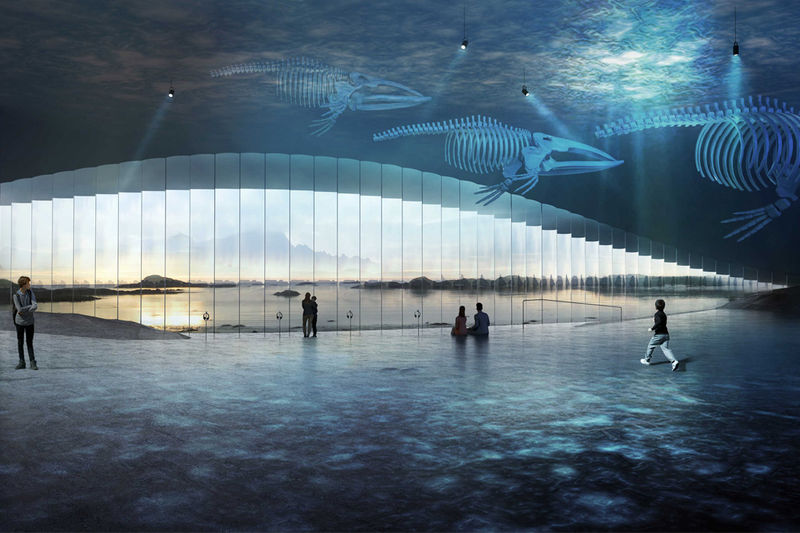
“The goal is to bring the magic and emotions we experience out on the sea, up on land. It’s no easy task, but that’s our goal,” said Camilia Ilmoni, CEO of Andøy Travel, who had the idea for The Whale when the contract was signed. In 2022, the new attraction in Norway, ‘The Whale’ will enable tourists to watch migrating whales up close – from land.
Whale watching in Norway is already a huge tourist attraction, and Andenes in Lofoten welcomes over 50,000 visitors annually. The cold, squid-filled waters up north attract sperm whales in huge numbers.
Four internationally renowned architectural companies have competed to build The Whale
Whales have always fascinated people. Stone carvings from thousands of years ago depict whales, and sea monsters portrayed in maps from the Middle Ages are most likely based on mythical tales of whales.
The “Whale” project started with a series of small steps on an afternoon in January 2015. A group of enthusiasts met at the Whale Center in Andøy to discuss the possibilities of establishing a world-class whaling attraction. Whale safaris have been a popular activity in Andenes for more than 30 years. The first whale safari was being tested there on the 27 August 1987.
Camilia Ilmoni, CEO of Andøy Travel had the idea for The Whale
The Whale kick-off The business community and inhabitants of Andøy was in March 2016 invited to a workshop to discuss the idea of establishing a new attraction in the municipality. “Throughout three decades we’ve learned that the big sperm whales who reside northwest of Andenes, is a stable phenomenon. We have let several hundred thousand guests from all over the world get close to the world’s largest toothed whale, and thus created enthusiasm about the whale and the beautiful nature in which it lives,” said Jonni H. Solsvik, Mayor of Andøy Municipal Government.
Jonni H. Solsvik, Mayor of Andøy Municipal Government
Andenes Whale Symposium The Whale will be an attraction located at the intersection of sea and land. In March last year, “The Whale” was in an important phase where the project would be rooted in national and international research environments. So, leading whale scientists from Norway, England, Madeira, the Azores, and Canada were invited to a workshop to gain input on how “The Whale” could become an attractive arena for research and dissemination related to sea, marine mammals, climate, environment and sustainability.
Whale ‘n’ Wine The final phase of the pre-project of the most unique whale attraction in the world is going on high speed right now. Earlier this year the project leaders invited people to a new part of the unforgettable journey. The program included status on the area’s most important tourism project ever, knowledge of whales and refreshing cultural elements, including a “Taste from the sea” dinner.
Andenes in Lofoten welcomes over 50,000 visitors annually
Related: Exciting Northern Norway
Architectural competition
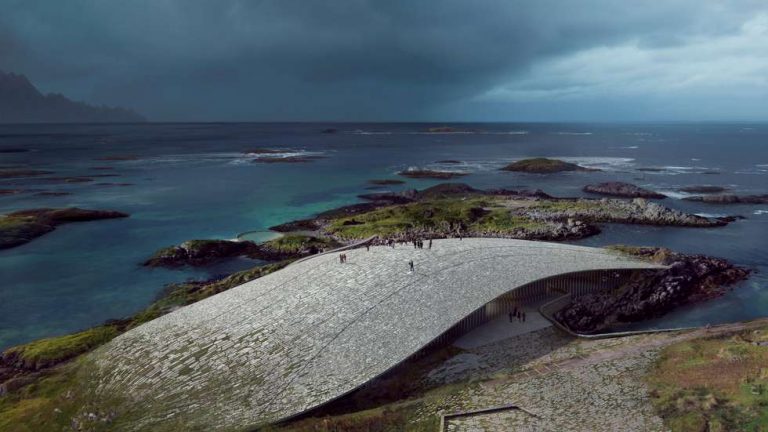
Four internationally renowned architectural companies have competed to build The Whale. On 1 November, Danish architecture firm Dorte Mandrup was announced the winner of the competition. Børre Berglund, CEO of the project and head of the jury for the competition, called it “poetic and low-key” and “exciting and unusual.”
The Danish architect team was selected in an extremely strong competition with international top names such as Snøhetta, BIG – Bjarke Ingels and Reiulf Ramstad.
“Andøy is located far north and is a unique place and The Whale is an extraordinary project. Not only will we create architecture in yet another remarkable landscape, but we will also take part in efforts to increase the understanding of whales and preserve marine life,” said founder and creative director, Dorte Mandrup of Dorte Mandrup architects.
New Attraction in Norway – The Whale When The Whale opens in 2022, it will be an exhibition where everybody can learn about the whale in a completely new way. This establishment will cement Andøy in a position as the premier whale destination in Norway and Northern Europe, but more importantly, it will allow everybody to learn even more about whales.
On 1 November, Danish architecture firm Dorte Mandrup was announced the winner of the architectural competition
“The Whale will strengthen Northern Norway as a travel destination, and create a positive ripple effect outwards to other businesses in the north. The attraction will offer quality and legitimacy to whale safaris, but first and foremost it will function as a separate adventure product. In addition, “The Whale” is also meant to combine research, knowledge and attraction, which will prove to be valuable for educational purposes for primary schools, kindergartens and other institutions. “The Whale” will be a whale exhibition the likes of which the world has never seen before. Just you wait,» says Jonni H. Solsvik.
Even though The Whale won’t open before 2022, it’s not too soon to start planning your trip there. If you’re interested in whales and marine life in general, Andøy is the perfect destination with whale watching and sea safaris all year round.
New Attraction in Norway – The Whale, written by Tor Kjolberg
Holmestrand railway station in eastern Norway is built 150 meters (492 feet) into the Holmestrand mountain, with entrance both to the south and north, and its own lift solution 70 meters (230 feet) down from the top of the mountain. The world’s first railway mountain station in Norway is an engineering and architectural masterpiece.
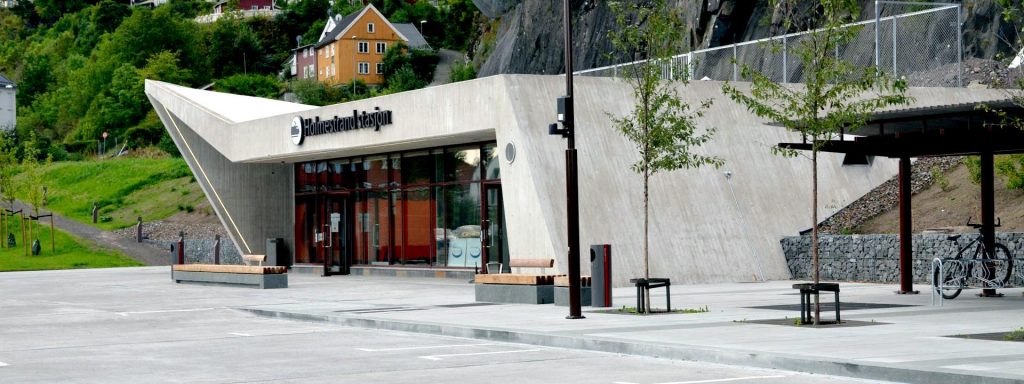
The Holmestrand railway station is located in the town of Holmestrand in Vestfold and was officially opened on 28 November 2016. The Vestfold Line is a railway line that runs from Drammen, through a number of towns in Vestfold and ending in the town of Skien in Telemark.
The Holmestrand railway station is located in the town of Holmestrand in Vestfold and was officially opened on 28 November 2016
Improved railway line
The new fourteen kilometers double track through the city of Holmestrand has greatly improved the rail services on the Vestfold line. The architects have focused on accessibility requirement as well as a good atmosphere for all passengers going into the mountain platform.
Creating a 130,000 cubic meters mountain hall was a six years undertaking for the Norwegian National Rail Administration
Creating a 130,000 cubic meters mountain hall was a six years undertaking for the Norwegian National Rail Administration along with partners like the Danish architect and partner Gottlieb Pauldan and the engineering consulting group Ramboll.
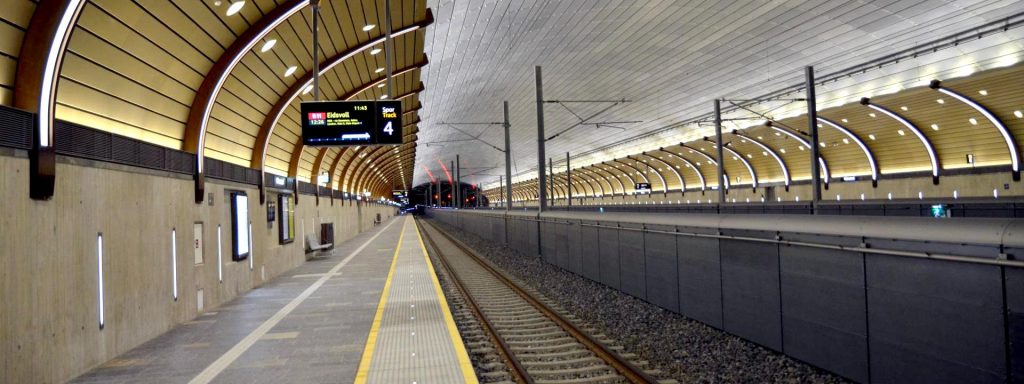
The World’s First Railway Mountain Station – in Norway The train station is the first in the world to combine platforms and highspeed trains that drive through the station with a speed of 250 km/h. The pressure relief tunnel is one of several measures that will prevent people on the platform from experiencing an unpleasant pressure every time a highspeed train passes by. The tunnel inlets are shaped like trumpets. Only 400 meters of the fourteen kilometers line will be located over the surface.
The train station is the first in the world to combine platforms and highspeed trains that drive through the station with a speed of 250 km/h. Photo: Wikipedia
The curved walls are equipped with stainless steel arches and aluminum sheets, thus creating their own ceilings, framing the 250-meter-long platforms. The project required a high demand of coordination.
In 2017, Gottlieb Paludan Architects was awarded The Norwegian Concrete Award (Betongtavlen), an award given by Norsk Betongforening and the Norwegian Association of Architects.
The World’s First Railway Mountain Station – in Norway, written by Tor Kjolberg
In recent years, Sweden has become a new favourite holiday destination among global travellers. Speaking with TT news agency, Visit Sweden CEO Ewa Lagerqvist said that it’s mostly Sweden’s natural scenery that is attracting people all over the world. Find out all the reasons why Sweden is a haven for retirees.
Older tourists are also flocking to the country to check out its potential as a retirement place. This is because Sweden has been recognized as a dream retirement destination.
Last year, the Research Network on an Ageing Society placed Sweden in the top 5 best places in the world to live out your later years. Apart from the gorgeous and unique scenery and relaxed way of life, Sweden is a haven for people in their golden years for a number of reasons.
You can freely enjoy Sweden’s nature If you’re an outdoorsy type and love spending time in nature, Sweden is the perfect place for your retirement. The country’s Right of Public Access means that you can access any land (except private properties) and roam freely in the countryside, as long as you don’t destroy or cause damage to trees, plants, or wildlife.
This also means that you can put up a tent anywhere, and more importantly, you can forage for mushrooms, berries, and even catch fish in the five major lakes along the country’s coastline. Being able to catch or find your own food for free can be a calming experience that can even help you save money during retirement. Moreover, these kinds of activities allow you to access fresh and seasonal ingredients that are essential to a healthy diet as a senior.
Last year, the Research Network on an Ageing Society placed Sweden in the top 5 best places in the world to live out your later years
The country has one of the lowest crime rates in the world It’s no secret that seniors are often targeted by burglars and scam artists, which is why finding a safe place to retire should be a top priority. Thankfully, Sweden has one of the lowest crime rates in Europe. In fact, Stockholm is considered to be one of the safest cities in the world because of its nearly crime-free neighbourhoods.
While you can certainly rest easy in Sweden, it still pays to be on the lookout for your wellbeing. It may be worthwhile to install CCTV cameras outside your property and keep a list of local hospital and police hotlines within reach, just in case of an emergency.
Sweden has a thriving coffee culture There is an ongoing debate about whether older adults should skip coffee, but studies have shown that coffee won’t cause any health impairments if consumed moderately. Moreover, drinking coffee when you’re older has many health benefits, as it may reduce the risks of developing Parkinson’s and Alzheimer’s Disease.
Since Sweden has a thriving coffee culture, you can boost your health and get your coffee fix anywhere while partaking in a tradition called fika, which means to meet colleagues or loved ones over a cup of coffee. Most Swedes often have at least one fika per day, as it gives them the opportunity to talk and bond with their favourite people.
If you’re an outdoorsy type and love spending time in nature, Sweden is the perfect place for your retirement
Make new friends
As a retiree, being part of this coffee-centered tradition can give you the opportunity to make new friends. Moreover, having fika with someone helps prevent isolation, which is something that seniors often cope with during retirement.
Rediscover yourself by spending your golden years in Sweden. Choosing to retire in one of Sweden’s many beautiful cities means you can be safe, look after your health, and make new friends as you bask in the natural scenery of this country.
All The Reasons Why Sweden Is A Haven For Retirees, written for Daily Scandinavian by Karoline Gore
Oslo Byleksikon (The Oslo City Encyclopedia), was published by the Oslo Society (Oslo Byes Vel) for the first time in 1938. Now, The Oslo Society has published a digital edition with close to 7,000 entries making its content more accessible than ever. Here we dive into the vaults of this veritable digital masterpiece and present some samples, which will be constantly evolving as Norway’s capital changes. This is a tribute to Oslo – the capital of Norway in words and images.
The Oslo Society (Oslo Byes Vel) was founded in 1811 and is an independent membership organization focusing on the capital’s urban development, urban culture and participation.
Through cultural activities, the journal St. Hallvard and the blue plaques on dedicated building facades, the Oslo Society urges its members to become better acquainted with the capital and take an active part in its development.
The Oslo City encyclopedia
The encyclopedia includes close to 7,000 entries covering images, maps, main categories as well as sensible and searchable sub categories. Topics span the wide range of history, architecture and everyday life, from arts to sports and recreation. Each entry defines the concept, provides historical background and in some instances explains why the site is marked with blue plaques.
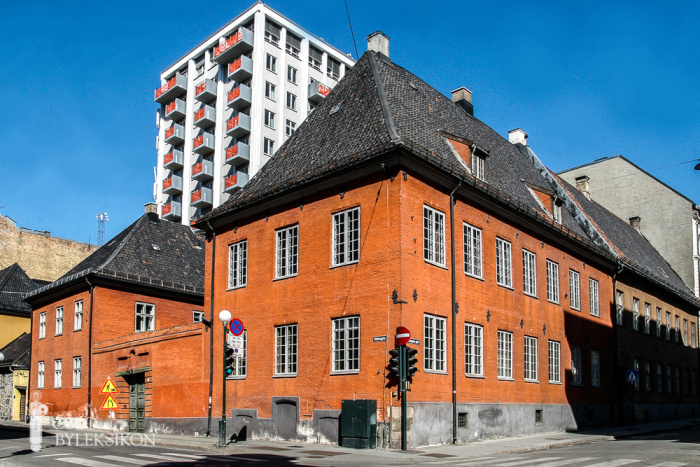
Rådhusgata 7 was the second City Hall of Oslo. – Foto: Astrid Ledang / Oslo Byleksikon
Rådhusgata 7
is the second city hall of Oslo (1734-1843) and one of its oldest preserved structures. The oldest section dates from ca. 1625-30, the year 1647 on the anchor plates of the facade may possibly refer to an extension in connection with the land commissioner Johann Garmann taking over the house that year as a private dwelling. Read more
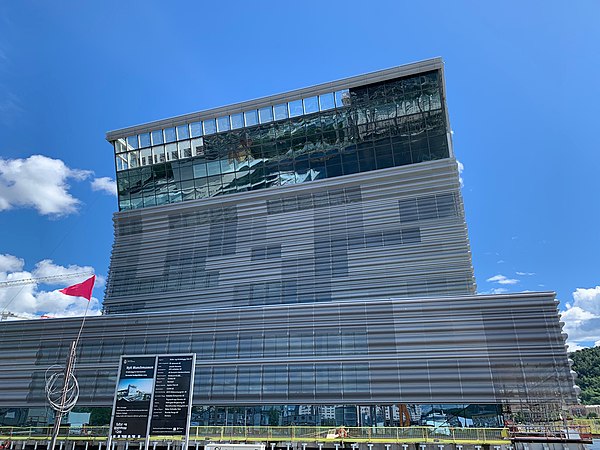
The new Munch Museum under construction in Bjørvika. Photo: Annikdance
New Munch Museum
The city council approved the removal of the Munch Museum from Tøyen to Bjørvika in 2011 after four years of political wrangling. An architectural competition held in 2009 was won by the Spanish entry Juan Herreros Arquitecto. The winning proposal ‘Lambda’, a 40-meter-high block with a lopsided section at the top, created a great deal of controversy. The new building is due to be completed in 2020.
The museum building at Tøyen will be used from 2020 onwards by National Theatre.
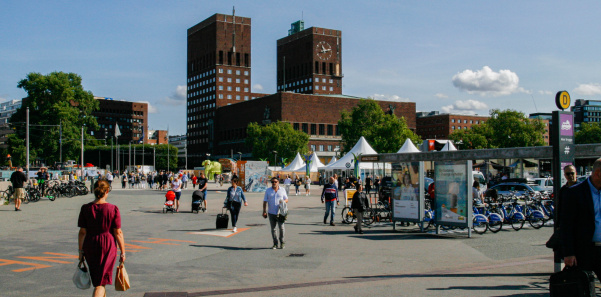
Oslo City Hall. Foto: Astrid Ledang / Oslo Byleksikon
Oslo City Hall (Rådhuset) Oslo City Hall (Rådhuset) is seat of the city’s central administrative bodies and a number of municipal offices, designed by the architects Arnstein Arneberg and Magnus Poulsson. The City Hall was officially opened in 1950, after a planning and construction period of approximately 30 years. Read more
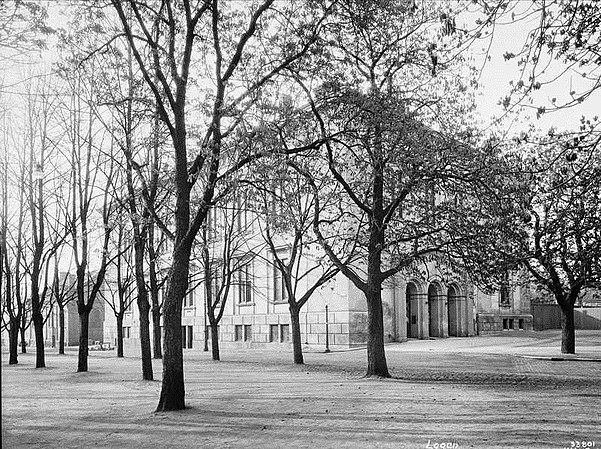
Former masonic lodge in 1929. Photo: Anders Beer Wilse / Oslo Museum
Former masonic lodge
The former masonic lodge played an important role in the development of Norwegian cultural identity in the 19th century. Among the cultural figures who were active here were Edvard Grieg, Henrik Ibsen, Ole Bull, Johan Svendsen, Halfdan Kierulf and Bjørnstjerne Bjørnson. In the 20th century, Filharmonisk Selskaps Orkester (now: Oslo Philharmonic) held its opening concert here in 1909. Read more
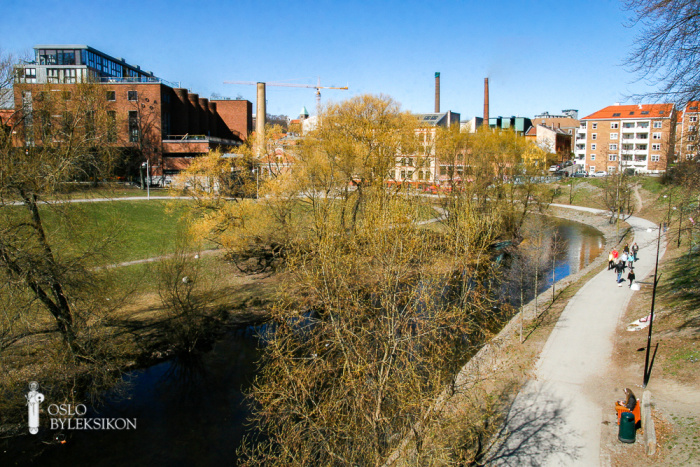
Aker River. Photo: Astrid Ledang / The Oslo City Encyclopedia
Aker River (Akerselva)
The idea of making use of the banks of the Akerselva as a green belt through the city was proposed by Major Jacob Høe in 1915, as a countermove against plans to canalize and cover over sections of the river. At the opening of Sannerbrua in 1917, the municipal mayor, Carl Jeppesen, spoke these famous words: ‘May Akerselven become a broad smile and not an ugly furrow in the face of the capital.’ Read more
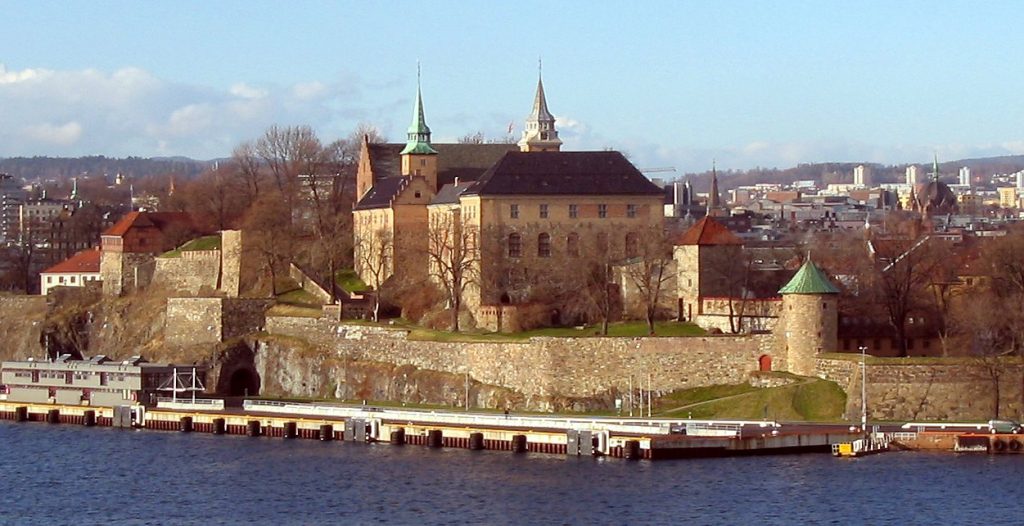
Image: Akershus Castle and Fortress. Photo: Bjørtvedt / Creative Commons
Akershus Castle and Fortress. Photo: Bjørtvedt / Creative Commons
Akershus Castle and Fortress
The fortification was originally begun by Håkon V, probably in the 1299-1304 period, and in 1308 it was a strong fortified castle that could withstand the attacks of the Swedish Count Erik. In the medieval period, it was a large-scale fortified complex that fully met contemporary requirements. The individual functions such as ladies’ bower, servants’ hall, pantry, etc. were organized around two buildings south and north of the main tower Vågehals (Daredevil) and the smaller tower Fuglesang (Birdsong). Read more
Oslo Society logo
A Tribute to Oslo – The Capital of Norway in Words and Images
“Without the dedication and hard work by the editorial council, consisting of different subject editors, the result would not have been so successful,” says a spokeswoman for the Oslo Society. The team has been working on the digitization process since the fall of 2014.
Translation from Norwegian has also been demanding because it is time consuming as well as expensive.
“The biggest challenges ahead will be to keep the encyclopedia updated and keep the web platform up to date. We also want to add new illustrations, which will be a demanding, but fun, process,” says one of the staff members to Daily Scandinavian.
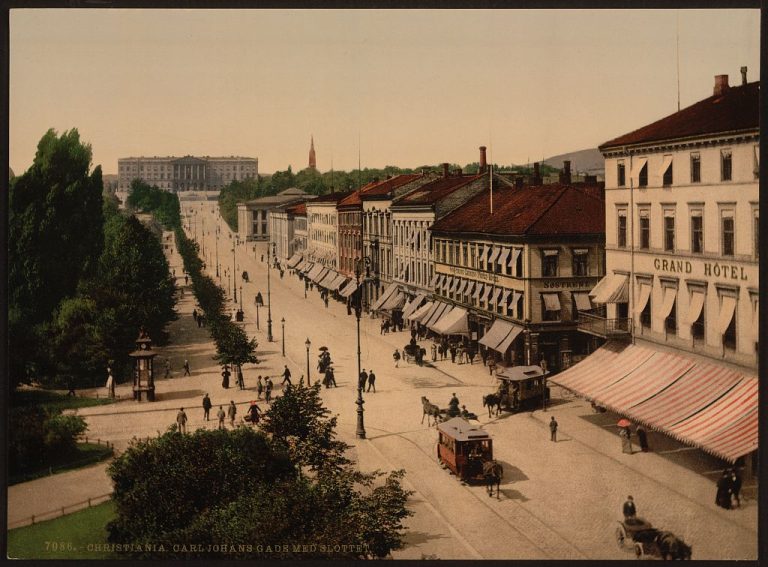
Feature image (on top): The Library of Congress Carl Johans Gade with Castle Christinia Norway LOC Wikipedia
A Tribute to Oslo – The Capital of Norway in Words and Images, compiled by Tor Kjolberg
Norwegian professional photographer Terje Rakke founded Nordic Life Photography in 2001 after Scandinavian advertising agencies had complained they had to plough through far too much irrelevant material. His mission was to offer them a library of images free of burgers and cowboys riding into the sunset. Read more about the Norwegian Image Library – Nordic Life.
Since the very beginning, Nordic Life has become a high-end photo agency with a state-of-the-art system based on English keywords.
Silhuets in the air – from Tyrifjorden outside Oslo
Everything that surrounds us, from great landscapes down to the tiniest molecular level, had to be retrievable by entering a relevant keyword into an efficient and functional search system. So, the Nordic Life collection has a distinct fingerprint, a refined and subtle splash of color that distinguishes it from what is readily available elsewhere. It really is a pleasure for users to search the website and discover hidden treasures.
A unique identity
The people behind Nordic Life has struggled, challenged all sorts of weather, from rain and sleet to fog and snow, and cheered at the results. With passion and enthusiasm, the Nordic Life staff have travelled far and wide, growing with each step of an exciting journey. That journey has been taken from urban jungles to the outermost barren islands. Call it patriotism if you will. In a competitive market, Nordic Life insists on choosing quality, integrity and character over the commonplace, triviality and quantity.
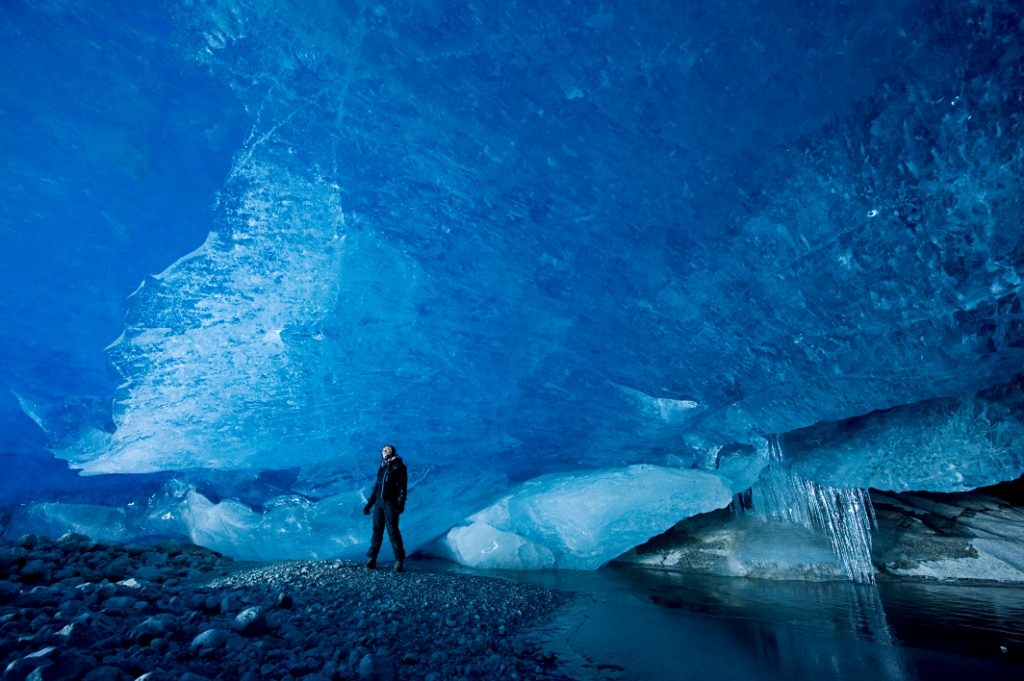
Under Glacier – Nigardsbreen, West Norway
Inspiration and creativity
A true professional photographer is always searching for creative solutions. A part of this is the search for magnificent locations and models with natural charisma. It can be a challenge to do this without being overwhelmed by anxiety. However, Nordic Life works closely with sophisticated image users who prefer illustrative photography over mass-produced imagery.
Today, Nordic Life offers 75 000 photographs that have been collected over the past 30 years. The priority has not been to be all-inclusive with regard to subject matter, but rather to offer a wide-ranging collection of creative, colorful photographs. In a way Nordic Life unites all of Norway at one website. The visual preferences and uncompromising focus on quality satisfy the strictest demands of international customers.
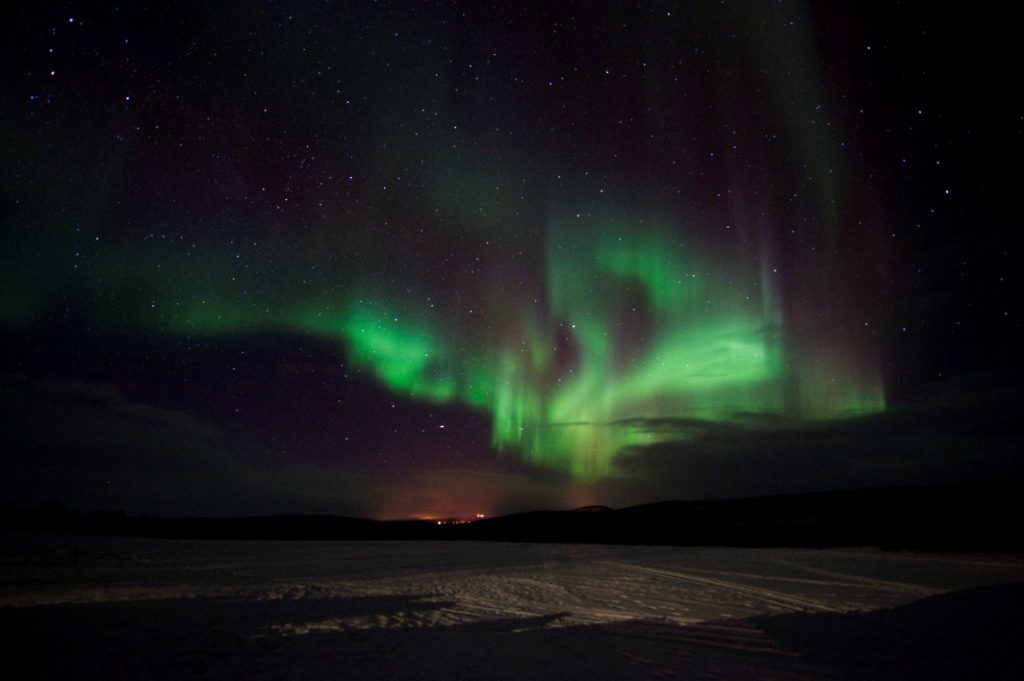
Northern lights, Kautokeino
Values and identity
“Aesthetic preference is for the genuine and soulful over the superficial, commercial and cynical, which in our time are increasingly pervasive. Our heritage is a source of joy and inspiration. The active use and accessibility of our cultural heritage is vital so that our descendants may be able to enjoy it and draw nourishment from it,” says Terje Rakke and adds, “Each of us has a responsibility to preserve and perpetuate our shared cultural heritage. We must bear in mind the diversity of influences that form personal and national identity.”
Visibility
The exciting visual recordings of the landscapes that surround us may capture their earthly beauty, but also raise fundamental questions about our perception of progress, development and values. Ideally the traces we leave behind should help a new generation build their faith in the future. In order to gain attention, the current photographs must capture light and render man and nature in a way that captivates audiences far beyond our own secluded outskirts of this world. The Nordic Life collection of photographs is created in order to promote Norway on the international arena and will continue to be an essential part of the profiling and international marketing of Norway as an outstanding destination.
Musk ox
Daily Scandinavian is proud of having Terje Rakke as part of our team. For over 20 years, many of his photographs have been available through the world’s foremost agencies American Getty Images and German Plainpicture, successfully competing with the work of the best photographers of our generation. The cooperation with leading international agencies allows Nordic Life to feel the pulse of market trends and to recognize what customers throughout the world want.
Formation of the land
Norway’s topography reflects the interplay of numerous natural forces, and the land we see today was sculpted during a process that took millions of years. The cycle between periods of tropical climate and periods of ice age has repeatedly remade the landscape. The vast ice cap that covered the land during this series of ice ages was a powerful tool for sculpting the land. Glacial erosion, and later river erosion, created the rugged coastline that Norway has today, with fjords and deep valleys, a myriad of islands, islets and skerries, towering peaks and steep mountainsides.
The people behind Nordic Life has struggled, challenged all sorts of weather, from rain and sleet to fog and snow, and cheered at the results
The ceaseless pounding of waves and the sporadic howling wind also played their part in the wear and tear. As the ice retreated, and the mountains and bedrock were broken down, the scattered debris was invaded by plants, first a few pioneering growths, and then a lushly varied flora that over time created the soil. This became a fertile habitat for animals and the humans that migrated north along the coast. About 18 000 years ago, the area we know as Norway was still completely covered by this vast ice mass, which was up to three kilometers thick. It was not much different from the ice cap that today covers Greenland and Antarctica. The most recent ice age lasted roughly 100 000 years; Norway first became free of ice about 8800 years ago.
Heritage
Commitment to conservation is not aimed at moving heaven and earth, but rather focuses on the story that enables us to better understand our roots and origins. We are increasingly distancing ourselves from the conditions that are basic to all life. We must learn to listen to the stories that mountains, ice and water can tell us.
Lavvo, Beitostølen
Finely tuned senses are required to perceive nature’s perfect harmony. Only by consciously being present can we see clearly what is needed to save our species. We finally seem to have accepted the theory of evolution, as well as the notion that human activity is changing our environment and the living conditions on our planet.
According to Norse mythology, Yggdrasil, the World Tree, reaches throughout all the world and across the heavens. Yggdrasil dates from the time Odin created the world, but that is so long ago that no one really can fathom how everything is interconnected. If this tree is healthy, then the world is healthy; if the tree is ill, then the world be ailing.
Nordic Life Professional photographer Terje Rakke has created a Norwegian image library, featuring top quality images of Norwegian nature, heritage, living, architecture and a lot of details. Travel images and destinations include photographs searchable on themes like people in leisure, sport and work, architecture and design, symbols and religion, transport, roads and traffic, beauty of decay, underwater and seascapes and many more.
Terje Rakke has been a photographer for over 30 years with 20 years of experience photographing nature, animals and details underwater as well as in high mountains.
Throughout these years Terje has built up an ever-expanding library consisting of more than 75,000 images carefully categorized into minute details, easy for professional publishers to search for. These are now being incorporated into Nordic Life which is constantly being updated with fresh images.
Terje has also participated in several public art decoration projects for hospitals, organizations, companies, airports and contributed at Norway’s pavilion with World Expo in Lisbon/ Portugal 1998, Shanghai/ China 2010, Yeosu/ South Korea 2012. He has performed audiovisual solo exhibitions with specially composed sound settings and music by Knut Halmrast.
Recent studies have shown residents of Denmark, Sweden, and Norway are sleeping better, living longer, and rating themselves as feeling happier than the populations of many other countries. But why Do Scandinavians Sleep So Well?
An article published on SleepJunkie in 2019 compares the work-life balance and sleeping habits of different countries across the world. In this study, working hours, minimum annual leave, good sleep, happiness rating, sleep difficulty score, and life expectancy all played a role in determining which countries rank where. Denmark ranks number 3 on their list, followed by Norway at number 4, and Sweden at number 6.
The U.S., however, comes in at a sad number 87 on this list. Considering the significant gap between these countries’ quality of living, Americans can certainly take some advice from the Scandanavians.
Keep it dark
Why Do Scandinavians Sleep So Well? But why are Scandinavians sleeping so well? In our post, we discuss the philosophy of living “lagom” as well as tips for sleeping the Scandinavian way.
The lagom lifestyle
Lagom is a Swedish term for “just the right amount,” and the philosophy of lagom revolves around balance. Many people relate living lagom to taking the Goldilocks approach to life— having not too little or too much and living in moderation.
While living lagom applies to all facets of life, keeping this philosophy in mind while assessing your sleeping habits can help you pinpoint areas for improvement that don’t require buying a whole new mattress or visiting a sleep specialist. Let’s talk about the simple tricks Scandinavians swear by to get a better night’s sleep.
Two duvet system, separate split comforter
Sleep with Double Duvets Sleeping with two duvets is now coined as sleeping “the Scandinavian way.” If you share your mattress with a partner, opting for two twin duvets instead of one large comforter can help both you and your partner get undisturbed rest. Recent studies have found that couples who sleep in the same bed with the same comforter have their sleep interrupted 30% more than couples who sleep apart.
While many couples don’t want to sleep in a whole separate bed than their partner — as two beds take up ample space and can be costly — sleeping with two duvets can be just as effective. And to truly sleep the Scandinavian way, ditch the top sheet, too. Top sheets can keep you warm, but extra bedding can cause disturbed sleep, and investing in two twin bed sets merely for a flat sheet costs you unnecessary money. Instead, choose a seasonal duvet that allows you to modify its thickness and coziness for the summer and winter months.
Assessing your sleeping habits can help you pinpoint areas for improvement that don’t require buying a whole new mattress or visiting a sleep specialist
Sleeping with double duvets helps you get better sleep because it eliminates the tug of war most couples play with their comforters and bed sheets. If you share the bed with a blanket hog, you’re probably familiar with this battle.
Plus, having your own duvet allows you to toss and turn and readjust as much as you want throughout the night without disturbing your partner. If you’re an especially cold or hot sleeper, having the freedom to modify your duvet as you deem fit helps you get the most comfortable sleep, too. If your partner is cozied up with a thick duvet on one side of the bed, a hot sleeper can still get good rest with a thinner, more breathable duvet on their side of the mattress.
Having your own duvet allows you to toss and turn and readjust as much as you want throughout the night without disturbing your partner
Be Mindful of Pajamas Wearing too thick of pajamas can lead to overheating and night sweats. Even if you turn the thermostat down to a chilly 60 degrees, sleeping in flannel pajamas can cause your internal temperature to rise. This can lead to sleepers kicking off the blankets or waking up in a puddle of their own sweat— which is not necessarily conducive for a good night’s sleep.
For a better night’s rest, choose lighter, more breathable pajamas. Pajamas made from cotton or linen are ideal for keeping you warm in the winter months but cool in the summer months.
Cut the Lights Light in any form can impede sleep. While it’s a given that staring at your cell phone in the hours leading up to bedtime isn’t the best habit, lights from devices such as alarm clocks can mess with your sleep, too. To sleep the Scandinavian way, make your bedroom as dark as it possibly can be (without causing you to stub your toe and trip during a middle-of-the-night bathroom break).
Sleep myths. Image: Sleep Council GB
To truly eliminate all light, keep electronic devices such as televisions, laptops, tablets, and cell phones out of the bedroom, as they all emit sleep-hindering blue light. We also recommend unplugging any nightlights and covering up any light coming from your alarm clock. It doesn’t hurt to invest in black-out curtains, too, as they prevent early morning sunlight from waking you up at the crack of dawn.
Eliminate Clutter A messy bedroom can lead to feelings of anxiety and stress, especially if the clutter is laundry that needs to be folded and homework that needs to be finished. Keep your room free of anything that does not contribute to a good night’s rest. Walking into a clean, clutter-free bedroom at the end of the night keeps you in a relaxed state and helps you drift off to sleep peacefully.
Waking up fresh
Make Your Bedroom a Haven for Sleep In addition to eliminating clutter, there are steps you can take to make your bedroom more soothing for sleep. Following the lagom philosophy, and using Swedish decor for inspiration, you can easily create a calm, stress-free sleeping space.
Your bedroom should have pale colors, think white and light grey, and be simple in design. Trying to squeeze too much furniture into one room can create chaos in and of itself. Your comforters and bedding should be neutral in color, also, as bright colors can elicit emotions not conducive to sleep.
With these tips, you’ll be sleeping like a Scandinavian in no time!
Why Do Scandinavians Sleep So Well? written for Daily Scandinavian by the editorial team at SleepJunkie
The documentary Northern Disco Lights is the story of Norwegian electronica music which has been realized, thanks to a Brit and crowd funding. Read the exciting story about the making of the film with its subtitle The Rise and Rise of Norwegian Dance Music.
It’s no secret that Norway is a phenomenally hot spot when it comes to the creation of electronic music of all kinds. Northern Disco Lights tells the untold story of a group of teenagers in the arctic city of Tromsø, who set off a chain of events that would go on to transform their country.
“Norwegian electronica is exotic,” says director Ben Davis of Paper Recordings
Norwegian electronica is exotic
“Norwegian electronica is exotic,” says director Ben Davis of Paper Recordings, who has documented its history. To escape the boredom of growing up in a remote outpost a group of young people created their own music scene, setting up radio stations, parties, building synthesizers and making tunes.
The film offers stunning footage of memorable artist performances alongside insightful interviews and not least, the magnificent surroundings that molded the sound. “Because Norway is on the edge of Europe, I do not think Norwegians have had the need to embrace what is the latest fashion in music. Disco was completely outdated more than ten years ago, but producers like Prins Thomas, Lindstrøm and Todd Terje attached a coolness to it that still resonates,” says Davis.
Spotlight on Norwegian electronica
When the film was released in 2017, the word spread as like-minded souls recognized the call to arms and inspired a generation of kids who would go on to change dance music and Norway forever. Davis says he think it had been the most under-appreciated music scenes and it seemed like a good time to shine a spotlight on it.
It took over 30 months to produce the film. The team travelled Europe to interview 67 contributors including Bryan Ferry, Bjørn Torske, Prins Thomas, DJ Strangefuit, Nemone, Mental Overdrive, Idjut Boys, Lindstrøm, Annie and Bill Brewster.
Northern Disco Lights tells the untold story of a group of teenagers in the arctic city of Tromsø, who set off a chain of events that would go on to transform their country.
Not a history lesson The original idea was to tell the story in an engaging way without it becoming a history lesson. The editor Otto Burnham has done a fantastic job pulling more than 100 hours of footage together. The aim was not only to tell about the music, but also the culture, people and landscape.
Together with Pete Jenkinson and Terje Rafaelsen, Davis made the partially crowd-financed documentary film about Norwegian electronica. Over two hundred stills and videos were unearthed including exclusive unseen archives, jaw dropping drone footage and eye-popping animations and graphics.
Northern Disco Light Poster
An almost 30-year story of musical innovation
It took three years to interview key players from Oslo, Bergen and Tromsø. The result is an almost 30-year story of musical innovation that moves beyond the boundaries of music documentary through struggle, tragedy, inspiration, discovery and pure hedonism. The film takes us from teen bedrooms in Norway to dance venues across Europe.
The film has caught the zeitgeist of a globalized world united by music. It was screening at over 40 film and music-festivals during 2016/17 visiting Oslo, London, LA, Jakarta, Tbilisi, Baku, Berlin, Glasgow, Bergen, Trondheim, Manchester, New York, Copenhagen, Hull, Rome, Tromsø, Moscow, Lisbon, Warsaw, Prague, Stavanger, Budapest, Gotheburg, Bucharest, Liverpool, Frankfurt and Paris.
The making of Northern Disco Lights
A refreshing lack of irony
Davis says that the highlights for him was being able to travel around Norway and getting to know the people who live there. Plus of course interviewing DJs and producers whom he has a huge admiration for. “It’s been a massive learning curve for us all and we’ve had pretty anxious moments, mainly about funding!”
“There is an extraterrestrial and psychedelic aspect of Norwegian electronica. Its ability to switch between avant-garde, underground and pop makes it very accessible,” he says and adds, “And then there is a refreshing lack of irony.”
The Rise and Rise of Norwegian Dance Music, written by Tor Kjolberg