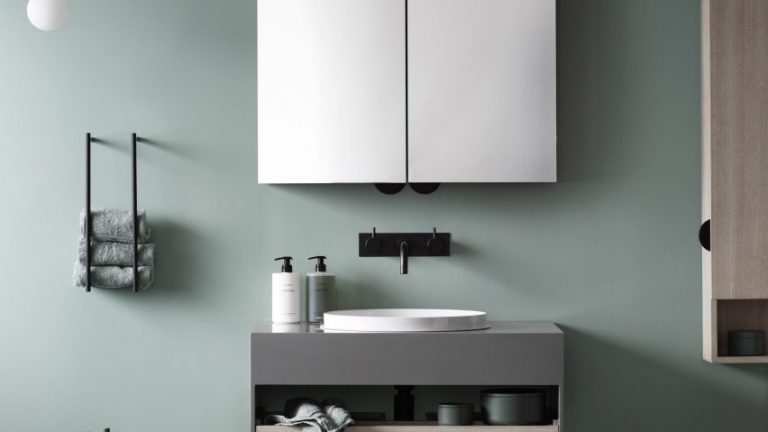
The Korean brand Lagom Bath wanted to change the formal and similar looking bathroom ranges in the Asian market. They asked the Swedish design studio Note to create something new, , and now the Swedish designers have created bathrooms for the Asian market.
The task was to create bathroom furniture and accessories that helped to bring a more emotional and comfortable touch to the bathroom space. Note decided to create a smart and easy to use bathroom setup attracting the Korean public.
In the cultures is Scandinavia as well as in Asia there is an appreciation of purity and simplicity in design
Similar cultures
This is the first time the two companies collaborate and the result is a collection including minimalistic accessories, cabinets, lamps and hooks, specifically created for compact living spaces in Asian cities.
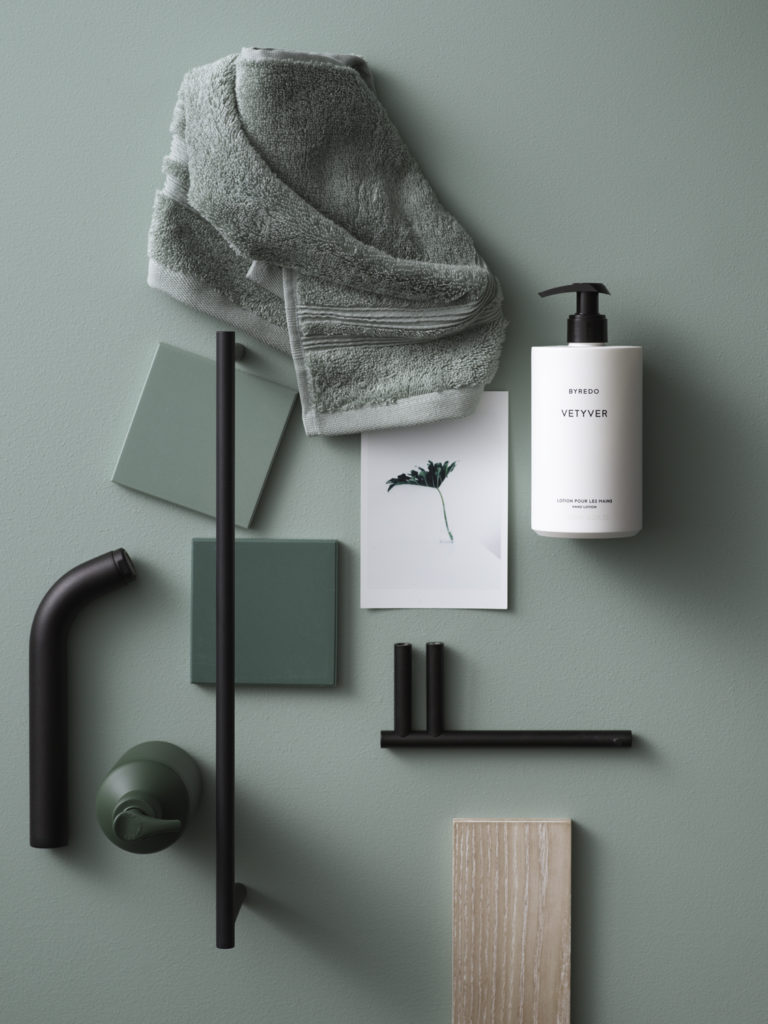
“With small details, like combination of materials, smooth colors and a little design twist on the handles we believe that we can put a little smile on the user’s face every morning,” say the Swedish designers.
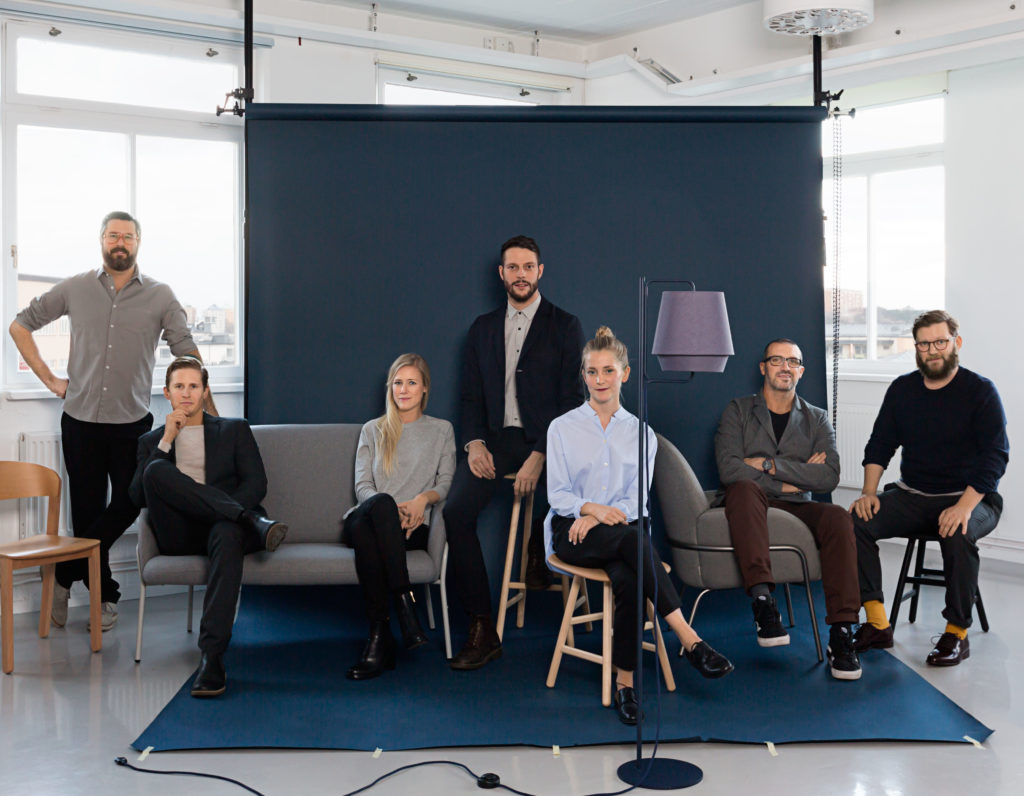
Note Design group
In the cultures is Scandinavia as well as in Asia there is an appreciation of purity and simplicity in design,” the add.
Lagom bath furniture and accessories by Note Design Group
Swedish designers create bathrooms for the Asian Market
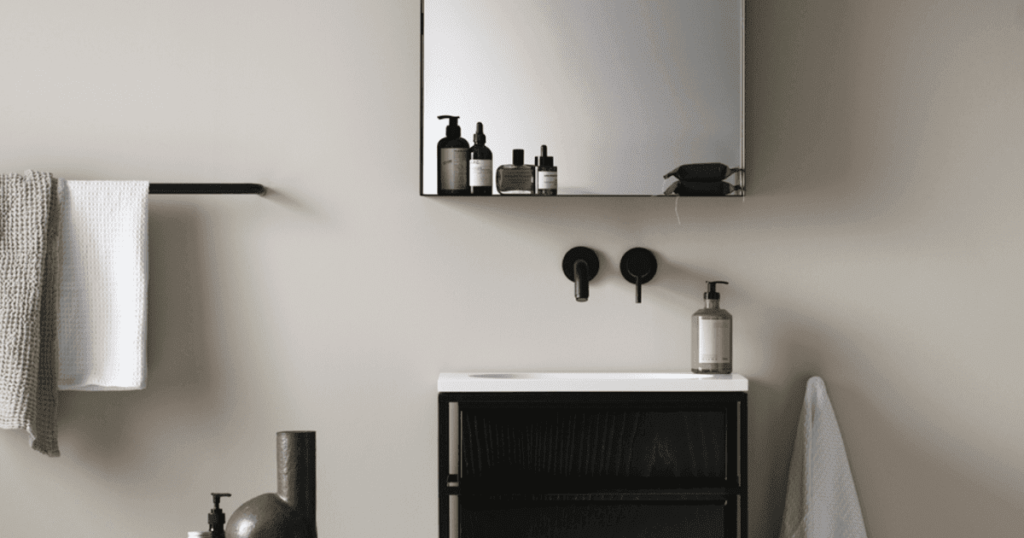
The collection is split into two types that are quite complementary to each other but offer slightly different finishes and form. One features plain green tiles, a natural ash cabinet and a simple wall lamp with an arched stem. The other includes mirrored cabinets, a pendant lamp and two speckled beige tiles.
Lagon by Note is a collection including minimalistic accessories, cabinets, lamps and hooks, specifically created for compact living spaces in Asian cities
Both include the same black semi-circular handles, black metal towel rail, toilet roll holder and shelf.
The Danes have done it before Note Design Studio are not the only designers to contribute to the brand’s debut collection. Copenhagen-based Norm Architects has also created a collection of minimal bathroom cabinets and accessories for Lagom that are designed for use in tight living spaces.
Swedish Designers Create Bathroom Furniture for the Asian Market, written by Tor Kjolberg
The beautiful rooms from 1200s in the Medieval Park in Oslo can take your breath away. That’s only one reason to visit the Medieval Oslo.
However, the Medieval period is one characterized throughout the Western world as one of violence. Artwork from this era shows not only violence done towards other cultural groups, but dangers and suffering from daily life.
Harald Håråde, founder of Oslo, Painting by Axel Revold
The founding of the capital of Norway took place in the turbulent period between the Viking Age and Norway’s Catholic Middle Ages.
The Medieval Oslo
During the Middle Ages, Oslo grew from being a small trading center innermost in the Oslo fjord to become Norway’s capital. In 1624 the inhabitants of Oslo were forced to move to the new city Christiania, before the abandoned old Oslo was laid underground and forgotten, covered by fields, roads, train tracks and new buildings.
Norway’s economic system in the Middle Ages was also more sophisticated than previously thought
Human remains have been vital in understanding the extent and manner of violence in the Medieval period. Brodholt and Holck (2012) summarize the findings from the Medieval Schreiner Collection of human remains from Oslo in order to create a more nuanced interpretation of the violence occurring in this era.
Widespread circulation of coins
Norway’s economic system in the Middle Ages was also more sophisticated than previously thought. Coinage was first introduced in Norway in the 11th century. It was gradually integrated in regular trade and eventually replaced goods as currency. According to historian Svein Gullbekk at the University of Oslo the use of coin circulation in Norwegian society in the years between 1050 to 1320 was widespread and frequent.
Oslo Ladegård’s Medieval Office is located in Ladegaarden
The Black Death
Many remnants and ruins from Ancient Oslo can be found in the Memorial Park. The city had a fascinating, interesting and dramatic history. Oslo´s population was substantially reduced during the time of the Black Death in 1348 which claimed over 50% of the inhabitants. This epidemic also had political consequences for Norway, which became reduced to a province of Denmark. During this period Copenhagen was the actual capital of Norway.
Ruins of the Clemens Church
Pompeii if the North
In the 19th century, the Medieval town was found as a “Pompeii of the north” and today, the ancient medieval city is waking up from its nearly 400-year-old Cinderella sleep. Remains of medieval Oslo are found in Gamlebyen, in the form of ruins, building parts and cultural layers. Here you also find Oslo Ladegård’s Medieval Office, that can help you with information about medieval Oslo or a guided tour in the ruin park.
From the Water Mirror (Vannspeilet) at the Medieval Park
The Medieval Park (Middelalderparken) in the borough of Gamle Oslo in Oslo was built in 2000 in Sørenga in The medieval town of Oslo (Gamlebyen). That is about ten minutes’ walk from the Oslo Central Station. The park is located within the so-called Medieval Park area, which also included the Memorial Park and Ladegården on the north side of Bispegata. In this area, development is not allowed due to ruins and plenty of cultural remains in the underground.
Ruins of St. Mary’s Church
Ruins of The Church of St. Mary in Oslo The Church of St. Mary was once a royal chapel and collegiate church situated on the sandy tongue of land that made up the southern end of Oslo. Its building history, from a small wooden church to a Gothic structure with a monumental façade, reflects key architectural developments in the span of Norway’s Medieval Period (AD 1050–1537). Several excavations have shed light on this evolution, in which the question of form and dating has played a leading role.
The Vaterland boat wreck is now being reconstructed in full scale
The Vaterland boat wreck A boat wreck was discovered during excavation work outside the bus terminal in Oslo. The excavation of the wreck was carried out by Byantikvaren and the Norwegian Maritime Museum in 2011.
The reconstruction project is part of Oslo City’s plans for the development of the medieval park. After the boat is completed, it will be put into operation on Vannspeilet (the Water Mirror).
The Vaterland boat wreck is now being reconstructed in full scale. The museum’s boatbuilder workshop has moved to the medieval park and is open all summer.
Exhibition at Oslo Medieval Park
The Middle Age Exhibition 2018 About hundred years ago the construction of a railway brought the Middle Ages back into the light. This year’s exhibition in Ladegaarden shows what has been found in the excavations in the 1880s and up to the spectacular findings made in connection with today’s excavations.
The exhibition will be open every Saturday and Sunday at 12 – 16pm in the period June-September 2018.
Munks’ room at the Medieval Park
Free Memorial Park Walks, including visit to secret and rare rooms The tour includes a visit to two exciting rooms from the 1200’s Olav monastery, which today is located under the Bishop’s office in the Memorial Park.
From the Olav Monastery
One of the two old rooms was the monk’s library and the other their meeting room. The beautiful stone rooms can take your breath away. As we know, you get the best experience of history in its original surroundings.
Free Memorual Park walks through August, every Sunday at 1pm from the garden at Oslo ladegaard.
The Reputation Institute has for 20 years measured the reputation of countries and companies. Scandinavia Ranks on Top on the List of World’s Most Reputable Countries. On top of the list this year is Sweden, up from number three last year, followed by Norway (4) and Denmark (9).
The institute’s Country RepTrak reveals that Sweden earns top spot as Most Reputable Country in the World, based on perceptions of fostering happiness, altruism, aesthetic appeal, and overall feel good factor as well as economy, technology and efficient use of public resources and contribution to global culture.
Nicolas Georges Trad, executive partner at the Reputation Institute
55 countries measured
“People are expecting more and more from companies and countries, in terms of solving the challenges we’re seeing around the world, and they’re being let down,” says Nicolas Georges Trad, executive partner at the Reputation Institute, in a statement.
Scandinavia Ranks on Top on the List of World’s Most Reputable Countries
Based on more than 58,000 individual ratings among the General Public across the G8 economies, the study evaluated 55 of the world’s largest countries by GDP and familiarity with at least 51% of the G8 general population during the period from March to April 2018. The 55 countries considered were those with the greatest gross domestic product.
Stephen Hahn-Griffiths, Reputation Institute’s chief reputation officer
“There’s been a lot of disruption in the world in the last 18 to 24 months,” adds Stephen Hahn-Griffiths, the institute’s chief reputation officer. “It really adds up to a lingering feeling of uncertainty in the world at the intersection of geopolitical tension, nationalism and underlying social unrest.”
Neither size nor economy is a guarantee of an excellent country reputation, according to the institute. The Top 10 most reputable countries in 2018 are: 1. Sweden 2. Finland 3. Switzerland 4. Norway 5. New Zealand 6. Australia 7. Canada 8. Japan 9. Denmark 10. Netherlands.
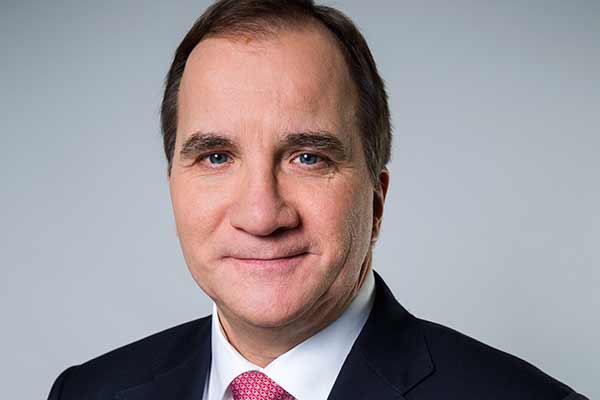
Prime Minister of Sweden, Stefan Løfven
Sweden’s social model
Sweden’s Prime Minister Stefan Löfven says he is convinced that this result stems from the fact that the country’s social model creates not only growth but also freedom, equality and security. More and more people understand that inequality is a major obstacle for economic development in the world.
55 countries measured bu the Reputation Institute
With almost universally excellent reputation scores, Sweden is seen as the #1 most ethical country with high transparency and low corruption, as well as the country with the most progressive social and economic policies.
Related: The Sophisticated Swedes
Altruistic happiness
“A new and significant trend that is emerging is altruistic happiness,” says Hahn-Griffiths. “The countries that rise to the top of the rankings are the ones that allow you to fulfill the pursuit of happiness.”
Generous social benefits, liberal holiday policies, and gender equality are stated as some of the factors behind Sweden’s top score.
Sweden – a welcoming country
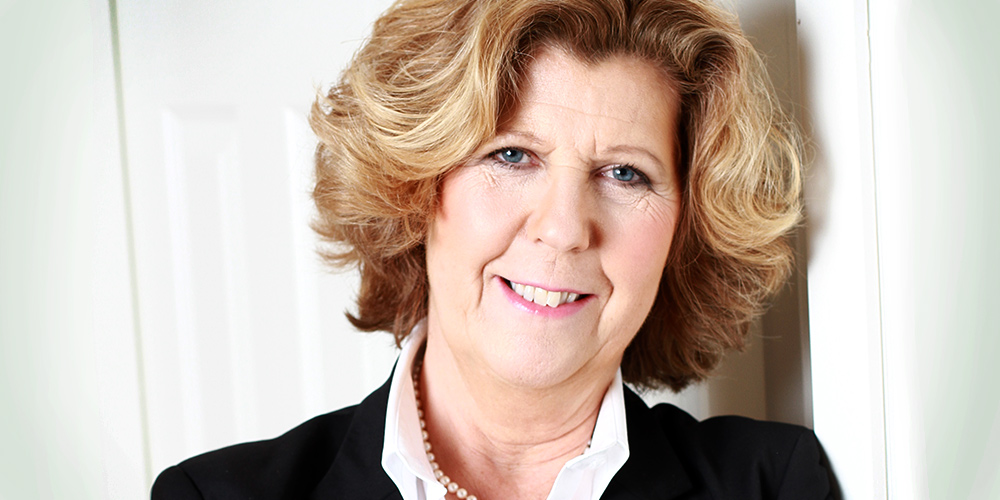
“It is gratifying to see that Sweden ranks number one as the most reputable country. Especially with characteristics such as being a welcoming and progressive country. For being such a small country, a lot of creativity, design and technology comes from Sweden – just look at IKEA, Spotify and H&M. It really shows that our ways of living make a mark globally and gives reasons for tourists to come visit our country,” says Ewa Lagerqvist, CEO at Visit Sweden.
The 55 countries considered were those with the greatest gross domestic product.
The 29 nations ranked with declining reputations in the report would do well to take note of Sweden’s narrative strategy.
Scandinavia Ranks on Top on the List of World’s Most Reputable Countries, written by Tor Kjolberg
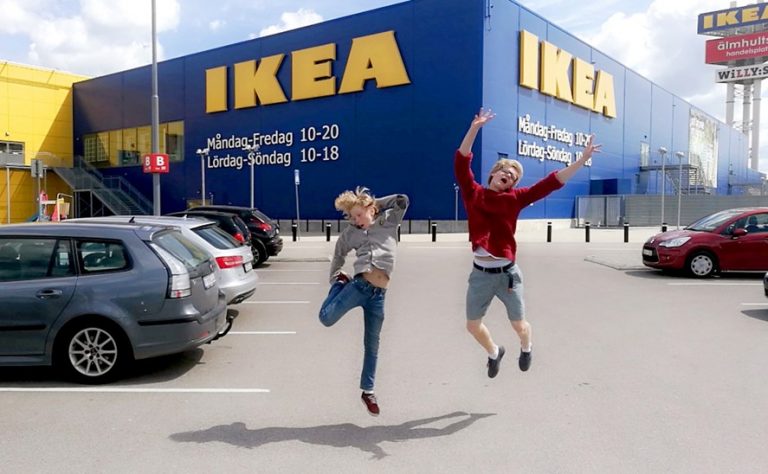
Feature image (on top) Ikea, Almhult. Photo: Vilhelm Carlstrom
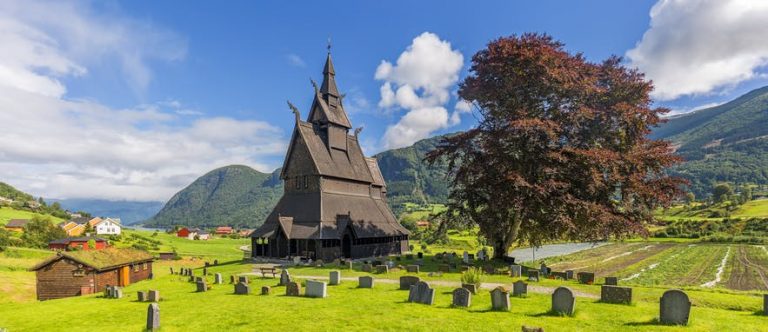
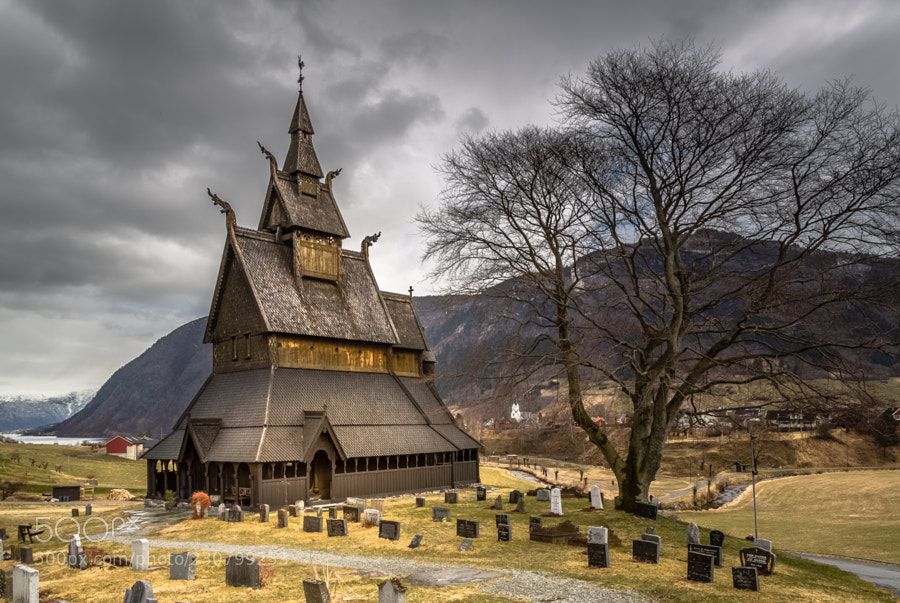
The stave churches are Norway’s unique contribution to the world architecture. Their distinctive design and construction represent some of the finest creations of the Norwegian Middle Ages.
Stave churches are concentrated om North-West Europe. However, aside from Hedared Church in Sweden and Greensted Church in England, the most interesting and best- preserved examples are located in Norway.
Stave churches are characterized by the “staves,” or thick wooden posts, that hold them up. Using the same woodworking prowess that made the Vikings such adept shipbuilders, traditional stave churches were often built using nothing more that expertly crafted joints and joins, with no nails or glue. The only stones used were in the base of the structures.
Visitors spending time in Norway can see some of these beautiful stave churches throughout the country, most of which date from the 12th and 13th centuries. The stave churches that have been preserved to date are, however, by no means identical. They consist of different types: built at different times, by different types of craftsmen and at differing levels of ambition.
Today there are only 28 remaining stave churches from this era, all of which are in Norway:
During the thirteenth century, the Kingdom of Norway was at the height of its powers and had its own archbishopric, with its seat in Trondheim. At that time there were still just under a thousand stave churches, spread over most of the country. In all, it is thought that the country had over two thousand churches.
Today, there are only 28 left. Most of these are to be found in the inner part of Eastern Norway and in Sogn.
Standing as striking reminders of the early days of Christianity in Scandinavia, these churches are a sight to behold. Take a look at some of the most beautiful stave churches ever cobbled together.
Heddal stave church
The largest stave church in Norway
The largest of all stave churches in Norway is Heddal Stave Church. Heddal was constructed in the beginning of the 13th century, and its origins have some unusual roots. Legend says that the entire church, an enormous structure by stave standards, was built in just three days by five local farmers. Whether or not that is true, it adds intrigue to the church. Heddal’s exterior was restored in the 19th and 20th centuries, and its interior had serious changes under Lutheran control in the 16th century.
Borgund stave church
The best-preserved stave church in Norway
Arguably one of the best-preserved stave churches in Norway is Borgund Stave Church. Built roughly between 1180 and 1250, Borgund Stave Church has what is known as a basilica layout, and it has several tiered, overhanging roofs. Since the late 19th century, the church hasn’t been used for religious purposes, but it is now a museum for the public. Of particular note for visitors are the inscriptions found on the wall, which are believed to date back to the 13th century.
Urnes stave church
The stave church on the UNESCO World Heritage List
Surrounded by picturesque beauty, including fjords and lush green fields, stands the 12th century Urnes Stave Church. Since it is one of the earliest stave churches, it serves as a link between the Viking religions and a more Western Christianity. The church is on the UNESCO World Heritage List. There is a lot of animal imagery, some of which comes from the Bible and some of which comes from Norse mythology. The church is not used for regular services, but locals still have weddings and baptisms in the unique structure. The church receives approximately ten thousand visitors per annum.
Hopperstad stave church
One of the oldest stave churches in Norway
Outside the tiny village of Vikøyri, you’ll find Hopperstad Stave Church. Constructed in the beginning of the 12th century, the structure is one of the oldest stave churches in Norway. By the 19th century, however, the church was abandoned. Even some of the wood siding was removed from the building. Thankfully, the church was purchased and restored. The triple nave is still an important feature, as is the altar dedicated to the Virgin Mary.
Reinli stave church
The most traditional looking stave church in Norway
The 12th century Reinli Stave Church in Oppland County is likely the third structure to have stood in that exact spot. While that isn’t unusual, what is definitely uncommon is that the previous structure was a pagan building. The Reinli Stave Church looks more traditional than some other stave churches in Norway, but it is still a wonderful glimpse into the past. In the 20th century, some renovations updated the building, adding in things like electricity, lights and heating.
Kaupanger stave church
In continuous use for more than 800 years The 12th century Kaupanger Stave Church has been in continuous use for more than 800 years, which makes it a great example of local culture, history and heritage. It has a large number of staves, or weight-bearing columns, which sets it apart from other older churches in Norway. In the 19th century, there were drastic renovations to the Kaupanger Stave Church. Thankfully, however, most of these unattractive changes were undone in the 1960s, creating an image of the church that more accurately reflects its medieval origin.
Røldal stave church
Both a museum and a functioning church
Røldal Stave Church is unique in that today, it serves as both as museum and a functioning church. On two Sundays each month, parishioners gather in Røldal Stave Church for services. The rest of the time, the 13th century structure is open to the public and preserved as a museum. Inside the church, wooden sculptures dating to the 13th century depict biblical stories like the Virgin Mary with child and the Archangel Michael visiting Earth.
Undredal stave church
One of the smallest stave churches in Norway
In the year 1147, the Undredal Stave Church was constructed in the small village of Undredal, which is situated right on the banks of the Aurlandsfjorden. This church is one of the smallest of its kind still operating in Norway. It has just 40 seats, and the floor plan of the building is a scant 4 by 12 meters (13 by 39 feet). Like many of the medieval stave churches, Undredal has been relocated several times, often with minor changes made along the way.
Gol stave church
The most replicated stave church in Norway
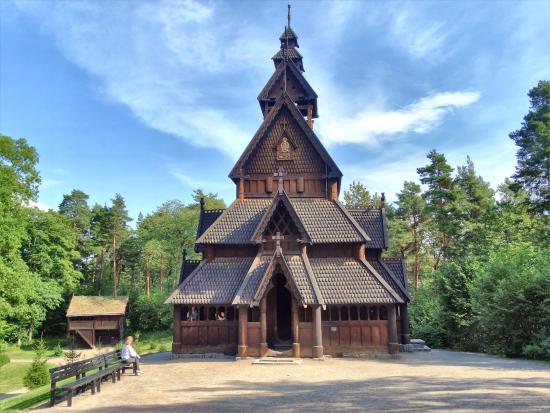
As the name suggests, the Gol Stave Church was originally located in Gol. Today, however, this stave church is found at the Norwegian Museum of Cultural History in Oslo. The entire structure was to be replaced a century ago to make way for a new church, but King Oscar II decided to preserve it. The unusual design, with multiple pitched roofs, is so impressive that multiple replicas have been made. There is even one found in North Dakota, America!
Flesbreg stave church
The farmers’ stave church
The Flesberg Stave Church is located in Buskerud County, and was constructed toward the end of the 12th century. The church was renovated in a significant way in the middle of the 18th century. As a result, little of the structure is entirely original. What makes Flesberg Stave Church particularly interesting is the slate fence surrounding the building, which has iron rings attached to it. Historically, each ring belonged to a local farmer and was where he would tie his horse when in church.
Book on Norwegian stave churches
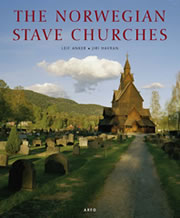
A book on the Norwegian stave churches The book The Norwegian Stave Churches presents all 28 stave churches in Norway as well as Vang Stave Church, which was purchased by the King of Prussia in the mid-1800s and was later rebuilt in the former German province of Schlesia, now a part of Poland.
Norwegian stave churches These medieval churches were notable for mixing Christian iconography and pagan designs like dragons and animals, giving them a distinctive look found nowhere else in the world.
Norwegian Stave Churches, compiled by Tor Kjolberg
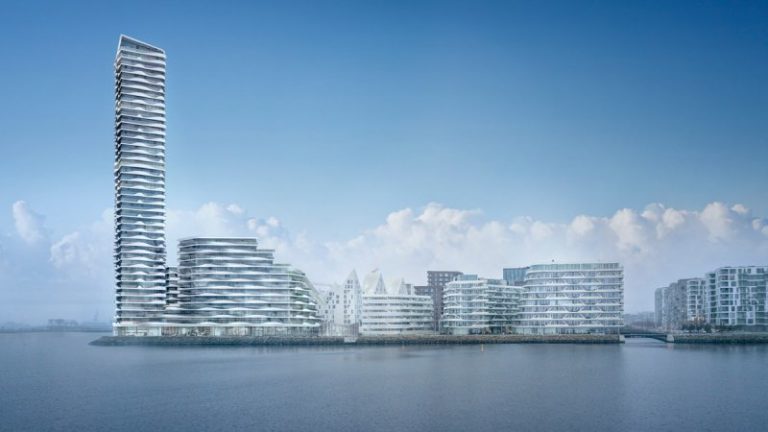
In Denmark’s second-largest city, Aarhus, a new 44-story residential tower is already under construction. According to the contractors the building is on track to become the tallest residential building in Denmark.
The building will rise in Aarhus by 2021 and many Danes are curious about the country’s new architectural landmark located in the upcoming harbor known as Aarhus Ø. The tower will consist of 44 floors and more than 200 apartments, along with a café, restaurant, tourist information center, kayak club and an observation deck and a sky bar located at the top of the building.
Denmark’s tallest residential building will rise in Aarhus by 2021
Luxury apartments with best view of Aarhus
All residences are designed to have a sunny south face and a north view and will feature curved balconies. The Copenhagen-based 3XN Architects aims to transform the waterfront at the harbor into an urban area, emphasizing the interaction of private, semi-public and public areas.
The condominiums will range in size from 500 to 3,000 square feet
The condominiums will range in size from 500 to 3,000 square feet and from one-bedrooms up to five-bedrooms. Garden plots for residents will also be available. Prices have not yet been announced. As is standard practice in real estate, a status certificate will be provided to each buyer.
All residences are designed to have a sunny south face and a north view and will feature curved balconies
Tallest residential building in Denmark
Builder will be Aarsleff, a leading Danish contracting company, together with engineering and design management by Ramboll, a Danish firm founded in 1945. The local architectural company 3XN Architects has been looking to develop the site for over a decade and has previously developed two now-scrapped schemes. Now, the tallest residential tower in Denmark becomes a reality.
The Copenhagen-based 3XN Architects aims to transform the waterfront at the harbor into an urban area
“Over many years, we have been working with promoting life and urbanity on Aarhus Island, and with the Lighthouse development, we will now attempt to embed the temporary urban life into the new neighborhood as a permanent element. Throughout the whole process, we have focused on giving something back to everybody and not just those who will live in the building,” said Rune Kilden, an urban developer and co-owner of Kilden & Mortensen, in a statement.
The architects attempt to embed the temporary urban life into the new neighborhood as a permanent element
Luxurious harbor development
The master plan for the harbor development calls for a seaside promenade with cafes, shops, a large square for leisure activities and lots of open spaces.
“This is as luxurious as you can get in the city of Aarhus,” says architect Kim Herforth Nielsen of 3XN. “It’s at the tip of the harbor with ocean views all around.”
Tallest Residential Building in Denmark, written by Tor Kjolberg
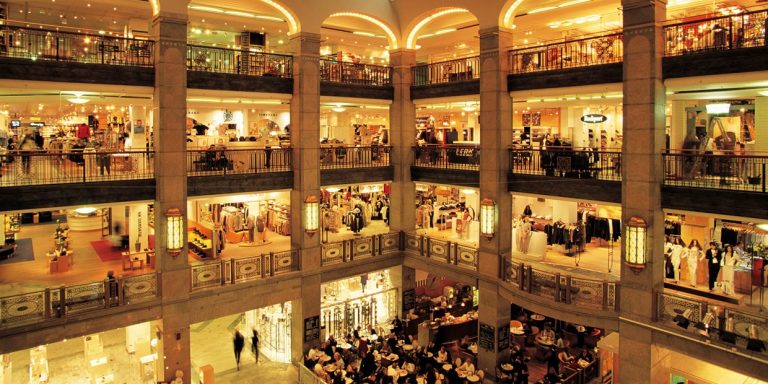
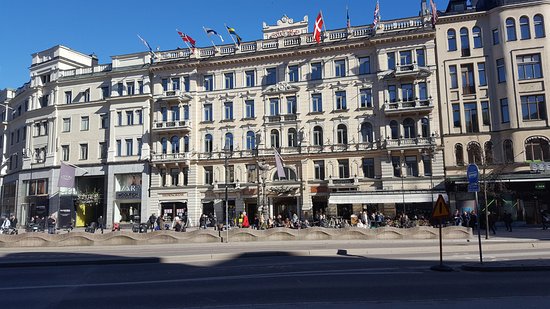
Sweden’s equivalent of Harrods or Bloomingdales is Nordiska Kompaniet (NK) on Hamngatan (just opposite Sweden House), whose rooftop illuminated sign, constantly rotating, is visible from far and wide in the city. In Stockholm’s shopping centers you can find almost everything.
Shopsaholics – welcome to Stockholm’s shopping scene!
Nordiska Kompaniet NK Department Store on Hamngatan.
Nordiska Kompagniet sells almost everything
NK sells everything from shoes to sporting equipment, men’s and women’s clothing, glass, pottery and silver, jewelry and perfume; its serviced range from personal shoppers to post office and travel agency, and multicultural staff are always on hand to assist with changing currency and shipping your purchases back home.
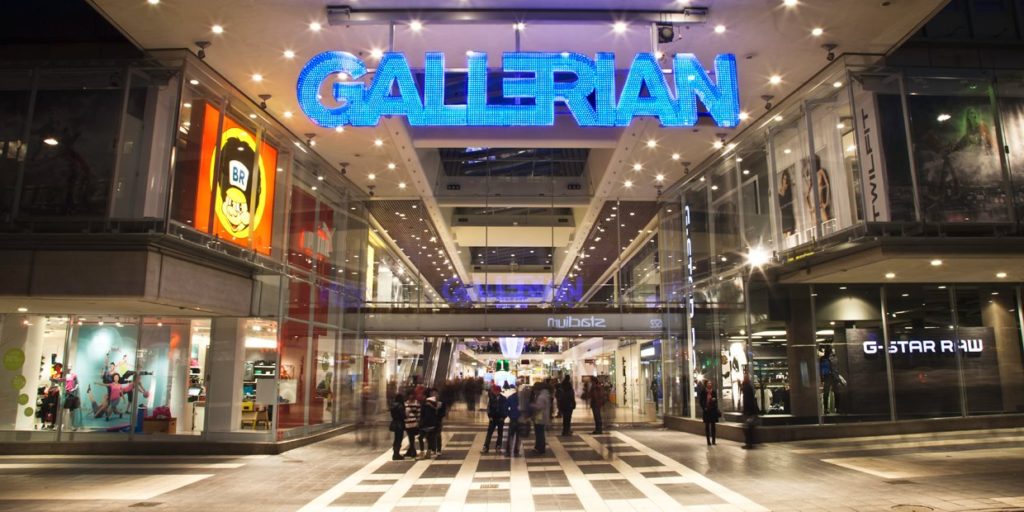
Gallerian is another of Stockholm’s Shopping Centers
Heading West along Hamngatan, you come to Gallerian, a huge covered shopping arcade that stretches to Jakobsgatan; a block west is Sergels Torg, on whose southern side is Culture House (Kulturhuset), a popular meeting place and venues for lectures and entertainment, and the National Theatre.
Don’t miss the food department at Åhlens City
Visit the food department at Åhlens City
Åhléns City is on the corner of Sergels Torg and Drottninggatan. It has a similar range and quality to NK, and a visit to its supermarket food department is a sightseeing tour in itself.
Sturegallerian is the most glamorous gallery in Stockholm
The most glamorous gallery – Sturegallerian
Stockholm’s most glamorous galleria is found at Stureplan in the heart of the city and is loaded with top end boutiques. You won’t find H&M here – instead you’ll find amazing shoe shops, one of the best handbag shops in the city, and tons and tons of gorgeous clothes for both men and women.
There are also several good cafés and restaurants, and a small food hall.
Shopping in Sweden
Shopping in Sweden is rarely cheap. But goods are always high quality. For a bargain, the words to look out for are rea, which means sale, and extrapris, which does not mean extra, but special low price.
Stockholm’s Shopping Centers, compiled by Tor Kjolberg
Feature image (on top): Inside Nordiska Kompagniet NK
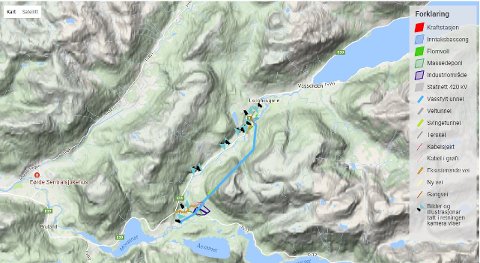
The new power plant “Jølstra” will be located close to the city of Førde. YIT and Sunnfjord Energi AS, a Norwegian power company, recently signed an agreement on building a new hydropower plant in the Sogn and Fjordane County in Western Norway. The contract covers the construction of a power plant, including water intake, power station and approximately 7 kilometers of tunnel.
The value of the contract is EUR 32 million. The work will begin in July 2018, and it will be completed in December 2020.
YIT and Sunnfjord Energi AS, a Norwegian power company, recently signed an agreement on building a new hydropower plant in the Sogn and Fjordane County in Western Norway
Strong position in infrastructure construction solutions
“We have a strong position in infrastructure construction solutions and services in the Nordic and Baltic countries. This contract is a good example of projects where our special expertise in energy sector construction plays a crucial role,” says Harri Kailasalo, Executive Vice President of YIT’s Infrastructure projects segment.
Harri Kailasalo, Executive Vice President of YIT’s Infrastructure projects segment
Several power plant projects in Scandinavia
The company has earlier built a similar hydro power plant in Norway and has also built power plants and been involved in power plant projects with foundation engineering or renovation work in Sweden and in Finland.
The new power plant “Jølstra” will be located close to the city of Førde
About YIT
YIT is the biggest construction company in Finland and a major player in Northern Europe.The company constructs and develops apartments, business premises and entire residential areas. Furthermore, they are specialists in infrastructure construction and paving. Together with their customers andits 10,000 professionals it creates increasingly functional, appealing and sustainable cities and living environments. YIT has operations in 11 countries: Finland, Russia, Scandinavian and Baltic countries, the Czech Republic, Slovakia and Poland. The new YIT was created by the merger of YIT Corporation and Lemminkäinen Corporation, both over 100 years old, on February 1, 2018. In 2017, the pro forma revenue totalled more than EUR 3.8 billion. YIT Corporation’s share is listed on Nasdaq Helsinki.
New hydropower plant to be built in Western Norway, based on an YIT press release
The train journey from Trondheim to Bodø in Norway is an incredibly beautiful journey and, when taken in summer, the light evenings ensure that you miss nothing.
The train transports you through pine forests, across foothills and alongside fjords and rivers. The sea of green and blue is broken only by the occasional red wooden farmstead.
Arctic Circle in Northern Norway
The Arctic Circle
It is a curious feeling to head towards something that you will never see, but the Arctic Circle announces itself in many ways. As you head north, the light changes imperceptibly. The snow, which was confined to the mountain tops moves ever nearer, whilst on the track the wooden tunnels, constructed to protect the line from avalanches, grow more numerous.
As you head north, the light changes imperceptibly
As the sign of human habitation thin out and the mountains get more rugged, the landscape becomes ever more hypnotic. Thoughts turn to wildlife watching and there is every chance that you will spot a majestic reindeer in its natural surroundings.
Curious Rituals occur on the train journey form Trondheim to Bodø in Norway
The Arctic Circle is heralded not only by a hoot of the train’s whistle and two cairns on the side of the track, but by curious rituals on the train. A party spirit suddenly erupts, some partake in illicit drinking, while others share food and sometimes kissing breaks out as though it were New Year’s Eve.
It does feel significant to have crossed ‘the line’ and it is always interesting to watch the impromptu ceremonies that mark it.
Train crossing the Arctic Circle
More than just a train journey
The final steep decent takes you from Arctic tundra towards the blue Atlantic Ocean. This is as far north as the railway goes and as the charming town of Bodø comes into view, you are left with the feeling that you have taken more than just a train journey.
The journey takes around ten hours and takes you over three marvelous mountain ranges. If you are lucky enough or stay long enough – you may experience the Northern Lights (September to March).
Don’t miss Bodø Domkirke, a modern cathedral in Gothic style and Nordlandsmuseet, a museum recording local life.
If you are travelling in high summer (June – August) the train can get crowded. Advance booking of a hotel room in Bodø is recommended. A Train Journey from Trondheim to Bodø in Norway, written by Tor Kjolberg
On a press tour earlier this year, Swedish Tomb Raider star and Oscar winner (2016) Alicia Vikander shared a lot if wacky facts about herself. Normally notoriously private about her personal life, on this tour the actress opened up about her physical attributes as well as her nicknames. One of her many nicknames has been Mrs. Google.
On the tour the former ballerina from Gothenburg gave countless of interviews on TV, for magazines and the general media that followed her wherever she went.
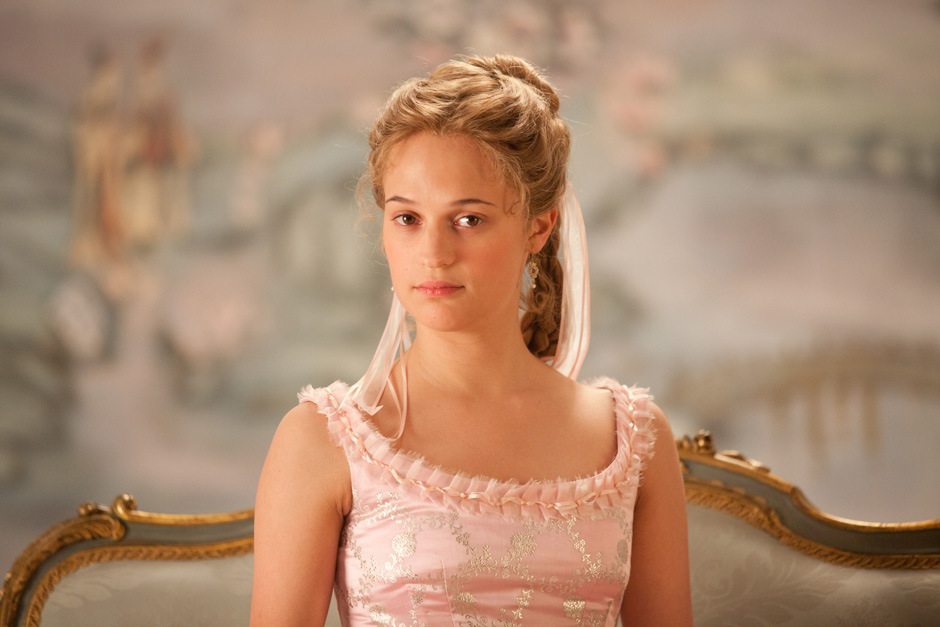
Alicia Vikander as Anna Karenina
Vikander studied Danish for her role in “A Royal Affair”
Alicia Vikander got her break in Swedish TV-drama “Andrea Avenyn” and she learned Danish especially for her heartbreaking turn as Queen Caroline Mathilde in “A Royal Affair” in 2012. In 2012 she also played the role of Anna Karenina. In 2015 she kicked off with starring roles in “Testament of Youth”, a First World War memoir, and as a robot in Alex Garland’s directorial debut, “Ex Machina”.
Vikander admits that her friends sometimes call her “Mrs. Google”.
Later she appeared opposite Eddie Redmayne on “The Danish Girl”, a true story about the first ever sex change. After this it was time to get used to this face. She appeared opposite Michael Fassbender in “The Light Between Oceans”, in director Derek Cianfrance’s “Blue Valentine” and in Guy Ritchie’s “The Man form U.N.C.L.E.”
Swedish Tomb Raider Star Alicia Vikander
When she took her first action-hero role as Lara Croft in the game series “Tomb Raider” internet trolls immediately began to attack Vikander’s physique. Lara Croft was not known only for her daring and athleticism, but also for her status as a video game sex symbol with a sizeable bust. Vikander doesn’t exactly fit into the big-breast mold of the original character, which Angelina Jolie originated for the big-screen role in 2001, Twitter became home to a series of rude comments about her breasts being too small for the character.
Vikander is, however, good at logical thinking. In fact, she told the media that she once went to s school for three years to learn how to play chess.
Alicia Vikander and her husband Michael Fassbender
Vikander was kidnapped
Usually Vikander keeps a low profile, but being attacked on Twitter, she openly told the media about her nicknames, her childhood dreams and even details about her bachelorette party.
In October 2017 in Ibiza, a bachelorette party was conducted in secret since the relationship between her and Michael Fassbender was so hush hush that not even Vikander herself knew about it. Vikander was in fact kidnapped by her friends for a full 24 hours.
Swedish Tomb Raider Star Alicia Vikander aka Mrs. Google
Most people assume that Vikander met her now-husband Michael Fassbender on the set of “The Light Between Oceans”. But according to Wired’s Autocomplete interview, she met her betrothed on the dance floor.
Alicia Vikander aka Mrs. Google is good at planning Vikander admits that her friends sometimes call her “Mrs. Google”. The reason, she says, is that she’s really good at Googling answers on anything, especially when planning travels. Alicia Vikander has always liked making plans. When she was 12 years old, she looked at the year 2018 on a calendar and thought about what her life would be like then.
Alicia Vikander has been said to be the biggest Swedish export since IKEA.
In fact, she really thought she would have a career as a florist. But when she appeared on a Swedish lip sync talent show by the age of 8 and won first place, she was telling everyone she’d be acting or singing for the rest of her life.
“Life has only gone better than I’d imagined,” admits Vikander, who has been said to be the biggest Swedish export since IKEA.
Swedish Tomb Raider Star Alicia Vikander aka Mrs. Google, written by Tor Kjolberg
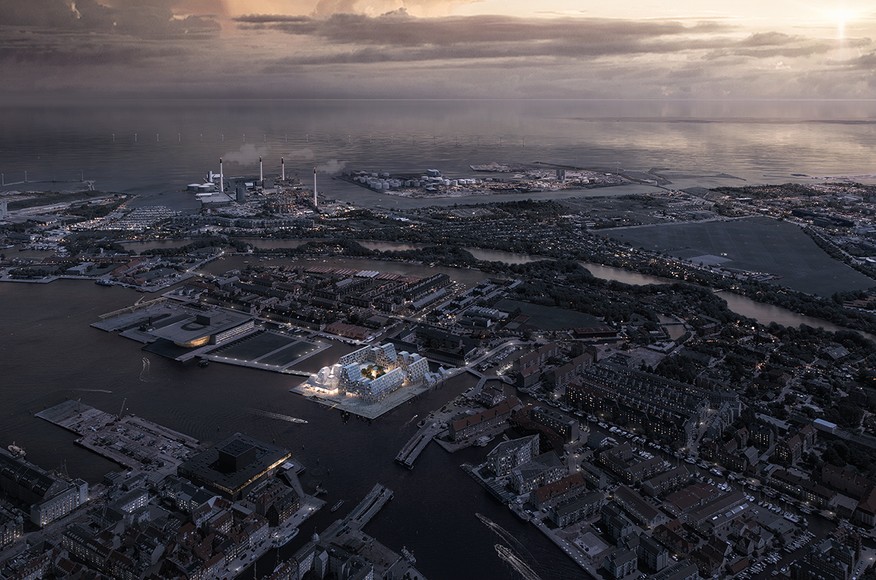
Japanese design studio Kengo Kuma & associates has recently won a competition to design a new waterfront aquatic center and harbor bath at Copenhagen’s Paper Island. It will be a little piece of Japan in Denmark.
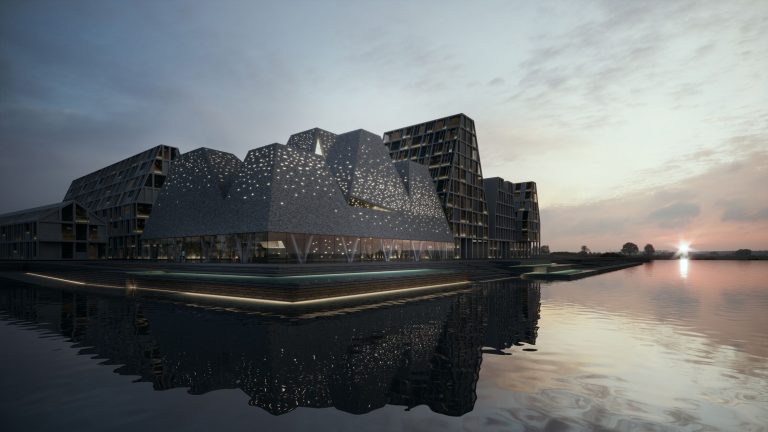
The design aims to highlight the significance of water in the history, culture and vibrant urban life in the capital of Denmark. The Copenhagen City Council praises the project having a unique cone shaped form.
The Copenhagen City Council praises the project having a unique cone shaped form
The project combines facilities for sports associations, harbor baths and indoor pools framed by brick pyramids. The glazed base of the 5,000-square-metre building will afford indoor bathers panoramic views out to the harbor. An outdoor pool along the edge of the main canal terraces down to meet the sea at Copenhagen’s Paper Island.
The glazed base of the 5,000-square-metre building will afford indoor bathers panoramic views out to the harbor
Waterfront Cultural Center – a little piece of Japan in Denmark
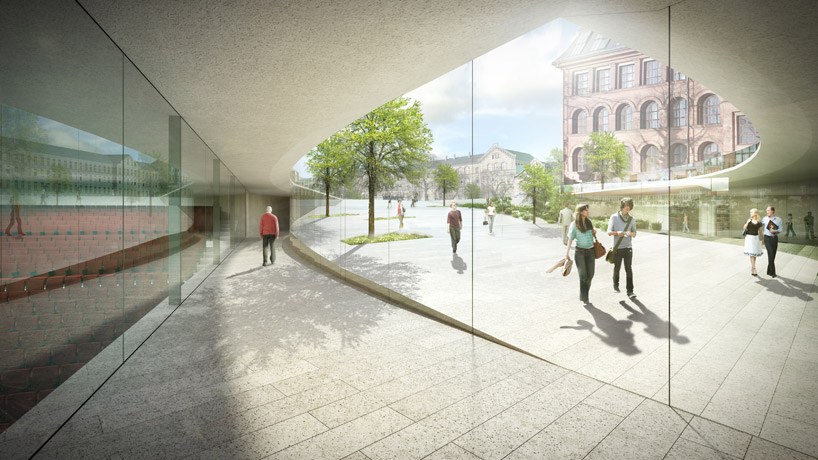
With the Waterfront Culture Center the architects wanted to create an experience, and not just a standalone object; it will be a landscape combining art and architecture that are unified and defined by the water. An important element has been reflection of the water’s light and shadows, steam and flow that appeal to human senses.
Christianholm is a part of COBE’s regeneration of the area, an artificial landmass known as Paper Island
The pyramid forms were a very deliberate choice by Kengo Kuma and Associates to work with the roof profile of Christianholm without mimicking it. However, the building will be multicultural with no single front, allowing it to be accessible from various directions.
“Our focus in design is to create an experience, and not just a standalone object, ” said the project’s lead architect Yuki Ikeguchi
The Paper Island ion Copenhagen
It offers a spontaneous, open and tangible space that carries the memory of the vibrant and dynamic nature pf the paper island. Christianholm is a part of COBE’s regeneration of the area, an artificial landmass known as Paper Island because it was once used by the Danish press to store their reams of newsprint.
The haptic texture of the interior and exterior will be further exaggerated by the use of brick and the warm, natural earthy tones that will relate to the traditional Danish crafts.
The pyramid forms were a very deliberate choice by Kengo Kuma and Associates to work with the roof profile of Christianholm
Japanese-inspired architecture in Copenhagen Kengo Kuma’s office won the competition to design Water Culture House, in collaboration with Danish architects Cornelius Vöge and engineers Søren Jensen.
“Our focus in design is to create an experience, and not just a standalone object, in the form of the landscape, art and architecture that are unified and defined by the water,” said the project’s lead architect Yuki Ikeguchi in a statement.
The Waterfront Cultural Center is scheduled to be opened in 2021.
A Little Piece of Japan in Denmark, written by Tor Kjolberg