Prince Nicolai of Denmark was invited by fashion designer Kim Jones to open the Dior Spring 2019 menswear collection. The Danish royalty is a professional mannequin and made appearance on the catwalk dressed in exquisite Dior outfits.
British fashion designer Kin Jones, whose mother is Danish, had invited Prince Nicolai of Denmark to start the show dressed in the collection’s relaxed suiting.
Prince Nicolai of Denmark at the catwalk for Dior
Prince and model
In 2017 Prince Nicolai signed with Scoop Models in Denmark and generated buzz when he walked for Burberry’s Christopher Bayley’s collection. Being a prince and a Danish Royalty doesn’t hurt but the tall, handsome young man would most likely have had success as a model without having the title Prince of Denmark.
As seventh in line for the throne, Prince Nicolai is free to mannequin full-time without having to fret about any of the restrictions generally related to royal life. This Dior job is probably only the beginning of a magnificent career.
About Prince Nicolai of Denmark
Prince Nikolai was born in Copenhagen on 28 August 1999. He is the eldest grandchild of Queen Margrethe II of Denmark and her husband, Prince Henrik. In addition, the prince is of Chinese descent, as he is a great-great-grandson of Mary Ho Li from Guangdong, China.
Prince Nicolai of Denmark / Photo: Steen Borrgaard, Royal Danish Court
His godparents are the Crown Prince of Denmark (paternal uncle), Nicola Baird (maternal aunt), the Earl of Wessex, Peter Steenstrup, and Camilla Flint.
After their divorce, Prince Joachim and Alexandra had joint custody of Prince Nikolai and Prince Felix.
Danish Royalty Opened the Dior 2019 Menswear Collection, written by Tor Kjolberg
Scandinavian mussel (Mytilus edulis) are regarded with some suspicion by most northerners; their strange, fleshy appearance, paired with ignorance of their sweet juiciness, salty flavory taste and relative cheapness keeps far too many from eating them.
And maybe, despite countless recipes, you have to know how – it’s daunting to attack a bag of mussels if you haven’t seen it done.
Scandinavian mussel shell
Scandinavians love mussels
Stone age northerners were not such picky eaters; they amassed countless heaps of mollusc shells (the koeckenmoeddin), ample proof that we were dependent on marine creatures; and ate just everything in the animal kingdom.
But those of us who do eat mussels love them. Their flavor is indispensable in fish dishes, soups and sauces. They are cheap and easy to prepare, and a very sociable thing to eat. You fed a certain togetherness with the other people around the table or camp fire, everyone bathed in mussel juices, emptied shells heaping up in a deliciously uncivilized manner.
Wild Scandinavian mussels
There are lots of mussels in northern waters, including blue and knife mussels, sweet and fine from the cold waters that deduce the speed of their growth.
We pick wild mussels in tidal waters, from crevices, and poles, where you can gather as many as you can eat in a very short while. Wild mussels must be picked in areas where bathing is considered safe, which means far from sewers and polluting operations, as mussels can’t choose what they feed on, and can be full of nasty things.
Knife mussels are abundant in some areas, but they are not gathered commercially. If you can catch them you have to be very quick about it, or they puff themselves deep into the sand, as they sense the vibrations of your feet on the ground.
Blue wild mussels in water
Appearance and taste of Scandinavian mussel Blue mussels are mostly farmed nowadays, attached to ropes where they feed on small larvae and plankton floating in the water. This means that there is no sand in them, and they are a uniform size. They also have thinner shells than the wild mussels. All mussels taste more or less the same – sweet, salty, fleshy and appetizing.
Buying and storing The good thing is that cultivated mussels are available all year round and are also very safe, with none of the potential health risks of wild ones; being free of sand they are also much easier to clean.
Mussels must be alive when you buy them, if not necessarily when you eat them. The shells must be smooth, shiny and whole – cracked mussels are usually dead, and there is no telling for how long. Seaweed and other stuff on the shells does not matter.
Scandinavian mussel party
Different species have very different shells, but what you must always look for in live mussels are shells that are tightly shut, or shut immediately if you tap them; if they don’t, they are not fit for eating and must be thrown away. Cooked mussels that have not opened up are probably filled with mud and must be thrown away.
Prepare mussels on the day that you buy or gather them. (Once cooked, they can keep in the fridge for a couple of days.) Wild mussels need a good scrub, and you’ll need to cut off all the fiddly little threads (beards), that they use to cling to the rocks. Cultivated or line mussels just need a quick wash in a bowl of cold water. Check that every single mussel is lightly closed before you cook them.
Avoid frozen mussels as they are always rubbery.
Scandinavian mussel dish
Culinary uses Mussels have two missions in the kitchen; the succulent flesh (well, succulent if not cooked for too long) and the juices. The latter, when boiled to a washing-up-water-colored essence, taste like a holiday at the seaside and are pure gold in any soup, risotto, stew or sauce containing any kind of marine creature. If it’s the juices you are after, you might have to surrender the mussels themselves, and boil them for too long to make good eating, in order to extract most of the taste.
Raw mussels are easy to hot smoke, and this is a lovely way to spend a summer evening on the beach. Or simply bake them on a bed of seaweed in a bonfire on the sand. Remember to bring lemon.
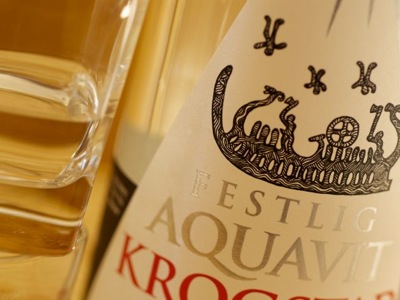
At last – you can taste aquavits in a new cocktail-bar, Rastløs, in Copenhagen. Rastløs means Restless in English, but here you can relax and enjoy a wide selection of this Nordic spirit. It’s time for aquavit tasting in Copenhagen.
What is Aqvavit?
Akvavit or aquavit, also akevitt in Norwegian, is a distilled spirit that is principally produced in Scandinavia, where it has been produced since the 15th century. Akvavit is distilled from grain and potatoes, and is flavored with a variety of herbs. Akvavit is also popular in Germany and the American Midwest.
Akvavit gets its distinctive flavor from spices and herbs, and the main spice should (according to the European Union) be caraway or dill. It typically contains 40% alcohol by volume or 80 Proof (U.S.) The EU has established a minimum of 37.5% ABV for akvavit to be named as such.
Source: Wikipedia
“Aquavit can be the same as gin,” says Krause. “In fact, a lot more,” he adds
An Ambassador of Aquavit The owner of Rastløs, Frederick-Sebastian Krause, has one aim: to show the world that aquavit is a noble drink, and not like what many foreigners believe, a cheap Scandinavian homebrew. Therefore, he serves only carefully selected aquavits.
It is not important to have a huge number of brands, because Rastløs is not a museum, but a suitable selection for the guests to enjoy. The selection will be replaced from time to time, according to Kruse.
Aquavit should be sipped, quietly in small siphon
Sip your aquavit like a good Cognac
Aquavit should be sipped, quietly in small siphon, like for instance a good Cognac, mostly at room temperature. “Aquavit must actually be sipped before the qualities come out,” explains Krause.
Aquavit is in fact also very suitable for cocktails. “I want to open people’s eyes to put the aquavit in a different light,” says Krause.
Changing habits – Aquavit tasting in Copenhagen We are normally afraid of trying new things or changing our habits. Kruse is however convinced he will be able to change the aquavit scene. He is sure that aquavit is going to explode within the next year. Scandinavians have loved aquavit for centuries, and several new versions have entered the market during recent years.
“We just need some people living far from Scandinavia telling the world how great aquavit really tastes,” says Krause. He believes that aquavit can get a renaissance in Scandinavia since we have seen similar tendencies in whisky, rum and gin.
“Aquavit can be the same as gin,” says Krause. “In fact, a lot more,” he adds.
Rastløs is a modern aquavit bar located in Nørrebro – created to break down barriers and delight patrons.
Aquavit is derived from the Latin term ‘aqua vita”, which means ‘water of life’.
Aquavit Tasting in Copenhagen, written by Tor Kjolberg
In 2015 the London New Bond store Louis Vuitton commissioned the Ireland-based artist Blaise Drummond to curate a book of some of his favorite works for their world travel series. He chose to vision the fascinating Arctic.
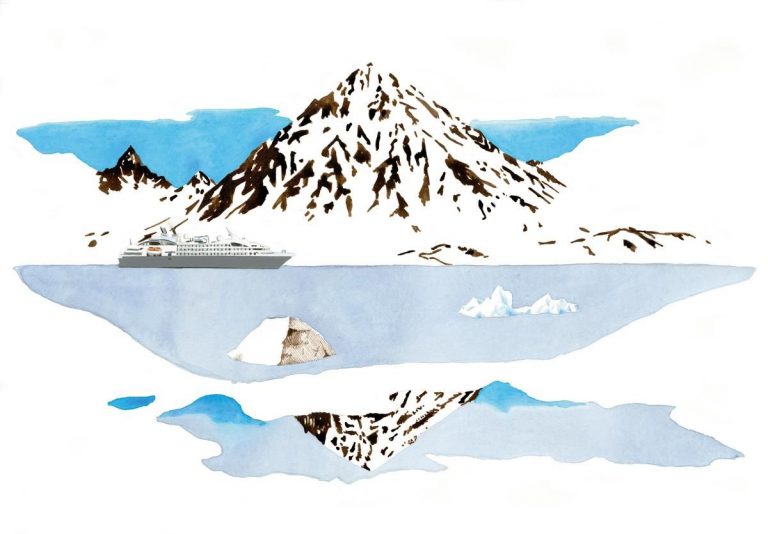
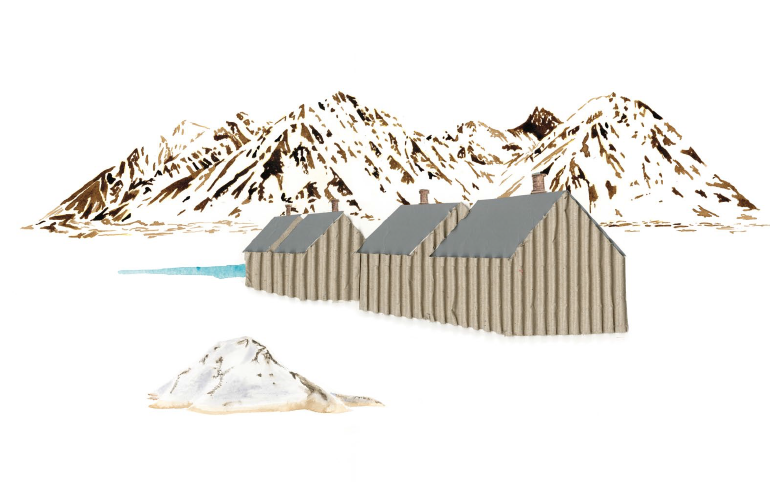
The Louis Vuitton Travel Book collection commissions young and established artists to discover new destinations to offer a contemporary vision of travel. Drummond’s minimalistic landscapes from the Arctic represent a relationship, or the comparative grandiosity, depending on one’s interpretation, between the form of nature and the opposing force of humanity.
4000 photos depicting fascinating Arctic
Blaise Drummond is known for his precise works, often a mixture of watercolor, collage, ink and acrylic. Drummond spent three weeks hiking and kayaking in the Arctic, taking 4000 photos depicting glaciers, mountains, hikers, cabins, and Arctic animals, which he later used as a basis for his paintings for the book.
Drummond’s minimalistic landscapes from the Arctic represent a relationship, or the comparative grandiosity
Preparing for the book
Preparing for the book he went on a ship into a fjord and suddenly he was on icebergs walking around there nobody else had been. He spent three weeks there hiking and kayaking in the Arctic. For him it looked totally unreal, like polystyrene. He photographed and it still didn’t look real. “The icebergs are like cities,” he said, “but they change every day.”
Drummond spent three weeks hiking and kayaking in the Arctic
The illustrations in this book displays both delicacy and ingenuity.
Head to the Arctic with Louis Viutton and Blaise Drummond
About Blaise Drummond
Blaise Drummond was born to Irish parents in Liverpool in 1967 and studied Philosophy and Classical Art at the University of Edinburgh before attending the National College of Art and Design in Dublin for a BA in Fine Art Painting and the History of Art. In 1998 he graduated with an MA in Fine Art Painting from the Chelsea College of Art and Design in London.
He has had numerous exhibitions in galleries around the world and a number of museum shows dedicated to his work, including the Kunstmuseen Krefeld, Germany in 2009 and Musée de l’Abbaye Sainte-Croix, France in 2006.
The Fascinating Arctic Through the Eyes of Blaise Drummond, written by Tor Kjolberg
Experience Oslo’s multicultural environs by heading east if the center across the Akerselva River to Grønlandsleiret and Smalgangen in Grønland, known as the Greenwich Village of Oslo. Here a wide variety if shops run by immigrants offer everything from exotic textiles and gold to kebabs, spices and saris.
Grønland Basar in the Greenwich Village of Oslo
The Grønland Bazaar at the corner of Tøyengata and Grønlandsleiret is a delight to all senses.
Intercultural museum in the Greenwich Village of Oslo
The Intercultural Museum
The newer addition to this lively quarter is the Intercultural Museum. Housed in a converted police station, it produces diverse exhibitions on the history if immigration and cultural changes in Norwegian society. Its aim to promote respect for cultural diversity.
The Greenwich Village of Oslo
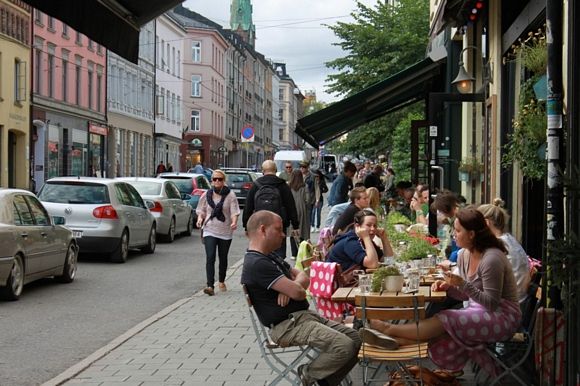
Follow Storgata north to explore the neighborhood of Grünerløkka. Known as the Greenwich Village of Oslo, this former working-class area by the Akerselva River has been transformed in the last decade into a trendy quarter with cafés, restaurants, eclectic galleries and independent shops.
Oslo’s hippest bars and nightclubs are in the Grønland and Grünerløkka districts.
Center for Design and Architecture (DogA) occupies a restored power-station
The Norwegian Center fort Design and Architecture
Southwest of Grünerløkka across the river the Norwegian Center for Design and Architecture (DogA) occupies a restored power-station next to Jakob’s church. The changing exhibitions focus on design and architecture, and there is a shop, café and restaurant.
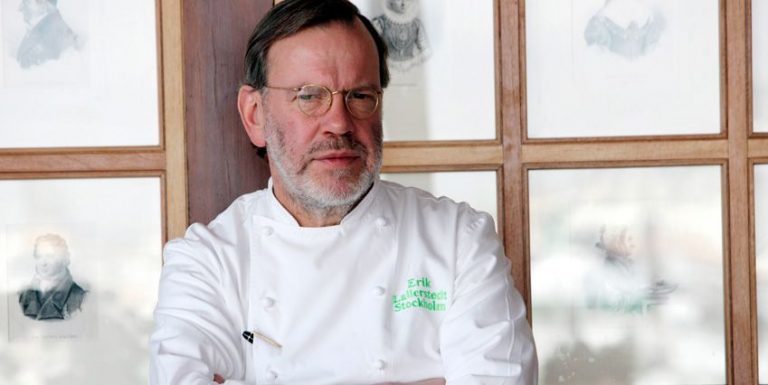
One of Sweden’s most famous chefs, Erik Lallerstedt, produces genuine gourmet sauces you can buy in shops all over the Europe. There’s no longer an excuse for not serving your guests a high-quality savoury meal in the comfort of your own home.
Erik’s Sauces
Erik’s Sauces is a line of cold sauces aimed at complementing everything from a Swedish Smörgåsbord to a summer barbecue. The full range offers Aioli Lime, Bearnaise, Bearnaise Provencale, Chili Bearnaise, Bearnaise Rose, Graved Salmon Sauce, Hamburger Dressing, Hollandaise, Pepper Sauce, Remoulade and Apple Curry Sauce.
There’s no longer an excuse for not serving your guests a high-quality savoury meal in the comfort of your own home
Erik’s idea was to create products of handmade quality for people to enjoy without having to dine out.
Chef Erik Tallerstedt
Erik launched his sauces spring 2008. Today Erik’s Sauces are made and marketed by the Kavli Group. The company continue to provide customers around Europe with an alternative to powder sauces.
Erik’s idea was to create products of handmade quality for people to enjoy without having to dine out
Erik Lallerstedt – The Swedish King of Sauces Chef Erik Lallerstedt was the first Swede to be awarded a Michelin star (1984). So, it’s not without reason people love Erik’s sauces and that he’s nicknamed the “King of Sauces”.
Erik has even written a book on sauces
Among the awards awarded to Erik are the King’s Gold Medal in high-blue bands and the Gold Medal of the Gourmet Academy.
Today, Erik administrates the Gondolen restaurant, the Wine Bar and Eriks Bakficka. Eriks began his career at Waldorf Astoria in New York, where he worked as a porter.
The Swedish King of Sauces, written by Tor Kjolberg
Norwegian Elise By Olsen started blogging aged eight and founded the glossy independent Recent Paper when she was 13. Now 18, she has entered a new publishing venture, Wallet.
Recent Paper, first published in 2013, proved to be a powerful magazine and a publishing sensation, showcasing culture, art and fashion by and for young people with magnificent creativity. Now Elise has decided to step down to make way for the younger generation and to start another sensation, Wallet.
Dialogue between admins and authority
The new magazine is in fact sized like a wallet and explores the spaces where commerce, creativity and criticism overlap in fashion. The first issue was themed Admins and Authority and was a dialogue between people with authority and power in the fashion industry. The second issue is dedicated to the future of publishing, featuring interviews and features compiled by famous designers like Alyx Jacquemus and Telfar. Related: Portrait of Teenage Celebrity Tavi Gevinson
Nomunated for Guinnes Book if Records
Norwegian by birth, she’s currently living in Portugal, in a converted warehouse space an hour north of Lisbon. For someone of her relatively tender years, her achievements are impressive. There is always a demand for a publication openly discussing fashion and brands in a critical forum.
Despite the publication’s compact size, it is meditative and thoughtful. Elise says that each issue will be treated as a separate publication and there will be two more issues this year. After 10 issues she believes her team can cover the same broad topics applied to other industries like art, music, food etc.
World’s Youngest Editor-in-Chief – From Norway, written by Tor Kjolberg
Horrifying Iron Age battle uncovered by archeologists in Denmark. Denmark attracted international attention when archeological excavations close to the Danish town Skanderborg in 2012 revealed bones of an entire army.
Since then archeologists and experts from Aarhus University, Skanderborg Museum and Moesgaard Museum have continued the work when they succeeded un gaining a 1.5 million DKK grant from the Carlsberg Foundation to begin a research project titled: “The army and post-war rituals in the Iron Age – warriors sacrificed in the bog at Alken Enge in Illerup Ådal”.
Archeologist working at Alken Enge
What happened at Alken Enge?
The discovery of human skeletal remains at the Alken Enge location has come as no surprise. “What happened in this area?” asked the Danish archeologist Harald Andersen back in 1957. However, the question was not answered until two exploratory surveys in 2008 and 2009 could create an understanding of the Iron Age people and the events leading up to sacrifice rituals.
We might not know exactly what happened on this battlefield in Denmark 2,000 years ago, but one thing is certain: it was violent. “We have found a wooden stick bearing the pelvic bones of four different men. In addition, we have unearthed bundles of bones, bones bearing marks of cutting and scraping, and crushed skulls. Our studies reveal that a violent sequel took place after the fallen warriors had lain on the battlefield for around six months,” explains Project Manager Mads Kähler Holst, director at the Moesgaard Museum and lead-author on the study.
A sensational Archeological Excavation
In the recent study, the researchers present their collective findings for one of the most spectacular archaeological excavations on Danish soil at Alken Enge wetland, and it makes for horrific reading. The remains of fallen warriors were gathered together and all the flesh was cleaned from the bones, which were then sorted and brutally desecrated before being cast into the lake. The warriors’ bones are mixed with the remains of slaughtered animals and clay pots that probably contained food sacrifices. 13-year-old children fought alongside adult men.
Project Manager Mads Kähler Holst, director at the Moesgaard Museum and lead-author on the study
“We are fairly sure that this was a religious act. It seems that this was a holy site for a pagan religion – a sacred grove – where the victorious conclusion of major battles was marked by the ritual presentation and destruction of the bones of the vanquished warriors,” says Mads Kähler Holst.
So far, archaeologists have discovered 2,095 bones and fragments at Alken Enge
“A very strange feeling descended on the excavation when we found them. It clearly shows acts that when you think about them, really makes your hairs bristle,” he adds.
Religious ritual
“Most of the bones we find here are spread out over the lake bed seemingly at random, but the new finds have suddenly given us a clear impression of what actually happened. This applies in particular to the four pelvic bones. They must have been threaded onto the stick after the flesh was cleaned from the skeletons,” explains Field Director Ejvind Hertz from Skanderborg Museum.
Geological studies have revealed that back in the Iron Age, the finds were thrown into the water from the end of a tongue of land that stretched out into Mossø lake, which was much larger back then than it is today.
Major changes were taking place in Northern Europe during the Iron Age because the Roman Empire was expanding northwards, putting pressure on the Germanic tribes
So far, archaeologists have discovered 2,095 bones and fragments at Alken Enge. But they have not yet excavated the entire site. In the new study, they estimate that at least 380, and possibly, up to 1,000, human remains still lay buried in the moss.
A number of finds from the excavation are currently on display at Skanderborg Museum
Major changes in Northern Europe during the Iron Age
The battles near Alken Enge were waged during that part of the Iron Age when major changes were taking place in Northern Europe because the Roman Empire was expanding northwards, putting pressure on the Germanic tribes. This resulted in wars between the Romans and the Germanic tribes, and between the Germanic peoples themselves.
Strange religious bone ritual took place at Alken Enge
Radiocarbon analyses show that all of the bones originate from a large event early in the first century CE when historical sources recount an upsurge in violence across Europe. Records kept by the Romans describe the macabre rituals practiced by the Germanic peoples on the bodies of their vanquished enemies, but this is the first time that traces of an ancient holy site have been unearthed.
“There are no Roman written sources in Scandinavia that can tell us what happened,” said Hertz.
Archaeologist Katrine Balsgaard Juul from Vejle Museums
An entire army preserved
A number of finds from the excavation are currently on display at Skanderborg Museum. “The remains at Alken Enge tell a unique story about Iron Age power structures,” says archaeologist Katrine Balsgaard Juul from Vejle Museums, Denmark. She was not involved in the excavation.
Violent aftermath for the warriors at Alken Enge
“Alken Enge is the only archaeological example of an entire army preserved anywhere in Europe, and the large collection of human remains indicates an unprecedented level of power. It is a really interesting discovery, which isn’t only important locally, but for all archaeologists in Europe. We can use it to set all of our postholes and farms in perspective” she adds.
Sensational Archeological Excavation in Denmark, written by Tor Kjolberg
The Swedes have an enviable and relaxed relationship with nature partly due to a public right to roam, known as allermansrätten. Let us introduce you to the best hiking trails in the most superb natural surroundings in Sweden.
High Coast Trail The term “High Coast” might make you think of Washington’s Olympic Mountains, but there’s different geology at play here. During the last ice age, the region was crushed by glaciers—and the land is still rebounding, hence the name High Coast. Here, too, you’ll find rocky Scandinavian peaks, dense evergreen forests, and remote lakes, but also caves, rich understories lush with lichen and ferns, and one of the top hiking destinations in the country.
The High Coast Trail
Running from Hornöberget in the south to Örnsköldsvik in the north, this 130km long trail, listed as a Unesco World Heritage Site, is divided into 13 stages. The paths run through dense forests in Skuleskogen National Park, along the shores of wonderful bays and past cultural heritage sites. You also walk across high cliffs and the mountain Slåttdalsberg, which is divided into two by a 200m long, 30m deep, and 7m wide crevice called Slåttdalsskreva.
From Omholdsvik
“Ovik” Sweden’s Outdoor Town If you’re looking to do a little trekking but also want to enjoy all the other outdoorsy awesomeness Sweden has to offer, head to “Ovik” (the full name is Örnsköldsvik). It’s the ideal launch point for forays to the High Coast, but also a mountain town by the sea, with multi-pitch rock climbing, forested mountain biking, and endless water-based activities, including sea kayaking, beach days, and sailing. For all of these reasons and more. Related: Hitting the Walking Trails in Scandinavia
Osterleden hiking trail. Photo: Anders Tukler
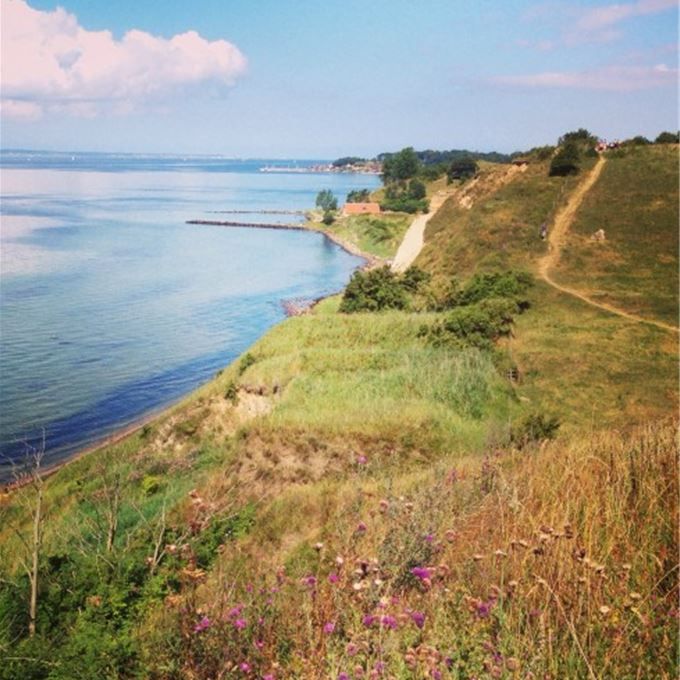
The Österlen Trail in southeast Skåne
The Österlen Trail, which meanders through southeast Skåne, is dotted with picturesque fishing ports, long sandy beaches, nature reserves and leafy beech forests. The entire trail is 188km, divided into 14 stages. One richly varied stretch is from Simrishamn to Kivik, along sandy beaches and through meadows and apple orchards. The trail also passes through Stenshuvud National Park, which boasts one of the finest beaches in the country, while Tjörnedala is rich in flora and fauna. There are plenty of charming bed-and-breakfast places, hotels and cafés along the route.
Skåneleden Trail, Skåne The Skåneleden Trail is a 1,162 km long hiking trail that takes you through the beautiful natural and cultural landscape of Skåne, the most southern region. The route is subdivided into five stages. Whether the trail should take you along the coast or through forests will be your choice and yours alone.
Skaaneleden trail
The Skåneleden Trail is an attractive alternative for those who wish to combine nature experiences with culture and culinary enjoyment. The route passes through deep forests of deciduous and coniferous trees, through impressive nature parks, along quiet lakes and through deep gorges. You will, however, also see undulating hills with fields and white beaches that go on for miles with occasional picturesque fishing villages. Experience the impressive coast at Kullaleden, meander through the blooming meadows and fields, or through the Österlen forests. Along the entire route you will find pleasant and beautifully located hotels, B&Bs and camping sites.
Keb and the High Peaks
“Keb” is short for Kebnekaise, which, at just under 7,000 feet, is Sweden’s highest peak. But Keb also stands for the region the massif resides in. Tucked up against Sweden’s northwest border, Keb is both remote (the closest town is a bus stop) and barren—think verdant alpine tundra, snowcapped summits, and alpine lakes. Which is to say the country is beautifully reminiscent of the Beartooths on the Wyoming-Montana line.
From Kebnekaise
Most folks make the 12-mile trek from Nikkaluokta (the bus stop) to the Keb Fjällstation—a full-service alpine hut complete with bunks, a restaurant, and hiking boot rentals. To continue to the summit of Keb from the mountain station, expect a 10-to-14-hour day. Want to get even farther afield? Aim for the area between the Kebnekaise massif and Kaitumjaure Lake. There are no hiking trails, but there’s great fly-fishing.”
Abisko National Park
Abisko and the Northern Parklands North of Keb, Abisko National Park is only 30 square miles but serves as a vital hub for Scandinavian trekking. Sweden’s famous 270-mile Kungsleden (or King’s Trail) terminates in Abisko (above the Arctic Circle), where it meets the 500-mile Nordkalottruta (Arctic Trail), which rings Lapland, connecting Norway, Sweden, and Finland.
Kungsleden Trail, North Sweden The more than 400 km long Kungsleden Trail, which stretches from Hemavan to Abisko in Lapland, was established at the end of the 19th century. This historic path is considered one of the most beautiful hiking trails, both in summer and winter. Of course, the latter would require skis.
Tjäktjavagge on Kungsleden trail, Lappland
You will hike through a breathtakingly beautiful alpine landscape, between mountain meadows full of flowers, sparkling glaciers, bubbling brooks, dark gorges and the most stunning birch forests Sweden has to offer. In summer the midnight sun will almost tempt you to just keep on walking, and in winter there is a good chance of seeing the magical northern lights dance like curtains moving in the wind against the nightly sky.
The section between Abisko and Nikkaluokta is the most alpine-like which makes it one of the most visited sections. From Saltoluokta to Kvikkjokk the terrain alternates between barren plateaus above the tree line and meadows surrounded by mountains and forests. Not too far from the trail is the impressive plateau of the Sarek National Park. Wooden steps and bridges ensure safe passage for both hikers and skiers and as the comfortable overnight huts are well within walking distance the daily hikes will never last too long.
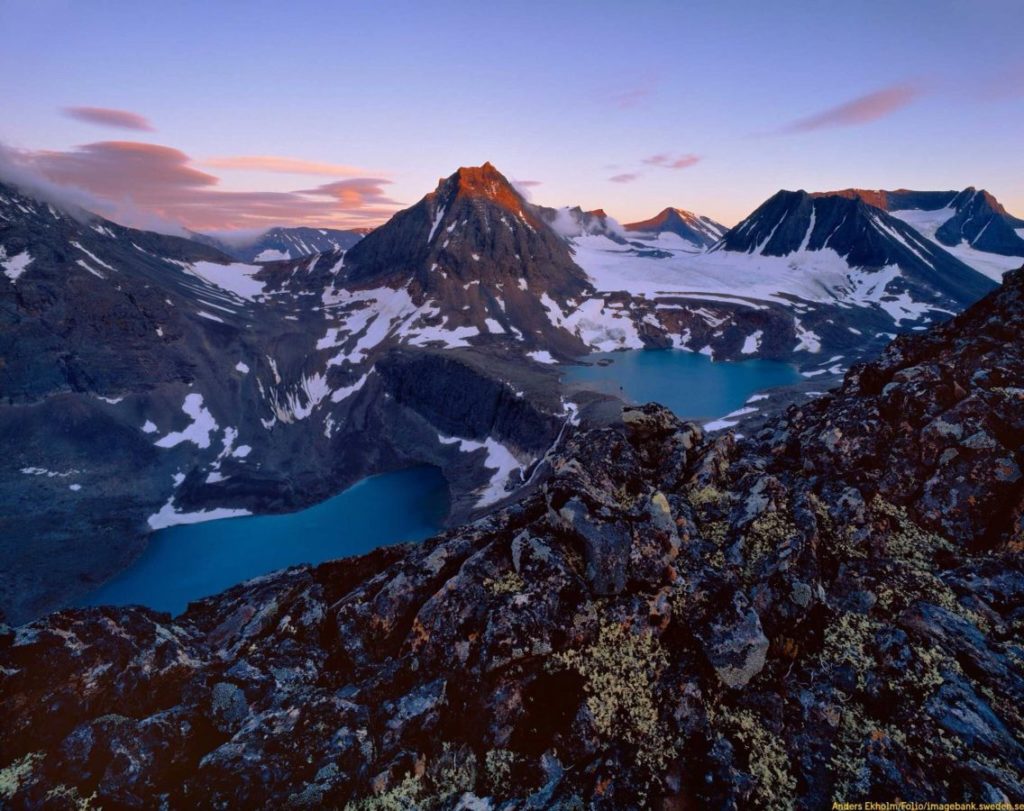
Tarfala The Tarfala Valley, east of the Kebnekaise massif, is one of the most breathtaking sights in Sweden. Here you’ll find Tarfalatjåkka, a turquoise mountain lake flanked by some of the most dramatic peaks in the country. It’s also home to Tarfalastugan, the Swedish Tourist Association’s highest mountain cabin.
Tarfala Valley. Photo: Wikipedia
You can access the cabin from the Kebnekaise mountain station, which is 8km away and 500m above sea level. The cabin has shared dormitories for overnight stays, while Kebnekaise mountain station has suites and camping places.
The Jämtland Triangle
The Jämtland Triangle runs between the mountain stations of Storulvån, Sylarna and Blåhammaren in the Jämtland mountains. It’s one of the most popular hiking trails in the country, largely thanks to the numerous cabins, saunas and good places to eat along the way. The Swedish Tourist Association mountain station at Blåhammaren is renowned for its gourmet food and panoramic views.
Jamtland triangle
Storulvån, around one hour from Åre, is a popular start and finish point. The entire walk is 47km.
Sörmlandsleden Trail, Södermanland For those who wish to travel the friendly landscape of the most southern part of Middle Sweden at a safe distance from the civilised world, we highly recommend the Sörmlandsleden Trail. This Swedish hiking trail of more than 1,000 km is very interesting both from a landscape as well as historic perspective. The route is subdivided into 100 daytrips of different difficulty levels, varying from challenging to those that resemble an easy Sunday stroll. Most starting points are easy to reach by car, bus or train.
Sormlandsledewn trail/Wikipedia
You will be walking in a highly diversified natural environment. One moment you could be walking in an open landscape and the next in areas of un-spoilt nature, old forests or along fantastic coastlines and shores. This route takes you past no less than 80 lakes that will all tempt you to take a refreshing bath right in the middle of nature. There are many places and locations that are of cultural historic importance near the trail.
Also, well within reach of the route are hotels, inns, B&Bs and youth hostels. However, for those who prefer to spend the night in the open air there are designated protected overnight places at the most beautiful of locations.
Emigrant trail
The Emigrant Trail The Emigrant Trail, the 130 km long trail in the Småland region, passes along and through villages from which many citizens emigrated to America between 1850 and 1910. The reason being the hard and rocky ground making it hard to grow crops. This resulted in a famine causing many inhabitants to leave this area. Vilhelm Moberg, the author, wrote about the emigrants’ experiences. Reading the book will take you to the surrounding area of the villages Ljuder, Långasjö, Korpamoen, Moshult and Duvemåla. A great reason to travel through this area and as you will encounter all sorts of overnight accommodations en route. You can take all the time you need to explore it.
St. Olavslede trail
St. Olavsleden Trail Everybody has heard of the Santiago de Compostela Pilgrim Route. Would you like to follow a more original Pilgrim Trail? Then Sweden is the place to come to because we have the St. Olavsleden Trail. This pilgrim route passes through Sweden and Norway, from the Swedish east coast to Trondheim in Norway. You can follow in the footsteps of Norwegian King Olav Haraldsson as he walked from Sweden to Norway almost one thousand years ago. While walking you will feel as if you are a part of that very history; sometimes it will feel as if you’re walking through a live museum while surrounded by beautiful nature as well as impressive culture.
The 340km Siljan Trail snakes around Lake Siljan and the valley along Lake Orsasjön. It’perfect for families and beginners, with plenty of conveniences along the route. It’s also a delightful way to experience the many sights in the Siljan area, such as Zorngården in Mora (home of famous artist Anders Zorn) and numerous mountain farms dating back several centuries. There are many places to stay overnight, from cabins to luxury hotels, not least in idyllic Tällberg. You can also take a one-day outing to Rättvik, with Lake Siljan in view the whole way. Another easy hike is around Lake Orsasjön, a 40km walk through undulating landscape.
The Best Hiking Trails in Sweden, compiled by Tor Kjolberg
The book “Built by the Sea: Villas and Small Houses by Lund Hagem Architects is a showcase of private residences and summer houses in which the interplay between the built and unbuilt natural landscape achieves its maximum effect.
The Oslo-based architecture and urban design group Lund Hagem is celebrated for their unique sensitivity to the interplay of form, material and landscape. This large heavily illustrated monograph edited by Julie Cirelli and with an introduction by Erling Dokk Holm demonstrates the architects’ forward-thinking structures and environments.
Book by Lund Hagem Architects
Built by the Sea: Villas and Small Houses Lush photographs, schematics and project floor plans all illustrate how the local landscape and architecture shape the formal and material vocabulary of their contemporary architecture and its deep roots in the Nordic tradition.
In developing the individual design of each building, the firm deftly analyze the built and natural environment and determine which parts of a site should remain unbuilt, and which microclimates best lend themselves to domestic living.
The book demonstrates the architects’ forward-thinking structures and environments
It all started by designing the Norwegian king’s cabin Established in 1990, the company is today managed by five partners; Svein Lund, Einar Hagem, Mette Røsbekk, Per Suul and Kristine Strøm-Gundersen. It all started when the architects designed the Norwegian king’s cabin at Mågerø in Tjøme, which was completed in 1993.
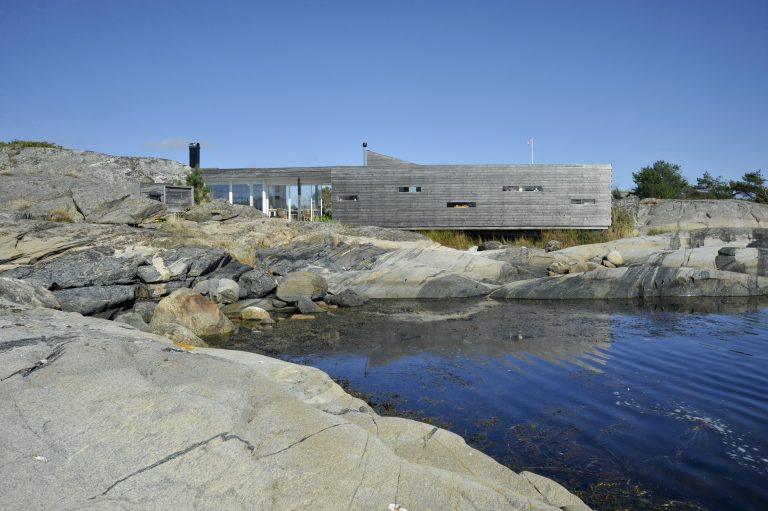
After that, the architects received a lot of attention. The book showcases relatively simple cottage structures integrated into lush coastal landscapes as well as more challenging expressions like the Lyngholmen cabin, where a concrete shed extends beyond the quarry and constitutes the main building of the cabin.
Cabin Stormorken
Lund Hagem’s present projects
However, the architectural office has grown heavily on the construction of completely different dimensions. With 45 employees, they now work with the new Deichman library in Bjørvika and a residential complex in the Barcode area.
The office has won numerous prestigious competitions and received a number of awards and citations for design excellence. Even though cottage construction is not the firm’s livelihood, they continue to build cabins and private houses on the seafront.
Norwegian Villas and Small Houses by the Sea, written by Tor Kjolberg