Danish Bacon

  • Today the Danes are the world’s leading pork butchers, slaughtering over 28 million pigs a year and agriculture represents over five per cent of the country’s total exports. In his book «The Almost Nearly Perfect People» British author and journalist Michael Booth unveils astounding facts about the Danes. These are excerpts from his book, published by kind permission of the author.

    130415-map_of_denmark

    Once upon a time, the Danish ruled all of Scandinavia. They like their fairytales, the Danes, but this one is true. The Kalmar Union of 1397 was a historic high point for the Danes, with their equivalent of Elizabeth I, Queen Margaret I, ruling a loosely unified Norway, Sweden and Denmark. The union held for over a century until, in 1520, the then Danish king, Christian II, rashly beheaded around eighty Swedish nobles in the so-called Stockholm Bloodbath, something of a diplomatic faux pas. Though Denmark did manage to hold on to Norway for a few hundred years more, henceforth the Swedes would play a far more proactive role in the region’s history, mostly by holding Denmark’s head in the toilet bowl while Britain and Germany queued up to pull the handle.
    130415-Christian_IV_Pieter_Isaacsz_wikipedia

    There was a brief false dawn for Denmark under the reign of their great Renaissance king, Christian IV – Denmark’s Henry VIII, with similar appetites and girth – who oversaw some of Denmark’s most ambitious military and architectural projects, funded chiefly via the toll he extracted at Helsingør (Elsinore) from ships entering and leaving the Baltic through the narrow bottleneck there (it was the Panama Canal of the North for a while).

    Christian IV was fortunate not to have lived to witness one of the darkest days of Danish loss. By the terms of the Treaty of Roskilde, signed a decade later in 1658, the Danes were forced by the Swedes to relinquish what are today the southern Swedish region of Skåne, Blekinge and Halland, as well as the Baltic island of Bornholm (the latter was eventually returned and remains Danish).

    The ensuing centuries were even less kind to the Danes, and I am afraid to say, the English played a pivotal role in compounding their misery. In 1801 a British fleet, with Nelson as second in command, attacked the Danish navy anchored outside Copenhagen to prevent it from falling into French hands. The British returned in 1807 for similar reasons, but this time bombarding Copenhagen itself for three days, resulting in the deaths of as many as two thousand locals and the destruction of a good part of the city. The attack had the opposite effect of that intended, forcing the Danes into the arms of the French.

    When the dust settled on the Napoleonic wars and everyone had swapped sides at least once, Denmark discovered that it had lost Norway to Sweden in yet another of those dratted treaties, this one signed in Kiel in 1814.

    How the Danes must have come to dread treaty-signing time. Another, signed later during that, for them calamitous, century, would finally denude Denmark its troublesome territories, Schleswig and Holstein, the Danes having been forced to abandon their thousand-year-old-defences, the Danevirke, to the Prussians in 1864.

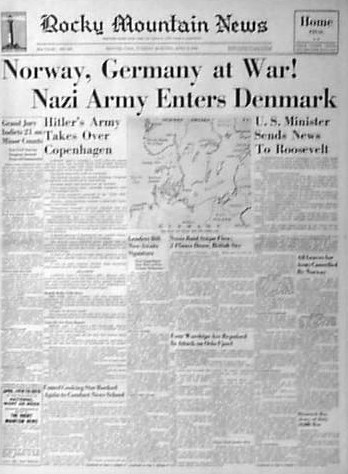
    With Schleswig and Holstein gone south, Denmark had lost roughly a third of its remaining land area and population, and by some estimates as much as half of its potential income. Over time it would also lose its small colonies in India and the West Indies, and even the Faroes voted for autonomy. When Adolf Hitler’s army invaded Denmark in April 1940, it inadvertently relieved Iceland of its Danish head of state.

    130415-hitler-invades-denmark-news-article

    There was little resistance to German occupation for the first three years or so, indeed, both the Danish king and prime minister at the time, criticized the nascent Danish underground when they occasionally carried out minor acts of sabotage. Unlike the Norwegians, who resisted with great courage and ingenuity (greatly aided by their mountains and climate, admittedly), Denmark had little choice but to submit to life as a pliable German satellite.

    It would be surprising if the long litany of loss and defeat had not had a lasting impact on the Danes, but I would go further. I suspect that it has defined the Danes to a greater extent than any other single factor – more than their geography, more than their Lutheran faith or their Viking heritage, more even than their modern political system and welfare state. You see, in a roundabout way, Denmark’s losses were her making.

    Their greatly reduced circumstances bound the Danish together more tightly as a tribe than any of the other Nordic countries.

    The Danes adopted a glass-half full, and it is an outlook which, I would argue, has paved the way for the much-trumpeted success of their society to this day.

    Hvad udad tabes skal indad vindes.
    (What was lost without will be found within.)

    The line was originally written by the author H. P. Holst in 1811, but it obtained greater purchase when it was adopted by the Danish Health Society, which interpreted it, quite literally, in its work to reclaim coastal land by draining sandy territories in Jutland. So successful was the society at this that, by 1914, Denmark had effectively replaced the hectares it had lost to Germany with fresh, farmable arable land.

    130415-hugo_larsen_prisoners-building-land

    But Holst’s declaration also encapsulates what turned out to be the Danes’ great cultural ‘Golden Age’, a mid-nineteenth-century period of increased social mobility and artistic blossoming that saw the son of a washerwoman, Hans Christian Andersen, publish his first fairy stories and go on to be one of the first genuinely world-famous figures; Søren Kierkegaard write his groundbreaking existentialist works; and the great classical sculptor August Bournonville, contribute to a great flurry of artistic activity within Denmark at the time.

    130415-wind-turbines

    Assuming that you know nothing about Denmark, within the first five minutes or so of meeting a Dane they will usually say something along the lines of “This is just a little land. We are only a little over five million people; we’re pretty much all the same.” They will probably add that that they have no mountains or waterfalls, and that you can cross their country by car in four hours. But after a while – it can take anything from five minutes to a year, depending on the Dane in question – you will begin to detect the steely pride beneath the ‘aw shucks’ surface humility. That’s when they might casually mention their world-leading wind turbine industry, the absence of poverty in Denmark, their free education and health systems and generous benefits. They will tell you how they are the most trustworthy and equal people in the world, how they have the best restaurants in the world, and, yes, the Vikings will probably crop up as well.

    130415-pickled-herring

    The Danes have a deep and justifiable satisfaction born from the knowledge that they have built, from relatively unpromising foundations, arguably the most successful society on the face of the earth. The ‘arguably’ is mine. To the Danes there is no argument.

    130415-danish-bacon-daily-scandinavian

    Today the Danes are the world’s leading pork butchers, slaughtering over 28 million pigs a year. The Danish pork industry accounts for a fifth of all the world’s pork exports, half of domestic agriculture exports and over five per cent of the country’s total exports. Yet the weird thing is, you can travel the length and breadth of the country and never see a single sow. (That’s why the author named this chapter Danish bacon, or just Bacon).

    My own ignorance of Denmark was almost total before I started coming here a decade and half ago so, before we attempt do divine the secrets of the Danes’ success in greater depth, I am going to take a moment to fill you in on some of the aspects of contemporary Danish life that I believe make such a wonderful place to live, but of which you might not be aware. It is a bit random but bear with me, I think it gives a good overview:

    130415-Arne_Jacobsen_petrol-station-wikipedia

    • The landscape of Southern Funen (Fyn), which undulates like a reclining nude.
    • The pleasantly woozy feeling after a lunch of pickled herring with red onion on rye, a Tuborg and an icy schnapps.
    • The fact that I once saw the Danish prime minister on a pre-election walkabout in Copenhagen, on the equivalent of Oxford Street, and no one was paying him the slightest bit of attention.
    • Arne Jacobsen’s petrol station on Strandvejen, the most elegant petrol station in the world.
    • A visit to Bakken, the old amusement park to the north of the city. It is the best way I know of travelling back in time to 1968.
    • The word Pyt. A dismissive exhalation which roughly translates as ‘Let it go, it’s not worth bothering with.’ Midsummer party threatened by rain? Pyt med det! (‘Pyt with that!’)
    • They sell wine and beer in cinemas, and you are usually allowed to take it into the auditorium with you. Is there any greater litmus test of a civilized society?

    130415-bakken-amusement-park-copenhagen

    Do great confectionary, pickled herring and complex modular construction toys amount to the recipe for human happiness? Probably not (although for me, yes). There is more to Denmark’s success and the enduring, Olympic-gold-level happiness of its people. Much more.


French Designer Inga Sempé’s Love Affair with Norwegian Wool

French designer Inga Sempé has created several ranges of luxurious woolen blankets for the renowned Norwegian textile brand Røros Tweed.

Her latest design is called Giboulée, which is the French word for the strong March rain in France.

100415-inga-sempé2-giboulet

Inga’s latest design for Roros Tweed is a bicolor pattern with a diagonal rhythm. It shows thick drops falling, pushed by a strong wind, from one side of the blanket to the other.

Inga Sempé graduated in 1993 from de I’ENSCI les Ateliers in Paris, France. While studying she received a scholarship at George Sowden’s studio in Milan and after graduating went to work as a designer at Marc Newson’s studio in Paris.

100415-inga-sempe2

Inga claims she wanted to work with wool. She wanted to create blankets more suited for southern countries, and therefore they are slightly thinner than the original Roros collection.

“I remember the blankets on the trains in France in the old days. They were green and red. I don’t know where these colors came from, since it was not the colors of the trains. Some of the other blankets I have created are in a way a recreation of the old train blankets.”

Røros Tweed has been weaving high quality wool products since 1940, building on a local tradition that goes back centuries. Selected wool from Norwegian sheep and 100% Norwegian production, combined with collaboration with Scandinavia’s top designers and textile artists, has made Røros Tweed one of the most renowned wholly Norwegian quality brands.

100415-Inga-sempé-giboulet

All hail Roros Tweed and their Norwegian sheep.  They’ve done it again with their newest range of woven wool blankets and throw pillows, Giboulet, by prolific French designer Inga Sempé.

French Designer Inga Sempé’s Love Affair with Norwegian Wool, written by Tor Kjolberg

Michelin Star Restaurants in Scandinavia

No restaurants in Scandinavia have three stars. That may be due to Michelin’s old fashioned rating system – or lack of visiting the region. Here we present the updated Scandinavian entries oif Michelin star restaurants in Scandinavia – and some lessons we would like to give the Michelin committee.

The Michelin Guide was issued for the first time by the French car tire producer Michelin January 24, 1900 as a guide for French car owners.

090415-scandinavian-star-cooking

Initially the guide contained mostly garages, gas stations and motels, but gradually restaurants and hotels were included.

The guide rates the eateries by one, two or three stars, where three stars are given to excellent cuisines, worth a trip.

Two stars are given to restaurants with food worth a detour. One star is given to restaurants, very good on its own category. Bib Gourmand is a category of restaurants ‘serving good food at moderate prices’.

Copenhagen has 15 Michelin star restaurants, Stockholm 10 and Oslo 5.

In our opinion the Michelin team should have taken several more tests outside the capitals, since you’ll find several gems there as well, as you may read more about in Daily Scandinavian.

But first, let us give you the list of Scandinavian Michelin starred restaurants:

090415-restaurant-noma-copenhagen-visit-denmark

Denmark
Copenhagen
Two stars:
Noma, Geranium and Aoc.
One star:   Clou, Den Røde Cottage, Era Ora, formel B, Grønbech and Churchill, Kadeau,Kiin Kiin, Kokkeriet, Marchal, Relæ, Søllerød kro and Studio at the Standard.
Bib Gourmand: L’Altro, Bror, Enomania, Famo, Frederiks Have, Kødbyens Fiskebar, Marv & Ben, Mêlée, Pluto og Rebel.

Århus
One star:
Fredrikshøj, Gastromé and Substans
Bib Gourmand: Hærværk and Pondus

090415-norwegian-lamb-dish-visit-norway

Norway
Oslo
Two stars:
Maaemo
One star: Fauna, Statholdergaarden, Ylajali
Bib Gourmand: Restaurant Eik and Oro Bar & Grill

090415-Mathias_Dahlgren_Grand_Hotel_Visit-Sweden


Sweden
Stockholm
Two stars:
Frantzén, Mathias Dahlgren-Matsalen and Oaxen Fiskebar
One star: Ekstedt, Esperanto, Gastrologik, Mathias-Dahlgren Matbaren, Operakällaren andVolt.
Bib Gourmand: Brasserie Borbonne, Den Gyldene Freden, EAT, Oaxen Slip, Proviant, Rolfs Kök, Ulla Winbladh and Lilla Ego.

Gotenburg
One star:
Thörnströms kök, 28+, Sjömagasinet, Bhoga, Koka and SK Mat & Människor
Bib Gourmand:  Familjen

Malmö
One star:
Ambiance à Vindåkra, Bloom in the Park, and Vollmers
Bib Gourmand: Bastard, and Sture

The fact that the Michelin team has made ‘research’ but not visited places outside the big cities, is certainly a drawback for a trustworthy guide.

The Daily Scandinavian team would like point to restaurants like Tango and Ree-Naa in Stavanger. And what about Bergen and Trondheim in Norway and other exciting places in both Denmark and Sweden.

Written by Admin

Norwegian National Tourist Route Geiranger-Trollstigen

0

You may choose from 18 Norwegian National Tourist Routes. If this is the first time you go by car in Norway, we recommend the 196 km (122 miles) route from Geiranger to Trollstigen with world-class architectural viewing points blending seamlessly with the formidable landscape.

The National Tourist Routes attraction comprises 18 selected drives through beautiful Norwegian nature. The experience is enhanced by innovative architecture and thought-provoking works of art at designated viewpoints and picnic areas. The development project is being carried out by the Norwegian Public Roads Administration.

Norwegian National Tourist Route Geiranger-Trollstigen
The Geiranger-Trollstigen route offers a 104 km (65 miles) driving experience with the dramatic scenery that is distinctive to Western Norway – high mountains and deep fjords. The route travels between Langevatn and Sogge Bridge.

“The challenge is to interpret the mood of a place,” said Per Ritzler, head of international relations at Norway’s National Tourist Routes. “Some viewing points are in sharp contrast with the surroundings, others are in harmony with the landscape – but never indifferent.”

080415-norway-alesund
Ålesund, the principal town of the Sunnmore district, is the perfect place to start this drive.  Alesund is a sea port, and is noted for its unique concentration of Art Nouveauarchitecture. Driving 11 km (7 miles) south to the top of Trollstigen (The Troll Path), you’re climbing 852m (half mile) from sea level to glacial plateau.

Utsiktspunktet Ørnesvingen høyt over Geirangerfjorden, Nasjonal Turistveg Geiranger-Trollstigen. Arkitekt: 3RW; Sixten Rahlff ©Foto: Jarle Wæhler / Statens vegvesen
Viewpoint Ørnesvingen high above the Geiranger fjord,
National Tourist Road Geiranger-Trollstigen.
Architekts: 3RW; Sixten Rahlff
©Photo: Jarle Wæhler / Statens vegvesen


After 11 sharp bends, the Trollstigen Visitor Centre offers the chance to peer over the edge of the thundering Stigfossen waterfall. The angulat of concrete and glass opened in 2012 and took the Oslo architect Reiulf Ramstad eight years to complete.

Some hundred meters east, another platform appears, and it seems to be suspended in thin air, with only rusted designer steel and glass plates separating you from a 200 m (656 feet) drop to the Trollstigen valley below. The  viewing platform is dramatically situated and has various viewing points suitable for both the bold and the cautious visitor.

“Our main focus is always to have a humble approach to the environment and through our architecture get the visitors to gain a greater sense of nature and the interaction between the two,” Ramstad said.

Driving southwards another 16 km (11 miles) passing the mountains Dronningen (the Queen), Kongen (the King) and Bispen (the Bishop) you come to the bottom of the Valldal valley and another designer gem, the Juvet Landscape Hotel . The hotel received Norway’s top architecture prize, the A.C. Houens Fund’s certificate, in 2012.  This was the first landscape hotel in Europe and shows that the modern and innovative can go hand in hand with local building traditions and good, old fashioned handicrafts.

693

The small wooden buildings took five years to construct. “It was an experiment,” said hotel owner Knut Slinning. “They’re not taken from a catalogue. They are handmade. “Other people can replicate the rooms, but they can’t replicate the rock and the river.”

Walking distance from the hotel you encounter theGudbrandsjuvet viewing platform, designed by the same architects who created the hotel,Jensen and Skodvin. Don’t be frightened when you peer intothe girgling whirlpools that skirt through the narrow and deep ravine below. The snaking metal network of bridges and walkways holds you safely. The adjacent café offers uninterrupted views of the mountains.

Driving  15 km (9 miles) southwest you arrive at the Linge Ferry Quay on the edge of the town of Storfjord. The passenger waiting room on the quay is made of steel and wood and bears the mark of Oslo architect Knut Hjeltnes.

The ferry takes your car across the Storfjord. On the other side, drive 30 km (19 miles) south and you arrive at the Ørnesvingen viewing platform, designed by architects 3RW. From here you can admire the Unesco World Heritage-listed Geiranger fjord, 600m (0.4 mile) below, and the famed Seven Sisters cascade.

The perfect end of this route, combining stunning nature with innovative architecture, isFlydalsjuvet at the southeastern end of the town Geiranger.

The lookout points have been modernized as part of the “Nasjonale turistveier” project and the new facilities were officially opened at a ceremony on 21 June 2006.

SONY DSC

The “Fjordsetet” installation, which was unveiled by Queen Sonja in September 2003 as part of the 10th anniversary of the local Fjord Norge AS Company, is located on the lower plateau.

Parts of the Geiranger-Trollstigen route, particularly the high roads, close when the first snow falls, usually in October or November, reopening in May or June depending on weather condition.

See the lavish new book on the National Tourist Routes

If you liked this article, you might also like
Spectacular Driving in Norway

Doing Business in Sweden

0

So you’ve decided to do business in Sweden! That’s a wise decision. This article focuses on how to best do business in Sweden and how to avoid small missteps. The article is broken down into four areas, “Country Background”, “Business Practices”, “Protocol” and  “Cultural Orientation”.

070415-map-swedenCountry Background

History
The Vikings (also called Norsemen) were feared for their raids throughout northern Europe from the eighth to eleventh centuries. These Vikings eventually became the , the Swedes, the Norwegians and the Danes.

Political power was concentrated first in Denmark, which came to rule much of Scandinavia, conquering Sweden in 1520. Many prominent Swedes were slain by the Danes in this “Stockholm Blodbath”. But Swedes broke away from Denmark in 1523 and became a rival power. The Kingdom of Sweden dates from 1523. Rather than heading west to battle Denmark, Sweden’s armies marched east and conquered most of the Baltic lands. Sweden’s military supremacy ended in 1700, when a coalition of Denmark, Poland, and Russia forced Sweden tp yield its captured Baltic territory.

Sweden and Denmark fought opposite sides during the Napoleonic Wars. To punish Denmark for supporting Napoleon, the postwar Congress of Vienna took Norway from Denmark and gave it to Sweden in 1815.

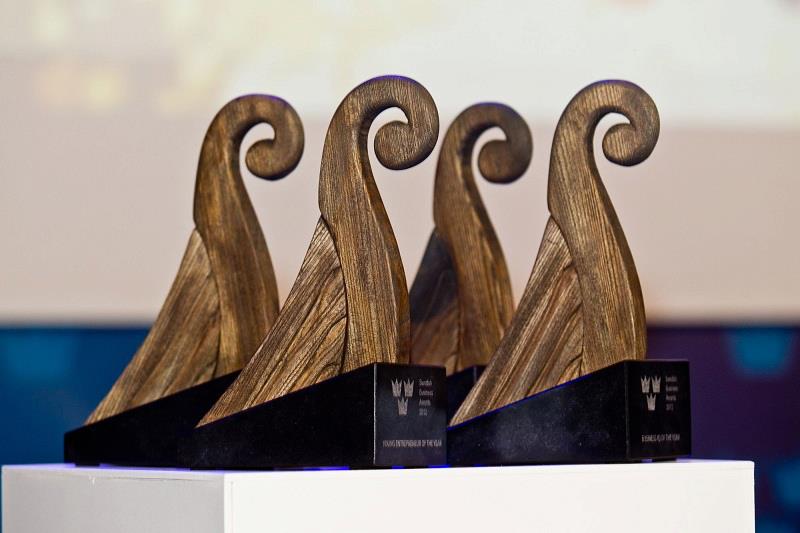
070415_swedish-business-awards-12_3
Sweden had become an aristocratic nation of landed noblemen, and had little in common with the fishermen, sailors, and merchants of Norway. Friction developed. Fortunately for the Norwegians, their rugged, rocky nation could not be divided up into the vast farming estates preferred by the Swedes. In 1905, after a century of Swedish occupation, Sweden gave Norway its independence.

Sweden remained neutral in both world wars.

Type of Government
The Kingdom of Sweden is a parliamentary state under a constitutional monarchy. Sweden’s current constitution was adopted in 1975. In the ececutive branch, the cabinet (which consists of the prime minister and the advising ministers) is responsible to parliament. The parliament has one house, the Riksdag. Its members are elected by universal suffrage and serve three years. There is a Supreme Court. The king is the chief of state, while the prime minister is the head of the government.

070415-swedish-industry
Sweden has a free-enterprise economy, while maintaining an extensive social-welfare system. State benefits include child care, health care, and extensive pension plans.

Sweden historically maintained neutrality and felt that membership in the European Union would not be consistent with this policy. However, the end of the cold war put Sweden’s entire foreign policy into question. There is no longer a need for Sweden to maintain a strict neutrality between NATO and the now-defunct Warsaw Pact.

070415-Girl-with-Swedish-Flag
Language
The official language is Swedish, which is a Germanic language related to Danish, Norwegian and Icelandic. The native minority group, known as the Lapps or Laplanders, speaks their own language. The term Sami is a somewhat derogatory term for this group. The language most commonly learned in school is English, and you will find that most Swedes can speak English; if you plan to do business outside of the major metropolitan areas, German is useful.

Religion
The majority (over 90 percent) of Swedes is Lutheran, but other Christian denominations are represented, as are Jews. The Evangelical Lutheran church is supported by the state, but there is complete religious freedom.

Demographics
The population of the Kingdom of Sweden is 8.8 million, Stockholm, the capital has almost two million people in its metropolitan area. Sweden is highly urbanized. One-eighth of the population is foreign-born.

070415-doing-business-in-sweden-2

Doing business in Sweden

Cultural Orientation

Cognitive Styles: How Swedes Organize and Process Information
The Swedes are proud people. The education teaches them to think conceptually and analytically, and they tend to look to universal rules or laws to solve their problems.

Negotiation Strategies: What Swedes Accept as Evidence
All truth is subject to one’s faith in the ideologies of the social welfare state. These truths are supported by objective facts rather than subjective feelings.

Value Systems: The Basis for Behavior
Sweden is a humanitarian culture, with the quality of life and environmental issues given top priority. The following three sections identify the Value Systems in the predominant culture – their methods of dividing right from wrong, good from evil, and so forth.

Locus of Decision Making
There is a strong belief in individual decisions within the social welfare system and with the consensus of all concerned. Although there is a strong self-orientation, there is also a need to help those who are not able to help themselves, and a need for teamwork. Swedes place an emphasis on individual initiative and achievement, with one’s ability being more important than one’s station in life. They feel that they have a right to a private life that is not to be discussed in business situations.
070415-swedish-meatballs
Sources of Anxiety Reduction
Life’s uncertainties are accepted, and anxiety is reduced through a strong social welfare system; but a “spiritual unease” makes Swedes very serious about life. A strong nuclear family gives stability and structure to life. The need for social organization and ritual allows Swedes to remain uncommitted and uninvolved with others.

Issues of Equality/Inequality
Sweden is basically a middle-class society that strives to minimize social differences, so there is very little evidence of poverty or wealth. Nationalism transcends social differences, and a largely homogeneous population minimizes ethnic differences. However, there is a deep need to find a challenge in life, since most of the necessities are taken care of. This is an androgynous society in which husbands and wives share the responsibility of child care.

070415-made-in-sweden
Business Practices

Appointments

– Appointments should be made two weeks in advance.
– Remember that many Europeans and South Americans write the day first, then the month, then the year (e.g., April 7, 2015, is        written 7.04.15). This is the case in Sweden.
– The workweek is 8:30 or 9:00 a. m. to 5:00 p.m., Monday through Friday. There is one hour for lunch, and many people go to  lunch between 11:30 and 1:30 p.m.
– The minimum vacation per year is five weeks.
– Most people take their vacation in July, so take this into consideration when planning business in Sweden.
– During the Christmas holiday (from December 22 to January 6), many Swedish business people are unavailable.

070415-swedish-notes
Negotiating

– In business meetings, the Swedes do not begin with small talk, but get right down to business.
– Do not show emotion during negotiations.
– The Swedes value consensus and avoid confrontation.
– In presentations, be very precise and concrete; do not exaggerate or expect the Swedish imagination to do part of the work.
– Humor is not usually part of negotiations. Swedes tend to be serious in general, and may appear downright stuffy in business.
– Many business people are fluent in English, especially in large cities, such as Stockholm, Göteborg and Malmö.
– Avoid criticism of Swedish culture, Swedish politics, or the Swedish sense of humor (which North Americans often find incomprehensible).
– Swedes avoid arguing over sensitive topics in general, especially with foreigners. If a discussion of this type begins, don’t be offended if the Swede cuts it off abruptly.
– Do not be too open in expressing emotion (for example, “I’m so happy to be here” should be said calmly).
– Similarly, appearing reserved or even slightly shy can give a positive impression to your Swedish hosts.
– Avoid conducting a private conversation in public areas.
– Do not ask personal questions or be offended if Swedes do not inquire about your family, work, and so forth.
– Avoid superficiality in conversation.
– Silence is accepted with ease by Swedes; don’t rush to fill in pauses in the conversation.
– There is much pride in local regions. Visitors should not praise one area over another.
– Scandinavians appreciate knowledge of the differences among the people of Norway, Sweden and Denmark.
– The Swedes have an intense appreciation of nature.
– Relaxation is important to the Swedes. This includes breaks in their work schedule. Don’t try to rush a Swede who is taking a long coffee break or an even longer lunch break, even if you are inconvenienced by it.

Business Entertaining

– Business lunches and dinners are quite popular. Make reservations in advance. Formal restaurants are recommended for business meals.
– Invite spouses to business dinners, but not to lunches.
– It is not uncommon for businesswomen to pick up the check in Sweden, especially if they are on an expense account.
– The Swedes generally do not socialize with coworkers after working hours, although they do consider their colleagues to be good friends.
– If you are invited to a Swedish home, you should bring flowers for the hostess.
– The toast is more formal in Sweden than elsewhere in Northern Europe.
– Allow your host and those older than you to toast you before proposing a toast to them.
– Skaal is the Swedish “cheers”.
– Wait until your host has said skaal before touching your drink.
– If you are seated next to the hostess as the guest of honor, you may be expected to make a speech.
– The smörgåsbord is a buffet (hot and cold) served year round, ans expecially during Christmas and Easter.

Time

– Sweden is one hour ahead of Greenwich Mean Time (G.M.T. + 1) or sic hours ahead of U.S. Eastern Standard Rime (E.S.T. + 6).

Protocol

Greetings

– The handshake is the standard greeting.
– Good friends (especially among the young) who see each other often do not bother to shake hands.
– Older upper-class people may be very formal. Be sure to shake hands with greeting and hen leaving. Note that they often avoid the pronoun “you”, but instead refer to people in the third person (e.g., when greeting Mr. Hanson, they will say “How is Mr. Hanson today?”).  To be properly formal, you should respond in the same way, although few young people use this mode of speech.
– When you meet someone after you have been a huest at his or her house, thank him or her immediately.
– Usually a third person will introduce you to a group, but if this doesn’t happen, go around the room, shaking hands and telling your name to each person.

Titles/Forms of Address

– The order of names in Sweden is the same as in the United States: first name followed by surname.
– Expect to address everyone by their surname unless you are invited to do otherwise. Young people are more likely to go to a first-name basis quickly.
– People without a professional title should be addressed as Mr., Mrs., Miss, or Ms., plus surname.
– Persons with professional titles should be addressed by that title, plus surname (e.g. Professor Hanson). Such titles indlude Doctor, Engineer, Professor, and so foth.

Gestures

– The Swedes do not use many gestures; you should be restrained as well. Avoid talking with your hands.
– A toss of the head means “come here.”
– In dealing with the Swedes, keep your voice tone modulated. Swedes are a relatively quiet people.
– Look people directly in the eye when you speak to them.
– Swedes do not like physical contact with anyone except close friends, except for the handshake. Do not touch, backslap, embrace, or put an arm around a Swede.
– While Swedes are known for their sexual openness, do not mistake a Swedish woman’s forwardness for a sexual invitation. Swedish women often speak to strangers, especially foreigners when they want to practice the foreigner’s language.
– Hats are commonly worn in cold weather. Men should tip their hat when passing someone they know, and remove it when speaking to a woman.

Gifts

– Liquor is very expensive in Sweden, and so is a highly appreciated gift. Fine liquor or wine from the United States makes a good business gift.
– Flowers, liquor, wine, cake or chocolates are appropriate gifts for your hostess when you are invited to a Swedish home. You may also bring candy for the children.

Dress

– Conservative dress is appropriate. For business appointments, men should wear suits and ties, while women should wear suits or dresses.
– Swedes are usually fashionably well-dressed in public.

You’ll find more useful information in
Economy Profile 2015,

World Bank Group,

Kwintessential

Docstoc

Compiled by Tor Kjolberg

Read also:
Doing Business in Denmark
Doing Business in Norway

A Literary Masterpiece About the 22nd July Massacre in Norway

0

Norwegian Author Asne Seierstad is praised in international media for her latest book, “One of Us: The Story of Anders Breivik and the Massacre in Norway”. Media all over the world call it an astonishing work. One critic even compare it to the genre of Truman Capote.

310315-one-of-us-by-asne-seierstad“It is a brilliant if unrelenting piece of reportage, one that cements Seierstad as among the foremost journalists of our time. Yet the section detailing the events that summer day in 2011 is not even what makesOne of Us so special. What achieves that is how she has pieced together not his massacre but Breivik himself. By doing so she shows how “evil” is not born but created,” writes Oliver Poole in the British paper  Independent.

(Other reviews below).

In an interview Seierstad admitted that her book is a slap in the face for most Norwegians, who would like simply to forget that something so terrible ever happened.

Anders Behring Breivik killed a total of 77 people on July 22, 2011 and severely wound many more. Before the attacks he had distributed online a lengthy manifesto, called 2083: A European Declaration of Independence, denouncing Islam and “cultural Marxism”, calling for the annihilation of multiculturalism and the deportation of all Muslims from Europe.
310315-Anders-Behring-Breivik
Breivik was a disturbed young man, who seems like a significant distinction, between violence in the service of some political or religious cause and violence that is the product of a distorted and diseased mind … and that third, nagging possibility, that any act of violent terrorism blends both.

310315-Asne-Seierstad
Seierstad says she has investigated the case as fully as she can, but she also presents us with the actual thoughts of the people involved, including Breivik, which makes this book an exceptional thriller. Seierstad emphasizes that “everything in this book is based on testimony… When I refer to what Breivik thinks in certain situations, and how he feels about them, it is always based on what he has told himself.”

If you decide to read this book, please be aware that it is harrowing in places, almost unbearable, as the day when310315-one-of-us-by-asne-norwegion-book-version Anders Breivik made the young socialists’ summer camp on Utoya island into his own killing field. It is indeed a literary masterpiece about the 22nd July massacre in Norway.

This book is a rich and timely study. Violent madness might do evil, but coldly deliberate violence is evil incarnate. It could be that Anders Breivik is a little of both.

Seierstad was born in 1970 in Olso and studied Russian, Spanish and the History of Philosophy at Oslo University. In her twenties she became a foreign reporter for the socialist paper Arbeiderbladet and the national TV channel NRK, working in Russia and China. Her first book, With Their Backs to the World: Portraits of Serbia, published in 2000, was well received.

Her second book, The Bookseller of Kabul of 2002, was translated into more than 40 languages, selling more than two million copies internationally.

In 2005 her third book, One Hundred And One Days: A Baghdad Journal, was published, andAngel of Grozny: Inside Chechnya, in 2007.

Seierstad has received numerous awards for her journalism. She worked as a correspondent in Russia between 1993 and 1996 and in China in 1997. Between 1998 and 2000 she covered the Balkans, including the war in Kosovo, for Norwegian television.

310315-asne-seierstad3
Other reviews:

The author takes a novelistic approach but this is journalism at its very best … undoubtedly Seierstad’s most powerful narrative to date – Sunday Times

Scrupulously researched . . . Seierstad has a remarkable eye for the haunting detail, particularly of empathy, and of grief – Mail on Sunday

A chilling portrait of a killer . . . Seierstad is a brilliant investigative reporter . . . her book is a psychiatric case history, as well as a close look at Norwegian society, not least by paying as much attention to Breivik’s victims, as to their murderer – Guardian

What emerges as Seierstad – a precise, distinguished war reporter and author of The Bookseller of Kabul – pieces together the evidence from police and court transcripts, from survivors, from Breivik’s mother, is in part a more literary version of The Day of the Jackal – The Times

An astonishing piece of work . . . One of Us looks straight at horror and doesn’t flinch: it is classic reporting. We’ve been diverting ourselves so much recently with crime fiction making play with the eruption of evil into the apparently harmonious societies of Scandinavia. This is the real thing, beyond any novelist’s imagining. We need to take note – Evening Standard

It’s masterfully done, but it is more than a gripping, multi-faceted and horrific story – Hachette, Australia

Text: Tor Kjolberg

Read also 22nd July Memorial in Oslo

Gastronomic Fanoe in Denmark

0

On the Danish West-coast you may experience a new springtime with the best oysters, the best beer and the best ham. And: ‘We have the best women’ according to Jesper Voss, Fanoe-guide.

010415-Fanoe-island-denmark-mapFanoe is a small island south-west in Denmark. On Fanoe you can, first and foremost, find peace and tranquility in a beautiful setting. The island has a very special relaxing atmosphere that fit both families with children, foodies and people who seek great experiences in the nature.

The island is 14 km (8.7 miles) wide, 4 km (2,49 miles) long with some 3,200 inhabitants. Today tourism is the main industry. Fanoe is known for its long, wide beaches, tidewaters and thatched houses. The southernmost town, Sonderho, was in 2009 elected Denmark’s most beautiful village. Fanoe and the Wadden Sea National park were appointed Nature World Heritage in 2014 by UNESCO.
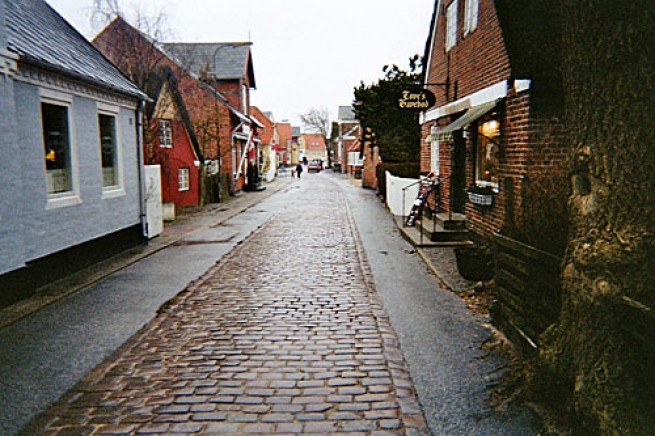
In summer, when the tourists arrive, there are almost 30,000 people here. Experience gastronomic Fanoe in Denmark.


https://www.youtube.com/watch?v=2BXemB9zWhs

Fanø Bryghus is brewing some beers that are quite fun, including a barrel aged imperial stout, saison, and herb induced wheat. Some upcoming, new brews include a chocolate milk stout, spiced saison, and a rauch (smoked) beer. The amount of hops and malts used by Fanø is quite impressive lending favorably to a wide selection of brewing possibilities. No wonder that three special made beers have been made for Noma restaurant in Copenhagen. Norway is among several countries importing beer from Fanoe.

010415-fano-bryghus-denmark
Sonderho Kro, founded in 1722, is a cozy inn on the south side of the island. It is one of the oldest and best preserved inns in Denmark situated just a few steps from the dike in the heart of Sonderho. The restaurant is quite superb and well preserved with historic interiors.

010415-Sanderho-Kro-Fanoe-Denmark
The inn has 14 lovely and individually decorated rooms in different sizes, named after good Sonderho ships or names relating to former inn-keepers family.

The kitchen is run by former Michelin-chef in London, Jakob Sullestad. When his wife and Jakob took over Sonderho Kro six years ago, the inn had been family owned for nine generations. The food is French inspired with a Danish local touch.

When we asked, why there is such an abundance of good food at Fanoe, the inhabitants say that visitors and people owning their summer houses there, are more than average interested in food and wine.

Restaurant Ambassaden (The Embassy)
is a cozy café and restaurant managed by a Danish couple. In the Summer the nice garden is open (the garden takes up to 60 guests).

010415-ambassaden-restaurant-fanoe-logo
The chef offers Danish/European cuisine and fish from the Danish waters.

Sylvesters
managed by Dorte and Robin create the right gastronomic atmosphere with local art on the walls and generous portions.

010415-restaurant-sylvesters-fanoe-denmark
Kromanns Fiskerestaurant
In our opinion  one of the best seafood restaurants on the island. Fresh and homemade- and reasonable prices (being in Denmark).

010415-kromanns_restaurant-fanoe-denmark-logo
Rudbeck Cheese and Deli

There is something delicious relaxing with a delicatessen shop where herbs are growing in window boxes and the shelves are bursting of cheese and home-made marmalades. Rudbeck is operated by former eco-farmers with no compromises regarding local produce. We recommend you to stop for a delicious brunch.

Norby Kro

In the 300 year old tatched Sognefogedgården you find Norby Kro. The dining room is stylish and cozy and there is even a fireplace for colder days.

010415-oyster-hunting-fanoe-denmarkOyster hunting
From October to Easter, there are organized tours for groups of oyster hunters. Take a 3 km guided walk out to the oyster beds where participants are invited to pick and eat as many delicious oysters as they wish. In so doing visitors can also do their bit for the environment by helping to remove non-native Pacific Oysters, considered a pest by environmentalists.


Going there
You fly or drive to the Legoland hometown of Billund. From there it is an hour+ drive to Esbjerg, where the Fanoe ferry takes twelve minutes to the island. From Copenhagen to Esbjerg it takes about three hours by car, bus or train.  DFDS Seaways offer a regular service of departures every other day between Harwich and Esbjerg, during June, July and August and crossings three times a week between September and May.


July 22nd Memorial in Oslo

Four years ago, in July 2011, Norway was struck by terrorist attacks that mark one of the darkest days in modern Norwegian history.

On July 22nd 2015 a Memorial and Information center will open in the renovated tower building which was destroyed during the attack.

The July 22nd Memorial in Oslo has been created in cooperation with the 9/11 center in New York.

300315-22nd-memorial-oslo-exterior-2
“Not taken into account the event, the size or amount of money and time used, the 9/11 center in New York is the most relevant comparison. Using a spot where the emotional wounds still are in highest degree, to recall the history and to meditate, is really a challenge. That’s why the New York center is far more relevant to us than everything else in Norway,” says Tor Einar Fagerland, who also has been in charge of a research project after the 22nd July incident.

The 77 individuals who lost their lives during the 2011 terrorist attacks in Norway will be commemorated by the Swedish winner and artist Jonas Dahlberg to sever a strip of headland from the coastline near Oslo.

The July 22nd memorial in Oslo project has been developed in cooperation with architects Goksøyr , Martens and Snohetta, who state:

“We have chosen to include a specific piece of land from Utøya in the creation of the memorial places from July 22nd 2011. The attacks at Utoya and the Government Quarter are indivisible, and in our opinion the memorial’s design and concepts should reflect this.”

300315-22nd-memorial-at-Utøya-norway
By removing a 650m3 (777 square yard) piece of “Kjærlighetsstien” (The Love Path), a crater shaped as an immersed amphitheatre will make up the memorial place. The piece removed from Kjærlighetsstien will be a beautiful area of nature contrasting the surrounding urban areas, inviting people for a quiet walk through tall pine trees, rose-hips, and heather.

By using this landmass to create a temporary memorial pathway between Grubbegata and the Deichmanske Library, a connection is forged between the memorial sites at Sørbråten and the Government Quarter. The names of those who died in the attack will be recorded on a wall that runs alongside the pathway.

300315-22nd-memorial-in-oslo-exterior
Here is the announcement from the July 22 Memorials organization:

Director of KORO/Public Art Norway *), Svein Bjørkås, announced the committee’s  evaluation of submissions and its final decision in the closed competition for the selection of the  Memorial sites. The committee’s unanimous selected the Swedish artist Jonas Dahlberg as winner of the competition.

“Jonas Dahlberg’s proposal takes the emptiness and traces of the tragic events of 22 July  as its starting point. His suggestion for the Sørbråten site is to make a physical incision into the landscape, which can be seen as a symbolic wound. Part of the headland will be removed and visitors will not be able to touch the names of those killed, as these will be engraved into the wall on the other side of the slice out of nature. The void that is created evokes the sense of sudden loss combined with the long-term missing and remembrance of those who perished.”

Until the permanent memorial is opened, high school students will be responsible for maintaining the memorial in front of the Deichmanske Library.

*) KORO is an organization presenting public art in Norway.

Written by Tor Kjolberg

Battle On Ice

A larger-than-life character, Kristian IV (1577-1648) was on the Danish throne for 52 years, building palaces and towns, turning Copenhagen into an important European capital, trebling the size of the navy, and sending explorers to investigate the possibility of a northwest passage to Asia.

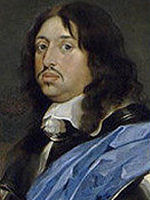
He took an avuncular interest in Norway, renaming Oslo after himself (“Kristiania”), but never managed to achieve 200315-King-Karl-X-Gustav-of-Swedenfriendly relations with Sweden, and the two countries inevitably entered the Thirty Years War on opposite sides.

The battling continued, but it was the Swedish King Karl X Gustav who seized an opportunity when the Sound
(Øresund) froze over during the winter of 1657. Two cavalry squadrons crossed the ice and a resounding victory after a battle on ice cost Denmark all its territory in the Swedish side of the Sound.

Picturesque Norway

0

Last December the website WhereCoolThingsHappen published a picture story titled «27 Reasons Why You Must Visit Norway in 2015”.

“Wondering why you should visit Norway?” the editors asked. Norway is a once in a lifetime destination and probably one of the most stunning landscapes in the world,  truly spectacular nature with mountains plunging into the sea from hundreds of meters, fjords, tall mountain peaks, northern lights and midnight sun. So we’re putting Norway on our travel-list for 2015,” the publisher wrote. Today we want to share with you some images showing picturesque Norway.

Picturesque Norway
Bpuldering in Lofoten

Northern Light in Svolvaer (Source)
Crossing the Arctic Circle is only the first step on the long journey north. The North Cape, Europe’s northernmost point, remains a goal for many travelers to Arctic Norway.

Picturesque Norway
Lofoten islands

Reine in Lofoten (Source)

Picturesque Norway
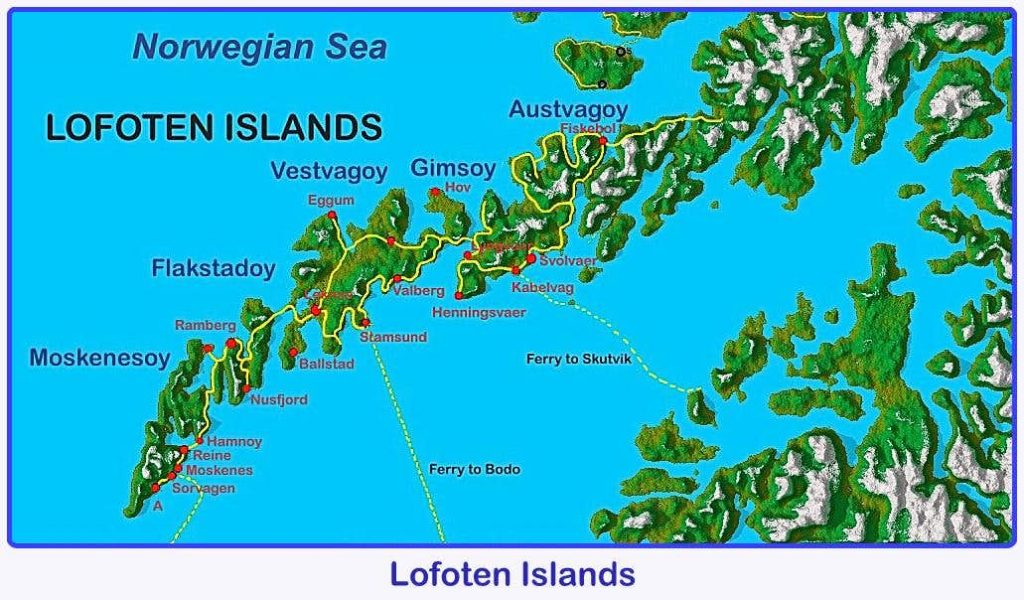
Map of Lofoten islands

Odda (Source)
Nature is powerful in Norway, perhaps nowhere more so than in the Lofoten Islands, 123 miles north of the Arctic Circle.

Picturesque Norway
From Lofoten

Reine in Lofoten (Source)
See map above

Picturesque Norway
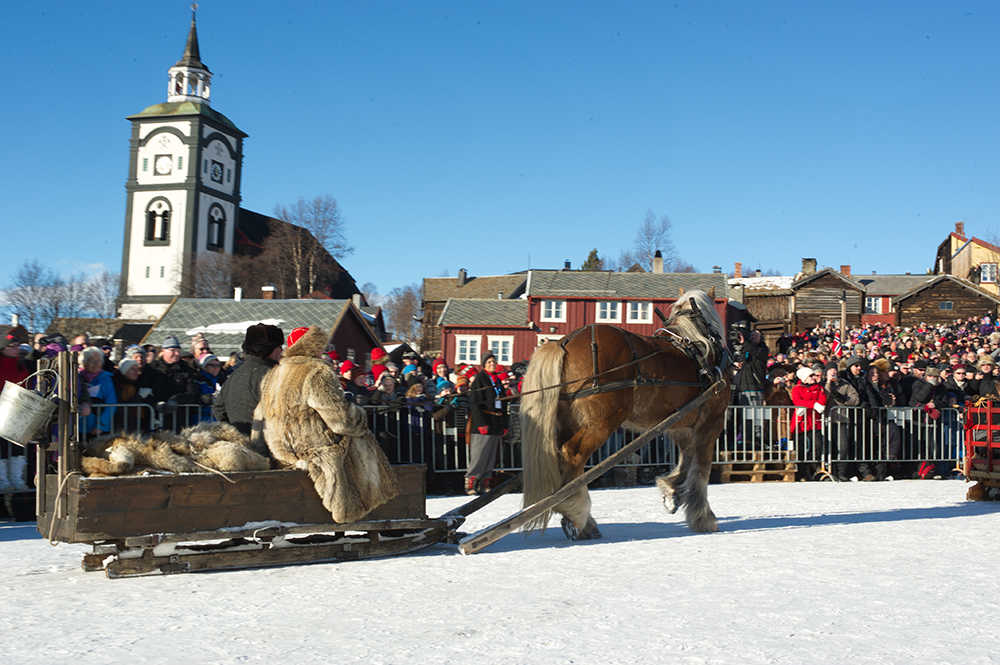
Street in Røros. Photo: Eldnes Bussreiser

Roeros street (Source)
Leave it to the Scandinavians to know best how to brighten the darkest time of the year – after all, they’re pros! Roeros is a popular Christmas-destination.

Picturesque Norway
Troll’s tongue

Troll’s Tongue (Source)
British photographer brought a model to Trolltunga in Norway, a huge piece of rock that extends to a height of 0.8 kilometers off the ground.

Picturesque Norway
Northern lights in Lyngen

Renndolssatra (Source)
The Innerdalen valley has been called the most beautiful mountain valley in Norway. No vehicular traffic, the sound of waterfalls and lakes surrounded by majestic mountains – here you can truly find peace.

Picturesque Norway
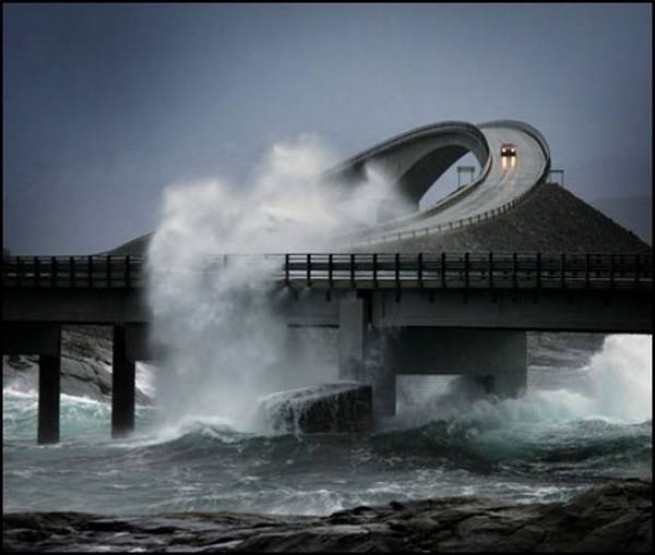
Atlantic road. Photo: Glenn – HGSO

Green Smoke (Source)
As summer ebbs away, the gloom is relieved by the bewitching greens, purples, pinks and reds of the aurora borealis, or Northern Lights

Picturesque Norway
Hurtigruten cruising a Norwegian fjord

Fredvang Bridges, Lofoten (Source)
The Fredvang Bridges (NorwegianFredvangbruene) are two cantilever bridges that connect the fishing village of Fredvang onMoskenesøya island with the neighboring island of Flakstadøya.

Picturesque Norway
From Ålesund. Photo: Wikipedia

Morning (Source)
Listen to “Morning” from Peer Gynt Suite by Edvard Grieg when watching this image and you’ll better understand the moods of Norway.

Picturesque Norway
From the tropical garden Flo og Fjære outside Stavanger

Geirangefjord (Source)
A great base for enjoying the Geirangerfjord area and neighboring Norangsfjord is the Union Hotel. It’s one of the old-time “fjord castles” so popular at the end of the 19th century.

Picturesque Norway
Lyseborn, Norway

Trollstigen (Troll’s Path) (Source)
the Trollstigen (Troll’s Path), which crosses one of Norway’s most desolate regions.

Picturesque Norway
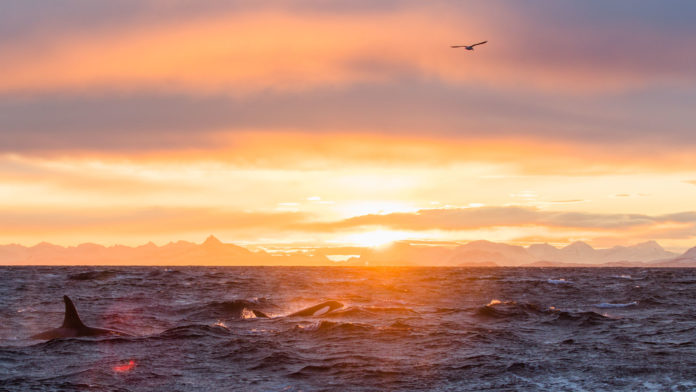
Killer whales in Andenes, Lofoten. Photo: Jesper Anhede

Autumn in Lofoten (Source)
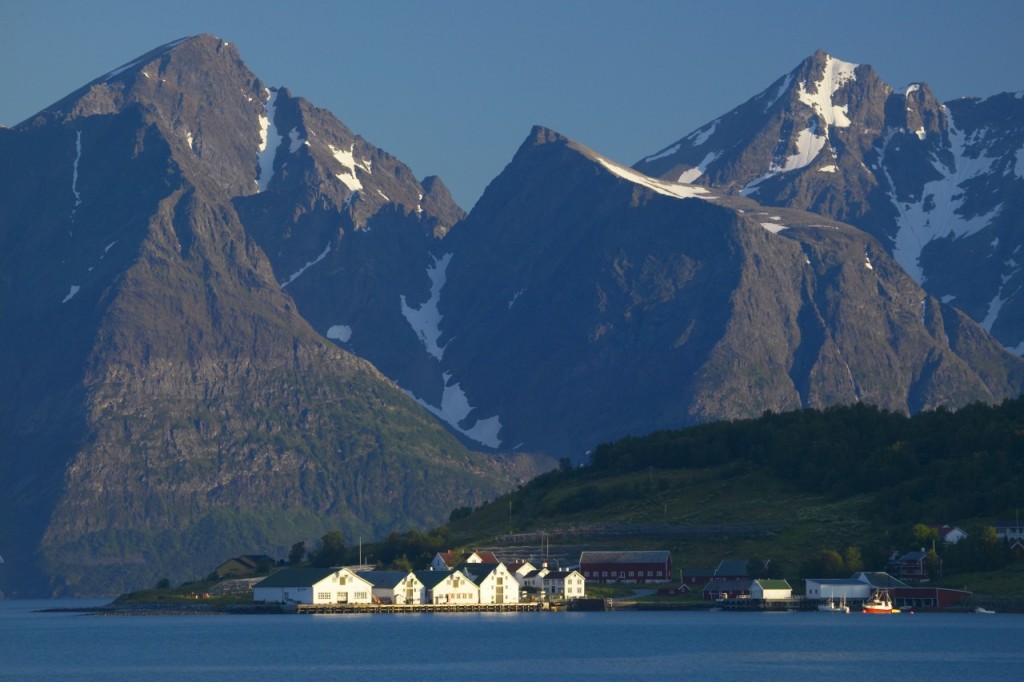
This 118-mile-long archipelago of small fishing communities set against a dramatic wall of towering snow-patched peaks – granite formations that date back several billion years – has drawn increasing numbers of mainlanders (and foreign artists) attracted to its seclusion, special light, bracing vair, and unpolluted waters.

Picturesque Norway
Whale safari in Lofoten

Hoyvika Beach on Andoya, Vesteraalen (Source)
A great way to experience Vesteraalen is going by the Hurtigruten (The Express Line)

Picturesque Norway
Steigen in Lofoten

Lofoten Islands (Source)
The world’s most stunning archipelago is waiting for you.

Picturesque Norway
Arctic Norway. Photo: Baard Løchen

Lyseveien (Source)
For a detailed description including maps and information etc buy the guidebook ‘Hiking in Sirdal’ which includes Kjerag and Sirdals Seven Summits.

Picturesque Norway
Kjærag, Norway. Photo: Terje Rakke

Senja (Source)
Discover the striking scenery of the outer coast of the Island of Senja in Northern Norway, which reaches out into the mighty Norwegian Sea.

Picturesque Norway
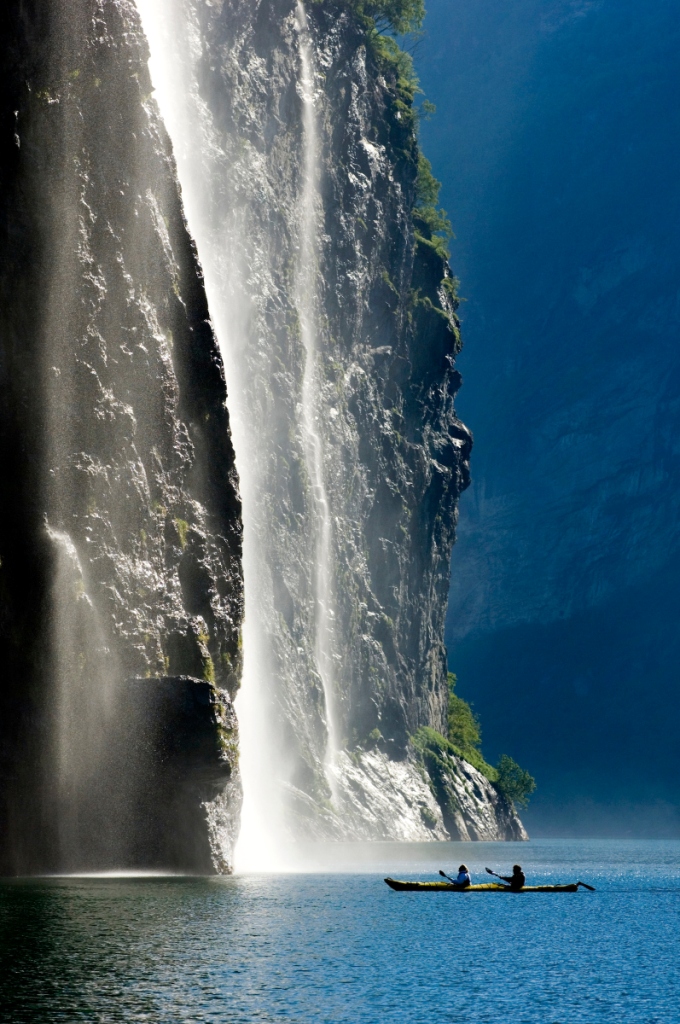
Kayaking in Geiranger fjord. Photo: Terje Rakke

Senja Sky Bridge (Source)

Picturesque Norway
Northern lights, Kautokeino. Photo: Terje Rakke

Vaeroy (Source)
On the small island of Værøy is surprising many walks.

Picturesque Norway
Lyngen Alps

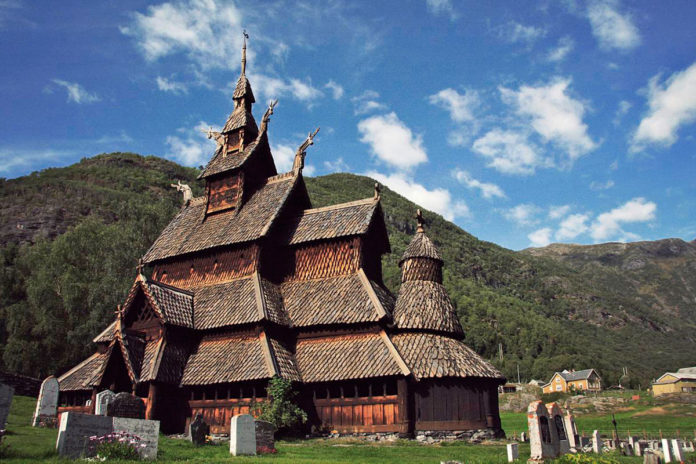
Borgund Stave Church (Source)
Borgund Stave Church – the best-preserved stave church in Norway, dating back to 1180 – is found in Lærdal, as is Norsk Villakssenter (the Norwegian Wild Salmon Centre).

Picturesque Norway
Borgund stave church

Ramberg (Source)
Situated on the outskirts of Lofoten, in the village Ramberg, you find us by a beautiful kilometre long sandy beach, with a panorama view towards the Arctic Ocean.

Picturesque Norway
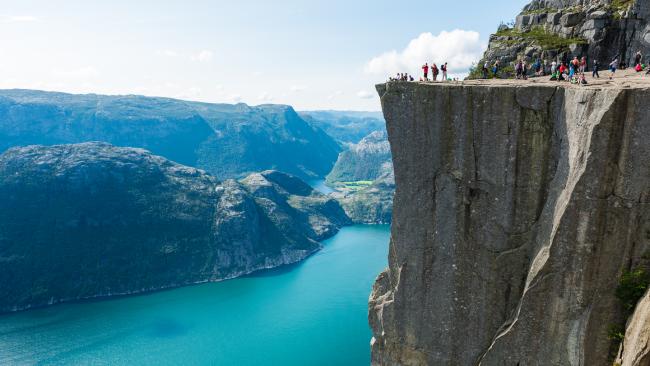
Pulpit rock

The Pulpit (Source)
Norway’s famed high rocky plateau known as Preikestolen (The Pulpit Rock) has attracted a record number of visitors so far this year, up more than 20 percent over last year.

Picturesque Norway
Reine, Lofoten

Senja Islands (Source)

Picturesque Norway
Biking route, Lofoten islands

Atlantic Road (Source)
Stone, islets, islands and eight bridges spread over an equal number of kilometers. It’s just one of the dramatic roads in norway.

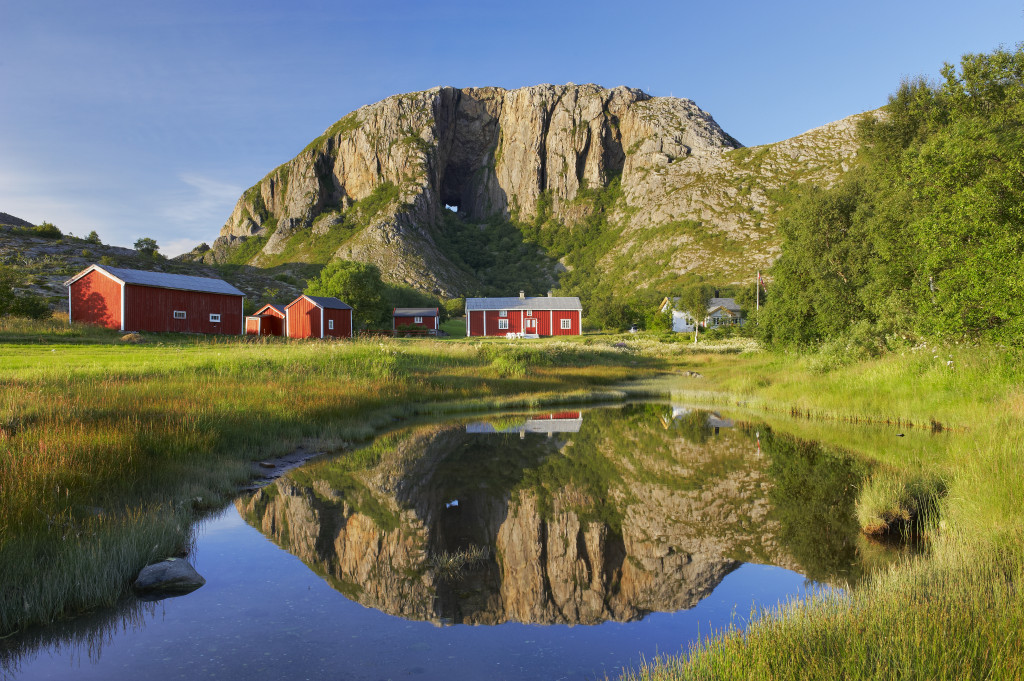
Torghatten (Source)
Experience a special walk through the mountain.

Picturesque Norway
Torghatten near Brønnøysund. Photo: Baard Løchen

Notice
We have been accused by Photographer Daniil Korzhonov’s lawyer of violating the copyright laws of his photos. We have rejected the claim since we obtained permission to use the images after best press practice. Of course, we are honored that the requirement is for a five-digit dollar amount, assessing the quality of our publication. However, we have chosen to replace all images of Daniil Korzhonov since we do not want to promote a photographer who under such circumstances is taking legal action against us.

All images have been replaced by in-house photos if not otherwise stated.

Daily Scandinavian thanks WhereCoolThingsHappen for its kind permission to use their images.