National Pride Rebuilt in Oslo

The New Government Quarter (Regjeringskvartalet) in Oslo is designed to redevelop the site of the 2011 terror attacks into an open, secure, and green civic space. Now, 15 years later, national pride has been rebuilt in Oslo.

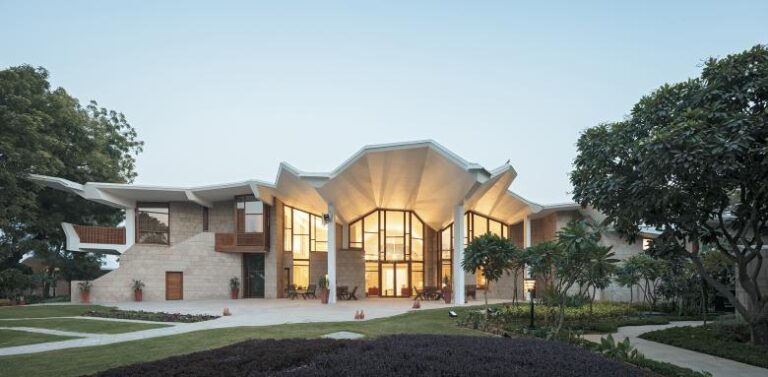
The masterplan by Nordic Office of Architecture includes new routes and public spaces that reconnect the New Government Quarter with Oslo’s historic center. The scheme brings government ministries together in an open yet secure civic landscape. Local materials and crafts are used throughout the new and refurbished buildings. On the site of the 22 July 2011 terrorist attack, which traumatized Norway, the first phase of the New Government Quarter (Regjeringskvartalet) in central Oslo is now complete.

National Pride Rebuilt in Oslo
Einar Gerhardsens Plass. Photo: KRONO

Nordic Office of Architecture led the architecture team, including Haptic Architects, Scenario, and i-d. Interiørarkitektur & Design, to deliver a ‘design for democracy’ that reopens the heart of Norway’s political center and creates a new model for bringing government ministries together in an open yet secure civic landscape. The Prime Minister of Norway, government officials, and staff will move into the quarters, consolidating almost all Norwegian ministries into a single, flexible campus for approximately 4,100 employees.

In a speech just a couple of days after the attack, Prime Minister Jens Stoltenberg said, “We will never give up our values. Our response is more democracy, more openness, and more humanity. But never naivity.”

Over the years, these words have become increasingly important.

Design & Architecture

National Pride Rebuilt in Oslo
“From day one, the question was how to create a place that symbolizes Norwegian democracy and identity.” said Gudmund Stokke, Founding Partner and Head of Design at Nordic Office of Architecture.

The masterplan integrates five new, energy-efficient buildings, two refurbished buildings (including the iconic High-rise), and new public spaces, including Regjeringsparken.

Gudmund Stokke, Founding Partner and Head of Design at Nordic Office of Architecture, says: “From day one, the question was how to create a place that symbolizes Norwegian democracy and identity. We were asked to design a secure government district, but also a place where people feel welcome to walk, sit, protest, and remember – a government quarter that belongs to all of Norway.”

National Pride Rebuilt in Oslo
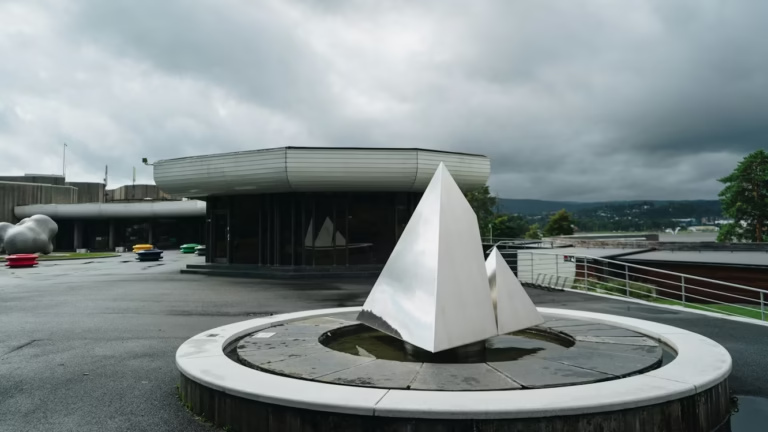
The highlight is a new A-block, with a glass pyramid-like structure.

The highlight is a new A-block, where a glass pyramid-like structure creates a 51-meter-high atrium that will serve as the stage for the government to greet foreign dignitaries. Towering over it is an art piece by Outi Pieski, crafted from Nordic birch and celebrating Sámi indigenous history. Another space of architectural significance is Høyblokken, a Brutalist high-rise built in 1958. It took the brunt of the 2011 bomb blast but has since been repaired, along with the Picasso murals adorning its walls.

National Pride Rebuilt in Oslo
A piece of art by Outi Pieski, crafted from Nordic birch and celebrating Sámi indigenous history.

Security & Accessibility

The area focuses on “reparative urbanism,” blending high-level security measures—such as integrated security barriers and controlled access—with open pedestrian pathways and green spaces.

National Pride Rebuilt in Oslo
The buildings are constructed with eco-friendly materials.

The buildings are constructed with eco-friendly materials, including low-carbon concrete, locally sourced timber, and Larvikite stone.

The project integrates existing public art from the old buildings, including Picasso’s murals (“The Fishermen” and “The Seagull”) salvaged from the demolished Y-block, into the new structures.

Bridges, atria, and shared social zones form the Collaboration District, connecting ministries on the first floor and turning the campus into a “decision-making machine” where people and ideas can move easily between departments. Two existing plazas – Johan Nygaardsvolds plass and Einar Gerhardsens plass – have been refreshed and now reconnect previously closed streets, reestablishing pedestrian and cycling routes between Hammersborg, the city center, and the fjord.

National Pride Rebuilt in Oslo
“We worked with Norwegian boat builders to shape the double-curved surfaces made of wood,” says Knut Hovland, NOA’s design director.

Norwegian craft and materiality are also championed on site. “We worked with Norwegian boat builders to shape the double-curved surfaces made of wood,” says Knut Hovland, NOA’s design director.

Project Timeline & Development

Summer 2020: Y-Block is demolished; Picasso murals (“The Fishermen” and “The Seagull”) are removed for preservation.

January 2021: Construction began on Stage 1.

February 2026: Phase 1 Completed. Includes the rehabilitated Høyblokka (High-rise), new A-Block, and new D-Block.

April 13, 2026: Official reopening of the first phase, with ministries beginning to move in.

July 2026: Planned unveiling of the new 22 July National Memorial, designed by Matias Faldbakken, to mark 15 years since the attacks.

2026–2030: Phase 2. Construction of C-Block, rehabilitation of G-Block, and further development of public spaces.

2031 (expected): Projected full completion of the final stages, including B and E Blocks.

National Pride Rebuilt in Oslo, Tor Kjolberg reporting.
Feature image (top): © KORO

The Last Adventurer

0

Odd Eliassen was the first Norwegian to stand on the summit of Mount Everest. He was the first to climb Trollveggen, the first to cross Queen Maud Land on skis, has made countless first ascents in the Norwegian mountains, and has crossed Greenland in authentic Nansen equipment. Continue reading to learn more about the last adventurer.

In 1965, at the age of 21, Odd Eliassen climbed Trollveggen for the first time with three others. On the ground stood a cameraman from NRK and a nail-biting local population. Eliassen had little climbing experience. The feat has been described as quite hair-raising.

The Last Adventurer
The book, “The Last Adventurer,” is about living out the dream.

Odd Eliassen has never written about his expeditions or given a lecture. He always disappeared out the back door when a press conference began. But now he has shared his stories with author, mountaineer, and hiking buddy Stein P. Aasheim.

He is an adventurer of the old variety, from the time when he drove 6,000 kilometers in a Volkswagen bus to climb the highest mountain in Afghanistan or to climb in Africa. Almost eighty years old, Odd Eliassen still skis a couple of thousand kilometers every winter.

The Last Adventurer
Odd Eliassen is an adventurer of the old variety.

The book, “The Last Adventurer,” is about living out the dream – not to achieve anything else, but for genuine adventure and the pure joy of moving into the unknown.

*********************************************
Related: Climbing Norwegian Mountains – Step by Step
*********************************************

In 1975, NORAD was looking for a master carpenter who enjoyed working in thin air. The job advertisement seemed written for Eliassen. For three years, he and his family lived at Kilimanjaro, where he climbed all the classic routes, followed paths, and built huts toward the summit. His children spoke Swahili like the locals. Today, the world’s highest free-standing mountain is Tanzania’s biggest tourist attraction. Eliassen has probably reached the summit seventy-five times.

The Last Adventurer
The book about one of Norway’s most accomplished climbers and expeditioners of all time.

The book about one of Norway’s most accomplished climbers and expeditioners of all time is a story about a time when being an adventurer was an adventure.

About the author:

Stein P. Aasheim (b. 1951) is an author, mountaineer, and self-proclaimed fur trapper, living in Isfjorden in Rauma. His enthusiastic travel and nature stories have inspired several generations of Norwegian outdoor enthusiasts, with books such as Trango – triumph and tragedy (1985), Svalbard – The Hunting Family at 79° North (2003), In Roald Amundsen’s ski trail: The Cape Race to the South Pole – 100 years later (2012), and The Mountains Have Me Now (2022). All books are in Norwegian only..

The Last Adventurer, Tor Kjolberg reporting.
All images © Fri Flyt.

Brand Masters of Storytelling

Psychologist Jerome Bruner found that we are 22 times more likely to remember a fact when it is wrapped in a story. Stanford’s Graduate School of Business found that when people listened to pitches, either containing facts and figures or a story, only 5% recalled a statistic, but a whopping 63% remembered the stories. I have analyzed hundreds of the best storytelling campaigns for brands (my opinion only), and I am pleased to share some of them with my readers in a series called the Brand Masters of Storytelling.

Winning Isn’t Comfortable

In my opinion, Nike’s 2024 campaign succeeded by moving beyond romanticized athletic perfection toward a raw, authentic portrayal of the pain and grit of running. By focusing on the shared, uncomfortable reality of training (e.g., sore muscles, early mornings), it created deep emotional resonance with both novice and elite runners, driving a reported 16% increase in sales.

The campaign didn’t just highlight the physical toll of running but also revealed the core of Nike’s marketing genius through a series of emotionally charged short-form videos spotlighting famous athletes.

The campaign launched with a film called Sunshine, created by Wieden+Kennedy in Portland, which portrays the challenges of running in poor conditions. Set to a version of You Are My Sunshine, the 30-second ad featured a variety of runners facing the rain and included a cameo from basketball star Juju Watkins.

Instead of showing perfect, effortless running, the campaign tugged at heartstrings and leveraged influencer marketing and runner stereotypes to deliver its message exclusively on Instagram. Each film tackles a different challenge runners face: early mornings, hitting a wall, and climbing a staircase after a run. This approach created radical relatability and empathy.

The campaign aimed to shift toward an inclusive running culture, appealing to casual joggers while paying homage to devoted marathoners, ensuring the message hit home for all skill levels and reconnecting with runners.

Brand Masters of Storytelling
Nike’s 2024 campaign succeeded by moving beyond romanticized athletic perfection toward a raw, authentic portrayal of the pain and grit of running.

Despite Nike’s campaign being limited to one social network, its marketing efforts were more dialed in than ever. The Winning Isn’t Comfortable campaign followed Winning Isn’t For Everyone, which ran during the Paris Olympics and celebrated the single-mindedness of the world’s highest-achieving athletes. The films will run globally through marathon season, supported by social assets and outdoor ads (with copy such as ‘If you don’t hate running a little, you don’t love running enough’) that mirror the out-of-home billboards for Winning Isn’t For Everyone.

The Winning Isn’t Comfortable campaign follows Winning Isn’t For Everyone, which ran during the Paris Olympics and celebrated the single-mindedness of the world’s highest-achieving athletes. The films ran globally throughout marathon season, supported by social assets and outdoor ads (with copy such as ‘If you don’t hate running a little, you don’t love running enough’) that mirror the style of the out-of-home billboards for Winning Isn’t For Everyone.

The ads used humor (e.g., set to Nazareth’s “Love Hurts”) to portray athletes’ love-hate relationship with pain.

Brand Masters of Storytelling
Each film tackles a different challenge runners face.

Reframing “discomfort”

Five years ago, running was Nike’s largest category. The brand dominated the sport and led in innovation – its controversial Vaporfly running shoes were worn by the first athlete to run a sub-two-hour marathon, and a prototype was even banned for giving an unfair advantage. But as the popularity of running (and running clubs) has soared since the pandemic, Nike has failed to capitalize on the trend, losing market share to nimbler newcomers such as Hoka and On Running.

Brand Masters of Storytelling
Nike’s target group was men and women between 12 and 55, a broad range.

In the 2024 campaign, Nike amplified its message. It reframed “discomfort” not as a failure but as a necessary part of progress and triumph, aligning with Nike’s heritage of championing personal achievement.

Nike’s target group was men and women between 12 and 55, a broad range. Some argue that such a broad range would create minimal impact. But let’s say the optimal range within that estimate is 20-45. This range is young enough to remain active without significant health concerns, yet old enough to spend their money on one or several running products from Nike.

Brand Masters of Storytelling
Amid a decline in sales and an increasingly fragmented market, Nike was reinvesting in running culture to restore its relevance .

An authentic campaign rooted in real insights

Amid a decline in sales and an increasingly fragmented market, Nike was reinvesting in running culture to restore its relevance – with a focus on the ‘everyday running category’, as CEO John Donahoe outlined during an earnings call at the end of 2023. Winning Isn’t For Everyone celebrated the world’s greatest athletes. Winning Isn’t Comfortable portrays regular runners pounding pavements before work, in bad weather, at local park runs, and more. The films felt authentic and rooted in real insights, depicting the everyday experiences ordinary people endure out of sheer determination and a love of running.

The campaign, detailed in a Contagious article, was seen as a bold, disruptive move to fend off competitors and reconnect with its core audience, according to the campaign analysts at Branding in Asia.

Nike marketed this campaign exclusively on Instagram, thereby singling out older generations who prefer Meta (Facebook). Men and women between 18 and 44 are the primary users of Instagram because a majority grew up with it, which is another reason the optimal range for Nike’s campaign is between 20 and 45.

Brand Masters of StorytellingAppealing to runners’ emotional ties to the sport

In a category cluttered with technical specs and proprietary features, Nike appeals to runners’ emotional ties to the sport. As running has become more inclusive (for example, run clubs used to be elite affairs; nowadays they welcome amateurs), Nike is adapting its communications to reflect the newer, novice runners who started running during the pandemic, while paying homage to established, lifelong runners – both groups that are heavily targeted by category disruptors Hoka, On, and Unlimit.

The campaign avoided the typical “glory” shots to focus on the “grit,” helping distinguish it from other brands, as noted in this case study.

While Nike is a global brand, its primary focus for this campaign was likely the United States for several reasons. The United States is not only one of the largest consumer markets but also home to most runners, races, and sports markets worldwide.

A heritage of campaigns championing realistic, personal achievements

Winning Isn’t Comfortable drew on Nike’s heritage of campaigns championing realistic, personal achievements, such as Find Your Greatness. The 2012 ad series, coinciding with the London Olympics, showcased ordinary people pursuing their own versions of greatness across various sports. It was one of Nike’s most successful campaigns, driving $506m in revenue growth.

Do you have any suggestions for other storytelling campaigns? Please give me a hint: editor@dailyscandinavian.com

Brand Masters of Storytelling, told by Tor Kjolberg.
Previous articles on storytelling:

10 Best Books on Storytelling for Brands
Why Storytelling in Brand Marketing Is More Important Than Ever—and Why It Can No Longer Belong to Marketing Alone
How Storytelling Can Help Launch Your Product in Scandinavia
Rethink How Destinations Are Experienced
My 12 Survival Techniques as a Storyteller

Late Picasso Exhibition in Aalborg

Late Picasso Exhibition in Aalborg

Experience the most comprehensive Nordic exhibition of Pablo Picasso’s late works in 40 years when Kunsten Museum of Modern Art presents the Late Picasso exhibition in Aalborg, 9 May – 6 September 2026.

The latter part of Pablo Picasso’s career burns with restless intensity. The exhibition “Late Picasso” presents around fifty works created between 1963 and 1972 – works once overlooked but now recognized as a powerful premonition of future artistic expression.

Late Picasso Exhibition in Aalborg
Kunsten Museum of Modern Art in Aalborg. Photo: Allan Toft.

***********************************************
You may also like to read Finland’s Top Lift Maker is Elevating
***********************************************

Over 60 works from the 1960s to the 1970s offer a unique insight into the final years of Picasso’s life – a period marked by an insatiable desire to create, during which, late in life, Picasso rejected all conventions and renewed his expression through an experimental and playful approach to art.

The exhibition offers a unique opportunity to become acquainted with this period in the work of one of art history’s most influential artists. Working with tireless energy, he often completed several canvases a day, revisiting themes from his past and from the broader European painting tradition. During these years, his art shifted from breaking boundaries to deep, persistent exploration.

At more than 80, Pablo Picasso (1881-1973) created art at a frantic pace and with a tenacity that produced an overwhelming body of work. Picasso’s work from these years exudes a raw, immediate energy and an almost childlike curiosity – a sense of freedom in which anything seems possible.

Late Picasso Exhibition in Aalborg
The exhibition offers a unique opportunity to become acquainted with this period in the work of one of art history’s most influential artists.

*****************************************
You may also like to read World’s First Fully Autonomous and Emission-Free High-Powered Street Cleaning Technology Born in Finland
******************************************

Late Picasso Exhibition in Aalborg
Picasso’s late works gained renewed significance in the 1980s.

Picasso’s late works gained renewed significance in the 1980s. As painting re-emerged as a dominant medium, a younger generation of artists found inspiration in the expressive freedom of his final decade. Today, they are recognized not only as groundbreaking but also as a powerful premonition of the artistic expression of later generations.

The exhibition in Aalborg is a unique opportunity to become acquainted with this aspect of the work of one of the most influential artists in art history.

Late Picasso Exhibition in Aalborg, Tor Kjolberg reporting.


Nokia’s Next Chapter

There was a time when Nokia was synonymous with mobile phones built to withstand just about anything. As of early 2026, however, the next chapter of Nokia’s history is defined by a complete strategic pivot away from consumer smartphones and a total focus on B2B networking, AI-driven infrastructure, and 6G development.

In 2013, Nokia sold its mobile phone division to Microsoft. Many assumed the brand would simply disappear, swept away by flashier, shinier alternatives.

In the fall of 2025, however, Nokia announced the opening of its new, state-of-the-art R&D and manufacturing campus in Oulu, Finland, which will design, test, and deliver next-generation AI-ready networks.

Nokia’s Next Chapter
In 2013, Nokia sold its mobile phone division to Microsoft.

Focus on Network Infrastructure and 6G 

Nokia is now investing heavily in next-generation connectivity, leading European 6G research initiatives (such as Hexa-X) and securing key 5G-Advanced contracts.

NVIDIA is investing $1 billion in Nokia to collaborate on network AI, leveraging Nokia’s infrastructure to enable AI-driven connectivity. Nokia has solidified its position as the second-largest global player in optical networks (21% market share) and ranks first in XGS-PON technology for fiber networks. The business is making a comeback and has opened a 55,000-square-meter campus in Oulu. “This is where we prepare for the next decade,” says Jarkko Pyykönen, head of Nokia Oulu.

Nokia’s Next Chapter
From Nokia’s new, state-of-the-art R&D and manufacturing campus in Oulu, Finland

Covering the entire product development lifecycle, Nokia’s new “Home of Radio” campus is home to around 3,000 experts and boasts some of the world’s most advanced radio network laboratory and manufacturing technology. This capacity will provide both simulated and real-world field verification environments to accelerate network evolution, ensuring that secure 5G and 6G networks are designed, tested, and built in Europe.

Nokia’s Next Chapter
2026 marks Nokia’s definitive return from a public-facing brand to a specialized B2B technology powerhouse.

Corporate Strategy and Industrial IoT

A major focus for 2026 is expanding private wireless networks for industrial clients in mining, manufacturing, and logistics. Nokia is retooling its operating model and plans to finalize the direction of new units, including incubating defense-focused technologies, by 2026.

The company aims for a 13% operating margin by 2026, driven by stabilizing network demand and specialized technology deployments.

Most of Nokia’s main competitors are now Chinese. Its factory also collaborates with the nearby NATO test center to develop defense-grade 6G communications technology. The partnership underscores a strategic reality: the stability of Europe’s digital backbone increasingly depends on trusted network suppliers.

Nokia’s Next Chapter
With over 20,000 patent families, Nokia continues to dominate the patent landscape for communication technology.

Other 2026 Developments

With over 20,000 patent families, Nokia continues to dominate the patent landscape for communication technology. Some restrictions on the use of Nokia equipment in Chinese telecommunication networks have been noted, highlighting geopolitical challenges.

Nokia’s Next Chapter
Nokia’s campus in Oulu. Photo: Roschier.

2026 marks Nokia’s definitive return from a public-facing brand to a specialized B2B technology powerhouse, effectively retiring the “brick phone” legacy in favor of industrial AI and infrastructure solutions.

Nokia’s Next Chapter, Tor Kjolberg reporting

Wanted: “World’s Worst Photographer”

In a bid to stand out from the usual online content, IcelandAir has launched a humorous promotional campaign to find the world’s worst photographer and treat them to a series of outdoor adventures in Iceland. The adventures will be featured in marketing activities during and after the trip.

Are you the world’s worst photographer? This airline will pay you to take photos of Iceland. The selected candidate will receive an all-expenses-paid 10-day trip to Iceland in June 2026. In addition, there’s a US$50,000 payout for photography, content creation, and participation in the campaign. You can apply here.

Wanted: “World’s Worst Photographer”Calling prospective participants, the airline’s advertising campaign declares: “We want to prove that even the worst photographer can take great photos of Iceland. Is that you?” To apply, candidates must have no professional photography background, no special interest in learning photography, and be “comfortable using a phone or basic camera without overthinking it.”

Wanted: “World’s Worst Photographer”If you count yourself among the world’s bad shutterbugs, for once, the disadvantage might just work in your favor.

Any hopefuls must be 21 years of age or older, possess a valid passport, be legally permitted to travel to Iceland, the UK, and the USA, be physically able to participate in the planned activities, and have no disqualifying criminal or legal issues. Applications are open until April 30, 2026.

Wanted: “World’s Worst Photographer,” Tor Kjolberg reporting.

Furniture as Fine Art Objects

0

The Asplund brothers, Michael and Thomas, began developing their own line of furniture and design pieces under the name EDITION ASPLUND. They founded ASPLUND Gallery to exhibit furniture as fine art objects.

Michael Asplund, originally an art dealer, had long considered combining art and design in a business venture. In 1990, Thomas Asplund left his banking job to team up with his brother.

With their unconventional backgrounds, the duo brought fresh ideas to the industry. Seeing furniture as objects of art was a new way of thinking that quickly caught on.

Reinterpretation of Classic Nordic Design

The Asplund collection has won numerous international design awards for its reinterpretation of classic Nordic design. The furniture is functional and timeless, and its pure, simple design language is at once extremely elegant.

Furniture as Fine Art Objects
The Asplund brothers, Michael and Thomas.

The Asplund brothers asked Jonas Bohlin to design the original ASPLUND Gallery in Stockholm. With its concrete floors and whitewashed walls, the gallery embodied the essence of Scandinavian light. The gallery soon became a stage for contemporary Swedish design and was widely discussed in the design world.

*********************************************
Related: Swedish Furniture Design Conquers the World
*********************************************

Furniture as Fine Art Objects
Snow E with glass doors.

Collaboration with Swedish and international designers

In addition to Swedish designers such as Claesson Koivisto Rune, Borberg & Ridderstråle, Thomas Eriksson, and Thomas Sandell, Asplund has collaborated with international designers, including Tom Dixon, Jasper Morrison, Daniel Rybakken, Piero Lissoni, and Marc Newson.

Image: SNOW – a Swedish design classic since 1994. Designed by Thomas Sandell and Jonas Bohlin, this storage piece has become an icon of modern Scandinavian design.

One important milestone was in 1994, when the SNOW storage series began. ASPLUND would soon take over sales and distribution, and it has since become a modern design classic.

Furniture as Fine Art Objects
Asplund table.

Values the quality of local production

Despite its innovative and international approach, Asplund also values traditions and the quality of local production; the majority of its collections are still manufactured in Sweden. The collection includes storage furniture, carpet, and accessories, and is designed for both the home and contract markets.

Furniture as Objects of Art, Tor Kjolberg reporting.
Feature image (top): Asplund Interior Design Shop, Östermalm, Stockholm.

My 12 Survival Techniques as a Storyteller

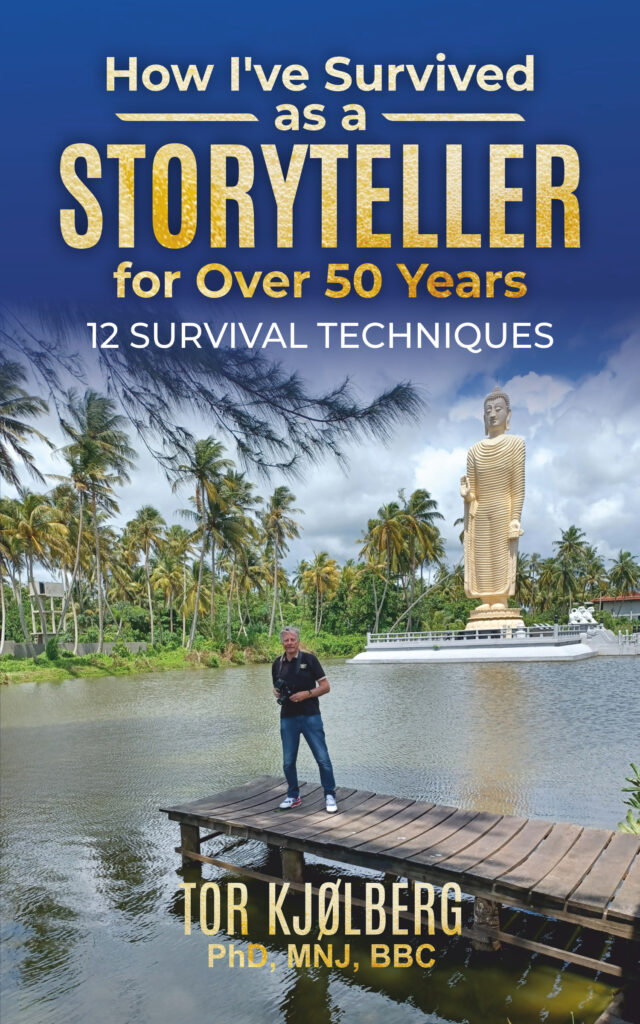
In my new book, “How I’ve Survived as a STORYTELLER for Over 50 Years: 12 Survival Techniques”, I argue that these techniques are essential for success.

Here is a brief summary of my 12 survival techniques:

Survival technique No. 1: Mastering change

Change is often framed as external. Most people hate change. It’s uncomfortable. The familiar is better. However, A proverb emphatically emphasizes a fact: “You can’t step into the same river twice.” A river is constantly moving, whether you want it to or not. If you observe, accept, act, and reflect, you’ll have an advantage over your competitors.

My 12 Survival Techniques as a Storyteller
A young Tor Kjolberg in conversation with conductor Leopold Stokowsky. Photo: Private.

On the other hand, you can also make a change. Thoughts that you acquire as a habit are the most powerful tool when you need to influence your own situation and that of others.

My 12 Survival Techniques as a Storyteller
David Ogilvy, called “the father of advertising” is one of my heroes.

Survival technique No. 2: To become a master, study the masters

Regardless of your field—business, sports, science, or management—it turns out that those who create the fastest and most lasting results are those who have learned from people who have already achieved the best results. Exceptional results rarely happen by chance. Individual personality and circumstances play a role, of course, but the most capable among us seem to share certain habits, mental models, and approaches to problem-solving. These patterns can be studied, understood, and applied.

My 12 Survival Techniques as a Storyteller
Claude Hopkins formed my career.

Survival technique No. 3: Storytelling is the art of intelligent salesmanship, amplified by mass media

Telling stories, whether real or fictional, is an inherently human trait. However, the way we communicate with others has changed dramatically over time. Technological developments have shaped the way we communicate today.

This survival rule comes directly from the greatest advertising master of all time. It was Claude Hopkins, author of the book Scientific Advertising, first published in 1923. Decades later, the legendary David Ogilvy, often called the “father of advertising” and one of the greatest copywriters of all time, said the following about Hopkins’ book: “No one, at any level, should be allowed to do advertising unless they have read this book at least seven times. It has changed my view of advertising.”

My 12 Survival Techniques as a Storyteller
Super salesman Zig Ziglar.

Survival technique No. 4: You can get everything you want in life if you help other people get what they want

This is a statement by the American super salesman Zig Ziglar. Dale Carnegie, author of “How to Win Friends and Influence People”, explained the same message this way: “The only way to influence people is to find out what they want and show them how to get it.”

My 12 Survival Techniques as a StorytellerSurvival technique No. 5: Before you start selling, you should find out what your buyers want

But how do you find out? There are two answers to this question. It depends on whether you are conducting personal sales (one-on-one) or through advertising (where you want to influence an entire segment at once).

You can find advice in one of the best books on sales ever written, Harry Browne’s classic “The Secret of Selling Anything: A road map to success for the salesperson who is not aggressive, who is not a ‘smooth talker’ and who is not an extrovert.”

My 12 Survival Techniques as a Storyteller
Tor Kjolberg in his forties.

Survival technique No. 6: Do thorough preparation before you write a single word

Thorough preparation is a prerequisite for good results, no matter what you prepare. It reduces uncertainty, improves your decision-making, and increases the likelihood of achieving your goals. If you want to produce a good story for a client, asking questions is the way to go. My “secret” weapon for writing stories that clients appreciate and that deliver results is a list of questions I have refined at regular intervals over the years.


My 12 Survival Techniques as a Storyteller
Survival technique No. 7: Use the “II” formula – Intention and Imagination

“The war is won before it is fought” (Sun Tzu).

This is a translation of the Chinese general Sun Tzu’s work, circa 500 BC. Many Olympic medalists and football teams agree with the general’s statement and mentally prepare themselves before competitions. They picture themselves on the medal podium, especially the feelings that come with it.

My 12 Survival Techniques as a StorytellerSurvival technique No. 8: Get more information than you need

This is one of the most important things I’ve learned as a storyteller, and it took me several years to recognize its importance. When I received my first freelance assignment, I didn’t know how to write an article that would capture attention, and I gained my first hints by reading David Ogilvy’s books.

Survival technique No. 9: Learn everything about the product

“My technique, if I have one,” wrote Leo Burnett, “is to saturate myself with the knowledge of the product.”

My 12 Survival Techniques as a Storyteller
“Your ingenuity must come from knowledge of the product.”

William Bernbach put it this way: “If I had to give anyone one piece of advice, it would be to know your product inside and out before you even begin to work. Your cleverness, your provocativeness, your imagination, and your ingenuity must come from knowledge of the product.” 

your ingenuity must come from knowledge of the product.” Survival technique No. 10: The burden of proof is yours

The problem is that most copywriters or storytellers are good at making promises but poor at providing evidence. This is a serious mistake, because nobody acts without being convinced.

When creating credible storytelling, you must take into account the limitations of the art of persuasion: people do not resist being persuaded; they resist being misled. The goal of credible text is therefore not cleverness, hype, or even emotionality – it is credibility put under the microscope.

your ingenuity must come from knowledge of the product.”
Tor and two Masai warriers from Camp Serena in Kenya.

Survival technique No. 11: No market knowledge – no market

In this chapter, I recommend that you, before writing a single word, ask yourself ten questions about those you want to convince of anything.

Survival technique No. 12: Problems create opportunities

“A sale is nothing more than the solution to objections,” said the famous sales trainer Zig Ziglar. Before you map out a strategy for a text, you should therefore create a plan that takes into account the four most common objections.

When I use the word problems, I mean the full spectrum of consumer desires – issues, wants, needs, dreams – I summarize the terms with the phrase “problems” for simplicity. As marketers, because that’s what storytellers are, at least in this context, our job is to identify problems and communicate possible solutions. The bigger the problem, the bigger the market.

My 12 Survival Techniques as a Storyteller
“How I’ve Survived as a STORYTELLER for Over 50 Years: 12 Survival Techniques”

This book was published at the beginning of this year. I have never had any New Year’s resolutions. On the other hand, I have always reflected on the path ahead. This book outlines my 12 survival rules for storytellers, drawn from more than 50 years of experience. If you want a free digital copy of my book, please just send me an email (editor@dailyscandinavian.com) with e-book in the subject line.

My 12 Survival Techniques as a Storyteller, written by Tor Kjolberg
Previous articles on storytelling:
What Makes a Story Stick?   
10 Best Books on Storytelling for Brands
Why Storytelling in Brand Marketing Is More Important Than Ever—and Why It Can No Longer Belong to Marketing Alone
How Storytelling Can Help Launch Your Product in Scandinavia
Rethink How Destinations Are Experienced

Uppsala Launching IQ Tourism

0

Uppsala, a historic university city located 40 minutes north of Stockholm, is repositioning itself as a destination for travelers seeking more thoughtful and engaging experiences. Destination Uppsala is now the first destination management company to launch a joint travel concept for its experiences: IQ tourism.

Moving beyond traditional sightseeing

Uppsala is shifting away from fast-paced itineraries toward more meaningful travel experiences. The concept responds to current travel trends, including slow travel, leisure, and coolcation, and transforms them into a cohesive city experience.

A memorial stone for an event that never took place. An artisan perfumery where fragrances are crafted like literary stories. A cinnamon bun that has become part of the city’s cultural heritage. And ideas that have changed the way we view the world. Here, the journey is not only about checking boxes but also about discovering and developing as individuals.

Uppsala Launching IQ Tourism
Visitors are guided through the city via an “IQ symbol” that marks experiences designed to prompt reflection and discovery. Photo: Mattias Fredriksson/Visit Sweden.

Visitors are guided through the city via an “IQ symbol” that marks experiences designed to prompt reflection and discovery. These experiences range from scientific heritage sites to lesser-known cultural spaces that reveal unexpected aspects of Uppsala’s identity. Curiosity is the motivator.

Helena Bovin, head of marketing at Destination Uppsala, says: “We want curiosity to be the primary reason to travel here. It’s a shift towards travel centered on meaning and context rather than just another experience to tick off a list. Experiences that become stories to tell.” (Tel.: +46 18-727 48 05)

Uppsala Launching IQ Tourism
“We want curiosity to be the primary reason to travel here,” says Helena Bovin, head of marketing at Destination UppsalaHelena Bovin, head of marketing at Destination Uppsala. Photo: Sveriges Radio.

Home to one of Europe’s oldest universities, founded in 1477, Uppsala has long been a center of scientific discovery and intellectual exchange. This heritage now becomes part of the visitor experience, connecting history, culture, and innovation.

Visitors receive a list of about sixty or so experiences, places, and phenomena – from groundbreaking research and history to contemporary innovations, culture, food, and handicrafts. This is just a selection of what Uppsala has to offer, providing new insights, knowledge, and perspectives.

The concept illustrates how city destinations can evolve from traditional sightseeing towards content-driven experiences. “IQ Tourism” reflects a growing demand for meaningful travel. For tour operators, it offers inspiration to develop more narrative-led, experience-focused city programs.

Uppsala Launching IQ Tourism
One of the key locations in the program is Gustavianum. Photo: Tripadvisor.

Attractions with content

One of the key locations in the program is Gustavianum, where visitors can see a preserved 17th-century anatomical theater. The museum also displays the original thermometer created by Anders Celsius, which used a reversed scale with 0 degrees representing the boiling point and 100 degrees indicating the freezing point. These details are presented not merely as historical facts but as prompts to rethink familiar concepts.

The concept illustrates how city destinations can evolve from traditional sightseeing to content-driven experiences. “IQ Tourism” reflects a growing demand for meaningful travel. For tour operators, it offers inspiration to develop more narrative-led, experience-focused city programs.

Uppsala Launching IQ Tourism, Tor Kjolberg reporting
Feature image (top) © Magnus Liam Karlson/Visit Sweden

An Ode to the Art of Scandinavian Aging

Most people want to age well. For many, it has become a quest for the so-called “Holy Grail.” Over the past two decades, the desire for guidance on how to age well— such as The Blue Zones, a National Geographic expedition led by Dan Buettner—has grown into a global phenomenon. This article is an ode to the art of Scandinavian aging.

Research has brought valuable attention to habits that support longevity, including eating well, staying active, nurturing relationships, and maintaining a sense of purpose. Yet as these ideas have entered mainstream culture, they have been filtered through a modern lens that often equates worth with productivity. As a result, many individuals feel an unspoken pressure to remain constantly engaged, even as they age, overlooking a quieter yet equally powerful truth: that well-being may lie not in doing more but in learning how to simply be.

An Ode to the Art of Scandinavian Aging
Photo: Life in Norway

Find joy in the ordinary

Enter the Scandinavian way of life and its distinctive approach to aging. Many readers will already recognize that Nordic cultures naturally embody many of the principles associated with current longevity research and the Blue Zones fundamentals of nourishing, whole-food diets (with the Nordic Diet itself gaining global attention in recent years), consistent daily movement (often embraced in all weather, reflected in the familiar Scandinavian saying, “there is no such thing as bad weather, only bad clothing”), and a deep-rooted emphasis on social connection, whether through family gatherings or the cherished ritual of fika with friends. Yet there is an additional, often overlooked dimension that sets this lifestyle apart.

Beyond simply staying active and socially engaged, Scandinavians have a remarkable ability to find joy in the ordinary. There is a quiet appreciation for simplicity: a cup of coffee savored slowly, soft light filtering through a room, time spent in nature with no agenda other than to observe and absorb, and the comfort of solitude without the pressure to keep pace with an increasingly hurried world. In this way, healthy aging is not pursued through intensity or perfection but through a steady, mindful presence woven into everyday life. It is subtle yet powerful.

An Ode to the Art of Scandinavian Aging
Photo: Nordicwelfare.org

Lifelong connection to nature

Perhaps this perspective takes root early. The Scandinavian concept of förskola, which emphasizes unstructured outdoor time in early childhood education, may lay the foundation for a lifelong connection to nature and a sense of ease with one’s surroundings. Likewise, the principle of lagom (“not too much and not too little”) encourages balance across all aspects of life, fostering a rhythm that feels both sustainable and deeply human. Together, these cultural values may be among the most understated yet profoundly impactful elements of longevity in Scandinavian societies.

Ultimately, the Scandinavian approach to aging invites a quiet yet meaningful reframing of what it truly means to live well over time. Rather than striving for longevity through constant optimization, productivity, or perfection, it suggests that the foundation of a long, healthy life may lie in something far more accessible: balance, presence, and an appreciation of the ordinary.

A Personal Reflection

As I reflect on the inspiration behind this article, my mind returns to a childhood memory of first becoming captivated by all things Scandinavian. I was about nine years old, on a summer trip to Rockport, Massachusetts, with my family, carrying a bit of Christmas money I had saved. I remember wandering through the charming shops along the shoreline, searching for something special to bring home.

One particular store drew me in. Inside, I found a Swedish cookbook for children and a beautiful red Adventsstake (Advent calendar); both of which I still have today. What I found most enchanting, however, was the woman who owned the shop and the way she spoke to me as a young child. She was genuinely interested in my enthusiasm for Scandinavian culture and thoughtfully shared insights about life in Scandinavia, along with recipes she recommended from the book I had chosen.

Her voice was soft yet confident; her presence calm yet engaging. Even at that young age, her demeanor left a lasting impression. She seemed to embody a quiet sense of contentment and ease that I admired then and still think of today. In many ways, she represented what I now recognize as the art of Scandinavian aging: graceful, grounded, and deeply present.

Scandinavian-Inspired Tea and a Recipe for Longevity

For further inspiration, you may explore a Scandinavian-inspired tea here.

My Scandinavian-inspired power meal for one:

● ½ cup cooked barley
● ¼ cup pickled beets
● ¼ cup shaved cabbage
● 3 oz. sautéed ground lamb using a dash of salt, white pepper, thyme, and allspice
● Drizzle lingonberry sauce over the top and sprinkle with fresh dill and diced cucumbers.

An Ode to the Art of Scandinavian Aging
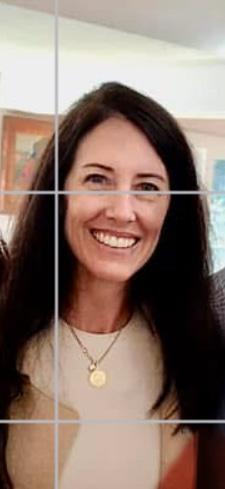
Nicole Hammond

An Ode to the Art of Scandinavian Aging, written exclusively for Daily Scandinavian by Nicole Hammond. Nicole is a health educator, coach, and wellness writer with a Master of Science in Health and Human Performance and a Bachelor of Science in Health Science.  She also holds certifications in stress management, coaching, and feng shui design.  She enjoys writing, researching, creating, and facilitating in the areas of health and creating balance in mind, body, and the home.  In her spare time, Nicole enjoys reading, cooking, traveling, exercising, and spending time with her family, including her two golden retrievers and cocker spaniel.

More articles by Nicole Hammond:
Finding Peace and Calm in the Home Through Hygge and Feng Shui
A Balance Blueprint: From Mind and Body Connection to Blood Sugar in 2026
Nutrition is a Key Player in Battling Stress
A Look Into Crushing Fear, Stress, and Anxiety

Feature image (top) © Nordicwelfare.org