Lake Vättern covers an area of 1,912 sq km (/38 sq miles). The areas around Lake Vättern in Sweden is worth a visit!
Habo Church
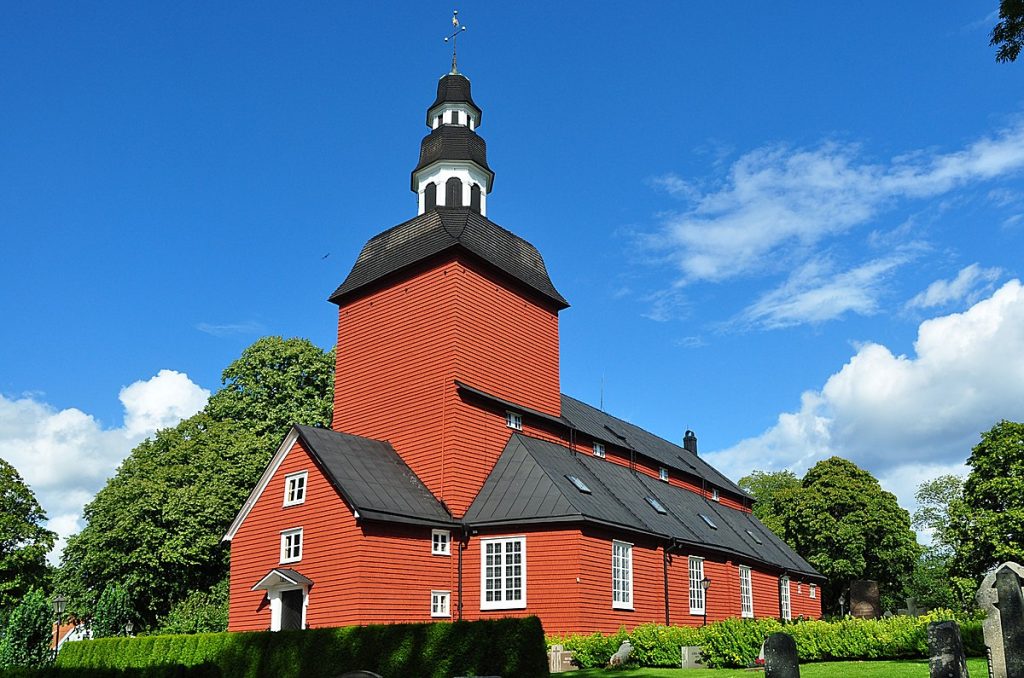
Near the southern tip of the lake, on the west side, is the 14th century timber-built Habo Church, southwest of Habo village. It features an outstanding painted interior, the work of Johan Christian Peterson and Johan Kinnerus, between 1741 and 1743, illustrating Luther’s catechism and biblical scenes.
The 14th century timber-built Habo Church. Photo: Wikidata
The 1892 steamer Trafik
Traveling north along the lake, stop at the small waterside resort of Hjo, to enjoy freshly smoked whitefish. Then tour the town in a horse-drawn carriage, or cruise on the lake in the 1892 steamer Trafik. In summer, Hjo hosts the largest craft festival.
Cruise on the lake in the 1892 steamer Trafik. Photo: vastsverige.com
Sweden’s second oldest cathedral (after Lund), dating from the 11th century. Photo: Wikipedia
Sweden’s second oldest cathedral Skara, 50km (31 miles) to the west of Hjo, has Sweden’s second oldest cathedral (after Lund), dating from the 11th century. Skara Sommarland, 8 km (5 miles) east of Skara on route 49, is a delight for children, with numerous attractions from lunar vehicles to a giant water park.
For birdwatchers
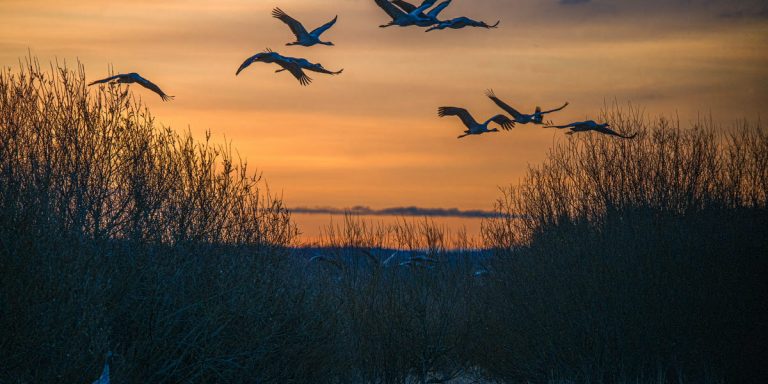
Around 10km (6 miles) southeast of Skåra on route 184 is Hornborgasjön (image on top), a wildlife area with more than 100 species of birds. This is a stopover for migrating cranes.
Around Lake Vättern in Sweden, compiled by Tor Kjolberg
Fruit can be grown all over Scandinavia – apples and rhubarb almost up to very north and pears, plums and cherries in almost all of it. Learn more about fruit from Scandinavia.
The gulf stream makes it possible to grow fruit much farther north than in similar latitudes in America.
There has been much research into finding and developing hardy cultivars and rootstocks of fruit to suit even the harshest climates, and the worst situations, and people grow fruits in almost every garden across Scandinavia. This is necessary if you want a more flavored fruit as most of the fruit in the shops are imported.
Fruit grows in cool summers, with daylight almost till midnight, and even longer in the far north, has a special sweetness, a very thin, crisp skin, and lots of taste. It’s very different from fruits grown in warmer climates. There is a rising interest in growing – and eating – old tasty cultivars, and awareness after many years of bland imported fruit, to take care of it, preserve the cultivars, and support the growers by gorging on it when it is in season.
Local fruit can now be found with little effort in markets, and good supermarkets, and the trees can be found in special nurseries to grow yourself.
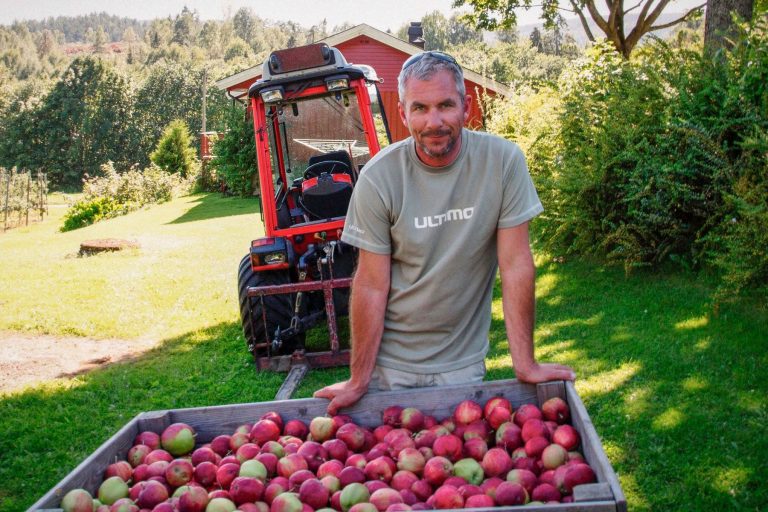
Fruit grows in cool summers, with daylight almost till midnight, and even longer in the far north, has a special sweetness, a very thin, crisp skin, and lots of taste. Photo: Coop
Scandinavians love fruit, especially in cakes ad desserts, but also in savory cooking. Scandinavians have a love of eating apples, cherries, plums and rhubarb with meat and fish; we stuff the roast for Christmas with apples and prunes, and serve both sweet and savory fruit preserves and compotes with fried fish, chicken, game and venison.
Fruit is preserved in a multitude of ways: dried, pickled, jellied, jammed – and all the nice things in between.
Scandinavian Apple compote Apple compote is a very basic commodity in Scandinavia, and extremely versatile. We can eat it on hot oatmeal, with blackberries and cream, make it into old-fashioned apple cakes, use it as a topping for pork sandwiches, or eat it just as a snack.
It makes sense to prepare a large quantity, which you can dust with granulated sugar and keep in the fridge; it will disappear in a few days.
Apple compote. Photo: Wikipedia
2.5kg cooking apples, peeled and cored
500g sugar, or to a taste
Put the apples in a non-corrosive pan, add 50ml water, and put it on the heat with a lid on. The apples will disintegrate into a fluffy, white cloud. Check once in a while and stir with a spoon until the last of the apples has softened. But small chunks are no problem.
Cool a little, then add more sugar if needed; note that the compote will taste a little less sweet when cold. If you ae going to eat the compote with cream and berries you must leave room for a sprinkling of sugar on top.
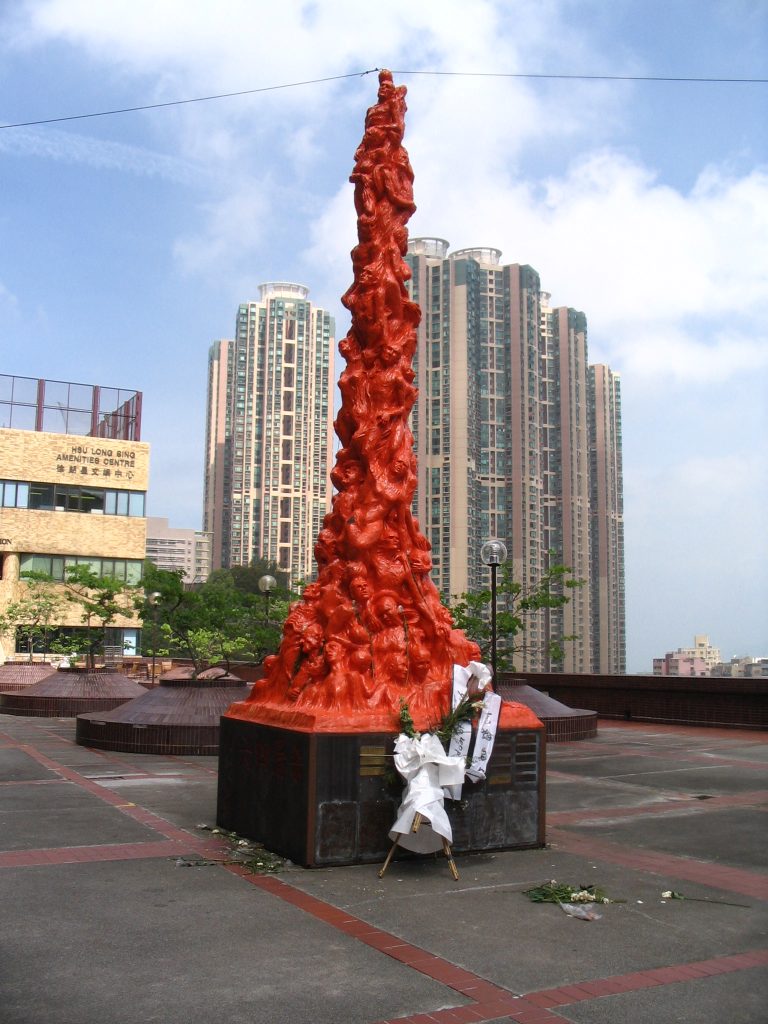
For almost 25 years, the soaring “Pillar of Shame” by Danish sculptor Jens Galschiøt stood on the University of Hong Kong (HKU) campus to honor victims of the 1989 Tiananmen Square massacre. When officials from the University of Hong Kong removed the pillar in December 2022, they took away a historic symbol of freedom in one of the most important locations in Hong Kong. They did so in a concerted effort to erase history and collective memory; in that effort, they will not succeed and the Danish sculpture in Hong Kong has been recreated in Norway.
The sculptor has always claimed that the status symbolism would live forever, and on May 25, a full-scale replica of the 8 meter-tall (16-foot) sculpture was unveiled by Jens Galschiøt at the University Garden in Oslo in Norway.
The sculptor has always claimed that the status symbolism would live forever. Photo: Fox Metronews
Installed in 1997
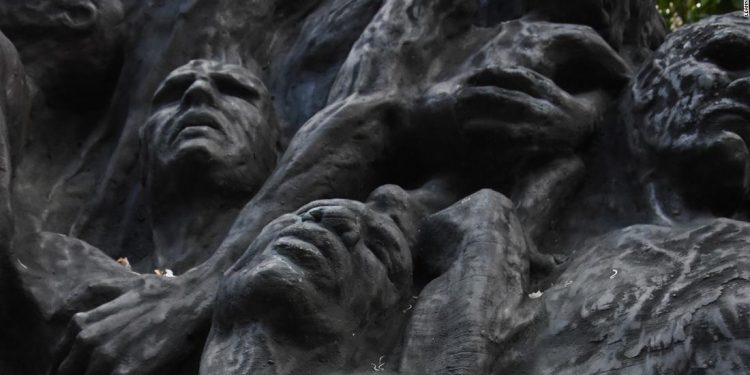
The Pillar was installed at the University in 1997, shortly before the handover of Hong Kong to the People’s Republic of China. With its many twisted faces and skulls crushed together, it was not something that was meant to be easy to look at or admire. Like the truth about the events of June 4, 1989, it is designed to make the viewer uncomfortable, and hence unable to forget this part of history.
Hong Kong was the only place in China where people could openly gather on an annual basis to remember those whose lives were lost under the tanks of the People’s Liberation Army. The Pillar of Shame and the annual candle vigil gatherings in Victoria Park were the symbol of Hong Kong as the last beacon of freedom and democracy in China. The hope was that one day those who perished in Tiananmen would lay the foundation of a better China.
Shortly after the ceremony in Oslo, the Danish artist said over the phone to CNN, “The message is to show the world that we’re still talking about Hong Kong, we won’t forget Hong Kong and we won’t forget what China is doing in Hong Kong.” The ceremony was attended by Norwegian parliamentarians, Hong Kong activists and the dissident Chinese artist Badiucao.
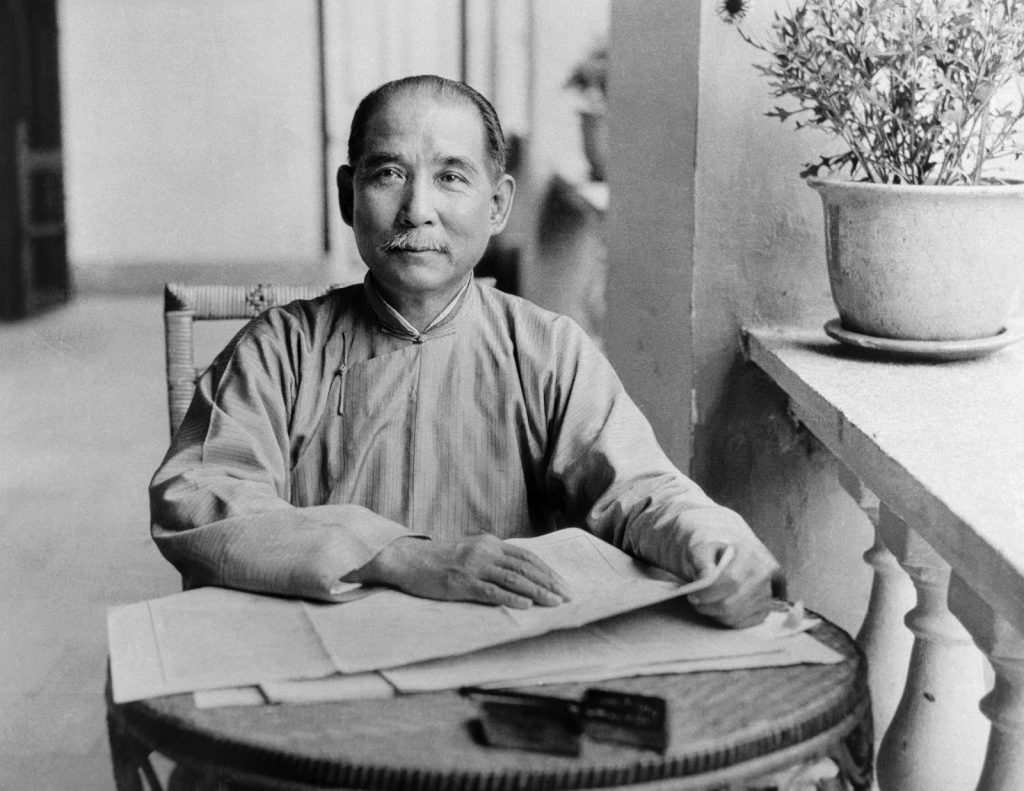
In 1923, Sun Yat-sen gave his famous speech about his hopes for a democratic and modern China.Photo: Wikipedia
A shameful event which must never recur
According to Galschiøt, the sculptures remind people of a shameful event which must never recur. The torn and twisted bodies of the sculpture symbolize the degradation, devaluation and lack of respect for the individual. The black color symbolizes grief and loss and the sculpture, which represents the victims, expresses the pain and the despair of the event. It can be used by both sides in complicated conflict situations, where it can be difficult to point out the guilty party.
The Pillar’s location on campus had a deeper significance. The University has over the past century nurtured countless thinkers and leaders. It was there that, in 1923, Sun Yat-sen gave his famous speech about his hopes for a democratic and modern China, saying, “I feel as though I have returned home, because Hong Kong and the University of Hong Kong are the birth place of my knowledge.” Among other activists who followed in the footsteps of Sun at the University was Benny Tai, one of the organizers of Occupy Central, a peaceful movement led by him and others in 2014 to fight for democratic reform in Hong Kong.
The Pillar was installed at the University in 1997, shortly before the handover of Hong Kong to the People’s Republic of China. Photo: Virtual Student Exchange
Painted orange On 30 April 2008, the Pillar of Shame was painted orange as part of the project The Color Orange, to raise awareness about human rights in China. As the sculptor Galschiøt was denied access to Hong Kong, the Hong Kong Alliance in Support of Patriotic Democratic Movements in China painted the Pillar without his participation.
Removed in October 2021 In October 2021 the University of Hong Kong, represented by law firm Mayer Brown, formally requested that the statue be removed, although they did not cite any specific reason for the request. The university released a statement claiming that the statue belonged to “an external organization” which had publicly announced its disbandment – referring to the Hong Kong Alliance – and that it had written to the Alliance based on the “latest risk assessment and legal advice” to request the removal. Galschiøt said that he was “shocked” when hearing the news about the potential removal and that he, who considered himself as remaining the owner of the statue, had never been contacted by the university in the matter.
On 15 October, Mayer Brown announced that it would no longer be representing the university in the matter of the statue, while retaining it as a client. The move came days after intense pressure, including an open letter penned by 28 civil society groups, as well as by overseas intellectuals.
Coordinated by Amnesty International and the non-profit organization Hong Kong Committee in Norway, the new sculpture will be on display in the university’s garden through 20 June. A commemorative event took place there on June 4 to mark 33 years since the military crackdown in Tiananmen Square, where pro-democracy protests were violently crushed by armed Chinese troops.
The old cannot kill the young forever On the base of the statue, the history and pictures of the massacre are carved in and engraved into the base, in both English and Chinese, are the words “The Tiananmen Massacre”, “June 4th 1989” and “The old cannot kill the young forever.”
Today, Beijing no longer recognizes the words and spirit of the Sino-British Joint Declaration, an international treaty signed by the People’s Republic of China in 1984 and registered with the United Nations that guaranteed Hong Kong’s freedom. With the imposition of the National Security Law and the wholesale takeover of all aspects of life in Hong Kong by the authoritarian Communist government, there is now no place left for freedom.
The open commemoration of the Tiananmen Massacre will not be tolerated under the “new” Hong Kong. Leaders of the opposition, like Tai, journalists, radio hosts, student leaders, and countless others, are now in prison. Charged with subversion and sedition, they are looking at years in jail simply for speaking out and fighting for freedom and democracy.
Focus on student activism, freedom of expression and human rights
In a statement provided to CNN, the University of Oslo’s rector, Svein Stølen, said the statue shared his school’s values of “student activism, freedom of expression, democracy and human rights.”
Using more than 900 photos of the work, activist group Lady Liberty Hong Kong created an open-source 3D version that can be downloaded and used to produce replicas. The digital model has also been turned into an augmented reality (AR) file, allowing users to erect the statue, virtually, anywhere in the world.
The original Pillar of Shame was erected in Rome ahead of a Food and Agriculture Organization summit, to commemorate victims of hunger worldwide. Other versions of the work were installed in Mexico and Brazil to pay tribute to those killed in the Acteal and Eldorado dos Carajás massacres, respectively.
Danish Sculpture in Hong Kong Recreated in Norway, written by Tor Kjolberg
First of all, I want to discuss about some interesting facts about hair growth in Scandinavian countries.
Hair growth Facts There is a lot of variation in hair growth rates among different people, and even among different parts of the body. However, on average, it is thought that human hair grows at a rate of around 0.5 inches (1.3 cm) per month. This means that the average person can expect to grow 6-7 inches (15-17 cm) of hair per year.
Scandinavian countries have been found to have some of the fastest hair growth rates in the world. In one study, it was found that the average person in Norway grows their hair at a rate of around 0.8 inches (2 cm) per month. This means that the average Norwegian can expect to grow 9.6-10.8 inches (24-27 cm) of hair per year.
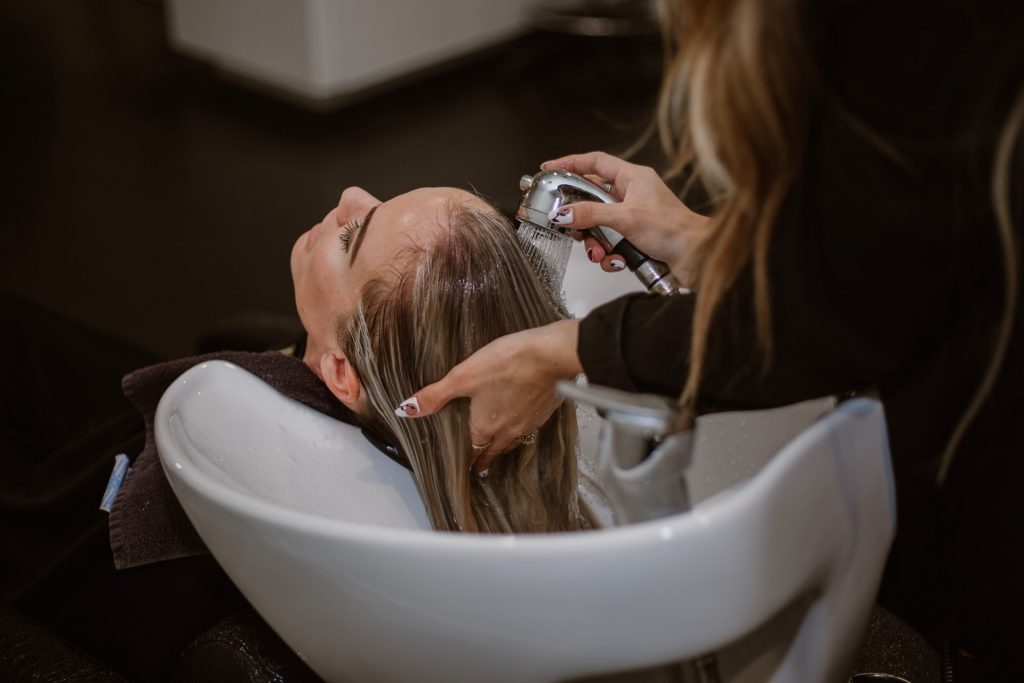
The average person can expect to grow 6-7 inches (15-17 cm) of hair per year. Photo: Lindsay Cash/Unsplash
The reason for this faster growth rate is not fully understood, but it is thought to be due to a combination of factors, including diet, genetics, and climate. For example, it is known that people who eat a lot of protein tend to have faster hair growth, and that people who live in colder climates tend to have faster hair growth than those who live in warmer climates.
Whatever the reason, if you’re looking for long, luscious locks, Scandinavia might just be the place to go!
Hair Problems Overview There are many hair problems that people in Scandinavian countries face. One of the most common problems is dry and damaged hair. This can be caused by a number of factors, including the weather and the use of harsh chemicals.
Another common problem is dandruff. Dandruff is a condition that causes the scalp to shed dead skin cells. This can be caused by a number of factors, including the use of harsh chemicals, an unhealthy diet, and a build-up of oil on the scalp. If you are experiencing any hair problems, it is important to see a doctor or a hairstylist. They will be able to diagnose the problem and recommend the best course of treatment.
Scandinavian countries have been found to have some of the fastest hair growth rates in the world. Photo: Kyle Smith/Unsplash
There are many hair products on the market that claim to be able to treat hair problems. However, it is important to remember that not all of these products are effective. Some of them may even make the problem worse. If you are looking for a product that can help with your hair problems, you should look for one that contains natural ingredients. There are many products on the market that contain natural ingredients, but not all of them are effective. You should also look for a product that is designed for your specific hair type. There are many products on the market that are designed for different hair types, but not all of them are effective. You should also look for a product that is suitable for your scalp type.
10 Common hair problems in Scandinavian countries Scandinavian people are known for their beautiful, blonde hair. But did you know that they also suffer from a variety of hair problems? Here are the top 10 hair issues that Scandinavian people are facing:
Dryness and frizziness
Lack of shine
Damage from heat styling
Breakage
Dandruff
Oily scalp
Itchy scalp
Hair loss
Gray hair
Brittle nails
There are many hair problems that people in Scandinavian countries face. Photo: Brillare Beauty Institute
How to protect hairs in Scandinavian countries
Use a quality shampoo and conditioner. Be sure to use products that are suitable for your hair type.
Avoid using hot tools on your hair. If you must use them, be sure to use a heat protectant product.
Don’t over-wash your hair. Washing your hair too often can strip it of its natural oils and make it more susceptible to damage.
Consider using a leave-in conditioner or treatment to help keep your hair healthy and hydrated.
Be careful when brushing your hair. Wet hair is more fragile than dry hair, so be gentle when brushing it. Start from the bottom and work your way up to avoid breakage.
Be mindful of the products you use in your hair. Avoid using products that contain harmful chemicals or ingredients.
Try to avoid using hairstyles that put excessive stress on your hair. styles like tight ponytails, braids, and cornrows can cause damage to your hair over time.
Protect your hair from the sun. UV rays can damage your hair, so be sure to wear a hat or use a product with SPF when you’re outdoors.
Be gentle with your hair when you’re shampooing and conditioning it. Avoid scrubbing your scalp too vigorously, as this can cause irritation and breakage.
Consult with a professionalfor laser hair removal treatment and for free advice if you’re unsure about how to care for your hair type. A stylist can help you choose the right products and styles to keep your hair healthy and looking its best.
I hope you will follow these tips, If you have any questions please comment below. I will be happy to answer your questions.
Grace Griffin
Hair growth in Scandinavian countries, written exclusively for Daily Scandinavian by Grace Griffin. Grace is a contributor to many fitness & beauty groups. She helped many wellness businesses to grow with her writing. she wanted to explore all the possible subjects in the world. Still, she is afraid that she couldn’t do so. Grace is a technical writer and writes research-based content. As for her hobbies, she loves reading articles, blogs, magazines, newspapers, and books.
Instabox has been recognized as one of the fastest-growing companies in Europe by the Financial Times’ annual FT1000 ranking. Learn more about the Swedish parcel delivery start-up which is no. 3 on the list of “Europe’s fastest-growing tech companies”.
Some of our readers might have seen parcel lockers in supermarkets, post offices and train stations — the easy-access boxes that let you pick up a package at any time. The Swedish parcel delivery start-up Instabox has raised 174 million euros in its latest financing round. Its value is now estimated at 1 billion euros, granting it the Unicorn Status.
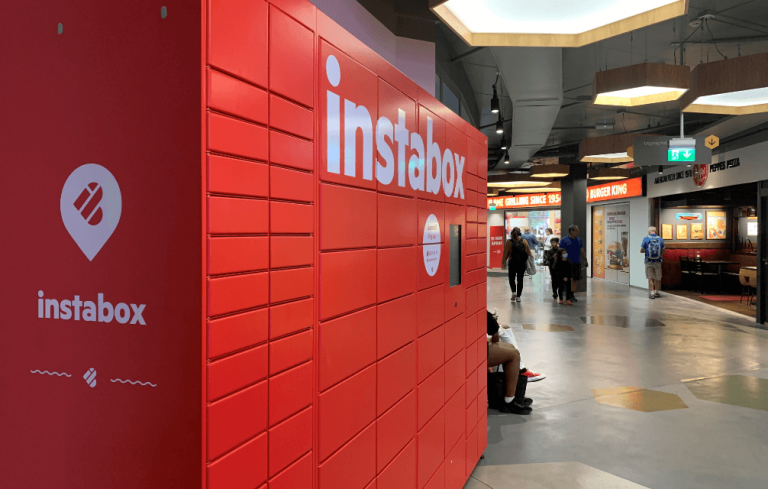
Instabox in Säffle, Sweden. Photo: Wikimedia Commons
Instabox ranks 3rd on the list among tech companies in Europe, 1st in Sweden in all categories, and 10th overall. The company lessens the burden on delivery staff, who don’t need to go to each house or risk leaving a parcel on the front porch of someone who’s not home — and investors are betting big on these boxes to solve the last-mile delivery issue.
Launched in 2015
Instabox has been growing fast since its launch in 2015. In 2020, it generated a revenue of 24 million euros. In 2021, the company raised over 73 million euros and entered the Netherlands through its acquisition of Red Je Pakketje.
Instabox ranks 3rd on the list among tech companies in Europe, 1st in Sweden in all categories, and 10th overall.
With a growth of ~300 percent yearly since 2017, Instabox makes its first entry on the prestigious list. Instabox currently employs ~2,700 employees and serves consumers and merchants in Sweden, Norway, Denmark, and the Netherlands. In 2021, revenues amounted to 70 million euros. It makes the company the best-funded private parcel locker startup in Europe.
Expanding into the rest of Europe
The company was forecast to become a Unicorn for some time already, but it was via this last financing round that it actually achieved the mark of a billion euros, thus becoming the newest unicorn in Sweden.
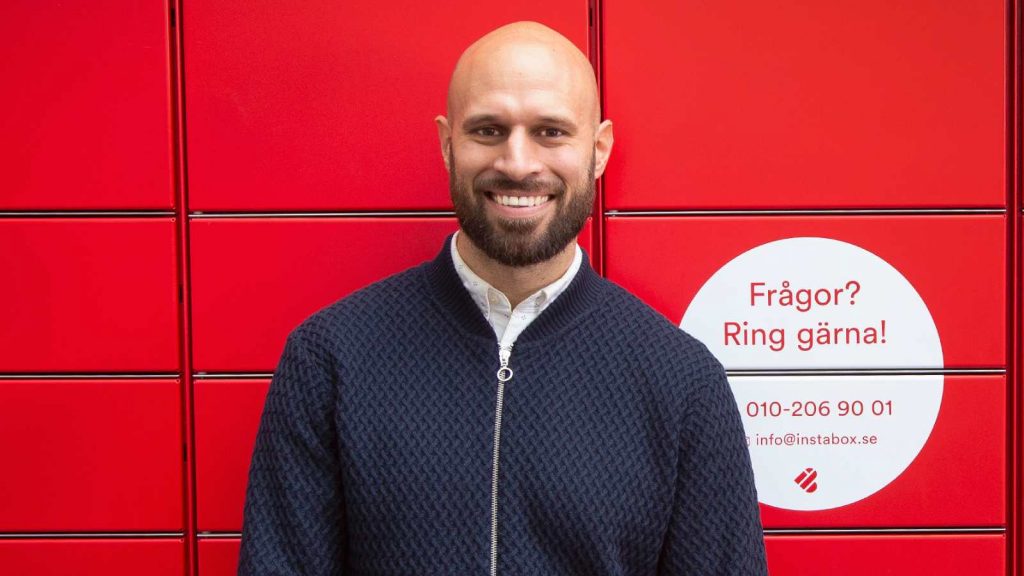
“This is a great recognition of all the hard work a lot of people have put in over the last five years. Some truly great and inspirational companies have made it into the top-10 over the years, and I hope that our journey can serve as an inspiration to others. I’m extra proud that we have achieved this extreme growth without sacrificing our commitment to sustainability,” says Alexis Priftis, Co-founder and CEO of Instabox in a press-release.
Instabox now wants to translate its model to the rest of Europe — one market at a time. ‘The new financing will help us improve our services, making us even more sustainable. I am delighted with the confidence that our current and new investors have shown in us. The global parcel services market continues to grow every year and lightning-fast, hassle-free and fossil-free shipping set us apart from traditional shipping services. The new financing will help us build on that and further improve our services, making us even more sustainable and customer-oriented”, said Priftis.
A fossil-free shipping company
As a completely fossil-free shipping company, it will also benefit from an increased focus on sustainable options, both from merchants and online shoppers. In Sweden, the online beauty retailer Lyko recently decided to remove non-fossil-free options from their checkout altogether, and the trend to prioritize sustainable alternatives is expected to continue.
“In most markets, you don’t really have any choice as a consumer. You’re just presented with shipping and then like okay, sure, I’m gonna go for shipping. In Sweden we have created another type of experience,” Priftis says. Instabox currently operates 4,500 automated parcel machines.
“I’m extra proud that we have achieved this extreme growth without sacrificing our commitment to sustainability,” says Alexis Priftis, Co-founder and CEO of Instabox
Consolidating is important
However, the company will use the money raised in this round, not so much for expansion, but to further consolidate and reinforce the infrastructure of Instabox in Sweden, Norway, and The Netherlands, a much-needed reinforcement due to the amazing year-on-year growth of 300% that the company has had since 2017.
Startups like Instabox, Airmee and Budbee have been shaking up Sweden’s archaic delivery landscape in the last few years with branded last-mile delivery and lockers. Ecommerce shoppers now have the possibility to choose from as many as ten different delivery companies and methods.
“We want to create a world where shipping is branded, shipping is differentiated and the consumer can choose. And that’s not an easy task necessarily, because we have to convince a lot of merchants all across Europe why this is a better idea,” Priftis says.
Instabox has been growing fast since its launch in 2015.
After Scandinavia – Netherlands and Germany Instabox has already announced that it wants to place at least 3.000 more parcel lockers in the Netherlands. It will also strengthen its position in Norway, after taking over the Norwegian same-day delivery company Porterbuddy. Earlier this year, the company launched in Germany. The parcel deliverer announced that it would open more locker terminals within the country soon.
Swedish Parcel Delivery Start-Up Is No. 3 On The List Of “Europe’s Fastest-Growing Tech Companies” written by Tor Kjolberg
Taking a loan is something most people do in their lifetime, whether it is for big things like housing and a car, or as a consumer loan in connection with small expenses that you may not have enough savings for. But the rules concerning loans can be a little different from country to country, even though there are many similarities. Here is what to keep in mind before applying for a loan in Norway
In this article, you will get an introduction to some of the conditions that will apply when you take a loan in Norway, or the other Scandinavian countries, so that you can get a better understanding of the requirements you have to deal with when you want to take up a loan.
In this article, you will get an introduction to some of the conditions that will apply when you take a loan in Norway
There can be various reasons why one wants to take a loan. W hether it is a large amount such as a mortgage or you need an overview of consumer loans online, there is advice to get.
One of the things many people do not know is that there are rules when it comes to who can apply for a loan in Norway. The main requirement is that you must either be a Norwegian citizen or have lived in Norway for a certain number of years to be able to get a loan. But if you can get a loan, it is primarily these two types that you should deal with: secured loans and unsecured loans.
There is a high probability that you can get a loan when you move to Norway, especially if you are with someone who is eligible to do so.
Different types of loans Having said that, there is a high probability that you can get a loan when you move to Norway, especially if you are with someone who is eligible to do so. So here is a list of the two most common types of loans one can apply for, namely secured loans, and unsecured loans. Always remember to consider other options before taking out a loan, because sometimes it is better to save money than borrowing them, if the purchase is something that can wait a bit, and it often can. Perhaps you could use money from your savings or adjust your budget to gather the required amount for that purchase.
Secured loans: Secured loans are a term for loans where the bank has security in what you borrow, typically a home, boat, or car. This is a loan that often has a decent interest rate and a repayment period over many years. It is always good to make sure that you can handle the monthly instalments, but with loans of this size, the bank often helps you identify whether it is a loan that fits into the budget you have or not.
Unsecured loans: This is a term for those types of loans, where the bank does not have collateral in what you borrow. Keep in mind that fees and interest rates are often a little higher than with secured loans. It can still be a good option if you know for sure that you can repay the instalments within the agreed framework so that the extra costs are minimised as much as possible.
What To Keep In Mind Before Applying For A Loan In Norway, is written exclusively for Daily Scandinavian by Matchbanker.
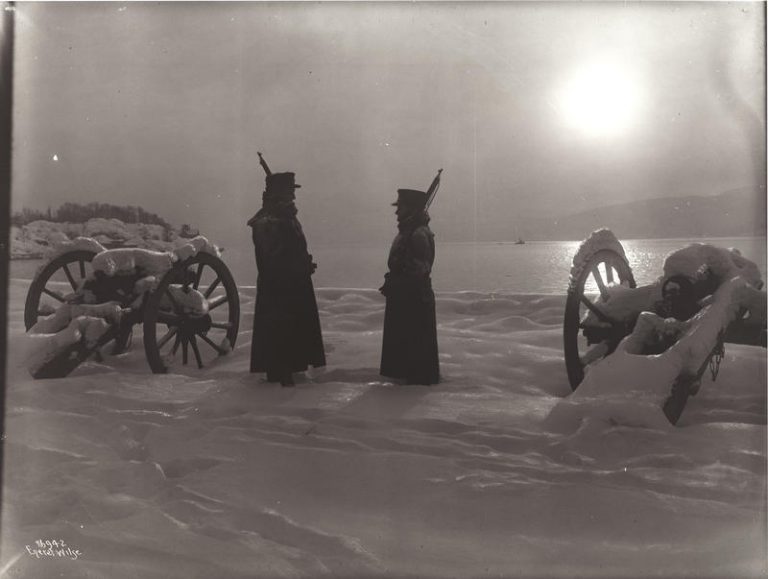
Photographer Anders Beer Wilse (1865-1949) is often nicknamed “The National Builder in Norwegian Photography”. He is also called the most prominent photographer in Norway.
Anders Beer Wilse documented Norway in the early mid-20th century and also worked in the United States. He gave us the image of modern Norway – the conquering of nature through exploration and industrialization, shaping the “Norway brand” as we still see it today.
Anders Beer Wilse documented Norway in the early mid-20th century and also worked in the United States.
Many Norwegian stamps used images of Wilse’s famous photographs. Wilse was born in Flekkefjord and grew up in Kargerø. He graduated with a technical degree from the technical school in Horten in 1882 and emigrated to the USA as a 19-year-old in 1884, where he got a job as a surveyor and cartographer. After using a camera to map the desolate mountains of Montana and Idaho, he began photographing other objects as well. His genuine interest in photography began when he bought his first camera in 1886 and began taking photographs. In 1897 he founded a photographic business in Seattle, but returned to Norway three years later and opened a studio there.
Through thousands of books, stamps, postcards and not least slide shows across Norway, Wilse became known as the great landscape and tourist photographer. He also worked as Aftenposten’s correspondent on Svalbard, photographed stage images and actors at the National Theater in Oslo and took portraits of the great personalities of the time.
Anders Beer Wilse has played an important part in the shaping of Norway’s national self-image. He is perhaps most famous for documenting Norway’s landscape and its natural and urban life, but he also worked as a photographer for many major Norwegian companies – among them Norsk Hydro.
A collection of his negatives is also kept in the Chusseau-Flaviens collection at George Eastman House. These images are being scanned digitally, and many are available online. In 2014, Wilse’s photos were included in “Norges dokumentarv” – the most important documentary heritage of Norway. Dagens Næringsliv describes Wilse as Norway’s most prominent photographer. “He left behind a cultural heritage,” the newspaper writes.
Norway’s Most Prominent Photographer, written by Tor Kjolberg
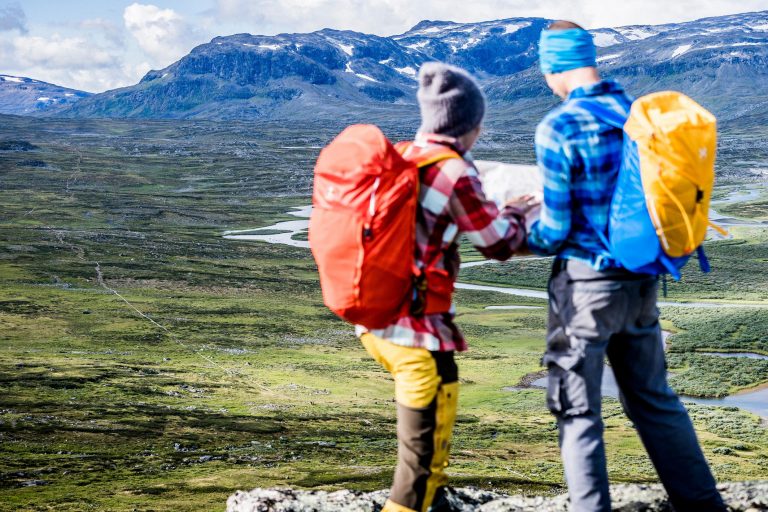
The Scandinavian territory is on top of the list of many hikers and backpackers. Whether you are looking for scenic views, breathtaking landscapes, or volcanic terrain, Scandinavia has all of that, and more. Find out more about the best backpacking trails in Scandinavia.
Hiking on these lands is a mind-blowing experience where you’d get to see unspoiled views and unusual wildlife. In this article, we’ll talk about the best trails you can set foot on in this marvelous land of wonders.
King’sw Trail will take you far to the north of the country, through four national parks. Photo: Wikipedia
The King’s Trail – Sweden If you are starting your backpacking journey in Sweden, hitting the King’s Trail is the perfect choice for you. The road will take you far to the north of the country, through four national parks and the scenic beauty of the mountains surrounding it.
The hike is one of the most famous and longest in Sweden since it takes around a month to complete. The most popular region is between Nikkaluokta and Abisko, being 105 km in length. You can start the hike near the STF Abisko Turiststation and head out to the National Park nearby.
On the way, you’ll witness many lakes, mountain huts, and breathtaking landscapes. Despite being located on such an inconvenient surface, the King’s Trail is pretty straightforward for hiking. If you are well-equipped and fit, you can finish it with minimal effort.
A fun fact: In the 70s, the government tried to extend the King’s Trail, but that was unsuccessful and Sweden ended up with a Southern King’s Trail. This trail stretches to Grövelsjön on the North and Salen on the South.
As a side note: Make sure you are equipped with the essential backpacking gear! You need to bring items like sleeping bags, lightweight backpacking tents, or sleeping pads to stay protected outdoors.
The Romsdalseggen trail is the best road for seeing the fjords and the western coastline of Norway. Photo: Visit Norway
Copyright: Unsplash I License: CC0 Public Domain
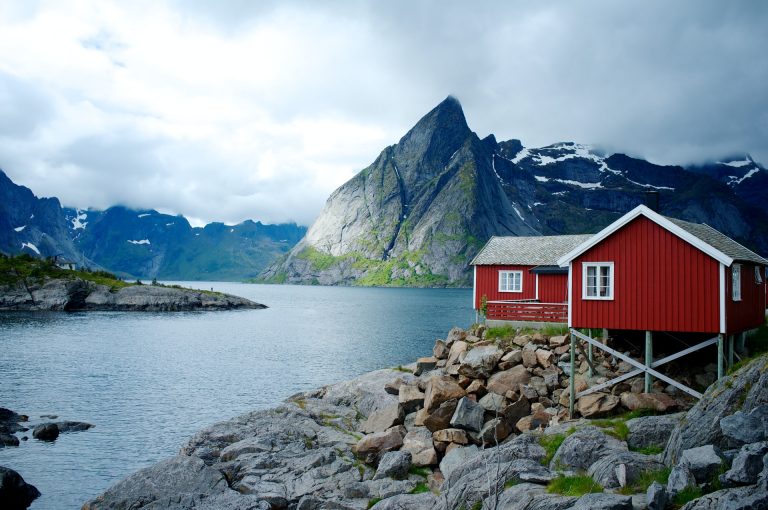
Romsdalseggen – Norway The Romsdalseggen trail is the best road for seeing the fjords and the western coastline of Norway. It’s a hike that every backpacker is looking forward to due to the mesmerizing terrain, untouched nature, and wonderful remote locations.
The starting point is the town of Andalsnes, however, you can start your trip at Vengedalen Valley and finish in Andalsnes. You will head out to a hillside where you can see muddy trails and livestock.
As you climb higher, you will see alpine grass, bushes, and rocky landscapes. Ascending 800 meters through the field, you will hike along the ridge, and down the boulders. The end stop is in Andalsnes, which is a steep path that will take you back to the town.
A fun fact: Stairs have been added on the trail for faster descending to Åndalsnes.
Farum Lake Loop – Denmark The Farum Lake Loop is the favorite backpacking trail among backpackers in Denmark. The path is a 10 km hiking trail around the lake which is perfect for a morning hike. The road features romantic sceneries with hidden meadows, crannies, ancient relics, and grasslands. You’ll feel like you are hiking through a land of fairytales.
If you prefer a hike filled with nature, rowing boats, and rare plants, the Farum Lake Look has all of that. You can even go kayaking or canoeing and enrich your backpacking experience with an exciting activity.
Get Your Backpack Ready! While this is our list of favorite Scandinavian backpacking trails, feel free to check other roads and determine the one that will suit your needs. For more content regarding backpacking, hiking tips, and most famous trails, head out to our blog and check our insights.
Gloria Mabery
Best Backpacking Trails in Scandinavia, written exclusively for Daily Scandinavian by Gloria Mabery. Gloria is a passionate traveler who has given up trying to tame her nomadic streak. She’s been backpacking around the world for seven years, transforming her travel and wellness experiences into stories. As well, she works as a content writer, mostly administering her interest in digital marketing. Gloria’s main interest is towards alternative medicine and discovering the traditional ways people deal with health issues and strive for longevity.
Nordic countries have so much to offer that many people choose Scandinavia as their travel destination. If you plan to first visit one of these amazing places, check out these travel tips for an unforgettable trip. Learn these 5 Scandinavia travel tips for first-time visitors.
Speaking about travel to Scandinavia, everyone imagines the clear Norwegian fjords and the snowy Scandinavian Mountains. But this region has many more fascinating places, rich history, and culture.
When you visit the lands of the Vikings for the first time, it is necessary to prepare everything for a smooth trip. These travel tips will help you understand the Nordic region better and make your way to picturesque Norway, Sweden, and Denmark enjoyable.
What to See in Scandinavia On a Scandinavia map, we find Denmark, Finland, Greenland, Iceland, Norway, and Sweden. If this cool end of Europe is on your bucket list, you should know the best Scandinavian places. The beauty of this region lies in its contrasts so let’s find what Scandinavia has for you.
The distinct feature of all you encounter there is this unique Scandi design.
Scandinavian Design Scandinavian countries will impress you with ultra-hip urban destinations. Nordic cities hide many amazing places to visit, including cafés, museums, boutiques, galleries, etc. The distinct feature of all you encounter there is this unique Scandi design. Oslo, Helsinki, and Copenhagen are all imbued with minimalism and functionality in architecture, furniture, clothes, and more. Visiting any city in the North you will find this unmistakable design.
Picturesque Nature The cold and distant Scandinavia landscape attracted people from around the world for centuries. There’s a mystery in the Northern Lights, Swedish archipelagos, Lapland mountings, and Norwegian fjords. Anytime you visit Norway, Sweden, or Denmark, you will always find a cozy village with spectacular winter views. Indulge in outdoor activities and relax in the sauna.
Reindeer filet
Exceptional Cuisine Scandinavian restaurants will feed you with tasty dishes and make you understand the flavor of Nordic cuisine. You will be able to taste what was on the Vikings’ tables back in those brave times. Scandinavian food is simple and hearty, so you should try Palt, Leverpalt, Kroppkakor, and Paltbröd. Be ready for a lot of meat, fish, potato, and bread.
Prepare for the Trip to Scandinavia If you fell in love with the region from movies about Scandinavia, you should not fully rely on your watching experience. You hunt for picturesque spots, and unforgettable feelings will not be easy until you prepare well for the journey. Thankfully, Scandinavians are one of the world’s best non-native speakers of English, so there’ll be no language barrier.
Photo by Raimond Klavins/Unsplash
#1 Learn More about the Place You Visit In order to make your journey to Scandinavia unforgettable, you should explore this region before visiting. Read articles, watch travel videos, films, and lectures to know more about culture and history and fully understand the value of the trip.
As a part of the preparation, you can watch engaging and informative webinars featuring ardent travelers revealing secrets about visiting Scandinavian countries. Use a screen recorder to capture useful information and a video editor to make a video guide (after getting the author’s permission).
#2 Plan Your Budget Being a secure family travel destination, Scandinavia is not cheap, and you will have to pay a lot for food, transport, and accommodation. But everything will be much better if you use a trip planner. Browse the information about hotels or book housing from locals. Compare prices and reviews, and always book accommodation in advance to save money.
There are different means to get to Scandinavian countries, choose what suits you the most in terms of comfort and money. Public transport and walk trips are cost-effective solutions for travelers. If you are renting a car, do not forget about checking the best app for navigating traffic to enjoy picturesque road trips.
Photo by Osman Rana/Unsplash
#3 Check the Weather You should be ready for the Scandinavian climate and check the weather for each country you are going to visit. Climate and weather vary between the regions. So take different clothes for your trip to the Nordic countries.
Use a weather checker to find if you need to take a raincoat and waterproof shoes or sunglasses. Winters are wet and cold, so make sure you have weather-resistant gear. And a pair of sunglasses is a good choice not only in summer as snow can reflect dazzling sun rays.
Photo by Cytonn Photography/Unsplash
#4 Explore Scandinavian Etiquette Tolerant and reserved Scandinavians impress foreigners with their progressivism. They are punctual and always arrive on time. People are sincere and can discuss different topics with you. But they will never show their emotions, especially negative ones, in public.
When visiting Nordic countries, make sure you know the specifics of Scandinavian humor. Shy at first glance, these people are open and funny in an informal setting. They like to joke and are good at it. So be ready to laugh a lot in a snowy country with many positive Viking descendants.
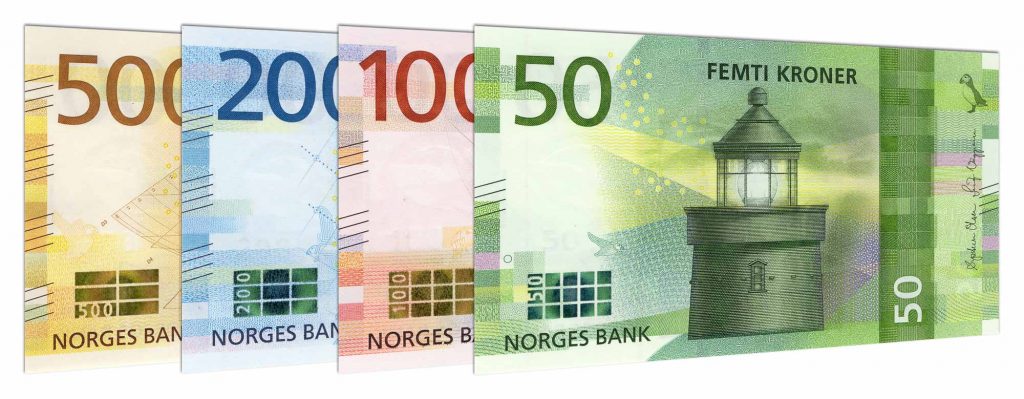
#5 Rely on Your Bank Card One of the most important travel tips is to have cash and money on your bank card. Scandinavian countries build a cashless society, and they are doing well with it. So you will pay for most of the services in these countries with your card. If you decide to exchange money and get local ones, try to avoid high-value banknotes as some venues will not be able to simply give you any change.
Make sure your bank works for paying in foreign countries. Sometimes, you will have a local phone number for mobile payments. Everything now is digitized so stay tuned, check the latest news, and have a contactless card for a flawless trip.
5 Scandinavia Travel Tips For First-Time Visitors– Conclusion The travel restrictions are over, and people start planning their trips to different places after tiresome quarantine restrictions. Scandinavian countries appear frequently on travelers’ bucket lists. The uniqueness of the Nordic region attracts travelers from all over the globe, and they need to be aware of some travel tips to avoid challenges in a foreign country. We hope that this article provided you with much valuable info. Break a leg and discover new places.
5 Scandinavia Travel Tips For First-Time Visitors, written exclusively for Daily Scandinavian by Evelina Brown. Evelina is a digital marketer with more than 10 years of experience. She is a contributor to Content Marketing Institute and regularly quoted as an expert in large media outlets. Her job is to make your business known all over the Internet.
When Swedish television adapted the British 1960s slapstick serial Steptoe and Sons (Albert & Herbert) it became such a beloved phenomenon that it ran for 10 years (1974-84). The Norwegian television series about Fleksnes (a kooky protagonist) ran even longer (1973-1988), both series adopted from British scriptwriter Ray Galton. Here, we want to share with you a Scandinavian chuckle – or maybe a huge laugh.
A Swede and a Finn sit in a bar. The Swede raises his glass to toast: “Cheers!” The Finn challenges: “Are we going to talk or are we going to drink?”
– – – –
A Norwegian is driving from Oslo towards Gothenburg when he hears a warning on the radio: “A lunatic is speeding against oncoming traffic on the highway!” To this the Norwegian mutters as he swerves to avoid crashing head-on into lorry after lorry: “What lunatic? They’re all on the wrong side of the road!”
– – – –
Two Norwegian boys were talking and one of them wondered why seagulls turned upside down when they flew close to the Swedish border. The other speculated, “Maybe because Swedes aren’t worth a shit?”
_ _ _ _
A Danish alcoholic visited a Swedish doctor to get cured from double-vision, and the doctor asked him to sit down on the sofa. The Dane asked: “Which one?”
The Swedish local Shakespeare, poet and composer Carl Michael Bellman (1740-95)
Bellman jokes
The Swedish local Shakespeare, poet and composer Carl Michael Bellman (1740-95) was witty too. He is among other things known for his “Bellman jokes”.
The Bellman joke is a type of simple joke cycle popular among Swedish schoolchildren, always including a person named Bellman as the main character. The jokes first became popular in the 19th century, and were originally inspired by Bellman’s life. In the preface to an 1835 collection of Bellman’s works, in which the publisher reprints an 1808 letter from a contemporary of Bellman, contains the following anecdote.
Bellman rarely owned more than one coat. Once when King Gustav met him in the street he was wearing no more than a nightdress, at which the King said: “But my dear Bellman, you look so ill-clad,” to which he bowed and replied, “I humbly assure your Majesty that I have the whole of my wardrobe on me.”
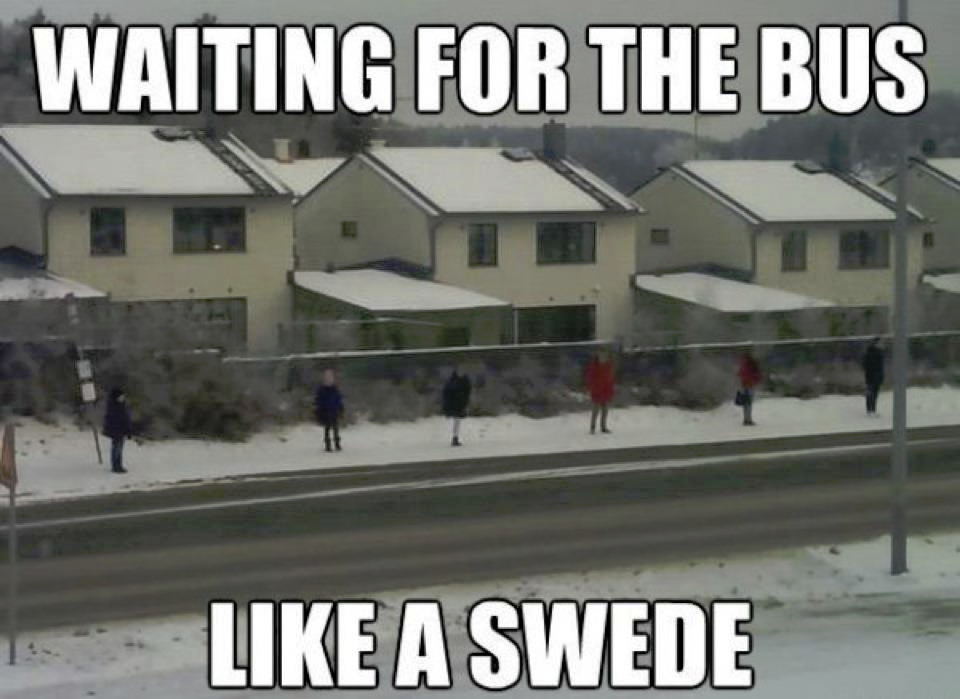
Swedish bushalt before the pandemic
A less offensive subgenre of Bellman anecdotes is about foreigners, perhaps dating to the ’50s, whence ethnic jokes may have originated as a manner of dealing with the increasingly multicultural complexity of society during the post-World War II Cold-War era.
A modernized version of a typical Bellman joke concerns Bellman, representing the generic Swede, and two foreigners who are in a swimming race to the US and what happened is: The Dane drowned after a kilometer. The Norwegian sunk after 10km. Bellman went on until he spotted Donald Trump pottering outside the White House, but felt tired so he swam back.
To sum up Two Danes, two Finns, two Norwegians, and two Swedes are shipwrecked on a desert island. By the time they’re rescued, the Danes have formed a hippie commune, the Finns have turned all the island’s trees into furniture, the Norwegians have tinned the fish in the ocean and exported it abroad, and the Swedes are still waiting to be introduced.
Explorers
In an article on Scandinavian humor, Peter Gundelach Department of Sociology, University of Copenhagen, Denmark writes: “Based on joke collections from books, the Internet and other sources, we find that Danes tell jokes about the Norwegians and Swedes, while Norwegians and Swedes tell jokes about each other, but not about the Danes. In general, the Danes tell jokes in which the butt, or object, of the jokes is a stupid Norwegian or a Swede whose values differ from those of the Danes. The Norwegians and the Swedes tell jokes in which the object is stupid – either a Norwegian or a Swede. The different values/stupid characterizations can be found in other contexts. The character of the jokes can be explained in part by the countries’ respective national habitus, as they have been shaped by the types of conflictual and co-operative relationships among the countries.”








 The open commemoration of the Tiananmen Massacre will not be tolerated under the “new” Hong Kong. Leaders of the opposition, like Tai, journalists, radio hosts, student leaders, and countless others, are now in prison. Charged with subversion and sedition, they are looking at years in jail simply for speaking out and fighting for freedom and democracy.