
Best Things to See in the Lofoten Islands, Norway

0

The Lofoten Islands is an archipelago and traditional district in Nordland County, Norway. It is divided into five main islands from the north to south, namely Hinnøya, Austvagøy, Vestvagøy, Moskenesøya, and Flakstadøya. Here’s out take on the best things to see in the Lofoten islands, Norway.

A Brief Fact About the Lofoten Islands
The Lofoten Islands is famous as a tourist destination for its distinctive scenery featuring dramatic mountains and peaks, open sea and sheltered bays, beaches, and untouched lands. It is above the Arctic Circle; during summer, the sun doesn’t set, and in winter, it never rises.

The Norwegian Sea surrounds the island, and it also connects to the Atlantic Ocean. The archipelago experiences an elevated temperature — one of the world’s most massive — due to anomalies relative to its high latitude. Its largest town, Leknes, is 2,420 kilometers from the arctic North Pole and one of the world’s most populated northernmost regions.

Best Things to See in the Lofoten Islands, Norway
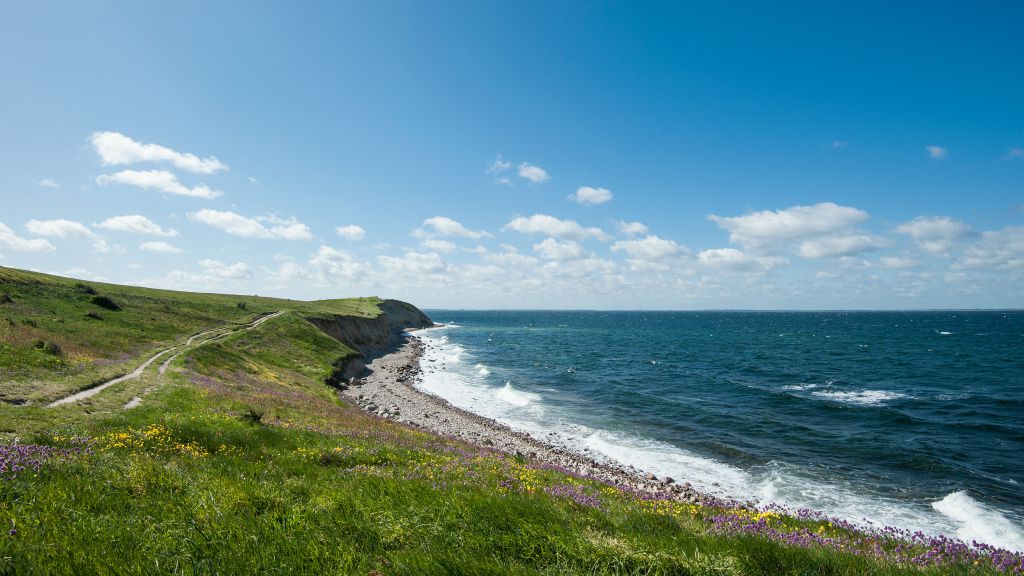
Hamnøya, Lofoten. Photo: Visit Norway

Related: Climbing in the Lofoten Islands, Norway

What to See When Visiting the Lofoten Islands
The Lofoten Islands are delightful to visit. Tourism is a year-round event on the island, and no matter the season, there are countless sights to see and enjoy. It offers secluded beaches, snug fishing harbors, kayaking, and camping to tourists in the summer.

During winter, visitors can see the spectacular northern lights, and go skiing if they wish. Listing the best things to see when visiting the Lofoten Islands is a bit tricky as it has several beautiful sights. However, in the next few paragraphs, we’ll provide some suggestions.
Best Things to See in the Lofoten Islands, Norway
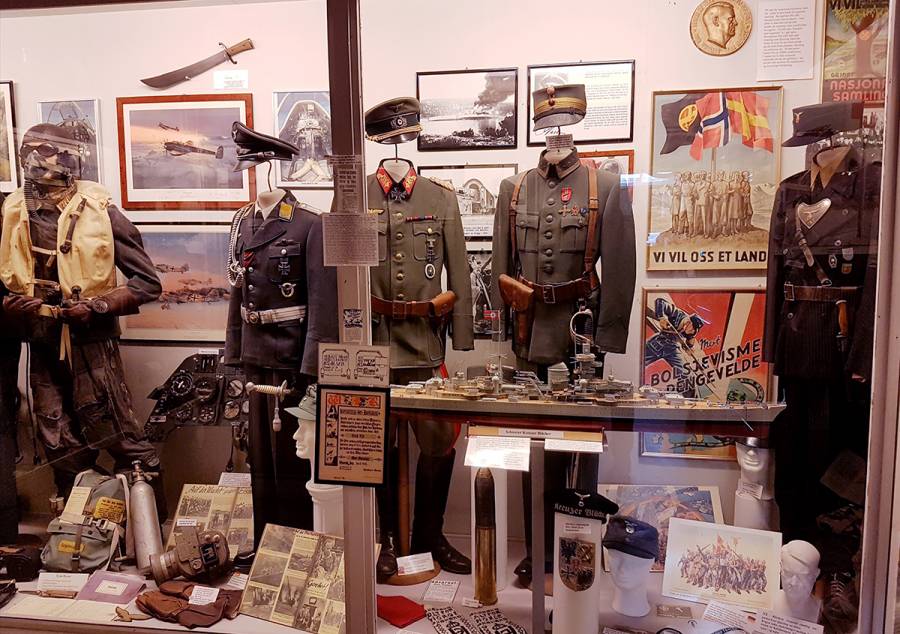
Lofoten War Musuem. Photo: Lofoten.com

The Lofoten War Museum
The Lofoten War Museum holds the largest exhibition of rare uniforms and artifacts from the Second World War. At the museum, you’ll see unique historic photographic evidence of the five years the war raged.

The snapshots tell the story of the war in a way that engages its audience and makes them feel they are experiencing it personally. War veterans worldwide have given it positive feedback, and some consider it one of the best war museums in the world.

The museum is in the town of Svolvær, and it is a must-see for tourists, especially if you love history. It is open every day, all year, and visitors pay 100 NOK for adults, 30 NOK for children between 7and 15 years, and 80 NOK per person for groups with a minimum of 12 people.
Best Things to See in the Lofoten Islands, Norway
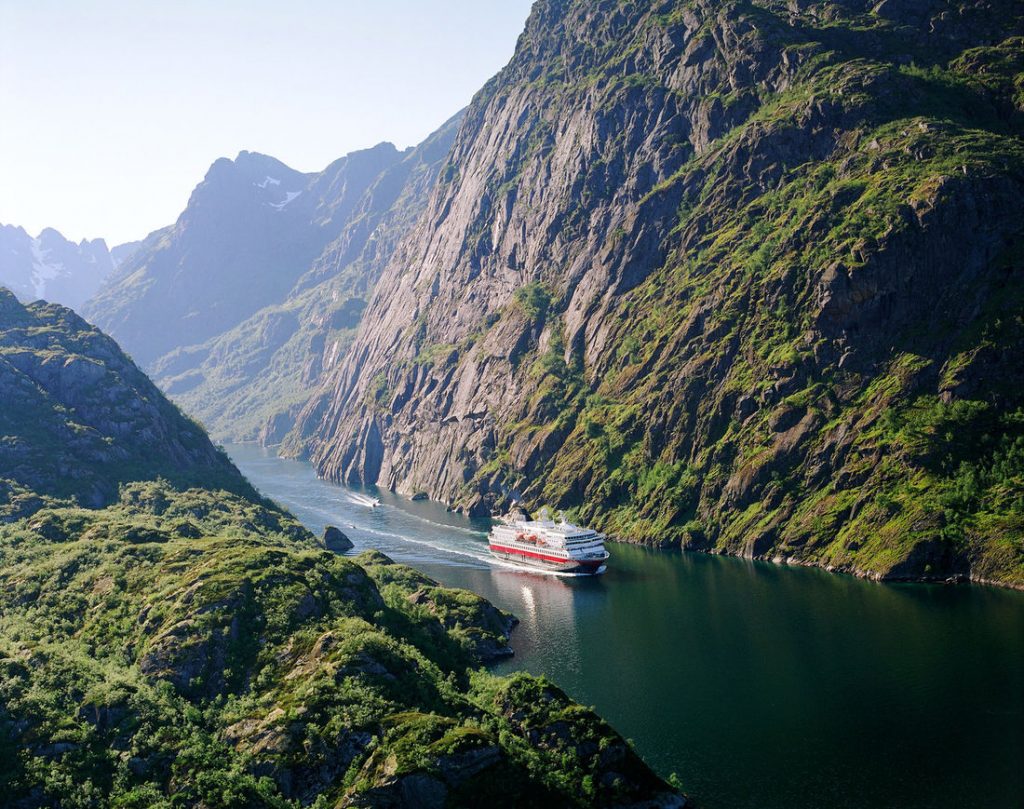
Trollfjord. Photo: Lofoten.info

Trollfjord
The Trollfjord or Trollfjorden is a fjord in the Hadel Municipality of the Lofoten Islands. It is 2 kilometer in length, cuts into the island of Austvagoya, and flows out into the Raftsundet strait. The Fjord is a tourist attraction because of its natural beauty consisting of a narrow entrance and steep-sided mountains.

Related: Cycling Vacation in the Lofoten Islands, Norway

If you wish to see this nature’s delight, you have to use a boat or take a hike on its 10km rugged terrain. Cruise lines are known to pass through the Fjord during summer, and Hurtigruten ships on the route between Bergen and Kirkenes.

Lofoten Museum. Photo: Museum.nordThe Lofoten Museum
The Lofoten Museum is located in Storvågan and is a must-see for tourists, especially if you love fishing. The museum has a wealth of knowledge of Lofoten’s fishing history, and an 1815 building houses it.

The museum boasts of authentic fishermen cabins and boat houses featuring Nordland boats. It offers picture-games, and exhibitions on the Lofoten fisheries, ports, lighthouses, traditional crafts, and a beautiful garden with historic perennials.

It is part of the SKREI Experience Center and lies within walking distance of Gallery Espolin and the Lofoten Aquarium, two places which are also tourist destinations. Visitors can come in from Sunday to Monday during its opening months, and the pricing is fair for individuals, children, and

Best Things to See in the Lofoten Islands, Norway
Vågan Church, Kabelvåg. Photo: Wikimedia commons

The Vågan Church
Even if you are not a religious person, you have to see the Vagan Church. It is a parish of the Church of Norway, and it is in the village of Kabelvag on Austvagoya Island. Built in 1898 by the architect Carl J. Bergstrom, the yellow wooden structure is the largest wooden building in Northern Norway and can seat about 1,200 people.

Best Things to See in the Lofoten Islands, Norway
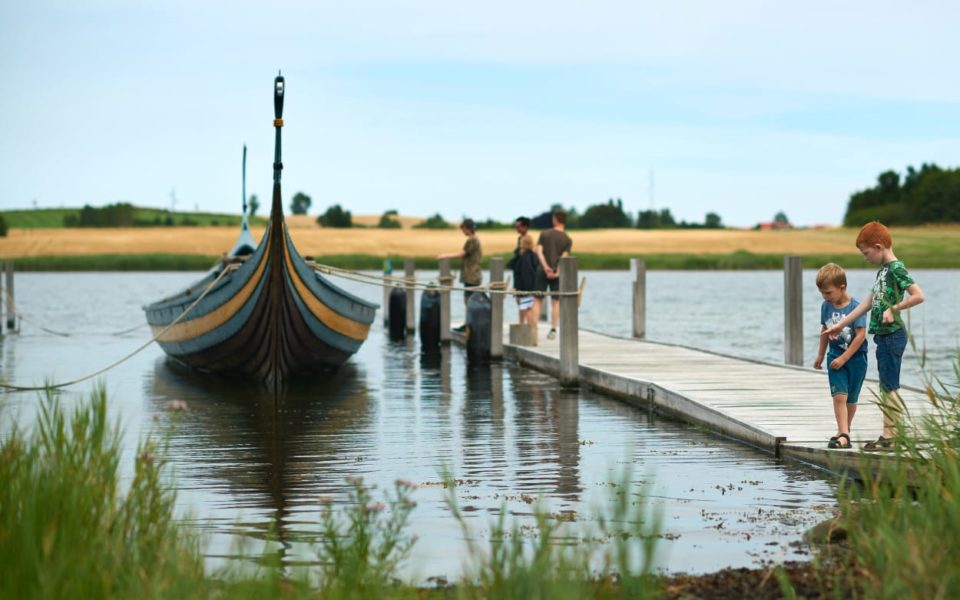
Lofoten Viking Museum. Photo: Kjell Ove Storvik / Lofoten museum

Lofoten Viking Museum
If you are interested in seeing the largest Viking-era house globally, you have to visit the Lofotr Viking Museum. The building is in Borg and an 83-meter (272 feet) reconstruction of the original structure.

Related: Lofoten – an isolated archipelago of striking beauty!

Visitors can participate in the museum’s Viking feast with activities like singing, dancing, and local cuisine. If you are visiting in the summer, you can row a Viking ship, participate in archery and other Viking activities.
Best Things to See in the Lofoten Islands, Norway
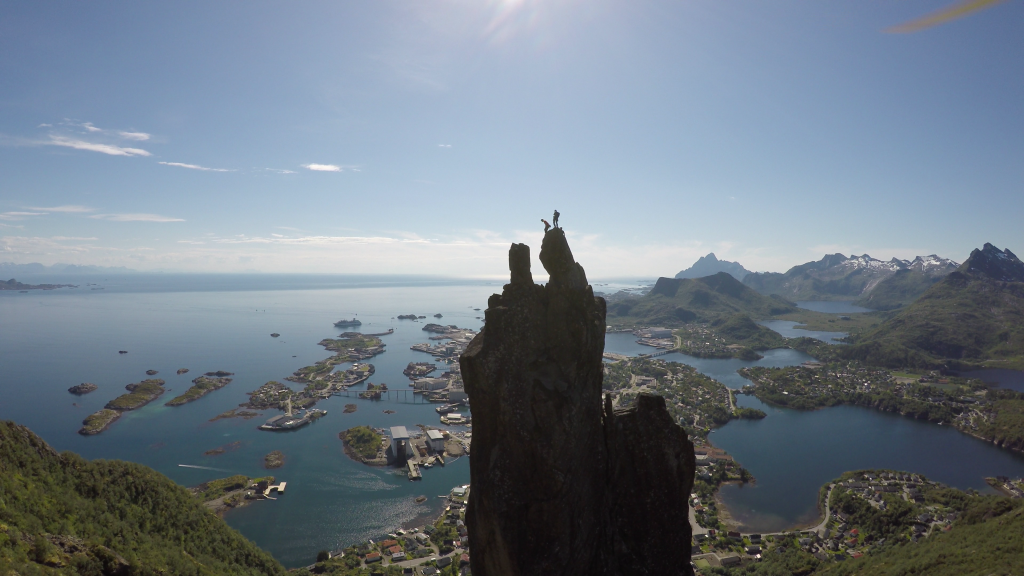
The Svolvær Goat. Photo: Wikimedia commons

Svolvær Goat
The Svolvær Goat is a 150 meter (490 feet) tall pinnacle on the edge of the town of Svolvær on Austvagoya Island. It is famous for those who love daredevil climbs and have an adventurous spirit.

The biggest dare to visitors is jumping the one-meter distance between the goat horns. Climbing to the mountaintop is also a top achievement, and the first climbers to achieve the feat, Ferdinand Schjelderup, Alf Bonnievie Bryn, and Carl Wilhelm Rubenson, did so on August 1st, 1910.
Best Things to See in the Lofoten Islands, Norway
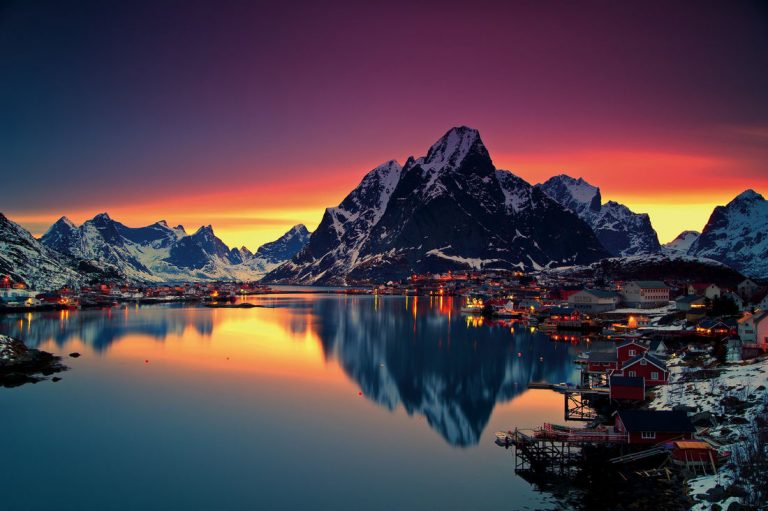
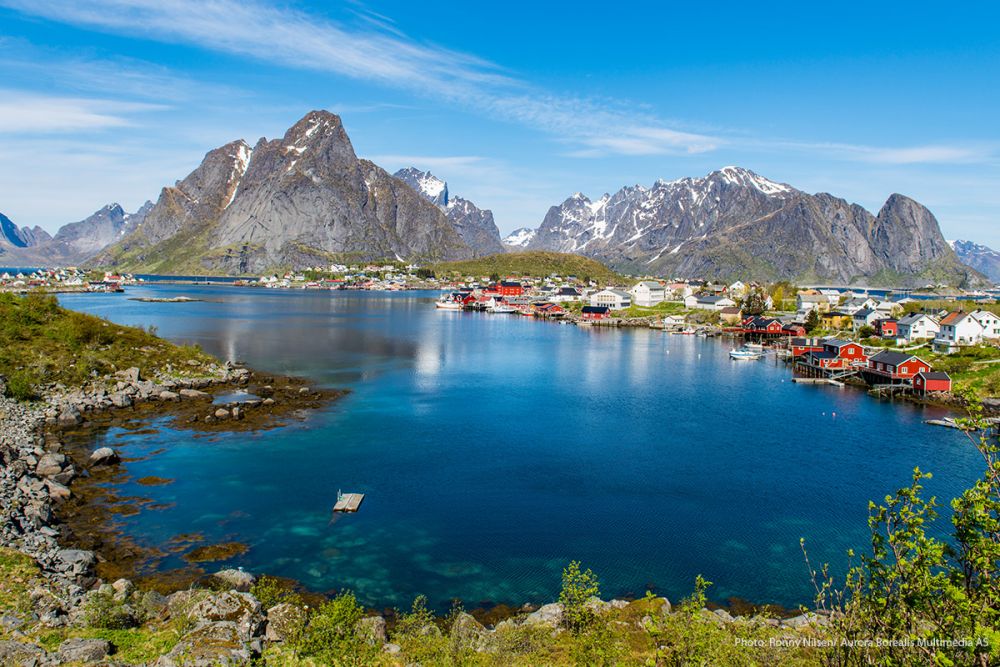
Reine. Photo: Lofoten.com

Reine
Reine is a must-see if you are in the Lofoten Islands. It is a beautiful fishing village located on Moskenesoya. It is a favorite among tourists, especially those who love to paint its stunning Fjords and climb mountains. The high grounds also afford you the view of the Moskenesstraumen, one of the strongest whirlpools in the world.

Visit the Lofoten Islands
If you’re looking for a picturesque place filled with natural wonders to spend your vacation, then plan to visit the Lofoten Islands. Whether you are hiking on the road or looking from the comfort of your hotel room, you will see sights that will take your breath away. However, you can also explore the island and visit the places mentioned in this article.

Best Things to See in the Lofoten Islands, Norway
Theresa Cofield

Best Things to See in the Lofoten Islands, written exclusively for Daily Scandinavian by Theresa Cofield. Theresa is a freelance writer who has a love for creativity and a passion for helping others. She works as a blogger at csgobettingg.com where she covers the topics of esports and the gaming industry.

Scandinavian Lessons for Everyday Life

Scandinavian countries have developed strong reputations for tapping into a high quality of life. Famous for a slow pace that deliberately enjoys every moment, most Scandinavians are the envy of the world around them. Learn more about Scandinavian lessons for everyday life.

However, much of the lifestyle success of places like Norway, Denmark, and Sweden doesn’t come from an inherent value of the geographic locations themselves. It stems from the culture and habits of the people that live within them.

Here are some of the best lessons that Scandinavians can teach the rest of the world, particularly when it comes to living well every day.

Scandinavian Lessons for Everyday Life
Scandinavians are famous for a slow pace that deliberately enjoys every moment

Find Reasons to Slow Down
One of the biggest challenges of the modern world is figuring out how to slow down. Everything from work and school to push notifications keeps people moving forward at all hours of the day and night.

In Scandinavia, though, the natural pace of the local culture regularly counteracts the breakneck speed of modern life. For instance, rather than nabbing a coffee on the way to work or to wake up, a Swede will use it as an opportunity to slow down and bond with others.

In the same manner, they’ll also steer into regular vacations. On top of that, rather than using time off as a chance to quickly recharge before getting back into the thick of things, Swedes tend to purposefully integrate breaks and chances to slow down right into the very essence of their way of life.

Scandinavian Lessons for Everyday Life
Hygge is a concept that impacts everything from food and socialization to clothes and even candles

Embrace a Hygge Atmosphere
Hygge has taken the world by storm, and with good reason, too. The untranslatable Danish word is the essence of comfort, coziness, and an all-around good time.

Hygge is a concept that impacts everything from food and socialization to clothes and even candles.

One area where it can have a powerful impact on the way that one sees the world is with home decor. Everything from furniture to the overall interior design of a home can have a comfy, clean Hygge focus that helps a person slow down and unplug every day.

Scandinavian Lessons for Everyday Life
Rather than prioritizing meeting people, in general, Scandinavians steer into finding intimate time spent with a handful of close friends

Cultivate Real Friendships
Having a friend is a far cry different (and better) than having an endless number of acquaintances. Many Western cultures focus on the perfunctory act of “going out” to bars, clubs, and restaurants to meet others or hang out with people. This typically leads to shallow friendships and short-term relationships.

In Scandinavia, where work-life balance is essential, people often take the time to parse between friends and acquaintances. Rather than prioritizing meeting people, in general, they steer into finding intimate time spent with a handful of close friends.

In his book “The Little Book of Hygge,” author Meik Wiking points out that, when asked how many people were required to properly Hygge together, 20% of Danes claimed that just two were required, while 57% said three to four. Only 9% said five to 10 people and a measly 1% said more than 10. In other words, Danes understand that you don’t need a crowd to create friendships. On the contrary, a group that is few in numbers facilitates true intimacy.

Scandinavian Lessons for Everyday Life
There’s no doubt that Scandinavians have tapped into a unique theme of contentedness in their daily life

Make Happiness a Destination
Finally, the West has long been aware of the concept of “pursuing happiness.” And yet, most Westerners end up using the essential emotion as a means to an end. In Scandinavia, happiness is valued in and of itself. It’s a destination rather than a path, so to speak.

For instance, the Danish word “Lykke” means happy, and it’s attached to a variety of different words that help to cultivate a sense of joy, warmth, and meaning. The meaning of happiness in Danish culture is profound, as it’s much more than a fleeting feeling, indicating a sense of trust, stability, humbleness, safety, and balance.

While many Scandinavians have taken the time to speak English as a second language for business and personal reasons, it’s important for visitors to also learn about each Scandinavian language, as well. If they can do so, they just might find the hidden, often untranslatable gems that they hold, many of which can be the key to unlock important concepts like happiness, comfort, and humbleness.

The Concoction of Scandinavian Contentedness
There’s no doubt that Scandinavians have tapped into a unique theme of contentedness in their daily life. Things like Hygge, happiness, friendships, and simply being in the moment blend together to deliver a quality of life practically unrivaled in the civilized world.

The best part is the interchangeable, tangled nature of all of these benefits. Elements like happiness, friendships, and work-life balance all come together to form Scandinavian life in a concoction of contentedness that is impossible to unravel or turn into a prescribable formula for success.

Instead, foreigners from every place and all walks of life must learn what lessons they can from the spirit of Scandinavian life. They must try to let go of control, be content with what they have, and embrace the here and now. If they can do that, they’ll be able to reproduce the sheer delight and contentedness of Scandinavian life right in their own backyards.

Scandinavian Lessons for Everyday Life
Beau Peters

Scandinavian Lessons for Everyday Life, written exclusively for Daily Scandinavian by Beau Peters. Beau is a creative professional with a lifetime of experience in service and care. As a manager, he has learned a slew of tricks of the trade that he enjoys sharing with others who have the same passion and dedication that he brings to his work. When he is not writing, he enjoys reading and trying new things.

All photos © Unsplash
Feature image (on top): Photo by Allison Christine
Fireplace: Photo by Lucian Alexe
Breakfast: Photo by Jonas Jacobsson
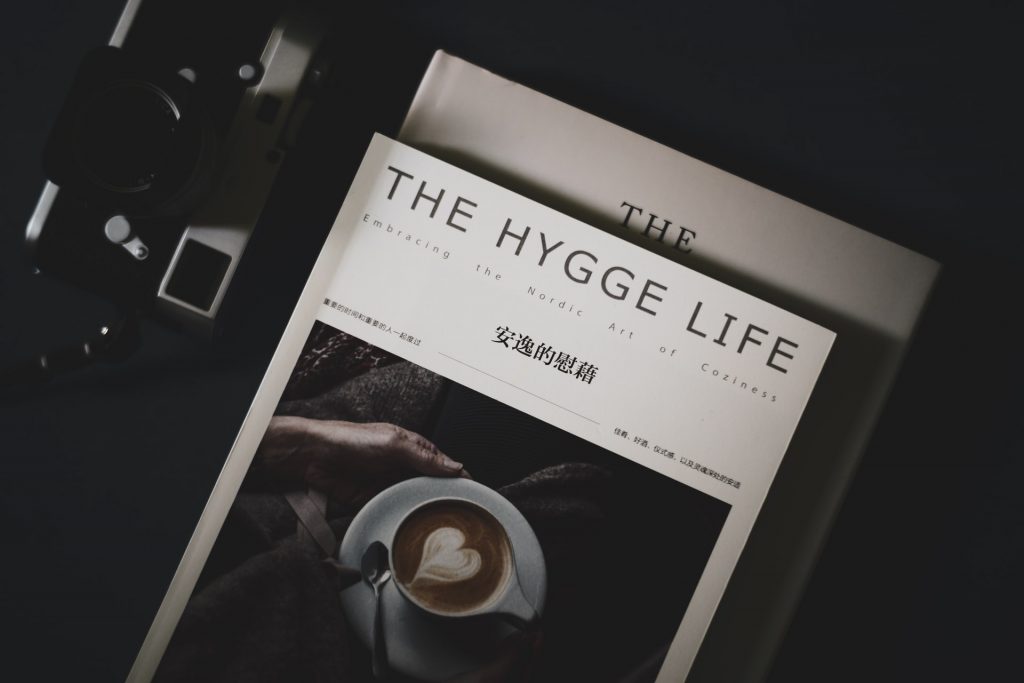
The Hygge Life: Photo by Jonas Jacobsson
Christmas star in window: Photo by Evelin Horvath

Top Natural Attractions in Norway

0

Hordaland county in Norway includes two of the top natural attractions in Norway, Hardangervidda and Hardanger fjord, Norway’s largest national park and the world’s third longest fjord, respectively.

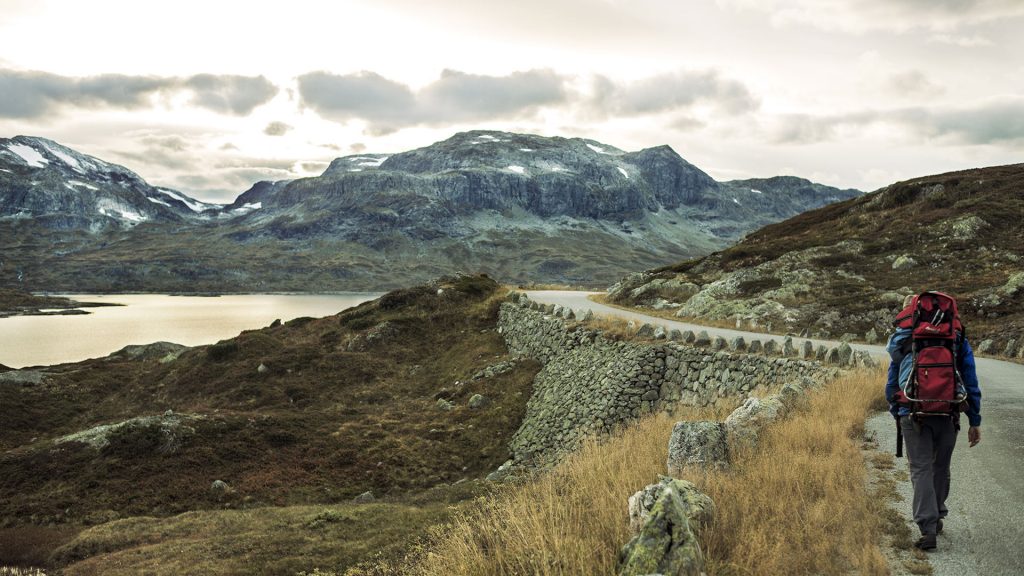
The central mountain plateau in Hardangervidda, Norway’s largest national park is 1,300 meters (4,500ft) above sea level. There are many fine hiking trails, one of which leads past the four giant Husedalen waterfalls which run from the Hardanger plateau down to Sørfjord, an arm of the Hardangerfjord. You can stay overnight in nearby Lofthus or Utne.

Top Natural Attractions in Norway
Hardangervidda is Norway’s largest national park. Photo: Hardangervidda.no

Related: The Most Famous Waterfall in Norway

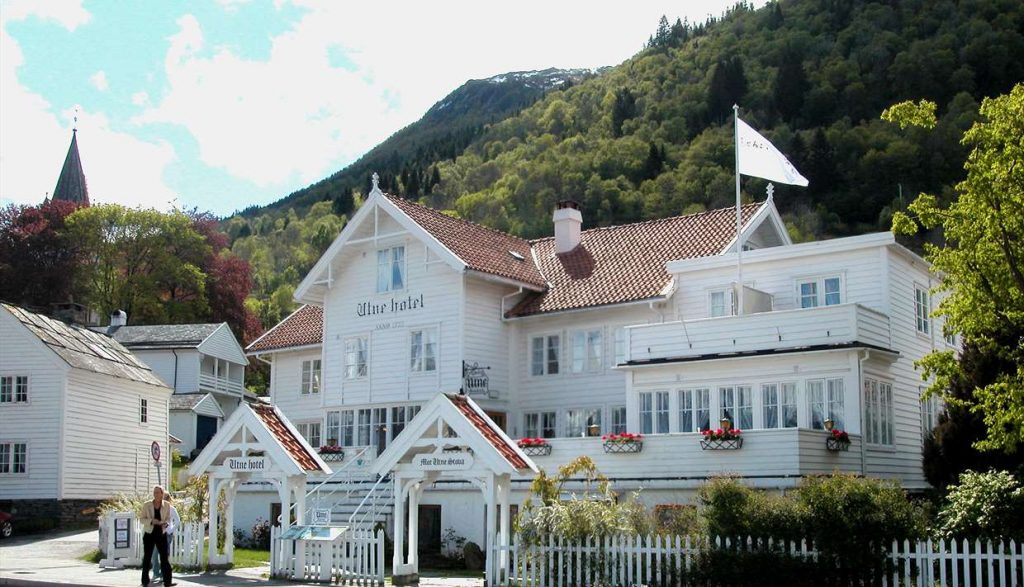
In days gone by, the fjords provided west Norway’s main transport arteries, and Utne was an important junction between east and west. Its economy once centered on the apple, pear and cherry orchards that still cover the slopes of the Sørfjord; but it was also kept afloat by fishing and its charming painted furniture production which you can still enjoy at the Utne Hotel in Norway.

Top Natural Attractions in Norway
Utne Hotel. Photo: Hardanger.no

The open-air Hardanger Folk Museum sums up Hardanger life over the past centuries with historic houses, boats, shops and a school.

A ferry service connects Utne with Kinsarvik on the east side of Sørfjord, or else Kvanndal, where you can connect with Route 7 to Bergen. Heading northwest on Route 13, you’ll find a beautiful stretch of water, Eidfjord. It cuts far into the dramatic landscape that includes the beautiful Sykkjedalsfossen waterfall.

Feature image (on top): Husedalen waterfalls. Photo: Hardagervidda.no

Top Natural Attractions in Norway, written by Tor Kjolberg


Norwegian Architect in New York

0

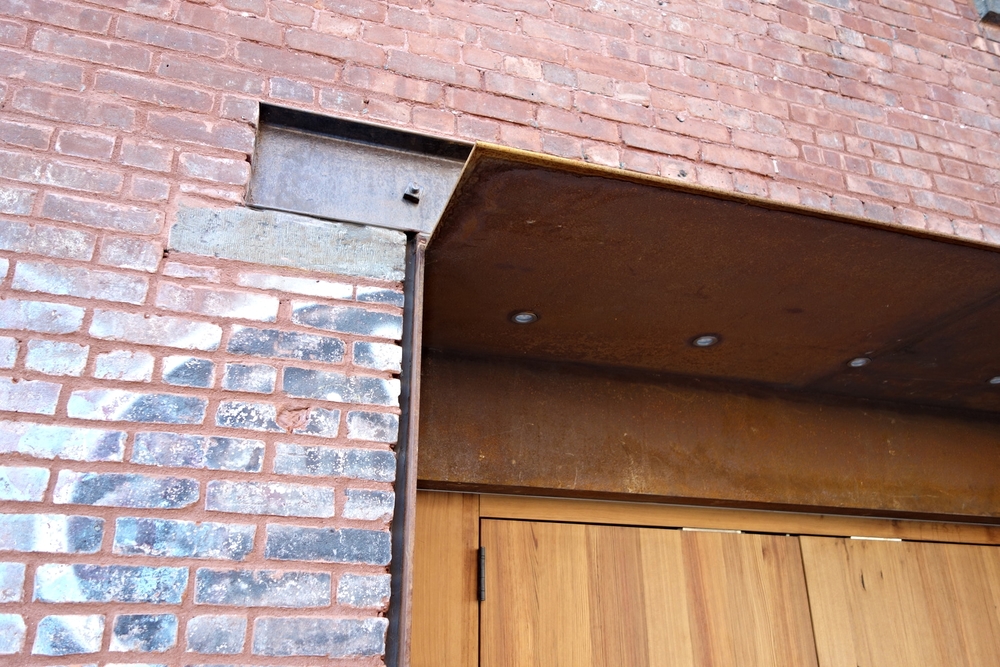
Dilapidated districts in New York are given new life by the Norwegian architect Ole Sondresen. The architect has in a few years left his mark on parts of Ditmas Park, a relatively unknown area in Brooklyn. Along the main street there is a “touch Sondresen” behind the doors of more or less every bar and restaurant. Not least when he was commissioned the task of reusing a landmarked former pencil factory in an unorthodox fashion, his design team left the brick exterior virtually untreated, even refusing to scrub away the graffiti accumulated over time. Read more about the Norwegian architect in New York.

Carpenter-turned-architect Ole Sondresen has demonstrated how his sustainable principles guides his design process in New York. Focusing on a collaborative design culture and intensive interaction with clients, engineers, specialized consultants, contractors and craftsmen, his architect studio strives to achieve one-of-a-kind projects that are built to last.

Norwegian Architect in New York
The new Kickstarter HQ in a nondescript industrial block in Greenpoint, Brooklyn was an unlikely choice when it comes to relocating a powerful digital enterprise.

Related:  Spectacular Architecture in the Norwegian Ocean Gap

The new Kickstarter HQ
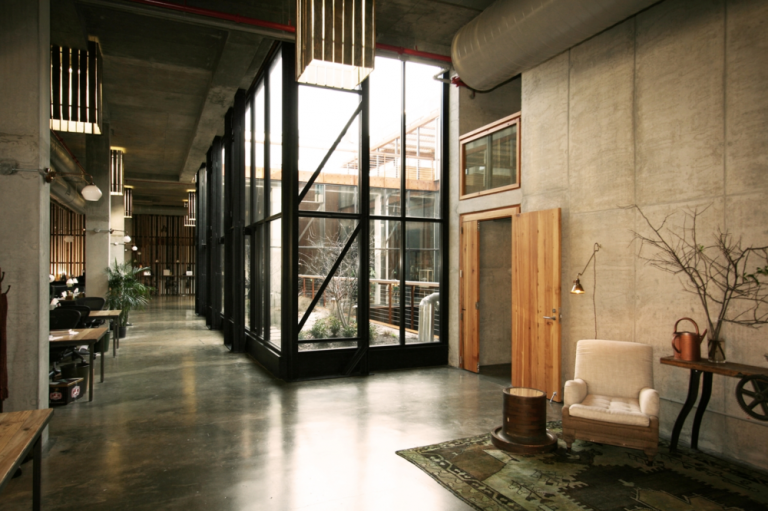
The new Kickstarter HQ in a nondescript industrial block in Greenpoint, Brooklyn was an unlikely choice when it comes to relocating a powerful digital enterprise. However, the crowd-funding company Kickstarter has not earned its success by following any rule book. And since the building had been gutted by its former owner, Sondresen had the liberty of reinventing many of the interior spaces. He approached the task of adaptively reusing, at least by preservation standards. Rather than bringing the building back in time to its glory days, the architect froze the building in place, treating it as a post-industrial ruin.

The new HQ is located in the Eberhard Faber Pencil Factory Historic District, a complex of eight buildings that was constructed in the 1890s and given landmark status in 2008, a testament to Brooklyn’s industrial age.

Norwegian Architect in New York
Sondresen approached the task of adaptively reusing, at least by preservation standards

Related: Exporting Norwegian Architecture

Reusing materials
Sondresen’s interest in creating an architecture that speaks of a particular place originated in his study of vernacular Norwegian buildings, as well as extensive travels through Europe, Asia and the United States to explore regional building typologies. In the old pencil factory, he created a structural core that also holds many of the building’s mechanical systems, minimizing piping elsewhere instead of opting for traditional floor plates to offer lateral support. This also allowed the creation of a glass-framed courtyard held up by repurposed steel trusses from the roof. The atrium floods most office spaces with natural light, and allows for green spaces on all three floors. All of the plants in the three-tier garden are local and were chosen to provide food and shelter to migratory songbirds.

Norwegian Architect in New York
Architedct Ole Sondresen from Norway

Sondresen set out to repurpose what was salvageable. In addition to preserving the historic elements, such as original lintels, arches and bollards by the front entrance, he used the roof’s industrial trusses to carve out an interior courtyard at the core of the building, enclosing it in glass on three sides and richly patinated Corten steel on the fourth.

Related: Scandinavian ‘Oscars’ of Architecture

Wood plays a major role
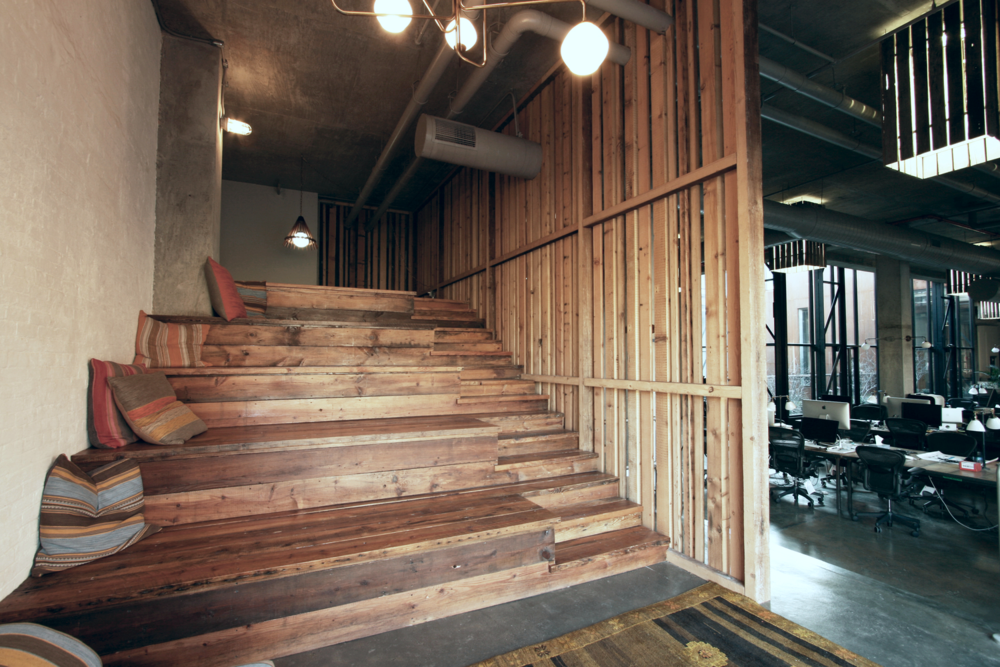
As a former craftsman, wood plays a major role in making the untreated concrete structure appear warm and welcoming. All of it is reclaimed from dilapidated country barns or city demolitions, and a lot of it is left raw and untreated. Most of the furniture used in the variety of meeting spaces are either made of reclaimed materials in collaboration with local artisans or were bought second hand.

Norwegian Architect in New York
Sondresen had the liberty of reinventing many of the interior spaces

“Making the window façade out of trusses required less additional structure to be brought in and fewer removals from the site,” says the sustainably minded Sondresen. “We had an engineer ensure that the trusses could hold up to the wind, and then we turned them upside down and on their side, and hung the window wall off that. It’s all been recycled.

Responsible for the birth of many of our generation’s young makers and creators
With more than $1 billion in pledges from 5.7 million donors to fund 135,000 projects, Kickstarter is responsible for the birth of many of our generation’s young makers and creators. With its focus on local, low-impact, and artisan-made materials, Ole Sondresen Architect’s design perfectly captures the global crowdfunding platform’s ethos.

All images © Ole Sondresen

Norwegian Architect in New York, written by Tor Kjolberg

Arctic Frontiers in Tromsø, Norway Goes Digital 2021

0

Arctic Frontiers goes digital 1 – 4 February 2021. Building Bridges was raised as a potential theme early last March, when the administration had an initial meeting to discuss the content of the 2021 conference. The meeting was supposed to take place live in Tromsø on 13 March, but on 12 March as Norway locked down for the first time, the flights were cancelled and a two days’ brainstorming took place. Read more about how Arctic Frontiers in Tromsø, Norway goes digital 2021.

Little did the administration know then that Building Bridges would come to symbolize not only the central theme for Arctic Frontiers 2021, but its own internal mantra planning the digital conference via hundreds of online meetings.

Arctic Fronters in Tromsø, Norway Goes Digital 2021
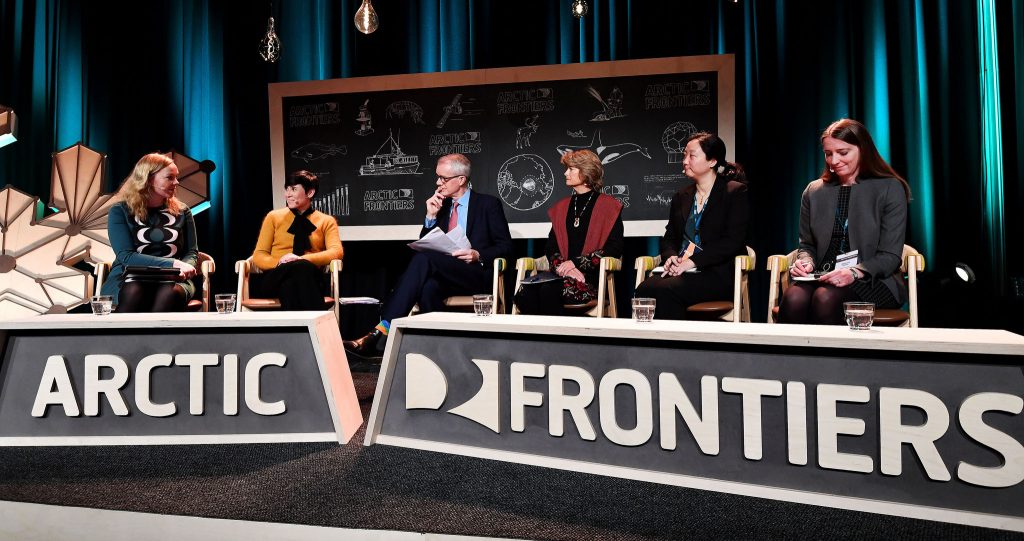
From a live studio in Tromsø Arctic Frontiers will host the plenary discussions through a combination of panel discussions and prerecorded content relevant to the daily themes.

Related: The Arctic Part of Sweden

While the format of Arctic Frontiers has changed, the organization remain committed to delivering the full suite of Arctic Frontiers content in robust plenary, science and young programs. If anything, Arctic Frontiers is able to dive deeper into its themes, securing highly respected speakers and reaching a global audience with impactful content and discussions around the most pressing issues facing the Arctic societies.

The year under the banner of Building Bridges consists of four thematic days that bridge both plenary and science topics:

Monday 1 February: Arctic Health and Well-being
Tuesday 2 February: Resilient Arctic Voices
Wednesday 3 February: Oceans and Society
Thursday 4 February: Arctic Economies – Pressures and Responses

Arctic Fronters in Tromsø, Norway Goes Digital 2021
Arctic Frontiers will invite a small number of guests to participate live in the studio and welcome other speakers from around the world.

From a live studio in Tromsø Arctic Frontiers will host the plenary discussions through a combination of panel discussions and prerecorded content relevant to the daily themes. With Tromsø as the backdrop, Arctic Frontiers will invite a small number of guests to participate live in the studio and welcome other speakers from around the world.

You can read the Arctic Fronters 2020 Summary here

Related: Climate Change Threatening Arctic Reindeer

New executive director
The Arctic Frontiers announced transition earlier this year, and the organization’s new Executive Director, Anu Fredrikson, joined the team in Tromsø in the beginning of October. Fredrikson has long experience working with Arctic affairs both from policy and business perspective. Before joining the Arctic Frontiers she held the position of Director of the Arctic Economic Council, an independent business organization working across the Arctic as well as globally. Prior to the Arctic Economic Council, Fredrikson worked as an advisor on political affairs and Arctic policy at the Embassy of Finland in Oslo, Norway.

Arctic Fronters in Tromsø, Norway Goes Digital 2021
The organization’s new Executive Director, Anu Fredrikson, joined the team in Tromsø in the beginning of October.

Fredrikson is no stranger to Arctic Frontiers. She has worked with the organization and Arctic Frontiers team in her previous capacities since 2012. “I have witnessed the development of Arctic Frontiers throughout the years and am impressed by the organization’s journey so far. I look very much forward to building upon this foundation in collaboration with the organization’s partners and friends. The Covid-19 pandemic has forced us to think anew, and I see this forced change as an opportunity to renew our concept. Considering the increased attention towards the challenges caused by climate change, the Arctic Frontiers with its convening power and unique scientific strength will continue to be an important platform on the path towards an even more sustainable development in the Arctic” Fredrikson says.

Related: 5 Crazy Things You Didn’t Know About Antarctica

Anu Fredrikson was born and raised in Northern Finland. Having studied and worked in France, USA and Norway, her background further strengthens the already international team working for Arctic Frontiers.

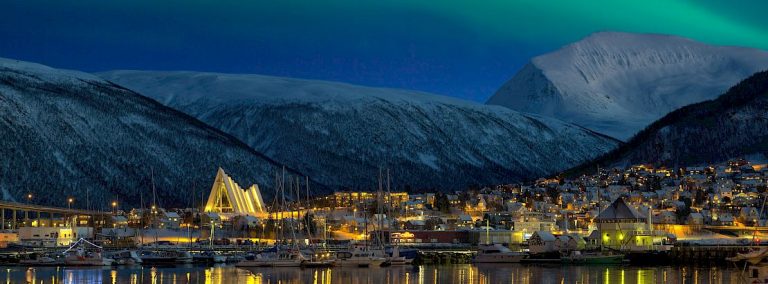
Feature image (on top): Tromsø, Arctic Council

Arctic Frontiers in Tromsø, Norway Goes Digital 2021, a press release from Arctic Frontiers

Danish Scientists Unravel Occurrence of “Impossible” Crystals

0

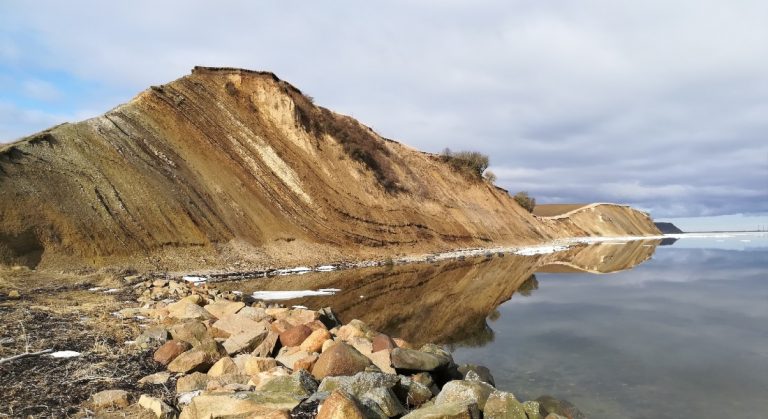
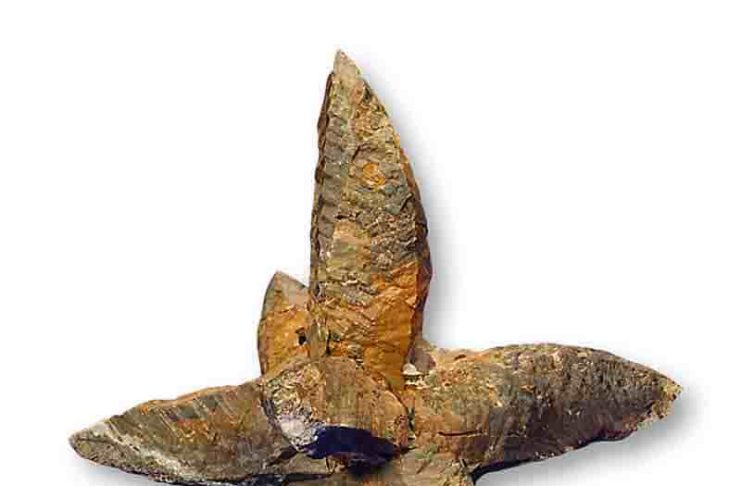
How huge numbers of millions of years-old giant glendonite crystals did manage to form has been a geological puzzle in Denmark for several years. The answer may be that major volcanic eruptions resulted in episodes of much cooler prehistoric climates than once thought. Read how Danish scientists unravel occurrence of “impossible” crystals.

These uncommon calcium carbonate crystals – that need temperatures lower than 4 degrees Celsius to frame – are formed from the mineral ikaite and found in several millions on the Danish islands of Fur and Mors. They have been dated to 56-54 million years back. “Why we find glendonites from a hot period, when temperatures arrived at the midpoint of over 35 degrees, has for quite some time been a mystery,” says geologist Nicolas Thibault, an associate professor at the University of Copenhagen’s Department of Geosciences and Natural Resource Management.

Danish Scientists Unravel Occurrence of “Impossible” Crystals
Volcanic eruptions may explain-Denmark’s giant mystery crystals

You may also like to read Climate Change Threatening Arctic Reindeer

After a detailed chemical analysis of glendonite samples by Thibault and department colleagues Madeleine Vickers, Christian Bjerrum and Christoph Korte, using a technique called clumped isotope thermometry to trace temperatures back millions of years, there might be an answer: the Eocene was perhaps not as uniformly warm as previously thought.

Danish Scientists Unravel Occurrence of “Impossible” Crystals
Nicolas Thibault, associate professor at the University of Copenhagen’s Department of Geosciences and Natural Resource Management

The possibility of colder Eocene spells has been advanced already, however the proof has been uncertain up until this point. The new chemical breakdown assists specialists with argueing the case for cooler conditions, with models recommending the glendonites framed in waters under 5 degrees Celsius (41 degrees Fahrenheit) at a profundity of around 300 meters (984 feet).

You may also like to read Scandinavian DIY Rocket Scientists

Sedimentary layers of ash on the island of Fur point to the possibility that volcanic eruptions may well have been responsible for these chillier episodes in the Eocene, localized around specific regions, which would help to explain the cooler waters and the rock record.

“There were presumably an enormous number of volcanic emissions in Greenland, Iceland and Ireland during this period,” says Thibault. These delivered sulphuric corrosive beads into the stratosphere, which might have stayed there for quite a long time, concealing the planet from the sun and reflecting daylight away. It assists with clarifying how provincially cool zones were conceivable, which is the thing that influenced the climate in early Eocene Denmark.

The new study backs the hypothesis that colder Eocene periods are more likely than the alternative – which is that the science is wrong about the sort of temperatures that ikaite-based rock is able to form at.

You may also like to read Denmark’s Climatorium Built to Protect the Asset of Salt Water

The presence of volcanic activity is revealed by, among other things, sedimentary layers visible on Fur, where layers of volcanic ash are clearly visible as bands in the coastal bluffs.

Danish Scientists Unravel Occurrence of “Impossible” Crystals
Glendonite

Next, the group needs to see comparative examinations completed to perceive how inescapable the cooling found in the Danish Basin really was. Other geological records – including those from the Arctic – recommend this dunk in temperature wasn’t going on everywhere on the globe through the Eocene. As with any discovery about our climate past, the study is going to help scientists map out our climate future.

The study was conducted in collaboration with researchers from England, Switzerland and Norway, and has been published in the scientific journal Nature Communications.

Feature image (on top) Furs and Mors. Photo: University of Copenhagen

Danish Scientists Unravel Occurrence of “Impossible” Crystals, written by Tor Kjolberg

Exploring Norway by Road: Planning The Adventure of a Lifetime

0

Tourists and even locals can spend a lifetime exploring the rugged terrains of Norway. From its windswept towns to its bustling cities, this Scandinavian destination offers an experience like no other. It is no wonder that in 2019 alone, 1.5 billion people travelled to the country and many of these visitors went on epic road trips to immerse themselves in everything Norwegian. Exploring Norway by Road: Planning The Adventure of a Lifetime. Read on.

The Right Car for Your Epic Norwegian Road Trip
Tourists planning a road trip around Norway will spend weeks on the road as the country has an area of 324,220 square kilometers, making it one of the bigger nations in Europe in terms of land area. Exploring the southern portion where its capital Oslo is a part of, will take approximately three weeks by car. This means that you will need to select a reliable and well-reviewed SUV before anything else.

Exploring Norway by Road: Planning The Adventure of a Lifetime
The Lexus GX can be a good partner in your journey

Also written for Daily Scandinavian by Karoline Gore: Disney Characters with Scandinavian Connections

The Lexus GX, for example, can be a good partner in your journey as it has good headlights meant for those foggy mornings and a quietness inside the cabin that will let you enjoy the sights and sounds of Norway while you are driving. If you are travelling light, the Lexus RX is a good option because it makes up for its lack of space by giving you voice assistance and useful safety systems. Saving up on petrol? Since Norway places an importance on sustainability, you can opt for a fuel -efficient SUV like the 2020 Lincoln Nautilus. This beautiful car also has heated seats and mirrors that are perfect for Norway’s colder days.

Also written for Daily Scandinavian by Karoline Gore: Sweden: The Second Most Tattooed Country In The World 

Exploring Norway by Road: Planning The Adventure of a Lifetime
Oslo – Bergen map

The Southern Itinerary
Norway is so vast that choosing which parts to go to can be difficult but if you would like to see Oslo, you will have to plan for a road trip along the southern part of the country. You can start in the beautiful city of Oslo where snowy hills meet mesmerizing waterfronts and drive to Stavanger, around 550 kilometers away. There are many bomstasjon (toll stations) on the roads going to Stavanger so be sure to add this to your budget. Once you reach Stavanger, one of the country’s largest cities, you can hike to Kjeragbolten or just drive around to see the sights.

You can start driving again the next day or two by following the road to Bergen to enjoy the mountains and the fjord. You can ferry your car in the area’s car ferries for a fee and this on its own will be quite the experience too. Bergen is worth the car ferry as it has a colorful Hanseatic past, a busy waterfront, and lots of fish. After Bergen, head to Geiranger for a bit of kayaking and camping then to Alesund for its amazing sunset. And finally, to Trondheim for its art nouveau architecture.

Also written for Daily Scandinavian by Karoline Gore: A Family Road Trip from Bergen to Flåm 

Exploring Norway by Road: Planning The Adventure of a Lifetime
Sommarøy (Summer Island). Photo: Visit Nord-Norge

The Northern Itinerary
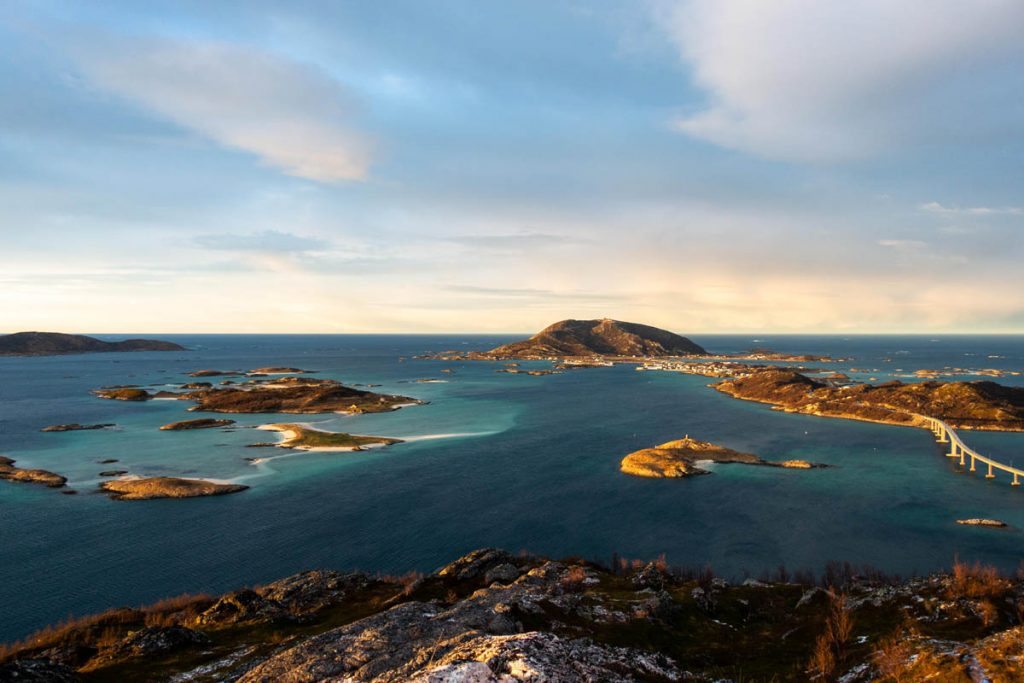
The northern Norway itinerary is a lot shorter than exploring the southern part of the country. On Day 1, you can drive from Tromsø to Sommarøy through Highway 862. While beautiful mountains and fjords await in the drive itself, Sommarøy’s beauty will be able to compete as it is not called one of the country’s best kept secrets for nothing. Tranquil and beautiful, Sommarøy offers kayak tours in the evening midnight sun and other fun outdoor activities. Once you’ve had your fill of Sommarøy, head to the ferry terminal going to Senja then to Vesterålen Islands.

There are so many places to explore in this picturesque Scandinavian destination, making Norway a fast favorite among those who love the outdoors. If you are already excited about it, make sure that you plan your road trip around Norway soon so you can prepare ahead of time.

Exploring Norway by Road: Planning The Adventure of a Lifetime, written exclusively for Daily Scandinavian by Karoline Gore. Karoline is a freelance writer from Stoke on Trent in the UK who left the corporate grind when she started a family and has never looked back. She enjoys contributing to a range of online publications on the topics that are important to her.
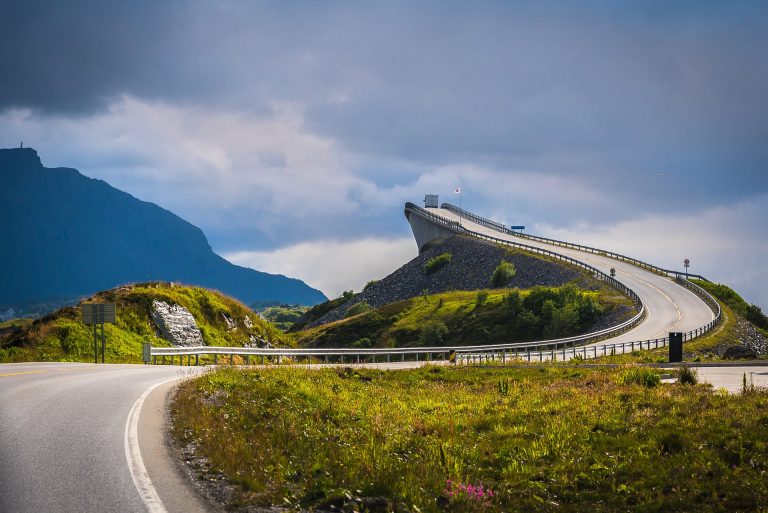
Feature image (on top): Atlantic Road, West Norway Photo by Matt Lamers on Unsplash

The Only Nepalese Restaurant in Norway

0

Three years ago, the Giri family from Nepal established the Kathmandu Restaurant in Bygdøy Allé in the capital of Oslo. Sakun is the excellent waitress, speaking almost fluently Norwegian. Mother Indira is preparing the delicious dishes while the father Chandra, brother Roshan and sister in law Sonima works to make the restaurant a valuable supplement to the rich culinary delights in the Norwegian capital. Don’t know much about Nepalese food? Another reason to visit the only Nepalese restaurant in Norway.

Sakun tells us that her family has enormous enthusiasm for producing great Nepali food, which is a delightful blend of Indian, Chinese and Tibetan cultures. Nepal is a fascinating place with a cuisine full of complex and satisfying flavors.

The Only Nepalese Restaurant in Norway
the Kathmandu Restaurant in Bygdøy Allé in the capital of Oslo was established three years ago.

Related: Oslo’s Restaurant King

The Only Nepalese Restaurant in Norway
Sakun Giri is the excellent waitress

Cultural and historical exploration
The simple and pleasurable act of eating becomes an opportunity for both cultural and historical exploration in Khatmandu Restaurant.

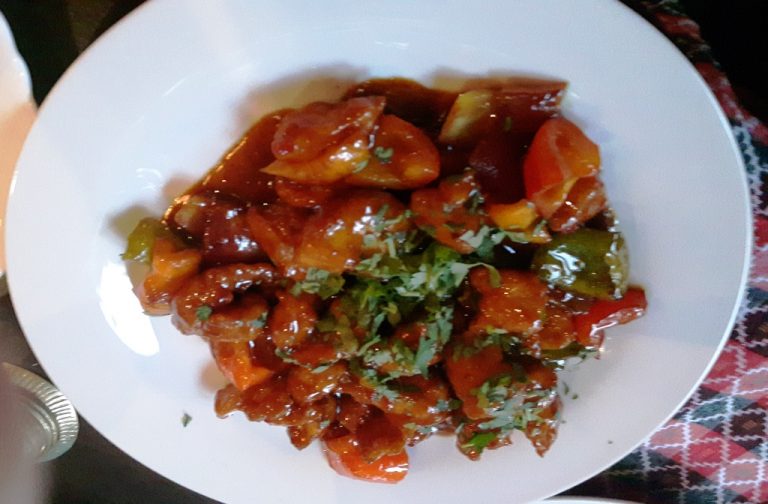
For starters we had Nepalese dumplings, called momo. Usually, they are a side dish in Nepal filled with steamed vegetables or meat and encased in fluor-based dough. For us, a combination of steamed and fried dumplings served with delicious strong and spicy dips was the perfect overture.

The Only Nepalese Restaurant in Norway
Nepalese dumplings, called momo

Momo is also a great opportunity to enhance your children’s palette by getting them to try a taste of the dip. Momo is also something that tastes delicious on its own and rarely gets a refusal from a child.

The Only Nepalese Restaurant in Norway
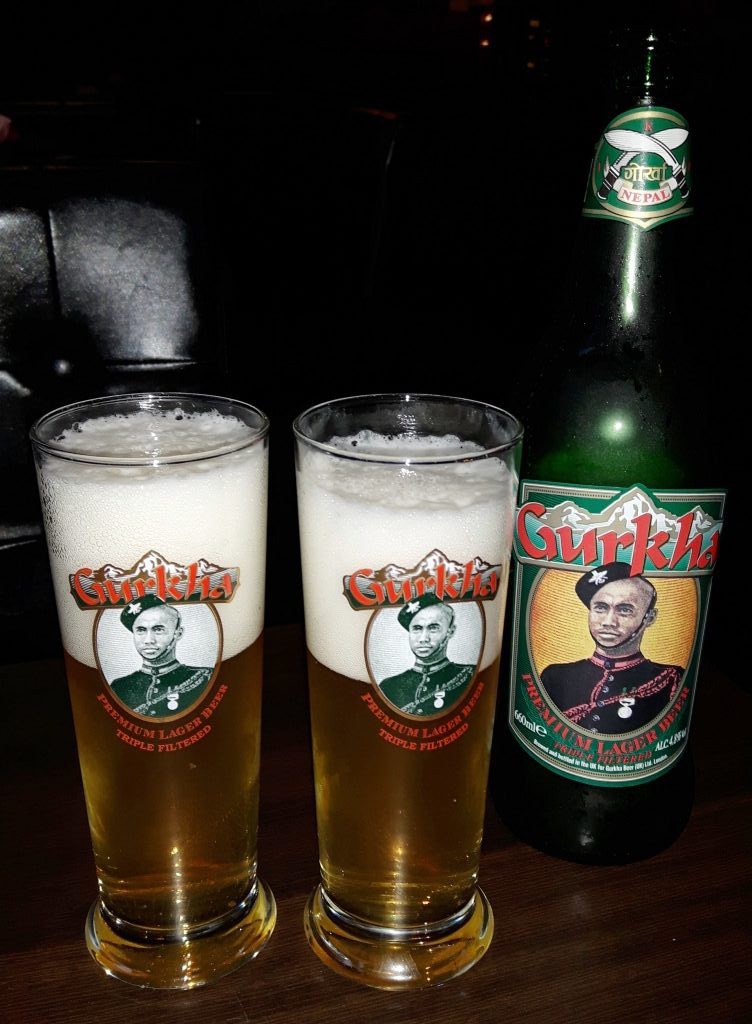
We enjoyed the Gurkha beer, named after the native soldiers recruited for the British army

Related: Sushi in Oslo

The Only Nepalese Restaurant in Norway
We were served popcorn as a waiting dish

Then, we were served popcorn as a waiting dish.

Lamb and chicken
For main dish we had grilled lamb and chicken. Nepal has used lamb as a source of meat throughout their long history due to its flavorful tender taste and texture. This is a dish that takes its time since the lamb is first slow-cooked in the curry with onions before it is removed, grilled, and sealed with a spicy chili mix. It’s then transferred back to the curry and cooked a bit more.

The Only Nepalese Restaurant in Norway
For main dish we had grilled lamb and chicken

The grilled chicken was juicy and superb. The main dish was accompanied with rice.

The Only Nepalese Restaurant in Norway
Rice is the foundation of many a Nepalese meal

“Rice is the foundation of many a Nepalese meal and is normally eaten twice a day in Nepal,” says Sakun. “Meat alone is never enough to fill your stomach, so we use plenty of rice and little extra!” she adds.

Related: Exquisite Indian Dining in Oslo

For dessert we were served Gulabjamun and yoghurt. Delicious!

Like in Scandinavia, people are supposed to eat their plates empty. We must admit, we were being so full that we probably not were considered to be the most-polite guests this evening.

The Only Nepalese Restaurant in Norway
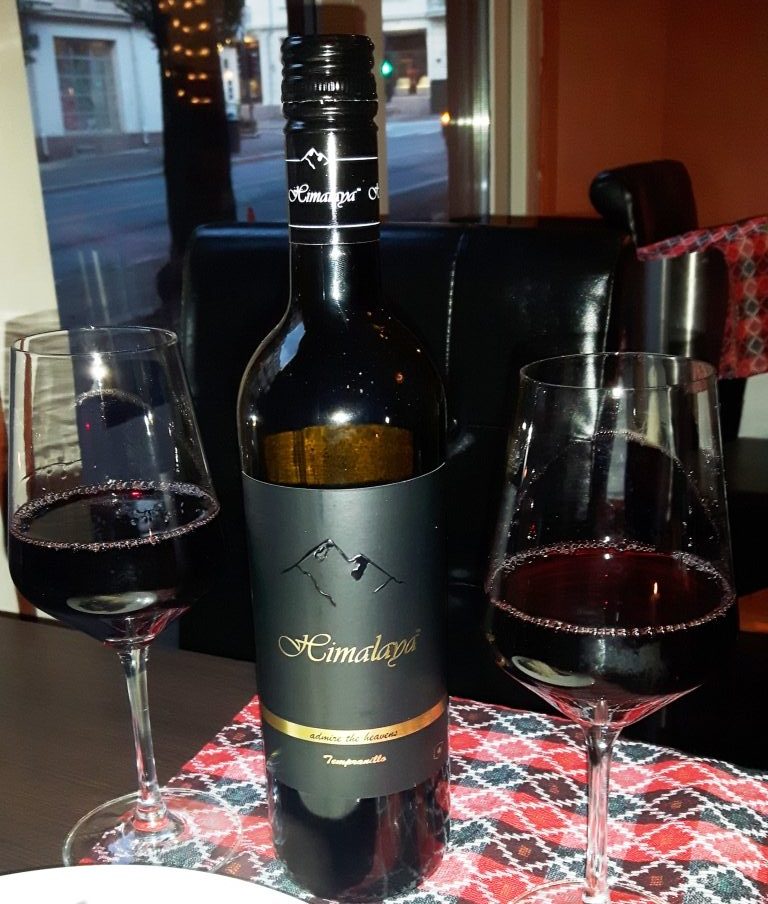
A Spanish red wine, called Himalaya is specially made for the Asian cuisine

Beer and wine
Whether you favor beer or wine with your dishes, you’ll find the right accompaniments at Kathmandu restaurant. For starters, we enjoyed the Gurkha beer, named after the native soldiers recruited for the British army. For the main dish we chose a Spanish red wine, called Himalaya, specially made for the Asian cuisine.

Unique Nepalese cuisine
Kathmandu restaurant in Oslo has brought a new taste to the capital. Its unique Nepalese cuisine will have your taste buds dancing and your appetite wanting more. Enjoy the genuine Nepalese atmosphere, and organize your next meal with your partner or friends. There is also a chambre separee to entertain a party up to twenty persons in the restaurant.

The Only Nepalese Restaurant in Norway, reviewed by Tor Kjolberg

An Empathetic Album from Norwegian Singer/Songwriter

After five years, Norwegian singer/songwriter Ane Brun, is back with a new album interpreting serious issues like the state of uncertainty around the planet. This is an empathetic album from the Norwegian singer/songwriter.  

Ane Brun has been a musician and a respected voice since she debuted in 2003. She has also been a pioneer for many songwriters and vocalists. This autumn she returns with two original albums – released a month apart, After the Great Storm and How Beaty Holds the Hand of Sorrow.

An Empathetic Album from Norwegian Singer/Songwriter
After the Great Storm, cover

Related: The Norwegian Apocalypse Singer/Songwriter

Relocating to Sweden in the early 2000s, her debut album Spending Time with Morgan (2003) was nominated for a Swedish Independent Music Award.  The follow up, A Temporary Dive (2005), went platinum three weeks after its release in Norway and, the same year, she went on to receive the Best Female Artist award at the Norwegian Spellemannprisen (the country’s equivalent to the Grammy’s).

Changing of the Seasons was praised by The New York Times in 2015 as “her best record yet – her most sonically ambitious”.

An Empathetic Album from Norwegian Singer/Songwriter
Ane Brun has been a musician and a respected voice since she debuted in 2003

Related: 7 Years With Norwegian Singer/Songwriter Hanne Kolstø

It turned out that it was her father’s death in 2016 that put an end to Ane Brun’s creative cornucopia. “I could not find the right tools in my toolbox, and I found no solution,” wrote Ane Brun in a press release about this album.

The newly released After the Great Storm is all about the need for empathy and bravery. “I try to encourage and remind anyone who’s in a dark place not to isolate themselves and not disappear into a state of fear – to reach out and show their vulnerability,” she said in an interview with Billboard.

The self-recorded and edited track Trust is a hauntingly gorgeous and cinematic track centered around an atmospheric arrangement of strummed acoustic guitar, shimmering synths and Brun’s gorgeously expressive and plaintive vocals. “It’s a song about letting go of all doubt and just letting yourself fall into the hands of fate, and trust that it’s all going to be alright,” Brun explains in a press note. “It was first written as a romantic song, but as we’re in this state of uncertainty around the planet, I feel it has gained more meaning.”

Related: Passionate Norwegian Singer/Songwriter

An Empathetic Album from Norwegian Singer/Songwriter
The newly released After the Great Storm is all about the need for empathy and bravery

A mournful cello is heard in the background on the serious Heavy Falling Like I Wanna Cry. A disgraced song about humanity’s miserable relationship with nature and how we deal with it. The climate issue is picked up again on the last track, We Need a Mother. In this song, Ane Brun shows no mercy: “I am offended by a lack of human decency,” she sings.

Albeit the album is emotional, many of the songs are also very danceable.

An Empathetic Album from Norwegian Singer/Songwriter, written by Tor Kjolberg

The Historic Harbors on the Danish Island of Funen

While Copenhagen and Aarhus draw visitors to the east and west of Denmark, the island of Funen sits right between, like the country’s green heart. Denmark’s second-largest island is a beautiful place to explore. Experience the historic harbors on the Danish island of Funen.

Nyborg is the first Funen town on the eastern coast, and was first mentioned in 1193 in the history of Denmark. Nyborg Castle, which still exists today, was built to defend the country from the Wends of north Germany and was the meeting place for the monarchy and clergy during the Middle Ages.

The Historic Harbors on the Danish Island of Funen
Nyborg Castle was built to defend the country from the Wends of north Germany and during the Middle Ages. Photo: Wikipedia

The first Constitution of Denmark was written on Nyborg Castle by Eric V in 1282. However, in 1722, much of Nyborg Castle was demolished to provide building materials for Odense Castle. Part of the original ramparts and moat remains, and the castle has a fine interior of great echoing, empty rooms.

Related: The Danish Garden Island

The Historic Harbors on the Danish Island of Funen
Kerteminde shore. Photo: Visit Kerteminde

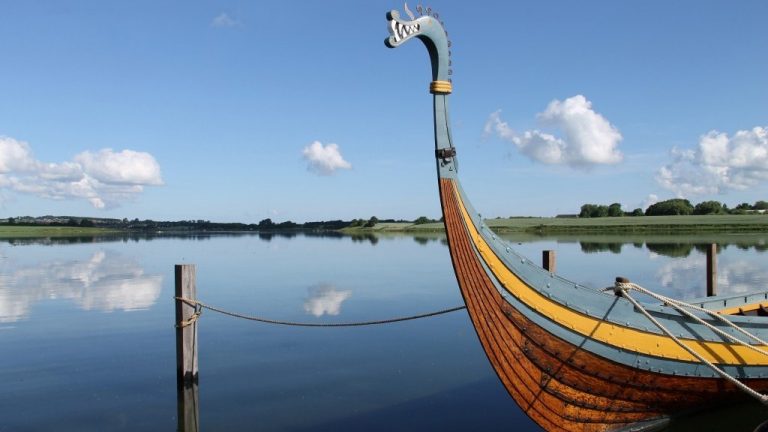
Driving north from Nyborg, you arrive at the small fishing village Kerteminde. The town was first mentioned in writing as a town in 1350, but there has been a settlement there since the Viking Age. In fact, Denmark’s only Viking ship burial, the Ladby Ship, can be found just outside of Kerteminde, where it is also possible to gain an engaging overview of the Viking era in Funen at the Viking Museum at Ladby.

The Historic Harbors on the Danish Island of Funen
From the Viking Museum, Landby. Photo: Visit Kerteminde

Related: Fairytale Castles in Denmark    The Danish Viking Land

Kerteminde is Funen’s foremost fishing village, with old half-timbered houses and a reputation for its stoneware and pottery.

The Historic Harbors on the Danish Island of Funen, written by Tor Kjolberg