Scandinavian Elk

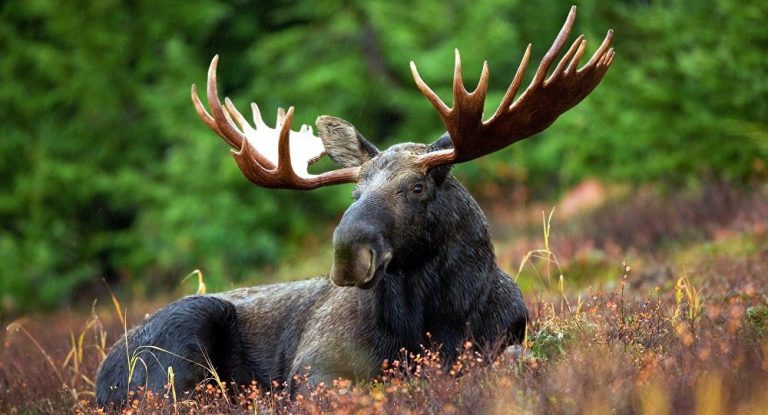
In Sweden, and also in Norway, elk hunting is a passion, as well as an important contribution to both the personal and national economy. The elk had already been hunted to extinction in Denmark in the Stone-Age, though once in a while a young elk desperately looking for a mate swims across the sound between Sweden and Denmark. Read more about the Scandinavian elk.

The elk population is controlled in order to keep the population healthy, and to protect the deciduous woods. Elk hunting in Sweden and Norway is a much-regulated affair, usually taken care of by hunting parties, which then share the meat as dictated by a very strict set of rules.
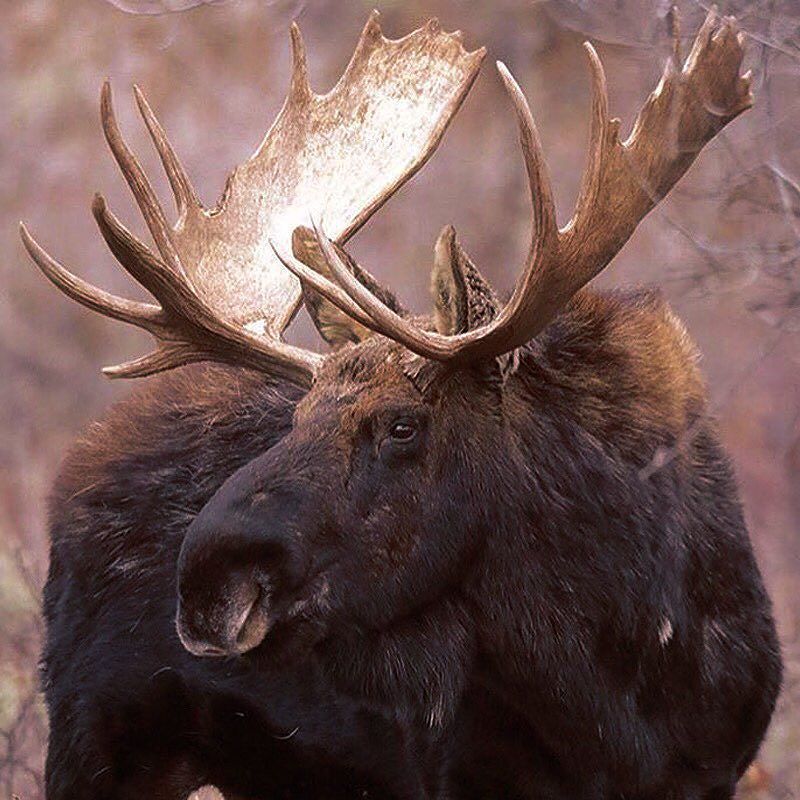
Scandinavian elk
The elk population is controlled in order to keep the population healthy, and to protect the deciduous woods.

Related: Swedish Murder Case With Elk as Prime Suspect

According to official figures, hunters kill about 100,000 elk each year in Sweden. In Norway, 30,636 moose were killed in the 2018/2019 season. Elk meat represents a substantial portion of the meat eaten in Sweden in particular.

Appearance and taste
The elk is a giant deer, about the size of a very large horse, big enough to give you 250kg of meat to eat, and big enough to do serious damage to your car if you collide with one (a relatively common occurrence in Sweden and Norway).

Scandinavian elk
The elk is big enough to do serious damage to your car if you collide with one

Related: Scandinavian Wildlife

The elk is an awkward-looking animal, rather like a wildebeest, which has the appearance of being made up from the spare parts of several animals. The elk’s neck is too short to reach the ground, so it feeds mainly on the young shoots and leaves of deciduous trees. To eat grass, it has to squat down on the ground – a very funny sight, but elks are surprisingly agile swimmers, and they often dive to feed off the vegetation to be found in lakes and streams.

Elk meat is extremely dark and very lean, and tastes like gamy beef. Elk offal is much sought after, the liver being a particular delicacy.

Related: Scandinavian Game

Scandinavian elk
Pan seared elk with rosemary and smashed potatoes

Culinary uses
Elk can be bought in northern Scandinavia from butchers and supermarkets, but it is quite expensive. Also, you will have no way of knowing how old it is, nor usually which cut of meat you’re buying. The safe way to use this meat is in a stew.

Elk meat can be cooked like beef, but take care not to overcook it as it is much leaner than beef. Elk meat takes well to a marinade, and it’s very good in kebabs, patties, hamburgers and whole roasts.

You can read more about elk hunting in Sweden here.

Scandinavian Elk, written by Tor Kjolberg
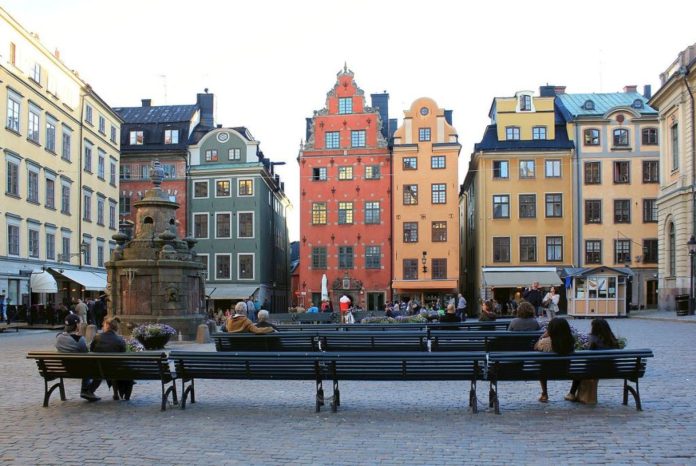
Travelling to and Enthralling Activities in Sweden

Sweden is blessed with thousands of inland lakes and coastal islands, along with glaciated mountains and vast arctic forests. Stockholm, the nation’s capital, which you are most likely to fly into, also has coastal and historic features to enjoy. Read more about travelling to and enthralling activities in Sweden.

You can also take a bridge from Copenhagen to southern Malmö and enjoy incredible architecture like the medieval St. Peter’s Church and have a great time with loved ones. The nation is home to museums, royal palaces and the medieval old town of Gamla Stan. Sweden is also home to the moist powder smokeless tobacco product snus.It’s placed in upper lips for extended periods and all over Sweden you can notice men as well as women enjoying Skruf snus, a tobacco free alternative, which is also important to local culture.

Travelling to and Enthralling Activities in Sweden
Skruf snus, a tobacco free alternative, which is also important to local culture

Its popularity partly comes from the fact that it’s a traditional Swedish product. Snus was originally invented in Sweden in early 18th centrury, and Skruf became a leading brand in the early 2000s

Cultural Heritage
Swedes have a cultural heritage that’s easy for outsiders to enjoy. The culture is frequently seen as being reserved. One way of demonstrating this humility is their affection for snus. In many cultures people smoke large cigarettes or cigars as a status symbol to show off wealth, while snus is better known for its subtly.

Travelling to and Enthralling Activities in Sweden
From Stockholm Cathedral

Celebrations are reserved but are still immensely important and eagerly enjoyed. Due to the high adoption of snus, research shows that Swedes record the lowest level of tobacco-related deaths among largely populated countries. Another reason snus is popular is that it is one of few countries that allows its legal distribution.

Travelling to and Enthralling Activities in Sweden
Model of Vasa stern

Tourist Attractions in Sweden
Being in the nation that invented snus and among people enjoying their Skruf, there are many amazing destinations to visit as a tourist. One example is the Vasa Museum. Vasa is a Swedish warship from the 17th century whose history you can absorb. Another great site is the Kalmar Castle in southern Sweden. Kalmar has been in existence since the early 12th century, making it one of the oldest fortifications in Sweden. Built in 1160, it has been remarkably well preserved. Your tour also wouldn’t be complete if you don’t visit Visby. This is the largest island in Sweden and boasts many examples of medieval architecture.

Read more about the attractions mentioned above here:

Stockholm – The Vasa Capital
Top Ten Places for Stockholm Visitors
The World’s Oldest Preserved Man-of-War

Feature image (on top): Stockholm’s Gamla Stan (Photo Wikipedia)

Travelling to and Enthralling Activities in Sweden, is an article specifically written for Daily Scandinavian.

Hot Pink Turquoise in Copenhagen

0

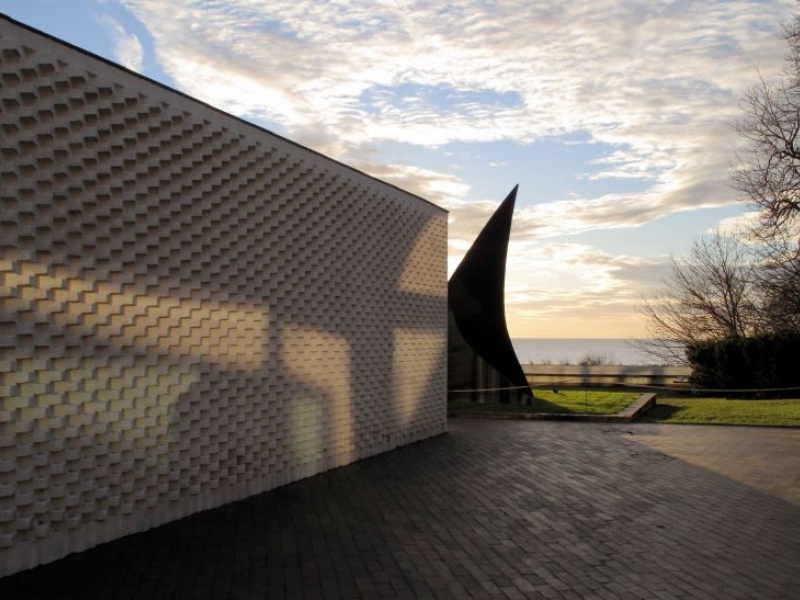
Each year, the Danish Museum Louisiana outside Copenhagen incorporates new works of art into its collection with the help of funds and private donors. In the spring exhibition “Hot Pink Turquoise”, the museum is now exhibiting works by Belgian artist Ann Veronica Janssens for the first time.

The exhibition introduces the work of Belgian artist Ann Veronica Janssens (b. 1956). Her artistic technique could be defined as an exploration of the sensory experience of reality. Through various media (installations, projections, immersive environments, urban interventions, sculptures), Ann Veronica Janssens invites the viewer to cross into a new sensory space on the borderline of dizziness and dazzlement.

Hot Pink Turquoise in Copenhagen
Janssens’ work at Louisiana Museum of Modern Art

Related: Why is there a Louisiana Museum in Denmark?

Minimalistic but unmistakable
Her works tend towards minimalism, emphasizing the fleeting, ephemeral and fragile nature of the environments she invites us to enter. Janssens’ art eludes categorization, but its effect on the viewer is unmistakable.

The organization of space and the diffusion of light, radiant color, stroboscopic impulses, artificial mists and reflective or translucent surfaces all serve to reveal the instability of our perception of time and space.


Hot Pink Turquoise in Copenhagen
While the artist openly acknowledges her inspiration from the Californian Light and Space artists of the 1960s, for her it has always been about conveying an experience of art by simultaneously stimulating the eyes, body and consciousness, and not about observing art from a distance.

Related: Louisiana Museum of Modern Art

Properties of materials (gloss, lightness, transparency, fluidity) and physical phenomena (reflection, refraction, perspective, balance, waves) are rigorously examined here for their ability to destabilize the very concept of materiality.

Hot Pink Turquoise in Copenhagen
Janssens’ works can demand our participation while enveloping us completely in alienation.

She works like a scientist
“Engaged gestures and the loss of control that are fully assumed and proposed as an active experience: my way of proceeding consists of such loss of control, the absence of overbearing materiality, the attempt to escape from the tyranny of objects,” said Ann Veronica Janssens in an interview in 2004.

Related: Louisiana Museum of Modern Art

Hot Pink Turquoise in Copenhagen
Ann Veronica Janssens

Janssens’ work ranges widely, with no intention of confirming what we already know. In fact, it aims to locate us precisely at the spot where we open ourselves up again. Like a scientist, she pursues and pushes the boundaries of the known – in light effects, mists, color trails, reflective optical illusions – as a ground for engendering thoughts and feelings in the viewer. Very simple at times, her works can demand our participation while enveloping us completely in alienation.

The exhibition at Louisiana Museum of Modern Art runs from 23 January through 17 May.

Hot Pink Turquoise in Copenhagen, compiled by Tor Kjolberg

Sculpture Park With a Twist in Norway

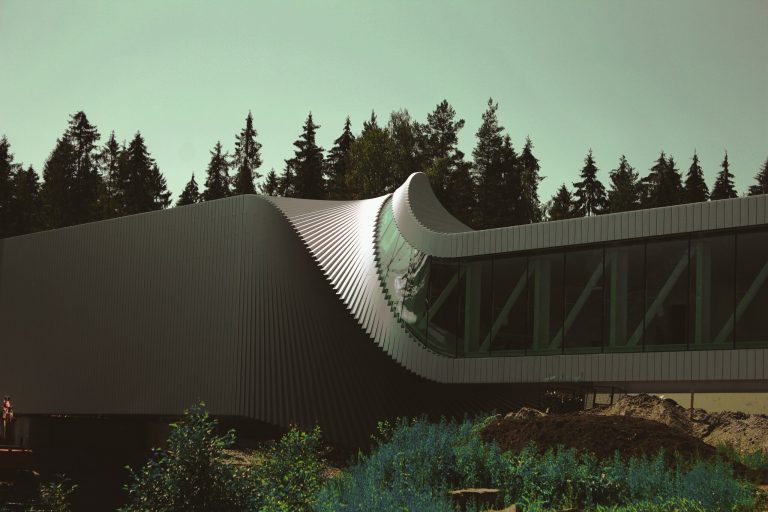
A municipality with only 5,000 inhabitants in Norway is on the New York Times’ list of 52 recommended attractions in the world. The Kistefos Museum, just a stone’s throw away from Oslo, capital of Norway,  build on a long industrial history and started with an old wood pulp mill. When the Danish architectural firm BIG designed the bridge-shaped museum building which opened last year, it immediately became a popular sculpture park with a “twist”.

The Twist bridge museum at Kistefos art park opened on September, 2019 and visitors were instantly charmed by the contemporary and refurbished industrial art at the Kistefos Sculpture Park. Danish designers BIG (Bjarke Ingles Group) have added a little twist to the park, that doubles up a functional infrastructure and visual feast for the aesthetic eye.

Sculpture Park With a Twist in Norway
The Twist bridge museum at Kistefos art park opened on September, 2019 and visitors were instantly charmed by the contemporary and refurbished industrial art at the Kistefos Sculpture Park

Related: Artistic Architecture in Norway and Newfoundland

131 years of industrial history
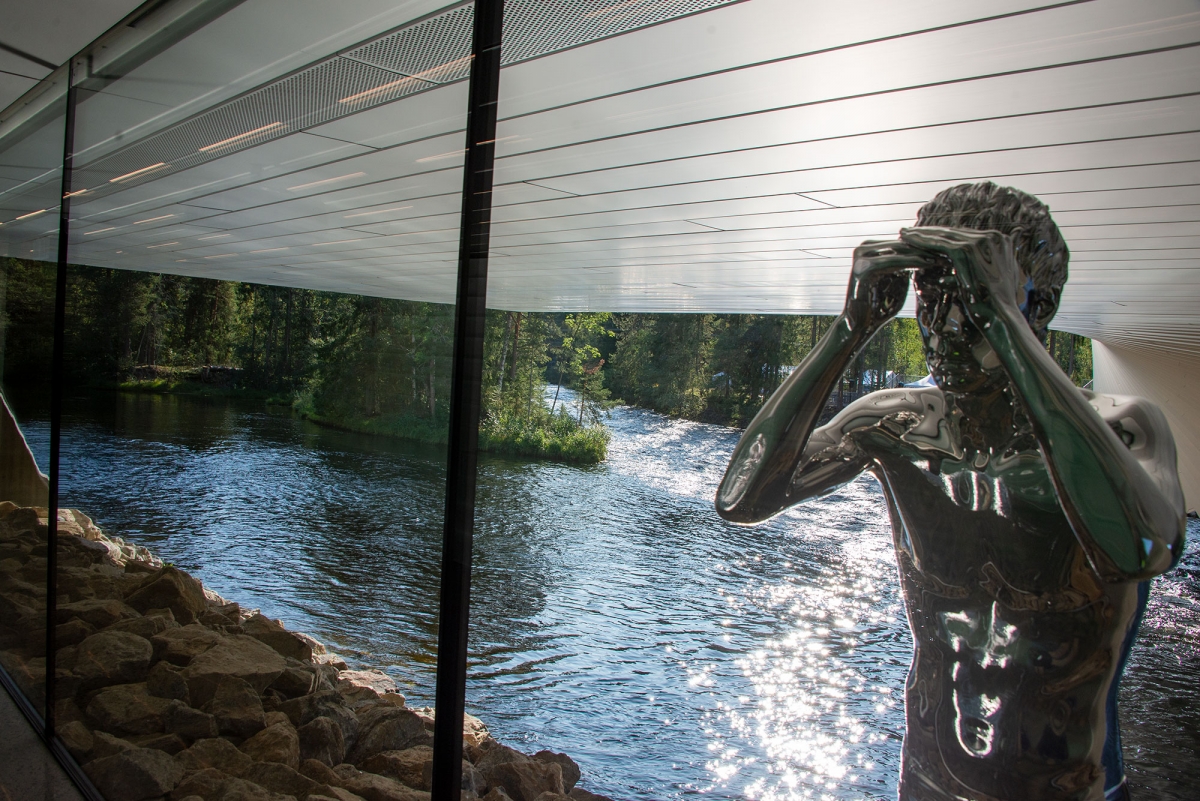
The grandfather of the present owner, Christen Sveaas, bought the factory 131 years ago, and today the building adds an impressive new venue to this industry and contemporary art museum located in Jevnaker, a municipality about 80 kilometers north of Oslo. The gallery peeks out from a forest of tall spruce, pine, and birch and the structure takes the form of an inhabitable bridge spanning a winding river. It is appropriately dubbed The Twist.

The iconic twist design actually controls the river banks, that had varied heights. Besides that, the bridge was added to form an access point across the river, so visitors are able to enjoy the park, that was built over an old wood mill. It also turns a visit to the sculpture park into a processional journey making it possible to tour it in one go by way of the connective gallery.

Related: The Coolest Library in the World for Kids – in Norway

Sculpture Park With a Twist in Norway
The Twist was on New York Times list of 52 recommended attractions in the world

Sculpture Park With a Twist in Norway
“After many years of planning and development, we’re delighted to be opening this beautiful new space ‘The Twist’ at Kistefos, which will allow us to expand our work with leading contemporary artists and welcome more visitors than ever before. Our ambition is to make Kistefos a must-see cultural destination with a world-class temporary exhibition and sculpture park program to complement the rich industrial heritage of the site,” said Christen Sveaas, founder of the Kistefos Museum.

Sculpture Park With a Twist in Norway
E. A. Hodgkin and Creed at Kistefos

Related: New Fine Art Gallery Brings a Subtle “Northern Light” to Oslo

International attraction
The Twist was on New York Times list of 52 recommended attractions in the world. The nearly 10,800-square-foot gallery transforms a container for art into a piece of sculpture in its own right. So far, the Kistefos site is open to the public only in Summer (2020: 24 May – 11 Oct), due to the cold Norwegian climate.

Sculpture Park With a Twist in Norway
Kistefos is a must-see cultural destination with a world-class temporary exhibition and sculpture park

Read more about the impressive art collection at Kistefos here.

Sculpture Park With a Twist in Norway, written by Tor Kjolberg

Denmark’s Sunshine Island

Denmark’s Sunshine island of Bornholm is a haven for both artists and holidaymakers, attracted by its climate, peaceful lifestyle and natural beauty.

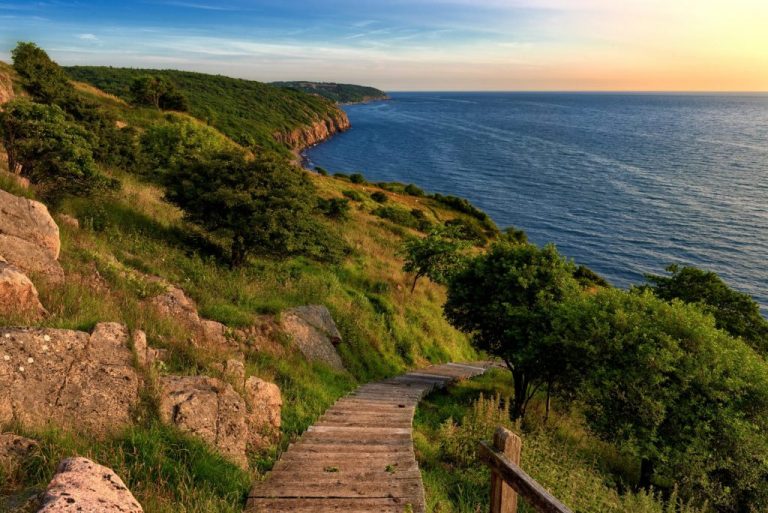
Bornholm, occupying an area of 588.36 square kilometers (227.17 sq mi) is a “Scandinavia in a nutshell: Sitting in the middle of the Baltic Sea between Sweden and Poland, this enchanting island features a variety of landscapes typical for different areas of Scandinavia.

Related: Happy Easter in Bornholm

Denmark’s Sunshine Island
Bornholm is sitting in the middle of the Baltic Sea between Sweden and Poland

History
Bornholm has been fought over for centuries. Usually it had been ruled by Denmark, but also by Sweden and Lübeck, Germany. The ruin of Hammershus, at the northwestern tip of the island, is the largest medieval fortress in northern Europe, testament to the importance of its location. This island and Ertholmene is what remains in Denmark of Skåneland east of Øresund, having been surrendered to Sweden in 1658 but with Bornholm after a local revolt later regained in 1660.

Related: Sun Over Danish Gudhjem


Denmark’s Sunshine Island

It is a peaceful place, home to about 40,000 Bornholmers, with no large towns and almost no industry. The chief industrial activities are dairy farming and arts and crafts industries such as glass production and pottery using locally worked clay.

The island is known as Solskinsøen (Sunshine Island) because of its weather and Klippeøen (Rock Island) because of its geology, which consists of granite.

Denmark’s Sunshine Island
Bornholm has no large towns and almost no industry

Related: The Eleven Prettiest Towns in Denmark

Holidaymakers favorite
Visitors have a perfect opportunity to relax, although from early July until the end of August the population swells fourfold with holidaymakers.

It is three hours from Copenhagen by train/ferry, and 30 minutes by plane.

Denmark’s Sunshine Island, compiled by Tor Kjolberg

Sharp Competition From Norwegian Viking Descendants

Two unemployed brothers in Sunnfjord, Norway started to make sheath knives and tools in their father’s foundry in 1932. Later they expanded the production to include industrial knives, sports knives, Sunnfjord cutlery as well as parts for the silversmith industry. Through the years, other knife producers has met sharp competition from the Norwegian Viking descendants.

The two skilled toolmakers, blacksmiths and metallurgists Steinar and Sigmund Helle started making their sheath knifes inspired by the mountains, fjords and open seas of Norway in 1932. Since then, the tradition of handcrafting Scandinavian knives made of natural materials has remained the same even if the types of knives have changed a bit.

Sharp Competition From Norwegian Viking Descendants
Helle Mandra by Les Stroud Survivorman

Related: The Ultimate Swedish All-Around Knife

Beautiful functional knives
Back then, the knives needed to be functional for use in the harsh Nordic conditions but also needed to look good. Therefore, the handles are the soul of a Helle knife. They are made from natural materials you might find on a farm; wood, leather and antler shed. They are made by skilled hands outside the factory since no machine or automated processes can replace skilled craftsmanship.

Since 1977 Helle of Norway has sold more than one million units of their knife Nyking. It was designed by the native Tor Indergaard and received an award for classical design from the Norwegian Design Council in 2000. Last year, the company launched their smallest knife ever made, the Kletten.

Related: The Story of Norwegian Rosemaling

Sharp Competition From Norwegian Viking Descendants
New knives are launched regularly at outdoor trade fairs in the United States

The Viking knife
Did you know that the Vikings had a law that every man was required to own a weapon and to carry it with them at all times? The wealthiest carried a sword, an axe and helmet while the average farmer brought with him a large knife. The Norwegians hung onto this custom for several years to come, and the sheath was an important part of the tool since it secures and protects the knife it holds.

The sheath gives the Helle knife its character since each is matched to suit the knife. The exception is of course the new folding knife from Helle, the smallest folding knife to date, weighting less than 3 ounces and measuring only 3.1 inches long folded without compromising on capability.

There are other folding knives you might want to consider here.

Related: Let it Rain – Norwegian Rain

Sharp Competition From Norwegian Viking Descendants
In the 1970s, there were 140 workers at Helle. Today, they are hardly a tenth.

Sharp Competition From Norwegian Viking Descendants
In the 1970s, there were 140 workers at Helle. Today, they are hardly a tenth but the idea of making functional knives that’s also a showpiece is still the guiding principle. The company has become an icon in Norway and known around the world for its traditional take on knife craftsmanship.

Helle has developed its own triple-laminated steel that sandwiches a sharp but brittle layer between two softer, more pliable layers of steel and the Helle knives have stood the test of time. The hairloom quality gentleman’s knife, the Kletten for instance, has taken its name from a small but rugged hill near the Helle factory where locals go to enjoy nature.

A Canadian outdoorsman’s best knife ever
New knives are launched regularly at outdoor trade fairs in the United States. Rumors say that the Canadian musician, filmmaker and extreme outdoorsman Les Stroud as a teenager found a knife that over the years turned out to be the best he had ever had. By coincidence Helle came in contact with the famous TV star, and it turned out that it was a Helle knife Stroud had found. Not surprisingly, Lee Stroud was asked to design a knife for Helle.

Working with Les Stroud on design ideas the company has incorporated a few new models, but never abandons the traditional Nordic knife and its focus on handcrafted blades. It is the connection between the maker and the tool that distiguishes a Helle knife from the rest.

Sharp Competition From Norwegian Viking Descendants, written by Tor Kjolberg

Feature image (on top): The Kletten knife. All images, copyright Helle Norway.

Will Norway Have a Visit From President Trump?

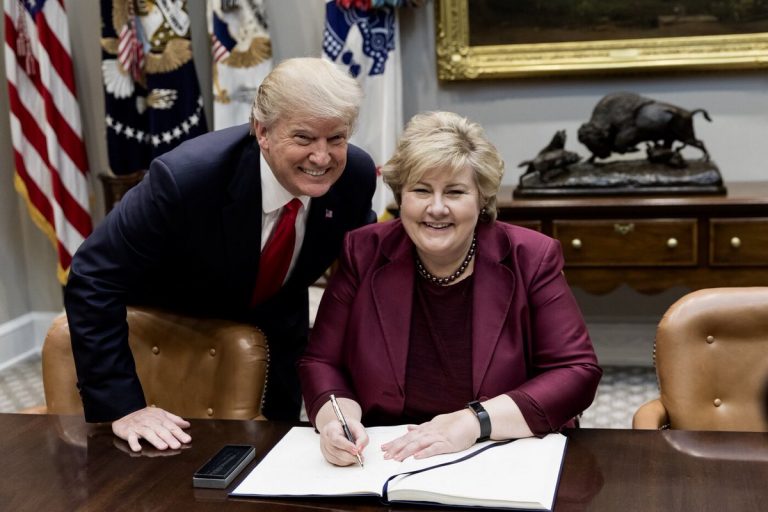
Snowhotel in Kirkenes, Northern Norway, welcomes many guests to its famous igloo hotel and some are more famous than others. Last fall the Prime Minister’s Office in Norway called and asked if Prime Minister Erna Solberg could get a husky wagon ride since she had a few hours off before her plane went (she doesn`t have an Airforce One).

The agreement was that she was going on the ride like other guests without stress! The deal was done and she would pay like a regular customer.

Will Norway Have a Visit From President Trump?
Snowhotel, the famous igloo hotel in Kirkenes. Photo: Snowhotel

Related: Alta, Norway – Town of the Northern Light

Prime Minister of Norway arrives at Snowhotel
“She came and we had some pleasant hours around the fire”, says Kåre Tannvik who founded Snowhotel Kirkenes in 2005.  “What we talked about was the same as with other visitors: how we live up here with an active cabin life with sauna and chill-out. She enjoyed our homemade reindeer hot dogs and we believe she had a good time.”

Politics as usual
But then suddenly the conversation turned into grand politics. The Prime Minister had recently attended a conference in Svolvær in Lofoten, and on-stage some children asked her: “Where would you take president Trump for a weekend at a cabin?”

Related: A Love Letter to Norway’s Winter Wonderland

Having visited the Snowhotel in Kirkenes recently, the Prime Minister answered instantly, “I’d invite him on a cabin weekend in Kirkenes!”

So now Kåre Tannvik and the Snowhotel in Kirkenes are waiting for Airforce One!

Will Norway have a visit from President Trump?
“Our slogan is ‘WE CHANGE YOU’, so welcome dear Mr Trump, never too late! (Erna, free stay for you is on us, if he comes!)” says Tannvik.

Related: Seasons, Weather and Climate in Northern Norway

* * * *

Catching a taxi at most airports is time consuming and no fun at all. So, Snowhotel Kirkenes is offering a nostalgic effort to attract tourists. Those brave enough to endure the cold weather are now able to go for a dog sled ride.

Will Norway have a visit from President Trump? Compiled from Sowhotel Kirkenes blog. We thank founder Kåre Tannvik for his kind permission to reprint the story.

Feature image (on top): President Donald Trump and Norway’s Prime Minister Erna Solberg, January 2018.

Heavy Metal Promotes Peace at the Nobel Peace Center in Oslo

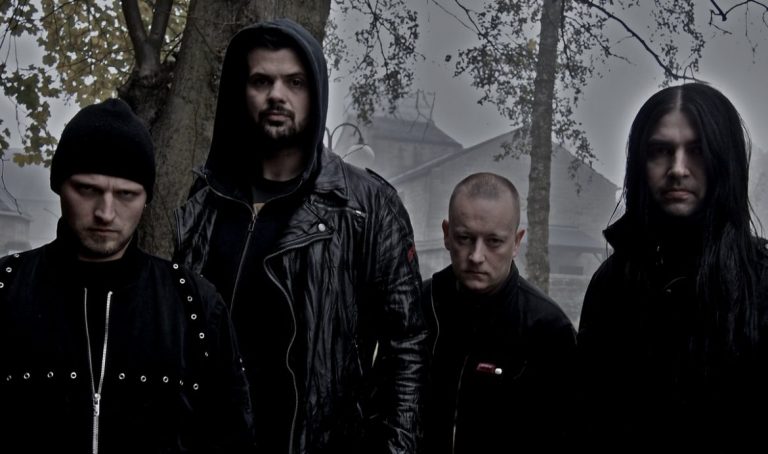
In April 2020, the Norwegian heavy metal band Vreid will be playing at the Nobel Peace Center in Oslo. The concert is a cooperation between the Nobel Peace Center in Oslo and the Metal Festival Inferno. Music can change the world, and in its own way the heavy metal band promotes peace at the Nobel Peace Center in Oslo-

In the event series «Songs that changed the world”, the Nobel Peace Center presents songs that have meant something special during history. Artists like Honningbarna, MYRA, Amanda Delara and Bendik have contributed with their interpretation of important “songs that changed the world”. In April, Vreid will play their chosen song at the Nobel Peace Center, as part of a collaboration with the Metal Festival Inferno.

Heavy Metal Promotes Peace at the Nobel Peace Center in Oslo
The concert is a part of a collaboration with the Metal Festival Inferno.

Related: Black Metal Meets Edvard Munch in Oslo

Songs that changed the world
“The Nobel Peace Center wants to make it possible for visitors to Oslo’s cultural scene to experience other aspects of what the city has to offer. Through the cooperation with Inferno Metal Festival we offer a new arena for this kind of music – and at the same time we express that music can be more than just entertainment – music can change the world”, said Toril Rokseth, program director at the Nobel Peace Center.

The theme for this edition of «Songs that changed the world” will be freedom of expression. Vreid will interpret a song of their own choice under this theme, and take part in a talk with Rokseth and journalist Asbjørn Slettemark.

Heavy Metal Promotes Peace at the Nobel Peace Center in Oslo
The theme for this edition of «Songs that changed the world” will be freedom of expression

Related: Norwegian Black Metal Music Inspired by Edvard Munch

Heavy Metal Promotes Peace at the Nobel Peace Center in Oslo
“Since the very beginning of “Songs That Changed the World”, the project has offered surprises, fun, new knowledge and some amazing, strong and catchy cover songs. To do this together with Inferno Metal Festival, a festival I have been thrilled about for many years, feels just right. That it will also include Vreid, a band I have been following as a fan and a journalist through the last 15 years, makes it especially fun and interesting. I am very excited for the song they will choose, perform and talk about”, said Slettemark.

The gig will also include several of Vreid’s own material.

Heavy Metal Promotes Peace at the Nobel Peace Center in Oslo
Vreid will interpret a song of their own choice under the theme “Songs That Cahnged the World

Related: The 2019 Nobel Peace Prize Exhibition in Oslo

Metal band with its own interpretation of a song that changed the world
“In Vreid we have always been up for new challenges. It was therefore with huge excitement we took on this task when Inferno Metal Festival and Nobel Peace Center challenged us to do our interpretation of a song that changed the world. Freedom of speech has been relevant since the very beginning of rock and is just as relevant and important today. Vreid looks forward to digging deep into the rock history, and will be ready to perform our song at the Nobel Peace Center in April”, said Jarle Hvall Kvåle from Vreid.

Heavy Metal Promotes Peace at the Nobel Peace Center in Oslo
Ingvill Bryn Rambøl

Heavy Metal Promotes Peace at the Nobel Peace Center in Oslo, written by Ingvill Bryn Rambøl, Nobel Peace Center, Oslo

Talented Swedish Singer/Songwriter Releases New Pop Single

0

Today, the talented Swedish singer/songwriter Yajna has released an astonishing new pop single titled “Rising Phoenix”. The song is the last part of the Rising Phoenix Trilogy that previously included “You Are Beautiful” and “Femenomenal”, both released a few months back.

This time, Yajna has gone all in with her best cards, offering a dazzling performance in which she blends pop with beautifully constructed harmonies, without forgetting to mention her incredible voice that instantly gives chills down the spine.

Talented Swedish Singer/Songwriter Releases New Pop Single
On her new release, Yajna has gone all in with her best cards

Related: Scandinavian Pop Music To Enjoy

Hypnotic vocal
Pairing inspirational lyrics with her signature hypnotic vocals, Yajna is always on the move creating, polishing, and editing her works, proving the hype around each of her releases last year, while we cannot but anticipate an incredibly successful start of the decade for the talented Swedish singer-songwriter.

Yajna is in fact the singer’s real name, an Indian word which in Hinduism means worship, devotion and sacrifice. Yajna tells that her parents were hippies and named her Yajna after they had discovered the name somehow somewhere.

Related: Scandinavian Sound of Success

Talented Swedish Singer/Songwriter Releases New Pop Single
Yajna is always on the move creating, polishing, and editing her works

Talented Swedish Singer/Songwriter Releases New Pop Single
Yajna finds her name unique and a very good fit for what she is doing. Yajna grew up in a family of musicians; her mother is a composer and organ player and her dad a guitarist. Yajna performed for the first time in her mother’s church at the age of 7 and wrote her first song when she was 10.

Related: The Sophisticated Swedes

Listen to her just released “Rising Phoenix” here.

Talented Swedish Singer/Songwriter Releases New Pop Single, based on a press release from the publisher

Denmark – The World’s Leading Wind Power Nation

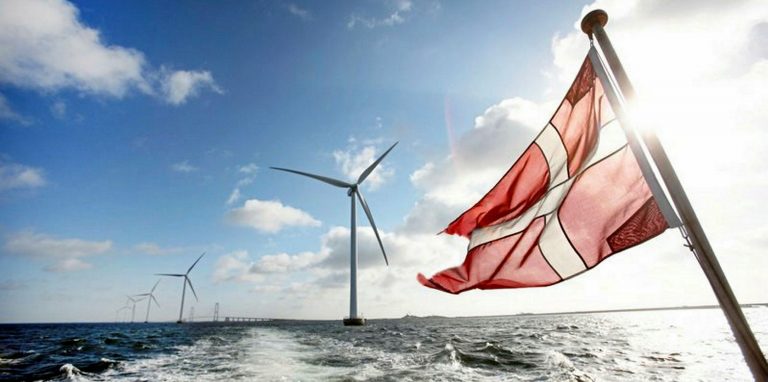
Last year, Denmark sourced 47 percent of its energy consumption from wind, up from 41 percent in 2018, according to state-run energy operator Energinet. This is a renewable energy milestone and also one of the most widespread kinds of renewable energy in the country. So, Denmark is the world’s leading wind power nation.

In EU, wind power made up 14 percent of energy consumption in 2019, compared to Denmark’s 47 percent. Wind power is the kind of renewable energy that has come furthest in terms of being competitive with other energy technologies.

Denmark – The World’s Leading Wind Power Nation
By 2030, Denmark aims to reduce greenhouse gas emissions by 70 percent with a new climate law passed late last year.

Related: 2017 – New Wind Energy Record in Denmark

70 percent reduction by 2030
By 2030, Denmark aims to reduce greenhouse gas emissions by 70 percent with a new climate law passed late last year. Today, more than a third of the Danish electricity production derives from wind turbines. Furthermore, onshore wind turbines are one of the cheapest ways to expand power production.

Related: New Test Center for Global Wind Industry in Sweden

Denmark – The World’s Leading Wind Power Nation
Denmark has due to its location on the gusty North Sea favorable wind conditions and understood as early as in the 1970s that wind power would play an important role in the transformation of the energy system. Denmark aims to no longer be dependent on fossil fuels in 2050. Denmark was the first country in the world to install an offshore wind farm, which was the wind farm Vindeby close to Lolland.

Denmark – The World’s Leading Wind Power Nation
Today, more than a third of the Danish electricity production derives from wind turbines

The world’s largest offshore wind farm
The world’s largest offshore wind farm Horns Rev 3, inaugurated in August last year, generates power enough for about 425,000 Danish homes. Denmark and Danish companies rank among the best when it comes to development, production and installation of wind turbines. Today, export of wind turbines and technology for wind energy is an essential contribution to the Danish economy.

Related: Norway’s Top Oil Company Will Provide New York with Renewable Energy

According to the Danish Energy Agency coal, oil and gas still play a major role in meeting the country’s energy consumption, but a wind energy revolution is evidently on its way.

Denmark – The World’s Leading Wind Power Nation, written by Tor Kjolberg