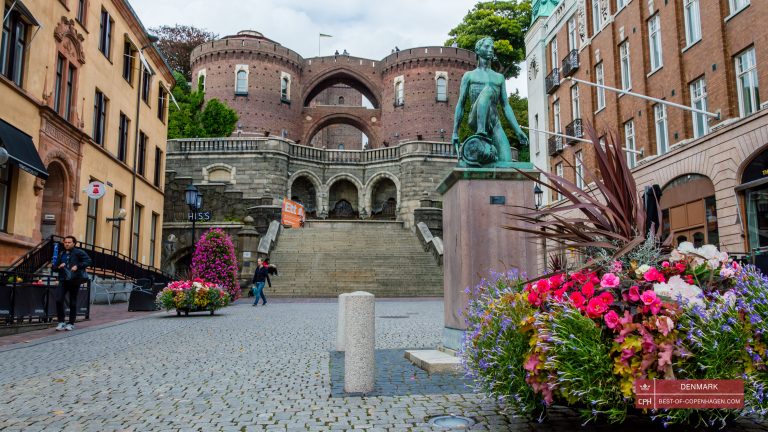
Enthusiast Gjøril Songvoll, founder of the organization “Opera To The People” has always had one goal: to get as many people as possible to like opera. She has done so in many ways, and one of them is through the popular Opera Pub Nights which has emerged at various water holes in the Norwegian capital. The Opera Pub has now resurrected at the newly established Røverstaden in downtown Oslo.
Gjøril Songvoll, Opera to the People founder
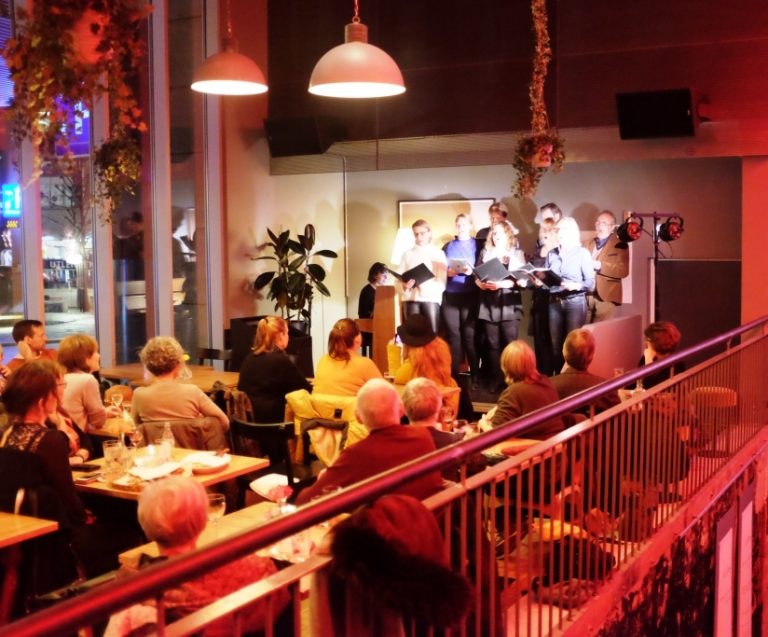
“A four-hour opera can seem daunting to many,” says Songvoll. “While opera excerpts in relaxing and familiar surroundings often is a liberating experience.” The Opera Pub has been a home for opera singers one day a week where new talents have joined forces with experienced opera stars performing beautiful opera arias.
According to Statistics Norway only 10% of the population like opera. “That’s nonsense,” says Songvoll. «Sold-out performances at the Opera in Oslo and other stages around the country and full rooms at the Opera Pub evenings and Lørdagsopera (Saturday Opera) indicate something completely different.”
The Opera Pub, every Wednesday at Røverstaden, downtown Oslo. Photo: Tor Kjolberg
Oslo Opera Pub On The Move
“In the Opera Pub, the audience comes close to the singers and skepticism is turned into enthusiasm,” says Songvoll, who organized the first Opera pub at Dockside 18 years ago! Opera Pub has since spread euphonic pleasures at a cloed-down pub in Oslo Central Station, Cafe Amsterdam, cocktail bar Pigalle, and now in Røverstaden, which many inhabitants in Oslo remember as Club 7.
Opera Pub in Oslo is now a collaboration between Røverstaden’s Torstein Løvlid and “Opera til folket” (Opera to the People).
An evening with star performers
Every Wednesday is Opera Pub at Røverstaden. At our visit recently, two singers were soprano Randi Røssaak, who is educated from Guildhall School of Music and Drama, London, Norwegian Academy of Music in Oslo and achieved her Master in Opera from University College of Operahögskolan in Stockholm in 2012 and mezzo soprano Gro Bente Kjellevold, who is educated from Barratt Dues music Institute and the Opera Academy in Oslo.
Soprano Randi Røssaak
Pianist of the evening was Dorina Komani, who has won numerous international awards in piano competitions. She has studied at the Norwegian Academy of Music in Oslo with world names such as Leif Ove Andsnes and Håvard Gimse.
Pianist Dorina Komani
The opera pub concept
The Opera Pub concept is not only singing to people with special interest, but also attracting new people into the world of opera. “Even great singers agree to be paid low fees because they believe in what we are doing,” concludes Gjøril Songvoll.
Opera Pub in Oslo is now a collaboration between Røverstaden’s Torstein Løvlid and “Opera til folket” (Opera to the People). Photo: Tor Kjolberg
That’s the reason why no entrance fees are required.
Oslo Opera Pub On The Move, written by Tor Kjolberg
A jury consisting of one Olympic medal winner, an Alpine World Champion, an editor, a photo journalist, an avalanche expert and a retired cross-country enthusiast voted recently Hemsedal the most complete ski destination in Norway.
Hemsedal is one of the largest ski resorts in Norway and also the place for ski touring adventures. Situated halfway between Oslo and Bergen, Hemsedal is a place with alpine mountains and long ski traditions. The village center lies 650 meters above sea level, while the surrounding summits rise up to 1750 meters. Mass tourism is perhaps what springs to mind when Hemsedal is mentioned. On weekdays, however, ski touring in this area can be a serene experience.
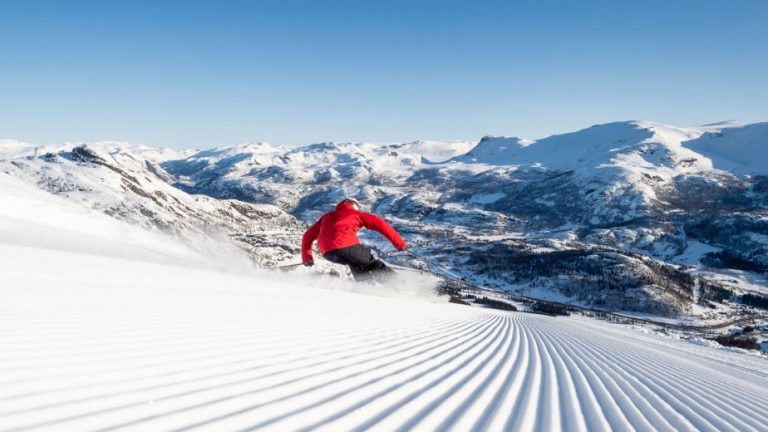
Hemsedal is one of the largest ski resorts in Norway
Transportation A number of express buses stop by Hemsedal on their way between the eastern and western parts of Southern Norway. There are several daily buses to the village of Gol, from where you can catch the trams on the Bergen line. To get to the ski lifts from overnight accommodations in Hemsedal, there are three buses. Apart from the trip to Kyrkjebønosi, the mountains here are easiest to reach by car.
Snow, season and weather conditions Hemsedal lies east of the water divide and has a dry inland climate. Therefore, this area doesn’t get as much snow as the mountain regions further west. In winter, temperatures in the twenties below zero are not uncommon. Snowy weather usually comes from the east/south-east. If a snowfall is followed by strong winds and mild weather from the west, avalanches become a risk on the steepest slopes. Ski touring in this area is usually best from February until mid-May.
Hemsedal piste map
Avalanche forecast The regional avalanche forecast for the area Hallingdal will give useful information about the conditions in Hemsedal. The forecast is published here.
Accomodation and shopping Hemsedal offers the full range of overnight accommodation. Contact the tourist information office for an overview. If you want to lodge in an authentic local atmosphere, Harahorn and Fauske Skysstasjon are two good alternatives. In Hemsedal you can find shops and gas stations. There is a store at Ulsåk close to the starting point for the tour in Skogshorn and Nibbi. Skandinavisk Høyfjellsutstyr is a ski touring specialist store.
If you want to lodge in an authentic local atmosphere, Harahorn is a good alternatives
Ski areas Hemsedal Skisenter is one of the best ski resorts in Norway. It includes 21 lifts and has a vertical drop of more than 800 meters. You can enjoy good off-piste and use the lifts as a springboard for short ski touring trips. In Grøndalen, a few kilometers north of Hemsedal, you find the ski area named Solheisen (the Sun Lift). It includes three lifts and has a vertical drop of 300 meters.
Other summits There are a number of Summits along the road over Hemsedalsfjellet (Road 52). Høgtoft (1920 m), the highest mountain in Hemsedal, is a long and nice day trip. Set out from the north-west end of the lake named Eldrevann. Storebottskar (1719 m) is a snow-reliable summit with a relatively easy descent. Park the car on the left side of the road just after Støytestølen (in the right curve before the long tangent section towards Bjøberg). Bjøbergnuten (1515 m) offers several steep descents. Harahorn (1581 m) lies in Grøndalen, right across Hotel Grøndalen. Storehorn (1482 m) is a nice trip in spring. Start from the Thorseterstølene by Ulsok.
Hemsedal is the place for ski touring adventures. Phito: Novasol
Other activities Hemsedal offers a wide range of activities all year round. Ice climbing and alpine winter climbing are good options in Hemsedal and Gol. Cross-country ski tracks are abundant in this area. At the tourist information office, you can book trips with dog-sled.
Book published by Fri Flyt
Further information IFMGA guide Jørgen Aamot offers guided tours through the company Fjellsentralen. Hemsedal Fjellsport offers different kind of activities.
Roughly 55% of the growth in the luxury and beauty industry is attributed to independent or indie brands, according to The NPD Group. A large part of that growth is thanks to the stirring interest in indie jewelry brands. When it comes to indie jewelry offerings, Scandinavia does not lag behind. Today, we take a look at Copenhagen’s indie jewelry: Ethical, sustainable, and proud.
In fact, Copenhagen is the home of a brand that is paving the way for an ethical and sustainable approach to luxury goods.
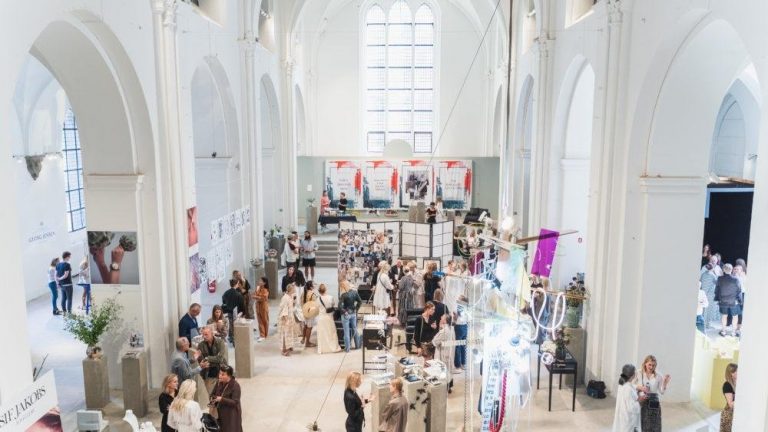
Jewelry exhibits at The Jewelry Room help to provide a signal boost for indie Scandinavian brands like Hasla
Copenhagen Indie Jewelry Brands Copenhagen is the home of some established and up-and-coming indie jewelry brands. One of the well-known indie brands is called RAW Copenhagen. They pride themselves on their gemstones which are all ethically sourced and they regularly partner up with charities to give back to the community.
Maria Black is an eponymous brand that offers budget-friendly and sustainable jewelry. All Blues is another brand that is slowly tipping toward mainstream but is proud of its indie roots. Ultimately, what all these brands have in common is that they are passionate about providing ethical and sustainable jewels for consumers.
Bracelet from RAW
Ethics and Sustainability Around 80% of consumers care strongly about a brand’s ethical standards, according to Ipsos Mori. Thus, it isn’t surprising that brands that embrace sustainable and ethically-sourced pieces are highly in demand. Whatever the consumer needs, brands need to meet them in order to be relevant. It is also indicative that brand owners themselves want to break away from old practices that contribute toward humane crises in different parts of the world. It is comforting to know that Copenhagen is the home of so many brands that fully embrace and promote this ideology.
Elisabeth Crossley Wright, founder of With Love Darling
A Must-Visit for Jewelry Lovers Copenhagen isn’t just well-known for the brands that are located here. It’s also the chosen location for different Scandinavian indie brands — from all over the country — to showcase their wares. Jewelry exhibits at The Jewellery Room help to provide a signal boost for indie Scandinavian brands like Hasla, Elisabeth Crossley Wright’s With Love Darling, and many more. It’s a good location for consumers to grow their awareness regarding their jewelry brand options and discover more advocacies that they agree with and would wish to support.
In the past few years, consumers have become more discerning about the sort of brands they want to support. Copenhagen’s indie jewelry scene is the perfect example of what happens when brands carry world-positive advocacy that’s coupled with tasteful jewelry pieces. If consumers are looking for something eye-catching and guilt-free, Copenhagen has offerings that are sure to meet expectations and more.
Feature image (on top): The Jewellery Room, Copenhagen
A Look At Copenhagen’s Indie Jewelry: Ethical, Sustainable, and Proud, written for Daily Scandinavian by Karoline Gore.
The Norwegian Polar Institute’s annual census of wild reindeer found that 200 animals had starved to death over winter due to climate change in the Arctic archipelago Svalbard. This is an unusually high number. There are still 4 million reindeer in the Arctic, but researchers are afraid of the fact that climate change is affecting the polar regions more severely than other parts of the world. The climate change is threatening Arctic reindeer in Norway’s as well as in Sweden’s arctic regions.
Unusual weather patterns in the region are threatening the herding animals’ grazing grounds. The head of the Norwegian Polar Institute’s census, Åshild Onvik Pedersen, says that the climate changes are happening twice as fast in the Arctic as in the rest of the world.
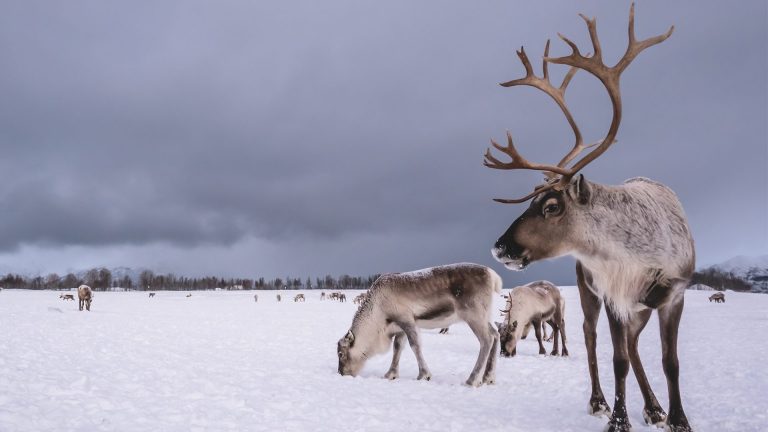
Reindeer crossing road in Norway
Hardy creatures
Ilona Kater, PhD researcher in Arctic Ecology at Durham University, states that “reindeer are incredibly hardy creatures – they survived the last Ice Age and today live in some of the world’s most inhospitable landscapes. Despite their fine-tuned adaptations to life in the Arctic and after over 600,000 years of living there, reindeer are struggling to survive the rapid changes happening all around them.”
Roughly half of the reindeer population in the Arctic has an extraordinary relationship with people. The animals graze the tundra and by keeping the brush short, they allow precious sunlight to reach some of the more rare plants and grasses and create a diversity that helps the tundra survive as climate change impacts the region.
“If we don’t find better areas for the reindeer where they can graze and find food, then the animals will starve to death,” said a Swedish reindeer herder.
Reindeer using their hooves to find food
Reindeer find vegetation in the snow using their hooves during wintertime, but alternating freezing and thawing periods can create layers of impenetrable ice, depriving the reindeers of nourishment. In the winter of 2013-14, 61,000 reindeer starved to death in the Yamal peninsula of Russia.
Sami herding communities fear climate change could mean the end of their traditional lifestyle in a region spanning northern Sweden, Norway, Finland and west Russia. For many years the indigenous Saami have tried to survive in conflict with industries and government over land.
Reindeer herder
Climate Change Threatening Arctic Reindeer
Bad winters happened every decade or so also before, but extreme weather are getting more and more normal, according to elder Sami herders. Onvik Pedersen says that a comparable death toll in the Svalbard region has been recorded only once before, after the winter of 2007-2008, since monitoring of the reindeer population started 40 years ago. One study in Norway found that in the last century, undisturbed reindeer habitat has shrunk by 70%, including grazing lands that have been flooded for hydroelectric dams.
Measurements by the Swedish Meteorological and Hydrological Institute show the country has warmed 1.64 degrees Celsius (2.95 degree Fahrenheit) compared with pre-industrial times. In Sweden’s alpine region, this increase is even greater, with average winter temperatures between 1991 and 2017 up more than 3 degrees Celsius (5.4 degree Fahrenheit) compared with the 1961-1990 average.
Migration routes being broken apart
The reindeer’s migration routes are being broken apart by roads, fences and railway lines causing the animals have less and less to eat. The climate change on top of all this makes an already difficult situation even worse. Many reindeer herders are forced to purchase feed for their reindeer during winter – and smaller herders find this extra cost hard to handle. Today, only about 10% of the 70,000 Sami reindeer herders make a limited income from meat, hides and antlers crafted into knife handles.
Without reindeer, the diversity of plant species drops. One study found that the diversity dropped as grasses that reindeer previously had kept in check were allowed to proliferate and push out other species, like mosses and liverworts.
Climate Change Threatening Arctic Reindeer, written by Tor Kjolberg
More than 80 years ago, Einar Kvamme established his tailoring practice in the small village of Olden in Sogn og Fjordane, Norway. In 1986, the family business Kvamme Konfektion was turned into Riccovero by Finn Einar Kvamme, grandson of the founder. In 2011, the company launched its first design collection featuring dresses from one of Norway’s foremost fashion designers, Kristian Aadnevik. Thereby, new luxury from Norway was embraced by fashion enthusiasts all over Scandinavia.
Kristian Aadnevik (b. 1978) from Bergen has his degree in fashion design from Royal College of Art in London. In 2008, he was protégé of the Italian designer Donatella Versace. He has also worked for the Italian clothing brand Cavalli.
Riccovero has become one of the most famous brands in Norway, with collections for women as well as men
One of the most famous brands in Norway
Today, Riccovero has become one of the most famous brands in Norway, with collections for women as well as men.
Riccovero’s philosophy focuses on a great fit, functionality and user-friendliness. Seasonal colors and trends are important and so are quality materials and aesthetic clean lines. “We’ve based our brand on our tailoring heritage, so it’s important for us to design quality clothes where the cut lifts the whole outfit,” says Finn Einar Kvamme. “The cut is a crucial factor in tailoring, so this is very important to us.”
Seasonal colors and trends are important and so are quality materials and aesthetic clean lines
New luxury from Norway
Now, Riccovero’s design team consist of five people with large knowledge of the Scandinavian market, and not least, they are designers with a solid international background from Milan as well as New York.
“Traveling and experiences inspires us,” says Kvamme and adds, “It’s not the clothes alone, but how people dress in different cities.”
The Swedish opera singer Jenny Lind was born in Stockholm on 6 October 1820. When she was nine, Lind was overheard singing by the maid of the Royal Swedish Opera’s principal dancer. The maid returned the next day with her mistress, Mile Lundberg, who in turn arranged for Lind to study at the Royal Dramatic Theatre. Read the exciting story about the Swedish nightingale.
Jenny Lind was a soprano whose voice was admired by Chopin, Mendelssohn and Clara Schumann, no less!
Lind started performing aged 10, went on to sing at the Royal Swedish Opera and was court singer for the King of Sweden
Started performing aged 10
Lind started performing aged 10, went on to sing at the Royal Swedish Opera and was court singer for the King of Sweden. By her tween years she was a renowned professional singer. In 1841-43 she travelled to Paris to rest her voice, before her London debut in 1847 at the Haymarket. She gave a performance so arresting that Queen Victoria threw a bouquet of flowers at her feet. She gave a special performance for the Queen in 1849 at the age of 28. Her last performances were German opera – including work by her admirer Felix Mendelssohn – but there are no known recordings of her singing.
Lind announced her retirement form opera aged 29, but was tempted into touring the US by Phineas T. Barnum in 1850. Lind insisted he deposit USD 200,000 in a bank in London before she would sail.
Jenny Lind’s American Tour
When Jenny Lind disembarked from the steamship Atlantic to begin an American tour on September 1, 1850, the visionary entertainer and entrepreneur P. T. Barnum greeted the singer with a bouquet and waved her into a private carriage in front of nearly 40,000 onlookers who packed the waterfront around Canal Street in New York City.
P. T. Barnum, then riding high on the fame of his American Museum in New York City, longed to elevate his public profile. He promised Lind an unprecedented USD 1,000 per night for up to 150 nights of performances.
The greatest singer we ever heard People loved her, and she became one of the most adored singers of the 1800s. She was praised for her elaborate ornamentations, impressive runs and ability to sing an incredibly simple tune and make it sound spectacular. The New York Tribune summarized her popularity: “Jenny Lind’s first concert is over; and all doubts are at an end. She is the greatest singer we have ever heard”.
People loved Jenny Lind, and she became one of the most adored singers of the 1800s
It was, however, the composer Clara Schumann who gave the highest praise of all: “Lind has a genius for song which might come to pass only once in many years,” she wrote. “Her appearance is arresting at first glance and her face, although not exactly beautiful, appears so because of the expression in her wonderful eyes.”
Lind’s partnership with Barnum continued for nearly a year, after which she toured under her own management. Barnum made at least USD 500,000 (now worth around $1.4 billion) from their relationship, while she earned around $350,000, much of which she donated to charity.
The Swedish Nightingale
She kept suitors like Barnum, Frederic Chopin and Hans Christian Andersen at arm’s length while she focused on music and charity work. Her dream was to establish a girls’ music academy in Stockholm. Stung by rejection Andersen pined for Lind in his story The Nightingale, in which a grand emperor is enthralled with a jeweled automaton in the shape of a bird, but can only be saved from death by the singing of a plain brown nightingale.
Jenny Lind and Otto Goldschmidt
Moving back to Europe
Near the end of her 1852 tour, she married pianist and conductor Otto Goldschmidt. Goldschmidt was in many ways an unattractive match from a 19th-century public relations perspective; he was significantly younger than Lind, Jewish, and his name had an unpleasantly Teutonic bite to American audiences. But he offered Lind emotional stability and Lind and Goldschmidt moved to Germany and then England in 1855, they had three children. She continued to perform, usually for charity, and became singing professor at London’s Royal College of Music in 1882.
She died on 2 November 1887 and is buried in the Great Malvern Cemetery, western England. She also has a memorial in Westminster Abbey, London.
Heading north from Malmö in southern Sweden, you arrive at four charming towns, Lund, Glumslöv, Helsingborg and Höganäs.
University town
Lund is a university town, with the towering cathedral, Domkyrkan at the center of the town, built circa 1090-1145. Don’t miss Kulturen (Cultural History Museum), an open-air museum with dozens of buildings, silver, textiles, ceramic and art. Along with the University of Uppsala, Lund is one of the two ancient Swedish universities.
Map of Southern SwedenLund is a university town, with the towering cathedral, Domkyrkan at the center of the town, built circa 1090-1145
Archeologists date the foundation of Lund to around 990, when Scania was part of Denmark. From 1103 it was the seat of the Catholic Metropolitan Archdiocese of Lund. Denmark ceded the city to Sweden in the Treaty of Roskilde in 1658, and its status as part of Sweden was formalized in 1720.
Memorable views in Glumslöv
About 30 km (19 miles) north, along the coast, Glumslöv offers memorable views. From the hill above the church, on a clear day you can see 30 churches and seven towns, including Copenhagen and Helsingør in Denmark.
About 30 km (19 miles) north, along the coast, Glumslöv offers memorable views
Gantofta til Glumslöv is a 18.3 kilometer point-to-point trail located near Gantofta, Skåne, Sweden that features beautiful wild flowers and is rated as moderate. The trail offers a number of activity options.
The streets in Helsingborg vary from wide avenues to small alley-ways.
Historical Helsingborg
Helsingborg, 60 km (37 miles) north of Malmö is an interesting town of cobbled streets, dominated by the ruined 600-year-old fortress Kärnan. The streets vary from wide avenues to small alley-ways. Kullagatan, the main pedestrian shopping street in the city, was the first pedestrian shopping street in Sweden.
More than 70 ferries to Helsingør in Denmark leave from its busy harbor.
Following the Swedish orthography reform of 1906 the spelling of many place names in Sweden was modernized. In 1912 it was decided to use the form Hälsingborg. In preparation for the local government reform in 1971, Hälsingborg city council proposed that the new, enlarged municipality should be spelled Helsingborg.
From Höganäs habour
The ceramics town
Höganäs, 20 km (12 miles) north is nationally known for its ceramics industry and artists. The large pottery, Höganäs Keramik, merits a visit. Höganäs AB is one of the world’s biggest iron powder manufacturer with subsidiaries around the world. The company was founded by Count Eric Ruuth in 1797 which makes it one of Sweden’s oldest companies.
Höganäs began as a small fishing village in the parish of Väsby, documented in 1488 in the written form Høyenæss. In the middle of the 17th century it had 17 homes. Coal was found in the area, and mining started in 1797. In 1798 a railway with wooden rails was built. It was the first of its kind in Sweden and was used to transport coal from the mine to the harbour.
The population started to grow and new dwellings were built for the miners. During the 19th century more industries were built using clay for making ceramic products. The coal mines were closed in the 1960s. In 1936, when Höganäs got the title of a city it had 6,915 inhabitants. Since 1971 Höganäs Municipality, encompassing the Kullaberg peninsula has totally around 24,000 inhabitants.
Feature image (on top): Road to Kärnan Tower in Helsingborg
Four Charming Towns in Southern Sweden, compiled by Tor Kjolberg
The tragedy on Utøya July 22, 2011 made us all both shaken and thoughtful. A pitiful figure, who, with his supernal delusions, fantasized about depriving an entire people of their freedom – with massive bombing and deadly machine guns. But there is still beam of light over Norway.
He was the only person who achieved the boundless freedom through inflicting so much fear, suffering, pain and sorrow in just minutes and hours.
“For me, as for everyone else, Utøya will forever be seen in a different light today than before July 22, 2011,” Terje Rakke
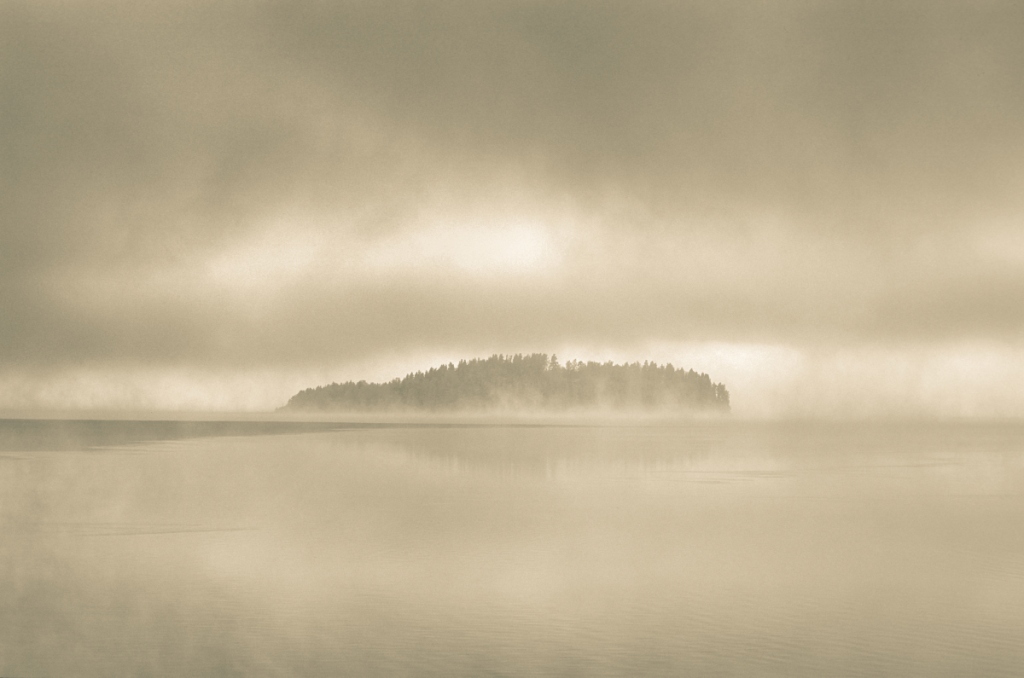
For me, as for everyone else, Utøya will forever be seen in a different light today than before July 22, 2011. The painful images I have on the retina are etched forever, but all that pain should not erase the most beautiful memories I have from Tyrifjord and Utøya. In a little while, the time will come to show us something else from this area than what a cold-blooded killer full of hatred and malice unfolded.
“As a photographer, I have for 25 years been attracted to the areas around Tyrifjord and Utøya,” Terje Rakke
As a photographer, I have for 25 years been attracted to the areas around Tyrifjord and Utøya. In my daily work I have had the opportunity to travel Norway throughout my adult life. In my eyes, there is almost nothing in Norway that can compare with this magnificent landscape area, perhaps especially in winter time.
“In my eyes, there is almost nothing in Norway that can compare with this magnificent landscape area of Tyrifjorden, perhaps especially in winter time,” Terje Rakke
Therefore, I will use my photographs from Tyrifjorden and Utøya to create something beautiful – a poetic representation in sound and image. Provide a small respite and a beam of light, tranquility and silence – in all its wintery grandeur and splendor.
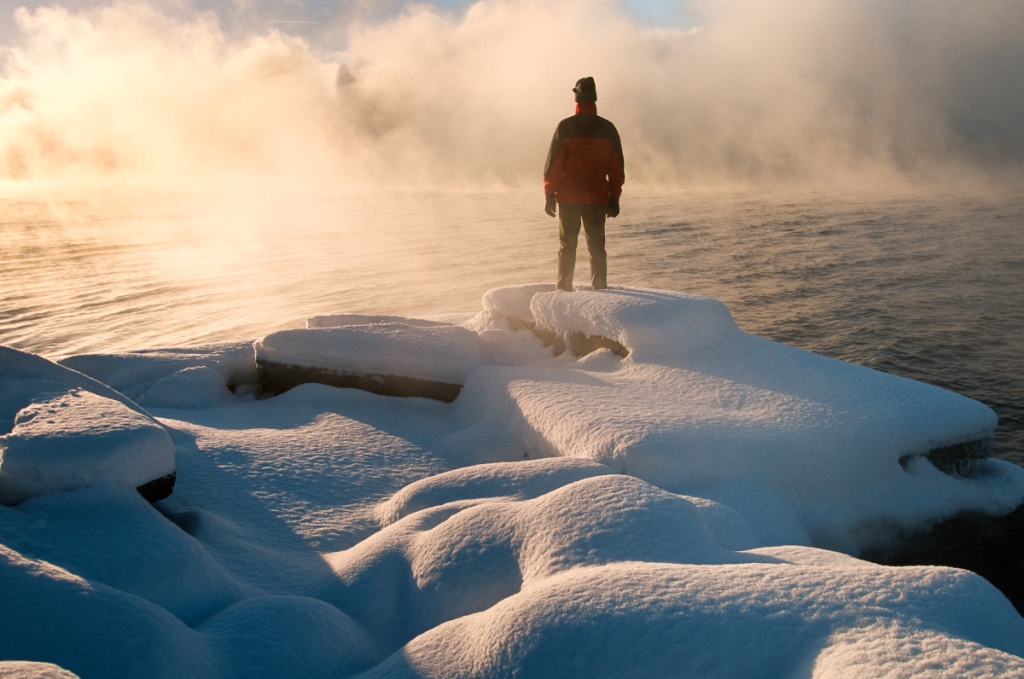
“When the temperature creeps below 20 minus, I like to go here,” Terje Rakke
When the temperature creeps below 20 minus, I like to go here – to take in the wonderful surroundings and the special winter light that arises when the frosty smoke floats over the water.
And the snow – untouched by human hands.
WE WISH ALL OUR VISITORS A HAPPY NEW YEAR!
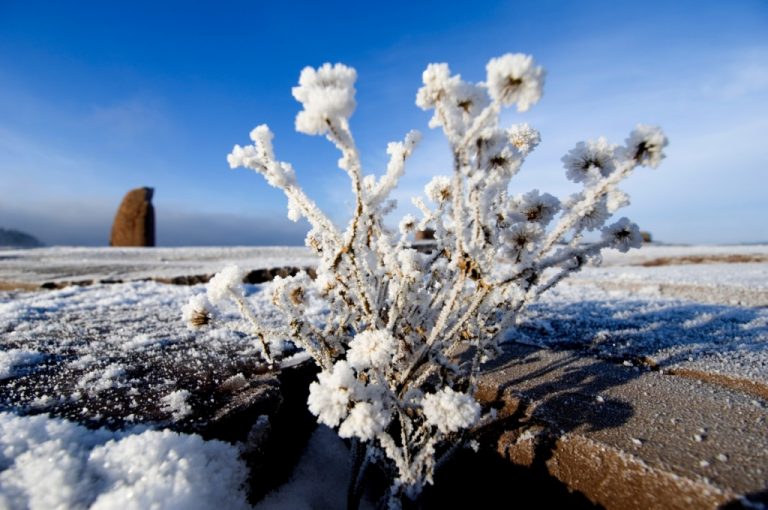
Feature image (on top): Snowbound plant near Utøya
All photos: Terje Rakke/Nordic Life
Beam of Light, written by Terje Rakke Nordic Life, translated into English by Tor Kjolberg
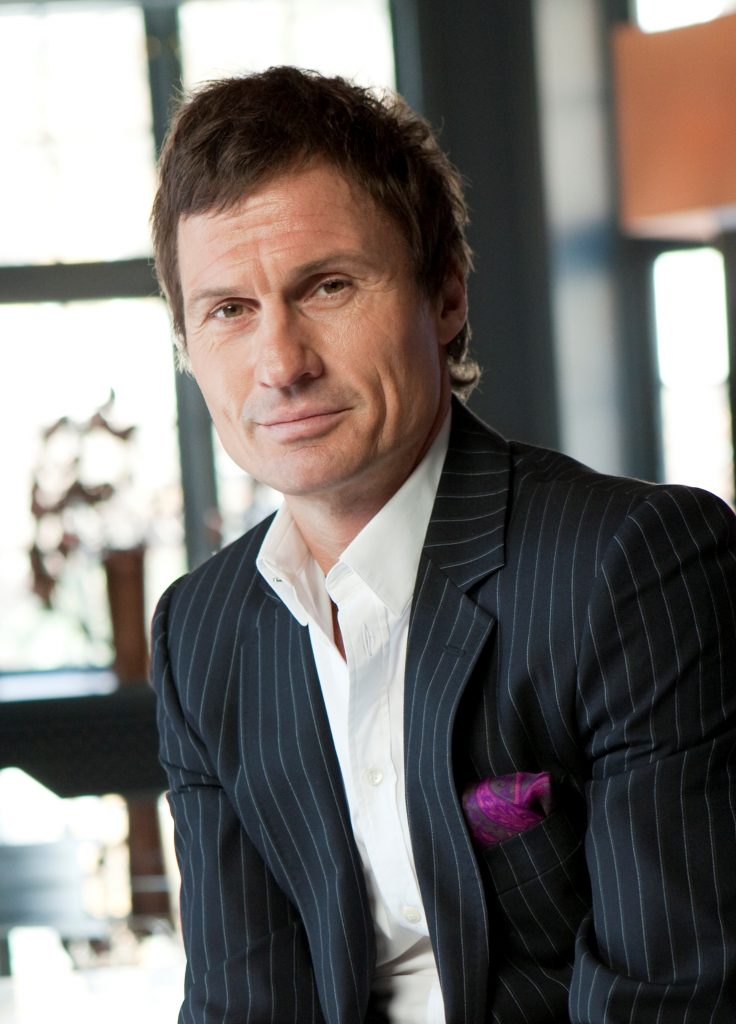
Norwegian Petter Stordalen (57) enjoys wearing expensive fashion clothes, rappelling down hotel facades, collecting art and investing in environmentally friendly companies. Last year, the assets and shares of his company Strawberry Holding Group were transferred to his three children although he still is in charge of the family business. Read the portrait of Scandinavia’s “King of Hotels”.
The Norwegian businessman and billionaire is a self-proclaimed environmentalist with an estimated net worth of USD 1,4 billion (according to Forbes) stemming from investments in hotels, shopping centers and property. The family owned company Strawberry Holding Group consists of ten companies in real estate, finance, hotels and art.
The Norwegian businessman and billionaire is a self-proclaimed environmentalist with an estimated net worth of USD 1,4 billion. Photo: Wikipedia
Nordic Choice Hotels
His hotel chain Nordic Choice Hotels with just under 200 hotels is the biggest hotel chain in Scandinavia. The Strawberry Hospitality Group consists of over 200 hotels employing about 17,000 people. Last month Stordalen bought 40% of the shares in the Scandinavian division of recently bankrupted Thomas Cook.
Petter Stordalen was born in Porsgrunn, Telemark, and since he was very little, he wanted to take over his father’s grocery shop. At age 12, he started to sell strawberries in his local market. That is the background for the name Strawberry Holding.
From Amerikalinjen Hotel, Oslo
Norway’s best strawberry salesman
On his corporate website Stordalen writes: “I often envied the other sellers who had larger and fresher berries than mine.” However, his father had advised him to “sell the berries he had because they were the only berries he could sell. “The strawberry philosophy is about taking what you have and making the best of it.”
In a local Porsgrunn paper he was named “Norway’s best strawberry salesman” in 1974.
However, Petter had bigger ambitions than working in his father’s grocery shop his whole life and left his hometown Porsgrunn in favor of Oslo. He recently bought hotel, Amerikalinjen in Oslo, which was named the 12th-best hotel in the world by the Condé Nast Traveler Reader’s Choice Awards.
In the early 90s, Stordalen served as the CEO of the historical department store Steen & Strøm, the largest holder of commercial estate in Norway
His first corporate assignment
In Oslo, Stordalen completed his degree at the Norwegian School of Marketing and his first corporate assignment was managing the City Syd shopping center in Trondheim, at age 24. After turning that shopping center into the largest in Norway, he made his first million.
In the early 90s, Stordalen served as the CEO of the historical department store Steen & Strøm, the largest holder of commercial estate in Norway. Together with a group of investors he bought the company. In 1996, however, there was a disagreement between him and the largest shareholder, and he was asked to step down.
In 1999, Stordalen aquired several Swedish and Danish hotels and at 37 he became a billionaire (in Norwegian kroner).
A wave of acquisitions
The purchase of Steen & Strøm signaled the start of a wave of acquisitions. In October same year, 1996, Stordalen teamed up with Norwegian investor, Christen Sveaas, and bought 68 percent in the Scandinavian operations of Choice Hotels, at the time consisting of eight hotels across Scandinavia.
In 1999, Stordalen aquired several Swedish and Danish hotels and at 37 he became a billionaire (in Norwegian kroner). In 2012 Stordalen opened his biggest hotel to date, the 500 room 40 000 square meter Clarion Post Hotel in Gothenburg, Sweden. Stordalen, known for being an adventurous, high-energy leader, dropped out of a helicopter attached to wires and walked down the facade of the building as if he was auditioning to be the next James Bond in front of 10 000 Gothenburgers who had gathered to watch the grand opening.
The Thief Hotel In January 2013, Stordalen opened a new hotel called The Thief, in the Tjuvholmen neighborhood in Oslo. Every one of the 119 rooms has unique original art from artists like Sir Peter Blake, Chris Gianakos and Tony Cragg.
The Thief has signed a sponsorship-deal with the neighboring Astrup Fearnley Museum of Modern Art that gives the hotel access to the museum’s vast art library. Under the agreement, The Thief can borrow some signal work for strategic locations in the hotel. Stordalen has world leading collections of artists like Jaume Plensa, Alex Katz and Franz West. He also owns some of Andy Warhol’s best interpretations of Norwegian artist Edvard Munch.
M/S Roald Amundsen
Shipowner Petter Stordalen
In October 2014, Petter Stordalen’s company Home Capital AS together with Norwegian investor Trygve Hegnar, bough a considerable part of the shares in Hurtigruten ASA, the coastal public route transporting passengers and cargo between ports from Bergen to Kirkenes. Today, Stordalen is the sixth-largest shareholder in Hurtigruten, which recently launched the world’s first hybrid cruise ship. The 450-passenger ship MS Roald Amundsen is currently taking leisure cruises to Antarctica, but is designed to cut emissions by 20% by running on a combination of low sulfur diesel fuel and battery packs.
Environment-friendly Petter Stordalen
On the Strawberry website, Stordalen writes that he will pursue investments that “contribute favorably to society, the environment, and the future of our children.”
Stordalen has pursued a number of philanthropic endeavors in recent years together with his newly divorced wife, doctor and environmentalist Gunhild. He has donated large amounts of money to various charitable organizations within environment/climate change and scientific research programs through the Stordalen Foundation, established in 2011.
In 2016, Stordalen was named the Brightest Business Mind in Northern Europe
Family Business
In recent years Petter Stordalen’s daughter Emilie has been involved in the family business. With a bachelor’s degree in hospitality from Cornell University in the USA and a master’s degree from Imperial College in London, she is currently a deputy manager at the Hub Hotel in Oslo which opened last year. The same year he transferred the assets and shares of Strawberry Holding to his three children Emilie (27), Henrik (24) and Jakob (21). Although he only holds 0.01 percent of the shares, Petter Stordalen is still in charge of the family business.
In 2017, Stordalen said to the Norwegian financial paper Finansavisen, “Today, I’m really grateful that they fired me. Without their resolute action, I would never have experienced the adventure that would be far greater … Nordic Choice Hotels.”
Portrait of Scandinavia’s «King of Hotels”, written by Tor Kjolberg
Besides Norway, only Russia had a permanent population and industrial operations onthis archipelago up north covered by ice. The name Svalbard means “cold coast”, and the first written mention of the archipelago appears in 12th century Icelandic writing. This is a homage to Svalbard.
Dutchman Willem Barents rediscovered the islands in 1596 and the sea around the archipelago was named after him. Various European nations hunted around the islands for 250 years, and vast coal reserves were discovered there in the mid-1800s. Mining started and with the battle over sovereignty in 1925, it was agreed that Norway should administer the area.
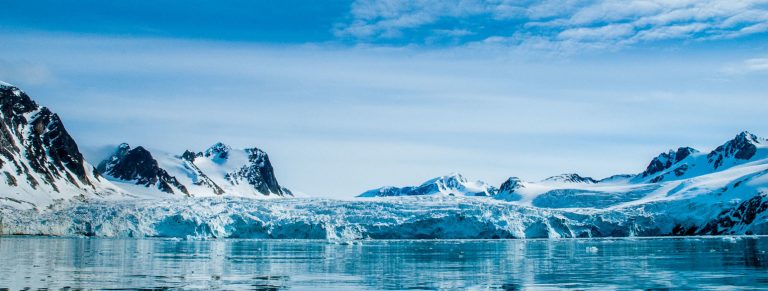
The group of islands represents Europe’s northernmost point at just over 80 degrees north. Photo: Thon hotels
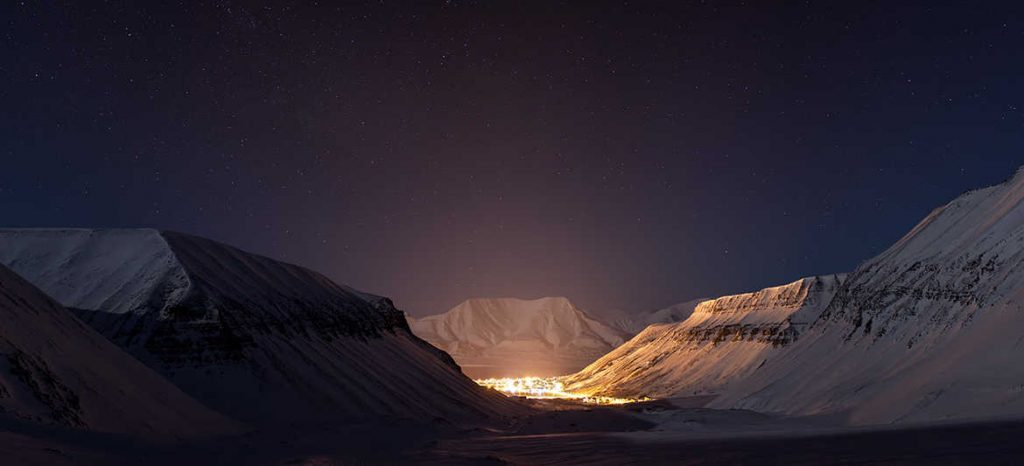
Majestic mountains and dramatic glaciers On 80 degrees north without any daylight in the dark season the high Arctic and the taste of Svalbard attracts people from all over the world. The group of islands stretches from Bjørnøya in the south to Rossøya in the north and represents Europe’s northernmost point at just over 80 degrees north. The liveliest and most populated town in the Svalbard Islands has just over 2,000 inhabitants.
Dramatic glaciers, majestic mountain formations and beautiful colors greet you in summertime. Bussing bird mountains, endless arctic tundra and unparalleled silence await you on Svalbard. The midnight sun shines from early spring until autumn and makes the surroundings works of art.
Dramatic glaciers, majestic mountain formations and beautiful colors greet you in summertime
Svalbard has a relatively mild climate compared to areas at the same latitude. In Longyearbyen, the average temperature ranges from -14°C during the winter to +6°C during the summer. However, the weather can shift very quickly, and local variations are often considerable.
Certification of Sustainable Destination
International authorities have awarded Svalbard Islands the certification of Sustainable Destination due to the intensive commitment of Longyearbyen’s citizens to reducing the negative impact on tourism on their land. Even though people have been visiting Svalbard for years, it was not until 1990 that the Norwegian authorities permitted general tourism.
Polar bear with kids. Photo: Asgeri Helgestad/Arctic Light/Visit Norway
If you want peace and space for thoughts and dream, a stay on Svalbard is a perfect choice. Mountains, valleys, glaciers, the sea, flowers, and exciting wildlife attract you to adventures you will never forget. Although the permafrost can go down to 500 meters and only the upper 2-3 meters thaw out in the summer, some particularly hardy plants cling to the soil in the coastal regions.
Polar bears
A large number of polar bears can be found on the surrounding islands east of Spitsbergen, but the impressive bears can be encountered anywhere on Svalbard. Young bears walk with their mothers until they are about two years old. But be aware, a polar bear attacks quickly without warning. The population of polar bears is about 3,000 animals, and the size of a grown-up bear varies from 200 to 800 kg. The polar bear is protected.
Svalbard has a relatively mild climate compared to areas at the same latitude. Photo: Store Norske Leksikon
There are daily flights to Longyearbyen from Tromsø. In fact, Longyearbyen is the northernmost place in the world you can visit on a regular scheduled flight. Both Norwegian and SAS offer flights to Svalbard. And there are first-class hotels and restaurants as well as exciting activities for visitors. Maybe you didn’t expect there’s an impressive wine cellar at “Huset” and excellent beers at Svalbard Brewery or Karlsberger Pub.
Bring the right thermal clothing
However, the right thermal clothing and polar equipment are necessary to fully enjoy a visit to Svalbard. Geologically, the islands are one of the most interesting areas in the whole world. Geologists can run through prehistory from pre-Cambrian to Quaternary period. Around half of Svalbard’s land area was protected in 1973 and three national parks and two large nature reserves have been created.
There are daily flights to Longyearbyen from Tromsø
The Svalbard Museum of Longyearbyen is an ethnographic museum which opened in 1979 and is devoted to the 400 years of history of the archipelago. The museum is divided into different sections that provide a comprehensive illustration of the diversity of arctic marine and animal life as well as geological features.
Spanish flu
Between 1918 and 1919, Svalbard was in a unique way connected to the deadliest epidemic of Spanish flu in history which caused the death of more than forty million people and decimated Europe. Thanks to the low temperatures of the Arctic Circle, muscles and organs from buried bodies kept intact for over 70 years revealed new information about the terrible epidemic.
Svalbard islands stretches from Bjørnøya in the south to Rossøya in the north
The North Pole Expedition Museum recounts the heroic efforts made to reach the North Pole by aviation pioneers and includes the story of three airships, departing from Svalbard, and their flights towards the North Pole in 1906, 1907 and 1909.
Famous expeditions
The nations that participated in these historical events include Norway, Russia, Italy, America, Sweden, Holland, France and Finland. Umberto Nobile was a great celebrity of Italian aviation, a general, an explorer and engineer who represented Italy on an important expedition. It was on 12 May 1926 when Nobile, together with Amundsen and Ellsworth, travelled on board the first airship to fly over the North Pole. This semi-rigid airship was built in Italy by the engineer Nobile himself and was named Norge.
An Italian manufacturer of men’s clothing, Svalbard Islands, owes its name to these lands.
It was not until 1990 that the Norwegian authorities permitted general tourism to Svalbard
A homage to Svalbard
Enjoy the untouched arctic wilderness and unique wildlife in a setting that is both rugged and fragile at the same time.