Scandinavian Anchovy

0

These tiny salted and fermented fish may be the cause of some really odd dishes, made from Nordic cookbooks, by people wanting to cook a really Scandinavian meal at home. They have also created much agony in northern kitchens where people are trying to reproduce beloved Italian dishes with ‘anchovies’.

The fact of the matter is that Scandinavian anchovies are very different from anchovies in the rest of the world, as they are not made from true anchovies (Engraulis encrasicholus), but from a variety of small fish in the herring family (sprattus sprattus). They are even cured quite differently.

Scandinavian Anchovy
Scandinavian anchovy, Sprattus sprattus

True anchovies are gutted and immediately packed in barrels between thick layers of sea salt. Here they ferment and are then either sold as whole salted anchovies or filleted and drowned in olive oil. These are the ones needed in pizzas, gabna caida and all other southern dishes with anchovies.

Related: The Scandinavian Herring Adventure

Scandinavian Anchovy
Placing anchovies into tin cans

The northern anchovies (ansjovis) on the other hand, are preserved whole in spiced, sweetened brine. You buy them in vans, and fillet them yourself. The raw fish are also eaten in a number of other ways: for example, canned like sardines or eaten fresh.

Scandinavian Anchovy
Swedish canned anchovies

Appearance and taste
Northern anchovies taste much the same as sweet varieties of spiced pickled herrings, and especially the Swedish matjes herrings (matjessild), though they have a quite different consistency. Virtually melting in your mouth. They are spiced with cardamom, pepper, sandalwood, cinnamon and oregano.

Related: A Swedish Delicacy Called Surströmming

Buying and storing
The best anchovies are from Norway. The fish are caught in late summer and are then left to mature in cans to be sold predominantly at Christmas, for delicacies such as Janson’s temptation (recipe, see below).

The anchovies keep almost indefinitely in the can, though they must be stored in the fridge. Once the can has been opened, transfer the fish in their brine to a non-corrosive container, where they will keep for ages. Since the fish are whole, you fillet them yourself (see below), though you can also buy them filleted and ready-to-eat in cans or small jars (but these do not keep for very long once opened).

Culinary uses
Northern anchovies are eaten on open sandwiches much like other herrings, and taste divine eaten on crisp, or rye bread, with hard-boiled eggs and chives, or with cold sliced potatoes with raw onion and chives. They have other uses too, as a spice in potato gratins and liver paste. But try putting them on your pizza and you’ll regret it.

To fillet an anchovy, put the fish on a board, cut off the head, then flatten it a bit from the back to loosen the spine and turn it over. The spine is removed by pulling it from the head end towards the tail, along with the gut, after which the two fillets are easily pulled off the skin.

Scandinavian Anchovy
Janssons Temptation

Jansson’s temptation
There is something thoroughly Nordic about this classic Swedish dish, whose simple ingredients – potatoes, onions, cream and fish – are available even for the depths of the Scandinavian cold winters. The combined taste is epitome of Scandinavian food: buttery, salty, sweet, filling, nourishing and still a little elegant, as the salt fish creates small explosions of umami sensations in your mouth.

Originally, the potatoes were steeped in cold water to draw out the starch, but the problem may be solved by using waxy salad potatoes.

The classic accompaniments are toasted crispbread, beer and schnapps. However, we digest a huge green salad as well.

500g firm waxy potatoes
2 onions, cut into rings
50g salted butter
Ground black pepper
100g anchovy fillets
100ml brine from the anchovies
Approx. 200ml whipping cream

Serves 4

Preheat the oven to 180 C/gas mark 4

Cut a few of the potatoes into thin slices and the rest into thick matchsticks. Butter an ovenproof dish well, then cover the bottom and sldes with the potato slices.

Fry the onions in the butter until pale golden. Mix with the potato sticks and black pepper to taste. Put half of the onion-potato mixture in the dish, cover with the anchovies, and then fill with the rest of the onion/potato mixture. Pour the anchovy brine and cream over the top, and bake until the potatoes are very tender and the dish has achieved an inviting golden crust. If the dish appears to be drying out, you can pour in a little more cream, and maybe a little water.

Scandinavian Anchovy, written by Tor Kjolberg
Danish and Indian Art Photographers Exhibit at the Museum of Goa

0

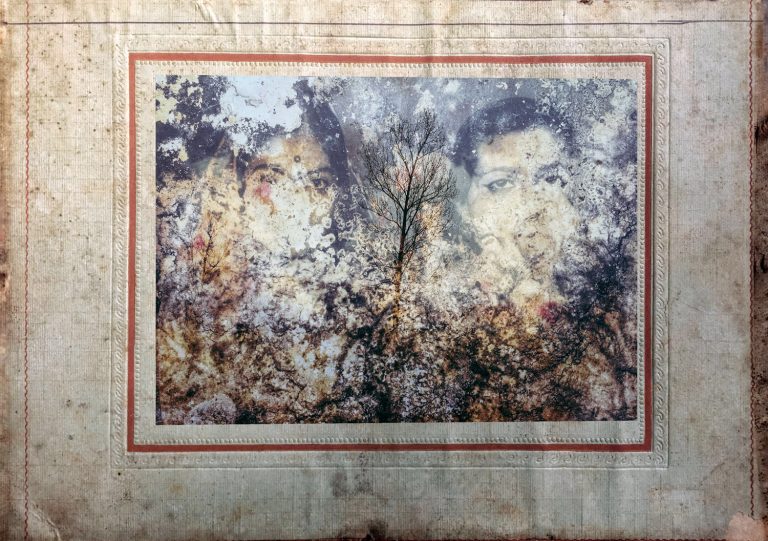
Indian and Danish photographers have joined forces to explore the concept of nature, with India and Goa specifically as a starting point.

The exhibition, named Evolving/Eroding, comprises works by six art photographers, three Danish and three Indian, at the Museum of Goa from 15 to 26 February. The photographers, Amit Sheokand, Akshay Mahajan, Jagrut Raval, Miriam Nielsen, Jenny Nordquist and Louise Bogelund Saugmann were present at the inauguration together with Thomas Sehested, director of the Danish Cultural Institute in India.

Danish and Indian Art Photographers Exhibit at the Museum of GoaThomas Sehested, director of the Danish Cultural Institute in India

Related: Indian Tourists Are Looking to Scandinavia

Danish and Indian Art Photography Exhibit at the Museum of Goa
With nature being the most important source of inspiration for the photographers, the motifs used are concerned with both evolving and eroding aspects of nature.

Danish and Indian Art Photographers Exhibit at the Museum of Goa
Waghole, by Amit Shekand

“We hope that the meeting between the artists and artworks contributes to new realizations, reflection and forms a basis for debate, whether we live in India or Denmark,” said a spokesman for the Museum of Goa.

Danish and Indian Art Photographers Exhibit at the Museum of Goa
Beach India, by Jenny Norsquist

Related: Cycled from India to Sweden for Love

Portraying nature in individual ways
“The way the photographers portray nature, each with their individual style and focus, is not as something separate from us, but as a part of who we are, and as the title suggests, the evolving and eroding aspects of nature plays a central role,” according to a website statement from the Danish Cultural Institute in India.

Danish and Indian Art Photographers Exhibit at the Museum of Goa
Hybrid space, by Miriam Nielsen

Related: The Indian Goodwill Ambassador to Scandinavia

The Danish Cultural Institute in India
The Danish Cultural Institute in India opened up in New Delhi 19th January this year. The Danish Cultural Institute has established branches in Denmark, Belgium, Brazil, China, Latvia, Poland, Russia – and now India. The Institute also arranges annual pop up activities in countries all over the world.

Danish and Indian Art Photographers Exhibit at the Museum of Goa
One frame infinite, by Louise Bøgelund Saugmann

Danish Cultural Institute is a self-governing institution. Since 1940 it has been engaged in fostering mutual understanding between people and cultures.

“We believe that the arts and culture are among Denmark’s most important assets. We are committed to sharing knowledge on and sympathy for the values of the Danish society. In cooperation with partners, we develop international culture and societal events, projects and people to people contacts, that can provide mutual value and inspire,” says a statement on their website.

Feature image (on top): Untitled, by Askhay Maharan

Danish and Indian Art Photography at the Museum of Goa, written by Tor Kjolberg

A Serios Norwegian Rock Singer

0

One of Norway’s most enduring artists, Sivert Høyem, is best known as the former singer of rock band Madrugada. Now, the news of Madrugada’s surprise comeback in 2019 has already unleashed a flood of emotions among their audience home and abroad.

Høyem’s distinctive voice recalls a combination of the timbres of Leonard Cohen, Nick Cave, and Neil Diamond. His 6th solo album, “Lioness”, vibrates with those deep and warm magical ingredients that are soul kindling. As stated on his website, “Lioness” is in many ways a nocturnal album; it evokes moods belonging to the night.

A Serios Norwegian Rock Singer
The new Madrugada 2019: Knut Aaserud, Sivert Høyem and John Lauvland Pettersen. Photo: Lnut Aaserud

Related: Passionate Norwegian Singer/Songwriter

Sivert Høyem (born 1976) is a son of forestry teacher Asbjørn Høyem and politician Jørun Drevland. He hails from Kleiva in Sortland, and attended Sortland Upper Secondary School before moving to Oslo in 1995. Whilst pursuing a music career he minored in history at the University of Oslo.

Madrugada
Madrugada was founded in 1993, and the band signed with Virgin Music Norway in 1998.  Høyem rose to fame in 1999 when Madrugada made their Norwegian breakthrough with debut album Industrial Silence. Madrugada released five full-lengths, a live album, and a best-of collection before disbanding in 2008 after the passing of their founding guitarist, Robert Burås. The last album, entitled Madrugada, was released on 21 January 2008.

A Serios Norwegian Rock Singer
Madrugada’s foundign guitarist, Robert Burås

Related: Norwegian Pop Band Highasakite is Back With Brand New Single

After the release of the album the band announced they would split after one last tour. They performed their last ever concert on 15 November 2008 at Oslo Spektrum.

A Serios Norwegian Rock Singer
Høyem’s distinctive voice recalls a combination of the timbres of Leonard Cohen, Nick Cave, and Neil Diamond

A Serios Norwegian Rock Singer
The last few years Høyem has had success as a solo artist, releasing the albums Ladies and Gentlemen of the Opposition (2004), Moon Landing (2009) and Long Slow Distance (2011).

Related: The Mythical Electro Pop Wizard From Oz

A Serios Norwegian Rock Singer
The last few years Høyem has had success as a solo artist. Photo: Desiree Mattson

The news of the comeback of Madrugada has been overwhelming, not least when the band announced concerts in their adopted hometown of Oslo in February 2019, which were immediately sold out. However, a European tour shortly after will see the band reunite with their faithful fans across the continent.

Siver Høyem says that the song he personally loves the most from the Madrugada era is Honey Bee.

A Serios Norwegian Rock Singer, written by Tor Kjolberg

Woodland Cemetery in Stockholm

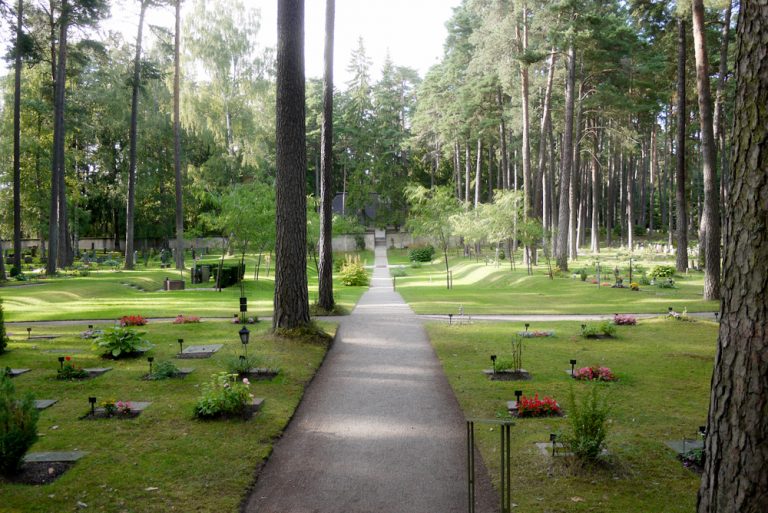
A short distance south of the Globe in Stockholm is Woodland Cemetery in the southern suburb of Enskede.

It may sound macabre, but this is another of Stockholm’s UNESCO World Heritage sites (since 1994) and well worth a visit. Skogskyrkogården is a place of immense calm and beauty on about 250 acres of pine-covered boulder ridge with five striking chapels. Every curve in every pathway was built with care and purpose.

Woodland Cemetery in Stockholm
Woodland Cemetery has been on Stockholm’s UNESCO World Heritage sites (since 1994) and is well worth a visit

Related: First Cemetery Free of Religious Symbols in Sweden

Architect competition
When Skogskyrkogården was founded at the beginning of the 1900s, the aim was to create something special, something original — a cemetery blending nature and architecture into a seamless whole. In1914, the cemetery committee announced an international architecture competition in which entrants were to take advantage of the local topography and woodlands.

Woodland Cemetery in Stockholm
Skogskyrkogården is a place of immense calm and beauty on about 250 acres of pine-covered boulder ridge with five striking chapels

No fewer than 53 entries were received, some from Germany, the foremost architectural power of the time. However, due to World War I, most entries were of domestic origin, and most went straight in the wastepaper basket. Most entrants had quite simply failed to understand the “thinking” behind the new cemetery.

Woodland Cemetery in Stockholm
Architect Gunnar Asplund, 1940

Related: Norwegian Stave Chruches

Nordic philosophy
Instead, first prize was awarded to Gunnar Asplund and Sigurd Lewerentz, two thirty-year-old architects. This masterpiece of Modernist design took 25 years (1915-40) to create. It evokes a Nordic philosophy on nature, life and death.

Architect Sigurd Lewerentz

Related: A Swedish Island Retreat un Medieval History

The Swedish actress Greta Garbo is buried here, as is Asplund himself.

There are guided tours on Sundays, July – September.

Woodland Cemetery in Stockholm, written by Tor Kjolberg

Siri Rat from Norway

0

Norwegian designer Siri Sveen Haaland designs clothing inspired by rats. In April 2016 her label Black Rat was accepted and sold in the gigantic flagship store Topshop in Oxford Street, London. Since then black design from Norway has become steadily more popular.

Siri launched Black Rat in December 2012. A few days after launch day she got the honorable award as “Newcomer of the Year” on Oslo Fashion Week in February 2013. The Black Rat concept concentrates on making sustainable clothing in mainly wool with a timeless design. The Rat is colorblind and this sets the color range in black/grey/white. According to Siri, the clothing should be as immortal as the rat itself.

Siri Rat from Norway
A Black Rat collection

Related: Young Norwegian Fashion Design Award Winner

Siri Rat from Norway
For five years, the Norwegian designer has built up a clothing brand that is named after the black rat. But Black Rat has not only taken the name from the rodent, or Rattus rattus, as it is called in Latin. The whole concept is inspired by the animal. The Norwegian streetwear brand has the black rat’s qualities as a red thread. Haalland has even taken the artist name Siri Rat, but the reason is not that she loves rats.

“The idea behind Black Rat is built on the rat itself. It is color-blind, it lives in herds in the underground and it is nearly immortal,” says Siri. Siri started out with only two jackets and has since then built the brand brick by brick; featuring both commercial and non-commercial collections.

Siri Rat from Norway
The idea behind Black Rat is built on the rat itself. It is color-blind, it lives in herds in the underground and it is nearly immortal

Related: The Norwegian Knitting Celebrities

Inspired by reality
One of her collections, “Ansatt/Innsatt” (meaning “employee/inmate”) was built on stories from the book “Skammens Historie” (History of Shame) by Sigmund Aas and Thomas Vestgården. It aimed to tell us how the state of Norway has been institutionalizing different kinds of human groups because of their mental health, religion or orientation. This collection featured the power of the uniform, either you’re an inmate or an employee.

Siri Rat from Norway
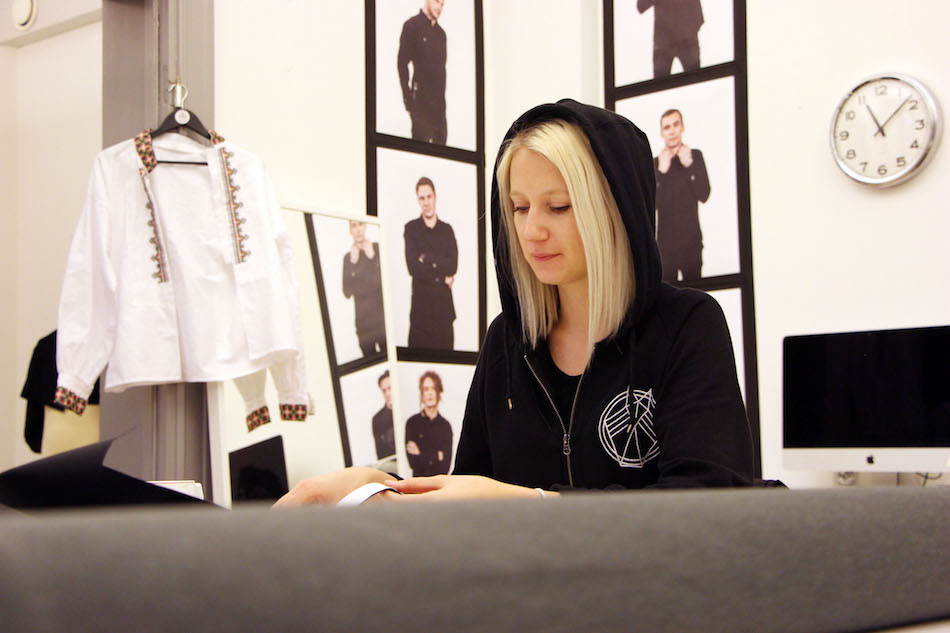
Designer Siri Sveen Haaland

Related: World Famous Knitwear from Dale of Norway

Combining Black Rat and Norwegian national costumes
Siri got her sewing machine from her mother to confirmation, and that was how she learned to sew. Customers who wanted to change their Norwegian national costumes (bunads) approached Siri and she was more than willing to help them.  Norway has a long tradition in national costumes. Siri comes from a tailor family who has been making these costumes since the 1897. Next to Black Rat, Siri work together with her mum in the family business, Sidserk Systue. There they make all kinds of Norwegian national costumes and educate others in making them correctly.“

Siri Rat from Norway
Siri launched Black Rat in December 2012

A Norwegian bunad shall last for 100 years and that is just as long as Black Rat clothing should last as well,” concludes Siri Sveen Haaland.

Feature image (on top): Black Rat for Top Shop, London. Photo: Annicken Dedekam

Siri Rat from Norway, written by Tor Kjolberg

World’s Largest Gourmet Restaurant – in Sweden

0

Sweden invites you for free during its “The Edible Country” campaign 2019. To highlight healthy and natural food available in nature, Sweden, together with four Swedish Michelin-starred chefs, is launching The Edible Country – a 100-million-acre-DIY gourmet restaurant. Visit the world’s largest gourmet restaurant – in Sweden

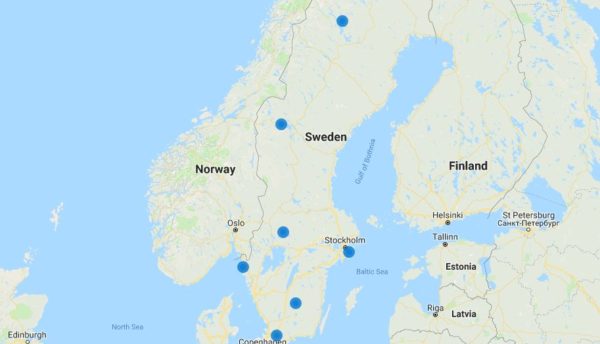
Seven wooden tables are placed in seven locations around Sweden with menus created by the four Swedish Michelin chefs. However, you must prepare the meals yourself on the spot, but Sweden would like to invite you to do so for free. The world’s largest gourmet restaurant, will feature a menu created from ingredients found in the Swedish outdoors and is now open for reservations.

World’s Largest Gourmet Restaurant – in Sweden
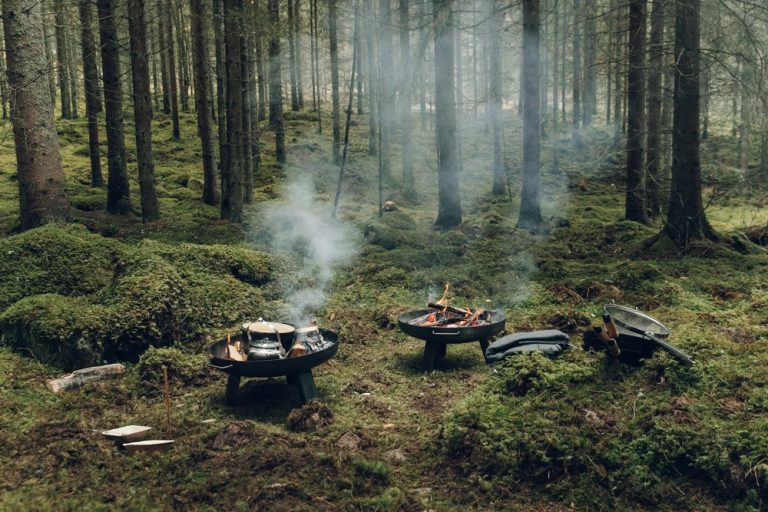
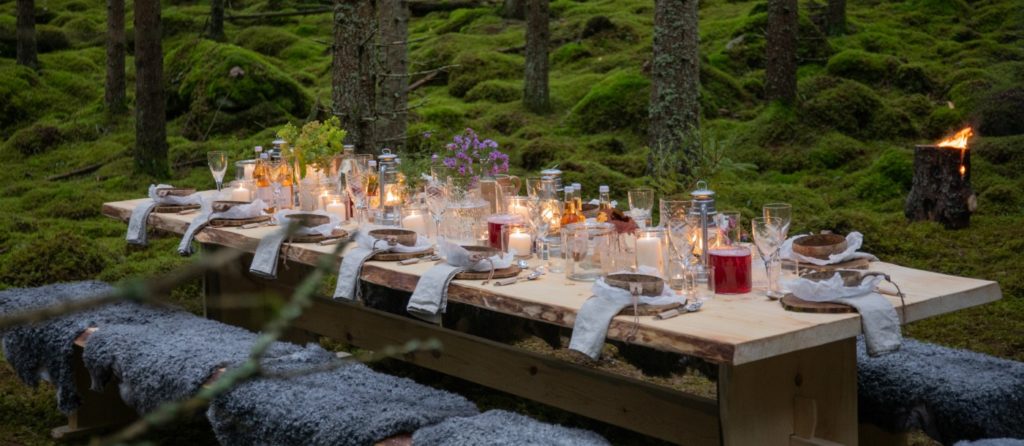
The edible country: A set table in Småland

Related: Sweden’s Culinary Island Gotland

World’s Largest Gourmet Restaurant – in Sweden
Sweden has more than 96% of its surface completely uninhabited and easily accessible to everyone. In this new initiative, Sweden is showing the world how easy and accessible healthy food can be. The Edible Country consists of a nine-course menu that visitors can prepare and cook themselves – in the wild.

For Swedes enjoying nature by taking a long walk is almost a religion. Sweden’s new “The Edible Country” campaign, an international effort that aims to show the world “how easy and accessible healthy food can be” by encouraging visitors to prepare and cook a nine-course meal outdoors.

Related: The Best Hiking Trails in Sweden

World’s Largest Gourmet Restaurant – in Sweden
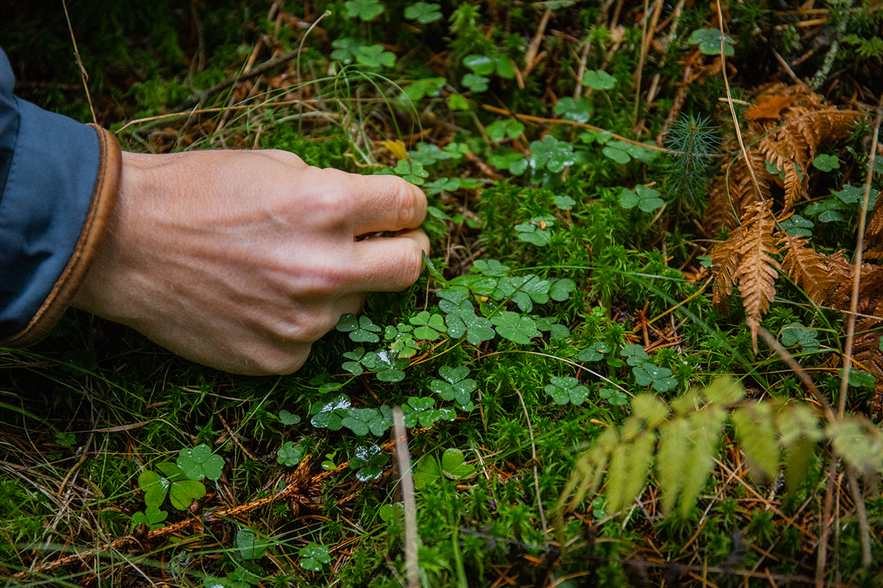
The edible country: Edibles in nature

Michelin-starred nine course menu
The menu is co-created by Swedish Michelin-starred chefs Titti Qvarnström, Niklas Ekstedt, Jacob Holmström and Anton Bjuhr. At the right season the forests of the country are filled with berries, wild fruits, herbs, plants and mushrooms while the rivers and lakes boil with life. A 100-million acre pantry at your feet with all you can eat! So outside of the salt, butter, and honey diners will need to bring with them, the meal is totally free. You just have to find it all and cook it, with fire and stuff.

World’s Largest Gourmet Restaurant – in Sweden
Seven wooden tables are placed in seven locations around Sweden

Related: World’s Best Oyster – A Swedish Delicacy

At the seven wooden tables you will find the menu. If they are fully booked, it is still possible to visit The Edible Country and prepare the dishes at any other preferred location in Swedish nature. Among the dishes is forest broth with poached perch and broiled herb butter, and freshly smoked char with chanterelles and wood sorrel.

Feature image (on top) Photo: Haarkon

World’s Largest Gourmet Restaurant – in Sweden, written by Tor Kjolberg

New Krill-harvesting Vessel Launched in Norway

0

After over two years of design and construction, Aker BioMarine launched a unique krill harvesting vessel in a ceremony at Alesund, Norway in January. The Honorable Alexandra Shackleton, granddaughter of renowned British Polar explorer Sir Ernest Shackleton and godmother of Antarctic Endurance, was invited to officially name the vessel.  

In April 2017, Norwegian Aker BioMarine commissioned a new environmentally-friendly krill harvesting vessel for NOK 1.1 billion (USD 140 mill). With a total of 40 Norwegian vendors contributing to the vessel, the two-year build and final fit-out have kept in excess of 900 people busy working to have the vessel ready for the 2019 harvesting season.

New Krill-harvesting Vessel Launched in Norway
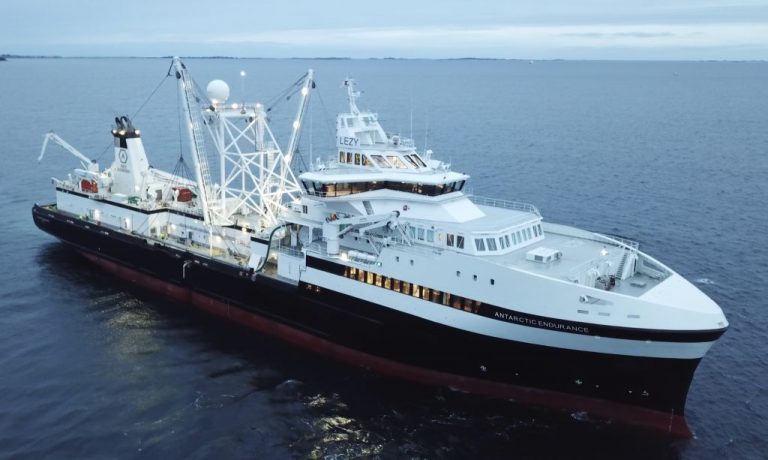
Designed specifically to meet the unique demands of krill harvesting operations in the challenging Antarctic conditions, the new vessel will feature an integrated cargo handling system

Related: New Hydropower Plant to be Built in Western Norway 

New Krill-harvesting Vessel Launched in Norway
Matts Johansen, CEO of Aker BioMarine said, “We have put all our experience and know-how into building a vessel capable of matching our ambitions and operational needs, a vessel we could have only dreamt of when we started our very own Antarctic adventure for more than a decade ago. Named in tribute to polar explorer Sir Ernest Shackleton’s Norwegian-constructed vessel, Endurance, the name also reflects our own perseverance over the years. Energy efficient and equipped with a host of environmentally friendly technologies, Antarctic Endurance is specifically designed and constructed for our unique business, with direct input from our experienced crew. It is truly one of a kind and our very first purpose-built krill harvesting vessel.”

“This is the largest single contract VARD has ever received for a harvesting vessel, and we are very happy to have entered a shipbuilding contract with them. This will also contribute to securing Norwegian jobs in the future,” said Webjørn Eikrem, EVP Production and Supply Chain at Aker BioMarine in February 2017.

Related: Norway – First Country in the World to Ban Use of Gas to Heat Buildings

New Krill-harvesting Vessel Launched in Norway
Webjørn Eikrem, EVP Production and Supply Chain at Aker BioMarine

Sustainable krill harvesting
According to Aker, Energy efficiency has been a key goal for the designers, and the finished newbuilt 130-meter long state-of-the-art vessel is said to be 30% more energy efficient than other comparable trawlers.

“Aker has, since Aker BioMarine was established in 2006, focused on sustainable krill harvesting. From day one, we have worked with WWF Norway. The krill fishery in Antarctica is one of the most sustainable fisheries in the world, and Aker BioMarine hopes to yet again set a new bar for sustainable harvesting with this new vessel. Norwegian skills and new technology will help us reduce our carbon footprint even further with this vessel,” said Matts Johansen, CEO at Aker BioMarine, in 2017.

Related: The Postman Pat Vehicle from Norway

Challenging Antarctic conditions
Designed specifically to meet the unique demands of krill harvesting operations in the challenging Antarctic conditions, the new vessel will feature an integrated cargo handling system. Powered by the latest technology including combustion engines, the vessel will be propelled with an efficient propulsion line with a variable propeller. The supply vessel will be equipped with an advanced heat recovery system helping to reduce the carbon footprint even further.

New Krill-harvesting Vessel Launched in Norway
Powered by the latest technology including combustion engines, Antarctic Rndurance will be propelled with an efficient propulsion line with a variable propeller

“We have put all our experience and know-how into building a vessel capable of matching our ambitions and operational needs, a vessel we could have only dreamt of when we started our very own Antarctic adventure for more than a decade ago,” says Matts Johansen, CEO of Aker BioMarine.

About Aker BioMarine
Aker BioMarine is a biotech- and fishing company dedicated to securing human and planetary health. The company develops krill-based ingredients for use in nutraceuticals, aquaculture and animal feed. The company supplies bio-marine ingredients through a 100% traceable supply chain that it also owns and controls. Aker BioMarine was the first krill company to be awarded Marine Stewardship Council (MSC) certification.

Aker BioMarine Krill Videos

New Krill-harvesting Vessel Launched in Norway, written by Tor Kjolberg

Pottery Porn from Copenhagen

Pottery porn is the tag several of Eric Landon over 700,000 followers on the social platform Instagram puts on his work. The reason is mainly due to his proprietary film clips that show his golden-brown, muscular arms and supple hands shaping soft clay into organic, elegant shapes. So, the pottery porn from Copenhagen is in fact not porn at all.

Eric Landon from Copenhagen pottery design studio has amassed a huge following online supposedly due to his beautiful videos of the making process and wonderful shapes that he gets in the result. Tortus Copenhagen was founded by twin-brothers: Eric and Justin Landons. They combined their previous experiences, networks and passions and created a beast of a project, Tortus Copenhagen (2012).

Pottery Porn from Copenhagen
Eric Landon has won serious accolades, including the 2015 Danish Design Award for Craftsman of the Year

Related: A Copenhagen Furniture Making Collective

Pottery Porn from Copenhagen.
In 2016 his Instagram was covered by the NY Times Magazine: “Eric Landon […] has won serious accolades, including the 2015 Danish Design Award for Craftsman of the Year, for his work: simple, organic shapes glazed in appealingly muted pastels. And, in an age of fetishistic obsession with objects that are handcrafted, the 40-year-old Milwaukee native has harnessed the power of social media to do better than simply make the claim: He’ll show you exactly how it’s done, in mesmerizing Instagram videos that have earned him nearly 600,000 followers. Think “Ghost” without Demi Moore or the Righteous Brothers soundtrack”.

More than 7000 Instagram followers
Today @tortus has 766k followers and an average of 10k likes on posts. On their website Tortus describe itself as a design studio “with the love of making and passion for materials. So, like the noble creature from which we derive our name, we move at our own humble pace. By Tortus, we are dedicated to the modern adaptation of traditional and time-tested making methods with the goal of creating vessels of a timeless quality and beauty. Our production is based on a seamless dialogue between design and hand-work drives an ever-evolving production of ceramics rich in form, color and texture, making each encounter with our objects something unique”.

Related: Uncompromising Danish Jewelry Designer

Pottery Porn from Copenhagen
Eric Landon shows you exactly how it’s done, in mesmerizing Instagram videos that have earned him nearly 600,000 followers

Eric Landon of Tortus Copenhagen studied graphic design at the University of Wisconsin-Milwaukee, and moved to Copenhagen in 1999, where he graduated from the Royal Danish school of Design (2007). He has been awarded with a number of grants, international exhibition selections, and other awards for the quality of his work.

He decided to bring art to a more broad audience and has indeed succeeded and has revealed how sharing online has increased profits and allowed for more creativity.

Understanding both art and economy
Both a master potter and designer, Eric is focused on a constant refinement of both form and technique. For him, the one cannot evolve naturally without the other. His love for wheel thrown pottery started already at age 16 and has evolved into a way of life, his vocation. For Eric, shaping objects by hand is not a look back at the past. He firmly believes that hand-crafting objects of a timeless value is a way forward.

Pottery Porn from Copenhagen
On their website Tortus describe itself as a design studio “with the love of making and passion for materials

In an interview for the CEO Magazine, Eric Landon said, “I’ve actually been using my economics degree the entire time; being creative is just one part of what I do. I also have to understand the market, I have to understand pricing, understand things like scarcity and opening up your market to access the world market instead of thinking just locally. By doing that, we were able to create an exclusive brand pretty quickly — by concentrating on maybe one or two retailers in most major cities in Europe and in Asia.”

Related: The Trolls of Danish Artist Thomas Dambo

Pottery Porn from Copenhagen
Eric Landon of Tortus Copenhagen studied graphic design at the University of Wisconsin-Milwaukee, and moved to Copenhagen in 1999

World-wide distribution
Within a couple of years of launching, Tortus had built up its distribution in about 18 countries. Primarily it was wholesaling to retailers in its early years, but as a small company producing handmade objects that take considerable time (hence the tortus name), Eric explains it was difficult to turn a big profit. Eric considered that while retailers are great, they are essentially the middle man. So, in 2014 the brothers decided to focus on creating a more direct line of communication with their end consumers. They tried to see if they could get more direct sales and that’s when they created their social accounts. The rest is history.

Pottery Porn from Copenhagen, written by Tor Kjolberg
Unique Wallpaper Designed by Norwegian Designer

0

Norwegian designer Andreas Engesvik designed a unique wall mural collection for the Swedish design brand Photowall. Inspired by old techniques, Andreas created three hand-painted patterns, all in different color schemes. The Manuscript collection is a unique wallpaper designed by the Norwegian designer.

“I have long been fascinated by handprints, and their capacity and ability to create things. Whereas the digital is often related to technology, the hand associates more with the body, the mind and nature. Manuscript is a visual and aesthetic collection that helps to create a personal space by exploring the relationship between these different expressions,” says Andreas Engesvik.
Unique Wallpaper Designed by Norwegian Designer
Fresh summer rain on the wall, by Andreas Engesvik for Photowall

Related: New Designs by Norwegian Interior Designer Andreas Engesvik

Unique Wallpaper Designed by Norwegian Designer
The collaboration between Photowall and Andreas Engesvik unites traditional and digital techniques, where each pattern is first hand-painted by Andreas and then printed digitally in Photowall’s studio in Stockholm. The hand-painted patterns of the wall murals create life and movement, which in turn adds an interesting dynamic to the collection.

Unique Wallpaper Designed by Norwegian Designer
“I have long been fascinated by handprints, and their capacity and ability to create things,” says Andreas Engesvik

Working with new designers
The idea for Photowall was born in 2006 when the founders, brothers Charlie and Niklas Johansson, decided to try out something brand new by creating bespoke digital wall murals. Since the start, Photowall has worked with new designers, well-known brands and illustrators to create inspiring, different wall design and wallpapers. To take the next step towards becoming a more well-established design brand, working with Andreas Engesvik was a natural choice for Photowall.

Related: Interior Shopping in Oslo

“Since the beginning our heart has been in color and form, and we want design to be available to everybody – which is why we’ve always focused on our design collaborations. It’s fantastic that Andreas wanted to create wallpaper patterns with us. Since we print to order and have our own production facilities locally, we can quality assure our products in a different way than if production had been abroad. This means we can offer high quality at every stage to a global market,” says Niklas Johansson, one of Photowall’s founders.

Unique Wallpaper Designed by Norwegian Designer
Red berries, by Andreas Engesvik for Photowall

Related: A Norwegian’s Passion for Design

The Manuscript collection is available exclusively from Photowall as made-to-measure wall murals.

Photowall – wall decor by passionate people
“We believe that the walls of a room affect how we feel. That’s why our mission is to help people fill their walls with great art. We have a carefully selected a diverse range of products. With passion and attention to detail, it is our pleasure to help you transform your home to reflect your personality. Our products are manufactured in Sweden and shipped world-wide,” is a statement on Photowall’s website.

Unique Wallpaper Designed by Norwegian Designer, based on a press release from Photowall

Norwegian Sculptor Gustav Vigeland’s 150th Anniversary of Birth

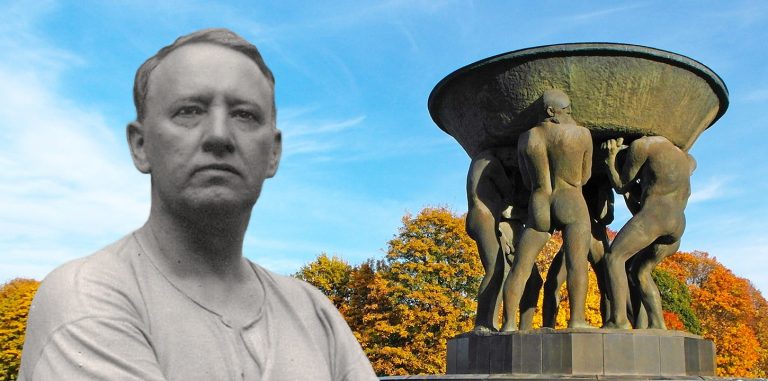
This year, it is 150 years since Norway’s foremost sculptor, Gustav Vigeland (1869-1943), was born. His home and studio are situated next to the Vigeland Park in Oslo, and a large anniversary exhibition opens on Vigeland’s birthday 11 April and lasts through 15 September. Read more about Norwegian Sculptor Gustav Vigeland’s 150th Anniversary of Birth.

Gustav Vigeland is Norway’s largest sculptor, most known as the creator of the Vigeland Park, about 340 acres, in Oslo. The park, mainly designed and shaped by Vigeland, contains about 200 of his sculptures, among the best known are the Sinnataggen (The Angry Boy), the Monolith and the Life Wheel. The park was completed in the 1950s and has around one million visitors annually.

Norwegian Sculptor Gustav Vigeland’s 150th Anniversary of Birth
From Vigeland Sculpture Park, Oslo. Photo: Tord Baklund / Visit Oslo

Vigeland’s studio and appartment
In February 1921, an agreement between Vigeland and the City of Oslo was signed by which he was given a vast studio at Frogner in the outskirts of Oslo. In exchange, he would give the city all of the work he had already made, as well as everything he would produce until his death. The studio had an apartment for him and his family, consisting of library, dining-room, living-room, sitting-room, two bedrooms, and a bathroom with bathtub and lavatory (not every household had such indoor facilities at that time).

Related: 10 Top Attractions in Oslo

Norwegian Sculptor Gustav Vigeland’s 150th Anniversary of Birth
rom the Vigeland museum

Norwegian Sculptor Gustav Vigeland’s 150th Anniversary of Birth
The 150th Anniversary exhibition focuses on Vigeland’s position in art history, and includes borrowings from Musée Rodin, Musée d’Orsay, Musée Bourdelle in Paris, and The Glyptotek in Copenhagen. Vigeland’s works are shown side by side with sculptures by Constantin Meunier (1831-1905), Auguste Rodin (1840-1917), Aristide Maillol (1861-1944) and Antoine Bourdelle (1861-1929), among others. The juxtaposing of Vigeland’s art with other main works in European art history serves to put his oeuvre into a larger context.

In total, the municipality of Oslo has granted NOK 5.8 million (USD 682,000) for the planning and implementation of the anniversary.

Norwegian Sculptor Gustav Vigeland 150th Anniversary of Birth 2019, written by Tor Kjolberg