Rhubarb is a revelation of spring freshness in the kitchen, its pinkness welcome after a fruit-bare winter, the acidity good for burning off the extra fat accrued during the cold months in Scandinavia. Learn more about Scandinavian rhubarb.
Young adventurous Scandinavian cooks are finally discovering the virtues of rhubarb, using it in savory dishes as well as for desserts. For most of us, it is simply a most delicious and gloriously versatile fruit. You’ll find rhubarb in almost every garden, all over Scandinavia, even if it’s not always used in the kitchen. Kids play with the giant leaves and pick the young shoots to suck, filling their mouth with a strange acidity.
Young adventurous Scandinavian cooks are finally discovering the virtues of rhubarb. Photo: Wikipedia
Rhubarb has become so naturalized in the Scandinavian climate that it is hard to believe that it arrived only during the 16th century. Originally, it was imported as a medical plant, and that is how it was regarded for centuries, until the Scandinavians began to eat it in the early 1800s (when sugar became more affordable). Two centuries are nearly enough time to exhibit a truly Nordic touch in how we use rhubarb. Nevertheless, it is loved in the spring, its hardiness an important virtue when the ground is covered with snow for many months, as in the plant’s native Russia and northern China.
How it grows
Rhubarb is a superbly rewarding plant to grow. When the first shoots appear in spring it’s like a miracle – red, tightly leaves thrusting through the ground like small skulls, waiting impatiently to be born. And rhubarb is a survivor, growing on for decades even in derelict gardens, becoming larger and larger if the soil is fertile, and is happy even in dappled shade. Some varieties are grown for their abundance, others for their extreme hardiness. We prefer the early cultivars because the growing season is so short.
The first stalks to appear are particularly treasured and are prepared as if they were solid gold, with great care to keep their delicacy and aroma. Photo: Coop
There are many species of rhubarb which, technically, is a vegetable rather than a fruit. In Scandinavia we grow only one species, Rheum rhabarbarum, of which there are many fine varieties with intensely colored stalks.
The first stalks to appear are particularly treasured and are prepared as if they were solid gold, with great care to keep their delicacy and aroma, and, just as important, their shape. They remain in perfect condition until the first strawberries arrive, and the two together are a match made in heaven. Then the rhubarb is left to grow, and picked again from August onwards for jams, chutneys and cordial.
The arrival of rhubarb is a great gift in spring, and fills the gap before the first gooseberries and strawberries. Photo: Plantasjen
Rhubarb has a reputation for being potentially dangerous, and it does have a high content of both malic and oxalic acids. If you eat it every day, it’s probably not good for your teeth, but nobody does. The acid can be counteracted by eating the rhubarb with generous blob of something white, fatty and milky, which you probably would anyway, because the texture and taste of rhubarb marry so wonderfully with cream, yoghurt, ice cream or crème fraiche. The more intensely colored varieties have a high content of anthocyan, a coloring which is an important part of the plant’s immune system, and thereby also the immune system of people eating it.
Culinary uses
The arrival of rhubarb is a great gift in spring, and fills the gap before the first gooseberries and strawberries. Rhubarb has much of the same charm as gooseberries, and can be used in the same recipes. Very young, red rhubarb can be made into a delicious and very pretty fresh relish for fried fish, chicken, pork and frikadeller if treated exactly as for the cucumber salad.
The juiciness of rhubarb varies according to its age: young rhubarb will spill a lot of juice, older, not so much. And some varieties are fare sourer than others, so when cooking with rhubarb be prepared to adjust the sugar accordingly.
A delicious, well-made compote is at the heart of many great rhubarb dishes.
Rhubarb compote
Rhubarb compote is such a beautiful thing: firm, translucent and silky sticks in syrup of the loveliest pink, and a far cry from the pink-green sludge that it can be if not cooked with care. A delicious, well-made compote is at the heart of many great rhubarb dishes. Eat it hot or cold, plain with cream or ice cream, and/or with sponge cake. Excess syrup tastes wonderful as a cordial.
The secret of beautiful rhubarb compote lies in the method. Cooking it to perfection in a pan is difficult, while in the oven it’s easy as pie: the rhubarb is not stirred, and the oven simply melts the fruit in whole pieces, in a sugary syrup until it’s tender. Another secret – the lower, very pale part of the stalk is the best -just cut it a little thinner. And do not bother to strip off the outer layers of the older, woodier stalks: just cut the stalks in fine slices.
Rhubarb and sugar are the only basic ingredients required, but you can choose to spice it up with one of the flavorings suggested below.
500g rhubarb, cut into 5cm pieces
200g sugar
One of the following (optional) 5cm piece of angelica, 3-4 rose geranium leaves, 3cm piece of fresh ginger, sliced 1 cinnamon stick, 1 stem of sweet grass, 1 small bunch of woodruff, or 1 split vanilla pod.
Mix the rhubarb, sugar and spicing of your choice (if using) in an ovenproof dish. Cover with foil and bake at 180C/gas mark 4 for approximately 25 minutes. Test the fruit after 10 minutes and turn it over very gently. When the fruit is cooked, test the sweetness. If you need to add more sugar, do not add it directly to the rhubarb. Gently pour off the syrup into a pan, then add the extra sugar and bring to the boil. Allow the syrup to cool, then pour it back over the rhubarb.
Tip By adapting the above recipe slightly, you can make a compote that is a wonderful spring accompaniment for fried fish, chicken, pigeon or pork. It is made as above, but using only 150g sugar, and adding 3 tablespoons cider vinegar. You can spice it up with a little chili if you wish.
Oslo, the capital of Norway, aims to be the first capital city in the world with an all-electric public transport system. So, Oslo is a pioneer in green transport solutions.
Oslo, a city of 700,000 inhabitants, has since 2017 been described as the electric vehicle (EV) capital of the world when battery-powered cars and plug-in hybrids together accounted for more than 50 percent of all new car sales in the capital. The available charging infrastructure was only part of the success.
Now, Oslo has set its goal to become the world’s first wholly emissions-free city by the end of 2023. Norwegian policy makers launched their support for electric cars as early as 1990, but first in recent years, more than 100,000 units with slicker models and better batteries and features are running on the Norwegian roads.
Oslo has set its goal to become the world’s first wholly emissions-free city by the end of 2023.
A 500 million crown (48 million euro) program now aims to replace the capital’s diesel-fueled buses with 450 electric ones. Even though the municipalities plan to relax some of the former incentives, the goal is that all new cars sold in Norway should produce zero or very low emissions by 2025.
Sirin Stav, Oslo’s Vice-Mayor responsible for environment and transport.
“The maintenance of the buses is cheaper so it is a win-win situation,” says Sirin Stav, Oslo’s Vice-Mayor responsible for environment and transport.
More than 5.000 charging points are available in the region today, some of which are fast charging stations which take minutes to charge a battery. The newly built charging stations located in parking lots and garages can charge between 28 and 100 cars simultaneously.
Now, owners of hydrogen-powered cars can also benefit from the same incentive package as EV drivers had before 2017. With only 50 hydrogen cars on the roads at the moment, the aim is 50.000 units in the years to come.
In the city’s last tender, e-buses were 5 per cent cheaper than diesel equivalents. The planning authorities introduced a 42-actions plan on reducing emissions, including gradually going car free in the city.
Oslo has already electrified most of the ferries that ply the fjord on which it is located. It also has an extensive tram and bike lane network. While the national policy and incentive framework is the main driver for the transition to a green transport sector in Norway, the contribution from regional actors is very important.
Several of Norway’s major transport and technology developers are cooperating to develop solutions for self-driving buses. The first models for minibuses were tested in limited environments in Oslo in 2016 and the first law project that will regulate these vehicles is currently under development. In the years to come, Oslo will become a learning arena for self-driving vehicles.
Oslo – a pioneer in green transport solutions, written by Tor Kjolberg
Google Trends data suggests that the number of searches for “affiliate marketing” has grown significantly over the past six years. Affiliate marketing is a type of advertising that involves an affiliate, like an influencer, promoting a company’s product or service for a commission on every sale. If you ever have considered Affiliate Marketing as a part of your marketing mix, read on to learn more about the 21 best affiliate marketing strategies for 2023.
According to Statista, U.S businesses’ affiliate marketing spending will reach $8.2 billion by 2022, up from 5.4 billion reported in 2017. The internet usage market was pretty saturated in Sweden, with 96% of the population already using the internet daily (ITU, 2019). The extra constraints of having to work from home and perhaps having to be isolated during large portions of the pandemic years, we can see that there has been an increased adaptation to online environments.
According to Statista, U.S businesses’ affiliate marketing spending will reach $8.2 billion by 2022, up from 5.4 billion reported in 2017.
What has created the incredible growth of affiliate marketing over the past few years?
Under the pressure of competition and technology development it’s difficult for any marketing method to stand the test of time. Affiliate marketing, however, is still on the rise, and this article aims to be a handy guide for businesses interested in implementing the method in the course of 2023.
Today, 81% of brands around the world have affiliate programs. But implementing an effective affiliate marketing plan takes time and effort. Fortunately, there are strategies to get you on track. In this article, I have compiled a list of affiliate marketing strategies for you to explore.
As we move through 2025, optimizing affiliate campaigns means staying on top of communication and ensuring nothing slips through the cracks. Incorporating practices around email monitoring software helps maintain clarity, improve coordination, and support stronger affiliate relationships.
Content: 1. Choose products or services for promoting via affiliates
2. Set the type of affiliate payment model
3. Choose the Right Affiliates
4. Expand your affiliate network
5. Leverage micro-influencers
6. Join in an affiliate network
7. Build your own affiliate program
8. Optimize your platforms
9. Attract Sales with Coupons, Deals, and Promotions
10. Diversify your affiliate program
11. Leverage the Power of Niche Influencers
12. Keep an Eye on Trending Influencers
13. Track Your Sales
14. Leverage your content marketing
15. Initiate brand to brand partnerships
16. Leverage Affiliate Promotions frrom Multiple Sources
17. Invest in Search engine optimization (SEO)
18. Use affiliate marketing software
19. Run Ads Around Peak Shopping Times
20. Build a sense of authenticity
21. Prepare marketing guidelines and collateral
Today, 81% of brands around the world have affiliate programs.
1. Choose products or services for promoting via affiliates
Affiliate marketing strategy is the process that merchants find and partner with different affiliates to promote their business, products, or services.
2. Set the type of affiliate payment model
Your choice of payout structure would depend on your goal. A practical commission percentage depends on a few elements, such as customer acquisition and retention. Compare how much commission your competitors are offering for the same products. Offering higher commission rates for a limited time could also make your brand a more exciting option.
A comprehensive affiliate marketing strategy typically includes:
Pay per click
Pay per lead
Pay per sale
Decide different commission tiers for different level of affiliates
3. Choose the Right Affiliates
If you want to influence consumers’ buying decisions, you should choose to work with someone who has an engaged audience that trusts them.
When choosing an affiliate to help you with your product promotions, check whether or not:
They have a good rapport with their audience
Their audience might be interested in your products or brand
They have a good following, site ranking, views, engagement, and authority
All of this is important to ensure that your efforts aren’t in vain.
An excellent example of a company using affiliate marketing is Omio, formerly known as GoEuro. This is an online travel aggregator based in Berlin, Germany. It was founded in 2012 and since then has expanded into 15 European countries, as well as to Canada and the US. The website is available in 21 languages.
4. Expand your affiliate network
The key of a powerful affiliate marketing strategy lies in how you can take advantage of affiliates to maximize your profit with minimal effort by, for instance:
Modifying the commission structure to entice more affiliates to join your affiliate programs.
Instead of tapping into various affiliate networks, build your own. It can be really difficult to recruit your first few affiliates. But expanding your affiliate network is comparatively easier.
To attract affiliates, you should follow a clear, to-the-point approach. Provide your potential affiliates with all of the necessary information such as what to do, how it works, and the commission you’ll pay.
You should also encourage your affiliates to recruit more sub-affiliates. You can offer them a small commission of the sales that their sub-affiliates drive. That can be quite encouraging.
You should always take some time to appreciate and reward your most loyal affiliates. Track their performance, and analyze the lifetime value of the customers they bring to your brand.Related: Scandinavian E-Commerce Trends 2022
Micro-influencers have between 1,000 and 100,000 followers.
5. Leverage micro-influencers
Mega influencers, influencers with more than 1 million followers, might sound like an enticing venture, but they can be costly.
This is especially true for mega influencers who have over 100 million followers. For most businesses, even larger ones, that might be too expensive. However, there is a growing trend of micro-influencer marketing taking the marketing world by storm.
Micro-influencers have between 1,000 and 100,000 followers. According to a survey done by Shopify, 77% of marketers say that micro-influencers are on top of their lists of ideal influencers.
Micro-influencers cost a lot less and allow you as a brand to possibly market to a wider audience by recruiting a larger number of micro-influencers than a single mega-influencer.
Not just that, but micro-influencers have more dedicated and better-targeted audiences, which means if you find the right micro-influencer, chances are you will have a higher engagement rate than those of macro and mega influencers.
Studies have shown that micro-influencers have between 7-10% engagement rates, whereas macro-influencers are lucky to get 5%.
6. Join in an affiliate network
If you just joined a marketplace, it can be tough to recruit your first few affiliates by yourself. You can start by being a member of a popular affiliate marketing network, where you offer affiliate program opportunities to a vast community of affiliate marketers.
For those who want to build their own affiliate network, it might be challenging to recruit the first few affiliates. So you should:
Inform your potential affiliates of all essential information related to your affiliate programs, including commissions, detailed tasks, benefits, etc.
Encourage your affiliates to recruit more sub-affiliates to earn a small commission for each purchase their sub-affiliates generate
Reward your most loyal affiliates with a much higher commission rate compared to others or offer them special incentives like free delivery every month or shopping discounts
Offer a high commission rate to attract more affiliates marketers to your affiliate program
7. Build your own affiliate program
You might start out as a merchant in an affiliate network. But if you’re ready to expand your business to another level, you might want to consider building your own affiliate program. This would not only grow more traffic to your domain but it would also give you an opportunity to take control of all your transactions, affiliates, and commissions.
In building your own affiliate program, you need to:
Choose a software solution
Define program rules and expectations
Discuss the basics with your affiliates.
Explaining program rules should be a priority.
8. Optimize your platforms
While your arm of affiliates can direct traffic to your site, your main goal should be conversion. That is, when visitors land on your page, they should be engaged enough to take action, whether that’s to purchase a product or sign up to your newsletter.
Conversion optimization creates a great user experience, which increases leads and traffic to your website. Other optimization strategies to boost conversion include:
Creating video information
Sending personalized email messages
Using intent-based keywords on all your website pages
Developing targeted landing pages
Producing highly relevant content or updating previous ones
Testing your platform speed
9. Attract Sales with Coupons, Deals, and Promotions
Leveraging coupons and deals is one of the best affiliate marketing strategies to boost sales. That’s because many consumers love the savings power of coupons. They often search for discount vouchers on various coupon and deal sites before shopping for any product.
Many coupon and deal websites allow you to attract more customers by offering significant discounts.
Coupons work best in markets that are highly competitive such as food, beauty, travel, or gadgets. However, you need to manage them well as an extravagant discount offer might simply eat into your margins.
To make the most out of your coupon affiliate marketing strategies, choose to work with a few, high-quality sites. See where their visitors come from. Do they highly rely on search traffic or do they have a user base of their own?
You should also check the authenticity of their site. Try using their coupon codes for a few popular brands. If they don’t work, it’s a red flag.
To truly maximize your program potential, creating a diversified affiliate program is the way to go.
10. Diversify your affiliate program
In finance, investors diversify their investment portfolio to reduce risk. It’s the same thing with diversifying your affiliate program. Relying on one to two affiliates is a great start, but it might not be sustainable in the long run. To truly maximize your program’s potential and ensure steady growth, consider implementing unique ways to invest money and create a diversified affiliate program. It can also help you tap new audiences and create future opportunities.
Here are a few tips to help you diversify your affiliate programs.
Do your research on potential affiliates and establish a relationship with them on their own platforms. Time your recruitment and review your affiliate mix every quarter.
Provide a marketing strategy for each type of affiliate. Consider which campaigns would be relevant and productive for each type and define a target ROI.
Explore more opportunities with your successful marketing campaigns. If the campaign has performed consistently well within a set timeline, consider expanding your budget for a more elaborate advertising initiative.
Share any information that you can. Discussing the results of your affiliate programs would not only offer solutions for your peers but may even lead to a collaboration.
11. Leverage the Power of Niche Influencers
Influencer marketing has become much more than a buzzword in recent years. And brands are continuously learning to tap into this source of referrals effectively.
Many brands choose to work with a large number of social influencers and bloggers in their niches. Influencers have more authentic relationships with their followers. They can effectively get their audience to trust your brand and convince them to use your products or services.
Influencers may not send you huge amounts of traffic compared to coupon sites. But the audience they send is targeted and more likely to be interested in your product.
12. Keep an Eye on Trending Influencers
It’s not easy to know who will be trending next, but if you work with an influencer that starts trending, you’ll see a significant increase in leads and sales.
The best way to find trending influencers is by following trends. Go on social media apps like Instagram, TikTok, and Twitter and look at what’s trending and which influencers are actively posting with hashtags related to the trend.
Another great way to work with influencers that are trending is by using an influencer marketing platform to connect with them.
13. Track Your Sales Committing to understanding how influencer revenue tracking works can help you take your brand to the next level, particularly if you operate in the DTC eCommerce space. It’s not that much different from tracking sales through other marketing channels. Grin is a reputable tool. It helps you monitor a wide variety of parameters like referrer links, browser versions, devices, creatives, and more.
Nordstrom Rack, a US fashion retailer, gifted their products to several influencers. The influencers then featured those products in their blog posts and social media posts effectively. This series of posts helped them reach 500,000 potential customers and cost-effectively increase sales.
A few important metrics that you should check include:
Reach
Engagement
Audience demographics
Follower growth over time
Alignment with your brand’s values and niche
All of these factors contribute to whether or not an influencer is a good fit for your affiliate marketing program.
14. Leverage your content marketing
For any business that taps into the affiliate marketing industry and expects revenue, content marketing is indispensable for a high-effective affiliate marketing strategy.
Though affiliate marketers are responsible for promoting your products, you can’t rely entirely on your affiliates and wait for sales to come in.
Even when affiliates successfully bring interesting perspectives to your landing pages or product pages, your job is to convert them into customers. To ensure the success of each generated leads from affiliate marketers, make sure:
Your site loading speed is fast (1-2 seconds)
Your website content is informative and relevant to your target audience’s needs
Display high-quality and attractive product photos
Feature customer reviews to build trust
Optimizing website content and product pages will, for sure, give a boost to your affiliate marketing strategies and get more conversions in the long-run.
A PartnerPath poll found that co-marketed ads help 68% of consumers to arrive at a buying decision before even speaking to a salesperson.
15. Initiate brand to brand partnerships
In 2017, 34% of marketers cited co-branding as the most effective way to increase the number of email subscribers. Meanwhile, a PartnerPath poll found that co-marketed ads help 68% of consumers to arrive at a buying decision before even speaking to a salesperson.
This shows that brand to brand partnership is an effective means to a high conversion rate. All you need is another brand that aligns with your values and targets the same demographic.
Spotify and Starbucks’ co-branding campaign to create a music ecosystem is a perfect example of this. By partnering with Spotify, Starbucks gets to create a new coffee shop experience. Starbucks employees receive new complimentary access to Spotify premium as well as power to control the in-store playlists.
On the other hand, Spotify’s artists get a wider audience, and customers get free coffee when they subscribe to Spotify Premium. Overall, it’s a win-win situation.
16. Leverage Affiliate Promotions From Multiple Sources
Instead of focusing on just Instagram influencers or coupon sites, spend the time to reach out to your audience through affiliates from multiple sources.
You can test a variety of affiliate marketing strategies to see which audience responds the best and is the easiest to reach.
Some promising sources to leverage affiliate promotions include:
Product review blogs: A review-focused affiliate blog can help you promote your products effectively. They are more likely to drive customers who are really interested in making a purchase.
Email marketing: Affiliates with a huge list of email subscribers in your niche can help you drive more conversions.
Webinars: Experts who host webinars on topics relevant to your niche can also be an amazing source of targeted leads. With an audience who trusts their recommendations, they can boost your affiliate marketing strategies.
YouTube videos: Getting your products featured by a popular YouTuber can help you drive instant sales. After all, 40% of millennials admit that their favorite YouTubers understand them better than their friends.
Using multiple platforms can help you drive the best results from your affiliate marketing strategies. This can also help you analyze the platform which your audience is most engaged.
Which Channel is Best?
To track the effectiveness of your affiliate marketing efforts, use relevant metrics.
17. Invest in Search engine optimization (SEO)
SEO matters for any business, even affiliate marketing. Focusing on SEO can leverage your whole affiliate marketing strategy though it definitely takes time and effort to see final results.
PPC campaigns are effective in promoting any product or service to its right audience. All you need is a detailed understanding of who your target is and their mutual characteristics to set ads.
However, it’s challenging to maintain your income-expense rate via only PPC campaigns. Furthermore, you might end up spending more than what you earn for several reasons:
SEO is a perfect approach for your affiliate marketing strategy when you’re just a seller with no reputation compared to those who have a long presence in the marketplace.
Via affiliate’s recommendation, a prospective buyer might get interested in your product and search for your brand on Google. Then, a high-ranking page apparently is more convincing.
18. Use affiliate marketing software
Building and managing your affiliate marketing campaigns can be overwhelming. This is where affiliate marketing software enters the picture. These platforms can assist you in tracking, overseeing, and even growing your initiatives. Those, in turn, can increase your e-commerce sales and scale your brand-to- brand partnerships.
In choosing software, take these factors into account:
All-in-one platform
Seamless integration
Easy set-up
Mobile compatibility
Note the following advantages and disadvantages in using affiliate marketing software:
Pros
Easy management
Fraud protection
Campaign tracking
Deep analyticsCons
Monthly cost
19. Run Ads Around Peak Shopping Times
Holiday times see a large increase in spending, especially if those products are related to the holiday.
Retail sales figures show that certain markets like jewelry, electronics, and toys/hobbies have a larger last-quarter percentage than the rest of the year.
This is due to large holidays falling during those months like Halloween, Thanksgiving, Christmas, and New Year.
That makes it the best time to get your product out to affiliate marketers to start advertising.
20. Build a sense of authenticity
Make use of auto-optimization options offered by affiliate software to stay on top of your business and protect yourself from losing money when you sleep.
Using multiple platforms can help you drive the best results from your affiliate marketing strategies.
21. Prepare marketing guidelines and collateral
Advertising materials are some of the things that affiliates look forward to when working with a brand. Preparing your marketing materials and guidelines beforehand makes the work easier for both you and your affiliates.
First, it speeds up the promotion process. It allows your affiliates to understand your brand quicker, therefore promoting your products more efficiently. The less time they channel into creating content, the more they have on promotion. Presenting the types of materials that work best for each type of platform also saves time and energy.
Sending marketing collateral to your affiliates also helps them market your most relevant products without losing your voice. You can approve which logo designs they can use, for example. You can also brief them on the tone they apply on copy points and captions they may use in promotion.
The 21 Best Affiliate Marketing Strategies for 2023 – Conclusion
The world of marketing has never stopped changing. Can you take the fullest potential out of affiliate marketing? The answer to the question is up to you.
The 21 Best Affiliate Marketing Strategies for 2023, written by Tor Kjolberg
The problem with wine corks is that they are so incredibly difficult to get back into bottles if you’ve only had a glass. The Copenhagen-based French designer realized this and solved a bottleneck problem by developing his simple plugs.
Designer Aurélien Barbry’s basic bottle series, designed for Normann Copenhagen, consists of four items, a foil cutter, a wine stopper, a corkscrew and a wine pourer that helps oxidize the wine. The designer’s aim was to cut out all unnecessary details and gimmicks in order to focus on the raw form and basic function.
Aurélien Barbry has worked on many different interior and design projects, his clients include Georg Jensen, COR, Menu, Normann Copenhagen, HAY, ENO among others.
The organic shapes and the finish add warmth and nostalgia to the design and soften the expression. Basic is light and comfortable to hold and the satin-like surface ensures that the wine flows easily. The surface has been titanium-treated, making it extra durable.
Since then, Barbry has developed corks in various editions, made of, yes, cork. They are also environmentally friendly. The Chinese cork oak grows on controlled plantations and is cut down every ten years. The corks themselves are made from the crumbs left over from normal cork production.
Barbry has developed corks in various editions, made of, yes, cork.
Aurélien Barbry graduated with Honor from Ecole Camondo Paris as an industrial and interior designer. He began his career by working with architect Jean Nouvel. Since then Aurélien has worked on many different interior and design projects, his clients include Georg Jensen, COR, Menu, Normann Copenhagen, HAY, ENO among others. Today he is based in Copenhagen where he continues to work on challenging design.
Copenhagen-based French Designer Solved a Bottleneck Problem, written by Tor Kjolberg
Applying for a Swedish work visa has its caveats, as any bureaucratic procedure would do. It is not overly complicated, but it is always better to arm yourself with knowledge in order not to get lost along the way. Let’s go over the requirements and rules you need to follow if you strive to live and make a career in Sweden. Here’s how to apply for a Swedish work visa.
The First Thing to Consider Before you begin any preparation, you should know this – citizens of the European Union and European Economic Area apply on slightly different conditions than others. EU/EEA citizens already have the right to be present in Sweden while still seeking employment, they have only to register with the Swedish Tax Agency. Everyone else must already have a job offer to obtain a work permit and enter the country. You can learn more about this from a Sweden Abroad article.
Everyone can go to work in Sweden, but you may face different hurdles, depending on where you come from.
The Basic Requirements
Before applying, you have to prepare a stack of documents:
A purpose description. It must include the reason for your visit, precise location (e.g. name of a city), visit duration, and source of material support. You should also state your intention to leave once your job contract ends.
A job offer. It must include health and life insurance, and social security. And the terms must match Swedish collective agreements or the occupation’s standard.
A source of income. The best one is a monthly salary of at least 13,000 SEK before taxes.
Proof of accommodation. It’s your responsibility to find a roof over your head for the duration of your stay.
A valid passport.
ID photos. If you have none at hand, you can make photos that fit the requirements with this ID photo maker.
Note that the embassy might require some other documents on top of these.
The Application Process
If you wish to apply for a Swedish working visa in person, you can do it in a consulate or embassy of Sweden or another Schengen country, that officially represents Sweden. If Sweden has no presence in your country whatsoever, you have to apply from another country. But an online application for a work visa in Sweden is also available. Here’s what you should do:
Receive a Job Offer
Your employer-to-be from Sweden must provide a written job offer, that also includes the employment duration and approval from a relevant trade union.
Remember, you are looking for the job, not the other way around
Submit Personal Data
Once you receive and accept your offer, your employer will have to begin the online application process in the Swedish Migration Agency for you. Then you will have to provide your birthdate, citizenship info, education, and email. Then you will receive a letter, in response to which you’ll have to state whether you are moving alone or with family.
Provide the Documents
You will require copies of the following set of documents: a passport, a written job offer, and a trade union statement. So, make sure you have them prepared.
Pay the Fee
You should pay for a work permit. The price may vary depending on your profession or other occupation, but on average it is around 2 000 Swedish kronor.
Wait for a While
Processing your application and issuing a work visa in Sweden normally takes from one to three months. The waiting time depends on the method of application (online or in person), the industry you are going to work for, and your status as a company worker or a self-employed person.
This is how you apply for a working visa. However, if your goal is education, then you are in quite a different situation and should learn more about an internship in Sweden.
One more thing – Sweden is cold, so grab some warm clothes
Image 2
Stay Focused
Bureaucratic procedures are annoying for most people, but they go hand in hand with traveling and migration. And a single mistake or a lost document can turn a trivial affair into a headache. So, stay focused through the whole process and just remember why it is worth it for you.
More then 50% of online shoppers in Scandinavia are willing to wait longer for sustainable products, according to a survey by software supplier Descartes Systems Group, with a statistical universe of 8.000 consumers assorted from Canada, the United States, and 9 European countries: the United Kingdom, the Netherlands, Germany, Belgium, Sweden, Norway, Denmark, Finland, and France. Read more about the rise of sustainable online shopping in Scandinavia.
The consensus among independent researchers indicates that online shopping can be much less damaging to the environment than traditional, in-store shopping — if done the right way. In fact, environmental sustainability can benefit your online shop and raise your brand awareness among millennials while saving the world from choking on plastic.
The consensus among independent researchers indicates that online shopping can be much less damaging to the environment than traditional, in-store shopping — if done the right way.
However, the Descartes survey also hints at the fact that only 1 in 5 customers are prepared to pay extra for eco-friendly delivery.
Sadegh Shahmohammadi, a sustainable-logistics expert at The Netherlands Organization for Applied Scientific Research (TNO), and his colleagues have made detailed models of the carbon footprint of various methods of shopping. He says that packaging isn’t a big contributor: “It’s not minor, but it’s not significant.” (Additionally, cardboard and much of the bubble wrap now used are recyclable.)
Sustainability is not a negligible factor for online shops.
But sustainability is not a negligible factor for online shops. The growing trend of environmental sustainability is humanity’s reflex to fight the destructive nature of the “grow or die” imperative of capitalism. In e-commerce, the concept of sustainability can range from business models to packaging products and its role will become increasingly important in the coming years.
Consumers are most worried about the environment when shopping for groceries and fashion. Particularly when buying shoes and clothing, the overall mark was 35% across all countries.
Buying goods online can be better for the environment than in-store shopping for one fundamental reason: With online shopping, a single truck or van can replace multiple car trips, by multiple households, to stores. It helps to think of it this way: In most of the United States, almost every purchase means putting a vehicle on the road — either your own or a delivery company’s. One van delivering 50 packages is much more efficient than 50 people driving to the store.
Consumers are most worried about the environment when shopping for groceries and fashion.
Environmental and sustainability awareness has long been a trend in e-commerce. In a bid to successfully address increasing demands for sustainability from their consumers, online retailers have been pondering for some time now on topics like corporate social responsibility and eco-friendly approaches in the supply chain.
However, there are vast differences in the environmental awareness of consumers in each country. In Scandinavia, people have more environmental worries about groceries while the Netherlands scores lowest in this segment.
All in all, these numbers will surely keep on growing due to the fact that the raw percentage of people concerned about sustainability is rapidly growing among Millenials and Gen Z.
The Rise of Sustainable Online Shopping in Scandinavia, written by Tor Kjolberg
Hope Jahren from Minnesota, USA, has been interested in trees all her life. She found the peace of the forest in a lab at the University of Oslo. Read the fascinating story of The American lab girl who established a research laboratory in Norway.
The American geochemist and geobiologist Anne Hope Jahren (born in Austin, Minnesota, September 27, 1969) is known for her work using stable isotype analysis to analyze fossil forests dating to the Eoscene. She has won many prestigious awards in the field, including the James B. Macelwane Medal of the American Geophysical Union.
Jahren earned her Ph.D in 1996 at the University of California, Berkeley in the field of soil science. Her dissertation covered the formation of biominerals in plants and used novel stable isotope methods to examine the processes. In 1998, Hope Jahren came to Oslo on a Fulbright scholarship.
From 1996 to 1999, she was an assistant professor at the Georgia Institute of Technology, then moved to Johns Hopkins University, where she stayed until 2008.
The Jahren Laboratory in Oslo is the fourth she has established from the ground up since then.
Anne Hope Jahren’s book “Lab Girl” (2016) has been applauded as both “a personal memoir and a paean to the natural world”
Her research focuses on living and fossil organisms, and how they are chemically linked to the global environment. Using measurements of the stable isotopes of carbon, nitrogen, hydrogen and oxygen her lab group is working to elucidate information about metabolism and environment, both in the Human environment, and through Geologic Time.
Her book Lab Girl (2016) has been applauded as both “a personal memoir and a paean to the natural world”, a literary fusion of memoir and science writing, and “a compellingly earthy narrative.
From the Jahren laboratory. Photo: UiO
The book has been translated into 15 languages and has been on the bestseller lists of both the New York Times and Amazon. In 2016, she was named by Time Magazine as one of the world’s 100 most influential people.
Anne Hope Jahren has won many prestigious awards in the field, including the James B. Macelwane Medal of the American Geophysical Union.
In her book Lab Girl, Jahren writes openly about sex harassment of female researchers in American academia. She describes a masculine “pat on the back” culture where women are ignored and ridiculed, a culture where she has to prove more – ergo be more productive – than her male colleagues and close her ears when they talk disparagingly about her. Here in Norway, women are appreciated as human beings, she says.
Jahren recommends that people draw strong professional boundaries, and that they carefully document what occurs, beginning with the first occasion of harassment. You can find more information about these two, plus her upcoming works, on her author page.
Anne Hope Jahren quotation. Source: Quotfancey
Some of her recent research projects include analyzing the carbon isotope composition of terrestrial land plants, the carbon isotope composition of ancient terrestrial organic matter, and the Arctic Eocene, as well as others. You can read about these projects on her research page.
“Even in the worst storms, I still want to be with the plants,” she said in an interview.
The American Lab Girl Who Established a Research Laboratory In Norway, written by Tor Kjolberg
Feature image (on top) Illustration by Kayla Rader, Northwest Vista College
Choosing an institution of higher learning has a massive impact on an individual’s success, especially when it comes to specializations. For instance, if you want to learn the Nordic countries’ literature, culture, and politics, you might find universities with Scandinavian studies both in the US and Europe to be a great match. Learn more about the 7 best Scandinavian universities of all time.
However, it is more beneficial to study and go for courses in universities that are situated in environments where people actively practice what aligns with the career major. Specifically, learning organizations that are founded on in-depth research stand out among the others, presenting the Scandinavian institutions as the best option.
The Scandinavian universities are located in Europe’s northernmost region. These areas include Sweden, Norway, Finland, and Denmark. Recently, these institutions of higher learning have been featured as ideal destinations for students looking to expand their skills in research and technology. Hence, they are a good option for people looking to learn in all other expanses beyond the Scandinavian culture. In this article, we present you the seven best Scandinavian universities of all time in the hope that any of them becomes your next academic destination or that of your kin.
Scandinavia hosts more than one hundred and fifty universities, offering nearly 2000-degree majors at all levels. Here is a list of the seven best Scandinavian universities.
Karolinska Institute is the world’s leading cancer research center and the best medical school in Scandinavia and Europe.
Karolinska Institute – Sweden
Karolinska Institute is the world’s leading cancer research center and the best medical school in Scandinavia and Europe. It offers a wide range of medical courses and programs, making it an ideal learning destination for any individual looking to build a career in medicine, especially research. Founded in 1810, the institution has set itself as a premier medical institution and is responsible for 5 of the 8 Swede Nobel Prize winners in physiology. These qualities make it an all-time best Scandinavian university in the region and worldwide.
University of Copenhagen – Denmark
The University of Copenhagen was founded in 1479 and is the oldest higher learning facility in Denmark and Europe. As an institution, it has set itself as an ideal destination for students and researchers looking for an opportunity to develop their talents. It focuses on nurturing academic communities through research-based methods to teach, equipping students with the skills to tackle societal challenges. Such qualities have made it one of the most respected institutions in the Nordic countries and the world. Therefore, it can also be a good choice for any student studying in Scandinavia.
University of Helsinki – Finland (*
This is the oldest and largest academic institution in Finland. It has contributed to achieving fairness and equality through various research programs and projects. As part of the university’s strategic plan, it is focused on four research themes, including aging and health, globalization, the digital world, and sustainable development. If you’re looking to major in any of these areas, then the University of Helsinki might be the best option. An important point to note is that the institution has a career body that helps students resettle and build themselves professionally while in Finland. So, choosing Helsinki is equal to seeking an avenue for better and more job opportunities.
Lund university is one of the institutions that has grown from grass to grace. It started with a few hundred students and professors being paid on grains. Lund University has a population of over 40000 students and has set itself as an institution for international research. It offers Sweden’s broader research environment, with a global research profile and network in universities in over 67 countries. As a result, it stands out as one of the best institutions for research students and other scholars looking to enter a highly dynamic and challenging learning environment.
Aarhus University is the second-largest learning institution in Denmark
Aarhus University – Denmark
This is the second-largest learning institution in Denmark, with a population of more than 40000 students. Out of these, more than 50% are enrolled in graduate programs, presenting the learning facility as an ideal graduate school. Furthermore, the university has more than 12% of its student population from different countries worldwide. This makes it one of the culturally diverse institutions and a proper choice for any person looking for a good learning environment.
Uppsala University – Sweden
This Swedish university was founded in 1477. Since then, it has established itself as a vibrant cultural environment and extraordinary student life. Also, it has delved into world-class research activities to revolutionize the global business culture. The various research programs, especially in sciences and languages, present it as one of the best Scandinavian institutions. Thus, this might be a good bet if you’re looking for a bubbly academic environment to explore and learn.
University of Oslo – Norway
The University of Oslo has played a pivotal role in the development of Norway for the past 200 years. It offers more than 800 courses in English at all levels, focusing on research-based education. As a classical university with a broad range of academic disciplines, the University of Oslo has invested in programs that facilitate student-centered learning, churning out professionals that are good for the global job market.
Application to universities differs from country to country.
How to Get Admission to the Best Scandinavian Universities
Application to universities differs from country to country. However, some general guidelines might be useful when looking for a change in Scandinavian universities:
Select a program of choice. Choose a career that aligns with your interests to ensure you send an application to the right institution.
Write a motivation letter. Some fields or institutions require you to write a motivation or cover letter to register your intentions to get admission. Use a professional essay writing service online, such as Custom Writings, to ensure you have a winning custom essay or letter. The company has professional writers who generate all types of academic papers from scratch. Feel free to use such cheap custom writing services to get a letter that will guarantee you a position at the best college.
Ask for a recommendation letter. Some universities might require an endorsement letter from your former teachers. Enquire if you can get this to make the admission procedure seamless.
Prepare and take a language test. Look for the language requirements and undertake the necessary tests if you’re not a native speaker.
Translate and authenticate academic documents. If you are going to a country that uses a different language, ensure that you translate and authenticate your documents through competent authority.
Use online application forms. Once you have all the documents, apply directly to the institution via their application portal.
Register and sit for the entrance exams. Prepare in advance and take the enrollment exams where applicable to enable the institution to test your capabilities.
Schedule a visa appointment. Whether you are on a scholarship or not, ensure you schedule for a visa, so your stay abroad is legalized.
Scandinavian universities offer the best study opportunities, especially to students focusing on research. This article has outlined some of the best institutions and some brief guidelines for working through the application process. We hope it helps you unlock career and academic success.
7 Best Scandinavian Universities of All Time is a promotional article from customwritings.com
*) The author has included a Finnish university. Finland is however not a part of Scandinavia but belongs to the Nordic region (editor’s notes).
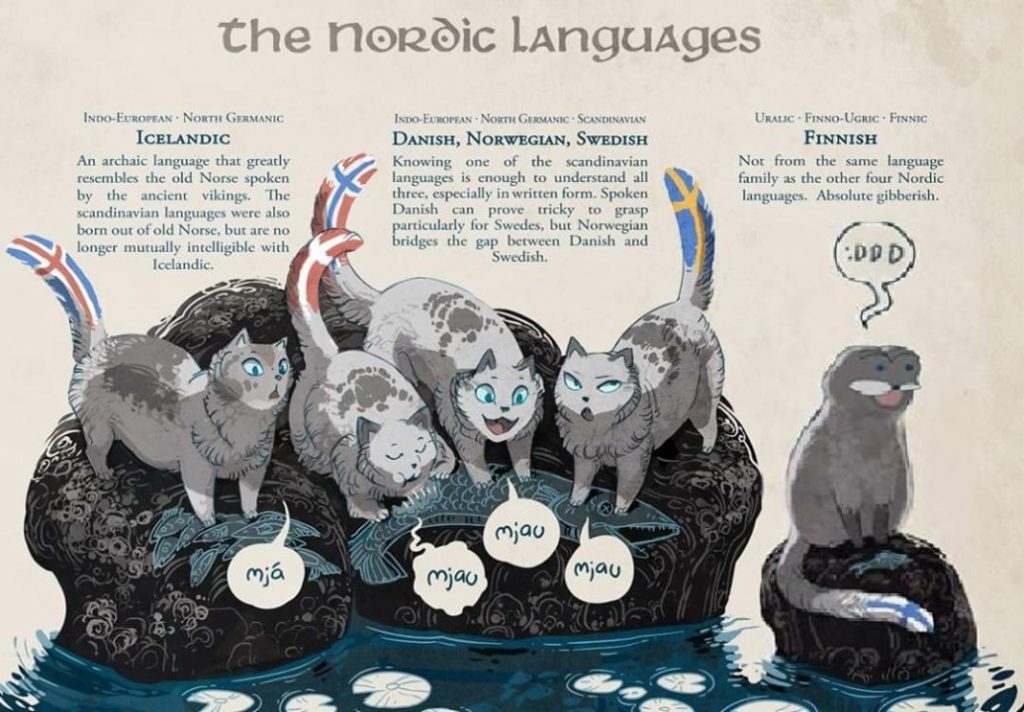
The Scandinavian languages are a group of North Germanic languages that are spoken by people in Scandinavia and other parts of the world. The languages are Danish, Norwegian, Swedish, Icelandic, and Faroese. They are all very similar, but there are some differences in pronunciation vocabulary, and grammar.Learn more about understanding the Scandinavian language.
Danish is the official language of Denmark and one of two official languages of the Faroe Islands (the other being Faroese). It is also spoken by a minority in Germany (especially in the state of Schleswig-Holstein), Iceland, Spain (on the autonomous Canary Island of Fuerteventura), and Greenland.
Norwegian is the official language of Norway and one of two official languages of Svalbard (the other being Russian). It is also spoken by a minority in Sweden, Denmark, Finland, Russia, and the United States (in Alaska).
Swedish is the official language of Sweden and one of two official languages of Finland (the other being Finnish). It is also spoken by minorities in Estonia, Latvia, Lithuania, Norway, Russia, Poland, Denmark, Germany, Romania, Ukraine, Kazakhstan, Iran, Iraq, Turkey and China.
Icelandic is the official language of Iceland. It is also spoken by a minority in Denmark, the United States (in Alaska), Canada, and Norway.
Faroese is the official language of the Faroe Islands. It is also spoken by a minority in Iceland, Denmark, and Norway.
The Scandinavian languages, also referred to as the Nordic languages
What are some tips for learning a Scandinavian language?
While there are many different ways to learn a Scandinavian language, some methods may be more effective than others. One way to learn a Scandinavian language is to find a tutor who is a native speaker. This can be done by searching online or in your local community.
Another way to learn a Scandinavian language is to take a class at a local college or university. This will give you the opportunity to hear the language spoken by a native speaker and also allow you to practice with other students.
You can also try learning a Scandinavian language on your own by using one of the many resources that are available online and in libraries. There are many books, websites, and software programs that can help you learn a new language.
The Scandinavian languages have had a significant influence on other languages, particularly English.
The influence of the Scandinavian language on other languages
The Scandinavian languages, also referred to as the Nordic languages, are a group of Germanic languages spoken by people in Scandinavia and other parts of the world.
The Scandinavian languages have had a significant influence on other languages, particularly English. Many English words are derived from Scandinavian words, and there are also many loanwords in other languages that were borrowed from Scandinavian.
The Scandinavian languages, Danish, Norwegian and Swedish, are considered to be mutually intelligible.
What are the unique features of Scandinavian languages?
The Scandinavian languages, Danish, Norwegian and Swedish, are considered to be mutually intelligible. This means that speakers of one language can generally understand speakers of the other two languages, though there may be some difficulty understanding certain words or phrases.
The three languages are also similar in grammar and syntax. For example, all three use the same word order (subject-verb-object), and they have similar rules for forming questions and negatives.
One of the most distinctive features of Scandinavian languages is their use of the so-called “hard” consonants: p, t, k, as opposed to the “soft” consonants: b, d, g. This can be a challenge for English speakers, who are used to using soft consonants.
Another feature that sets Scandinavian languages apart is their use of inflection. This means that the endings of words change depending on their grammatical function in a sentence. For example, the Norwegian word for “book”, “bok”, becomes “boka” when it is used as the subject of a sentence, and “boken” when it is used as the object.
Finally, Scandinavian languages make use of a lot of compound words. This means that two or more words are combined to form a new word with a different meaning. For example, the Norwegian word for “computer”, “datamaskin”, is made up of the words “data” and “maskin”.
While the written forms of Scandinavian languages are very similar, there are some differences in the spoken forms.
Is there a difference between the spoken and written forms of Scandinavian languages?
While the written forms of Scandinavian languages are very similar, there are some differences in the spoken forms. For instance, Danish and Norwegian are more similar to each other than they are to Swedish. This is because Swedish has undergone a number of changes over the years, while Danish and Norwegian have remained relatively unchanged.
One of the biggest differences between the spoken forms of Scandinavian languages is in the way they pronounce certain words. For instance, in Swedish, the word for “six” is pronounced as “sex,” while in Danish and Norwegian, it is pronounced as “seks.” This can be a bit confusing for people who are not familiar with the languages, but it is something that you will get used to with time.
Another difference between the spoken forms of Scandinavian languages is in the way they conjugate verbs. In Swedish, verbs are conjugated differently than they are in Danish and Norwegian. This means that you will need to learn different verb conjugations if you want to be able to speak all three languages fluently.
Overall, while there are some differences between the spoken forms of Scandinavian languages, they are not so significant that you will not be able to understand someone if you know one of the other two languages.
In conclusion, the Scandinavian cultures are interesting because of their unique history, and the best way to experience that is just to experience them first hand
Understanding the Scandinavian language is a promotional article from Learninglingo.
The Scandinavian Green Roof Award has been awarded annually since 2000 to the best green roof project in Scandinavia, on the initiative of the City of Malmö.
The award is intended to inspire the Scandinavian green roof market toward excellence and to raise public and professional awareness about the multiple benefits of green roofs.
The 2021 Green Roof Award is awarded to the green roof installations on Økern Portal in Oslo, the capital of Norway.
The 2021 Green Roof Award is awarded to the green roof installations on Økern Portal in Oslo, the capital of Norway. This is an interesting newly developed project that takes an overall and inclusive approach to the vegetation design, the use of space and potential values that can be incorporated into a green roof design.
The green roof is designed to be multifunctional where different vegetation types are chosen to increase ecosystem service performance and environmental quality but also for restoration and rest. Some parts of the roof are designed to include possibilities for learning about growing and its role for urban sustainability.
The Økern Portal green roof shows great potential for supporting the urban environment
Access is well integrated into the design as well as storage for equipment and material used in maintenance of the roof.
The Økern Portal green roof shows great potential for supporting the urban environment as well as human recreation, throughout the year and many years to come.
Henrik Aspegren, Chairman of the Scandinavian Green Infrastructure Association.
“Økern Portal clearly stands out as the winner in terms of quality and fulfillment of the assessment criteria: biodiversity, ecological sustainability, storm water management and climate adaptation, innovative design, value as living areas and biophilic design quality,” says Henrik Aspegren, Chairman of the Scandinavian Green Infrastructure Association. The jury was unanimous in its assessment.
The Scandinavian Green Roof Award, written by Tor Kjolberg