During the summer season the customer demand has increased, and more than one million passengers flew with SAS in August. This is about the same level as in July, but an increase of almost 52% compared to the same month last year. In August Over One Million Passengers Traveled With SAS.
Capacity was marginally lower than last month, but 65% higher than the
same month last year. The total load factor for August ended at 61%, which is in line with July.
mposed travel restrictions remain and everybody at SAS are doing everything possible to make traveling easier for the customers. Photo: SAS
“Imposed travel restrictions remain and everybody at SAS are doing everything possible to make traveling easier for the customers. We continue to open new routes when travel restrictions and demand allow. However, there are still major uncertainties regarding the development of the pandemic, affecting the whole airline industry negatively. Flexibility during the ramp up phase to be able to respond quickly to changes in demand remains key,” says Anko van der Werff, President and CEO at SAS.
President and CEO at SAS Anko van der Werff. Photo: SAS
Change in CO2 emissions per available seat kilometers – SAS passenger related carbon emissions divided with total
available seat kilometers (incl. non-revenue and EuroBonus), rolling 12 months.
Carbon offsetting of passenger related emissions – Share of SAS passenger related carbon emissions compensated
by SAS (EuroBonus members, youth tickets and SAS’ staff travel).
From fiscal year 2020 SAS will report change in CO2 emissions in total and per Available Seat Kilometers (ASK). Photo: SAS
From fiscal year 2020 SAS will report change in CO2 emissions in total and per Available Seat Kilometers (ASK) to align
with its overall goal to reduce our total CO2 emissions by 25% by 2025, compared to 2005.
In August Over One Million Passengers Traveled With SAS, Press release from SAS.
When exploring the island of Funen’s west coast, you’ll find the town Middelfart, where the Middelfart Church, dedicated to St. Nicolas, is located close to the harbor at the end of Algade. In this article, we’ll take you along the Danish west coast of Funen.
On the road to Middelfart, a broad west-facing bay at Tybrind Vig is a site for underwater archeology.
St. Nicholas Church in Meddelfart. Photo: Visit Middelfart
Must see in Middelfart
The Middelfart Church, or St. Nicolas Church, was built in several stages and has a late Romenesque chancel, a tower first constructed in the 14th century. The richly carved altarpiece is from 1650. In Middelfart, you should also visit the Henner Friiser Hus, a half-timbered house dating from around 1575, and now a part of Middelfart Museum. It contains exhibitions related to the history of the town.
The Culture Island (Kulturøen) in Middelfart. Photo: Visit Middelfart
The Culture Island
The Culture Island (Kulturøen) contains the public library, a cinema, a restaurant, a café and the tourist office.
North of Middelfart, dramatic steep cliffs line the shore.
Bybækken i Bogense. Photo: Visit Bogense
The popular tourist spot Bogense
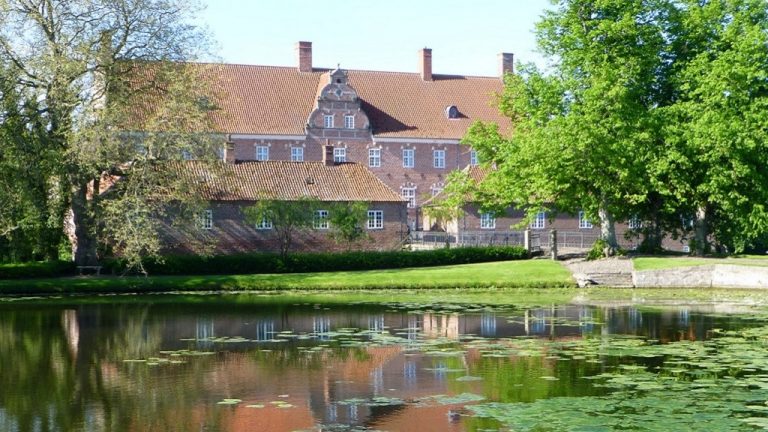
The popular tourist spot Bogense is a town with half-timbered houses, narrow streets and a large marina. The city is connected to Odense and Middelfart via buses operated by Fynbus. About 3km (2 miles) east of Bogense is the castle Gyldensteen (feature image on top), a late Renaissance building with an impressive gatehouse (closed to the public). Here, Karen Blixen (pen name Isak Dinesen), author of Out of Africa, wrote some of her books during the German Occupation of Denmark in World War II.
From the Funen Open Air Museum. Photo: Free Images
Walk to the island of Æbelø
From Bogense, you can complete the Funen circle by touring along the sparsely populated north coast to the Hindsholm peninsula and Kerteminde. At low tide you can walk to the island of Æbelø, an unspoilt landscape rich in wildlife.
Along the Danish West Coast of Funen, written by Tor Kjolberg
Norwegians seem to be the most ordinary people: moderately polite, restrained, stylishly dressed. But once you dig a little deeper, you will find that their lives are subject to a host of strange rules. And the typical habits of local residents cannot be called anything other than unusual. As they say, scratch a Norwegian and you will find a Viking. What do they surprise foreigners with the most today? Learn about the 7 rules of Norwegian life that you won’t believe right away.
It is considered unacceptable without a valid excuse to talk to strangers in parks or transport. Photo: Alan Chen/Unsplash
Invasion of personal space is unacceptable In Norway, it is considered unacceptable without a valid excuse to talk to strangers in parks, transport, shops, or sit next to a stranger on a bus, even if it is overcrowded. They will also not be happy if you decide to drop in for a visit without a call, because “I was not far here, I decided to drop in.” Moreover, they will not hide it for the sake of decency: a typical Norwegian in such a situation will most likely politely say that he is busy and slam the door in front of you.
Work in Norway begins at 8:00. Photo: Julian Hochgesang/Unsplash
Get to work as early as possible Norwegians are obsessed with the idea that they have to be as useful to society as possible. That’s why the locals want to find a job right after graduation, young mothers are no more than a year on the maternity leave, and even to get unemployment benefits, the applicant must meet one of the main requirements – to actively look for work. Work in Norway begins at 8:00, rarely at 9:00. At the same time, the work week is shorter than the standard work week – only 37.5 hours.
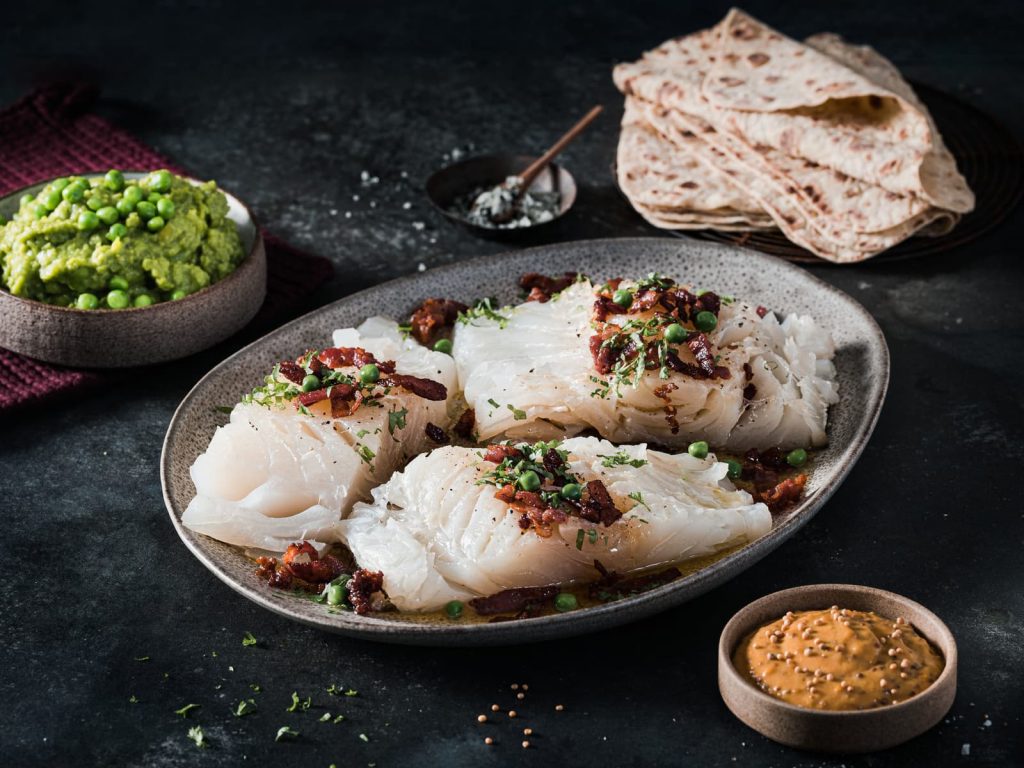
The Norwegians, wishing to impress an expensive foreign guest, will certainly advise them to try lutefisk. Photo: Meny
Fall in love with pickled cod and herring It’s hard to understand how one could love such a thing, and even call it a delicacy, but the reality is unforgiving. The Norwegians, wishing to impress an expensive foreign guest, will certainly advise them to try “surströmming” (fermented, read – squeezed, if not to say rotten herring) and “lutefisk” (dried cod soaked in lye) – and they will be happy to join the meal.
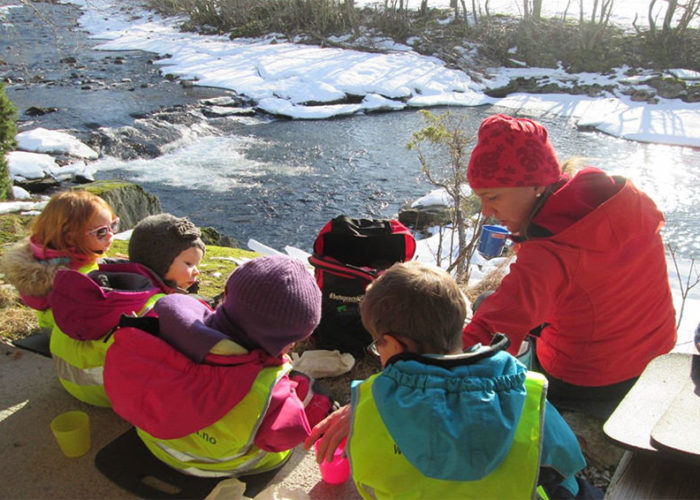
Sandwiches are taken on hikes, walks, to work. Photo: Norsk friluftsliv
Feed your kids with fast food and leave them to sleep in the freezing cold A typical kindergarten menu is different types of sandwiches. Moreover, children can “collect” them themselves from the proposed ingredients: bread, cheese, sauce, caviar, sausage, fish sticks, eggs. Hot in the gardens is served once a week. Sandwiches are also more common at home, especially in the mornings and evenings. Sandwiches are taken on hikes, walks, to work.Related: Stubborn Norwegians
Babies from the cradle are taught to sleep outside at lunchtime in any weather. Coldly? Snow? Is it dripping with rain? It’s OK. They wrapped the child warmer, put a raincoat on the stroller, pulled it on – so it will be healthier. True, with growing up, they refuse such a daytime sleep.
The main feature of the Norwegians is their love for nature. Photo: Nasjonalt senter for kultur og opplæring
Love nature The main feature of the Norwegians is their love for nature, and it is customary to prove it every week. This is why local cities are emptying out over the weekend. Norwegians lock their apartments with a key, take children, parents, fishing rods, food and go to the wilderness, away from civilization, closer to dampness, inconvenience and beauty. It is this kind of pastime that is considered the norm. The rest are deviations worthy of public censure.
Photo by Dainis Graveris/Unsplash
Gender equality is a must In the Land of Fjords, a man’s attempt to pay for a woman in a restaurant can be regarded as an insult. It is customary to divide everything, including housekeeping. Moreover, it works both ways: not only a man should, for example, wash dishes or bathe children, but a woman should also make an equal contribution to the family budget with her partner. However, each family negotiates in its own way.Related: The Cool Norwegians
It is not customary to stand out in this country. Photo by Thanos Pal/Unsplash
Be indifferent to luxury It is not customary to stand out in this country. Therefore, luxurious mansions, expensive supercars, pompous interiors and deliberate demonstration of diamonds are absent from the word “absolutely”. Solid bicycles, emphasized “casual” in clothes and well-known to the world restrained Scandinavian style in interiors. And this despite the fact that salaries in Norway are higher than the European average.
Jean Hartley
7 Rules of Norwegian Life that You Won’t Believe Right Away, written exclusively for Daily Scandinavian by Jean Hartley. Jean leads freelance projects as an essay writer free. She will give you the best recommendations on how to write a personal essay. Jean is inspired by nature and books.
Feature image (on top): Illustration University of Bergen
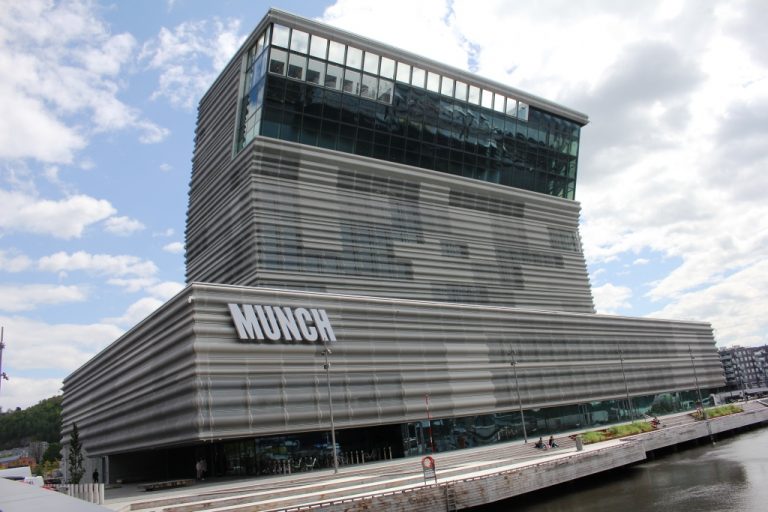
The new Edvard Munch Museum, located on Oslo’s waterfront alongside the Oslo Opera House and the award winning Deichman – Oslo Public Library, has been exquisitely designed by the Spanish architect practice Estudio Herreros. The new museum opens its doors on 22 October. After a planning and building period of 12 years, Oslo now welcomes a new Edvard Munch Museum.
The new MUNCH Museum will be able to display more of Edvard Munch’s art than ever before in one of the world’s largest museums devoted to a single artist. “Munch gave a huge gift to Oslo. Soon we will share this gift with the rest of the world in a framework that truly does Munch’s art justice,” said the Governing Major of Oslo, Raymond Johansen, at a press conference called to announce the opening date. “The whole world is welcome to a world-class cultural attraction», he added.
Governing Major of Oslo Raymond Johansen. Photo: Tor Kjolberg
“Edvard Munch is Norway’s most important contribution to art worldwide, and the museum’s collection is in great demand internationally,” says the museum’s director Stein Olav Henrichsen.
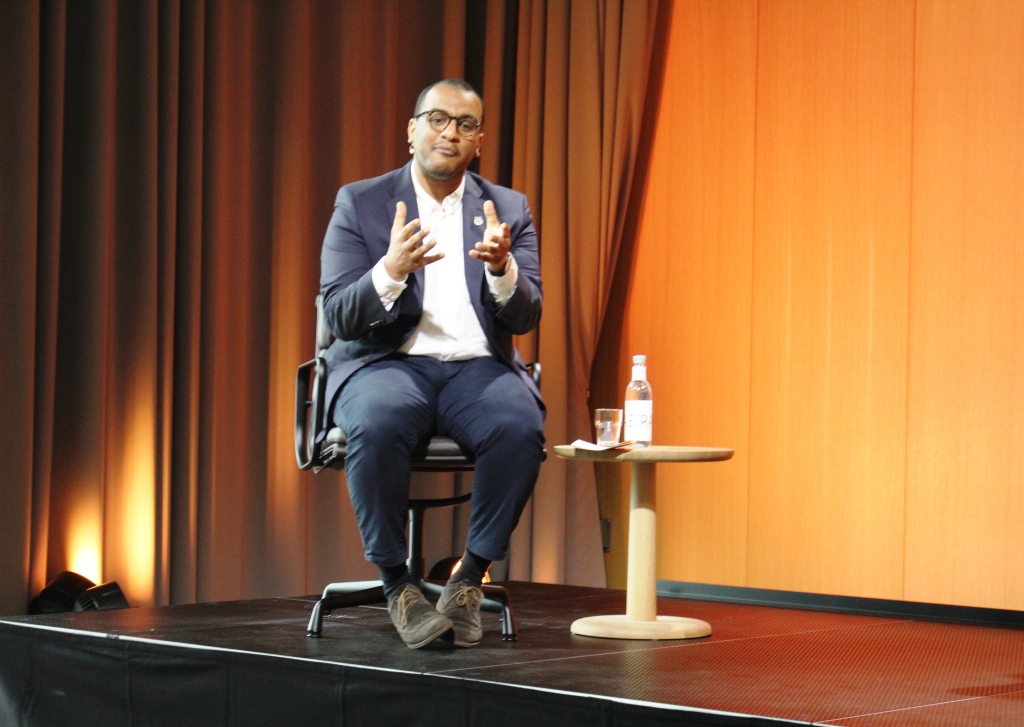
“The new MUNCH will be a cultural powerhouse for the city, the country and the world,” said Vice Mayor in Oslo for Culture And Sport, Omar Samy Gamal.
Vice Mayor in Oslo for Culture And Sport, Omar Samy Gamal Photo: Tor Kolberg
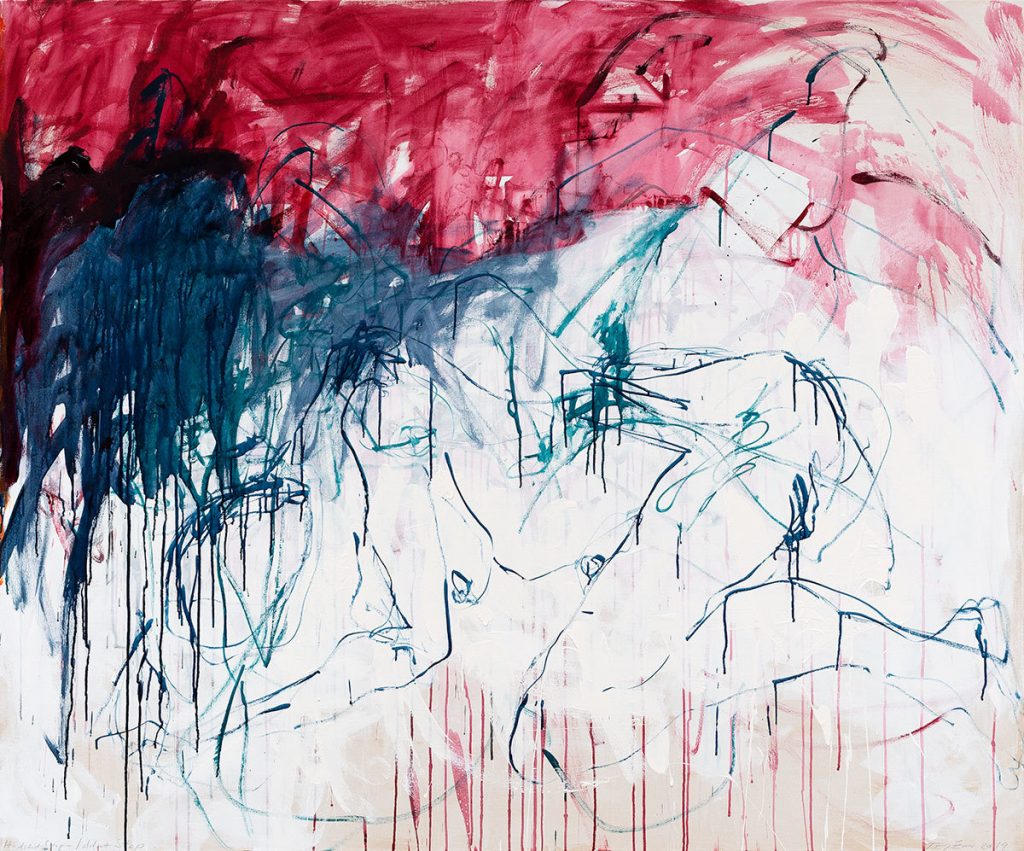
The loneliness of the soul An exhibition by British artist Tracey Emin, who was a major influence for Munch, is among the highlights of the opening program (from October 22, 2021 through January 2, 2022). Tracey Emin is one of the UK’s most celebrated and controversial contemporary artists. In the exhibition “The Loneliness of the Soul” visitors can experience Emin’s wide-ranging artistic practice and gain rare insight into her long-standing fascination with Edvard Munch.
“It didn’t stop – it did-t stop”, painting by Tracey Emin. Photo: Royal Academy UK.
A vertical museum
The MUNCH Museum is a vertical museum, 58 meters high, with 13 floors and 11 exhibition spaces and will for certain put the museum as well as Oslo on the map. The translucent, perforated aluminum façade and the towering top section that bows towards the Oslo fjord make the building highly visible and recognizable from all angles.
Press conference in the tower. Photo: Tor Kjolberg
Regarded internationally for his exploration of humanity’s darkness, Norwegian artist Edvard Munch is best known for his iconic four versions of The Scream, which depicts an agonized figure against a fiery sky. Visiting the new MUNCH will be like a journey of discovery in Edvard Munch’s art. In the opening exhibition named “Infinite” the museum invites visitors to discover the richness of Munch’s work – the themes and motifs that the artist explored repeatedly during his entire life, and that continue to touch and inspire people today.
Portrait of Edvard Munch. Photo: Edvard Munch Org
A quick run-through of Edvard Munch
Today, Edvard Munch (1863-1944) almost needs no introduction. Nevertheless, here’s a quick run-through: Edvard Munch was the son of Christian Munch, a military doctor, and his wife Laura. He spent his childhood in Kristiania, today’s Oslo, where the family liveed on his father’s meagre doctor’s salary.
As a child, Edvard was sick and close to death more than once. At 17 years old he writes in his diary: “It is my decision now to become a painter.” Munch’s youth is shaped by the religious rigour and emotional instability of his father, but also by the creative home environment. At the age of 22, thanks to a scholarship, Munch finally travels to Paris where he stays for three weeks. For the first time, a bigger world beyond Norway opens up to him.
In 1885 Munch has his first love affair. In the coastal town of Åsgårdstrand, where he often spends his summers, he meets Milly Thaulow who is four years older and married. Their secret relationship fills him with lust and love, but also shame and ambivalence.
In the spring of 1889, Munch rents a space in Kristiania and fills it with his own paintings. It is the very first solo exhibition in the city, a bold move which helps him secure a scholarship for a one-year stay in Paris.
The Vampire, by Edvard Munch. Photo: MUNCH Museum
Munch and his association with Berlin artists In 1892 Munch is invited to exhibit his pictures at the Association of Berlin Artists. Munch’s art polarizes opinion among the members of the Association and shocks the German public. After only one week the show is shut down. However, he makes new friends in Berlin, among them the Swedish writer and artist August Strindberg, the Polish author Stanisław Przybyszewski and the music student, Dagny Juel. They gather at a wine tavern which Strindberg names ‘The Black Piglet’. It is a place of excess, freedom and intellectual sparks, with energetic discussions about life and art, accompanied by heavy drinking. In this period Munch creates some of his most famous motifs, including The Scream (pastel version), Vampire, Puberty and Madonna.
In this period, he also first discovered printmaking. He used various techniques before finally trying his hand at woodcuts, which perhaps gave him the greatest freedom for exploration. The audience is invited to try their hands at one of his motifs in a special workshop.
Edvard Munch spent his last 30 years of his life at Ekely, his estate just outside Oslo. He died peacefully in his sleep on the 23rd of January 1944. His life’s work was bequeathed to the city of Oslo. 77 years later, Norway’s capital city will finally have a museum big enough to showcase the entire collection.
The Ekely villa was demolished in 1960, but in a new exhibition “Shadows”, Munch’s home has been reconstructed in a multimedia installation that uses light, sound and moving images to tell stories from his life.
The Sun, by Edvard Munch. Photo: Wikipedia
Large scale paintings In a dedicated double-height space you can experience some of the largest paintings ever created by Edvard Munch, the largest measures approximately 50 square meters, are versions of the paintings made by Munch for the University of Oslo’s Ceremonial Hall.
Edvard Munch had close relationships with a number of supporters, including the art collector and business man Rolf E. Stenersen. Initially, Stenersen only bough works by Munch but gradually broadened the scope of his collection. Visitor’s will now have the opportunity to experience Munch in company with works by other important Nordic artists collected by Stenersen.
“Nothing is small, nothing is great” is a quotation from one of the biggest mysteries in Munch’s collection. No one really knows why Munch assembled this album but it draws attention to the diversity of the collection he left behind.
Black Metal meets Munch. Photo: Tor Kjolberg
Coming 2022 The Norwegian black metal band Satyricon meets Edvard Munch’s art in the exhibition “Satyricon & Munch” which explores the intersection of black metal and visual art, where a specially composed musical work is connected with a selection of Edvard Munch’s images.
SOLO OSLO is a series of exhibitions featuring young Oslo-based artists supported by Talent Norge and Canica AS. The first exhibitor is Sandra Mujinga (born 1989), a Norwegian artist and musician who works with sculpture performance text, electronic music, photography and video, often all combined in a single work.
Drawing by Sandra Mujinga. Photo: University of Lund
Munch is often associated with Symbolism, a movement in literature and the visual arts that emerged in the 1880s. The exhibition THE SAVAGE EYE focuses on the relationship between Surrealism and some of the most important Symbolist artists, including Paul Gauguin, Odilon Redon, August Strindberg, Edvard Munch and Auguste Rodin.
Eat, Drink and Enjoy The MUNCH Museum is also a place to eat, drink and enjoy. Past the museum’s lobby you will find Munch Dell & Bakery. On the 12th floor you will find the bistro that leans on continental traditions with a smile.
The view from the 13th floor can be enjoyed best with a good pillow in the back and bubbles in the glass while you look down on the city and the fjord.
Oslo Welcomes a New Edvard Munch Museum, written by Tor Kjolberg
The southern part of Norway (Sørlandet in Norwegian) has been the number one summer holiday destination for Norwegians as well as for international visitors for decades. Still, it is a hidden gem for many visitors. Read more about the Norwegian Riviera.
Southern Norway is the southernmost region of Norway, with 25 municipalities and 305 244 inhabitants (2019). Driving, hiking or sailing along the coastline, you’ll find beautiful islands, fishing villages and picturesque towns with white wooden houses around every corner.
From coastal summer paradise to popular skiing resorts
Sørlandet stretches from the coastal areas with its many rocky islands and skerries via an inland belt with forests, lakes and rivers. There are excellent salmon rivers and in the mountain areas around Setesdal are many popular skiing resorts. In Setesdal and Sirdal the altitude ensures long and stable winters, perfect for winter activities.
sail along the coast line to visit historic locations like Merdø. Photo: Visit Norway
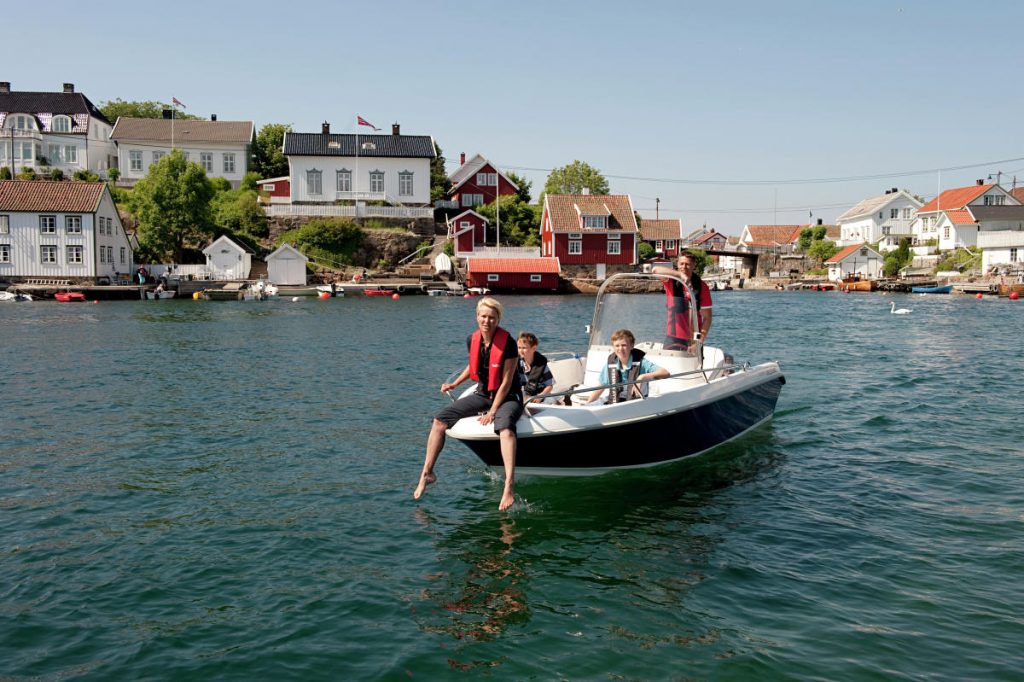
In the summer, locals love tootling around the idyllic islands in their small boats. The coast of Sørlandet has a typical coastal climate, with relatively mild climate year-round. Sørlandet is the region in Norway with most summer days during the year. Happy summer-guests from all over the world visit the towns and villages.
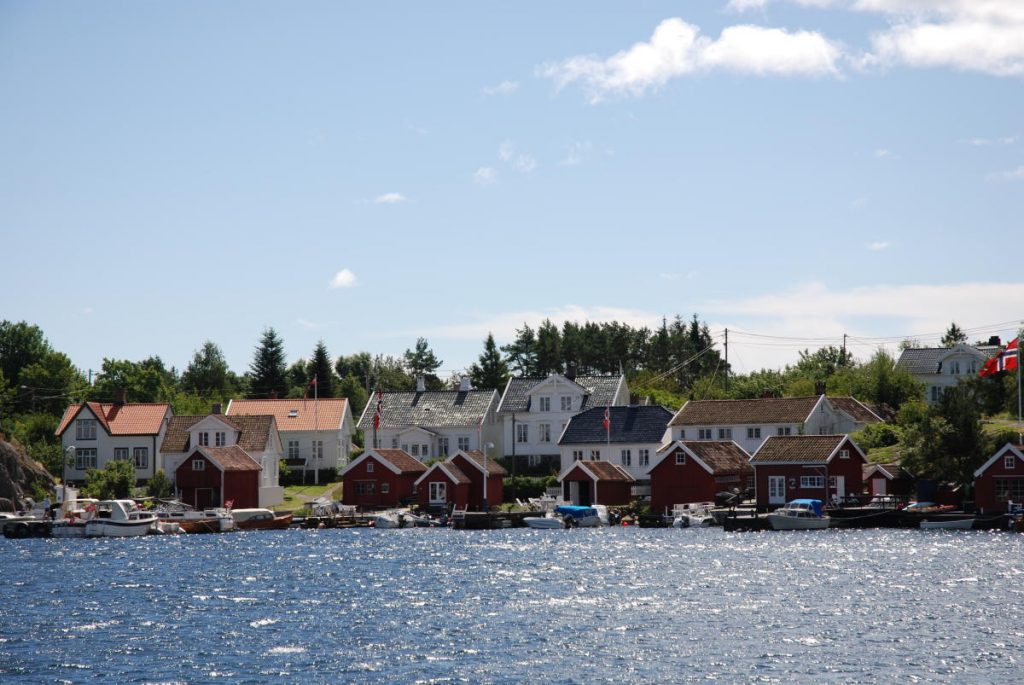
Island hopping The summer holiday can be spent in a picturesque white cabin along the coast or maybe in a boat along the Norwegian Riviera ready to jump in the sea in the morning and then sail along the coast line to visit historic locations like Merdø or Lyngør.
Lyngør village consists of four islands, only available by boat or ferry. Photo: Visit Sørlandet
The car-free island just outside Arendal is a favorite among the locals during the summer season. There are old wooden houses and narrow paths that brings you from a museum to the sandy beaches to the boulder and rock beach on the southern side of the island.
Lyngør village consists of four islands, only available by boat or ferry, and the houses there are built in the style of the days of sail. In 1991, Lyngør was awarded Europe’s best-preserved village. Many people left the islands when the steam engine’s arrival put an end to Lyngør’s prosperity. The stone quays and the narrow paths of concrete and stones where left as they were.
Today, this mixture of paths and wooden houses invite walking across the islands, a break on a bench, or on one of the islands’ restaurants.
Despite its small size, Risør has a proud history of sailing ships and lumber export. The village is known for its white wooden houses built by merchants along the waterfront. There’s an annual wooden boat festival.
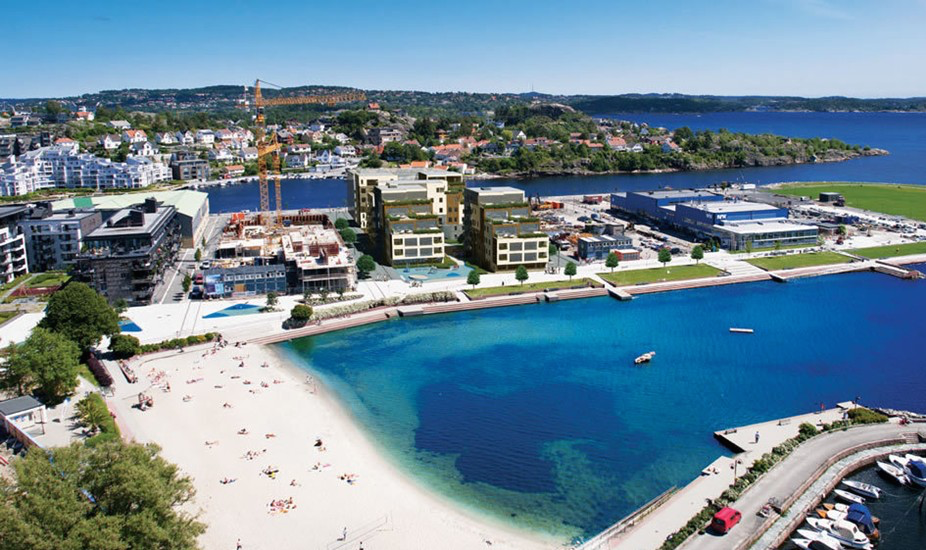
Bystranda, Kristiansand. Photo: Wikipedia
Children’s holiday paradise Southern Norway is also called the children’s holiday paradise, not least because of its long sandy beaches, Kristiansand Zoo and Sørlandsbadet in Lyngdal. The long list of activities and attractions also include the Mineral Pak in Evje, the Science Center in Arendal and the Aquarama in Kristiansand. In the Setesdal Valley the cultural heritage includes folklore, folk music and silverware.
Arendal is celebrating its 300th anniversary in 2023 and the Norwegian architects Snøhetta has unveiled plans to revive a traditional harbor bath with a layered structure that looks like a topographical map of the area.
The towns of Risør, Tvedestrand, Arendal, Grimstad, Lillesand, Lyngdal, Kristiansand, Mandal and Flekefjord are spread like a string of pearls along the coastline. Above, Tvedestrand. Air photo by Atle Goutbeek/Visit Norway
Tvedestrand is best-known for its range of new and antique bookstores. However, once you’ve finished admiring the dusty tomes, don’t miss Strykejernet, said to be Norway’s narrowest house!
The towns of Risør, Tvedestrand, Arendal, Grimstad, Lillesand, Lyngdal, Kristiansand, Mandal and Flekefjord are spread like a string of pearls along the coastline. Along this coast you can find traces of the coastal culture; the many lighthouses, coastal forts, fishing villages and boat wharfs. There are also abundance of flowers and various shops, cafes and fine restaurants.
Lyngdal cruise port. Photo by Johan Remen/Cruise Norway
Sørlandet is also home to around 100 festivals each year, most of which take place during the summer months.
The Norwegian Riviera is quitter the rest of the year, but with merely a few hours between the sea and the high mountains, many visitors choose to come at this time and enjoy the activities that are offered. Hiking along the coast or up to the mountain summits, fishing and biking are all popular activities.
In the wintertime, the skiing possibilities are many with places like Hovden, Evje, Bortelid and Åseral.
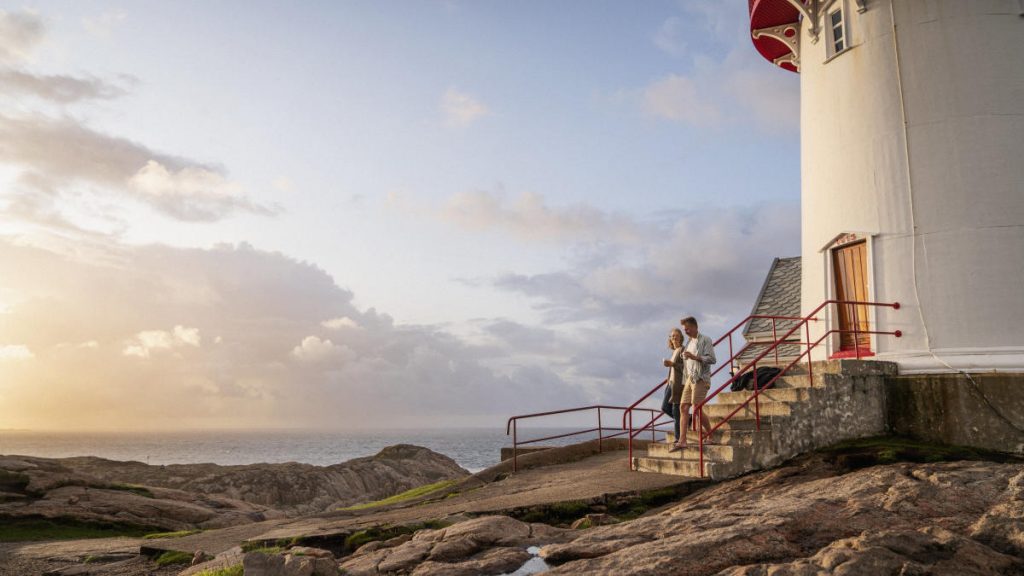
Lindesnes lighthouse. Photo: Visit Sørlandet
History Most of the coastal towns in Southern Norway had a prosperous period during the sailing ship era in the 1800’s. The islands furthest out at sea and along the ship route were popular outposts where the fishermen, the sailors and the harbor pilots lived. The outposts provided safe havens for the ships that sailed to and from Norway with goods. Timber and salmon were the main export articles of the region. Today these outposts are mainly populated with holiday guests during the summer months, and are idyllic reminders of life in the old days.
Ever since the great glaciers retreated about 10,000 years ago and left behind a small strip of land, people have lived in southern Norway. There are traces of Stone Age settlements from Kristiansand to Lista, with one of the most famous places being the Penne area at Lista. Here you find rock carvings, as well as ancient ruins and burial mounds from the Iron Age.
Today Sørlandet is Norway’s leading exporter of processed goods, with future-oriented businesses based on supplying the oil and gas sector, the solar cell industry, wind turbine industry, car industry, and high-tech processing of metals.
The Norwegian Road Administration has developed 18 national tourist routes in Norway. How have the numerous road developments, train lines and itineraries shaped the Norwegian landscape? These are questions that are answered with words and pictures in the book “Views: Norway Seen From The Road 1733-2020” published by foragetpress.no
High mountains, narrow fjords, deep valleys. Norway’s views are national pride – and an international brand. It is, however, easy to forget that a view is not available to us without the road that brings us there.
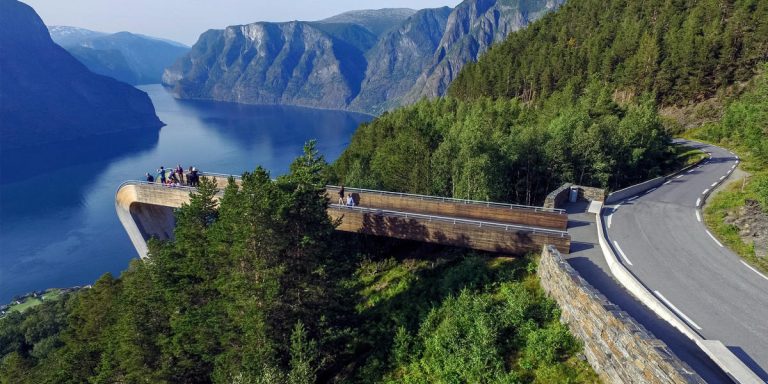
Picnic areas and viewpoints throughout Norway have been built by the Norwegian Road Administration to strengthen the travelers’ experience of nature and cultural landscapes.
Ever since the 18th century, the view of the Norwegian landscape has been inextricably linked to the various stages in the development of the Norwegian road network. The latest contribution to this development is National Tourist Routes constructed by the Norwegian Road Administration. Picnic areas and viewpoints throughout Norway have been built to strengthen the travelers’ experience of nature and cultural landscapes.
The project has also become an important arena for Norwegian contemporary architecture. National Tourist Routes is part of a long cultural-historical tradition for staging the Norwegian landscape. For 300 years, painters, illustrators and photographers have documented dramatic stretches of road and magnificent nature.
The book «Views: Norway seen from the road 1733–2020» gathers some of the most important milestones among these picturesque stories. The result is a book that allows us to see both the road, the landscape and the country in a new way.
A group of art historians, architects and researchers have contributed to the book becoming an exhibition, a magnificent book and a research project. “What we perceive as beautiful and what we perceive as landscape, are shaped by culture, ideology, politics, building customs and industrial practice,” says the book’s editor Janike Kampevold Larsen.
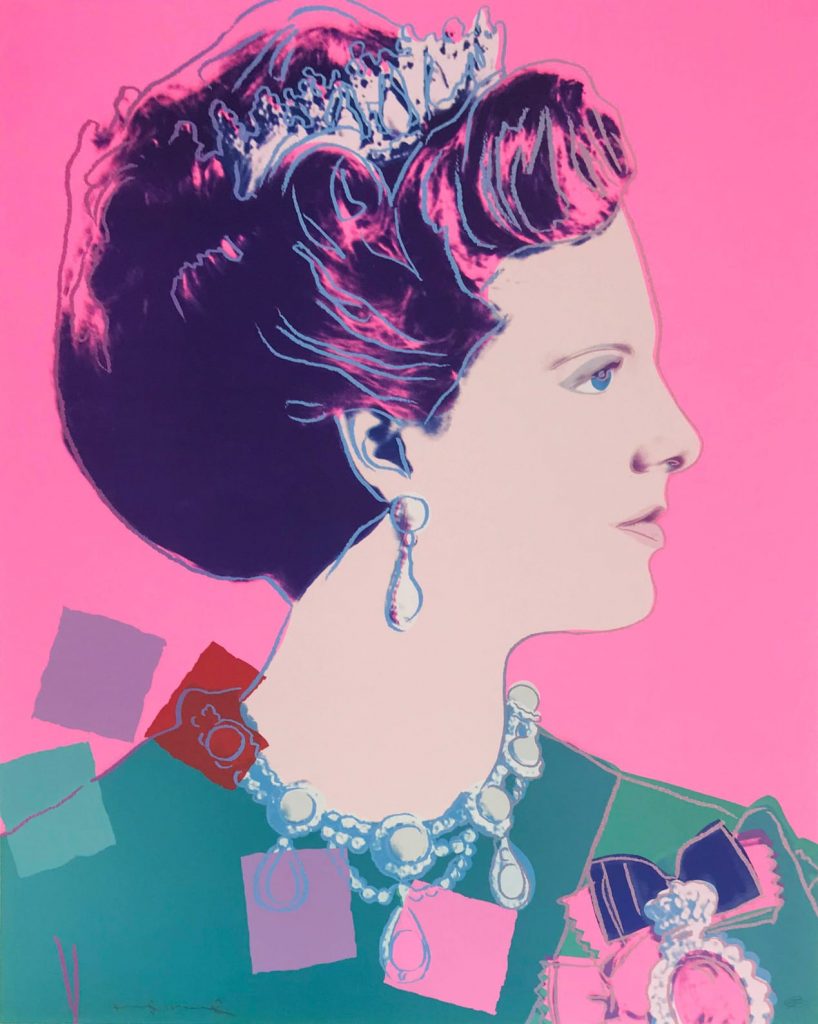
Netflix has hired Queen of Denmark as set designer on new Netflix film. She is, however, not the first royal to join the Netflix family – Meghan Markie and Prince Harr signed a multiyear deal with the streaming company last year. Learn more about Queen Margrethe Of Denmark making headlines.
Having celebrated her 80th birthday last year, Queen Margrethe of Denmark has no intention of retiring. Now, an exciting new side gig takes place in addition to her royal duties. The queen has been hired as a set designer for the upcoming adaption of Karen Blixen’s fantasy novel Ehrengard, overseeing scenography and costumes in the lead-up to its premiere in 2023.
The queen has been hired as a set designer for the upcoming adaption of Karen Blixen’s fantasy novel Ehrengard
Related: Super Model Prince Nikolai of Denmark Based on a 1962 novella by Danish author Karen Blixen (writing under the pseudonym Isak Dinesen), Ehrengard also has royal elements. The story takes place in the fairytale kingdom of Babenhausen, and follows Cazotte, a young “self-appointed expert on love”, who’s hired by the scheming Grand Duchess to help her secure an heir for the shy, awkward crown prince. Naturally, the plan backfires, and an heir ends up being conceived out of wedlock, forcing the royal family to go into hiding, and forcing Cazotte to acknowledge the limitations of his expertise on love.
Ehrengard will be directed by Bille August, the veteran Danish director of Pelle the Conqueror (which won both the Palme d’Or and Oscar for best foreign language film in 1988) and The Best Intentions (which won August a second Palme d’Or).
Ehrengard was first produced in 1982 by Italian film directed Emidio Greco. It premiered at the 1982 Venice International Film Festival. However, due to the bankruptcy of the producers, it was not released theatrically until 2002.
Margrethe ascended to the Danish throne in 1972 and is commander-in-chief of the country’s defence forces. This is, however, far from the Queen’s first design job. She’s an accomplished painter and illustrator who’s designed costumes for the Royal Danish Ballet in the past, and contributed drawings to a 1970s Danish edition of The Lord of the Rings, and exhibitions at galleries including the Arken Museum of Modern Art in Ishøj near Copenhagen. She also has screen credits as a production designer on the 2009 fantasy fairy tale The Wild Swans, and a short film adaptation of Hans Christian Andersen’s The Snow Queen in 2000.
In a statement, Margrethe said: “Karen Blixen’s stories have always fascinated me, with their aesthetic tales, their imagination and their, to me, image-creating worlds – and I’m very happy to be part of this project. I have tried to interpret Blixen’s fantastic universe in the creation of the decoupages and costumes and I’m looking forward to seeing the tale of Ehrengard come to life in this film.”
“The Queen has created the most fantastic decoupages for the occasion, and they will be the dominant feature of the film’s overall scenographic expression,” director Bille August said in a statement. “‘Fantastic’ (in the most literal sense) is our starting point for the film; we wish to use humor and elegance to create a devil-may-care, burlesque, fabulous and autonomous visual universe.”
Queen Margrethe made headlines earlier this year when she became the first European royal to publicly receive a dose of the COVID-19 vaccine.
Queen Margrethe Of Denmark Makes Headlines, written by Tor Kjolberg
Autumn in Scandinavia is one of the most delightful times of the year. The changing leaves, the crisp air, and in-season foods provide a quintessential fall experience. But with the colder weather, it can be easier to indulge in comforting albeit fatty foods. If you’re trying to maintain your wellness throughout the fall and winter, consider picking up some of these fall foods to keep you on track. Learn more about fall foods in Scandinavia for healthy autumn.
Photo by Inigo de la Maza/Unsplash
Root Vegetables Root vegetables get their name from growing underground in the dirt. These include a lot of classic autumnal staples like squash, potatoes, radishes, carrots, and parsnips. Many of these root vegetables are actually native to Scandinavia. These plants provide hearty sustenance for the colder months. Popular recipes that include these vegetables are soups, chowders, and accompaniments to meats and roasts. Root vegetables have a variety of nutritional benefits. They are filled with fiber and antioxidants which promote a healthy gut and organ function. They’re relatively low in calories, cholesterol, and fat. They’re naturally packed with carotenoids which not only help strengthen the eyes but also protect the body from certain cancers. Additionally, they are loaded with minerals that are beneficial to the body, like potassium, folate, and manganese.
Photo by Sydney Rae/Unsplash
Apples Apples are a classic fall fruit. Not only are they delicious all year round, but they’re particularly tasty in the autumn season. Apples come packed with unmatched health benefits. They can lower cholesterol and blood pressure because of the presence of soluble fiber. Soluble fiber helps prevent plaque build-up in the walls of blood vessels. Additionally, this fiber can help aid in digestion. It helps you feel more full and promotes a healthy gut. The presence of antioxidants in the fruit helps your pancreas and in turn, reduces the chances of type 2 diabetes. You can incorporate apples in classic Scandinavian dishes. For a healthy and tasty breakfast, add chopped-up apples into your aebleskivers. Or alternatively, add them into some savory Scandinavian bread stuffing.
Photo by Jonathan Mast/Unsplash
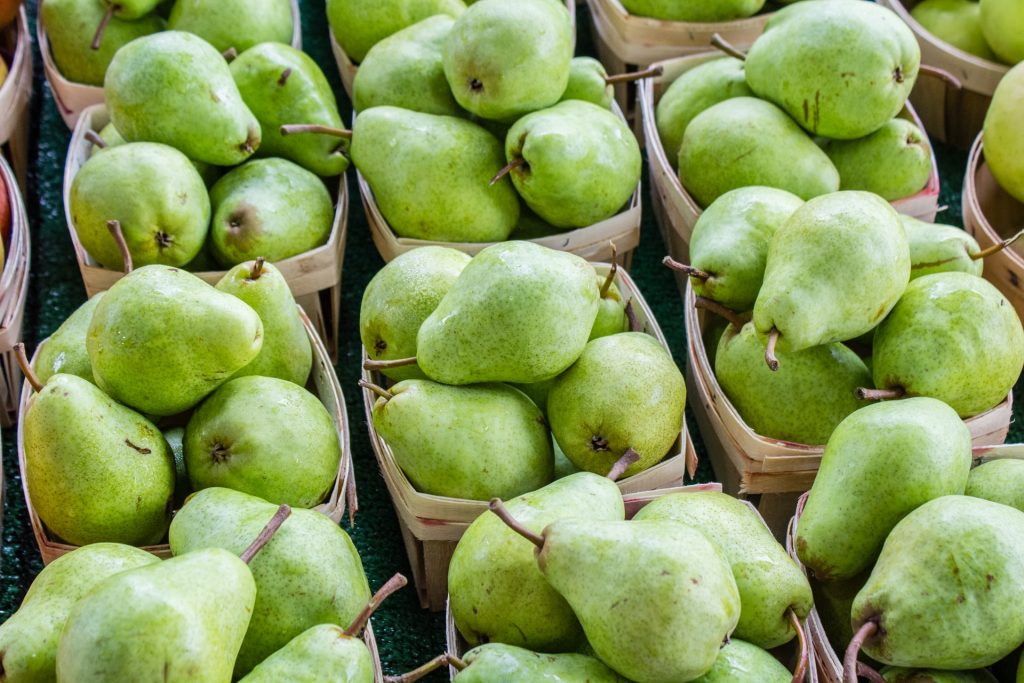
Pears Pears are another autumnal staple. You can find them in classic pear tarts and spiced pear cakes. Like apples, they come filled with fiber to help with bowel regularity and facilitate good bacteria in the gut. In fact, one pear has about 22% of your daily fiber needs. If you struggle with chronic inflammation, then pears may be your saving grace. They are packed with anti-inflammatory properties that can help fight inflammation and can decrease your risk of getting certain diseases. Additionally, pears have vitamins C, K, and copper which work to reduce inflammation in the body.
Photo by Usman Yousaf/Unsplash
Meat Meat provides health in a different way than fruits and vegetables. While it is not as packed with vitamins and minerals as the fruits and vegetables, it provides a very important nutrient, protein. Protein is a key nutrient that keeps the body functioning properly. It is a necessary component in the processes that carry oxygen throughout the body. It feeds muscles and bones to promote strength, recovery, and healthy growth. Additionally, protein helps the body generate antibodies which are critical in fighting off infections and illnesses. Getting the right amount of protein in your diet can help you live a more healthy life. In Scandinavia, there are a lot of classic, comforting meals with meat in them. Swedish meatballs are a classic dish that adds a healthy amount of protein to your meal. If you don’t particularly like meat or try not to eat meat, fish is a great replacement for still eating protein. Not to mention, fish has the added benefit of healthy fats and omega fatty acids.
Fall Foods in Scandinavia for Healthy Autumn – Bottom Line The colder seasons don’t have to mean throwing your health goals out the window. Scandinavia offers a lot of great fruits, vegetables, and proteins to keep your body functioning properly. From soups, to roasts, to desserts, incorporating these nutrient-rich foods into your diet can greatly increase your quality of life and can promote a longer life with less disease.
Chad Turner
Fall Foods in Scandinavia for Healthy Autumn, written exclusively for Daily Scandinavian by Chad Turner. Chad is a fitness enthusiast, personal trainer, health coach, and triathlete based out of Dallas, TX. His mission is to make the world of health and fitness more accessible to people from all walks of life.
Before 2015, Norwegian spas lagged way behind the likes of Hungary, Germany, Austria and Italy – countries where spa-going has been a part of the culture for centuries and taking a steam, sauna or cold dip (often in the nude, men and women alike) was the most natural thing to do. In 2015, however, the three floor, 10,500 square meter The Well Spa outside Oslo opened its doors. Six years later, in June 2020, the much-anticipated hotel at The Well could welcome its first guests, making The Well an exquisite boutique resort with a luxury vibe. Experience a world of luxury and wellness at the Well Spa and Hotel in Oslo.
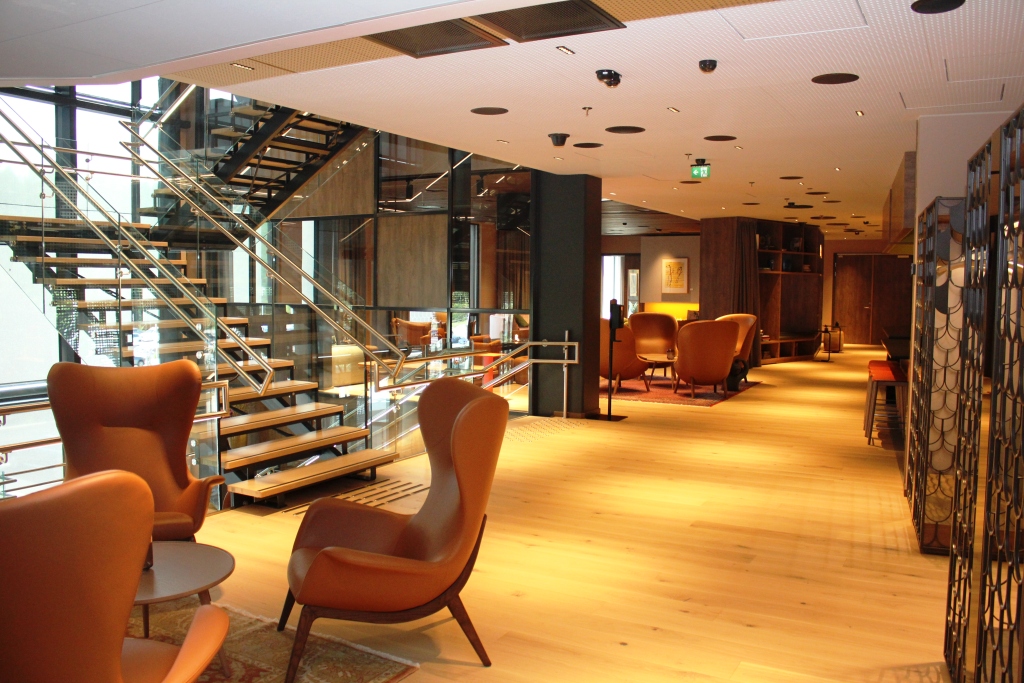
One month after the inauguration of the hotel, we were welcomed by General Manager André Julseth. Just a 20 minutes’ drive from downtown Oslo, we arrived at The Well Resort in its beautiful wooden surroundings with a full range of world class indoor and outdoor spa facilities. The Well spa is in fact the largest, most comprehensive spa and bathhouse in the Nordic region.
Art is an important part of your stay at the Well – ouside and inside. Photo: Tor Kjolberg
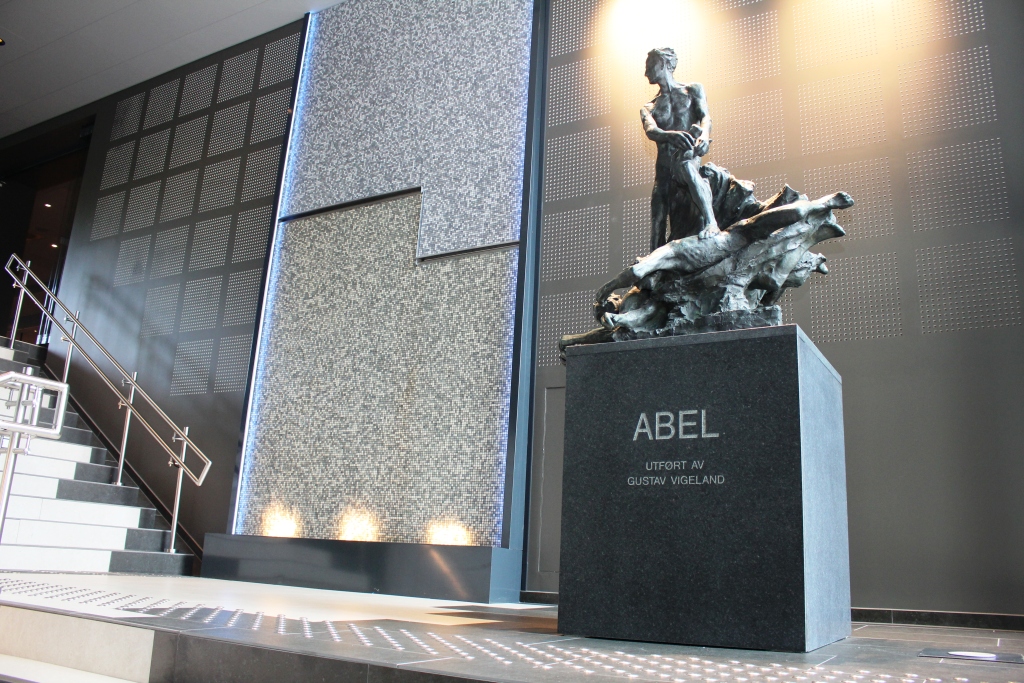
The Well is Just a 20 minutes’ drive from downtown OsloAbel, Sculpture by Gustav Vigeland in the reception area. Photo: Tor KjolbergDelicate natural colors in the reception. Photo: Tor Kjolberg
Rooms at the Well
Julseth tells us that there are no standard rooms among the 100 + rooms at the hotel. Ranging from Signature Rooms to the highly exclusive The Well Suite, all rooms are decorated with great variety, making each visit an experience of something new. The proximity to the forest has been an important element in the entire development process and you can rest your eyes on the colors of nature just by entering into the hotel.
All rooms are decorated with great variety. Photo: The WellEvery room comes with luxurious bathrooms and fluffy robes. Photo: The Well
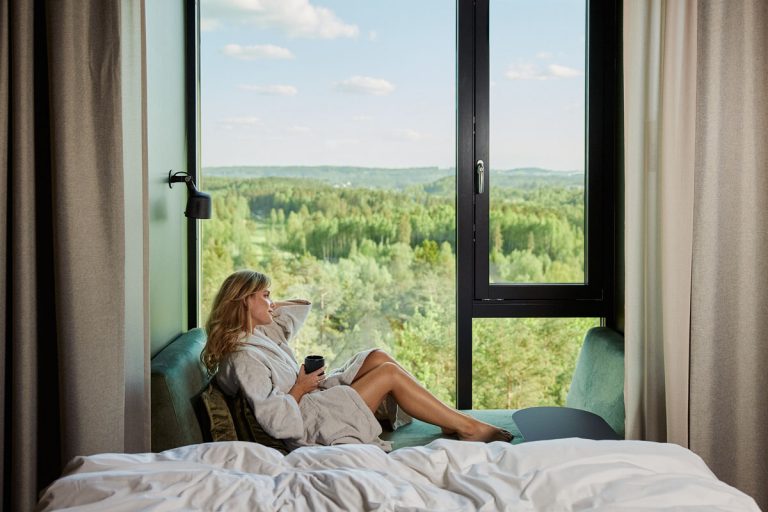
Every room comes with luxurious bathrooms, fluffy robes, coffee machines, aromatic The Well toiletries, B&O Bluetooth sound systems, mini bar and hairdryers. All rooms are decorated with an eclectic mix of luxury and comfortable coziness and gorgeous views.
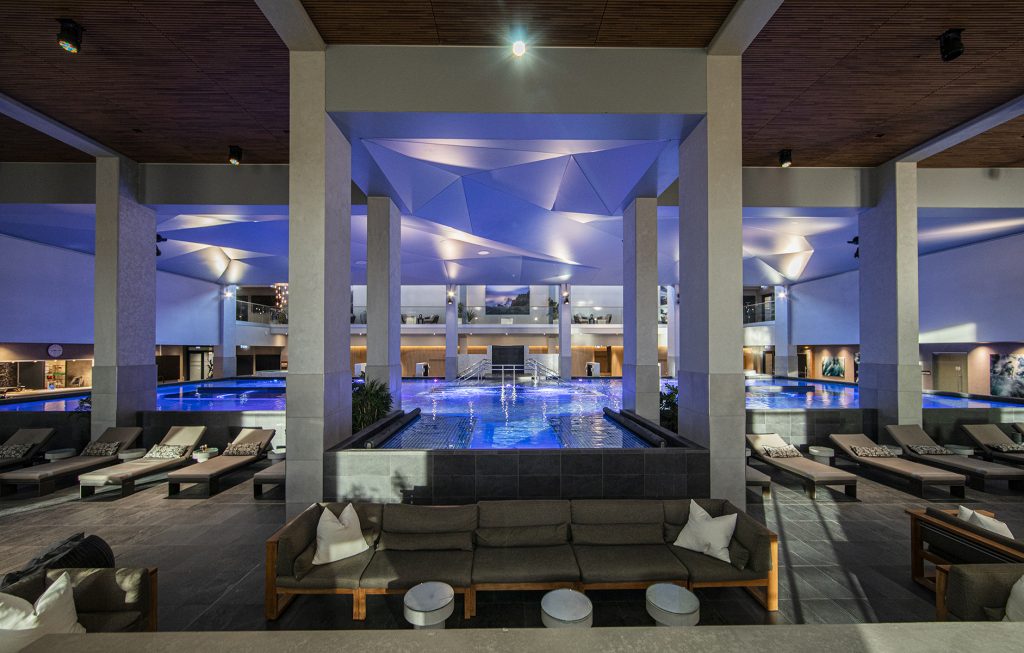
Spa- as well as room-bookings have shot up abruptly this summer. Photo: The WellThe Well offers a full range of world class indoor and outdoor spa facilities. Photo: The Well
Growing interest for wellness, fitness and mindfulness
“Our insatiable interest for wellness, fitness and mindfulness is growing, especially in these times with home-working desk-bent bodies and minds,” says Julseth and adds, “This has pushed spa-bookings as well as room-bookings up considerably, and the hotel has proven to have a huge appeal to both loyal and new spa-goers.”
“Our insatiable interest for wellness, fitness and mindfulness is growing, especially in these times with home-working desk-bent bodies and minds,” says General Manager at the Well, André Julseth. Photo: Tor Kjolberg
André Julseth studied hotel management in Australia. He was appointed General Manager for the Well one year before the opening and comes from a manager position at the Thief Hotel in Oslo.
The Wellness Pool. Photo: The Well
“Here, the spa was built first and the hotel came later,” says Julseth. “The nakedness in the spa or using The Well’s own swimwear (the only type allowed) have both a hygienic and aesthetic function. A visit to The Well Spa feels comfortable for most people. The “perfect-body-pressures” brought on by modern society vanishes almost instantly upon arrival in the spa, guests feel comfortable wearing swimwear or not.”
The Well Spa
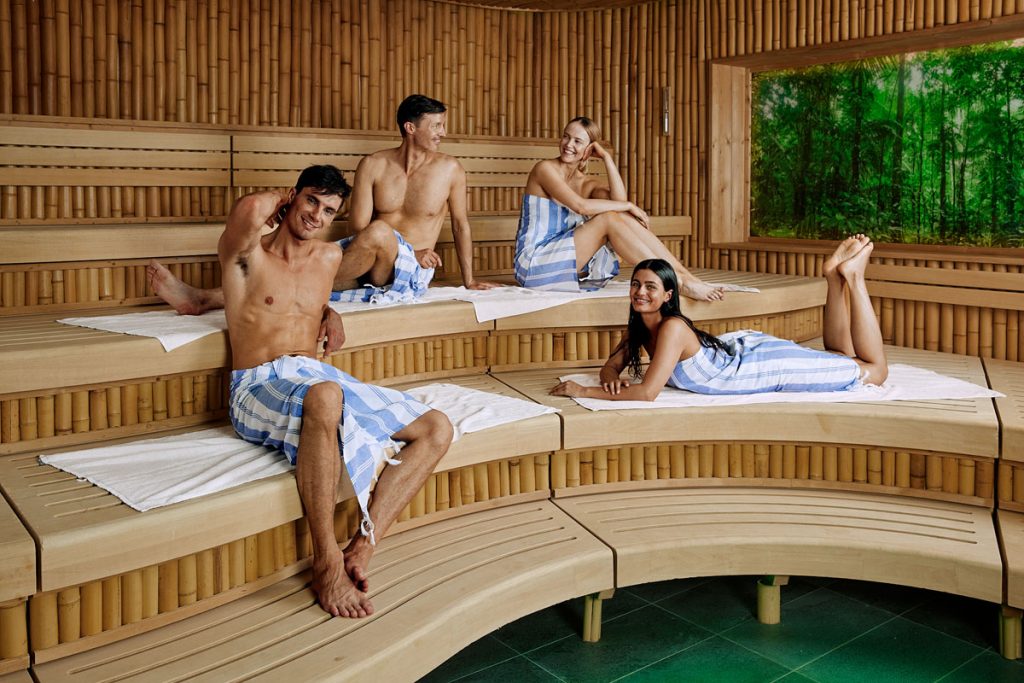
With its 15 different saunas and steam rooms, 11 different pools, more than 100 showers, waterfalls and 29 treatment rooms combined with its distinctive architecture and themes, The Well Spa creates a world of well-being. A Japanese bathhouse with an Onsen hot spring, Oriental Hammam, Rhassoul clay treatments and relaxation rooms are just some of the offers.
Embark on a 25- or 45-minutes’ treatment program with the encouragement of certified and talented therapists. The treatments in the Well Spa are immensely popular, so we recommend you to book your favorite treatments two to three weeks before your arrival. You can, however, visit the spa without being a hotel guest at a relatively moderate entrance fee. There are many regular guests, it is even possible to buy a frequent-visitor-pass.
The Well Spa creates a world of well-being with its 15 different saunas and steam rooms, 11 different pools, more than 100 showers, waterfalls and 29 treatment rooms. Photo: The Well
The outdoor area of the spa features a large swimming pool, two whirlpools and a sauna built in a rustic style, nestled among rocky outcrops and pine trees. During the summer season the outdoor area features over 100 sun beds and a poolside bar serving refreshments.
A 300-meter-long lit path is under construction in the forested area on the resorts´ property. 20 full size art sculptures will be strategically placed and will adorn the pathway.
Food & Beverage Manager Maria together with ASndré Julseth. Photo: Tor Kjolberg
Eat and drink at the Well Spa and Boutique Hotel
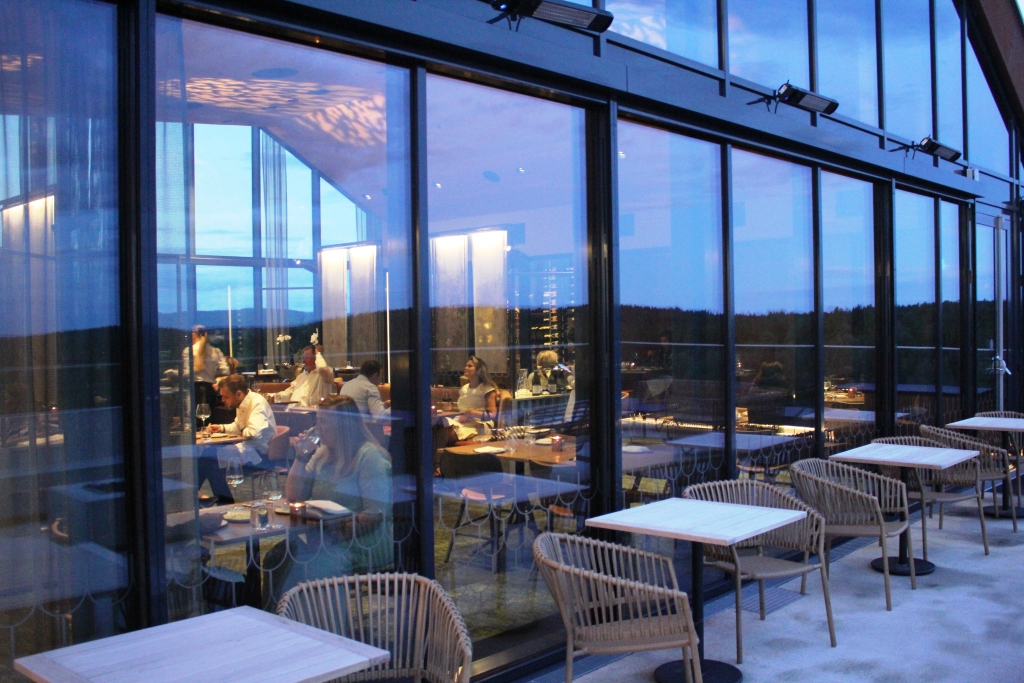
In between well-being and relaxation, you can enjoy good food and drink in the spa’s Brasserie restaurant or the Mori top terrace restaurant where you can choose from a wide range of Asian fusion specialties prepared by Hungarian chef Attila Havans or enjoy signature cocktails and drinks at the Library Bar in the hotel. Mori is Japanese, meaning forest, and with the roof restaurant’s spectacular location, Mori becomes a destination in itself.
Except for the Brasserie, you can visit these facilities without staying overnight at the hotel.
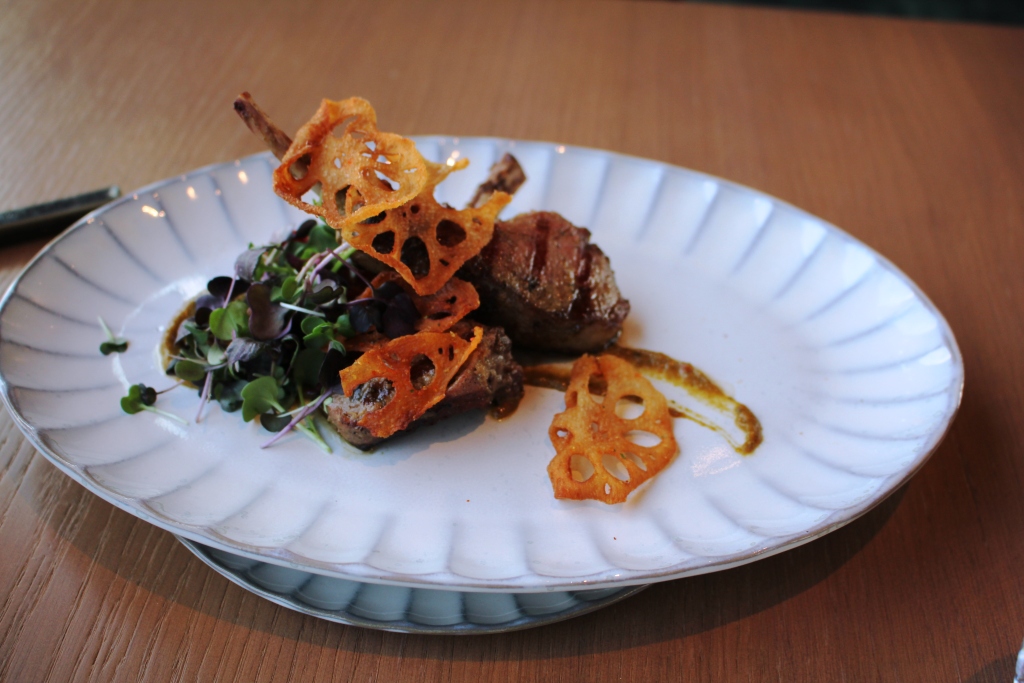
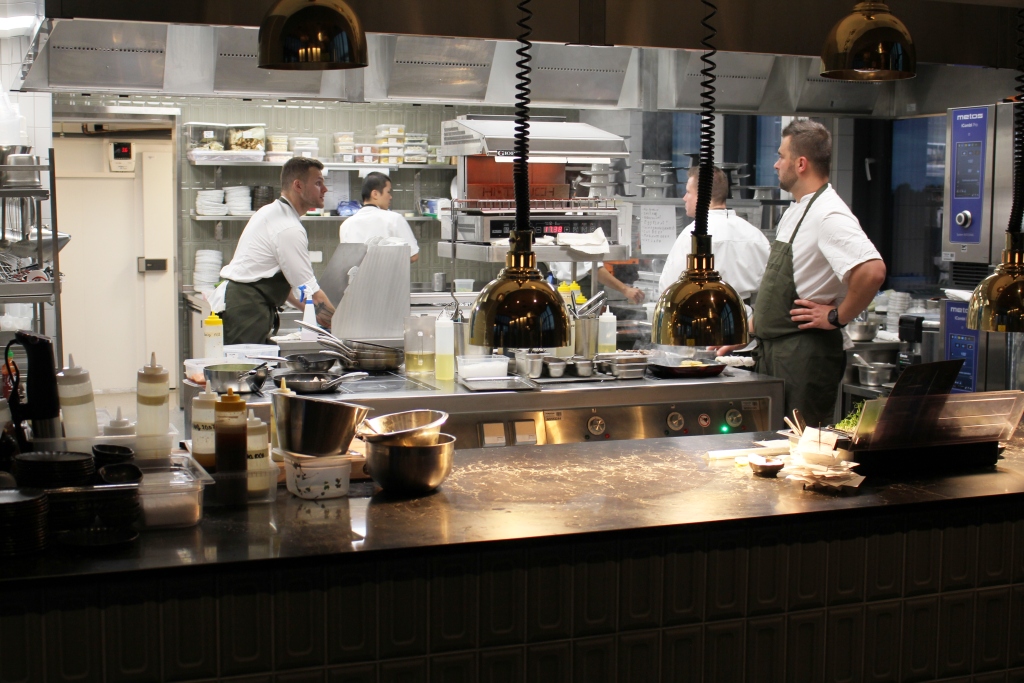
A quick starter. Photo: Tor KjolbergLamb shops. Photo: Tor KjolbergBeef-steak. Photo: Tor KjolbergFrom the Mori restaurant. Photo: Tor KjolbergWe were professionally taken care of and waited upon by waiter Teressa Tomislava from Croatia. Photo: Tor KjolbergThe Mori top terrace restaurant offers wide range of Asian fusion specialties prepared by Hungarian chef Attila Havans. Photo: Tor KjolbergThe Mori Restaurant at night. Photo: Tor Kjolberg
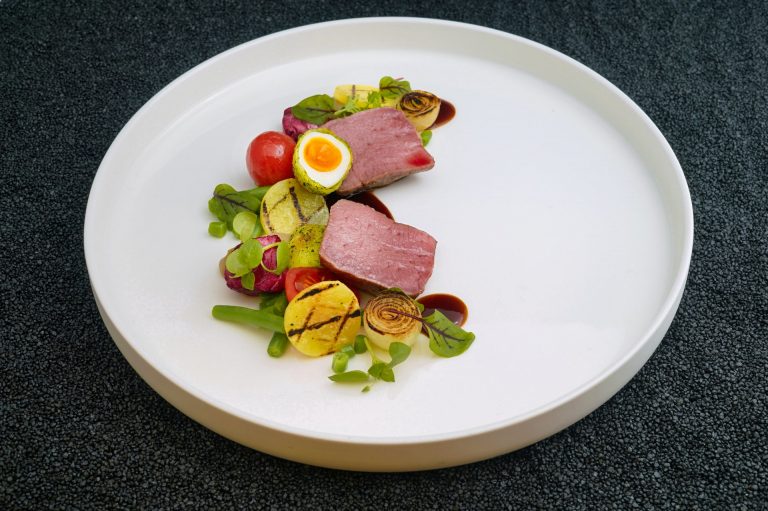
At Mori we chose a quick starter followed by lamb chops and beef steak respectively, talentedly prepared in the open kitchen, accompanied by a bottle of Riocca red wine. We were professionally taken care of and waited upon by waiter Teressa Tomislava from Croatia.
The Library Bar. Photo: Tor KjolbergBartender Kim Sanström preparing one of his signature drinks. Photo: Tor Kjolberg
An the Library bar we enjoyed signature drinks made by bartender Kim Sandström, one he called SISU (he is half Finnish) and another one named TILT (which is an acronym for “Tomorrow Is a Long Time”) He says it takes 6 hours to prepare the cocktail.
Breakfast is served in the Brasserie in the spa section. Choose to wear either your private clothing or spa bathrobe if you’re heading out to the spa facilities afterward. In addition to a buffet with everything you could possibly wish for, from cold cuts and cheeses to cereal, fruits and freshly baked pastries, there is a small a la carte menu of hot dishes. We ordered delicious poached eggs with avocado.
From one of the resting areas. Photo: Tor Kjolberg
A World of Luxury and Wellness at The Well Spa and Hotel in Oslo – Conclusion
Service at the Well Spa Resort is friendly, welcoming and professional. It was also refreshing to experience a young and dynamic team of staff. Indulge yourself in a world of luxury and wellness at The Well Spa Resort in Oslo.
A World of Luxury and Wellness at The Well Spa and Hotel in Oslo, written by Tor Kjolberg
While primarily famed for its stunning landscapes, rich Viking history, and impressive breweries, you’ll be surprised to know that Scandinavia is also a go-to destination for golf enthusiasts. This European region is home to some of the most renowned courses that have to make it onto your bucket list. Here we’re rediscovering Scandinavia’s Golf Courses as Gems for Golfers.
If you haven’t yet discovered the irresistible charm of Scandinavian golf courses but are already getting your car ready and revved for the road trip of a lifetime, here are a few clubs you’ll want to throw into your itinerary.
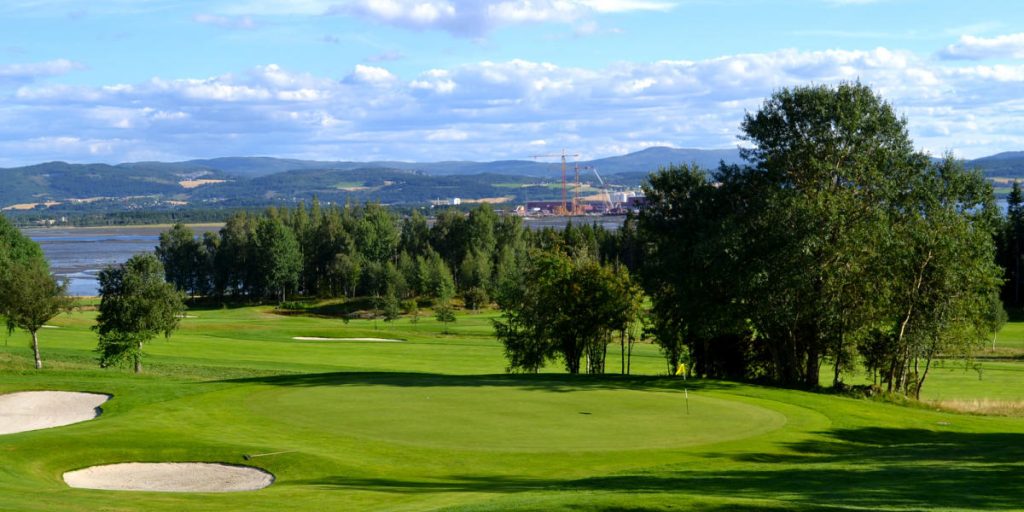
The Stiklestad Golfklubb doubles as a hiking and recreation area. Photo: Stiklestad Golfclub
Stiklestad Golfklubb – Norway Located in central Norway, the Stiklestad Golfklubb doubles as a hiking and recreation area. It is rife with lush greens, breathtaking scenery, and all the facilities an avid golfer needs. Plus, history buffs will get a kick out of the stunning views of Trondheim Fjord, the third-largest inlet in the Norwegian Sea.
While the temperature typically drops low, you’ll catch a generous glimpse of the sun on these rolling hills, so don’t forget a golf hat!
Established in 1924, this once nine-hole course, Oslo Golf Club Bogstad, is now 18 holes long and Norway’s oldest golf course.
Oslo Golfklubb – Norway Established in 1924, this once nine-hole course is now 18 holes long and Norway’s oldest golf course! Nowadays, it’s home to the Norwegian Masters and Ladies European Tour, so don’t be surprised if you encounter budding professionals!
When in Norway, don’t forget to check out these other must-see golfing destinations!
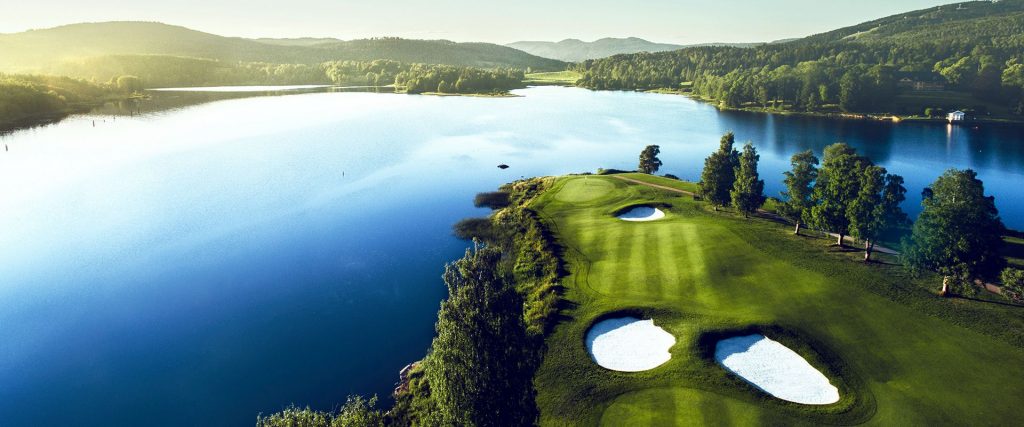
The remote Great Northern Golf Course is not just a prestigious golfing destination but also boasts a unique Nordic design
Great Northern Golf Club – Denmark When in Denmark, you can’t miss out on the Great Northern Golf Club. This remote course is not just a prestigious golfing destination but also boasts a unique Nordic design. Surrounded by clear blue lakes, you’re likely to stumble upon a picture-perfect moment with every hole.
Overall, this 18-hole course is also one of the most challenging in the country, so you may want to pack along a more forgiving driver until you perfect this terrain.
Home to two golf courses, the Scandinavian in Denmark is just a stone’s throw away from Copenhagen
The Scandinavian – Denmark
Home to two golf courses, the Scandinavian in Denmark is just a stone’s throw away from Copenhagen. Both courses are highly varied, making them an excellent destination for practicing various difficulties.
Each of the two also consistently ranks for Europe’s best golf courses, so you can rest assured you’ll get the challenge you need! Plus, its natural environment is awe-inspiring and a magnet for tourists from all over the world.
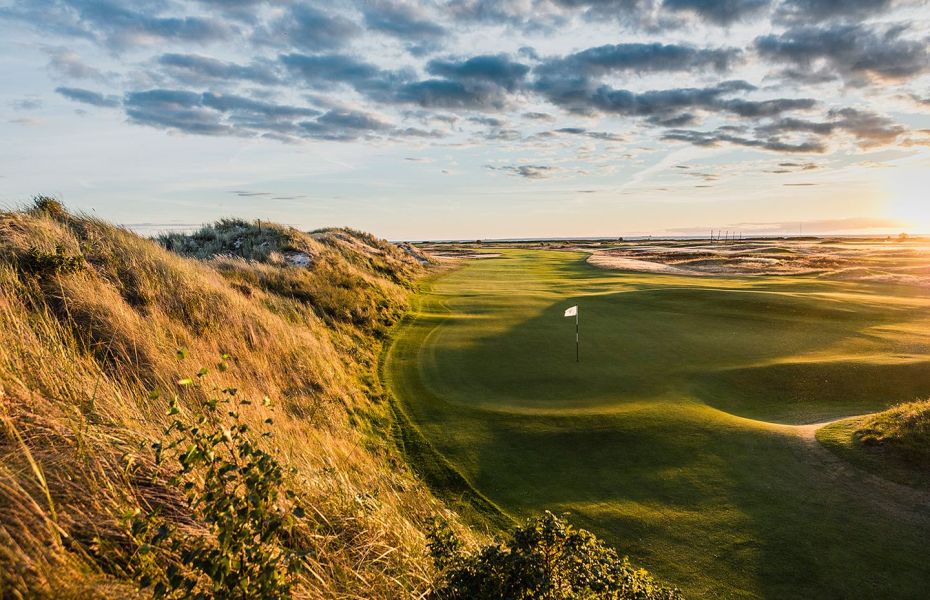
Falsterbro Golf Course, established in 1909, is the oldest in Sweden
Falsterbo Golfklubb – Sweden This golf course, established in 1909, is the oldest in Sweden and has stood the test of time for good reason. It is remote, unspoiled, and right next to some of Sweden’s most beautiful beaches.
It currently ranks among the Top 100 Golf Courses and neighbors many highly-rated BNBs where you can retire after a long day under the sun.
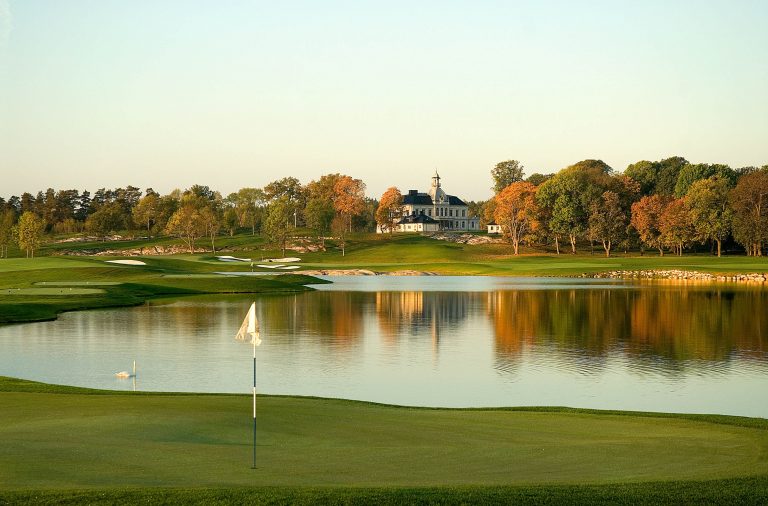
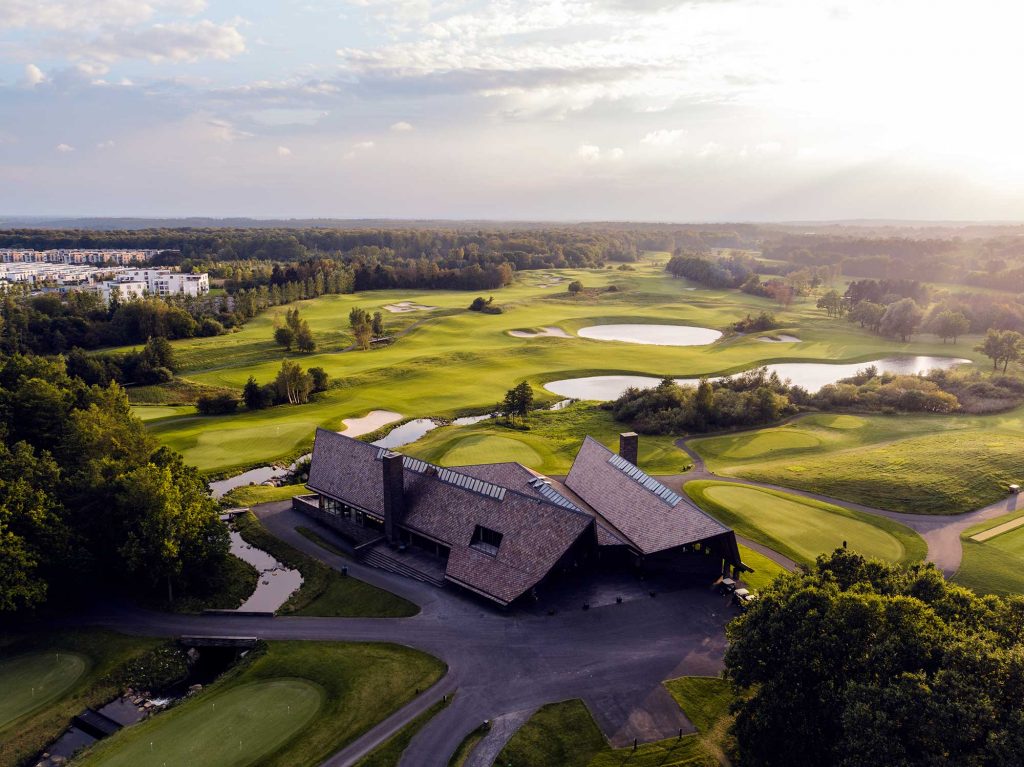
The Bro Hof Slott tournament-grade golf course isn’t just renowned for its challenging holes—it’s also home to a lavish castle! Photo: Lennart Hyse / Bro Hof Slott GK
Bro Hof Slott Stadium Course – Sweden
This tournament-grade golf course isn’t just renowned for its challenging holes—it’s also home to a lavish castle! While this course is relatively new, it’s won a multitude of accolades since its grand opening in 2007.
Those who love a good challenge can take on this 8,000-yard course while enjoying an entire afternoon of picturesque views and rolling hills.
Rediscovering Scandinavia’s Golf Courses as Gems for Golfers – The Bottom Line
When in Scandinavia, you’ll get your fair share of standout golf courses no matter where in the country you are. If you’re shopping for golf balls in preparation for your European trip, don’t forget to give these must-see destinations a peep!
Rediscovering Scandinavia’s Golf Courses as Gems for Golfers, compiled by Jordan Fuller.















 “The new MUNCH will be a cultural powerhouse for the city, the country and the world,” said Vice Mayor in Oslo for Culture And Sport, Omar Samy Gamal.