The Evolution of Electric Flights Takes Place in Norway

Based at Jarlsberg airport 60 miles (100km) south of Oslo, the Norwegian company Equator Aircraft, founded by Tomas Brodreskift began flight testing a proof-of-concept all-composite two-seat amphibian in 2018. Read more about the evolution of electric flights which takes place in Norway.

According to Brodreskift, the first commercial electric flights are anticipated to be a reality in 2030. The Equator Aircraft’s P2 Xcursion prototype has passed an audit by the Norwegian CAA and its first full test flight was successfully carried through on March 30 last year. The company describes their mission as a  ”sustainable alternative to the noisy and costly types” which will serve commercial passenger and transport markets.

The Evolution of Electric Flights Takes Place in Norway
The first commercial electric flights are anticipated to be a reality in 2030
Related: Will Norway Be The First Market For Electric Commercial Flights? 

Technology is progressing fast
“The pace at which technology is progressing is amazing. We must find emission-free solutions for transportation, including flight, and this will drive exponential development in electric and green propulsion,” Brødreskift, CEO of Equator Aircraft, predicts. “For us, it is both exciting and frustrating. We know it is coming, but it’s hard to develop a strategy when things are moving so quickly,” he adds.

After a fourth test flight on October 7 last year, Brodreskift said to the Flynytt magazine, ”In summary, the trip was a success. We pulled up the chassis for the first time, collected some data and also tested flaps and did general control tests.”  
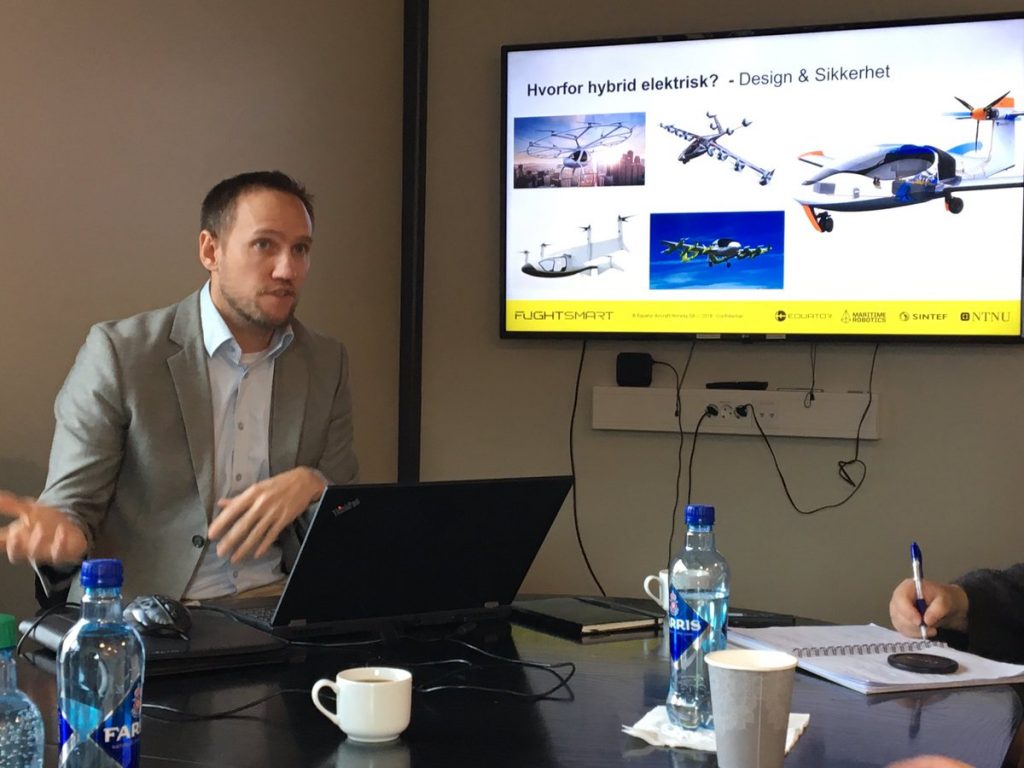
The Evolution of Electric Flights Takes Place in Norway
Thomas Brødreskift, CEO of Equator Aircraft
Several models in the planning stage
Feedback from the test flights is being incorporated into the first production-conforming prototype – a stretched version of the concept;  X4 which is designed to seat up to four people and preliminary design work for an eight-seat model, X8, will hopefully be ready for the market by the end of the decade.

The X4’s European CS-23 certification campaign is scheduled to be approved by 2025.

Related: Climate-Smart Airports in Sweden

The Evolution of Electric Flights Takes Place in Norway
A ”sustainable alternative to the noisy and costly types”
Attractive markets
According to Brodreskift, many of the world’s major towns and cities are located adjacent to water. This makes downtown-to-downtown routes using seaplanes very attractive. Equator is collaborating with Danish operator Nordic Seaplanes to create the “ideal platform” for this segment.

“There are many cities in the world with proximity to water, where electric seaplanes can be the solution to replace helicopters and other less traditional aircraft. It is a very good market, today we actually earn more on our sightseeing trips than on the scheduled flights between Copenhagen and Aarhus,” says Lasse Rungholm, CEO of Nordic Seaplanes, in a press release from the company.

Related: Scandinavian Mountains Airport – Without Air Traffic Control Tower

The future is electric
“The future is electric, and we want to be at the forefront. That is why we have entered into a partnership with Equator where we will contribute our experience as a seaplane operator. We are very interested in this technology and have a plan to operate a fleet of electric seaplanes as soon as they become available,” says Rungholm.

The Evolution of Electric Flights Takes Place in Norway, written by Tor Kjolberg

Swedish Online Second-Hand Shop Sets Out On An International Journey

Fashion retailer H&M Group launched Sellpy, its majority owned Swedish online second-hand shop in 2014. Now, the Swedish online second-hand shop sets out on an international journey by launching Sellpy in Germany.

Sellpy is a service and e-commerce platform for second hand goods in Sweden and the company is making it as easy as possible for customers to give old items a second life and make room for new favorites.

Swedish Online Second-Hand Shop Set Out On An International Journey
The fashion giant H&M now bets on shoppers outside Sweden trending towards more sustainable consumption
Saving valuable resources for our planet
“Every garment, that is bought second-hand, saves valuable resources for our planet. As Sweden’s largest online shop for second-hand we want to empower everyone to live circular. So, we make it super easy to give articles a second chance”, says Michael Arnör, CEO Sellpy.

Related: One of the World’s Largest H&M Flagship Stores in Oslo

The fashion giant H&M now bets on shoppers outside Sweden trending towards more sustainable consumption. Sellpy manages all the activities in the sales process right from items picked up from sellers to selling and shipping.

H&M has given a new home to more than 5 million items since the launch in 2014. Their website states that Sellpy is a “young, passionate group of around 40 people working in the Stockholm office and another 330 in its production facilities.

Sustainable consumption
The change from a linear to a circular textile economy leading to sustainable consumption is an integral part of H&M Group’s sustainability work. New business models in the areas of rental, repair and re-commerce play just as an important part as investments in research and development of new recycling technologies and materials. H&M invested in Sellpy in 2014 and now holds a 70 percent stake.

Related: World’s First Recycling Mall – in Sweden

Customers can either shop from a broad range of second-hand goods or re-sell their loved articles. Now they are launching in Germany, making it possible for more customers. In a press release last May, Sellpy announced that it would double its warehouse capacity in Sweden, to near eight million items annually, due to strong demand. Since 2014, more than six million items have been sold through the platform.

Swedish Online Second-Hand Shop Set Out On An International Journey
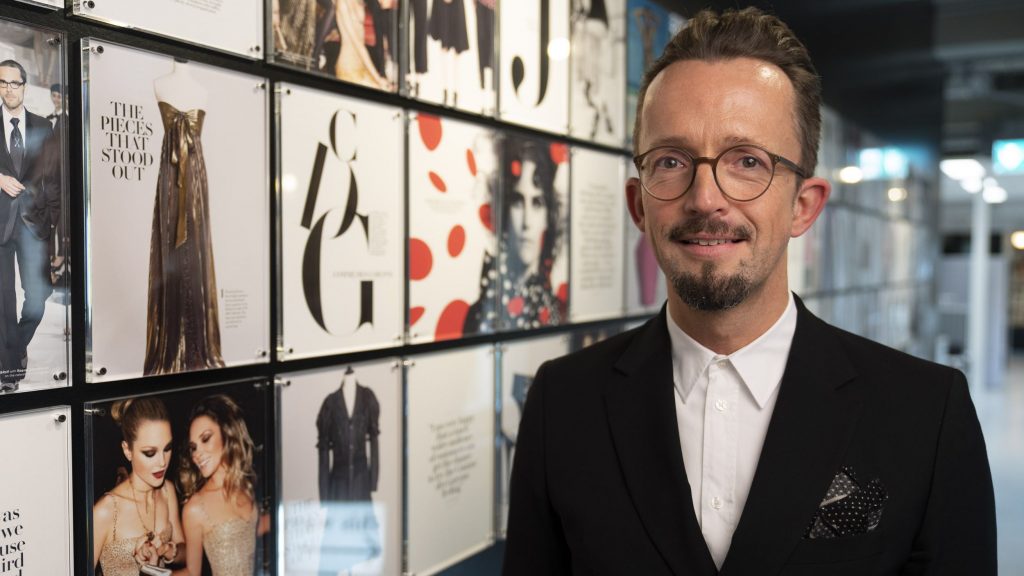
Thorsten Mindermann, Country Manager of H&M Germany
The first step on an international journey
“We see that the awareness and demand from our customers for sustainable fashion is constantly growing and is now probably greater than ever. That’s why we’re particularly pleased to be able to offer a new sustainable way of buying and selling fashion, in collaboration with Sellpy”, says Thorsten Mindermann, Country Manager of H&M Germany.

Related: Exporting Trash to Stockholm

“We’re excited about Sellpy’s first step on their international journey which we support with our investment and strategic partnership,” adds H&M Group CO:LAB head Nanna Andersen.

Swedish Online Second-Hand Shop Set Out On An International Journey
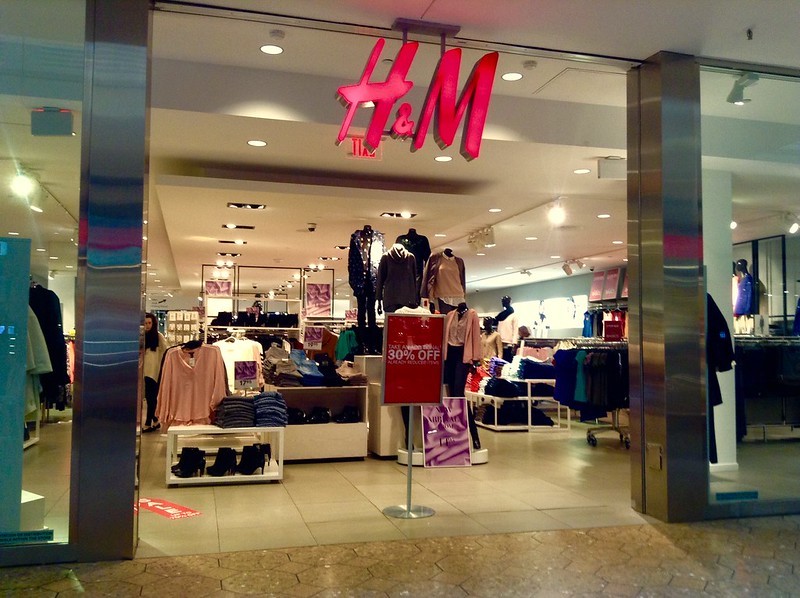
Times Square H&M store at night.
Swedish Online Second-Hand Shop Sets Out On An International Journey
The second-hand market is one of the fastest growing economic sectors within the fashion industry and offers a sustainable, modern and personalized offer and shopping experience for consumers.

Seeking to improve its environmental credentials and tap into consumers’ growing concerns about the environmental cost of fast fashion, H&M has in recent years launched trials such as vintage clothes sales and party dress rental.

Swedish Online Second-Hand Shop Sets Out On An International Journey, written by Tor Kjolberg

The Swedish Sunshine Island

With its medieval towns, sandy beaches and curious rock formations, tranquil Gotland, the largest island in the Baltic, is a favorite holiday spot. Visit the Swedish sunshine island.

Gotland is an island of gaunt rocks, forests, wild flowers, cliffs and sandy beaches, blessed with more hours of sunshine than anywhere else in the country. Swedes naturally flock here for their summer holidays.

The Swedish Sunshine Island
Map of Gotalnd
Related: Sweden’s Culinary Island

Gotland was created over thousands of years as the animals and plants of the ancient Siturian sea slowly sank into the sediments that was to become the limestone platform of modern Gotland. Million-year-old fossils and the island’s monumental sea-stacks (raukar) can still be found on the coast.

A UNESCO Heritage Site
In the Viking age the island was a busy trading post. Visby, the principal center of population, later became a prosperous Hanseatic town. Great stone houses were erected, churches were founded and a city wall was built. Today, 3 km (2 miles) of the medieval limestone wall remains virtually intact, interspersed with 44 towers and numerous gates. It is now a UNESCO world Heritage site.

The Swedish Sunshine Island
Limestone has created one of the island’s major attractions. Photo: Visit Sweden

Limestone has created one of the island’s major attractions – the impressive subterranean tunnels and stalactite caves of Lummelundagrottan to the north of Visby, which should not be missed. Dress warmly as it’s 8C (40F) inside. Above the ground, you can enjoy the Lummelunda Tree Park.

Related: A Swedish Island Retreat in Medieval History

The Island of Sheep
About 50 km (30 miles) north of Visby lies Fárö, the ‘island of sheep’. Take a ferry to the island from Fárösund and enjoy sites such as Gamlehamn, a medieval harbor, and the ruins of a chapel to St. Olaf. You can also see one of Gotland’s most bizarre shaped raukar, ‘The Camel’, and visit the beach of Sundersand. After you have been here a little while, you will understand why Fárö was Ingmar Bergman’s favorite place.
Limestone has created one of the island’s major attractions
From Holmhallar. Photo: Visit Sweden

Sweden’s most primitive horse, the Russ, has lived in the forests of the island from time immemorial. The name Russ comes from the Old Norse hross, and it is thought that the horse is a descendant of the wild Tarpan. You can see them only 123-126 cm (40-52 inches) tall, around the island.

The Swedish Sunshine Island
Gotland is blessed with more hours of sunshine than anywhere else in the country. Photo: Gotland Region
92 medieval churches
Wherever you travel in Gotland, you’ll come across at least one of its 92 medieval churches. At Romakloster in the center of the island, there is a ruined monastery from the 12th century. There are many other relics of the past, including runic stones and burial mounds. If you reach Gotland’s southernmost tip, you’ll see some of the most impressive raukar on the island.

More sights and activities here.

The Swedish Sunshine Island, written by Tor Kjolberg

Feature image (on top) Photo: Visit Sweden

The Arctic Part of Sweden

The organization Swedish Lapland aims to support the traditional Sami way of life while protecting the fragile ecosystem that they inhabit – and tourism is the key. Visit the Arctic part of Sweden.

Swedish Lapland is the rolling hills and the roaring rivers. The vast woodlands and rural romance. But foremost, from the mountains to the sea, it is the perfect place to get on a new adventure.

The Arctic Part of Sweden
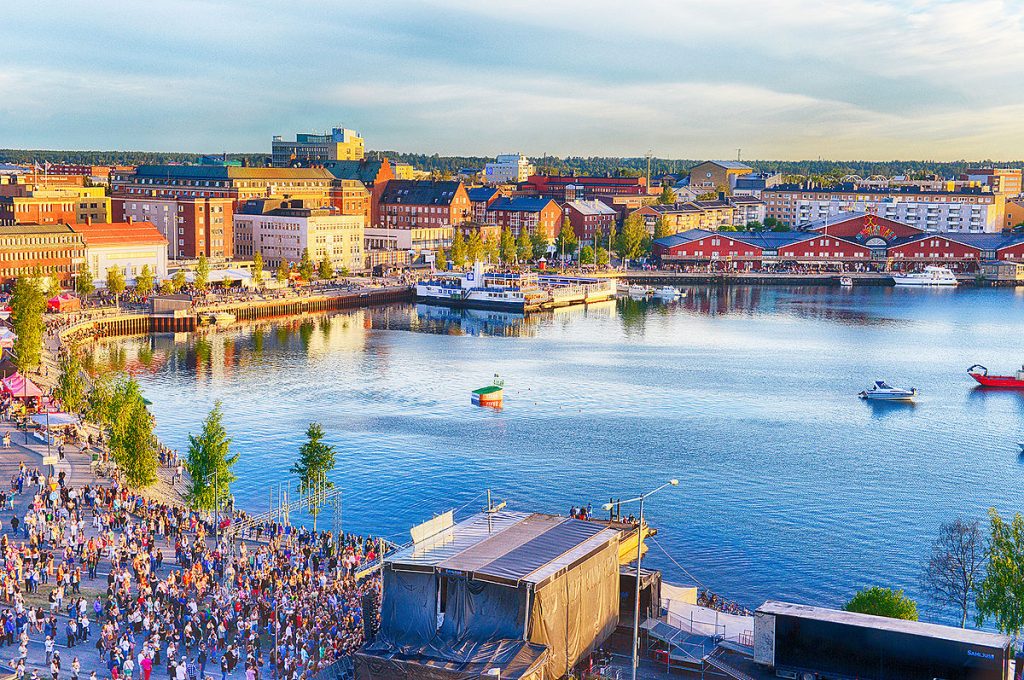
From Luleå City Festival. Photo: Wikipedia commons
The Arctic part of Sweden is located seriously remote
Located on the far northernmost edge of Europe, the region is seriously remote – even for other Swedes. Gothenburg is as close to Munich as it is to Luleå, the region’s gateway city. Known as “Europe’s Alaska”, its landscape is characterized by great swatches of pine, spruce and fir, berry carpeted tundra, white water rivers, teeming with salmon, and rustic lakeside villages. It’s a land where the brown bear and lynx, wolf and wolverine still roam free, and everyone has an intimate bond with nature.
The Arctic Part of Sweden
Map of Swediswh Lapland

Related: Life in Lapland

When we have arrived at a hotel with an outside welcoming fireplace, we realize that we have distanced ourselves even farther from the buzzling outside world. In the middle of the woods, we gaze over a bluish twilight landscape watching the trees dancing gently in the wind. Lapland is northern Europe’s last remaining truly wild area.

Meet the seasonal people
In the remote village of Flakaberg on the sleeping shore of Lake Gorgim, 130 km north of Luleå, the small company Årstidsfolket (English “seasonal people”) introduces visitors to the intricacies of Sami culture. There you will meet Lars, who talks about his life as a reindeer herder. Visit the reindeers, listen to Lars living stories, and take a walk among ancient dwellings, sacrificial grounds and artefacts.
The Arctic Part of Sweden
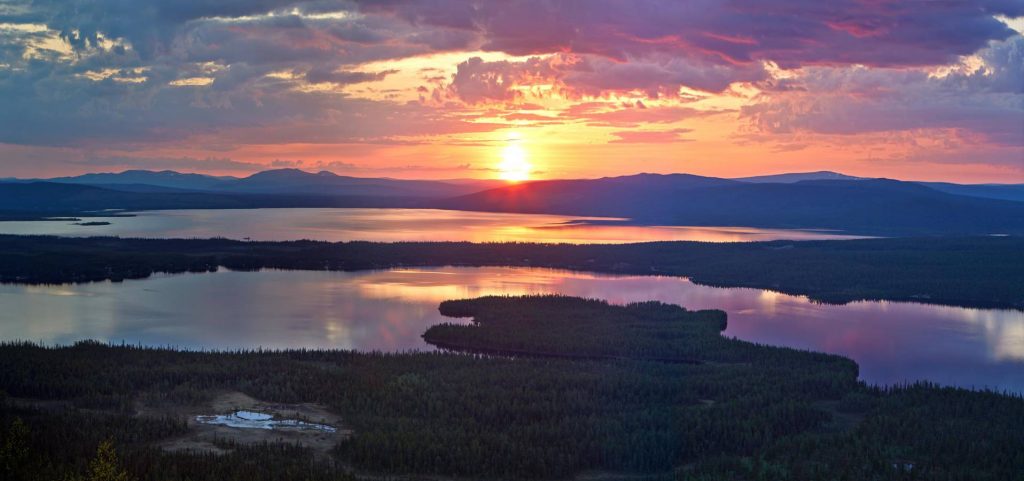
Located on the far northernmost edge of Europe, the region is seriously remote – even for other Swedes. Photo: Visit Sweden

As the only indigenous people in the European Union, the Sami are a geographical anomaly. Their history dates back thousands of years, and Sápme, as they call their cultural homeland, today spans the borders of Arctic Sweden, Finland, Norway and Russia. There is no sensus for the Sami, but the current population is estimated to number 80,000, with around 20,000 living in Swedish Lapland, together with 300,000 reindeer.

Related: How to Celebrate New Year’s Eve Twice in Scandinavia

Nomadic reindeer herders
Traditionally, Sami have been nomadic reindeer herders, but life has changed dramatically over the last 50 years. While 900 Sami are still actively involved in herding, divided among 51 Sami communities, each of which has its own grazing rights, many more are now involved in tourism, food production or other rural activities.
The Arctic Part of Sweden
Swedish Lapland – Sápmi – is a unique blend of untamed nature and cultural heritage

There’s less work for the villagers, promoting many youngsters to head for the city to find employment. The Rewilding Lapland Organization is now working to help select Sami communities preserve their culture of reindeer husbandry by protecting critical grazing land, easing seasonal migration routes and developing various opportunities for Sami-focused tourism.

A unique blend of untamed nature and cultural heritage
Swedish Lapland – Sápmi – is a unique blend of untamed nature and cultural heritage. Here old-growth forests, mountains, glaciers, free-flowing rivers and extensive wetlands co-exist with the indigenous Sami community since millennia. There is no other place in continental Europe with such vast, uninhabited, road-less and original landscapes as Swedish Lapland. The composition of fauna and flora is still largely intact and the functioning of ecosystems unaltered. Here, the large-scale reindeer migration and largely intact river systems shape the ecology and the landscape as well as people’s lives. However, even under such pristine conditions, there are threats and needs to ensure that the uniqueness of the land remains and that some lost components are brought back.
The Arctic Part of Sweden
Lapland is northern Europe’s last remaining truly wild area.

Related: In Search of the Sami in Scandinavia

Fresh fish straight from the lake
«Filleting fish by a lake called Sårgåjávrre stand Lennart Pittja and chef Johan Eriksson. The morning’s catch will be just enough for the evening meal. A fire has been lit in the old smoking hut. This is Lennart’s place. Here, his reindeer-herding family has had a home and a livelihood as long as anyone can remember, and they were able to build a boat,” writes Håkan Stenlund on Swedish Lapland’s webpage.

“Fresh fish straight from the lake, a little salt and a smoker and the fish will be warm in a couple of hours. On the face of it, that doesn’t sound so remarkable. Even so, that’s about as simple and good as food can ever be. Pure. Local. Arctic. That’s pretty much what it was all about when the Nordic noir food trend went international. Fresh ingredients prepared and preserved according to ancient methods that were practised by the original inhabitants of the region: smoked, salted, pickled or dried and, most of all, fresh and right on location. So, if the new Nordic cuisine wants to call itself progressive, Swedish Lapland can rightfully claim that it has been that way for 6,000 years or more. We have never known anything else.»

Criss-crossed by countless waterways
Criss-crossed by countless waterways, Swedish Lapland is defined as much by its rivers and lakes as it is by its forests. While many of these rivers have been dammed, others provide some of the best salmon, trout and pike fishing in northern Europe.

Situated near the village of Gunnarsbyn (around 75 km north of Luleå) on the banks of Lake Vitträsket, Sörbyn Lodge is the premier accommodation in the Råne river valley. Taken over by the local community nine years ago, it boasts rustic cabins and more comfortable rooms, and has built a reputation for fine local cuisine and even finer fishing opportunities.

You can fly to Luleå from Gothenburg and Stockholm and Oslo, Norway.

The Arctic Part of Sweden, compiled and written by Tor Kjolberg

Serve Norwegian Fish at Your Outdoor Barbecue

Barbecuing fish is not a newfangled idea. We humans have been grilling food on sticks over flames or glowing embers since the discovery of heat. The modern summertime way to cook fish is by means of charcoal or gas-fired grill, so serve Norwegian fish at your outdoor barbecue this summer.

Provided we are careful, the results can be very successful. There is no other method of cooking that retains the taste of the fish and the natural juices so well. It’s a jolly good thing that all Norwegian fish varieties make excellent grill food. Just try for yourself.

Related: Smoked Fish From Scandinavia

Serve Norwegian Fish at Your Outdoor Barbecue
Norwegian salmon tandoori with asparagus. Photo: From Norway
Food out in the open
Automation is at the forefront in everyday cuisine. Our modern ovens are equipped with hotplates that can “think”, are thermostatically controlled and are very quick. The latest cookers even have digital control. Perhaps that is why so many of us derive great satisfaction from preparing food in a more primitive fashion – out in the open.

Related: Scandinavian Salted Fish

During the long summer evenings we like to gather round the grill – out in the garden or on the patio, down on the beach or in the woods – during the week with family or friends, or on excursion into the countryside.

Serve Norwegian Fish at Your Outdoor Barbecue
You have probably made the discovery that Norwegians (especially the men folk) love to barbecue – and now, we have also started to grill more good food from the sea.

Related: Dried Fish in Scandinavia

Serve Norwegian Fish at Your Outdoor Barbecue, written by the Daily Scandinavian team.

Feature image (on top): Ch Ranno Karel/From Nusfjord, Northern Norway/VisitNorway


One Of The Finest Literary Crime Writers In Scandinavia

0

Swedish crime author Arne Dahl, real name Jan Arnald (born 1963), is one of the most important contemporary names in the crime genre today. Persistently, he manages to relate pressing and contemporary issues within his work. His latest book, Hunted, is a dark and gripping Scandi-thriller set in the snowy tundra of rural Sweden. Again, he demonstrates that he is one of the finest literary crime writers In Scandinavia.

Hunted is book two of the cops Sam Berger and Molly Blom on the lam from the authorities as a result of the disastrous investigation of the previous book Watching You, where both became implicated in a colleague’s murder.

One Of The Finest Literary Crime Writers In Scandinavia
“A Gruppen” (“the Intercrime Group”)

Related: Norwegian Crime Author Has Succeeded Again!

Jan Arnals becomes Arne Dahl
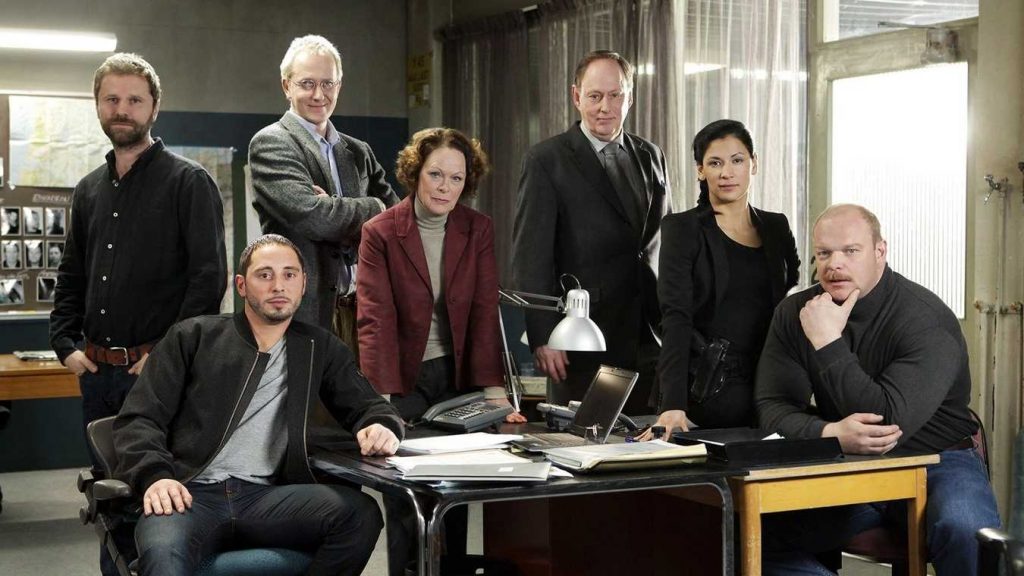
Arne Dahl published Barbarer (2001) and Maria och Artur (2006) under his own name, but under his pen name he has written a series of crime novels about a fictional group of Swedish crime investigators called “A Gruppen” (“the Intercrime Group”). The books have been translated into several languages. The first five books were made into 180-minute films, screened as two 90-minute episodes per story.

In 2007, the Swedish Academy of Crime Writers awarded Dahl a special prize for his “vitalization and development of the crime genre through his Intercrime series”.  In 2011 Arne Dahl received the ‘Best Swedish Crime Novel Award’ by The Swedish Academy of Crime Writers. During the last few years Dahl has experienced an enormous breakthrough, receiving rave reviews from some of the most respected newspapers in Europe.

Related: Norwegian Actor on Interpreting an Mass Murderer

One Of The Finest Literary Crime Writers In Scandinavia
Hunted book-cover
Hunted
Hunted opens in rural Sweden with a letter, apparently written by a Jessica Johnsson, a paranoid woman in a wilderness cabin. The letter is addressed to Sam’s former partner, Desiré Rosenkvist, AKA Deer, now promoted to Superintendent head of Stockholm Police. It contains uncanny knowledge about Deer as well as information about a serial murderer who targets women with children. The author also notes that someone, possibly the murderer, is hiding in the woodwork and is approaching.

“I got a foot in in the so-called world of ‘fine culture’ in Sweden, and to take the step into the world of crime fiction was a big one,” explains Dahl, who was known as a literary novelist, academic and cultural critic before turning into crime fiction.


Related: A Literary Masterpiece About the 22nd July Massacre in Norway

Looking for a fresh start
Dahl made the choice to write under a pseudonym because he was looking for a fresh start, and inhabiting the roles of both an academic and crime writer did not seem possible in Sweden.

In Hunted, nothing is what it seems as identities blur and become transposed. We shift to a point on the timeline where Sam is injured and committed to a psychiatric institution. He is obsessed with escaping at all costs while feverishly trying to recall recent events. How this episode connects to current events becomes key to the murder investigation.

‘Dahl’s intelligent mastery of the genre delivers a flawless atmospheric thriller – chilling in every sense’ wrote The Sunday Times Crime Club.

One Of The Finest Literary Crime Writers In Scandinavia, written by Tor Kjolberg

The Fairytale Waterway in Norway

Eight spectacular flights of locks, with 18-lock chambers in total, elevate boats and their passengers by 72-meters (236 feet) en route from Skien to Dalen in Eastern Norway. Welcome to the fairytale waterway, Telemark Canal, in Norway.

When the Telemark Canal was completed in 1892, it created a continuous waterway all the way from the coast into the very heart of Telemark. The canal connected town and country and opened up Telemark to the world.

The Fairytale Waterway in Norway
All ships have covered decks, saloons and onboard restaurants

Discover the cultural heritage
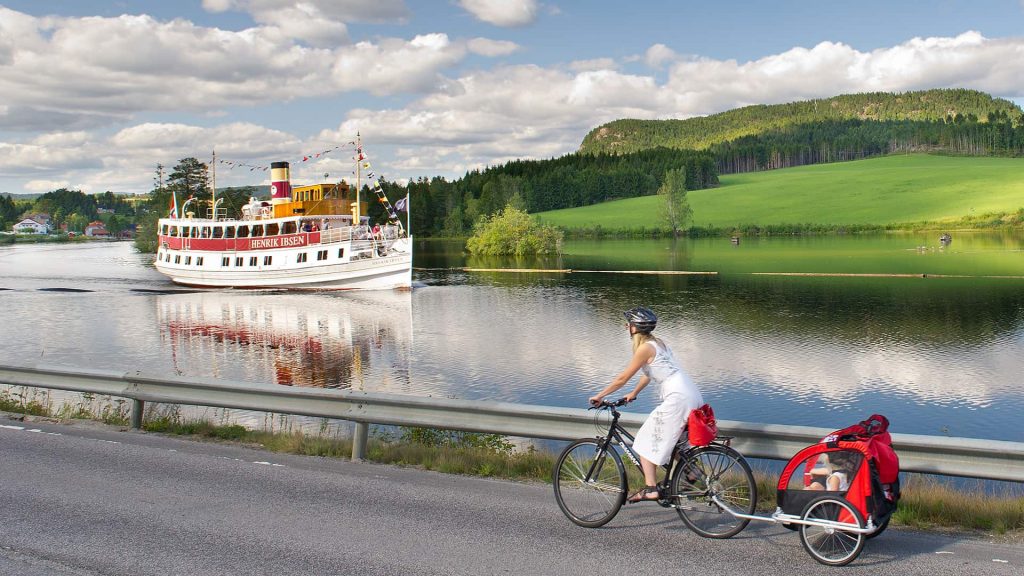
Today, you can discover the cultural heritage and everyday life of this fairytale waterway, with its locks, narrow rivers and wide-open lakes, from the deck of one of the three canal ships or in your own boat. You can also explore the canal and the surrounding countryside by canoe, by bike or on foot, and visit museums, cultural heritage, charming restaurants and festival events.

The eastern leg of the waterway takes you via the picturesque Sauarelva river to Notodden, famous for its UNESCO-recognized industrial heritage and the blues festival.

Related: The Beautiful Rural Telemark Region in Norway

The canal ships
Throughout the summer season, you can discover the Telemark Canal aboard the canal ships which sail between Skien and Dalen, and Akkarhaugen and Lunde. All three ships have covered decks, saloons and onboard restaurants, and you can take your bike or canoe/kayak with you.

The Fairytale Waterway in Norway
What could be more fun than exploring this magical waterway in your own canoe or kayak?
Private boats on the canal
The locks are open to private pleasure craft from late June to mid-August. All the locks are staffed by experienced lock-keepers who are always happy to help.

The boat trip from the coast through the Skien and Løveid locks to Norsjø is a great way to get a taste of canal life. You can then continue via the Sauarelva river to Notodden or follow the canal all the way to Dalen.

En route you’ll find plenty of great bathing spots and places to go ashore.

Related: Food Traditions in Telemark Country

Cycling along the canal
Along the canal you’ll find plenty of signposted cycle routes for day trips and longer excursions. Perfect both for young families or for cyclists seeking more of a chaollenge.

The Fairytale Waterway in Norway
Along the canal you’ll find plenty of signposted cycle routes for day trips and longer excursions
Between Ulefoss and Hogga, the cycle path runs right beside the canal, skirting the historic locks. The national cycle route between Dalen and Ulefoss passes through an area with spectacular nature and cultivated landscapes. We recommend taking the canal ship in one direction or for part of the way. You can rent a bike or bring your own. All the canal ships can carry bikes.

Kayaking and canoeing
What could be more fun than exploring this magical waterway in your own canoe or kayak?

Paddling through the locks is a thrilling experience. Just follow the instructions of the helpful lock-keepers and you’ll be perfectly safe. We suggest passing through the locks in the downstream direction for a calmer passage with no spray. Descending gently from one lock chamber to the next feels fantastic. But if you prefer to go ashore and bypass the locks, trolleys for transporting canoes and kayaks are available at all locations. The canal is suitable for beginners and experienced paddlers alike. Kayaks and canoes are available to rent in various locations along the canal.

Related: The Most Remote Hotel in Norway

Hiking along the canal
There are plenty of opportunities to stretch your legs along the fairytale waterway in Norway.
Short hikes in gentle terrain include the Skotfos trail at Løveid, Skarravegen between Ulefoss and Vrangfoss, the Dalen trail at Kviteseid, Kjærlighetsstien (the lovers’ trail) at Gvarv, trails at the Notodden world heritage site and Bufjordstigen in Dalen.

Tough but spectacular hikes include Lårdalssigen near Dalen and Hægefjell mountain in Vrådal. Many of these hikes can be combined with a canal cruise.

The Fairytale Waterway in Norway
The canal connected town and country and opened up Telemark to the world
Vrangfoss locks and park
Vrangfoss, the largest and most impressive flight of locks on the canal, is set amid an attractive park. The five lock chambers raise or lower boats over a vertical distance of 23 meters. Overlooking the flight of locks, the former lockmaster’s house is now a restaurant with magnificent views. The barn houses a multimedia presentation on the history of the canal.

You can stay overnight in a cozy lock-keepers’ cottage right beside the canal. Take a stroll on well-maintained paths down to Eidsfoss lock and on the Ulefoss, or up to the former quarry.

For more information, visit the Telemark Canal Website.

The Fairytale Waterway in Norway, is condensed from the Telemarkskanalen tourist booklet.

All images © Telemarkskanalen and Visitbo

A Collection in the Making at the National Museum in Oslo

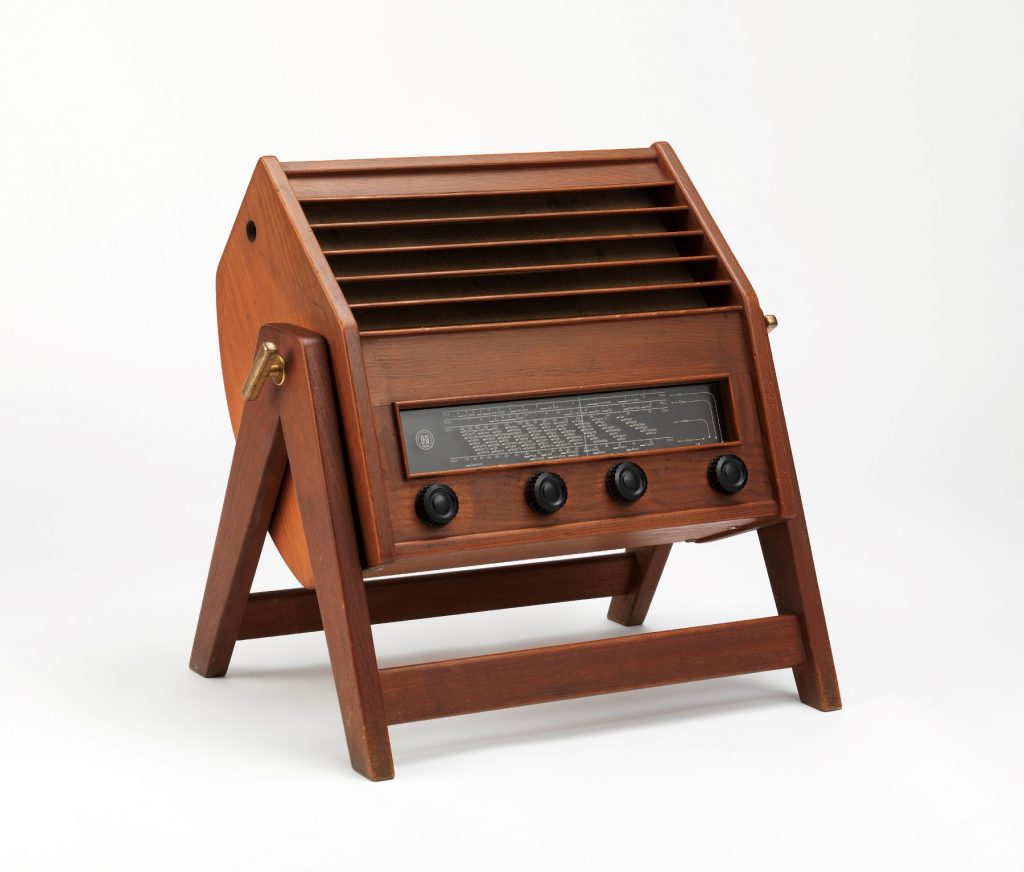
Fragile porcelain figurines, impasto paintings, feather-light hats, paint-spattered spray cans, drawings of long-lost but splendid buildings, and a teak radio. These are some of the about 500 objects that joined the National Museum’s collection last year. The exhibition “A Collection in the Making” at the National Museum of Architecture in Oslo is now open through 11 October.

This exhibition presents around 130 of these newly-acquired objects, which span a wide range of genres, from painting, sculpture and printmaking to the applied arts, architecture and design. The most recently-made works date from 2019, while the oldest – Olaus Magnus’ book on the ethnography, natural history and notable features of the Nordic region – left the printing press in Rome in 1555.

A Collection in the Making at the National Museum in Oslo
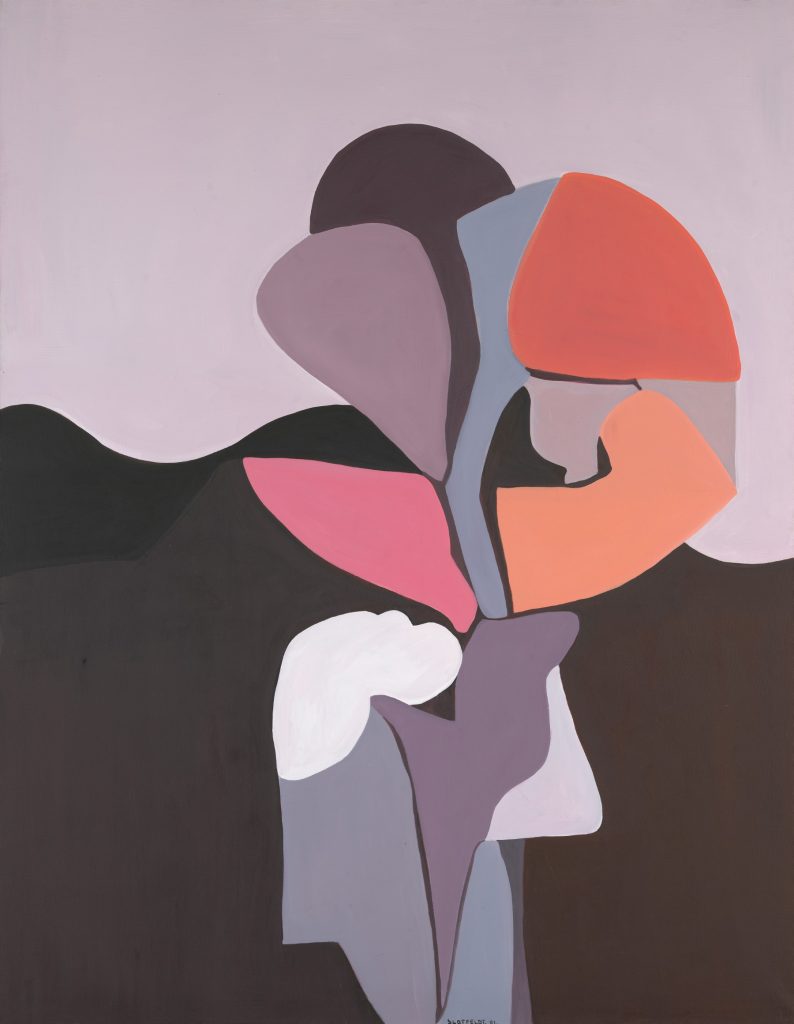
Irmelin Papafava Slotfeldt, «Albero della Vita no 1» («Livets tre»), 1981. Photo: Nasjonalmuseet / Børre Høstland
Related: A Norwegian Art Collector

What is a museum collection?
Questions about what a museum collection is, and how it comes into existence, have gained new relevance in recent years. A desire for museums to reflect the diversity of society has made issues of representation and identity more acute. At the same time, there is a huge interest for overlooked and forgotten chapters in art history. The exhibition reflects these trends.

A Collection in the Making at the National Museum in Oslo
Karl Edvard Korseth, Radio, 1949. Photo: Nasjonalmuseet / Frode Larsen
Related: Sculpture Park With a Twist in Norway

A Collection in the Making at the National Museum in Oslo
A Collection in the Making also shows the importance of gifts from artists and private collectors. With its broad approach, the exhibition provides insights into some of the scholarly evaluations, strategies, lucky chances and visual pleasure that contribute to the making of the National Museum’s collection.

John Savio, «Sommer», probably between 1922 and 1928. Photo: Nasjonalmuseet / Børre Høstland
Artists presented in the exhibition
Lucia Aragón, Arnstein Arneberg, Borghild Arnesen, Faig Ahmed, May Aubert, Admir Batlak, Lars Backer, Hélène Binet, Hanne Borchgrevink, Erik Brandt, Marie Buskov, Unn Søiland Dale, Tim Ekberg, Ida Ekblad, Thomas Fearnley, Helen Frankenthaler, Lilla Hansen, Thorolf Holmboe, Anders Holmer, Carl-Viggo Hølmebakk, Asger Jorn, Anders Kjær, Per Kleiva, Rudolph Knörlein, Karl Edvard Korseth, Ernst Kühn, Steinar Haga Kristensen, Solveig Lohne, Olaus Magnus, Mikkel Mandt, Britta Marakatt-Labba, Kari Mølstad, Frida Orupabo, Irmelin Slotfeldt Papafava, Maria Andrea Pasenau, Urd J. Pedersen, Moses Pitt, Laure Prouvost, John Olav Riise, Hannah Ryggen, John Savio, Mari Slaattelid, Elise Storsveen, Carl Frederik Vogt, Charlotte Wankel, Sofie Werenskiold, Margrethe Wiig, Francesca Woodman, Ahmed Umar, and more.
A Collection in the Making at the National Museum in Oslo
Francesca Woodman, «Untitled», 1972–1975. Photo: Nasjonalmuseet / Frode Larsen
A Collection in the Making at the National Museum in Oslo
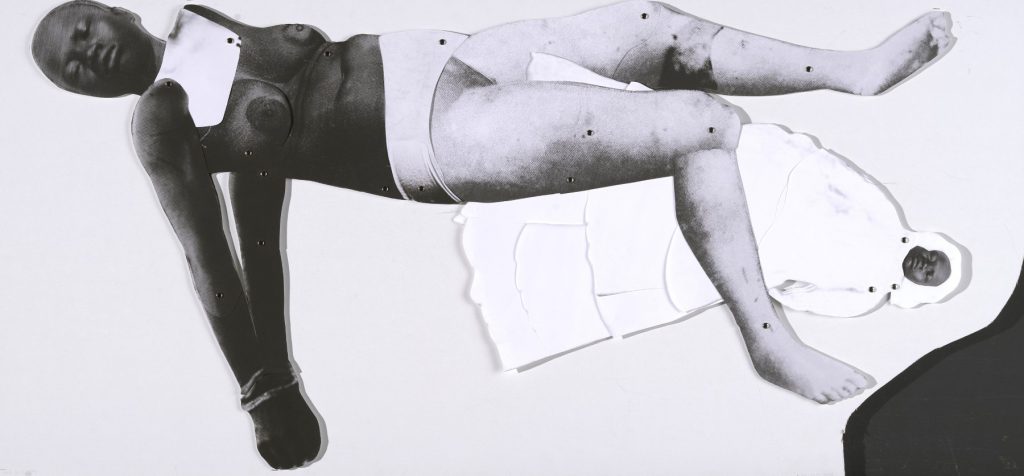
Frida Orupabo
Related: Norway’s First Cubic Painter

About the National Museum’s collection:
The National Museum’s collection comprises around 400,000 artefacts. The collection covers art, architecture and design. During 2019, the National Museum acquired several hundred artworks and objects, of which around 130 are displayed in this exhibition.

A Collection in the Making at the National Museum in Oslo, based on a press release from the National Museum in Oslo.

Feature image (on top): Rudolf Knörlein, Maske, between 1932 and 1936. Photo: Nasjonalmuseet / Frode Larsen

Norway Won Seat On UN Security Council

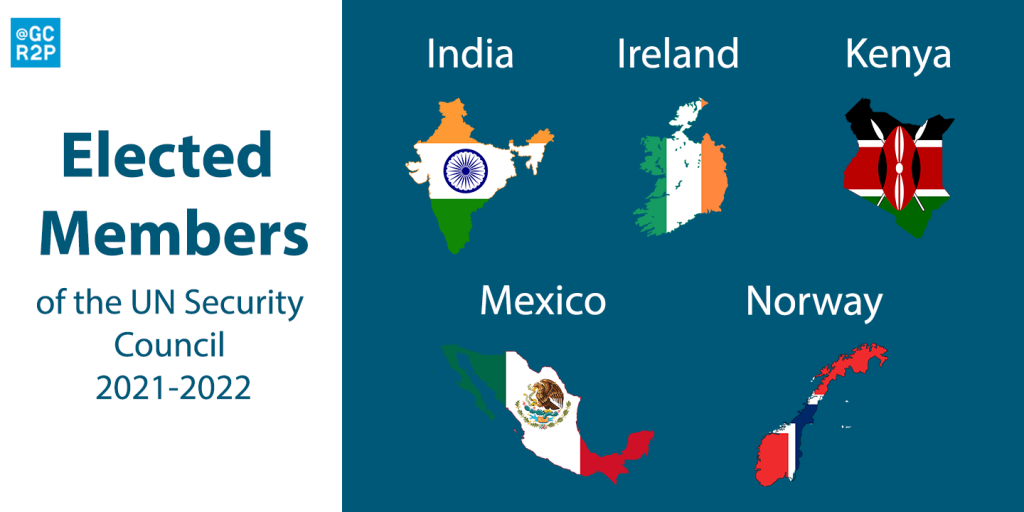
On 17th June, Norway together with India, Ireland and Mexico, won non-permanent seats on the coveted UN Security Council for the committee’s 2021-2022 term. The 15-member council is the most powerful U. N. body. For the next two years Norway has won seat on UN Security Council.

The Security Council has 10 non-permanent seats, each serving a term of two years. The body also features five permanent members: the United States, China, France, Russia and the United Kingdom. Permanent members have the power to exercise a veto on any resolution.

Norway won seat on UN Security Council
The Security Council has 10 non-permanent seats, each serving a term of two years
The world needs more international cooperation
‘We would like to thank the UN member states for the confidence they have shown in us.  The world needs more international cooperation to promote peace and security. We will make use of our seat on the Security Council to strengthen this work,’ said Norway’s Prime Minister Erna Solberg.

Related: Annual Peace Conference Established in Oslo, Norway

India, the world’s largest country without a permanent position on the Security Council, ran unopposed for a seat allocated to its geographic region. Mexico also ran without an opponent. Norway was elected with 130 votes. Ireland was elected with 128 votes.

Norway won seat on UN Security Council
The elections were conducted under stringent rules this year for the first time because of the coronavirus pandemic

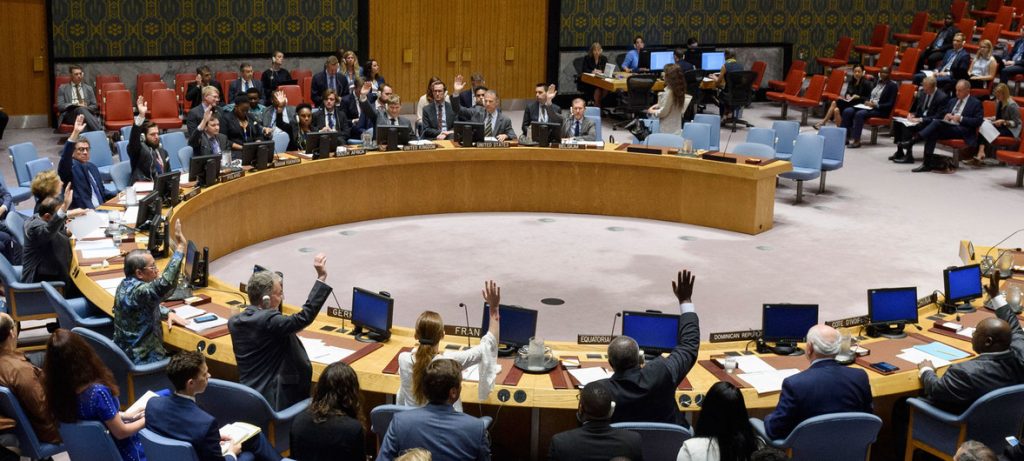
The elections were conducted under stringent rules this year for the first time because of the coronavirus pandemic, which has left much of the United Nations headquarters complex in New York closed to all but essential workers at least through July. Ambassadors who ordinarily would congregate in the General Assembly hall for the voting were instead admitted a few at a time in a staggered system, dropping secret ballots in a box and leaving.

Related: The Story Behind the Norwegian Peace Clock in New York

Norway won seat on UN Security Council
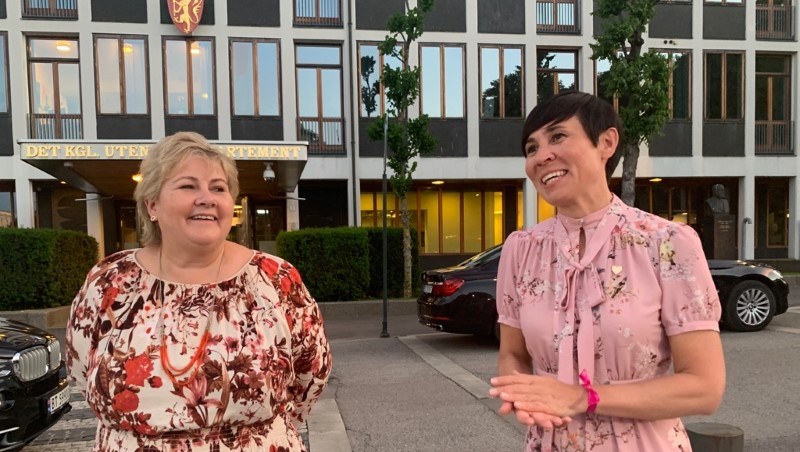
‘We would like to thank the UN member states for the confidence they have shown in us,’ said Norway’s Prime Minister Erna Solberg, here with Foreign Minister Ine Eriksen Søreide
Norway congratulated Ireland, India and Mexico
‘I congratulate Ireland, India and Mexico on their successful election to the Security Council today. We look forward to cooperating closely in the Council. Serving on the Council is one of the most demanding responsibilities a country can shoulder in international politics’, Ms. Solberg said.

Countries must claim two-thirds of the votes from the U.N. General Assembly to sit on the Security Council. A seat on the Security Council is therefore considered a coveted honor in international diplomacy. Council members have a prominent voice on issues of peace and security, including the wars in Syria, Yemen and Afghanistan, the nuclear weapons harbored by North Korea, the Israeli-Palestinian conflict, and armed extremist groups like the Islamic State and Al Qaeda.

Norway won seat on UN Security Council
Norway together with India, Ireland and Mexico, won non-permanent seats on the coveted UN Security Council for the committee’s 2021-2022 term

‘We were three very strong candidates competing for two seats on the Security Council. Canada and Ireland are close partners of Norway in international cooperation. We will strive to maintain our strong relationship with both countries in the time ahead, both within and outside the UN Security Council’, Ms Solberg said.

Binding resolution
The council’s resolutions are binding, even if many go unenforced. It also is the only U.N. body authorized to approve the use of military force, and is empowered to refer cases of genocide and other crimes against humanity to the International Criminal Court for prosecution.

With its authority to approve peacekeeping operations, the Security Council represents an opportunity for many smaller countries to exercise greater power on an international level. In a press release, the Norwegian Government states it will give priority in the Security Council to areas where Norway has particular experience and expertise.

Building bridges and seeking solutions to seemingly intractable conflicts
“We will use the experience gained from many years of engagement in peace and reconciliation efforts to build bridges and seek solutions to the seemingly intractable conflicts that appear on the Security Council’s agenda. International law and human rights will form the basis for our efforts. Norway will cooperate closely with all members of the Security Council and will promote constructive cooperation. Norway will give special priority to efforts to strengthen the protection of civilians, including children, and to promote women’s role and participation in international peace and security work,” it says.

Norway won seat on UN Security Council, compiled by Tor Kjolberg

The Danish Architect Who Redesigns Supremely Difficult Sites

Working with irreplaceable places is an exhilarating struggle. It’s a negotiation between place, history, culture, and the architect brought in to create new meaning: To highlight the existing and create new relevance. Read about the Danish architect Dorte Mandrup who redesigns supremely difficult sites.

Copenhagen-based Danish architect Dorte Mandrup-Poulsen (born 28 July 1961) is the founder and creative director of the architectural practice Dorte Mandrup Arkitekter A/S that has approximately 60 employees. Her company is behind several internationally acclaimed buildings.

Related: New Attraction in Norway – The Whale


Mandrup pursued training in sculpture and medicine before finally succumbing to the call of design. As a student at the Aarhus School of Architecture, she researched the lightweight constructions of Japanese architect Toyo Ito while her classmates took sides in the then-raging debate between post- and neo-Modernism. After graduation, she did a brief stint with Henning Larsen and launched her eponymous firm in 1999.

We hallenge places and accentuate its inherited qualities
“Equipped with an artistic footing and a scientific toolbox, we challenge a place and accentuate its inherent qualities. We contrast the existing and create tension between the character of the place and the architectural design that elevates the meaning of the place,” she states on her website.

The Danish Architect Who Redesigns Supremely Difficult Sites
The Wadden Sea Center, Denmark

Dorte Mandrup’s work is characterized by being conceptually strong as well as innovative in terms of form and material, but also by an analytical approach to architecture. She has for instance transformed a 1921 seaplane hangar on Copenhagen’s Holmen islands into an office.

Related: Exciting Danish Architecture

She soon picked up a series of commissions for designs that showcased her aversion to orthodoxy. She installed tracks on which panels of parachute fabric roll back and forth to divide the workspace. (The scheme steers between dueling philosophies, that an architect should either return a historic space to its original form, or smash a wildly contemporary addition onto it.) Thus, Mandrup is promoting the student’s perspective, and “fighting hard for the view that childhood should be magical, and for a place where adults are not always correcting or controlling the game.”

Trusted with responsibility
“That is what we demand of ourselves when we are trusted with the responsibility to re-imagine or create an irreplaceable place – to evoke its core and illuminate its potential,” is one of ther statements.

Among several acclaimed architectural unfoldings, Dorte Mandrup is behind the Wadden Sea Centre at the Danish West Coast, the Icefjord Centre by the UNESCO trail in Ilulissat in Greenland, and the Danish clothing company Bestseller’s upcoming mixed use development in Brande.

The Danish Architect Who Redesigns Supremely Difficult Sites
Herstedlund, Community Center

Related: Skyscraper Almost the Height of the Eifel Tower to be Built in a Tiny Danish Town

The Danish architect who redesigns supremely difficult sites
In 2017, Dorte Mandrup caused an international stir with her opinion piece ”I am not a female architect. I am an architect” in Dezeen, in which she discussed gender politics within the world of architecture.

Mandrup insists that her acts of defiance are not committed for the sake of contrarianism, but because nuanced problems deserve equally un-straightforward solutions.

The Danish Architect Who Redesigns Supremely Difficult Sites, written by Tor Kjolberg

Feature image (on top): The Salling Tower. All images ©: Dorte Mandrup