
6 Places to Visit in Norway with Your Kids

The most exciting time of the year has come – vacation time! Vacationing with your kids is the best way to spend some quality time with your family. What those who travel alone can’t grasp is that vacation with kids can be challenging if you don’t pick out the right places to visit. Read about the 6 places to visit in Norway with your kids.

While keeping everyone entertained and happy isn’t an easy task, the solution is going to the family-friendly places.

If your choice for the next vacation fell on Norway, that is some great news! This remarkable country has so much to offer for people of all ages and interests. Since you do need versatile spots that will satisfy the interest of each one of you, here are the best places in Norway that you simply must visit with your family.

Related: Alta, Norway – Town of the Northern Lights
6 Places to Visit in Norway with Your Kids
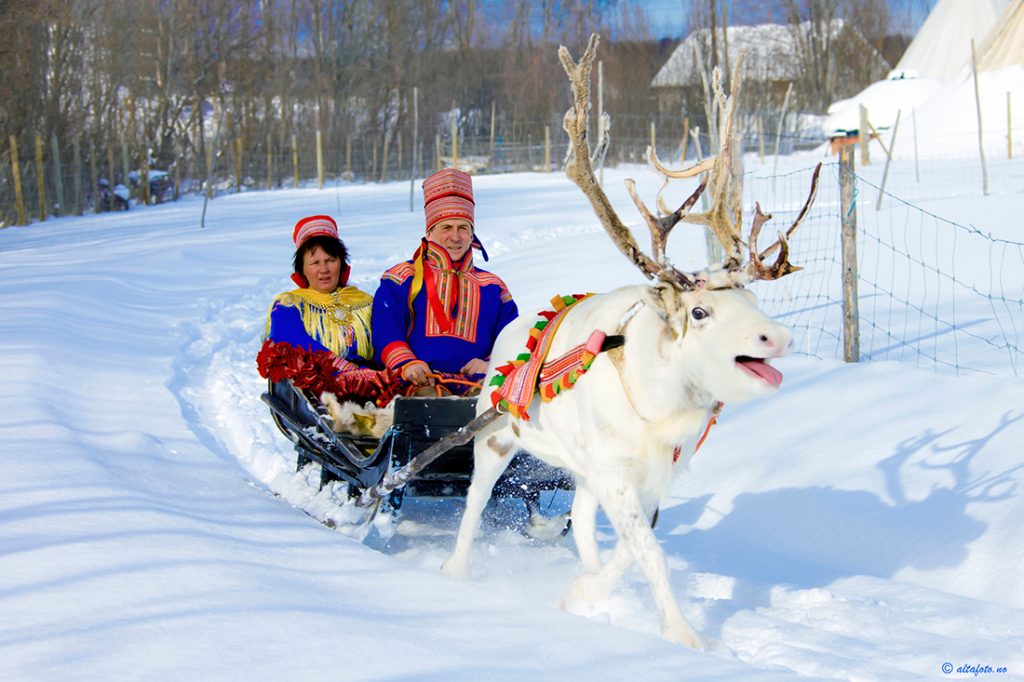
Reindeer sledding in Alta. Photo: North Adventure
  1. Try Reindeer Sledding in Alta
    You won’t get a chance to meet Rudolf or Santa, but you can imagine that you are being pulled in Santa’s sleigh while real reindeers lead the sled.

The kids will love this activity and you can also allow the child in you to have some fun.

The indigenous Sami people raise and herd the reindeers around Alta. Alta is a town on the northern coast which is located at the head of Alta Fjord. Here you’ll get a chance to absorb the winter wonderland while you are roaming through the snow with reindeer as your guides.

An adventure such as reindeer sledding is authentic and characteristic for Norway. This is your chance to make some fun memories as a family.

6 Places to Visit in Norway with Your Kids
Sorrisniva Igloo Hotel. Photo: Nordkapp
  1. Go to the Igloo Hotel of Ice and Snow
    Speaking about the winter wonderland, believe it or not, but Norway has a hotel completely made out of snow and ice. Yes, you heard it right.

With all the commotion about the movie Frozen, there isn’t a child who wouldn’t be over the moon to visit such a hotel. The kids aren’t the only ones who should be excited since the grown-ups are also stunned by this unusual accommodation.

Sorrisniva Igloo Hotel is the northernmost ice hotel in the whole world. It has a sauna and an outdoor Jacuzzi. The parents will be especially happy to visit the ice bar and get their drink served in a glass made out of ice.

Don’t worry about the cold because the room temperatures are kept around 20 and 25 degrees Celcius.
6 Places to Visit in Norway with Your Kids
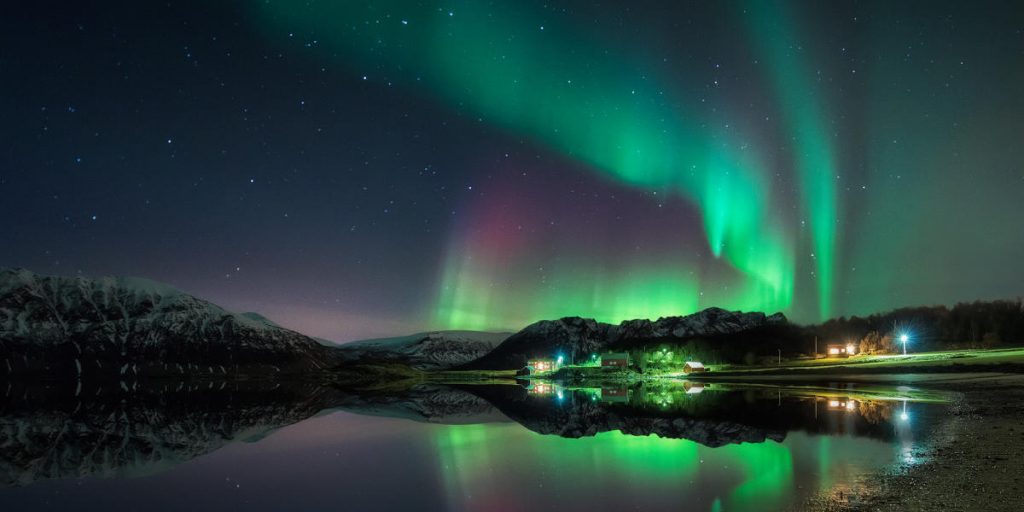
Northern lights at Elgsnes, Harstad. Photo: Visit Norway
  1. Watch the Northern Lights
    Seeing northern lights is something that leaves every person breathless.

The sky is at its dark phase from late September to mid-March and that is the best time to watch the show. Keep in mind that winters in Norway are harsh so make sure that you bundle the kids in some warm clothes.

When you see the lights, for a moment you’ll think that it is magic. The combination of colors that create unrealistic scenery is an unforgettable sight.

People who want to see northern lights usually stay in Tromsø where the aurora can be sometimes seen from the city. There is also a night bus tour with Tromsø Safari that can take you to all the best places.

However, the most notable activity is in the city of Alta which is situated directly under the aurora oval. Companies such as Nord Expedisjon organize tours with professional guides so along the way you can get some detailed information about the phenomena.


  1. Head Straight to Andenes for Whale Watching
    A picture-perfect little town called Andenes in Vesterålen features an interesting sight during summer months. This is the time when sperm whales, orcas, and pilot whales in their natural habitat, jumping in and out of water.

If you go to Andenes in the winter, you are more likely to see humpbacks.

Related: New Attraction in Norway – The Whale

Until you see this scene, you can’t imagine how fascinating it is.

You can either embark on this adventure on your own, or you can contact Whalesafari Andenes, an organization that guarantees whale watching. The boat trip, the shocking looks on everyone’s faces, and the whales that look as if they are performing a show will keep the whole family amused.

6 Places to Visit in Norway with Your Kids
Hunderfossen Fairy Tale Castle. Photo: Wikipedia
  1. Visit one of the Many Themed Parks
    Themed parks are a certain way to keep your kids entertained and exhaust them for a good night’s sleep.

“My trip to Norway had so many bright spots. I’m not able to pick my favorite part but my kids mostly cherish the memories from themed parks. We visited two of them and I must say that those were the most entertaining days for all of us,” shared Barbara McKinley, a digital editor at TopWritersReview.

Here are some of the most popular theme parks in Norway:

Hunderfossen Familiepark (fairy-tale themed with water rides)

Namsskogan Familiepark (arctic wildlife, climbing activities, and a zipline)

Akvariet i Bergen (an aquarium with around 60 individual aquaria)

6 Places to Visit in Norway with Your Kids
Huk and Paradise Bay in Oslo. Photo: Leif H. Ruud/Visit Oslo
  1. Relax at Paradisbukta Beach
    When all the activities exhaust you, it is time for relaxing. The best place for this is one of the most stunning beaches in Norway – Paradisbukta beach.

The sandy beach and its next-door neighbor Huk park and garden are situated near Oslo downtown. If you are located near the big city, this can be your getaway.

Surround yourself with the water and greenery and just enjoy the moment. You can set a barbecue, swim, sunbathe, or just chill and watch the water.

When you want to break the monotony, go biking, play volleyball, or teach your kids how to fly a kite.

Related: Five Child Friendly Biking Routes in Oslo

Lastly, Just Enjoy It!
Hope you have enjoyed reading about the 6 places to visit in Norway with your kids.
The diversity of things to do and places to visit in Norway is very obvious. You shouldn’t worry about whether you’ll have a good time since these places will make sure that you do.

However, there is one important thing that hasn’t yet been mentioned. Maybe even the most important one. That thing is that you should just relax, have fun, and enjoy each other’s company. Have a great trip!

6 Places to Visit in Norway with Your Kids
Daniela McVicker

6 Places to Visit in Norway with Your Kids is written by Daniela McVicker for Daily Scandinavian.
Daniela McVicker is a freelance writer and blogger. She graduated from Durham University and has an MA in psychological science. Her passion is traveling and finding ways to enrich students’ learning experience.

Feature image (on top): Source
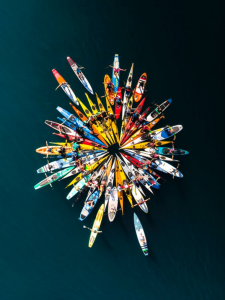
Where to Go Kayaking in Scandinavia

Kayaking is always at its best when you do it in the land of rivers. Just try paddling across a river in Scandinavia and you will know what kind of magic these rivers hold in their depths. Read more about where to go kayaking in Scandinavia here.

Kayaking is a mental exercise as much as it is a physical one, so if you live there, or happen to be visiting, don’t miss the chance of taking your kayak across the river and enjoy connecting with the grandiose sights you will be visiting as you travel through the river. If seeing plunging cliffs or thousands of miles of rocky coasts excites you, then kayaking in Scandinavian waters is going to be an unforgettable experience. Prepare your clothes, kayak, and paddles, because if you’re kayaking in Scandinavia, then you should have the optimum equipment for it.

Where to Go Kayaking in Scandinavia
Kayaking is a mental exercise as much as it is a physical one.

Before You Go
What You Should Prepare

You will of course need a good, sturdy kayak. You will also need a paddle, one paddle per person if you have company, and it wouldn’t hurt if you have an extra paddle at your disposal. Don’t forget about how you’re going to transport all that! Kayaks are pretty heavy and can be almost 2 meters in length, so this should be taken into consideration if you are going to use your car to transport it. You can find more tips here on how to transport your kayak safely. Damaging your car must be avoided as much as damaging your kayak, so pay attention as you purchase the proper tools for transportation.

You will also need a PFD or a Personal Floatation Device, one per person, as it is necessary especially if you’re a beginner paddler. A spray skirt is essential as it will keep the water out of your kayak. You will have to make sure it will fit you and your kayak. You will need a waterproof bag to store your gadget there, and a helmet and a headlamp if you are going kayaking in the dark. Maps, GPS, a towline, and extra waterproof bags are indispensable as well.

Where to Go Kayaking in Scandinavia
Kayaking the fjords of Norway. Photo: Visit Bergen

What You Should Wear
Your clothes should be comfortable, layered, and appropriate to the water temperature and not the day temperature. Avoid at all costs wearing cotton; it will absorb water and it will remain wet for a long while even in high temperatures. You will also have to heed the sun, because despite cloud coverage, you are susceptible to burns, so your clothes should protect you from the sun. You can also use sunscreen for protection from UV rays. Don’t forget to wear your PFD. It is important that you never take it off when you’re on the water.

With that said, you are probably excited to know all about where you should go kayaking in the vast lands of Scandinavia. There are definitely multiple places from which you can choose from. Here are some places that you will definitely love and should consider going to when you embark on your kayaking adventure.

Where to Go Kayaking in Scandinavia
Kayaking in Sweden. Photo: Visit Sweden

Stockholm
Stockholm is the perfect place to go kayaking. Once winter is over and all the green colors flush out the white, you will see multiple people going to the rivers to enjoy a beautiful day in the warm weather. Rivers around the city will be filled with the pleasing sight of multiple kayaks as people start to paddle around the city. Paddling in kayaks is an easy means of transport for tourists since the city is made up of small islands. If you don’t have one, there are multiple rental spots dotted around Stockholm, and they will give you the option to rent single or double kayaks. They will also cover PFDs and necessary gear in the price.

The Lake District In Denmark
The dazzling lake district is famous for its forests, hills, its vintage nature, mountains, museums, and of course, its breathtaking lakes! This is why it attracts so many people to go out and do all sorts of things. Whether you go canoeing or kayaking, you definitely wouldn’t want to miss exploration of all those sceneries and you will find yourself going back to certain places again, just to watch the sunset from there. Kayaking is truly charming when you’re surrounded by all that greenery, so don’t miss the chance of adventuring there.

Where to Go Kayaking in Scandinavia
Kayaking in Copenhagen. Photo: Flickr

Northern Sweden
If you’re on the northern side of Sweden, then you’re in luck. There are multiple rivers like Ume, The Torne, and Lule that will make your journey a true adventure into the wilderness. You will get to see the highest coast in the world. You will also get to see the Gulf of Bothnia, and Unesco World Heritage site and enjoy the mountainous landscape and the magnificent archipelago as you traverse the Swedish rivers. So, buckle up and prepare your paddles because kayaking there is a priceless experience!

Åland Island
Kayaking in the archipelago of the beautiful Åland island is a wondrous experience. Just try searching for the location on your search engine, and you will get multiple pictures of astounding landscapes. Seeing them and being actually there floating on the undisturbed line of the water is a whole different thing! Kayaking in the embrace of nature is truly something that you wouldn’t want to miss, so it’s best you try it. Be aware that the wind picks up at any given moment and the weather can change depending on where you are on the island, so make sure to dress accordingly.

Geiranger In Norway
Enjoy paddling in your kayak as you travel through the beautiful rippling water of Norway, and discover new scenic places as you tour the place. This tour is better be prepared with a tour guide to point out all the necessary information of places you’re going to see like the Seven Sisters Waterfall and don’t forget to bring your camera with you to capture the majesty of the looming hills and the expanse of land surrounding you!

Where to Go Kayaking in Scandinavia
Kayaking Reinefjorden, Norway. Photo: Visit Norway

Kayaking in Scandinavia is one of the best methods to see everything in one tour. It is exhilarating, it is magical, and it will provide you with memories for years to come. Kayaking in archipelagos is the perfect opportunity to do exercises and getting to see nature in its true form, so don’t miss out on that and start your journey!

Kayaking made easy

More tips here

Where to Go Kayaking in Scandinavia is explicitly written for Daily Scandinavian

Related stories:
Wild, Wild Voss in Norway
The Water Trekking Route in Norway
Island Hopping in Stockholm’s Front Yard

The Swedish Youtube Star

It took several years before Swedish Molly Nilsson became aware of her musical talent, but thanks to Youtube she was discovered in record speed. Read more about the Swedish Youtube star.

The Swedish singer-songwriter Molly Nilsson was born in Stockholm in 1984. Molly began her creative pursuits in comics and writing but began experimenting with a friend’s keyboard. Then she transitioned from visual media into songwriting.  “Songwriting enabled me to do what I love the most, which is daydreaming,” she says.

The Swedish Youtube Star
“Songwriting enabled me to do what I love the most, which is daydreaming,” she says Molly Nilsson

Related: Talented Swedish Singer/Songwriter Releases New Pop Single

Her daydreaming, then, seems to be a way to exist outside of the channels that capital sends us down; a mental agility that also allows her to see loneliness as joy, or the banal as magical.

She moved to Berlin in 2005, launched her first record, “These Things Take Time” in 2008 and founded her independent record label, Dark Skies Association in 2009, on which she released the album Europa. After releasing another album in 2015, Zenith, Nilsson began touring the world.

The Swedish Youtube Star
Molly realized that 2020 was going to be a leap year and the number crept into her dreams

Related: Scandinavian Pop Music To Enjoy

On a tour in 2017, she got stranded at the airport in Tokyo. There were big signs on the walls that read “2020,” posted in anticipation of Japan’s summer Olympics. She realized that 2020 was going to be a leap year and the number crept into her dreams.

With her utopian outlook and determination to find magic in the everyday, the fiercely independent Swede swims against the tide. Her album Twenty Twenty, her eighth, was released in November 2018. It was as usual recorded in her own Lighthouse Studios in Berlin.  Her records always contain snippets of her life — flying over Greenland, chain-smoking, getting a whiskey sour spilled on her at a party, remembering Windows 95 — and the anxieties and appetites that accompany them.

On Twenty-Twenty, she’s more concerned than ever with what those fragments expose, what it means to try to figure out who you are right now. She made self-discovery in 2018, sounding ominous and fun and painful at once.

The Swedish Youtube Star
“Serious Flowers” by Molly Nilsson (screenshot)

Related: Swedish Existentialism in Music

Nilsson’s style features minimalist arrangements of synthesizers and drum beats and is often categorized as dark pop or lo-fi synth-pop. The last track on Twenty Twenty is “Blinded By The Night” and the record’s most haunting one. It is steeped with ideas of selfhood and the passage of time. Pretending she is a tree, she sings, “You can count my rings after I fall and still not know a thing about me.” She sings of late nights at homey bars and notes that every star is “unaware how dark their surroundings are.”

Feature image (on top): From 2020

The Swedish Youtube Star, written by Tor Kjolberg

Norwegian Mayor Courting Chinese Investors to Build a Polar Silk Road

0

Rune Rafaelsen is mayor of Kirkenes, a town in the far northeastern corner of Norway, 250 miles north of the Arctic Circle, close to the Russian border, with about 3,500 inhabitants. His bold plan could raise the profile of his remote Arctic town – with a little help from Chinese investors. The Norwegian mayor is courting Chinese investors to build a Polar Silk Road

While the melting sea ice has alarmed scientists and residents, newly accessible waterways mean commercial ships are increasingly plowing along polar lanes. The Arctic is warming faster than anywhere on the planet.

Norwegian Mayor Courting Chinese Investors to Build a Polar Silk Road
An Arctic Silk Route would be a historical chance for the struggling town of Kirkenes, for Norway and for the Nordic countries in general

The mayor of Sør-Varanger admits he usually don’t need help to be seen or heard. “I’m big-mounted,” he says. “But when the ice is decreasing, you can go from Asia to Europe through the Northern Sea Route and my town Kirkenes is the first western harbor you meet when you start out from Shanghai and go along the Russian sub-Siberian coast. Then it’s time to speak out load,” adds Rafaelsen.

Related: Climate Change Threatening Arctic Reindeer

Politicians don’t grasp what’s on offer
A top leader of a Chinese shipping company agrees. “We welcome the projected development of a seaport on the Barents coast and a railway connection to Finland,” he says.

Norwegian Mayor Courting Chinese Investors to Build a Polar Silk Road
A route between China and Europe would be 40% shorter than sailing via the Suez Canal

However, Rafaelsen needs politicians in Oslo, the capital of Norway, to grasp what is on offer when the Arctic ice is melting. It’s a historical chance for the struggling town of Kirkenes, for Norway and for the Nordic countries in general. His tiny town could be turned into a major logistical hub, including a massive port and train line to Rovaniemi in Finland and further southwards to Helsinki and even across the Baltic sea to Estonia.

A route between China and Europe would be 40% shorter than sailing via the Suez Canal. In 20 years’ time the Arctic could be completely ice-free in the summer according to researchers. Ole Arve Midsund, director of the Norwegian Polar Institute says, “In 20 or 30 years, probably, there will be no more ice at the North Pole during the summer, and the Arctic Ocean will become accessible.”

Norwegian Mayor Courting Chinese Investors to Build a Polar Silk Road
Rune Rafaelsen, the mayor of Sør-Varanger

Related: TV Documentary Team on Earth’s Climate Change Visits Norway

“Yes, I have used the words ‘Singapore’ and ‘Rotterdam’,” says Rafaelsen. “Norway can become Europe’s logistical center on the northern sea route. If this does not have national economic significance, I don’t know what has. Our problem is that there is no interest in central political circles,” he adds.

Even NATO should embrace such a solution if Rafaelsen’s dream ever should be realized.

Lack of money
Kirkenes is the last northern port for the popular coastal cruiser Hurtigruten but apart from being a tourist destination, the town has traditionally relied on fishing and iron-ore mining. The municipality has given a green light for a new, bigger harbor, but it doesn’t have the money to build it.

Norwegian Mayor Courting Chinese Investors to Build a Polar Silk Road
From Kirkenes

Nevertheless, the Chinese state-owned Cosco Shipping Group is already well established in Europe. It is the third largest container company with a mission to globalize Chinese economy. The company has invested in port terminals for new “silk roads” that were previously neglected by private European operators.

Also Russia has taken advantage of the climate change and opened a northern maritime route connecting Europe to Asia, reducing navigation time by one-third. The cargo volume shipped via this route increased 25% in 2017 for total approximately 10 million tons. By 2025 that number could reach 40 million, according to the Russian Ministry of Natural Resources.

Russian and Finnish interest
Rafaelsen is a member of Norway’s Labor Party and is a die-hard booster of his little town. The lack of interest and financing have done little to dampen his enthusiasm. Along Russia’s huge, desolate coast, specially built ships with icebreaker function are still needed for much of the year. But in Kirkenes, less advanced cargo ships could take cargo from China and sail south along the Norwegian coast towards Rotterdam, Zeebrugge and Gothenburg. Some of the cargo could be transported onwards overland.

Norwegian Mayor Courting Chinese Investors to Build a Polar Silk Road
The Chinese state-owned Cosco Shipping Group is already well established in Europe

The Finnish city of Rovaniemi by the Baltic Sea is connected to the rest of European rail network. “This allow cargo vessels to bypass North Cape, saving them several days,” says Rune Rafaelsen.

However, an Arctic railway would need buy-in from the Norwegian and Finnish governments. Late 2018, a binational working group study concluded that the project, estimated to cost more than $3 billion, would not be “financially feasible.”

Memorandums of Understanding
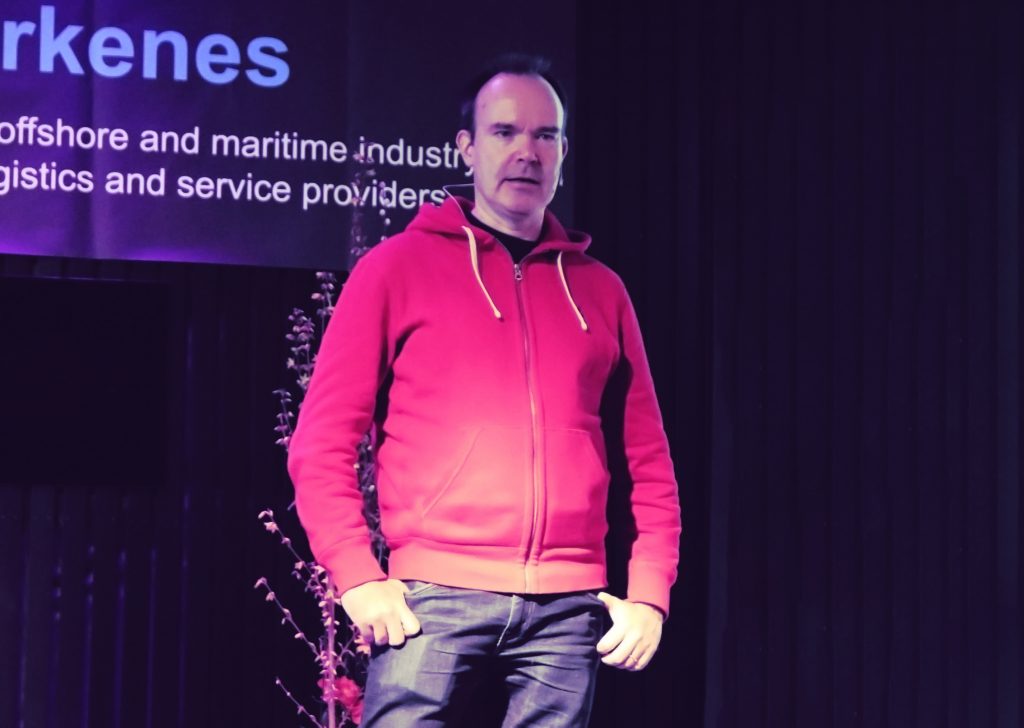
In Helsinki lives Peter Vesterbacka, the developer of the game Angry Birds. His energy matches that of Rafaelsen. His company, FinEstBayArea Development (FBA),  has signed a Memorandum of Understanding for financing of a $15billion/€13,5 billion private mega project to connect a tunnel to the high-speed Rail Baltica line that is expected to be completed by 2026. This would ultimately connect Finland by rail to not just Estonia, Latvia, Lithuania but Poland and in turn, southern and western Europe.

Norwegian Mayor Courting Chinese Investors to Build a Polar Silk Road
Peter Vesterbacka in Kirkenes

Vesterbacka is a Sinophile who travels to China twice a month, talking about turning the region into a trade bridge between western Europe and China. His company Finest Bay Area Development Oy has also signed a Memorandum of Understanding with Sør-Varanger Utvikling, a local publicly owned Norwegian development company.

Norwegian Mayor Courting Chinese Investors to Build a Polar Silk Road
“I have promoted Kirkenes a lot in China,” says Rafaelsen. “The Chinese have been here to look at the possibility, and they are interested,” he concludes.

Norwegian Mayor Courting Chinese Investors to Build a Polar Silk Road, written by Tor Kjolberg

Scandinavian Elk

In Sweden, and also in Norway, elk hunting is a passion, as well as an important contribution to both the personal and national economy. The elk had already been hunted to extinction in Denmark in the Stone-Age, though once in a while a young elk desperately looking for a mate swims across the sound between Sweden and Denmark. Read more about the Scandinavian elk.

The elk population is controlled in order to keep the population healthy, and to protect the deciduous woods. Elk hunting in Sweden and Norway is a much-regulated affair, usually taken care of by hunting parties, which then share the meat as dictated by a very strict set of rules.

Scandinavian elk
The elk population is controlled in order to keep the population healthy, and to protect the deciduous woods.

Related: Swedish Murder Case With Elk as Prime Suspect

According to official figures, hunters kill about 100,000 elk each year in Sweden. In Norway, 30,636 moose were killed in the 2018/2019 season. Elk meat represents a substantial portion of the meat eaten in Sweden in particular.

Appearance and taste
The elk is a giant deer, about the size of a very large horse, big enough to give you 250kg of meat to eat, and big enough to do serious damage to your car if you collide with one (a relatively common occurrence in Sweden and Norway).

Scandinavian elk
The elk is big enough to do serious damage to your car if you collide with one

Related: Scandinavian Wildlife

The elk is an awkward-looking animal, rather like a wildebeest, which has the appearance of being made up from the spare parts of several animals. The elk’s neck is too short to reach the ground, so it feeds mainly on the young shoots and leaves of deciduous trees. To eat grass, it has to squat down on the ground – a very funny sight, but elks are surprisingly agile swimmers, and they often dive to feed off the vegetation to be found in lakes and streams.

Elk meat is extremely dark and very lean, and tastes like gamy beef. Elk offal is much sought after, the liver being a particular delicacy.

Related: Scandinavian Game

Scandinavian elk
Pan seared elk with rosemary and smashed potatoes

Culinary uses
Elk can be bought in northern Scandinavia from butchers and supermarkets, but it is quite expensive. Also, you will have no way of knowing how old it is, nor usually which cut of meat you’re buying. The safe way to use this meat is in a stew.

Elk meat can be cooked like beef, but take care not to overcook it as it is much leaner than beef. Elk meat takes well to a marinade, and it’s very good in kebabs, patties, hamburgers and whole roasts.

You can read more about elk hunting in Sweden here.

Scandinavian Elk, written by Tor Kjolberg

Travelling to and Enthralling Activities in Sweden

Sweden is blessed with thousands of inland lakes and coastal islands, along with glaciated mountains and vast arctic forests. Stockholm, the nation’s capital, which you are most likely to fly into, also has coastal and historic features to enjoy. Read more about travelling to and enthralling activities in Sweden.

You can also take a bridge from Copenhagen to southern Malmö and enjoy incredible architecture like the medieval St. Peter’s Church and have a great time with loved ones. The nation is home to museums, royal palaces and the medieval old town of Gamla Stan. Sweden is also home to the moist powder smokeless tobacco product snus.It’s placed in upper lips for extended periods and all over Sweden you can notice men as well as women enjoying Skruf snus, a tobacco free alternative, which is also important to local culture.

Travelling to and Enthralling Activities in Sweden
Skruf snus, a tobacco free alternative, which is also important to local culture

Its popularity partly comes from the fact that it’s a traditional Swedish product. Snus was originally invented in Sweden in early 18th centrury, and Skruf became a leading brand in the early 2000s

Cultural Heritage
Swedes have a cultural heritage that’s easy for outsiders to enjoy. The culture is frequently seen as being reserved. One way of demonstrating this humility is their affection for snus. In many cultures people smoke large cigarettes or cigars as a status symbol to show off wealth, while snus is better known for its subtly.

Travelling to and Enthralling Activities in Sweden
From Stockholm Cathedral

Celebrations are reserved but are still immensely important and eagerly enjoyed. Due to the high adoption of snus, research shows that Swedes record the lowest level of tobacco-related deaths among largely populated countries. Another reason snus is popular is that it is one of few countries that allows its legal distribution.

Travelling to and Enthralling Activities in Sweden
Model of Vasa stern

Tourist Attractions in Sweden
Being in the nation that invented snus and among people enjoying their Skruf, there are many amazing destinations to visit as a tourist. One example is the Vasa Museum. Vasa is a Swedish warship from the 17th century whose history you can absorb. Another great site is the Kalmar Castle in southern Sweden. Kalmar has been in existence since the early 12th century, making it one of the oldest fortifications in Sweden. Built in 1160, it has been remarkably well preserved. Your tour also wouldn’t be complete if you don’t visit Visby. This is the largest island in Sweden and boasts many examples of medieval architecture.

Read more about the attractions mentioned above here:

Stockholm – The Vasa Capital
Top Ten Places for Stockholm Visitors
The World’s Oldest Preserved Man-of-War

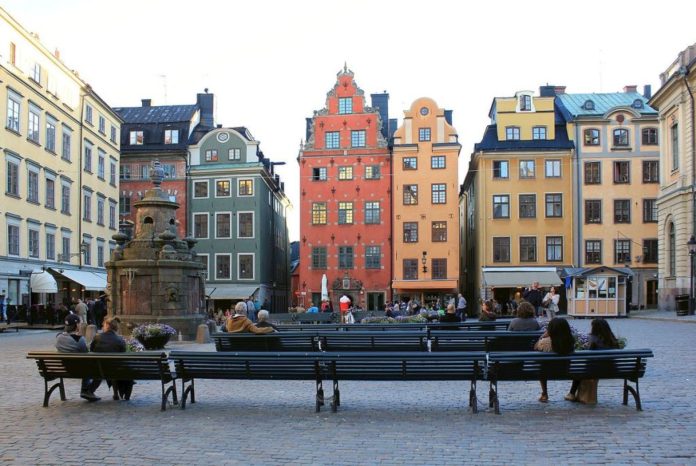
Feature image (on top): Stockholm’s Gamla Stan (Photo Wikipedia)

Travelling to and Enthralling Activities in Sweden, is an article specifically written for Daily Scandinavian.

Hot Pink Turquoise in Copenhagen

0

Each year, the Danish Museum Louisiana outside Copenhagen incorporates new works of art into its collection with the help of funds and private donors. In the spring exhibition “Hot Pink Turquoise”, the museum is now exhibiting works by Belgian artist Ann Veronica Janssens for the first time.

The exhibition introduces the work of Belgian artist Ann Veronica Janssens (b. 1956). Her artistic technique could be defined as an exploration of the sensory experience of reality. Through various media (installations, projections, immersive environments, urban interventions, sculptures), Ann Veronica Janssens invites the viewer to cross into a new sensory space on the borderline of dizziness and dazzlement.

Hot Pink Turquoise in Copenhagen
Janssens’ work at Louisiana Museum of Modern Art

Related: Why is there a Louisiana Museum in Denmark?

Minimalistic but unmistakable
Her works tend towards minimalism, emphasizing the fleeting, ephemeral and fragile nature of the environments she invites us to enter. Janssens’ art eludes categorization, but its effect on the viewer is unmistakable.

The organization of space and the diffusion of light, radiant color, stroboscopic impulses, artificial mists and reflective or translucent surfaces all serve to reveal the instability of our perception of time and space.


Hot Pink Turquoise in Copenhagen
While the artist openly acknowledges her inspiration from the Californian Light and Space artists of the 1960s, for her it has always been about conveying an experience of art by simultaneously stimulating the eyes, body and consciousness, and not about observing art from a distance.

Related: Louisiana Museum of Modern Art

Properties of materials (gloss, lightness, transparency, fluidity) and physical phenomena (reflection, refraction, perspective, balance, waves) are rigorously examined here for their ability to destabilize the very concept of materiality.

Hot Pink Turquoise in Copenhagen
Janssens’ works can demand our participation while enveloping us completely in alienation.

She works like a scientist
“Engaged gestures and the loss of control that are fully assumed and proposed as an active experience: my way of proceeding consists of such loss of control, the absence of overbearing materiality, the attempt to escape from the tyranny of objects,” said Ann Veronica Janssens in an interview in 2004.

Related: Louisiana Museum of Modern Art

Hot Pink Turquoise in Copenhagen
Ann Veronica Janssens

Janssens’ work ranges widely, with no intention of confirming what we already know. In fact, it aims to locate us precisely at the spot where we open ourselves up again. Like a scientist, she pursues and pushes the boundaries of the known – in light effects, mists, color trails, reflective optical illusions – as a ground for engendering thoughts and feelings in the viewer. Very simple at times, her works can demand our participation while enveloping us completely in alienation.

The exhibition at Louisiana Museum of Modern Art runs from 23 January through 17 May.

Hot Pink Turquoise in Copenhagen, compiled by Tor Kjolberg

Sculpture Park With a Twist in Norway

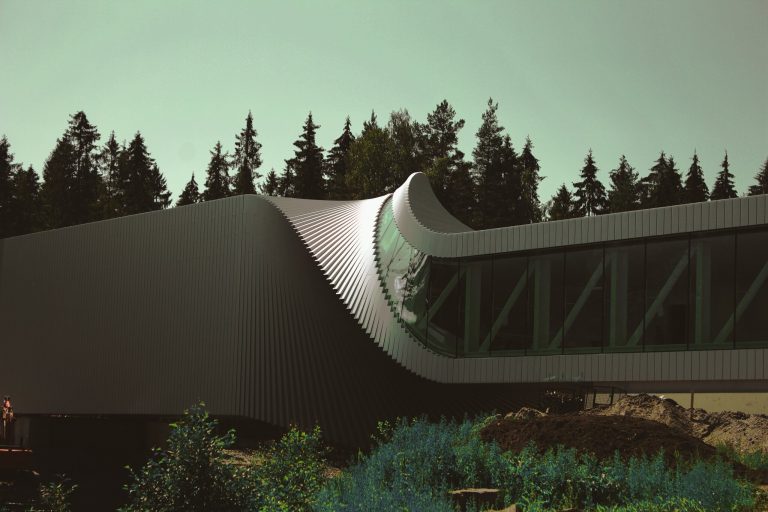
A municipality with only 5,000 inhabitants in Norway is on the New York Times’ list of 52 recommended attractions in the world. The Kistefos Museum, just a stone’s throw away from Oslo, capital of Norway,  build on a long industrial history and started with an old wood pulp mill. When the Danish architectural firm BIG designed the bridge-shaped museum building which opened last year, it immediately became a popular sculpture park with a “twist”.

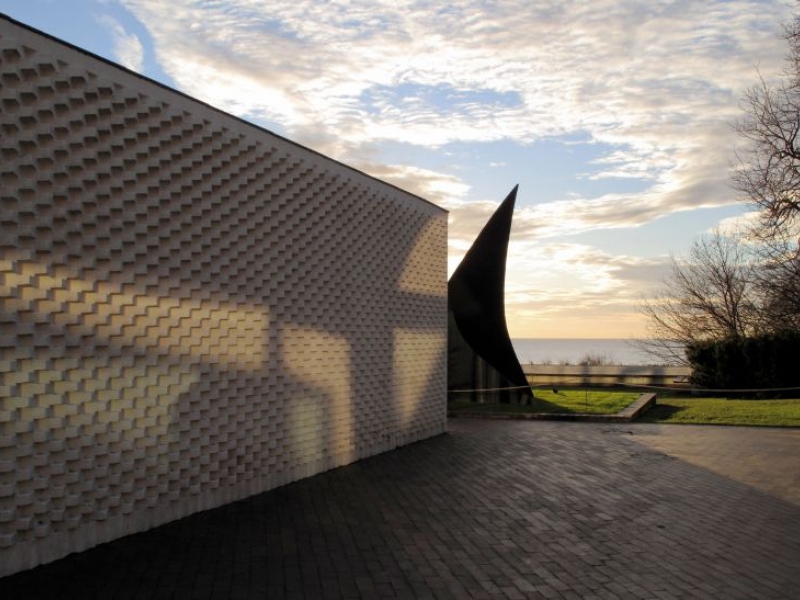
The Twist bridge museum at Kistefos art park opened on September, 2019 and visitors were instantly charmed by the contemporary and refurbished industrial art at the Kistefos Sculpture Park. Danish designers BIG (Bjarke Ingles Group) have added a little twist to the park, that doubles up a functional infrastructure and visual feast for the aesthetic eye.

Sculpture Park With a Twist in Norway
The Twist bridge museum at Kistefos art park opened on September, 2019 and visitors were instantly charmed by the contemporary and refurbished industrial art at the Kistefos Sculpture Park

Related: Artistic Architecture in Norway and Newfoundland

131 years of industrial history
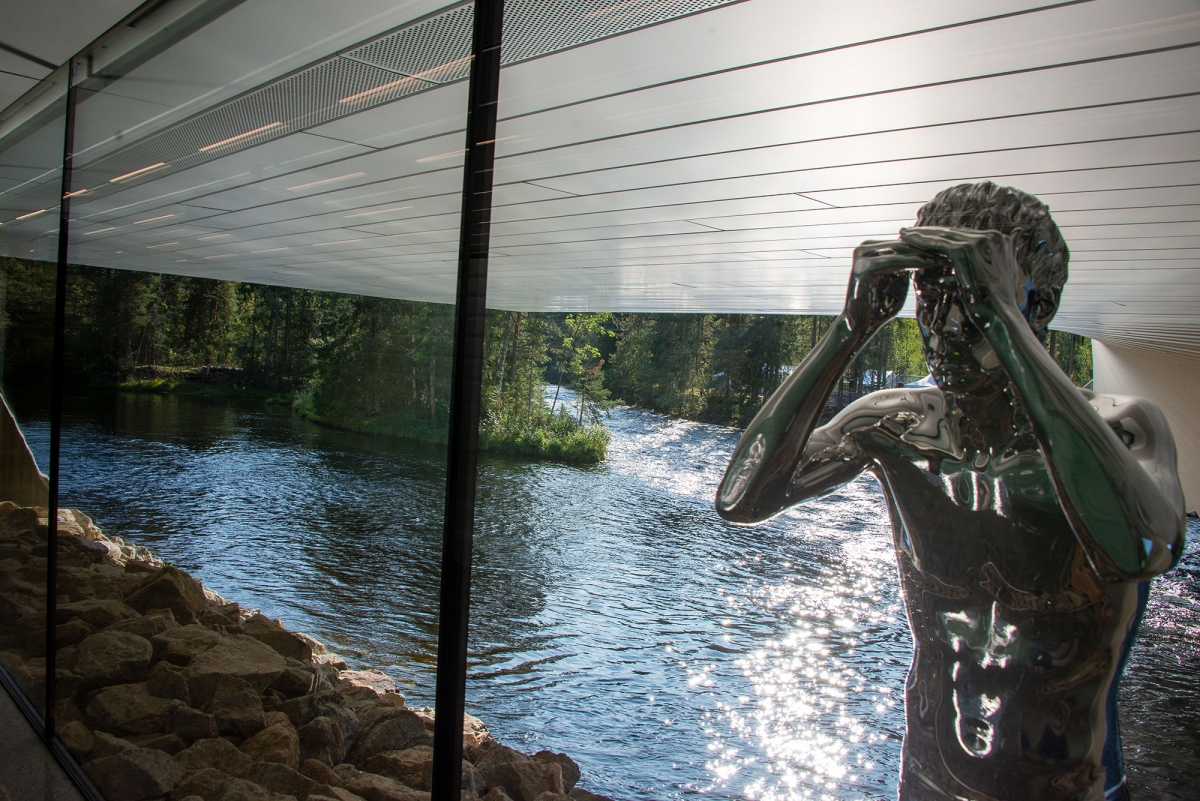
The grandfather of the present owner, Christen Sveaas, bought the factory 131 years ago, and today the building adds an impressive new venue to this industry and contemporary art museum located in Jevnaker, a municipality about 80 kilometers north of Oslo. The gallery peeks out from a forest of tall spruce, pine, and birch and the structure takes the form of an inhabitable bridge spanning a winding river. It is appropriately dubbed The Twist.

The iconic twist design actually controls the river banks, that had varied heights. Besides that, the bridge was added to form an access point across the river, so visitors are able to enjoy the park, that was built over an old wood mill. It also turns a visit to the sculpture park into a processional journey making it possible to tour it in one go by way of the connective gallery.

Related: The Coolest Library in the World for Kids – in Norway

Sculpture Park With a Twist in Norway
The Twist was on New York Times list of 52 recommended attractions in the world

Sculpture Park With a Twist in Norway
“After many years of planning and development, we’re delighted to be opening this beautiful new space ‘The Twist’ at Kistefos, which will allow us to expand our work with leading contemporary artists and welcome more visitors than ever before. Our ambition is to make Kistefos a must-see cultural destination with a world-class temporary exhibition and sculpture park program to complement the rich industrial heritage of the site,” said Christen Sveaas, founder of the Kistefos Museum.

Sculpture Park With a Twist in Norway
E. A. Hodgkin and Creed at Kistefos

Related: New Fine Art Gallery Brings a Subtle “Northern Light” to Oslo

International attraction
The Twist was on New York Times list of 52 recommended attractions in the world. The nearly 10,800-square-foot gallery transforms a container for art into a piece of sculpture in its own right. So far, the Kistefos site is open to the public only in Summer (2020: 24 May – 11 Oct), due to the cold Norwegian climate.

Sculpture Park With a Twist in Norway
Kistefos is a must-see cultural destination with a world-class temporary exhibition and sculpture park

Read more about the impressive art collection at Kistefos here.

Sculpture Park With a Twist in Norway, written by Tor Kjolberg

Denmark’s Sunshine Island

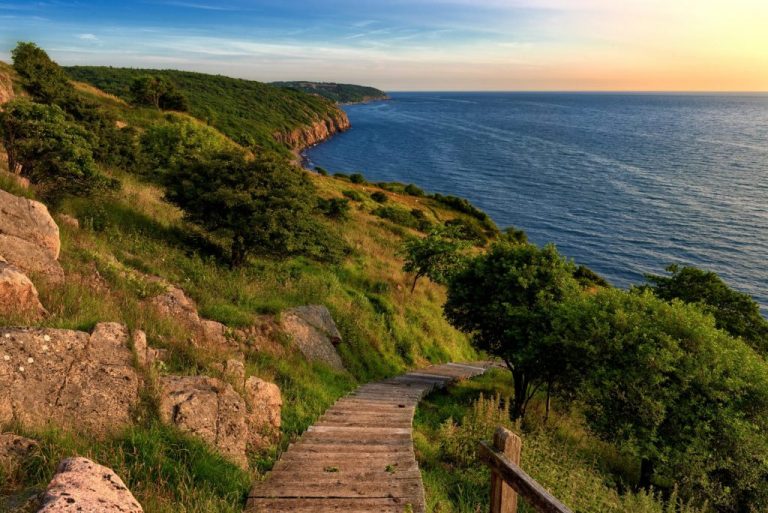
Denmark’s Sunshine island of Bornholm is a haven for both artists and holidaymakers, attracted by its climate, peaceful lifestyle and natural beauty.

Bornholm, occupying an area of 588.36 square kilometers (227.17 sq mi) is a “Scandinavia in a nutshell: Sitting in the middle of the Baltic Sea between Sweden and Poland, this enchanting island features a variety of landscapes typical for different areas of Scandinavia.

Related: Happy Easter in Bornholm

Denmark’s Sunshine Island
Bornholm is sitting in the middle of the Baltic Sea between Sweden and Poland

History
Bornholm has been fought over for centuries. Usually it had been ruled by Denmark, but also by Sweden and Lübeck, Germany. The ruin of Hammershus, at the northwestern tip of the island, is the largest medieval fortress in northern Europe, testament to the importance of its location. This island and Ertholmene is what remains in Denmark of Skåneland east of Øresund, having been surrendered to Sweden in 1658 but with Bornholm after a local revolt later regained in 1660.

Related: Sun Over Danish Gudhjem


Denmark’s Sunshine Island

It is a peaceful place, home to about 40,000 Bornholmers, with no large towns and almost no industry. The chief industrial activities are dairy farming and arts and crafts industries such as glass production and pottery using locally worked clay.

The island is known as Solskinsøen (Sunshine Island) because of its weather and Klippeøen (Rock Island) because of its geology, which consists of granite.

Denmark’s Sunshine Island
Bornholm has no large towns and almost no industry

Related: The Eleven Prettiest Towns in Denmark

Holidaymakers favorite
Visitors have a perfect opportunity to relax, although from early July until the end of August the population swells fourfold with holidaymakers.

It is three hours from Copenhagen by train/ferry, and 30 minutes by plane.

Denmark’s Sunshine Island, compiled by Tor Kjolberg

Sharp Competition From Norwegian Viking Descendants

Two unemployed brothers in Sunnfjord, Norway started to make sheath knives and tools in their father’s foundry in 1932. Later they expanded the production to include industrial knives, sports knives, Sunnfjord cutlery as well as parts for the silversmith industry. Through the years, other knife producers has met sharp competition from the Norwegian Viking descendants.

The two skilled toolmakers, blacksmiths and metallurgists Steinar and Sigmund Helle started making their sheath knifes inspired by the mountains, fjords and open seas of Norway in 1932. Since then, the tradition of handcrafting Scandinavian knives made of natural materials has remained the same even if the types of knives have changed a bit.

Sharp Competition From Norwegian Viking Descendants
Helle Mandra by Les Stroud Survivorman

Related: The Ultimate Swedish All-Around Knife

Beautiful functional knives
Back then, the knives needed to be functional for use in the harsh Nordic conditions but also needed to look good. Therefore, the handles are the soul of a Helle knife. They are made from natural materials you might find on a farm; wood, leather and antler shed. They are made by skilled hands outside the factory since no machine or automated processes can replace skilled craftsmanship.

Since 1977 Helle of Norway has sold more than one million units of their knife Nyking. It was designed by the native Tor Indergaard and received an award for classical design from the Norwegian Design Council in 2000. Last year, the company launched their smallest knife ever made, the Kletten.

Related: The Story of Norwegian Rosemaling

Sharp Competition From Norwegian Viking Descendants
New knives are launched regularly at outdoor trade fairs in the United States

The Viking knife
Did you know that the Vikings had a law that every man was required to own a weapon and to carry it with them at all times? The wealthiest carried a sword, an axe and helmet while the average farmer brought with him a large knife. The Norwegians hung onto this custom for several years to come, and the sheath was an important part of the tool since it secures and protects the knife it holds.

The sheath gives the Helle knife its character since each is matched to suit the knife. The exception is of course the new folding knife from Helle, the smallest folding knife to date, weighting less than 3 ounces and measuring only 3.1 inches long folded without compromising on capability.

There are other folding knives you might want to consider here.

Related: Let it Rain – Norwegian Rain

Sharp Competition From Norwegian Viking Descendants
In the 1970s, there were 140 workers at Helle. Today, they are hardly a tenth.

Sharp Competition From Norwegian Viking Descendants
In the 1970s, there were 140 workers at Helle. Today, they are hardly a tenth but the idea of making functional knives that’s also a showpiece is still the guiding principle. The company has become an icon in Norway and known around the world for its traditional take on knife craftsmanship.

Helle has developed its own triple-laminated steel that sandwiches a sharp but brittle layer between two softer, more pliable layers of steel and the Helle knives have stood the test of time. The hairloom quality gentleman’s knife, the Kletten for instance, has taken its name from a small but rugged hill near the Helle factory where locals go to enjoy nature.

A Canadian outdoorsman’s best knife ever
New knives are launched regularly at outdoor trade fairs in the United States. Rumors say that the Canadian musician, filmmaker and extreme outdoorsman Les Stroud as a teenager found a knife that over the years turned out to be the best he had ever had. By coincidence Helle came in contact with the famous TV star, and it turned out that it was a Helle knife Stroud had found. Not surprisingly, Lee Stroud was asked to design a knife for Helle.

Working with Les Stroud on design ideas the company has incorporated a few new models, but never abandons the traditional Nordic knife and its focus on handcrafted blades. It is the connection between the maker and the tool that distiguishes a Helle knife from the rest.

Sharp Competition From Norwegian Viking Descendants, written by Tor Kjolberg

Feature image (on top): The Kletten knife. All images, copyright Helle Norway.