Norwegian technology start-up Add.Space aims to be the new Airbnb – not for travelers but for stuff. If the company succeeds, it might be the world’s largest warehouse – without stockroom.
Last summer, ADD.SPACE launched its app in New York, and in a short time received over 3,000 downloads. Users log their excess items on the app and the company sends someone to scoot them away.
Last summer, ADD.SPACE launched its app in New York
The self-storage market, or “mini-storage” as it is better known as in Norway, is growing strongly globally, which is linked to the fact that more and more people live in cities, and new apartments are getting smaller and smaller. My wardrobe, for instance, is extensive and now needs a facility after I have moved from a detached house to a smaller apartment.
If it functions as described, I can have my paraphernalia stored with a few keystrokes while a private individual can get a passive monthly income by renting out their surplus space, e. g. attic, basement, garage or storage. I can keep track of my things through a “virtual closet” on the app. At the press of a few bottoms, my belongings will rematerialize on my doorstep.
The global market is estimated to over 60 billion dollars annuallyThe global market is estimated to over 60 billion dollars annually and is today mainly operated by large players who have not adapted to the society we live in today, where, for example, the sharing economy and the environment are two important factors.
It sounds like a winning formula: Airbnb-style renting combined with seamless delivery reminiscent of a takeaway service and an AI-powered gimmick.
Turning your closet into everyone else’s might be a brilliant ostensibly business plan, ultimately making cities more hospitable for commodities than for people.
Turning your closet into everyone else’s might be a brilliant ostensibly business plan
Add+Space has chosen to launch its app out of New York City, and its quirky orange bicycles have got attention there.
The company will raise capital to scale for further growth in New York. The next phase will be to grow further in the US and then enter Europe. Add+Space already has a dozen VCs following the company closely, both from Europe and the US, so a natural next step is to raise capital from such an environment. The ambition is to become a global player in a market with almost unlimited possibilities.
World’s Largest Warehouse – Without Stockroom, written by Tor Kjolberg
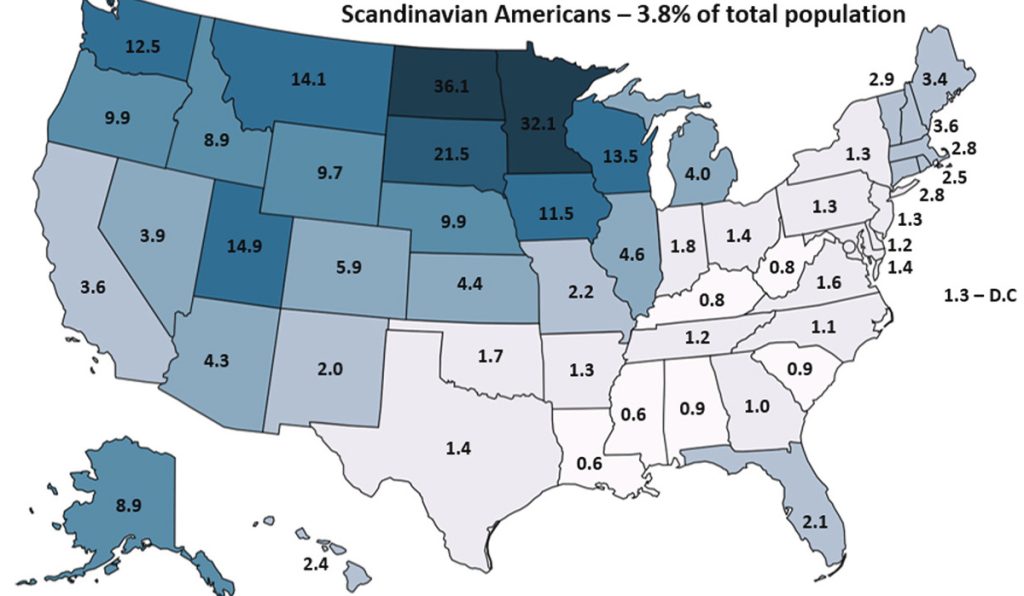
Exploring how U.S. immigration policies affect Scandinavian expats: their challenges, contributions, and the journey toward smoother integration. Here we are exploring the impact of immigration policies on Scandinavian expats in the U.S.
Scandinavians have been crossing the Atlantic for a good while, seeking out new opportunities and chasing dreams in America. But today’s landscape is different from those early days of exploration.
Their experiences now are shaped by a complex web of immigration policies that can either open doors or build walls. From visa regulations to paths to citizenship, these rules are game-changers for Scandinavian expats making their mark on U.S. soil.
Digging into this story uncovers not just challenges but also triumphs: how they’re weaving their cultural tapestry into the American fabric and boosting the economy as they go. And we’ll tackle what lies ahead—emerging trends and smart policy suggestions aimed at smoother integration.
During the mass immigration around 1.3 million folks from that northern stretch made their way across icy waters to American soil.
The Scandinavian Migration to America: A Historical Perspective
Imagine the United States as a patchwork quilt, each square representing different cultures and stories. Among these, the vibrant hues of Scandinavia stand out. Back in the day—specifically during what we call the age of mass migration—around 1.3 million folks from that northern stretch made their way across icy waters to American soil.
The Age of Mass Migration
So why did they leave home? It wasn’t just for IKEA meatballs or ABBA’s hits; nope, it was bigger than that. Many were chasing land opportunities or escaping crop failures—a tale as old as time when you think about farming woes worldwide.
And let’s talk impact because these weren’t silent newcomers—they rolled up their sleeves and got down to business upon arrival. They farmed lands others thought too tough, built communities with strong social ties, and kept traditions alive while weaving them into America’s cultural fabric.
America embraced this diversity but also tossed challenges back at them like curveballs on an immigrant journey where policies could change faster than midsummer weather shifts back in Sweden.
*************************************************
Related: The Swedish Emigrants
*************************************************
The process starts with figuring out which visa is the right fit.
Navigating U.S. Immigration Policies: Scandinavian Expats’ Experiences
Scandinavian expats have a unique story to tell, with their journey often shaped by complex visa regulations and work permits. They juggle forms and deadlines just to ensure they can legally stay and work—a test of patience for many.
Visa Regulations and Work Permits
The process starts with figuring out which visa is the right fit—be it an H-1B for those bringing specialized skills or perhaps an O-1 for individuals with extraordinary abilities or achievements. Once they’ve locked down that coveted spot, securing a work permit is next on the agenda. It’s like getting through one labyrinth only to find another waiting—but get through it they must if they want to keep working toward their American dream.
It’s not all red tape nightmares though; some success stories speak volumes about resilience in the face of bureaucracy.
Pathways to Citizenship
Becoming a citizen opens up new doors but also comes with its own set of challenges—it’s no simple task. The path includes years of permanent residency, countless documents proving continuous residence and passing both English language tests as well as civics exams designed around U.S. history and government knowledge. For individuals seeking guidance through this complex process, Pro Se Pro provides services that help simplify the citizenship journey, offering expert assistance to ensure a smoother path to U.S. citizenship.
This bureaucratic odyssey can be daunting but remember every piece fits into the larger puzzle leading towards citizenship—one step at a time.
Scandinavian immigrants don’t just bring diverse cultures; they’re economic powerhouses in their own right.
Economic Contributions of Scandinavian Expatriates
When we talk about the U.S. melting pot, it’s easy to overlook one flavorful ingredient: Scandinavian expats. They don’t just bring diverse cultures; they’re economic powerhouses in their own right.
The story goes beyond Ikea and meatballs. Scandinavians are known for rolling up their sleeves and diving into the workforce or setting sail on entrepreneurial ventures with a Viking-like spirit. It’s not all horned helmets and longboats—they mean serious business when contributing to employment opportunities across America.
This blend of work ethic has a multiplier effect on local economies where these expats plant roots. Through both job creation and participation, they’re integral cogs in the economic machine that keep communities thriving from coast to coast—much like how yeast works silently but effectively through the dough, raising bread (and profit margins) as it goes along.
Scandinavians find unique ways to weave their rich heritage into the American tapestry while building strong communities. Their social clubs often become a home away from home, providing comfort through familiar traditions amidst new cultural landscapes.
Cultural integration for these individuals isn’t just about blending in; it’s about adding their distinct hues to America’s multicultural canvas. They maintain their Scandinavian identities by celebrating traditional holidays like Midsummer and sharing iconic cuisines such as smørrebrød at local festivals or Nordic-themed eateries that have sprouted up across urban centers.
The influence of Scandinavian culture is palpable, from design aesthetics found in minimalist furniture stores to environmental policies inspired by sustainable living practices inherent to many Nordic societies. By fostering these connections, Scandinavians contribute significantly not only socially but also economically — fueling employment opportunities and entrepreneurship with a touch of northern flair that enriches the diverse American economy.
Exploring the Impact of Immigration Policies on Scandinavian Expats in the U.S. Article continues below image.
Scandinavian expats have long contributed to the American tapestry
Comparative Experiences in Expatriation
Scandinavian expats have long contributed to the American tapestry, but how does their experience stack up against other Europeans seeking a new life in the U.S.? Insights into immigration policy impacts and integration challenges become clearer when we place Scandinavian stories next to those of their European neighbors. It’s like comparing different shades of blue—each unique yet part of the same color family.
Economic Contributions
The economic landscape in America is vibrant with contributions from Scandinavian entrepreneurs and workers. These individuals not only create jobs by establishing businesses but also fill employment gaps across various industries. Their influence extends beyond numbers; it’s about enriching local economies with diverse skills and innovations that keep America competitive on a global stage.
Culturally, they add flavors from home through community events and heritage festivals that weave new patterns into America’s social fabric. This sense of community bolsters their resilience as they navigate cultural differences while maintaining strong ties to their roots.
Social Integration Challenges
Moving countries can feel like starting over—it requires building everything anew: friendships, professional networks, and even understanding day-to-day norms. While Scandinavians generally report successful adaptation thanks partly to shared democratic values, others face hurdles due to language barriers or stark cultural contrasts.
This mosaic of experiences offers vital clues for policymakers who seek more seamless paths for newcomers adjusting to life here—a goal rooted deeply within our nation’s founding ideals of opportunity and welcome for all seekers.
The landscape of U.S. immigration policy is ever-changing.
Emerging Trends and Future Challenges for Expats
The landscape of U.S. immigration policy is ever-changing, with new rules that can feel like a moving target for Scandinavian expats dreaming of American shores. These shifts, along with demographic trends, sketch out a map full of potential pitfalls and promises.
Scandinavian expatriates have seen the ebbs and flows in policies firsthand—some riding the wave to success while others find themselves navigating rough waters. What’s clear is that these individuals aren’t just visitors; they’re actively shaping communities and bolstering the economy through their drive for employment opportunities and entrepreneurship—a testament to their resilience despite an intricate visa system.
The real talk: staying ahead means looking at what’s on the horizon. Demographic changes are more than numbers—they tell stories of evolving communities where Scandinavians continue carving out spaces within America’s cultural mosaic. But this isn’t without its challenges as future immigration legislation could redraw boundaries around work permits or paths to citizenship, affecting not only those who’ve come but also those planning to embark on this journey.
Visa complexities can turn the Land of Opportunity into an intricate maze..
Policy Recommendations for Smoother Integration
Making the American Dream a reality for Scandinavian and other European expats calls for smart policy reform. It’s about creating a welcoming mat that not only invites but supports new talent and diversity.
Visa complexities can turn the Land of Opportunity into an intricate maze. Streamlining visa regulations could be a game changer, letting these skilled individuals shine without bureaucratic shadows dimming their potential. Work permits are another hurdle; we need policies that reflect our economic demands and cultural values by providing clear paths to employment.
Citizenship is no small feat—it’s like climbing Mount Everest without a guide. Simplifying this process would acknowledge the dedication it takes to embark on such a journey while ensuring newcomers can plant roots firmly in community soil.
To keep America’s economy buzzing with innovation and entrepreneurship, we must look at integration as more than just paperwork—it’s fostering environments where diverse backgrounds thrive together. Policy tweaks here aren’t just beneficial; they’re essential for sustaining the nation’s global edge as a melting pot of ideas and cultures.
The U.S. immigration system is like a complex puzzle.
Understanding Current Immigration Frameworks
The U.S. immigration system is like a complex puzzle, with pieces that change shape with each administration. For Scandinavian expatriates looking to fit into this ever-evolving picture, staying informed about current policies is key.
Scandinavians have been part of America’s cultural tapestry since the 1800s when mass migration brought waves from the far north to seek new opportunities. Today, they still navigate a labyrinth of visa regulations and work permits—a process as intricate as Swedish lace but not nearly as delicate.
America has rolled out various pathways for these individuals seeking citizenship—some finding success while others hit roadblocks thicker than Finnish snow. These experiences underscore how vital it is for policies to be clear-cut and accessible. In fact, many argue that smoother integration could bolster both societal harmony and economic growth.
To paint a clearer picture: imagine you’re building your dream home (your life in the U.S.) but first need access to tools (visas). Some find their toolbox readily available; others face delays or even missing equipment. It’s time we ask ourselves if our tool lending library—our immigration framework—is serving its patrons effectively or leaving them rummaging through an incomplete set without instructions.
Exploring the Impact of Immigration Policies on Scandinavian Expats in the U.S. Conclusion
So, we’ve seen how the impact of immigration policies can make or break dreams. These policies shape their journey from visas to citizenship. Remember this: Navigating U.S. rules is tough but doable; it’s all about staying informed and ready for change. Scandinavians bring skills and culture that enrich American society, boosting our economy along the way. And don’t forget: Their success hinges on integration—finding a balance between preserving heritage and embracing new communities matters. In closing, think ahead! Policy shifts are always around the corner, so let’s push for reforms that help everyone thrive together.
Andrew Steinmeyer
Exploring the Impact of Immigration Policies on Scandinavian Expats in the U.S. written dedicatedly for Daily Scandinavian by Andrew Steinmeyer. Andrew is a distinguished writer at ProsePro.co, specializing in creating insightful and impactful content within the realm of immigration law and advocacy. With a deep understanding of the complexities surrounding immigration policies and legal challenges, his articles serve as a vital resource for immigrants seeking guidance and support. Andrew combines his expertise in legal matters with a compassionate approach, making complex information accessible and empowering ProsePro.co’s audience to navigate their journeys with confidence.
For many Scandinavians Dubai is a respite from cold, Nordic winters and offers a luxurious lifestyle with upscale hotels, shopping malls and exciting tourist attractions. The temperature in January is like a good Scandinavian summer with 25 degrees Celsius and plenty of sun. 100,000 Scandinavians are living in Dubai, and the destination is attracting professionals from all over the world. Read more about Scandinavians exploring Dubai and our chosen attractions and hotel facilities.
On a cold January day we left Oslo Airport by United Arab Emirates Airways’ seven hours direct flight to Dubai. After a week’s stay, we have experienced Dubai as a vibrant, dynamic city offering a unique blend of modernity, luxury, culture, and hospitality.
Burj Khalifa is the tallest structure in the world with a total height of 828m (just over half a mile). Photo: Monica Espevold,
Attractions
Dubai is one of the most visited destinations in the Middle East, but most tourists only see a fraction of the city. The glitz of the Burj Khalifa and the novelty of the Palm are nice, but to truly experience Dubai you need to branch out. Many of the restaurants on ‘best of’ lists are second or third locations for famous chefs in the U.K. or New York. Many of these places are good for a fancy night out but save time to eat your way through Old Dubai as well. That’s one of the reasons we chose to stay in Deira.
But don’t miss the Dubai Mall, situated at the heart of it all in Downtown Dubai. It is the most visited retail and lifestyle destination in the world – welcoming over 100 million visitors every year. Dubai Mall has more than 1,200 retail outlets, including two anchor department stores, Galeries Lafayette and Bloomingdales, along with over 200 international dining experiences and a wide range of entertainment and leisure attractions for families to enjoy.
Dubai MallDon’t miss the Dubai Mall, situated at the heart of it all in Downtown Dubai.Dubai Mall is the most visited retail and lifestyle destination in the worldDubai Mall has more than 1,200 retail outlets.
The Dubai Aquarium & Underwater Zoo, located within the Dubai Mall, is home to thousands of aquatic animals, over 140 marine species and a 270-degree walk-through tunnel. The aquarium contains more than 400 Sharks and Rays, including Sand Tiger Sharks, Giant Groupers and a wide array of amazing marine life.
The Dubai Aquarium & Underwater Zoo is home to thousands of aquatic animalsThe aquarium contains more than 400 Sharks and Rays
The Dubai Mall is a massive mall but the fountain show outside is more unique. Performances are held daily starting at 6 p.m., and run every half hour until 11 p.m.
A vibrant Arabesque marketplace situated alongside Dubai Mall in the heart of Downtown Dubai – Souk Al Bahar, the sailor’s market, effortlessly blends the classic with the contemporary to offer residents and tourists alike an enthralling array of shopping, entertainment and dining experiences. Featuring over 100 shops and 22 restaurants, cafés and lounges, the Souk provides the perfect vantage point to take in amazing views of Burj Khalifa and Dubai Fountain.
The FRrameMuseum of the Future. Photo: Monica Espevold
Just a short drive from Jumeirah Village Circle, you’ll find the Dubai Frame, another structural wonder that frames the city’s past and future. It’s an artistic and cultural hub, perfect for art enthusiasts. Don’t forget to make a stop at a neighboring marvel, the Museum of the Future. Discover cutting-edge technological innovations from around the globe.
Burj Khalifa, the world’s tallest skyscraper, is a Dubai must-see landmark and offers breathtaking panoramic views from its observation deck.
Enjoy strolls along the Marina Walk
With its iconic skyline surrounding some of the city’s most sought-after dining and nightlife experiences, the Dubai Marina is not to be missed. Discover upscale dining and endless fun. Enjoy strolls along the Marina Walk or set sail at the Marina Yacht Club. It’s a realm where Dubai’s fast-paced lifestyle blends seamlessly with serene waterfront living.
A yacht dinner cruise on the Dubai canal should also be on your bucket list.The Fubai Canal symbolizes Dubai’s progress and development.Ferris Wheel Ain Dubai took the title of World’s tallest observation wheel, opened in October 2021. It has, however, been closed down since March 2022. The lightning of the wheel by night seen from our dinner cruise is like a wonderful color symphony.
A yacht dinner cruise on the Dubai canal should also be on your bucket list. The 3.2km canal is more than just a road. It symbolizes Dubai’s progress and development, connecting the heart of Dubai with its beautiful coastal areas. As it cuts through Safa Park and the Jumeirah district, it is a testament to the city’s commitment to innovation and modernization.
A tour through the desert. Phonto: Monica Espevold
Tour through the desert in a 4×4 or go extreme off-roading in a dune buggy or on a quad bike. If you want a full Arabian desert experience, book a package that includes sandboarding, camel riding, an Arab dinner, and entertainment.
The Global Village
To me, the Global Village was a disappointment. With its many shops, restaurants, and street food outlets, it was more like walking inside a theatrical environment full of empty background scenes and illusions. Disney World and Tivoli Gardens in Copenhagen are much better options.
***************************************
Another article in Scandinavian Explorers you might like to read: Scandinavians Exploring Bordeaux
***************************************
Master planning overseen by Dubai’s rulers is now leading to more harmonious developmentarchitects from all over the world are adding to the astonishing city landscape.
Stunning architecture
Dubai is sometimes shrouded by misconceptions. Many consider the city as glossy, fake, and superficial, which couldn’t be further from the truth. I spoke to a Norwegian working in Dubai, saying that “it has a large expatriate population and feels like a Middle Eastern melting pot. The atmosphere is tolerant and Dubai is the safest place I have ever felt anywhere.”
Dubai’s original architecture, dating from the late 19th century.
Dubai’s original architecture, dating from the late 19th century, was influenced by Iranian, Indian, and Islamic designs. With Dubai’s oil discovery came an unplanned construction boom that created a hodgepodge of architectural styles. Construction often paid little attention to traditional Islamic architecture or to the environment, and Dubai was not yet courting the world’s attention by building the biggest and the best.
However, in recent years, builders have become somewhat more conscientious about both the environment and Arabic heritage. Master planning overseen by Dubai’s rulers is leading to more harmonious development, and architects from all over the world are adding to the astonishing city landscape you can experience in today’s Dubai.
Shopping
Buying gold in Old Dubai is cheaper than almost anywhere in the world because there are no import duties on raw materials and gold bars. There’s a 5% tax on jewelry, but you can get it back at the airport (all gold stores will give you a VAT claim sheet). There are also strict quality regulations and a huge variety. Store prices are uniform, so if you see something you like, don’t feel you need to compare prices elsewhere. That said, bargaining is acceptable, and you should never settle for the initial asking price.
Buying gold in Old Dubai is cheaper than almost anywhere in the world. Photo: YouTube
The Arab world is known for its coffee — from traditional Turkish coffee to modern delights like cereal lattes — and Dubai has myriad cafes in which to get your daily fix. There are so many cool, unique, artsy, and design-led coffee shops. Some have beautiful gardens and outdoor spaces, while a new slew of them has moody interiors and unique, immersive themes.
**************************************
Scandinavians have been exploring the world from the Viking Age.
Read more about Scandinavian Explorers.
**************************************
Hyatt Regency hotel in Deira. Photo: Hyatt
Accommodation
For those who wish to stay where the city of Dubai originated, the 5-star premium hotel, Hyatt Regency in Deira offers the perfect blend of luxury, elegance, and breath-taking views. The adjoining 30-storey apartment section offers studio apartments as well as one-, two- and three-rooms apartments. The Greek restaurant Helios on the top floor offers delicious Greek food and is worth a visit.
Room at Hyatt Regency. Photo: Hyatt.
“For families or friends traveling together, renting an apartment might be a clever solution,” says marketing director of sales & marketing Sanjay Nambiar.
Director of sales & marketing Sanjay Nambiar.
Hyatt Regency Deira, situated in the heritage heart of the city, features 421 luxury hotel rooms & suites with great facilities, recreation center and meeting spaces. It’s overlooking the Arabian Gulf and the newly developed Dubai Islands. Guests can access the nearby Dubai Metro directly to Dubai Mall via the Link Bridge.
On 25th Floor of Hyatt Regency, the revolving restaurant Al Dawaar serves great buffetsAn apartment might be a good alternative for families or friends.From the Hyatt Regency lobby
The hotel offers an outdoor pool bar with a temperature controlled outdoor swimming pool. Service-minded waiters serve refreshing drinks and food in the sun all day long. I had a pleasant conversation with an Englishman who had stayed at the hotel two weeks every year for 22 years!
There are several inviting public places in Hyatt Regency.Preparing buffet at the revolving restaurant Al DawaarBuffet selextion at Al DawaarDesserts at Al Dawaar
“So much in our daily lives can feel chaotic and uncertain,” he said. “Returning to the same hotel allows me to create my own routine. There’s comfort in a familiar place.” And he adds with a huge smile, “You can even pretend like you’re a local.”
The Greek restaurant Helios on the top floor of the apartment section offers delicious Greek food and is worth a visit.Ice rank in the shopping center of Hyatt Regency.
On 25th Floor of Hyatt Regency, the revolving restaurant Al Dawaar serves great buffets and offers 360-degree views of the city’s skyline, Burj Khalifa, creek and the sea. This is Dubai’s only revolving restaurant and makes a full turn clockwise in 90 minutes. Enjoy dining in a chic, tropical colonial setting or treat yourself to a handcrafted cocktail.
Hyatt Regency management. (from left to right: Sanjay Nambiar – Director of Sales & Marketing (from India), David Harb – General Manager (from Lebanon), Saeed Al Jasmi – Government Protocol Manager (from Dubai)
Guests staying in Club Rooms & Suites has privileged access to the Regency Club with complimentary continental breakfast and supper with selected soft house beverages with fruit and cookies in the afternoon. They can also enjoy an outdoor terrace to unwind.
The hotel offers a small indoor shopping center with an ice rink! You can buy tickets to all attractions in Dubai at the travel agency in the lobby. Recommended!
Waterfront drive
Scandinavians Exploring Dubai – Conclusion
Dubai has transformed from a quiet fishing village into a bustling metropolis, with an estimated population of over 3.5 million people in 2023 (up by over 200,000 since 2019). Despite this rapid growth, only 15% of the city’s inhabitants are Emirati nationals – the rest are a mix of expats and migrant workers, adding to Dubai’s multicultural flair.
The city is renowned for its safety, cleanliness, and infrastructure. However, be warned. Rush traffic is heavy here as in other big cities during rush hours.
And should you miss home, Dubai offers indoor skiing, a smørrebrød café, Legoland as well as the Norwegian and Swedish seamen’s churches serving lapskaus and waffles.
Scandinavians Exploring Dubai, written by Tor Kjolberg.
A new electric-flight school in Sweden is inspiring a future of emissions-free aviation. Learn more about the Green Flight Academy in Sweden.
Green light for green flights
Are you ready for an electric takeoff? Green Light Academy is the world’s first airline transport program designed from a sustainability perspective. By allocating 30% of the flight hours in electric airplanes and the rest in fuel-efficient single and multi-engine diesel airplanes, the academy offers one of the world’s most environmental-friendly ways to become a pilot.
Green Flight Academy in Sweden, article continues below image.
The academy offers one of the world’s most environmental-friendly ways to become a pilot.
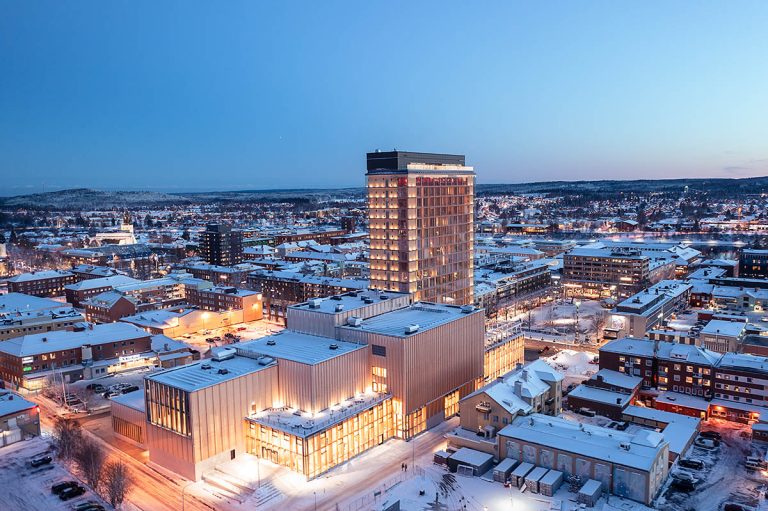
Future pilots from all over the world are turning to northern Sweden to learn how to fly on batteries. The ATPI courses always include student accommodation on campus with short walking distance to classrooms and flight simulator.
Students get to try their wings on fully electric airplane
The cold winters and warm summers in Skellefteå generate ideal conditions for testing the electric aircraft in different climates.
Also in the future people need to travel to meet family and friends face-to-face and to discover new places and cultures. But to be able to continue to fly, the environmental footprint of air travel must be reduced. This is an evolution that Green Flight Academy wants to be a part of.
A full Boeing 747 was converted as a hostel at the Arlanda Airport in January 2008. It was once a Pan Am Clipper but is now one of the coolest hotels in Sweden. Why not try a Stockholm layover in a jumbo jet?
The 747 was built for Singapore Airlines and entered service in 1976. It was sold to Pan American in 1984 for which it flew until 1991. Its last air operator was Swedish Transjet that went bankrupt in 2002. Jumbo Stay has 33 rooms and 76 beds.
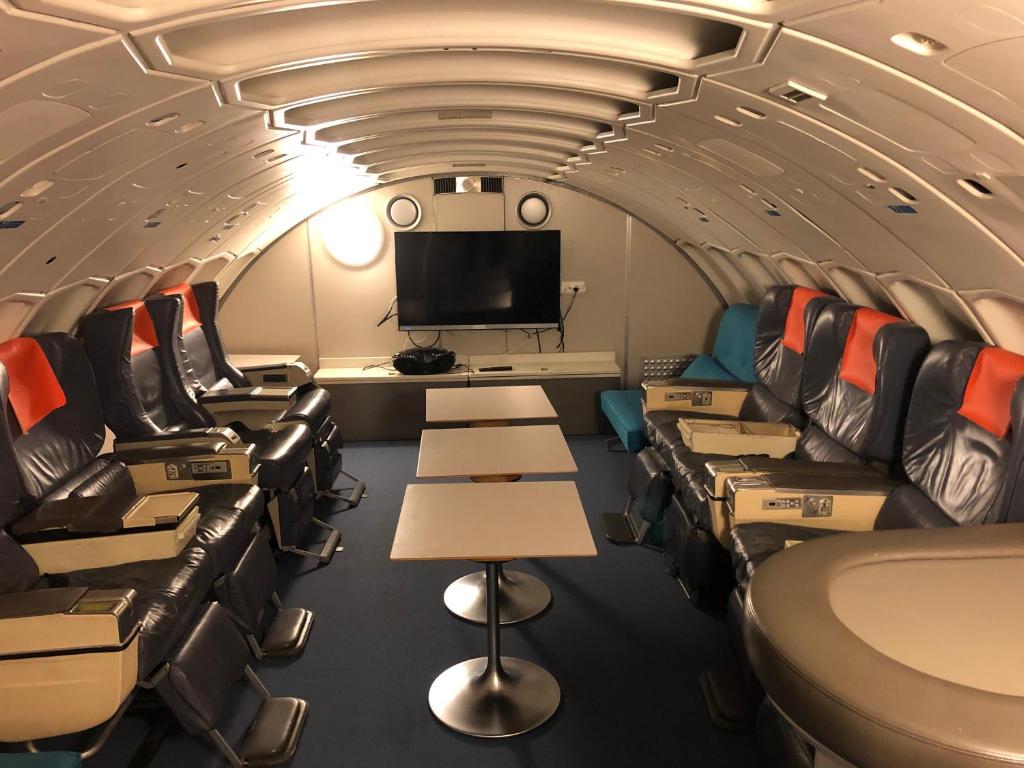
The interior of the Boeing 747 has been almost entirely changed, including by the removal of 450 seats.
The aircraft was subsequently acquired by Oscar Diös, who had previously run a youth hostel in Uppsala. He called his Jumbo ‘Liv’ after his daughter. Diös was developing a concept of running hostels inside many different objects, including boats, trains and lighthouses. When he found out that a retired aircraft was for sale at Arlanda Airport, he decided to try setting up an airport hostel inside it, as there were no hostels or budget hotels nearby. In December 2007, the municipality of Sigtuna granted him a building permit to establish a hostel within the aircraft, at the entrance to the airport.
Officially it is a hostel, not a hotel, even affiliated with Hosteling International. But by pricing it is more like a hotel, room rates starting from around 100 Euros (except dorms).
“Welcome to Jumbo Stay. A unique hotel in a Boeing 747 Jumbo Jet. An exclusive experience in the world with great sleeping comfort right on the airport ARN, Stockholm-Arlanda. We are open for Check-In every day of the week,” states Jumbostay.
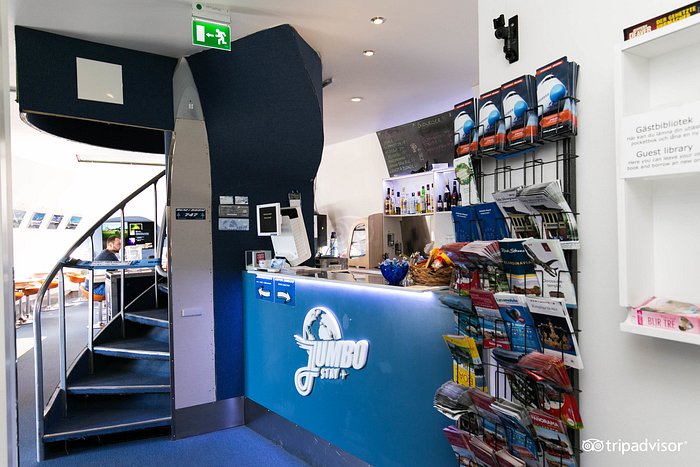
The Jumbostay lobby
The interior of the Boeing 747 has been almost entirely changed, including by the removal of 450 seats. However, a selection of its features, such as the flight controls and some of the original seats and windows, has been retained.
Jumbo Stay offers various types of rooms and dorms. Special rooms include the ones built inside engine cases, but the most luxurious option is the cockpit suite. The Jumbo’s hostel accommodation includes two- and four-bed dorms – these are divided into male and female rooms (no mixed dorms). Economy class is a four-bed dorm at 45 Euros per person. The dorms are small and basic but still have some luxuries, e. g. television. The channel selection, however, is only local channels. A free towel is provided.
Jumbo Stay has proven to be an exciting option for aviation enthusiasts as well as families and businesspeople looking for a memorable and unique experience.
At its permanent site, the aircraft was mounted on a concrete foundation, and its landing gear was secured in two steel cradles. Additionally, a set of metal stairs and a lift were installed at its main entrance on the left side.
Double bed in cockpit.
Those tempted to spend a night at Jumbo Stay can plan ahead and reserve the luxury suite inside the old cockpit. The cockpit suite boasts sweeping views of Stockholm’s Arlanda Airport. A Double Bed Ensuite Cockpit room starts at 1850 SEK or approximately $177.
Stockholm Layover in a Jumbo Jet, written by Tor Kjolberg. This is an updated version of the article written in 2015.
Denmark earns the top spot in the Environmental Performance Index (EPI). EPI is a global sustainability ranking by Yale and Columbia Universities. Learn more aboutDenmark – the cleanest country in the world.
180 countries based on their performance across 40 indicators grouped into 11 categories have been ranked by a biennial index, a collaboration by scholars from the universities of Yale and Columbia, and the World Economic Forum.
The chief goal of the EPI is not to compare the nations themselves, but rather the measures they implement and the effect that these have. As a result, underperforming governments can learn from the good work undertaken by others and bring up the global average. With that in mind, what exactly have this Scandinavian nation of under six million people done to merit their place at the top of the EPI?
The chief goal of the EPI is to measure how different countries implement their efforts and the effect that these have.
The country shines in several areas, boasting exemplary wastewater treatment systems, near-complete coverage of marine protected areas, and commendable efforts in curbing greenhouse gas emissions. These achievements haven’t happened overnight; Denmark has consistently been a leader in environmental protection, demonstrating the power of long-term vision and dedication. Denmark has achieved the impressive feat of slashing its emissions by half in the last 25 years. Indeed, its carbon footprint peaked as far back as 1996; given that many nations are still witnessing year-on-year increases in their CO2 emissions, that’s quite the example for them to follow. Denmark is aiming for a 70% reduction in emissions by 2030 and complete carbon neutrality by 2050. Meanwhile, the city of Copenhagen is bidding to reach that milestone in as little as three years, which would make it the first net-zero capital in the world.
Building on the Danish tradition for public-private partnerships and recognizing the private sector as a central actor, the Danish government has formed 14 climate partnerships. Each represents different sectors in the Danish economy.
The United Kingdom, Finland, and Malta follow closely behind, each scoring above 75 on the EPI. These countries excel in various areas, showcasing the diversity of approaches to environmental stewardship. Sweden, Luxembourg, and Slovenia are also notable contenders, highlighting the encouraging progress being made on a global scale.
The 2022 Environmental Performance Index (EPI) provides a data-driven summary of the state of sustainability around the world. Using 40 performance indicators across 11 issue categories, the EPI ranks 180 countries on climate change performance, environmental health, and ecosystem vitality. These indicators provide a gauge at a national scale of how close countries are to established environmental policy targets. The EPI offers a scorecard that highlights leaders and laggards in environmental performance and provides practical guidance for countries that aspire to move toward a sustainable future.
Denmark – the Cleanest Country in the World, compiled by Tor Kjolberg
Wooden wainscotting, wall panels, and light-colored flooring are contemporary trends in Scandinavian interior design, infusing spaces with warmth, texture, and timeless allure. Learn more about architectural woodwork: The latest trends in Scandinavian interior design.
These wooden details not only pay homage to the Nordic reverence for nature, but also serve a functional purpose by providing insulation, as well as decorative appeal. Each wooden accent stands as a testament to the region’s commitment to sustainability and respect for the environment, embodying the essence of Scandinavian style.
When painted in soft whites, light greys, pale blues, and muted pastels, wainscotting adds a sense of brightness and airiness. Photo: Freepik
Warmth and simplicity: wainscoting in Scandinavian interiors
Wooden wainscoting adds warmth, texture, and architectural interest to the room, contrasting nicely with the cool tones of Scandinavian design (typically known for its minimalist decor and neutral color palettes). Consisting of wooden panels or boards covering the lower portion of walls, Scandi-style wainscotting is often characterized by its clean lines, simple aesthetic, and emphasis on natural materials. For instance, traditional tongue-and-groove paneling, where wooden boards are installed vertically or horizontally along the lower half of the wall, creates a timeless and classic feel. This style choice emphasizes simplicity, functionality, and organic materials — key elements of Scandinavian interior design. Alternatively, sleek, flat-paneled wainscotting introduces a modern twist on tradition. With crisp edges and decorative geometric shapes, this contemporary option offers a more streamlined and minimalist look.
When painted in soft whites, light greys, pale blues, and muted pastels, wainscotting adds a sense of brightness and airiness, while also maintaining a soothing and serene atmosphere. Earthy tones like warm beiges and soft greens, on the other hand, also complement the natural wood finishes commonly found in Scandinavian interiors, adding warmth and depth to the space. Alternatively, wooden wainscotting can also be left completely natural to blend seamlessly with the rest of the space, infusing the room with a cozy ambiance that beckons you to relax and unwind
Wooden wall paneling is another Scandinavian interior design trend that infuses spaces with warmth, texture, and natural beauty. Photo: XL Bygg
Scandi-inspired wooden wall paneling
Wooden wall paneling is another Scandinavian interior design trend that infuses spaces with warmth, texture, and natural beauty. Light wood finishes like pine, birch, and ash are favored for their ability to brighten interiors, while untreated finishes celebrate the raw beauty of the grain, adding depth and character to the walls. In addition to looking good, wooden wall paneling also goes hand in hand with Scandinavian design principles that champion sustainability and energy-efficiency. As a natural insulator, wood helps regulate indoor temperatures by providing an additional layer of thermal protection against the elements. This keeps homes comfortable year-round, reducing the need for excessive heating or cooling, and lowering energy bills. So, by choosing wooden wall paneling, you can embrace sustainable living practices, while also enjoying the timeless beauty and warmth of natural materials in your home.
Northwood flooring. Photo: Maxbo
Scandi trends in light wood flooring
Light-colored wood flooring — think: shades of pale oak, ash, or maple — is another prominent trend in contemporary Scandinavian interior design. This gorgeous trend aims to maximize natural light and create beautiful, visually-expansive environments that feel like stepping into a sunlit Nordic forest retreat. As it reflects incoming light, light-colored wood flooring makes rooms appear larger and feel bright and airy. When choosing the right light wood flooring for your Scandi-inspired interiors, consider your desired aesthetic and how it complements your existing decor. Ash wood flooring, for instance, features distinctive grain patterns, making it ideal for adding character to minimalist spaces, while pale oak is warm and inviting, exuding a sense of comfort and coziness. As for maple, this hardwood variety boasts a smooth and uniform appearance, lending a sleek and sophisticated aesthetic to interiors.
Also, take care to avoid glossy finishes — they create glare that detracts from the natural beauty of the wood. Instead, choose a matte or satin finish that enhances the wood’s texture and grain, while maintaining a soft sheen. Wide plank flooring is also a popular choice in Scandinavian interiors, as it creates a sense of continuity and spaciousness. And, the wider the planks, the fewer visible seams, which further gives the illusion of a larger space.
Wainscoting, wall panels, and light-colored flooring are key Scandi architectural woodwork trends embodying the aesthetic principles of simplicity, functionality, and natural beauty. In addition to enhancing the visual appeal of interiors, these features also create a sense of warmth, texture, and timelessness that defines the Scandinavian aesthetic.
Karoline Gore
Architectural Woodwork: The Latest Trends In Scandinavian Interior Design,
written exclusively for Daily Scandinavian by Karoline Gore. Karoline is a freelance writer from Stoke on Trent in the UK who left the corporate grind when she started a family and has never looked back. She enjoys contributing to a range of online publications on the topics that are important to her.
Halden Prison in Norway is one of Norway’s highest-security jails, holding rapists, murderers and paedophiles. Since it opened in April 2010, at a cost of 1.3bn Norwegian kroner (£138m), it has acquired a reputation as the world’s most humane prison, and also the nicest prison on earth. It is the flagship of the Norwegian justice system, where the focus is on rehabilitation rather than punishment.
The prison is built like large landscape with layer after layer of control zones. At the far end, a large outlying area of scattered cultural landscape, then a piece of uninhabited cultural landscape. Then follows a fence, a monitored intermediate zone, then a six-meter-high concrete wall, nearly four times as tall as a man. Inside a new monitored zone, another fence, then a new zone, and then another fence.
From the outside, there are no coils of razor wire in sight, no lethal electric fences, no towers manned by snipers — nothing violent, threatening or dangerous. And yet no prisoner has ever tried to escape.
The prison is built like large landscape with layer after layer of control zones. Photo: Kriminalomsorgen
A quiet prison
Another remarkable thing is how quiet the prison is. There isn’t any of the enraged, persistent banging of doors you hear in American prisons, not least because the prisoners are not locked up much during the day.
Today, however, life has changed, also in Halden Prison.
“Prolonged and sustained budget cuts in correctional services now mean that Halden prison also has to discontinue many good, rehabilitative measures and activities for inmates. The content of sentencing conditions is weakening, and I am sorry to say that the poster we have been for Norwegian correctional services abroad is now fading,” says governor, Are Høidal.
Halden Prisonwas awarded for best interior design. Photo: Wikipedia.
The core of the actual prison acts as a kind of machinery that simulates a small piece of Norway. That is to say, unlike most prisons where the stay is only a waiting post between sentence and physical punishment, Halden prison is the punishment in itself: deprivation of liberty over time. But at the same time, the institution must ensure that the inmates improve their lives after and outside the control zone, in the real Norway.
From the outside, there are no coils of razor wire in sight. Photo: HLM Arkitektur.
Might seem like an alien
Halden prison might seem like an alien compared to other prisons. Its modern, cheerful and well-appointed facilities, the relative freedom of movement it offers, its quiet and peaceful atmosphere — these qualities are so out of sync with the forms of imprisonment found in most other countries that you could be forgiven for doubting whether this is a prison at all. It is, of course, but it is also something more: the physical expression of an entire national philosophy about the relative merits of punishment and forgiveness.
The complicated duality of Halden prison is reflected in the architecture. Photo: Erik Møller Arkitekter.
Halden prison smells of freshly brewed coffee. It hits you in the workshop areas, lingers in the games-rooms and in the communal apartment-style areas where prisoners live together in groups of eight. This much coffee makes you hungry, so a couple of hours after lunch the guards on Unit A (a quiet, separated wing where sex offenders are held for their own protection) bring inmates a tall stack of steaming, heart-shaped waffles and pots of jam, which they set down on a checked tablecloth and eat together, whiling away the afternoon.
Despite the fact that the inmates are confined and controlled, and that every detail of the person’s life is recorded and analyzed, the prisoner must also go to “school”, “work” and have “leisure time”.
The treatment of inmates at Halden is wholly focused on helping to prepare them for a life after they get out. Photo: Kriminalomsorgen.
Crime in Norway
The treatment of inmates at Halden is wholly focused on helping to prepare them for a life after they get out. Not only is there no death penalty in Norway; there are no life sentences. The maximum sentence for most crimes is 21 years — even for Anders Behring Breivik, who is responsible for probably the deadliest recorded rampage in the world, in which he killed 77 people and injured hundreds more in 2011 by detonating a bomb at a government building in Oslo and then opening fire at a nearby summer camp.
Andres Behring Breivik remains, however, currently in isolation in the Ila prison, a former Nazi concentration camp with a less utopian vision. However, the underlying ethos of Halden prison gives an insight into Norwegian attitudes towards justice, one that is under scrutiny as the country assesses how to deal with Breivik.
Norway banned capital punishment for civilians in 1902, and life sentences were abolished in 1981. But Norwegian prisons operated much like their American counterparts until 1998. That was the year Norway’s Ministry of Justice reassessed the Correctional Service’s goals and methods, putting the explicit focus on rehabilitating prisoners through education, job training and therapy. A second wave of change in 2007 made a priority of reintegration, with a special emphasis on helping inmates find housing and work with a steady income before they are even released. Halden was the first prison built after this overhaul, and so rehabilitation became the underpinning of its design process. Every aspect of the facility was designed to ease psychological pressures, mitigate conflict and minimize interpersonal friction.
The complicated duality of Halden prison is reflected in the architecture. Life within the control layers is aimed to stimulate a complete and normal life in what is shaped almost like a small Norwegian town. That is why you find yourself here in a small piece of hilly, domestic nature, including rocky cliffs, pine trees, plants and hares. The building mass, which is almost 30,000 square meters, is neither awe-inspiring nor massive. In line with the urban illusion, it is rather broken up into various institutional buildings, secluded housing units, and even a detached house. These are spread out along a ring road around the local sports ground and a small forest in the middle of the facility.
*************************************
Related article: Prison Life in Scandinavia
*************************************
Set in a forest, the prison blocks are a model of minimalist chic. Phoyto: Kriminalomsorgen.
Comparing prison costs
With one of the highest per capita gross domestic products of any country in the world, thanks to the profits from oil production in the North Sea, Norway is in a good position to provide all of this, and spending on the Halden prison runs to more than $99,000 per inmate per year, compared with just $43,836 for prisoners in the United States, according to Federal Register Bureau or non-Bureau facility in FY 2021.
When Halden opened, it attracted attention globally for its design and its relative splendor. Set in a forest, the prison blocks are a model of minimalist chic. It was awarded for best interior design, a prize given in recognition of the stylishness of the white laminated tables, tangerine leather sofas and elegant, skinny chairs dotted all over the place. At times, the environment feels more Scandinavian boutique hotel than class A prison.
Registration, custody cells, administration and the staff’s facilities are located in a building closest to the main entrance that looks like a typical Norwegian school building with dark brick, broken volumes and wings. If you follow the ring road north, you will then reach the Activity Centre, which contains work and school functions. Here is everything from large workshops for furniture and mechanics to a NAV branch (NAV is the Norwegian abbreviation for the Norwegian Labor and Welfare Administration), smaller classrooms and a sound studio.
Every Halden cell has a flatscreen television, its own toilet (which, unlike standard UK prison cells, also has a door) and a shower, which comes with large, soft, white towels. Prisoners have their own fridges, cupboards and desks in bright new pine, white magnetic pinboards and huge, unbarred windows overlooking mossy forest scenery.
The last post along the ring road is a small detached house intended for family visits for inmates without a leave permit. It includes a children’s room, a full kitchen and a large double sliding door from the living room to a garden with children’s toys.
When Halden opened, it attracted attention globally for its design and its relative splendor. Photo: Erichsen Horgen.
Dynamic Security
The Correctional Service emphasizes what it calls “dynamic security,” a philosophy that sees interpersonal relationships between the staff and the inmates as the primary factor in maintaining safety within the prison. Dynamic security focuses on preventing bad intentions from developing in the first place. Halden’s officers are put in close quarters with the inmates as often as possible; the architects were instructed to make the guard stations tiny and cramped, to encourage officers to spend time in common rooms with the inmates instead.
Given the constraints of needing to keep 245 high-risk people incarcerated, creating an environment that was as unprisonlike as possible was a priority for the prison’s architects, HLM Arkitektur and Plan/Erik Møllers Arkitekter AS.
“The life behind the walls should be as much like life outside the walls as possible,” said architect Erik Møller.
The Nicest Prison on Earth, written by Tor Kjolberg
Now that technology has made remote work easier and more flexible, folks have become increasingly interested in working outside the office. People aren’t just looking to work from home, though – they’re making plans to work across the world, flitting from country to country without having to settle permanently in one place. Here’s a digital nomad’s guide to thriving in Scandinavia.
One location digital nomads have been flocking to is Scandinavia. This region, which primarily consists of Norway, Sweden, and Denmark but can also include Finland and Iceland, is full of natural beauty, walkable communities, and accessible public transportation, with plenty of opportunities to unplug and unwind. We’ll dive into what specifically makes this area so attractive for digital nomads, and how to prepare for your Scandinavian travels as a remote worker.
Reasons Why Digital Nomads Love Scandinavia
Besides the super cold winters and high taxes, living in Scandinavia has some pretty great perks. First, for those who hate driving, public transportation is affordable and accessible for all. Copenhagen offers the Metro, which runs 24/7, along with buses that run frequently. Stockholm even offers the Stockholm Card, granting free public transportation and free entry to 75+ museums and other popular public attractions. Buses in Stockholm are eco-friendly as well, running on biofuels like ethanol to lower carbon emissions.
Probably the biggest reason digital nomads adore Scandinavia is the sheer beauty of the region. The crisp air, towering mountains, and crystalline fjords create an environment where creatives get inspired and cogs in the corporate machine can relieve themselves from their computer screens for a lengthy kayaking session. Here, you can experience the Northern Lights, take a scenic bike ride, or relax in a hot spring with some new friends. Other incredible Scandinavian outdoor opportunities include:
Hiking in Jotunheimen National Park in Norway;
Mountain fishing in Tärnaby, Sweden;
Alpine skiing at Mt. Åreskutan in Sweden;
Touring Volcano Thrihnukagigur in Iceland.
Scandinavian countries are home to some immaculate architectural wonders. In Denmark, you can visit a series of magical castles, like Amalienborg in Copenhagen, a Rococo wonder with intricate landscaping. Sweden has plenty of amazing buildings too, like the art museum Artipelag, which boasts a contemporary structure that complements the nature surrounding it. Another visual structure in Sweden that attracts awe is the Icehotel, which is part art exhibition, part lodgings constructed of pristine ice and snow.
How to Prepare for Scandinavian Travel
Just like you would with any trip, getting prepared for traveling requires lots of planning and research. Here are some of the main things you should do before making your way to Scandinavia.
A Digital Nomad’s Guide to Thriving in Scandinavia, article continues below image.
Helly Hansen hiking pant.
Get the right attire
The perfect selection of clothing depends on when you plan to travel to Scandinavia. If you’re aiming for winter, you should bring plenty of warm layers with materials like fleece and wool. Outerwear should be waterproof and well-insulated, and undergarments should be long thermals for maximum warmth. Springtime will require less bulky clothing, but you should dress for warmth, as the temperature tends to average between 25℉ and 40℉. Summer will reveal the best temperatures, allowing you to store your coat in the closet and bring out the sundresses and t-shirts. However, by autumn, you should be prepared to layer up again.
Organize your paperwork
Naturally, you should have your passport handy for Scandinavian travel. In Norway, for example, digital nomads must apply for an Independent Contractor Visa, which allows travelers to live and work in the country for up to a year. Common remote jobs for digital nomads in Scandinavia include freelance writers, web developers, and ESL teachers. You must provide proof that your business either operates outside of Norway or if your employer or client is in Norway, you must confirm all business arrangements were made before you arrived in Norway.
You should have a set budget in place..
Create a financial plan
Since you’ll be far away from home and family, you should have contingency plans in place for everything, along with creating a detailed financial plan so you’ll have more than enough money for your travels. Using an online bank that does not have traditional operating systems with brick-and-mortar locations is ideal. Many of these banks offer 24/7 customer service access and reduced ATM fees or a fee reimbursement program. Always have local paper currency on hand in case your cards fail as well.
More than this, you should have a set budget in place. Use separate bank accounts for bills and leisure expenses so you don’t run into a financial rut overseas. If you are self-employed, have plenty of savings in case your income drastically reduces at some point while traveling.
Assuring Job Security and Productivity Abroad
Be sure that your remote job is solid and will provide stability during your travels. Though it can be tempting to slack off during your travels, find ways to stay productive and disciplined. First, you should wake up early and resist the urge to sleep in. If you need motivation to wake up, plan a workout first thing in the morning. It can give you the mental and physical boost you need to stay focused throughout the day.
Creating a daily schedule is the perfect way to keep yourself on track as well. Outline your tasks for the week and divide them into practical, daily plans. You can utilize project-tracking software like Asana to keep track of unfinished projects, edits, and tasks that must be delegated.
You can utilize project-tracking software like Asana to keep track of unfinished projects, edits, and tasks that must be delegated.
During work hours, stay on top of meetings by setting reminders, checking your technology for audio and visual malfunctions, and participating actively. Respond to your coworkers respectfully and give them time to relay their thoughts in full. This will assure your supervisors that approving your digital nomad lifestyle was the right choice.
Ainsley Lawrence
A Digital Nomad’s Guide to Thriving in Scandinavia, written exclusively for Daily Scandinavian by Ainsely Lawrence. Ainsley is a regular contributor to Daily Scandinavian. She is a freelance writer from the Pacific Northwest. Ainsley is interested in better living. through technology and education. She is frequently lost in a good book.
A layover (or stopover) can be an excellent addition to your itinerary if you manage your time wisely when you choose to venture out into a stop-over city. It’s an excellent way to experience more for less.
Many are afraid to leave the airport on a layover or stopover. Some even stay in a hotel connected to the airport because they are so afraid of missing their flights. Do not be afraid to go against the grain on this one.
Personally, I have experienced many countries while on a layover, and the best of all, the stop is free. It is already included in the cost of your flight.
A layover refers to the waiting time during a flight connection at the airport for a certain amount of time before your next flight.
A layover refers to the waiting time during a flight connection at the airport for a certain amount of time before your next flight. A layover typically lasts up to a few hours but does not exceed 24 hours.
A stopover is when you spend more than 24 hours at an airport before continuing your journey. A typical scenario is a stopover during international travel before arriving at your final destination. During a stopover, travelers usually can leave the airport and explore the local area before returning for their next flight. A stopover can even last several days.
A little research into how far the airport is from the city center and the cheapest and quickest way to travel back and forth can assist you in avoiding your connecting flight. I have used trains, buses, taxis and even Uber when available,
An eight-hour layover might feel like a curse for travelers eager to get to their destination. Yet for others, long layovers are preferable.
Use the possibility. Start stacking up your list of countries visited. I’ll come back with more tips on this later. The reality is that anyone can travel the world cheaply and with ease. This was not necessarily true twenty-five years ago pre-internet. At that time you had to hire a travel agent to do all the heavy lifting and pay the agent a fee on top of an already pricey itinerary.
Nowadays you can look online to see whether or not you need a visa, whether a taxi is better than a train, what hotels look like both inside and outside, what neighborhoods are safe, where to change currency, how other travelers rate a particular tour, etc.
A long layover can quell anxieties about sprinting through airports to catch the next flight, especially for complicated itineraries spanning multiple countries. But for more adventurous folk, long layovers afford opportunities to escape the confines of the airport and explore a new city — sometimes even for multiple days — without having to pay extra for airfare.
An eight-hour layover might feel like a curse for travelers eager to get to their destination.
****************************************
You might also like to read Flying Anxiety Cured
****************************************
If you are willing to break beyond your comfort zone, travel can be a great way to rediscover yourself and put a face to the history you learned in school (and some that you did not). You will see both the world and your home in a different light, try new foods, make new friends, have long or short-term relationships…anything you want.
Also, given the increased chances of a delayed departure flight, additional buffer time can mitigate the stress of potentially missing a connection. The biggest question people ask is “How do you do it?”
I’ll cover this in depth in a later article. For now, just know that you get to find your own travel style.
For flights lasting more than six hours, layovers can be good if you need a break from sitting and want to walk around. Flights with stopovers are also generally cheaper. If your stopover is in a city where you have a friend, it’s always fun if he/she can meet you for a meal at the airport or very close by.
Some airlines make it easy to find overnight (or multi-night) layovers via a “stopover” filter on their websites.
For example, Icelandair lets you set your departure and arrival city. Then, you select “Stopover in Iceland” and choose how many nights you want to spend on the Nordic island.
However, the cons of layovers are that you risk missing your connection if there is too little time between the flights (and flights are often delayed, so plan accordingly), especially if you are switching from a domestic to international part of the airport.
The other risk of a layover is the potential for bags to be lost, although in all the travel I have done, I’ve never had a bag lost (touch wood), so I don’t put this high on my “con” list, though only because i haven’t had that experience.
My intention writing this article is to inspire you to find your own travel style. Do not base it on what your friend, parents, the media, or even what I suggest tells you. Take a trip and try a few new ways of doing things to see what works for you. Do not let anyone else dictate how you enjoy your world of exploration. You do you.
If you have an experience to share with our readers, don’t hesitate to contact us.