Although Norway is not the most obvious country to start a transportation revolution, electric vehicles (EVs) have suddenly become commonplace in this country. If Norway can achieve it, any nation can. But why are they so popular in the country of long driving distances, rugged mountains and a very cold climate? Today we will tell you about all the pros and cons of a decision to switch to Evs.Learn more about the benefits of renting an electric car in Scandinavia.
Driving pleasure
Electric cars are more fun to drive because they are faster at speed. Even the second-generation Nissan Leaf Plus can run up to 100 km/h in 6.5 seconds. In addition, they are easier to control, because the battery pack reduces the center of gravity of the car. This helps to distribute the weight and make the car more stable. In turns, the risk of overturning is reduced. In addition, many people report no noise.
We recommend you check tesla prices uae and rent electric iron horse for long-term use. On the online rental platform, you will find not only electric cars but also sports cars, luxury cars, crossovers, pickups, and many other models of various brands for hiring. New electric cars are quite expensive, and by renting them you will be able to enjoy their advantages at an affordable price.
No spending on fuel
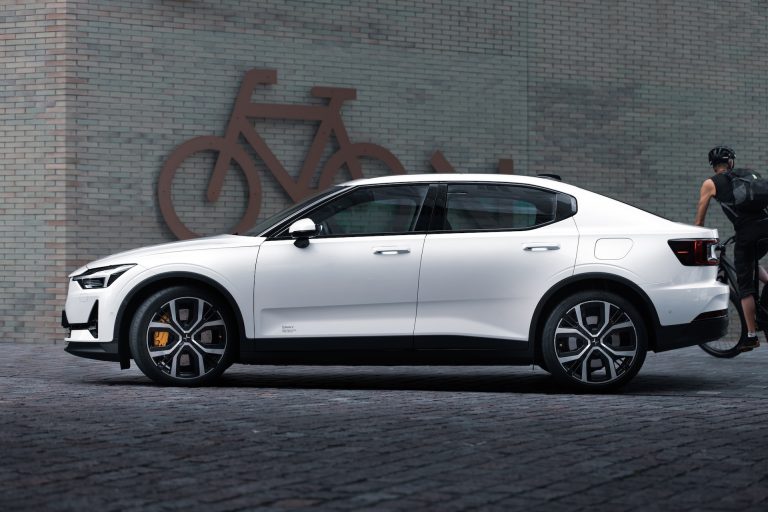
There are plenty of places where cars can be charged. Photo: Oxana/Unsplash
Electricity is much cheaper than gasoline and gas. In some cases – half cheaper. Some drivers charge their cars home at night. By the way, in some countries, rates are lower at night. But there are also places, where an electric car can even be charged for free. For example, in hotels, service points, or gas stations.
There are plenty of such places. For convenience, you can install a special application that shows public charging.
Some very pleasant perks
There are a number of incentives in place in Norway as well, like reduced road tolls, limited access to bus lanes, and cheaper public parking for EV drivers, but this is the most significant and effective action that any nation can take
Global mission
Greenhouse gases have a significant impact on climate change. The environmental situation in many cities is unsanitary. This particularly affects the well-being of children and the elderly.
Electric vehicles do not emit exhaust. Even when electricity consumption is taken into account, they significantly reduce smog and greenhouse gas emissions. The air is getting cleaner and health is getting better. Future generations will be grateful for it.
In the event of an accident, the car does not ignite and explodes.
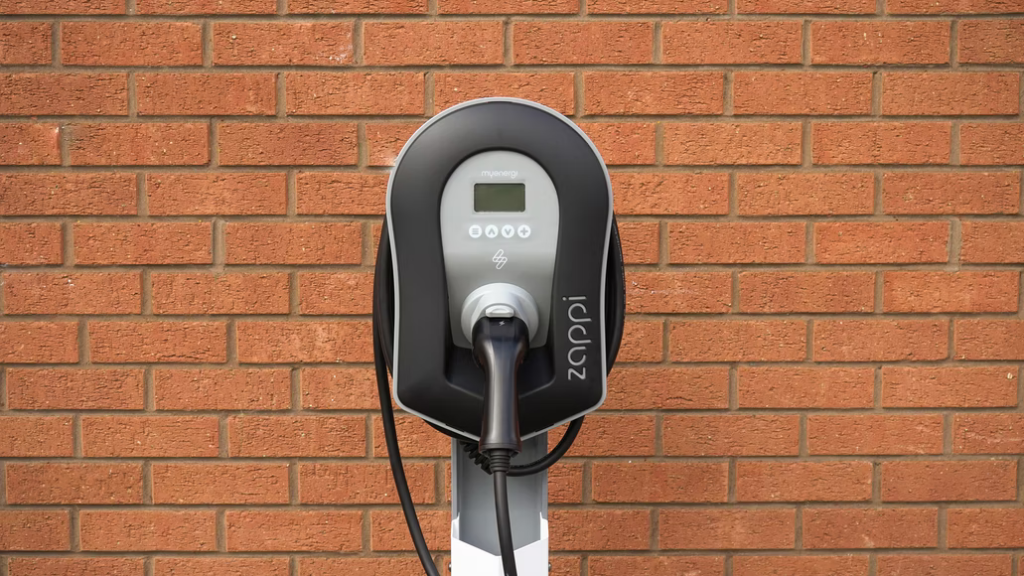
At the official charging stations, it takes 20-40 minutes to charge the motor at 80%. Photo: myenergi/Unsplash
How fast the electric car will charge depends on the volume of the battery, the power of the electric current, and the features of the charging point itself. You can also connect to a conventional electrical socket, but the car will charge up to 12 hours. At the official charging stations, it takes 20-40 minutes to charge the motor at 80%. This process may take 10 minutes in the near future.
On average, the full charge is enough for 250 km.
Disadvantages of electric cars
The drawbacks often include long charging of the accumulator, like 20 minutes – it is much longer than just pouring gasoline into the tank. There may also be charging problems. Especially if you are going out of town.
The battery stock may not be enough if you are going on a long trip. In this case, it is advisable to plan the route so that it is possible to recharge.
Many also complain about the size of electric cars, as they are mostly double-seated. There are not many large models.
Be prepared for the fact that too hot or cold weather can reduce the capacity of the battery, as it leads to heating.
However, taking into account all these drawbacks, theNorwegian parliament has decided that all sales of new cars and vans shall be zero emission by 2025, which is saying something about this tech.
Benefits Of Renting An Electric Car In Scandinavia, written exclusively for Daily Scandinavian by Evelina Brown. Evelina is a digital marketer with more than 10 years of experience. She is a contributor to Content Marketing Institute and regularly quoted as an expert in large media outlets. Her job is to make your business known all over the Internet.
Back in the 1700s, people traveling the Danish highways were looked after with fare from the tiny smallholding and farms, locally brewed beer and schnapps. Hanne Kirkeby Kro, established in 1790, became later the hub of hunting parties and the place of choice for the Danish painter Johannes Larsen.
Today, the traditional Danish shuttle station has been transformed into a gourmet destination.
A handful of kilometers from Denmark’s west coast, an hour north of the oil town of Esbjerg and a quarter of an hour’s drive from the nearest small town, Varde, with 13,000 inhabitants, lies Henne Kirkeby, a place so desolate that no one would believe that it would be possible to run a gourmet restaurant there. However, since 2007, the inn has been owned by Flemming Skoubo and under the management of chef Paul Cunningham, was titled the best restaurant in the Nordics in 2012 and awarded a Michelin star in 2016 and a second in 2017.
With interiors in a modern, “quasi-minimalist” style, including bed covers by Paul Smith, armchairs by Hans Wegner and photographs by Astrid Kruse Jensen, and later added a new guest building, Hunting Lodge (completed in 2013), increasing the number of guest rooms by seven to twelve, Henne Kirkeby Kro was transformed into a gourmet destination.
Paul Cunningham was previously chef at The Paul restaurant in Copenhagen Tivoli where he served celebrities such as supermodel Helena Christensen, Paris Hilton, Bill Clinton and Metallica among others.
The Hunting Lodge was completed in 2013 and increased the number of guest rooms by seven to twelve
The restaurant has twelve tables. The inn raises its own lamb, pigs, chicken and rabbits, and has the largest kitchen garden in Denmark, including an orchard and beehives. It also receives wild game from Skouboe’s private island, Fænø, and is near Hvide Sande, the country’s primary fish market. Cunningham serves an eclectic, classically-based cuisine emphasizing fresh ingredients, and fish and chips on Fridays.
“I don’t cook for my guests,” says Cunningham. “I cook for myself. I don’t know other people’s tastes, so all the food I serve is the way I like it. When you eat with me, the menus are like a Russian roulette of gastronomy.”
The inn is complete according to the plans, and must now be allowed to develop on its own terms, while the standards rise year by year. So, the whole staff is continuing ceaselessly to send people home with their stomachs full of good food and a desire to return before too long.
Traditional Danish Shuttle Station Transformed Into a Gourmet Destination, written by Tor Kjolberg
The Nordic concept of friluftsliv, or unwinding the outdoors, includes troll hunting. Denmark is a country of fairy tales, and trolls are everywhere in Denmark, so troll hunting in Denmark has become a popular activity for Danes as well as visitors.
The Good Luck Troll was created by Thomas Dam in the 1930s and has been a symbol of happiness in the country ever since. It’s the inspiration behind the Trolls and Trolls World Tour films. Why not join us in a tour of the best places in Denmark to spot them?
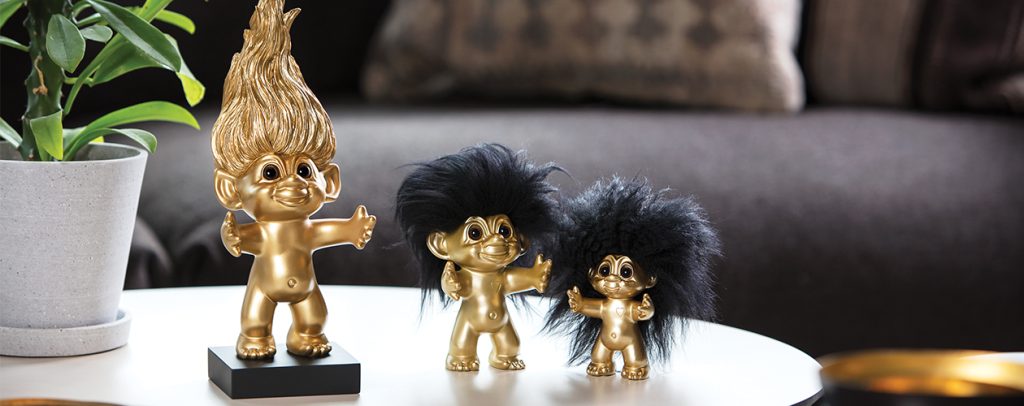
Good Luck trolls, by Thomas Dam
During the pandemic in Denmark, Danes were lured outdoors in an inventive way – by trolls. World-renowned recycle artist Thomas Dambo created 10 new sculptures around the country in a project he called The Great Troll Folk Fest. Dambo also placed a series of “giants” around Copenhagen in 2016 and 2017. His goal was to encourage Danes to explore nature through a troll treasure hunt, complete with a troll map.
North Jutland’s Troll Museum is the Home of the good luck troll
North Jutland’s Troll Museum is the Home of the good luck troll, and tells the story of how Thomas Dam created them. Housed in the old troll factory at Gjøl, this is a fun museum where you can see plenty of examples of these magical characters through the ages.
In Copenhagen’s Nordhavn (North Harbour) you find the gigantic troll sculpture Kaptajn Nalle, looking tired from dragging his boat on a rope. In a fairy tale in Dambo’s book, Trail of a 1000 Trolls, Kaptajn Nalle wakes up from a long nap to discover that while he was sleeping, urban development caused the harbor to fill up with rubble and now the shoreline moved three miles out. “That is why Kaptajn Nalle is pulling his boat back to the shore,” says Thomas Dambo.
Thomas Dambo with his sculpture Zach -the shaman and an onlooker created in Suwannee, Florida, 2018. Photo: Stirworld
Another terrific troll to seek out in Copenhagen is Hilltop Trine, located in Hvidovre, a suburb eight miles from the tourist bustle of Nyhavn. She is lying on a ridge next to a serene farmhouse, with chickens scarpering past her feet and two children sitting in her outstretched hands.
To hunt for Dambo’s first pandemic troll, you can take the M4 metro to the last stop, Orientkaj, and walk through industrial areas filled with shipping containers to an open area. The old harbour of Copenhagen is undergoing commercial development, and a highway tunnel will be built in the area where Dambo’s old workshop is located, not far from Kaptajn Nalle
Recycled troll by Thomas Dambo.
There’s a delightful picture of a troll sitting outside his cave in the Hirschsprung Collection in Copenhagen. It’s included as part of a trail during the Christmas period – children can search for the troll with his red hat through the gallery and typically get a small gift when they find its hiding place.
In Vallensbæk Mose nature reserve you can meet the oversized eyes of a 15ft troll made of recycled scrap, wood and peering through the forest.
If there’s anywhere you’re likely to see a troll in the wild, it’s in the Troll Forest near Tisvildeleje in North Zealand. Twisted trees bend and curve around forest paths, and date back to the last years of the 18th century. The strange formations are due to a combination of the wind and the effect of pine worm larvae, and have been protected for over a hundred years.
The local troll on Bornholm is called Krølle Bølle and he lives in Sandvig in the north of the island. If you’re out late, you might see him – he tends to come out at midnight and he’s about the size of an eight-year-old, with a red hat on.
Trolls, gnomes and pixies thrive at Etly Klarborg Gammelbo near Aalborg in North Jutland. Here from outside the shop.
Trolls, gnomes and pixies thrive at Etly Klarborg Gammelbo near Aalborg in North Jutland. It’s the location where some popular Danish trolls and pixie figurines are made, and you can see art exhibitions on the same theme here too. Every Sunday in Advent, you can take a walk here to discover the ‘Nisse’, Denmark’s Christmas Pixies, who hide in the woods.
Troll Hunting in Denmark, compiled by Tor Kjolberg
The long-lost sister ship of the Vasa, the 17th century warship considered one of the Swedish navy’s biggest achievement that sank soon after setting sail, has been discovered by Swedish archeologists. Learn more about the 17th-century warship discovered in Sweden.
A hulking warship called the Vasa began its highly anticipated maiden voyage in August 1628. King Gustav II Adolf had wanted the vessel to be massive at an unprecedented scale, and builders never quite landed on the correct proportions for such a task. The future crown jewel of the Swedish navy, carrying 64 cannons, containing 3 masts and over 700 hand-carved wooden sculptures and ornaments, sank before it even hit the one-mile mark outside Beckholmen, in the capital of Stockholm.
“Our pulses raced when we saw how similar the wreck was to Vasa,” said Jim Hansson, a maritime archaeologist. Photo: Sveriges radio
The Apple (Äplet) was launched a year later and was built by the same shipbuilder. Äplet had better luck. Taking notes from his recent failure, master shipbuilder Hein Jakobsson tweaked the shape of the hull and widened the whole ship to better accommodate its bulk. Overall, its size wasn’t exactly a selling point: As Sweden’s Vrak – Museum of Wrecks explains, huge vessels required costlier upkeep and were also harder to sail than their smaller counterparts; thus, Äpplet likely spent a considerable portion of its naval career just sitting around.
However, it did at least stay afloat well enough to participate in the Thirty Years’ War and remain in service until 1658. After that, it’s said that the ship was intentionally sunk to help create underwater spike strips, forming a barricade in the waters off the coast of Vaxholm that could damage enemy vessels.
The precise location of Äpplet’s final resting place has been a mystery for the last few centuries. “Our pulses raced when we saw how similar the wreck was to Vasa,” said Jim Hansson, a maritime archaeologist at the museum, in a statement. “Both the construction and the powerful dimensions seemed very familiar. The hope of finding one of Vasa’s sister ships was sparked within us.”
it’s said that the ‘Apple’ was intentionally sunk to help create underwater spike strips
The huge shipwreck was discovered in December 2021 in a strait off the island of Vaxholm, just outside Stockholm, according to the museum. A more thorough survey was carried out in the spring of 2022, which revealed details that had previously been seen only on Vasa.
The search has been carried through by archaeologists from Vrak – Museum of Wrecks as part of Stockholm University’s “The Forgotten Fleet” program — an initiative that maps and studies ships from Swedish naval history.
“With Äpplet, we can add another key piece of the puzzle in the development of Swedish shipbuilding,” Hansson said, adding that this enabled researchers to study the differences between Äpplet and Vasa.
The huge shipwreck was discovered in December 2021. Photo: Jim Hansson
In order to preserve the wreck, there are currently no plans to remove it from its grave. Instead, archaeologists will study digital data collected underwater. A key focus of the research is to pinpoint exactly how Äpplet differed from its ill-fated predecessor.
Three other ships were ordered from the same shipwright: Äpplet, Kronan (the Crown) and Scepter, and unlike their predecessor they served in the Swedish navy and participated in naval battles.
17th-Century Warship Discovered In Sweden, written by Tor Kjolberg
Photos by Jim Hansson (except portrait photo)
Experience pristine mountain fringes and Arctic snow in Norway’s Finnmark – and the high-level routes in Northern Norway. The original Haute Route is in the French Alps. The Finnmark version, however, covers three glaciers and four fishing villages.
Loppatinden is a mountain about ten kilometers southwest of Øksfjord in Loppa municipality in Finnmark. The mountain is surrounded by Øksfjordjøkelen and has a height of 1,175 meters above sea level. It was once considered the highest in Finnmark, until in 2007 a currently unnamed peak was discovered barely three kilometers further west, which appeared as a result of ice melting. This has proven to be 16 meters higher, 1191 m above sea level.
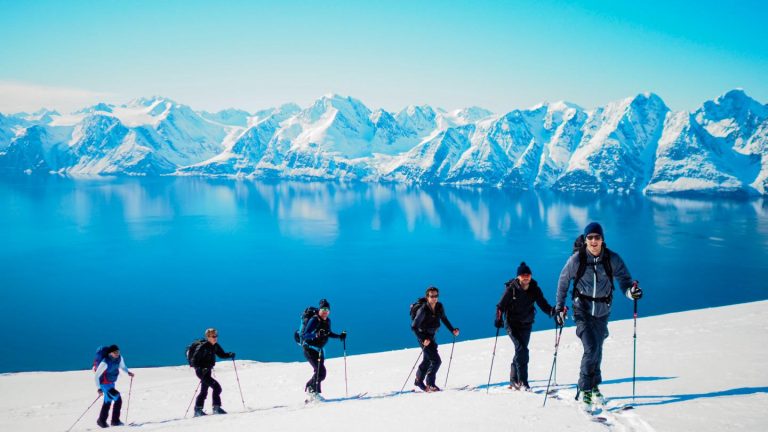
Goxheim, the ski tourist boat that transports top tourists from peak to peak in Norway’s northernmost waterways. Photo: Knut Skoglund/Originalfilm as
The ski tourist boat
Far below are Øksfjorden and Goxheim, the ski tourist boat that transports top tourists from peak to peak in Norway’s northernmost waterways. The mountains northwest of Alta in Finnmark are suitable for summit tours. Øksfjord, Stjernøya and Seilander are among the preferred destinations. Many of the peaks can only be reached by boat because they are located on islands without a mainland connection.
Goxheim is a 74-foot fishing and cargo boat from Hardanger, built in 1940. The boat is rented out with a skipper to tourists who want to experience boating with top hiking experiences in the northern Norwegian mountains. The boat is usually docked in Tromsø and has a sauna, shower, galley and four cabins.
It’s no surprise that Alta is home to awesome beauty.
Awesome beauty
It’s no surprise that Alta is home to awesome beauty. Almost all of Norway is full of mountains, rugged coastlines and natural viewpoints that take your breath away. One of the hidden gems in this area can be found around 25 kilometers to the south of town: Alta Canyon. Carved by the Alta River, Alta Canyon has the distinction of being Northern Europe’s largest. It’s absolutely worth a visit.
It’s also important to underline that it’s not as cold as you might think. Just because Alta is an arctic city, it doesn’t mean that you will have to put up with unbearable temperatures. In fact, Northern Norway has really decent winter temperatures. The Gulf Stream brings warmer air up the coast, so you can expect temperatures that rarely drop below +20 Fahrenheit. The region enjoys a stable climate and good weather, which means you will enjoy many days of clear sky, perfect for your winter adventures.
Compared to other well-known top hiking areas in Norway, Western Finnmark is little visited. The season starts in February and lasts through June, but April and the beginning of May is the best period. By the end of February, you will have more than 8 hours of daylight with beautiful skies. Most summit hikes are around 1,000 meters above sea level and require some summit hiking experience. The easiest way to get there is by plane to Alta and from there by car or boat.
One route in the Alta canyon is an overland hike. It goes south of Alta, past Gargia Mountain Lodge up to the Beskades area of the Finnmarksvidda mountain plateau. The trails follow the gently rising and falling hills of the vidda, and takes you along ridges, down into valleys with waterlogged soil, and across rocky streams.
After just the first hilltop, you’ll be virtually on your own – no cars, no road, no houses, no power lines, no paved trail, and often no other people. It can feel like you are exploring another planet! Here you can hike for hours and everything is calm. You don’t even hear a plane. It cannot be compared to the Alps.
At the end of the trail, the canyon will open in front of you and you can walk right up to (and down into, if you’re not careful) the deep cut.
Compared to other well-known top hiking areas in Norway, Western Finnmark is little visited. Photo: Alta folkehøgskule
Fun guided tour
Another way to the canyon from Alta involves a fun guided tour. You leave from city center with your guide, either in a private car, your own car if you have one, or by bus for larger groups. As the road winds its way through farm valleys, past slate mountains and up onto the vidda, the guide will talk about life in the area, point out sites, and talk in depth about the controversy that surrounded building the dam and the power station. That conflict was a watershed event both for Alta and for the local Sami population, and there are many people in town today that still have strong opinions about the project.
Alta is called the city of the Northern Lights. Photo: Visit Alta
Northern lights
Since Alta is called the city of the Northern Lights, this will definitely be a must see during a trip to this area. The town can be easily reached by plane or by road, so you will have no problem getting there. Also, there are several tour companies, that will make sure you will be in the right place, at the right time, to admire this breathtaking spectacle of nature. Sure, you can try to trace the Northern Lights by yourself, but they are known as fickle creatures, and you might miss them.
If you want to experience skiing on steep terrain in a new type of landscape right down to a fjord, Norway’s northernmost county is a natural choice. Compared to heli-skiing, “ski and sail” is not unreasonably priced either.
Ski & Sail
“Ski & Sail” combines boating and peak touring and is particularly popular with the French and Italians. The tourists live aboard boats that transport them to inaccessible mountain peaks. Norwegian nature with its fjords and high mountains is becoming a new favorite.
In the Finnmark Plateau, the Sami are still the vast majority of the population. Age old Sami handicrafts like cutting grass to fill up the winter shoes and making knives are still a part of everyday life, living side by side with Sami rap groups and cutting-edge Sami artworks.
The Sami language, which is of Uralic origin, is spoken by almost all and is totally different from Norwegian. Photo: Terje Rakke/Visit Norway
The Sami language
The Sami language, which is of Uralic origin, is spoken by almost all and is totally different from Norwegian. Sami language is being taught to children as a first language. In cafes and shops, it is the language of preference, and one can safely speak it when addressing the local authorities. The ATM allows you to withdraw cash in Sami. Guests, however, will have no trouble using English, as it is spoken by all except the most mature.
The High-Level Routes in Northern Norway, written by Tor Kjolberg
Big news has come out of Stockholm in November. As Archaeology magazine highlights, a huge Viking silver hoard was found in a dig underneath an existing Viking settlement – one of the largest silver hoards ever found, and one of the most significant in some years. Read the story, Viking Silver On The Menu Once Again, But Sweden – And Scandinavia – Has A Quiet Antique Tradition.
This has brought a lot of attention to the world of archaeology and antiques, and rightly so – Viking artefacts have such an important impact, and especially so across northern Europe. However, keen observers will know that there’s a very well renowned and veteran antique tradition in the region.
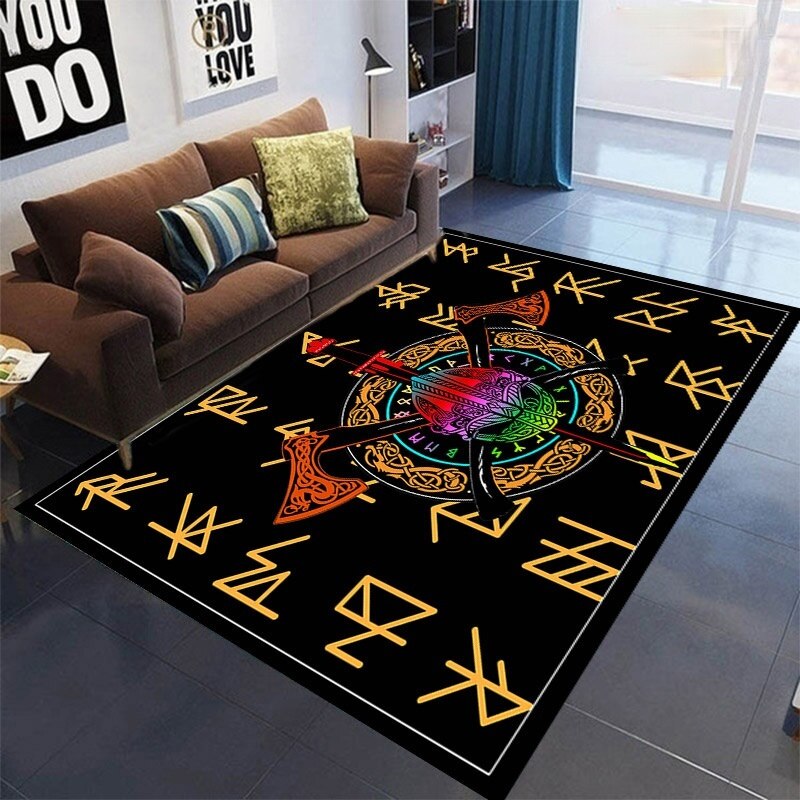
Viking ancient Scandinavian pattern carpet.
Tradition in rugs
One of the most important artisan histories in Scandinavia concerns the matter of rug making. Rugs hold a treasured place in history and antique tradition due to their hard-wearing nature. While properly caring for a rug is necessary to maintain the quality of the product, it’s also true that renovation is relatively easy, enabling owners to preserve a bit of history. As House and Garden Magazine highlights, one of the most important types of rug in history is the Swedish flatweave. Original antiques from the likes of Märta Måås-Fjetterström can fetch up to $25,000 or more, and for good reason. Often designed in studios, they are an important part of Swedish manufacturing history and are a real trendsetter in the antiques world. An example of modern history, from the industrial age onwards, they’re a standout in any home.
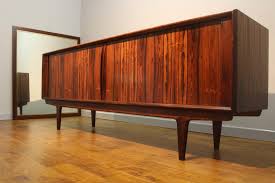
Scandinavian vintage furniture.
A furniture boom
Across the Oresund in Denmark, there has, according to reports, been a surge in the disposal of priceless vintage furniture. According to Fast Company, Danes simply don’t want their vintage furniture, with one collector bringing in 10,000 pieces – many of them antiques. From the 1800s through to the vintage era of the 40s-60s, Danish furniture has long occupied a valuable space in the higher echelons of antique and vintage history. With furniture literally going to waste, there’s an industry popping up that will continue to raise the profile of the Scandinavian antiques.
Anno Museum, Elverum, Norway
Viking Silver On The Menu Once Again, But Sweden – And Scandinavia – Has A Quiet Antique Tradition, read on….
Protections in Norway
Further north and you come to Norway, where Queen Sonja has recently opened a new centre dedicated to preserving antiques. Norway has taken an increasingly progressive path towards the antiques industry in recent years, for instance with the 2017 return of a Buddhist idol to Myanmar. With the establishment of this latest initiative, the royal family will be finding ways to help protect the cultural history of Norway and, crucially, show it off to visitors. There are few better ways to flash off an antique history – especially as it gives visitors the chance to really engage with it and learn the history.
Viking chat dominates the airwaves when it comes to discussions of history. However, the nations that build the Scandinavian region have a lot more to offer than just that. Indeed, the artisan history and protection of antiques that takes place in institutes across the region is a great advert for Scandinavia.
Viking Silver On The Menu Once Again, But Sweden – And Scandinavia – Has A Quiet Antique Tradition, written exclusively for Daily Scandinavian by Karoline Gore. Karoline is a freelance writer from Stoke on Trent in the UK who left the corporate grind when she started a family and has never looked back. She enjoys contributing to a range of online publications on the topics that are important to her.
The National Geographic Magazine has called the Flåm Railway one of the Top 10 Train journeys in Europe. Lonely Planet went even further and called it the best train journey in the world. Today, you can enjoy a combination of a unique train and zipline adventure in Norway. The longest zip line in the Nordic region opened in 2018!
The picturesque train journey on the west-coast of Norway takes you from the fjord-side village of Flåm to Myrdal, covering about 20 kilometers of stunning views of magnificent mountains, rushing waterfalls and beautiful valleys. A one-way journey on the Flåmsbana lasts approximately 1 hour. All journeys include a 5-10-minute stop at the Kjosfossen waterfall. Read more about the Flåm railway here.
The picturesque train journey on the west-coast of Norway takes you from the fjord-side village of Flåm to Myrdal, covering about 20 kilometers. Photo: Flåm Railway
Flåm Zipline
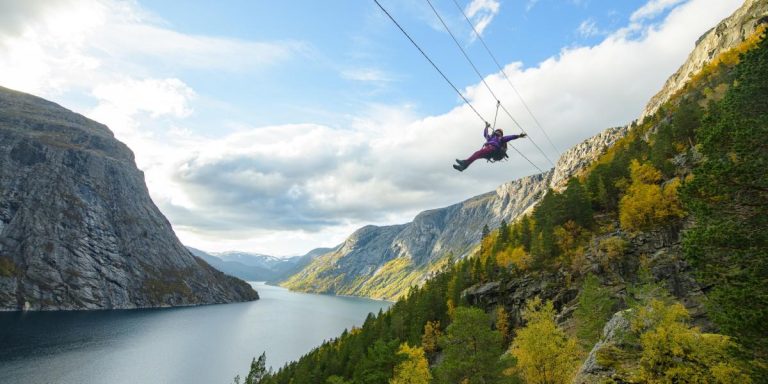
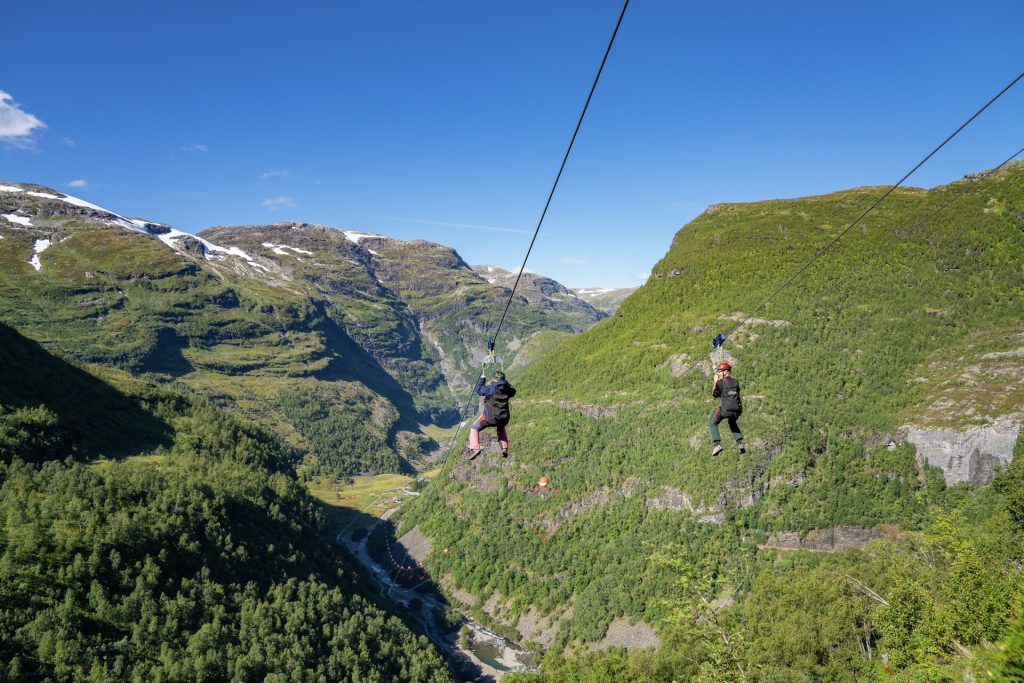
Taking the Flåm railway to Vatnahalsen station, you can experience the longest zip line in the Nordic region, 1381m long. Even the location is spectacular, as it is only accessible by train to Vatnahalsen station and offers a breath-taking view of the Flåm Valley.
You can experience the longest zip line in the Nordic region, 1381m long. Photo: Fjord Norway
Flåm Zipline is located at Vatnahalsen, 820 meters above sea level, where the Flåm railway meets the Bergen railway line. The Flåm railway is the engine for tourism in Aurland municipality. Getting there is part of the adventure and only possible by train. Arriving at Vatnahalsen train station, follow the signs to Flåm Zipline. There you are met by a wonderful view down the lush and spectacular Flåm valley. Standing on the viewing platform, you will surely feel your heart beat a little faster!
Helmets and harnesses are handed out and the skilled crew will give you the necessary instructions before sending you off on the adrenaline filled flight towards the lower station at Kårdal. When in the air, you do not have to think about anything else than enjoying the marvellous surroundings and feel the rush.
Standing on the viewing platform, you will surely feel your heart beat a little faster!
Reaching the end of the zipline at Kårdal mountain farm, a member of staff will help you get off and out of the harness. From here you can either walk or jump on a bicycle (must be rented in advance) and ride the 15 kilometres downhill to Flåm, or you can walk 2,5 kilometers to Blomheller station and catch the next train to Flåm or Myrdal.
Unique Train and Zipline Adventure in Norway, written by Admin.
Feature image (on top): Photo: Visit Norway.
Did you know that Sweden is popular for being one of the best countries in the world for quality of life? Not only that, but the region has stunning landscapes, and the people are quite friendly. So it’s no wonder you want to move to Sweden with your family. Here’s everything you need to know ahead of a family relocation to Sweden.
However, like most countries in the world, there are specific rules when it comes to immigrating to Sweden. To assist you, we’ve provided a short guide on what you need to know before relocating to this beautiful land of opportunities.
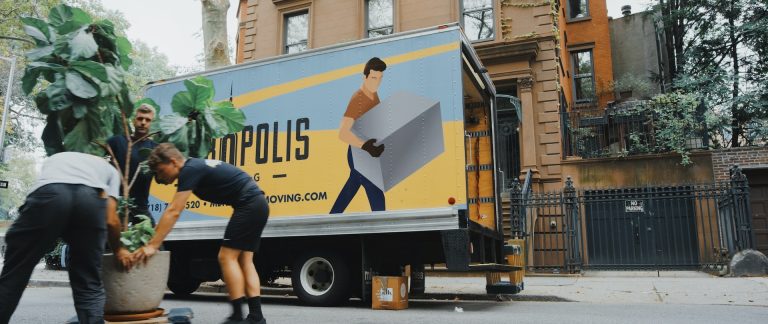
You’ll need to find a company that offers competitive pricing. Photo: Theo Dorp/Unsplash
Using the Right Moving Company
Before you even consider getting Visas or jobs in Sweden, you need to find a company that can move your belongings across the ocean. Look for the best moving companies that offer:
The best prices
Safety insurance in case of theft damage
Various ways to package your belongings
Furniture storage before you arrive in Sweden
One large container to move all your items abroad
The cost of moving overseas can be extremely expensive especially when you’re moving your belongings. So you’ll need to find a company that offers competitive pricing. The average cost of moving a one-bedroom house to Sweden can be $2700.
Everything You Need to Know Ahead of a Family Relocation to Sweden, read on….
When moving to Sweden, you must apply for a residence permit in advance.
The Legal Aspects of Moving to Sweden
When moving to Sweden, you must apply for a residence permit in advance. You can complete your application on the Swedish Migration Agency’s website. If your application is approved, you can travel to Sweden using the approval notification. When you arrive, you can complete the process.
On the other hand, if you’re not working in the country, you can apply for residency if you’re marrying a Swedish citizen or if your parents are citizens. If you are planning on working in the country, then you’ll need to apply for a work permit and secure a job before moving.
Overall, you’ll need the following to apply for a work permit:
A valid passport
Job offered to you
Your salary must be able to support your stay
The employer must offer you a pension and insurance
You should calculate your cost of living before you immigrate.
Plan Your Finances Before Moving
Sweden taxes its citizens. So if you want to move to the country, you must register with the tax agency. This is something you’ll have to do when you arrive in Sweden. To apply, you’ll need your passport, residence permit card, and any documents such as marriage and birth certificates.
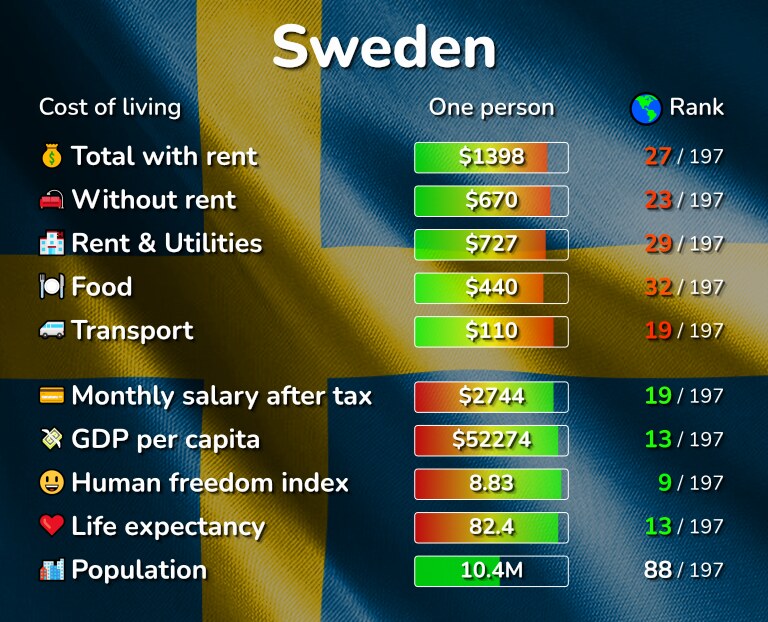
You should also calculate your cost of living before you immigrate. Sweden is one of the most expensive countries to live in, so it’s important to manage your budget accordingly. Here is a table that shows you the average cost of living:
If you have pets, they must have original rabies certificates signed by a certified vet. Illustration: Freepic
Guidelines for Moving Your Pets to Sweden
If you have pets, they must have original rabies certificates signed by a certified vet. Additionally, the rabies vaccine must be 21 days old at the time of your pet’s final health examination.
Dogs must be vaccinated for distemper, Parainfluenza, Hepatitis, and Bordetella. Cats must be vaccinated against Calicivirus, Panleukopenia, and Feline Viral Rhinotracheitis. Other certificates you must have for your pet include:
Microchip Implantation Record
EU Vet Health Certificate
Airline Health Certificate
the health care system in Sweden is public and paid by your taxes.
Healthcare
One of the reasons people love Sweden is because the government looks after its people. With that being said, the health care system is public and paid by your taxes. So you won’t pay for any health care services unless you choose private care.
You may need to take out private health insurance if you’re not yet a permanent resident in Sweden. EU citizens can use their European Health Insurance Card to access state health care during their stay.
You may need to take out private health insurance if you’re not yet permanent resident in Sweden. EU citizens can use their European Health Insurance Card to access state health care during their stay.
Readers interested in learning more about the EHIC can find a comprehensive guide on VisaGuide.World.
Everything You Need to Know Ahead of a Family Relocation to Sweden, read on….
Daycare charges families based on their monthly income.
Childcare and Certifications
Citizens can place their children into public daycare when they reach the age of 1. You must place your children in a primary school when they turn 7. Daycare charges families based on their monthly income. You can also get basic babysitting options or childminding services.
Furthermore, in order to experience the benefits of childcare in Sweden, your kids must be citizens of the EU. Children must have a permanent residence permit, and you must have valid passports and certifications for your child to become a citizen.
Many Swedish people speak English, but you may come across someone who doesn’t.
Learn The Swedish Language
When you move to a country where the first language isn’t English, it’s a good idea to learn the basics of the language before you move. Many Swedish people speak English, but you may come across someone who doesn’t.
Use tools such as Babble to learn the basics of the Swedish language. You’ll then be able to communicate with people, which helps if you’re experiencing an emergency.
Everything You Need to Know Ahead of a Family Relocation to Sweden – Final Thoughts
It can be challenging moving to a new country, especially if it’s located in the EU. But if you use the tips provided in this article, you may be successful in becoming a Swedish citizen.
Everything You Need to Know Ahead of a Family Relocation to Sweden, written dedicatedly for Daily Scandinavian.
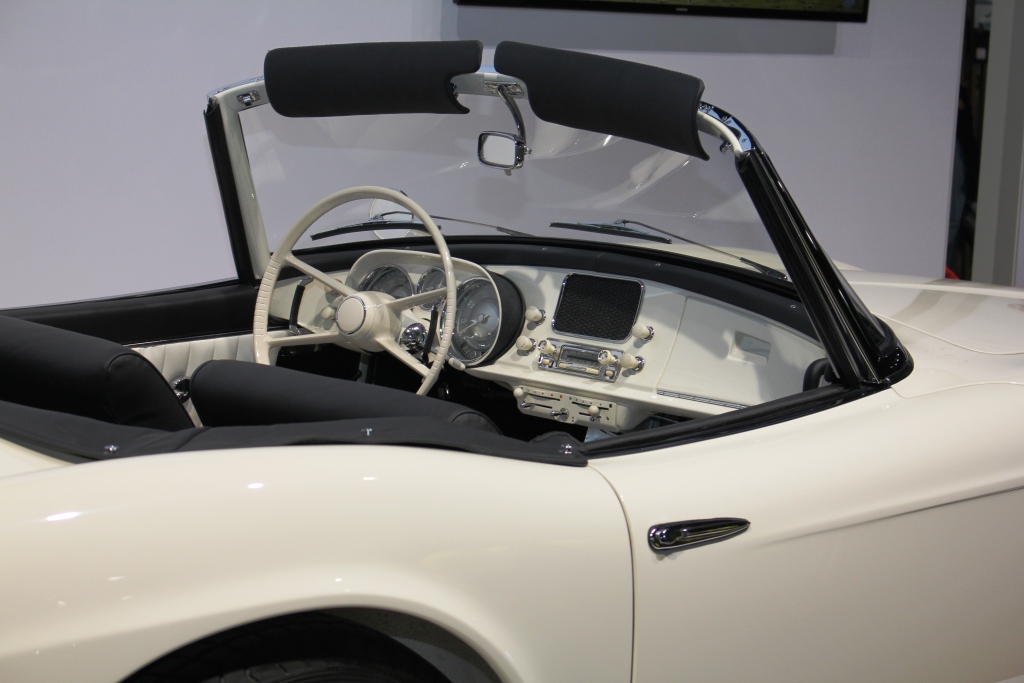
Last month, visitors to the Oslo Motor Show had a once-in-a-lifetime opportunity to watch the world’s most expensive BMW, Elvis Presley’s historical BMW 507. Elvis Presley’s historical BMW 507 was on display at the Oslo Motor Show!
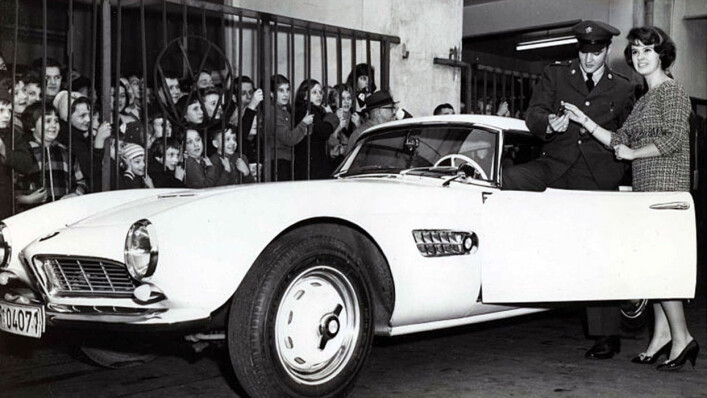
When the «King of Rock & Roll», Elvis Presley, who had his breakthrough in 1956, had to serve his mandatory military service in Germany in 1958, he allowed himself to be seduced by both Priscilla, whom he later married, and a BMW 507 Roadster 1957 model, which he brought back across the Atlantic.
When Elvis Presley dis his military service in Germany in 1958, he allowed himself to be seduced by both Priscilla, whom he later married, and a BMW 507 Roadster 1957 model.
Initially, Elvis wanted a Porsche Spider like the one James Dean had previously owned, but this was impossible to obtain, and the choice finally fell on the BMW 507 with chassis number 70079, a car previously owned and driven by racing driver Hans Stuck.
Elvis Presley’s Historical BMW 507 On Display at the Oslo Motor Show! read on….
After a few years, Elvis sold the car, and it was eventually forgotten. However, several decades later, a treasure hunt started for the legendary car, and fortunately it was found – albeit in poor condition. The new owner, inspired by the Elvis Presley hit “Return to Sender” decided to sell it to BMW in 2014.
The BMW waqs “returned to sender” in 2014. Photo: Tor Kjolberg
The BMW Classic Group started the restoration and found, among other things, that the car had a total of 8 layers of different colors. The original engine, gearbox and rear axles could not be found and had to be rebuilt. The engine was rebuilt with original parts and again the car was equipped with a 3.2-liter engine with 150 horsepower.
The interior was in a terrible condition and the original seats could not be saved. In order for this to be as authentic as possible, they had to build the seats completely from scratch, in the old, traditional way.
Finally, the car was painted in the white color it had when Elvis himself bought the car in 1958. With a price tag for the car and restoration of around NOK 180 million (USD 18 million), this is one of the most valuable cars in BMW’s collection today.
We asked Tommy Larsen, project manager at Oslo Motor Show and MC Fair, how he managed to bring the car to Norway and the Oslo Motor Show.
Today, the price tag for the car and restoration is around NOK 180 million (USD 18 million). Photo: Tor Kjolberg.
“Oslo Motor Show has for a number of years had a close collaboration with BMW Classic in Germany. We saw the car on a visit to Germany a few years ago. The car is very rarely shown at exhibitions outside Germany, but we were lucky to borrow the car for the Oslo exhibition. The delegates who accompanied the car from Germany and participated at the show were Norbert Knerr from BMW Welt and Prince Leopold von Bayern.
The possibility to display the car is based on a long and trusting collaboration with BMW Classic over many years and it took time before they decided to lend us their perhaps most valuable car.
The car was definitely an attraction.”
Elvis Presley’s Historical BMW 507 On Display at the Oslo Motor Show! written by Tor Kjolberg
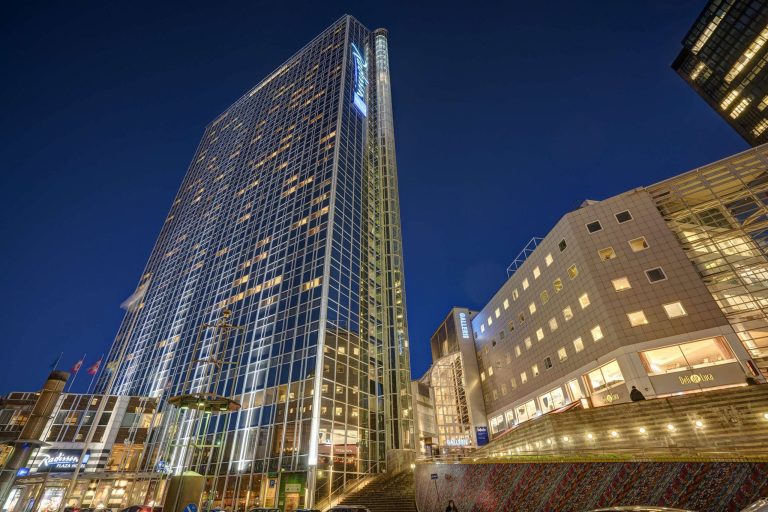
Hotels are well versed in making their guests feel on top of the world but in Oslo, the capital of Norway, the Radisson Blu Plaza Hotel with the newly refurbished “The Top” Bar & Restaurant also allows its guests to wine, dine and sleep one hundred and ten meters above the city.
110-meter high Radisson Blu Plaza in Oslo
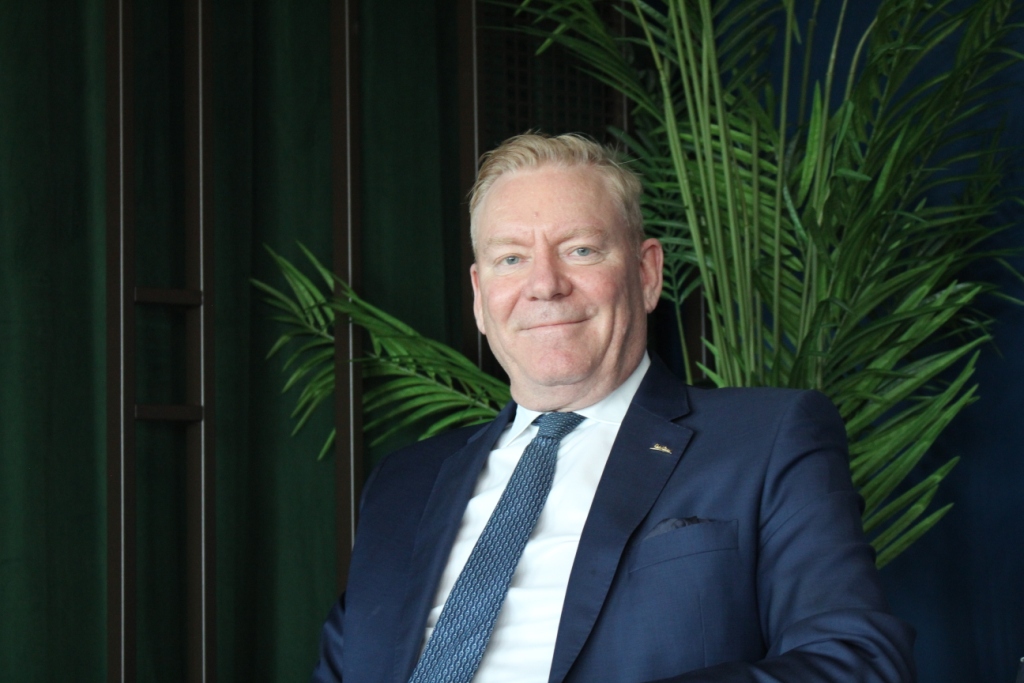
Radisson Blu Plaza Hotel in Oslo officially opened its doors in March of 1990 by the late King Olav V of Norway. Managing director Tarje Hellebust (62) has been responsible for the management of the 678 room hotel including 23 suites and 230 staff members since 2002. When he was appointed, he had a long list of fresh ideas and suggestions for reviving the hotel into the future.
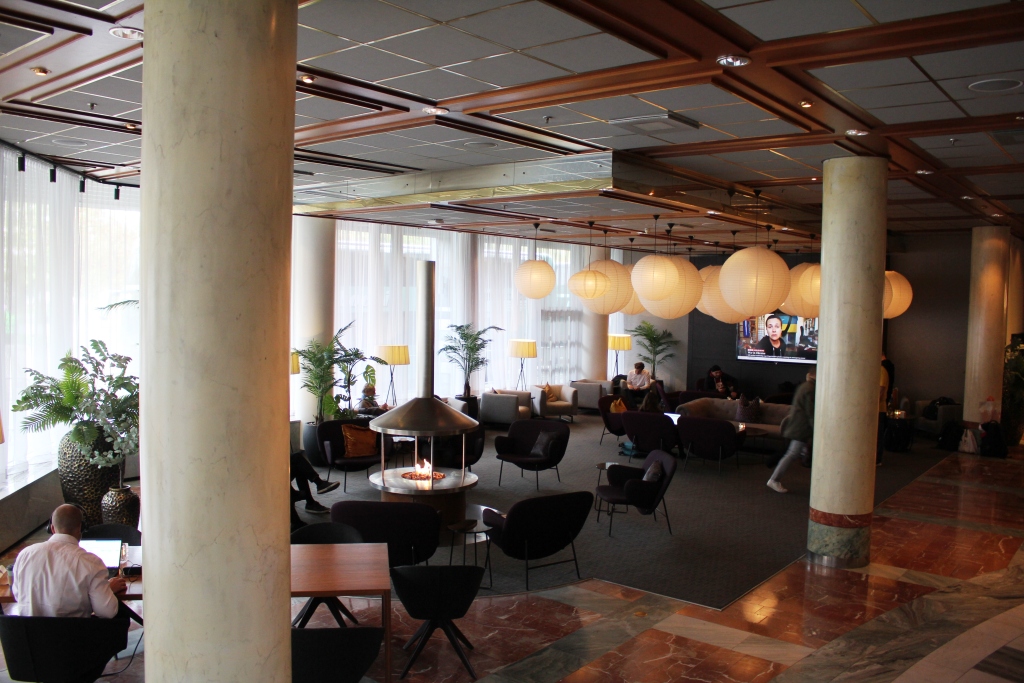
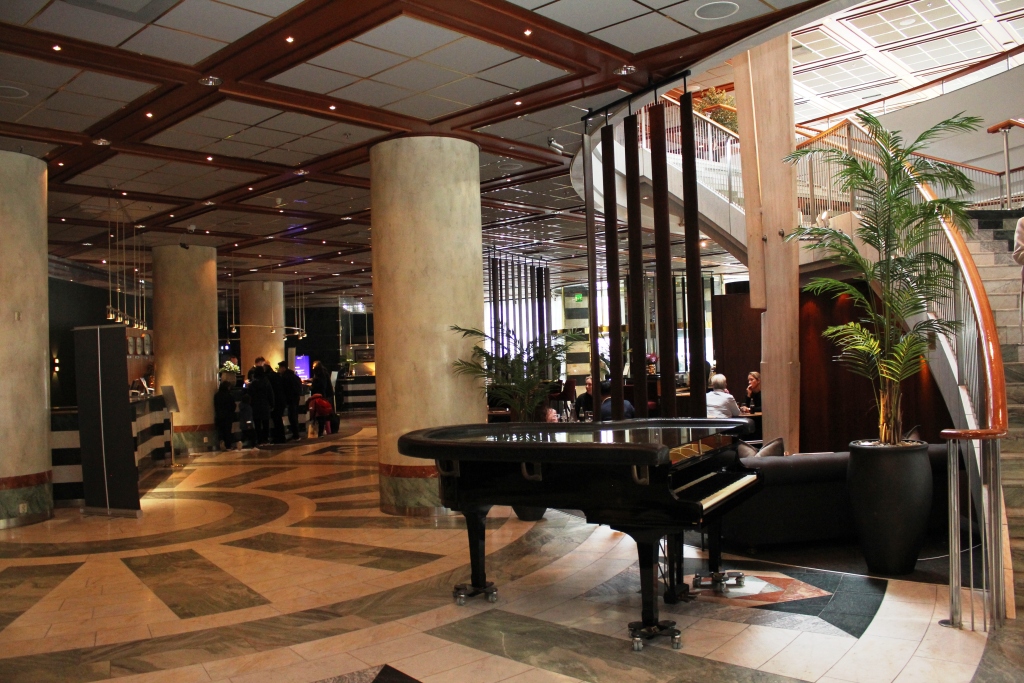
First of all a critical look was taken at the arrival experience and the reception area, where the most eye-catching elements were the huge grey concrete columns, a small kiosk and dark walls, making the area look like any other small hotel reception. They transformed the concrete columns into stand-out marble design elements and opened up the welcome sensation of the whole lobby. Even Marie Antoinette had faux marble painted in her opera house at Versailles.
Most striking views
Today, visitors to the rapidly expanding capital of Oslo have access to some of the most striking views in the city. Next summer, guests will also be able to enjoy a 55-meter-long open-air terrace on the roof of the 37 story Radisson Blu Plaza hotel.
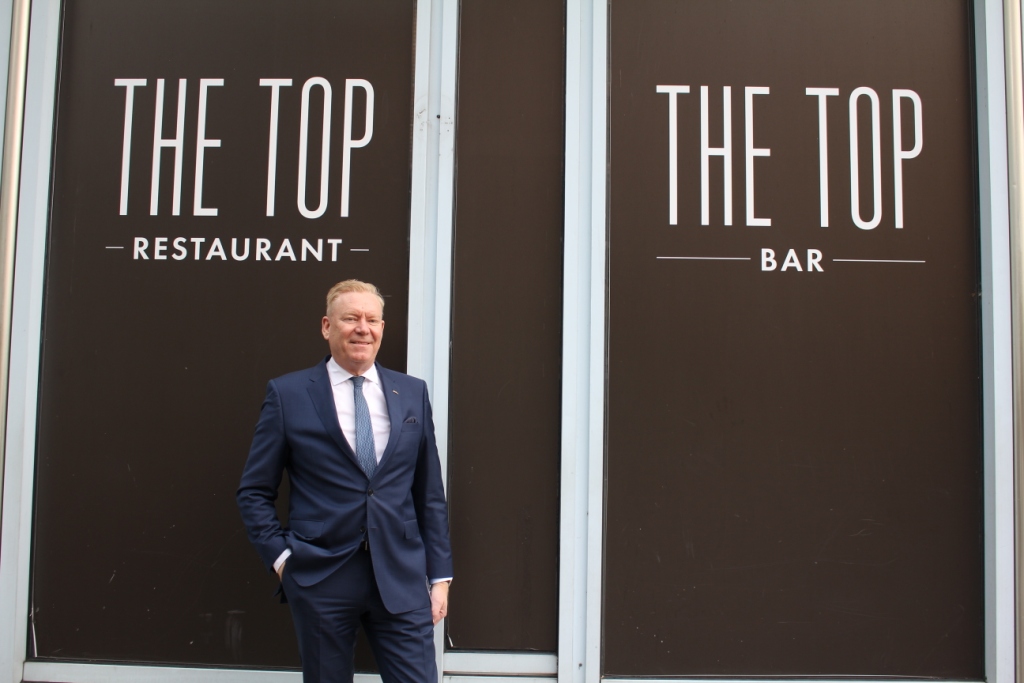
Fourth-generation hotelier Tarje Hellebust, CEO of Radisson Blu Plaza Hotel.
Oslo Plaza is conveniently located next to the main train station with directly access to the airport express train, several of the capital’s new attractions, like the new Munch Museum, The Public Library (Deichman), and the National Opera House, the Barcode buildings and monuments as well as the multi-purpose indoor arena Oslo Spektrum, known for hosting major national and international artists.
Fourth-generation hotelier
We meet with fourth-generation hotelier Tarje Hellebust, whose hospitality background includes a Chefs apprenticeship at Hotel Continental in Oslo, 1/2 a years as sommelier on The Royal Viking Star cruise ship, a Master degree from the University of Stavanger and front office management of the first Radisson Blu Hotel in Oslo (Scandinavia at Holberg plass). Following this, he was posted several years in Stockholm, London, Helsinki and in Manchester. He has been with the Radisson Hotel Group for more than 40 years, and now celebrates his 20th anniversary as general manager at the Radisson Blu Plaza Hotel.
From the receptionRest area at reception.Ground floor rest areaVirw from rest area towards reception.
“I am so lucky and privileged to have a job where no day is the same ‘day-in-and-day-out routine’,” Hellebust says. “At this iconic flagship hotel, I feel that my main task is to always be open to new ideas and thinking, be a change agent and facilitate development and growth of our employees. This way we secure that we meet and even exceed our guests’ expectations. I really look forward to every day I go to work, and appreciate the relations and interactions with both guests, employees, owner and operator alike.
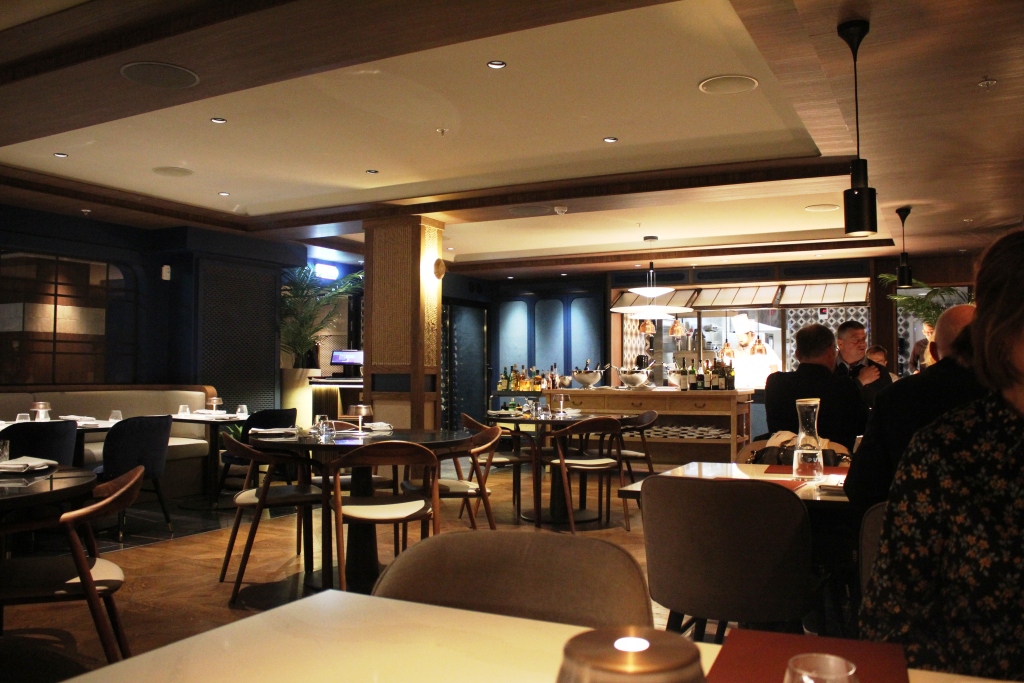
From “The Top” Restaurant.
Investing heavily in the top floor
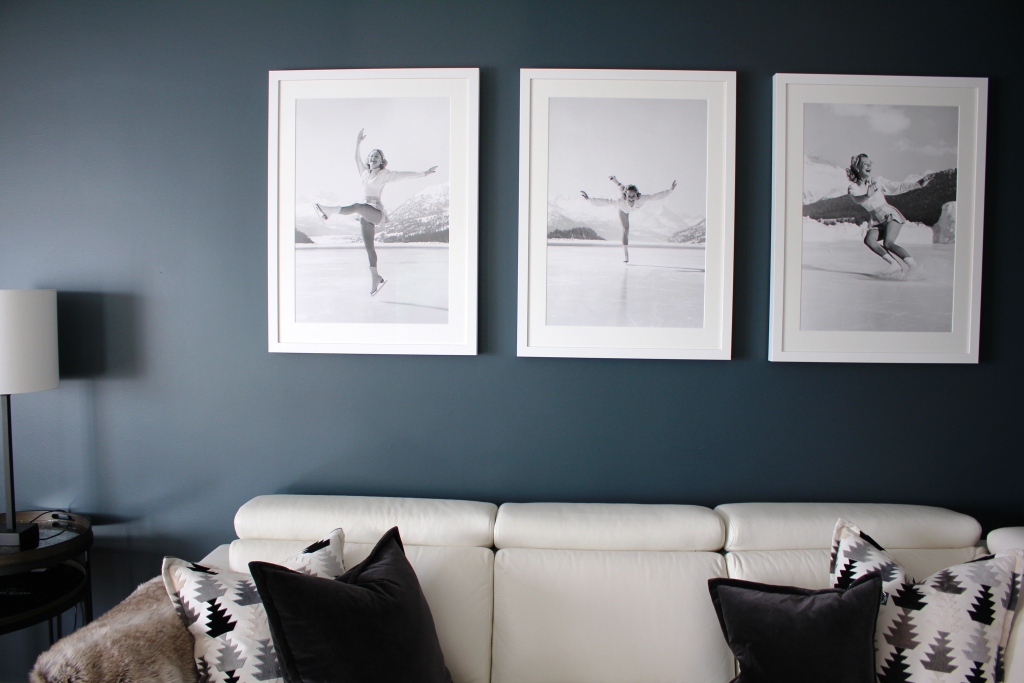
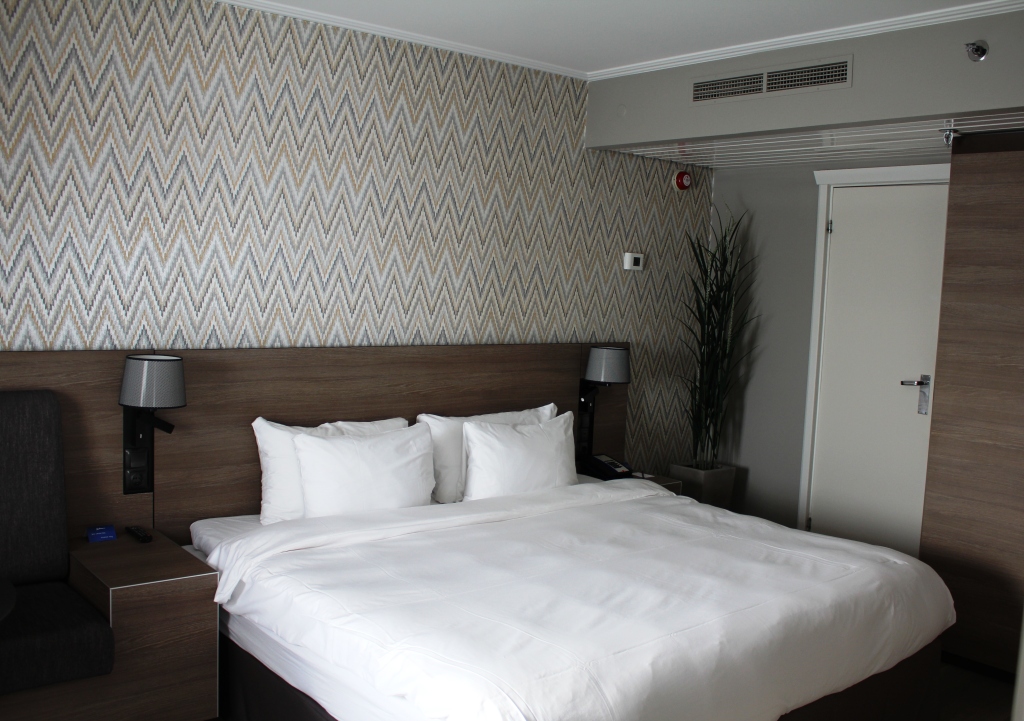
Radisson Blu Plaza has 678 well-appointed rooms and suites that offer breathtaking views of the city and the fjord. The bathrooms feature contemporary amenities including stand-alone bathtubs and showers stocked with a full set of refreshing bath products. We stayed in the Sonja Henie Suite.
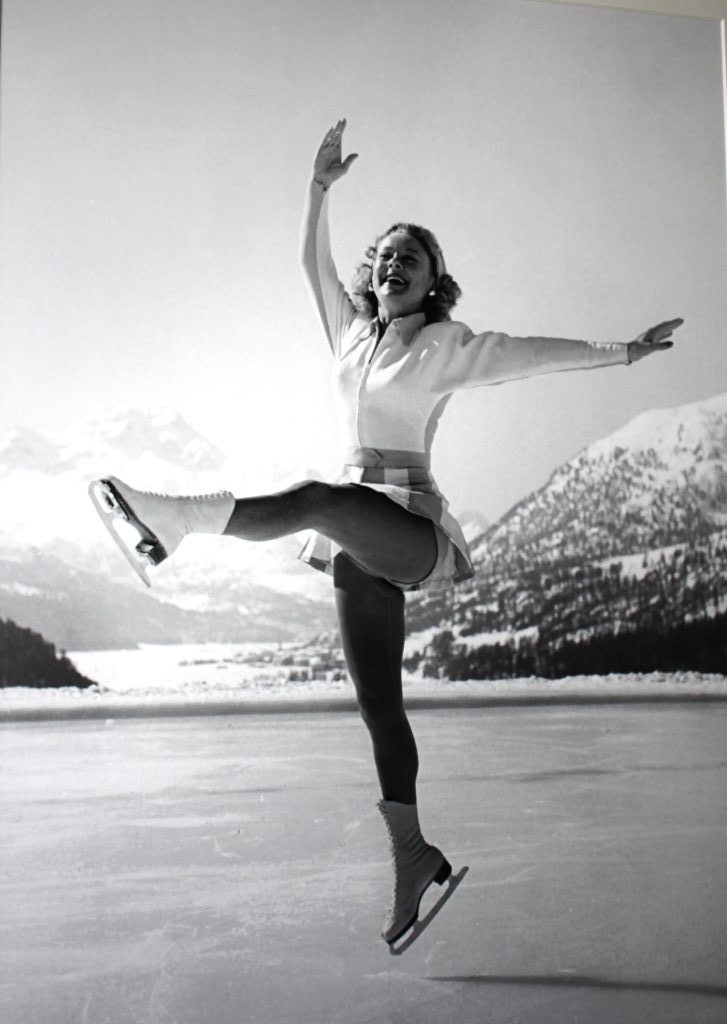
Norway’s Queen of Ice, Sonja HenieDetail from the Sonja Henie SuiteThe bedroom, Sonja Henie SuiteKing size bed.
The hotel owner, Wenaasgruppen AS, has recently invested heavily in the hotel’s top floor with a new bar and restaurant designed by Projector Singular architects, Madrid. The refurbished areas are located high above the hustle and bustle of the city on the 33th and 34th floor, offering a cozy space where guests can enjoy a wide selection of drinks and up to date fine dining.
Head Chef Mads Granlundin the open kitchen.Our headwaiter and somellier Daniele had composed our dinner and the wines were exclusively selected.
The restaurant is located on the 33th floor, offering a variety of cuisines, including local Nordic specialties and guests can enjoy striking city views in a modern dining environment under supervision of Head Chef Mads Granlund. Daniele, who was our head waiter and sommelier for the evening, composed our menu:
Deleicious accompanying breadOne of our starters.
Starters: Scallops from Frøya. Trout roe. Hollandaise sauce infused with cured ham. Under the hollandaise sauce, fermented summer cabbage with pickled mustard seeds and on the very top, jalapeno slices.
Veal tenderloin.
Main dish 1: Veal tenderloin. Veal brisket, corn mash with sauteed corn kernels. Rosette cabbage and pickled black trumpet mushrooms.
: Confit turbot.
Main dish 2: Confit turbot. Squid. Grilled kohlrabi. Turbot & chicken stock and a king oyster mushroom at the bottom.
Side dish: Pommes Anna potato with potato and chanterelle foam.
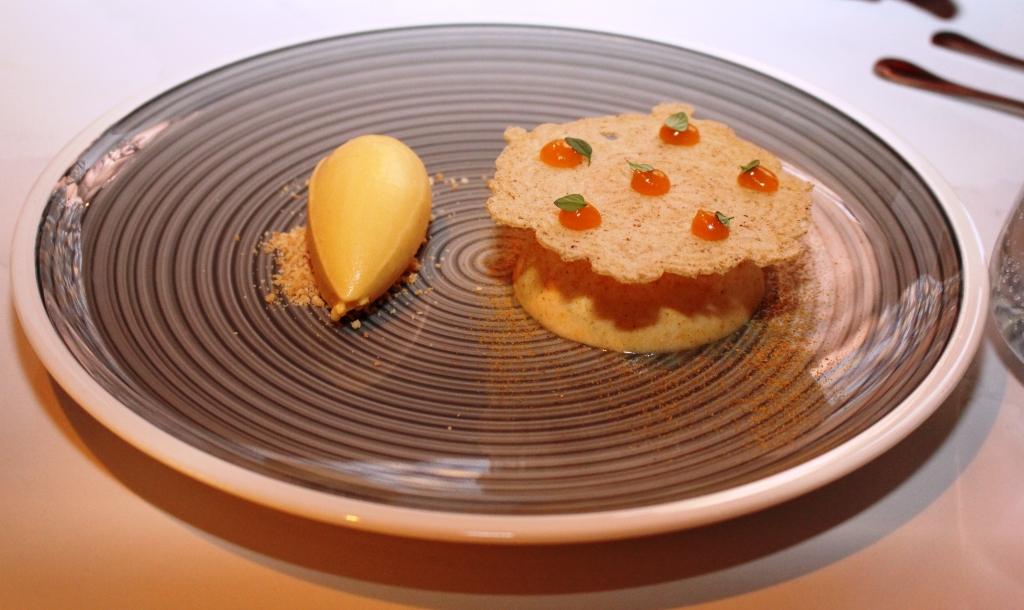
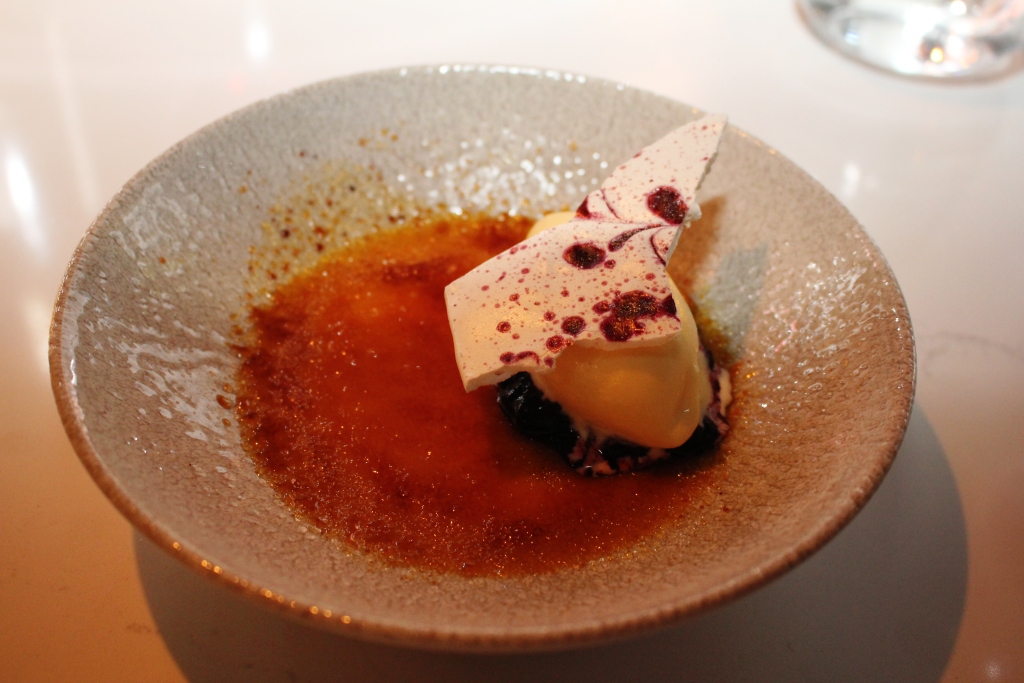
Dessert 2: Caramelized almonds covered in cloudberry ice cream with strudel on top and cloudberry gel on top of the strudel.
Not to forget the petit fours consisting of lavender and rhubarb toffee chocolate with cranberry powder.
Accompanying wines.
Can only be described as heavenly – up in the sky.
Thank you, head Chef Mads Granlund!
Next summer, the outdoor rooftop terrace opens for guests and a brand new “Chicago Pizza & Brew” with entrance on the ground level will serve delicious pizzas, beers and drinks where guests also can view Champions league, Formula 1 and soccer games on big tv screens.
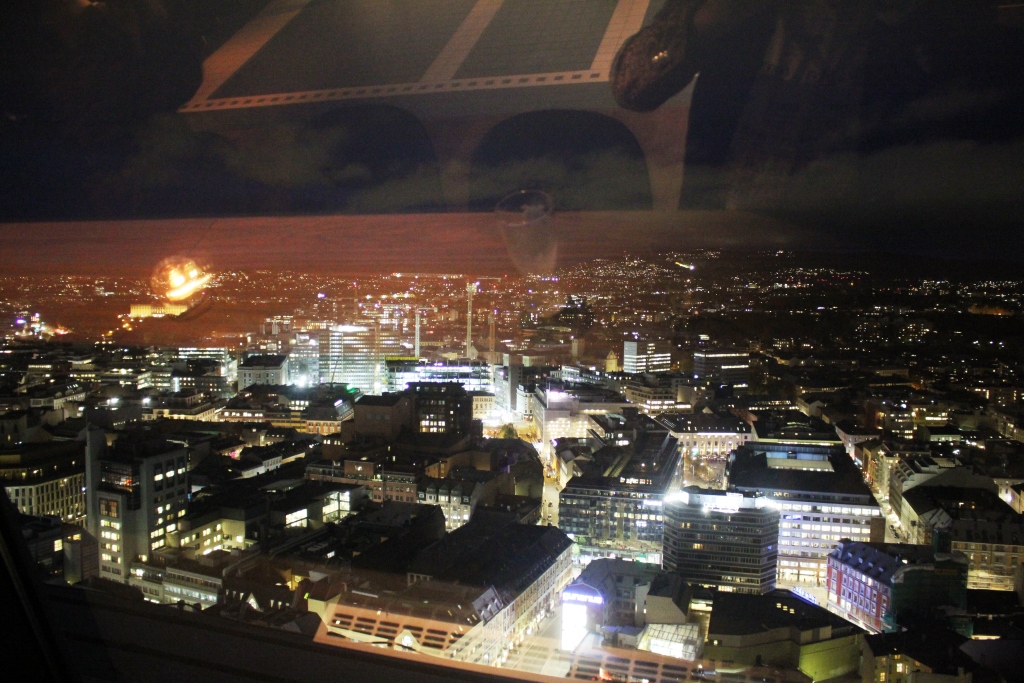
Night virw from the room.
A feeling of New York in the middle of the capital of Norway
“It’s fantastic to finally be able to invite guests to evenings they won’t forget soon here at the top of the city of Oslo. With floor-to-ceiling windows 110 meters above the city and a Nordic-international menu in both the restaurant and bar, served with friendly service, the aim is to give our guests a kind of New York- ish feeling here in the middle of our Norwegian capital,” says Tarje Hellebust and adds, “This development is a kind of crowning achievement and something I have been passionate about and dreaming of for long time.”
He tells us that no other lifts in a Norwegian building brings guests more kilometers per year than the 10 lifts (one outside on the facade) at Oslo Plaza.
The outdoor rooftop terrace opens for guests next summer. Illustration by architects.
“The rooftop bar covers the entire 34th floor and thus gives guests the absolute best view of the entire capital. We have improved the menu for cocktails & drinks and have our own DJ on Thursday, Friday and Saturdays. We can proudly say that this is Oslo’s most spectacular rooftop bar,” he adds.
Don’t ignore the ground floor lounge
In addition to the reception Lounge, Radisson Blu Plaza boasts two restaurants that offer authentic local and international flavor. We tested a selection of cocktails in the lounge all made by assistant F&B Manager and bartender Eskild.
We tested a selection of cocktails in the lounge all made by assistant F&B Manager and bartender Eskild.
The image above shows from left to right: Hot raspberry, Passion, Berry Mule, 20 Century, Smokey honey, Norwegian Autumn and Espresso Martini. Admittedly, we did not taste all of these.
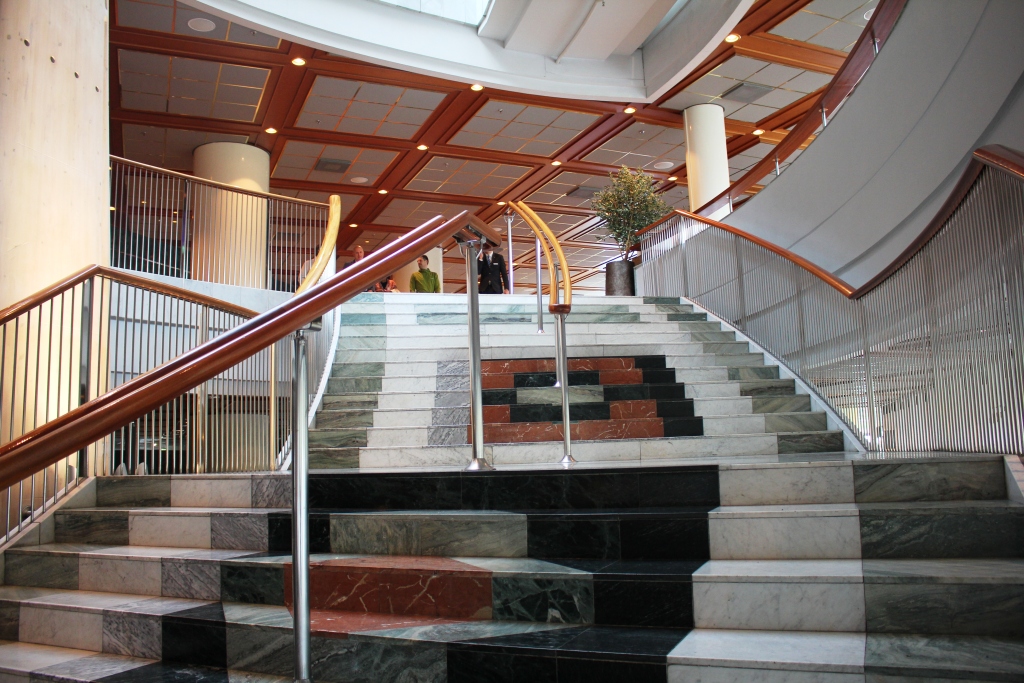
Stairways to the conference center.
Ideal for large events
The Radisson Blu Plaza Hotel provides 30 conference rooms totaling 1,800 square meters and can host up to 1100 guests. All rooms provide state-of-the-art technology and free high-speed wireless internet access. The hotel also offers indoor access to the adjacent Oslo Spektrum and partners with the grand arena to stage large events, including international trade fairs. A dedicated meetings and events coordinator is on hand to help you organize every detail.
High society
No wonder, Radisson Plaza is the preferred hotel for superstars from all over the world. The list of celebrities includes the Norwegian King and Queen, Boris Jeltsin, Yassir Arafat, President Bill Clinton (twice), Sir Elton John, Robbie Williams, Monserat Caballe, Cathlyn Zeta Jones, Michael Douglas, Willie Johnson, The Rolling Stones, Anthony Hopkins, Jessica Lange, Jenifer Lopez, Tom Cruise, Salma Hayek, Will Smith, Donna Summer, Simply Red and Sting amongst others.
Radisson Hotel Group
“My impression is that skyscraper hotels are emerging as a trend in the luxury segment,” says Hellebust. “Radisson Blu Plaza is a flagship hotel under an international brand, Radisson Blu, the only true international hotel brand represented in Norway. Radisson Hotel Group is one of the world’s largest and most dynamic hotel groups with more than 1,400 hotels and is expanding rapidly. The ownership structure varies; some hotels, like ours, are on management contract, some are leased and some are under a franchise agreements. Radisson Park Hotel at Fornebu, which opened in 1971, was the first Radisson hotel in Norway, whereas The Radisson Collection in Copenhagen was our very first hotel to open back in 1960 .”
Where does your energy come from?
“I think the energy comes from achieving something, big or small, seeing and perhaps having a small part in people growing and developing in their roles, seeing guests thoroughly enjoy themselves, and achieving milestones in our plan and celebrating these, and move on to the next… these aspects are vital for me.”
What are you most proud of?
“I have to admit that the pandemic time was tough, even a mental challenge at times. Unfortunately we had to lay off some 100+ great employees and even close the hotel for months. However, it was a game changer, I don’t think the hotel industry will quite ever be the same again and we could sort of “start from scratch again in a sense”. When we reopened, we had a completely new perspective on management and operating structures. But all in all, I am proud that we have managed to adapt to various ups and downs. All things considered, I feel that we have contributed to putting this iconic flagship hotel on the map again in a good way, and being geared for the future.”
“My impression is that skyscraper hotels are emerging as a trend in the luxury segment,” says CEO Tarje Hellebust.
Describe your greatest challenges?
“The unpredictability both on a macroeconomic and global level these days. The uncertainty and so constantly having to adjust, – what will tomorrow bring? I am also thinking of all our young employees who understandably ask themselves (and us) questions along the lines of “do we have safe jobs? Will I be able to pay the electricity bills, will there be peace soon”? We as leaders have to deal with concerns like this and try and create a certain calm towards these issues and show leadership and empathy with our fellow employees.
And I cannot fail to mention the uncertain economic conditions. Before, 52% of our income came from the foreign segments. After the pandemic, the main focus has changed to leisure private individuals, weekend guests and short city-breaks – often Norwegians and Scandinavians. Fortunately, we still have many international guests and this is again increasing rapidly as we speak.”
What about sustainability?
Our management team has always been environmentally conscious. Radisson Blu Plaza Hotel was the first hotel of size to receive the Norwegian Swan Eco label for our consideration of the environment. Our former Environment Minister Børge Brende was impressed when he visited us in 2003 and handed us the award during a ceremony here at The Top. Even then, our philosophy was that thinking green and sustainability was good, not just for the planet, but also for business; these days this is taken for granted and rightfully so.”
What should your hotel guests see in Oslo?
“Staying with us at Oslo Plaza gives you easy access to all the nearby city attractions as well as the suburban nature, all within walking distance. I strongly recommend a stroll up to Grünerløkka, where you will find an array of small restaurants, wine bars and a cozy semi-urban environment and atmosphere.”
On Top of the World in the Capital of Norway, written by Tor Kjolberg.