Many factors contribute to a country being healthy or unhealthy. Good health is more than expensive supplements and fruit juices. Generally, the healthiest countries are developed, have access to quality healthcare and clean drinking water and have lower rates of pollution. Read about the 5 Reasons why Scandinavia is one of the healthiest regions in the world.
The Bloomberg Global Health Index 2019 ranks 169 of the healthiest and unhealthiest economies in the world; Using a variety of factors each country is given a rating out of a possible top score of 100. Sweden and Norway are two of the Top 10 countries in the world. In addition, Norway has some of the world’s longest-living people. Let’s dive into some possible reasons:
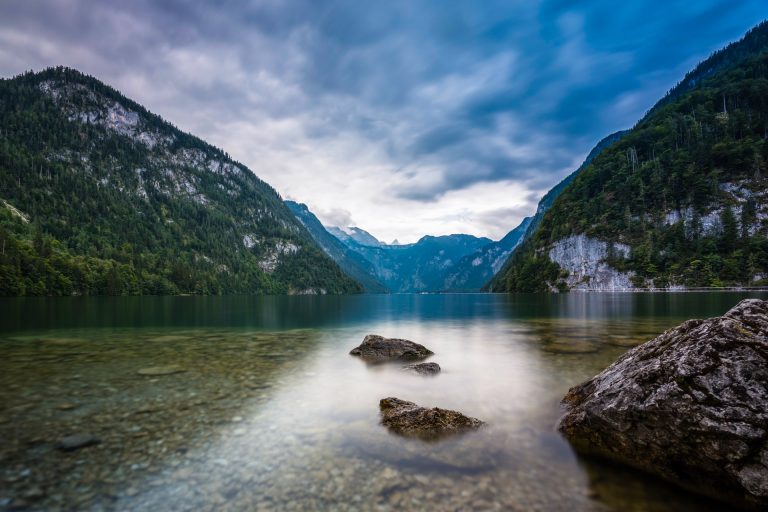
1. Friluftsliv (Outdoor life) Norwegians spend as much time outside as possible. In spite of much rain, or that the sun doesn’t even rise for three months in the northern part, Norwegians are still dedicated to the cause of getting outside. “Bad weather doesn’t exist – only bad clothing,” they say. They know outdoor life will improve their mood, mental health and emotional well-being.
it is customary in Sweden and Norway to have a “stuga” or “hytte” in the countryside, where they spend family time in pure, unadulterated nature. Most Norwegians and Swedes enjoy the sense of freedom and the naturally good feeling of growing up picking berries and wild flowers in the forests and mountains. Fishing, mushroom hunting, hiking, canoeing, kayaking and swimming in the lakes are good memories for most Scandinavian adults.
According to the Bloomberg report, outdoor exercise is more popular than indoor gyms in each of the countries ranked 1 through 5. Photo: Colin Moldenhauer
2. Outdoor exercise According to the Bloomberg report, outdoor exercise is more popular than indoor gyms in each of the countries ranked 1 through 5. The healthiest countries have a variety of traditional indoor and outdoor exercise activity options, but to add to this they also maximize the movement in everyday activities such as walking to the store, working in a garden, riding a bike to work, and family strolls just for fun.
Overall health and well-being is largely determined by what one eats. Photo: Louis Hanset /MIPD
3. Diet Overall health and well-being is largely determined by what one eats. Scandinavians (and in particular the Swedes and Norwegians) has managed to refrain from the conveniences of the Western style diet to stay true to more traditional culinary traditions over the passing years. They consume diets that include considerably fewer processed foods that are lower in unhealthy fats while being higher in fruits, vegetables, fiber, and lean proteins.
Dinner is served early in Norway, and eating together as a family is important. Families in Norway usually eat at 5 p.m., since most people work from 8 a.m. to 4 p.m. After getting off of work, most families pick up their kids from school and then go home to eat their biggest meal of the day.
The Norwegian government introduced a sugar tax almost a century ago. Photo: Rod Long
4. A dedicated government In a bid to keep the nation as healthy as possible, the Norwegian government introduced a sugar tax almost a century ago. The government vowed to reduce the country’s sugar consumption by 12.5% by 2021. Within the last ten years, there was a 27% decline in sugar consumption and the Norwegians consume far less sugar than the rest of the world, at 27 kg every year, whereas America’s consumption is 34 kg.
On a survey by Internations, Norway is ranked the 3rd best country regarding work-life balance. Photo: LinkedIn Sales Solutions
5. Work-life balance On a survey by Internations, Norway is ranked the 3rd best country regarding work-life balance. Expats in Norway are highly satisfied with their work-life balance (72%) and their working hours (77%). In fact, they only spend an average of 42.9 hours per week at work, which is 1.4 hours less than expats in full-time jobs worldwide (44.3 h).
Norwegians take their relaxation just as seriously as their work. Offices rarely stay open after 4 p.m. Working on weekends or overtime is quite literally unheard of in Scandinavia (and in particular in Norway). It is neither valued nor deemed necessary. In most countries, people live to work. In Norway, they work to live. Family takes priority over staying at the office. Employers are required by law to offer 25 paid vacation days per year, plus public holidays. It is thereby common in Norway to take off an entire month in the summer. During this time, business slows down and people rarely check emails.
According to the Bloomberg report, the top 10 healthiest countries by population for 2020 are: Spain, Italy, Iceland, Japan, Switzerland, Sweden, Australia, Singapore, Norway and Israel.
Due to the government’s continuing efforts to make unhealthy snacks and drinks unappealing to the nation, Norway has proudly ranked in the top 10 healthiest nations for many years.
5 Reasons Why Scandinavia Is One Of The Healthiest Regions In The World, written by Tor Kjolberg
Sweden, even though it’s a small country, is known for several achievements. However, many people don’t realize that this country is high on the UNESCO list of countries with World Heritage Sites. Sweden has 15 UNESCO sites in different parts of the country considered incredible value to humanity. Here are 8 UNESCO sites you must see In Sweden.
These sites are listed with some of the most popular sites globally, such as the Great Wall of China, Egypt’s Pyramid, the Acropolis, and other remarkable locations in the world. This article discusses a few of these UNESCO sites in Sweden.
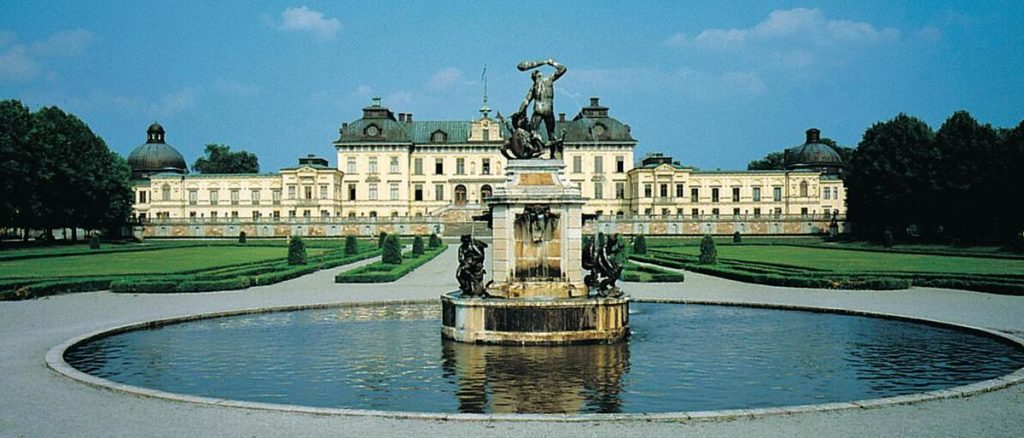
Drottningholm castle has been a UNESCO World Heritage Site since 1991. Photo: Store norske leksikon
Royal Domain Of Drottningholm This has been a UNESCO World Heritage Site since 1991. Located in Lake Malar, on an island within the suburb of Stockholm, this 1766-built theatre, well-preserved castle, and Chinese pavilion is one of the best examples of the northern European royal residence in the 18th century. The design of this castle was inspired by the Rococo and Baroque styles that were trendy at the time and the Palace of Versailles.
This castle remains the private residence of the royal family of Sweden today. However, visitors have free entry to the building and the significant parts, such as the reception halls.
Karlskrona port is built with fortifications, harbor, naval dockyard, with several installations in different parts of the historic town. Photo: UNESCO
Naval Port Of Karlskrona This site is situated in the southern part of Sweden and dates as far back as 1680. This well-preserved naval port is an excellent example of what a European naval town looked like in the 17th century. There are not many dockyards anywhere, with docks and buildings explicitly designed for constructing sailing warships. This is what you have in the Naval Port of Karlskrona.
This port is built with fortifications, harbor, naval dockyard, with several installations in different parts of the historic town. Karlskrona city has many places for people to stay and is very accommodating with the sea view. Visitors also have a variety of bars, cafes, and restaurants to choose from.
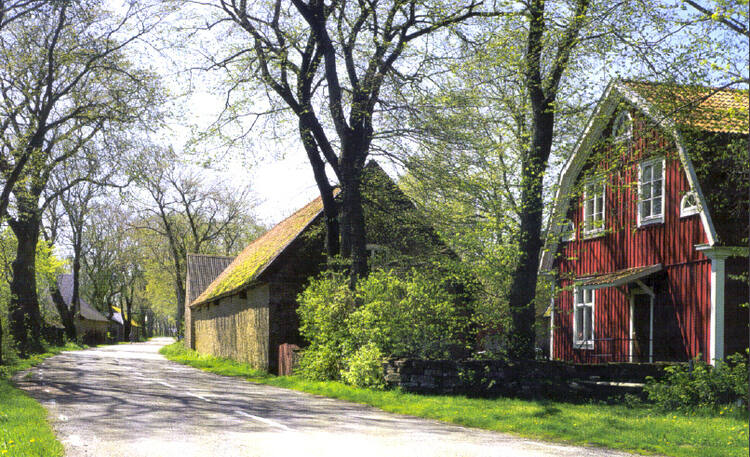
The southern part of this city has a large limestone plateau dominating that part of the land with a relatively dry climate. Photo: UNESCO
Agricultural Landscape of Southern Öland Öland, a famous city off the southeastern coast of Sweden, is a well-known summer destination. This island is also where the summer residence of Sweden’s royal family is located, so you should not be surprised if you run into one of them in this city during the summer.
The southern part of this city has a large limestone plateau dominating that part of the land with a relatively dry climate. While these physical constraints exist, this land has been inhabited by people that have adapted their life to this island for 5000 years. According to custom essay writing, you can reach this island from Kalmar via a six-kilometer bridge.
Birka and Hovgarden also have a museum, prototypes of old houses, and many facilities around this site for visitors. Photo: UNESCO
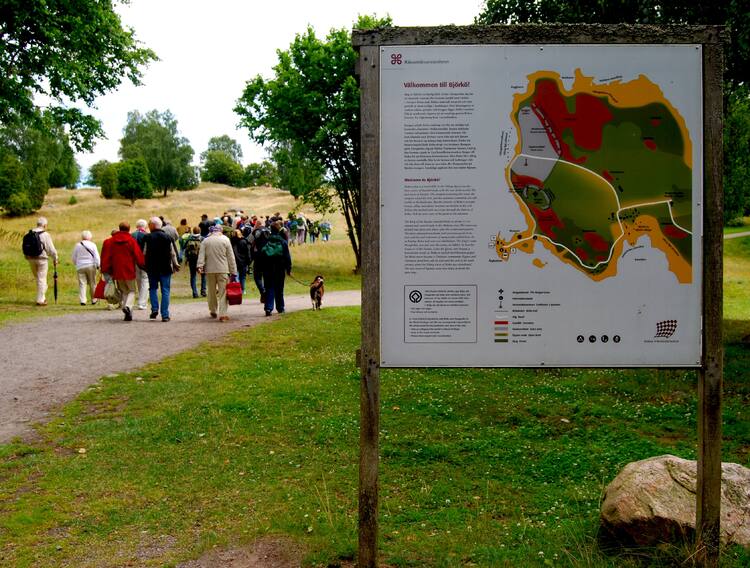
Birka and Hovgarden These are two distinct islands, the Adelson Island, and Bjorko Island. This island jointly occupies a well-preserved archaeological site where you can find some of the traces from the Viking age in this region. Birka was a significant town within Europe at the time because of its trading and commercial activities. It also hosted the first Christian gathering in Sweden in 831, led by St. Ansgar. It also has a museum, prototypes of old houses, and many facilities around this site for visitors. However, the archeological site itself doesn’t have any buildings.
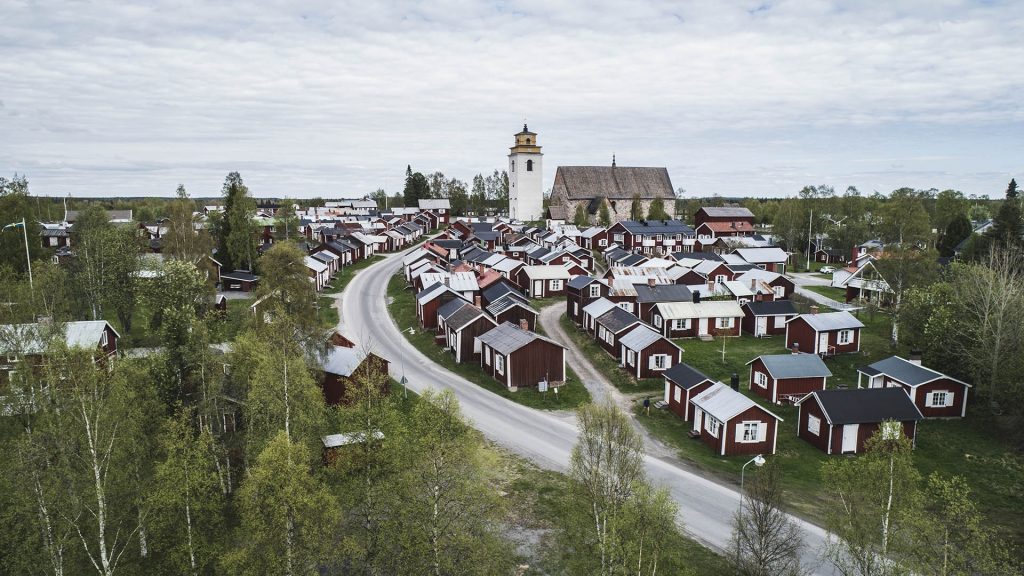
Church town is a type of unique village found around the north of Scandinavia. Photo: Swedish Lapland
Church Town Of Gammelstad, Lulea Lulea, a famous city in the northern part of Sweden, is known to house one of the most-preserved church towns in the world. Church town is a type of unique village found around the north of Scandinavia. It is made of wooden houses to house worshippers from very distant places and face unpleasant travel conditions. These houses were used mainly on Sundays and when there are religious festivals. The town of Lulea still has 434 wooden houses in existence from the 15th century when the church built them.
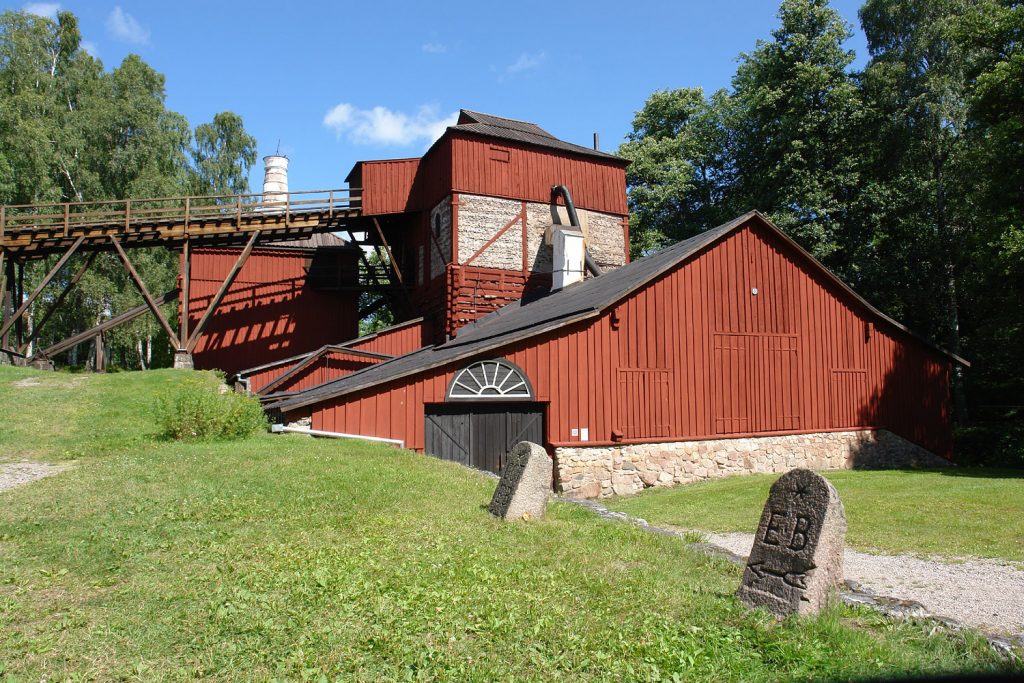
Engelsberg Ironworks are the most complete and best-preserved example of ironworks in Sweden. Photo: Wikipedia
Engelsberg Ironworks This is the most complete and best-preserved example of ironworks in Sweden. In the 17th & 18th centuries, Sweden was a significant force in ironworks production, and this site shows how they did it. The residential, administrative, and technological buildings were conserved and remained in their original state. So, this smelting house from the 18th century, along with all of its associated installations from that period, are very intact. Together, they give the full detail of the technology and equipment of Sweden’s traditional jarnbruk.
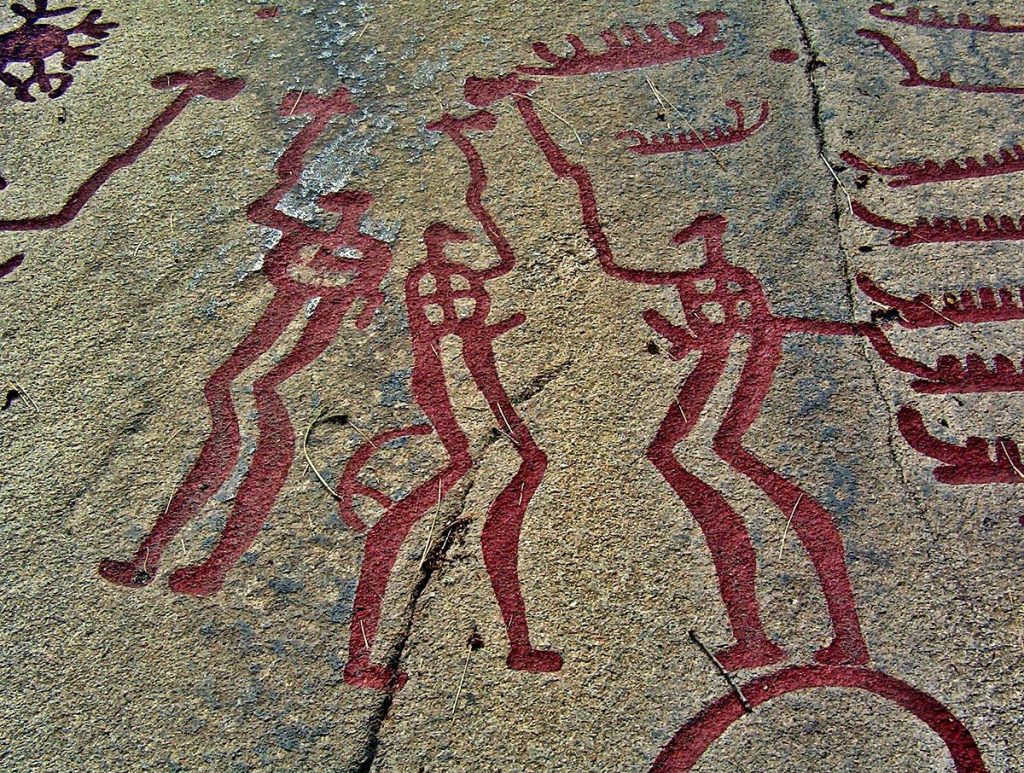
Tanum has several intriguing rock carvings which have landed it its spot on UNESCO’s list of World Heritage Sites. Photo: Wikipedia
Tanum rock carvings Tanum has several intriguing rock carvings which have landed it its spot on UNESCO’s list of World Heritage Sites, and these carvings are an excellent example of artwork from the Bronze Age. In the Bohuslan region in western Sweden, there are about 1500 well-documented rock carving sites. This includes the tanum rock carvings where the inhabitants at the time carved different images on the many smooth rocks on the landscape. An example of the most famous carvings from this period is the Vitlycke carving which depicts a bridal couple. You can explore these rock carvings through a six-kilometer-marked pathway.
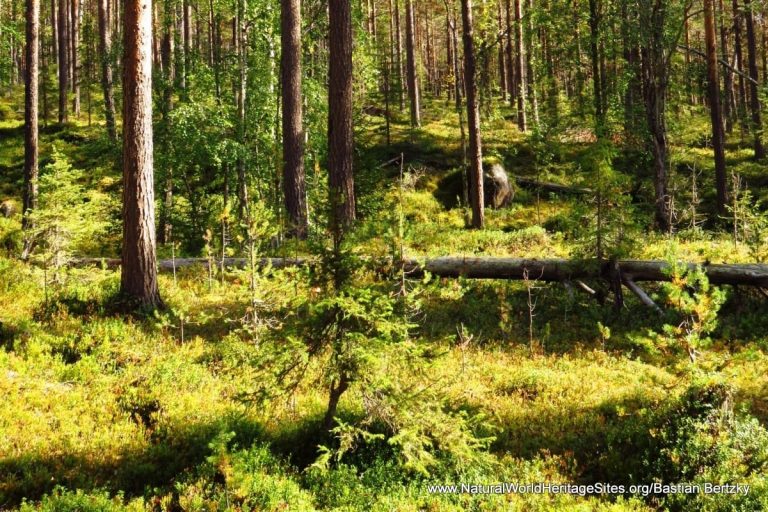
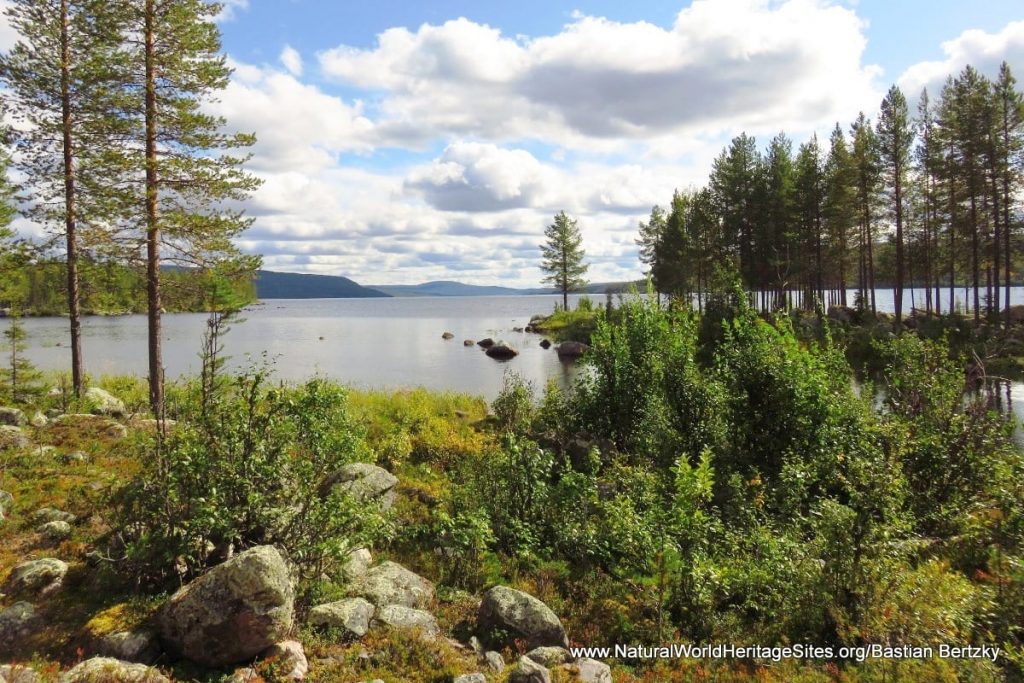
The Laponian area is located in the north of Sweden, just over the Arctic Circle. Photo: Natural World Heritage Sites
Laponian area The Laponian area is located in the north of Sweden, just over the Arctic Circle, encompasses many national parks, and is home to the indigenous people of Lapp and Sami. This area is one of the largest areas and the last one where evidence of ancestral life was found in the world based on seasonal livestock movement (reindeer – which is still practiced to date). Although this area is under threat from the conveniences of the modern world like motor vehicles, most of it is still intact.
UNESCO Sites You Must See In Sweden – Conclusion There are no less than 15 UNESCO World Heritage Sites in Sweden, and only a few of those are mentioned in this article. Some of the others are the Hanseatic town of Visby, the high coast, the grimeton radio station, and decorated farmhouses of halsingland.
Charlie Svensson
UNESCO Sites You Must See In Sweden is written exclusively for Daily Scandinavian by Charlie Svensson. Charlie is a fast, engaging freelance writer. Skilled in content writing and blogging. The favorite topics of his posts are education, social media, marketing, SEO, motivation blogging and self-growth. Excellent adaptability of skills to reach diverse audiences.
Feature image (on top): Laponian area, photo by Natural World Heritage Sites
If there is one thing that has really gained momentum in recent years, it is unique accommodation that stands out from ordinary hotel rooms. Distinctive design, beautiful locations and experiences with the little extra is something that appeals to many, and which has really become popular during the pandemic. Learn about these 19 unique accommodations in Sweden.
Tree-top cabins, floating hotel rooms, floating bubble tents or wilderness-style naval accommodation on the river – Sweden has many exciting offers that can make your holiday a little different.
1. Glamping and cabins at the foot of the mountain
Glamping. Cozy “patch huts” at Blåbergen Spa, Brewery and Conference in Örebro. Photo: Pia Gyllin
At Kilsbergens, also called “the blue mountains”, is Blåbergen Spa, Bryggeri og Konferens. This is the place for close-to-nature experiences and unique accommodation. Many people come here to experience Blåbergen’s beer yoga, music evenings in the barn and hammam spa – but above all to spend the night comfortably out in nature. You can choose between luxurious glamping tents or cozy cabins that look like Sami gammer. In the vultures you can stay all year round, while the tents are open in the season May – September.
2. Historic environment with deer as the nearest neighbor
The historic buildings at Brevens Bruk in Örebro. Photo: Björn Fransson
One hour’s drive south of Örebro is Brevens Bruk, a former ironworks with an associated manor house from the 18th century. The small square is a living museum where time has left its mark, but which is at the same time well-preserved and beautiful. Here, deer roam around the area and if you are lucky, they will come right to the corners of the house. You can rent accommodation in stately manor rooms or in picturesque small houses located near the sea and the forest.
3. Forest retreat at Stedsans Farm and Restaurant
Bright and delicate at Stedsans Farm and Retreat. Photo: Stine Christiansen
In the middle of the deepest Halland forests you will find the accommodation and restaurant Stedsans Farm and Restaurant. Here, the food is prepared over an open fire, based on local organic ingredients. In the charming cabins you sleep well with a view of nature right outside. It is perfect to spend the evenings by the fire down by the water or in the heated sauna.
19 Unique Accommodations in Sweden – read on.
4. Live as a lighthouse keeper on an island in the Kattegat
Nidingen lighthouse on the Halland coast. Photo: Åse Ahlstrand
Five nautical miles southeast of the Onsala Peninsula is Sweden’s first lighthouse, Nidingen. The island is known for being one of the country’s finest bird islands. Around the island you will also find three kilometers of beautiful underwater reefs. During the summer season, package tours to the island are arranged, with accommodation in the cozy houses on the site.
5. Captivating accommodation on the West Coast
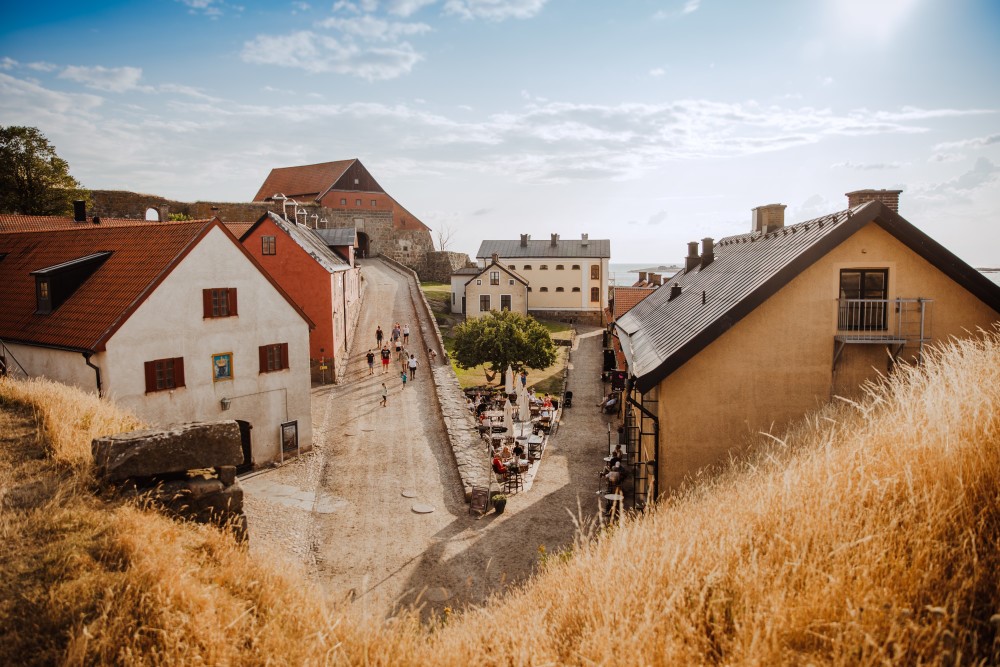
Varberg fortress located centrally in Varberg village. Photo: Natalie Greppi
At Varberg‘s fortress, in the Halland region, you can spend the night in a prison cell from 1856. At Fästningen B&B/Vandrarhem you can choose between living in the old prison cells or in the cozy houses from the 18th century. Nearby you will find the beach promenade and nice bathing spots, sandy beach and Halland’s Cultural History Museum.
6. Tent floating in the air in the pine forest
The floating bubble called Supermoon in Dalarna. Photo: Ingeborg Lindseth
In Dalarnas deep pine forest, there is a unique accommodation hidden in the form of a bubble floating in the air. Between the trees on Näsets Marcusgård hangs a floating tent called Supermåne (Supermoon). The tent is equipped with beds, oven, table and of course windows with views to the sky. Accommodation in the Supermoon is a perfect match tp outdoor experiences in the surrounding forest and a cozy coffee from Snitths Hantverksbageri in Furudal.
Nearby you will also find the cabin “Oddis Öga”, a small wooden cabin shaped like a barrel. The staff at Marcusgård ensures a comfortable and pleasant stay, and dishes up breakfast, fire in the oven and good company – if desired.
7. Tiny House In Dalarna
The micro house Tiny House is surrounded by beautiful nature. Photo: Tiny House
In the scenic Stjärnsund is the microhouse Tiny House. The small cabin is located right by the water, where there are good opportunities for swimming and fishing. Here you can enjoy the simple life in a charming little cottage with nature right on your doorstep. Tiny House is built in an environmentally friendly way with ecological insulation. It is also equipped with a wood stove and heat pump.
19 Unique Accommodations in Sweden – read on
8. Accommodation in summer mountain pasture at Smidgården
Accommodation with a historical touch at Smidgården. Photo: Smidgården
In the idyllic summer mountain pasture at Smidgården in Dalarna, you can spend the night on a 19th-century mountain farm, which in recent times has been delicately restored in a traditional Dala style. The old farm is rural and beautiful, and equipped with two bedrooms, bathroom, kitchen and living room. Smidgården also offers a spa in historic surroundings, where you can enjoy a bath with a view of the landscape in Fryksås. Ski trails and great hiking opportunities are also right outside the door.
9. Naturbyn – organic forest holiday in cabins
Floating accommodation at Naturbyn in Värmland. Photo: Hanne Marit Tobiassen
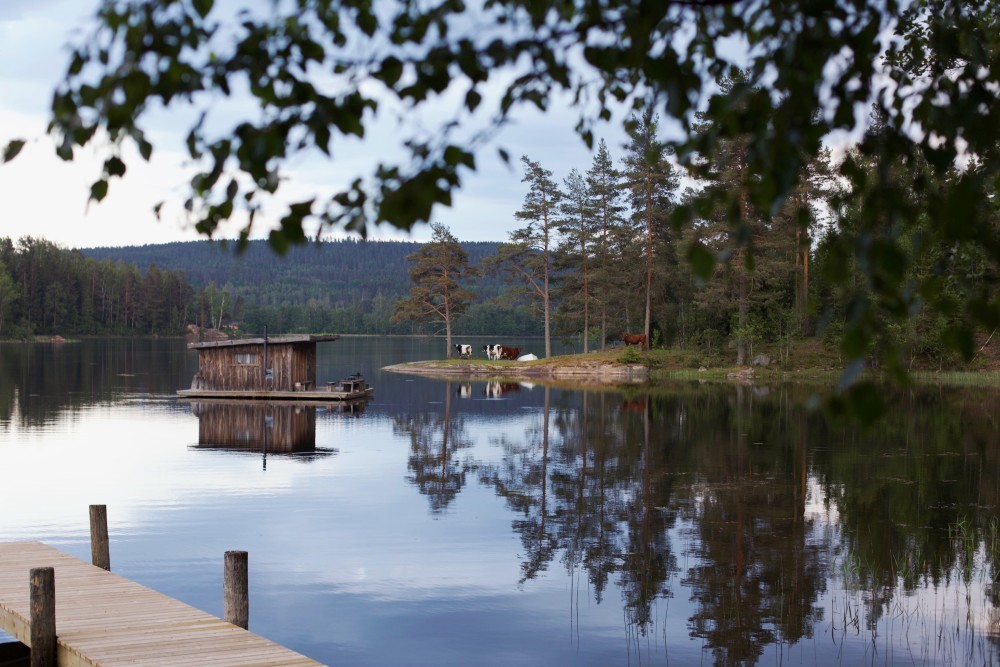
By a lake in the forests of Värmland is the nature camp Naturbyn. A place so relaxing and idyllic that it’s indeed worth a visit. Here you can choose between cabins in the woods, in the treetops or floating on the lake. Meals must be prepared over an open fire in the outdoor kitchen, and the evening may end in the hot tub and sauna.
10. Happie Camp – glamping holiday at one with nature
In well-equipped canvas tents you can enjoy camping life in a comfortable way at Happie Camp in Värmland. Photo: Happie Camping
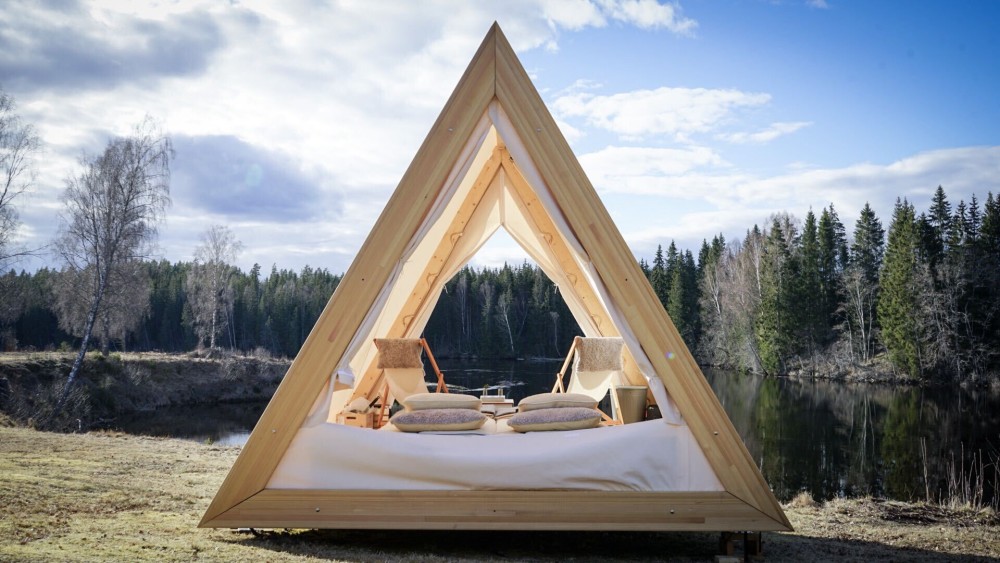
In well-equipped canvas tents you can enjoy camping life in a comfortable way at Happie Camp in Värmland. In undisturbed places in nature, the charming tents are located between trees, by boulders and with waves crashing right outside the canvas. The tents are fully furnished with everything you need for a comfortable stay. If you are hungry, you can also order the popular lunch box, which contains organic ingredients of the highest quality. Happie Camp lives up to its name, an overnight stay you will love!
11. Wilderness accommodation with fleet travel
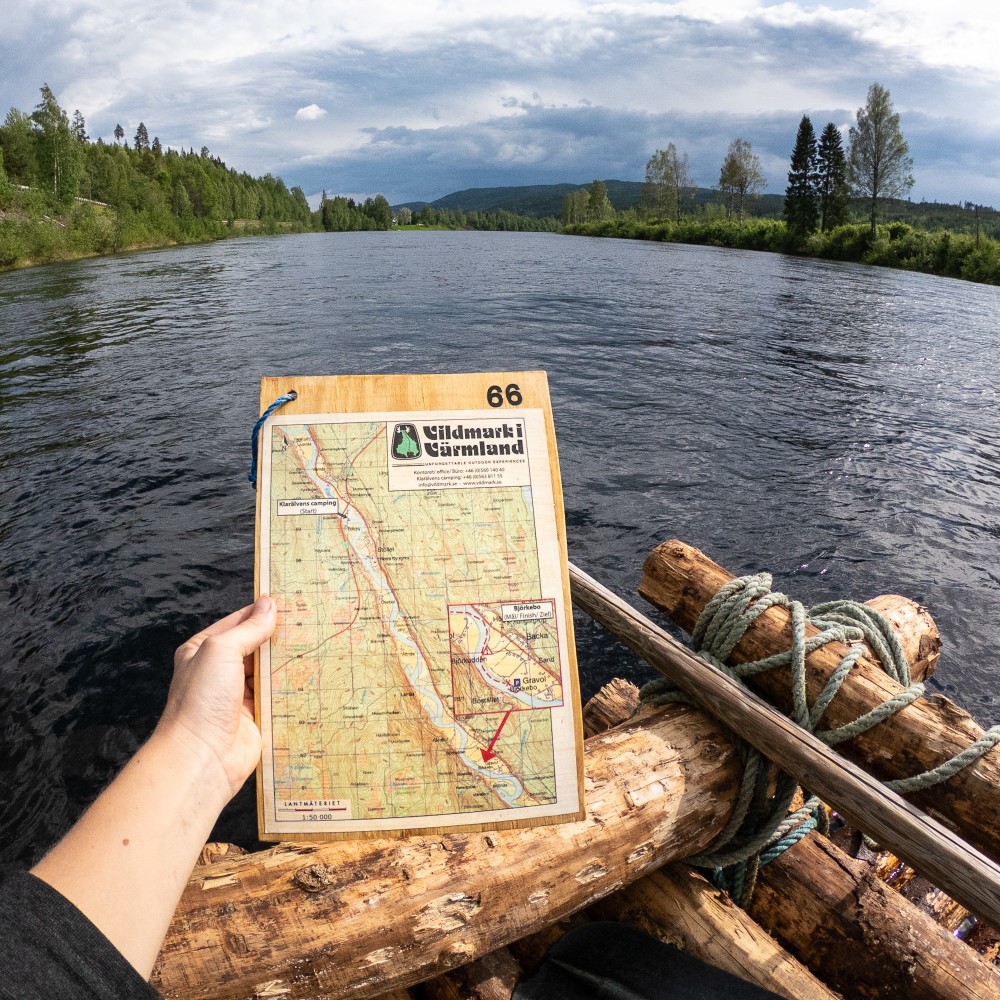
Trip on a raft with accommodation and kayaking on the Klarälven in Värmland. Photo: Ingeborg Lindseth
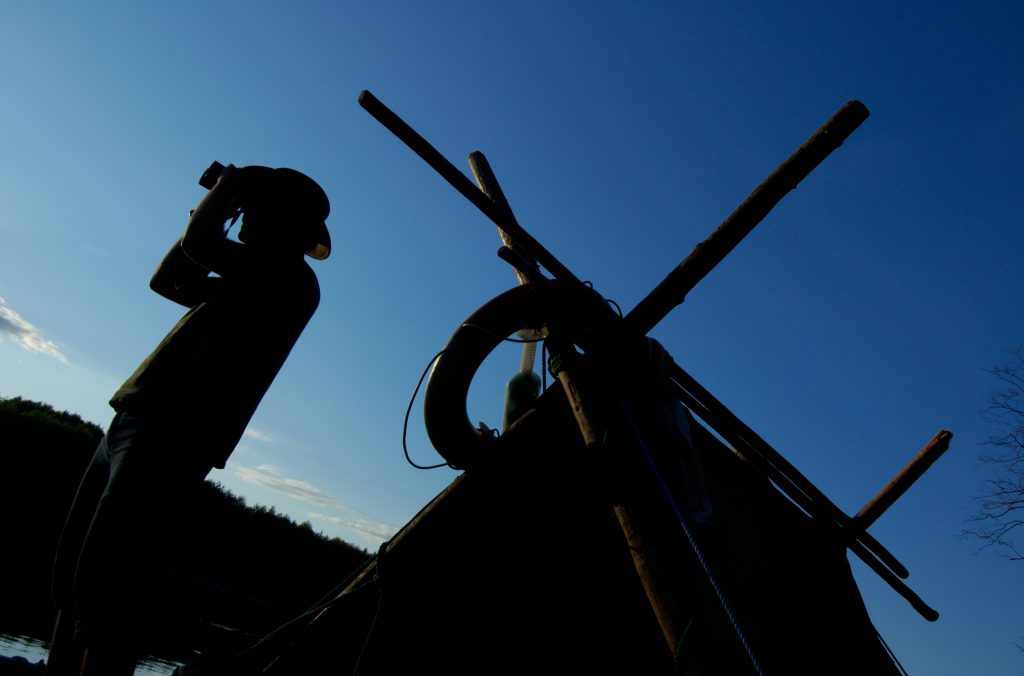
One form of accommodation that really stands out from the others is spending a night on a self-made timber raft on Sweden’s longest river, Klarälven. Vildmark i Värmland (Wilderness in Värmland) arranges package tours where you build your own timber raft and then go on an excursion on the river, well equipped with everything you need for an exciting night out. You can choose how long the trip should be, whether it will be one night or seven. Moor the raft somewhere along the riverbank and enjoy wilderness life in a new way.
19 Unique Accommodations in Sweden – read on.
12. Stay in a lighthouse on your own island
Stora Karlsö is the world’s second oldest nature reserve. Photo: Mats Jansson
Make the Gotland trip special and try out accommodation with nature as your nearest neighbor. Just off the west coast of Gotland are Lilla- and Stora Karlsö, two fascinating islands with magnificent nature, rare plants and an unusually rich bird life. Stora Karlsö is the world’s second oldest nature reserve, and has the Baltic Sea’s most distinguished bird mountain with 10,000 guillemots and alks.
There is a limit to how many people can spend the night on the islands at a time, so this will definitely be a unique and distinctive experience. Book yourself into the charming lighthouse or the lighthouse keeper’s house on Stora Karlsö. As soon as the last boat has left for the day, peace and quiet rest over the island, and you can enjoy the clear air and the crystal-clear water for yourself.
13. Hermit cabins in a design universe
In a hut down limestone quarry on Gotland, fashion photographer Johan Hellström has created a world-class design universe called the Furillen Factory. Photo: Ingeborg Lindseth
In a hut down limestone quarry on Gotland, fashion photographer Johan Hellström has created a world-class design universe called the Furillen Factory. Accompanying the hotel you will find the concept of the hermit huts, which are simple wooden huts located around the barren nature by the old limestone quarry. The cabins are designed by Mats Theselius and are 10 sqm. large, equipped with Hästens beds, iron stove from Danish HWAM, table and chair – minimalistic and elegant!
Electricity and running water do not exist, as simplicity and nature are important. The price for one night is almost the same as for five, the idea is that you will stay in the cabins for several days to completely relax and enjoy the peace and quiet that is found in nature.
14. Stay in a glass house in the middle of nature
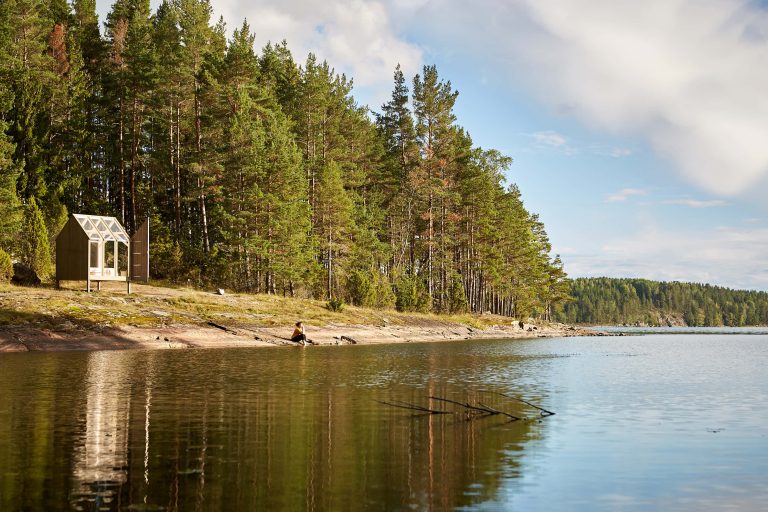
Stay overnight in one of the unique glass houses from the project The 72 Hour Cabin. Photo: Jonas Ingman
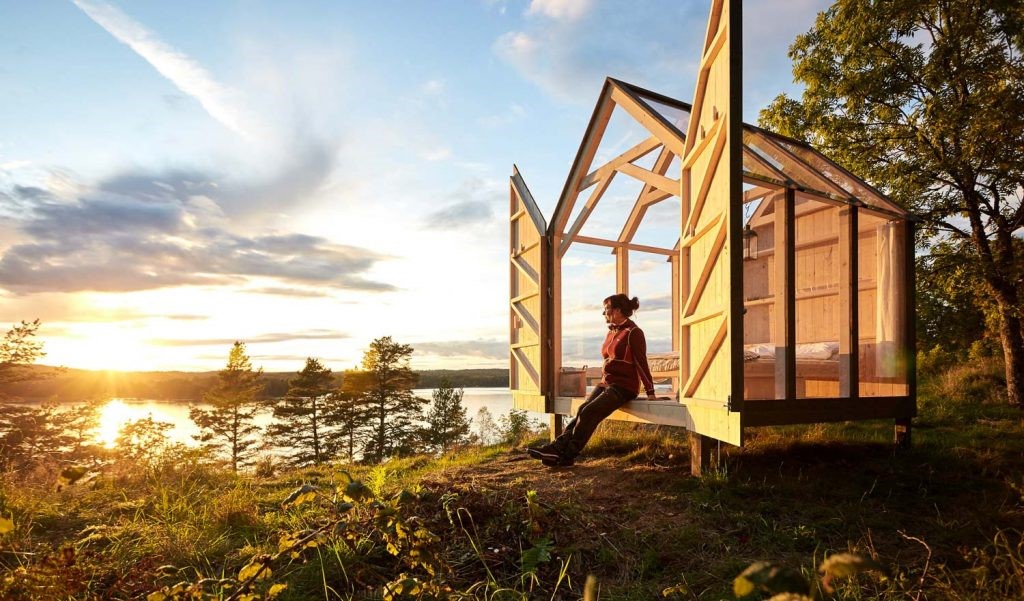
Stay overnight in one of the unique glass houses from the project The 72 Hour Cabin. The small houses of glass and wood are located in the middle of nature and offer incomparable views of both forest, sea and starry sky. Stress and everyday life are quickly buried in the Dalsland soil on arrival. Relaxation, pleasure and tranquility are the key words.
There are a total of nine small glass houses in western Sweden, five of the original houses from the project can be found on Henriksholm, and the newest cabins are located at Dalslands Activities and Baldersnäs. Combine the visit to 72 Hour Cabin with activities in Dalsland, such as a hiking trip, kayaking or experience the landscape from the bike seat.
15. Island idyll in the middle of Kalmarsun
Fifteen minutes by boat from Bergkvara in Kalmar County is the lighthouse Garpen. Photo: Garpen
Fifteen minutes by boat from Bergkvara in Kalmar County is the lighthouse Garpen. The place to slow down, enjoy the view of the sea and the fiery red sunsets. Out on Garpen there are 20 beds for rent, a restaurant, gallery and beautiful views to Kalmarsund. If you want to have the whole island to yourself, it is also possible!
16. Sustainable beach glamping at Surflogiet
Surflogiet is a unique tent hotel located on Tofta beach on Gotland. Photo: Ingeborg Lindseth
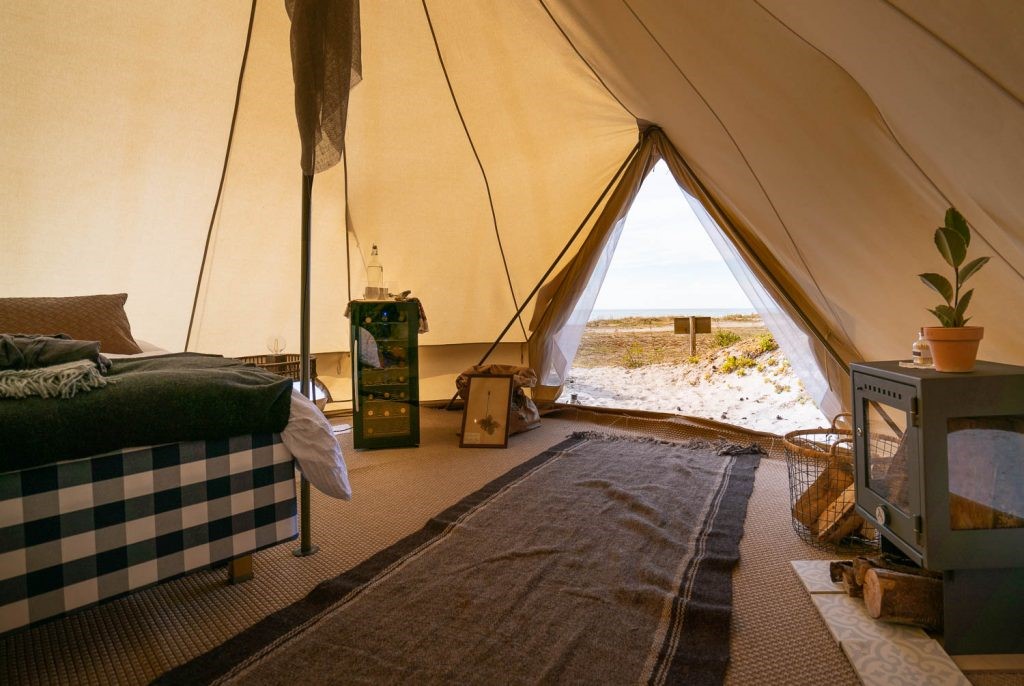
Surflogiet is a unique tent hotel located on Tofta beach on Gotland. They offer luxurious glamping tents on the beach, with the sea as the nearest neighbor. The surfogiet is built up of sustainable recycled materials such as used furniture and driftwood, and in combination with design elements and modern comfort, it gives the place a distinctive look.
There are 10 glamping tents located outside in the dunes by the beach, and inside the tents you will find Hästens beds, electricity, heating and a minibar. Before going to bed, try out the sauna and the charming beach bar, which serves short-distance and tasty food.
17. Glamping in the beech forest
Just south of Ljungskile in Bohuslän is the farm Anfasteröd. Photo: Filip Wastman
Just south of Ljungskile in Bohuslän is the farm Anfasteröd. Here you can choose whether you want to stay in modern bathing cabins, in red 19th century houses with white frames or in one of the luxurious glamping tents, which are equipped with kitchen, bathroom, heating and comfortable beds.
The tents are located inside the beech forest by the sea and you spend the days in peace in the middle of nature. Take a climb in the mountains, a charming bike ride or experience the place from the sea by kayak. One of Bohuslän’s most beautiful hiking trails passes right outside the door, if you are of the hiking-loving kind.
18. Tree Hotel – futuristic design in the treetops
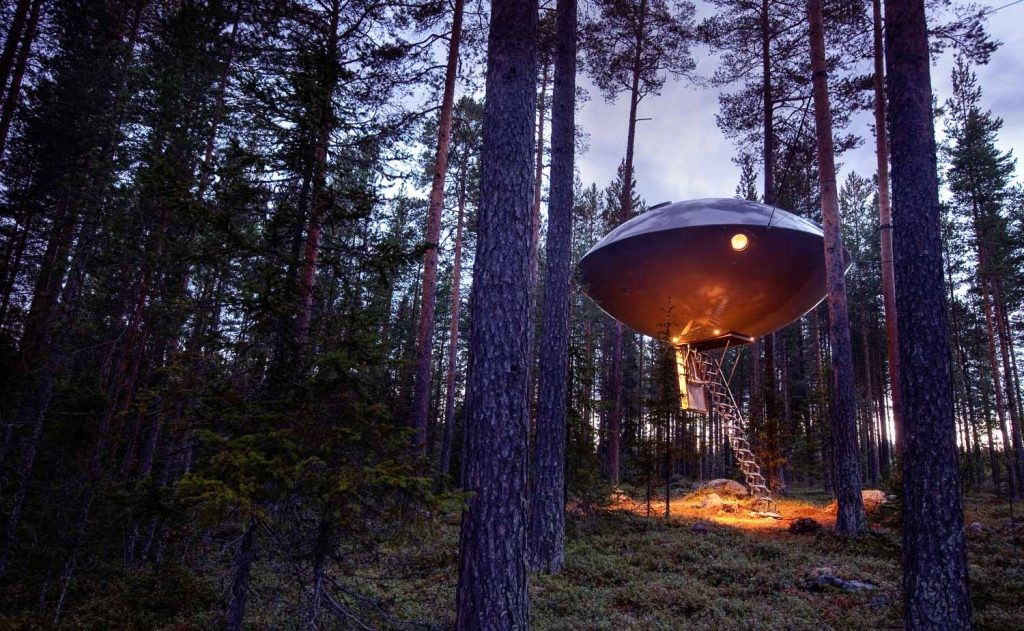
Tree Hotel i Norrland offers cabins with a futuristic design in the middle of the Swedish forests in Norrland. Photo: Norrland Tree Hotel
Tree Hotel i Norrland offers cabins with a futuristic design in the middle of the Swedish forests in Norrland. The cabins resemble UFOs, a bird’s nest and mirror cubes. The modern glass design definitely gives the accommodation a distinctive character. Leave time pressure and hustle at home, and enjoy the peace and quiet among the trunks of the forest.
19. Kolarbyn – simplicity out in nature
Take a trip to Sweden’s most primitive and charming hostel. Photo: Per Groth
Take a trip to Sweden’s most primitive and charming hostel. Here, simplicity reigns, no shower, no electricity or material luxury – just the mystery of nature. In the middle of the spruce forest, right by small streams and lakes, lies Kolarbyn, which offers accommodation in 12 traditional so-called kolar cabins. For a little more comfort you can book the log cabin or a night in a floating tent. Pick mushrooms and berries outside the cabin, and enjoy the wilderness and exciting forest experiences just outside Stockholm.
19 Unique accommodations in Sweden, compiled by Tor Kjolberg
Once upon a time two Norwegian designers had a vision to create a beautiful and inviting universe inspired by Scandinavian nature and mythology. Read about the Norwegian crockery by Wik & Walsø inspired by myths from the deepest forests.
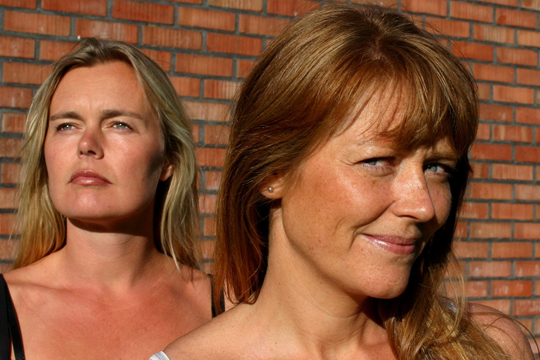
Way back in time when Ragnhild Wik and Linda Svedal Watsøe met at Esmond fashion school in Oslo in the early 1990s, they talked about starting something of their own, and finding a niche industry in Norwegian design. Over the years, however, they were swallowed up by the design industry and their careers. It was just a dream.
Until 2006, when Wik and Watsøe left their secure jobs in the design industry and set up their own company, rooted in Norwegian nature and culture in two disused barracks in the old town in Fredrikstad. The design duo has not looked back since.
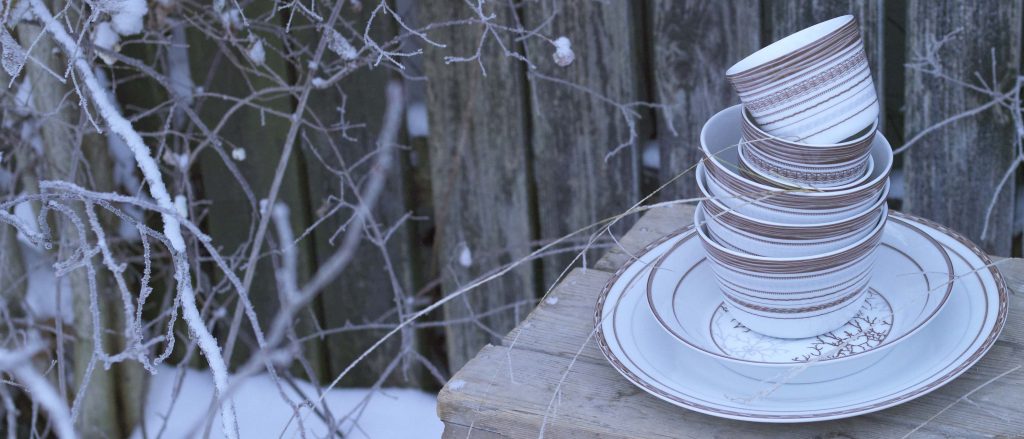
According to the designers, they have always been fascinated by the natural, and the goal was to design handmade objects with a unique and natural expression. They wanted simple shapes and softly shaped curves with different textures and hand-painted brushstrokes in sober, metallic colors. The contrasts between glazed and matte surfaces add a unique and interesting complexity to the discreet design.
In 2006, Wik and Watsøe left their secure jobs in the design industry and set up their own company, rooted in Norwegian nature and culture
In a short time Wik and Watsøe established a strong, clear and quality-conscious voice in Nordic design. Wik & Watsøe has become a major brand in the Norwegian market and in the Nordic design industry.
Today, their Elf porcelain stands side by side with well-known brands such as Stelton, Wedgwood and Rosenthal at over 150 outlets in Norway. The designers wanted to create tableware to last a lifetime, and with features that would be easily recognized across the globe. They have succeeded in crating a romantic crockery brand which has made cups and plates fashionable across the Nordic countries.
According to the designers, they have have always been fascinated by the natural, and the goal was to design handmade objects with a unique and natural expression
«We work with pure and natural materials, and lead-free colors, and have chosen to work closely with skilled craftsmen, both in Europe and Asia – artisans who share our values and passion,” writes the duo on their website and continues:
“None of our products should cost more than NOK 1,000. Much of Norwegian design is unique art and can cost up to ten thousand for a vase. Another criterion we set was that what we make should have an aid dimension, and production was started in Bangladesh. Not everyone can do as Doctors Without Borders, and we believe in helping by creating jobs and professional development.
A third point was that the products should be functional. Everything must be washable in the dishwasher, and the vases must have a shape that allows them to be washed well and not become foul-smelling. The handles should have room for a man’s fist. That is why we test the products all the time at home.
“None of our products should cost more than NOK 1,000,” says the duo
Finally, the design and products should have an anchorage in Norwegian nature. It is an inexhaustible source.”
Wik & Walsøe’s efforts to bring Norwegian design to the world have not gone unnoticed, with mentions in the Times Magazine and Wallpaper as well as others. Today, the brand designs are sold all over Norway as well as internationally.
Norwegian Crockery Inspired By Myths From the Deepest Forests, written by Tor Kjolberg
Scandinavia – Denmark, Norway, Finland, and Sweden – is one of the most prosperous and developed regions of Europe. Scandinavians’ inherent thoroughness in everything is the basis of a high standard of living. The general principles of education in Northern Europe are continuity, accessibility, and universality. The latter means that the obtained diploma has recognition abroad. Find out why many students aspire to these countries. This is an introduction to studying in Scandinavia.
Nordic education features – the ultimate guide The Nordic educational system follows roughly the same model and shares common features. First, most educational institutions in these countries are public. Moreover, the state subsidizes several private schools and universities. Thus education in Scandinavia is free. You have to pay only registration and small student fees. So the main expense for an international student is accommodation and food.
The Nordic educational system follows roughly the same model and shares common features., Photo by StockSnap/Pixabay
Secondly, unlike other European countries, the pre-university school program lasts three years. Thus Scandinavians graduate from high school at 19. This does not prevent Scandinavian universities from being more liberal towards foreign applicants.
Scandinavian educational institutions are open to foreigners. But emigration, even qualified (i.e. from foreign graduates of local universities) is not encouraged. Foreign applicants receive permission to stay in the country strictly for the period of study. After graduation, you have to leave hospitable Northern Europe.
Studying in Denmark The Danish higher professional education system includes schools of economics, management, foreign languages, pharmaceutical, library, pedagogical and dental colleges and technical institutes, the Royal Academy of Fine Arts, and the Copenhagen Conservatory. Professional institutes, colleges, and schools offer programs of varying lengths. The full course of study, equal to higher education, lasts 4-5 years and ends with a Kandidaat diploma.
Denmark provides students with a practical, relevant education that promotes personal, social prosperity. Photo: Evgeni Tcherkasski/Pixabay
Denmark provides students with a practical, relevant education that promotes personal, social prosperity. There is no such thing as broad and diverse university education in Denmark. The state, in turn, also tacitly supports the development of more promising specialties for the country. The authorities allocate more money for them. Today they are pharmacology, computers, commerce, management, and law.
There are more international programs in English, French, and German in Denmark than in Sweden. Admission to them is by special rules. Vocational schools also have their own requirements for admission. But most educational institutions ask foreigners to present a secondary school diploma. This is equal to a Danish high school diploma. If there is no such document, the institution will offer special training at the university center. You will also have to take the Higher Preparatory Examination.
Studying in Norway Norwegian universities offer flexible curricula, an informal environment with small class sizes, and modern facilities. Education in the country is free, except for small annual contributions. However, you can’t go here without a budget — Norway is one of the most expensive countries in Europe. A big plus is that the study visa allows you to work in the country. And for those who find it difficult to combine work and study, online services like Writemyessay will be a good help.
The Norwegian language prevails on most programs. Photo: Pexels/ Pixabay
The Norwegian language prevails on most programs. You can learn it in the preparatory courses at universities. There are also free Norwegian courses during the school year in the municipalities.
The strongest programs are ecology, business, environmental management, navigation. Medics, lawyers, economists, and engineers take the longest time to study – from 4.5 to 6 years. These majors are considered more prestigious, with limited admission for foreigners.
Studying in Finland Studying at Finnish universities is free for citizens of all countries. All universities are state-owned. You only have to spend money for living in the country. As well as for study materials and annual fees for compulsory membership in student unions. Also, to get a visa, the consulate will request a certificate of the presence of 6,000 euros on your account.
The country has 30 polytechnics, 10 multidisciplinary universities, 3 technical schools, 3 schools of economics, and 4 art academies. Education in the polytechnics lasts 3.5-4 years + compulsory practice. Universities in the Bologna system offer undergraduate, graduate, postgraduate degrees with one feature. There is a step between the master’s degree and the postgraduate degree called the Licentiate.
The programs are mainly taught in Finnish and Swedish. But the English-language programs have increased in number over the years. Each university sets its own admission rules. The main criteria are academic success, financial prosperity, knowledge of the teaching language.
Free education is available in the country thanks to the support of the state. Photo: Free Photos/Pixabay
Studying in Sweden About 7.5% of students at Swedish universities are foreigners. A wide choice of study programs, the quality of education, and the opportunity to get it for free attract students from all over the world to Sweden. However, no one will pay your living expenses, and life in the country is not cheap. A student can support himself. You have the right to work in parallel with your studies. And if there are difficulties with the lessons, you can always use homework help websites for college students.
Free education is available in the country thanks to the support of the state. Most universities are public. Few private institutions receive subsidies from the state, which covers most of the costs.
English is widespread in the country. There are many educational programs in it, but most are paid. To enter such programs, you need to confirm your level of skill in the language, passing the TOEFL or IELTS exam. Knowledge of Swedish is also important. You can improve it in special one-year training programs for foreigners.
The academic year is divided into autumn and spring semesters. Foreign applicants do not take entrance exams. Selection is based on the documents sent. Education in Sweden is highly specialized, allowing the student to become an expert in a particular field. Most majors require three years of study at the first level, while pharmacists and lawyers study for four years and doctors – for five and a half years.
No matter what country or institution you choose, studying is always challenging. But today’s students have learned how to overcome them. And turning to online assistants is one of the ways out in difficult situations. Especially when you can get free coupons by essayhoney for writing services.
An Introduction To Studying In Scandinavia, written exclusively for Daily Scandinavian by William Grabe. William is an experienced writer. He’s specialized in educational content creation. William also writes articles for his own Essaysadvisor blog and optimizes everything to make sure people find the content interesting and useful.
Feature image (on top): Mystic Art Design/Pixabay
* * *
The nations making up Europe’s northernmost region are most commonly called either Scandinavia – Norway, Denmark, and Sweden – or the Nordic countries – Norway, Denmark, Sweden, Iceland, and Finland. (Editor’s note).
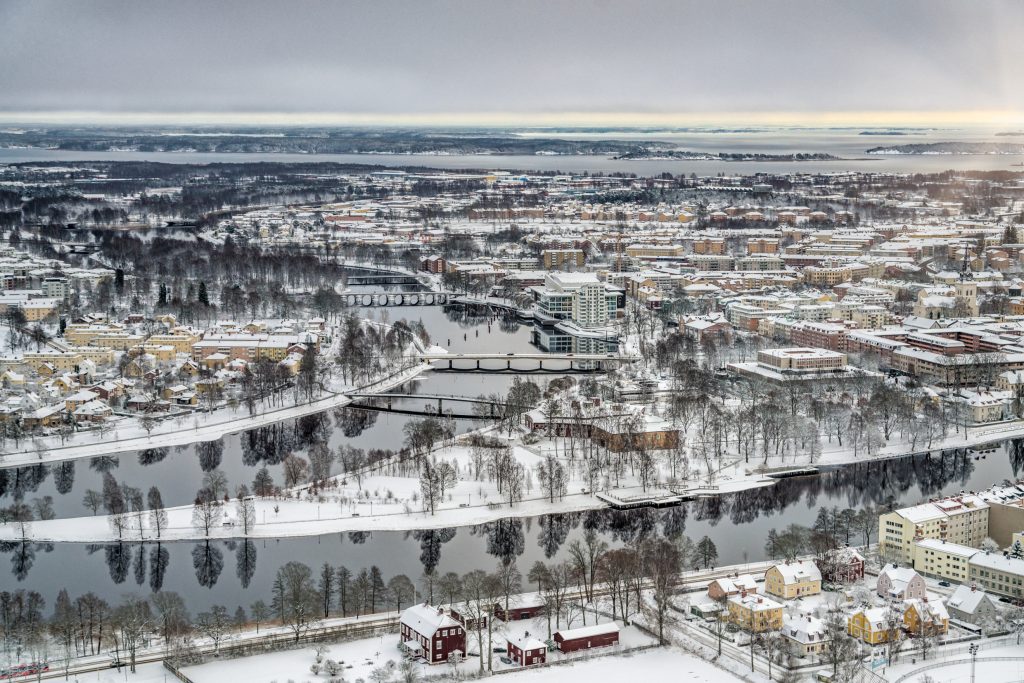
The Swedish Värmland region is covered with spruce and pine and crisscrossed with narrow lakes and rivers. The Klarälven river is among its most beautiful. Here, we take you along one of the most beautiful rivers in Sweden.
The river begins turbulently in Norway, where it is called Trysilelva, but gradually becomes broader, winding and sluggish before emptying into Lake Vänern near the province’s largest town Karlstad.
The Klarälven was the last Swedish river used for floating logs. Photo: Staffan Widstrand/Visit Sweden
Highlights of Karlstad include the cathedral from 1930, the longest arched stone bridge in Sweden (168m/550ft), and a popular park, Mariebergsskogen. The Klarälven was the last Swedish river used for floating logs. The practice ended in 1991, but in Dyrälevn, 17km (10 miles north of Karlstad), the Dyvelsten Flottningsmuesum (Dyvelsten Log Rafting Museum) once showed how it was done. The future of the museum is uncertain (July 2021). However, you can still drift down the gentle Klarälven yourself on self-assembled raft.
Bridge crossing the Klaraälven. Photo: Per Pixel Petersson/Visit Sweden
At Ransäter, 40km (25 miles) north of Karlstad, on the Klarälven, the Hembygdsgården (Heritage Village) includes museums devoted to mining, forestry, agriculture and rural life, which paint a fascinating picture of the Värmland of yesteryear.
Nordic countries are ahead of the pack when it comes to healthcare. Or is it just a myth? Do Nordic clinics deliver equally top-notch services to everyone? Today, you will learn about similarities and differences between Nordic healthcare systems and discover whether they really stand out. In this article our contributor Jamie Taylor is comparing Nordic healthcare systems: Similarities and differences.
Top Four Similarities Nordic countries indeed share plenty of similarities in terms of healthcare, standing among the top ten best countries by healthcare development index. Here is what Finland, Denmark, Sweden, Norway, and Iceland have in common:
Over 70% of all medical expenditures in Scandinavia are covered by taxes. Photo: Internations.org
Free Public Health Care All Scandinavian countries aim for public and open medical services so that everyone can receive high-end medical treatment.
Most importantly, people in Nordic countries pay minimal money for healthcare due to the public health insurance system sponsored by taxes. Given that, over 70% of all medical expenditures are covered by taxes.
So, if you have a fever, you can visit a practitioner, and they will consult and treat you almost for free. There are some patient fees in Nordic countries, but they pale beside medical treatment costs in the United States. For instance, the Finland healthcare system charges a maximum of €20.60 for patient fees.
Nordic countries have the highest healthcare access and quality (HAQ) index in Europe. Photo: Kliniska studier Sverige
The Highest Healthcare Access and Quality Index Nordic countries have the highest healthcare access and quality (HAQ) index in Europe. The latest data shows that five Nordic states have the following HAQ indexes:
Iceland: 93.60.
Norway: 90.50.
Sweden: 90.50.
Finland: 89.60.
Denmark: 85.70.
Although Switzerland stands between Iceland and Norway with the 91.80 HAQ value, all other European countries stand behind the Nordics. Only Denmark significantly comes off its neighbors with the 85.70 HAQ value but still outperforms most European states.
Most people in Scandinavia believe they receive good medical services.
Healthcare Satisfaction by Country Nordic countries have one more similarity: most people in these states believe they receive good medical services. Most importantly, all countries show significant progress in healthcare quality.
Country
Percentage of people satisfied with medical treatment in 2007
Percentage of people satisfied with medical treatment in 2018
4. Nordic Healthcare Systems Face Similar Challenges
Although Nordic healthcare remains one of the best in the world, these five countries deal with the same challenges.
Nordic people enjoy free public healthcare, which is an indisputable advantage. At the same time, Nordic countries seem to cut corners on their healthcare because of the aging population, increasing expats, unhealthy lifestyles, etc.
Although Nordic healthcare remains one of the best in the world, these five countries deal with the same challenges. Photo: Sweden.se
That’s why many hospitals are consolidated and closed while local institutions are missing the medical staff. As a result, some people have to wait for a general practitioner appointment for weeks. If you ask an average Swede about Sweden health care system pros and cons, they will mention high-quality but hardly accessible treatment.
Then, Sweden health care wait times will frighten anyone – you have to wait from a week to several months to see a doctor. Sure, if you have a bunch of euros to spend, you can go to a private facility and get medical help in a day. But most Swedes believe ridiculous waiting times ruin their healthcare system.
Finns share the same fate – over 4% of the Finnish population report that they don’t receive medical assistance due to waiting times. The same thing goes to Denmark, Norway, and Iceland, where people have to wait for 90 – 100 days to receive medical treatment.
Differences in Nordic Healthcare Systems
Nordic healthcare systems have at least four aspects in common, but they also share a few differences:
Polarized Cannabis Laws The world makes slow steps toward cannabis legalization. But Nordic countries seem to be the most inconsistent in this regard, and CBD laws differ to a great extent across Northern Europe.
Thus, Denmark allows CBD consumption as long as CBD products contain 0.2% THC. But CBD oils sold online are illegal there, even from Diamond CBD and other well-established CBD brands.
Meanwhile, in Iceland and Norway, you can buy CBD oils online. But again, they must contain zero THC. In countries like Iceland and Norway, however, you can legally purchase CBD oils and similar hemp or cannabis-derived CBD products online from brands such as Zamnesia, but they cannot contain any THC.
In Sweden, CBD is an illegal drug, while Finland allows CBD only as prescription medication for particular health conditions.
The world makes slow steps toward cannabis legalization. But Nordic countries seem to be the most inconsistent in this regard. Illustration: Sociedelic
General Practitioners Have Different Roles Let’s imagine a situation: you overdid it on cider last night. Today, you have a headache, and you know it’s due to high blood pressure. So you go to a cardiologist, and they scratch their head over your case. But you can do this only in Sweden and Iceland.
In Finland, Norway, and Denmark, you will get entrapped in red tape. You would have to visit a general practitioner first. It means waiting for three weeks or so before you get to the specialist. General practitioners have a gatekeeping role there. In some instances, they become an unwanted obstacle between a patient and a specialist.
Comparing Nordic Healthcare Systems: Similarities And Differences – The Final Word Nordic health care systems have more similarities than differences. All five countries stand among the top nations regarding health care quality. Furthermore, unmatched public medical service remains free in all five countries. But also, Nordic health care systems face the same challenges – mostly outrageous waiting times. At the same time, Nordic authorities have different views on medical marijuana and the roles of general practitioners.
The nations making up Europe’s northernmost region are most commonly called either Scandinavia – Norway, Denmark, and Sweden – or the Nordic countries – Norway, Denmark, Sweden, Iceland, and Finland. (Editor’s note)
Jamie Taylor
Comparing Nordic Healthcare Systems: Similarities And Differences is written exclusively for Daily Scandinavian by Jamie Taylor. Jamie is a physician’s assistant with over ten years of experience. He helps people cope with inflammation, chronic pain, and neurological disorders. Once the US government legalized cannabidiol, he established ValidCBDOil to help people live healthier lives with the power of natural ingredients.
The story dates back to the 19th century when Denmark and Prussia couldn’t agree on where to draw their border. At that time both countries refused to concede any ground and wanted to control the southern Jutland Peninsula, which today is part of the German state of Schleswig-Holstein. Read the fascinating story of the Danish protest pigs.
In 1848, the countries fought, with Denmark winning claim to the land. More than a decade later, the land was up for grabs again as the Second Schleswig War erupted, this time with Prussia declaring victory.
The Second Schleswig War erupted, this time with Prussia declaring victory. Illustration: Wikipedia
In the 1860s, Prussian authorities moved in and over the next couple of years instituted a multitude of brand-new laws reducing anything from another location Danish. The Danes, especially the farmers, were not very happy. They lived under the rule of the Prussians, who prohibited all use of the Danish flag. They could not raise their flag and were forced to bow down to the Prussian authorities.
Through a crafty program of crossbreeding, Danish farmers tried to create a new breed of pig that faintly resembled their beloved home’s flag. It wasn’t terribly difficult, they decided to use biology as their secret weapon. The banner of Denmark is relatively simple—a flat red background covered by a long, white Nordic cross — so all the pig needed was a coat of red fur and one or two prominent white belts. They named it Protestschwein, the Danish Protest Pig.
“The Schleswig-Holstein question is so complicated, only three men in Europe have ever understood it. One was Prince Albert, who is dead. The second was a German professor who became mad. I am the third and I have forgotten all about it,” said Lord Palmerston.
The Danish Protest pig quickly became a snorting symbol of Danish cultural independence
The Danish Protest pig quickly became a snorting symbol of Danish cultural independence. Today, there are fewer than 60 flag-striped breeding animals still alive, many residing in zoos, but in the 20th century, the red swine became recognized in 1954 as a “true breed” called the Husum Red Pied.
The breed is best known for their Denmark-like colors. They are red in color, with a white vertical belt and a white horizontal belt, also known as Danish Flag Pig. At full maturity, males tend to weigh approximately 350kgs, with females rising to 300kgs. The breed grows up to an average height of 92cms.
Historians believe the reddish breed comes from the British Tamworth pig, but nowadays the Danish Protest Pig is actually a registered rare breed.
However, this wasn’t the only form of passive aggressive protest to occur on the Jutland Peninsula in the 19th century. The occupying Germans also instituted laws that prevented Danish organizations from serving alcohol, striking a major blow to local community halls that functioned as key political gathering spots. Suddenly, these Danish halls needed a non-alcoholic way to bring people in. Their solution? The sønderjysk kaffebord, or coffee table — what is essentially a table covered in dozens of assorted “rebel cakes.”
The Fascinating Story of the Danish Protest Pigs, written by Tor Kjolberg
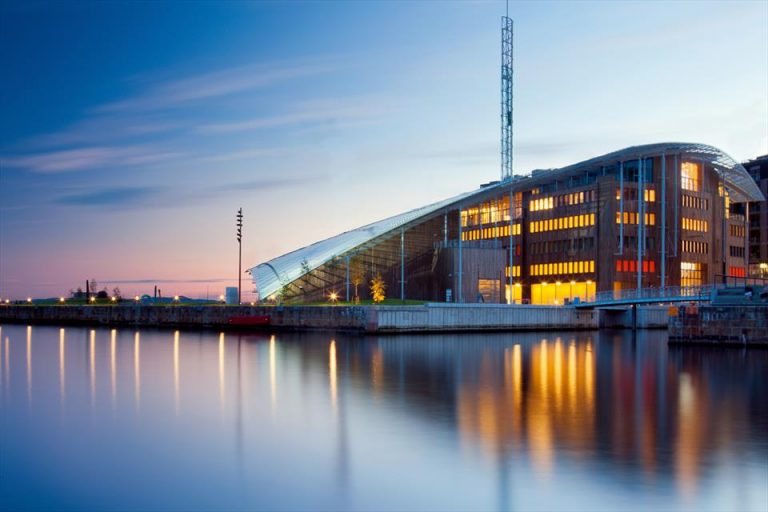
Next year, the Astrup Fearnley Museum of Modern Art in Oslo will celebrate its 20 years anniversary on Tjuvholmen. At the end of September 2012, the museum was moved from Kvadraturen to its new home on Tjuvholmen. That autumn, the museum’s new home was the indisputable architectural event in Oslo, the largest since the Opera house was built. Read more about the Astrup Fearnley Museum of Modern Art in Oslo at Tjuvholmen celebrating 20 Years.
At the inauguration, the director Gunnar B. Kvaran said that the museum “will open a whole new world for us”. The architect behind the building, Renzo Piano, said the building should be equal parts “beautiful”, “simple”, “unpretentious” and “informal”.
Founder of the museum, Hans Rasmus Astrup (1939-1921)
The original museum The original museum, founded by Hans Rasmus Astrup, opened to the public in 1993. At that time the collection’s main focus was the American appropriation artists from the 1980s. Later, the collection has developed towards the international contemporary art scene, with artists like Jeff Koons, Richard Prince, Cindy Sherman, Matthew Barney, Tom Sachs, Doug Aitken, Olafur Eliasson, and Cai Guo-Qiang. The museum gives 6-7 temporary exhibitions each year. Astrup Fearnley Museum of Modern Art in Oslo collaborates with international institutions and produces exhibitions that travel worldwide.
The Astrup Fearnley Museum in Oslo was one of the first and remains one of the greatest private museums dedicated to Contemporary Art in Europe. The museum has revolutionized the access to and appreciation of Contemporary Art in its home city.
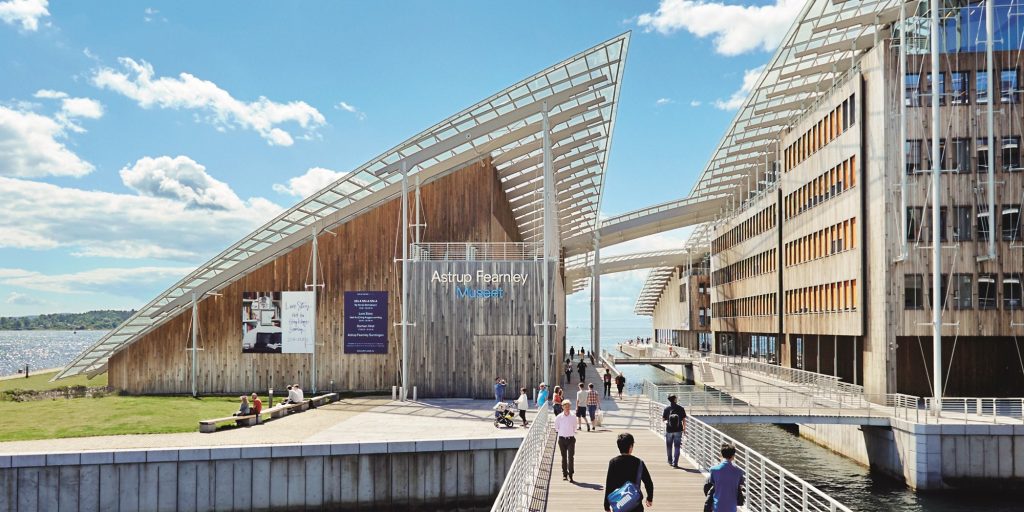
The museum was the star architect Renzo Piano’s first project in Norway. Photo: Wikipedia
Star architect Renzo Piano’s first project in Norway The museum was the star architect Renzo Piano’s first project in Norway. As expected from Piano, the project focused primarily on the unique sectional design, and integrating the building with the surrounding landscape, including the sea, the green spaces, as well the surrounding built blocks.
The museum consists of three main spaces; a museum, a separate space for its temporary exhibitions, and an office building with its own exhibition area for a private art collection. One of the most prominent elements of this project is the huge glass roof that soars over the complex, linking the buildings together and giving the development a presence on the waterfront. Its curved shape, formed by laminated wood beams, crosses the canal between the buildings. The beams are supported by slender steel columns, reinforced with cable rigging, which refer to the maritime character of the site.
One of the most prominent elements of this project is the huge glass roof that soars over the complex, linking the buildings together and giving the development a presence on the waterfront
The financiers
The Selvaag family is behind the financing of the museum, the sculpture park outside and almost all the building stock on Tjuvholmen. Olav Selvaag (b. 1969) and Gunnar Fredrik Selvaag (b. 1975) are sons of the engineer and residential contractor Olav Selvaag (1912-2002).
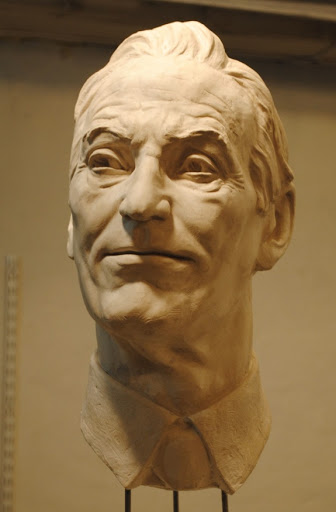
Sculpture of Olav Selvaag (1912-2002)
The brothers are in charge of the investment company Sealbay and the real estate company Selvaag Gruppen. Since 1958, the Selvaag family has placed more than 500 art objects in residential environments in Norway. In 2012, a bronze sculpture of Olav Selvaag the Elder by artist Frode Lillesund was erected on Olav Selvaag’s square, centrally on Tjuvholmen.
In the post-war period, Olav Selvaag the elder democratized the real estate market in Oslo with its affordable and high demand “Selvaag homes”. During his life, he bought and erected several hundred sculptures and installations in residential environments. He also participated in cultural life in other ways: He established a music school in Veitvedt, gave the author Kjell Askildsen a freehold apartment in Veitvedt far below the appraised value, and the artist couple André Bjerke and Henny Moan was given a freehold appartment in Maridalen.
Ulf Andenes, author of the book “Folkets boligbygger” (“The People’s Construction Builder”), describes Olav Selvaag the Elder as “a person totally out of the ordinary, a financial, technical and operational gifted person who only appears several generations apart”.
The beams are supported by slender steel columns, reinforced with cable rigging, which refer to the maritime character of the site. Photo: Wikipedia
The architecture
The Astrup Fearnley Museum was funded by two philanthropic foundations established by descendants of the Fearnley shipping family, the Thomas Fearnley Foundation and the Heddy and Nils Astrup Foundation (merged in 1995 to become the Thomas Fearnley, Heddy and Nils Astrup Foundation). Until 1990 there were no museums in Norway that were dedicated to the art of the present, and, alongside the National Museum of Contemporary Art, the Astrup Fearnley Museet performed an imperative service in exposing the Norwegian public to the radical art of that time.
The museum created a stir in the international art world in 2002 when it purchased the American artist Jeff Koons’s monumental sculpture in gilt porcelain of the pop star Michael Jackson with Bubbles, his favorite chimpanzee, for $5.1 million.
The museum has also provided a significant platform for living Norwegian artists, with major exhibitions of artists such as Matias Faldbakken, Odd Nerdrum, Bjarne Melgaard, Marianne Heske and Fredrik Vaerslev generating significant international exposure for the country’s thriving artistic community.
Astrup Fearnley Museum of Modern Art in Oslo 20 Years, written by Tor Kjolberg
Feature image (on top): Photo by Nic Lehous/Visit Oslo
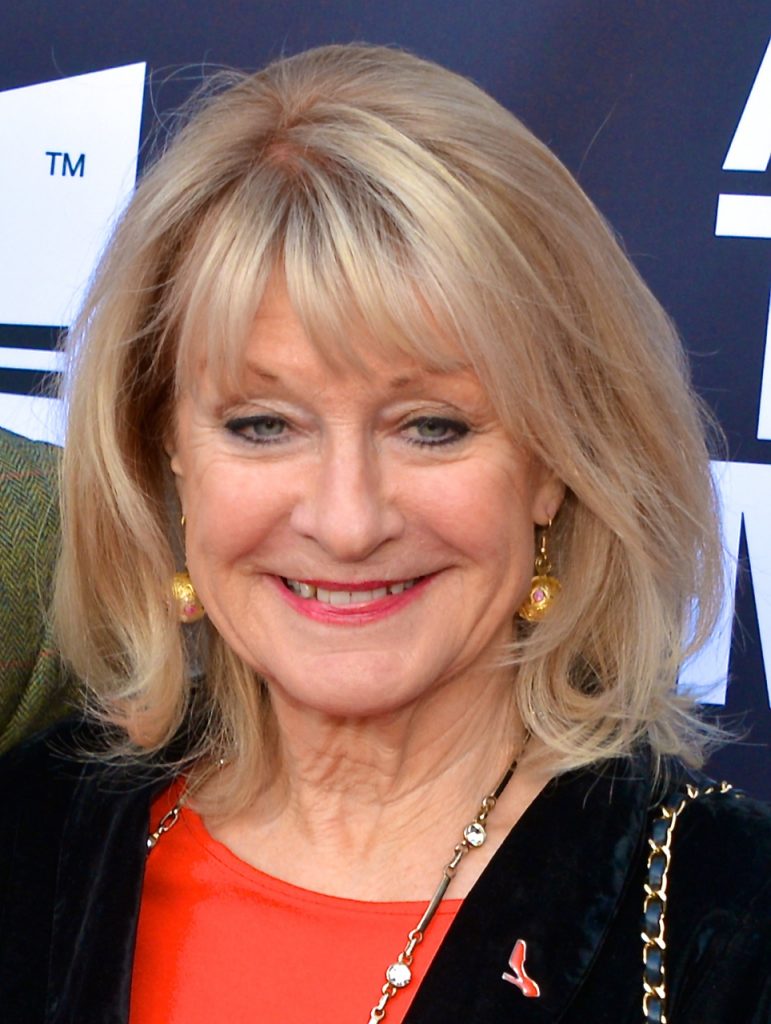
The Swedish non-profit health organization, the 1.6 Million Club (1.6 Miljonerklubben) fights against sexist discrimination in the healthcare and medical research sector. The organization was founded by Alexandra Charles in 1998, and she has been the chairwoman ever since. The name came about because, at the time, there were 1.6 million women over the age of 45 in Sweden. Learn more about the Swedish Women’s Lobby.
Alexandra started the club after she had heard from doctors and researchers how male-dominated medical research was and how women were being discriminated against in health care. She wanted to spread more female-oriented information about heart disease and other issues affecting women’s health.
“Most people don’t know that heart conditions are the most common cause of death in our country,” says Alexandra Charles. “Women and men even react differently to heart attacks. So when I found out that medical research was based on men, I wanted to put a gender perspective into the research in order to give women the same possibilities of getting the best health care.”
In 2008, The 2.6 Million Club was established for women over the age of 25 with the same objective as The 1.6 Million Club. Nevertheless, any adult can join the organizations, including men.
Alexandra started the club after she had heard from doctors and researchers how male-dominated medical research was and how women were being discriminated against in health care.
Today the club disseminates knowledge and information about all issues dealing with women’s health and women’s situation. They are active on issues such as healthcare, getting a job, immigrant women’s conditions, the economy, the environment and culture.
Alexandra’s initiative has become Sweden’s largest non-political non-profit women’s rights organization with over 35,000 active members. The club has since grown with sister organizations in Norway, Finland, and Germany, as well as networks in Brussels and St Petersburg.
Run with a core of famous Swedish women and a group of medical experts, the organization functions both as a lobbying organization and as an educational organization.
The Club wants to create a healthier society with more health awareness and enjoyment for women of all ages by working as a pressure group and opinion-shaper, working with state agencies, politicians and researchers.
Every spring the campaign Women in Red, aiming to raise funds for medical research on the female heart, is launched. As with the Pink Ribbon, supporters can proudly wear an awareness pin, but for this cause shaped as a red shoe.
The organization was awarded the National Encyclopaedia, Knowledge Award 2005 and The WHO Tobacco Prevention Award 2010.
Health ladies visit Swedish ambassador to Norway. From left: Lill Lindfors, Berit Nordstrand, Gerd Kjos, Elisabeth Andreassen and Alexandra Charles.jpg
More consideration should be given to the biological, physiological and pharmacological differences between women and men, when it comes to health and disease – and that is why The Club supports the Centre for Genus Medicine at Karolinksa Institutet in Stockholm, Sweden.
The 1.6 Million Club works closely with medical experts who carefully check all the information before it is published, and they help with access to the very latest research.
Online Dance Week with Malin Watson. Photo: Annika Berglund
In the time of the pandemic, the 1.6 million club has fully invested in digital events and online courses. During 45 webinars and 10 online courses, 168 lecturers and more than 25,000 participants met online.
The Swedish Women’s Lobby, written by Tor Kjolberg

 1. Friluftsliv (Outdoor life)