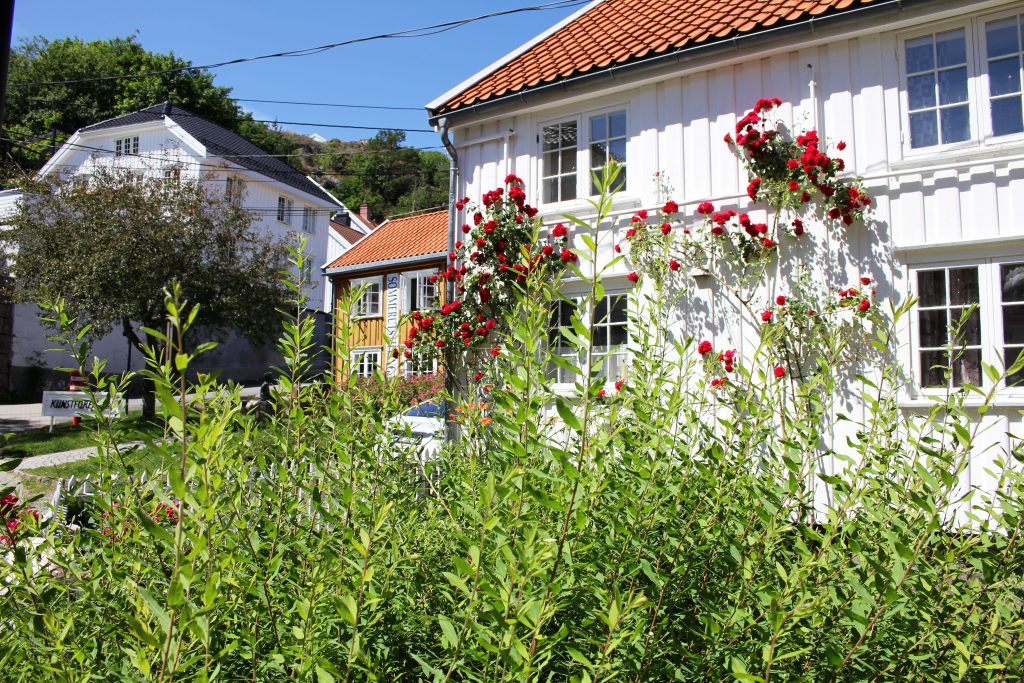
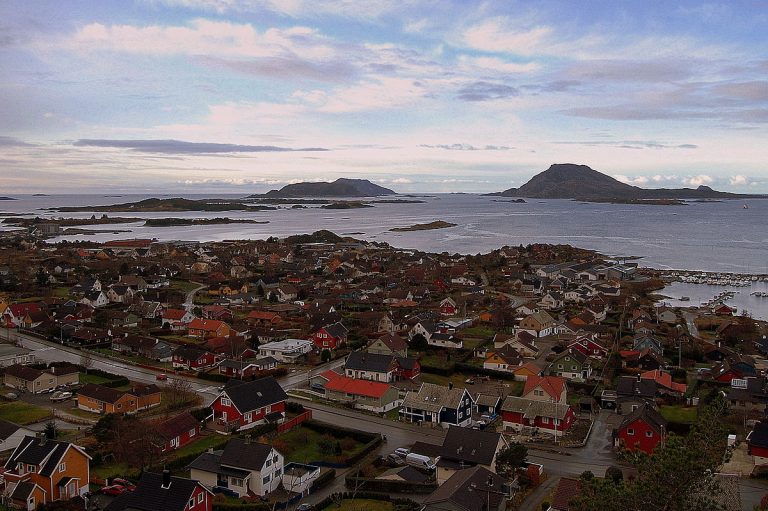
Norway’s westernmost town Florø has both glaciers and magnificent seas that provide unique opportunities to experience untouched nature. The town was founded by royal decree in 1860 as a small seaport (ladested) on the island of Florelandet.
The area is full of stunning archipelagos where you get the opportunity to experience Norwegian nature from a more active perspective. You can enjoy lighthouse safaris, sea fishing, kayaking as well as coastal hikes on islands rising straight out of the sea.
At Kinnaklova mountain cleft you can sit and enjoy sea eagles in the sky and porpoise in the sea. Photo: Wikipedia commons
The most charming town in Norway
This small town has been recognized as the most charming in Norway. And the islands in Florø’s archipelago also offer fabulous opportunities. On Kinn, just off Florø, with only 11 permanent residents and its 1000 year old church, you should visit the famous Kinnaklova mountain cleft, where you can sit and enjoy sea eagles in the sky and porpoise in the sea.
Rich fishing history
The 11,000 inhabitants in Florø make their living to a high extent from the fish farming industry. In addition, wild salmon, herring and mackerel are caught for sale on the world market. After the discovery of petroleum in the North Sea in the late 1960s, Florø has been used as a supply base for the offshore industry. But shipbuilding has been a stronghold of Florø for centuries. Kystmuseet (The Coastal Museum) is a relatively new attraction, exhibiting boats and artefacts from coastal communities along with art exhibitions during the summer.
The three herrings in the town’s coat of arms symbolizes the rich herring fisheries, and fishing is still an important part of the economy.
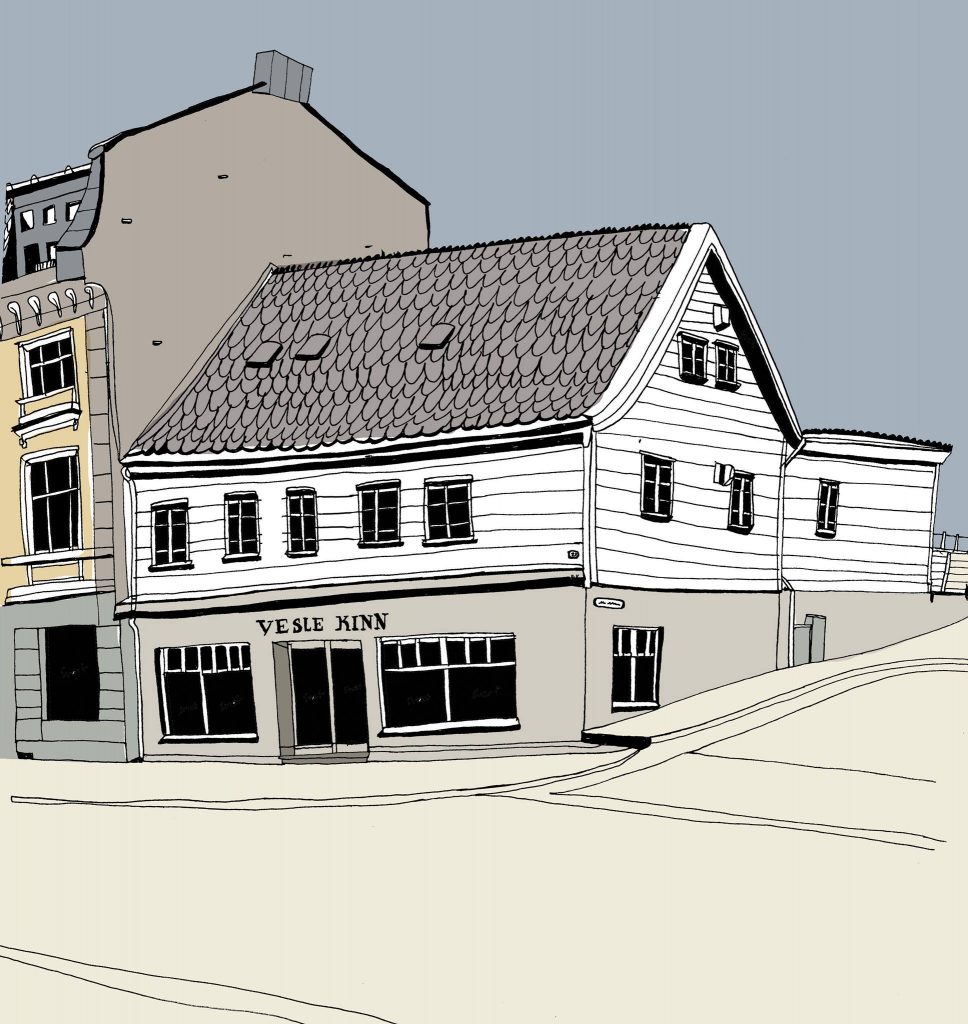
Stop by Vesle Kinn and be served the best from microbrewery number one in the country
Authenticity off the beaten path
If we should describe Florø with one word, it would be authenticity. Making a landfall in Florø means travelling off the beaten path. At Batalden you can combine spectacular hiking to the top with an art exhibition at the gallery. Satisfied with experiences and thirst after the trip, just stop by Vesle Kinn and be served the best from microbrewery number one in the country. Happy Hiking!
The municipality is named after the term Flora (Old Norse Flóðra). The name is probably derived from flóð which means “strong stream”. The last letter in Flørø is the Danish word for island and indicates that the town is located on an island.
Norwegian National Road 5 highway is the main road connecting Florø to the rest of Norway. You can arrive Florø by plane at Florø Airport – an by ship of course.
Feature image (on top): Wikimedia commons
Norway’s Westernmost Town, written by Tor Kjolberg
Scandinavia is a place where you always want to come back again. Regardless of whether you are going here as a tourist or planning a business trip, this place will remain in your heart forever. But what about a pandemic? There is good news that despite COVID 19, you have the opportunity to come and make a business trip effective. Follow these 8 tips to make uour Scandinavia business trip more efficient.
How to Get to Scandinavia Now? How to plan a trip? Before you plan your trip to Scandinavia, you need to know what restrictions apply at the moment. Below you will find relevant information regarding the Scandinavian countries with links to the official websites where you can find out the latest information.
SAS crew waiting in lounge
Sweden: The government has taken new measures that will be relevant until August 31. According to the latest news on the official website, entry into the country is prohibited to prevent outbreaks of the spread of the virus. However, the ban does not apply to citizens of Switzerland and the EU. Also, as an exception, certain categories of workers may enter the country.
Denmark: The Danish government has opened its borders to most European countries with certain remarks. From June 4 this year, citizens of Australia, Canada, New Zealand, Japan, South Korea, and Thailand can enter Denmark. As for people who want to get into the country on business issues, there is a need to find out the rules on the official website.
Norway: The Norwegian government requires tourists entering the country to be quarantined for ten days. From July 15, citizens from some EU countries where a pandemic is low can enter the country.
Be sure to monitor the information on the official websites of countries, as it often changes.
How to Make a Business Trip Cheap and Fun?
Now let’s find how to turn your business trip into an exciting and memorable event. You will also learn how to save money to travel.
Image: rupixen.com / Unsplash
Plan a Budget Regardless of the purpose for which you are traveling to the country, you need to understand how much money you will need. Consider all the travel expenses that await you. Also, ask if your company covers your travel expenses. If so, plan your budget.with these funds. Also, remember that you will need to provide a report on expenses. So do not forget to save all invoices.
Photo: Michael Parzuchowski/Usnplash
Optionally Pack Wardrobe Make sure your wardrobe matches the purpose of your business tour. Also, do not forget to put such clothes in which you can walk and relax. The latter type of clothing is no less important than a business suit. For example, the Pick The Writer team talked about that they had more than 60% of their free time to enjoy the country. And of course, do not forget to choose a wardrobe based on weather conditions.
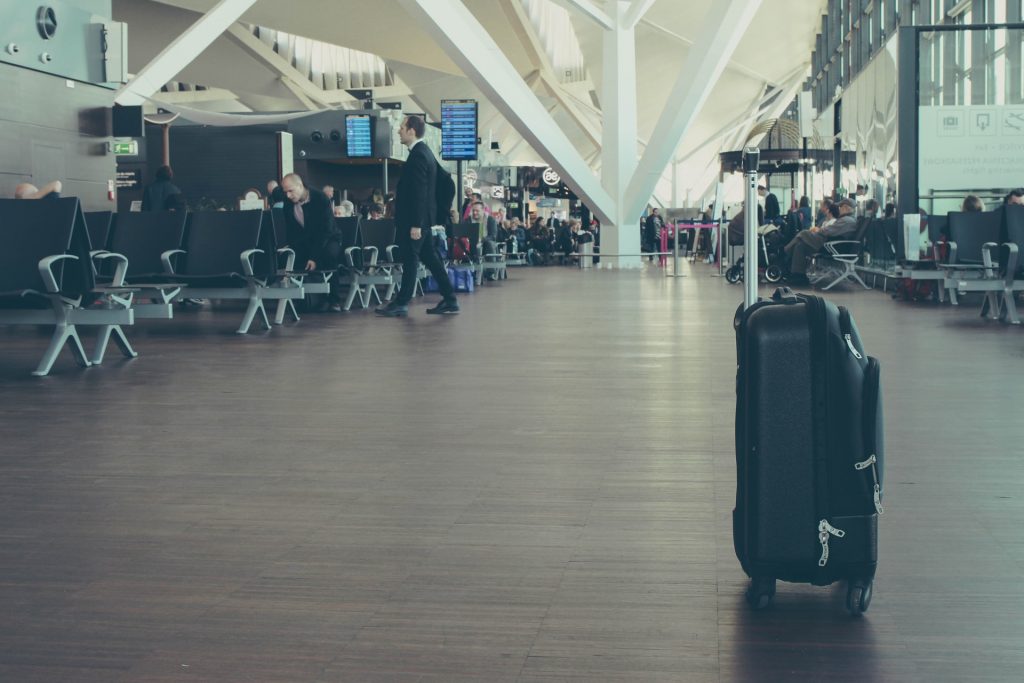
It is not recommended to fly to Scandinavia in a business suit. If you know that the flight will take a long time, it is better to dress in a casual style rather than in a business suit.
Photo: Rhema Kallanpur/Unsplash
Book an Accommodation in Advance Any trip requires a reasonable approach, with which you can save money on tickets and a hotel room. For this reason, it is recommended to use booking marketplaces to find the best prices for hotels and flights. Also, remember that early booking can significantly save money on flights.
By the way, if you often travel on business trips, then you need to find out if you can use the subscription for frequent flyers. Such programs offer discounts on flights and a few more privileges. You can find out about this on the websites of airlines.
If you are faced with the fact that your flight is delayed, then you have every reason to receive compensation. So if you come across this, you can contact the airport information point and find out how you can get compensation. Why not take this opportunity, if required by law?
The Oslo Pass
Get City Card In Scandinavia, there is a good opportunity to make your stay comfortable. It’s about the City Card, which allows you to visit museums and other attractions for free. Also, these cards provide the opportunity to use public transport for free. These cards can be booked for one day or a longer period. You can do this online.
Photo: Toa Heftiba / Unsplash
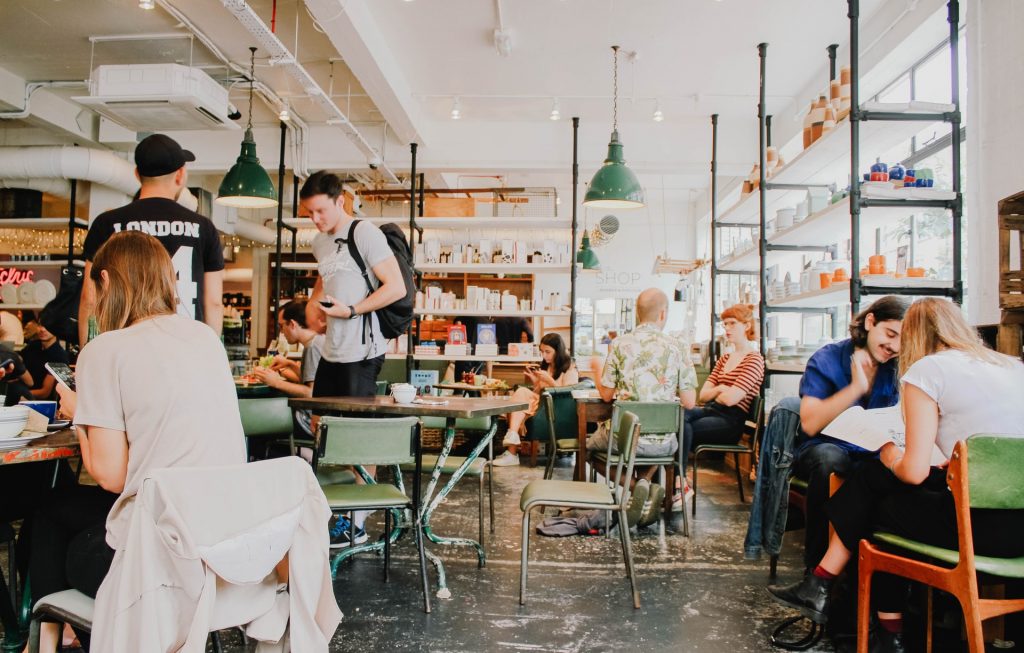
Choose Budget Cafes In Scandinavia, family cafes are very common, which allows you to eat delicious meals and even save money. Food prices in stores are average, so a cafe is a good option. Cafes and bars usually offer big dishes at affordable prices. But, if you have the opportunity to prepare your meals independently, then this is not a bad option too.
Feel free to ask local or your hotel staff where you can eat tasty and not expensive. Locals are always friendly and will certainly tell you decent places that tourists may not even know about.
Photo: Stephen Phillips – hostreviews-co-uk / Unsplasj
Take Care of Money Remember that you may be charged a commission from ATM services. For this reason, prepare some cash in advance. Monitor which commissions await you as a citizen of another country and take care to minimize them. Also, choose such credit cards to take with you that have no or low-commissions for transactions in foreign countries. On the official websites of the Scandinavian countries, you can find information on various fees and commissions.
Photo: Austin Distel – Unsplash
Feel Free to Make New Acquaintances A business trip to another country is a good opportunity to get useful contacts. So do not be shy at business meetings or conferences. Who knows, maybe this is your chance to completely change your life.
Familiarity with the locals is also a good investment in your future. After your business trip, you will definitely want to come here as a tourist. Then knowing somebody you may call will bring you real benefits. They will help you find cheaper accommodation, tell you what to visit and reveal a lot of secrets that tour operators do not even know about.
Photo: Karsten Koehn / Unsplash
Take a Walk in Scandinavia “In Scandinavia, there are a lot of places to see, regardless of which country you go to. Try to plan your business tasks in such a way to have free time and enjoy the beauties of nature, taste the famous herring and have a look at unique historical sights.” – shared the Writing Judge team.
Therefore, if you want to make your business trip a memorable and pleasant, don’t deprive yourself of the opportunity to enjoy the local flavor. Despite the pandemic, you still have the opportunity to enjoy some of the attractions. Most open-air attractions are open to visitors, as are most restaurants and cafes. Just check the visit rules and opening hours.
8 Tips to Make Your Scandinavia Business Trip More Efficient– Conclusion Now you know how to make your trip not only efficient but also significantly reduce your expenses. Do not forget that a business trip is a good opportunity to enjoy a new country. Despite the pandemic, you can visit the top places in Scandinavia and have fun. Remember that you need to comply with the new conditions of stay in the country. Do not forget to check for updates on official sites too.
8 Tips to Make Your Scandinavia Business Trip More Efficient, written for Daily Scandinavian by Jamie Fry. Jamie is a purposeful and promising author. At this moment he is working at writing services review companies, as Pick the writer and Writing Judge and enhances his blogging skills. Confidently goes to his goal. He has a talent for writing original content. The main conviction in his life: «To be the best in the field in which you are developing». Always in search of fresh ideas.
Feature image (on top) photo: Nick Karvounis / Unsplash
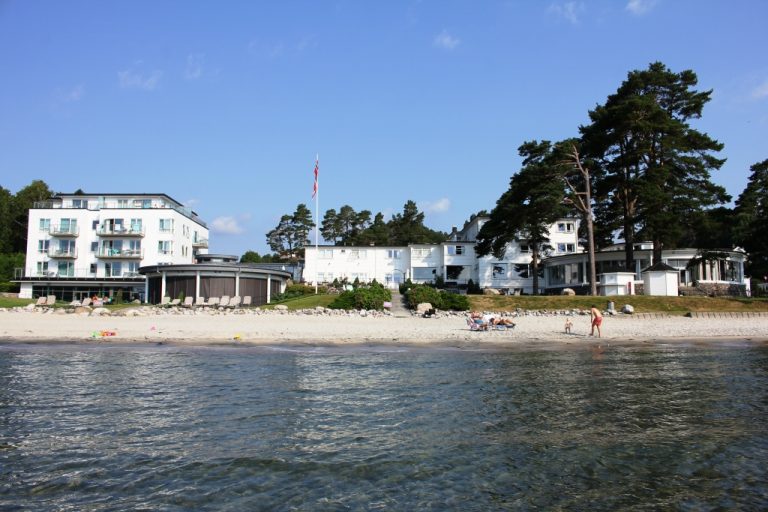
The history of the little village Fevik on the southern coast of Norway would be incomplete without the significant story of the Strand Hotel Fevik. When it opened for the first guests on 17th May 1937 it truly had an authentic soul. The architect was the acclaimed Eilert Smith from Stavanger. Read the significant story of a Norwegian beach hotel
Strand Hotel Fevik served as a grand dining room for the locals and an attraction for visiting guests. With its idyllic location and high standards, Strand Hotel Fevik soon gained an exotic appeal to people from far and wide. The scent of adventurous dishes from the kitchen appealed to the connoisseurs, and grand events attracted guests in increased numbers. Famous musicians helped make the hotel well-known as a popular dance venue.
Strand Hotel Fevik served as a grand dining room for the locals and an attraction for visiting guestsWith its idyllic location and high standards, Strand Hotel Fevik soon gained an exotic appeal to people from far and wide
One of the regular guests was the world-famous author Roald Dahl, best known for his magical tales such as ‘Charlie and the Chocolate Factory’ and the man behind the British television series ‘Tales of the Unexpected’ that aired between 1979 and 1988. He visited the hotel several summers with his Oscar-winning actress wife Patricia Neal. Roald Dahl lived in a simple room with a porch and sea views, where he found inspiration for his adventurous stories.
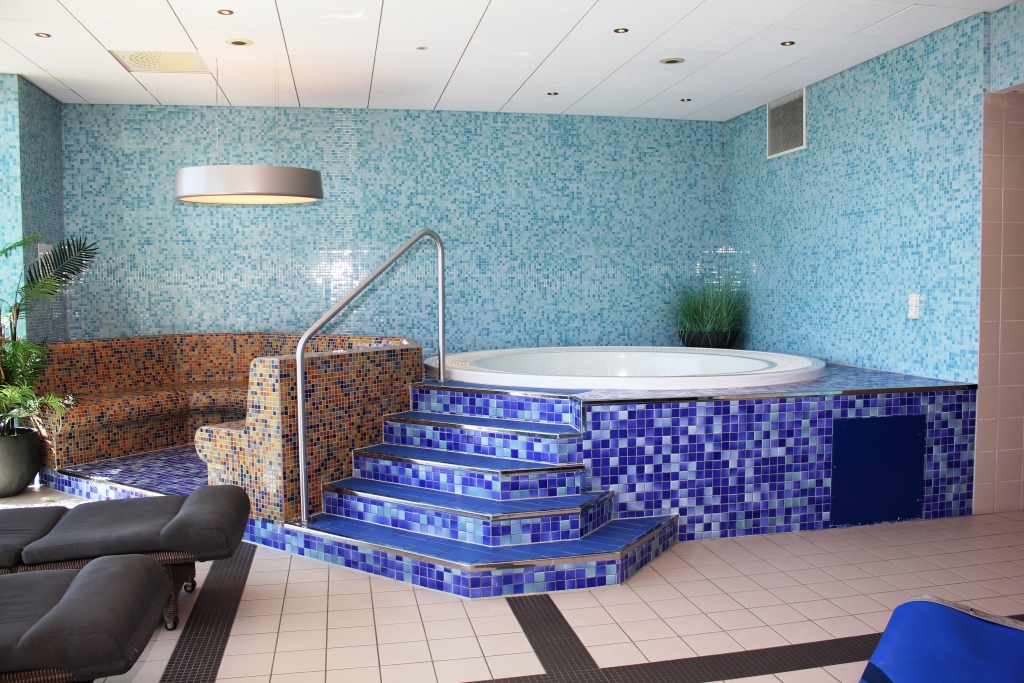
A large part of the rooms is modernizedFrom the spa
The end of an era
The opulence came to a halt after three good summer seasons before Norway and Strand Hotel Fevik were occupied by German officers in April/May of 1940. However, good management saved the hotel from serious damages.
The four-star Strand Hotel Fevik Fevik is situated 10 minutes by car from the coastal town of GrimstadFrom Grimstad
When the hotel was released in 1945, it was renovated and made ready for a new opening in 1946. But the post-war years became difficult, and the hotel had to resort to help from the neighboring farms to obtain raw materials.
Waiters at Strand Hotel Fevik. From left: Nadia, Siv and IdaThe main restaurant
Shortly after the war, however, the English moved into the hotel to the great excitement of the local community. The war was over and better times were ahead. In 1957, a small annex was built on the other side of the hotel in addition to a cafeteria facing the road.
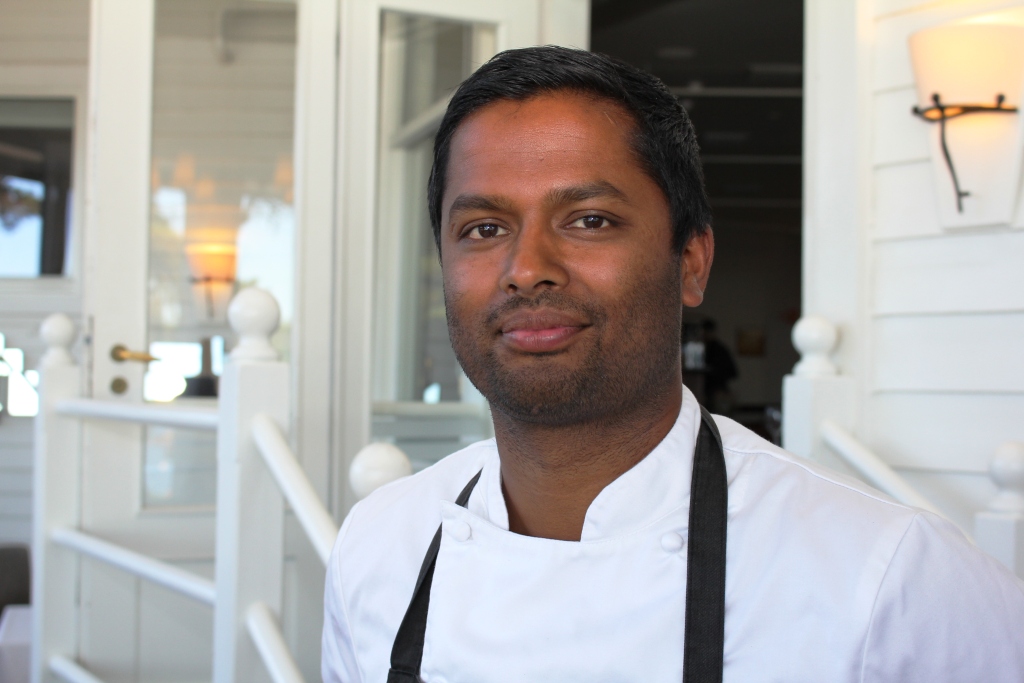
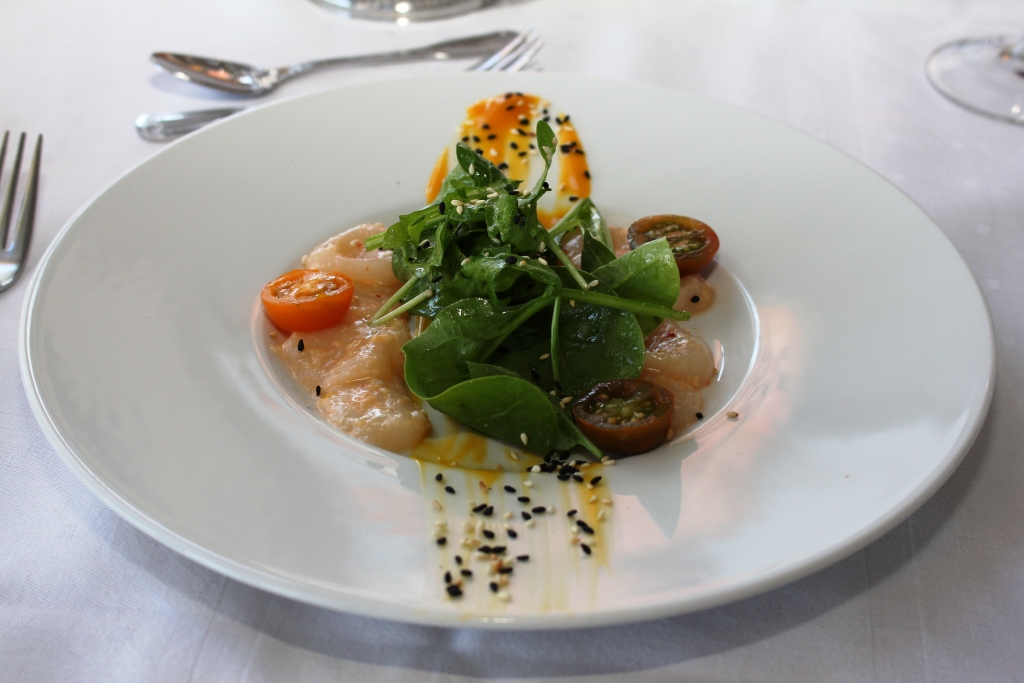
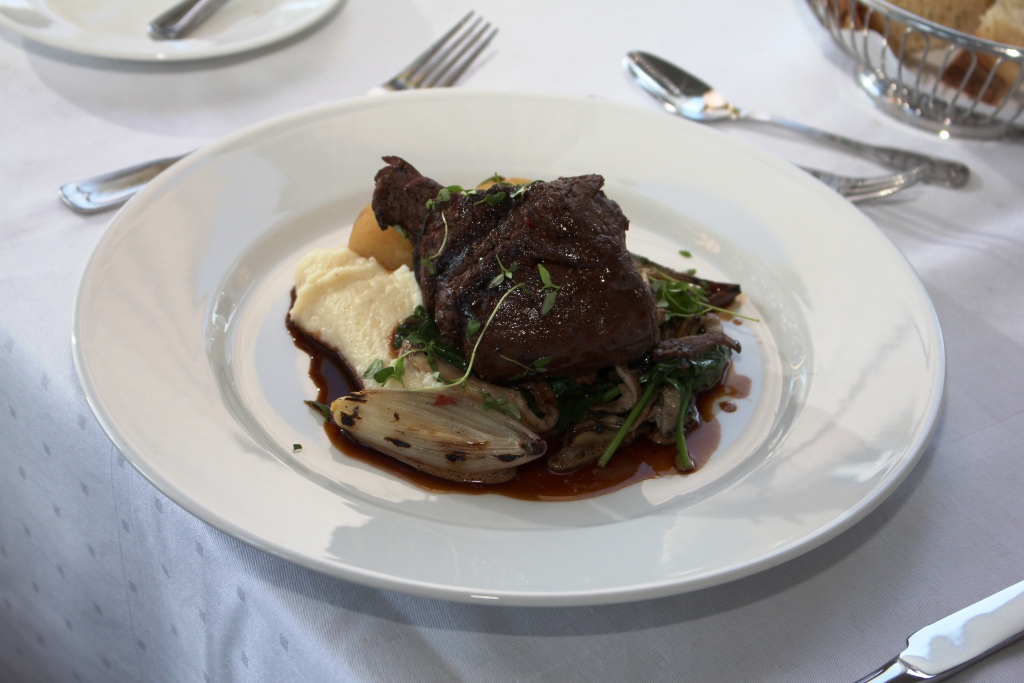
“Working in a restaurant means being part of a family,” says chef Philip Mitu HansenPart of a set menu at Strand Hotel FevikFish soup at Strand Hotel FevikMain dish
An exotic chapter There was a significant influence of exotic lifestyle when Mrs. Espinoza took over as manager in 1961. She was married to an employee at the Cuban embassy in Oslo, and she was a tough boss until 1975. In wintertime, the couple lived in the hotel, and exotic foods and drinks started to grace the dinner tables.
From Fevik HarborCatch of the day at Fevik
The hotel was sold to a new owner in 1975. He decided to build the conference building and modernized a large part of the rooms. The original summer hotel now became a year-round hotel, which has been upgraded and maintained ever since.
Hotel manager Anja BeislandFevik Strand Hotel seen from old E18
Hotel manager Anja Beisland tells us that when the hotel was closed in March 2020 due to the coronavirus, all employees were laid off. However, the two directors, Anja and Bodil Langerak, took turns to keep the hotel open throughout the period. A baker in Grimstad delivered breakfast in bags that were placed outside the doors every morning. There was an average of 12 guests per night during the three months when all other hotels were closed.
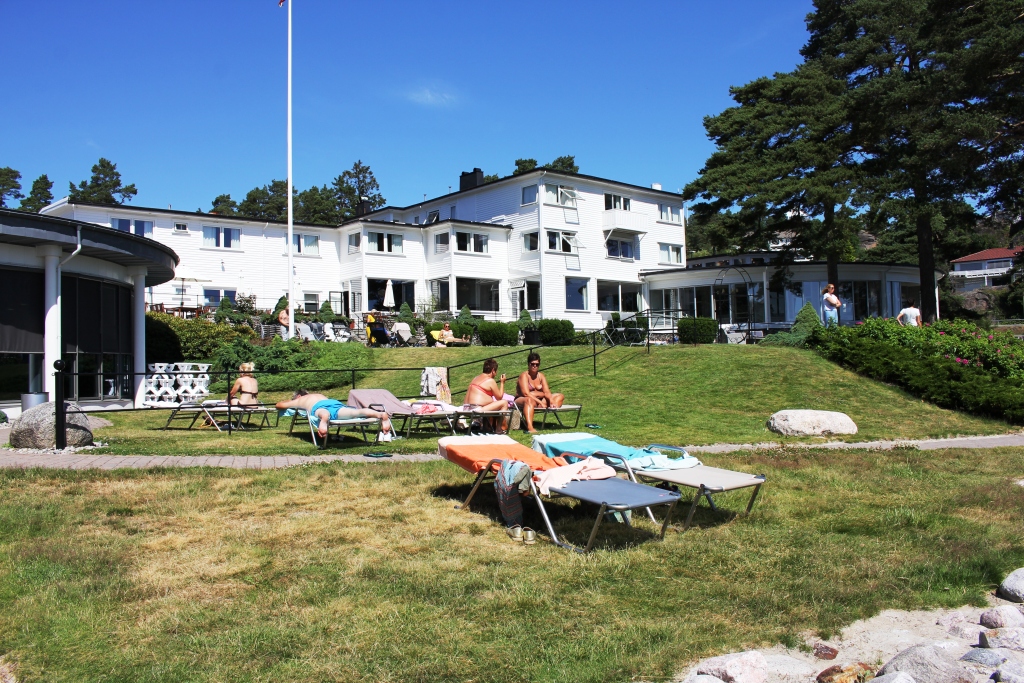
The beach area is probably one of the most pleasant in Norway.Guests can enjoy a park and a sandy beach
“Norwegian guests have ensured that the holiday market started earlier this year, and both regular holiday makers and weddings ensure that the hotel is virtually fully booked throughout the summer season,” says Anja Beisland.
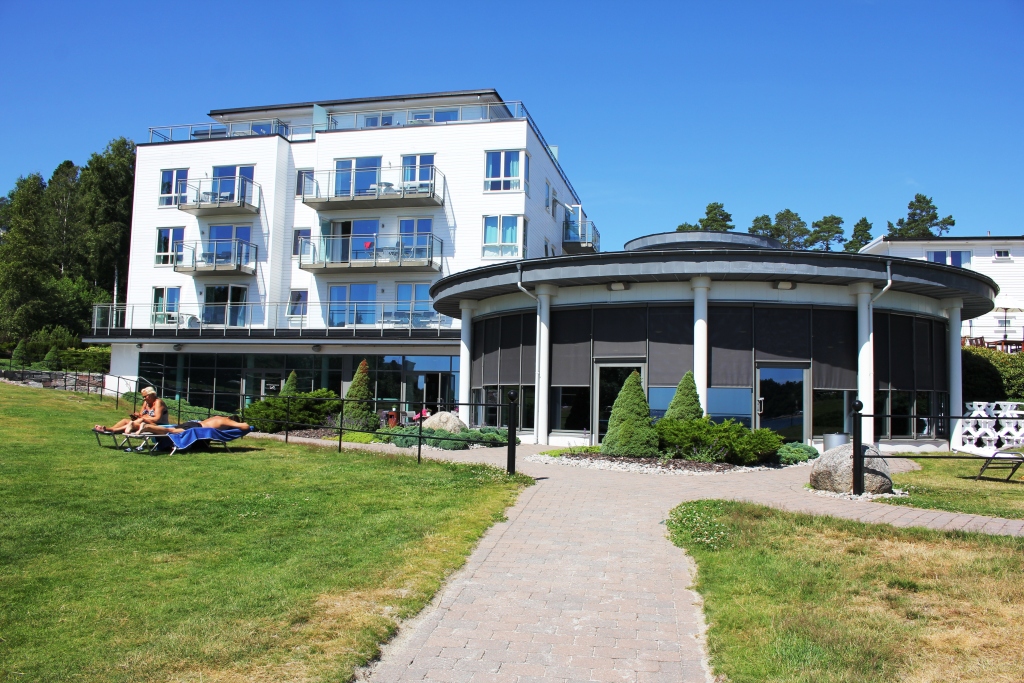
The four-star Strand Hotel Fevik Fevik is situated 10 minutes by car from the coastal town of Grimstad and features an outdoor and indoor bar, fine dining as well as conference and fitness area. Guests can enjoy a park and a sandy beach. Several of the 90 rooms offer sea views. There is also a dedicated area for guests bringing their dogs and cats.
Conference room facing the beach area
The restaurant offers a varied seasonal menu based on regional ingredients. Chef Philip Mitu Hansen says that working in a restaurant means being part of a family. “Nothing is accomplished independently,” he adds. The restaurant serves set menus and a la carte.
From Fevik harbor
The restaurant and adjoining parlor rooms reflects the history of the original building owners, Frida and Harald Hansen.
A new era Bunde Eiendom took over as owner in 2003 and the heyday was brought back. Past and history are carefully taken care of, and a new hotel building with extended conference facilities was opened in complete harmony with the functional architecture in the historic part.
From Fevik
From 2017, being part of Classic Norway Hotels, Strand Hotel Fevik gives a nod to both its past and present. The hotel doesn’t claim to be in the luxury segment, but all 90 guest rooms are modernized and comfortable, the service is excellent and the beach area is probably one of the most pleasant in Norway.
All photos: Tor Kjolberg The Significant Story of a Norwegian Beach Hotel, written by Tor Kjolberg
The Swedish “wellness village” Sätra Brunn on the outskirts of Stockholm is listed on Residence Christie’s International Real Estate for just over $7 million (70 million Swedish krona). The Swedish village for sale dates back to 1700.
The village is over 320 years old and has always been a place where self-care has been placed ahead of all else. Today, the village is a thriving business establishment with picturesque homes, hotel, preschool, church, a bathhouse mingle – and doctor Samuel Skragge’s spring water source.
Sätra Brunn Spa
Lots of space
In Sätra Brun it is space – lots of it. And what can compete with a whole village for sale? When Dr. Skragge bought the property in 1700, he built a well, a well house, a hospital, a church and housing. He opened the establishment in 1701. During the 17th century there was a large interest in therapeutic bathing and spring water and Skragge was well-read regarding the medical benefits of mineral water.
Visitors were invited to drink the town’s water every day and enjoy cold or warm baths, as they were believed to help emotional imbalances. Some years after the purchase, Skragge was pulled into the Russian campaign and could therefore not finish his plans for the well. However, the business continued without him and a sophisticated building style began to take shape over the years.
Bridal path
The grounds and houses were bought in the 1740s by bishop Kalsenius from Västerås. The property was bequeathed to Uppsala University, one of Sweden’s top universities, a few years later.
Stable and recurring revenues
During the 1930s, the well experienced a period of more stable and recurring revenues when the Swedish retirement agency (later the insurance agency) annually referred patients to the well for care and healing.
In 2002, Uppsala university sold Satra Brunn to 16 local entrepreneurs and the village has since been run as a spa and events venue. Since 2015, a bottling business has operated in the village. It is included in the sale. It is only one of seven springs to be awarded Sweden’s highest water purity designation.
Many have visited the well throughout the years and it has traditionally been financed by paying guests including aristocrats as well as commoners. The property located in Västmanland County was home to a famous holistic research center that was in operation from 1747 until 1991, as well as Hotel Nybygget (“New Building”) that was the largest hotel in Sweden when it opened in 1792.
The property on sale at Christie’s Real Estate includes the entire village and every building located within its limits. Berabo (Living on the Hill) is the name of this house.
An entire village for sale
The property on sale at Christie’s Real Estate includes the entire village and every building located within its limits. In addition to the insane bragging rights that come with owning a village, the winner of the auction will also be purchasing 84 acres of undeveloped, picturesque land, along with the town’s 70 buildings, many of which were built using locally sourced timber. The current owners claim the buildings are only in need of minor work.
Although the town produces 30 to 40 million Swedish krona ($3.25 to $3.7 million) in business income each year, one of the owners, Mats Wikman, recently told the New York Times that they are looking for younger owners who have the energy and time needed to keep it running.
Registered as a limited company
Satra Brunn and all its real estate is registered as a limited company, meaning there are no restrictions for foreign buyers, according to broker Jonas Martinsson, who described the architecture of the village as a “walk through time.”
The Scandinavian region in the North of Europe consists of Sweden, Norway, and Denmark. This part of the world is relatively undiscovered in comparison to other parts of the world. So, it is most mysterious and only has a reputation for having a large number of trees and lakes with very long, dark winter periods. However, you only need to visit Scandinavia once to fall in love with it. In this article I will uncover 7 Fun Facts About Scandinavia
The people are generally known to be happy and also live a healthy lifestyle. But there are many amazing things about Scandinavia that people do not know. Many of these are pretty fun and weird at the same time. Some of these are discussed in the fun fact by best paper writing services about Scandinavia.
If you are looking to define Hygge in Scandinavia, you cannot look past coffees
Scandinavians drink 9 cups of coffee daily, and Denmark are the highest consumers of candle If you are looking to define Hygge in Scandinavia, you cannot look past coffees and candles. In Scandinavia, the highest consumers of coffee are Norway. The average person consumes up to 9.9kg of coffee per year. Denmark consuming about 8.7kg and Sweden 7.6kg.
To put this into context, the average person takes up to 7 to 9 coffee cups per day. Weirdly, people drink just one cup of coffee in other parts of the world. This means that Norway consumes up to 10 times more coffee than anywhere in the world.
Similarly to coffee, Denmark burns the most significant amount of candles in the world. According to Prof. Gunnarsen, who carries out dissertation service at essay writing service. No country in the world burns more candles than Denmark and Danes have the shortest life expectancy in Europe. Hygge is a widespread practice in Denmark, and this is a popular practice for Danes. This is one of the reasons why they burn so many candles.
Another reason has to do with the weather in Denmark. Unlike other parts of the world, it gets dark very quickly in Denmark. Even during the summer, there are days when people put the lights on throughout. Hygge usually comes after September, and everyone has to sit indoors and light their candles to avoid the cold weather and wind.
You get a pepper pot if you are not marrying before the age of 30 in Denmark. Photo: Onlinevarer.no
You get a gift if you are not marrying before the age of 30 in Denmark Several traditions in Denmark appear weird to outsiders, but it is their everyday practice. For instance, it is a common tradition in Denmark for people to put up the country’s flag at different occasions. If someone is celebrating a birthday, they put up the Danish flag at the entrance of their house or at the window as a sign that there is an occasion going on.
But one of the funnily-weird traditions in Denmark has to be the one towards 30 years olds that are yet to marry. A male in Denmark that is above 30 and is yet to marry is called a Peppervenn (pepper journeyman), while the female in Denmark that is yet to marry above 30 is called a peppermø (pepper woman). They sometimes give these people a giant pepper mill from decorated oil drums.
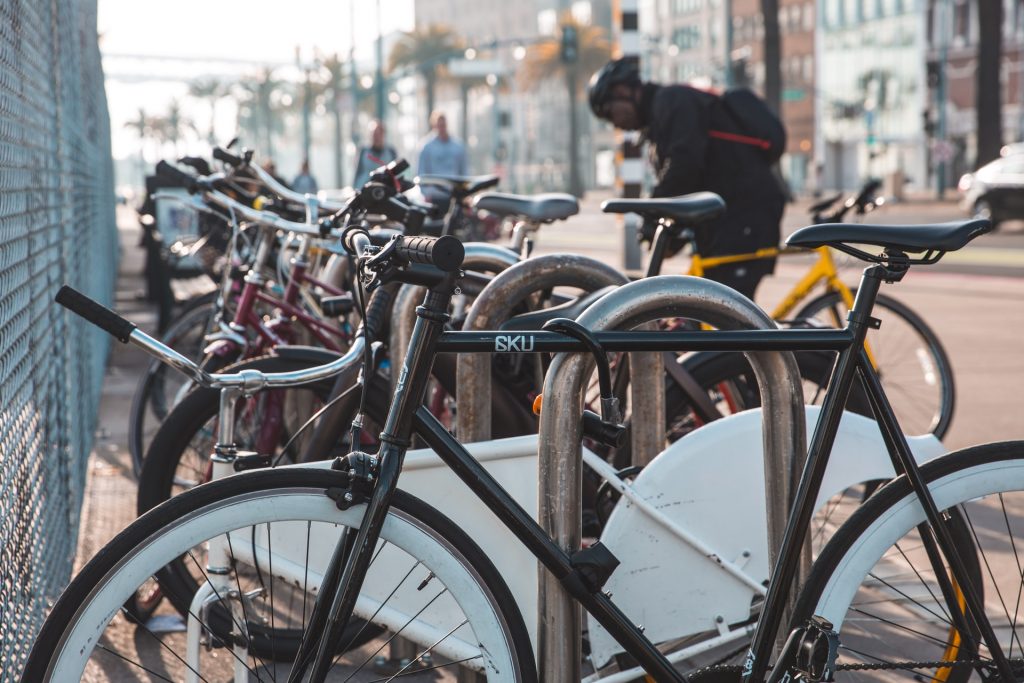
Biking is one of the essential means of public transportation in Denmark. Photo: Josh Bean / Unsplash
Biking is a form of public transport in Denmark Biking is very common in Denmark, and it is something that they do every day. Unlike many other regions of the world, biking is not something that the Danes do as a hobby. As a matter of fact, it is one of the essential means of public transportation in Denmark. To understand how many people who bike in a day in Denmark, reports claim that Danes ride up to 1,270,000km per day. That is like moving 30 times around the world in one day. There are only a few things in the world that are more impressive than this to me.
The letter Å is the last letter in the Scandinavian alphabet
The languages of Scandinavians are very similar, and they can understand each other Although the languages spoken in Scandinavian countries are different, they are very closely related. The Swedes, Norwegians, and Danes are commonly called the children of ‘Old Norse.’ This explains the closeness of their languages. However, it can be complicated to understand the words depending on the strong accents of individuals and the dialects.
Even with the proximity of their languages, meetings between the Scandinavian countries of Denmark, Sweden, and Norway are often conducted in English. This is to ensure that there is a clear understanding between all parties with proofreading, as the accents and dialects are likely to complicate things in their natural language.
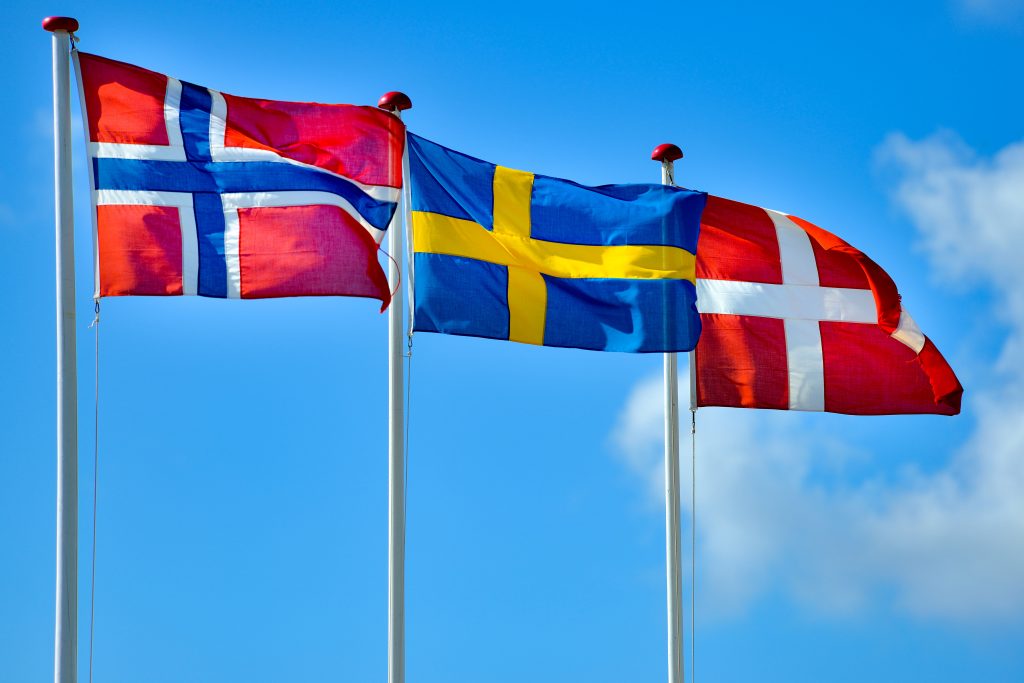
Scandinavian flags. Photo: arkivforbundet.no
Scandinavian countries use the Nordic cross There is one common thing with the flags of Scandinavian countries. They all have a cross design through the center of the flag. The colors of the flag are different as expected, but the models are basically the same.
Polar night in Northern Sweden. Photo: Visit Happaranda Tornio.
Northern Norway and Northern Sweden experience darkness during the winter During the winter period in Norway and Sweden, there are parts of the countries where they experience darkness during the day. This phenomenon is also called Polar Nights. When this happens, the sun does not come up on that day at all, and in some parts of the region where the sun shows up, it is only up for a maximum of 3 hours. Many in the country believe that this phenomenon slows pregnancies in their women. (In these regions the sun never goes sown during summer. Editor’s note) Meanwhile, a report from NRK shows that there are more births in April in Norway than other months of the year. The only exception to this is the town of Bodo, in where the deliveries are highest in October and November.
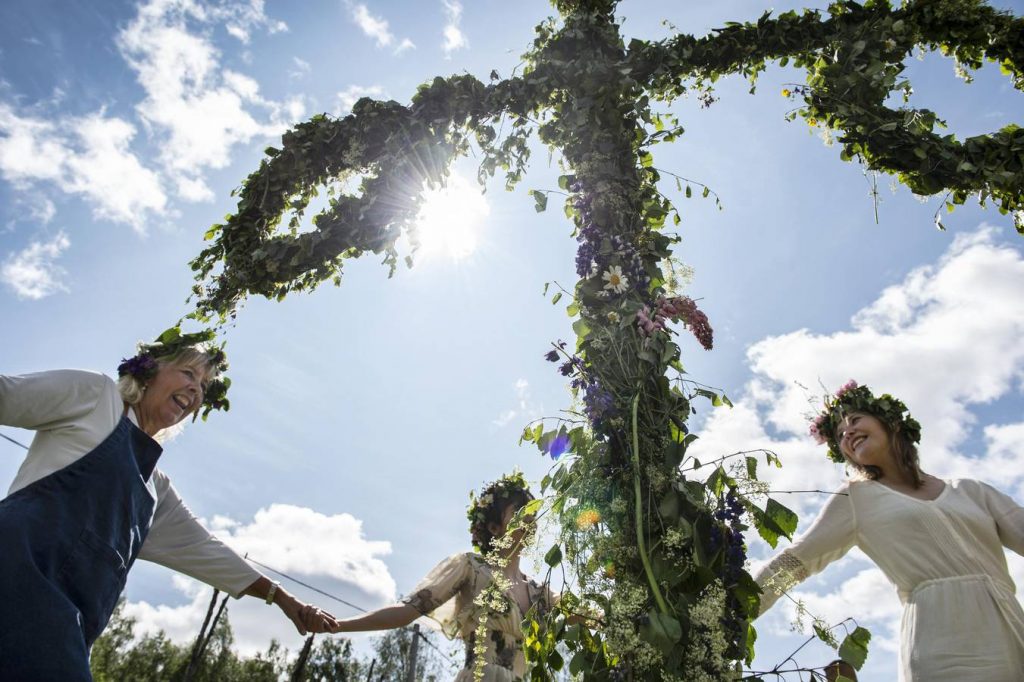
Midsummer in Sweden. Photo: Visit Sweden
Swedes dance around a maypole This is a common practice in Sweden during the midsummer. Both young and old gather around a maypole, singing and dancing around the pole. While they do this, they also act like or pretend to be horses, pigs, frogs, and different animals. This practice is fun and weird at the same time. As ridiculous as it sounds, it is an experience that you should look forward to if you are in Sweden during the summer. You will enjoy this experience and are most likely to hum the songs throughout your summer stay in Sweden.
7 Fun Facts About Scandinavia – Conclusion Scandinavia is a fun place to be, even though it is not a common location for the summer holidays. They list them as the happiest people on earth. You are definitely going to enjoy some friendly reception and get the chance to see beautiful places and be a part of the numerous summer activities that is a practice for the Scandinavians. Prepare yourself to eat a lot of pasta if you are going to Denmark as they are known to eat more pasta than any other country.
Serena Dorf
7 Fun Facts About Scandinavia is written exclusively for Daily Scandinavian by Serena Dorf. Serena has been working as an editor and a copywriter at best UK essay writing service where they offer the best paper writing services in London for 3 years. She is also a professional content writer and journalist in such topics as inspiration, productivity, education, and technologies.
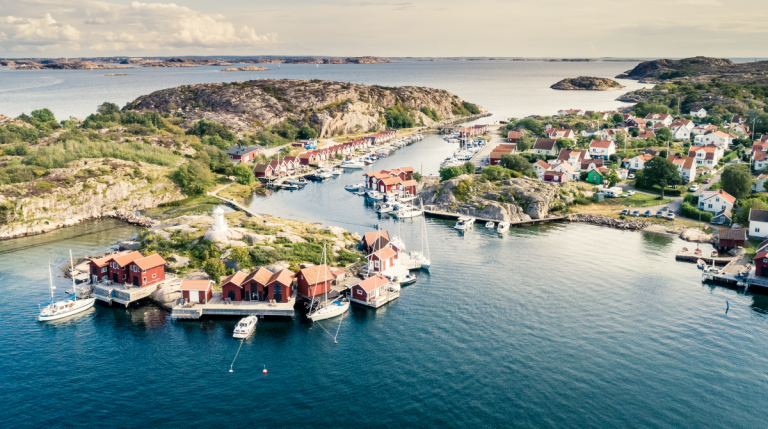
From the sandy beaches of Halland to the bustling city of Göteborg and the rocky shores of Bohuslän, the Swedish west coast has long been a summer playground for Scandinavians.
The west coast of Sweden, generously dotted with beaches and fishing villages, is 400km (250 miles) of glorious coastline divided in two by the city of Göteborg (Gothenburg). It has been a favorite holiday spot since the early 20th century for Swedes as well as Norwegians. The beaches are on the southern province of Halland. North of Göteborg, in Bohuslän, is a majestic coast of granite rocks and islands.
The E6 connects all larger cities, but you should choose the small coastal roads to discover the gems. Starting along the coast in the northwestern corner of the county of Skåne, a number of small towns offer views into the past.
From Viken. Photo: Wikipedoa commons
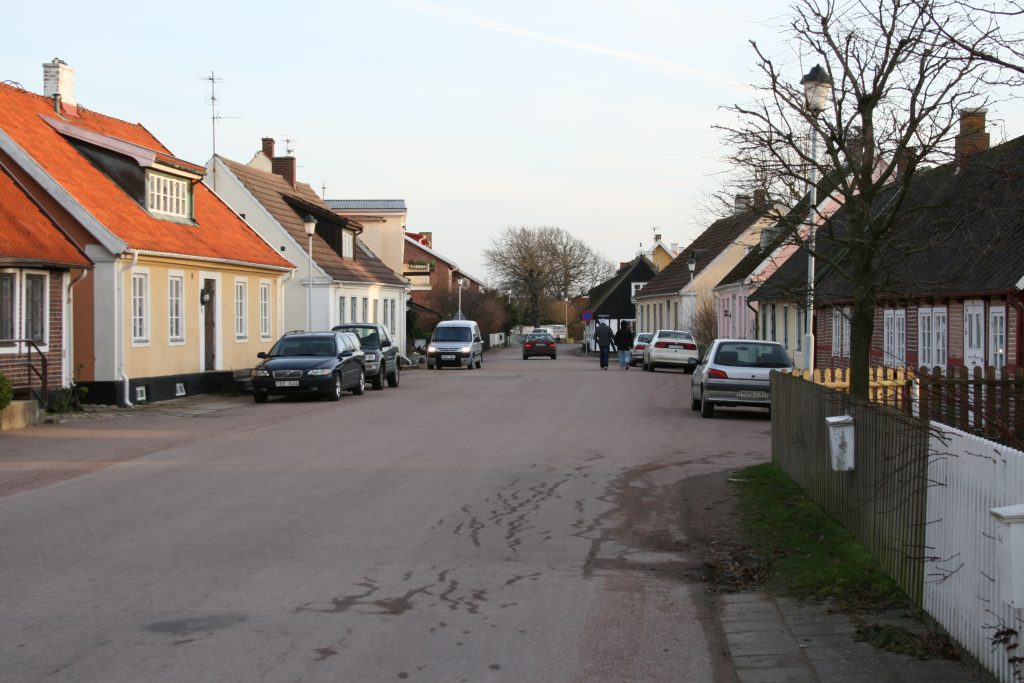
Gamla Viken, 15km (9 miles) north of Helsingborg on Highway 22, is a picturesque fishing village.
Torekov, at the tip of the next peninsula, has a sea side golf course and boats to the island of Hallands Väderö, where you can spot seals basking offshore.
Surfing at Halland coast. Photo: Adde/Region Halland/Visit Sweden
The Halland Coast Halmstad, the larger town in Halland and Sweden’s ‘golf capital’, lies on the river Nissan. Halmstad Castle, the provincial governor’s residence, was built in the 17th century by the Danish king Kristian IV. In front of the castle is moored the old sail-training vessel Najaden, built in 1897.
Other sights include St. Nikolai, a 13th century church. Tylösand, 8km (5 miles), west of Halmstad, is a popular holiday resort with a predominantly sandy beach and two golf courses. There are good beaches at Östra Strand, Ringenäs and Haverdalsstrand.
Halland – Rosendal. Photo: Visit Halland
Falkenberg, 40km (25 miles) north of Halmstad, is on the Ätran, a river famous for its salmon. The old part of the town with the 18th-century wooden houses and cobbled streets is centered on the 14th century St. Laurence Church. There is an old toll bridge (tollbron) from 1756 and Sweden’s oldest pottery, Törngrens Krukmakeri, run by the Törngren family since 1789).
Sicietetshuset in Varberg.. Old postcard/Wikimedia commons
Good beaches are found at Olofssby (north of the town and Skrea Strand (south of the town).
Continue 30km (19 miles) north of the E6 to Varberg, a bustling place combining spa, resort, port and commercial center with a ferry service to Grenå in Denmark. Varberg Fortress stands beside the water and houses a youth hostel, restaurant, apartments and a museum.
The Bocksten man. Photo: Wikimedia commons
Pride of place goes to the Bocksten Man, the only preserved figure in the world wearing a complete costume from the Middle Ages. Reminders of Varberg’s late 19th century development as a spa-resort, include Societetshus (1883), an elaborate wooden pavilion in the park, and a bathing station (1903), a rectangular wooden structure open to the sea, with changing huts and deck chairs round the site. After a quick plunge in the pool, bathers can relax over coffee and waffles.
Feature image (on top): BohusMalmön. Photo Lukas vastsverige.com
A Summer Playground for Scandinavians, written by Tor Kjolberg
Just like every other part of the world, the Scandinavian countries are equally affected by COVID -19. Be it Sweden, Denmark, or Norway, the political, economic, and health impact is significant. Denmark, due to its quick and strict policies, has managed to control the pandemic. However, the stringent measures come at the cost of a sluggish economy. So, what will be the impact of coronavirus in Scandinavia?
Similarly, the resource-rich Norwegians are having a tough time as well. On the other hand, Sweden has not been able to control the pandemic, with more than 2000 active cases, even its neighbors have closed their borders to the country. In this article, I will discuss some effects of this life-threatening virus in Scandinavia:
Unlike other Scandinavian nations, Norway is different. Photo: World Economic Forum
Norway
Oil and Gas Unlike other Scandinavian nations, Norway is different. Being the biggest oil producer of Western Europe, it acquires a unique position. With the rise of the contagion, the economy of the country has stumbled. Economic experts say that unemployment has quadrupled since the pandemic. Since Norway is an oil and gas generator, it is likely to be affected the most by the pandemic. The disruptions in demand and price will leave both short and long-term impacts on the country’s economy.
The Wealth Fund The Wealth Fund is one distinct thing that differentiates Norway from the two Scandinavian countries. It is a saving account of the country for a rainy day. Before the pandemic, the government used to take out 3% of the funds for its budget. However, the corona shock will force the authorities to take out more funds as the entire economy is facing a tough time.
As per economic experts, Norway, which had a strong economy, because of oil and tourism, is likely to be in the same cue with other countries. The only thing that gives hope to the Norwegian government is its savings. Once the pandemic is over, the economy will need to be restarted.
Sweden showed a controversial approach to the virus. Photo: World Economic Forum
Sweden
A Relaxed Lockdown Sweden showed a controversial approach to the virus. Sweden is one of them. The country dealt with the pandemic with light hands. People were often seen hanging out in cafes and bars when a strict lockdown was imposed in other parts of the world. Similarly, restaurants, amusement parks, and schools were seen open with some guidelines of social distancing.
Impact of Sweden’s Plan The plan of the Swedish government, which was made to secure healthcare without putting much pressure on the economy, has blown away to pieces. With thousands of infected people, the Swedish government was ineffective in controlling the spiraling virus.
In comparison to its neighbors, Norway, and Denmark, the mortality rate in Sweden was higher. Thus, experts have predicted that the country will come into acute economic pressure and a high unemployment rate.
Unemployment and GDP The rate of joblessness, which was 6 % in 2019, has now jumped to 9%, exports are likely to get affected, and GDP will face a serious downfall. Sweden, which is largely dependent on the exports, will have to halt several businesses. The truck makers Scania and Volvo cars are the best examples of it. These two big companies in Sweden are unable to run their operations due to insufficient supply chain.
One thing that makes Denmark stands apart from other nations is its budget surplus and the lowest rate of debt. Photo: World Economic Forum
Denmark
Low Debt Rate Coronavirus has proved to be highly expensive for Denmark. From cutoffs in monthly compensation to decreased revenues, the virus will leave a long-lasting impact on the country. One thing that makes Denmark stands apart from other nations is its budget surplus and the lowest rate of debt. However, if the pandemic continues, the country will have to face problems.
A Stable Economy Denmark was enjoying a strong economy before the outbreak. However, this major hit has left severe cracks in its plans. With no clue about when the virus will get over, the government is sitting in a perplexing situation. However, the position of Denmark is far better than many others. The government is satisfied that the country has enough savings to smooth them over until the world economy restarts.
GDP and Exports As far as the GDP is concerned, it will shrink by 5 % this year in comparison to neighboring Sweden, which will face the shrink by 9%. Experts think that the economic hit will not be highly tough for Denmark as its main exports are based on pigs and drugs. Sweden will have a much larger impact as its exports are on the luxurious side like cars, trucks, and other vehicles. At present, the unemployment rate in Denmark is not that bad. It’s just 4%, but since the government employees are facing great cutoffs, it may increase further.
If the global economy does not recover soon, Scandinavia will suffer as well.
What Will Be the Impact of Coronavirus in Scandinavia? Final Thoughts Economic experts are of the view that Scandinavia’s strength is based on exports. Thus, it makes itself dependent on other countries like Germany, U.S, Italy, etc. If the global economy does not recover soon, Scandinavia will suffer as well.
A lack of exports from Scandinavian countries is affecting businesses in other countries as well; Carpet Cleaning Tunbridge Wells in the UK reported that their supply of cleaning products was disrupted as a result of an overall disruption in the supply chain from Scandinavian countries. The same is the case with restaurants, bars, amusement centers, car dealerships, and many more.
Some experts suggest that if the world faces another pandemic, the containment approach adopted by Denmark will be ideal. Their policy of restricting few places instead of imposing a country-wide lockdown seems to have worked best.
At this stage, it will be unreasonable to judge the overall impact of the virus on Scandinavia. It is because the virus is still alive, and some countries are experiencing the second and third rounds. However, it can be said that the unemployment rate has doubled and can decrease further if the situation gets worse. Besides this, exports are facing a significant hit, luxurious goods are experiencing a decrease in demand, and GDP is showing a downward trend.
Authorities need to rise, use the surplus budget, and develop strategic plans to combat the sluggish economy. After controlling the short-term impacts of the virus, steps need to be taken to deal with the long-term impacts. Fiscal policies need to be revised, and a coherent plan is the need of an hour.
What Will Be the Impact of Coronavirus in Scandinavia? written exclusively for for Daily Scandinavian by Myrah Abrar. Myrah is a computer science graduate with a passion for web development and digital marketing. She writes blog articles for Carpet Cleaning Tunbridge Wells.
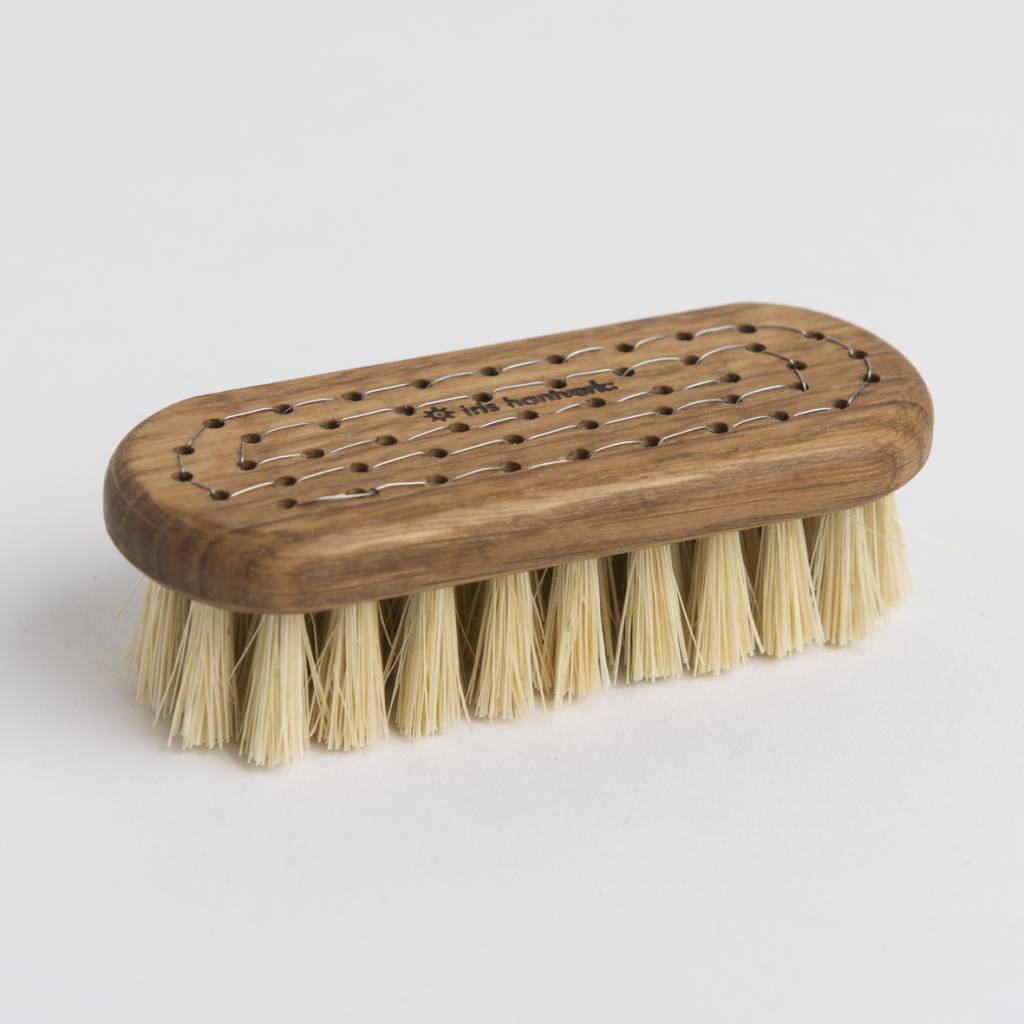
Swedish Iris Handverk officially started in 1953 and is telling the story of how an isolated group reclaimed the right to active participation in society. Today, Iris Hantverk, handmade brushes from Sweden, is acclaimed all over the world.
The brushes of Iris Hantverk are based on over one-hundred-year roots and is the brush-binding business that gave the word hand-made a whole new meaning. It all started out in Stockholm, and still every brush is lovingly crafted by hand by visually impaired craftsmen before they employ incredibly satisfying, beautiful, hyper-specialized machinery to trim the bristles.
The brushes of Iris Hantverk are based on over one-hundred-year roots and is the brush-binding business that gave the word hand-made a whole new meaning
A long Swedish tadition
Not only are the brushes hand-drawn for exceptional durability and functionality – it tells the story of how industrialization forced people to leave rural areas and move to the cities. It brings a new dimension to the concept of sensitively made by hand.
Iris Hantverk is continuing a long Swedish tradition of training and employing visually impaired artists and artisans in a small studio consisting of 16 people who continues to craft some of the best sustainable cleaning solutions out there.
Beautiful and functional
Using national materials and Swedish wood exclusively, Iris Hantverk produces brushes that are as beautiful to look at as they are enjoyable to use. All brushes are of exclusive design and is sold in shops all around Scandinavia and worldwide.
Each brush is designed exactly suited to its purpose. However, a brush designed for cooking pots and pans and ideal for cast irons, might also be perfect for cleaning old dirt out of pots and pans in the garden shed.
Every brush is lovingly crafted by hand by visually impaired craftsmen
Hand-Made Brushes from Sweden
With a range of our 100 brushes, Iris Hantverk is so much more than just household products. The brushes are everyday items that age beautifully.
Hand-Made Brushes from Sweden, written by Tor Kjolberg
The 66-foot vessel was discovered in 2018 by NIKU (the Norwegian Institute for Cultural Heritage Research)and Østfold County Council just beneath the topsoil at a depth of 1.6 feet. The archeologists were using newly developed motorized geo-radar systems. It is now stated that the ship, called the Gjellestad ship, is from the Viking Age. Read more about the historic Viking Longship discovered in Norway.
The find has caught worldwide media attention as the archeologists were able to see five long houses, at least 10 burial mounds and a keel of a Viking longship at Gjellestad outside Halden in Norway. The Museum of Cultural History at the University of Oslo is responsible for the excavation.
This will be the first excavation of a Viking ship in 100 years in Norway. Overview: NIKU
First Viking Excavation in 100 years
This will be the first excavation of a Viking ship in 100 years in Norway, and the technology behind the spectacular finds is also getting a lot of attention. Parts of the wood and the keel are still missing, but the examinations shows that the timber in the ship was chopped after the year 732, so it probably dates to the period between late 700s and the beginnings of 900s.
In a statement NIKU department head Knut Paasche said, “This will be exciting for all of us, regardless of whether you are an archaeologist or just have a medium interest in our past.”
How the geo-radar system works
The motorized geo-radar system used can be compared to an echo sounder that sends a signal down the ground with a reflex. Based on these signals, archaeologists map out areas that stand out from its surroundings – so-called anomalies.
Burial of a significant person
“This is the first half of the Viking Age, and it indicates concurrency with the other major ship finds we know in Norway. The ship fits into a context we already know, while at the same time it is a new ship that will further complement the story,” said project manager Christian Løchsen Rødsrud.
Although no remnants of people have been found at Gjellestad, the archeologists are sure it has been a person of great significance from the upper social classes buried there. “Or more than one. There were two women in the Oseberg grave, so it doesn’t have to be limited to one,” sais Rødsrud.
Feature image (on top): Illustration University of Oslo
Historic Viking Longship Discovered in Norway, written by Tor Kjolberg
According to a new study by British insurance company NimbleFins covering 30 European countries, Sweden and Norway ranked no. 1 and 2, respectively. The 2020 study analyzed the most recently-available environmental data from Eurostat, the European Environmental Agency and the World Health Organization to determine which EU countries are the greenest—both in terms of natural environment and human impact. The Two Greenest Countries in Europe 2020 are Scandinavian – read more. The best European countries for environmental sustainability are good at limiting landfill, recycling waste, consuming less energy, using a higher proportion of renewable energy and having clean air, plus they have a substantial proportion of natural land like forests and ample renewable freshwater. With this in mind, the scoring system for 2020 uses relevant publicly-available data to rank each country across several categories. Lower scores indicate higher ranks (i.e. greener countries).
Sweden is the standout greenest country in Europe. Photo: Frank Vessla/Unsplash
Sweden – the greenest country in Europe
Sweden is the standout greenest country in Europe. It ranked in the top 3 countries for greenhouse gases emissions, air quality, energy and land. For example, PM2.5 fine particulate matter concentration in the air of 5.9 means Sweden tied for the cleanest air in Europe with Finland and Iceland. Greenhouse gas emissions are the lowest at 5.4 tons per capita. In Sweden, only 0.4% of land is artificial surfaces. But while a high proportion of energy comes from renewable sources (55%), the actual per capita consumption of nonrenewable energy is still one of the highest in the EU (3.0 TOE per person).
Norway- the second greenest country in Europe
Norway ranked as the second greenest country in Europe, largely due to their strength in the energy category where they ranked 1st with a 73% share of energy from renewable sources (the highest in the group). Norway also has a great supply of renewable freshwater resources, with 74.4 thousand cubic metres per capita (second only to Iceland). Norway didn’t perform as well in the waste and greenhouse gas categories, due to high volumes of municipal waste per capita (508 kilograms per capita vs. an average of 460) and greenhouse gas emissions (10.1 tons per capita vs. an average of 9.4).
Denmark ranked 17 on the list and the Czech republic was at the bottom.
This study includes a wide variety of data in order to characterize each country’s burden or benefit to the environment
Discussion of Categories
This study includes a wide variety of data in order to characterize each country’s burden or benefit to the environment. The data is categorized into six groups: waste, energy, greenhouse gases, air quality, freshwater and natural land. Each score is based on a country’s rank across these categories.
Photo: Jasmin Sessler/Unsplash
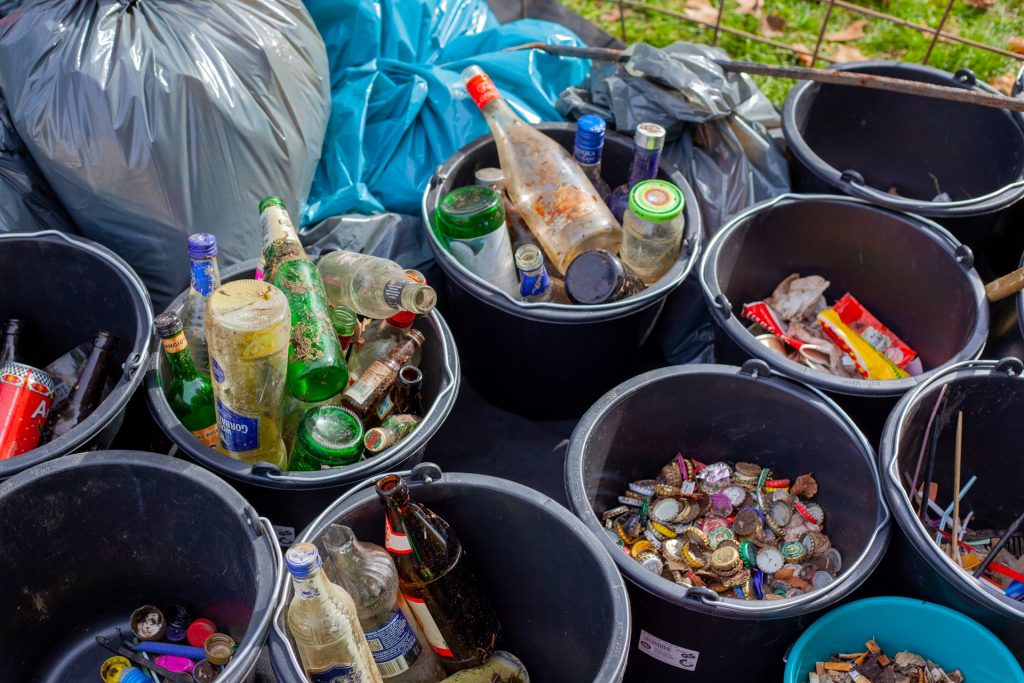
Waste & Recycling Waste puts an incredible strain on the environment, for instance by filling up landfills. Reducing the amount of waste, we produce and increasing recycling rates are both critical steps towards reducing the human impact on Earth. In fact, the EU has set waste targets to recycle 65% of municipal waste and reduce landfill to a maximum of 10% of municipal waste by 2030. Municipal waste includes that from households, commerce, offices and public institutions.
On Waste & Recycling, Germany was on top of the list while Sweden, Denmark and Norway ranked 9, 15 and 17 respectively. Cyprus was on the bottom.
Energy Energy consumption is an important environmental factor because non-renewable energy sources such as fossil fuels (e.g., coal, oil, and natural gas) are more harmful to the environment both to extract and burn. To quantify how energy consumption compares, the study ranked countries on both the amount of non-renewable energy consumed per capita and also the percentage of consumed energy sourced from renewable sources such as hydropower, solar, wind, geothermal and biomass energy.
Norway ranked 1st in the energy category with 73% of energy coming from renewable sources and 2.8 tons of oil-equivalent non-renewable energy consumed per capita. Iceland ranked 2nd, with a 72% share of energy from renewables and Sweden ranked 3rd, and Denmark 5th with Luxembourg on 30th.
Greenhouse gases. Photo: Kouji Tsuru/Unsplash
Greenhouse Gases
Greenhouse gases trap heat in the atmosphere and contribute to global warming, which is responsible for rising temperatures and more extreme weather conditions around the globe. Extreme weather includes severe storms and associated flooding in some areas to extended droughts in others; or record-breaking heat waves and cold streaks across the globe. Greenhouse gases include those from international aviation. For interest, we include sub-data for gas emissions from agriculture and cows.
Sweden, Malta, Croatia and Romania ranked as the countries with the lowest levels of greenhouse emissions in our study. Sweden releases just 5.4 tons of greenhouse gases per capita a year. In contrast, Luxembourg is the worst country according to this metric and is responsible for 20.3 tons of greenhouse gases per capita annually. Denmark and Norway ranked 18 and 21 respectively.
Photo: Sweden.se
Air Quality
The most damaging air pollution particles are PM2.5 (particles less than 2.5 micrometers in diameter) because they can penetrate deeply into the lungs when we breathe due to their small size. A study in the USshowed that PM2.5 increased the rate of death by chronic obstructive pulmonary disease (+3.3%) and heart disease (+2.1%). More locally, a study in Estoniashowed that PM2.5 decreased life expectancy by nearly 8 months. Common sources of PM2.5 are traffic and local heating.
Finland, Iceland and Sweden tied for 1st place in the air quality category, with total concentrations of fine particulate matter (PM2.5) of just 5.9 micrograms per cubic meter. Poland has the worst air quality, with 20.5 micrograms per cubic meter—more than 3X as much as Finland, Iceland and Sweden. Norway and Denmark ranked 5 and 9 respectively.
Freshwater Water is a vital yet strained resource, with need already outstripping demand in many parts of the world. Not only is water essential for life, but it is also necessary for agriculture, industry and the running of households. Renewable internal freshwater is defined as the total volume of river runoff and groundwater in a country, in natural conditions, exclusively by precipitation into a territory.
According to data from AQUASTAT gathered via the World Bank, Iceland is the clear winner in the freshwater category, with 519 thousand cubic meters of renewable internal freshwater resources per capital. Second place in the freshwater category went to Norway (74.4) and third place to Finland (19.6). Cyprus (0.7), the Netherlands (0.7), Hungary (0.6) and Malta (0.1) have the least renewable freshwater resources per capita.
Sweden ranked no. 4 and Denmark no. 26.
Photo: Federico Respini/Unsplash
Land Forests and other natural areas are critical to the environmental health of the planet. Besides providing habitats for animals, forests absorb and store CO2, help prevent flooding during heavy rainfall, reduce soil erosion and preserve groundwater supplies. In contrast, cropland and urban areas can put a strain on the environment, through higher temperatures, rainwater runoff problems, poor quality air, displacing wildlife and other environmental perils. The study ranked the countries based on the percentage of land in each country that is natural—that is, neither cropland nor artificial surfaces (including urban and associated areas).
Iceland ranked 1st in the land category overall, with only 0.05% of the land surface taken up by artificial surfaces and 1.2% by crops. Norway ranked a close 2nd, and Sweden 3rd. Denmark ranked nearly on the bottom, a 29th position.
The Two Greenest Countries in Europe 2020 are Scandinavian – Methodology
The study focused our data collection on general environmental factors, such as air quality, freshwater abundance, greenhouse gas emissions per capita, energy consumption per capita, share of energy from renewable sources, waste generation per capita, recycling rates and share of natural land. We gathered the data from several reputable sources including Eurostat, the European Environmental Agency, the World Health Organization and the World Bank.
Using these data sets, the team first ranked the 30 European countries for which it could find data based on each metric and calculated an average ranking for each category. In categories where multiple factors were at play, the percentage difference for each country from the average value for a metric was calculated, then averaged these differences and ranked the countries accordingly.
The composite score is an equally weighted average of each category’s score. A lower score indicates a better rank.
Waste data incorporated both the amount of municipal waste generated per capita and the percentage of municipal waste that is recycled to give a picture of a country’s waste production and its efforts to reduce landfill waste through recycling.
Energy data includes the amount of nonrenewable energy consumed (i.e., thousand tons of oil equivalent) per capita, plus the share of energy consumed that comes from renewable sources.
Greenhouse Gases data are from the European Environment Agency (EEA), accessed via Europa.eu, to show the per capita amount of harmful greenhouse gases such as CO2 that are contributed to the atmosphere, exacerbating global warming.
Air Quality data shows the concentration of fine particulate matter in the air that is less than 2.5 micrometers in diameter, to give an indication of the cleanliness of the air we breathe.
Freshwater data includes the amount of renewable internal freshwater resources per capita (i.e., precipitation that replenishes rivers and groundwater) to give an idea of long-term access to this strained resource.
Land data includes the proportion of natural habitat in each country—that is, land that is neither artificial nor cropland, because forests and other natural areas are important for CO2 reduction and the water cycle, to give a picture of the percentage of natural land in a country.
Change. Photo: Giving Compass
Changes for 2020 The study has been slightly changed from the study of Greenest Countries in Europe from 2019:
It updated the source for freshwater resources to the World Bank for the inclusion of Iceland and Norway to the study.
The freshwater resources data now reflects internal resources only (not internal and external).
In the land category the study now uses a metric to estimate the natural land in a country by subtracting the cropland and artificial surfaces from the total land area—we had previously used a forest metric to capture the natural area.
The study was changed from 28 EU countries in 2019 to the 30 European countries for which we could source full data for 2020, resulting in the addition of Iceland and Norway to the study. The 2020 study shows that The Two Greenest Countries in Europe 2020 are Scandinavian.









 8 Tips to Make Your Scandinavia Business Trip More Efficient, written for Daily Scandinavian by Jamie Fry. Jamie is a purposeful and promising author. At this moment he is working at writing services review companies, as