Barbecuing fish is not a newfangled idea. We humans have been grilling food on sticks over flames or glowing embers since the discovery of heat. The modern summertime way to cook fish is by means of charcoal or gas-fired grill, so serve Norwegian fish at your outdoor barbecue this summer.
Provided we are careful, the results can be very successful. There is no other method of cooking that retains the taste of the fish and the natural juices so well. It’s a jolly good thing that all Norwegian fish varieties make excellent grill food. Just try for yourself.
Norwegian salmon tandoori with asparagus. Photo: From Norway
Food out in the open
Automation is at the forefront in everyday cuisine. Our modern ovens are equipped with hotplates that can “think”, are thermostatically controlled and are very quick. The latest cookers even have digital control. Perhaps that is why so many of us derive great satisfaction from preparing food in a more primitive fashion – out in the open.
During the long summer evenings we like to gather round the grill – out in the garden or on the patio, down on the beach or in the woods – during the week with family or friends, or on excursion into the countryside.
Serve Norwegian Fish at Your Outdoor Barbecue You have probably made the discovery that Norwegians (especially the men folk) love to barbecue – and now, we have also started to grill more good food from the sea.
Swedish crime author Arne Dahl, real name Jan Arnald (born 1963), is one of the most important contemporary names in the crime genre today. Persistently, he manages to relate pressing and contemporary issues within his work. His latest book, Hunted, is a dark and gripping Scandi-thriller set in the snowy tundra of rural Sweden. Again, he demonstrates that he is one of the finest literary crime writers In Scandinavia.
Hunted is book two of the cops Sam Berger and Molly Blom on the lam from the authorities as a result of the disastrous investigation of the previous book Watching You, where both became implicated in a colleague’s murder.
Jan Arnals becomes Arne Dahl
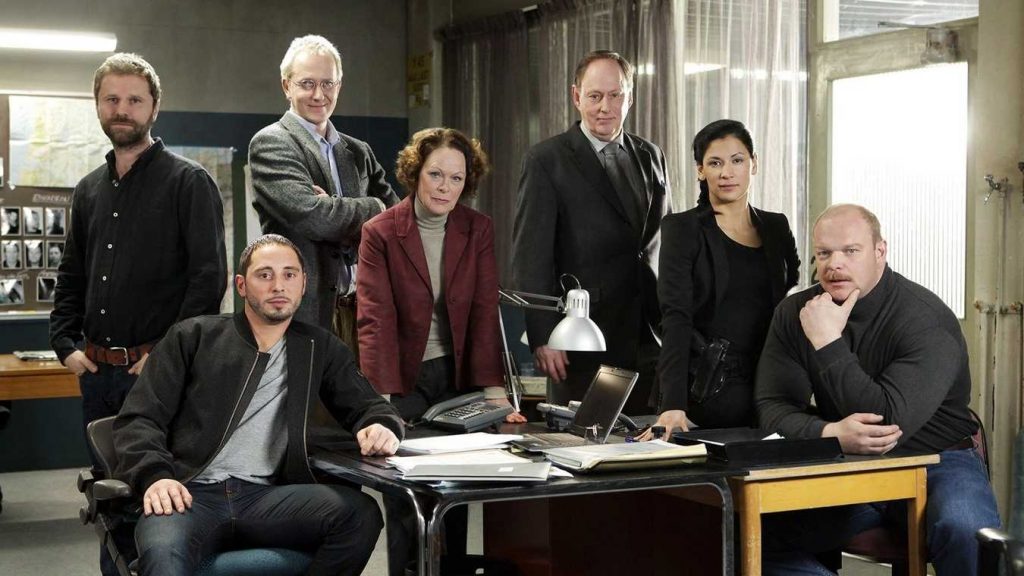
Arne Dahl published Barbarer (2001) and Maria och Artur (2006) under his own name, but under his pen name he has written a series of crime novels about a fictional group of Swedish crime investigators called “A Gruppen” (“the Intercrime Group”). The books have been translated into several languages. The first five books were made into 180-minute films, screened as two 90-minute episodes per story.
In 2007, the Swedish Academy of Crime Writers awarded Dahl a special prize for his “vitalization and development of the crime genre through his Intercrime series”. In 2011 Arne Dahl received the ‘Best Swedish Crime Novel Award’ by The Swedish Academy of Crime Writers. During the last few years Dahl has experienced an enormous breakthrough, receiving rave reviews from some of the most respected newspapers in Europe.
Hunted Hunted opens in rural Sweden with a letter, apparently written by a Jessica Johnsson, a paranoid woman in a wilderness cabin. The letter is addressed to Sam’s former partner, Desiré Rosenkvist, AKA Deer, now promoted to Superintendent head of Stockholm Police. It contains uncanny knowledge about Deer as well as information about a serial murderer who targets women with children. The author also notes that someone, possibly the murderer, is hiding in the woodwork and is approaching.
“I got a foot in in the so-called world of ‘fine culture’ in Sweden, and to take the step into the world of crime fiction was a big one,” explains Dahl, who was known as a literary novelist, academic and cultural critic before turning into crime fiction.
Looking for a fresh start Dahl made the choice to write under a pseudonym because he was looking for a fresh start, and inhabiting the roles of both an academic and crime writer did not seem possible in Sweden.
In Hunted, nothing is what it seems as identities blur and become transposed. We shift to a point on the timeline where Sam is injured and committed to a psychiatric institution. He is obsessed with escaping at all costs while feverishly trying to recall recent events. How this episode connects to current events becomes key to the murder investigation.
‘Dahl’s intelligent mastery of the genre delivers a flawless atmospheric thriller – chilling in every sense’ wrote The Sunday Times Crime Club.
One Of The Finest Literary Crime Writers In Scandinavia, written by Tor Kjolberg
Eight spectacular flights of locks, with 18-lock chambers in total, elevate boats and their passengers by 72-meters (236 feet) en route from Skien to Dalen in Eastern Norway. Welcome to the fairytale waterway, Telemark Canal, in Norway.
When the Telemark Canal was completed in 1892, it created a continuous waterway all the way from the coast into the very heart of Telemark. The canal connected town and country and opened up Telemark to the world.
All ships have covered decks, saloons and onboard restaurants
Discover the cultural heritage
Today, you can discover the cultural heritage and everyday life of this fairytale waterway, with its locks, narrow rivers and wide-open lakes, from the deck of one of the three canal ships or in your own boat. You can also explore the canal and the surrounding countryside by canoe, by bike or on foot, and visit museums, cultural heritage, charming restaurants and festival events.
The eastern leg of the waterway takes you via the picturesque Sauarelva river to Notodden, famous for its UNESCO-recognized industrial heritage and the blues festival.
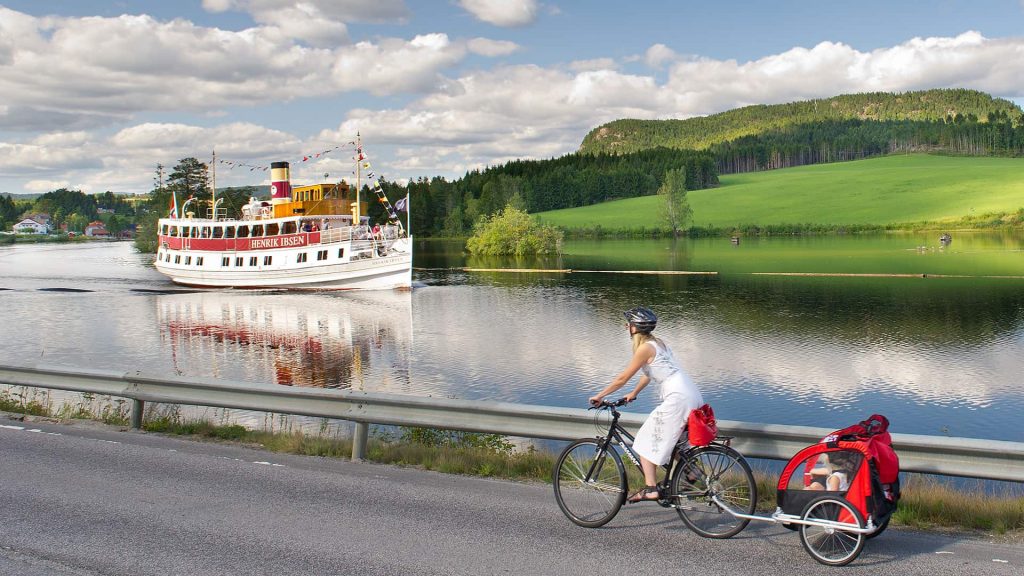
The canal ships Throughout the summer season, you can discover the Telemark Canal aboard the canal ships which sail between Skien and Dalen, and Akkarhaugen and Lunde. All three ships have covered decks, saloons and onboard restaurants, and you can take your bike or canoe/kayak with you.
What could be more fun than exploring this magical waterway in your own canoe or kayak?
Private boats on the canal The locks are open to private pleasure craft from late June to mid-August. All the locks are staffed by experienced lock-keepers who are always happy to help.
The boat trip from the coast through the Skien and Løveid locks to Norsjø is a great way to get a taste of canal life. You can then continue via the Sauarelva river to Notodden or follow the canal all the way to Dalen.
En route you’ll find plenty of great bathing spots and places to go ashore.
Cycling along the canal Along the canal you’ll find plenty of signposted cycle routes for day trips and longer excursions. Perfect both for young families or for cyclists seeking more of a chaollenge.
Along the canal you’ll find plenty of signposted cycle routes for day trips and longer excursions
Between Ulefoss and Hogga, the cycle path runs right beside the canal, skirting the historic locks. The national cycle route between Dalen and Ulefoss passes through an area with spectacular nature and cultivated landscapes. We recommend taking the canal ship in one direction or for part of the way. You can rent a bike or bring your own. All the canal ships can carry bikes.
Kayaking and canoeing What could be more fun than exploring this magical waterway in your own canoe or kayak?
Paddling through the locks is a thrilling experience. Just follow the instructions of the helpful lock-keepers and you’ll be perfectly safe. We suggest passing through the locks in the downstream direction for a calmer passage with no spray. Descending gently from one lock chamber to the next feels fantastic. But if you prefer to go ashore and bypass the locks, trolleys for transporting canoes and kayaks are available at all locations. The canal is suitable for beginners and experienced paddlers alike. Kayaks and canoes are available to rent in various locations along the canal.
Hiking along the canal There are plenty of opportunities to stretch your legs along the fairytale waterway in Norway. Short hikes in gentle terrain include the Skotfos trail at Løveid, Skarravegen between Ulefoss and Vrangfoss, the Dalen trail at Kviteseid, Kjærlighetsstien (the lovers’ trail) at Gvarv, trails at the Notodden world heritage site and Bufjordstigen in Dalen.
Tough but spectacular hikes include Lårdalssigen near Dalen and Hægefjell mountain in Vrådal. Many of these hikes can be combined with a canal cruise.
The canal connected town and country and opened up Telemark to the world
Vrangfoss locks and park Vrangfoss, the largest and most impressive flight of locks on the canal, is set amid an attractive park. The five lock chambers raise or lower boats over a vertical distance of 23 meters. Overlooking the flight of locks, the former lockmaster’s house is now a restaurant with magnificent views. The barn houses a multimedia presentation on the history of the canal.
You can stay overnight in a cozy lock-keepers’ cottage right beside the canal. Take a stroll on well-maintained paths down to Eidsfoss lock and on the Ulefoss, or up to the former quarry.
Fragile porcelain figurines, impasto paintings, feather-light hats, paint-spattered spray cans, drawings of long-lost but splendid buildings, and a teak radio. These are some of the about 500 objects that joined the National Museum’s collection last year. The exhibition “A Collection in the Making” at the National Museum of Architecture in Oslo is now open through 11 October.
This exhibition presents around 130 of these newly-acquired objects, which span a wide range of genres, from painting, sculpture and printmaking to the applied arts, architecture and design. The most recently-made works date from 2019, while the oldest – Olaus Magnus’ book on the ethnography, natural history and notable features of the Nordic region – left the printing press in Rome in 1555.
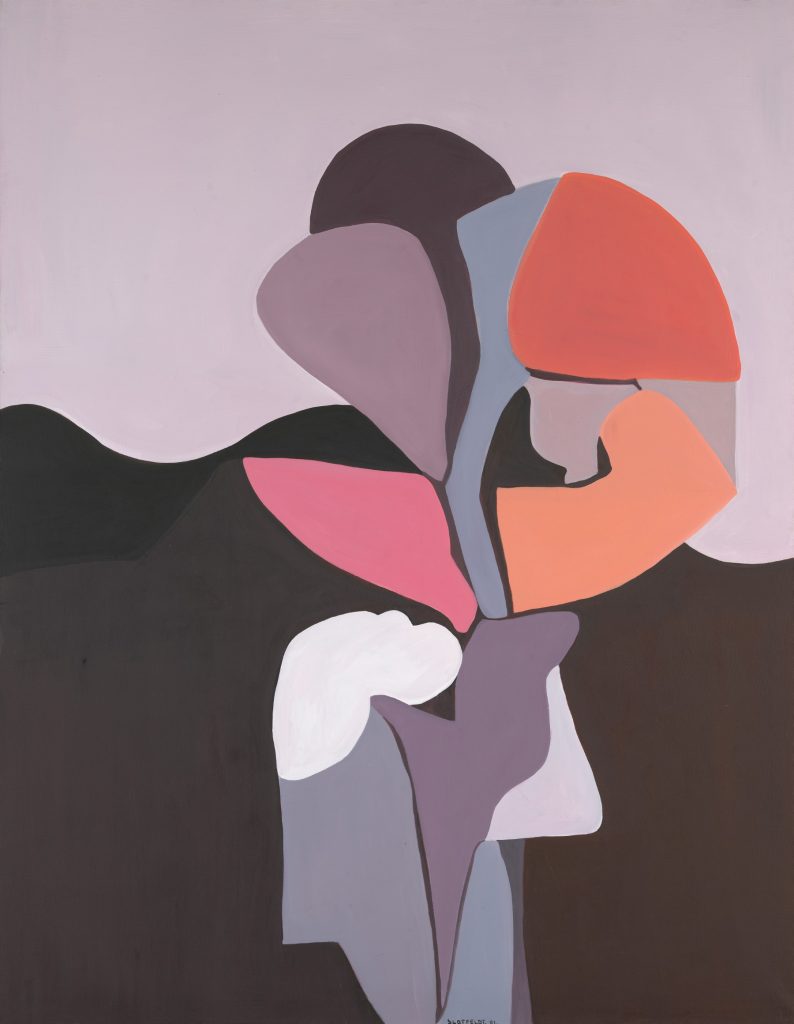
Irmelin Papafava Slotfeldt, «Albero della Vita no 1» («Livets tre»), 1981. Photo: Nasjonalmuseet / Børre Høstland
What is a museum collection? Questions about what a museum collection is, and how it comes into existence, have gained new relevance in recent years. A desire for museums to reflect the diversity of society has made issues of representation and identity more acute. At the same time, there is a huge interest for overlooked and forgotten chapters in art history. The exhibition reflects these trends.
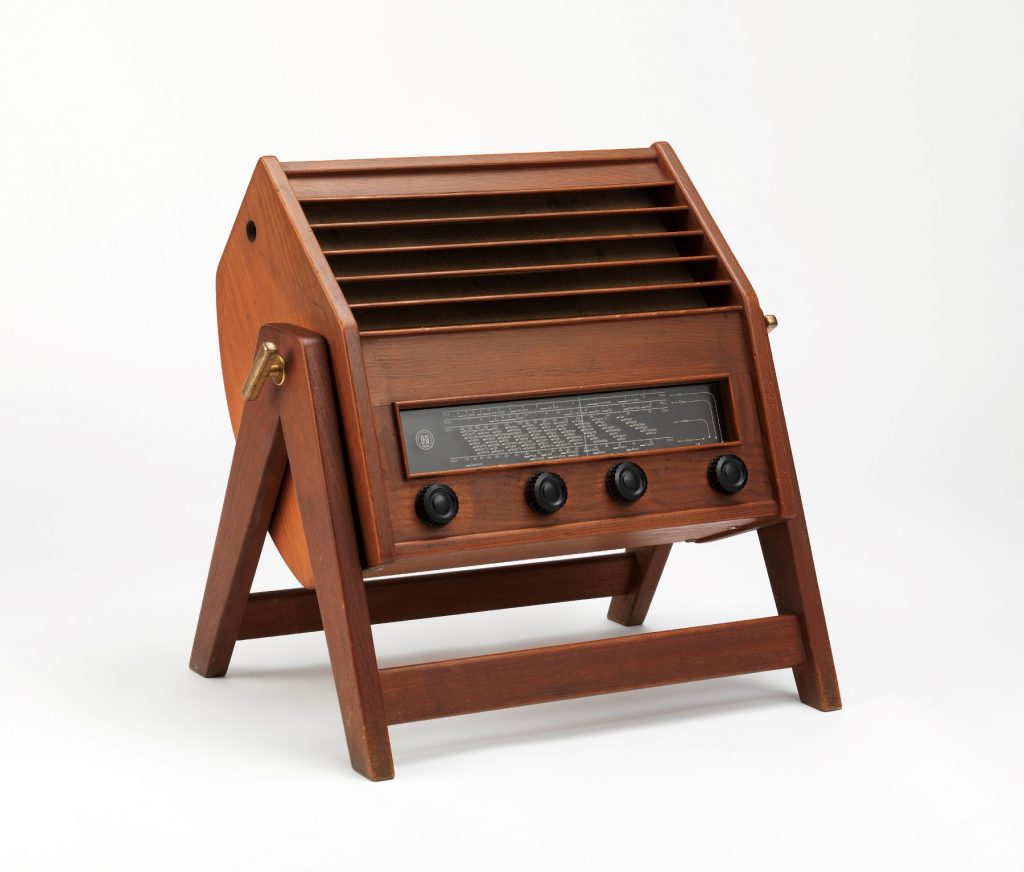
Karl Edvard Korseth, Radio, 1949. Photo: Nasjonalmuseet / Frode Larsen
A Collection in the Making at the National Museum in Oslo
A Collection in the Making also shows the importance of gifts from artists and private collectors. With its broad approach, the exhibition provides insights into some of the scholarly evaluations, strategies, lucky chances and visual pleasure that contribute to the making of the National Museum’s collection.
John Savio, «Sommer», probably between 1922 and 1928. Photo: Nasjonalmuseet / Børre Høstland
Artists presented in the exhibition Lucia Aragón, Arnstein Arneberg, Borghild Arnesen, Faig Ahmed, May Aubert, Admir Batlak, Lars Backer, Hélène Binet, Hanne Borchgrevink, Erik Brandt, Marie Buskov, Unn Søiland Dale, Tim Ekberg, Ida Ekblad, Thomas Fearnley, Helen Frankenthaler, Lilla Hansen, Thorolf Holmboe, Anders Holmer, Carl-Viggo Hølmebakk, Asger Jorn, Anders Kjær, Per Kleiva, Rudolph Knörlein, Karl Edvard Korseth, Ernst Kühn, Steinar Haga Kristensen, Solveig Lohne, Olaus Magnus, Mikkel Mandt, Britta Marakatt-Labba, Kari Mølstad, Frida Orupabo, Irmelin Slotfeldt Papafava, Maria Andrea Pasenau, Urd J. Pedersen, Moses Pitt, Laure Prouvost, John Olav Riise, Hannah Ryggen, John Savio, Mari Slaattelid, Elise Storsveen, Carl Frederik Vogt, Charlotte Wankel, Sofie Werenskiold, Margrethe Wiig, Francesca Woodman, Ahmed Umar, and more.
About the National Museum’s collection: The National Museum’s collection comprises around 400,000 artefacts. The collection covers art, architecture and design. During 2019, the National Museum acquired several hundred artworks and objects, of which around 130 are displayed in this exhibition.
A Collection in the Making at the National Museum in Oslo, based on a press release from the National Museum in Oslo.
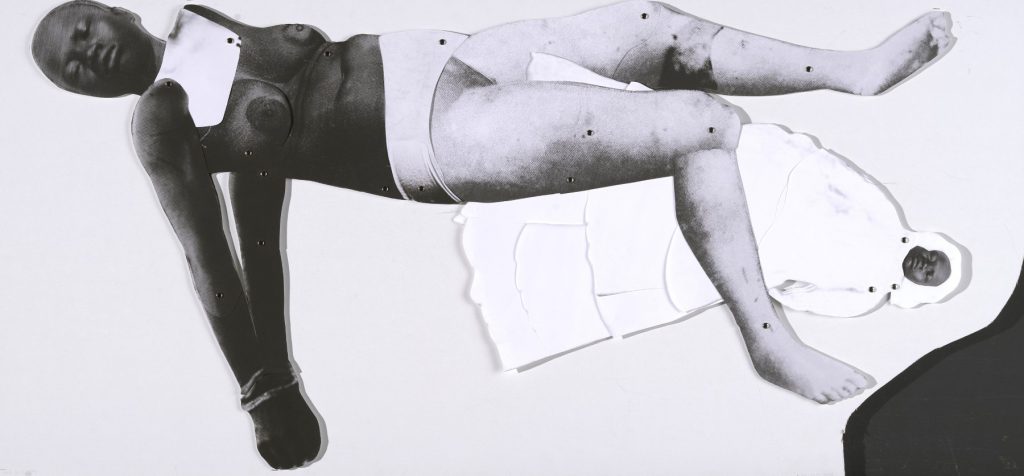
Feature image (on top): Rudolf Knörlein, Maske, between 1932 and 1936. Photo: Nasjonalmuseet / Frode Larsen
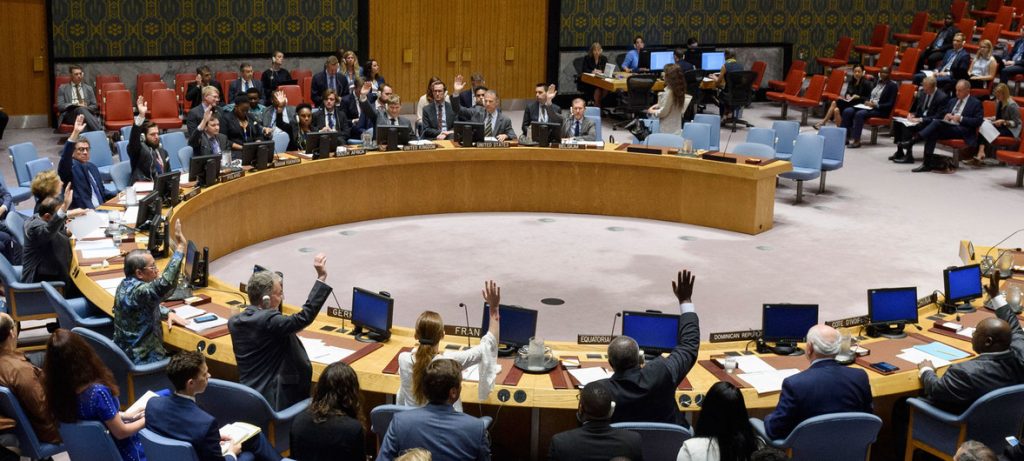
On 17th June, Norway together with India, Ireland and Mexico, won non-permanent seats on the coveted UN Security Council for the committee’s 2021-2022 term. The 15-member council is the most powerful U. N. body. For the next two years Norway has won seat on UN Security Council.
The Security Council has 10 non-permanent seats, each serving a term of two years. The body also features five permanent members: the United States, China, France, Russia and the United Kingdom. Permanent members have the power to exercise a veto on any resolution.
The Security Council has 10 non-permanent seats, each serving a term of two years
The world needs more international cooperation
‘We would like to thank the UN member states for the confidence they have shown in us. The world needs more international cooperation to promote peace and security. We will make use of our seat on the Security Council to strengthen this work,’ said Norway’s Prime Minister Erna Solberg.
India, the world’s largest country without a permanent position on the Security Council, ran unopposed for a seat allocated to its geographic region. Mexico also ran without an opponent. Norway was elected with 130 votes. Ireland was elected with 128 votes.
The elections were conducted under stringent rules this year for the first time because of the coronavirus pandemic
The elections were conducted under stringent rules this year for the first time because of the coronavirus pandemic, which has left much of the United Nations headquarters complex in New York closed to all but essential workers at least through July. Ambassadors who ordinarily would congregate in the General Assembly hall for the voting were instead admitted a few at a time in a staggered system, dropping secret ballots in a box and leaving.
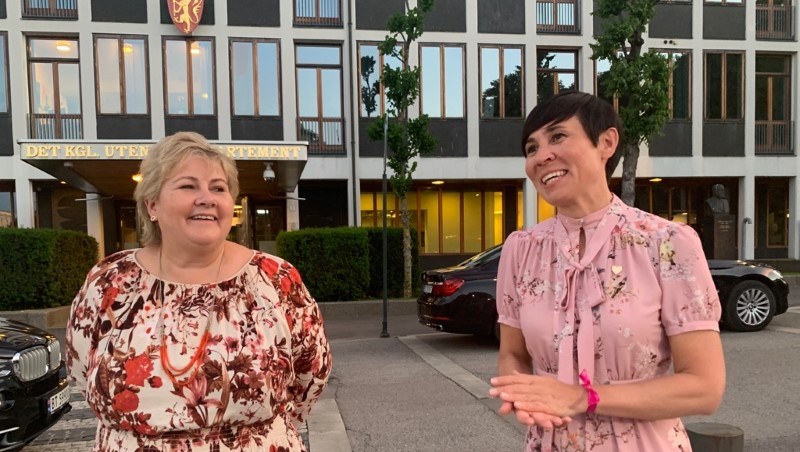
‘We would like to thank the UN member states for the confidence they have shown in us,’ said Norway’s Prime Minister Erna Solberg, here with Foreign Minister Ine Eriksen Søreide
Norway congratulated Ireland, India and Mexico ‘I congratulate Ireland, India and Mexico on their successful election to the Security Council today. We look forward to cooperating closely in the Council. Serving on the Council is one of the most demanding responsibilities a country can shoulder in international politics’, Ms. Solberg said.
Countries must claim two-thirds of the votes from the U.N. General Assembly to sit on the Security Council. A seat on the Security Council is therefore considered a coveted honor in international diplomacy. Council members have a prominent voice on issues of peace and security, including the wars in Syria, Yemen and Afghanistan, the nuclear weapons harbored by North Korea, the Israeli-Palestinian conflict, and armed extremist groups like the Islamic State and Al Qaeda.
Norway together with India, Ireland and Mexico, won non-permanent seats on the coveted UN Security Council for the committee’s 2021-2022 term
‘We were three very strong candidates competing for two seats on the Security Council. Canada and Ireland are close partners of Norway in international cooperation. We will strive to maintain our strong relationship with both countries in the time ahead, both within and outside the UN Security Council’, Ms Solberg said.
Binding resolution The council’s resolutions are binding, even if many go unenforced. It also is the only U.N. body authorized to approve the use of military force, and is empowered to refer cases of genocide and other crimes against humanity to the International Criminal Court for prosecution.
With its authority to approve peacekeeping operations, the Security Council represents an opportunity for many smaller countries to exercise greater power on an international level. In a press release, the Norwegian Government states it will give priority in the Security Council to areas where Norway has particular experience and expertise.
Building bridges and seeking solutions to seemingly intractable conflicts
“We will use the experience gained from many years of engagement in peace and reconciliation efforts to build bridges and seek solutions to the seemingly intractable conflicts that appear on the Security Council’s agenda. International law and human rights will form the basis for our efforts. Norway will cooperate closely with all members of the Security Council and will promote constructive cooperation. Norway will give special priority to efforts to strengthen the protection of civilians, including children, and to promote women’s role and participation in international peace and security work,” it says.
Norway won seat on UN Security Council, compiled by Tor Kjolberg
Working with irreplaceable places is an exhilarating struggle. It’s a negotiation between place, history, culture, and the architect brought in to create new meaning: To highlight the existing and create new relevance. Read about the Danish architect Dorte Mandrup who redesigns supremely difficult sites.
Copenhagen-based Danish architect Dorte Mandrup-Poulsen (born 28 July 1961) is the founder and creative director of the architectural practice Dorte Mandrup Arkitekter A/S that has approximately 60 employees. Her company is behind several internationally acclaimed buildings.
Mandrup pursued training in sculpture and medicine before finally succumbing to the call of design. As a student at the Aarhus School of Architecture, she researched the lightweight constructions of Japanese architect Toyo Ito while her classmates took sides in the then-raging debate between post- and neo-Modernism. After graduation, she did a brief stint with Henning Larsen and launched her eponymous firm in 1999.
We hallenge places and accentuate its inherited qualities
“Equipped with an artistic footing and a scientific toolbox, we challenge a place and accentuate its inherent qualities. We contrast the existing and create tension between the character of the place and the architectural design that elevates the meaning of the place,” she states on her website.
The Wadden Sea Center, Denmark
Dorte Mandrup’s work is characterized by being conceptually strong as well as innovative in terms of form and material, but also by an analytical approach to architecture. She has for instance transformed a 1921 seaplane hangar on Copenhagen’s Holmen islands into an office.
She soon picked up a series of commissions for designs that showcased her aversion to orthodoxy. She installed tracks on which panels of parachute fabric roll back and forth to divide the workspace. (The scheme steers between dueling philosophies, that an architect should either return a historic space to its original form, or smash a wildly contemporary addition onto it.) Thus, Mandrup is promoting the student’s perspective, and “fighting hard for the view that childhood should be magical, and for a place where adults are not always correcting or controlling the game.”
Trusted with responsibility
“That is what we demand of ourselves when we are trusted with the responsibility to re-imagine or create an irreplaceable place – to evoke its core and illuminate its potential,” is one of ther statements.
Among several acclaimed architectural unfoldings, Dorte Mandrup is behind the Wadden Sea Centre at the Danish West Coast, the Icefjord Centre by the UNESCO trail in Ilulissat in Greenland, and the Danish clothing company Bestseller’s upcoming mixed use development in Brande.
The Danish architect who redesigns supremely difficult sites
In 2017, Dorte Mandrup caused an international stir with her opinion piece ”I am not a female architect. I am an architect” in Dezeen, in which she discussed gender politics within the world of architecture.
Mandrup insists that her acts of defiance are not committed for the sake of contrarianism, but because nuanced problems deserve equally un-straightforward solutions.
The Danish Architect Who Redesigns Supremely Difficult Sites, written by Tor Kjolberg
Spectacular scenery and award-winning architecture meet you in the legendary Steigen – three hours by car north of Bodø or an hour and a half by speedboat. Today, there is little evidence that this was formerly the most important port north of the Arctic Circle. The Island´s position between dramatic mountains and the Barents Sea has in itself been the inspiration for celebrated Polar Explorer Børge Ousland´s newest adventure; an exclusive adventure and exploration resort in Northern Norway.
Manshausen Island Resort is situated in the middle of the Grøtøya strait, only 500 meters from the small village Nordskot. With its well-protected harbour, Manshausen was in its time an important and busy part of the old trading post Grøtøy, which was established in 1698. Fish is still important, but kayaking, diving, cycling, climbing and summer and winter hiking has now taken over as the most popular activities.
The award-winning sea cabins are designed by architect Snorre Stinessen.
A 55-acre private island The 55-acre private island is home to the world´s largest population of Sea Eagles and the fishing is spectacular. To the north the horizon is dominated by the mountain-range of Lofoten. Manshausen is usually fully booked from May to September, but this year the season did not really start before mid-June. A common sauna and hot tub must be left unused this year, but otherwise you can enjoy nature, outdoor life and not least the award-winning sea cabins designed by architect Snorre Stinessen.
You get a wow effect of going into the cabins, but the adventure is far from free. It costs between 3500 NOK (350 USD) and 5700 NOK (570 USD) per night – excluding food. Each cabin has limited space but good use of space – a large bed, two Scandi chairs with panoramic views, a small kitchen and hallway – best suited for a couple. However, If you’re a good organizer, a small extra room can be used by another guest or two.
A living memory of a historical era
The island was used as a private residence and resort until Børge Ousland bought it in 2010.
Grøtøy and neighboring Naustholmen are divided into private properties. At present there are no permanent residents on any of these islands, but the buildings are well maintained. The great old main house on Grøtøya is like a living museum from the early twentieth century, while Villa Haugen, the director’s residence, was rebuilt from old drawings in 2001. Both these buildings, and also the old stone piers on Manshausen, is a living memory of this historical era.
The resort was planned and laid out taking the island’s topography into consideration. The Nordic designed cabins are all but one placed on the stone-quays, partially cantilevered above the sea, one placed on a natural shelf on the rocky formations above. The positioning and orientation of all the cabins is based on the consideration of their individual panoramic views and privacy for the guests.
The main house serves as the social hub featuring open kitchen and dining room, lounge to relax, library, plus the expedition loft and conference room.
Børge Ousland is established as the leading polar explorer of our time.
Exclusive Adventure and Exploration Resort in Northern Norway
Proximity to nature and the sea is the great thing about Manshausen and the cabins have nice and simple details. You can slide down into a leather-covered chair and enjoy the views of the mountains and fjords and the midnight sun. The cabins have been named after places Ousland has been, such as the North Pole, South Pole, Mount Everest and Patagonia.
The leading polar explorer of our time
With solo expeditions to both the South and North Poles and solo crossings of both the Antarctic and the Arctic from coasts to coasts, Børge Ousland is established as the leading polar explorer of our time.
The Norwegian Resistance efforts to sabotage Nazi production of the atomic bomb is a tale of bravery and remarkable survival skills. Red more about the heroes of Telemark.
When Germany invaded Norway on 9th April 1940, the Norwegian defense forces were no match for Hitler’s army and the country was quickly occupied. The Norwegian royal family took refuge in London from where King Haakon directed operations by Norwegian underground to obstruct in any way they could their unwanted Nazi occupiers.
The sabotage of the heavy water plant
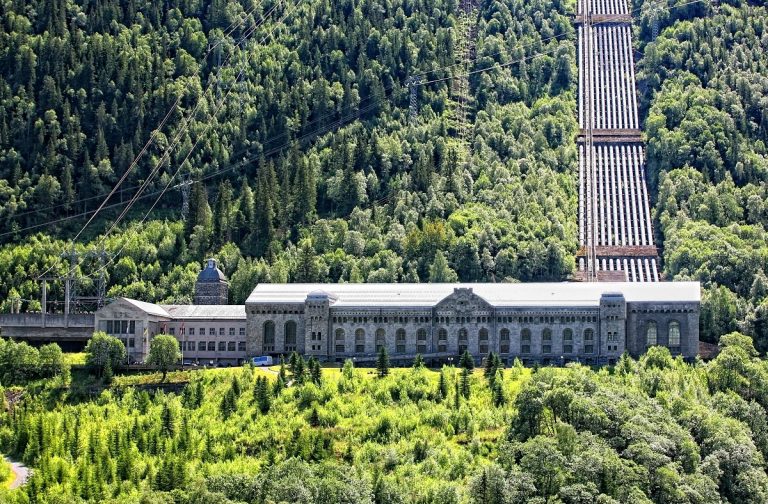
The most celebrated act of resistance in Norway during World War II was the sabotage of the Vemork heavy water plant at Rjukan, in Telemark, in February 1943 – successful production of heavy water in the plant could conceivably have aided German development of an atomic bomb. No visitor to Rjukan, dwarfed and darkened by mountains all round, could fail to be awed by the audacity of the saboteurs. Their heroic exploits were made into a Hollywodd film in 1965, The Heroes of Telemark.
The operation was originally planned for a joint force of Norwegian volunteers and British commandos in two towed gliders. It ended disastrously when both gliders and one of the aircraft towing them crashed in bad weather and the survivors were tortured and executed by the Gestapo.
“Gunnerside” and “Swallow”
The next attempt was an all-Norwegian affair. “Gunnerside” was the code name for six men who had been trained in England. They parachuted onto a frozen lake where they joined up with “Swallow”, an advanced party who had been on the ground since the first failed operation, subsisting for almost four winter months on moss, lichen and a single reindeer. The men skied to the ridge above Rjukan for the perilous descent, up to their waists in snow.
Kirk Douglas played a saboteur in the 1965 film “The Heroes of Telemark”
Just after midnight, the covering party took up positions while the six-man demolition team cut a chain on the gates and crept forward to the basement of the concrete building where the most vital equipment and the heavy water storage tanks were located. The team broke in, surprising a solitary Norwegian guard who agreed to lead them to vital components, laid their charges and began a rapid withdrawal.
From Vemork Museum. Photo: Visit Telemark
A lively time for one of the saboteurs
They had only gone a few yards when there was, what members later variously described as “a cataclysmic explosion” and a “tiny insignificant pop”.
Of the 10 saboteurs, six reached Sweden after a 400 km (250 miles) journey on skis in indescribably difficult conditions; the other four remained in Norway. Of the Swallow party, Claus Helberg had the liveliest time. He was chased through the mountains by German soldiers, but escaped. Then he fell over a cliff and broke an arm. The next day he walked into a German patrol but had a good enough story to be taken to a hotel to await treatment.
The Heroes of Telemark
Most of the hotel guests (but not the injured Norwegian) were turned out of their rooms to make way for Reichskommissar Joseph Terboven (the Nazi who ruled Norway). Later he was bundled along with the remaining guests “into a bus and sent off to the Grini occupation camp”. Helberg jumped from the bus. Later, he turned up in Britain, reporting for further duties.
Denmark – or the Kingdom of Denmark – is filled with castles, palaces, and a beautiful landscape. Architecture, history, art, and culture enthusiasts will love this country. Arguably one of the best tourist attractions in Europe, you can have fun doing several things in Denmark for free. Find out the top 10 free things to do in Denmark.
Here are the top ten:
#1 Go Skiing in Copenhagen In downtown Copenhagen, there’s a ski slopet a waste-to-energy plant. Open to locals and visitors, it provides an innovative way to enjoy your day. Why not park your gear in your backpack and spend your day skiing?
The National Park in Jutland. Photo: Wikipedia commons
#2 Visit the National Park Situated at the western coastline of Jutland, the official National Park is 12 kilometers of wonder. The rugged landscape showcases dunes, pine forest, flora, fauna, and vast wildlife, including otters, which students can write about in a college paperor assignment help.
You can bike or hike through the park. If you’re a birdwatcher, you’ll come across more than thirty species of birds. What if you love dabbling into some archeology? You won’t be disappointed as you’ll get to see grave mounds that date back to the Bronze Age.
#3 Visit the Amalienborg Palace This magnificent palace, bought by the royal family in 1794, has been home to several generations of the Danish royal family. It still officially houses the royal family and serves as living quarters for visiting dignitaries.
Situated in Copenhagen, the complex has four palace buildings and King Frederick V’s statue at the center of its square. The Amalienborg’s museum is in the Christian VIII palace.
You can tour the palace, visit the museum, and watch the changing of guards ceremony, which occurs at noon every day
Marselisborg Dyrepark. Photo: Aarhus kommune
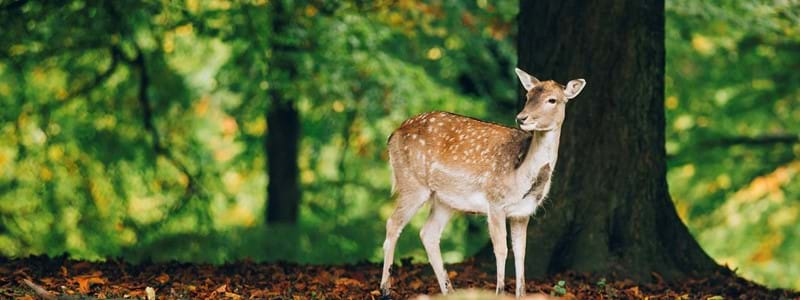
#4 Have Fun Time at the Deer Park Do you want to see some deer and boar? You can go to the Deer Park at Marselisborg Dyrehave. This park is in Aarhus, one of Denmark’s largest cities.
The fallow and sika deer in the park will swarm around you if you feed them apples and carrots. If you want to see some wild boar, there’s a fenced area to watch them in action. However, you won’t be allowed to enter their habitat. The park has no closing time. You can hike, run, or chill with the deer all day.
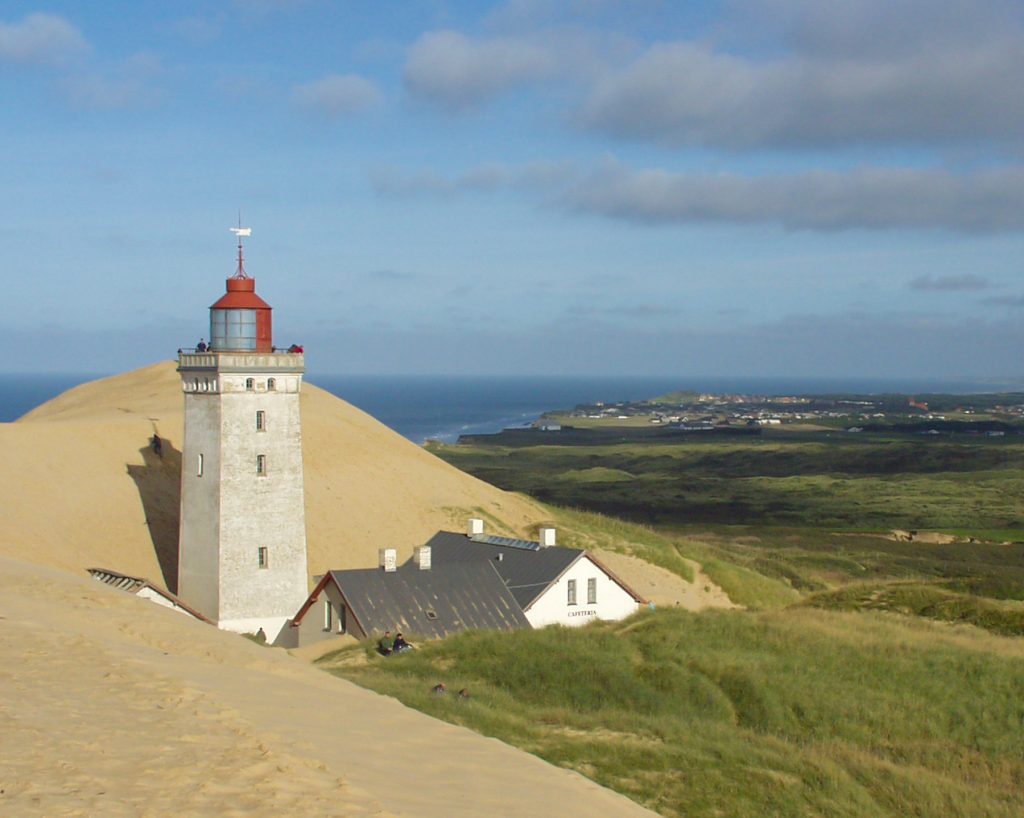
Rudberg Knude lighthouse. Photo: Wikipedia commons
#5 Hike to Rubjerg Knude Lighthouse The Rubjerg Knude Lighthouse stopped operating in 1968. It’s a famous landmark and tourist attraction in Denmark.
The fascinating thing about this tower is the sand that threatens to cover it – a wonder that can become a topic for Bestessay.com. Climb the mountainous dunes to visit the lighthouse and take amazing photographs before it’s completely covered up by sand.
Nyhavn harbor. Photo: Thomas Hyrup Christensen
#6 Visit the Nyhavn Harbor Nyhavn is a famous tourist site in Copenhagen. You may want to take a tour of the harbor and visit house number 20, where Hans Christian Anderson lived in 1835 while writing his fairy tales.
At every time of the year, you can visit this picturesque harbor and enjoy the waterside. To avoid paying for food at the restaurants, pack your lunch before you go to Nyhavn. Better still, prepare items for a picnic ahead of time and have a swell time with family and friends at the park.
#7 Go To Egeskov Castle The Egeskov Castle in Funen is a renaissance-styled building with a picturesque view. At the exterior, you’ll find a working moat and a vast forest with some trails and buildings. Egeskov Castle is one of the most famous buildings in Europe. You can visit the Knights’ Hall and tour the building. There’s also a Segway course for relaxation.
Botanical Garden. Photo: Visit Copenhagen
#8 Visit Botanisk Have This impressive botanical garden is another place to visit in Copenhagen for free. It’s an area set out for research paper writing service and conservation in the University Of Copenhagen National History Museum. Although the school is an academic institution with essay writing services UK, its green oasis is a vibrant area. The trees, lake, flowerbed, and café are relaxation spots for anybody.
There’s a 19th century Palm House that you would want to visit with your significant other. It can also shield you from the rain while giving you an enthralling view of tropical climates. You can visit Botanisk Have in all weathers as there are open and covered parts
#9 ARos Aarhus Art Museum Situated in Aarhus, this cube-shaped art museum has ten levels of exhibition space and a spiral staircase. It has 400 installations and more than 1,000 paintings. It also showcases drawings, graphics, photographs, and art videos.
Although you have to pay an entrance fee to see all the exhibits, there’s a free viewing area. Why not take a trip to the art museum and enjoy its free access?
#10 Search for the Six Forgotten giants At the outskirts of Copenhagen, artist Thomas Dambo created statues of six forgotten giants. To start an adventure, put on your hiking boots and go for a scavenger hunt to find them. You’ll have to search by the calm waters and in the lush forests and meadows. Finding each giant will be like getting the gold in a treasure hunt.
Top 10 Free Things to Do in Denmark – Conclusion If you’re on a budget, you can visit places for free and have an adventure in Denmark. Pick one of these sites or create a schedule to visit each tourist attraction.
Kurt Walker
Top 10 Free Things to Do in Denmark, written for Daily Scandinavian by Kurt Walker. Kurt has been working as an editor, thesis writer and a copywriter at an essay writing services in London, for 3 years. He offered assignment help, such as papersowl reviews. Kurt is also a professional content writer and journalist in such topics as inspiration, motivation, education, and traveling.
The story of Stutterheim raincoats begins with melancholy embraced rather than feared. The small Swedish raincoat producer Stutterheim has made success by selling Swedish melancholy à la Bergman.
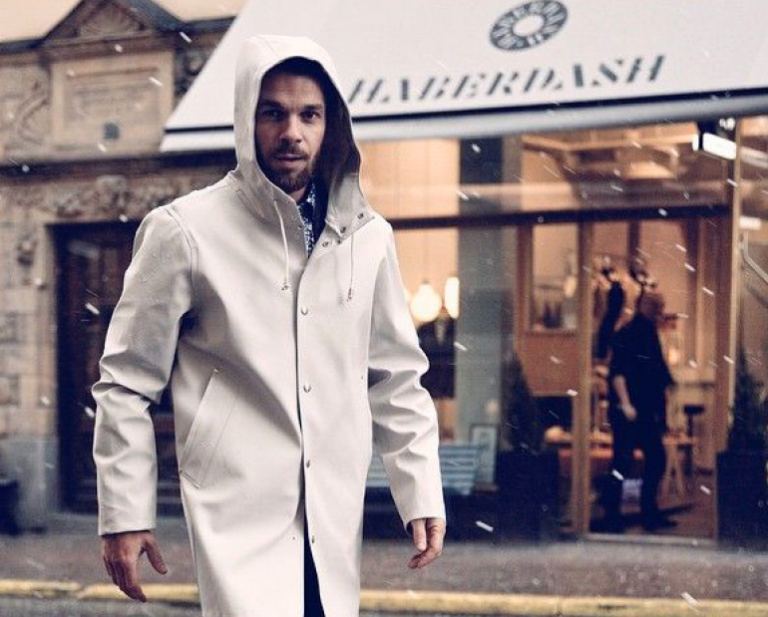
The Stutterheim Stockholm raincoat is a signature design first created by Alexander Stutterheim’s grandfather. It is handmade in rubberized cotton, comes unlined, with double welded seams, snap closures and cotton drawstrings.
The Stutterheim Stockholm raincoat is a signature design first created by Alexander Stutterheim’s grandfather
A classic Swedish fisherman’s raincoat
On the small island of Arholma in the Stockholm archipelago, Stutterheim founder Alexander Stutterheim discovered his grandfather’s old raincoat in a barn, shortly after he passed away. This classic fisherman’s raincoat, heavy, durable and timeless, provided the inspiration for the first Stutterheim raincoat, the Arholma.
A normal raincoat is actually quite boring. However, the Stutterheim Stockholm, made entirely by hand, make some users sing a different tune, since it is only made in 250 numbered pieces annually. Stutterheim raincoats undergo severe testing in horrible conditions both at sea and in the city. Each coat is individually quality-controlled by skilled seamstresses while guaranteeing you a modern and trendy silhouette in everyday life.
A Stutterheim raincoat is handmade in rubberized cotton, comes unlined, with double welded seams, snap closures and cotton drawstrings.
Keeping rain and wind out
The Stockholm raincoat keeps the rain out. But maybe more important, it keeps wind from penetrating and creates its own little micro climate inside. Layer it up with a wool sweater or cardigan and you’ve got a much better winter outfit than the peacoat you thought you’d wanted.
Swedish Melancholy à la Bergman
The clean lines and functionality can easily be combined with any outfit. Either worn over a suit, or over something more casual like denim, both functions brilliantly. And there’s a lot of color choices to consider.
The Stutterheim Stockholm, made entirely by hand, make some users sing a different tune
A note on sizing if you are considering one. They’re slightly vanity sized. So, we suggest choosing one size smaller than you otherwise would have done.
Swedish Melancholy à la Bergman, written by Tor Kjolberg