Underground Swedish-born, Berlin-based sync-pop musician, songwriter and music producer Molly Nilsson (b. 1984 in Stockholm) has toured Australia as well as the USA lately. In spite of a celebrated 11-year, 10-album career, she has managed to remain largely off the mainstream grid. Her listeners are essential obscure record store diggers. Read more about the obscure music from a popular Swedish pop star.
Based in Berlin since the early 2000s, she publishes her music under her own label Dark Skies Association, founded in 2008. In February this year around 300 individuals gathered to listen to her mystical synth-pop in a small hotel somewhere in Brooklyn.
“When I first discovered music, it was Elvis, The Beatles, Grease; and from there I got into punk — among everything else, like Berlin techno, for example,” Nilsson explains
Home-styled and self-recorded
Nilsson’s work runs from home-styled, self-recorded organ-driven music punctuated by her distinct voice, on older classics like Won’t Somebody Take Me Out Tonight, through to newer cuts like 2018’s electronic Blinded By The Night, with its counterintuitive but alluring broken-beat drum loop. Ten albums as well as numerous EPs and singles have been released so far. In her bedroom studio, Nilsson combines calypso and tango rhythms with saxophone pieces and the synth-pop sound of the 1980s
In Brooklyn, Molly was secretly weaving through the crowd and onto the stage and rapidly took command of the room by dancing a la Audrey Horne all the while singing to the beat of her own computer. Pulling most of the set from her most recent album, “2020,” Nilsson delivered a jubilant performance interspersed with words of wisdom drawing from her experience as a solo female artist.
Designing her own album covers
Underpinning the various musical experiments is an unusual take on popular songwriting that casually melds a wide array of sonic textures, lyrical themes and bygone eras together in a way that sounds obvious and simple, but is cleverly complex and deeply referential at the same time.
Nilsson also self-produces her minimalistically designed album covers and most of her music videos, which are distinctive for their handheld look and a playful use of simple recording techniques – with aesthetic recourse to, for example, the 1990s and the beginnings of the World Wide Web.
Lonesome performance in Brooklyn In Brooklyn, lacking a band behind her back, Nilsson lead her lonesome performance with grace and bravado. Reveling in the fact that she was entirely in control of the room, she began dancing despite her evident lack of skill; generating a sense of acceptance for anyone who might have been too afraid or embarrassed to dance otherwise.
Her compositions are accompanied by her characteristic, coolly distanced singing
“When I first discovered music, it was Elvis, The Beatles, Grease; and from there I got into punk — among everything else, like Berlin techno, for example,” Nilsson explains. Her compositions are accompanied by her characteristic, coolly distanced singing. Molly Nilsson’s extensive tours have taken her to numerous clubs and concert venues in Europe, North and South America, Asia and recently to the USA.
Obscure Music From Popular Swedish Pop Star
In the tiny venue in Bushwick, Brooklyn, everybody began gazing at Nilsson as she hypnotized members of a generation generally governed by cynicism with her air of supreme positivity. “I found that what I enjoyed and became interested in and loved about it all was simply the expression — for me, the emotional expression of ABBA or the Sex Pistols is equal, it’s just different emotions and ways of expressing things. But for me it was all just music that gave me kicks, basically,” she told an Australian journalist.
Nilsson’s recent performance at the Market Hotel in Brooklyn confirms the beauty of the timelessness of her sonic ingenuity and how it has managed to keep her successful in the modern independent music scene.
Obscure Music From Popular Swedish Pop Star, written by Tor Kjolberg
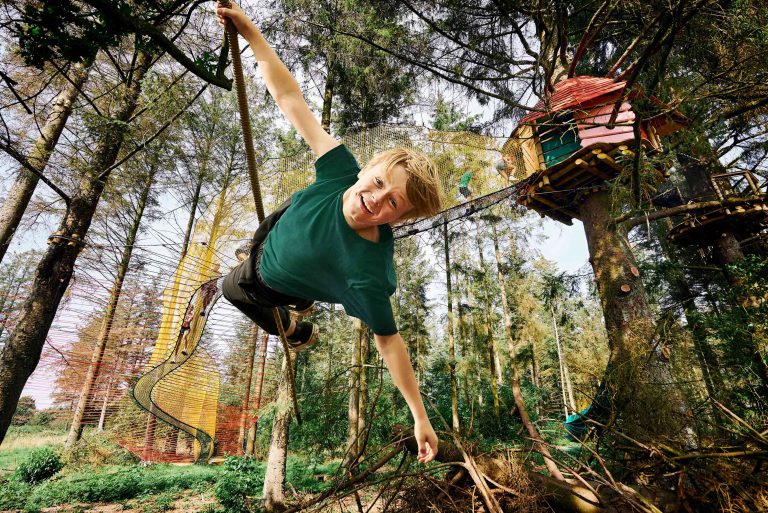
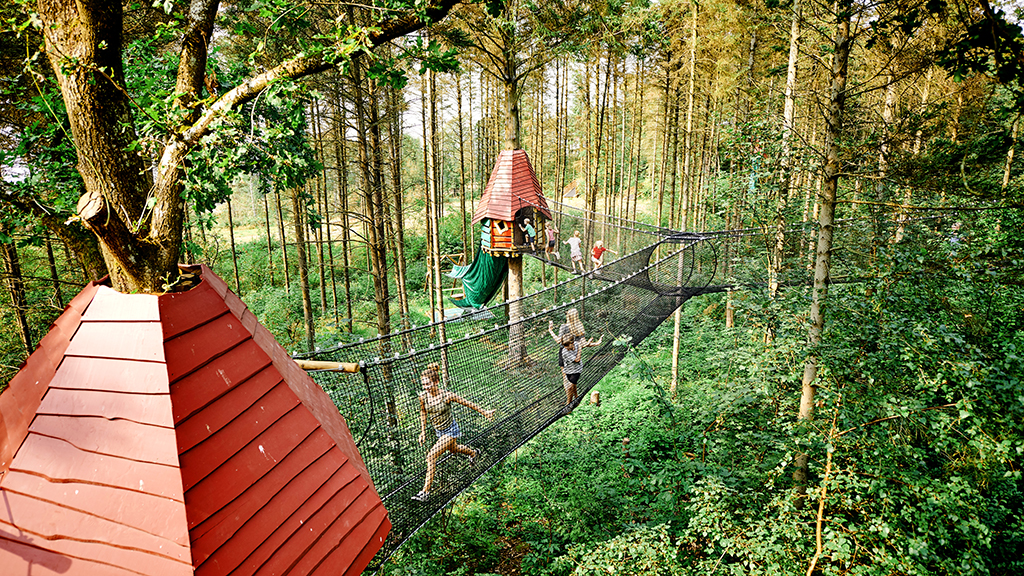
The Danish town Billund is the home of Lego HQ and prides itself with the name “the Danish capital of children”. The Wow-park there has ambition to become the most child-friendly place in the world. The brand-new attraction, a treetop wonderland, includes giant bouncy balls, suspension bridges, swings, nets in the sky and ziplines and is the largest of its kind in Denmark.
In the wild forest just outside Billund you’ll find cool challenges, fun experiences and good times for the whole family. Spanning an area of over 40 soccer fields, the park provides plenty of open space and fresh air, featuring sky-high fun in the wilderness set to a chorus of happy laughter and beautiful birdsong.
In the wild forest just outside Billund you’ll find cool challenges, fun experiences and good times for the whole family
Two brothers wanted to recreate their idyllic childhood
The two brothers, Jacob and Aage Hindhede, who founded the Wow-park, grew up on a farm in Western Jutland. When they became parents, they wanted to recreate their idyllic childhood of playing outdoors and swinging in trees. In 2013 they founded the first treetop park in Skjern in western Denmark, attracting more than 40.000 visitors a year. The new park is three times bigger than the one in Skjern.
Elevated levels of fun and excitement
In the Wow-park, you’ll find elevated levels of fun and excitement. You can even try the new 40-meter-long toboggan chute from the tower – where sledding is easy, all year round. “We knew it was really good for kids to be in nature and to get them off their screens,” says Jacob. “You can just feel it in your stomach: that outdoor magic – and we wanted that for our kids.”
In the Wow-park, you’ll find elevated levels of fun and excitement. Photo: Visit Billund
Billund aims to encourage families to spend more time outdoors by offering fun and games at an “upper level”. At Wow Park you move around way above the ground, through tree houses, bouncing GIGA-nets, zooming zip lines and wild Tarzan swings.
Not everything is above the ground
The best thing is probably that you can spend your day romping about, unaided, unsupervised, without any of the normal queuing at kid-angled attractions. Not everything, however, is above the ground. You can explore the underground caves, where you can crawl around on your hands and knees to discover lots of winding tunnels and secret cubbyholes. Or what about venture into the maze, where the challenge is to find your way through the willow forest and the giant wooden labyrinth? In the Water World you can sail small ships in mini rivers, play with locks, build dams, fill and raise buckets, and even alter the flow of the rushing water.
Grill your own food
At the food court you may enjoy reasonably priced and healthy food, or you can bring your own. On the campfire sites, where firewood is provided, you have the opportunity to toast your own food, sitting on a felled tree trunk, a good example of Danish coziness or ‘hygge.’
Sky-High Fun in the Danish Capital of Children The structures of the Wow-park are designed to disturb the environment as little as possible. The guiding principle has been that “nature was here first”. The real landmark of this project is the tall trees as a contrast to the colorful world of Lego bricks.
Sky-High Fun in the Danish Capital of Children, written by Tor Kjolberg
There are about 9,000 known bird species in the world. Around 300 have their natural habitat in Norway and an additional number of around 200 rarer bird types are found at certain places and times every year. “Natural Born Birder” is the name of British Julian Bell’s blog. Every day, year- round, he blogs about the bird life in Øygarden outside Bergen where he has lived since 2003. Read more about the natural born birder in Norway.
Millions of people across the world are birdwatchers, and Daily Scandinavian is proud to present the below interview with local birdwatcher Julian Bell. Please stay tuned throughout the year and read his posts.
The white-tailed eagle (Haliaeetus albicilla) is a very large species of sea eagle widely distributed across temperate Eurasia.
DS: When did you become a birdwatcher?
JULIAN: It is hard to put a date on when I became a birder – but it was as a young boy growing up on the coast of Northumberland in the UK. My earliest memories are of birding experiences and by the age of around 13 I was hooked. Living where I lived I never had a chance….
Another white tailed eagle photographed by Julian Bell
DS: What popular bird is your favorite? Why?
JULIAN: A very difficult question! I’m tempted to say Pomarine Skua – a bird that is exotic, can thrive in tough conditions and brings with it associations with the areas in which it breeds – the arctic!
Away from the breeding grounds it can be difficult to see but we experience a decent passage of them where I live on the west coast of Norway nearly every spring.
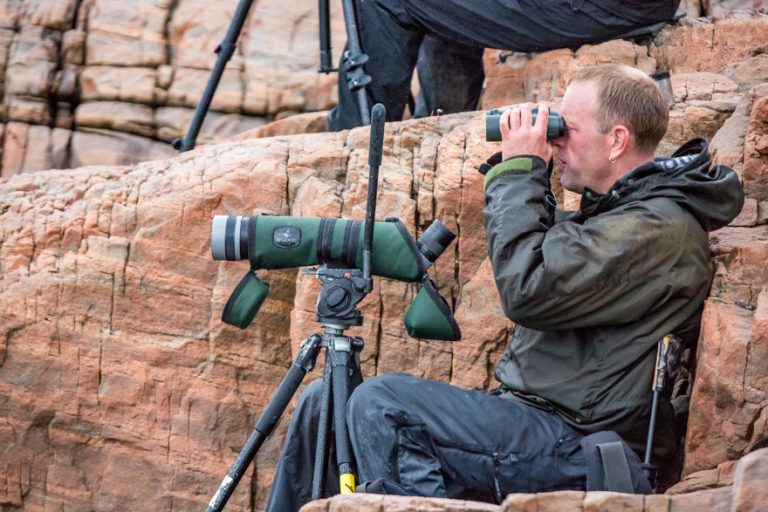
Julian at work on Shtokman field in the Barent’s Sea
DS: Are there still rare birds you want to see? Why?
JULIAN: YES!!!! There are many rare birds I would still like to see! Rarity can mean all kinds of things – from being a scarce bird on a world basis to being a great find at home. So, there are rare birds I would like to travel to see and there are rarities (or vagrants) I would like to find in my local area.
A bird that is rare found locally gives a kind of “kick” – perhaps it is a long-awaited rarity that could be at least partly predicted by looking at occurrence patterns, the weather and so on. Alternatively, it could be a total surprise and completely out of the blue.
Wilson’s Bird of Paradise
Rare birds that one travels to see often live in remote places and may well be something that one has either read about or seen on television. This gives a different kind of reaction as seeing such birds is more of a planned event.
One of the rare birds that is reasonably regular in parts of Norway that I would like to see is the Snowy Owl. I’ve seen them in other countries but would like to see one in Norway – either by travelling to where they occur or by finding one closer to home.
There are many rare birds I would still like to see, says Julian
JULIAN: Too many to mention! The normal for me is probably unusual for many. Due to my choice of work I regularly travel at short notice to end up in all kinds of places, all over the world and many of these are off the beaten track both for tourists and normal birders.
From a birding perspective I suppose the most unusual thing I have done is finding the first ever documented Crag Martin for Norway. Finding a first for a country must be one of the most unusual things to happen – whilst at the same time always remaining hopeful that something on this scale will occur.
Isisbill descends from the upper reaches of #Himalayas in the winter season
Another unusual thing I did was to stop working for three months to monitor the bird migration along the coast of Norway. I counted migrating birds in the spring and as such went sea-watching at Skogsøy (close to where I live west of Bergen) every single day from mid-March to the end of May from dawn until early afternoon.
Being bitten by a flying fox (fruit bat) whilst rescuing it from drowning in a river in Sri Lanka – the bat had been dropped there by a White-bellied Sea Eagle and then left there after the eagle was chased off by Brahminy Kites. Thinking only about a wound infection I washed the cuts with whisky back at the hotel room and thought no more of it. It turned out that there was a rather more insidious risk which I only found out about after it was too late for treatment – rabies! Thankfully I am still here but I won’t be rescuing any drowning bats again.
Julian Bell in Bhutan
During an unplanned extra day in Iceland in conjunction with a crew-change the crew was given a free trip to experience the usual tourist attractions such as the Blue Lagoon. I chose not to do this – there were birds in Iceland that were much more interesting than the tourist attractions that “normal” people visit. Similarly, I dropped Bangkok whilst staying there and went off to see Spoon-billed Sandpiper at some mudflats a couple of hours away – MUCH better!
A whole bunch of things have happened to be whilst birding from being stopped at gunpoint whilst birding a nature reserve in the former republic of Yugoslavia to stumbling out of beachside scrub onto a beach full of nudists whilst trying to take a short cut to a headland that looked like a promising place to bird.
I’ve picked exhausted Goldcrests out of coastal bushes during migration. Ring Ousels have landed on me whilst I watched the visible migration of birds in the mountains. I have had all manner of seabirds swimming around in my bath as I nursed them back to health having found them on the beach after oil spills or winter storms. Once I had a tame Shag (like a Cormorant) that would not swim and avoided water at all costs but used to sit on my shoulder when I took my dog for a walk – it made for an unusual sight on the beach!
The pomarine jaeger (Stercorarius pomarinus), pomarine skua, or pomatorhine skua,is a seabird in the skua family Stercorariidae. It is a migrant, wintering at sea in the tropical oceans
JULIAN: Initially it was work – as a hydrographic surveyor I worked in Norwegian waters quite regularly before a period of particularly violent winter storms forced us alongside in Bergen on a number of occasions. It was here I became a victim of the charm of Norway, eventually fell in love with a Norwegian girl and have stayed here ever since.
DS: Are there other places you would like to visit to watch birds?
JULIAN: There are lots of places! I love heading home to Northumberland to catch up with the birds there. Falsterbo in Sweden is another favorite. I also like returning to Lanzarote and have a long list of places I would like to go – many of which are here in Norway.
Svalbard is a place I would love to go to, various mid Atlantic Islands, Siberia and plenty more besides. I would like to spend some more time in the mountains of Norway, as well as travel rather more in Finnmark – most notably Slettnes/Gamvik.
DS: Any special experiences you want to share with us?
JULIAN: Birding is full of special experiences too numerous to get into here and some of them may be difficult to relate to for non-birders. Some of the special experiences are almost daily, like being able to go out on my terrace and see White-tailed Eagles flying over, others are related to places, atmosphere or even time of year.
Sitting by an estuary and watching waders gather to roost at high tide, flights of geese coming into roost are everyday occurrences but non the less special.
The first arrival of migrants of the spring are always special too – so the first Lapwing, Swallow and so on.
My choice of work and where I live is based on being about to have as many special experiences as possible.
I like finding my own birds so discovering my first Hawk Owl and Pine Grosbeaks on a mountain near where I used to live (Gull jell outside Bergen) are right up there with the special experiences. This place is not noted for rarities and expectations of seeing much at all in the winter months are, to put it mildly, quite low. To find these incredible birds on my home turf at this time of year was pure magic.
Many of the most memorable birding memories come from work – such as falls of migrants onboard in the North Sea, Black Sea, Mediterranean or wherever. Tired migrants landing on the deck are a common occurrence but occasionally they turn up in large numbers. Owls can take up residence on the vessel during periods of migration, coming out at night to hunt passing birds.
The variety and sheer numbers of my favorite group of birds – seabirds – in the South Atlantic was one of the most exciting experiences I have had at work. I spent an hour on deck every day after shift and saw a huge variety of seabirds in vast numbers. During a four-week trip that started off the coast of Argentina and ended in Cape Town, by way of Tristan da Chunam I lived the seabird dream.
Royal albatross
Bird migration of any form can be a fantastic experience – on the right day the numbers of birds can be huge and sometimes they come close enough that one can sense the urgency and feel like one should join them on their journey.
Finding a site for breeding Broad-billed Sandpiper on the southern edge of its breeding range in Norway was incredible – both in terms of the excitement of finding this enigmatic wader using a map to locate likely breeding habitat and in terms of the place itself – an upland lake. Fish were rising to insects, the birch woods full of birdsong whilst the surrounding wetlands were full of other waders and wildfowl. Heaven!
Another Norwegian experience was warching the sandpiper
Listening to calling Eagle Owls can give an almost religious experience as one stands somewhere near the edge of a wood on a calm late winter’s evening and hear their booming call, often followed by a sighting of this massive owl in silhouette against the night sky.
Having always been interested in wading birds one of my dream species to see was Ibisbill – a remarkable looking wading bird that lives beside wild, fast flowing rivers in the mountains. About an hour after landing in Bhutan we were standing beside the river and watching these amazing birds feeding. A dream comes true!
One of my most recent special experiences was seeing Wilson’s Bird of Paradise in Raja Ampat, Indonesia. I was picked up in a small dugout boat whilst it was still dark and took a short trip over to a nearby island. This boat journey was an experience in itself with the most amazing starry sky complete with shooting stars and flashes of distant lightening whilst the sea around us glowed with bioluminescence as we passed through. Still well before dawn we arrived on the shore of another island and then started to trek uphill through the jungle in the dark. The sounds of the animals and birds was incredible. Finally, we arrived at the viewing point and shortly after this a male showed up and started displaying, it did not take long before he was joined by a female. This was a true “David Attenborough” moment – in fact he has filmed in the same place.
DS: Is there any reason why people should become more interested in bird watching?
JULIAN: The places it takes you and the people you meet. Being interested in birds gives an extra dimension to being outside, wherever that may be. It also makes one care more about the environment and hopefully be less of a consumer.
There is always something new to learn so it is an interest that never becomes dull.
But be careful – it can take over your life!
DS: What equipment and knowledge does one need?
JULIAN: Curiosity is perhaps the main thing. Equipment wise the only thing you really need is binoculars. A notebook may sound old fashioned, but it helps as does a decent field guide.
It is quite possible to teach yourself everything you need to know but it is a big help to join a bird club (and there are plenty of these in Norway) where you can meet people and go on outings with more experienced birders.
A camera can also be important – both as an aid to identification and for documenting what you have seen. If you are going to claim a rare bird then it is a massive help to have photographs to back up your sighting, especially if you’re a beginner.
Chasing a glaucous gull in the Barents sea
DS: How can the average person best help birds?
JULIAN: Many bird species are declining. Birds are one of the best indicators of environmental health, so to stop the decline means looking after the environment. This may sound like a big challenge to the average person but there are things that anyone can do:
Support and / or join a bird conservancy organization. These help to protect the environment and therefore ultimately ourselves.
Don’t let your cats outside – especially in the breeding season.
If you have a garden keep at least part of it a bit on the wild side. What many of us see as weeds are important food sources for birds- or for insects which are again food for birds. If you can then provide water too – a small pond or a bird bath can really help – whatever the time of year.
Tolerate the mess and / or noise of birds breeding close to where you live or work. Put up a shelf under that Swallow nest in your shed / garage / under your terrace. Don’t kill gulls or smash their eggs just because they are noisy or messy – regrettably an all too common occurrence.
Put up suitable nest-boxes if you can. This can be anything from “normal” nest-boxes on trees in your garden to more specialized ones – for example Swifts often breed under tiles on the roof and often lose out in modern cities. The swirling clouds of swifts over many older towns in Europe is one of the sounds of summer. In Europe where Starlings are a native species, they can help gardeners and farmers by removing pests from the soil. This year I am lucky enough to have a pair breeding in a box I hung on the wall of my house and they are feeding their young on grubs that would ruin my vegetables.
A Natural Born Birder in Norway
DS: Thank you Julian for sharing your experiences and thoughts with our readers!
Gallery Polaris will be hosting its third artist evening on Thursday, August 20, 2020 with Norwegian painter Bjørn Ransve and journalist/author Alf van der Hagen in Felix Cinema at Aker Brygge. Be sure to enjoy this artist night in Oslo.
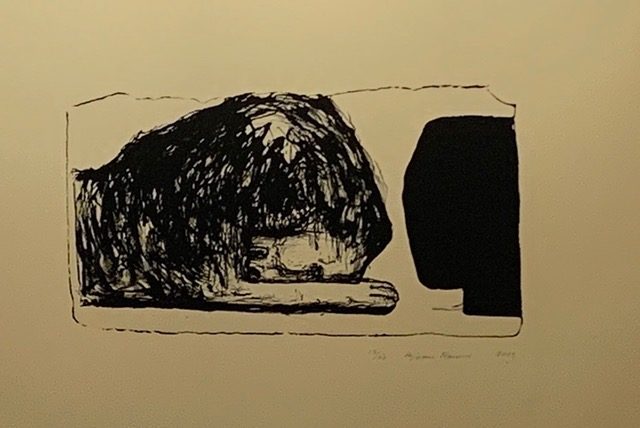
The Bjørn Ransve exhibition at Gallery Polaris shows over 50 lithographs and one painting for sale. In recent years, the meritorious artist has kept a low profile and worked quietly. The Polaris Gallery is therefore proud to showcase several of Ransve’s new lithography series. Ransve has a unique ability to innovate. In his latest works, he experiments with shapes and colors in innovative and insightful ways.
The Norwegian painter Bjørn Ransve (b. 1944) is one of the best-known contemporary Scandinavian artists.
The Bjørn Ransve Exhibition
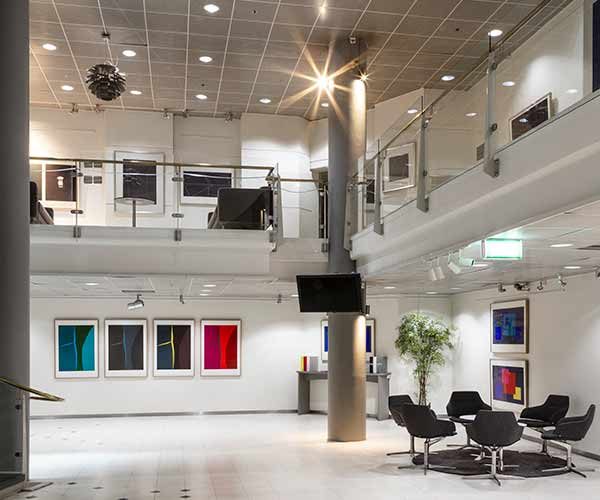
In the lobby K1, you may experience one figurative lithograph and several abstract lithographs on a black background, as well as one monumental painting. In the restaurant, a lithograph series of lions, spirals and abstract graphics is conveyed on a black background. in the lobby K 2, several abstract lithograph series, which are characterized by multicolored expressions. In the Rotunda room, figurative landscape motifs are displayed.
About the artist’s expression The Norwegian painter Bjørn Ransve (b. 1944) is one of the best-known contemporary Scandinavian artists. Very few painters express themselves so brilliantly in three dimensions, thematically, technically and formally. Since the onset of late Modernism, he has played a crucial role in shaping painting in Scandinavia and today his works are represented in all important Scandinavian museums.
Lithograph by Bjørn Ransve
Bjørn Ransve expressions are both abstract and figurative. Whatever the motive, he always works towards a center point in the image area. A fusion of the abstract and the figurative emerges unconsciously as he works with his images. He researches the surfaces as in a laboratory, where classic and non-figurative forms are reflected in each other. Related: Portraits of Four Contemporary Norwegian Portrait Painters
Alf van der Hagen (born 1962) is a Norwegian journalist and author. Photo: Universitas
About Alf van der Hagen
Alf van der Hagen (born 1962) is a Norwegian journalist and author. He has worked in NRK (Norwegian Broadcasting Corporation) and was the editor-in-chief of Morgenbladet in the period 2003 – 2012.
The Fate, by Bjørn Ransve
Artist Night in Oslo
The exhibition is open through 1 September. The artist night on 20 August is due to the corona epidemic allowed for 50 visitors only. Please register through the Gallery Polaris website.
Last week, Norway’s hotel king Petter Stordalen opened his new prestige hotel Villa Copenhagen in the capital of Denmark. Nordic Choice Hotels claims it is a social scene in Copenhagen allowing the past, present and future to come together in an inspiring and playful ambience. Read more about the new unique and stunning lodging experience launched in Copenhagen.
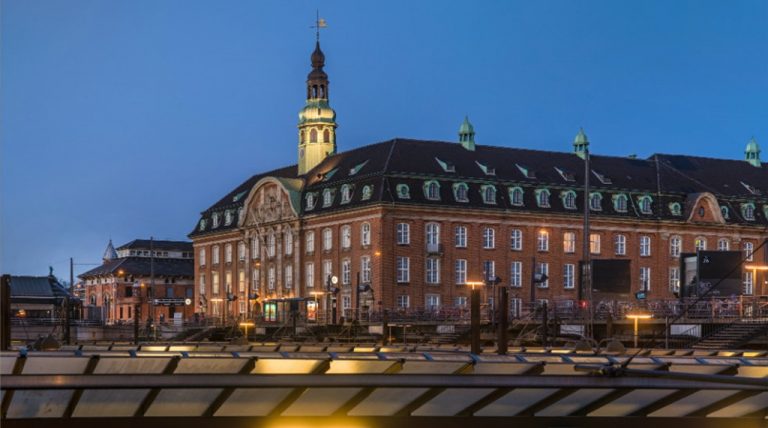
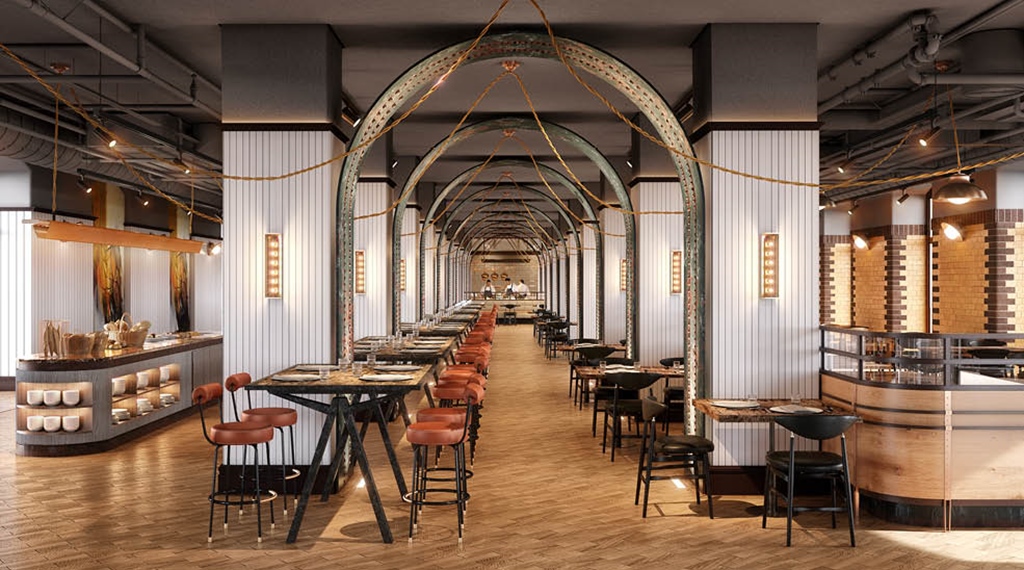
What used to be the Central Post & Telegraph Head Office, opened in 1912, has become Villa Copenhagen, a hotel with gorgeous historic accents blended beautifully with contemporary Nordic designs and interior accents.
Throughout the hotel, Villa Copenhagen is prioritizing conscious luxury and using natural materials and environments
390 rooms
The hotel features 390 rooms, a rooftop swimming pool, a large, green interior courtyard and a variety of dining outlets. Villa Copenhagen is set in a prime location in the city, moments away from the famous attractions Tivoli Gardens and Meatpacking District.
“We are a hotel unlike any other. We live by our values of contrast, conscious luxury and happiness, determined to redefine the industry by offering experiences of beauty, knowledge and humanity at the deepest and most inspiring level. We want to be the best hotel for the world and take full responsibility for our environmental footprint,” is a statement on the hotel’s website.
Villa Copenhagen is the newest independent project by Nordic Hotels & Resorts, and has been designed to uphold the group’s commitment to eco-sustainability. “Conscious luxury, as we call it, is about enjoying everything life has to offer from unique experiences and unexpected encounters, to quality food and inspiring surroundings, while at the same time taking responsibility for our actions and our impact on the planet.”
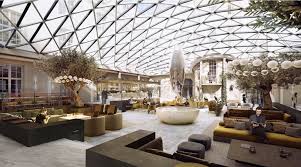
The hotel features a large, green interior courtyard
Neo-Baroque architecture
For more than 100 years, this building has been admired for its Neo-Baroque architecture. Its transformation to a hotel is fitting as a gathering place for a new generation. Much of the hotel’s design was created by London-based Universal Design Studio, an award-winning architecture and interiors studio, including the grand staircases, and some public spaces. Throughout the hotel, Universal Design Studio has used a mixture of contemporary and classic Scandinavian design styles.
Much of the hotel’s design was created by London-based Universal Design Studio
A Unique and Stunning Lodging Experience Launched in Copenhagen
Throughout the hotel, Villa Copenhagen is prioritizing conscious luxury and using natural materials and environments to create warm, comfortable spaces. By investing in renewable energy, sustainable local partnerships, and forward-thinking initiatives, Villa Copenhagen shows itself to be thoughtful and modern – and when this is added to the building’s architectural and cultural heritage, it’s clear why guests will soon fall in love with Copenhagen’s new grand dame hotel.
A Unique and Stunning Lodging Experience Launched in Copenhagen, written by Tor Kjolberg
A wedding is a happy day that is full of joy and positive emotions. We will show you the amazing places in Scandinavia that will help make the wedding perfect. Find out mor about the ultimate jaw-dropping Scandinavian wedding destinations.
Everyone wants to be happy. But happiness is only possible next to an ideal companion who shares your interests, life values and is your true soulmate. Finding such a partner is not easy and sometimes takes a lot of time. But when we finally find the perfect couple, the wedding day becomes the happiest in our life. Because at that moment single hearts begin to beat to the beat.
And this day must be pleasant, full of positive emotions, and spectacular. The place for the ceremony should also be chosen with particular care. A great option would be a beautiful, harsh, and charming Scandinavia. Thanks to our blog, you will find out some interesting places that will surprise you and your guests.
On the Danish island Ærø, you will find many places suitable for organizing a wedding
This Beautiful Scandinavia with Amazing Color The Scandinavian peninsula attracts with its amazing nature and unique flavor. It is interesting that each country has its mentality and features, so that you have not one, but several options for choice. Then it’s time to go on a trip to Scandinavia to find the best place for your wedding!
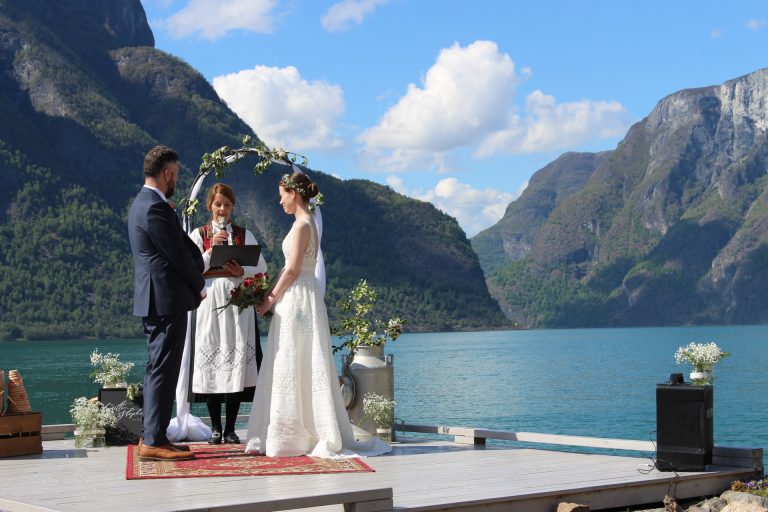
Norway: Viking Style Wedding Fans of the harsh north should pay attention to Norway. The famous Norwegian fjords, framed by a chain of magnificent mountains, will be a great place to organize a wedding ceremony. The Nærøy Fjord, Gudvangen Fjord, and Geiranger Fjord are some of the most beautiful bays where weddings can be arranged. Just imagine crystal clear water, mountains rushing into the sky, dotted with cascades of waterfalls, old houses, and Viking boats – all this will create the atmosphere of a real northern fairy tale.
Here the bride and groom can play a wedding, styled in antiquity, dressed up in national costumes. After the ceremony, we advise you to go horseback riding in the mountains or take a water cruise along the Norwegian bays. If you like “civilized” weddings, we recommend the capital of Oslo. Here you can organize a symbolic wedding in the old castle of Akerhus. And of course, do not forget to ride your wedding car along the famous Atlantic Road!
Each country in Scandinavia. has its mentality and features. Photo: Joel Overbeck/Unsplash
Lofoten Islands. Sharp, jagged, steep, and beautiful mountain lines on the border of Northern Norway capture the eye and gain excitement. The coast here is dotted with charming fishing red houses that seem to be an illustration of fairy tales. An ideal option for a couple who wants to hold a wonderful and interesting ceremony, creating a small masterpiece (an amazing photoshoot) and discovering new beautiful places on earth.
Denmark: Country of Happy People In a few minutes, we arrive in Denmark – the country where the happiest people in the worldlive! It is not surprising, because there are no traffic jams, trains travel without drivers, and residents read out the tales of Hans Christian Andersen. Denmark is not only super-modern technologies but also old quarters, neat colored houses, yachts, wheat fields and a lot of greenery.
Pay attention to the picturesque Danish islands: Ærø, Zeeland and Funen. Here you will find many places suitable for organizing a wedding – these are old castles, estates, and private hotels. And, of course, the possibility of a wedding ceremony on the seashore. Just imagine, your wedding photos will be similar to illustrations for fairy tales, and the video clip will save the most beautiful and touching moments.
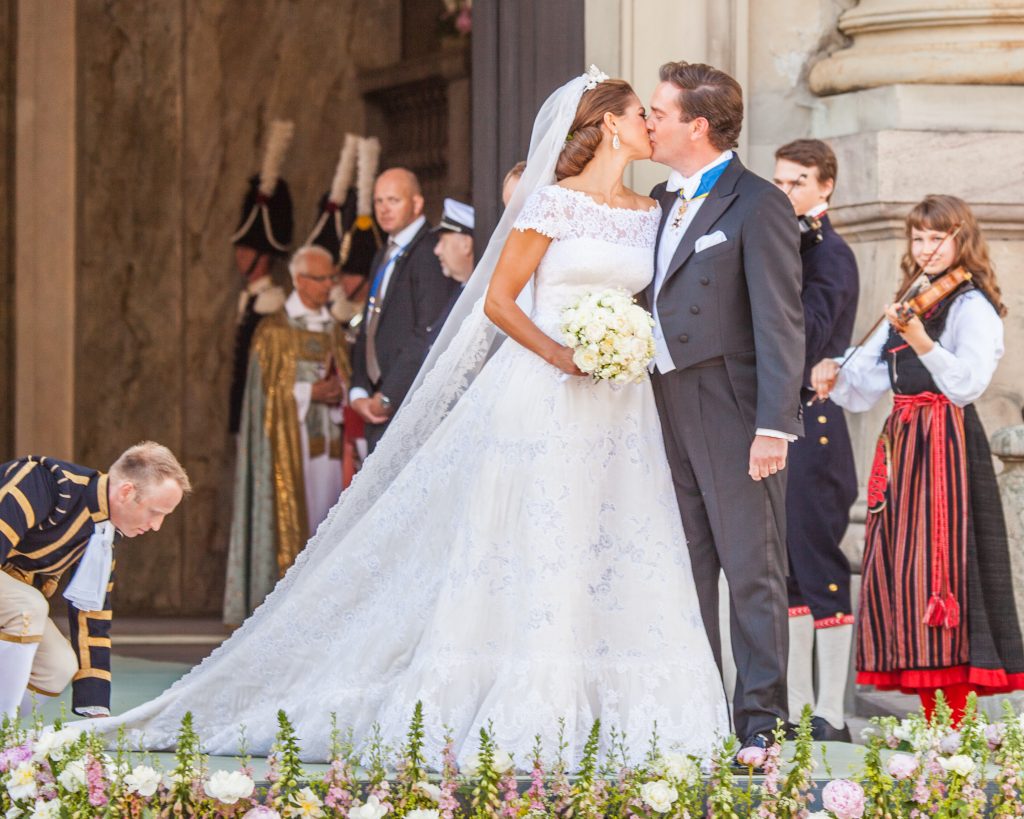
Wedding of Swedish princess Madeleine. Photo: Wikipedia commons
Sweden: Royal Wedding Royal palaces, red-tiled roofs, the smell of coffee and cinnamon rolls. Yes, we are approaching Sweden, a country where kings and queens still rule and where welfare society reigns. Here, both official registration of marriage and a symbolic ceremony is possible. The venue of your wedding may be the small Osgård Castle, which is located in the outback on the banks of the beautiful Lake Mälaren. This is the perfect place for an eco-friendly wedding. However, if you want something more extraordinary, for example, to feel like the Snow Queen, then come to the north of Sweden.
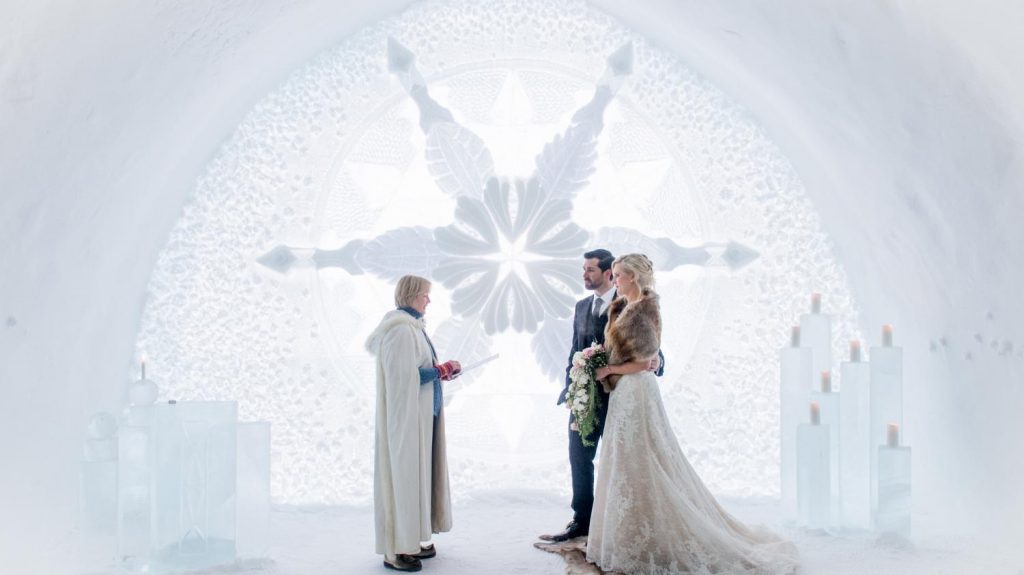
in the small town of Jukkasjärvi beyond the Arctic Circle, there is a unique hotel, completely made of ice blocks. It has existed for 30 years, and every November a group of artists, designers, and architects from different countries come here to build a new hotel version with the help of thousands of tons of ice from the Tornö River by the beginning of the winter season.
Guests are accommodated in ice rooms decorated with sculptures and designer furniture. All objects are highlighted, which enhances the already indelible impression of such a night. Regardless of the weather on the street, there is always a temperature of -5 … -8 ° C. But in the morning, you will find hot lingonberry juice and a sauna.
Wedding in Ice Hotel, Sweden
Original and Nontrivial Weddings You can also pay attention to the world’s largest island, Danish Greenland. This is a wedding venue for couples who can call themselves fearless explorers. Cool climate, enchanting landscapes, and a mighty ocean chained with ice on the horizon. There are also entertainments such as climbing, skiing, iceberg hunting, whale watching, and flying over the immense tundra.
A Few Wedding Tips A wedding is an unforgettable experience and positive emotions for a lifetime. But here you can make a few mistakes that will add negativity and make you worry. Remember that organizing an event in another country is a complex process, and there are no trifles. Therefore, try to pay attention to small things:
choose the places that are suitable for you and your partner;
pay attention to the climate and terrain;
if you invite guests, take care of hotels and transport;
contact a professional photographer who can capture the happiest moments of your life.
The right approach to this process will turn the wedding not just into spectacular action, but on the happiest day of your life.
The Ultimate Jaw-Dropping Scandinavian Wedding Destinations, written for Daily Scandinavian by Sandra Mason. Sandra is a passionate journalist who has been contributing to major media publications. She enjoys writing about human psychology and lifestyle. Sandra also runs her blog https://singlehearts.org where she covers topics of great interest in modern society.
Based at Jarlsberg airport 60 miles (100km) south of Oslo, the Norwegian company Equator Aircraft, founded by Tomas Brodreskift began flight testing a proof-of-concept all-composite two-seat amphibian in 2018. Read more about the evolution of electric flights which takes place in Norway.
According to Brodreskift, the first commercial electric flights are anticipated to be a reality in 2030. The Equator Aircraft’s P2 Xcursion prototype has passed an audit by the Norwegian CAA and its first full test flight was successfully carried through on March 30 last year. The company describes their mission as a ”sustainable alternative to the noisy and costly types” which will serve commercial passenger and transport markets.
The first commercial electric flights are anticipated to be a reality in 2030
Technology is progressing fast “The pace at which technology is progressing is amazing. We must find emission-free solutions for transportation, including flight, and this will drive exponential development in electric and green propulsion,” Brødreskift, CEO ofEquator Aircraft, predicts. “For us, it is both exciting and frustrating. We know it is coming, but it’s hard to develop a strategy when things are moving so quickly,” he adds.
After a fourth test flight on October 7 last year, Brodreskift said to the Flynytt magazine, ”In summary, the trip was a success. We pulled up the chassis for the first time, collected some data and also tested flaps and did general control tests.”
Thomas Brødreskift, CEO of Equator Aircraft
Several models in the planning stage
Feedback from the test flights is being incorporated into the first production-conforming prototype – a stretched version of the concept; X4 which is designed to seat up to four people and preliminary design work for an eight-seat model, X8, will hopefully be ready for the market by the end of the decade.
The X4’s European CS-23 certification campaign is scheduled to be approved by 2025.
A ”sustainable alternative to the noisy and costly types”
Attractive markets
According to Brodreskift, many of the world’s major towns and cities are located adjacent to water. This makes downtown-to-downtown routes using seaplanes very attractive. Equator is collaborating with Danish operator Nordic Seaplanes to create the “ideal platform” for this segment.
“There are many cities in the world with proximity to water, where electric seaplanes can be the solution to replace helicopters and other less traditional aircraft. It is a very good market, today we actually earn more on our sightseeing trips than on the scheduled flights between Copenhagen and Aarhus,” says Lasse Rungholm, CEO of Nordic Seaplanes, in a press release from the company.
The future is electric
“The future is electric, and we want to be at the forefront. That is why we have entered into a partnership with Equator where we will contribute our experience as a seaplane operator. We are very interested in this technology and have a plan to operate a fleet of electric seaplanes as soon as they become available,” says Rungholm.
The Evolution of Electric Flights Takes Place in Norway, written by Tor Kjolberg
Fashion retailer H&M Group launched Sellpy, its majority owned Swedish online second-hand shop in 2014. Now, the Swedish online second-hand shop sets out on an international journey by launching Sellpy in Germany.
Sellpy is a service and e-commerce platform for second hand goods in Sweden and the company is making it as easy as possible for customers to give old items a second life and make room for new favorites.
The fashion giant H&M now bets on shoppers outside Sweden trending towards more sustainable consumption
Saving valuable resources for our planet
“Every garment, that is bought second-hand, saves valuable resources for our planet. As Sweden’s largest online shop for second-hand we want to empower everyone to live circular. So, we make it super easy to give articles a second chance”, says Michael Arnör, CEO Sellpy.
The fashion giant H&M now bets on shoppers outside Sweden trending towards more sustainable consumption. Sellpy manages all the activities in the sales process right from items picked up from sellers to selling and shipping.
H&M has given a new home to more than 5 million items since the launch in 2014. Their website states that Sellpy is a “young, passionate group of around 40 people working in the Stockholm office and another 330 in its production facilities.
Sustainable consumption The change from a linear to a circular textile economy leading to sustainable consumption is an integral part of H&M Group’s sustainability work. New business models in the areas of rental, repair and re-commerce play just as an important part as investments in research and development of new recycling technologies and materials. H&M invested in Sellpy in 2014 and now holds a 70 percent stake.
Customers can either shop from a broad range of second-hand goods or re-sell their loved articles. Now they are launching in Germany, making it possible for more customers. In a press release last May, Sellpy announced that it would double its warehouse capacity in Sweden, to near eight million items annually, due to strong demand. Since 2014, more than six million items have been sold through the platform.
Thorsten Mindermann, Country Manager of H&M Germany
The first step on an international journey “We see that the awareness and demand from our customers for sustainable fashion is constantly growing and is now probably greater than ever. That’s why we’re particularly pleased to be able to offer a new sustainable way of buying and selling fashion, in collaboration with Sellpy”, says Thorsten Mindermann, Country Manager of H&M Germany.
“We’re excited about Sellpy’s first step on their international journey which we support with our investment and strategic partnership,” adds H&M Group CO:LAB head Nanna Andersen.
Times Square H&M store at night.
Swedish Online Second-Hand Shop Sets Out On An International Journey
The second-hand market is one of the fastest growing economic sectors within the fashion industry and offers a sustainable, modern and personalized offer and shopping experience for consumers.
Seeking to improve its environmental credentials and tap into consumers’ growing concerns about the environmental cost of fast fashion, H&M has in recent years launched trials such as vintage clothes sales and party dress rental.
Swedish Online Second-Hand Shop Sets Out On An International Journey, written by Tor Kjolberg
With its medieval towns, sandy beaches and curious rock formations, tranquil Gotland, the largest island in the Baltic, is a favorite holiday spot. Visit the Swedish sunshine island.
Gotland is an island of gaunt rocks, forests, wild flowers, cliffs and sandy beaches, blessed with more hours of sunshine than anywhere else in the country. Swedes naturally flock here for their summer holidays.
Gotland was created over thousands of years as the animals and plants of the ancient Siturian sea slowly sank into the sediments that was to become the limestone platform of modern Gotland. Million-year-old fossils and the island’s monumental sea-stacks (raukar) can still be found on the coast.
A UNESCO Heritage Site
In the Viking age the island was a busy trading post. Visby, the principal center of population, later became a prosperous Hanseatic town. Great stone houses were erected, churches were founded and a city wall was built. Today, 3 km (2 miles) of the medieval limestone wall remains virtually intact, interspersed with 44 towers and numerous gates. It is now a UNESCO world Heritage site.
Limestone has created one of the island’s major attractions. Photo: Visit Sweden
Limestone has created one of the island’s major attractions – the impressive subterranean tunnels and stalactite caves of Lummelundagrottan to the north of Visby, which should not be missed. Dress warmly as it’s 8C (40F) inside. Above the ground, you can enjoy the Lummelunda Tree Park.
The Island of Sheep
About 50 km (30 miles) north of Visby lies Fárö, the ‘island of sheep’. Take a ferry to the island from Fárösund and enjoy sites such as Gamlehamn, a medieval harbor, and the ruins of a chapel to St. Olaf. You can also see one of Gotland’s most bizarre shaped raukar, ‘The Camel’, and visit the beach of Sundersand. After you have been here a little while, you will understand why Fárö was Ingmar Bergman’s favorite place.
From Holmhallar. Photo: Visit Sweden
Sweden’s most primitive horse, the Russ, has lived in the forests of the island from time immemorial. The name Russ comes from the Old Norsehross, and it is thought that the horse is a descendant of the wild Tarpan. You can see them only 123-126 cm (40-52 inches) tall, around the island.
Gotland is blessed with more hours of sunshine than anywhere else in the country. Photo: Gotland Region
92 medieval churches
Wherever you travel in Gotland, you’ll come across at least one of its 92 medieval churches. At Romakloster in the center of the island, there is a ruined monastery from the 12th century. There are many other relics of the past, including runic stones and burial mounds. If you reach Gotland’s southernmost tip, you’ll see some of the most impressive raukar on the island.
The organization Swedish Lapland aims to support the traditional Sami way of life while protecting the fragile ecosystem that they inhabit – and tourism is the key. Visit the Arctic part of Sweden.
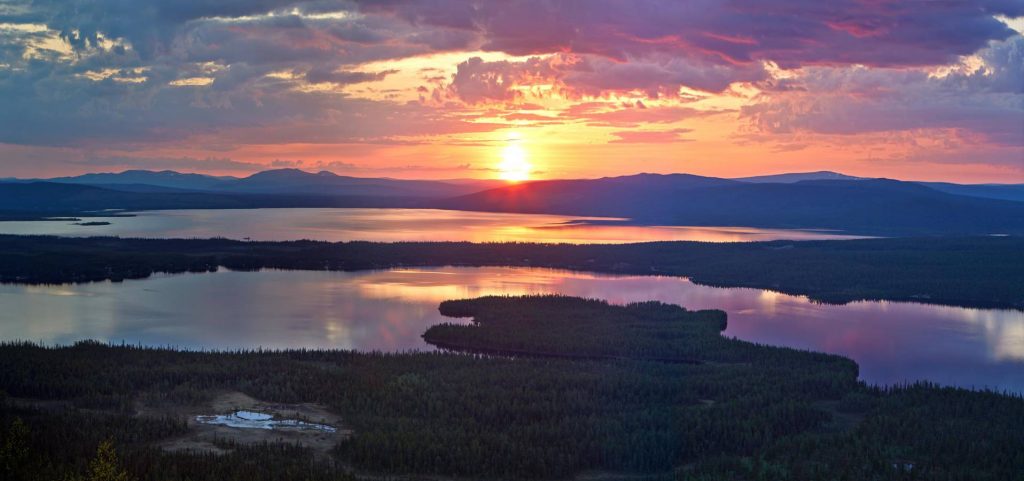
Swedish Lapland is the rolling hills and the roaring rivers. The vast woodlands and rural romance. But foremost, from the mountains to the sea, it is the perfect place to get on a new adventure.
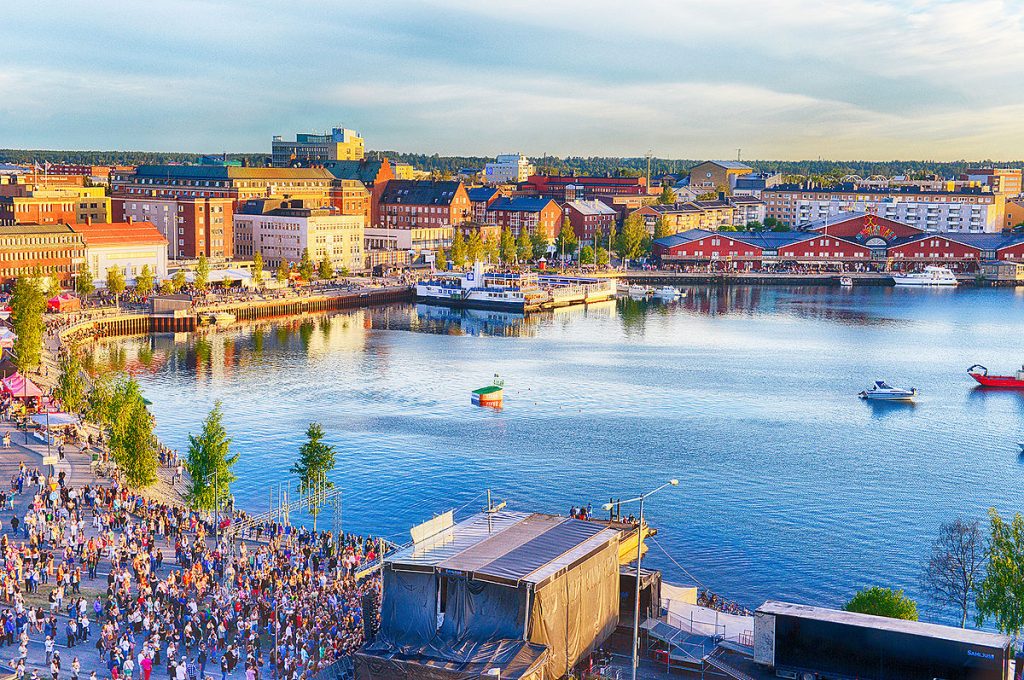
From Luleå City Festival. Photo: Wikipedia commons
The Arctic part of Sweden is located seriously remote
Located on the far northernmost edge of Europe, the region is seriously remote – even for other Swedes. Gothenburg is as close to Munich as it is to Luleå, the region’s gateway city. Known as “Europe’s Alaska”, its landscape is characterized by great swatches of pine, spruce and fir, berry carpeted tundra, white water rivers, teeming with salmon, and rustic lakeside villages. It’s a land where the brown bear and lynx, wolf and wolverine still roam free, and everyone has an intimate bond with nature.
When we have arrived at a hotel with an outside welcoming fireplace, we realize that we have distanced ourselves even farther from the buzzling outside world. In the middle of the woods, we gaze over a bluish twilight landscape watching the trees dancing gently in the wind. Lapland is northern Europe’s last remaining truly wild area.
Meet the seasonal people
In the remote village of Flakaberg on the sleeping shore of Lake Gorgim, 130 km north of Luleå, the small company Årstidsfolket (English “seasonal people”) introduces visitors to the intricacies of Sami culture. There you will meet Lars, who talks about his life as a reindeer herder. Visit the reindeers, listen to Lars living stories, and take a walk among ancient dwellings, sacrificial grounds and artefacts.
Located on the far northernmost edge of Europe, the region is seriously remote – even for other Swedes. Photo: Visit Sweden
As the only indigenous people in the European Union, the Sami are a geographical anomaly. Their history dates back thousands of years, and Sápme, as they call their cultural homeland, today spans the borders of Arctic Sweden, Finland, Norway and Russia. There is no sensus for the Sami, but the current population is estimated to number 80,000, with around 20,000 living in Swedish Lapland, together with 300,000 reindeer.
Nomadic reindeer herders
Traditionally, Sami have been nomadic reindeer herders, but life has changed dramatically over the last 50 years. While 900 Sami are still actively involved in herding, divided among 51 Sami communities, each of which has its own grazing rights, many more are now involved in tourism, food production or other rural activities.
Swedish Lapland – Sápmi – is a unique blend of untamed nature and cultural heritage
There’s less work for the villagers, promoting many youngsters to head for the city to find employment. The Rewilding Lapland Organization is now working to help select Sami communities preserve their culture of reindeer husbandry by protecting critical grazing land, easing seasonal migration routes and developing various opportunities for Sami-focused tourism.
A unique blend of untamed nature and cultural heritage
Swedish Lapland – Sápmi – is a unique blend of untamed nature and cultural heritage. Here old-growth forests, mountains, glaciers, free-flowing rivers and extensive wetlands co-exist with the indigenous Sami community since millennia. There is no other place in continental Europe with such vast, uninhabited, road-less and original landscapes as Swedish Lapland. The composition of fauna and flora is still largely intact and the functioning of ecosystems unaltered. Here, the large-scale reindeer migration and largely intact river systems shape the ecology and the landscape as well as people’s lives. However, even under such pristine conditions, there are threats and needs to ensure that the uniqueness of the land remains and that some lost components are brought back.
Lapland is northern Europe’s last remaining truly wild area.
Fresh fish straight from the lake
«Filleting fish by a lake called Sårgåjávrre stand Lennart Pittja and chef Johan Eriksson. The morning’s catch will be just enough for the evening meal. A fire has been lit in the old smoking hut. This is Lennart’s place. Here, his reindeer-herding family has had a home and a livelihood as long as anyone can remember, and they were able to build a boat,” writes Håkan Stenlund on Swedish Lapland’s webpage.
“Fresh fish straight from the lake, a little salt and a smoker and the fish will be warm in a couple of hours. On the face of it, that doesn’t sound so remarkable. Even so, that’s about as simple and good as food can ever be. Pure. Local. Arctic. That’s pretty much what it was all about when the Nordic noir food trend went international. Fresh ingredients prepared and preserved according to ancient methods that were practised by the original inhabitants of the region: smoked, salted, pickled or dried and, most of all, fresh and right on location. So, if the new Nordic cuisine wants to call itself progressive, Swedish Lapland can rightfully claim that it has been that way for 6,000 years or more. We have never known anything else.»
Criss-crossed by countless waterways
Criss-crossed by countless waterways, Swedish Lapland is defined as much by its rivers and lakes as it is by its forests. While many of these rivers have been dammed, others provide some of the best salmon, trout and pike fishing in northern Europe.
Situated near the village of Gunnarsbyn (around 75 km north of Luleå) on the banks of Lake Vitträsket, Sörbyn Lodge is the premier accommodation in the Råne river valley. Taken over by the local community nine years ago, it boasts rustic cabins and more comfortable rooms, and has built a reputation for fine local cuisine and even finer fishing opportunities.